Sunday, February 15, 2026

Source: Originally published by Z. Feel free to share widely.

There are periods in history when the concept of civilization captures the attention of historians and social scientists. About a century ago, Owald Spengler, Arnold Toynbee, and Pitirin Sorokin were the most distinguished names in this field. At the end of the last century, postcolonial studies and Samuel Huntington, with his Clash of Civilizations, marked a return of interest in the idea of civilization, albeit with opposing purposes: postcolonial studies criticizing Eurocentrism; Huntington defending it against Chinese and Islamic threats. Despite all their differences, these studies shared a central idea: competition, rivalry, and succession between civilizations. And the West was always at the center of attention.

In more recent times, the theme of civilization has emerged in a new context: in the way civilization, whatever it may be, defines its relationship with nature. This is undoubtedly the theme of the present and the future. And until a few years ago, we were convinced that, given the imminent ecological collapse, the presence of this theme was irreversible. But suddenly, thanks to the Donald Trump phenomenon and everything that makes him the opening news story in most of the world, the theme of civilization/nature relations has disappeared again and, in its place, the theme of rivalry between civilizations has returned to the political agenda under different names, such as rivalries between imperialisms, US-China conflict, and the struggle between democracies and autocracies. In this text, I do not intend to enter into the civilizational debate in all its dimensions. I will limit myself to a specific problem.

Our time marks the beginning of a civilizational period that I refer to, inspired by the work of Arnold Toynbee, as petrification. It is a Western debate. Petrification is a period of prolonged decline in which a given civilization ceases to respond to challenges, loses creative and spiritual energy, and assumes rigid forms of hierarchy. Petrification can postpone the moment of disintegration and dissolution. Even admitting that, in the past, each civilization, following its path of birth, growth, maturity, disintegration, and dissolution, ended up being replaced by an external enemy that it designated as barbarism, I believe that what is called Western civilization is today in a state of petrification.

It is a state which, although it seems dominated by a dizzying pace, is in fact a period of stagnation. Stagnation is not the result of immobility. Rather, it is the result of a fierce struggle between the remaining civilizational energies and the barbaric energies that civilization itself has created. In other words, decline does not stem from an external enemy that, in the past, was generally referred to as barbarism. Rather, it stems from an internal barbarism that, like cancer, wages a relentless war against the life of civilization. The best definition of this type of petrification is given by the ancient Greek playwright Menander, when he stated: “things rot because of evils that are inherent in them.”

Eliminating all possibility of civilizational innovation

The petrification of Western civilization takes a specific form. Internal barbarism consists of not giving the slightest opportunity to any innovative or creative energy that arises within it, as long as the minority in power sees it as a threat. The smaller the minority, the more likely it is to see great threats in actions that are not threats, or, if they are, they are challenges that a non-petrified civilization would respond to creatively.

To limit myself to the most recent period, the following cases have something in common: Cuba (1959-), Chile (1970-1973), Iran (1979-), Venezuela (1999-), Gaza (2006-2026). In all these countries there have been attempts, some more daring than others, to build an alternative to neoliberal capitalist orthodoxy, both in economic and political terms. In all of them, these attempts have been neutralized, boycotted, and repressed by hostile external forces.

Cuba

Cuba began as a revolutionary democratic alternative and quickly transformed itself into a socialist and internationalist alternative. The peoples of Africa, especially Angola and Mozambique, will never be able to repay their debt to Cuba, both in terms of achieving independence (Angola, Battle of Cuito Canavale) and in terms of building generations of young people educated to continue the task of independence (Mozambique and the hundreds of poor children who attended the Island of Education in Cuba).  Cuba has never been able to develop its political and social agenda without attempts at suffocation by the US. The first sanctions date back to 1962, prohibiting almost all trade and financial transactions. They were tightened over the decades, with the Torricelli Act (1992) and the Helms-Burton Act (1996), which expanded the extraterritorial nature of the sanctions.

There were several attempts at invasion. The main attempt to invade Cuba was the failed Bay of Pigs invasion (April 1961), a CIA operation with Cuban exiles to overthrow Fidel Castro. There have been hundreds of attempts to assassinate Castro, some involving poisoned cigars, diving suits infected with tuberculosis, and explosive ballpoint pens. The Mafia was sometimes recruited to carry out the assassination, which has always failed. As everything has always failed, US imperialism now wants to make life on the island impossible, condemning its inhabitants to darkness, hunger, and death from preventable disease through a total blockade that includes the supply of oil. This means the total suffocation of the island, a new Riviera in the making, this time competing with Miami, where the remaining Cubans are condemned to be slaves to five-star hotels and luxury condominiums.

We will never be able to know the potential of Cuba’s innovative project, which originally drew its ideology from the Bandung Conference and the Non-Aligned Movement (neither Western capitalism nor Soviet socialism). Cuba has lived for more than seventy years under the harshest system of sanctions and embargoes, which only saw some relief during the Barak Obama era.

Chile

Chile (1970-1973) was another far-reaching innovation in Latin America. While in Cuba the seizure of power had been violent and through armed struggle, in Salvador Allende’s Chile the socialist project came to power democratically by winning the elections. If the American liberal ideology were sincere, there would be nothing to object to, since the Chilean socialist project came to power through the ballot box. It meant that armed struggle was not the only way to resist injustice and inequality. But the problem was not democracy, it was control of natural resources, especially copper. That is why Henry Kissinger promised at the time that, in response to Chile’s act of disobedience, the US would “make the Chilean economy scream.” And so they did, with boycotts and embargoes, with the indoctrination of the military, with CIA infiltrations that promoted strikes, notably that of truck drivers, which brought the country to a standstill. As Allende did not have a majority in Parliament, he resorted to the laws of the brief socialist democracy of 1932 (nationalization of copper mines). Faced with such internal and external attacks, Allende was unable to implement his program. He fell on September 11, 1973.

Iran

 In 1979, Iran freed itself from the puppet monarch Shah of Persia (Reza Pahlavi), who had been installed in power by a CIA coup against Mossadegh in 1952. It was a popular revolution that brought a religious leader, Ayatollah Khomeini, to power. Whatever one’s assessment of this political revolution, it is important to note that, from the outset, it was subject to embargoes and sanctions by the US, which greatly limited the possibilities for the development of this political innovation at the end of the 20th century. The Iranian theocracy did not completely eliminate elections (unlike the Persian Gulf states), promoted scientific and technological development, and sought to create zones of influence outside Iran through religion (the Shiite Islamic movement). Over the years, there have been several movements, especially by women, to deepen democracy and eliminate sexual discrimination. But all protests were exploited and, in part, provoked by foreign secret service agents: MI6 from the United Kingdom, the CIA from the United States, and Mossad from Israel. The most recent riots, due to a deliberate speculative attack on the Iranian currency, were legitimate forms of protest that were exploited and intensified by external political forces. It is now known that many of the deaths of protesters were caused by agents of MI6, Mossad, and the CIA. None of this prevented the European Union from recklessly and servilely declaring Iran’s Revolutionary Guard a terrorist organization. Once again, the mechanisms of internal evolution of innovations were blocked or infiltrated to prevent any creative evolution of the Iranian proposal. We do not need to agree with it to wish that its evolution were due to internal dynamics and not external infiltration.

Venezuela

Hugo Chavez was responsible for the most progressive and internationalist political innovation in Latin America at the end of the 20th century and the beginning of the 21st century. After an attempted coup in 1992, Chavez was elected president of Venezuela in 1998 and ruled the country until 2013. During this period, Chávez not only implemented policies that significantly improved the lives of the vast majority of the population (the misiones), but also altered the geopolitics of the region, making it more independent from the US, supporting regimes hostile to the US (such as the supply of oil to Cuba), and creating regional cooperation institutions such as CELAC, UNASUR, ALBA, the Bank of the South, and Telesur. In addition, he was a staunch supporter of South-South cooperation, opening Latin America to closer relations with Africa, China, and Russia. He sought to combine representative democracy with participatory democracy through communal power.  Again, one does not have to agree with all the innovations, let alone those that followed Chávez’s death. I myself criticized them at the time. The important thing would be to let Venezuelans develop measures to correct any excesses of the regime. And, in fact, a democratic opposition was created, which the US sought to divide in order to benefit the most extremist and least sovereignist currents, as it had done in Syria and so many other countries. They even proclaimed as the legitimate president of Venezuela a deputy who once decided to declare himself as such in a square in Caracas. And, to the astonishment of staunch liberal democrats, this “appointment” was ratified by the European Union.

Especially after the death of Hugo Chavez, Venezuela was subject to multiple economic sanctions that cost the country the emigration of millions of Venezuelans. Once again, the internal dynamics of the regime’s evolution were perverted by external influence. With no concern for Venezuelan democracy or the fate of emigrants scattered across the continent, Donald Trump ordered the arrest of the legitimate president of a sovereign country and had him taken to New York to be tried under US law. It was the quickest way he could find to control Venezuela’s oil and minerals and thus prevent China from gaining access to them.

Gaza

The 2006 Palestinian parliamentary elections were won by Hamas (74 of the 132 members of the Palestinian Legislative Council). Everyone attentive to the Palestinian cause was aware of the corruption of the Palestinian Authority controlled by Fatah. The elections were considered free and fair by international observers. But soon the so-called Western world, under pressure from Israel and the US, mobilized to prevent Hamas from taking power. The story is well known. Shortly thereafter, Hamas was reduced to controlling the Gaza Strip, which was turned into the world’s largest concentration camp. If we analyze Hamas’ political program, it is not very different from that of European social democracies. These were political proposals that would certainly improve the living conditions of Palestinians.

It was not possible to put them into practice because Israel controlled every detail of life in the Gaza Strip, who could enter and leave, and what could enter and leave. They even defined the “humanitarian minimum diet,” which calculated the calories that Gaza’s inhabitants needed to survive. Many everyday consumer items in Israel were banned in the Gaza Strip. Youth unemployment reached 60%. For them, who were the majority of the Palestinian population, there was neither present nor future.

 In the face of this scandal, there was a media silence around the world. The only talk was of the normalization of Israel’s relations with Arab countries through the Abraham Accords. No one spoke of the Gaza concentration camp. We know that Hamas questioned the existence of the State of Israel. But what staunch democrat can today defend the existence of the State of Israel after the genocide in Gaza? After all, the State of Israel was created to exist alongside and on an equal footing with the Palestinian State, which, incidentally, contained the majority of the population of Palestine. In the light of international law and the law of war, the State of Israel is today a pariah state responsible for genocide and ethnic cleansing, documented by the intentional killing of thousands of children, who would have been the future of Palestine.

What do such different cases have in common?

What they have in common is the impossibility of any of these political innovations to implement their proposals without adverse external interference. I repeat, we do not necessarily have to agree with them. But we also cannot disagree with them because, in fact, they have never been put into practice. The dominant minorities in the world that I call imperialists began their work of boycott and repression very early on, announcing to a complacent public opinion that the experiment would fail. And of course it had to fail, given everything they did to make it fail. Imperial minorities are always right because they (almost) always have the power to transform reality in order to prove themselves right. Policies diverge, but the results converge. What is the difference between razing the buildings of Gaza and killing Palestinians, and making life impossible in Cuba, starving Cubans to death or forcing them to throw themselves into the sea at great risk of drowning?

The repression of any innovation that poses a threat to the minorities that dominate the world creates the rigidity that I have called, following Toynbee, petrification. We can say that petrification worsened exponentially after the end of the Soviet Union. As hard as it may be for dogmatic anti-communists and Cold War warriors to accept, the existence of the USSR was, for eighty years, the guarantor of the vitality of Western civilization. With its demise, the petrification of so-called Western civilization has intensified to such an extent that it may itself collapse. When the entrepreneurs of petrification fail to petrify everything they identify as a threat, they will end up petrified before themselves. That will be the moment of disintegration and dissolution. Whether this requires a Third World War is an open question.Email

avatar

Boaventura de Sousa Santos is the emeritus professor of sociology at the University of Coimbra in Portugal. His most recent book is Decolonizing the University: The Challenge of Deep Cognitive Justice.

Source: Originally published by Z. Feel free to share widely.

Last November, the RSF militia committed a heinous massacre in Elfashir; thousands were killed in one day, including patients at a hospital, women, and children, who were lined up and shot to death. Satellite images explain that the militia put the victims in a mass burial to hide its crime. This massacre was indeed enabled and sponsored by the UAE. That’s relentless in pursuing its economic and political interests in Sudan, regardless of the suffering it causes. 

El-Fashir’s genocide triggered a strong condemnation reaction from many voices around the world, pointing to the UAE’s role in sponsoring the militia and calling for an end to it. This campaign, which is still emerging, is putting pressure on the UAE and raising awareness about its destructive role in the prolongation of the war in Sudan. 

The war in Sudan, which broke out in April 2023 between the Sudanese National Army and the Rapid Forces militia, has been devastating on many levels. Millions were displaced, either internally or to neighboring countries, and thousands were killed. Moreover, there is now credible fear that the country could descend into a grim partition scenario.  

The Rapid Support Forces originated mainly from the 2013 reorganization of the infamous Janjaweed militia. They were established to assist government counterinsurgency efforts in Darfur and South Kordofan. The Sudanese parliament formally legitimized its operations through legislation in 2017. Throughout the conflict, the RSF has been responsible for numerous atrocities, including village devastation, protester killings, sexual assaults, mass murders, illegal imprisonments, attacks on medical facilities and religious buildings, aggression toward media personnel and organizations, ethnically motivated violence, and the use of child soldiers.

For an extended period, the United Arab Emirates has provided financial and military backing to the RSF militia, including recently supplying foreign combatants. This assistance has substantially expanded since the conflict began. The UAE maintains significant economic and political stakes in Sudan that it anticipates will be protected if its RSF allies gain control. These interests encompass the exploitation of gold and agricultural assets, control of strategically important Red Sea ports, and blocking the return to power of Islamist groups, which the UAE traditionally opposes politically.

The world reacted strongly to the genocide of El-Fashir, cristizing the the UAE. Activists such as Greta Thunberg called for stopping visiting the UAE. A giant billboard in London was installed, highlighting the role of the UAE in Sudan. A campaign was launched to end the NBA partnership with the UAE and to impose cultural and educational boycotts. The student body of the University of Maryland urged the university to cut ties with the UAE, and a Swiss-based watchdog group requested more scrutiny on the gold imported from the UAE that could be fueling the genocide in Sudan. Moreover, politicians such as Sara Jacobs and Jeremy Corbyn called for ending arms sales to the UAE. 

Wary of the impact on its image worldwide, the UAE responded by launching a coordinated disinformation operation attacking the Sudanese army and shifting the blame, falsely saying the Sudanese army engaged in killing Christians in Sudan. This claim was debunked by a fact checking organization and a recent study found that 19000 UAE-aligned bots were promoting this propaganda after the fall of El-Fashir. Moreover, Sky News, the UAE-based channel, engaged in whitewashing the genocide by downplaying the atrocities committed by the militia.  The UAE also lobbied the US Congress and succeeded in stopping a legislation that aimed block US arms sales to the UAE until it halts its support to the RSF. 

There’s a dire need for a unified movement that calls out the UAE and coordinates between these different groups and organizations, which will take the campaign to a different level and make more impact. Email

avatar

Mohamed Suliman is a researcher and writer based in Boston. His recent articles tackle the War in Sudan. He holds a degree in engineering from the University of Khartoum.


The Iranian Trap: Neither Military Action Nor Nuclear Negotiations Can Solve Trump’s (and Israel’s) Conundrum

The trajectory of the Trump administration’s Iran policy has undergone a profound recalibration since the beginning of 2026, transitioning from expectations of imminent regime collapse to the fraught terrain of nuclear negotiations. The proverbial elephant in the room is the fundamental recognition of previous miscalculation regarding Iran’s internal cohesion and deterrence capabilities.

In January, the administration’s initial stratagem hinged upon transforming nascent demonstrations into comprehensive insurgency, which would be consummated through selective airstrikes, precipitating regime change. This hypothesis has been decisively refuted by events on the ground.

The regime change that was not

The genesis of Plan A resided in the convergence of economic grievances and externally orchestrated agitation. When protests erupted in late December 2025, initially catalysed by the precipitous devaluation of the Iranian rial, the Trump administration perceived an opportunity for decisive intervention. As U.S. Treasury Secretary Scott Bessent explicitly stated: “One thing we could do at Treasury, and what we have done, is create a dollar shortage in the country. […] It came to a swift, and I would say grand, culmination in December when one of the largest banks in Iran went under. There was a run on the bank, the central bank had to print money, the Iranian currency went into free fall, inflation exploded, and hence we have seen the Iranian people out on the street.”

The protests, which commenced amongst Tehran’s bazaar merchants before metastasising across Iran, were erroneously interpreted through the lens of the 2022 Mahsa Amini demonstrations. Intelligence assessments, particularly those emanating from Israeli sources, postulated that Iran constituted a house of cards vulnerable to collapse following sustained external pressure and internal insurrection.

Critical to this conception was the deployment of Starlink satellite terminals, which had been surreptitiously distributed throughout Iran. These devices, allegedly numbering between forty and fifty thousand units, were intended to circumvent government restrictions and facilitate coordination amongst protest movements. CIA and Mossad networks within Iran (according to former Secretary of State and former CIA Director Mike Pompeo himself) reportedly orchestrated elements of the demonstrations through these channels, directing protesters from operational centres in Germany and elsewhere in Europe. The tactical approach incorporated orchestrated violence—which included the burning down of mosques, which is decisively not the way Iranians usually demonstrate—designed to create the perception that state authority was disintegrating, with reports documenting instances where protesters were instructed to commit acts of extreme brutality to engender an atmosphere of chaos and state failure. The Trump administration’s expectation was that these protests would generate sufficient instability to justify limited military strikes against critical regime infrastructure, serving as the coup de grâce that would precipitate regime change.

However, the Iranian response demonstrated sophistication that fundamentally undermined this stratagem. On 8 January 2026, Iranian authorities implemented comprehensive countermeasures that proved decisive in neutralising the insurgent infrastructure. The government successfully disrupted Starlink connectivity through deployment of military-grade jamming equipment, likely procured from Russian or Chinese sources, which generated packet loss rates initially reaching thirty per cent and subsequently escalating to eighty per cent in certain localities. According to American, British, and Israeli sources, this technological countermeasure — unprecedented in scope and effectiveness—severed the command-and-control architecture linking external handlers with domestic operatives.

More significantly, Iranian security services exploited the Starlink disruption to identify and apprehend individuals possessing these terminals, methodically dismantling crucial parts of the CIA and Mossad operational networks that had been cultivated over years. Intelligence sources indicate that between twenty and thirty arrests occurred daily following the initial crackdown, with security forces conducting systematic door-to-door operations to confiscate satellite equipment and detain suspected collaborators. The protests, deprived of external coordination and facing increasingly assertive state response, dissipated by mid-January. Crucially, there were no defections from critical state institutions: neither the Islamic Revolutionary Guard Corps, the regular military, the Basij militia, nor the parliamentary apparatus exhibited fissures—thus no regime collapse could ensue. Israeli intelligence assessments, subsequently communicated to the Trump administration, concluded categorically that the protests had not approached the threshold of threatening regime survival and that conventional airstrikes would prove insufficient to precipitate governmental collapse.

The Trumpian military ire that also did not come to pass (yet)

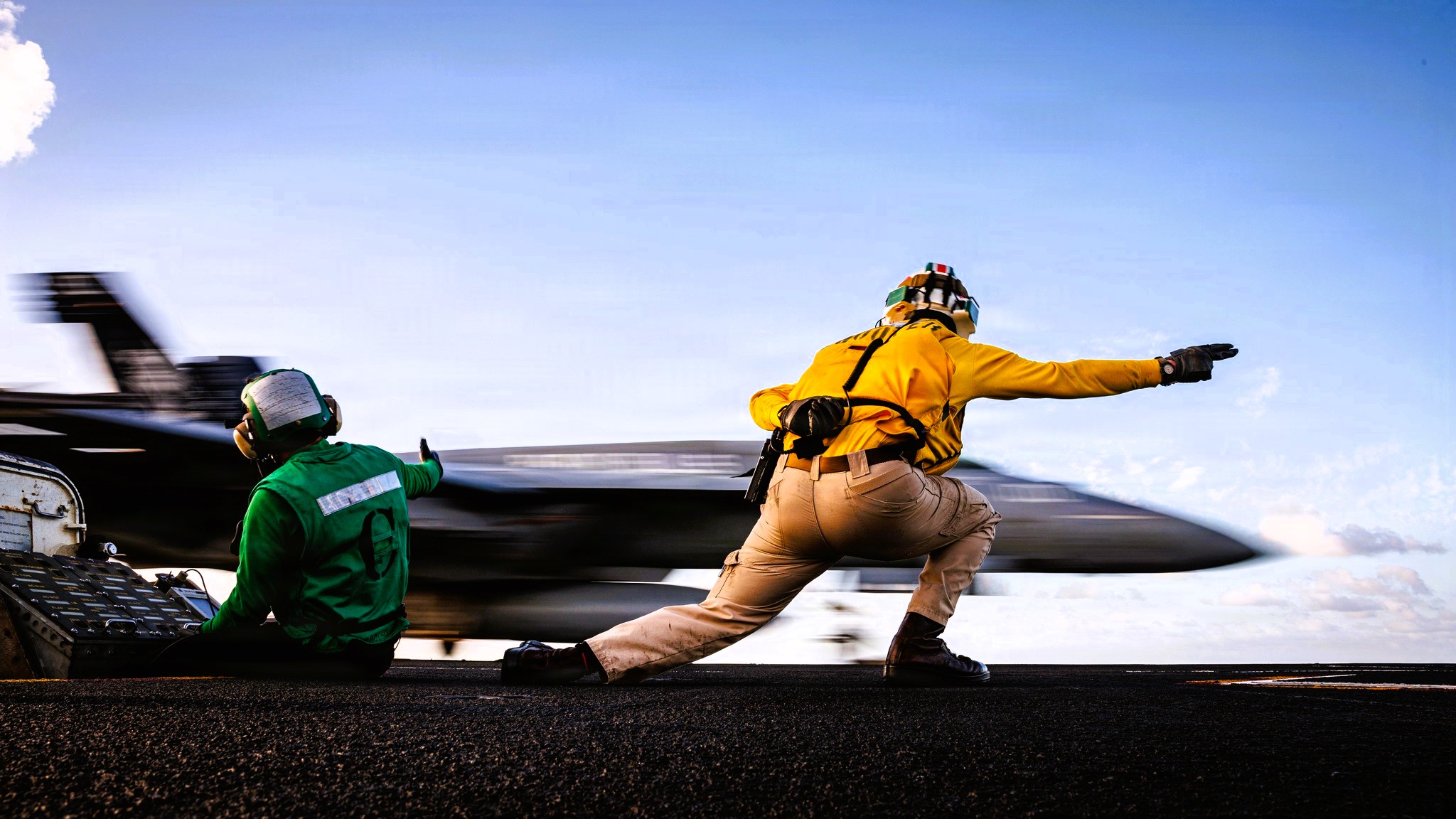
This recognition prompted consideration of Plan B: achieving regime change through direct military action. The administration assembled what President Trump characterised as a massive armada in the Persian Gulf, centred upon the USS Abraham Lincoln carrier strike group. However, this deployment rapidly evolved from an instrument of coercion into a strategic liability. Iran had systematically fortified its coastline with anti-ship missile batteries, deployed submarines capable of launching anti-ship munitions whilst submerged, and positioned swarms of fast-attack craft. Military analysts assessed that the air defence complements of the American vessels would prove inadequate against saturation attacks involving hundreds of Iranian drones and missiles. The armada was compelled to maintain increasing distance from Iranian territorial waters, diminishing its operational utility whilst accruing substantial financial costs.

More fundamentally, Iran articulated an unambiguous deterrence posture: any attack, regardless of scale, would trigger comprehensive regional warfare, including closure of the Strait of Hormuz and strikes against American military installations throughout the Middle East and Israeli territory. This explicitly rejected American proposals for performative, symbolic exchanges (in stark contrast to the conclusion of June’s Twelve-Day War).

Israel’s January cold feet

Israel’s communication to Washington that it would not participate in American strikes, out of fear of Iranian counter-strikes on Israeli territory, coupled with Iranian warnings that Israeli involvement was irrelevant to Tehran’s calculus of retaliation, further complicated the equation. Trump, whose appetite for military engagement has consistently favoured rapid, decisive operations yielding demonstrable political dividends (which we have called the litterbox approach), confronted the prospect of protracted conflict with uncertain outcomes and potentially catastrophic economic ramifications. Market volatility, already elevated due to concerns regarding American fiscal sustainability and trade policies, rendered the prospect of disrupted energy supplies through Hormuz closure particularly unpalatable. No quick and easy victory was on the table this time.

The administration’s calculations regarding acceptable cost-versus-benefit ratios and achievable objectives underwent fundamental revision: the price of military confrontation substantially exceeded any plausible benefit, particularly given the absence of internal Iranian vulnerabilities that might facilitate regime change. Yet while Israel might be reluctant to directly join the fight, it is also the state actor desiring this war more than anyone else, as highlighted by Haaretz’s Gideon Levy. It is not surprising that Axios reported a U.S. official summing the situation up by stating: “It’s the Israelis who want a strike. The President is just not there.”

Towards the new, old nuclear negotiations

This strategic impasse has precipitated negotiations between the U.S. and Iran towards a nuclear accord. This could mark the resumption of nuclear negotiations for the first time since the 2025 collapse. The meeting was initially planned for Türkiye’s Istanbul, with participation from regional powers like Saudi Arabia, Egypt, the UAE, Oman, and Qatar to broaden discussions beyond nuclear issues to include missiles and Iran’s regional militias. However, Iran has pushed to relocate the talks to Oman and restrict them to bilateral U.S.–Iran discussions focused solely on the nuclear file, excluding broader topics—a move seen as an attempt to limit U.S. leverage.

As it currently seems, Iranian Foreign Minister Abbas Araghchi and U.S. Special Envoy Steve Witkoff are leading the delegations, with communications ongoing via intermediaries. Yet these talks are being planned under profoundly disadvantageous circumstances for the Trump administration. The irony is not lost that, in 2018, Trump himself tore apart the already existing Iran Nuclear Deal, i.e., the Joint Comprehensive Plan of Action, notwithstanding internationally documented full Iranian compliance. The current negotiating landscape reflects this history: whereas the JCPOA negotiations occurred when Iran sought sanctions relief, the present context features an Iran that has developed economic resilience through sanctions circumvention, strengthened regional partnerships with Russia and China, and demonstrated both technical nuclear advancement and a robust internal security apparatus—not to mention the outcome of June’s Twelve-Day War.

The substantive positions reveal intractability. The Trump administration presently seeks complete cessation of uranium enrichment, dismantlement of ballistic missile capabilities, and termination of support for regional allies; in Secretary of State Marco Rubio’s words: “To reach a deal, ballistic missile program, nuclear program and support for proxies must be discussed”—a position Iran finds eminently disagreeable. These maximalist demands reflect both security concerns and political imperatives: any agreement must be presentable domestically as superior to the JCPOA, yet this is an exceedingly daunting task given the current circumstances.

Conversely, Iranian negotiators have indicated willingness to engage solely on nuclear matters, categorically excluding ballistic missiles and regional partnerships. Tehran’s priority centres upon sanctions relief. Iranian leadership has emphasised that negotiations cannot proceed under military threat, insisting that the American naval deployment be repositioned.

The asymmetry of leverage further complicates prospects for agreement. Iran, having weathered the attempted insurrection and demonstrated its deterrence credibility, negotiates from a position of relative strength despite economic vulnerabilities. The Iranian calculation appears to be that any agreement must demonstrably improve upon the JCPOA’s terms from Tehran’s perspective, incorporating more robust—or even complete—sanctions relief and fewer constraints on peaceful nuclear activities. Such an outcome, however, would prove politically untenable for Trump, who requires the capacity to characterise any accord as a decisive American victory that rectifies the purported deficiencies of the Obama-era agreement. This fundamental incompatibility between what Iran might accept and what Trump could present as triumph suggests that negotiations, whilst potentially protracted, are unlikely to yield comprehensive resolution.

Is the war that did not materialise over, or merely postponed?

Concurrently, Israeli pressure introduces additional complications. Prime Minister Netanyahu has communicated unambiguous opposition to any nuclear agreement that does not address Iran’s ballistic missile programme and regional activities. Israeli officials have conveyed to American counterparts that they will not endorse an accord confined to nuclear matters and that, absent Israeli support, domestic American political dynamics will render any agreement unsustainable. This Israeli positioning effectively establishes a veto over negotiated outcomes.

Netanyahu’s government has articulated demands including complete dismantlement of Iran’s peaceful nuclear energy programme and formal dissolution of the axis of resistance. These prerequisites, which Iranian leadership has characterised as deliberately unrealistic, appear designed less to facilitate agreement than to ensure negotiations’ failure, thereby preserving the rationale for eventual military confrontation. PM Netanyahu’s urgent Wednesday, 10 February, meeting with President Trump is anything but the best of omens, since the Israeli commentariat is converging on the conclusion that a successful Iran deal would be negative for Israel’s strategic interests and must be averted.

The spectre of regional conflagration therefore persists, albeit temporarily deferred rather than definitively averted. The failure of Plan A and the prohibitive costs associated with Plan B have not eliminated military options from consideration; they have merely displaced them temporally whilst negotiations proceed. Should these talks collapse, as appears probable given the incompatibility of positions, the question becomes whether Trump will accept stalemate, simply try to (make the American public) forget, or pursue military action despite its evident risks.

The precedent of the June 2025 Twelve-Day War between Israel and Iran, during which American forces participated in strikes against Iranian nuclear facilities (“obliterating them,” in Trump’s words—although somehow now there need to be negotiations regarding the future of Iran’s already “obliterated” nuclear capabilities), suggests that limited operations remain within the realm of possibility, in the hope of regime collapse. However, Iranian deterrence messaging has grown increasingly explicit: any future attack will trigger comprehensive retaliation against both American and Israeli targets, potentially drawing indirect Russian and Chinese involvement through naval deployments in the Persian Gulf and provision of advanced military technology. “Indirect” is the word here.

Impasse: No good options left

The episode illuminates how deterrence architecture, internal resilience, cost-versus-benefit considerations, and great power dynamics interact to constrain even the most powerful actors’ freedom of manoeuvre. The United States confronts a situation where none of the available courses of action yields satisfactory outcomes: military intervention risks uncontrollable regional escalation; negotiations appear unlikely to produce politically viable agreements; and continued pressure through sanctions and covert operations has demonstrated limited efficacy in achieving regime change, collapse, or domestic Iranian chaos.

The timing of renewed hostilities remains the principal unknown variable. As it currently seems, war has been postponed, not prevented: the structural factors that generated this crisis persist. Whether the current diplomatic interlude evolves into a sustainable modus vivendi or merely constitutes a prelude to the second round of direct Iranian-American military confrontation will depend upon variables including Trump’s electoral calculations as midterm elections approach, the trajectory of Iran’s nuclear programme, developments in Gaza and Lebanon that may affect regional dynamics, the extent of Israel’s leverage on the U.S. President and Israel’s own security considerations should the region be set ablaze, and the extent to which Russia and China are prepared to substantively support Iranian deterrence.

What appears incontrovertible is that the assumptions undergirding Plan A have been comprehensively discredited, compelling all parties to navigate considerably more complex and hazardous terrain than initially anticipated. The crux of the matter here is that there is hardly a scenario in which a military confrontation does not ignite the region with truly unpredictable consequences, rather than being limited within the territory of Iran. A bumpy road lies ahead, even after a temporary diplomatic break.Email

avatar

Sotiris Mitralexis is a research fellow at UCL Anthropology and a visiting professor at IOCS Cambridge; during 2021-2023, he served as the academic director for mέta, the Centre for Postcapitalist Civilisation in Athens, Greece. He holds a doctorate in philosophy from the Freie Universität Berlin, a doctorate in political science and international relations from the University of the Peloponnese, a doctorate in theology/religious studies from the Aristotle University of Thessaloniki, and a degree in classics from the University of Athens. Sotiris has been Seeger Fellow at Princeton University, Visiting Fellow at the University of Cambridge, Visiting Senior Research Associate at Peterhouse, Cambridge, Visiting Fellow at the University of Erfurt, Teaching Fellow at the University of Athens and Bogazici University, as well as Assistant Professor of Philosophy at Istanbul Sehir University. His publications include the monograph Ever-Moving Repose (Cascade, 2017) and, inter alia, the edited volumes Ludwig Wittgenstein Between Analytic Philosophy and Apophaticism (CSP, 2015), Maximus the Confessor as a European Philosopher (Cascade, 2017), Polis, Ontology, Ecclesial Event (James Clarke & Co, 2018), Between Being and Time (Fortress, 2019) and Slavoj Žižek and Christianity (Routledge, 2019), as well as books in Greek.


Bibi to Don: You Can’t Use Your Nukes without Starting Armageddon. But We Can Use Ours.

Twice in the last year, Israel and its Big Brother have started a war to crush Iran. Without success. But if at first you don’t succeed… So Israeli Prime Minister Benjamin Netanyahu is still trying to sell the leader of the dwindling superpower on the idea of destroying Iran.

Netanyahu is obsessed, because — in his view — Iran is the only sworn enemy of Israel that is powerful enough to prevent his aim of complete domination in West Asia. The destruction of Iraq, Libya and Syria were stepping stones on the path to his vision, but he calculates that only Iran now stands in his way. And that is unacceptable.

He will is telling Trump that they both should have tried harder and been better prepared last June and again this January, but if they don’t succeed now, they risk losing the opportunity altogether, which would be unthinkable. Israel suffered serious losses at its air bases, its integrated operational headquarters, known as Unit 8200, and its intelligence services, the Mossad. But even more serious, they and the US determined that after 11 days of war, they had a critical shortage of anti-aircraft weaponry to stop the superior numbers of Iranian hypersonic missiles and long-range drones. That’s when they offered a ceasefire, and Iran accepted. That’s when they offered a ceasefire, and Iran accepted.

This January they didn’t even get that far. On both occasions, Israel and the US initiated the conflict with major internal sabotage to disable Iran’s government and military capability. Both times, they failed, and in January, they failed early enough and decisively enough that the military invasion was called off.

Now the US is amassing its navy and airforce – but not its army – in the region, for an even more robust attack. They were hoping that the threat would be enough to cause Iran to surrender at the negotiation table what they have so far failed to accept. But that, too, is failing, because the demands are absurd: to give up their entire defense arsenal, the most elemental uranium enrichment for peaceful purposes, and to end all relations with regional allies. Ridiculous. No country is going to strip itself bare naked and bend over voluntarily.

Would Iran “win” against an all-out fight? Perhaps not, but neither would the US and Israel. The intelligence services of the US, Israel, Britain, and other nations have no doubt that, even if Iran “loses” – it can inflict major destruction upon the vaunted US “armada” as well as its bases in the region. More to the point, it can cut off the narrow straight of Hormuz, blocking the transit of petroleum tankers from the biggest supply of oil in the world. It can also just as easily destroy the major production facilities surrounding the Persian Gulf, in Saudi Arabia, Abu Dhabi, Qatar, Kuwait, and Iraq. The world’s economy would go into a tailspin. Furthermore, Iran would resume where it left off in Israel, and destroy the remainder of its major military and economic resources. In fact, Israel even offered to stay out of the fight if Iran would leave them alone. Iran refused.

In short, there is no strategy for the defeat of Iran that will not also bring great destruction upon its attackers, as well as economic catastrophe on the entire world. But Benjamin Netanyahu will not be deterred. Israel will not suffer economic catastrophe, because the US will provide, whatever the sacrifice to the US. Furthermore, a global economic disaster only enhances Israel’s protected position, as well as its potential for expansion. Israel views chaos as opportunity.

But Israel must also defeat and destroy Iran, while avoiding the destruction that Iran is capable of wreaking upon Israel. I believe that in Netanyahu’s mind, the only option for that to happen is to go nuclear – early and decisively. If he is right now discussing this with Trump, he is saying that while the use of US nuclear weapons might risk global nuclear Armageddon, Israeli nuclear weapons might be less of a risk, and the US could maintain deniability. In order to work, the nuclear strike would have to be at the start of the attack and sufficient in number to assure that they get past Iranian defenses and knock out the weapons that would otherwise destroy Israel.

This is a terrifying prospect, with potentially wide ranging consequences, including nuclear Armageddon. Let us hope that the US will refuse, and that Israel will not attempt to go it alone, if Netanyahu even proposes it. This is the most likely outcome, in my opinion, but I also believe that the possibility is too important to leave unspoken. I would rather see businessman Trump drop the sanctions and threats, and establish mutually beneficial relationships and investments with Iran, regardless of what Israel says.

Paul Larudee is a retired academic and current administrator of a nonprofit human rights and humanitarian aid organization. Read other articles by Paul.