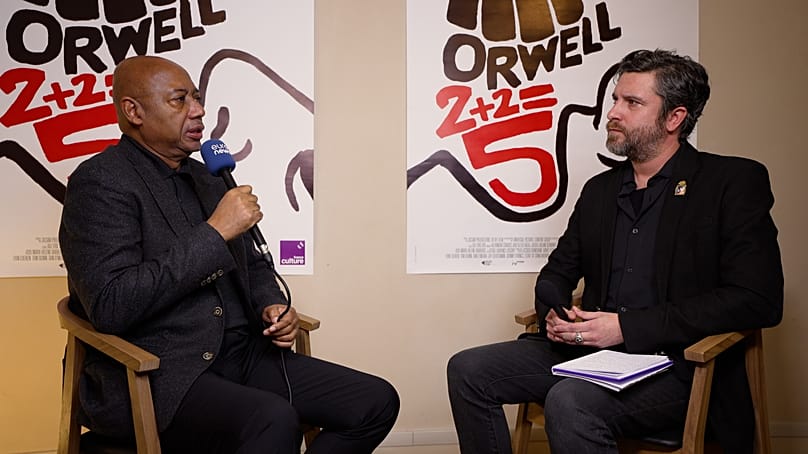
Raoul Peck and Euronews Culture's David Mouriquand Euronews Culture
Copyright Euronews Culture - Le Pacte - Velvet FilmPublished on 19/02/2026
"It’s a problem when you lose your connection with history. The ignorance is really incredible. Even though we had the facilities and instruments all along..." Euronews Culture sits down with Raoul Peck to discuss his new documentary, 'Orwell: 2+2=5' - one of the most urgent and vital films of 2026.
“The very concept of objective truth is fading out of this world. This prospect frightens me much more than bombs.”
This ripped-from-the-headlines statement could have been written yesterday but it belongs to George Orwell, the world-renowned author of “Animal Farm" and "Nineteen Eighty-Four", who died 76 years ago.
Time marches on, but certain things don’t change. In fact, they often get worse.
The quote features in Orwell: 2+2=5, the new documentary by Raoul Peck, the celebrated filmmaker and former Minister of Culture for Haiti who has continually questioned and explored the legacies of colonialism and the mechanics of oppression through his uncompromising filmography.
Following his Oscar nominated I Am Not Your Negro and his Peabody-winning HBO docuseries Exterminate All The Brutes, Peck takes the words of Orwell - read in voiceover by actor Damian Lewis - and connects the dots between the writer’s diary entries and present-day totalitarian regimes.
In making Orwell’s words collide with scenes from history and the modern day, Peck not only shows us that the past can inform the present but also exposes how the playbook for totalitarianism – as practiced in Orwell’s final dystopian novel – has been used as a blueprint by governments all over the world over the past century.
Haiti. Myanmar. Russia. Israel. The United States of America.
Orwell: 2+2=5 highlights not only how history repeats itself but how present-day figures like Donald Trump, Vladimir Putin and Benjamin Netanyahu have all adopted "Nineteen Eighty-Four"'s strategy of “Newspeak”, showing that sentences like “War is Peace”, “Freedom is Slavery”, “Ignorance is Strength” and “Two plus two equals five” don’t belong to the realms of dystopian fiction anymore. They resonate in our reality.
Euronews Culture sat down with Raoul Peck to discuss his essential new documentary, how the words of Orwell echo in the age of “fake news” and deepfakes, and how objective truth is threatened when language is corrupted and technology goes unregulated.
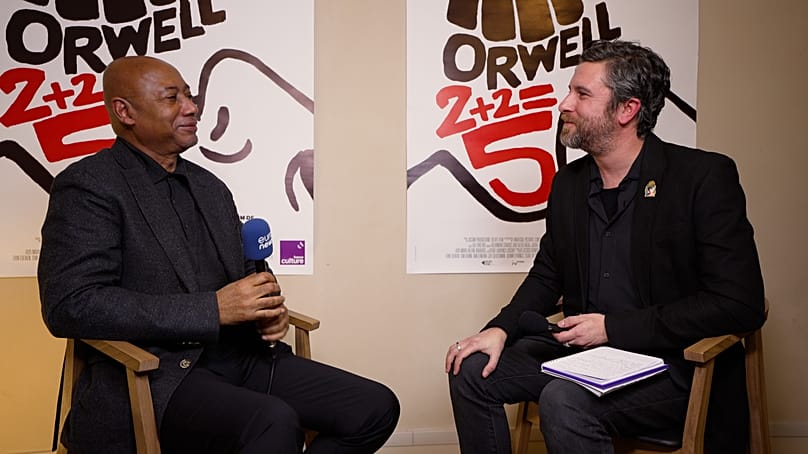
Raoul Peck and Euronews Culture's David Mouriquand Euronews Culture
I didn’t want to make a film exclusively about Donald Trump. It’s a film about Orwell, who wrote to give us the whole toolbox to recognise every attempt towards authoritarianism.
Raoul Peck
Euronews Culture: What was it that brought you on board for this project? Was it (documentarian and producer) Alex Gibney, or a more personal relationship with the writings of George Orwell?
Raoul Peck: Well, it came as a big, huge gift from Universal, who approached Alex Gibney to inquire if he would be producing such a film on Orwell. Alex called me and I asked him if I would have the freedom to do the film I wanted. He assured me that that was the case, and of course, I said yes! Because that's not something you get every day - to have access to the totality of an author’s body of work. And Orwell being this recognized figure in the whole world... So much as to become an adjective... That's not an offer that you can refuse.
I imagine that because you fled Haiti at a very young age to escape the Duvalier dictatorship, you were already all too familiar with the language of totalitarianism and its methods...
Not only that, I grew up with what we call “Newspeak” (the fictional language of the totalitarian superstate in Orwell's "Nineteen Eighty-Four") - the use of language in order to hide your real intention. That's an approach that you have in economy, in business, in all sorts of life. And indeed, coming from Haiti, you recognize very early on that words could have two meanings. Some governments talk about democracy and then support the dictatorship. I learned that very early on, with the Duvalier dictatorship and the support of the USA and part of European governments... On one side, they're talking about democracy. On the other side, they're making deals with governments or authoritarian regimes who are keeping their people down. I was aware of that contradiction very early on in my life.
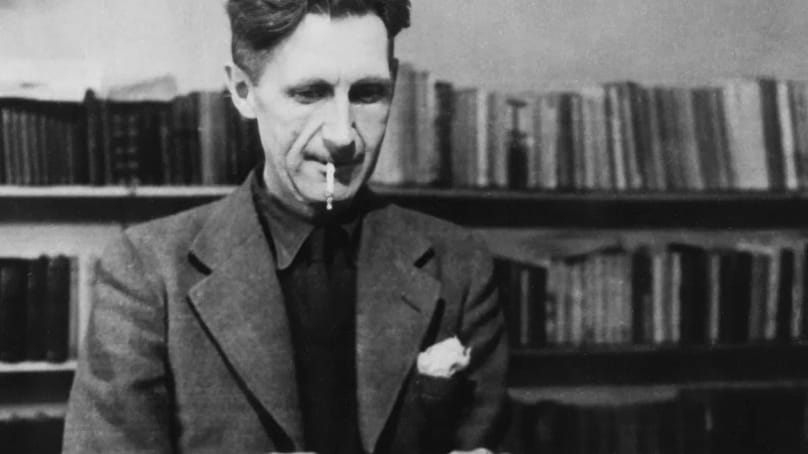
Orwell: 2+2=5 Le Pacte - Velvet Film
We see how rapidly the degradation of democracy can happen, even in the most important beacon of democracy that was the United States. Because it’s not anymore.
Raoul Peck
There's a quote that stood out for me in the film, when Orwell talks about "Animal Farm". He said that it was the first time that he fused his political intent with his artistic intent. Does that mirror your own approach to filmmaking?
It does. When I started in cinema, you couldn't make any political ambition with art. Art was supposed to be something special, something pure. The same thing with entertainment. Everything became entertainment. Even news became entertainment. But I never believed that. It's not because it's entertainment that you can't put more weight in terms of content, and you will find a form to make it cinema. I always believed that filmmaking is political. I would say that I always had a political intention in making my films. I was glad that it was also Orwell’s intention from the start...
He is heard in the film as saying: "The opinion that art should have nothing to do with politics is itself a political attitude".
What he basically says is that the attitude to say, ‘Well, I am neutral’ or ‘I don't take a position’ is actually a political position. There is no such thing as ‘I don’t have an opinion’ or ‘I can’t act on what is happening in the place I live’. No, you are a citizen, and democracy means that you are an informed and educated citizen that takes part in the affairs of your city or society.
Democracy is not something that you can acquire once and for all. Especially in the western part of this planet, where, of course, you have been protected almost 50 years from immediate wars on your territory, with a few exceptions. But people got lazy, thinking that they have it and they don't have to do anything else to protect it. And now we see how rapidly the degradation of democracy can happen, even in the most important beacon of democracy that was the United States. Because it’s not anymore.
I have always believed in the value of fighting for freedom of speech, the freedom to be able to vote. It's a luxury in most parts of the world. But here in Europe, we live as if it’s perfectly natural and that it will grow by itself and that we don't have to do anything to defend it. No, we have to work on it every day.
Raoul Peck Euronews Culture
It's misunderstanding to reduce Orwell to a specific type of totalitarianism. This film is also an instrument to understand that, to show the value and the layers of Orwell's understanding about the whole world.
Raoul Peck
The last time I spoke to you was 10 years ago for the release of I Am Not Your Negro. When watching Orwell: 2+2=5, I couldn't help but draw parallels between both films. You use the voice of deceased authors, both of whom were sincere and incredibly bold in their time, and make their voices reverberate in the present. You told me at the time that one of your aims with I Am Not Your Negro was to bring the voice of James Baldwin to a new generation that hadn't yet had the privilege of reading and hearing his words. But George Orwell is very different because he remains a household name – and as you say, has become an adjective. It’s gone as far as his words becoming overused in general discourse – whether it’s “collateral damage”, “alternative facts” or “Room 101”... These have been so overused and bandied about on the news and social media that they almost seem gutted of sense.
That's the problem with Orwell at some point. The name is as known as Coca-Cola, and I'm not sure that everybody really understands what it means. Don't forget, he died very young. He was 46, so he was not there to do the spinning of his work. So after his death, it was basically used against fascism - mostly against Stalinism and communism. That was the order of the day, and they forgot that Orwell's work has a much more universal goal. What he wrote was against any kind of totalitarianism. He wrote that "Nineteen Eighty-Four" is embedded in Britain because he wanted to demonstrate that that kind of behaviour or historical development could happen in the English speaking countries and Europe. So, it's misunderstanding to reduce Orwell to a specific type of totalitarianism. This film is also an instrument to understand that, to show the value and the layers of Orwell's understanding about the whole world.
Throughout the film, we hear Orwell’s words through his diary entries and his correspondence, all in the last years of his life as he’s finishing “Nineteen Eighty-Four". You keep things very personal.
In my experience, it is immensely more intense and efficient to let the author himself tell this story than the use of experts or talking heads, which are basically people mostly interested in giving their own angles on something. There is nothing more powerful for me than to give the stage to the author himself.
Hearing his voice also makes it very urgent, as well as haunting. One detail I enjoyed was the eeriness of both the beginning and the end, in which we see not only a photo of a baby Orwell with his Indian nanny, but also Koch’s bacillus...
It's one of the many layers that you have to find to make the film also emotionally resonant. I don't think I would like to make a film that is essentially intellectual. It's about cinema. Cinema is about emotion. And it's one of the tools that I use - music, images, graphics - to make sure that you are not only in the presence of just thoughts, but also of emotion, of exchanges, of collective community.
We see that aspect with your use of portraits in the film.
Yes, the portraits are important for this film. That's the human part. They are almost like the witness of what what is happening in the world. And yes, the bacillus – it's when you realise that it’s much more than politics - it’s also life itself. And when you use the subject of “I can't breathe”, it’s the analogy for all people who actually can't breathe in their society because they are not accepted or they are not considered like normal human beings.
I'm glad you mention music, because one of my favourite needle drops you’ve done was in I Am Not Your Negro, when you recontextualise Kendrick Lamar’s song ‘The Blacker The Berry’. Here, you use this eerie AI lullaby at the end. Why did you choose to end the film that way?
I wanted to come out of the film with a kind of irony - an irony that Orwell himself had. He had a lot of humour and wasn’t dark. He had his fight and he tried to take a stand, but at the same time, he had that incredible British dry humour. And so I wanted to capture this through that music, which is totally AI composed. And I hope people understand that it was AI generated, with words extracted from what Donald Trump has said. It was a kind of wink
AI is just technology, and like any technology, the problems usually come when it's totally in the hands of people that are using it for money, for profit.
Raoul Peck
You explore a great many topics in this film and spend some time dealing with tech, social media and AI as the new battlegrounds for objective truth. Can you tell me more about your use of AI-generated clips in the film?
In order to show what a specific technology can do, you have to show it and its use. It was important to show it. The only thing that I had to do was make sure I was being totally transparent. I say when I’m using it and when I’m showing it. AI is particularly worrisome and dangerous because it's a system that can create its own system. Even though we have to feed it, it can come to a place where it will be able to function by itself. The main problem is regulation.
After all, AI is just technology, and like any technology, the problems usually come when it's totally in the hands of people that are using it for money, for profit. If you are using it for education, if the state was paying for it, there wouldn’t be any problems because parliament or senators would give their advice on it. Pedagogues, teachers, scholars would tell us the best way to use it, how not to make it dangerous, how to control it... But now it's in the hands of people whose only goal is to make money out of it. There is even a race to be the first one to have the whole system, to have the most users possible.
The same happened to the internet. Originally, it was used in universities, and I remember having to go to my professor to have access to the internet, and we were using it for research. Then one day you start hearing that little song from AOL, and you knew it was over. You knew that you couldn't control the beast. And that's happening again. So we shouldn't be scared of that. We should fight to have regulation and unfortunately, government administration is always late in that fight.
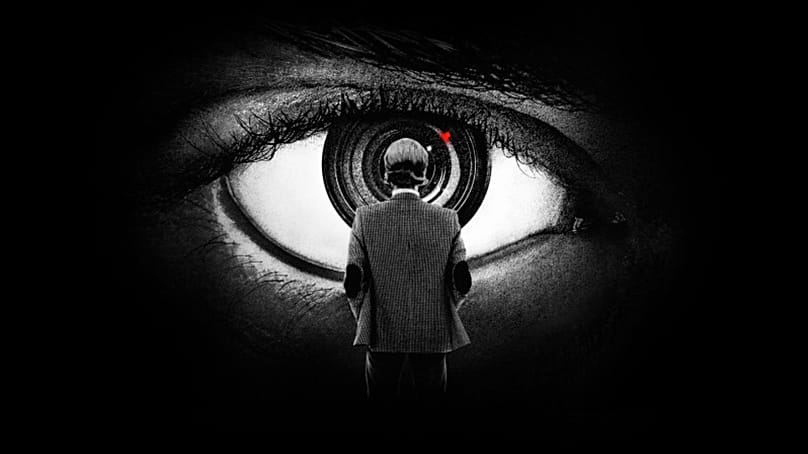
Orwell: 2+2=5 Le Pacte
People make fun of Donald Trump, but I just see it as an exaggeration of behaviour that I've seen in Europe. The same use of language to destroy people is being used. It's just a little bit more polite.
Raoul Peck
We see many clips of Trump and Putin in the film, but also a lot of European figures – whether it’s Giorgia Meloni, Viktor Orban, Eric Zemmour... How do you view Europe's reaction to the rise of totalitarianism compared to the US?
Well, that's the thing... Europeans - and it's always bad to say 'European' as if there is just one unity- but in most countries, you can see that there is still denial. There is a denial that it can never happen here. But we forgot how many years of Berlusconi we had. It's a typical example of how it can happen in Europe. People make fun of Donald Trump, but I just see it as an exaggeration of behaviour that I've seen in Europe. The same use of language to destroy people is being used. It's just a little bit more polite, a little bit more intellectual sometimes, with more general culture. But the words mean what they mean. And you can see that a lot of things that happened in the US at some point, five or 10 years later, they happened in Europe.
It’s the same thing with I Am Not Your Negro - I remember the first discussion I had in France and some other European countries, and people would say, ‘Wow, the bad Americans, they are so racist.’ As if there is no racism in Europe! So the denial is sometimes very deep in Europe because it's hard to face reality. It's hard to hear what other people are telling you, even though you are living side by side with them. That’s why I did the film Exterminate All The Brutes. I went to the bottom of that story and showed that it's a link in European history and that racism was transported to the United States. They didn’t start it. Europe started it. It’s a problem when you lose your connection with history. The ignorance is really incredible. Even though we had the facilities and the instruments all along...
Raoul Peck Euronews Culture
The United States has an incredible capacity of denial. There are things happening right now that you would never think possible even one year ago...
Raoul Peck
Your film shows us that we’ve been given the tools, we have the blueprint - whether it’s Orwell’s “Nineteen Eighty-Four" or the film adaptations of that work. Or even films like Terry Gilliam’s Brazil or Steven Spielberg’s Minority Report – both of which feature in your film. We’ve been warned, and as you say at the end: “All that matters has already been written”. While that can feel hopeful in the sense we already have the instruments to recognise repeated patterns and counter the rise of totalitarianism, we’re still being duped by the same tactics that have been used again and again.
As Sven Lindqvist says in Exterminate All The Brutes, everything is already there. We just don’t want to acknowledge it.
But you know, I think it’s the result of the fact that Europe in particular has been thinking that they’ve had peace for 50 years and if the danger is not that close, they're always pushing confrontation back. It's like Europe in the 30s - people were heading into one of the most severe world wars still believing that it was still OK. Hitler invaded Austria. No, no. That's okay. He will stop. He invaded Poland? OK, but he better stop there. And then, a few months later, we were in a world war.
What I’m saying is that there is a tendency: when you don't react it’s because you're in a very privileged position. You don’t react because you think you don’t have to. But when you realize, it's usually too late.
Raoul Peck Euronews Culture
One definition I quote is that the degradation of language is the condition for the degradation of democracy, and the perfect arithmetic is two plus two equals five. We need to always be able to say ‘two plus two equals four’. It’s as simple as that.
Raoul Peck
Orwell: 2+2=5 premiered in Cannes last year and went on to screen in Toronto, before being released in the US in October. Considering it pulls no punches when it comes to Trump and his administration, have there been any reactions from US audience members that surprised you or stayed with you?
Some were thankful. Others in disbelief. Some in denial. The United States has an incredible capacity of denial. There are things happening right now that you would never think possible even one year ago...
To the extent you could continue to update this film with fresh footage from the US to illustrate the point further – there would be a constant correspondence between Orwell's words and what’s happening right now. Trump dehumanising the Obamas in that AI video, for instance, or even Pete Hegseth being given the title of Secretary of War...
That title is completely Orwell. But you know, I had to be careful with this film not to make a film about Trump. I didn’t want to make a film exclusively about Donald Trump. It’s a film about Orwell, who wrote to give us the whole toolbox to recognise every attempt towards authoritarianism. And that was my job as well. Trump is only one example, and probably the worst today. But we have to understand that it's everywhere. Any institution can become something different than what they pretend to be if we don't look at it, if we're not active. Because Trump, he will pass... The damage will be huge because it will take a few decades to bring the paste back in the tube, if we ever can... But the tools remain the same, words will be destroyed, and those who talk of peace are only making war. One definition I quote is that the degradation of language is the condition for the degradation of democracy, and the perfect arithmetic is two plus two equals five. We need to always be able to say ‘two plus two equals four’. It’s as simple as that.
ADVERTISEMENT
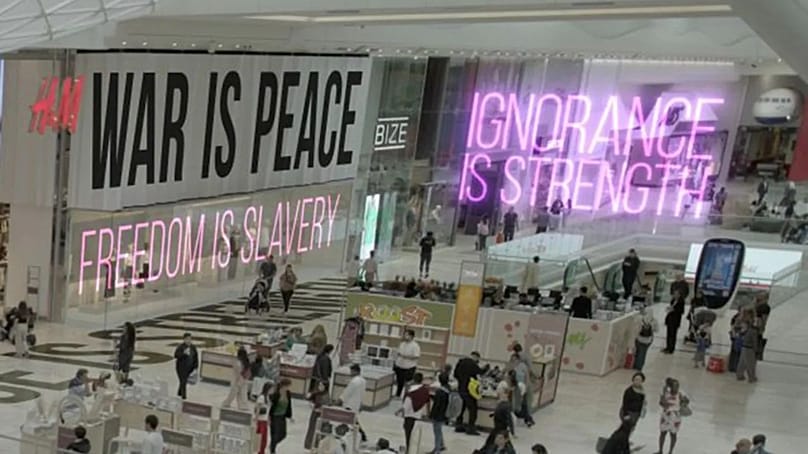
Orwell: 2+2=5 Le Pacte - Velvet Film
If I have to say that Netanyahu should be in prison, I will say it. (...) If you cannot say those words, there is no freedom of speech. There is no democracy if you can't even talk about this publicly.
Raoul Peck
The film explores this degradation of language, and one audience reaction that struck me was the sound of very uncomfortable laughter when the film lists examples and definitions of Newspeak. There was even applause when the definition for ‘Antisemitism 2024’ came up on screen, with the definition: “Weaponised term to silence critics of Israeli military action”. It sounded like it was a cathartic moment for some cinemagoers to read those words.
I was surprised myself about the response, which was overwhelming in the audience. One good friend of mine, who is from the Jewish religion even though she's not a follower, interpreted it differently, and I can understand why. But I understood that the reaction was the fact that many people felt that they were not able to criticize a right wing government making a genocide in Gaza. That was the response I felt. Because each time you touch the subject, you’re immediately accused of antisemitism. If they want to attack me on that, just watch my films. I've worked a lot on the Shoah and on genocide, so I can make the distinction between the use of the word and the propaganda that it's used for. If I have to say that Netanyahu should be in prison, I will say it. That's the reality. His own justice system has been trying to arrest him for many years. The war is also a result of that, because he doesn't want to go to jail. If you cannot say those words, there is no freedom of speech. There is no democracy if you can't even talk about this publicly.
Coincidentally or perversely, Orwell: 2+2=5 comes out around the same time as the Melania Trump documentary, Melania... It struck me that it would make for the ideal double bill with your film, because you'd have the so-called propaganda film on one side, and then Orwell giving you all the tools to explain what you've just seen on the other side...
First of all, I wouldn't call that a film. It’s not even propaganda, because propaganda can be more intelligent. This is basically a publicity stunt. It’s a bribe. This film happened because a network could spend $40 million to make it. I know many other filmmakers who would have loved to have that kind of money to make a more convincing film. And ethically speaking, no documentarian would accept to make a film where the subject is the executive producer of the film and basically calling the shots. That's ethically unacceptable. That's why I cannot call it a film.
Lastly, towards the end of your film, you include a segment with Edward Snowden. 10 years ago, he was everywhere and the subject of Laura Poitras’ doc Citizenfour. At one point, he says that his greatest fear is that “nothing will change”. And sadly, he’s been proven right to a certain degree. Do you share that same fear?
Absolutely. And it's heartbreaking because I see this young man in his 20s who sacrificed everything to tell us the truth. And now he's somewhere in exile in Russia. We just forgot about that. It's like a young man who goes to war for his nation and got killed and nobody cares. He took the risk to tell us what was going on and what he saw was absolutely a nightmare. And that nightmare is already there.
We lost that war long time ago. And now those potentially dangerous tools are in the hands of people who don't care about anything but themselves. I'm sure they don't even care if the world goes to war, because in their minds they will survive. It’s a kind of craziness that comes from people being drunk on their own power and don't see anything else. They’re not looking forward and they don't care what happens to America and the rest of the world after that. And they think they can get away with it. They won't get away with it. Even if it has been seen in other countries, I hope that Americans will not accept that the elections will be taken away from them. That's my whole hope.
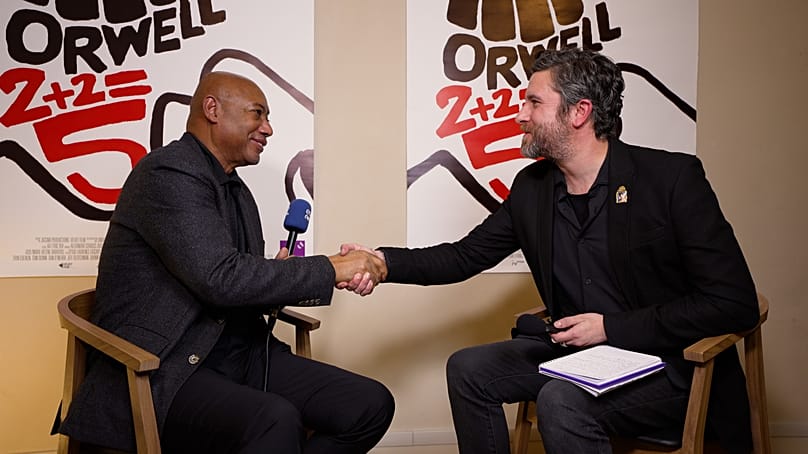
Raoul Peck and Euronews Culture's David Mouriquand Euronews Culture
Orwell: 2+2=5 is out in the US, Denmark and Portugal. The film is released in more European cinemas - France and Spain - this month. France's Institut Lumière (Lyon) is currently doing a retrospective of Raoul Peck's works. Stay tuned to Euronews Culture for our review of Orwell: 2+2=5.