Tuesday, March 10, 2026

Thinking About The Unthinkable: Iran’s Grand Plan To End U.S. Presence In The Middle East – OpEd


March 10, 2026 
By Michael Hudson


Iran and Donald Trump have each explained why failure to fight the current war to the end would simply lead to a new set of mutual attacks. Trump announced on March 6 that “There will be no deal with Iran except unconditional surrender,” and announced that he must have a voice in naming or at least approving Iran’s new leader, as he has just done in Venezuela. “If the U.S. military must utterly defeat it and bring about a regime change, or else you go through this, and then in five years you realize you put somebody in who’s no better.” It will take at least that long for America to replace the weaponry that has been depleted, rebuild its radar and related installations and mount a new war.

Iranian officials likewise recognize that U.S. attacks will keep being repeated until the United States is driven out of the Middle East. Having agreed to a ceasefire last June instead of pressing its advantage when Israeli and regional U.S. anti-missile defenses were depleted, Iran realized that war would be resumed as soon as the United States could re-arm its allies and military bases to renew what both sides recognize as a fight to some kind of final solution.

The war that began on February 28 can realistically be deemed to be the formal opening of World War III because what is at issue are the terms on which the entire world will be able to buy oil and gas. Can they buy this energy from exporters in currencies other than the dollar, headed by Russia and Iran (and until recently, Venezuela)? Will the present U.S. demand to control of the international oil trade require oil-exporting countries to price it in dollars, and indeed to recycle their export earnings and national savings into investments in U.S. government securities, bonds and stocks?

That recycling of petrodollars has been the basis of America’s financialization and weaponization of the world’s oil trade, and its imperial strategy of isolating countries that resist adherence to the U.S. ruler-based order (no real rules, but simply U.S. ad hoc demands). So what is at issue is not only the U.S. military presence in the Middle East – along with its two proxy armies, Israel and ISIS/al Qaeda jihadists. And the U.S. and Israeli pretense that it is about Iran having atomic weapons of mass destruction is as fictitious an accusation as that levied against Iraq in 2003. What is at issue is ending the Middle East’s economic alliances with the United States and whether its oil-export earnings will continue to be accumulated in dollars as the buttress of the U.S. balance of payments to help pay for its military bases throughout the world.

Iran has announced that it will fight until it achieves three aims to prevent future wars. First and foremost, the United States must withdraw from all its military bases in the Middle East. Iran has already destroyed the backbone of radar warning systems and anti-aircraft and missile defense sites in Jordan, Qatar, the United Arab Emirates (UAE) and Bahrain, preventing them from guiding U.S. or Israeli missile attacks or attacking Iran. Arab countries that have bases or U.S. installations will be bombed if they are not abandoned.


The next two Iranian demands seem so far-reaching that they seem unthinkable to the West. Arab OPEC countries must end their close economic ties to the United States, starting with the U.S. data centers operated by Amazon, Microsoft and Google. And they not only must stop pricing their oil and gas in U.S. dollars, but disinvest in their existing petrodollar holdings of the U.S. investments that have been subsidizing the U.S. balance of payments since the 1974 agreements that were made to gain U.S. permission to quadruple their oil-export prices.

These three demands would end U.S. economic power over OPEC countries, and thus the world oil trade. The result would be to dedollarize the world’s oil trade and re-orient it toward Asia and Global Majority countries. And Iran’s plan involves not only a military and economic defeat for the United States, but an end to the political character of the Near Eastern client monarchies and their relations with their Shi’ite citizens.

Step 1: Driving the United States out of its Middle Eastern military bases

Iraq’s parliament has continued to demand that U.S. forces leave their country and stop stealing its oil (sending most of it to Israel). It has just approved legislation yet again directing that American forces leave their country. Meeting with senior advisor to Iraq’s interior minister and his accompanying military delegation in Tehran last Monday (March 2), Iran’s Brigadier General Ali Abdollahi reiterated the demand that Iran has been making for the last five years, ever since Donald Trump closed his first administration on January 3, 2020. by ordering the treacherous assassination of the two top Iranian and Iraqi anti-terror negotiators, Qassem Soleimani and Abu Mahdi al-Muhandis, who were seeking to avoid an all-out war. Seeing that Trump is now continuing the same policy, the Iranian commander stated: “Expulsion of the United States is the most important step toward the restoration of security and stability to the region.”


But all the Arab kingdoms are hosting U.S. military bases. Iran has announced that any
country permitting U.S. aircraft or other military forces to use these bases will risk immediate attack to destroy them. Kuwait, Bahrain and the United Arab Emirates have already come under attack, leading Saudi Arabia to promise Iran not to permit the U.S. military to use its territory for part of its war.

Spain has banned the U.S. use of its airfields to support its war against Iran. But when its Prime Minister Pedro Sánchez forbade the United States from using them, President Trump pointed out at an Oval Office news conference that there was nothing that Spain really could do to prevent the U.S. air force from using the Rota and Morón installations in southern Spain that the U.S. and Spain share, but which remain under Spanish command. “And now Spain actually said we can’t use their bases. And that’s all right, we don’t want to do it. We could use the base if we want. We could just fly in and use it, nobody is going to tell us not to use it.” What would Spain do to prevent it, after all? Shoot down the U.S. aircraft?

This is the problem confronting the Arab monarchies if they try to deny U.S. access to their own U.S. bases and airspace to fight Iran. What can they do?

Or more to the point, what may they be willing to do? Iran is insisting that Qatar, the United Arab Emirates, Bahrain, Kuwait, Saudi Arabia, Jordan and other Near Eastern monarchies close all U.S. military bases in their kingdoms and block U.S. use of their airspace and airports as a condition for not bombing them and extending the war to the monarchic regimes themselves.

Refusal – or inability to prevent the U.S. from using bases in their countries – will lead Iran to force regime change. This would be easiest in countries in which Palestinians are a large proportion of the labor force, as in Jordan. Iran has called for Shi’ite populations in Jordan and other Near Eastern countries to overthrow their monarchies to break away from U.S. control. There are rumors that Bahrain’s king has left the country.

Step #2: Ending the Middle East’s commercial and financial linkages to the U.S.


Arab monarchies are under further pressure to meet Iran’s ultimate demand that they decouple their economies from that of the United States. Ever since 1974, they have tied their economies to the United States. Most recently, Bahrain, the UAE and Saudi Arabia have sought to use their energy resources to attract computer data centers, including Starlink and other systems that have been associated with U.S. regime-change and military attacks on Iran.

Opposing U.S. plans to tightly integrate its non-oil sectors with the Arab OPEC Middle East, Iran has announced that these installations are “legitimate targets” for its drive to expel America from the region. One cloud computing manager suggested that Iran’s AWS attack on Amazon’s data center was targeted because it was serving military needs, much as Starlink (which the UAE is interested in financing) was used in February in the U.S. attempt to mobilize demonstrations against Iran’s government.
Step #3: Ending the recycling of OPEC oil exports into U.S. dollar holdings

The most radical Iranian demand has been for its Arab neighbors to dedollarize their economies. That is a key to preventing U.S. businesses from dominating their economies and hence their governments. An Iranian official told CNN that Iran has accused companies that buy U.S. government debt and invest in Treasury bonds of being partners in the war against itself, because it sees them as financiers of this war. “Tehran considers these companies and their managers in the region as legitimate targets. These individuals are warned to declare their capital withdrawal as soon as possible.”

Saudi Arabia, UAE, Kuwait, and Qatar are indeed discussing withdrawing from U.S. and other investments, as Iran’s blocking of Hormuz has led them to stop producing oil and LNG now that their storage capacity is full. Their income from energy, shipping and tourism has stopped. The Gulf States met on Sunday, March 8, to discuss drawing down their $2 trillion in U.S. dollar investments (mainly from Saudi Arabia). The threat is that this is an initial step to diversifying OPEC investment outside of the U.S. dollar.

In conjunction with U.S. surrender of its military bases in the Middle East, such decoupling from the dollar would greatly reduce U.S. control of Middle Eastern oil. It would end the U.S. ability to use this oil trade as a chokepoint with which to coerce other countries into adhering to Trump’s America First ruler-based order (his own whims, with no clear rules).


For the monarchies themselves, the changes demanded by Iran to end the U.S. war to control the Middle East may have an effect similar to the aftermath of World War that ended the epoch of European monarchies. In this case, it may end monarchic regimes in many of the countries whose economies and political alliances have been based on an alliance with the United States.

For starters, pressure is now on Saudi Arabia, Qatar, Egypt, Jordan, Bahrain, Kuwait and the United Arab Emirates, all of which have agreed to join Trump’s Board of Peace. Indonesia, with the world’s largest Islamic population, has just withdrawn its offer to provide 8000 troops for his Gaza “peace plan.” And Iran is pressuring Arab monarchies to follow suit by withdrawing to protest U.S. policy.

Will they do so? And will they go so far as to end U.S. access to bases in their territory? runs if they try to avoid being offensive to the United States, they will leave themselves open to Iranian accusations that they are not really opposing the war. But if they follow Iran’s request, they run the risk that the United States may simply seize or at least freeze their dollar holdings to force them to change their mind.

Iran is putting pressure on the most U.S.-friendly Arab monarchies. The last few days have seen it attack two Saudi oil depots, and a drone has hit a desalination plant in Bahrain in response to an attack launched from Bahrainian territory on Iran’s desalination plant at Qeshm Island. Most of the Arab kingdoms depend on desalination to a much higher degree, topped by Saudi Arabia at 70% and Bahrain at 60%. That makes Bahrain’s attack akin to the folly of fighting with bricks while living in a glass house oneself.
Collateral effects of Iran’s goal to drive the United States out of the Middle East

Iran will escalate as Israel and the U.S. military exhaust their supply of anti-aircraft and missile defense, enabling Iran to launch its serious attack on a scale that it stopped short of last June when it agreed to a ceasefire. It will start using its most sophisticated missiles to attack Israel and other U.S. proxies.

There’s nowhere to put additional Arab oil production now that Iran has closed the Strait of Hormuz to all but its own ships, most of which are carrying oil destined for China. The storage tanks are full, with nowhere to save new production, which has therefore been forced to stop. And as for liquified natural gas, which is exported mainly by Qatar, its LNG gas works have been bombed. They will have to be rebuilt, which will take two weeks plus an equal time to put them back online by cooling this gas properly.

In any case, no ships are even trying to approach Hormuz because Lloyd’s of London is not issuing insurance policies. The U.S. military has recently sunk or seized Russian ships carrying oil, but the soaring oil prices have led it to permit such transfers in order to stem global inflation. Treasury Secretary Scott Bessent has said the Treasury Department is examining whether additional sanctioned Russian crude shipments could be released to the market. “We may unsanction other Russian oil,” he said. “There are hundreds of millions of barrels of sanctioned crude on the water … by unsanctioning them, Treasury can create supply.” His remarks follow a U.S. decision to issue a temporary 30-day waiver allowing Indian refiners to purchase Russian oil in an effort to maintain global supply.


Throughout the world, rising oil and gas prices will force economies to choose between having to cut back domestic social spending in order to pay their dollar debts. This war is splitting the US/NATO West from the Global Majority, by creating strains that Japan, Korea and even Europe no longer can afford. The chaotic effect of the U.S. attack has destroyed the narrative that has enabled U.S. diplomats to demand subsidies and “burden sharing” for its global military spending. The predicate fiction is that the world needs U.S. military support to protect it against Russia and China, and now Iran, as if these countries pose a real threat to Europe and Asia.

But instead of protecting the rest of the world by waging the present Cold War, the chaos in world oil and gas markets resulting from its attack on Iran shows that the United States actually is the greatest threat to the security, stability and prosperity of its allies. Its attack has fallen largely on its closest allies – Japan, South Korea and Europe. Their gas prices have soared by 20% and are now on their way further upward today. Korea’s stock market has plunged 18% in the last two days. All this is shifting support for removing U.S. control of Near Eastern oil and reorienting it to a market free from U.S. demands for control and dollarization of the world’s energy trade.


Michael Hudson

Prof. Hudson is Chief Economic Advisor to the Reform Task Force Latvia (RTFL). Michael Hudson is President of The Institute for the Study of Long-Term Economic Trends (ISLET), a Wall Street Financial Analyst, Distinguished Research Professor of Economics at the University of Missouri, Kansas City and author of Killing the Host (2015) Super-Imperialism: The Economic Strategy of American Empire (1968 & 2003), Trade, Development and Foreign Debt (1992 & 2009) and of The Myth of Aid (1971). For more of his writing check out his website: http://michael-hudson.com

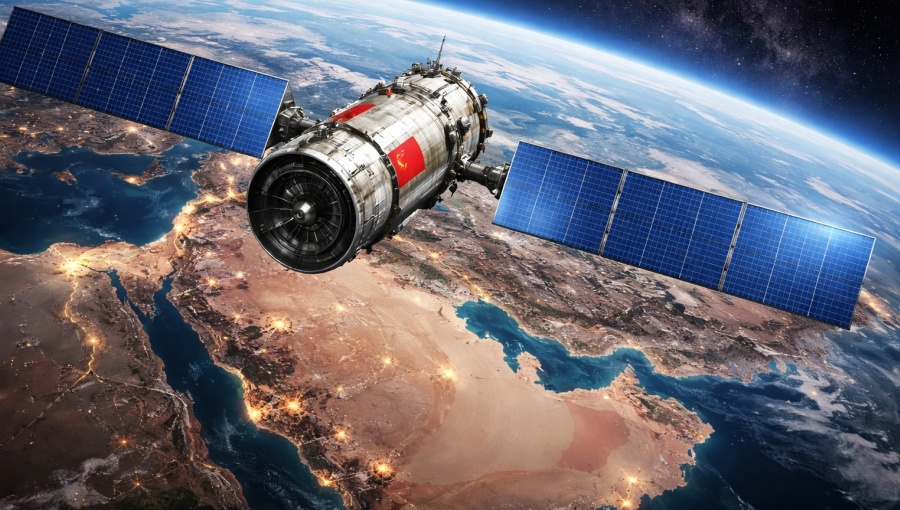
 

Iran turns to China’s BeiDou satellites to outfox Israeli anti-drone electronic warfare defences

Iran turns to China’s BeiDou satellites to outfox  Israeli anti-drone electronic warfare defences
Iran’s adoption of China’s BeiDou satellite navigation system has neutered Israeli electronic warfare advantages by making drones and missiles harder to jam and more accurate. / bne IntelliNews
By Ben Aris in Berlin March 9, 2026

Iran dumped reliance on the US GPS satellite network to guide drones and missiles and switched to China’s BeiDou satellite navigation system that is complicating Israel’s air defence operations.

Since the 12-day war with Israel last June, Tehran has upgraded its satellite intelligence that reportedly will  reduce the effectiveness of Israel’s electronic warfare tactics that disrupted Iranian drones and missile attacks in the short summer campaign, according to defence analysts.

Israel made very effective use of Western-designed electronic warfare systems last year, which successfully jammed the swarms of inbound Iranian drones and missiles that were dependent on US GPS signals. But in the last year, Iran swapped to China’s increasingly sophisticated BeiDou-3 (BDS-3) navigation network.

“Unlike the civilian-grade GPS signals that were paralysed in 2025, BDS-3’s military-tier B3A signal is essentially unjammable,” bne IntelliNews’ military analyst Patricia Marins says, noting that the system uses “complex frequency hopping and Navigation Message Authentication (NMA), which prevents ‘spoofing’.”

Electronic warfare systems commonly used by Israel have historically attempted to disrupt incoming drones by sending false coordinates, forcing them off course or causing them to crash. The BeiDou-equipped systems can filter out such interference.

“Israeli jammers can no longer trick drones into false coordinates; the BDS-3 hardware simply rejects the interference, maintaining a 98% positioning success rate,” according to analysts.

The navigation system may also improve targeting accuracy. BeiDou-3 operates with a triple-frequency architecture designed to minimise atmospheric interference.

“This allows Iranian missiles to eliminate ionospheric errors in real time, achieving a Circular Error Probability (CEP) of under five metres,” Marins said. The result could shift Iranian strike doctrine from wide-area barrages towards more precise targeting of military infrastructure.

Another feature highlighted by defence observers is BeiDou’s Short Message Communication (SMC) capability, which allows two-way communication with devices using the network. “BDS-3 is not just a beacon; it is a two-way tactical data link,” Marins said, enabling commanders to communicate with drones or missiles up to 2,000 km away while they are in flight.

Under the system, drones could potentially be redirected in real time. “If Chinese spy satellites detect a Patriot battery or an F-15E lock, a 560-bit ‘instruction packet’ is sent via satellite to the drone,” analysts said. “The drone instantly activates a pre-programmed avoidance logic—switching from a standard flight path to unpredictable high-G manoeuvres or sea-skimming profiles.”

The combination of satellite intelligence and networked weapons could form what analysts describe as a more resilient battlefield architecture. “By marrying Chinese ‘Eyes’ (satellite intelligence) to the Iranian ‘Fist’ (kinetic power), Tehran has established a resilient, intelligentised kill chain that bypasses Western technological leverage entirely.”

Some commentators argue the development highlights a broader shift in military technology. “The US and Israel are still fighting a 1990 Desert Storm warfare — Iran is fighting the 21st Century warfare with space surveillance and intelligentised capabilities built into every weapon,” Marins said.

Last week Secretary of War Pete Hegseth admitted that the US had underestimated the effectiveness of Iran’s drones. As it runs low on Patriot interceptor ammo, the US has introduced its own Merops interceptor drones in an effort to counter Iran’s cost-to-kill ratio advantage that allows it to overwhelm US defences with swarms of sophisticated, but cheap to make, drone swarms.

High quality Chinese satellite intelligence is playing an increasingly important role in the Iran war and levelled the playing field in terms of intelligence support as China’s copiabilities now match the US, ending its previous monopoly on real-time satellite intel for use in the battlefield.

Russia and Ukraine offering help

Unconfirmed reports claim that Russia has also been providing Iran with satellite intelligence, but no concrete evidence has been produced so far. Russia has previously launched Iranian reconnaissance satellites and has reportedly shared satellite imagery with Iran and some of its regional allies.

The Wall Street Journal reported in 2024 that Russian military intelligence provided satellite targeting data to Yemen’s Houthi movement to help identify vessels in the Red Sea.

While there is no confirmed evidence that Russia is providing real-time targeting support in this conflict, there has been growing cooperation between Russia’s space surveillance, China’s BeiDou navigation system and Iran’s missile and drone programmes, which points to an emerging technological alignment designed to reduce reliance on Western satellite infrastructure.

In 2022 Moscow launched Iran’s Khayyam earth-observation satellite aboard a Russian Soyuz rocket, giving Tehran access to higher-resolution imagery than it previously possessed. Western officials say the satellite has been used for military reconnaissance, although both countries have described the programme as civilian. Iran has increasingly relied on Russian launch services, satellite imagery and technical assistance to expand its space capabilities.

Tehran and Russia have also cooperated closely on drone development. In the early stages of the Ukraine, Russia imported thousands of Iranian-made Shahed drones, but following a technology swap in 2024 it built its own large drone factory in the Alabuga Special Economic Zone in Tatarstan. Moreover, the Kremlin has invested heavily in improving the design of what the Russian call the Geran-2 drone, based on the Iranian-designed Shahed-136 loitering munition, most recently upgrading to the jet-powered Geran-5, with help from China. Russia has also developed very sophisticated electronic weapons and countermeasures during its drone arms race with Ukraine, although there are no reports that it has shared this technology with Iran.

Facing pressure from Iranian drone and missile attacks, several Gulf states have turned to Ukraine to purchase its advanced interceptor drone systems in the last week as their supplies of Patriot missiles dwindle, Bankova confirmed on March 9. After four years of war with Russia, Ukraine can now produce 50,000 interceptor drones per month and export between 5,000 and 10,000 units without affecting Ukraine’s own defence needs, according to Colonel Pavlo Yelizarov, deputy chief of Ukraine’s air force.

WAR IS ECOCIDE

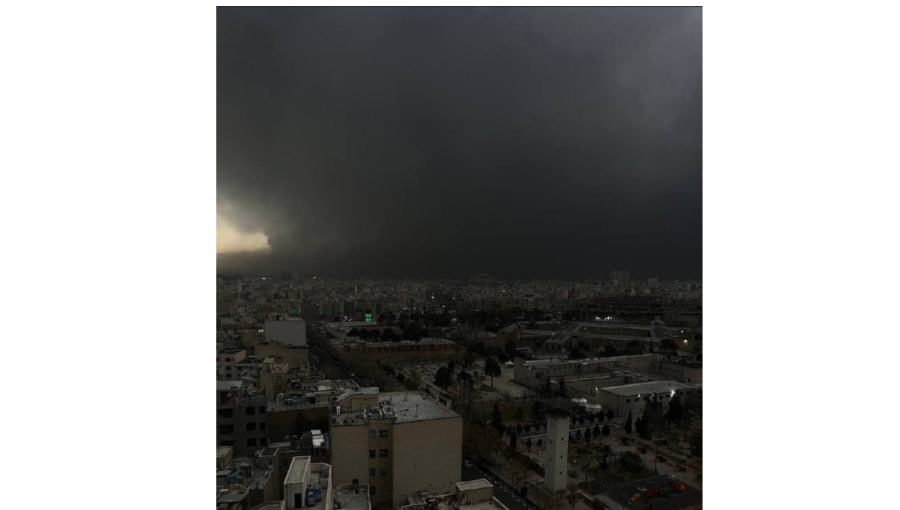
Missile strikes on Tehran fuel depots creates toxic smoke cloud, headed for Central Asia

Missile strikes on Tehran fuel depots creates toxic smoke cloud, headed for Central Asia
Thick toxic smoke from missile-struck fuel depots in Tehran on March 8 has spread across the Iranian capital and drifted towards Central Asia, prompting health warnings over hazardous pollution and potential acid rain. / bne IntelliNews
By Ben Aris in Berlin March 9, 2026


Missile strikes on fuel storage facilities in and around Tehran on March 8 triggered massive fires and sent toxic smoke across the Iranian capital, raising health concerns for millions of residents and prompting warnings of hazardous pollution drifting towards neighbouring countries.

Central Asian authorities issued health advisories and air quality alerts after vast plumes of toxic smoke drifted eastwards, raising concerns across the region about hazardous pollution and the possibility of acid rain.

Meteorological agencies across Central Asia began monitoring the movement of the smoke plume as satellite imagery and atmospheric models indicated it was travelling north-east across the Caspian region towards Kazakhstan and other parts of the region.

Four oil depots and a petroleum logistics site in Tehran and the nearby city of Karaj, west of the capital, were hit in the strikes, according to local authorities. Fires erupted after fuel tanks were breached, sending thick black clouds of smoke into the sky and igniting petrol that spilled into surrounding streets.

Video footage circulating online showed flames spreading through residential areas near one depot, with shops and homes ablaze as burning fuel ran along roadways. Local officials said six people were killed and 20 wounded at one of the targeted sites.

The fires released a mix of petroleum products and industrial chemicals into the air, creating dense smoke that spread across much of the city. Authorities warned that the fumes could pose serious health risks to residents in the metropolitan area of roughly 10mn people.

Rain fell over Tehran the following morning, prompting warnings from officials about possible chemical contamination. Residents reported throat irritation and burning eyes after the rainfall. The smog from the fires was so thick resident’s turned on headlamps to drive during the day and some have likened the effect to a “nuclear winter” following a major explosion.

Esmaeil Baqaei, spokesman for the Iranian foreign ministry, said the strikes “are releasing hazardous materials and toxic substances into the air”, which are “endangering lives on a massive scale”. Officials said the fires released complex hydrocarbons as well as sulphur and nitrogen oxides that can form acidic compounds in the atmosphere.

Iran’s environmental agency advised residents to remain indoors, while the Iranian Red Crescent warned that airborne chemicals could contribute to acid rain and cause damage to skin and lungs. It advised residents to avoid switching on air conditioning or going outside immediately after rainfall, The Guardian reported.

Iran’s UN ambassador Amir Saeid Iravani said the broader US-Israeli attacks have killed at least 1,332 Iranian civilians and wounded thousands.

Meteorological forecasters said pollution from the fires could move eastwards across Central Asia. The Caspian Post reported that calm winds, fog and temperature inversion expected in Almaty, Kazakhstan, on March 9 could trap pollutants close to the ground and worsen air quality.

Regional health experts have advised residents to limit outdoor activity and reduce time spent outside, particularly those with chronic lung, cardiovascular or allergic conditions.

Public health departments in parts of southern Kazakhstan and Kyrgyzstan issued precautionary guidance urging residents to monitor air quality updates and prepare for possible pollution episodes. Authorities also recommended that schools limit outdoor activities and that people with chronic lung or allergic conditions carry necessary medication.

Satellite imagery circulating among regional monitoring agencies showed thick smoke bands extending hundreds of kilometres from northern Iran, though the extent of cross-border pollution will depend heavily on wind patterns in the coming days.


US running out of explosives due to Tennessee plant bottleneck

US running out of explosives due to Tennessee plant bottleneck
The hidden bottleneck in America’s war machine is not missiles but the explosives inside them, as limited domestic production of critical compounds like RDX and HMX threatens to constrain the supply of modern munitions. / bne IntelliNews
By Ben Aris in Berlin March 9, 2026

The US is running out of munitions for the Iran campaign, reports the Wall Street Journal. The bottleneck isn't the lack of missiles. It's a lack of explosives.

The United States faces growing production constraints in its ability to produce high-explosive compounds. Nearly all US warheads and propellants rely on two compounds — RDX and HMX — which are produced domestically at a single facility, the Holston Army Ammunition Plant in Kingsport, Tennessee.

Operated by defence contractor BAE Systems, the plant is currently the only producer of those explosives in the United States. During WWII, the facility operated ten production lines and shipped more than 450,000kg of explosives per day at its peak in 1944. Today the plant runs only two production lines.

As bne IntelliNews reported, the West has been badly caught out by its reluctance to sign defence sector procurement contracts despite fighting a four-year-long proxy war against Russia in Ukraine. The lack of those deals meant the privately-owned defence contractors have been unable to make the investments to up production capacity. With geopolitical tensions soaring and the outbreak of several large scale wars, demand has rapidly overtaken production capacity almost across the board.

In an effort to expand output, the US Army awarded BAE Systems a contract worth $8.8bn in December 2023 aimed at modernising and increasing production capacity at Holston. Production rose from about 3.6 tonnes annually to roughly 6.8 tonnes in 2024, according to the report. But even with the increase, the facility’s output remains less than 5% of its wartime peak.

The lack of the explosive production capacity is the tip of a broader structural vulnerability iceberg within the US defence industrial base. In a 2023 review of the munitions supply chain, the US Army identified more than 100 single points of failure across production networks tied to explosives and related materials.

The reliance on a single domestic supplier also contrasts with developments in China, which has been mass-producing newer generations of military explosives since 2011, according to the report.

The gap has raised concerns within the Pentagon about the resilience of supply chains for critical energetic materials, particularly as global demand for artillery shells, missiles and precision-guided weapons has surged in recent years.


As bombs fall, gold prices rise — and Poland is taking notice

Private investors are increasingly opting for bullion coins
Copyright Paweł Głogowski

By Aleksandra Galka Reczko
Published on 

Geopolitical unrest is driving private investors away from virtual instruments and towards physical bars and coins — assets you can lock in a safe, carry in a suitcase or bury under the floorboards.

US and Israeli strikes on Iran have sent gold prices to a record $5,420 per ounce and triggered a rush into physical bullion, with buyers in Shanghai paying a $30 premium over London valuations, as markets recorded their sharpest flight to safe-haven assets in years.

Pawel Mazurek, president of Poland's Mazovia Mint, said demand for physical bullion had jumped sharply in the aftermath of the strikes.

"Some purchases are for hedging purposes, but some are unfortunately driven by emotions and fears of escalation," he explained.

Paweł Mazurek, president of the Mazovia Mint, notes the year-on-year increase in interest in physical bullion among private investors in Poland. Mennica Mazovia

The pattern is not new. When Russia launched its full-scale invasion of Ukraine in February 2022, Mazurek said he learned of the attack not from the news but from his own order books.

"We saw it four years ago when the war in Ukraine broke out. Our company became aware that something bad had happened not [just] because of the headlines or the news, it was because we saw an exponential increase in interest in buying gold, queues in front of the company," Mazurek recalled.

"The war was a factor that influenced people to buy gold en masse [in] panic."

Poles are increasingly choosing to invest in physical bullion. Paweł Głogowski

Gold at home vs in Central Banks

According to the Forex Club, 21% of Poles began investing in gold in 2025, with the largest percentage (12%) entering the market between April and November.

Mazurek said the trend was visible in his own sales figures.

"Interest in physical bullion is growing year-on-year by 30%-50%, mainly among individual buyers," he said, noting that the average transaction values had also risen, partly reflecting higher spot prices.

1-50 gram bars and bullion coins are the most popular entry points.

Despite the growth, Poland remains a laggard by regional standards.

Between 10% and 15% of Poles hold gold in their portfolios, against a markedly higher share among their Western neighbours.

In Germany, private households hold an estimated 9,000-9,300 tonnes — more than the Bundesbank's 3,350-3,378 tonnes.

In Poland the position is reversed: the National Bank holds around 550 tonnes, while private holdings are estimated at 200-500 tonnes.

At the start of 2023, the average Pole held roughly three grams of gold while the average German held around 103 grams.

Globally, private gold ownership is concentrated in South and East Asia.

India leads with an estimated 26,000-34,600 tonnes, largely in jewellery passed down through generations.

China holds 23,000-31,000 tonnes, the United States around 26,000 tonnes.

Turkey is a notable outlier in its region: the World Gold Council recorded 80 tonnes of purchases in 2022 alone, driven by inflation that reached 80% annually and deep mistrust in the lira.

Central banks have been accumulating gold at record levels for four consecutive years, with institutions from the ECB to those in China and India to diversify reserves and reduce dollar exposure amid deepening geopolitical fragmentation.

According to Pawel Mazurek, this should be a signal to private investors:

"Private investors are not so much copying, but... I think they are taking a good example from central banks, because the physical gold that is being bought by central banks is to hedge sovereign finances."

"So since central banks are making such large purchases and keeping large stockpiles of physical gold, it is a signal that individual investors should also consider securing their private wealth in physical bullion."

Changing investor awareness

Patrice Mesnier, founder of Oldenburg Capital Partners in Luxembourg, sees the current demand as more than a reaction to headlines.

"The immediate reaction is predictable: when there is a major geopolitical rupture, private buyers reach for coins and bars. What distinguishes the current moment is the persistence of this demand," he explained to Euronews.

Patrice Mesnier, Oldenburg Capital Partners Oldenburg Capital Partners

Mesnier argues that retail demand had been building for months before the latest escalation, driven by something more than defensive instinct.

"Buying is no longer purely defensive. Investors increasingly understand that the scarcity of gold is fixed, while the supply of fiat money is volatile and reactive, and this shift in awareness does not disappear as soon as the headlines go quiet."

He locates the deeper shift in a slow erosion of confidence in dollar-denominated assets, compounded by the inflationary drag of prolonged geopolitical fragmentation.

"Gold retains a stable intrinsic value precisely because its production cannot increase significantly," he said, adding that above-ground reserves are vast while in-ground deposits remain limited — a fundamental reality the current crisis does nothing to alter.

The advantages of physical gold

Aneta Mazurek of the Mazovia Mint points first to mobility.

When Ukrainians fled in 2022, she notes, they could only take what fit in a pocket or suitcase and gold, unlike property, art or vehicles, can be carried out in an emergency.

The second advantage is fiscal. Under EU law, the supply, intra-Community acquisition and import of investment gold are exempt from VAT.

Aneta Mazurek, Head of Communications Mennica Mazovia Mennica Mazovia

Thirdly, global liquidity:

"Gold can actually be sold all over the world for any currency. It's very liquid. So actually, when it comes to buying it is very simple, because you just have to have the money and pay for it. And when it comes to selling it is exactly the same. Gold is always in demand."

Mazurek adds that gold is easily divisible — available in formats such as combibars, which are scored like chocolate — and straightforward to store. "A kilogram, she notes, worth around £600,000, is roughly the size of a smartphone."

The price of gold ended 2025 at around $4,000 per ounce, rising as high as $5,500 in January 2026.

This spike was driven not only by geopolitics but also by the inflation crisis.

Forecasts for the end of 2026 from analysts at institutions such as JP Morgan, Wells Fargo, UBS, CIBC, Deutsche Bank and Société Générale even point to levels in excess of $6,000.


Ukraine's Oschadbank demands money back

and denies opposition links after Hungary

cash seizure


By Sandor Zsiros
Published on 

The bank is demanding the return of $40m, €35m and 9kg of gold seized by Hungarian authorities near Budapest, flatly rejecting Hungarian claims the funds were linked to organised crime or opposition party financing. The personnel on the cash-carrier have been banned from the EU for three years.

Ukraine's Oschadbank is demanding the immediate return of cash and gold confiscated by Hungarian authorities last week, lawyers representing the bank in Hungary told Euronews.

The incident triggered a diplomatic row after Hungarian police raided a convoy of cash carriers near Budapest and seized $40 million, €35 million and 9kg of gold.

Hungary expelled seven Ukrainian nationals accompanying the transport the following day and opened an investigation into suspected money laundering.

Horváth Lawyers, a law firm representing Oschadbank and its seven employees in Hungary, told Euronews that the Ukrainian vehicles were carrying out a routine transfer from Austria's Raiffeisen Bank to Oschadbank's headquarters in Kyiv.

'Conducted lawfully'

"The origin, purpose, and legal title of the funds can be clearly identified by documentary evidence, and there is no evidence to suggest that the money is derived from or related to criminal activity," the law firm said, adding that the seizure must be ended immediately.

The lawyers noted that Oschadbank had been conducting cash transfers through Hungary since Russia launched its full-scale invasion of Ukraine in 2022, with the knowledge of Hungarian authorities.

"The transfer was conducted lawfully, under the control of the relevant authorities," they said.

Ukrainian Foreign Minister Andrii Sybiha accused Hungary of kidnapping and state terrorism, while his Hungarian counterpart, Péter Szijjártó, said the funds could be linked to criminal activities.

"The question rightly arises whether this is not the money of the Ukrainian war mafia," Szijjártó said.

János Lázár, Hungary's minister for construction and transport, suggested the funds could be used to finance opposition parties ahead of Hungarian elections.

Horváth Lawyers rejected both claims.

"The data from the proceedings do not support those political statements. Based on our knowledge, the case has no Hungarian party financing implications and no Ukrainian criminal groups have been implicated," the firm said.

Seven Ukrainians banned from EU

Horváth Lawyers also disclosed that the seven Ukrainian nationals they represent have been banned from the Schengen area and the broader European Union for three years, with Hungary citing national security grounds.

"The case also contains several elements that are of legal concern, including the lack of substantive content of the national security justification, the limited transparency of the reasoning behind the decision, and the narrow scope of legal remedies," the firm said.

The lawyers indicated the concerns raised could form the basis of a case before the European Court of Human Rights.