Wednesday, March 18, 2026

Israel Launches “Targeted” Invasions of Lebanon as World Focuses on Iran War

A senior Israeli official told Axios the military is “going to do what we did in Gaza.”
March 16, 2026

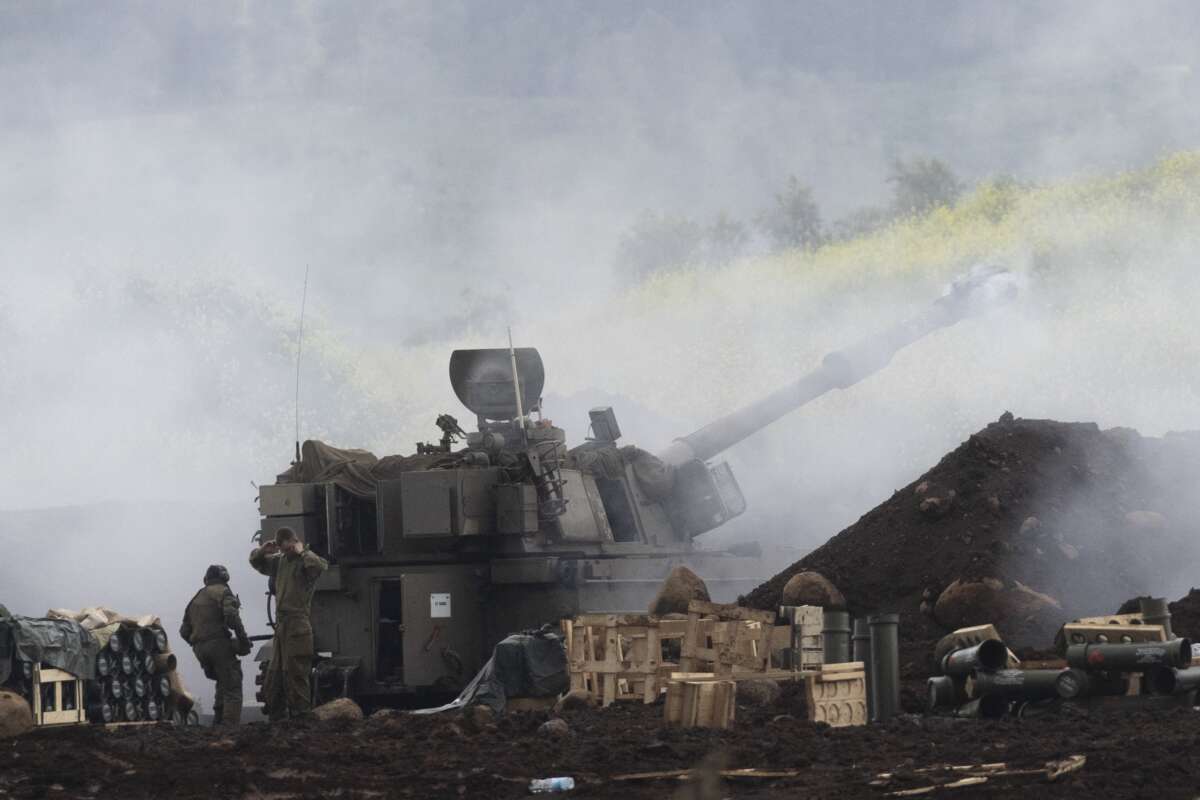
An Israeli artillery unit fires towards southern Lebanon as seen from a position on the Israeli side of the border on March 15, 2026.Amir Levy / Getty Images

Israel announced on Monday that it is expanding its ground in southern Lebanon, claiming to target Hezbollah as Israel’s defense minister pledges that “hundreds of thousands” of people already forcibly displaced by Israeli attacks “will not return” for the indefinite future.

In a statement, Israeli forces said that soldiers are carrying out “limited and targeted ground operations” in southern Lebanon. The purpose is to “establish and strengthen a forward defensive posture … to create an additional layer of security for residents of northern Israel,” the statement claims, ignoring that Hezbollah has maintained in previous conflicts that it would not retaliate against Israel if Israeli forces withdrew from southern Lebanon.

Axios reported last week that Israel is planning a massive expansion of its ground invasion of Lebanon with the goal of seizing the entire area south of the Litani River. This area is protected under a UN Security Council resolution as part of a decades-old ceasefire agreement, and makes up about 8 percent of the area of the country.

A senior Israeli official told Axios the military is “going to do what we did in Gaza.”

Israel and Hezbollah reached a ceasefire agreement in late 2024, but Israel violated it over 10,000 times in the first year, UN officials said. Now, Israel has unilaterally ended the ceasefire — though some argue Israel never adhered to it in the first place — and severely escalated bombardments and forced displacement in Lebanon, as the world focuses on Israel and the U.S.’s horrific war on Iran.


Israel Has Dropped 4k Bombs on Iran — Surpassing 12-Day War in Just 4 Days
The death toll has already surpassed that of last year’s war, with Iranian officials reporting 1,230 killed so far.  By Sharon Zhang , Truthout March 5, 2026


In just the past two weeks, Israel has killed over 880 people in Lebanon, including over 100 children and dozens of health care workers, according to the country’s health ministry.

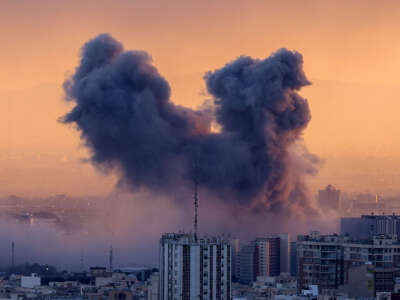
Israel has bombed residences, health care centers, and other civilian infrastructure, including in the capital of Beirut. The attacks have created a “humanitarian catastrophe,” as one UN official warned, forcing thousands to take shelter in makeshift shelters or on the streets. The UN says that Israel has forcibly displaced 800,000 people thus far.

Israeli Defense Minister Israel Katz pledged on Monday to continue Israel’s displacement campaign.

“Hundreds of thousands of Shi’ite residents of southern Lebanon who ​have evacuated or are evacuating their homes in southern Lebanon and Beirut will not return to areas south of the Litani line until the safety of northern residents is ensured,” referring to northern Israel, Katz said in a statement.

Reuters reports that, over the weekend, Israeli forces surrounded the key town of Khiam, in southern Lebanon, close to the border of Israel and Syria’s Israeli-occupied Golan Heights.

The town is on a hilltop that can oversee large swaths of the area, and is situated near the choke point where the demarcation of southern Lebanon by the Litani River and the “Blue Line” that establishes Lebanon’s southern border almost meet. Analysts say that Israel could use the town strategically to advance military occupation, potentially using it to cut off communication between parts of the occupied area.

Some residents of Lebanon, already having faced years of bombardments from Israel, say they fear that Israel will carry out an extended occupation like its 18-year occupation of Lebanon that lasted from 1982 to 2000.

“I feel like this is preparation for an occupation, and I’m afraid history will repeat itself,” said Iman Ibrahim, a resident of Blida, a town in south Lebanon, to The New York Times. “Everything we used to hear from our grandparents about occupation, we’re living it now.”
Israel Urges Iranian Uprising While Privately Saying They’d “Get Slaughtered”

Israeli officials told US diplomats that the Iranian government is “not cracking” in a State Department cable.
TruthoutPublished
March 17, 2026

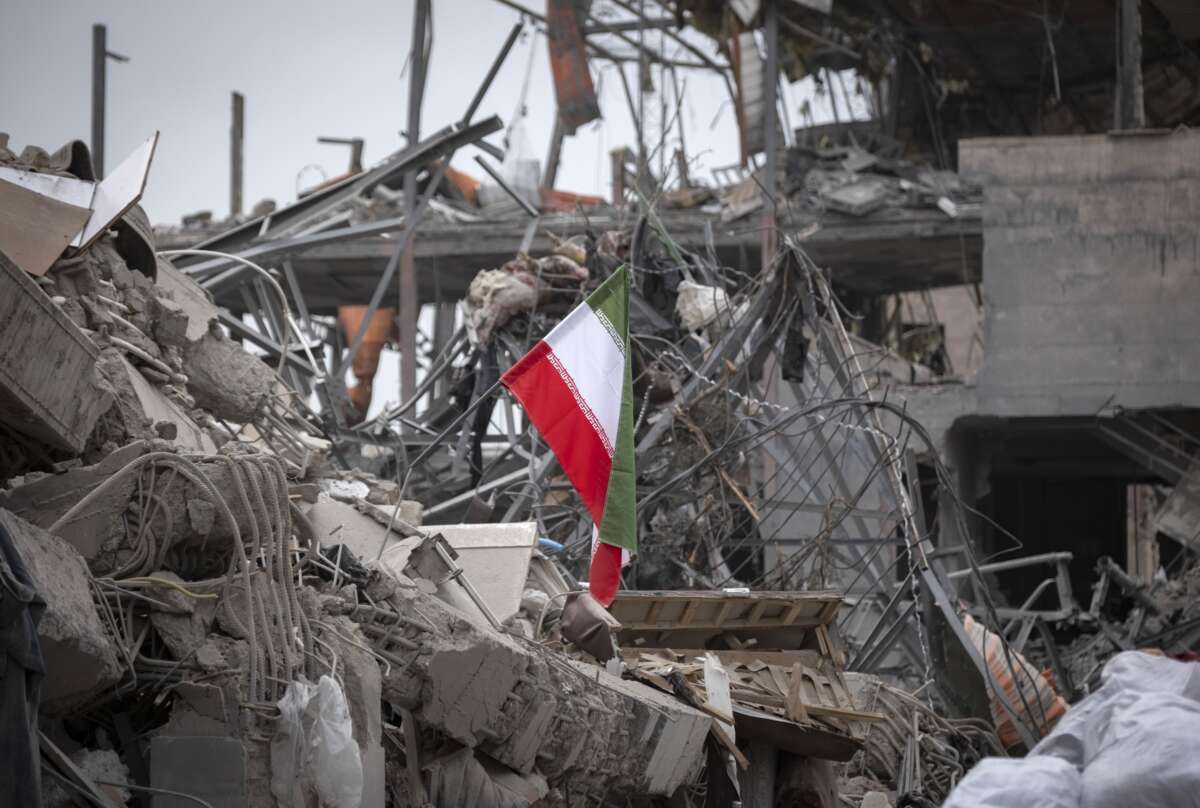
A national flag is placed on the ruins of a building that is destroyed during the U.S.-Israeli military campaign that strikes a residential area on March 9, 2026, in Tehran, Iran, on March 12, 2026.
Morteza Nikoubazl / NurPhoto via Getty Images

Israeli officials are reportedly urging the U.S. to join them in their public urging of Iranians to stage an uprising against their government, even as the Israeli government internally assesses that protesters would be “slaughtered” if they did so, demonstrating Israel’s blasé attitude toward Iranian lives amid its bombardments of the country.

According to reporting by The Washington Post published Tuesday, top Israeli officials relayed the message to U.S. diplomats in a cable that circulated in the U.S. embassy in Jerusalem on Friday. The cable said that Israeli officials assess that the Iranian government is “not cracking” and will “fight to the end” — despite hopes by U.S. and Israeli officials that they could “decapitate” the government and achieve collapse.

The cable further said that if Iranians were to stage more protests against their government, as they did in demonstrations earlier this year, “the people will get slaughtered,” Israeli officials said. According to UN Special Rapporteur on Iran Mai Sato, around 5,000 people were killed in the government crackdown on protests as of January, though it has been difficult to assess the precise number of deaths due to biases on all sides.

The cable, which summarized recent meetings by top Israeli officials and U.S. officials, said that nonetheless, Israeli officials are hoping for a revolt and that the U.S. should support such an uprising as well.

Critics have said that the cable demonstrates Israeli officials’ indifference toward whether civilians live or die, after years of Israel wantonly slaughtering civilians in Palestine and countries across the Middle East.

“This should not surprise anyone,” said Trita Parsi, executive vice president for the Quincy Institute, in a post on social media. “That the Israelis would use the Iranian people as cannon fodder in their war with the Islamic Republic was crystal clear to anyone who had followed the Israeli-Iranian rivalry in a clear-eyed way. Nor can anyone reasonably expect that Israel would act in the best interest of the Iranian people. Israel pursues its own interests, full stop.”

On the first day of the U.S. and Israel’s bombardments on February 28, U.S. President Donald Trump and Israeli Prime Minister Benjamin Netanyahu both put out video addresses urging the Iranian people to take up arms against their government as they rained death and destruction from the sky. Since then, the U.S. and Israel’s bombardments have killed over 1,400 people in Iran and injured at least 18,500, according to Iranian health officials. Israeli intelligence and military officials have long urged Iranians to protest against their government, and the U.S. has meddled in Iranian politics for decades.

“I think a lot of people will feel very betrayed by this assessment,” Iran analyst and Johns Hopkins University assistant professor Narges Bajoli told The Washington Post, saying that it would be viewed as exploiting Iranian lives for political gain
Trump floats extreme plan to get ‘non-responsive allies’ in gear

Alexander Willis
March 18, 2026  
RAW STORY


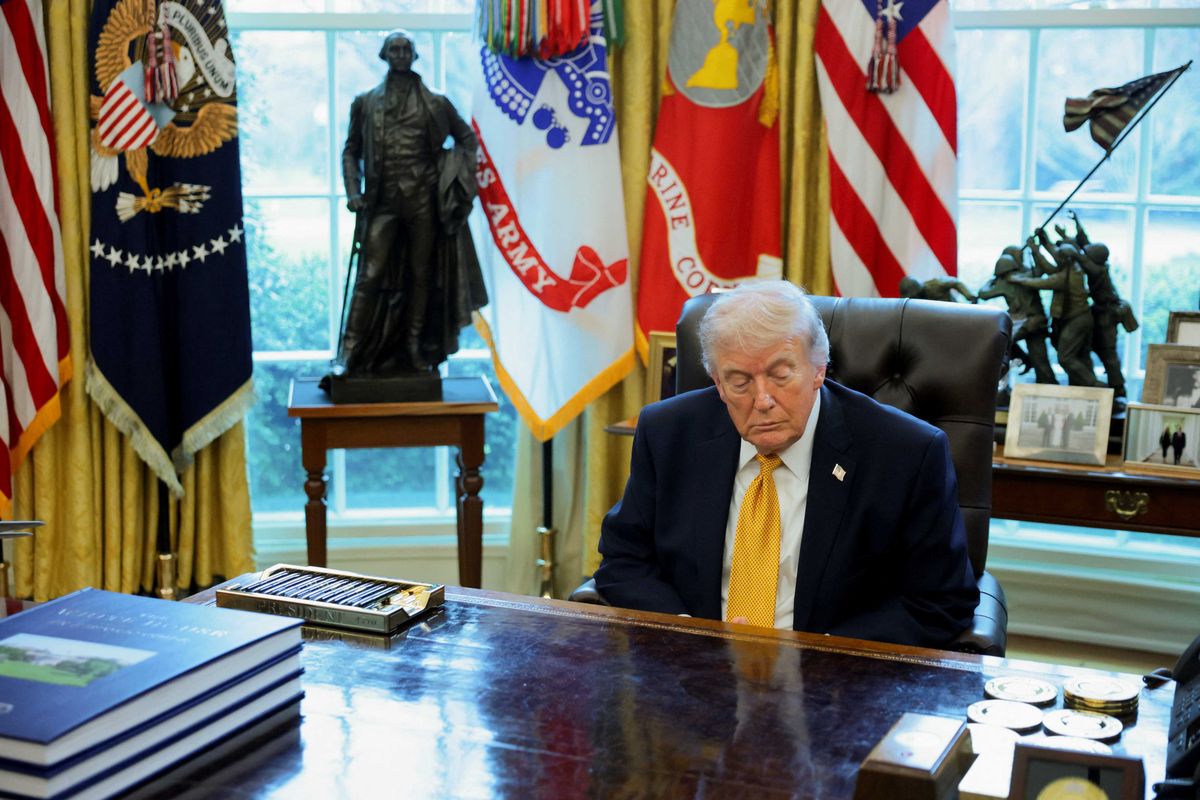
U.S. President Donald Trump holds an event to sign an executive order creating an anti‑fraud task force headed by U.S. Vice President JD Vance in the Oval Office at the White House in Washington, D.C., U.S., March 16, 2026. REUTERS/Jonathan Ernst

President Donald Trump floated a startling plan Wednesday in the hopes of forcing the United States’ “non-responsive allies” to provide military assistance in his administration’s war against Iran.

Trump has reacted angrily at the NATO countries in recent days after his repeated calls for military assistance had been either ignored or outright rejected. After being attacked by both the United States and Israel, Iranian leadership has vowed to respond aggressively to any sea vessels aligned with either of the two countries attempting to pass through the Strait of Hormuz, a crucial shipping route through which 20% of the world’s oil trade flows.

In an apparent attempt to force NATO countries’ hands, Trump revealed a new plan on Wednesday in a post on Truth Social.

“I wonder what would happen if we ‘finished off’ what’s left of the Iranian Terror State, and let the Countries that use it, we don’t, be responsible for the so called ‘Straight?’” Trump wrote, potentially misspelling "strait." “That would get some of our non-responsive ‘Allies’ in gear, and fast!!!”

Trump’s social media post marks the first time the president has floated the idea of facilitating other countries to effectively take control of the Strait of Hormuz. Whether the proposal convinces U.S. allies to join the Trump administration’s war effort remains to be seen.


Allies Resist Trump’s Demands to Aid Travel Through Strait of Hormuz


No country has committed to Trump’s demands as the administration scrambles to address rising gas prices.

March 16, 2026

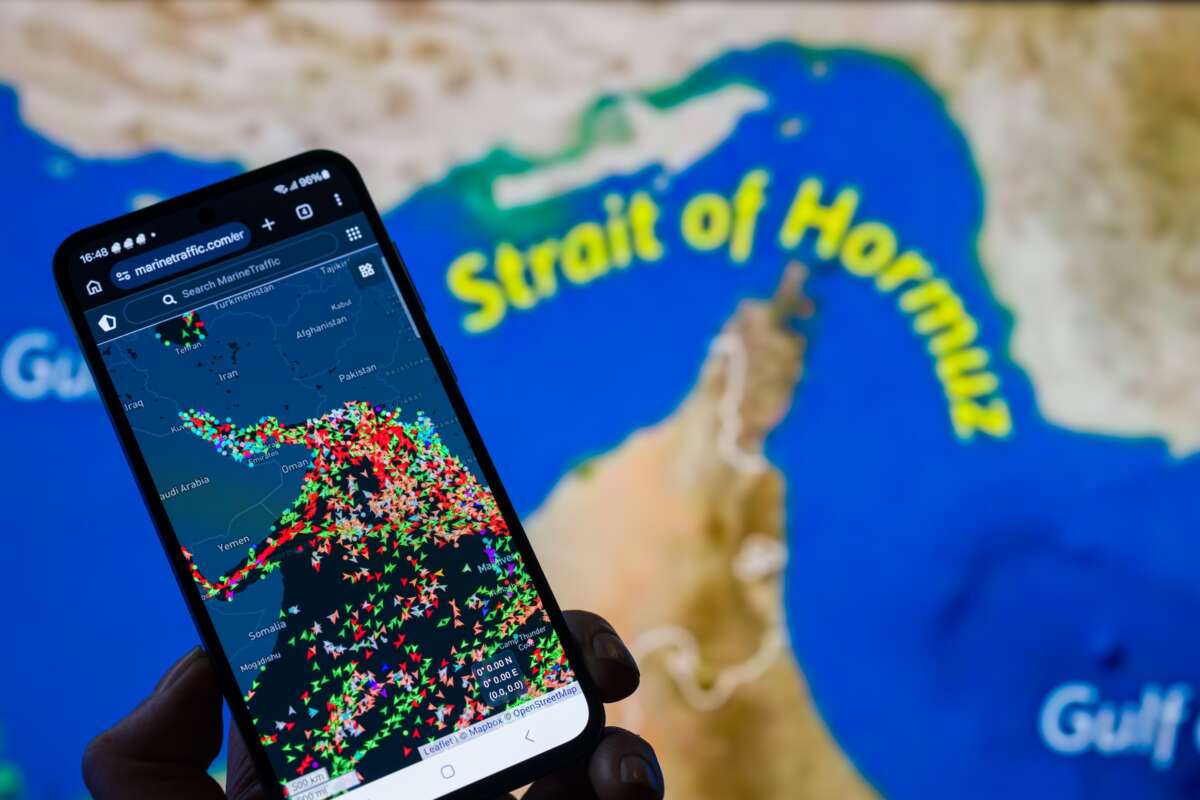
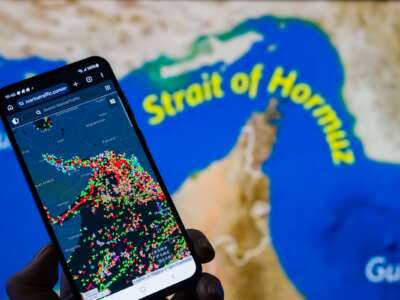
A MarineTraffic map showing ship movements in the Strait of Hormuz is displayed on a smartphone screen with a map in the background in this photo illustration, as commercial vessel traffic through the key oil shipping lane decreases amid the ongoing conflict involving Iran.
Jonathan Raa / NurPhoto


Truthout is a vital news source and a living history of political struggle. If you think our work is valuable, support us with a donation of any size.

Several allies to the U.S. have rebuffed President Donald Trump’s demands and threats this weekend for countries to aid in opening transit through the Strait of Hormuz, as oil prices spike in the third week of the U.S. and Israel’s war on Iran.

As of Monday morning in the U.S., no countries had committed to aiding in Trump’s plan to form a naval coalition for access to the strait as Iranian forces attack ships attempting to cross it.

In a post on Truth Social on Saturday, Trump said that countries are forming a coalition to open the strait. He asked allies to join him in the mission of aiding travel through the waterway.

“Hopefully China, France, Japan, South Korea, the UK, and others, that are affected by this artificial constraint will send ships to the area so that the Hormuz Strait will no longer be a threat by a nation that has been totally decapitated,” Trump wrote.

“We have already destroyed 100% of Iran’s Military capability, but it’s easy for them to send a drone or two, drop a mine, or deliver a close range missile somewhere along, or in, this Waterway, no matter how badly defeated they are,” he went on, clearly contradicting himself.


Australia has said that they don’t plan to send ships for the effort. China has not commented on Trump’s demands, with a Foreign Ministry spokesperson reiterating the country’s call for all parties to end its military operations.

Japan and South Korea have said that they are considering the request, but have not committed; the issue will likely be a topic of discussion during Japanese Prime Minister Sanae Takaichi’s White House visit on Thursday.

European countries have also demurred. On Monday, Germany said that they would back sanctions efforts against those blocking the strait, but declined direct military involvement, saying: “As long ⁠as this war continues, there will be no participation, ⁠not even in ⁠any effort ⁠to keep the Strait of Hormuz open by military ‌means.”

Greece also declined to participate in any military operations in the strait. The U.K., Italy, and Luxembourg expressed an opposition to direct military involvement, saying that they prefer diplomatic solutions. The U.K. “will not be drawn into the wider war,” Prime Minister Keir Starmer told reporters on Monday.

France declined to send ships on Thursday, even before Trump’s requests. “I’m very clear and firm on this topic; at this point, there is no question of sending any vessels to the strait of Hormuz,” said French Minister of Defense Catherine Vautrin. However, France said last week that it is deploying roughly a dozen naval vessels to the Mediterranean and the Red Sea amid the escalation.

The European Union’s top foreign policy official, Kaja Kallas, has advocated for a diplomatic response. She said that she spoke with UN Secretary-General António Guterres over the weekend about replicating the UN’s Black Sea initiative for the safe export of grain, fertilizer, and other goods from Ukraine amid Russia’s invasion.

Iran offered last week to allow countries passage through Hormuz if they expelled ambassadors for the U.S. and Israel from their countries.

The cool response from the international community to Trump’s demands comes despite the president openly threatening countries if they don’t comply. In an interview with the Financial Times on Sunday, Trump said: “If there’s no response or if it’s a negative response I think it will be very bad for the future of NATO.”

The Trump administration has still refused to give a definitive timeline for the end of its bombardments, with Trump saying last week that the war will end “when I feel it … in my bones.” Iran is unlikely to reopen the strait, which is one of its biggest points of leverage, until at least the end of the U.S.-Israeli bombardments, which health officials report have killed over 1,200 civilians so far.

The war and closure of the strait, which is entering its third week, is roiling global oil prices and causing a major fertilizer shortage that is threatening U.S. agriculture at a crucial time for planting.

On Monday, gas prices continued to rise, hitting an average of $3.72 a gallon — the highest price since October 7, 2023. Prices could hit new highs if the war continues, former White House energy adviser Bob McNally said in an interview on “60 Minutes” that aired Sunday.

“If we don’t open up Hormuz soon, I can see us making new records,” said McNally, who was an energy adviser during President George W. Bush’s first term in office.

Trump has fixated on oil prices, first saying that his administration has lowered gas prices, and now claiming that higher oil prices are actually good for the U.S. amid a nationwide affordability crisis. Last week, the Trump administration began to tap into the U.S.’s strategic oil reserves in an attempt to stymie price rises. His administration has also invoked the Defense Production Act to increase oil and gas development, including the reopening of a California pipeline responsible for a major oil spill in 2015.

McNally said, however, that no policy other than opening the strait could stop the oil price spikes and supply chain disruptions.

“I’ve worked in the White House during an energy crisis. There are no policy solutions to a prolonged closure of the Strait of Hormuz,” McNally said. “You open up the toolkit, and the tools in there, the options range from marginal, through symbolic, to deeply unwise. Escorts are a sideshow, strategic stock releases are a sideshow…. Gas tax holiday, sideshow. You gotta restore the flow of the Strait of Hormuz.”
As US Bombards Iran, Trump Opines: “Maybe We Shouldn’t Even Be There at All”


“We don’t need it. We have a lot of oil,” Trump said. “It’s almost like we do it for habit.”


March 16, 2026

President Donald Trump wondered if the U.S. “shouldn’t even be there” when answering questions about the war on Iran on Sunday, claiming that Iran’s military is already totally obliterated as the U.S. and Israel’s bombardments enter their third week with no end in sight.

A reporter asked Trump on Sunday about his demands that other countries aid him in trying to force transit through the Strait of Hormuz while it’s closed by Iran. In response, he said that other countries should “come in and protect their own territory” and “they should help us protect it.”

But, as he muddled through a response, he added that the U.S. doesn’t “need” control over the strait because the U.S. already has the oil it needs.

“You could make the case that maybe we shouldn’t even be there at all, because we don’t need it. We have a lot of oil,” Trump said. “But we do it. It’s almost like we do it for habit.”

The comment has increased scrutiny over the Trump administration’s aims for the war. The purpose for launching the war is constantly shifting, and lawmakers have repeatedly said that the administration has not laid out the purpose of the war in briefings. It’s also unclear when the war will end, with top administration officials like Special Envoy Steve Witkoff saying “I don’t know” when the end will be.


Israel said on Monday that it’s prepared for three more weeks of war, and Energy Secretary Chris Wright said on Sunday that it will end in a few weeks. However, Trump said last week that the war was “very complete” and has been claiming for days now that Iran’s military is obliterated, which is untrue.

“Militarily, we’ve — as far as I’m concerned — we’ve essentially defeated Iran. I guess they can have a little bit of fight back, but not much,” Trump told reporters on Air Force One. “We’ve taken out their navy. We’ve taken out their air defense. There’s no air defense whatsoever.”

NBC reported on Monday that Trump is presented with options to end the war regularly, but has declined to take any of them.

Still, the U.S. and Israel’s bombardments continued on Monday. Iran’s Health Ministry says 1,444 people have been killed and over 18,500 injured since February 28. Human rights group HRANA counts at least 1,330 civilians killed, including over 200 children.

These attacks, particularly the likely U.S. strike on a school in Minab, Iran, that killed scores of children, have drawn scrutiny over their compliance with international standards on civilian safety. Secretary of Defense Pete Hegseth has drawn condemnation from legal experts and politicians after saying last week that the U.S. would show “no quarter, no mercy” for Iran.

Legal experts say that even just that order can constitute a war crime, as orders that there should be no survivors are prohibited under international law.

Meanwhile, the price tag for the war is mounting. Trump’s National Economic Council director, Kevin Hassett, said on Sunday that the U.S. had spent $12 billion on the war up until that point; and The Washington Post reported last week that the U.S. dropped $5.6 billion worth of munitions on Iran in the first two days of the war alone.
'Chickens are coming home to roost': Global disgust of the US grows


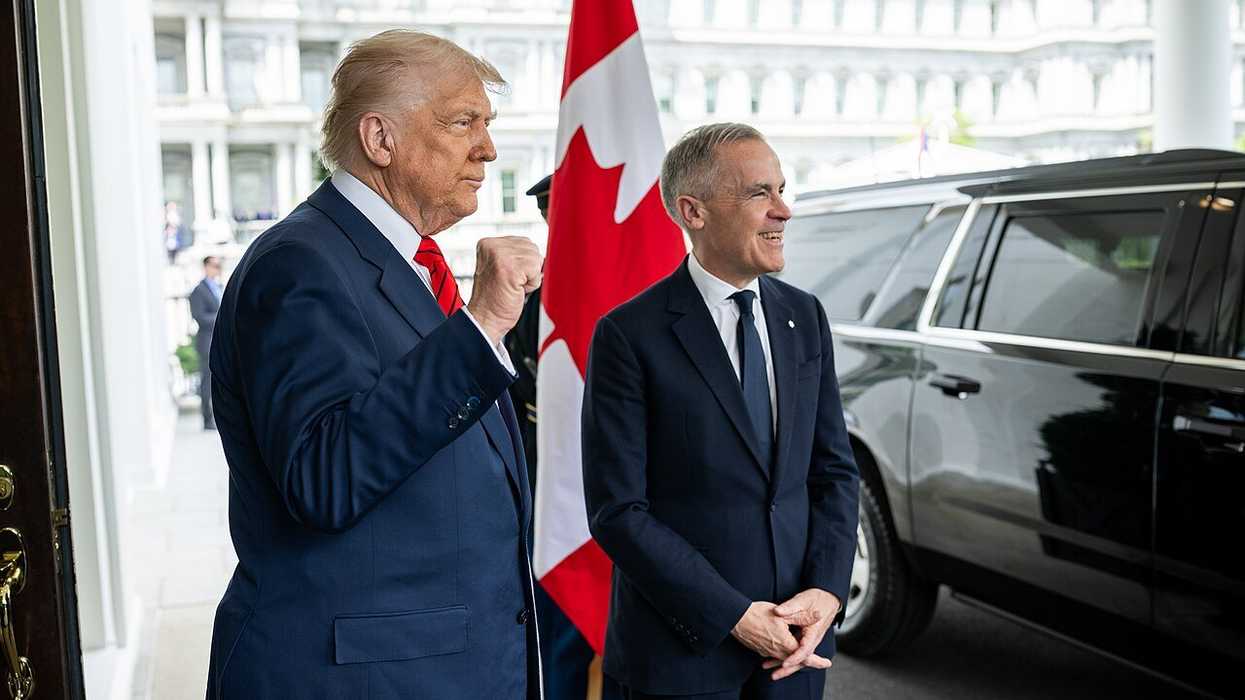
U.S. President Donald Trump with Canadian Prime Minister Mark Carney on May 6, 2025 (Official White House Photo by Daniel Torok/Flickr)

March 17, 2026 
ALTERNET

President Donald Trump wants more countries to help with his war in Iran, but so far, he hasn't had any takers. According to CNN data analyst Harry Enten, there's a good reason for that.

Speaking about the growing disgust with the United States, Enten said that the global community is out.

"The people in those countries hate, hate, hate the U.S. military action in Iran," said Enten.

In Canada, that number is -27 percent. Japan is -73 points. The U.K. is -34 percent.

"The people in those countries absolutely despise the U.S. military action. Iran. No wonder the leaders in those countries are, let's just say, a little apprehensive about helping out the U.S.," he added.

Indeed, most U.S. allies rejected Trump's requests for help, even countries that rely on Iran for oil. Others haven't indicated one way or the other.

CNN host John Berman compared the Iran war to the Iraq war in 2003. During that war, President George W. Bush had administration officials court allies' involvement and made the case before the United Nations.

Canada is now 27 points less in its support for Iran over Iraq. Japan is 45 points down from its support of the 2023 war, and the U.K., which went to war with the U.S., is down 48 points from those 2003 numbers.


One of Trump's campaign comments in 2024 was that the global community doesn't "respect" the United States. Now it has become clear the world likes America a lot more under President Joe Biden than under Trump. Support for the U.S. under Trump has dropped by 79 percent.

"The bottom line is this: the folks overseas are far less likely to view the U.S. favorably. And those chickens are coming home to roost in this situation, as there's very little support abroad for the U.S. military action in Iran," Enten closed.


- YouTubeyoutu.be
Meteorologist attributes baffling Trump claim to 'the Sharpie in his brain'


U.S. President Donald Trump gestures as he makes an impression of a transgender weightlifter during his address to House Republicans at the Kennedy Center, January 6, 2026. REUTERS Kevin Lamarque
March 17, 2026
ALTERNET

Certified Broadcast and Consulting Meteorologist John Morales said he was thrown by President Donald Trump’s recent weather claims about Cuba.

The Miami New Times reports Trump told reporters on Monday at the White House that Cuba is not in a hurricane zone, beginning his remarks that Cuba was a “beautiful island” with “great weather.”

“They’re not in a hurricane zone, which is nice for a change, you know?” Trump told reporters. “They won’t be asking us for money for hurricanes every week … I do believe I’ll have the honor of taking Cuba. That’s a big honor.”

Aside from a modern-day U.S. president declaring his plan to “take” a legitimately and internationally-recognized nation for his own, Trump’s claim about Cuba’s balmyalternet sharpie Trump

hurricane-free weather “was news to meteorologists everywhere and to his own administration,” reports the Times.

Stunned, Morales attributed Trump’s mind-boggling claim to “the Sharpie in his brain at work.

Morales was referring to Trump vandalizing an official government weather map in 2019, apparently with a Sharpie, to expand the range of projected impact for 2019’s Hurricane Dorian — just to avoid admitting he’s lied about the hurricane menacing the state of Alabama.

But even more astounding, the Miami New Times reports Trump appeared to have forgotten that just two months ago, his own administration had delivered $3 million in disaster relief to Cuba after Hurricane Melissa slammed the island last October.

“The Trump administration said it sent charter flights from Miami in mid-January to bring food kits, hygiene and water treatment kits, household items, and kitchen supplies to 24,000 people in the hardest-hit areas of Santiago de Cuba, Holguín, Granma, and Guantanamo,” reports the Times. “The administration was working with the Catholic Church to ensure ‘assistance reaches the Cuban people directly and without regime interference.’”

A January 26 U.S. Department of State press release even states that “The United States remains steadfast in supporting the Cuban people’s post-disaster recovery,” before declaring the aid “the first in a series of shipments of humanitarian assistance … designed to reach those most in need, bypassing regime interference, and ensuring transparency and accountability.”

Months before causing its own island-wide hurricane-style electricity blackout, Trump’s people declared “our humanitarian assistance is part of a broader effort to stand with the Cuban people as they seek a better future.”

In addition to its January aid, the administration followed up its generosity in February with the announcement of an additional $6 million in supplies because of the lingering humanitarian and energy crisis of Cubans affected by Melissa.
A president killing for the 'fun' of it sounds 'like a serial killer': analysis


March 17, 2026
ALTERNET


Zeteo political correspondent Asawin Suebsaeng says a U.S. president bragging about mass-killing other nation’s populations and idly discussing demolishing a whole island “just for fun” is not okay.

The Trump administration is doing it its ‘best Ted Bundy impersonation,’ said Suebsaeng, citing President Donald Trump saying “We totally demolished Kharg Island, but we may hit it a few more times just for fun” to NBC News on Saturday in reference to his recent bombing of Iran’s oil-export hub.

“The prosecution of Trump’s war has been a massive, blood-caked scandal and crime,” said Suebsaeng. “Beyond the moral and practical abomination of the operation, the president and ruling party dove backwards into this without even the appearance of a clear mission or plan, and tried to sell the American people a pack of lies to justify the war. And as the bodies pile up, the White House is propagandizing about carnage as if it were nothing but a violent, nihilistic video game. The casual talk of mass-death and the meme-ification of a regional bloodbath underscore the advanced depravity that drives Trump administration policies, at home and abroad.”

And, yes, Trump indeed quoted the Zodiac Killer, who famously said “I like killing people because it is so much fun.” But it’s not just “one Mad King doing Mad King brain-rot,” warned Suebsaeng. His advisers are happy to join the “fun.”

“Death and destruction from the sky all day long,” former Fox host and current defense secretary, Pete Hegseth, said at a March press briefing early this month. He also said Friday that he would allow “no quarter, no mercy for our enemies,” in what Suebsaeng considered “an apparent call to violate international law so that Americans may slaughter more freely.”

Even former House speaker and Trump advisor Newt Gingrich got in on the violence, posting on X that “Instead of fighting over a 21-mile-wide bottleneck (strait of Hormuz) forever, we cut a new channel through friendly territory. A dozen thermonuclear detonations and you’ve got a waterway wider than the Panama Canal, deeper than the Suez, and safe from Iranian attacks.”

“To be fair, what Gingrich is proposing would less resemble serial-killing, and more closely resemble mass murder,” said Suebsaeng, “but tomato-toMurder, as the idiom goes.”

“To get serious again for a moment: the fate of the world is very much on the line, and the morally vacant gang running the US government and its blundering, ‘Fox-and-Friends’-ified war machine is waging its military onslaught as if it were directing a crudely improvised snuff film. It is easy to get numb to Team Trump’s artery-spray of corruption and bloodlust,” Suebsaeng added. “Don’t. None of this is okay.”
National park land literally blown up by Trump's obsession in key swing state

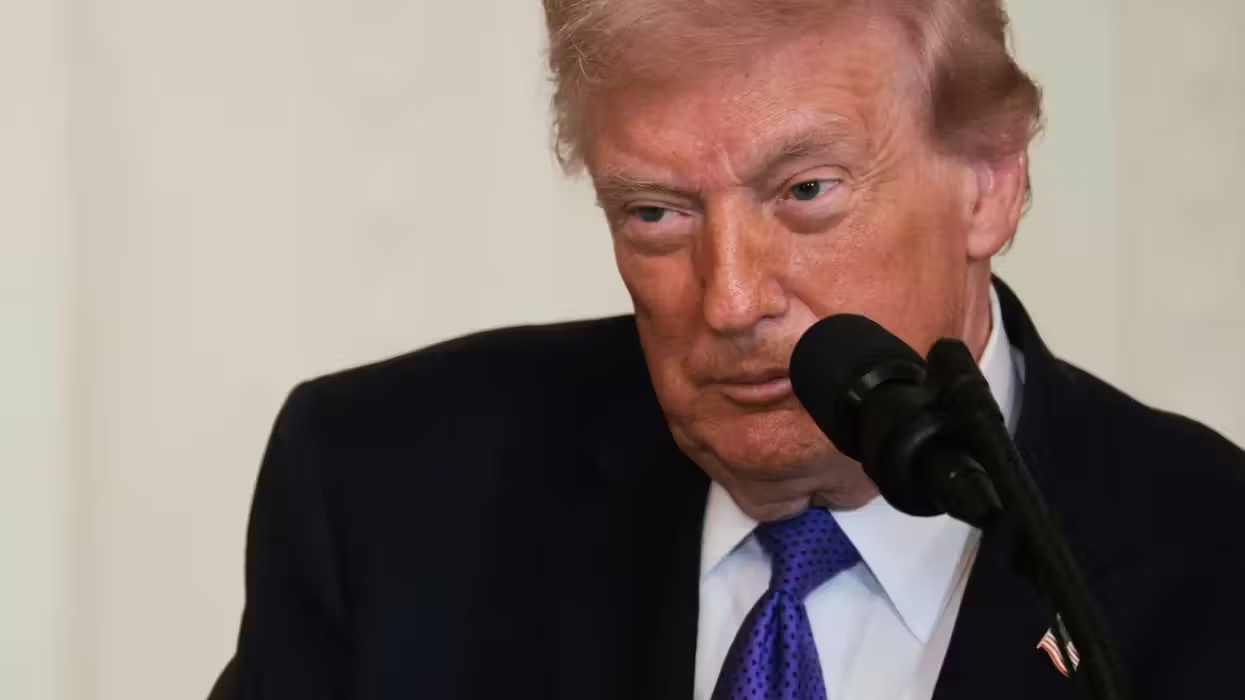
U.S. President Donald Trump speaks, as a patch of blemished skin is visible above his shirt collar, during a Medal of Honor ceremony at the White House in Washington, D.C., U.S., March 2, 2026. REUTERS/Ken Cedeno

March 18, 2026
ALTERNET

In the past, Arizona had a reputation for being reliably conservative. Sen. Barry Goldwater (R-Arizona), despite his vehement disdain for the Religious Right, was a highly influential figure in the Republican Party — and his successor, GOP Sen. John McCain, identified as a "Goldwater Republican."

But Arizona has evolved into a volatile swing state. Arizona has a Democratic governor (Katie Hobbs) and two Democratic U.S. senators (Mark Kelly and Ruben Gallego), yet Donald Trump carried Arizona by roughly 5.5 percent in 2024. And Republicans have majorities in both houses of the Arizona State Legislature.

Arizona is having plenty of heated political debates in 2026, and one of them involves the border wall project that got underway during Trump's first presidency. MAGA Republicans in Arizona want to see the construction of a U.S./Mexico border wall continue to move forward, but other Arizona residents are saying that while they want border security, they also have environmental concerns.

The Atlantic's Nick Miroff addresses those concerns in an article published on March 17, describing the effect of national park lands in the key swing state.

"At Coronado National Memorial in Arizona," Miroff explains, "the demolition crews blowing up national-park land tend to announce explosions at least a day in advance, as a warning for hikers to stay away. The crews have been working their way up the western slope of the park for the past couple of months, right along the international boundary with Mexico. President Trump's border wall needs a smooth, straight path, and there are mountains in the way. Trump didn't build along this stretch of the border during his first term, but his crews are now working at a furious pace."

Miroff adds, "They have already completed about five miles of 30-foot-tall barrier, painted jet black at the president's insistence because he thought it looked more intimidating and would be hotter to the touch."


One of the longtime Arizona residents who is openly critical of border wall construction in the San Raphael Valley area is Kate Scott, who said that seeing the wall makes her feel "physically sick."

Scott told The Atlantic, "I refuse to allow people to take our land, annihilate our animals, our plants, our water. I do not accept that as my reality. And if more people started to understand that it's not our reality to accept, they will come up with ways to push back."

Zay Hartigan, a local fire chief in that area of Arizona, told The Atlantic he considers the border wall "just a waste of money" and that surveillance towers deter smugglers.

"The valley had been shaped across tens of millions of years, by volcanoes, floods, earthquakes," Miroff notes. "Native peoples, Spanish explorers, Mexican settlers, Apache warriors, cowboys, and mountain bikers all passed through. None of them has left anything as immense and lasting as what Trump is building."

Tuesday, March 17, 2026

Judge Blocks CDC Childhood Vaccine Changes Made by RFK Jr. Panel Picks

The ruling also places a stay on Kennedy’s appointments to a vaccine recommendation panel within the CDC.

By Chris Walker
Truthout
March 17, 2026


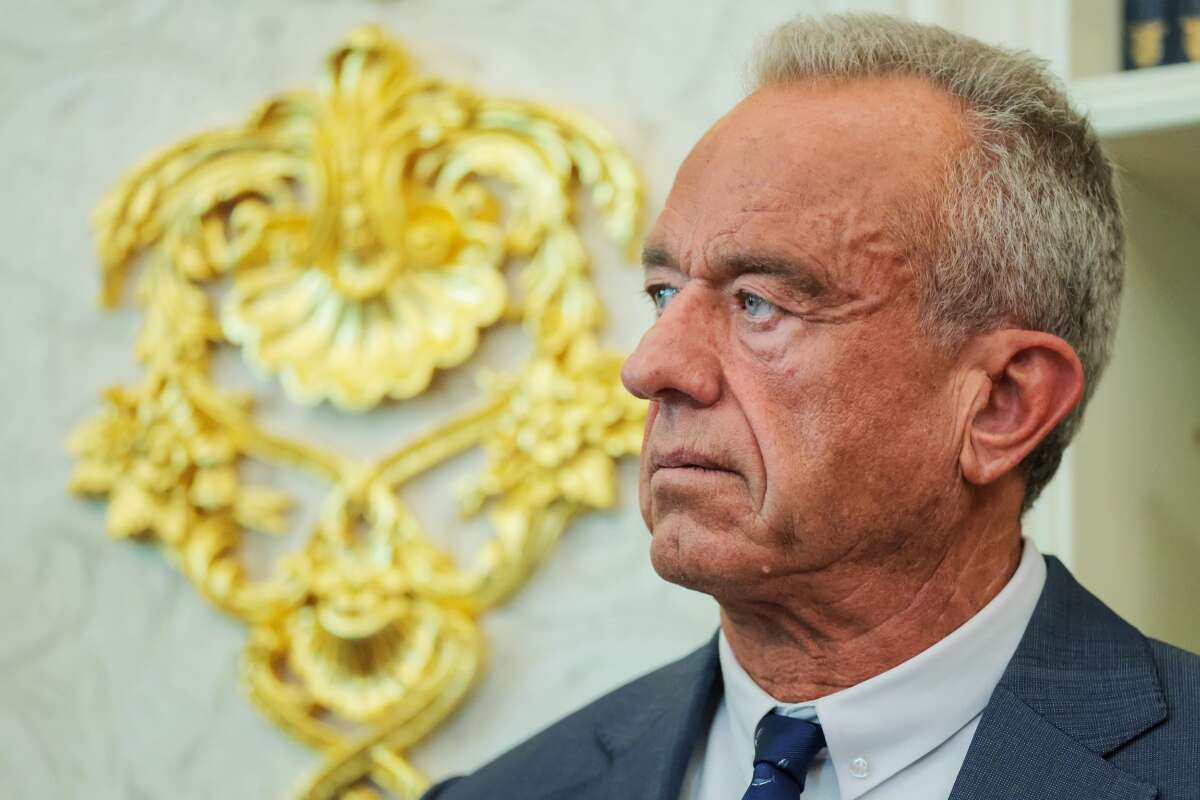
Health and Human Services Secretary Robert F. Kennedy Jr. attends the signing of an executive order in the Oval Office of the White House on December 18, 2025
.Anna Moneymaker / Getty Image

Afederal judge has placed a temporary injunction on new vaccine rules for children established earlier this year by the Centers for Disease Control and Prevention (CDC), finding that the panel that had recommended them to the agency was improperly appointed by Department of Health and Human Services (HHS) Secretary Robert F. Kennedy Jr.

The order issued on Monday by Massachusetts-based U.S. District Judge Brian Murphy also vacates previous decisions by the panel in question, and suspends, for the time being, several members due to their lack of qualifications.

In December, the Advisory Committee on Immunization Practices (ACIP) voted on recommending changes to the childhood vaccine schedule, reducing the number of vaccines from 17 to 11. Vaccines removed from those previously recommended included hepatitis A, hepatitis B, meningococcal disease, rotavirus, influenza, and respiratory syncytial virus (RSV). The changes also lessened the number of vaccine doses recommended to prevent human papillomavirus (HPV).

ACIP made those changes just half a year after Kennedy disbanded the previous iteration of the board, and filled its vacancies with individuals who shared many of his anti-vaccine views. In January, the CDC formally adopted the new recommendations.

Health officials in the Trump administration have justified the changes by claiming they further align the U.S. with vaccine recommendations for children in European countries. But health experts — including some from Europe — have said that such an approach flouts the scientific method.


One expert said Kennedy’s pick once met with her to discuss his research, but came with his own “agenda” instead. By Chris Walker , Truthout March 12, 2026

“I do not think this makes sense scientifically,” Anders Hviid of Denmark’s Statens Serum Institute said at the time. “Public health is not one size fits all. It’s population-specific and dynamic. Denmark and the U.S. are two very different countries.”

Reacting to those changes, several U.S.-based health groups, including the American Academy of Pediatrics (AAP), the American College of Physicians, and the American Public Health Association, filed a lawsuit against HHS, accusing Kennedy of “packing” the ACIP board so that it would produce opinions he favored, rather than issuing recommendations based on scientific study and vigorous debate. The lawsuit decried the changes made to the childhood vaccine schedule, deeming them both “harmful” and “unlawful.”

In issuing his ruling, Murphy agreed with the plaintiffs, finding that HHS and the Trump administration had disregarded methods for picking ACIP members that were “scientific in nature and codified into law through procedural requirements.” The decision to disband ACIP last year and replace its members with persons mostly agreeable to Kennedy’s views “undermined the integrity” of the panel’s decision-making process, Murphy also wrote in his ruling.

Murphy found that Kennedy’s process had violated the Federal Advisory Committee Act (FACA), which includes in its text a rule requiring federal advisory committees to be “fairly balanced in terms of the points of view represented and the functions to be performed” relating to whatever federal agencies they provide guidance for.

In his ruling, Murphy explained that:


For our public health, Congress and the Executive have built — over decades — an apparatus that marries the rigors of science with the execution and force of the United States government. … [T]here is a method to how these decisions historically have been made — a method scientific in nature and codified into law through procedural requirements. Unfortunately, the Government has disregarded those methods and thereby undermined the integrity of its actions.

Kennedy had improperly assembled the new ACIP board by appointing board members who were nearly unanimous in their anti-vaccine views — and thus, their vote on changing the vaccine schedule should be voided, Murphy said.

In addition to invalidating the changes to childhood vaccine recommendations, Murphy voided other votes that ACIP has made since last year. He also stayed the appointments of 13 ACIP members Kennedy selected, finding that they were not adequate for the purposes of advising the CDC on the issue of vaccines.

“Of the fifteen members currently on ACIP, even under the most generous reading, only six appear to have any meaningful experience in vaccines — the very focus of ACIP,” Murphy wrote in his decision.

He also noted that, of those six, three members lack the “expertise” needed to study vaccines and immunizations — including MIT mathematician Retsef Levi, who has no health background whatsoever and whose research has been widely criticized for pushing an “agenda.”

The stay of more than a dozen ACIP members’ appointments to the panel means that it is effectively stalled from making other health decisions at this point.

The Trump administration criticized the ruling, and a spokesperson for HHS said the department planned to appeal.

A lawyer representing the health groups that brought forward the lawsuit praised Murphy’s decision.

“This is a significant victory for public health, evidence-based medicine, the rule of law, and the American people,” lawyer Richard Hughes said in a statement. “The government may appeal this decision, and we have much more work to do to achieve a full victory on the ​merits. But for now, we get to celebrate a rare bit of good news.”

AAP president Andrew Racine also lauded the ruling, stating that ACIP was influenced by Kennedy’s views rather than scientific evidence.

“When Secretary Kennedy made unsupported and unscientific changes to pediatric immunization recommendations last year, the American Academy of Pediatrics (AAP) was mission-bound to step up and push back against these dangerous actions that have sown chaos and confusion for parents and pediatricians across the country,” Racine said. “This decision effectively means that a science-based process for developing immunization recommendations is not to be trifled with and represents a critical step to restoring scientific decision-making to federal vaccine policy that has kept children healthy for years.”


US-Backed Repression in Latin America Paved the Way for ICE

The struggle for immigration justice has become increasingly inseparable from the global fight against authoritarianism.


Washington has helped revive state terror in Central America, while fostering an epidemic of forced disappearances.
March 16, 2026

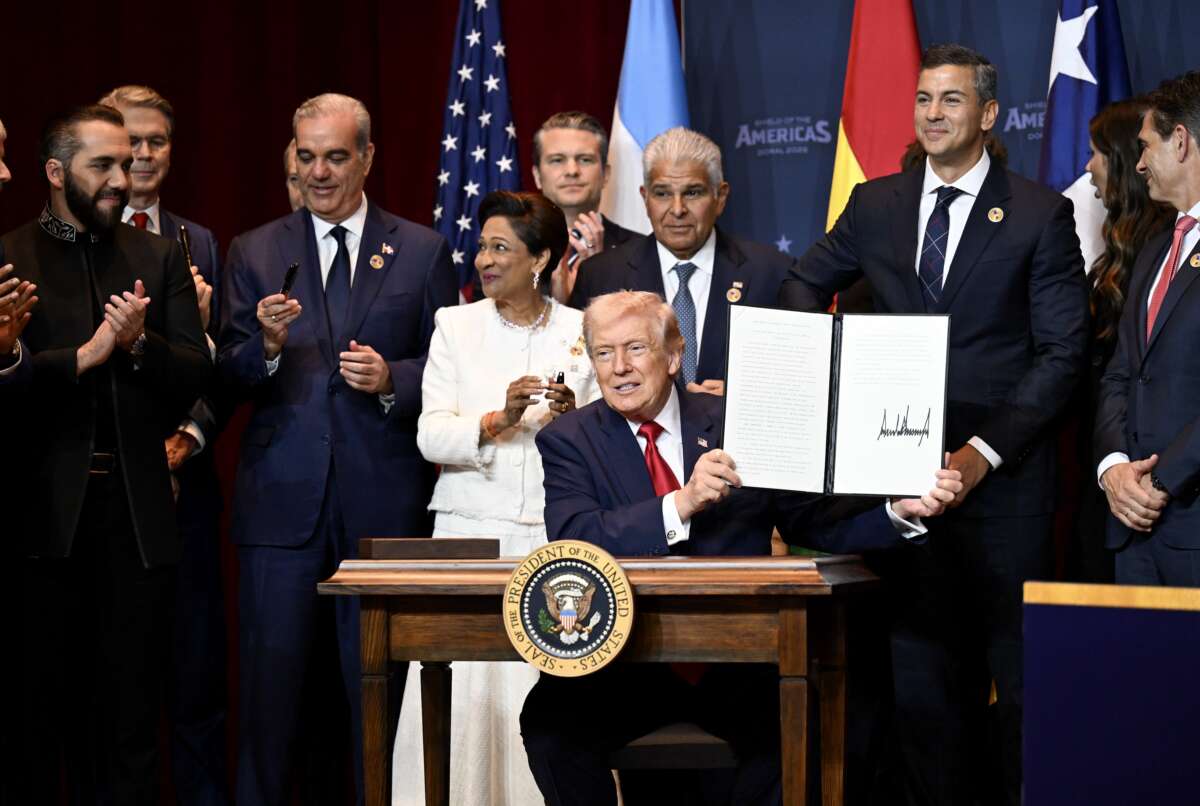
Donald Trump holds a document that he signed while surrounded by heads of state and government officials from 12 countries in the Americas as he hosts the the "Shield of the Americas Summit“ at the Trump National Doral Golf Club on March 7, 2026, in Doral, Florida.Roberto Schmidt / Getty Images

Josué Aguilar Valle, a Honduran national, recalls the “terrible” conditions at the migrant jails where U.S. immigration authorities imprisoned him last year. In La Salle County, Texas, Aguilar shared a frigid cell with 50 men, sleeping on the concrete floor. “I thought I was going to experience hypothermia,” he explained.

Aguilar’s wife struggled to locate him, as authorities repeatedly shuffled him between facilities in Florida and Texas. Aguilar became a statistic lost inside an impenetrable bureaucracy. “Every time I tried to visit him, they moved him,” his wife recounted. “It’s like they’re trying to wear families down.” Last May, Immigration and Customs Enforcement (ICE) deported Aguilar to Honduras, separating him from his U.S. family.

His experience is not unique. Human rights experts claim that President Donald Trump’s administration has restructured the immigration system to “disappear” people, undermining due process and expediting deportations by abducting civilians, hiding detainees, and deleting their data. Those searching for the vanishing victims of ICE arrests have compared the institution’s clandestine practices to “trafficking people.”

The recent wave of disappearances follows a long and traumatic historical arc. Since the 1970s, the U.S. government and its Latin American allies have frequently disappeared civilians to eliminate dissent and members of marginalized communities, while pursuing law enforcement initiatives that make immigrants vulnerable to human trafficking and state violence. In many ways, Trump’s deportation drive reflects this deeper past, as the legacy of imperialism abroad returns home — threatening both immigrant families and the remnants of U.S. democracy.


With Donroe Doctrine, Trump Threatens to Export His Brand of Authoritarianism
International solidarity, not liberal imperialism, is the only way to stop Trump’s global class war. By Ashley Smith , Truthout January 24, 2026


Disappearing Dissent

The term “disappearance” entered the global political lexicon after President Richard Nixon’s administration helped Chilean military leaders seize power in 1973, toppling a popular and democratic socialist government. Nixon offered Gen. Augusto Pinochet unflinching support as the archconservative officer executed thousands of leftists and imprisoned tens of thousands more. Reluctant to offend the budding dictatorship, the United States embassy in Santiago even denied protection to Americans seeking refuge from gunfire in the streets. Its indifference allowed Chilean soldiers to disappear two U.S. citizens, Charles Horman and Frank Teruggi, without pushback.


The legacy of imperialism abroad returns home — threatening both immigrant families and the remnants of U.S. democracy.

In Chile in Their Hearts, John Dinges demonstrates that the State Department treated their deaths as “an obstacle to be removed,” while refusing to recognize that Pinochet’s regime killed them. Horman and Teruggi became two of the more than 1,400 victims that the junta disappeared. For years afterward, U.S. law enforcement and intelligence assistance helped Chile and neighboring dictatorships undertake Operation Condor, a campaign of state terror that disappeared hundreds of leftists, often shuffling their corpses across borders to thwart investigators.

Following the Nicaraguan Revolution in 1979, forced disappearances skyrocketed in Central America, where President Ronald Reagan financed counterinsurgency operations against leftist movements. El Salvador became the third-largest recipient of U.S. aid; at the time, its leading politician, Roberto D’Aubuisson, announced the names of future death squad victims on television.

The courageous human rights defender Marianella García Villas routinely visited the Salvadoran countryside to photograph the corpses dumped by state forces. “All the women were raped before being murdered,” she emphasized. To stifle her investigations, the U.S.-trained Atlácatl Battalion abducted García Villas in 1983, before executing her the same way. Meanwhile, the Reagan administration harassed and spied on the sanctuary movement, which religious leaders established in the United States to protect Central American refugees. By fostering a climate of intimidation, Washington helped Salvadoran death squads sow terror as far as California.

More than anywhere, Reagan’s support for repression proved to be stomach-churning in Guatemala. Even before his election, two campaign supporters reportedly visited the country to assure officials that “Reagan recognizes … a good deal of dirty work has to be done.” His administration supplied munitions and foreign aid, while the military waged a genocidal offensive against the left and Indigenous population.

Their military instructors and equipment helped President Efraín Ríos Montt undertake a scorched-earth campaign that destroyed more than 400 Indigenous communities. In November 1982, the U.S. embassy relayed reports that state forces slaughtered hundreds of civilians in La Estancia. Survivors described victims “ripped open with machetes,” men arrested to “never [be] seen again,” and grenades shredding women and children.

Shortly afterward, Reagan visited Central America to express his support for Ríos Montt. He called the dictator “a man of great personal integrity” and slammed critics for giving him a “bum rap.” The next day, Guatemalan soldiers entered Dos Erres, before commencing a three-day orgy of violence that killed at least 162 people. In 2013, judges concluded that Ríos Montt was guilty of genocide since he intended to “cause the physical destruction of the [Indigenous] Ixil group,” in order to deprive guerrillas of support.

Beyond fomenting forced disappearances, Washington’s militarized drug policy fostered staggering levels of corruption.

In 1996, the counterinsurgency in Guatemala ended after disappearing 45,000 people and claiming 200,000 lives, and President Bill Clinton passed a landmark immigration act that further militarized the border and made it harder for Guatemalan refugees to secure asylum. The conflict was a harrowing illustration of U.S. Cold War strategy. For decades, Washington backed repressive regimes to protect global capitalism and its hemispheric dominance. From Chile to Central America, extrajudicial detentions and executions became commonplace, as U.S. allies literally disappeared dissent.

Death Lands

During the Cold War, U.S. and Latin American elites abducted dissidents to eliminate opposition to unfettered capitalism. But since then, they have disappeared migrants who have been displaced by the very system they created.

The “dirty wars” in Central America left fractured societies, while stimulating undocumented immigration to the United States. Over the 1990s and 2000s, U.S.-sponsored reforms spiked poverty levels in Central America and Mexico by shrinking the public sector, eliminating social services, and boosting import competition.

Most notably, the State Department collaborated with business-friendly governments, while spearheading the North American Free Trade Agreement (NAFTA). Despite promises to the contrary, NAFTA flooded Mexico with cheap grain and undercut small producers. Scholars such as Salvador Maldonado Aranda demonstrate that impoverished peasants immigrated or turned to drug trafficking to survive.

In 2006, President Felipe Calderón assumed power in Mexico, while facing credible accusations of electoral fraud. To boost his legitimacy, Calderón declared war against the Zetas and other drug cartels. The United States then unfurled the Mérida Initiative, which awarded Mexico nearly $3 billion in security aid. Over the following decade, U.S. officials provided advanced aircraft, surveillance technology, police equipment, and extensive law enforcement cooperation.

Yet the history of security assistance in Mexico was already checkered. The founders of the Zetas were former Mexican soldiers who received U.S. instruction at Fort Bragg. “They were given map reading courses, communications, standard special forces training, [and] light to heavy weapons,” Lt. Col. Craig Deare recalled. Even the Zetas’ name was a grotesque nod to their origins, a reference to the radio code used by soldiers targeting drug traffickers.

Washington has helped revive state terror in Central America, while fostering an epidemic of forced disappearances.

Rather than enhancing security, U.S.-Mexican cooperation spawned an uncontrollable war, while encouraging cartels to acquire military-grade firepower and diversify into human trafficking. During Calderón’s presidency, the homicide rate rose nearly 200 percent to more than 121,000 victims. And “narcofosas” (mass graves) proliferated across the countryside, as an epidemic of forced disappearances swept Mexico. Perversely, U.S. authorities across the border exploited the Anti-Drug Abuse Act of 1988 to incarcerate and expel undocumented immigrants fleeing the chaos.

Throughout the Mérida Initiative, Washington ramped up security assistance, despite knowledge that Mexican authorities helped cartels abduct civilians. In May 2010, Consul General Bruce Williamson in Monterrey concluded that violence “made travel chancy on roads” heading north. Months later, the Zetas reportedly intercepted and massacred 72 migrants in San Fernando. Forced disappearances multiplied. “Immigrants from Central America,” the U.S. embassy relayed in 2011, “accused the immigration agents of pulling them off buses and handing them over to drug gangs in the state of Tamaulipas.”

That very year, the Zetas massacred another 193 migrants there. In the aftermath, Mexican authorities confided to U.S. consular staff that they were splitting up the bodies to “make the total number less obvious.”

Beyond fomenting forced disappearances, Washington’s militarized drug policy fostered staggering levels of corruption. Over six years, Mexican authorities arrested thousands of veterans for drug-related charges, and soldiers became popular cartel recruits. Secretary of Public Security Genaro García Luna himself received bribes from drug lords, while directing Calderón’s counternarcotics crusade. Nonetheless, the U.S. officials overseeing Mérida considered him “our go-to guy” and “the most efficient partner we had.”

Ultimately, the drug crackdown discredited the government, ravaged communities, and instigated an arms race among narcotics traffickers. And as cartels kidnapped civilians to raise war funds, the country became a no-man’s land for Central and South American migrants heading north. According to the migrant rights group Movimiento Migrante Mesoamericano, 72,000 to 120,000 disappeared in Mexico between 2006 and 2016. Political scientist Pilar Calveiro concludes that the conflict created “territories of death.” U.S. leaders helped turn Mexico into a sunwashed abyss, where entire migrant convoys — the victims of Washington’s dirty wars and reforms — disappeared without a trace.

The Permanent Exception

To a disturbing degree, the exodus of migrants from Central America is itself a symptom of U.S. policies. For over a decade, support for right-wing forces in Honduras, El Salvador, and elsewhere has spurred immigration, while paving the way for forced disappearances across the region.

In 2009, U.S.-trained officers abducted President Manuel Zelaya of Honduras, then flew him out of the country from a U.S. military base. Afterward, Secretary of State Hillary Clinton recognized the new right-wing government, while helping organize sham elections to lend it legitimacy.

The MAGA movement is imposing its own state of exception to freeze immigration and stifle dissent, as masked ICE agents come to resemble the very agents of oppression that immigrants first fled.

The historian Greg Grandin concludes that the coup inaugurated “a permanent counterinsurgency on behalf of transnational capital” that only Clinton’s cooperation made possible. Over the following years, security forces murdered the environmentalist Berta Cáceres, and disappeared activists resisting the authoritarian slide. Notably, a foreign mining corporation, Entre Mares, hired a former death squad member to oversee security — superimposing the legacy of the Cold War onto the post-coup repression.

Across the border, U.S. officials also tightened relations with President Nayib Bukele in El Salvador after he assumed power in 2019. Before heading the embassy, Ambassador Ronald Johnson was a U.S. military adviser to El Salvador who led combat operations during the dirty war. In office, he protected Bukele from a probe into his negotiations with gang leaders, while the president desperately sought to reduce homicide rates. Afterward, another diplomat discovered that in August 2020, “Bukele requested Johnson remove” a U.S. contractor investigating his pact with local kingpins, and “that was what happened.”

Indeed, Republican politicians became major allies of the conservative upstart, as he branded himself “the coolest dictator in the world.” In 2020, Bukele deployed soldiers to occupy Congress in order to ramrod a security bill through. Elsewhere, U.S. foreign assistance enabled death squad activity. Armed with U.S. equipment, police moonlighted as hitmen for hire, killing at least 279 victims between January 2019 and September 2021.

In 2022, Bukele declared a “state of exception,” clamping down on both violent crime and political dissent. The law enforcement spree has generated another wave of forced disappearances: Repeatedly, masked police in unmarked vehicles have arrested civilians for alleged gang activity. By April 2024, the government had apprehended 79,211 people: imprisoning more than 1 percent of the Salvadoran population.

The human rights organization Cristosal reviewed 1,178 detentions. It found that authorities did not provide evidence in a single case demonstrating that the defendant committed a crime. Instead, Cristosal discovered a pattern of “arbitrary detentions and systematic human rights violations.”

Its findings are chilling. Police have invaded schools to arrest teenagers for their social media posts. They have sexually harassed mothers in front of their children, then hauled them off to prison. And they have raped 13-year-old girls while threatening to incarcerate them if they resist. In one case, they even imprisoned a police employee who had rejected the sexual advances of her boss. After receiving an anonymous tip, officers arrested the woman by dragging her naked from a workplace shower. Nonetheless, Trump has praised Bukele for his “fantastic job” tackling crime and reinforced law enforcement cooperation.

In short, Washington has helped revive state terror in Central America, while fostering an epidemic of forced disappearances. Working with U.S. security agencies, local powerbrokers now attack obstacles to political control and capital accumulation. Bodies dumped by roadsides and packed prisons have become symbols of a permanent state of exception: a new order imposed with U.S. arms and complicity.

The Deep Freeze


The political turmoil and forced disappearances in Central America offer the crucial context for Trump’s deportation drive. U.S. security policies have long exacerbated a refugee crisis in the region. But now, the MAGA movement is imposing its own state of exception to freeze immigration and stifle dissent, as masked ICE agents come to resemble the very agents of oppression that immigrants first fled.

Upon taking office again, Trump cut an agreement with Salvadoran authorities. He scuttled a Department of Justice investigation in order to conceal information about Bukele’s gang negotiations. In return, Salvadoran officials agreed to warehouse more than 250 Venezuelan deportees in the CECOT mega-prison.


The ACLU now registers “enforced disappearances” across the United States as federal authorities undertake dragnet operations.

Human Rights Watch concludes that their transfers constitute “enforced disappearances.” ICE shipped them to El Salvador, while agents “repeatedly refused to provide information” on their whereabouts to family members, even erasing their files from the agency’s database. Prison authorities at CECOT smashed teeth, broke a nose, blasted detainees with rubber bullets, and sexually assaulted victims with batons. CECOT’s director informed the Venezuelans that they would leave in a body bag. Last July, they finally returned to Venezuela in a prisoner exchange.

The state of exception has become the norm for regional governments, including the Trump administration. Under political pressure, Honduran and Guatemalan officials have also declared national emergencies to reduce violent crime, and Costa Rica is building a mega-prison based on CECOT. And while trampling civil liberties, the Trump administration has allocated over $170 billion to immigration enforcement, tripled ICE’s annual budget, and kickstarted a wave of prison construction. Its deportation drive allows officials to turn immigration officers into shock troops of the MAGA movement, while appealing to their political base and intimidating dissent.

The ACLU now registers “enforced disappearances” across the United States as federal authorities undertake dragnet operations. Last October, masked ICE agents detained about 400 people at an Idaho racetrack, while shouting racial slurs and manhandling civilians. They kept adults and children zip-tied for hours, depriving them of access to food, water, and restrooms — and forcing them to urinate in full view of others.

More broadly, the ACLU calls prisons such as “Alligator Alcatraz” in Florida a black hole where officials “disappear” detainees by frequently failing to record their information or inform their families of their location, turning hundreds of prisoners into lost statistics. At the Everglades site, guards have kept civilians shackled in zoo cages under the pounding sun. Officers at the nearby Krome facility have also tortured numerous victims, at one point crushing the hand of a detainee in front of human rights monitors.

This March, the inauguration of the Shield of the Americas, a multinational coalition targeting drug trafficking and immigration, dramatized the hemispheric scope of Trump’s repressive agenda. The popular Latin American news show “Macondo” dubbed it the summit of “bootlickers,” since most attendees from the region — including Bukele — are unconditional supporters of the MAGA program. Addressing the conference, Trump expressed contempt for the “damn language” of his Spanish-speaking allies while defending the latest war on drugs. Days afterward, jurists concluded that the governments of his closest regional partners, Bukele and President Daniel Noboa of Ecuador, have forcibly disappeared civilians — including children.


As Trump exploits fears about migrants to dissolve constitutional safeguards, the struggle for immigration justice becomes increasingly inseparable from the global fight against authoritarianism.

Ultimately, the current immigration crackdown obscures a long history of U.S. imperialism, while displaying the authoritarian ambitions of Trump and his hemispheric allies. Since the 1970s, the United States has promoted security measures that have disappeared thousands of civilians in order to maintain imperial supremacy, curtail crime, and undercut progressive movements. In turn, these militarized law enforcement policies have propelled waves of immigration, effectively creating a population vulnerable to human trafficking and state violence.

Rather than address these issues, ICE imprisons or deports those affected by them — literally displacing policy contradictions across borders. In the process, federal authorities not only threaten to disappear immigrants but what remains of U.S. democracy. Thus, the legacy of imperialism abroad has returned home to haunt the United States. Masked agents in unmarked vehicles now snatch civilians off the streets, just like Washington’s repressive allies in Latin America. As Trump exploits fears about migrants to dissolve constitutional safeguards, the struggle for immigration justice becomes increasingly inseparable from the global fight against authoritarianism.

The author would like to thank Sarah Priscilla Lee of the Learning Sciences program at Northwestern University for reviewing this article.

This article is licensed under Creative Commons (CC BY-NC-ND 4.0), and you are free to share and republish under the terms of the license.


Jonathan Ng

Jonathan Ng is a postdoctoral fellow at the John Sloan Dickey Center for International Understanding at Dartmouth College.