Saturday, March 21, 2026


Five European nations and Japan ready to 'contribute' to securing Hormuz


By Mohamed Elashi
Published on 

The conflict around the Strait of Hormuz is starting to draw in global powers, as disruptions to shipping and energy flows raise concerns about wider economic fallout.

European nations and Japan have said they are ready to support efforts to improve security in the Strait of Hormuz, as the war with Iran continues to disrupt shipping without a concrete military role being outlined.

In a joint statement, countries including Britain, France, Germany, Italy, the Netherlands and Japan condemned attacks on commercial vessels and said they were prepared to "contribute to appropriate efforts" to help ensure safe passage through the waterway and support stability in global energy markets.

The statement did, however, not provide details on how they would do so or the extent they would be willing to commit resources.

At the same time, maritime data shows the strait has not been completely shut. Around 90 ships, including oil tankers, crossed the waterway in the first two weeks of March. That is far below normal levels, but indicates that limited traffic is continuing.

Analysts say the strait is now operating on a selective basis, with some vessels allowed through while others face higher risks.

Disruption and attacks at sea

The crisis began on 28 February when the United States and Israel launched strikes on Iran, raising immediate concerns about the safety of shipping routes in the Gulf.

Within days, tankers were damaged in attacks and shipping companies began delaying voyages as risks increased.
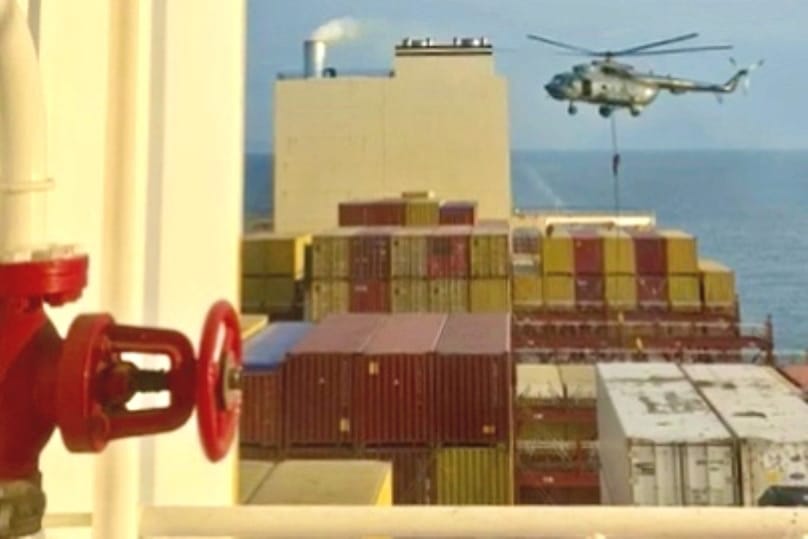
A helicopter raid targets a vessel near the Strait of Hormuz in April 2024. AP Photo

A Malta-flagged container ship was hit by a projectile while passing through the strait, forcing its crew to abandon the vessel.

Shipping data showed dozens of vessels slowing or waiting in Gulf waters, while many others delayed movements as operators reassessed whether it was safe to transit the narrow passage.

At least 20 vessels have been attacked in the area since the start of the conflict.

Iran has warned it could target ships attempting to pass through the strait if attacks on its territory continue.

Selective crossings and energy impact

Despite the disruption, some ships have continued to get through, often under specific conditions.

Vessels linked to Iran or from countries that maintain ties with Tehran have been among those able to transit, while others have relied on diplomatic arrangements to pass safely.

Iran has continued exporting oil during the conflict, with trade data suggesting millions of barrels have still been shipped despite the slowdown in traffic.

The disruption has fed into global energy markets, with oil prices rising sharply and shipping rates increasing as insurers and operators factor in the risks of sailing through the strait.

The Strait of Hormuz is one of the world’s most important energy routes, carrying around a fifth of global oil supply and key liquefied natural gas exports from the Gulf.


As U.S. Applies Force in Hormuz, European Powers Support Post-War Security
alt
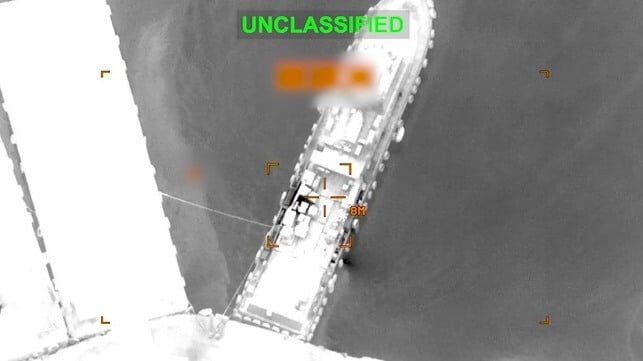
U.S. forces target an Iranian patrol vessel near the Strait of Hormuz, March 2026 (U.S. Central Command)

Published Mar 19, 2026 6:32 PM by The Maritime Executive


On Thursday, following a broad rejection of the White House's appeal for help in reopening the Strait of Hormuz, a coalition of six allied nations released a statement supporting action to protect shipping in the contested waterway - leading to immediate confusion.

"I have read completely erroneous interpretations of the document approved today by some European and non-European nations, including Italy," said Italian defense minister Guido Crosetto, referring to a joint release approving action in Hormuz.

The miscommunication may have stemmed from open-ended timing and unspecified means of assistance in the language of the letter. In their statement, the leaders of United Kingdom, France, Germany, Italy, the Netherlands and Japan expressed a "readiness to contribute to appropriate efforts to ensure safe passage through the strait."

For the U.S. and Israel, "appropriate efforts" in the strait include the immediate use of high-end military force in combat with Iran. For Italy, "appropriate efforts" means the opposite: no war mission, and no entry into Hormuz right away - without first establishing a truce and building a multilateral naval coalition, Crosetto said.    

"We are aware of the importance for all of working to safely reopen Hormuz and believe it is right and appropriate for the United Nations to provide the legal framework for a peaceful and multilateral initiative to achieve this goal," said Crosetto. 

The pledge for a post-conflict security mission received praise from the UK Chamber of Shipping. "Protecting crews must remain the foremost consideration at every stage, and we strongly support sustained international coordination to restore maritime security, stabilize shipping operations and safeguard those working on the front line of global trade," the trade organization said. 

In the meantime, Iran has its own plans for safe passage through the strait. According to the Iranian Student News Agency (ISNA), Iran's parliament is considering a bill that would impose a fee structure for passing vessels. Lloyd's List reports that at least one ship has already paid a steep fee of $2 million to make the run through Iran's new protected route between Qeshm and Larak; the bill would formalize this arrangement.


Trump calls NATO allies 'cowards' over refusal to join Strait of Hormuz security force
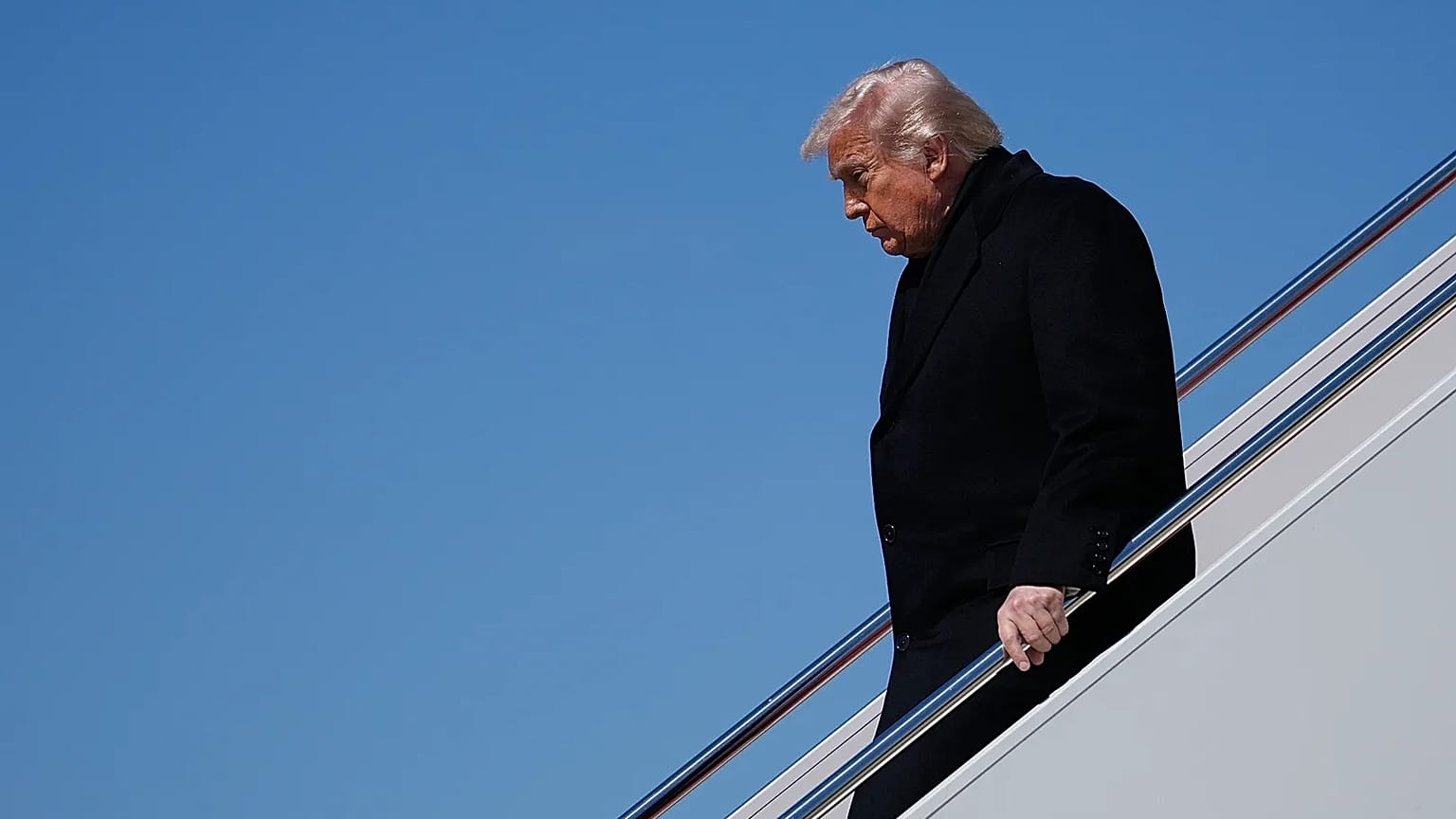
US President Donald Trump speaks in the Oval Office of the White House, 19 March, 2026
Copyright AP Photo

By Gavin Blackburn & Evelyn Ann-Marie Dom & Emma de Ruiter
Published on 

The death toll has risen to more than 1,300 people in Iran, more than 1,000 people in Lebanon, 15 in Israel and 13 US military members in the region. Millions of people in Lebanon and Iran have been displaced.

Three weeks into an escalating war in the Middle East, the US is reportedly sending more warships and Marines to the region, and Iran threatened Friday to expand its retaliatory attacks to include recreational and tourist sites worldwide.

As Israeli airstrikes landed in Tehran, Iran launched more attacks on Israel and energy sites in neighbouring Gulf Arab states, and the region marked Eid, one of the holiest days on the Muslim calendar. Iranians were also celebrating the Persian New Year, known as Nowruz, a normally festive holiday that is more subdued this year.

Jerusalem's Old City was hit by debris on Friday from incoming intercepted Iranian missiles. The debris landed in the Jewish quarter, less than 500 metres from The Western Wall, the holiest site where Jews can pray, and Al Aqsa Mosque, the third holiest site in Islam. It struck just above Dung Gate, one of seven functional entrances into the Old City.

With little information coming out of Iran, it was not clear how much damage its arms, nuclear or energy facilities have sustained in the punishing US and Israeli strikes that began on 28 February — or even who was truly in charge of the country. But Iran's attacks are still choking off oil supplies and denting the global economy, raising food and fuel prices far beyond the Middle East.

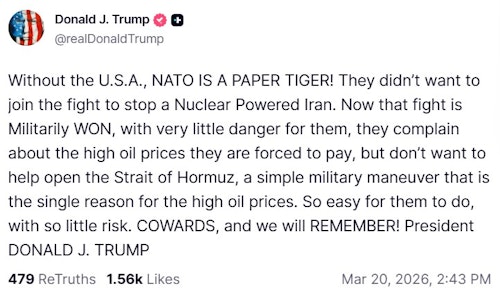
Trump Friday called his NATO allies "cowards" for not responding to his call to provide security in the Strait of Hormuz, adding that saying that without America the alliance is a “paper tiger.”

Hours after Trump's statement, the United Kingdom announced that it had authorised the use of its military bases for the US to carry out strikes on Iranian sites attacking ships in the Strait of Hormuz.

The agreement expands the previously agreed to conditions for use of its bases, which stated that American forces could use British bases for operations to prevent Iran firing missiles that put British interests or lives at risk.

The US and Israel have offered shifting rationales for the war, from hoping to foment an uprising that topples Iran’s leadership to eliminating its nuclear and missile programs. There have been no public signs of any such uprising and no end in sight to the war.

 Trump calls NATO allies 'cowards' over refusal to join Strait of Hormuz security force

US President Donald Trump has lashed out at NATO, saying that without America the alliance is a “paper tiger.”

In a post on his Truth Social platform, Trump complained about NATO allies not responding to his call to provide security in the Strait of Hormuz.

“Now that fight is Militarily WON, with very little danger for them, they complain about the high oil prices they are forced to pay, but don’t want to help open the Strait of Hormuz, a simple military maneuver that is the single reason for the high oil prices. So easy for them to do, with so little risk. COWARDS!” he wrote.

On Monday, Trump warned that NATO faces a “very bad future” if allies didn’t respond to his call to create an international naval police force.

The Strait of Hormuz is a key route for global oil and gas from the Gulf, carrying about one-fifth of the world’s crude oil.

Most shipping traffic has been halted since early March, shortly after the start of the war in Iran.

Oil prices have risen above $100 (€86) a barrel in recent weeks.


'Perfect storm of multiple factors' behind 2025 Iberia power blackout, experts say

A man sells battery-powered radios and torches during the blackout in Barcelona, 29 April, 2025
Copyright AP Photo

By Jesús Maturana & Gavin Blackburn
Published on 

The findings confirm the conclusions of a preliminary report which the experts issued in October.

Last year's paralysing power blackout in Spain and Portugal was caused by a "perfect storm of multiple factors," according to a final report by an expert panel published on Friday.

The 28 April outage raised doubts about Spain's high dependence on renewable energy sources and planned phaseout of nuclear energy, but the leftist government and some experts have rejected claims that they exposed the power grid to a blackout.

The report commissioned by the association of electricity grid operators ENTSO-E cited the Iberian electricity system's inability to control overvoltage events as a "key" factor, but stressed it was not the only one.

"There is no single cause. It was a perfect storm of multiple factors that contributed to the outage," Damian Cortinas, the president of the association, said during a presentation of the report by 49 European experts.

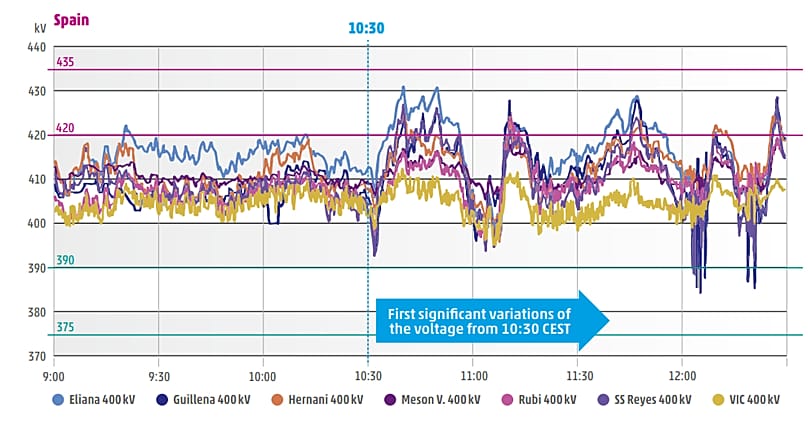
The two main variations that led to the blackout
The two main variations that led to the blackout Informe del Panel de Expertos de Entso-e


Overvoltage occurs when there is too much electrical voltage in a network, overloading equipment.

It can be caused by surges in networks due to oversupply or lightning strikes, or when protective equipment is insufficient or fails.

The massive blackout cut internet and telephone connections, halted trains, shut businesses and plunged cities into darkness across Spain and Portugal for up to 10 hours. It also briefly affected southwestern France.

It was "the largest and most severe blackout we have ever experienced in the European electricity system in more than 20 years," Cortinas said.

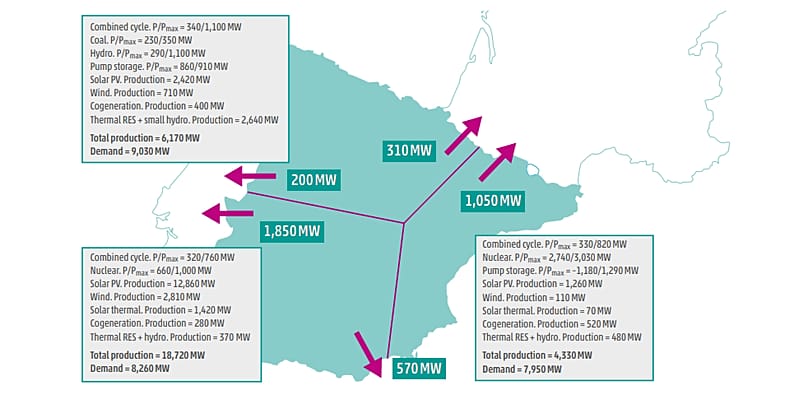
The report described a series of voltage fluctuations that led to widespread disconnections of power generation in Spain, particularly among converter-based systems commonly used in renewable energy.

Spread of the cascading blackout in Spain
Spread of the cascading blackout in Spain Informe del panel de expertos de Entsoe, 26 de marzo de 2026

These installations, the report said, were too rigid in operation to adapt to sudden increases in voltage.

Grid operators such as Spain's REE were faulted for a lack of real-time monitoring, with the report noting that no risk was identified even as voltage levels approached critical thresholds.

The findings confirm the conclusions of a preliminary report which the experts issued in October.


Two of world's largest bot networks behind major attacks shut down in operation with Germany


By Emma De Ruiter
Published on 

German, US and Canadian cybercrime specialists shut down two of the world's largest botnets, Aisuru and Kimwolf, suspected of being behind major online attacks.

Two of the world's largest bot networks were shut down in a major international operation, authorities announced on Friday.

German, US and Canadian cybercrime specialists joined forces to dismantle Aisuru and Kimwolf, suspected of being behind major online attacks.

They "posed a significant threat to IT infrastructure due to their size and associated attack capacitym," said German police, prosecutors and cybercrime officials.

A botnet is a network of computers or connected devices that have been infected with malware and are controlled secretly by an operator, who uses them for malicious purposes like attacks or data theft.

Aisuru consisted of a network of several million compromised online devices, such as routers and webcams, according to a statement.

The second, associated Kimwolf botnet involved several million infected devices, primarily Android TV boxes.

Two suspected administrators of the networks have been identified and now face "legal consequences," the statement said, without giving further details.

The botnets launched so-called "distributed denial of service attacks," where an operator floods compromised devices with massive amounts of traffic to slow them down or cripple them entirely.

They carried out "record-breaking attacks," according to the US Department of Justice, which was involved in the operation.

Infected devices were "enslaved" by the botnet operators, who then sold access to the compromised devices to other cyber criminals, the US officials said.

The cyber criminals extorted their victims, who in some cases suffered losses of tens of thousands of dollars, they said.

OOPS

Strava fitness app reportedly reveals location of France aircraft carrier at sea

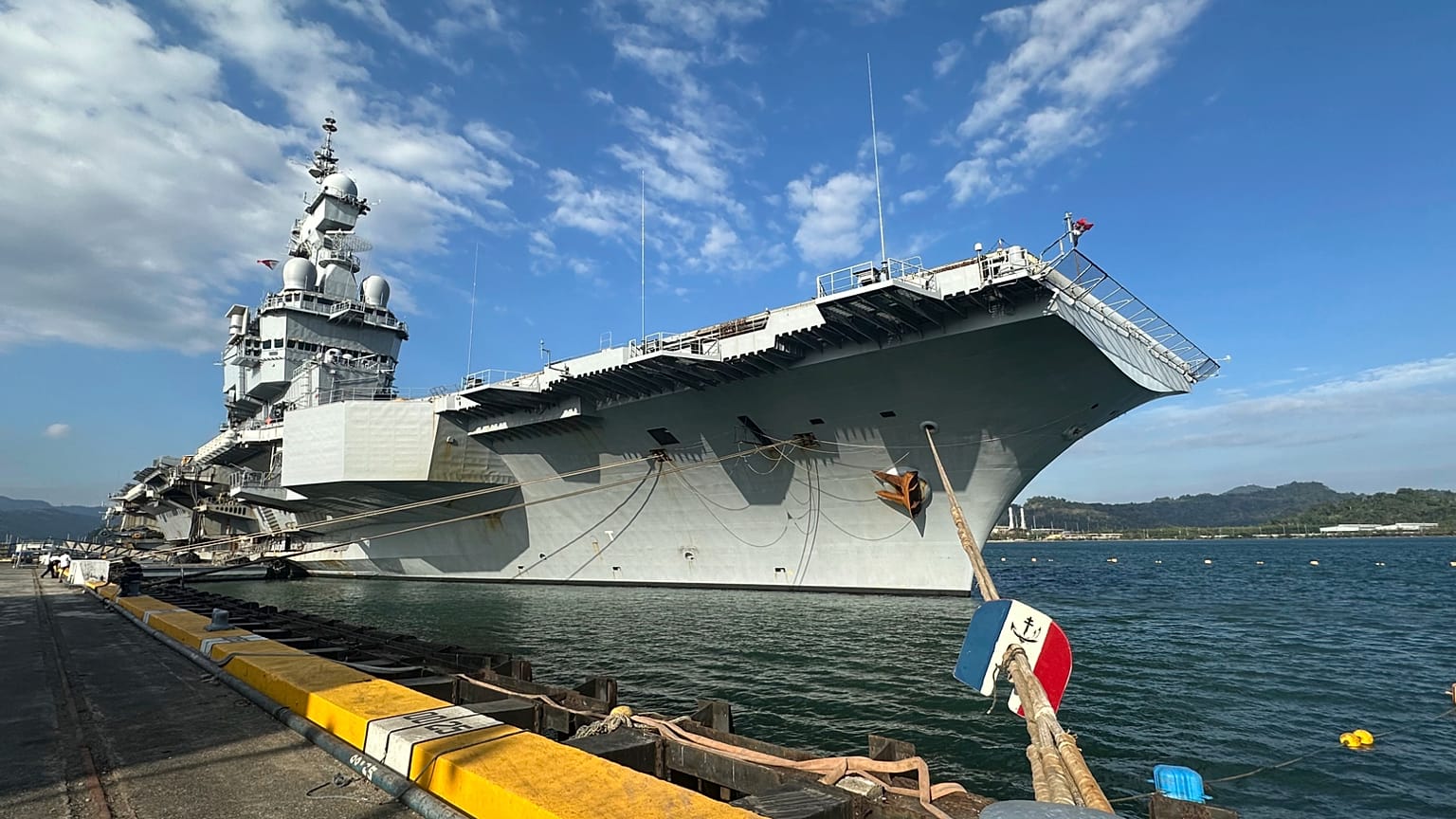
French aircraft carrier The Charles de Gaulle docks at Subic Bay port, a former U.S. Naval base northwest of Manila, Philippines, Sunday, Feb. 23, 2025.
Copyright AP Photo/Joeal Calupitan


By Emma De Ruiter
Published on 

A French navy member was reportedly shown jogging in circles on a ship in the middle of the sea northwest of Cyprus, according to his public profile on the Strava fitness tracking app.

A member of the French navy using the Strava app to track his jogging performance broadcast the exact position of his country's flagship aircraft carrier, French media has reported.

France deployed the Charles de Gaulle and accompanying frigates to the Mediterranean in early March shortly after US-Israeli strikes on Iran sparked war in the Middle East.

It has been in the eastern Mediterranean since 9 March as part of what Emmanuel Macron has called a "purely defensive" posture in support of France's allies in the conflict.

Le Monde newspaper reported that the runner jogged in circles on a ship in movement on 13 March in the middle of the sea northwest of Cyprus, according to his public profile on the Strava fitness tracking app, while satellite images showed the aircraft carrier was in the immediate vicinity at the time.

The same person had also been running in Copenhagen, Denmark, in late February, across a bridge from Malmö, Sweden, where the Charles de Gaulle was anchored at the time, Strava data showed.

The French armed forces said appropriate measures would be taken if the report was true, as members of the navy were regularly reminded about the risk of security breaches using such apps.

"The reported case, if confirmed, does not comply with the current instructions," it said.

Running app profiles have given away sensitive information before.

In 2024, Le Monde reported that the bodyguards of Macron, then US president Joe Biden and Russian leader Vladimir Putin were inadvertently giving away information about their whereabouts while accompanying them on trips.

In 2018, Strava maps showed the locations of US and allied military personnel in Iraq, Syria and Afghanistan.

While some bases were well known to groups that might want to attack them, the maps also showed what appear to be routes taken by forces moving outside of bases, information that could have been used in planning bombings or ambushes.


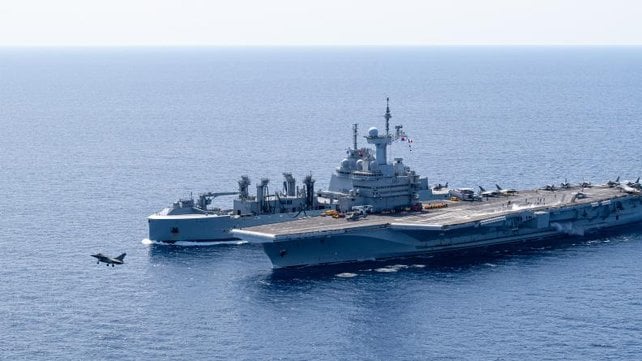
Fitness App Reveals Location of French Carrier Strike Group

Charles de Gaulle carier
Data from a smartwatch and app permitted the newspaper to pinpoint the location of the carrier strike group ( © Clarisse Dupont/Marine Nationale)

Published Mar 20, 2026 8:47 PM by The Maritime Executive


French officials were embarrassed and worked quickly to correct an incident after the newspaper Le Monde on Thursday revealed it had been able to pinpoint the location of the carrier Charles de Gaulle thanks to a smartwatch application. French President Emmanuel Macron had announced earlier in the month that the multinational carrier group had been repositioned into the Eastern Mediterranean to support French allies, and the newspaper was able to reveal the exact location.

French Rear Admiral Thibault Haudos de Possesse, who commands the group, had made a presentation on March 13 at the Ministry of the Armed Forces highlighting the firepower of the group. Ten days earlier, Macron had announced the group would be repositioned after having departed Toulon on January 27. The admiral highlighted that in addition to the carrier Charles de Gaulle, the group is comprised of three French frigates, "two air defense frigates and one multi-mission frigate (FREMM) as well as a force replenishment ship, the Jacques Chevallier." He said aboard the aircraft carrier are twenty Rafale Marine fighter jets, two Hawkeye airborne early warning aircraft, and three helicopters, and joining the group are an Italian frigate, a Spanish frigate, and a Dutch frigate.

Le Monde reported on Thursday that it had found the exact location of the group and proved it with a satellite photo. It reported the location as being approximately 100 km (62 miles) off the Turkish coast and near Cyprus. It said it had been able to establish the location using data from a popular fitness app on a smartphone.

According to the paper, a young officer whom it called “Arthur” had gone for a run on March 13 either aboard the carrier or one of the escort ships. He ran about 7 kilometers (more than 4 miles) on deck and logged his run on his smartphone. It was using the app Strava, which tracks location data and produces a heatmap of the locations where it is being used. With that publicly available data, Le Monde was able to pinpoint the carrier.

A spokesperson for the French Navy told the media the application did not “comply with current instructions.” If the report was true, they said, “appropriate measures would be taken.”

It is not the first time Le Monde has highlighted the vulnerabilities using the same app. News reports said it was first highlighted for its tracking capabilities in 2018, and since then, there have been incidents where the app permitted the tracking of Macron’s bodyguards, the Secret Service detail assigned to Joe Biden, and helped to locate U.S. and allied bases in Syria, Afghanistan, and Djibouti.

The popular app is reportedly used by 195 million people and is the latest example of common consumer technology exposing vulnerabilities. In the United States, there was a long-running debate about the popular app TikTok because it was owned by a Chinese company. The U.S. had barred government employees and the military from using it and threatened to shut down the app unless it was sold to an American company.

Strava reportedly automatically tracks its users and creates public profiles. Users have to manually reset the app and change the privacy settings to hide their location and other details.


‘Pushing extremes to new levels’: Record US heat dome made possible by climate change

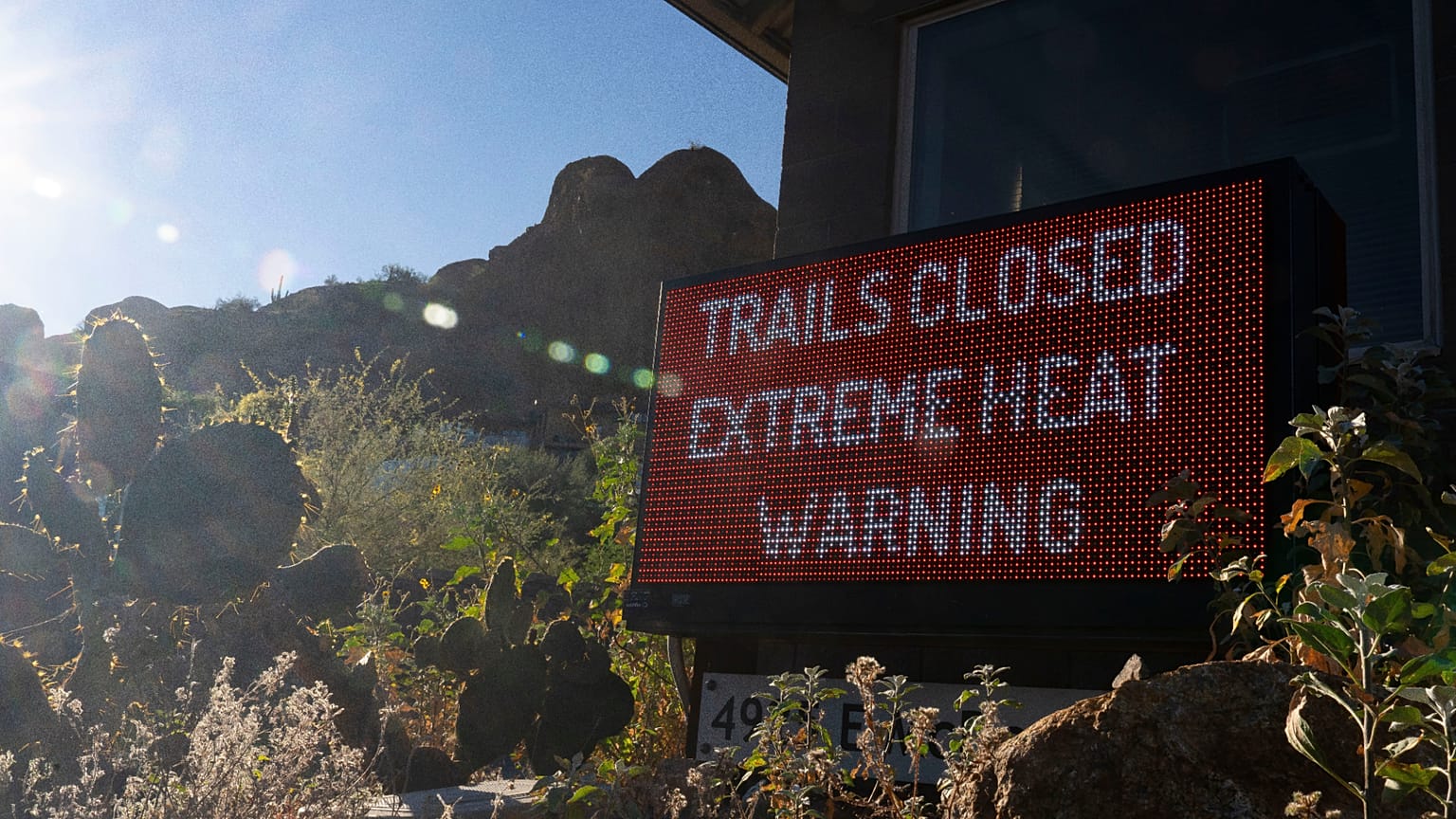
A sign warns hikers of trail closures due to extreme heat at Camelback Mountain on Thursday, March 19, 2026, in Phoenix.
Copyright AP Photo/Rebecca Noble

By Angela Symons with AP
Published on 

‘Insurers walking away’ is the clearest sign unpredictable weather extremes are spiralling out of control, one expert says.

The dangerous heatwave shattering March records all over the US Southwest is more than just another extreme weather blip. It’s the latest next-level weather wildness that is occurring ever more frequently as Earth’s warming builds.

Experts say unprecedented and deadly weather extremes that sometimes strike at abnormal times and in unusual places are putting more people in danger. For example, the Southwest is used to coping with deadly heat, but not months ahead of schedule, including a 43.3 Celsius reading in the Arizona desert on 19 March that smashed the highest March temperature recorded in the US.

On Thursday, sites in Arizona and southern California had preliminary readings of 43C, which would be the hottest March day on record for the United States.

“This is what climate change looks like in real time: extremes pushing beyond the bounds we once thought possible,” says University of Victoria climate scientist Andrew Weaver. “What used to be unprecedented events are now recurring features of a warming world.”

'Virtually impossible without climate change'


March's heat would have been virtually impossible without human-caused climate change, according to a report released on 20 March by World Weather Attribution, an international group of scientists who study the causes of extreme weather events.

More than a dozen scientists, meteorologists and disaster experts queried by news agency The Associated Press put the March heatwave in a kind of ultra-extreme classification with such events as the 2021 Pacific Northwest heatwave, the 2022 Pakistan floods and killer hurricanes Helene, Harvey and Sandy.

The area of the US being hit by extreme weather in the past five years has doubled from 20 years ago, according to the National Oceanic and Atmospheric Administration's Climate Extremes Index, which includes various types of wild weather, such as heat and cold waves, downpours and drought.

The United States is breaking 77 per cent more hot weather records now than in the 1970s and 19 per cent more than the 2010s, according to an AP analysis of NOAA records.

In the United States, the number and average cost of inflation-adjusted billion-dollar weather disasters in the last couple years is twice as high as just 10 years ago and nearly four times higher than 30 years ago, according to records kept by NOAA and Climate Central, a nonprofit group of scientists and communicators who research and report on climate change.

Baseball fans watch the Los Angeles Dodgers play the San Francisco Giants with the heat forcing the game to end early, Wednesday, March 18, 2026, in Phoenix.
Baseball fans watch the Los Angeles Dodgers play the San Francisco Giants with the heat forcing the game to end early, Wednesday, March 18, 2026, in Phoenix. AP Photo/Ross D. Franklin

Trying to keep up with extremes and failing

“It’s really hard to even keep up with how extreme our extremes are becoming,” says Climate Central Chief Meteorologist Bernadette Woods Placky. “It’s changing our risk, it’s changing our relationship with weather, it’s putting more people in risky situations and at times we’re not used to. So yes, we are pushing extremes to new levels across all different types of weather.

For government officials who have to deal with disaster it's been a huge problem.

Craig Fugate, who directed the Federal Emergency Management Agency until 2017, says he saw extremes increasing.

“We were operating outside the historical playbook more and more. Flood maps, surge models, heat records – events kept showing up outside the envelope we built systems around. That’s just what we saw,” Fugate says via email.

He adds: “We built communities on about 100 years of past weather and assumed that was a good guide going forward. That assumption is starting to break. And the clearest signal isn’t the science debate. It’s insurers walking away.”

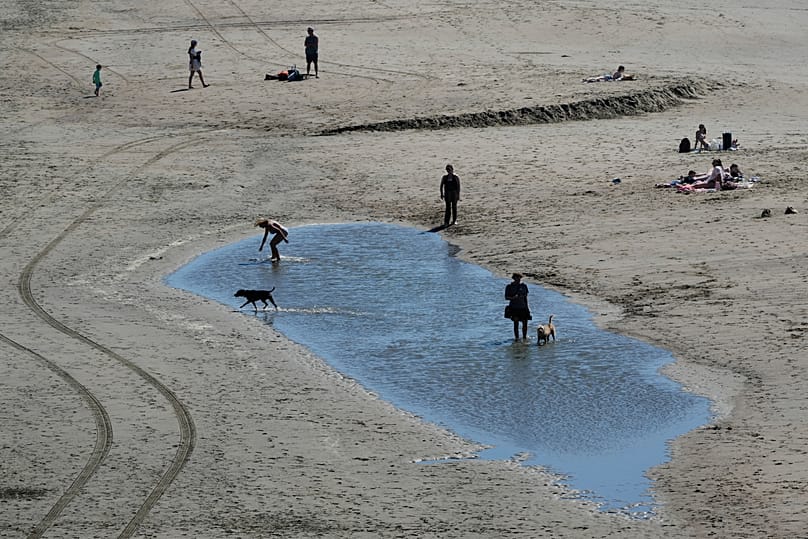
People and dogs walk in a large puddle at Ocean Beach in San Francisco, Tuesday, March 17, 2026.
People and dogs walk in a large puddle at Ocean Beach in San Francisco, Tuesday, March 17, 2026. AP Photo/Jeff Chiu

Fossil fuels are pushing temperatures to new highs

Climate scientists at World Weather Attribution did a flash analysis – which is not peer-reviewed yet – of whether climate change was a factor in this Southwest heatwave. They compared this week's expected temperatures to what's been observed in the area in March since 1900 and computer models of a world with climate change. They found that “events as warm as in March 2026 would have been virtually impossible without human-induced climate change”.

That warming, from the burning of coal, oil and natural gas, added between o 2.6 to 4 degrees C to the temperatures being felt, the report found.

“What we can very confidently say is that human-caused warming has increased the temperatures that we’re seeing as a result of this heat dome, and it’s going to be pushing those temperatures from what would have been very uncomfortable into potentially dangerous,” says report co-author Clair Barnes, an Imperial College of London attribution scientist.

Examples abound of high heat and extreme weather

The Southwest heatwave is solidly in the category of “giant events”, with temperatures up to 16.7 degrees Celsius above normal, says Stanford University climate scientist Chris Field.

He lists five others in the last six years: a 2020 Siberia heatwave, the 2021 Pacific Northwest heatwave that had British Columbia warmer than Death Valley, the summer of 2022 in North America, China and Europe, a 2023 western Mediterranean heatwave and a 2023 South Asian heatwave with high humidity.

And that doesn't include the East Antarctica heatwave of 2022 when temperatures were 45 degrees Celsius warmer than normal. That's the biggest anomaly recorded, says weather historian Chris Burt, author of the book Extreme Weather.

Worsening wild weather influenced by climate change isn't just super-hot days, but includes deadly hurricanes, droughts and downpours, scientists told AP.

Devastating floods hit West Africa in 2022 and again in 2024. Iran is in the midst of a six-year drought. And the deadly Typhoon Haiyan hitting the Philippines in 2013 shocked the world.

Superstorm Sandy, which in 2012 flooded New York City and neighbours, had tropical storm-force winds that covered an area nearly one-fifth the area of the contiguous United States. It spawned 3.5-metre seas over 3.6 million square kilometres, about half the size of the US, with energy equivalent to five Hiroshima-sized atomic bombs, said Yale Climate Connections meteorologist Jeff Masters

And don't forget wildfires that are worsened by heat and drought, so recent extremes should include 2025's Palisades and Eaton wildfires, which were the costliest weather disaster in the United States last year, said Climate Central meteorologist and economist Adam Smith.

“This is due to climate change, that we see more extreme events, and more intense ones and have so many records being broken,” says Friederike Otto, an Imperial College of London climate scientist who coordinates World Weather Attribution.

French navy boards tanker in Mediterranean suspected of being part of Russia's shadow fleet


By Nathan Joubioux
Published on 

The interception took place in the Western Mediterranean and was carried out in cooperation with allies, including the United Kingdom, which monitored the ship.

The French navy intercepted and boarded a tanker in the Mediterranean Sea on Friday that President Emmanuel Macron said is linked to Russia's sanctioned shadow fleet shipping oil in violation of international sanctions over the war in Ukraine.

According to the French maritime authorities for the Mediterranean, the tanker Deyna is suspected of operating under a false flag designation.

The interception took place in the Western Mediterranean and was carried out in cooperation with allies, including the United Kingdom, which monitored the ship, the authorities said.

"This operation aimed to verify the nationality of the vessel," which was flying the flag of Mozambique and was coming from the Russian port of Murmansk, the maritime authorities said in a statement.

The documents found onboard "confirmed doubts about the validity of the flag," they said.

The tanker was diverted and escorted by the French navy to an anchorage point for further checks, the statement said and the case was referred to a prosecutor in the port of Marseille.

In a post on X, Macron called the Deyna a "shadow fleet" vessel.

"These vessels, which circumvent international sanctions and violate the law of the sea, are war profiteers. They seek to generate profits and finance Russia’s war effort," Macron said. "We won't let this happen."

Russia is believed to be using a fleet of hundreds of ships to evade sanctions over its war against Ukraine. France and other countries have vowed to crack down.

In January, France's navy intercepted an oil tanker in the Mediterranean sailing from Russia. The vessel was released last month after paying a multimillion-euro penalty.

Last September, French naval forces boarded another oil tanker of France's Atlantic coast that Macron also linked to the shadow fleet.

Russian President Vladimir Putin denounced that interception as an act of piracy.


French Navy Stops Sanctioned Shadow Fleet Tanker Sailing Under False Flag

French troops boarding tanker
French forces boarding the tanker in the Western Mediterranean (Emmanuel Macron)

Published Mar 20, 2026 11:31 AM by The Maritime Executive


The French Navy, working with the UK, has stopped another sanctioned shadow fleet tanker sailing in the Mediterranean. The Navy reports the tanker Deyna (111,808 dwt) was stopped midday on March 20 for verification due to the suspicion that it was operating under a false flag.

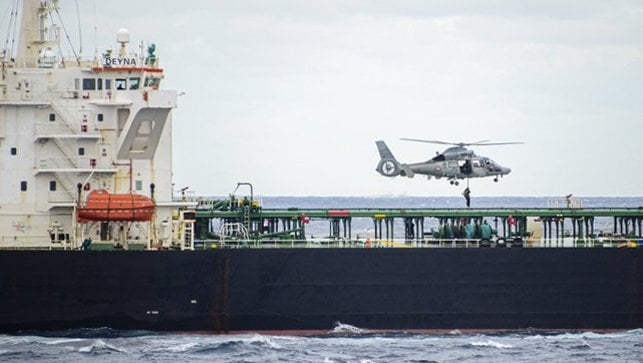
French forces boarded the tanker by helicopter after reporting, along with the British, that they had been tracking the vessel, which sailed from Murmansk, Russia. The tanker’s AIS signal showed it was heading to the Suez Canal and likely to China. Images show the ship low in the water, laden with a cargo of crude.

The Deyna, built in 2005, is listed as having had its class withdrawn in March 2024 and does not show an inspection record since August 2024. It is listed as owned by Chinese interests, with the French reporting the vessel claimed to be operating under the flag of Mozambique. Equasis lists the flag as Tonga. Africa has become a recent hot spot for false flag operations, with both Madagascar and landlocked Zimbabwe warning the IMO last month of false flag claims.

The tanker was sanctioned by the United States in January 2025 for its involvement with the Russian oil industry and links to a company called Sino Ship Management. The European Union and the UK also sanctioned this tanker in 2025.


Armee Francaise reports that the initial verification efforts this morning confirmed its suspicion regarding the legitimacy of the flag, and the case was referred to the public prosecutor in Marseille. At the prosecutor’s request, the tanker is being escorted to an anchorage for continued inspections.

“These vessels, which evade international sanctions and violate the law of the sea, are profiteers of war. They line their pockets while helping finance Russia’s war effort,” declared French President Emmanuel Macron. “We remain resolute… The war involving Iran will not deflect France from its support for Ukraine, where Russia’s war of aggression continues unabated.”

It marks the third instance where French has reported detaining a shadow fleet tanker. In January, it stopped another tanker off Marseille but released it after paying several million euros in fines. Similarly, last September, France detained another tanker off the Atlantic coast. The captain of that tanker was being tried in France for disobeying instructions from the military.

Across Europe, there are increasing efforts to crack down on false-flag vessels. The French military assisted Belgium in stopping another tanker earlier in March. It was also released after paying a fine. Sweden this month has detained two vessels that it reports were sailing under false flags. Both cases are currently under investigation, with the captains placed under detention and facing possible felony charges for presenting false papers. Denmark is also detaining a containership linked to Iran after reporting it was also flying a false flag, but quickly changed to Iran when it was challenged.


French navy boards Russia-linked tanker

in Mediterranean


The French navy has boarded and seized an oil tanker sailing in the Western ‌Mediterranean from the Russian port of Murmansk accused of belonging to what has been dubbed Moscow's "shadow fleet", vessels of opaque ownership suspected of dodging Western sanctions on the country's crude oil exports.


Issued on: 20/03/2026

FRANCE 24


A French Navy helicopter hovers over the Deyna vessel, accused of belonging to Russia's "shadow fleet", during an operation in the Western Mediterranean Sea, on March 20, 2026. © Préfecture maritime de la Méditerranée via Reuters

The French navy intercepted an oil tanker sailing from Russia in the Mediterranean on Friday, as President Emmanuel Macron insisted France would press ahead with efforts to back Ukraine despite the Iran war.

This is the third such suspected "shadow fleet" tanker intercepted by France in recent months.

"This morning in the Mediterranean, the French Navy intercepted and boarded another vessel from the shadow fleet, the Deyna," Macron said on X.

Several European countries have targeted Moscow's so-called "shadow fleet" of tankers used to transport oil in breach of Western sanctions imposed over Moscow's invasion of Ukraine, now in its fifth year.

Local authorities said the navy intercepted the Mozambican-flagged vessel – which sailed from Murmansk in northwestern Russia – over its registration.

The operation was carried out in coordination with other countries, including Britain, "which participated in tracking the vessel," the maritime prefecture said.

The ship will undergo further checks once anchored, it added.

The 250-metre (820-feet) tanker, which is on an EU sanctions list, was located near Spain's Balearic Islands and will be escorted to French waters in coming days, according to a source close to the investigation.

'Line their pockets'

Macron has pledged that France would maintain pressure on Russia to end its invasion of Ukraine.

The president on Friday labelled "shadow fleet" vessels "profiteers of war," accusing them of bypassing international sanctions and violating maritime law.

"They line their pockets while helping finance Russia's war effort," he said.

With global attention focused on the US-Israeli war with Iran, France will keep supporting Ukraine, Macron added.

"We remain resolute," he wrote in English.

"The war involving Iran will not deflect France from its support for Ukraine, where Russia's war of aggression continues unabated."

The United States has eased some restrictions on Russia's oil sales as it tries to stabilise global energy markets, upended by Iran blocking the Strait of Hormuz.

The move was criticised by Macron who pledged Russia would get no "respite" while German Chancellor Friedrich Merz said easing sanctions was "wrong".
Multi-million euro fine

French forces boarded another suspected Russian tanker, the Grinch, in January. But the ship was later let go after its owner paid a multi-million-euro fine.

In February, it was revealed that two employees of a Russian private security company were on another suspected Russian "shadow fleet" tanker seized by France in September, the Boracay.

The Chinese captain of the vessel went on trial in absentia, with prosecutors demanding he serve a one-year jail sentence for failing to follow orders to stop the ship.

Other European nations have also ramped up efforts to seize Russia-linked vessels.

In early March, Belgian special forces intercepted a tanker in the North Sea, with aerial support from France.

The Swedish coast guard last week arrested the Russian captain of a suspected "shadow fleet" vessel on suspicion of forging documents and violating the maritime code.

Nearly 600 vessels suspected of being part of Russia's "shadow fleet" are subject to European Union sanctions.

(FRANCE 24 with AFP)