Saturday, March 21, 2026


Cuba's Fragile Power Grid Finds a Powerful New Partner

  • The recent extended blackout in Cuba, following a weekslong US oil blockade, has served to deepen Cuba's energy alliance with China.

  • China is significantly increasing its support for Cuba's energy transition, including a massive ramp-up in solar equipment exports and pledges to help build nearly 100 solar parks and the island’s largest wind farm.

  • Despite China's growing support, the energy transition Cuba has outlined is estimated to require $8 billion to $10 billion in investment, a sum the country lacks, suggesting there are limits to China's generosity.

Cuba finally reconnected its power supply on Tuesday after an extended blackout swept the island as the United States tried to choke off the island’s energy supply. Blackouts lasted nearly 30 hours as Donald Trump engineered an oil blockade and publicly ruminated about whether he would have the “honor of taking Cuba.” But the move, rather than isolating Cuba, may have just deepened its ties with China.

Cuba, which is already beleaguered with an obsolete and fragile power system, saw its grid collapse under the weight of the weekslong oil blockade. The Caribbean island nation’s energy system uses about 100,000 barrels of oil a day to power aging and ‘decrepit’ thermal power plants that the country received from the former Soviet Union. 

Cuban leadership has not publicly stated what caused the island’s power grid to go dark on Monday, but the issues are likely to persist as the United States’ aggression continues. Once energy was restored 29 hours later, President Miguel Diaz-Canel blasted Washington’s "almost daily public threats against Cuba." 

The Trump administration has been vocal about its desire to oust the communist leader. However, experts warn that this would merely topple the figurehead of a country teetering on the edge of humanitarian collapse without actually doing anything to dismantle its political system. On Tuesday, Diaz-Canel wrote on social media that United States officials “intend to announce plans to take over the country, its resources, its properties, and even the very economy they seek to suffocate in order to force us to surrender.”

But while Cuba may be David to the United States’ Goliath, it has one very powerful ally. “As the Trump administration steps back from U.S. climate commitments and reinvests in fossil fuels, China is flexing its dominance in renewable energy, using offers of equipment, expertise and financing as geopolitical levers,” the Washington Post wrote in a Wednesday report.

This alliance could prove critical to rebuilding a stronger, more resilient, and more independent energy grid powered by domestically generated renewable energies rather than fossil fuel imports. Cuba has struggled to reach its own goals of renewable energy expansion and integration over the past decade, with renewables contributing just 9 percent of the national energy mix at present, but increased support from China could change that. 

China has been exporting solar equipment for years now, but their trade relationship has massively ramped up in recent years and is predicted to continue its growth trajectory. According to British energy think tank Ember, China shipped $5 million worth of solar equipment to Cuba in 2023. In 2025 the figure was $117 million – a 2,240 percent increase. China has also pledged to help Cuba build nearly 100 solar parks by 2028, and many of these projects – more than half, according to authorities – have already come online. China is also backing the construction of the island’s largest wind farm, La Herradura 1.

But there may be limits to China’s generosity, and those limits may fall far short of what Cuba needs to wean itself off of its imperilled import dependencies once and for all. Ricardo Torres, an energy economist at the American University in Washington, explained, “The energy transition outlined by the government would require investments of around $8 billion to $10 billion over the next decade… Cuba simply does not have that kind of money, and China will not pay for everything.”

However, Cuba provides a strategic alliance for China, which reportedly has installed spy stations on the island that is just 90 miles away from the United States at its closest point. In February, a spokesman for the Chinese Embassy in Washington said that China’s energy cooperation with Cuba has achieved “fruitful results” and will continue going forward. “We oppose unwarranted interference by external forces and reject any actions that deprive the Cuban people of their right to subsistence and development,” spokesman Liu Pengyu told The Washington Post.

By Haley Zaremba for Oilprice.com 


Two Russian Cargoes Offer Temporary Relief for Cuba's Energy Emergency

Cuba is set to soon receive two Russian cargoes of crude and diesel amid the U.S. energy blockade that has caused an unprecedented power crisis in the country.  

The shipments from Russia, which considers Cuba as one of few “friendly countries”, could test the U.S. resolve to continue isolating energy shipments for the island. If the tankers en route to Cuba do arrive in the coming days, they would be the first Russian oil and fuel shipments to the country this year. 

The tanker Anatoly Kolodkin, sanctioned by the U.S., the EU, and the UK, is mid-voyage in the Atlantic under Russian flag and expected to arrive at the island in about 10 days, Jorge Piñón, an expert at the University of Texas Energy Institute, told The Associated Press.


The Anatoly Kolodkin is estimated to carry about 730,000 barrels of crude oil, which has to be processed into fuels in order to help alleviate Cuba’s power crisis, which culminated earlier this week in a 29-hour nationwide blackout.

According to Piñón, the shipment on Anatoly Kolodkin could be processed into about 180,000 barrels of diesel, which would power Cuba for about 10 days. 

A second shipment, of Russian diesel, is on the Sea Horse vessel with a Hong Kong flag and is about 958 nautical miles from Matanzas, Cuba, Piñón told AP. If the cargo ends up in Cuba, it could be also used to ease the supply shortages in critical sectors such as agriculture. 

Last month, Russia said it plans to send soon oil and oil products to Cuba as part of humanitarian aid.

Cuba’s worsening economic and humanitarian situation has gone from bad to worse as the U.S., which now controls Venezuela’s oil sales, is banning shipments to Cuba.      

Venezuela was a key oil and fuel supplier to Cuba and was also among Russia’s “friendly countries”, until U.S. forces captured Nicolas Maduro in early January and took control over the country’s oil sales. 

By Tsvetana Paraskova for Oilprice.com 

UK Tracks Russian Tanker as US Tightens the Rules on Oil to Cuba
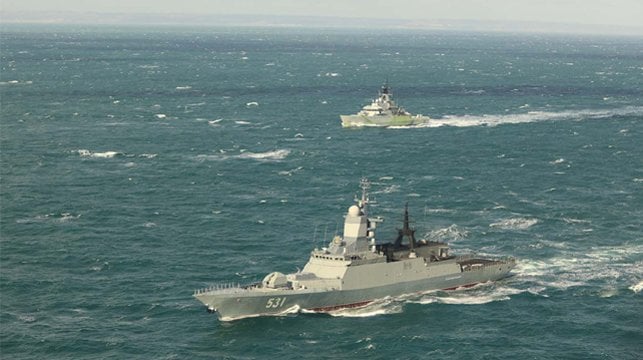
English and Russian warships in English Channel
UK Royal Navy reported it monitored a Russian warship escorting one of the tankers through the English Channel (Royal Navy)

Published Mar 20, 2026 3:29 PM by The Maritime Executive


Close attention is being paid to two tankers, which observers suspected were heading toward Cuba in a Russian effort to provide some relief to the fuel-starved island. The Trump administration is continuing its efforts toward regime change by imposing a near-total ban on support to the island and its communist government.

The UK Royal Navy reported yesterday, March 19, that it had been tracking a Russian-flagged tanker managed by Sovcomflot and its warship escort. The tanker Anatoly Kolodkin is thought to be Russia’s attempt to support Cuba. It loaded with 730,000 barrels of Russian crude at Primorsky at the beginning of the month, according to Kpler data. Their analysts report the ship could reach the Caribbean as early as next week and arrive at Cuba within 10 days.

The Royal Navy reported that it dispatched Portsmouth-based HMS Mersey along with a Wildcat helicopter to track the tanker’s transit through the English Channel. The warship reportedly completed a 48-hour monitoring effort as the tanker left the Channel and headed into the Atlantic. The Royal Navy reports the tanker was accompanied through the Channel by the Russian Steregushchiy-class frigate RFN Soobrazitelny. The frigate, however, turned back eastwards, reports the Royal Navy.

The tanker Anatoly Kolodkin (118,316 dwt) is under U.S., UK, and EU sanctions. Someone aboard the vessel appears to have a sense of humor. Knowing they are being watched, the AIS destination has been reading “Atlantis.” At one point, it said USA. Kpler and many others believe the ship is heading for Matanzas, Cuba.

Asked about the situation during his testimony at the U.S. Senate Armed Services Committee hearing Thursday, Commander of Southern Command, Marine General Francis Donovan confirmed the U.S. is also tracking the tanker. He called it a “replenishment ship” and said the U.S. also believes it is scheduled to make a port call in Cuba. He asserted that even if the ship delivers its cargo, it would have no significant impact on Cuba’s current shortages. Most analysts agree that, after refining, which would take time, they suggest that at most it buys Cuba two weeks.

Donovan told the Senate hearing that his command is not currently rehearsing any military intervention in Cuba.  The New York Times, however, reports that two U.S. Coast Guard vessels are believed to be on patrol around the island to deter any activity. Earlier in the year, it is believed the Coast Guard approached another tanker and scared it away to the Dominican Republic.

Similarly, a Chinese-owned product tanker named Sea Horse now appears to have been intimidated not to approach Cuba. The vessel is believed to be carrying Russian diesel, and last month, the suspicion was that it was bound for Cuba. It stopped in the mid-Atlantic, and its AIS now shows it is going to Venezuela. Reuters, citing data from LSEG ship-tracking, believes the product tanker has made a sharp turn to the south and is going to Trinidad. Windward Maritime AI, however, points out that the Sea Horse has been using various deception methods. It turned off its AIS and at another point listed itself as “not under command.” If it were going to Cuba, it would be days away, but the suspicion is that it stopped to find a new buyer for its cargo.

The Trump administration has at times been reported to be considering humanitarian relief for Cuba while continuing its overall pressure campaign. They had said fuel might be permitted to ensure the water supply continues. At the beginning of the week, Cuba experienced an island-wide power failure linked to the fuel shortages.

The U.S. Treasury on Thursday, however, also closed what seems to have been a loophole that could have benefited Cuba. Last week, the Treasury said it was temporarily suspending the restrictions on Russian oil to let cargoes loaded before March 11 be sold before April 11 in an effort to ease the pressure on the energy markets due to the attacks on Iran. At the time, the only restriction was against sales related to Iran, but now the U.S. has added Cuba and North Korea to the restrictions.

For now, it is a wait-and-see if either tanker will attempt to reach Cuba. 

Panama Responds to Hutchison Calling Accusations “Scandalous”

Panama
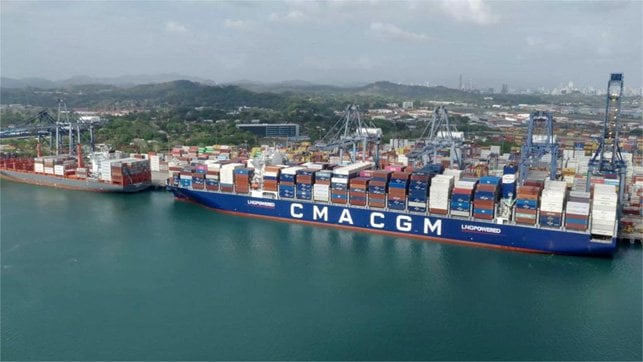
Panama continues to defend against the accusations coming for CK Hutchison in the dispute over the operation of the port terminals at the Panama Canal

Published Mar 20, 2026 7:27 PM by The Maritime Executive


The back-and-forth between China, Panama, and CK Hutchison heated up as Panama’s President, Jose Raul Mulino, met the press on Thursday in his weekly session. He dismissed the accusations made by the Panama Ports Company (PPC) and CK Hutchison in the ongoing dispute resulting from Panama's annulment of the Chinese company’s long-standing concession to operate the port terminals in Balboa and Cristobal.

PPC at the beginning of the week asserted that Panama had missed the filing deadline for its international arbitration. Among the reasons, it said Panama did not have international lawyers. Mulino dismissed the accusation, calling it “outrageous and a lie.” He said Panama has appointed international lawyers who will defend against the claims. PPC has said it will seek at least $2 billion in damages.

The company and China have repeatedly made claims that Panama was acting unlawfully and not respecting its contracts. PPC also asserts that Panama raided a storage unit and took proprietary materials and will not return them.

Mulino told reporters the company’s recent statements are “fallacious and libelous.”

Panama took back both port terminal operations in February when the country’s Supreme Court finalized a ruling that said the laws establishing the 1997 concession and a no-bid 25-year renewal in 2021 were unconstitutional. The country’s controller general had initiated the court case after an audit that it said showed irregularities. 

Panama asserted the state had lost as much as $1.2 billion in revenue due to the irregularities, insufficient payments, and tax exemptions. Hutchison asserts it invested at least $1.7 billion over the life of the concession on modernization and operation of the terminals at each terminus of the Panama Canal, as well as training.

Media reports have said Panama opened a new investigation into the business after taking back the two ports. It awarded temporary contracts to Maersk’s APM Terminals and MSC’s Terminal Investment Limited (TiL) for the operation of the terminals until a new tender can be conducted. It reports that both ports are operating normally and at capacity after a smooth transition.

The Panama Ports Company and Hutchison have said they asked for discussions to resolve the issues while accusing Panama of conducting a year-long campaign against the company. Panama on Thursday said it was the company that had refused to cooperate, concealed information, and obstructed coordinated transactions.

Hutchison has vowed to continue to pursue all legal courses of action against Panama. The international arbitration is expected to run for years. China also appears to be retaliating against, telling other companies not to do business with the country, ordering inspections of Chinese-flagged ships in Chinese ports, and COSCO has suspended its operations at the Port of Balboa.

The United States has celebrated Panama’s taking back the terminals. Donald Trump last year had repeatedly said China was running the Panama Canal and called for action, saying otherwise the U.S. would take back the canal.

Switched Off Navigation Sounders a Factor in Nuyina Grounding Says ATSB

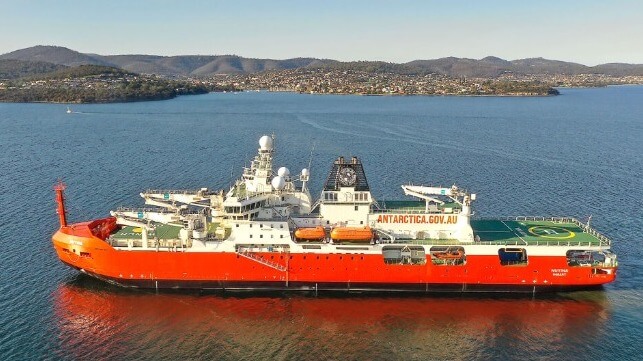
Nuyina research vessel
The grounding was the latest in a series of incidents with the state-of-he-art research vessel (AAP)

Published Mar 20, 2026 9:10 PM by The Maritime Executive


A decision to switch off the navigational echo sounders to avoid interfering with scientific instruments is emerging as a key factor in the brief grounding of Australia’s research vessel Nuyina in October last year. This is according to the Australian Transport Safety Bureau (ATSB), which has released its preliminary report detailing events leading to the grounding of the $528 million vessel off Heard Island, some 4,000 kilometers southwest of Perth on October 13.

On that day, the state-of-the-art research vessel was conducting drone survey operations over the shore of Heard Island, close to an area of uncharted seafloor with 37 marine crew and 85 expeditioners on board. The vessel had arrived at Heard Island from Casey station, Antarctica, with the purpose of the visit being to support field science operations on the island as part of the Australian Antarctic Program’s (AAP) first voyage of the 2025–2026 Antarctic season.

Notably, the Heard Island campaign was the AAP’s first dedicated environmental management visit to Heard Island in more than 20 years. It included planned landings by scientists, using helicopters and small craft to check on the state of the island’s unique flora and fauna, as well as small-scale remotely operated vehicles operations and mapping the bathymetry around the island.

During that first day, the vessel conducted scientific operations using remotely piloted aircraft (RPA) before moving away from the coast and conducting bathymetric mapping operations overnight. The survey operations were conducted using scientific acoustic instruments, including a high-resolution multi?beam echo sounder (MBES) mounted on one of the ship’s drop keels.

After completing overnight survey operations, the vessel arrived at a holding position five miles north of Dovers Moraine in the early hours of the following day. By about 0800, the weather had improved, and Nuyina was moved closer inshore to a position in water depths of about 30 meters. The position was close enough to shore to allow for effective RPA operations while remaining clear of the area marked as “unsurveyed” on the chart.

At this location, the drop keel was retracted from its lowest working position to its highest working position, which left it protruding 750 mm below the keel. The MBES was left switched on and continued to provide depth information as the ship proceeded with the survey operations. At about 1430, the voyage leader requested the master to move the ship from its location off Fur Seal beach to a location north of Cape Bidlingmaier, with the master understanding that a track close to shore would be beneficial for continued RPA flights.

The master and second officer went on to discuss the route to the new location in more detail, after which he constructed the route at the ECDIS planning station. At this point, the MBES was still collecting data, having been used for overnight bathymetric surveys in deeper water. To avoid acoustic interference, the ship’s navigational echo sounders were switched off.

“Depth information from the multi-beam system was shown on a dedicated display on the bridge, but was not fed into the ship’s integrated bridge system. This meant the depth information was not displayed on the ECDIS, and could not be used to generate navigational alarms,” explained Angus Mitchell, ATSB Chief Commissioner.

While the master tried to correct the issue with the ECDIS, the second officer followed an electronic bearing line that had been loaded earlier to guide the ship along the coast while it was conducting the drone flights. A short time later, the acoustics operator contacted the bridge by phone to advise that the multibeam was showing a depth of 15 meters. Shortly after, the master ordered “stop engines,” followed a short time later by “dead slow astern.”

At about the same time, the acoustics operator contacted the bridge again to warn of shallow water. However, Nuyina then briefly grounded, with its retractable drop keel initially impacting the seabed, followed by the ship’s hull. The grounding caused substantial damage to scientific instruments, with the ship’s hull sustaining scratches and paint damage. The ship continued with its operations at Heard Island as well as a scheduled resupply operation at Davis Station in Antarctica before returning to Hobart.

ATSB has termed the grounding a serious incident and intends to issue a final report of the investigation later in the year.


Video: One Survivor of Latest U.S. Strike on FISHING BOAT 

Suspected Drug Smuggling Boat

strike of suspected drug smuggling speed boat
U.S. forces and Thursday struck another boat in the Eastern Pacific (SouthCom)

Published Mar 20, 2026 1:51 PM by The Maritime Executive


U.S. Southern Command is confirming a new strike on a suspected drug smuggling boat while saying it believed three individuals survived the strike. News of the latest strike came just a day after the Commander of the U.S. Southern Command, Marine General Francis Donovan, who is said to have directed yesterday’s strike, told a U.S. Senate hearing that they would be shifting tactics.

The report said intelligence confirmed a low-profile vessel transiting along what were termed “known narco-trafficking routes.” 

Few details were released other than the traditional sensational video posted to social media. The strike reportedly took place in the Eastern Pacific on March 19, with three individuals surviving the attack. SouthCom did not say if there were more individuals aboard the boat or if anyone had died in the strike. It said the U.S. Coast Guard was immediately notified to activate a search and rescue system for the survivors.

The U.S. Coast Guard later reported that it recovered two bodies and one survivor. The individual, along with the bodies of two others, was handed over to the Costa Rican Coast Guard, according to a U.S. spokesperson


Exact counts vary on the number of strikes and people killed since the Trump administration started the campaign last September. Numbers vary between a total of 40 and 45 strikes, with between 140 and 157 people reported killed. There have been a few previous reports of survivors, but the few people who were rescued were sent back to South American countries. The U.S. has yet to arrest any of the people and put them on trial.

Donovan, who is said to have directed the strike, told the Senate Armed Services Committee that the military is pivoting to a comprehensive campaign to target and dismantle drug trafficking organizations, rather than individual boats. He said, “Looking forward, senator — the boat strikes aren’t the answer.”

The Trump administration has been calling the boats “narco-terrorists” and asserting they are operated by “designated terrorist organizations.” Critics of the efforts, however, have questioned the legal authority for the strikes. It has been pointed out that the Coast Guard previously had success in capturing the boats and arresting the operators. 

Donovan did not say when the military might pivot to a new strategy. He also did not discuss the details of the efforts and whether they would continue the efforts to strike boats in the Caribbean and Eastern Pacific.


U.S. Southern Command Says Drug Boat Strikes "Aren't the Answer"

Aftermath of a drug boat strike, February 2026 (Southern Command)

Published Mar 19, 2026 11:34 PM by The Maritime Executive


In a Senate hearing Thursday, U.S. Southern Command's top officer told lawmakers that the high-profile airstrikes on drug boats that the Pentagon has championed "aren't the answer" to cocaine smuggling in the Americas. SOUTHCOM commander Gen. Francis L. Donovan (USMC) told the Senate Armed Services Committee that the military is pivoting to a comprehensive campaign to target and dismantle drug trafficking organizations, rather than individual boats. 

Since the start of enhanced operations in September, the U.S. military has conducted 45 airstrikes on suspected trafficking boats and killed 157 suspected smugglers, in addition to nonlethal interdictions completed by the Coast Guard. The lethal strikes are forcing some of the smuggling-boat operators to change their routing, but SOUTHCOM wants to do more.

"Looking forward, senator — the boat strikes aren’t the answer," Gen. Donovan told Sen. Mark Kelly (D-AZ) during a Senate Armed Services Committee hearing Thursday. "What we’re moving for right now [is] a countercartel campaign process that puts total systemic friction across this network."

The objective is to impede the entirety of the drug supply chain, he said, from production through to delivery. "I believe that actually kinetic strikes will be one of the many tools, and probably not the most effective tool, when we actually look at it as more of a campaign approach," Donovan said. 

Critics of the administration's airstrike tactic have cautioned that at a practical level, it could make it harder for law enforcement to break into cartel networks. Since the airstrike method typically leaves no survivors, low-level drug boat crewmembers cannot be interrogated after the interdiction. This costs investigators an important source of information about the cartel's inner workings, critics say. 

At the compliance level, many legal experts at home and abroad have suggested that the airstrike campaign does not align with international law, as it employs military force against men who have historically been treated as noncombatant criminal suspects - civilians, in the law of war. The White House maintains that the operators are "narcoterrorists," and its legal justification - reported by multiple outlets, but not released to the public - is said to rest on the theory that the strikes are targeted solely at the chemical substance aboard the boat, meaning that any harm to the crewmembers on board is incidental. 


Hapag and India Plan Cooperation for Reflagging Ships, Recycling, and Ports

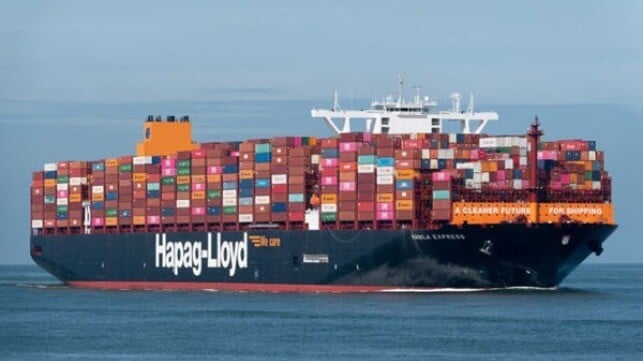
Hapag-Lloyd containership
Hapag-Lloyd agreed to a strategy of maritime cooperation with India (Hapag)

Published Mar 19, 2026 7:04 PM by The Maritime Executive


Hapag-Lloyd has become the latest among the largest carriers to map out a strategy of cooperation and expansion with India. The liner company reports it already has six dedicated services that include India and that it aims to grow volumes handled in the India area to around 3 million TEU by 2030.

India has been anxious to attract the major carriers as part of its strategy to expand its maritime related industries. It hopes to attract the lines to build and repair ships in India, but it also made changes to its cabotage regulations and announced plans for building domestic carriers. CMA CGM has reflagged ships and ordered feeder ships to be built in India, while both Maersk and MSC reflagged ships and said they were exploring opportunities.

“India is one of the most important growth markets in global trade and a key strategic partner for Hapag-Lloyd,” said Rolf Habben Jansen, CEO of Hapag-Lloyd.

Hapag reports it signed three Letters of Intent to deepen its cooperation and participation in India. Like the other major carriers, it says it intends to reflag up to four vessels under the Indian registry. However, it says there is no specific timeline or vessel profile, and that it would be subject to commercial considerations and further discussions. Reflagging requires using Indian officers and crew but opens the domestic Indian market for the carriers.

Another focus includes cooperation on the development of a ship recycling ecosystem in India. Alang, India, is well-known for its breaker operations, but so far has not moved to be incompliance with international and EU regulations on elements such as safety and environmental management. Hapag says the intended cooperation aims to support the development of recycling capacity in India, aligned with the EU Ship Recycling Regulation (SRR). Hapag says the envisioned ecosystem could provide capacity for recycling up to 100 vessels.

It also foresees discussions on a strategic cooperation related to the development of Vadhavan Port in collaboration with the Jawaharlal Nehru Port Authority. Located about 100 miles north of Mumbai, it is seen as one of India’s major upcoming infrastructure projects. 

“India’s port and logistics infrastructure is developing at remarkable speed and scale,” said Dheeraj Bhatia, CEO of Hanseatic Global Terminals and member of the Hapag-Lloyd Executive Board. “Projects such as Vadhavan Port have the potential to significantly strengthen India’s role in global supply chains. 

Vadhavan Port is expected to play an important role in strengthening the country’s maritime logistics network. Hapag-Lloyd intends to contribute its global shipping and terminal expertise to support this development.

Hapag already has a strategic investment in J M Baxi, a private company that operates terminals and inland transport in India. It recently revealed, according to India's The Economic Times, that through capital infusions it has grown its stake in J M Baxi. Hapag started a 35 percent in January 2023, then went to 40 percent, and is not in a 50-50 joint venture, according to the news outlet. Hapag told The Economic Times that it sees strong opportunities for its Hanseatic Terminals working with J M Baxi.


India’s Shipbuilding Imperative: Charting A Policy Roadmap To 2047 – Analysis


India's Hindustan Shipyard Limited (HSL). Photo Credit: Hslvizag, Wikipedia Commons


March 21, 2026 
Observer Research Foundation
By Anusha Kesarkar Gavankar


India recently announced plans to invest INR 3 lakh crore to develop shipbuilding clusters across the country under the Maritime Amrit Kaal Vision 2047. As part of these efforts, India has also outlined its first Special Purpose Vehicle (SPV), the National Shipbuilding & Heavy Industries Park, Tamil Nadu (NSHIP, TN), under its Shipbuilding Development Scheme (SbDS).

As a landmark 50:50 joint venture between the V.O. Chidambaranar Port Authority under India’s Ministry of Ports, Shipping and Waterways (MoPSW) and the Tamil Nadu State Industries Promotion Corporation, the SPV exemplifies the spirit of cooperative federalism in accelerating India’s indigenous shipbuilding capabilities. Conceived as a greenfield mega shipbuilding and heavy industries cluster at Tuticorin to strengthen India’s commercial shipbuilding and repair ecosystem, NSHIP, TN aims to attract global investment, promote technology-driven manufacturing, and generate large-scale employment across skilled and semi-skilled segments.

Following this, the Mumbai Port Authority (MPA) and the Maharashtra government plan to establish a co-owned SPV to develop the second greenfield shipbuilding cluster under the SbDS. The latest meeting between HD Hyundai Group Chairman Chung Kisun and India’s Prime Minister Narendra Modi to explore potential shipyard projects further underscores the country’s growing strategic appeal for international shipbuilding players. Collectively, these developments indicate a paradigm shift in which India is actively positioning itself as a commercially competitive, export-oriented, and globally integrated shipbuilding ecosystem. These initiatives not only align with India’s national vision of Make in India and Atmanirbhar Bharat — encouraging self-reliance through import substitution, green and sustainable shipbuilding practices, and the creation of globally competitive maritime infrastructure — but also advance its ambition to rank among the world’s largest shipbuilding and heavy engineering hubs.
The Global Context

Over 90 percent of global trade moves by sea, yet global shipbuilding remains concentrated in a few countries. China, South Korea, and Japan collectively accounted for 95 percent of new shipbuilding orders by tonnage as of 2024. These nations dominate a market valued at roughly US$150 billion annually, leaving most of the world reliant on a handful of economies for commercial vessels, with significant geopolitical and strategic implications. As global trade volumes expand and shipping routes face uncertainty, countries are recognising that domestic shipbuilding is not merely an economic activity but a strategic necessity. For emerging maritime economies like India, this is crucial for economic security, supply chain resilience, energy transport, the green transition, and geopolitical influence.


Despite maritime transport handling nearly 95 percent of India’s trade by volume and around 70 percent by value, the country accounts for less than one percent of global shipbuilding output, currently rankingapproximately 18th worldwide. India’s current shipbuilding capacity is roughly 0.072 million GT, in stark contrast with China’s 39 million GT, South Korea’s 20 million GT, and Japan’s 9 million GT. This gap underscores India’s vulnerability to external supply shocks and freight volatility, reinforcing the strategic imperative to build domestic capability. Other mid-tier shipbuilding economies, such as Brazil, Vietnam, and the Philippines, illustrate that incremental growth is possible when policy, industrial strategy, and workforce development are aligned.
India: Current Landscape and Challenges

The shipbuilding capacity of a unit is defined as the “maximum carrying capacity of the ship that can be built by a shipyard, measured in terms of Dead Weight Tonnage (DWT), which is the number of tonnes (one tonne = 2,240 pounds) of stores, fuel, and cargo that a ship can carry.” India’s shipbuilding industry is broadly categorised into three segments:Large ocean-going vessels for overseas and coastal trade;
Medium-sized specialised vessels, including port crafts, fishing trawlers, offshore vessels, inland crafts, and smaller vessels; and
Defence/Naval and Coast Guard vessels.

As of 2023-24, India had 42 dry docks for ship repair, eight public-sector shipbuilding and repair companies, and nine dry docks operated by five major ports. The total workforce in Indian shipyards was just over 19,000, with officers accounting for about one-fifth. In that year, around 418 ships were repaired across both the public and private sectors. These figures show that India possesses a basic shipbuilding and repair capability but will require substantial structural reforms and a much stronger focus on workforce training and upskilling to compete globally.


India’s Shipbuilding and Ship Repairing Industry at a Glance
Shipbuilding Capacity
S. No. Name of the Company* Capacity (in thousand DWT)
1 Cochin Shipyard Ltd. 110.0
2 Hindustan Shipyard Ltd. 80.0
3 Shoft Shipyard Ltd. 10.0
4 Patra Shipping Pvt. Ltd. 10.0
5 San Marine 8.0
Ship Repairing Capacity
S. No. Name of the Company* Capacity (in thousand DWT)
1 Cochin Shipyard Ltd. 125.0
2 Hindustan Shipyard Ltd. 80.0
3 Patra Shipping Pvt. Ltd. 10.0
4 Waterways Shipyard Pvt. Ltd. 8.0
5 Modest Infrastructure Pvt. Ltd. 6.0
*Top 5 Reporting Companies

 Source: Statistics of India’s Shipbuilding and Ship Repairing Industry 2023-24, MoPSW


Despite a coastline of 11,098 km and a rich maritime heritage, Indian-owned ships accounted for only 4.11 percent of the country’s overseas trade by tonnage in 2023-24, underscoring the need for both demand creation and capability expansion. India’s shipbuilding sector therefore must overcome real-world challenges, including securing a steady flow of domestic and strategic orders to ensure consistent yard utilisation; addressing financing barriers and structural constraints; deepening supply chains for key components such as engines, propulsion systems, and advanced electronics; and bridging the gap between current workforce capabilities and international standards.

Addressing these concerns will be central to realising India’s ambitious shipbuilding vision while ensuring inclusive growth. The country is likely to gain a comparative advantage in green shipping technologies and specialised niche segments, where an early-mover advantage could help India secure long-term industrial and strategic gains.
Policy Architecture

India’s shipbuilding ambitions are anchored in the Maritime India Vision (MIV) 2030 and the Maritime Amrit Kaal Vision 2047 (MAKV). Some of the main objectives include:
Achieve a 5 percent share of the global shipbuilding market by 2030 to be among the top ten, and rank in the top five by 2047;
Modernise and establish world-class shipyards through public-private partnerships (PPP) and global tie-ups;
Scale domestic shipbuilding capacity to 3 million gross tonnage (GT) annually by 2047;
Expand India’s merchant fleet to roughly 100 million GT cumulatively;
Generate approximately 22 lakh (2.2 million) direct and indirect jobs;
Promote green shipping technologies, in line with India’s net-zero commitments, including green vessel construction and low-carbon shipping; and
Support domestic industry through financial schemes and Right of First Refusal (RoFR) policies.

India’s shipbuilding strategy then rests on the following factors:
Financial and Institutional Support:In 2025, following a four-pillar approach, the Union Cabinet approved an approximately US$ 8 billion (INR 69,725 crore) maritime incentives package:~US$ 2.70 billion (INR 24,736 crore) for the Shipbuilding Financial Assistance Scheme (SBFAS), including a ~US 436 million (INR 4,001 crore) “Shipbreaking Credit Note” for eco-friendly ship dismantling. A National Shipbuilding Mission will oversee the implementation of all initiatives.
~US$ 2.18 billion (INR 19,989 crore) for a dedicated Shipbuilding Development Scheme (SbDS) with 100 percent capital assistance to support greenfield/brownfield yards, infrastructure expansion, risk coverage, and the establishment of the India Ship Technology Centre to enhance technical capabilities, innovation, and skilling.
~US$ 2.73 billion (INR 25,000 crore) for a Maritime Development Fund (MDF) to underwrite long-term financing.
Regulatory, taxation, and policy reforms to strengthen maritime infrastructure and boost domestic shipbuilding.
Infrastructure status has been accorded to shipyards, reducing financing costs and enabling long-term capital investment.
Standard Operating Procedures (SOPs) mandate long-term charters for port tugs and pilot boats, thereby promoting small- and medium-sized shipyards.
RoFR provisions for Indian-built, Indian-flagged, and Indian-owned vessels aim to strengthendomestic demand creation.

Cluster-Driven Industrialisation:NSHIP, TN is the first mega shipbuilding cluster under a Centre-State SPV.
A similar cluster is being instituted jointly with Maharashtra and the MPA, alongside additional proposals in Kerala, Andhra Pradesh, Odisha, Gujarat, and Maharashtra.
Integrated waterfront clusters are being developed to leverage supplier networks, logistics, and skills, emulating global leaders such as South Korea, Vietnam, and China.
Skills and Technological Ability:A target to upskill 50,000 maritime workers by 2030, including in research and development for autonomous and green vessels
The promotion of automation, digital twin technologies, and green vessel construction using LNG, methanol, and hydrogen.
The integration of international partnerships to transfer technology, embed R&D, and develop domestic capability rather than serving merely as an assembly hub.
Shaping India’s Shipbuilding Future

India is increasingly using low-carbon and green shipping as a strategic advantage. International regulations, including the International Maritime Organization‘s net-zero targets and the European Union Emissions Trading System for maritime transport, along with the need to renew fleets, are driving demand for vessels powered by alternative fuels. Today, more than half of new ship orders worldwide involve green technologies. Indian shipyards, such as Cochin Shipyard Limited, have already secured orders for hydrogen fuel-cell and other low-carbon vessels. Government initiatives such as the Harit Nauka Guidelines for inland vessels, the Green Tug Transition Programme, and incentives under MIV further demonstrate India’s commitment to a sustainable maritime transition.

Strategic collaborations with advanced shipyards can help India quickly absorb technology, train its workforce, and strengthen domestic research and development. These partnerships and initiatives to upgrade the sector are expected to create around 3 million new jobs and attract approximately US$49 billion (INR 4.5 trillion) in investments. They also set an international example of how early engagement with leading global shipbuilders can help scale domestic industry. The main challenge, however, will be ensuring that these partnerships build lasting domestic capabilities and support competitiveness rather than delivering short-term capacity gains.

Private sector initiatives, such as Mundra Port, complement government-led efforts, demonstrating that India’s shipbuilding ecosystem is entering a new growth trajectory. Market analysis also suggests that the Indian shipbuilding industry, currently valued at US$1.12 billion, could grow at a CAGR of 60 percent to over US$8 billion by 2033 and potentially reach US$237 billion by 2047.

Conclusion

India’s shipbuilding policy marks a significant strategic shift, but whether it can achieve its full potential remains to be seen. Moving from the periphery of global shipbuilding to a credible competitor will require more than ambition; it will require consistent execution, steady demand creation, and partnerships that genuinely enable the transfer of technology and expertise. By combining financial incentives, cluster-based industrial growth, skill development, and international partnerships, the country is building an enduring sectoral framework. MAKV has the potential to make shipbuilding a central pillar of India’s economy, boosting self-reliance, technological capability, and global competitiveness. By 2047, India could not only secure its maritime interests but also emerge as a world leader in sustainable and advanced shipbuilding


About the author: Anusha Kesarkar Gavankar is a Senior Fellow at the Observer Research Foundation.

Source: This article was published by the Observer Research Foundation.

Observer Research Foundation

ORF was established on 5 September 1990 as a private, not for profit, ’think tank’ to influence public policy formulation. The Foundation brought together, for the first time, leading Indian economists and policymakers to present An Agenda for Economic Reforms in India. The idea was to help develop a consensus in favour of economic reforms.