Tuesday, March 24, 2026


The revolutionary development of global Marxism


Le Blanc review graphic Tempest

First published at Tempest.

Global Marxism: Decolonisation and Revolutionary Politics
By Simin Fadaee
Manchester University Press, 2024

The Late Marx’s Revolutionary Roads: Colonialism, Gender, and Indigenous Communism
By Kevin B. Anderson
Verso, 2025

For those wanting to understand our world and help change it for the better, the theoretical system and political orientation developed by Karl Marx and his co-thinkers have been essential. But many critics still denounce Marxism’s supposed limitations as stuck in the bygone industrial capitalism of the 19th century and irredeemably Eurocentric.

The two volumes under review help readers not only to understand flaws in such criticisms, but especially to facilitate an advance in understanding and practical action.

Simin Fadaee’s contribution, Global Marxism, is a valuable starting point. Her achievement is to identify and briefly describe nine relatively diverse and incredibly important political activists, theorists and leaders who arose within and powerfully impacted upon the history of the Global South (Asia, Africa, Latin America). For each, Fadaee also offers a straightforward précis of their ideas, connecting them to Marxist ideology.

Fadaee’s selection is limited, but those she draws together in this concise volume have unquestionably been important in the history of their countries and of the world: Jawaharlal Nehru (India); Ho Chi Minh (Vietnam); Mao Zedong (China); Kwame Nkrumah (Ghana); Amilcar Cabral (Guinea-Bissau and Cape Verde Islands); Frantz Fanon (African Diaspora; France; Martinique, Algeria); Ernesto Che Guevara (Argentina, Cuba); Ali Shariati (Iran); and Rafael Sebastián Guillén Vicente – more widely known as Subcommandante Marcos (Mexico). There are surveys of what they said and did, with reference also to some of the important secondary studies on each of the nine, enabling readers to continue with further explorations.

Fadaee is intent on showing “how Marxism is a living tradition that has been the cornerstone of revolutionary practice and theory for leaders and revolutionaries of the global South for the collective struggles they led or inspired.” She insists that “for an honest and accurate evaluation of Marxist theory and practice, we need to know what Marxism means in different contexts and how it has been adapted in local and national struggles.” The contributions of these nine figures, she adds, represent a “creative engagement [that] not only localized and indigenized Marxism, but also globalized it” (Fadaee, pp. 216, 217).

A significant limitation, however, is that Fadaee’s account of the theory and practice of the nine is uncritical — the ideas are summarized rather than analyzed. As one progresses through the various summaries, it is apparent that the views of some of the nine are inconsistent with each other. Rather than providing an integrated analytical discussion, the volume presents us with nine silos of theory and practice. But it might be that more would be learned if the different conceptions were brought into contact and confrontation with each other.

In a critical study Mao Zedong Thought, for example, Mao’s countryman Wang Fanxi comments that “Mao had only a smattering of Marxist knowledge, a few general principles and organizational or executive methods, made in the Stalinist factory of ideas and given a Lenin varnish,” concluding that “Mao’s thinking occupies a tiny space on the spectrum of revolutionary thinking, or, by comparison with Marx, no place at all” (Fanxi, p. 267). It may be that Wang’s point is overstated or entirely wrong — but such a critique is simply beyond the scope of what Fadaee offers us.

If one wants to comprehend the reality of the Marxism that is integral to the Global South, one should be aware of — and ultimately engage with the contributions of — not only Fadaee’s nine, but at least some of the other Marxists from the same time and place. One could compile a list of thirty additional individuals about whom one could say — as Fadaee says about the nine — that these revolutionaries “faced very different challenges and Marxism offered a methodology that enabled them to link the local and national to the global in a way that engendered different forms of political engagement.” They found in Marxism, as she puts it, “a powerful framework that helped understand and change the world” – helping as well to create “a dynamic and diverse Marxism that is rooted in the lessons of various sites of historical and cultural struggles” (Fadaee, pp. 219, 223, 226).

Here is a list of such people worth engaging with: Anouar Abdel-Malek (Egypt; France); Neville Alexander (South Africa); Samir Amin (Egypt; France); Walden Bello (Philippines); Chen Duxiu (China); Chen Pilan (China); Ding Ling (China); W.E.B. Du Bois (African Diaspora; U.S.); Carlos Fonseca (Nicaragua); Kumar Ghoshal (India); Chris Hani (South Africa); C.L.R. James (African Diaspora; West Indies; U.S.; Britain); Claudia Jones (African Diaspora; West Indies; U.S.; Britain); Leila Khaled (Palestine); D.D. Kosambi (India); Liu Shaoqi (China); Lu Xun (China); Nelson Mandela (South Africa); José Carlos Mariátegui (Peru); Farabundo Marti (El Salvador); Claude McKay (African Diaspora; West Indies; U.S.); Julio Antonio Mella (Cuba); George Padmore (African Diaspora; West Indies; Britain); Walter Rodney (African Diaspora; West Indies); M.N. Roy (India); Tan Malaka (Indonesia); Dora Maria Tellez (Nicaragua); Peng Shuzhi (China); Ta Thu Thau (Vietnam); Wang Fanxi (China); Zheng Chaolin (China). In fact, this list could be expanded 10 times and still not be complete.

Yet to a significant degree, this criticism is unfair and foolish. If Fadaee did for all these what she has done for the nine, the result would be many thick volumes that would be quite unreadable for most human beings. Instead, she has produced a readable and informative volume which advances the project of developing a genuinely global Marxism. The nine are employed to highlight the relevance of Marxism to Asia, Africa, and Latin America, as well as the fact that revolutionaries from these continents have had an impact upon Marxism itself. The fact is that Fadaee’s book is useful as a starting point.

We continue to be faced, nonetheless, with the dilemma of determining precisely what is the globalized Marxism that can advance human liberation? One is reminded of a snippet of dialogue between two characters in Ernest Hemingway’s novel For Whom the Bell Tolls (p. 244) — Robert Jordan, an American intellectual and munitions expert in the International Brigades during the Spanish Civil War, is talking with a highly-placed Soviet journalist and operative named Karlov (based on Mikhail Koltsov, whom Hemingway befriended in Spain):

Karlov: … How much dialectics have you read?

Jordon: I have read the Handbook of Marxism that Emil Burns edited. That is all.

Karlov: If you read it all that is quite a little. …

The Handbook of Marxism (1935) — with over 1000 pages that included substantial selections from Marx, Engels, Lenin, and Stalin — published by Random House and also by International Publishers in the United States, and by Victor Gollancz’s Left Book Club in Britain, essentially constitutes what represented Marxism for most 20th century adherents from the 1930s onward.

Yet such Stalin-inflected Marxism was only one variant of that ideology. Isaac Deutscher’s 1949 classic, Stalin (p. 118) comments that the Marxist outlook “science, philosophy, sociology, politics, and tactics were closely knit into a single system of ideas,” and yet, as Deutscher noted, “the interest of practitioners of Stalin’s type in matters of philosophy and theory was strictly limited.” He elaborates: “They accepted certain basic formulas of Marxist philosophy, handed down to them by the popularizers of the doctrine, as a matter of intellectual and political convenience. These formulas seemed to offer wonderful clues to the most complex problems — and nothing can be as reassuring to the half-educated as the possession of such clues.” He adds that while many adherents “enjoyed Marxism as a mental labor-saving device, easy to handle and fabulously effective,” they had little sense of immense research behind this “labor-saving gadget” with which they engaged in a “narrowly utilitarian fashion.” Deutscher explains that Lenin was different: “Unlike many of his followers, Lenin was the critical student in the laboratory of thought.” While “he always turned his findings to some political use,” and his findings “never shook him in his Marxist convictions,” his research and analysis was pursued “with an open and disinterested mind.”

Lenin’s approach is suggested by three pieces of commentary (shared in my Lenin: Responding to Catastrophe, Forging Revolution, pp. 72, 149, 163):

  1. Discussing Hegel’s approach to the dialectics of reality and of research, Lenin emphasized “living, many-sided knowledge (with the number of sides eternally increasing), with an infinite number of shades of every approach and approximation to reality (with a philosophical growing into a whole out of each shade) — here we have an immeasurably rich content as compared with ‘metaphysical’ materialism.”
  2. Discussing the limitations of many Social Democratic adherents of Marxism, he complained of “their slavish imitation of the past” with an understanding of Marxism that was “impossibly pedantic” and failing to understand Marx’s “revolutionary dialectics” which understood that “in times of revolution the utmost flexibility is demanded.” Instead they “walk around and about … like a cat around a bowl of hot porridge.” Inclined to see how things developed in Western Europe as a universal model for all places and all times, they failed to comprehend an essential point: “While the development of world history as a whole follows general laws, it is by no means precluded, but on the contrary presumed, that certain periods of development may display peculiarities in either the form or the sequence of this development.”
  3. Discussing the limitations of many Communist adherents of Marxism, Lenin was especially exasperated by pseudo-revolutionary pretentiousness, insisting that “we must at all costs set out, first, to learn, secondly, to learn, and thirdly, to learn, and then to see to it that learning shall not remain a dead letter, or a fashionable catch-phrase (and we should admit in all frankness that this happens very often with us), that learning shall really become part of our very being, that it shall actually and fully become a constituent element of our social life.”

The approach suggested by these comments is the focus of the new book by Kevin Anderson — the final installment of an invaluable trilogy: Lenin, Hegel, and Western Marxism, A Critical Study (1995), Marx at the Margins (2010), and now The Late Marx’s Revolutionary Roads.

Anderson — along with his mentor Raya Dunayevskya, plus Marx scholars Lawrence Krader, Teodor Shanin, and Michael Löwy — has been in the forefront of Marx scholars stressing the importance of the research and writing of “the late Marx” (from 1869 to 1882). These writings are often minimized by earlier scholars and activists — definitely Joseph Stalin, but sometimes even including Marx’s theoretical co-thinker Frederick Engels. Anderson acknowledges that at “a very general level, Engels and Marx are mostly in accord.” But there are also significant nuances of difference, which flowed from Marx’s greater engagement with Hegelian dialectics and from his unceasing and intensive new researches into historical and socio-cultural realities: of indigenous peoples of North America and elsewhere; of ancient Rome; of Russia (for which he taught himself Russian); of Ireland; of India; of differences in socio-economic and cultural developments between Western European and other parts of the world.

Among Marx scholars there has long been a debate over who represents the “real” or “best” Karl Marx — the philosophical and militantly humanistic “young Marx” or the “mature Marx” of later years, grounded in rigorous economic and sociological studies. And now we have a “late Marx” who seems to overturn much of what Marx produced from the late 1840s to the late 1860s. Anderson embraces all three — young, mature, and late — insisting on an underlying continuity but also perceiving changes, growth, and development in Marx’s thought. This was beautifully expressed decades earlier by pioneering Marx scholar Teodor Shanin, who insisted “there was neither ‘epistemological rupture’ in Marx’s thought nor decline or retreat, but constant transformation, uneven as such processes are. His last decade was a conceptual leap, cut short by his death” (Shanin, p. 33). Anderson’s Late Marx’s Revolutionary Roads further documents and celebrates the changes and development that culminated in an approach richer, more dialectical, more vibrant (and far more adequate for our own time) than can be found in Emile Burns’ Handbook of Marxism.

In The Communist Manifesto and other writings from the late 1840s to 1859, Anderson suggests, there definitely is a Eurocentric dimension in the perspective that Marx and Engels lay out — indicating that “undeveloped” countries can see their future by looking at the industrially developed capitalist countries, and that human society across the face of the planet invariably evolves, as was the case in Western Europe, from “primitive” tribal communism to slave civilizations, then to feudalism, followed by capitalism, which is destined to give way to socialist revolution. This unilinear conceptualization of the “mature Marx” is superseded by a multilinear approach of the “late Marx,” who perceives different pathways of development in the world, alongside Western Europe’s historical evolution described (and overgeneralized) in The Communist Manifesto.

Anderson documents that even Engels did not fully comprehend all that Marx was developing before his final year. Lenin was able to grasp much (but not all) that eluded what Anderson refers to as “post-Marx Marxists,” and Trotsky’s theory of permanent revolution captured much but hardly all of its complexity. One is reminded of Rosa Luxemburg’s 1903 comment that Marx’s “detailed and comprehensive analysis … and … method of historical research with its immeasurable field of application … offered much more than was directly essential for the practical conduct of the class war.” She added that “as our movement progresses and demands the solution of new practical problems … we dip once more into the treasury of Marx’s thought,” going on to lament that the inclination to “go on working in old ruts of thought” was causing “the theoretical utilization of the Marxist system [to] proceed very slowly” (Luxemburg, p. 111).

One is struck, in much of what Marx was doing in his final years, by the profoundly revolutionary qualities of his thought, consistent with his youthful admonition of 1843 — “the categorical imperative to overthrow all conditions in which man is a degraded, enslaved, neglected, contemptible being.” And as Sidney Hook more than once noted, the aging reformist Social Democrat Eduard Bernstein (certainly in a position to know) long ago put his finger on this quality with the comment that “Marx had a strong Bolshevik streak in him!” (Quoted in Hook, p. 43).

From explorations in the history of ancient Rome to developments in India (both ancient and modern) and Ireland, to commentary on current realities in the vast expanses of Russia and the United States, Marx invariably focuses on class dynamics and revolutionary possibilities. Often these possibilities involve a convergence of multiple developments and struggles and — according to Anderson (p. 237) — with a “theoretical originality … which not only breaks new ground but still speaks to us today on issues often considered under the term ‘intersectionality,’” that is, the dynamic interplay with class of other forms of experience and struggle grounded in race and ethnicity, gender, and other forms of identity.

Along with attention Marx gives to class struggle infused with intersectionality, we find a revolutionary internationalism which explodes Eurocentric paradigms – an increasingly interactive globalism related to the interplay of the so-called periphery and core of global capitalism. Where he once envisioned the highly industrialized regions of Western Europe leading the way to socialist revolution, the late Marx, as Anderson puts it, “now sees revolutionary change in Western Europe emanating from the periphery — in the cases of Ireland and Russia — and moving to the core” (p. 233).

What also comes through in Anderson’s study is Marx’s increasing attention to revolutionary possibilities in Russia and the United States.

Regarding Russia, this is convincingly argued and well documented in Teodor Shanin’s 1983 classic Late Marx and the Russian Road: Marx and the Peripheries of Capitalism, republished by Verso in 2018. But of course the point is also beautifully and succinctly made in the preface Marx and Engels wrote for the 1882 Russian translation of The Communist Manifesto.

Regarding the United States, the massive and explosive working-class upsurge of 1877, ignited by rebellious railroad workers, caused Marx to note (in a letter to Engels dated July 25, 1877): “This first eruption against the oligarchy of associated capital which has arisen since the Civil War will of course be put down, but it could quite well form the starting point for the establishment of a serious labor party in the United States.” He also noted two additional “favorable circumstances.” One resulted from the terrible betrayal of the democratic promise represented by Reconstruction: “The policy of the new President will turn the Negroes into allies of the workers …” The second involved “the large expropriations of land (especially fertile land) in favor of railway, mining, etc., companies,” which Marx believed “will convert the farmers of the West, who are already very disenchanted, into allies of the workers.” This and much else can be found in Robin Blackburn’s study of the U.S. Civil War and Reconstruction Era and rapid spread of capitalist industrialization in An Unfinished Revolution: Karl Marx and Abraham Lincoln (2011), also published by Verso.

Kevin Anderson’s The Late Marx’s Revolutionary Roads is an important contribution for those wishing to comprehend both past and present, and especially to those who seek to help shape the future.

Works cited

Anderson, Kevin. The Late Marx’s Revolutionary Roads: Colonialism, Gender, and Indigenous Communism. London, UK: Verso, 2025

Anderson, Kevin. Lenin, Hegel, and Western MarxismA Critical Study. Urbana, IL: Chicago University Press, 1995.

Anderson, Kevin. Marx at the Margins, Expanded Edition. Chicago: Chicago University Press, 2016.

Burns, Emil, ed., Handbook of Marxism. New York: International Publishers, 1935.

Deutscher, Isaac. Stalin, A Political Biography, 2nd edition. New York: Oxford University Press, 1967.

Fabaee, Simin. Global Marxism: Decolonisation and Revolutionary Politics. Manchester, UK: Manchester University Press, 2024.

Fanxi, Wang. Mao Zedong Thought. Chicago: Haymarket Books, 2021.

Hemingway, Ernest. For Whom the Bell Tolls. New York: Scribner’s, 1940.

Hook, Sidney. Towards the Understanding of Karl Marx. New York: John Day Co., 1933.

Le Blanc, Paul. Lenin: Responding to Catastrophe, Forging Revolution. London: Pluto Press, 2023.

Luxemburg, Rosa. “Stagnation and Progress in Marxism,” in Mary-Alice Waters, ed. Rosa Luxemburg Speaks. New York, 1970.

Shanin, Teodor. Late Marx and the Russian Road: Marx and the Peripheries of Capitalism. London: Verso, 2018; first published by Monthly Review Press, 1983.

The New Capital Complex: Pax Silica and the Embryonic Fascist State

Source: The Philosophical Salon

The U.S. attack on Iran is but the latest in a dizzying array of global upheavals – ranging from geopolitical conflict in Ukraine and the Middle East to the Myanmar and Sudanese civil wars, tariff disputes, the spread of fascism, the U.S. assault on Venezuela, Washington’s Greenland grab, and ICE terror in U.S. cities, among others.  Far from a series of disconnected incidents, the global firestorm is driven by a common, systemic catalyst: the violent expansionary strategies of a new hegemonic complex of transnational capital in response to the epochal crisis of global capitalism.  The apparent chaos is further accelerated by the destabilizing impact of artificial intelligence and the amplified class power that the new digital technologies give to capital and to the embryonic fascist state.

The emergent hegemonic complex of transnational capital is at the center of this worldwide maelstrom as global capitalism enters a deadly new phase.  The triangulated bloc brings together the giant tech companies, transnational finance capital, and the military-industrial-repression complex.  Big Tech controls the entire ecosystem of digitalized capitalism, converting its enormous structural power into direct political control through the fascist state.  To advance its agenda the bloc has turned to ‘Global Trumpism’ – one of several morbid political symptoms emerging as the post-World War II international order crumbles.

Big tech has taken the global economy by storm since the turn of the century, especially over the past decade with the rise to dominance of platforms and the introduction of artificial intelligence (AI).  The new digital technologies and the billionaires that control them are driving a radical new round of restructuring and transformation of the global political economy.  The leading tech corporations, most of them headquartered in the United States and China, draw investors from all over the world as they suck in immense amounts of surplus capital.  The top 20 tech firms worldwide had a combined market capitalization exceeding $20 trillion in 2025, some one-fifth of the total global stock market valuation.

Big tech and the transnational industrial and commercial capitals it brings together are in turn enmeshed with the giant global financial conglomerates that own more than half of the leading tech firms.  In 2022 there were 33 trillion and multitrillion dollar capital investment management companies worldwide, up from just 17 in 2017.  These titans of capital controlled more than $83 trillion in combined assets, over four-fifths the value that year of the entire global GDP.  This economic totalitarianism is spawning a political totalitarianism.  Every economic, social, and political institution in the world, including governments and militaries, is dependent on the new digital technologies to function and on the tech behemoths that own or control them and the knowledge to develop and apply them.

Silicon Valley and its financial backers are pivoting towards digital technologies for war and repression as they fuse with the military-industrial repression complex, completing the capital power axis, which in turn is moving into alignment with authoritarian, dictatorial and fascist states.  The tech and financial billionaires are becoming global geopolitical actors.  They are wielding their enormous structural power through Global Trumpism, developing new modalities of control over civil society and seeking alternative forms of legitimacy founded on instability and chaos that facilitates control over countries and resources.  Nothing captures the militarization of big tech and its fusion with the fascist state as the surreal commissioning in 2025 of the technology CEOs of the leading U.S-based tech corporations to the rank of lieutenant colonels in the U.S. army even though they are civilians who have never served in the military.

The U.S. State Department has referred to the new global dispensation as Pax Silica.  “If the twentieth century ran on oil and steel, the twenty-first century runs on compute and the minerals that feed it,” declared U.S. Under Secretary for Economic Affairs Jacob Helberg.  Pax Silica involves developing “global AI supply chains” that are to drive “historic opportunity and demand for energy, critical minerals, manufacturing, technological hardware, infrastructure, and new markets not yet invented.” Pursuant this Pax Silica, the Trump regime has undertaken sweeping deregulation of AI and of finance as it promotes a vast expansion of data centers.  It has used executive orders to take a whopping 646 deregulator actions in the first year of its second term.  Abroad, it has pursued a strategy of digital mercantilism, inscribing into its tariff negotiations with other countries the demand for abrogation of their laws regulating AI as big tech seeks their elimination in at least 64 countries.

The Epochal Crisis of Global Capitalism

The backdrop to the global maelstrom is the epochal crisis of global capitalism.  Structurally, the system faces a crisis of overaccumulation, chronic stagnation, and a decades-long decline in the rate of profit.  In the years since the 2008 global financial collapse, the rate of profit has continued to decline, even as corporations registered record profits.  On the one hand, a 2011 study found that “the rate of return on assets and the rate of return on invested capital are today less than one-third of what they were in 1965.” On the other hand, in 2024, the cash reserves of nonbanking U.S.-based companies alone stood at $6.9 trillion.  In the United States, the Bureau of Economic Analysis reported that corporate profits reach an all-time high of $3.4 trillion in the third quarter of 2025, while globally, the world’s largest listed companies projected a record profit of nearly $5 trillion in 2025, a 12.2 percent increase from 2024.  This simultaneous decrease in the rate of profit alongside an increase in the total mass of profit is a key sign of capitalist breakdown.

The global economy has sputtered forward since 2008 through debt-driven growth, state bailouts, and financial speculation.  Consumer and state debt reached a record $337 trillion at the end of 2025, nearly three times the global GDP of $117 trillion.  These historically high levels of debt are unsustainable, as is the rampant financial speculation.  Shadow banking, largely a speculative financial space, grew from 150 percent of global GDP in 2008 to 225 percent in 2024, reaching $257 trillion.  An even more damning sign of the chasm between the real economy and fictitious capital is the breakdown of total global assets: of the $1.7 quadrillion in assets in 2024, only $620 trillion corresponded to material assets, with the remaining $1 quadrillion constituting pure fictitious capital.

The overaccumulation crisis generates intense pressure for expansion as the transnational capitalist class (TCC) seeks outlets to unload surplus accumulated capital.  In 2025, China registered a record $1.2 trillion trade surplus – a 20 percent increase from 2024 – signaling massive global overcapacity and contributing to mounting geopolitical competition over markets and investment outlets.  Led by the new hegemonic capital complex, the TCC is currently unleashing a predatory round of digitally-driven expansion, pivoting towards more savage forms of extractivist accumulation as it seizes land, energy, and mineral resources to fuel the demands of AI technology and data centers.  It is this relentless drive remains the force behind the headlines shaking the world.

Global Trumpism

Trumpism in the United States constitutes an embryonic fascist state that is developing new alliances with repressive states around the world as the transnational elite continues to fracture.  Global Trumpism is an instrument of the worldwide wave of capitalist expansion. If the TCC is banking on the AI revolution to restore profit levels and productive expansion, it is coming to rely on the fascist state to smash open access to resources, control restive populations, and adopt the policies necessary for expansion.

Fascism in the industrial era and fascism in the digital era are distinct, with twenty-first century fascism emerging as a far-right response to the deepening crisis of global capitalism.   New digital technologies have amplified the power of transnational capital and enhanced the capacity of states to surveil and control.  Twenty-first century fascism involves the fusion of transnational capital with repressive and reactionary political power in the state and with a fascist mobilization in civil society – a fusion increasingly visible in the United States under the Trump regime.  Increasingly dependent on state contracts, subsidies, deregulatory and other state policies that establish the conditions for tech, financial, and military expansion, the hegemonic complex of capital is coming to embrace the fascist state.

Within the United States, Immigration and Customs Enforcement (ICE) is emerging as a fascist paramilitary force; a modern iteration of the brownshirts that serve as a bridge between the development of the fascist state and a fascist reorganization of civil society.  ICE aggression, beyond an assault on immigrant workers, is aimed at normalizing paramilitary terror.  The institutions of the capitalist state are contested terrain.  The Department of Homeland Security, which overseas ICE and immigrant enforcement, and the Department of Justice, which manages several federal police and security forces and is the highest prosecutorial agency of the state, appear to form the nucleus for the attempt to restructure the state along fascist lines.

By Global Trumpism I refer to a specific faction among fractious transnational elites and the states they control.  Global Trumpism represents perhaps be the most brazenly authoritarian grouping among global elites.  Symbolized, by Donald Trump and supported by such figures as Salvadoran President Nayib Bukele, Israeli Prime Minister Benjamin Netanyahu, former Brazilian President Jair Bolsonaro, Argentinian President Javier Milei, Hungarian President Viktor Organ, and the U.K.’s Nigel Farage, among others, Global Trumpism pulls together a range of ideologically and politically aligned far-right authoritarian and neofascist forces that champion the Trumpist agenda and applaud its transnational gangsterism.

The consolidation of the hegemonic capital complex appears now to hinge on the ideological extremism and political warlordism of Global Trumpism.  This complex is deeply invested in transnational systems of warfare, social control, repression and surveillance.  These systems are becoming digitalized, automated, and deeply embedded in the global economy and society.  Militarized accumulation and accumulation by repression pry open access to markets and resources.  Investment in these systems provide a major outlet for unloading surplus accumulated capital.  States and transnational capitalists may face one another in fierce competition over expanding the frontiers of global accumulation and dividing up shares of surplus value yet every capitalist on the planet needs a global police state to repress and control the working and popular classes while every capitalist state serves this mandate.

World military spending reached an unprecedented $2.72 trillion in 2024, a nearly 10 percent increase from the previous year – the steepest rise since the end of the Cold War.  In 2025, over 100 countries raising their military budgets, many of them by double digits.  This has fueled an explosion in the value of military stocks around the world alongside massive new investment in military-oriented tech firms. As digital technologies become inscribed into war and repression, high-tech military startups – so-called “defense tech” – have proliferated.  In the second quarter of 2025 alone, investors poured more than $19 billion into these startups, a 200 percent increase from the previous year.  Europe’s weapons industry has seen an expansion at three times the rate prior to the 2022 Russian invasion of Ukraine.  The global mercenary market is booming as mafioso states and paramilitaries multiply.  China trains police and domestic security forces in 138 countries as its policing and surveillance tech exports soar.

Global foreign direct investment (FDI) in military technologies reached a record high in the first nine months of 2025, driven by surging demand and geopolitical tensions.  Military stocks spiked after Trump announced on January 8 that he would seek an increase in the 2027 military budget to $1.5 trillion, up from $901 billion slated for 2026.  The National Defense Strategy for 2026 calls for “supercharg[ing] the U.S. Defense Industrial Base.” Similarly, stocks in CoreCivic and GEO Group, two of the leading corporations that run private, for-profit immigrant concentration camps, shot up after Trump expanded the war on immigrants, raising its budget to $170 billion.  These funds included a massive increase in ICE funding – from $10 billion to $85 billion – along with $45 billion to construct new immigrant concentration camps, a 400 percent increase over the previous year’s allocation.

Butchery: The New Accumulation Strategy

The fascist state is an AI state.  Emblematic of the power of the hegemonic capital complex as it fuses with the fascist state is the case of billionaire Elon Musk’s Starlink internet system.  Much of the world is dependent for its internet access on the 10,000 satellites placed into orbit by Starlink, which gives it vast powers – exercised through the fascist state –

over whole countries and peoples, literally over war and peace.  In February 2025, for instance when the Ukraine government refused to buckle under U.S. demands for access to that country’s critical AI minerals, U.S. negotiators threatened to cut off Kyiv’s Starlink access, effectively crippling its military communication on the battlefield.

Epitomizing the new breed of Pax Silica fascist tech firms driven by this public-private fusion is Palantir.  CEO Alex Karp has touted the use of his company’s software by military and intelligence agencies to identify, target, and kill people, helping states to develop and streamline the capability for a “digital kill chain.” Following the AI boom of the 2020s, the company went from a niche government contractor to a leading AI-driven data integration platform, with its tentacles reaching into numerous sectors, from war and repression to health care, education, finance, industrial manufacturing, data analytics, and supply-chain management.  Flush with government contracts, its share price jumped nearly 800 percent from 2019 to 2026 and its market capitalization surged over 1,700 percent since 2020.  U.S. vice president J.D. Vance is a protégé of the billionaire Palantir co-founder Peter Thiel.  The Israeli military has used Palantir technology in its attacks on Lebanon and its genocide in Gaza.

The Gaza “Board of Peace” inaugurated by Trump at the January World Economic Forum (WEF) conclave is aimed at establishing a new Israeli-Gulf State axis as a regional dry run for global Pax Silica.  This Board of Genocide is a political instrument of Global Trumpism in its effort to establish an alternative international institutional order to the United Nations system, the G7 and the G20.  As Israel moves from high-intensity to low-intensity genocide in Gaza, the Board is intended to open up the Strip to its gas and oil, its beachfront real estate, and its tourist potential.  But its core mission is to convert the Strip into a hub for the public-private power axis around which tech and finance will have free reign to develop a sovereign corporate fiefdom.  The Board plan calls for a “voluntary” departure of Palestinians to another country, a string of AI-powered high-tech megacities, and some rump, unspecified Palestinian authority.  It is, in essence, a massive plan for the takeover of Gaza by transnational capital, led by big tech, under the “iron dome” of Israeli military and Global Trumpism control.

Fascism, war and accumulation are thus all inextricably conjoined in the modality of accumulation now pursued by the hegemonic capital complex.  Crypto billionaire, real estate developer, and Trump son in law Jared Kushner, appointed by the U.S. president as his “envoy of peace,” has positioned the Board as a model “for other complex and difficult situations” around the world.

Gaza is the first AI war of the twenty-first century, an algorithmic genocide.  Razing the Strip to the ground has been wildly profitable.  Two years of utter destruction is now to be followed by the bonanza – “reconstruction” led by the hegemonic capital complex.  The accumulation of capital by war and repression can only be sustained through endless rounds of destruction and reconstruction.  Weapons must be expended to make way for new orders.  The more conflict and destruction take place, the bigger is the reconstruction boom and the more the structures of extraction can be established over bloodied smoldering ruins.  In the depraved logic of global capitalism in crisis this accumulation of butchery is but the counterpart to the accumulation of capital.

Led by the hegemonic complex, the TCC is on the rampage against the global working and popular classes.  Yet the fascist state remains embryonic. It is riddled with contradictions and far from consolidated.  Herein lies the rub: fascism needs a mass social base yet the project cannot deliver material reward to the global working and popular classes.  Unprecedented levels of global social polarization, widespread deprivation, and the expulsion of millions are fueling everywhere mass discontent and popular youth-led revolts.  The anti-ICE uprising in Minnesota galvanized world attention and fired the will to resist.  Dissention within the TCC and its political agents in states has spilled out into open political conflict, evidenced in the January 2026 WEB conclave in Davos, as geopolitical confrontation escalates.  It is clear that capital cannot be governed.  It must be dethroned.Email

avatar

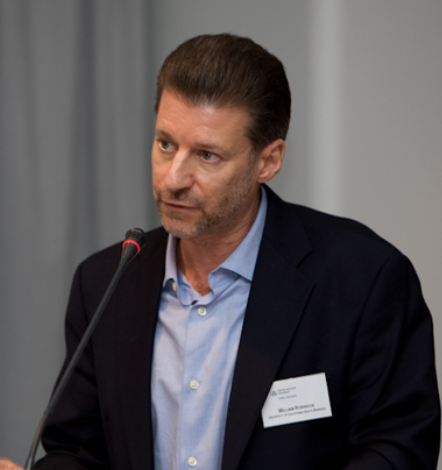
William I. Robinson is Distinguished Professor of Sociology and Global and International Studies, Latin American and Iberian Studies, and Affiliated Faculty, Chicana and Chicano Studies at the University of California at Santa Barbara. He is the author of numerous works and his latest book is Epochal Crisis: The Exhaustion of Global Capitalism (2025).

Scale Raises the Ceiling, but Fiscal Foundations Determine Whether Autocracy or Democracy Prevails

Source: Originally published by Z. Feel free to share widely.

When we think of premodern governance, we often default to an image of concentrated authority: imposing rulers presiding over intricately layered hierarchies—pharaohs, emperors, and kings whose power seemed inseparable from the territorial and demographic scale of the states they commanded. This imagery reinforces a widely held assumption in both scholarship and popular discourse: as societies grow larger and more complex, political authority naturally centralizes, producing autocrats whose power is both extensive and entrenched.

Yet the comparative evidence from the ancient world does not support this deterministic narrative. A new cross-cultural study of 31 premodern societies, published in Science Advances, complicates the presumed linkage between scale and autocracy. The research demonstrates that population size alone does not explain the degree to which elites consolidate authority. Instead, it highlights the decisive role of fiscal foundations—specifically, whether governance is financed through broad-based internal taxation or through external and easily monopolized revenue streams such as mineral wealth, long-distance trade, coerced labor, or warfare.

Scale Expands the Structural Capacity for Autocracy—But Does Not Determine the Outcome

The study draws on 40 archaeological case studies evaluated through standardized metrics of political hierarchy, bureaucratic organization, and citizen inclusiveness. Across these cases, population scale correlates only weakly with the concentration of power. Larger societies do indeed raise the upper bound—the maximum feasible degree of centralization—but they do not mandate that power be concentrated at that ceiling.

These findings challenge longstanding theoretical models in political science and anthropology that treat autocracy as an almost inevitable corollary of increasing complexity. Instead, the archaeological record reveals numerous large, sophisticated polities that implemented enduring forms of collective or distributed governance.

Teotihuacan in central Mexico, the highland Mesoamerican polity of Tlaxcallan, the Haudenosaunee Confederacy in North America, and the Indus city of Mohenjo Daro all sustained political arrangements in which authority was shared, constrained, or diffused. These were not marginal or isolated societies; they were populous, urbanized, and deeply interconnected within regional systems of exchange and interaction. Their historical trajectories show that scale makes autocracy feasible, but institutions grounded in collective governance can prevent it from taking root.

The Fiscal Foundations of Power: How Elites’ Sources of Finance Shape What They Can Do

If demographic and territorial expansion do not by themselves produce autocratic rule, then what does? The study identifies a consistent pattern across world regions: the structure of a society’s revenue base is a powerful predictor of its political form.

In cases where states relied primarily on internal taxation—levies on households, land, markets, or internal trade—rulers depended on the cooperation of their constituents. That dependence generated pressures ensuring negotiation, transparency, and accountability. Fiscal systems rooted in broad participation created political incentives that limited the autonomy of the elite.

Conversely, when elites commanded external or highly concentrated sources of revenue—control over mines and monopolistic oversight of long-distance trade, slave plantations, or the spoils of warfare—they faced no comparable need for public consent. Independent access to wealth insulated them from local constituencies and weakened institutional checks that would otherwise constrain the exercise of power. With fewer fiscal obligations came fewer political obligations.

This relationship between revenue structure and political authority is not merely a feature of the ancient world. It reflects a durable principle of political economy: the narrower the fiscal base, the greater the potential for autocratic consolidation; the broader the fiscal base, the more likely governance will remain representative.

Institutional Architecture and the Maintenance of Collective Governance

The study also highlights the institutional mechanisms that allowed collective political systems to endure even at a substantial scale. Societies that resisted autocratic drift frequently developed meritocratic bureaucracies rather than patrimonial ones, emphasizing competence over personal loyalty. Their ceremonial life placed communal participation above elite spectacle. Administrative functions were spatially distributed rather than concentrated in a single monumental seat of power.

These organizational choices left visible material signatures—in settlement plans, public architecture, and the spatial distribution of administrative and ritual spaces. They reveal political strategies designed deliberately to diffuse authority and mitigate the risks of centralization.

Why These Patterns Matter for Contemporary Governance

The historical patterns identified in the study resonate strongly with present-day concerns. Modern states that draw heavily on concentrated or external revenue—petro-states, oligarchic extractive economies, and governments funded primarily through customs or administratively insulated trade flows—frequently confront challenges to maintaining democratic accountability. When governments do not depend on citizens for fiscal support, they often do not require citizens for political legitimacy.

Ancient examples mirror these contemporary dynamics. Autocracy commonly crystallized in societies where elites controlled lucrative trade corridors, mineral resources, or imperial plunder. Meanwhile, in cases where revenue flowed through broad-based internal taxation, governance tended to remain more participatory and constrained—regardless of the overall scale of the polity.

The implication is stark: democracy is not only a constitutional or ideological arrangement; it is fundamentally a fiscal one. A broad and inclusive tax base strengthens shared governance, while its erosion creates the conditions under which autocratic power can flourish.

Rethinking Democracy’s Origins—And Its Future

This research challenges the notion that inclusive governance is an exceptional or culturally narrow development. The archaeological record demonstrates that societies across the globe repeatedly devised political systems that were negotiated, accountable, and resistant to the concentration of authority. Complexity does not determine political form; fiscal structure, institutional design, and collective choice do.

Understanding this deeper history widens our conception of political possibility. It reminds us that democracy has emerged through multiple pathways and has sustained under diverse historical conditions—and that its durability has depended not just on shared norms or formal institutions, but on the fiscal systems that underwrite them.

Gary M. Feinman is an archaeologist and the MacArthur curator of anthropology at the Field Museum of Natural History in Chicago.

This article was produced by Human Bridges, a project of the Independent Media Institute. The material for this paper is derived from “The Distribution of Power and Inclusiveness Across Deep Time” by Gary M. Feinman, David Stasavage, David M. Carballo, Sarah B. Barber, Adam Green, Jacob Holland-Lulewicz, Dan Lawrence, Jessica Munson, Linda M. Nicholas, Francesca Fulminante, Sarah Klassen, Keith W. Kintigh, and John Douglass. (Science Advances, March 18, 2025.)