Tuesday, March 24, 2026

Australia and EU sign comprehensive trade deal amid global tensions


The European Union and Australia struck a long-awaited free trade deal on Tuesday, while also agreeing to boost defence cooperation and access to rare earth minerals, in the face of global uncertainty over trade.


Issued on: 24/03/2026 - RFI


European Commission President Ursula von der Leyen, left, and Australian Prime Minister Anthony Albanese shake hands after signing a joint statement during a ceremony at Parliament House in Canberra, Tuesday, 24 March 2026. © Lukas Coch / AP


European Commission chief Ursula von der Leyen's visit to Australia comes as the 27-nation bloc and the import-reliant nation navigate renewed energy vulnerability, sparked by the war in the Middle East.

The accord is the latest agreed by Brussels in a push to diversify trade as Europe faces challenges from the United States and China.

Key sticking points on Australian use of European geographical names as well as how much beef can be exported to the continent were overcome to reach the deal, following eight years of negotiations.

Another compromise will see Australian winemakers allowed to use the term "prosecco" domestically, but they must stop using it for exports after 10 years.

Australia will also be allowed to keep using some geographically linked names, such as feta and gruyere, in cases where producers have used the name for at least five years.

And European car makers will benefit from Australia raising the threshold for a luxury car tax on electric vehicles – three-quarters will now be exempt.

The two sides also agreed to step up defence cooperation as well as critical raw materials.
'Harsh' world

Addressing the Australian parliament on Tuesday, von der Leyen described a world that was "brutal, harsh and unforgiving".

In that context, she said the EU and Australia were bound by common values and must work together to mitigate over-reliance on countries such as China for critical minerals.

"We cannot be over dependent on any supplier for such crucial ingredients, and that is precisely why we need each other," she said. "Our security is your security, and with our new security and defence partnership, we have each other's back."

She told lawmakers Tuesday's agreement on trade was a "fair deal, and one that delivers for your businesses and one that delivers for our businesses".

Under the deal, the EU said it expected exports to Australia to grow by a third over a decade.

The quota of Australian beef allowed into the bloc will increase more than 10 times the current level over the next decade, although that falls short of what Australian farmers had been seeking.

Australia's National Farmers' Federation said it was "extremely disappointed" by the outcome of the deal.

"What the Australian government has accepted today appears to offer no material change for key agricultural commodities as what the government rightly rejected in October 2023," president Hamish McIntyre said.

EU firms exported €37 billion of goods to Australia last year, and €31bn of services in 2024.

And Australia said the deal could add AU$7.8bn (€4.6bn) to its gross domestic product by 2030.

Vulnerabilities

Australia's largest export market is China and the US is its largest source of investment.

But Canberra has redoubled efforts to diversify export markets for farmers since a 2020 dispute with Beijing saw agriculture shipments blocked for several years, and last year's global imposition of US tariffs.

Likewise, the EU is on a drive to strike new partnerships in the face of US levies and Chinese export controls.

Von der Leyen's visit was overshadowed by the war in the Middle East, which has sent oil prices soaring.

The EU chief this month said the conflict had served as a "stark reminder" of Europe's vulnerabilities. And on Tuesday she called for an immediate end to hostilities in the face of a "critical" situation for energy supply chains globally.

Australia – which is heavily reliant on fuel from abroad – has also felt the pressure from the global energy squeeze.

(with AFP)


EU-Australia trade deal draws ire of farmers and lawmakers

Farmers protest the Mercosur EU trade deal with South America they fear threatens their livelihoods, Tuesday, Jan. 13, 2026 in Paris.
Copyright AP Photo
By Peggy Corlin
Published on 

The new EU-Australia trade deal has drawn criticism from farmers and MEPs, who argue that it will open the door to additional imports of sensitive products on top of those already agreed under the contentious Mercosur deal, while not providing full protection for certain EU regional products.

Copa-Cogeca, the EU’s influential farmers’ lobby, said in a statement on Tuesday that the EU’s concessions to Canberra in the newly signed trade deal with Australia are “unacceptable” as they fail to sufficiently protect European farmers.

“In a post-Mercosur context, the cumulative impact of successive trade agreements makes these concessions unacceptable,” the lobby said, adding: “European farmers cannot continue to absorb the cost of bilateral trade liberalisation without adequate and truly effective safeguards.”

The EU-Australia agreement sets quotas for sensitive products including beef (30,600 tonnes a year phased in over 10 years), sheep meat (25,000 tonnes a year over seven years), sugar (35,000 tonnes) and rice (8,500 tonnes phased in over five years).

But Copa-Cogeca warned that these figures add to quotas already allocated to Mercosur countries — Brazil, Argentina, Uruguay and Paraguay — including 99,000 tonnes for beef and existing sugar quotas with Brazil and Paraguay.

The Commission included a safeguard mechanism allowing the EU and Australia to impose temporary measures within the first seven years if a sudden increase in imports leads to major market disruption in either partner’s market.

However, the lobby described these measures as mere “communication tools,” with one representative telling Euronews that “they will be slow to activate if a market crisis occurs.”

Some MEPs already voiced concern

Before ratification, the deal must run the gauntlet of EU member states and MEPs, who have already challenged the legality of the Mercosur deal before the EU Court of Justice, delaying its ratification.

Some lawmakers have already come out against the Australia deal.

“A rude awakening this morning on learning that, once again, Ursula von der Leyen went it alone in the trade deal with Australia,” Belgian farmer and liberal MEP Benoît Cassart said, adding: “We’re set to face additional imports in sensitive sectors such as beef and sugar, even though we already raised concerns about this situation in the case of Mercosur.”

There were also concerns about the safeguarding of protected regional food names.

The EU protects “Geographical Indications” (GIs) for food and drink products linked to their place of origin.

Under the deal, 165 EU agri-food GIs and 231 EU spirit drink GIs are protected.

However, for cheeses such as the Greek "Feta" and French "Gruyère," Australian producers who have used these names in good faith and continuously for at least five years prior to the agreement will be allowed to keep using them.

These products will be “put at risk”, Cassart said.

Meanwhile, Italy's "Prosecco" wine triggered strong reactions from Italian lawmakers.

According to an EU official, under the agreement, Australian producers can continue using “Prosecco” to designate a grey grape variety in Australia, provided it is used as a variety name and tied to Australian geographical indications. This rule applies solely within Australia, which has also agreed to halt exports of such wines after 10 years.

But Italian Five Star MEP Carolina Morace argued that “with this decision, the European Commission is legalizing ‘Italian sounding,’ that is, the imitation of our agri-food excellence around the world.”

“As a Venetian, I can only reject this latest attack on our traditions, which weakens rather than strengthens Italy’s wine sector.”


EU chief in Australia with eyes on trade deal


By AFP
March 23, 2026


European Commission President Ursula von der Leyen (2nd L) participates in a traditional Aboriginal smoking ceremony along with Australia’s Governor-General Sam Mostyn (C) during a visit at Admiralty House in Sydney on March 23, 2026. - Copyright AFP Saeed KHAN

EU chief Ursula von der Leyen arrived in Australia on Monday, with hopes a free trade deal can be struck after years of negotiations.

It is the EU chief’s first trip to Australia since taking office and comes as the bloc and import-reliant nation navigate renewed energy vulnerability sparked by the war in the Middle East.

She arrived in Sydney on Monday for a meeting with Australia’s head of the state, the Governor-General, and a traditional welcoming ceremony.

From Sydney, the EU chief will head to Canberra, where she is expected to meet Prime Minister Anthony Albanese and address the country’s parliament.

Von der Leyen is joined by EU trade commissioner Maros Sefcovic — sparking speculation the two sides may finally put pen to paper on a long-awaited free trade deal.

Both are still ironing out the details of the agreement, with improved access to the European market for Australia’s lamb and beef a key source of contention.

Australia has previously said it could drop a luxury car tax on European vehicles in return for greater access to the EU agriculture market.

The country’s use of geographical indicator names for cheese and wine products was also a sticking point.

Australia’s largest export market is China and the United States is its largest source of investment.

But Canberra has redoubled efforts to diversify export markets for farmers since a 2020 dispute with Beijing saw agriculture exports blocked for several years, and then last year’s global imposition of US trade tariffs.

The European Union is Australia’s third largest two-way trading partner and second largest source of foreign investment.

Trade Minister Don Farrell last week said that an EU deal would add Aus$10 billion (US$7.1 billion) in trade for Australia in the first year.

“They are potentially our second largest trading partner if we can pull this off, and we’ve just got to get over those last few hurdles,” he told Sky News Australia.

Front and centre in meetings will also likely be the war in the Middle East, which has sent oil prices soaring.

In Canberra, International Energy Agency chief Fatih Birol said on Monday the world faced an energy crisis not seen in decades if the conflict was not resolved.

And Von der Leyen this month said the conflict had served as a “stark reminder” of the continent’s vulnerabilities.

Australia — which is heavily reliant on fuel from abroad — has also felt the pressure from the global energy squeeze.

While conceding that some petrol stations had run out of fuel, Energy Minister Chris Bowen said Monday the country was a “long way” from rationing.

As the US and Israel Escalate in Iran, Europe Trades Alignment for Strategic Autonomy


Europe is no longer prepared to be drawn, by default, into an open-ended military operation in the Middle East.
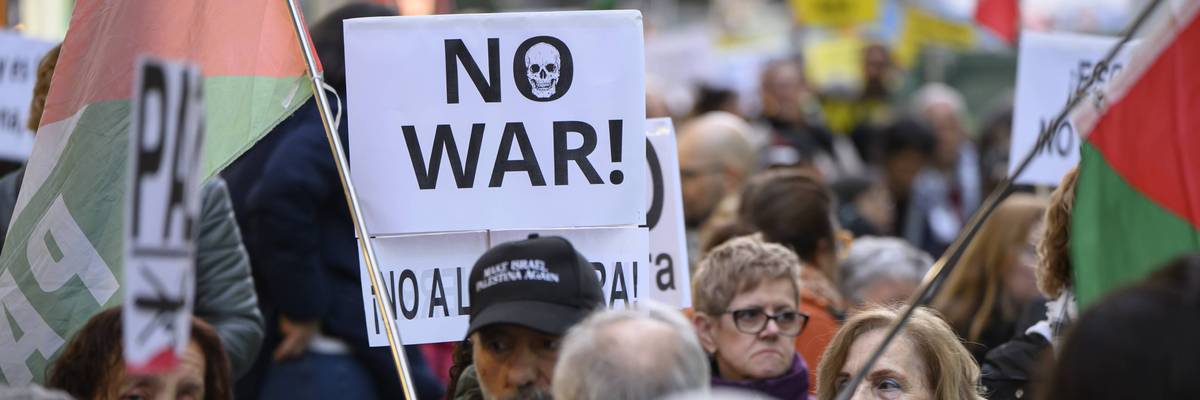


People demonstrate in Madrid, Spain, on March 21, 2026, against the war involving Iran.
(Photo by Tomas Calle/NurPhoto via Getty Images)

Hana Saada
Mar 23, 2026
Common Dreams


What is unfolding across European capitals is not merely dissent over a particular conflict; it is the quiet reconfiguration of alliance behavior under conditions of escalating risk. The refusal voiced in Madrid—most starkly articulated by Spain’s Transport Minister, Óscar Puente, who declared that his country would not go “even around the corner” with Israeli Prime Minister Benjamin Netanyahu—signals something more consequential than diplomatic disagreement.

Delivered in unusually blunt terms, his remark crystallized a broader political reality: Europe is no longer prepared to be drawn, by default, into an open-ended military escalation against Iran. It marks, in effect, the visible boundary of a strategic threshold the continent is no longer willing to cross.

For decades, transatlantic alignment functioned on the presumption of convergence: that when Washington moved, Europe would calibrate—but ultimately align. That presumption is now under strain. The prospect of a US-Israeli military aggression against Iran has exposed a widening gap between American strategic impulses and European risk tolerance.

The divergence is not ideological. It is structural. European governments are confronting a scenario in which escalation offers limited strategic clarity but immediate systemic exposure. They are being asked, in effect, to underwrite a conflict defined by uncertain objectives, fluid escalation dynamics, and a disproportionate economic burden—without corresponding influence over its conduct or conclusion.

The era of automatic convergence is giving way to one of selective alignment, where interests are weighed more carefully, risks are more openly acknowledged, and participation in conflict is no longer the default expression of alliance.

Spain’s position, far from anomalous, crystallizes this dynamic. The refusal to facilitate or politically endorse escalation reflects a broader European instinct toward insulation. Berlin’s caution, Paris’s distance, and the European Union’s emphasis on deescalation all point in the same direction: a deliberate effort to decouple European stability from the volatility of a conflict it neither initiated nor controls.

At the center of this recalibration lies energy vulnerability. The Strait of Hormuz—through which between 17 and 20 million barrels of oil pass daily—remains the most immediate point of systemic exposure. Any disruption, even partial, would transmit shockwaves through European economies already navigating inflationary pressures and fragile growth trajectories. Oil prices hovering around $115 per barrel, with credible projections reaching $150-$175 under sustained disruption, are not abstract indicators; they are policy constraints.

This economic dimension has begun to reshape strategic language. Where earlier discourse emphasized deterrence and enforcement, current formulations increasingly prioritize stability, containment, and the avoidance of escalation spirals. The postponement of strikes on Iranian energy infrastructure, following what Washington described as “productive” engagement, underscores the extent to which strategic decisions are now bounded by economic risk.

Equally significant is the absence of decisive outcomes on the ground. The escalation has yet to produce the structural breakthroughs that would justify its expansion. Assertions of operational success coexist with the persistence of institutional continuity within Iran, where governing structures remain intact and operationally coherent. In strategic terms, the conflict has generated pressure without resolution—a condition that complicates both escalation and exit.

Under these circumstances, Europe’s posture begins to take on a different meaning. It is not hesitation, nor is it disengagement. It is a recalibration of agency. By declining automatic alignment, European states are asserting a form of strategic autonomy that had long been subordinated to alliance cohesion. The message is not framed in declarative terms, but its implications are unmistakable: Participation is no longer assumed; it is contingent.

This shift does not dissolve the transatlantic relationship, but it does redefine its operational boundaries. It introduces friction where there was once fluidity, and conditionality where there was once reflex. Most importantly, it signals that the costs of alignment—economic, political, and strategic—are now subject to explicit calculation rather than implicit acceptance.

The significance of Spain’s stance, therefore, lies not in its rhetoric, but in what it reveals about the evolving architecture of Western power. The era of automatic convergence is giving way to one of selective alignment, where interests are weighed more carefully, risks are more openly acknowledged, and participation in conflict is no longer the default expression of alliance.

In that sense, Europe’s refusal to go “even around the corner” is not a momentary divergence. It is an early indicator of a deeper transformation—one in which the boundaries of Western cohesion are being redrawn in real time.


Our work is licensed under Creative Commons (CC BY-NC-ND 3.0). Feel free to republish and share widely.


Hana Saada
Dr. Hana Saada is an Algerian university lecturer and journalist, and Editor-in-Chief of the English edition of Dzair Tube. She holds a PhD in Media Translation and writes on geopolitics, media narratives, and international affairs.
Full Bio >

Impersonating Euronews: Pro-Kremlin disinformation network takes aim at Hungary's elections

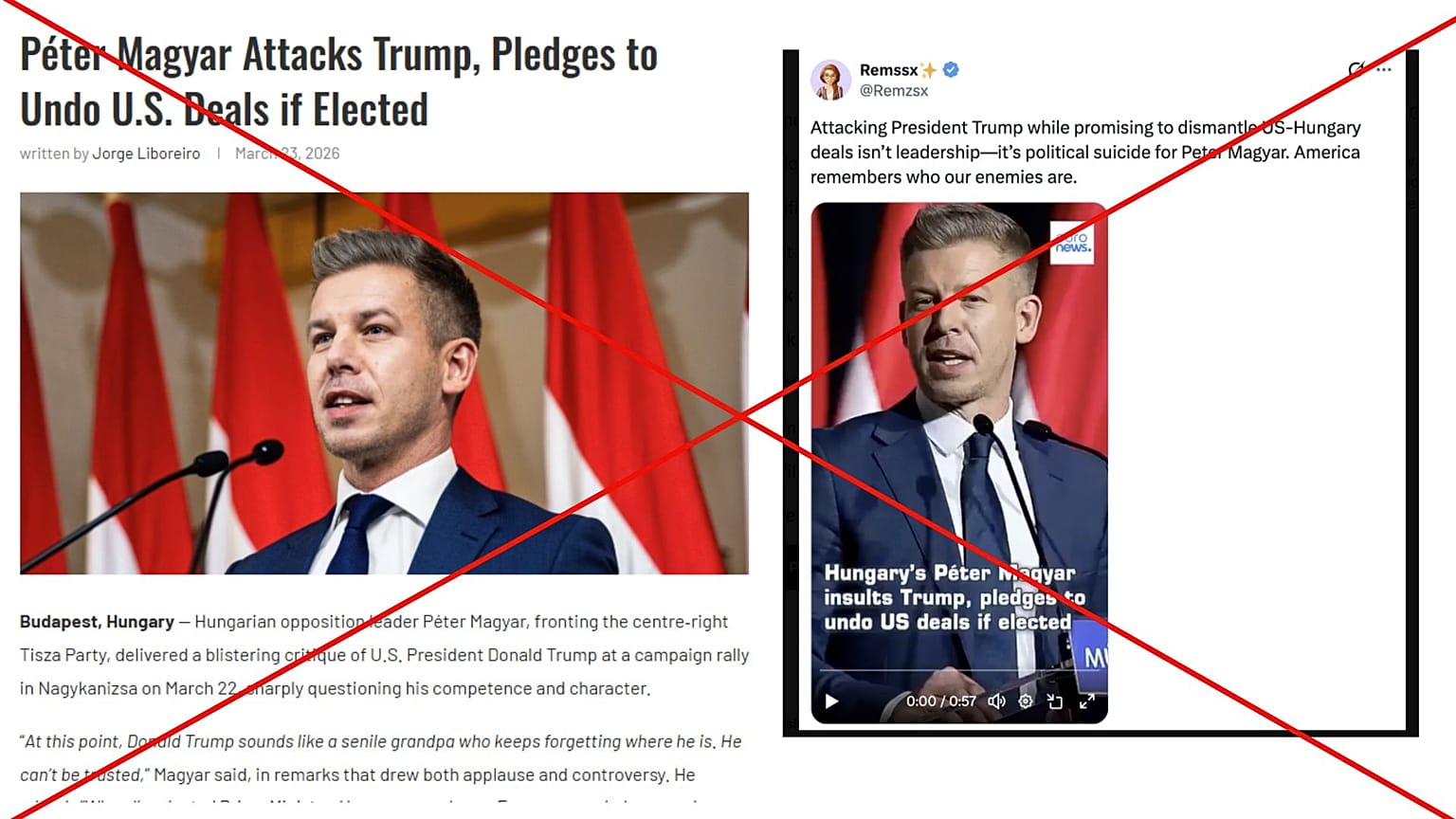
Fake article attributed to Euronews spread as part of Russian disinformation campaign targeting Hungary's upcoming elections.
Copyright @Remzsx


By Tamsin Paternoster
Published on 

A network linked to pro-Kremlin actors is impersonating major media outlets to spread false claims about Hungarian opposition leader Péter Magyar ahead of parliamentary elections.

A fake Euronews-style article and website claiming that Hungary's opposition leader Péter Magyar insulted Donald Trump is circulating online as part of a wider campaign researchers have linked to Storm-1516, a Russian disinformation operation

The article, which utilises a real byline and appeared on a fake Euronews website that has since been taken down, claims that Magyar delivered a blistering critique of Trump at a campaign rally.

Among other false claims, the article says Magyar called Trump a "senile grandpa" and promised to undo "key agreements" made with the US, should Magyar win parliamentary elections in Hungary scheduled on 12 April.

The article's contents are fabricated and the website it appeared on have no connection to Euronews.

A video report that repeats the claim using Euronews' branding is also circulating on social media. The Cube, Euronews' fact-checking team, found examples of this clip circulating since Monday evening, some with thousands of views.

The videos were posted by accounts with similar captions in quick succession, implying they are part of a coordinated campaign. The accounts that posted the clip were largely anonymised, with X's location tool showing they are based in the US and Africa.

Researchers at Antibot for Navalny, a collective that tracks Russian bot networks online, told The Cube that the post was part of Storm-1516, a prolific Russian disinformation campaign that spreads claims online that further the interests of the Russian government.

The group are typically active during election campaigns, having spread false claims about Democratic Party candidates in the 2024 US presidential election and during Germany's February 2025 elections.

In December, Germany's Foreign Minister summoned the country's Russian ambassador over allegations of repeated Russian hybrid attempts in Germany including allegations that Storm 1516 actively spread disinformation during the country's general elections.

At the time, the campaign focused on Chancellor candidate for the Greens, Robert Habeck, and current German Chancellor Friedrich Merz.

Hungary's upcoming parliamentary elections will see Magyar's Tisza Party pitted against current Hungarian Prime Minister Viktor Orbán.

Magyar has accused Hungary's secret service of targeting his party's campaign systems just weeks before the election date in a hostile election campaign in which polls suggest his party is ahead.

Orbán, meanwhile, has become embroiled in scandal in Brussels after a Washington Post investigation revealed Foreign Minister Péter Szijjártó regularly leaked sensitive information from high-level European Union meetings to Moscow.

Orbán has maintained close ties to the Kremlin despite the resistance of other European leaders and has utilised Hungary's veto power to block key decisions on European aid to Ukraine.

BBC fails to mention Israel during a report of Lebanese hospital missile strikes

BBC fails to mention Israel during a report of Lebanese hospital missile strikes
Critics accuse Western media, particularly the BBC, of downplaying Israeli actions in Iran and Lebanon — including strikes on hospitals that may constitute “war crimes” — while applying harsher language and scrutiny to comparable actions by other states. / bne IntelliNews
By Ben Aris in Berlin March 24, 2026

In the latest sign of Western bias, the BBC  failed to mention the word “Israel” at all when reporting Israeli missiles targeted at least 20 Iranian hospitals and medical centres on March 23. An Iranian strike on one of Israel’s main hospitals last week got significantly more coverage.


Israel has been accused of adopting tactics similar to those it used in Gaza, where it destroyed virtually all of the medical centres and hospitals, causing countless civilian deaths, including three babies that starved to death after a hospital was evacuated in December 2023. Now it has adopted the same strategy in Iran, threatening to cause a humanitarian crisis, say, aid workers.

The western press has been complicit in playing down Israel’s actions, illegal under the Geneva convention, afraid of an Israeli backlash and accusations of anti-Semitism. The BBC has been particularly sensitive to these charges. Following the launch of a major invasion of Lebanon, the BBC reported on the Israeli “push in Lebanon” to seize key border positions, whereas it regularly reports on Russia’s “invasion” of Ukraine.

The European response to the war in Iran and Lebanon has been muted, but some leaders have become more outspoken recently. The European Nato members have universally rebuffed US President Donald Trump’s call to send their navies to help with his efforts to reopen the Strait of Hormuz, refusing to be dragged into “not our war.”

Criticism of Israel is an especially sensitive topic, both for historical reasons and because of the White House’s close relationship with Tel Aviv and Brussels’ desire not to do anything to upset the Trump administration.

In the summer of 2024, European Commission President Ursula von der Leyen’s entire staff – some 800 people – released an open letter criticising what they called her “bias” for Israel due to her silence in condemning Israel’s bombing of civilians in Gaza that killed an estimated 75,000 people, mostly women and children. Israeli Prime Minister Benjamin Netanyahu has been indicted by the International Criminal Court (ICC) and an arrest warrant for his arrest on “war crime” charges has been issued. 

Similar one-sided reporting has also been common in covering the polarised Ukrainian story. When Ukrainian far-right football “ultras” trapped several hundred Russian football fans in the Trade Unions House in Odesa in May 2014 and deliberately set it on fire, burning 48 people to death, many of the initial reports were written using the passive voice in a deliberate attempt to avoid blaming Ukrainians for the killings.

Similar questionable reporting surrounds the “snipergate” incident, where members of the Ukrainian far-right opposition have been blamed for randomly shooting demonstrators on Maidan in 2014 in a false flag operation. That story was barely reported by the English-language press, but well covered by the German-language press, and the details have since been fleshed out by academic studies.

Israel has been striking residential areas in both Tehran and Beirut with missiles hitting multiple locations – something that Russia has been widely condemned for in the Ukrainian conflict, albeit at a much larger scale. In Beirut, at least 12 people were killed and 27 wounded in a strike last week, according to Lebanese authorities, in an escalation beyond the southern suburbs into central Beirut on March 18. The Lebanese health ministry said that 968 people, including at least 111 children, have been killed since March 2.

On March 16, Israel targeted a residential building near the government quarter in central Beirut that completely collapsed, causing some to comment that the scene “resembled Gaza,” the BBC reported in a story headlined: “Destruction in Beirut after overnight strikes,” again missing out the word “Israeli.”

Israel continues to target central Beirut, sometimes with prior warnings, and sometimes without, according to local reports, in what appear to be targeted assassinations including at least two strikes on hotels.

Civilians are frequently killed in these attacks, including in “double-tap” strikes – a tactic used frequently by Russia in missile strikes against residential areas in the Ukraine conflict.

As in Gaza, Israeli authorities claim medical facilities were being used by militants posing as refugees but have presented no evidence to support the claim. The same claim was made in the bombing of Gaza, but on several occasions, both local and international journalists debunked those claims and even showed that Israel’s IDF forces had manufactured evidence to support the claims.

Under the Geneva Convention, attacks on medical facilities are a war crime, unless it can be conclusively demonstrated that they are being used for military operations.

The human costs of targeting hospitals have become part of Israel’s standard scorched-earth strategy to make life in Lebanon intolerable. The government in Tel Aviv has said that the approximately one million Lebanese civilians displaced by the conflict will not be allowed to return to their homes.

In Iran, figures cited in regional reporting indicate that Israeli strikes have destroyed 236 healthcare centres, 9,218 commercial units and 67,414 homes in Iran as of March 22.

Iran’s Islamic Revolutionary Guard Corps (IRGC) warned that it would respond in kind to further escalation. “We are determined to respond to any threat to the same extent, such that it creates deterrence,” the IRGC said in a statement, threatening to expand its retaliatory strikes to include vital infrastructure including water.

“The lying, terrorist, and child-killing president of the United States has claimed that the IRGC intends to target desalination plants in the region and cause hardship for the people of regional countries,” the statement said, rejecting allegations that it had targeted civilian water infrastructure.

“First, it is the aggressive and anti-human US army that began this war by killing children, including the deaths of 180 elementary school children, and has so far targeted five water infrastructure sites, including the desalination facility on Qeshm Island. The IRGC has not carried out such actions.”

The statement added: “You struck our hospitals, we did not do the same. You struck our emergency centres; we did not do the same. You struck our schools; we did not do the same. But if you strike electricity, we will strike electricity. And victory is only from God, the Almighty, the Wise.”


France urges Israel ‘to refrain’ from seizing south Lebanon zone

FALLING ON DEAF EARS

By AFP
March 24, 2026


Copyright AFP Thomas SAMSON


Delphine Touitou


Israel should “refrain” from sending in forces to take control of a zone in south Lebanon, France’s foreign minister told AFP on Tuesday, warning that such a move would have “major humanitarian consequences”.

“We urge the Israeli authorities to refrain from such ground operations, which would have major humanitarian consequences and would exacerbate the country’s already dire situation,” Jean-Noel Barrot said in an interview with AFP.

His comments came after Israel earlier said its military would take control of south Lebanon up to the Litani River, around 30 kilometres (20 miles) from the border.

Lebanon was pulled into the Middle East war when the Tehran-backed Hezbollah militant group began firing rockets into Israel on March 2 to avenge the killing of Iran’s supreme leader Ayatollah Ali Khamenei.

Israel has since launched strikes across Lebanon, killing at least 1,072 people and displacing more than a million others in more than three weeks of fighting. It has also sent ground troops into the country’s south.

Barrot, who visited Lebanon and Israel last week, called on Israel to seize a “historic opportunity” for dialogue with Lebanon’s government, saying that Beirut was “turning its words into action” to counter Tehran’s interference in the country.

He noted that during his visit to Lebanon on March 19, President Joseph Aoun called for a truce and the opening of negotiations with Israel to stop the war between it and Hezbollah.

“There is a moment to seize, it is historic, and that moment is now,” Barrot said, calling for “high-level political dialogue” with the Lebanese government.

Lebanon’s government has acted against Iranian interests and withdrew its approval of the Iranian ambassador’s accreditation on Tuesday, a decision Barrot hailed as “courageous”.

Iranian ambassador Mohammad Reza Sheibani was told to leave Lebanese territory by Sunday.

“I wish to commend the statements and actions of the Lebanese government…which this morning took a courageous decision by expelling the Iranian ambassador,” Barrot said.

Hezbollah strongly objected to the move, calling on the government to reverse it.

It was “no small matter” that Lebanon’s government had also expelled “a number of representatives of the Revolutionary Guards” in the country, Barrot said, referring to the Islamic republic’s ideological army.

Beirut has accused Iran’s Revolutionary Guards of commanding Hezbollah’s operations in its war against Israel, having decided on March 5 to ban all activity by the organisation in the country.

The government also took the unprecedented step of imposing a ban on Hezbollah military activities and called on the group to hand over its weapons to the state.


Israel Defense Minister Deploys ‘Gaza Model’ in Lebanon, Ordering Destruction of Villages

One expert called the policy “an open admission of intent to commit ethnic cleansing.”


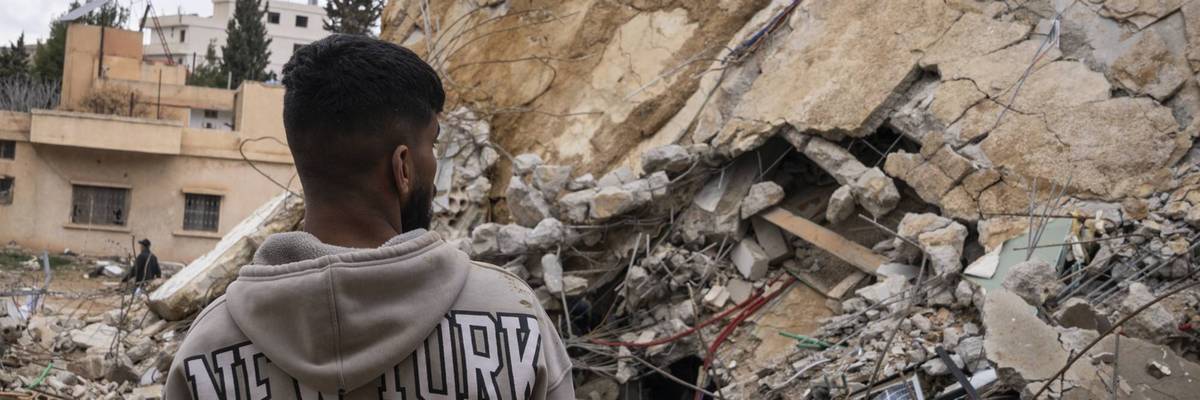
A man walks amongst the wreckage following an Israeli airstrike on March 23, 2026, in Baalbek, Lebanon.
(Photo by Adri Salido/Getty Images)


Stephen Prager
Mar 23, 2026
COMMON DREAMS

Israel is planning to use Gaza as a “model” for its expanding assault on Lebanon, its defense minister said on Sunday as he pledged to begin the demolition of homes in border villages.

In a statement Sunday, Defense Minister Israel Katz said he and Prime Minister Benjamin Netanyahu had ordered the Israel Defense Forces to “immediately destroy all the bridges over the Litani River that are used for terrorist activity, in order to prevent the passage of Hezbollah terrorists and weapons southward.”


Israel Gives ‘Mass Expulsion Order’ to Civilians as It Invades Southern Lebanon


Israel Says IDF Will Stay in Lebanon for Months as It Expands Ground Invasion in South

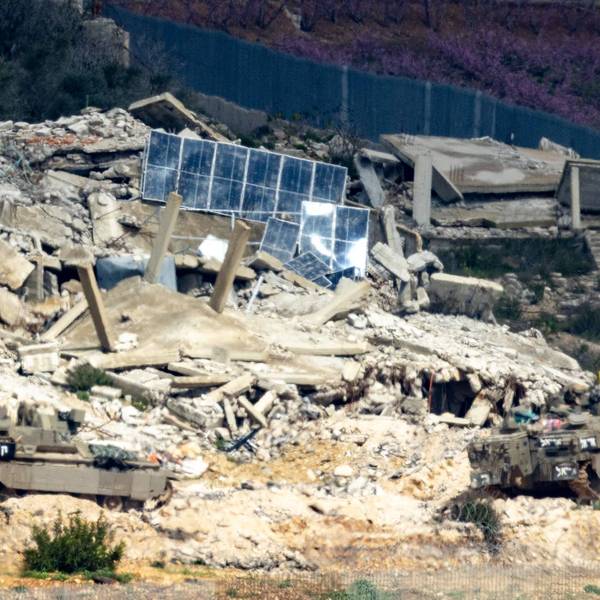
He also said he’d ordered the military to “accelerate the destruction of Lebanese homes in the border villages in order to thwart threats to the Israeli settlements—in accordance with the Beit Hanoun and Rafah model in Gaza.”

Dylan Williams, the vice president for government affairs at the Center for International Policy, described the invocation of this “Gaza model” as “an open admission of intent to commit ethnic cleansing” in Lebanon.


The two cities Katz referred to were largely wiped off the map during the Gaza genocide.

Beit Hanoun, a city on the northeastern edge of the Gaza Strip, which once had a population of more than 50,000 people, had nearly all of its structures totally “flattened” by Israel’s bombing and was totally depopulated, according to the Israeli newspaper Haaretz in mid-2025. The far-right in Israel has pushed for Jewish Israeli settlers to move in and build settlements on the territory.

Rafah has been similarly devastated, with nearly 70% of the structures “wiped out” according to an October 2025 investigation by the Center for Information Resilience.

At the time that Israeli forces moved into Rafah in mid-2024, it was the last refuge for more than 1 million Palestinians who’d been displaced from their homes elsewhere in the strip. UN experts described the attack on Rafah as a culmination of a monthslong campaign to “forcibly transfer and destroy Gaza’s population,” with more than 800,000 people being forced to flee.


Human Rights Watch said on Monday that Katz’s announcement demonstrated “an intent to forcibly displace residents, destroy civilian homes, and conduct strikes that could target civilians” in Lebanon as well.

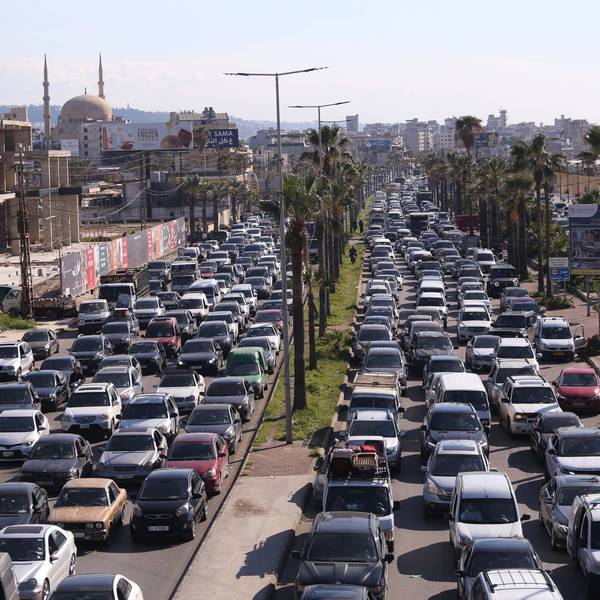
Already, more than 1 million civilians in Lebanon, from the area south of the Litani River and in Beirut’s southern suburbs, have become displaced following orders from the Israeli military to evacuate their homes.

Katz has said hundreds of thousands of Shiite civilians will be forbidden from returning from their south of the Litani “until the safety of Israel’s northern residents is guaranteed,” and he has said Israel “will not hesitate to target anyone who is present near Hezbollah members, facilities, or means of combat.”

Human Rights Watch has said these indefinite displacements raise the concern that Israel is perpetrating the war crime of forced displacement and doing so based on religion.

“The Israeli military does not get to decide when civilians lose protections afforded by international law, nor should it be allowed to prevent displaced residents from returning to their homes based on some undefined ‘safety’ standard,” said Ramzi Kaiss, Lebanon researcher at Human Rights Watch. Deliberately targeting civilians, civilian objects, and others protected under international law would be a war crime, and countries supplying Israel with weapons need to realize they are risking complicity in war crimes too.“

Since the latest outbreak of hostilities at the beginning of March following the launch of the US-Israeli war against Iran, at least 1,024 people in Lebanon have been killed in Israeli attacks, including 79 women and 118 children, according to a report from Lebanese authorities this weekend.

Last week, the United Nations Human Rights Office reported that Israeli airstrikes in Lebanon have “destroyed hundreds of homes and civilian infrastructure, including healthcare facilities.”

“For over two years, Israel’s allies and European states that purport to support and uphold human rights have buried their heads in the sand as atrocities continue in Lebanon, as in Gaza,” Kaiss said. “Atrocities flourish when there is impunity, and other countries should no longer stand by as they continue.”

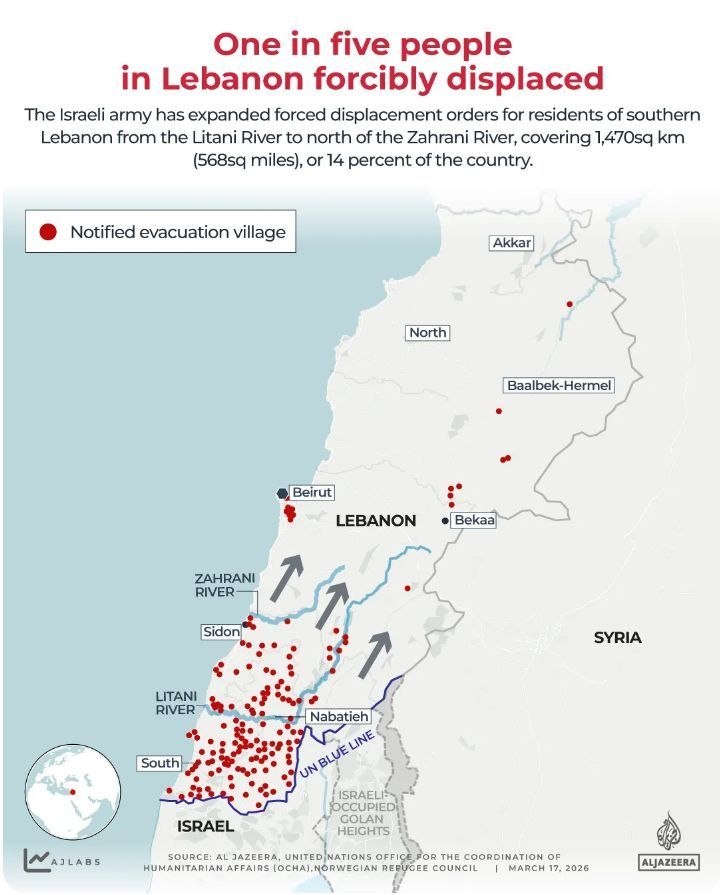
One in five Lebanese displacement in three weeks by Israel’s invasion

By bnm Gulf bureau March 24, 2026

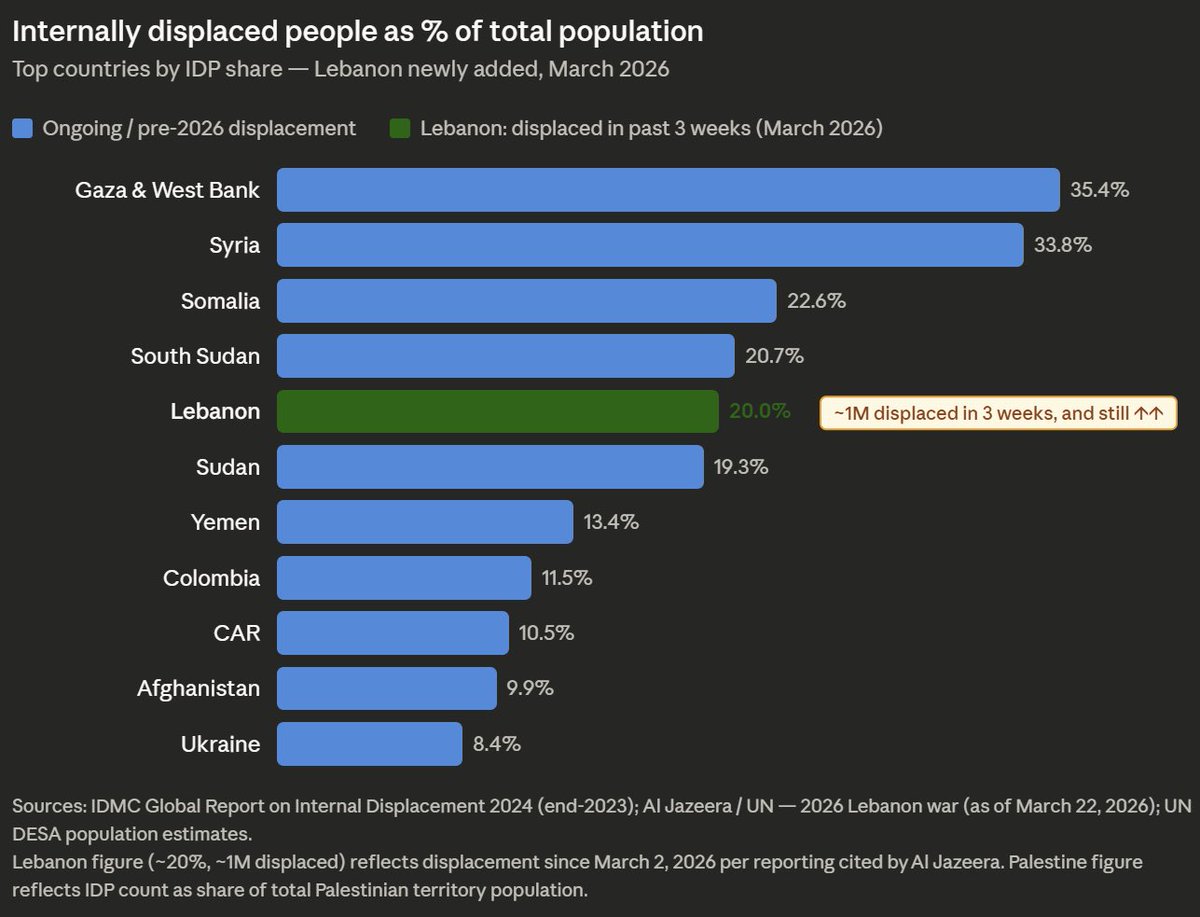
Lebanon is facing a humanitarian crisis after one in five Lebanese have been displaced following Israel’s invasion of the south of the country in the fastest displacement in recent history.

Israel is preparing to seize a third of Lebanon and annex it to the Golan Heights, which it annexed from Syria.

The head of the Knesset Committee on Internal Affairs and the Environment, Yitzhak Kroyzer, said about Lebanon: "There is no other choice but to expel and clear the entire territory up to the Litani River, to cleanse it of Lebanese civilians... Sovereignty and settlement."

Gaza, Syria, Somalia and South Sudan have all seen larger displacements, ranging from 20% of the population in South Sudan to 35% in Gaza, but Israel has displaced around a million Lebanese, or 20% of the population in just three weeks since the war in Iran broke out three weeks ago, according to figures compiled from UN and IDMC data and cited by Al Jazeera.

“Israel has pushed Lebanon into the ranks of the world’s worst displacement crises almost overnight,” according to reporting shared with Middle East Eye. “Syria and Somalia took years to reach this level. Israel did this in three weeks.”

Tel Aviv launched a ground operation after Hezbollah joined in the fray in the first few days following the assassination of Supreme Leader Ayatollah Ali Khamenei on March 2 and says it wants to take permanent control of the south of the country up to the Litani River.

The surge follows intensified military activity that has expanded beyond southern border into more densely populated areas, triggering widespread civilian movement and straining already fragile infrastructure. Aid agencies have warned that a humanitarian is looming as Lebanon’s capacity to absorb further displacement is limited.

Regional spillover risks are also rising, as neighbouring countries monitor the potential for further population flows and instability. Analysts note that the size of the displacement in Lebanon is unusual even by recent Middle Eastern conflict standards, where mass internal movements typically build over extended periods.

German court rejects landmark climate case against BMW, Mercedes


By AFP
March 23, 2026


The case builds on a landmark 2021 ruling by Germany's Constitutional Court that the state has a duty to protect future generations from the effects of climate change - Copyright AFP/File John MACDOUGALL


Sarah Maria Brech with Sam Reeves in Frankfurt

A German top court on Monday rejected a landmark climate case brought by environmentalists that had aimed to force auto giants BMW and Mercedes-Benz to stop selling combustion-engine cars from 2030.

The case at the Federal Court of Justice was brought by campaigners of the group Environmental Action Germany (DUH), and marked the latest example of activists turning to the judiciary to enforce climate action.

The plaintiffs built their case on a landmark 2021 ruling by Germany’s Constitutional Court that the state has a duty to protect future generations from the effects of climate change and sought to apply the principle to companies.

But handing down its ruling, Germany’s highest court for civil and criminal matters rejected DUH’s arguments. It found that citizens’ personal rights were “not affected… by the business activities of the defendant,” in a decision that upheld rulings by lower courts.

“Private individuals cannot demand that automobile manufacturers refrain from placing passenger cars with internal combustion engines on the market” ahead of European Union deadlines, it said.

The DUH case demanded a 2030 phase-out of fossil fuel-powered cars — five years earlier than the target year in a European Union plan that was last year watered down after intense lobbying by automakers.

DUH executive director Barbara Metz said the decision did not “absolve Mercedes-Benz and BMW of their responsibility for the climate crisis, which stems from their sale of millions of internal combustion engine vehicles in order to maximise profits”.

But she said the court had made it clear that responsibility for action lies with the federal government, and called on Chancellor Friedrich Merz to step up action to protect the climate.

The DUH said it was also considering whether to file an appeal to the Constitutional Court.


– Activists turning to courts –


Mercedes welcomed the ruling for providing “a clarification of our democratic system”.

“Setting legal requirements for climate targets is the responsibility of the legislature, not the judiciary,” said the group in a statement, adding that climate protection remained a key consideration.

BMW added that the decision contributed to “legal certainty for companies operating in Germany”.

“Throughout the proceedings, we have consistently maintained the position that the debate over how to achieve climate targets must take place within the political process through democratically elected parliaments,” the group added in a statement.

The legal action is part of a wider trend of climate activists turning to courts.

Campaigners celebrated last May after a regional court in northern Germany ruled that companies could in principle be sued over the consequences of their emissions.

However, the court did not award damages to a Peruvian farmer, Saul Luciano Lliuya, who had brought the case against utility firm RWE.

The case against the carmakers was passed up to the Federal Court of Justice on appeal after lower courts in Stuttgart and Munich ruled in favour of the firms, finding they had complied with relevant regulations.

German carmakers have invested billions in the transition to electric and hybrid vehicles in a bid to meet EU climate targets.

But progress has been slowed by lower than anticipated demand, with many consumers put off by higher upfront costs and still patchy charging infrastructure.

burs-sr/fz/gv
Russia, Vietnam advance plans for first nuclear power plant


By AFP
March 23, 2026


Vietnam is seeking to shore up its fuel reserves at a time of disruption caused by the war in the Middle East - Copyright POOL/AFP Alexander Miridonov

Russia and Vietnam on Monday signed a cooperation agreement on the construction of Vietnam’s first nuclear power plant, Russia’s Rosatom nuclear agency said on Monday.

Prime Minister Pham Minh Chinh was visiting energy-rich Russia as Vietnam seeks to shore up its fuel reserves at a time of disruption to energy supplies caused by the war in the Middle East, sparking fears of fuel shortages around the world.

Since the US-Israeli war against Iran began in late February, the cost of 95-octane petrol and diesel in Vietnam, a manufacturing hub, has soared by 50 percent and 70 percent respectively.

The agreement lays out the legal framework for the construction of two reactors with a total output of 2400 MW at Vietnam’s proposed Ninh Thuan nuclear power plant, Rostam said.

Rosatom head Alexey Likhachev said the agreement would be the “foundation for a long-term industrial partnership, which will strengthen Vietnam’s energy independence and open up new opportunities for economic growth”.

No timeline was given for when construction would start or when the plant might come online.

Moscow and Hanoi had initially agreed to build the Ninh Thuan 1 atomic power station back in 2010, but later decided to suspend construction.

Another agreement between Russia’s top liquefied natural gas (LNG) producer Novatek and a Vietnamese buyer was also signed recently, Novatek’s CEO Leonid Mikhelson said on Monday.

“We have been in negotiations with potential buyers for over five years, and have very recently signed a preliminary supply agreement with one of them. We are ready to commence deliveries at the earliest opportunity,” he told state broadcaster Rossiya 24, without naming the customer.

Russia and Vietnam have also signed a deal on oil and gas production in both countries, the TASS state news agency reported, citing Russian Prime Minister Mikhail Mishustin, without giving details.
Namibia rejects Starlink licence request


By AFP
March 23, 2026


Starlink provides high-speed internet access to remote locations 
- Copyright GETTY IMAGES NORTH AMERICA/AFP/File SCOTT OLSON

Namibia said Monday it had rejected a request for billionaire Elon Musk’s Starlink to operate its satellite internet services in the country, dealing the company a second setback in southern Africa.

Starlink had applied for the licence through its local unit, Starlink Internet Services Namibia (Pty) Limited, the Communications Regulatory Authority of Namibia (CRAN) said in a government gazette.

Starlink provides high-speed internet access to remote locations around the world via thousands of low Earth orbit satellites.

The regulator gave no explanation for the refusal, saying only that “the full reasons for the decision can be requested from the authority.”

AFP sought comment from CRAN but had not received a response.

However CRAN’s statement noted that Starlink’s local subsidiary has no local ownership.

US-based Starlink, which counters criticism on its website with a “Myth vs Fact” page, says it established the Namibian company and plans to partner with local firms to create jobs and economic opportunities.

Starlink has failed to secure a licence in neighbouring South Africa, where ownership rules have also blocked its entry.

Telecommunications companies operating in South Africa, including those with foreign investment, are currently required to provide 30 percent equity to historically disadvantaged groups — a policy created to mitigate the legacy of racial inequality left by apartheid.

South Africa-born Musk has refused ceding ownership, calling the black empowerment policy “openly racist”.
‘Plundered’: Senegal fishers feel sting of illegal, industrial vessels


By AFP
March 24, 2026


Fisherman Ibrahima Mar, who lives in a fishing village in the Dakar suburb of Rufisque, says the lack of fish off Senegal's coast is causing people to lose hope
 - Copyright AFP PATRICK MEINHARDT


Becca MILFELD

Ibrahima Mar first lost his livelihood then lost his son when the fish off Senegal’s coast began to disappear, rupturing a way of life that had sustained his family for generations.

Industrial and illegal fishing, among other factors, have contributed to a sharp decline in the region’s fish stock, robbing the west African nation of a traditional source of nutrition and income.

In recent years, fish have been “increasingly plundered”, said Mar, who lives in a fishing village in the Dakar suburb of Rufisque.

The 55-year-old fisherman, a member of the Lebou ethnicity, a traditional fishing people, spoke to AFP from one of Rufisque’s boat landings, explaining that the fish had been “taken from our path. So, there’s no hope left”.

Bottom trawlers and other industrial ships, generally flagged to Senegal but whose owners’ real nationalities are difficult to trace, send their catches abroad.

“If you dig a little deeper into the ultimate beneficial ownership” the boats are Spanish, Italian, French, Chinese and Turkish, among other nationalities, Bassirou Diarra, country manager for Senegal at the Environmental Justice Foundation (EJF), told AFP.

“Not only is there a shortage of fish for the Senegalese market, for food security, but the money that should come back in terms of currency for the national economy isn’t coming back,” he said.

Destructive and illegal practices meanwhile include “fishing in prohibited areas, nets that do not comply with regulations, MPA (marine protected area) rules that are not respected, and the abusive granting of licences”, Diarra said.


– Fish dependency –


A 2025 EJF report suggests that 57 percent of fish populations exploited in Senegal are in a state of collapse.

Members of coastal fishing communities have become increasingly desperate, illegally immigrating in traditional wooden canoes called pirogues along the deadly Atlantic migration route to Europe.

That includes two of Mar’s sons, both fishermen.

After one succeeded, Mar received a call several years ago from his other son, in his late teens.

He phoned “to tell me he was in a pirogue heading for Spain. That pirogue had 140 people on it,” Mar said.

The family waited the five- to six-day journey for news of his arrival, then 15 days, 20 and 30.

But they never heard from him again.

Colourful pirogues are ubiquitous along Senegal’s 700-kilometre (435-mile) coast.

“What a pirogue used to catch in two months, now that same pirogue can fish for six or seven months to catch the same amount, which is a problem,” Mamadou Diouf Sene, president of the Fishing Wharf Revenue Commission of Rufisque, told AFP from the city’s wharf.

A web of professions from cart driver to ice seller, as well as fishmonger and processor, depend on fish.

Fishmonger Fatou Seck, 39, sat at the Rufisque wharf alongside several other women with small trays of sea bream, white carp and mullet.

“Times are really tough right now,” the mother of six told AFP, adding that “many of us base our hopes on this work, which is our only source of income to feed our children”.

More than 82,000 people in Senegal work in fishing according to latest census information, comprising some two percent of the workforce in 2023.

A surge of artisanal fishermen has additionally contributed to fish population decline, as people flock to the profession which requires minimal training.

Estimates on pirogue numbers in Senegal vary but generally fall between 12,000 to 19,000.

Meanwhile, climate change is pushing west Africa’s small pelagic fish — smaller, often schooling species caught by artisanal fishers — to move northward, according to research.


– Wild West –


Fish have declined for some 40 years but artisanal fishers really took note when small pelagics like sardinella and horse mackerel started vanishing some 15 years ago.

The prospect of Senegal having to import fish, a part of its cultural identity and a major natural resource, “is catastrophic”, Mar said.

Cheikh Salla Ndiaye of Senegal’s Directorate of Fisheries Protection and Surveillance described monitoring the sea as “very difficult”, even with assistance from the navy and air force.

Mar recently spent time on a Greenpeace ship with four other fishermen learning how to better spot and report illegal fishing.

“We used to call the high seas like the Wild West because there was no way to see what was happening out there,” Sophie Cooke, a fishing vessel analyst with Greenpeace, told AFP aboard the ship.

But technologies such as tracking devices, satellite radar and even smartphones, which fishermen can use to take pictures and pinpoint boats’ locations, are changing that, she said.

Mar intends to take these tools back to his community.

With his two fishermen sons now gone, one in Spain and the other taken by the sea, Mar’s experience with declining fish stocks is deeply personal.

As for his third son, Mar said: “I put him in a training centre. He’s learning metal
Back to black: facing energy shock, Asia turns to coal


By AFP
March 24, 2026


Asian countries are turning to coal to meet their energy needs as the Middle East war hits oil and gas shipments - Copyright AFP BAY ISMOYO


Sara HUSSEIN

Asian countries are ramping up use of polluting coal to tackle energy shortages and price spikes linked to the Iran war, but the crisis could have an environmental silver lining.

While leaning on the fossil fuel will raise emissions in the near term, the energy crisis is demonstrating the risks of energy import dependence, and could push policymakers to embrace renewables faster, analysts told AFP.

“The ongoing Iran oil and gas crisis shows the importance of having domestic energy sources that are not exposed to the global commodity market, which coal is,” said Amy Kong, research analyst at Zero Carbon Analytics.

“Countries like Vietnam who have rapidly increased their share of solar generation, have a stronger buffer against rising energy import prices,” Kong said.

Much of Asia is heavily exposed to the energy crisis that has unfolded since the US-Israel attack on Iran began last month.

More than 80 percent of the crude oil and liquified natural gas (LNG) that passes through the Strait of Hormuz heads to Asia, according to the US Energy Information Administration.

Pakistan, India and Bangladesh are all major importers of LNG from Qatar, which said last week that its export capacity had been slashed by 17 percent because of Iranian attacks.

It warned it would be forced to declare force majeure for up to five years on some long-term LNG contracts, signalling it may be unable to fulfill the agreements.


– Higher prices –


Compounding the problem, most Asian countries do not have underground gas storage, according to the Institute for Energy Economics and Financial Analysis, leaving them especially vulnerable to price spikes.

As a result, many nations are bumping up use of coal, which can be sourced regionally or even domestically, to prevent power outages and protect citizens from severe price shocks.

While it cannot be substituted directly in LNG plants, countries can run existing coal power plants at a higher capacity or bring idle units back online.

The shift has come in wealthy and developing economies alike.

In South Korea, a cap on how much power can be generated from coal has been lifted, while Thailand is preparing to resume operations at two coal power units decommissioned last year.

In India, already highly dependent on coal for electricity generation, the fuel is now being substituted for cooking gas.

And in the Philippines, energy secretary Sharon Garin told AFP authorities “plan to ramp up cheaper coal, (domestic) natural gas, and renewables”.

The increase in demand has pushed coal prices higher and even sparked talk of a windfall tax in coal-producing Indonesia, which reversed a decision taken last year to reduce production.

The shift is bad news for the environment in the short term. Coal is a top contributor to planet-warming greenhouse gases, and also a powerful air pollutant that is harmful for human health.


– ‘Transition fuel’ –


The shift will “impose substantial environmental and public health costs,” said Dinita Setyawati, senior energy analyst for Asia at think tank Ember.

Asia’s vulnerability is due in part to its heavy reliance on LNG, often promoted as a “transition fuel” — a less polluting option than coal that can “bridge the gap” as countries move towards renewable energy.

Upfront costs for LNG plants can be lower than for renewables that may require grid upgrades.

But renewables are now cheaper in the long run, and the current crisis is illustrating their benefits in terms of stable supply, said Putra Adhiguna, managing director at Energy Shift Institute, an energy finance think tank.

“The story of gas as a stable transition fuel is highly in question,” he said.

And while temporary increases in coal capacity are an attractive stopgap, the banking sector is reluctant to finance construction of new coal projects, concerned about stranded assets as nations are forced to phase down fossil fuels to meet their climate obligations.

That could help refocus policymakers’ attention on the benefits of renewables, said Adhiguna.

“I think we already see a bit of that coming from Southeast Asian countries,” he said.

“There have been all these debates about how we can’t afford to spend the money (on renewables) upfront, but I think this security of supply issue is going to override that.”

Gas shortages push India’s poor back to wood and coal


By AFP
March 24, 2026


Soaring black market prices of cooking gas in India's capital are pushing poorer families back to wood and coal - Copyright AFP Arun SANKAR


Uzmi ATHAR

Soaring black-market prices of cooking gas in India’s capital are pushing poorer families back to wood and coal, raising health risks and worsening air quality in the highly polluted megacity.

India is the world’s second-largest buyer of liquefied petroleum gas (LPG), which is used for cooking and predominantly sourced from the Middle East — and supplies have been strangled by the ongoing war.

India’s Prime Minister Narendra Modi has urged states to curb black marketing and avoid panic, stressing that India’s energy supplies remain stable.

In the low-income Madanpur Khadar neighbourhood, 36-year-old domestic helper Sheela Kumari says she has been forced to abandon LPG cooking gas cylinders for cooking after prices more than doubled.

“We used to buy cylinders for 1,800–2,000 rupees ($19-$21), but now on the black market it has gone up to 5,000 ($53),” she told AFP, nearly as much as she entire monthly salary of 6,000 rupees.

“It is unimaginable for us,” she said. “The next best option for us was going back to wood and coal.”

Kumari said a 14 kilogramme cylinder lasts only 15–20 days for her family of six, even when they stretch its use out.

But she says a 10 kilogramme bundle of firewood, lasting several days, costs 30 rupees ($0.30).

“There are health repercussions, and my children cough,” she said. “But tell me a way out?”


– ‘Too expensive’ –


Her neighbour, 45-year-old Munni Bai, who has asthma, had switched to using an electric cooker as well as biogas from cow dung, to help her breathing.

But now she said she was being forced to resume use of alternative fuels.

“Gas is too expensive,” she said. “We cannot depend on it — we moved from coal and wood, due to my health issue, but now it is difficult to sustain.”

But activists say the problem is more about access.

Many migrant workers lack documentation needed for subsidised LPG and rely on informal markets, where hoarding has pushed up prices.

“There is no major shortage yet, but hoarding has increased,” said Deepak, who uses only one name, from the Centre for Advocacy and Research (CFAR).

“Many migrants depend on black-market cylinders, and prices have gone up two to three times”.

New Delhi, and its wider sprawling metropolitan region of 30 million residents, is regularly ranked among the world’s most polluted capitals, due to a deadly mix of emissions from power plants, heavy traffic, as well as the burning of rubbish and crops.

For the past decades, India’s government has pushed its “Ujjwala” or “light” clean-energy scheme, to provide over 100 million LPG connections to poor households.

Burning wood, coal and biomass indoors exposes families to high levels of smoke and toxic particles, increasing the risk of respiratory illnesses.

Women and children, who spend more time near cooking areas, are especially vulnerable.