It’s possible that I shall make an ass of myself. But in that case one can always get out of it with a little dialectic. I have, of course, so worded my proposition as to be right either way (K.Marx, Letter to F.Engels on the Indian Mutiny)
Saturday, April 04, 2026
Kronos Microreactor Just Cleared Its Biggest Regulatory Hurdle Yet
Nano Nuclear has submitted a Construction Permit Application to the NRC for its Kronos HTGR microreactor at the University of Illinois, triggering a roughly 12-month formal review before construction can be authorized.
Kronos is designed to deliver 15 MW of carbon-free baseload power using meltdown-resistant TRISO fuel, targeting AI data centers, military bases, and remote communities.
The filing builds on site characterization work that began last fall and positions Nano Nuclear for potential first test operations at Illinois by the late 2020s, with broader deployments being explored in Texas, South Korea, and at U.S. federal sites.
Nano Nuclear submitted a Construction Permit Application (CPA) to the U.S. Nuclear Regulatory Commission (NRC) for their Kronos microreactor project at the University of Illinois. The filing marks the latest step in a project we’ve tracked since site characterization began last fall.
Kronos is a high-temperature gas-cooled reactor (HTGR) engineered for commercial deployment. It delivers 15 megawatts of carbon-free baseload power using meltdown-resistant TRISO fuel and helium coolant. The design emphasizes walk-away safety, autonomous operation during grid outages, and scalability through multiple units. Intended uses include powering artificial intelligence data centers, industrial electrification, military bases, and remote communities.
Nano Nuclear acquired the technology in 2024 from Ultra Safe Nuclear Corp. and positioned it as one of the first commercially ready microreactor platforms.
The University of Illinois partnership targets the first full-scale Kronos research reactor deployment. We detailed the October 2025 launch of geotechnical drilling and site characterization work, followed by a ceremonial groundbreaking. Those steps built on state support from Illinois Governor J.B. Pritzker and positioned the campus project as the lead effort in Nano’s broader commercialization roadmap. The company has since expanded discussions for additional deployments in Texas, South Korea, and at U.S. federal sites.
Under the NRC process, staff will first review the application package for completeness and docketing. Once accepted, the agency will conduct a formal technical and environmental evaluation. Nano estimates this formal review phase will take approximately 12 months, after which the NRC could authorize construction. The timeline aligns with recent agency efforts to streamline advanced reactor licensing while maintaining rigorous safety standards.
Company executives described the submission as validation of years of engineering and pre-application engagement. Chief Technical Officer Florent Heidet called it “a defining moment” that separates ready projects from those still in early development.
The milestone keeps Nano on track for initial test operations at Illinois by the late 2020s and supports its goal of factory-built, fleet-scale microreactor production.
OPG applies for operating licence for BWRX-300 SMR
Canada's Ontario Power Generation has submitted its application for a licence to operate the first BWRX-300 small modular reactor at the Darlington New Nuclear Project.
An illustration of how the first BWRX-300 could look (Image: OPG)
The application by Ontario Power Generation (OPG) is for a 20-year licence to operate what looks set to be the first small modular reactor (SMR) in a G7 country, as well as an associated low- and intermediate-level waste storage structure.
The Canadian Nuclear Safety Commission (CNSC), confirming the receipt of the application, said: "The application for a licence to operate is subject to a decision by the Commission following a public hearing, to be announced at a later date."
A licence to operate will be needed to complete commissioning and safely operate the reactor once construction is completed, OPG said.
OPG already holds a construction licence for the site, which has three regulatory hold points (RHP). The first of these was the installation of the reactor building foundation, a hold point which was lifted on Monday.
Ramzi Jammal, CNSC Executive Vice-President and Chief Regulatory Operations Officer, said in a letter to OPG: "The Canadian Nuclear Safety Commission staff assessment of OPG’s submission, as well as all supporting documentation, concludes that OPG has met all the pre-requisites established by the Commission to remove RHP-1."
The removal of this hold point means OPG "can place the foundation for the reactor building and commence civil construction of the reactor building structure, internal civil structures, and internal reactor building systems and components".
The next hold point will be the installation of the reactor pressure vessel.
Background
GE Vernova Hitachi Nuclear Energy's BWRX-300 is a 300 MWe water-cooled, natural circulation SMR with passive safety systems that leverages the design and licensing basis of GE Vernova Hitachi Nuclear Energy's US Nuclear Regulatory Commission-certified ESBWR boiling water reactor design and its existing, licensed GNF2 fuel design.
The Darlington New Nuclear Project will be the first new nuclear build in Ontario in more than three decades. OPG received a Licence to Construct the first of four planned BWRX-300s at Darlington from the CNSC in April 2025. The following month the Province of Ontario approved the CAD20.9 billion (USD15 billion) budget and the start of construction for the first of the proposed four SMRs at the site.
Ontario's Ministry of Energy and Mines said its approval of OPG's plan would create up to 18,000 Canadian jobs and inject CAD500 million annually into the Ontario economy, with the construction, operation and maintenance of the four units set to add CAD38.5 billion to the country's GDP over 65 years. It said the provincial government and OPG have worked together to ensure that 80% of project spending goes to companies in Ontario.
Site preparation works began in the autumn of 2022, and several long-lead items, including the reactor pressure vessel, have already been procured. The plan is to connect the first unit to the grid by the end of 2030.
NOT APRIL FOOLS
Constellation seeks regulator's help for 2027 plant restart
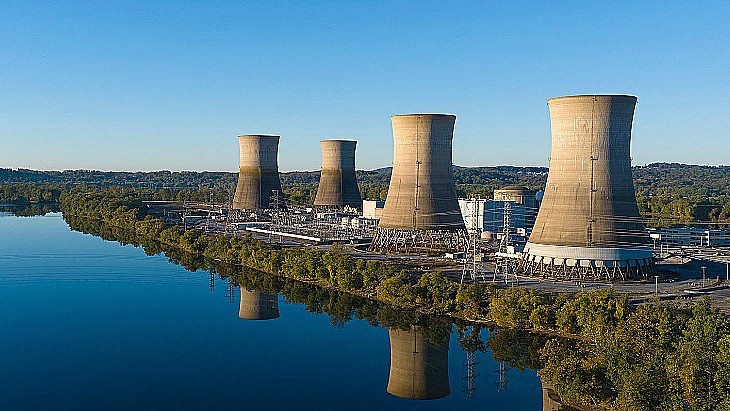
Constellation Energy still expects to restart the Crane Clean Energy Center - formerly known as Three Mile Island unit 1- in 2027 despite possible grid connection delays.
Crane Clean Energy Center (Image: Constellation)
CEO Joseph Dominguez told investors that the company was intending to file a request to the Federal Electricity Regulatory Commission (FERC) to transfer capacity rights from its Eddystone plant to enable the restart.
Constellation announced in 2024 that it would restart the pressurised water reactor, which closed down in 1999, after signing a 20-year power purchase agreement with Microsoft. Last year, the company filed an interconnection request with regional transmission operator PJM to allow Crane to add its 835 megawatts of emissions-free power to the grid.
Initially aiming for a 2028 restart, the company had brought its target date forward to 2027 following PJM's approval of its early interconnection request. However, at last week's CERA Week conference in Houston, Constellation's chief external affairs and growth officer David Dardis told Reuters that PJM had said it would take until 2031 to complete some of the transmission upgrades needed for the plant to connect to the grid.
Speaking in Constellation's 2026 Business and Earnings Outlook call, Dominguez said the company still expected to be able to start the unit in 2027.
"We talked this week about PJM studies that indicate interconnection could be delayed into the 2030s," Dominguez said. "I want to assure you we are working on that with PJM and we continue to expect to start this unit in 2027. Today, we will be filing a FERC request to be able to transfer capacity injection rights from our Eddystone unit to Crane to facilitate restart in '27, according to our plan."
Eddystone is a six-unit, dual-fuelled plant in Pennsylvania, with two 380 MW capacity subcritical steam boiler-turbine generator units that can run on either natural gas or oil, depending on market conditions, and two pairs of oil-fuelled peaking units that run during periods of high demand with a total capacity of 60 MW. The 380 MW units - Eddystone 3 and 4 - had been scheduled for closure last year, but have been kept online beyond their planned retirement date to ensure grid reliability under a series of emergency orders issued by US Energy Secretary Chris Wright. The most recent order was issued in February and remains in force until 24 May.
The Crane Clean Energy Center restart project is receiving federal support through the US Department of Energy's loan programme.
New England governors unite for nuclear
The governors of all six New England states have issued a joint statement outlining their regional commitment to exploring advanced nuclear energy technologies while continuing to support the safe, affordable, and reliable operation of the region's existing nuclear facilities.
The Millstone nuclear power plant in Connecticut (Image: Dominion)
The governors signing the joint statement include Governor Ned Lamont of Connecticut, Governor Janet Mills of Maine, Governor Maura Healey of Massachusetts, Governor Kelly Ayotte of New Hampshire, Governor Dan McKee of Rhode Island, and Governor Phil Scott of Vermont.
"Adequate electricity supply is critical to growing our economies, preserving public health and safety, powering our homes and businesses, and stabilising consumer prices as demand for electricity rises across the region," the statement says. "New England has a long tradition of collaborating on regional energy matters. As governors, we are committed to safeguarding our collective energy future through advancement of a diverse energy strategy that includes nuclear power, a pillar of New England's electric system."
The statement outlines two key next steps. First, the governors are directing their respective state energy offices to explore opportunities to ensure the continued safe, affordable, and reliable operation of the region's existing nuclear generation facilities in coordination with regional transmission organisation ISO New England, the facilities' owners, federal agencies, and other state and regional stakeholders.
Second, the governors are directing state energy agencies to take steps to explore deployment of advanced nuclear generation in states and communities that express a willingness to host such resources. This includes exploring innovative financing structures, federal funding and financial support opportunities, public-private partnerships, and regulatory designs for advanced nuclear energy that will protect consumers, help meet the region's energy needs, and enable New England to capture job growth and economic development opportunities from the deployment of new nuclear technologies with advanced safety systems.
"These initiatives will complement our states' other efforts to secure a safe, affordable and reliable electricity grid for the 21st century," the statement says. "By ensuring both the continued operation of our existing nuclear fleet and setting our region on a path to explore next generation resources, including advanced nuclear energy technologies, the New England states will continue our leadership in grid modernisation and energy innovation as we jointly work to meet the region’s current and future energy needs."
UK plant transfers to government ownership
Ownership of the Hunterston B nuclear power station in North Ayrshire, Scotland, has transferred from EDF Energy to the Nuclear Decommissioning Authority for the site's decommissioning.
(Image: EDF Energy)
The site will now be managed by the Nuclear Decommissioning Authority's (NDA's) subsidiary Nuclear Restoration Services (NRS), which is also decommissioning the neighbouring Hunterston A site. It becomes the first Advanced Gas-cooled Reactor (AGR) plant to successfully transfer into UK government ownership.
The UK's Office for Nuclear Regulation formally approved the relicensing of the Hunterston B plant from EDF Energy to NRS on 18 March, marking the beginning of the site's decommissioning phase. The licence, which took effect at the point of site transfer, is a legal document that will see responsibility for the site move from EDF to NRS. It sets out the conditions under which the site can operate and is crucial for future decommissioning work to proceed.
"Hunterston B has been an integral part of the EDF family," said EDF Energy's Decommissioning Director Paul Morton. "It is a fantastic site and while we will miss the station and its people, we know they are entering an exciting new chapter in their story, and we are looking forward to seeing them successfully delivering decommissioning. I am delighted we have been able to work with NRS and the NDA to deliver this transfer on schedule.
"This has been a first-of-a-kind project, with people at its heart. We have worked hard with staff and unions to support everyone on site over the past four years and almost every person has been able to secure the outcome they wanted, with most continuing to work at Hunterston B or staying with EDF."
The Hunterston B plant comprises two 490 MWe AGRs - Reactors 3 and 4. Reactor 3 came online for the first time in February 1976, was initially expected to run for 25 years but had its generating lifespan increased to more than 45 years. It was taken offline in November 2021. The plant's other unit, Reactor 4, started up in March 1977 and was shut down in January 2022. In April last year, Hunterston B became the first of the UK's seven AGR power plants to be declared free of all used nuclear fuel ahead of decommissioning.
Decommissioning of the site will involve dismantling nuclear facilities and removing any associated radioactive waste for safe storage or disposal which includes removing all plant, equipment, services and buildings outside of the reactor building. After the decommissioning process is complete, the site will enter a period of care and maintenance. Decommissioning is being carried out using funds from the Nuclear Liabilities Fund (NLF), a ring-fenced GBP20.7 billion (USD27.3 billion) fund set up in 1996 specifically to pay for the decommissioning of the current nuclear fleet.
"The NLF funding model provides certainty that funds are now available to support safe and secure site remediation," said NLF Chief Executive Melissa Hope. "We look forward to working with the station, NRS, the NDA and HM Government going forward to ensure that NLF funds are used to support planning for and innovation in the decommissioning programme, with the aim of this important national task being delivered efficiently and cost-effectively."
Decommissioning of AGRs
EDF had originally been responsible for total lifetime decommissioning of the seven AGR plants, which comprise Torness and Hunterston B in Scotland, Dungeness B in Kent, Hartlepool in Teesside, Heysham 1 and 2 in Lancashire and Hinkley Point B in Somerset. All these plants are scheduled to reach the end of their operational lives this decade.
However, in June 2021, the UK government and EDF agreed improved arrangements to safely and efficiently decommission the AGRs. Under the agreement, EDF will aim to shorten the time it takes to safely remove the fuel from the plants as they come offline, before working closely with the NDA to transfer ownership of the stations to the NDA.
Ownership of Hinkley Point B in Somerset is due to transfer to the NDA later in 2026.
Four AGR plants are still in operation. Hartlepool and Heysham 1 are currently expected to operate until March 2028. Heysham 2 and Torness are currently due to generate until March 2030.
Polish companies team up for regional SMR deployment
Poland's Synthos Green Energy, construction engineering firm Polimex Mostostal and engineering consultant ATEC Group have signed a memorandum of understanding to cooperate on the development and deployment of BWRX-300 small modular reactors in Central and Eastern Europe.
(Image: SGE)
The memorandum of understanding (MoU) aims to facilitate collaboration between the companies and establish working groups to jointly explore potential projects in Central and Eastern Europe. These activities will include identifying areas of synergy and assessing the companies' competencies and organisational capabilities in the context of delivering nuclear projects.
"The signing of the MoU underlines the continued commitment of Polimex Mostostal, SGE, and ATEC to the development of nuclear energy and the strengthening of the supply chain for SMR projects in Poland and across the region," Synthos Green Energy (SGE) said.
The BWRX-300 is a 300 MWe water-cooled, natural circulation SMR with passive safety systems that leverages the design and licensing basis of GE Vernova Hitachi Nuclear Energy's (GVH's) US Nuclear Regulatory Commission-certified ESBWR boiling water reactor design and its existing, licensed GNF2 fuel design. GVH's first BWRX-300 is under construction at Ontario Power Generation's Darlington site in Canada, with completion expected by the end of the decade.
SGE - part of the Synthos Group - is a co-investor in the standard design for the BWRX-300 and is in the process of establishing SMR partnerships and projects in a number of Central and Eastern European countries, including the Czech Republic, Hungary, Bulgaria and Romania.
"We are developing a coherent SMR deployment model in Central and Eastern Europe that combines access to proven BWRX-300 technology with strong local construction and industrial capabilities," said Rafał Kasprów, CEO of SGE. "Our agreement with Polimex Mostostal and ATEC strengthens our ability to scale projects across the region and build an efficient supplier ecosystem. Our goal is to deliver repeatable, financeable nuclear projects that will support the energy transition and enhance energy security across the region."
"Signing the MoU with SGE and ATEC is an important step in building partnerships for the delivery of SMR projects in Central and Eastern Europe," added Jakub Stypuła, President of the Management Board, Polimex Mostostal. "The agreement provides a framework for defining potential areas of cooperation and identifying where we can leverage our experience in delivering large-scale industrial and energy projects. At the same time, it enables the complementary use of each party's strengths in the development of SMR projects. We see significant potential in this technology and want to actively participate in building the supply chain for this type of investment."
Polimex Mostostal said the cooperation "is consistent with the long-term development strategies of all parties, aimed at the development of nuclear energy in the Central and Eastern European region and the effective use of existing competences in the implementation of SMR projects".
Maciej Stańczuk, member of the management board of ATEC Group, said: "ATEC is consistently expanding its engineering capabilities in the nuclear energy sector. We are very pleased to be working with Polimex Mostostal, the largest and most important EPC contractor for energy projects in Poland, and we see strong potential in deploying the proven BWRX-300 technology in our country for two reasons. First, Poland needs nuclear energy to stabilise its power system, which must also rely on stable sources of energy and on reliable, low-emission technologies capable of keeping the grid operating under adverse conditions. Nuclear energy is today the only scalable option that can simultaneously provide resilience, decarbonisation and strategic autonomy. If we want to carry out an energy transition that is not only green, but also credible and capable of delivering acceptable energy prices, nuclear energy must return from the margins to the centre. Second, the SMR project represents a unique opportunity to create a truly local supply chain, of which, together with Polimex Mostostal, we want to be an important part. This is an exceptional opportunity for our companies, and one we cannot afford to miss."
Belarus set for role in Smolensk nuclear construction
A working meeting requested by Smolensk Governor Vasily Anokhin has been held "to discuss the coordination of joint efforts and the participation of Belarusian partners in the Smolensk NPP-2 construction project".
(Image: Rosatom)
The meeting was attended by Smolensk nuclear power plant (Smolensk NPP) managers, regional government representatives, general contractor Titan-2 and Belarusian firms with experience of working on nuclear power facilities. The Smolensk region shares a border with Belarus.
Ivan Sidorov, Director of Smolensk NPP, said: "We have experience working with the Belarusian side, and we are well acquainted with the products used in the construction of the Belarusian NPP. As close neighbours, we are interested in further cooperation and are pleased that you are providing your capabilities to implement the Smolensk NPP-2 project."
Zhanna Sharando, Deputy Chair of the Vitebsk Regional Executive Committee's Economics Committee, said: "I hope that following this important meeting, companies will find their niche and opportunities to participate in the large-scale project to build new units at Smolensk NPP-2."
According to Russian state nuclear corporation Rosatom's report on the event: "Representatives of Belarusian enterprises - suppliers of cable products, water purification equipment, polymer structures, cement materials - reported on the results of their activities at the construction site of the Belarusian NPP, at NPPs in Turkey, Egypt, Hungary, and also proposed areas of cooperation with the Smolensk NPP."
Under Russia's proposed new nuclear programme, two VVER-1200 units are planned for the new phase of the Smolensk plant, to be commissioned in 2033 and 2035. They are scheduled to operate for 60 years, with potential life extensions up to 120 years.
Smolensk nuclear power plant is around 350 km west of Moscow. It currently has three RBMK-1000 power units, which were connected to the grid, respectively, in 1982, 1985 and 1990. Each has an electrical capacity of 1,000 MW. They have each had their operating licences extended to 45 years.
The Belarus nuclear power plant has two VVER-1200 reactors and is located in Ostrovets in the Grodno region in the northwest of the country. A general contract for the construction was signed with Russia's Rosatom in 2011, with first concrete on the first unit in November 2013. Construction of unit 2 began in May 2014. The first power unit was connected to the grid in November 2020, with the second unit put into commercial operation in November 2023. More than a quarter of Belarus's electricity is now generated by nuclear.
In November Belarus announced its intention to build a third unit at its first nuclear power plant - as well as starting surveys for a second plant which it believes may be needed to meet future energy demands.
Reactor vessel installed at Lianjiang unit 2
The reactor pressure vessel has been installed at unit 2 of the Lianjiang nuclear power plant in China's Guangdong province. It is one of two CAP1000 reactors planned for the first phase of the plant.
(Image: SPIC)
State Power Investment Corp (SPIC) said the reactor pressure vessel of unit 2 was successfully hoisted into place on Wednesday, "marking the start of the equipment installation phase for both units of the first phase of the project".
The vessel - with a net weight of about 270 tonnes - will house the nuclear reactor and is the core of a nuclear power plant.
(Image: SPIC)
The construction of the first two 1250 MWe CAP1000 reactors - the Chinese version of the Westinghouse AP1000 - at the Lianjiang site was approved by China's State Council in September 2022. Excavation works for the units began in the same month, with the pouring of first concrete for the foundation of unit 1 starting in September 2023 and that of unit 2 in April last year. Unit 1 - whose reactor pressure vessel was installed in February last year - is expected to be completed and put into operation in 2028.
Once all six CAP1000 units planned at the site are completed, the annual power generation will be about 70.2 TWh, which will reduce standard coal consumption by more than 20 million tonnes, and reduce carbon dioxide emissions by more than 52 million tonnes, sulphur dioxide by about 171,000 tonnes and nitrogen oxides by about 149,000 tonnes.
SPIC says the Lianjiang plant - the first coastal nuclear power project developed and constructed by SPIC in Guangdong - will be the first nuclear power project in China to adopt seawater secondary circulation cooling technology as well as the first to use a super-large cooling tower.
China Sets 2029 Deadline to Shut Down Outdated Petrochemical Plants
China plans to phase out some of its outdated petrochemical plants by 2029 and upgrade others, under new directives issued by the authorities on Friday.
The Chinese authorities will review which facilities will be upgraded and which will be closed, using lists of outdated petrochemical plants compiled by local governments in recent months, according to documents by the central government cited by Reuters.
China and its refiners and petrochemical producers have been struggling with low margins amid overcapacity and falling demand for road transportation fuels. The Chinese authorities last year stepped up efforts to curb overcapacity that has led to refining losses and thin petrochemical margins amid a glut of producing units that has overwhelmed the entire Asian market.
China is already the world's biggest producer of ethylene and polyethylene, after building seven petrochemical complexes over the past ten years. Previously, the United States was the biggest producer of the petrochemical commodities.
Yet, refining and chemicals firms have not been spared from the so-called “involution” in China, which refers to excessive and self-defeating competition among Chinese companies for limited resources and opportunities.
At the end of last year, the buildout in new petrochemical capacity in China fueled fears that the country could tip the global market into oversupply, hurting smaller petrochemical producers.
China is relatively resilient amid the current global oil and products crunch, which is reducing naphtha supplies in Asia and hurting the petrochemical industries in South Korea and Japan.
China is somewhat different from the rest of the Asian market, as it benefits from large volumes of coal?to?chemicals capacity and extensive world?scale refinery?chemicals complexes, analysts at ICIS said last week.
India's imports of Russian crude oil jumped by 90% in March versus February, following the major supply disruption in the Middle East and the U.S. waiver of purchases of Russian crude already loaded on tankers.
Following subdued purchases between November and February, India's imports of Russian crude soared last month by 90%, although overall Indian crude imports slumped by 15% due to the de facto closed Strait of Hormuz, The Times of India reported on Friday, citing data from Kpler.
While crude supply to India from Iraq, Saudi Arabia, and the United Arab Emirates (UAE) plunged in March compared to February, deliveries from one of Africa's top producers, Angola, tripled, although the share of Angolan crude remains small, the data showed.
Some supply from the Middle East did reach India, thanks to Saudi Arabia and the UAE re-routing exports to ports sitting outside the Persian Gulf and not necessitating transit through the Strait of Hormuz. These workarounds, however, are insufficient to compensate the supply lost to the de facto closed critical oil chokepoint.
“There are early signs of flows being negotiated on a bilateral basis, with Iran reportedly granting passage to countries such as India and Thailand,” Kpler's Fred Asiedu said earlier this week.
“This may allow selective access to MEG cargoes, but without consistent tanker movement it is difficult to argue that the Strait is meaningfully open.”
Since the U.S. waiver on purchases of Russian crude on tankers, India refiners have snapped up dozens of millions of barrels of the oil as key supplies from the Middle East are trapped.
By the middle of March, India was winning the competition with China to attract Russian crude cargoes with vessels turning mid-voyage away from their previous Chinese destinations and heading for India.
Russia and India are competing for millions of barrels of Russian crude that had accumulated on tankers early this year, when most buyers outside China steered clear of Russian barrels because of the U.S. sanctions and the U.S. pressure on India to slash Russian oil imports.
Colonial Pipeline has resumed service on its main gasoline artery to the U.S. East Coast after repairing damage caused by a third-party drilling crew in Georgia.
The company said it completed repairs on Line 1, its main gasoline route from the U.S. Gulf Coast to East Coast markets, and brought the system back into service after damage in Paulding County, Georgia. The incident occurred on Tuesday, caused by a third-party well-drilling crew.
The restart is significant because Line 1 is one of the most important fuel supply links in the United States, moving about 1.5 million barrels per day of gasoline from Houston to Greensboro, North Carolina. From there, supplies are distributed across local markets and shipped onward to population centers extending as far as New York Harbor.
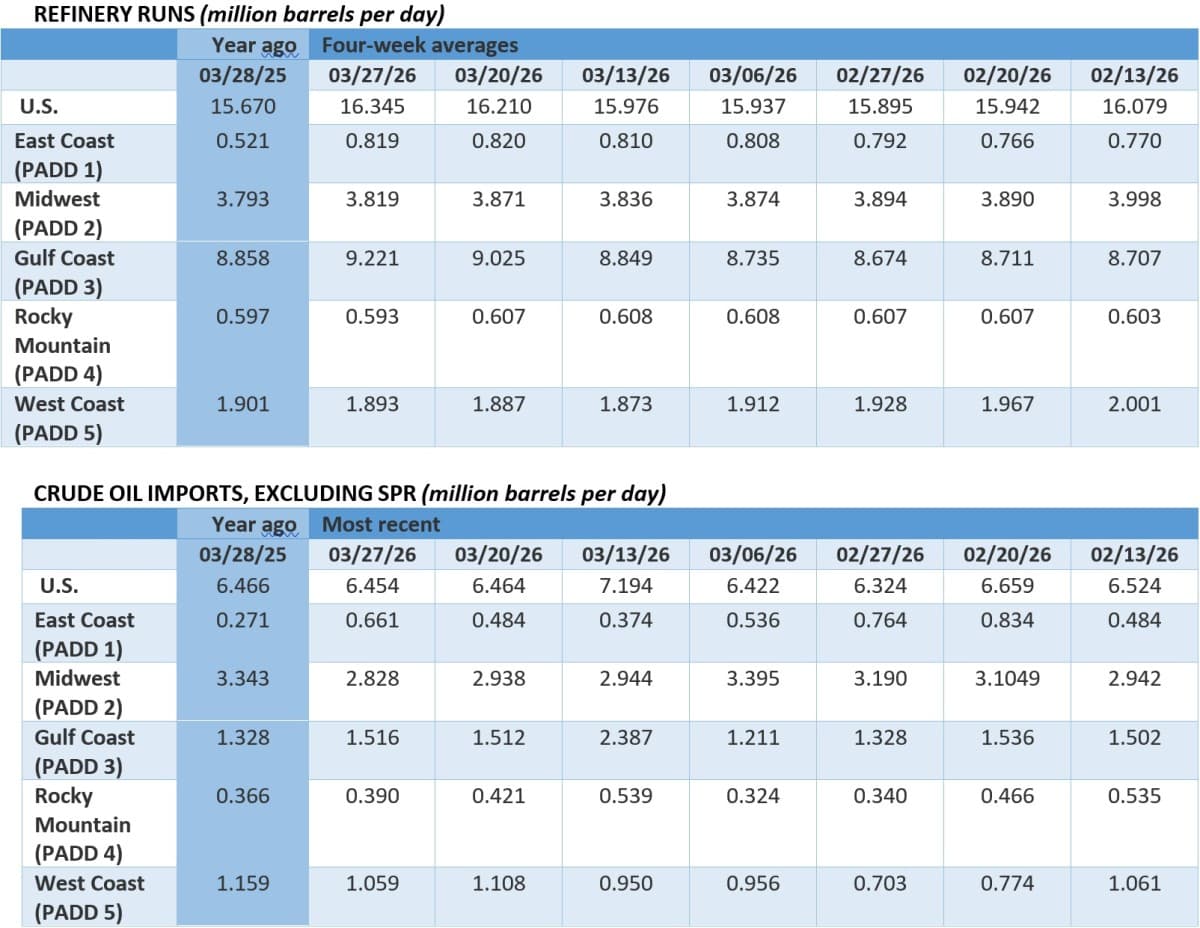
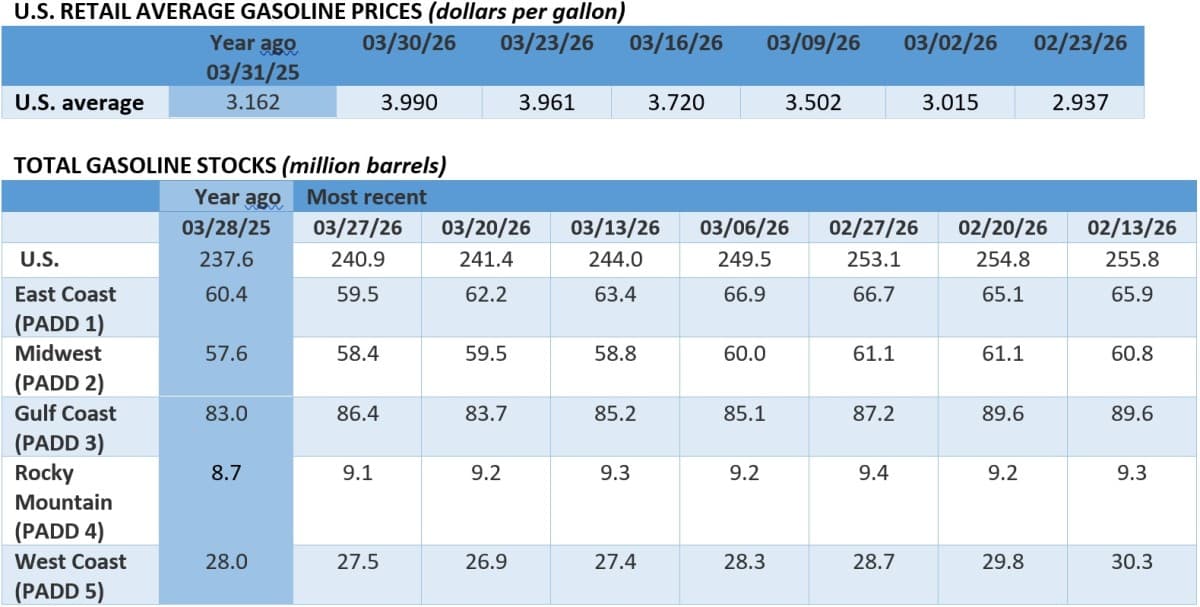
The disruption came at a sensitive moment for U.S. fuel markets. Consumers are already facing sharply higher pump prices tied to the Iran war, with average U.S. gasoline prices rising above $4 per gallon on Monday for the first time in more than three years. Any interruption on Colonial’s mainline tends to draw close market attention because the pipeline network is the largest refined-products system in the country and a crucial supplier to the East Coast, a region structurally dependent on inbound fuel flows.
While Colonial did not indicate any prolonged operational fallout, the latest incident revives concerns about the vulnerability of U.S. fuel infrastructure to accidental damage and unplanned outages. A similar shutdown on Line 1 occurred early last year after a leak in the same Georgia county, though that event had limited market impact because it took place during January, when gasoline demand is seasonally weak.
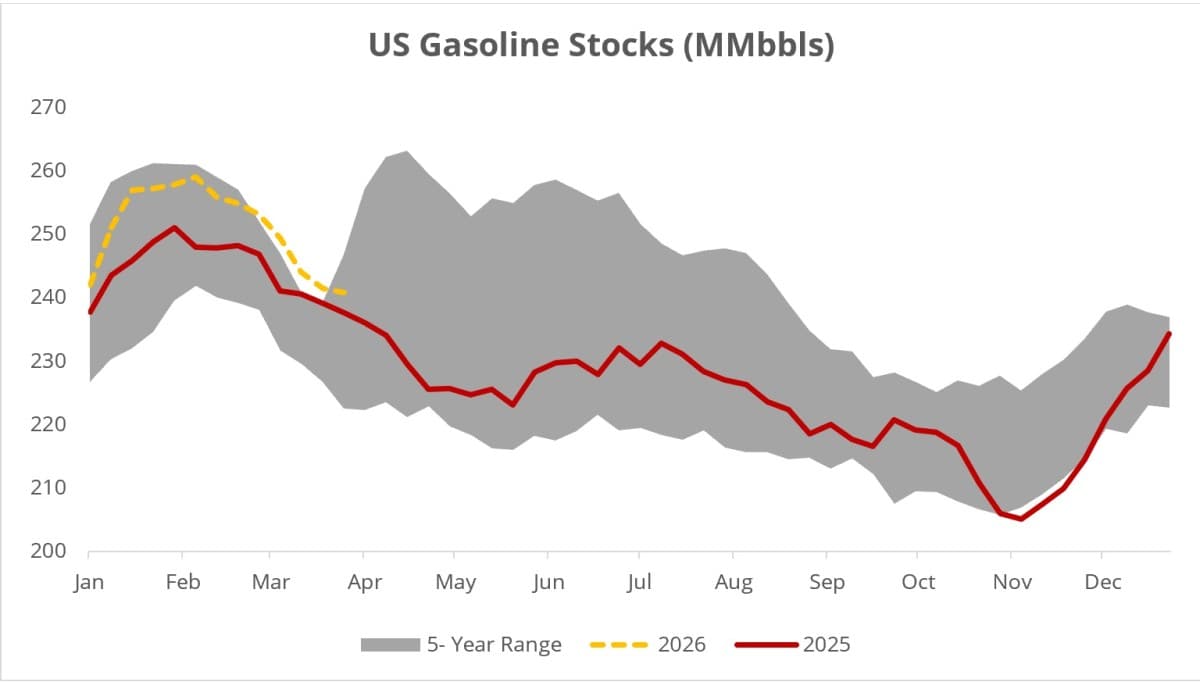
With service now restored, immediate fears of a more serious supply crunch may ease. Still, the episode underscores how quickly physical disruptions can rattle refined-product markets when inventories are tight and geopolitical tensions are already pushing prices higher.
By Charles Kennedy for Oilprice.com
Trump Loses Grip as Oil Surge Signals Deeper Crisis
For the first time in weeks, Donald Trump failed to cool oil markets, as escalating tensions with Iran crushed ceasefire hopes and reignited bullish momentum.
Friday, April 03, 2026
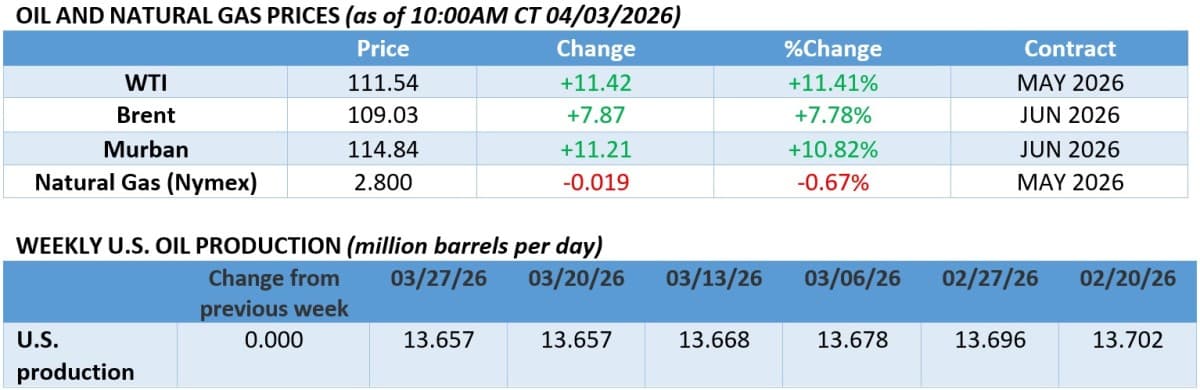
For the first time in many weeks, US President Trump couldn’t contain a late-week price surge as escalating tensions between Washington and Tehran dulled market bears’ expectations of a ceasefire anytime soon. WTI soared this week and is on par with ICE Brent (even if they trade different months), physical benchmarks above $140 per barrel bring back memories of 2008 and Tehran openly discusses introducing a toll mechanism for ships transiting the Strait of Hormuz. The return from Easter holidays is all set for another crude awakening as strikes on Middle Eastern energy infrastructure continue.
In Times of Cuts, OPEC+ Mulls Production Hikes. Despite most Middle Eastern OPEC members slashing output on the back of closed Hormuz navigation, this weekend’s OPEC+ ministerial meeting might see another 206,000 b/d output hike for May 2026, citing the need to ‘react’ to a rapidly tightening outlook.
China Forces Refiners to Run, Even If at a Loss. China’s state planner NDRC has told independent refiners, the so-called teapots, not to cut refinery runs below their utilization rates from their average levels of the past two years, with Shandong teapots currently operating at 55% of capacity.
Trump Cabinet Softens Terms on SPR Release. The US Department of Energy has offered up to 10 million barrels of sour crude from the US Strategic Petroleum Reserve, easing participation terms as now buyers can return oil by November 2027 and minimum return volumes were lowered to 117%.
Trump Slashes Metal Import Duties. The Trump administration has cut import duties on derivative products made from steel, aluminium and copper from the previously imposed 50% to a new rate of 25% applied to the full value of product, eliminating the tariff on products with minimal metals content.
Oil Majors Eye Deeper US Offshore Exposure. According to media reports, an array of European oil majors comprising TotalEnergies, BP, Shell and Repsol are eyeing a majority stake in the Blackstone-backed ultra-deepwater Shenandoah offshore project, with a potential to produce 100,000 b/d.
Sweden Seizes Sanctioned Shadow Fleet Tanker. The Swedish Coast Guard said it had seized the Flora 1 tanker, part of Russia's shadow fleet, off the country's southern coast, claiming that it was the source of a 12km oil spill off the island of Gotland and launching an environmental investigation into the matter.
Facing Fuel Shortages, Bangladesh Cuts Working Hours. Bangladesh, a net importer of crude, refined products and gas, has introduced energy-saving measures to curtail energy consumption in the country, cutting work hours to 4 pm and mandating that all shopping centres be shut by 6 pm.
Key US LNG Plant Cuts Output After Outage. Cheniere Energy’s (NYSE:LNG) 30 mtpa Sabine Pass LNG plant has halved its LNG feedgas intake from 5 bcf/d to 2.6 bcf/d after at least one of the production trains was taken offline this week, with the operator claiming the units would be back soon.
Sulphur Rally Squeezes Miners Worldwide. Mining companies worldwide are suffering from soaring sulphur prices, adversely impacting the economics of metal leaching, with Indonesia’s nickel producers now facing sulphur prices above $600 per tonne, the highest in five years.
China Re-Exports Record LNG Volumes. Chinese gas importers re-exported 10 LNG cargoes in March, the highest monthly total ever for a country that is notoriously dependent on gas imports, sending prompt cargoes of liquefied gas to embattled neighbours, including South Korea and the Philippines.
Russia Bans Gasoline Exports until July. Russia’s government has imposed a ban on gasoline exports for refiners until the end of July, citing the need to keep domestic prices steady ahead of high-demand season in the summer, taking some 120,000 b/d of gasoline flows off the global markets.
Copper Bulls Eye Chinese Smelter Cuts, In Vain. Defying an industry-wide pledge to jointly cut copper smelting production by 10% this year, China’s leading copper smelters are planning to raise or maintain their output in 2026, keeping SHFE copper prices stuck below ¥96,240 per tonne ($14,000/mt).
Venezuela's Crude Exports Continue Rising. Venezuela’s oil exports jumped past the 1 million b/day mark in March for the first time since September 2025, boosted by increasing flows to Caribbean islands (used for blending by traders) and a surging demand for heavy barrels from India’s private refiners.
Asian LNG Prices Start to Slip as Demand Falters. JKM, Asia’s key LNG price marker has been declining this month, correcting downwards after peaking above $25/MMBtu in the first weeks of the US-Iran war, dropping to $19/MMBtu this week as spot demand in Northeast Asia dissipated on high prices.

_18517.jpg)
_55927.jpg)
_70893.jpg)

_52398.jpg)
_8407d85f.jpg)