Sunday, April 05, 2026


Zelenskyy warns US-Iran war could divert critical aid from Ukraine

Ukraine's President Volodymyr Zelenskyy speaks during an interview with AP in Istanbul, Turkey, Saturday, April 4, 2026.
Copyright Copyright 2026 The Associated Press. All rights reserved.

By Rory Elliott Armstrong with AP
Published on 

President Zelenskyy has warned that a prolonged US-Israeli war with Iran is threatening the supply of vital Patriot missiles and boosting Russia’s economy through surging oil prices.

President Volodymyr Zelenskyy warned that an extended conflict between the US, Israel, and Iran risks diverting Washington’s attention away from Ukraine, potentially leaving Kyiv with a dangerous shortage of essential Patriot air defence systems.

Ukraine desperately needs more US-made Patriot air defence systems to help it counter Russia’s daily barrages, Zelenskyy said in an interview late on Saturday in Istanbul.

Russia’s relentless pounding of urban areas behind the front line following its full-scale invasion of Ukraine more than four years ago has killed thousands of civilians. It has also targeted Ukraine's energy supply to disrupt industrial production of Ukraine’s newly developed drones and missiles, while also denying civilians heat and running water in winter.

“We have to recognise that we are not the priority for today,” Zelenskyy said. “That’s why I am afraid a long (Iran) war will give us less support.”

A loss of focus on Ukraine

The latest US-brokered talks between envoys from Moscow and Kyiv ended in February with no sign of a breakthrough. Zelenskyy, who has accused Russia of “trying to drag out negotiations” while it presses on with its invasion, said Ukraine remains in contact with US negotiators about a potential deal to end the war and has continued to press for stronger security guarantees.

But, he said, even those discussions reflect a broader loss of focus from Ukraine.

His most immediate concern, Zelenskyy said, are the Patriots — essential for intercepting Russian ballistic missiles — as Ukraine still lacks an effective alternative.

These US systems were never delivered in sufficient quantities to begin with, Zelenskyy said, and if the Iran war doesn't end soon, "the package — which is not very big for us — I think will be smaller and smaller day by day.”

“That’s why, of course, we are afraid," he said.

Interlinked wars

Zelenskyy had been counting on European partners to help make the Patriot purchases despite tight supply and limited US production capacity.

But the Iran war, now in its sixth week, has sent shock waves through the global economy and pulled in much of the wider Middle East region, further straining these already limited resources, diverting stockpiles and leaving Ukrainian cities more exposed to ballistic strikes.

For Kyiv, a key objective is to weaken Moscow’s economy and make the war prohibitively costly. Surging oil prices driven by Iran's closure of the Strait of Hormuz are undermining that strategy by boosting the Kremlin’s oil revenues and strengthening Moscow’s capacity to sustain its war effort.

In his interview, Zelenskyy said Russia draws economic benefits from the Mideast war, citing the limited easing of American sanctions on Russian oil.

“Russia gets additional money because of this, so yes, they have benefits," he said.

A renewed diplomatic push

To keep Ukraine on the international agenda, Zelenskyy has offered to share Ukraine's hard-earned battlefield expertise with the United States and allies to develop effective countermeasures against Iranian attacks.

Ukraine has met Russia’s evolving use of Iranian-made Shahed drones with growing sophistication, technological ingenuity and low cost.

Moscow significantly modified the original Shahed-136, rebranded as the Geran-2, enhancing its ability to evade air defences and be mass-produced. Ukraine responded with quick innovation of its own, including low-cost interceptor drones designed to track and destroy incoming drones.

Zelenskyy said Ukraine is ready to share with Gulf Arab countries targeted by Iran its experience and technology, including interceptor drones and sea drones, which Ukraine produces — more than are used up — with funding from Americans and its European partners.

In return, these countries could help Ukraine "with anti-ballistic missiles,” Zelenskyy said.

In late March, as the Iran war escalated, Zelenskyy visited Gulf Arab states to promote Ukraine’s singular experience in countering Iranian-made Shahed drones, leading to new defence cooperation agreements.

Zelenskyy has also positioned Ukraine as a potential partner in safeguarding global trade routes, offering assistance in reopening the Strait of Hormuz by sharing Ukraine’s experiences securing maritime corridors in the Black Sea.

Zelenskyy was in Istanbul for talks with President Recep Tayyip Erdogan, a day after the Turkish leader spoke with Russian President Vladimir Putin.

Zelenskyy said they discussed peace talks and a possible meeting of leaders in Istanbul. He also said there could be new defence deals signed between the two countries soon.

Russia steps up its spring offensive

Each year as the weather improves, Russia moves its grinding war of attrition up a notch. However, it has been unable to capture Ukrainian cities and has made only incremental gains across rural areas. Russia occupies about 20% of Ukraine, including the Crimean Peninsula, which Russia seized in 2014.

On the roughly 1,250-kilometre front line stretching across eastern and southern parts of Ukraine, short-handed Ukrainian defenders are getting ready for a new offensive by Russia’s larger army.

The commander-in-chief of Ukraine’s armed forces, Gen. Oleksandr Syrskyi, said Russian troops have in recent days made simultaneous attempts to break through defence lines in several strategic areas.

One thing Zelenskyy says he has insisted on and will continue to do so — a territorial compromise and giving up land will not be on Ukraine's agenda.


Russia's military campaign in Ukraine stalls


for first time in more than two years


Russia’s advance in Ukraine stalled in March, with no territorial gains for the first time in over two years, according to the Institute for the Study of War. Ukrainian forces recaptured small areas, signalling a slowdown in Moscow’s momentum after months of progress, raising new questions about the war’s next phase.


Issued on: 02/04/2026 
By: FRANCE 24


In this photo provided by Ukraine's 24th Mechanized Brigade press service, declared to be taken on Jan. 24, 2026, an MRLS BM-21 "Grad" fires towards Russian army positions near Chasiv Yar, Donetsk region, Ukraine. © Oleg Petrasiuk/Ukraine's 24th Mechanized Brigade, AP

Russia's army recorded no territorial gains on the front line in Ukraine in March for the first time in two and half years, AFP analysis of data from the Institute for the Study of War (ISW) showed.

Ukrainian forces managed to recapture 9 square kilometres in March as Moscow's forces slowed down across the entire front line, according to the analysis. This figure excludes infiltration operations conducted by Russian forces beyond the front line, as well as advances claimed by the Russian side but neither confirmed nor denied by the ISW.


© FRANCE 24
02:49


The ISW worked with the Critical Threats Project (part of the American Enterprise Institute, or AEI), another US think-tank specialising in conflict. The Russian army has been slowing its advance since late 2025 due to counter-offensives in the southeast of the country, with 319 square kilometres of gains in January and 123 square kilometres in February, the smallest advances since April 2024.

The ISW attributed the slowdown of the Russian army in recent months to Ukrainian counter-offensives, but also to "Russia's ban on using Starlink terminals in Ukraine" and "the Kremlin's efforts to restrict access to Telegram".

The messaging app, very popular among Russians including those fighting on the front line, has been barely usable in recent months due to blocks imposed by the authorities.

As in February, Russia has lost ground on the southern section of the front line, between the Donetsk and Dnipropetrovsk regions, where it occupied more than 400 square kilometres at the end of January. This area shrank to 200 square kilometres in February and to 144 square kilometres in March. The situation was, however, unfavourable for Kyiv further north in the Donetsk region, towards the two major regional cities of Kramatorsk and Sloviansk.

In 2025, the Russian army made more progress in Ukraine than in the preceding 24 months. But in the first three months of 2026, Russian territorial gains were half those of the same period in 2025.

Four years after the start of Russia's full-scale invasion of Ukraine, Moscow occupies just over 19 percent of the country, the majority of which was seized during the first weeks of the conflict.

Approximately seven percent, including Crimea and areas in the Donbas region, was already under Russian or pro-Russian separatist control before the invasion.

(FRANCE 24 with AFP)


Brazil Unveils National Plan For Bioeconomy


The first pillar outlines the development of a community-based socio-bioeconomic business ecosystem
-
Marcelo Camargo/Agência Brasil

April 5, 2026 
ABr
By Fabiola Sinimbu


The Brazilian government on Wednesday (Apr. 1) presented a new strategy to make biodiversity one of the country’s main economic assets for development by 2035. The National Bioeconomy Development Plan (PNDBio) is expected to encompass everyone from extractive workers to industry.

Among the goals are expanding payments for environmental services, incorporating new herbal medicines into Brazil’s national public health care network – the SUS – and granting new conservation units to promote ecotourism.

The plan is organized into three pillars – socio-bioeconomics and environmental assets, competitive bioindustrialization, and sustainable biomass production.

Carina Pimenta, national secretary for the bioeconomy at the Ministry of the Environment and Climate Change, notes that this is a national development strategy that views environmental assets not only from the perspective of conservation, but also in terms of how to utilize them within economic activities, “generating a new cycle of prosperity.”

According to Minister of the Environment and Climate Change Marina Silva, the bioeconomy envisioned for Brazil is for everyone.

“There is a place for extractive industries, for cosmetics manufacturers, and for pharmaceutical companies. This is bioeconomy for a new cycle of prosperity,” she added.

Environmental services


The first pillar outlines the development of a community-based socio-bioeconomic business ecosystem. Among the initiatives are support for 6 thousand enterprises, a 20 percent increase in contracts under the financing line of the national program for strengthening family farming aimed at low-income producers, and a doubling of the gross annual output derived from socio-biodiversity.

Also planned is the promotion of environmental and socio-cultural services provided by traditional peoples and communities through payments to 300 thousand beneficiaries. Also proposed is a 50-percent increase by 2035 in the number of organizations eligible to receive benefits from the sharing of genetic resources. Genetic heritage is the set of data contained in plants, animals, and microorganisms used in the cosmetic, pharmaceutical, and other industries. Current legislation already stipulates that traditional communities, such as indigenous peoples, receive a share of these profits. The goal is to expand this distribution.

The initiative aims to restore 2.3 million hectares of native vegetation integrated into bioeconomy chains, in addition to consolidating 30 restoration territories across the country. The efforts also include granting 60 conservation units to promote ecotourism and expanding forest management areas to 5.28 million hectares.
Industry

Under bioindustrialization, the plan aims to focus on health and wellness through the sustainable use of genetic resources. It aims to incorporate new herbal medicines into the SUS and expand the share of such medicines in Brazil’s pharmaceutical industry revenue by five percent.

Circular economy

The national plan also highlights, in its third pillar, the use of biomass derived from agricultural and forestry products in the national industry. Biomass is any organic material of plant or animal origin that can be used as an energy source. It also includes the development of the renewable biochemical industry, such as the production of biofuels, like ethanol.

“Innovative, competitive, export-oriented, and green – that’s what makes for a sustainable industry,” said Geraldo Alckmin, vice-president and minister of development, industry, trade, and services.

PNDBio is the result of two years of work involving 16 ministries, nonprofits, academia, and the private sector.

After undergoing public consultation with over 900 contributions, the public policy was finalized and approved on March 5, 2026, defining 185 strategic actions.

Agência Brasil (ABr) is the national public news agency, run by the Brazilian government. It is a part of the public media corporation Empresa Brasil de Comunicação (EBC), created in 2007 to unite two government media enterprises Radiobrás and TVE (Televisão Educativa).

Southeast Alaska’s Treaty-Determined Chinook Salmon Catch Limit Returns To Normal Levels


April 5, 2026 
Alaska Beacon
By Yereth Rosen


(Alaska Beacon) — Fishers in Southeast Alaska will be allowed to harvest 205,300 Chinook salmon this year, returning to a normal total after last year’s ultra-low harvest limit.

The Southeast Alaska Chinook harvest total, set in accordance with the U.S.-Canada Pacific Salmon Treaty, was announced this week by the Alaska Department of Fish and Game.

Last year’s Southeast Chinook catch limit of 133,500 fish was the lowest in any year since the Pacific Salmon Treaty went into effect in 1985, according to the department.

Chinook salmon, also known as king salmon, make up the smallest total harvest of Alaska’s five species of salmon. But they are also sold at a premium, usually fetching the highest market prices. Those that swim in Southeast Alaska waters are the subject of management from different jurisdictions in the U.S. and Canada, through the Pacific Salmon Treaty. The treaty is necessary because the fish are highly migratory and swim through and spawn in various locations, said Dani Evenson, Pacific Salmon Treaty and Arctic Policy Coordinator for the department’s Division of Commercial Fisheries.


“They kind of ignore things like international borders and jurisdictions, and they’re going to do what they do,” Evenson said. “And so we have this treaty where we share the burden of conservation, we share the available catch. And it’s a shared resource.”

Along with Alaska and the federal governments of the U.S. and Canada, participants in the treaty process include Washington state, Oregon, British Columbia, the Yukon Territory and tribal governments.

Southeast Chinook salmon are the only Alaska salmon for which a numerical harvest cap is set each year, Evenson said.

Alaska’s cap and those for the other jurisdictions covered by the treaty are the products of analysis conducted by regional panels and technical committees. Those panels and committees provide information to the bilateral Pacific Salmon Commission, the decision-making body under the treaty.

Last year’s record-low cap reflected what appeared to be poor conditions for the region’s highly prized Chinook. Evenson said the slashed harvest levels posed a hardship on some fishing dependent communities.

“Last year was terrible,” she said.

It turned out, as determined through post-season analysis, that last year’s harvest cap was overly conservative and that another 53,800 Chinook salmon could have been safely caught by Southeast Alaska fishers, she said.

Improvements in abundance and ocean conditions support this year’s increased catch limits, Evenson said. Nonetheless, the overall harvest limit is at a level considered “judicious,” in light of conservation challenges facing various Chinook stocks and the contention over harvest allocations.

“Chinook have been a flashpoint,” she said. “It seems prudent to approach more cautiously.”

As determined by the Alaska Board of Fisheries, most of this year’s Southeast Alaska Chinook catch – 146,000 fish, about three quarters of the total — is allocated to harvesters who use troll gear. Salmon trolling involves hooking individual fish, and those caught in that method fetch high prices because they can be iced quickly and handled carefully, thus maintaining high quality.

The next largest total, 43,600 fish, is allocated to sport anglers, according to the Board of Fisheries decision. The remainder of the Southeast Alaska Chinook harvest is allocated to fishers who use nets and are targeting other salmon species but catch some Chinooks incidentally.


Alaska Beacon is an independent, nonpartisan news organization focused on connecting Alaskans to their state government. Alaska, like many states, has seen a decline in the coverage of state news. We aim to reverse that.
The Myth That Won’t Die: ‘War Is Good For The Economy’ – OpEd

April 5, 2026 
MISES
By Carlos Boix


War is the ultimate government intervention. It is the excuse for all kinds of evils to be imposed on the governed. From confiscation through taxes and inflation to restriction of freedom of speech and the redirection and even nationalization of whole industries, nothing increases state power such as war.

As the state is predatory and produces nothing of use, it is the ultimate impoverishing situation. From an ideological point of view, it is even worse, mixing love for one’s culture and homeland with the state itself. It reduces individual’s resistance to loss of liberty and creates in their minds the myth of the protecting government.

There is also another insidious idea that a lot of people hold: That is that war has economic and other benefits, not to certain individuals or groups, but to the community at large. It is worth examining these supposed benefits to show that no, war does not benefit the community, it is just death and destruction.

Economic Stimulus

As with all government stimulus, this is just a redirection of resources. Instead of adapting to current resources, what a war stimulus does is to increase money and credit at unprecedented levels to pay for exorbitant government spending. This just means that real resources are taken from the community in the form of inflation and taxes and spent away on things the community does not want.

It is similar to getting all your savings and any credit you can get and spending it. For a while it appears that you are more affluent, until those resources are spent. Fiscal stimulus causes the same waste of savings and capital which, for a while, look to have stimulated the economy. But this is just spending. Soon there are not enough resources left and reality asserts itself. Once enough resources have been wasted, there are not enough to sustain the party, no matter how much money the government prints. If it continues to print, they create a hyperinflation period. If they stop, we get a recession.

The way the stimulus is done is also important. As it is done through banking credit, the temporal analysis of entrepreneurs is completely altered. A decrease in interest rates makes it look as if there are more resources saved. The problem is that the way entrepreneurs experience this is generally with an increase in demand. Those who do not respond—seeing it as unsustainable—will struggle to meet demand and will lose clients to other businesses and will still be hit hard in the downturn. Hence, most entrepreneurs will have to ride the wave and try to adapt when the crash comes.

This situation does not increase resources or make the community better off, it will waste resources and impede sustainable improvement. Overall, the community will be poorer afterwards. The idea that this kind of stimulus is positive is completely misguided.

Full Employment


When we visited Berlin, we were told the story of Communist Berlin, in which a person was paid to make a note every day of the clocks in Alexanderplatz. This is the problem with the obsession with unemployment. Employment by itself should not matter, but employment on what. If people are exchanging their work for money but not producing goods valued by others, that amounts to wasted resources, money, and labor.

This is the problem with public employment. Instead of a positive, it is a waste of resources. The government necessarily takes resources from the productive sphere—real resources that people demand—and redirects them to uses that people do not demand, such as filling forms, making military uniforms, or making munitions.

So yes, the government could tax or inflate enough to employ everyone in an economy, but that employment would take resources from the community, not add to them. They would just be wasting potential. This kind of use of employment just makes everyone poorer. This is what war full employment looks like.

At the beginning it gives the impression of full employment, but when the war finishes, the subsequent spike in unemployment is not because the government is not spending, but because the community has been depleted of resources.

Technological Advances


The idea that war fosters innovation and advances of technology is contrary to reality. It comes from those eager to justifywar and see positive inventions against an imaginary counterfactual in which these innovations did not happen. Very few compare wartime to peacetime innovations. Those who do have shown that, at best, the rate of innovations is altered but changes little overall, and, at worst, there is a decline in inventiveness.

But here is the catch. This innovation is misallocated. Instead of innovations to better serve the customers, innovation during wartime serves the government and is intended to improve weapons and destructive power. Weapons and destructive power do not improve the quality of life of the people.

By redirecting research mainly to military use, there is a huge opportunity cost that few take into account. If we take the null effect on overall innovation and the focus on military innovation during wartime, we can safely say that wartime produces a reduction in technological advances and improvement of production effectiveness.

Social and Political Change


A typical example of beneficial social change is the entry of women in the workforce, wrongly attributed to the wartime economy during WWII. I say wrongly attributed because if we study labor market changes in countries that did notparticipate in WWII, such as Spain, we can see the same trend of female participation in the labor market. This is just another private social trend that people attribute to government intervention. The reality is that these social changes were already happening and defenders of war attribute them to government and to war itself.

Another counterfactual is the comparison with other wars. Why did WWII change the social status of women but the Franco-Prussian war of the 1870’s did not? Or even earlier wars?

Political change is sometimes presented as a benefit of war. How this is even argued is a mystery, but the idea is that war can topple an oppressive regime and create something better. Recent events show the contrary. Syria, Iraq, and Afghanistan are all examples of wars that have either not caused a regime change or caused a chronic unstable civil war that has made the situation worse for the population.

In those countries in which regimes were, say “benign,” wars created an ideological shift towards more state power, the acceptance of more state intervention, and less individual freedom. Some people consider this a positive but, to me, all these are negative effects. Politically, war only benefits the government.

Conclusion

War has no positive effects. Mises wrote, “What distinguishes man from animals is the insight into the advantages that can be derived from cooperation under the division of labor.” And, “The market economy involves peaceful cooperation. It bursts asunder when the citizens turn into warriors and, instead of exchanging commodities and services, fight one another.”

This new war between the governments of Israel, the US, and Iran will be just like all other wars, negative in all its aspects.


About the author: 
Carlos Boix graduated 2001 as a veterinarian from the Complutense University in Madrid, Spain. He moved to England and worked as a vet for 10 years before moving back to Spain to set his own business and study for a Masters degree. He later sold the business and moved back to the UK where he currently works as a veterinarian. His interests in economics and history started a long time ago and he discovered Austrian Economics and the Mises institute after the 2008 crisis.

Source: This article was published by the Mises Institute

The Mises Institute, founded in 1982, teaches the scholarship of Austrian economics, freedom, and peace. The liberal intellectual tradition of Ludwig von Mises (1881-1973) and Murray N. Rothbard (1926-1995) guides us. Accordingly, the Mises Institute seeks a profound and radical shift in the intellectual climate: away from statism and toward a private property order. The Mises Institute encourages critical historical research, and stands against political correctness.


Gulf Energy Strikes Risk Catastrophic Environmental Disaster – Analysis


An Iranian missile hit Haifa oil refineries in Haifa Bay, 19 March 2026. 
Photo Credit: Hanay, Wikipedia Commons

April 5, 2026 
 Arab News
By Gabriele Malvisi

When Iraqi forces withdrew from Kuwait in 1991, they left more than 700 oil wells burning in their wake. The fires took eight months to extinguish, spewing smoke plumes that stretched some 800 miles and spilling 11 million barrels of crude into the Gulf.

It was one of the largest man-made environmental disasters on record. More than three decades on, the current US-Israeli war with Iran, which has seen oil infrastructure bombed across the region, has ignited fears of a comparable catastrophe.

“The 1991 Gulf War oil fires, while concentrated in Kuwait, were on a far greater scale than what we are seeing presently,” said Doug Weir, director of the Conflict and Environment Observatory, a UK-based nonprofit.

“However, such comparisons will seem academic to those communities living in proximity to the targeted sites and who may face acute and chronic exposure to pollutants as a result.”

Attacks on energy infrastructure have escalated dramatically since the conflict began, disrupting global supply chains. Strikes on Saudi, Kuwaiti and Qatari liquefied natural gas facilities, combined with a near-total blockade of the Strait of Hormuz, have caused widespread outages.

Brent crude — which peaked at $119.50 on March 8 — climbed back to $116 on Monday, reflecting markets that remain deeply volatile.

Several energy companies have declared force majeure, prompting the Philippines to declare a national energy emergency and countries including Slovenia and Sri Lanka to introduce fuel rationing.

However, on April 2, the Philippines said Iran has granted its ships toll-free, safe, unhindered and expeditious passage through the Strait of Hormuz.

US President Donald Trump has threatened to “obliterate” Iran’s Kharg Island oil hub if an ongoing diplomatic process — mediated by Pakistan — fails to produce a deal. The threat came a day after he told London’s Financial Times that he was considering “taking the oil” in Iran.

Despite a declared pause in strikes on civilian infrastructure, Iran’s Ministry of Energy reported that attacks had cut power across Tehran and surrounding provinces. And on April 4, the US claimed responsibility for bombing Iran’s newly built B1 suspension bridge between Tehran and Karaj.

On Monday, fires broke out at an Israeli oil refinery in Haifa after a fuel tanker was struck by debris from an intercepted missile.

The economic consequences are already spreading far beyond the region. According to Oxford Economics, the conflict will upend energy markets for the rest of the year.

Higher prices and uncertainty will squeeze household spending, falling hardest on countries most dependent on Gulf oil and gas.

The fear is that, as a direct consequence of price hikes, the most vulnerable populations will be forced to consume less — and in some severe cases skip meals — underlining that the impact of disruption is not equally felt.

But the economic toll is only part of the story. Analysts warn that acute and long-term environmental risks resulting from the bombing remain largely underreported.

“It is pivotal to keep tracking and monitoring these strikes to make a proper risk assessment for nearby communities,” Wim Zwijnenburg, project leader on humanitarian disarmament at Dutch civil society organization PAX, told Arab News.

“In our current mapping, we are assessing over 2,500 damaged locations, some of them involved in missile production or other industrial processes that use large volumes of hazardous substances.

“Attacks on those locations can result in acute exposure to toxic materials, or long-term damage from pollutants getting into the soil and water sources.”


PAX has documented at least 18 attacks on commercial vessels over the course of four weeks of conflict, resulting in at least four oil spills, and the bombing of several naval vessels near Bandar Abbas on Iran’s Hormuz Strait, close to internationally recognized protected areas.

Many of Iran’s military bases are located within protected nature areas, Zwijnenburg noted, making them both ecologically sensitive and militarily vulnerable.

During the 12-day US-Israeli war with Iran in June last year, vast areas of vegetation in five protected sites caught fire following strikes on Iranian missile bases.

Oil pollution entering Gulf waters adds another dimension. Pollutants do not just damage the ecosystem; they enter the food chain through bioaccumulation and biomagnification, with cumulative health effects for the millions of people who rely on Gulf seafood.

The risk was thrown into sharp relief on Monday, when Iran reportedly struck a fully loaded Kuwaiti crude oil tanker in Dubai waters, sparking a fire. Authorities later confirmed the incident was contained with no spill or injuries.

“So far, the spills we are witnessing have been fairly small, and the oil dilutes or evaporates fairly quickly,” said Zwijnenburg, adding that dozens of spills and the dumping of wastewater from tankers and cargo vessels in the Arabian Gulf during peacetime pose “a larger problem” and contribute to “sustained pollution.

“But with these attacks, it only takes one large, fully laden crude oil tanker to be hit and create an ecological disaster, and those chances are rising each day.”

Earlier in March, researchers from Queen Mary University of London, Lancaster University and the Climate and Community Institute estimated that the first 14 days of the Iran war generated more than 5 million tonnes of carbon dioxide equivalent — greater than Iceland’s total annual carbon output.

The largest sources were the destruction of infrastructure and the burning of oil.

Among the conflict’s most haunting images is the black rain that fell near Tehran in mid-March — an oily, acidic downpour formed when soot, ash and toxic chemicals from burning fuel depots merged with atmospheric moisture and fell back to earth.

Although the phenomenon has been documented in other conflict zones — most notably following the Kuwait oil fires of 1991 — its appearance over a capital city of 10 million people marks a grim episode.

Iran’s Deputy Health Minister Ali Jafarian warned that soil and water supplies around the capital were already showing signs of contamination.

Authorities urged residents to stay indoors as the rain — likely laced with benzene, acetone, toluene and methylene chloride, all known carcinogens — coated streets and buildings across the city.

“In the short term, civilians face acute respiratory illness and worsening of pre-existing health issues due to heavy smoke and airborne pollutants,” said Mohammed Mahmoud, head of Middle East climate and water policy with the UN University Institute of Water, Environment and Health and founder of the Climate and Water Initiative.


“Over time, continued exposure to these contaminants can translate into higher risks of chronic respiratory disease, cardiovascular illness, and cancer that often emerge many years after initial exposure.”

These risks are “especially severe” for children and pregnant women, he said, with early-life toxic exposure carrying risks of long-term developmental impairment.

The region’s desalination plants, which provide the vast majority of drinking water in Kuwait, Oman and Saudi Arabia, represent a further vulnerability. Iran said a US airstrike damaged one of its plants. Bahrain accused Iran of damaging one of its own.

Massive oil spills in the Gulf could force desalination plants, which convert seawater into freshwater, to suspend work to avoid contamination or damage to machinery.

“Damage to desalination infrastructure is an immediate and critical threat,” said Mahmoud, who warned that in a region “heavily dependent” on desalinated water, any disruption can lead to limited access to safe drinking water, affecting all local populations.

While international humanitarian law prohibits methods of warfare expected to cause “widespread, long-term and severe damage” to the natural environment, enforcement is poor.

Iran’s foreign minister has accused Israel of committing ecocide, but as Weir noted, “at present, there is no international crime of ecocide, and none of the conflict parties have it on their domestic statute books. Accountability remains a political rather than a legal question.”

After the war ends, environmental damage — and its human toll — risks becoming a low priority.

“Too little attention is being focused on what needs to come next in terms of environmental assessment, assistance and remediation,” said Weir.

“We have seen little to suggest that Iran will have the resources, support or governance structures necessary to support an effective environmental response.”


 Even Top US Jets Face Risks: F-15 Incident Highlights Complex Airspace Over Iran – Analysis


April 5, 2026 
RFE RL
By Alex Raufoglu


A reported incident involving a US F-15 over Iran is drawing renewed scrutiny to the risks American aircraft face when operating in heavily defended airspace, underscoring a broader reality: Even one of the world’s most successful fighter jets is not immune in contested environments.

For decades, the F-15 has been a symbol of US air superiority. Across multiple conflicts, it has recorded more than 100 air-to-air kills — and, notably, has never been lost in air-to-air combat.

That record still stands. But recent events, alongside historical losses to ground-based defenses, are adding new context to the aircraft’s long combat history.

Earlier in March, three US F-15E Strike Eagles were reportedly shot down in a friendly fire incident involving a Kuwaiti F/A-18 Hornet during the opening stages of the ongoing Operation Epic Fury conflict with Iran.

The episode, still under investigation, did not result in fatalities, with all crews safely ejecting. Even so, it marks one of the more unusual friendly fire incidents involving the US Air Force in recent years and is expected to be closely studied.

Beyond such incidents, a small number of F-15s have been lost in combat zones — primarily to ground-based air defenses rather than enemy aircraft.

During operations over Iraq in the 1990s and early 2000s, several F-15s were downed by surface-to-air missiles and antiaircraft systems, highlighting a persistent vulnerability that remains relevant today.


Investments In ‘Advanced Technologies’


“The US has invested in advanced technologies — stealth, electronic attack, and space communications/PNT — that help provide an advantage over other air forces,” retired US Air Force Brigadier General Houston R. Cantwell, a senior resident fellow for airpower studies at the Mitchell Institute for Aerospace Studies, told RFE/RL on April 4.

“This, combined with careful planning and precise intelligence on the adversary, has minimized losses to fighter aircraft,” he said.

That investment has significantly reduced risk over time. The last confirmed US warplane shot down in combat was an A-10 during the 2003 Iraq War.

Since then, advances in stealth technology — reducing radio-frequency signatures and complicating radar detection — have further improved survivability.

Yet, Cantwell cautioned, those advantages have limits — especially over a country like Iran.

“Countries like Iran have a very advanced integrated air defense system (IADS),” he said. “This system has been degraded over the past month, but that does not mean it has been 100 percent destroyed.”

Iran retains a mix of radar-and infrared-guided missiles, along with antiaircraft artillery. Its size alone complicates efforts to neutralize threats.

“Iran is a huge country. The US cannot hope to completely eliminate any air threat just based on its size,” Cantwell said. “So long as combat missions are flown over Iran, there will be some threat to the aircraft.”

Even advanced fighters like the F-15 rely on defensive countermeasures such as chaff and flares — tools that improve survivability but offer no guarantees. “Even these systems are not 100 percent effective,” he said.

Adapting To Evolving Threats

The risks highlighted by the F-15 incident reflect a broader shift in how US adversaries prepare for conflict.

“I will say that the US [and Israeli] preference for stand-off warfare — fighting from the sky and avoiding the deployment of land forces — has likely increased our potential adversaries’ preparation for conflict with the US,” retired US Army Lieutenant Colonel Amos Fox, a fellow at Arizona State University’s Future Security Initiative, told RFE/RL.

“They understand how the US wants to fight — airpower and long-range strike — and thus they’ve invested in ways to offset that preference,” he said.

Fox pointed to growing cooperation among US rivals and the spread of military technology.

“As we’ve seen in both Ukraine and now in Iran, our adversaries also see us as an adversary and will work together to see us fail,” he said.

“The diffusion of targeting information, weapons systems, and defensive systems shouldn’t come as a surprise to anyone — and we’ve likely only seen the tip of the iceberg.”

Lessons From Past Conflicts

Historically, US air campaigns have faced higher losses under different conditions. During the 1991 Gulf War, coalition forces lost dozens of aircraft.

“The coalition lost nearly 100 aircraft in Desert Storm, but that campaign had very different objectives and timelines compared to Epic Fury,” Cantwell said.

Since then, US strategy has focused heavily on neutralizing enemy air defenses early in a conflict.

“IADS continue to evolve — making them the priority target at the beginning of any air campaign,” Cantwell said. “The US and Israel have focused on these systems to permit use of the air by numerous other assets.”

Still, suppressing such systems remains a complex and ongoing effort. “Keeping these assets degraded or destroyed is difficult,” he added.

Technology And The Future Fight


To reduce risk to pilots, the US has increasingly turned to unmanned systems such as the MQ-9 Reaper and RQ-170 Sentinel.

“The evolution of unmanned assets like the MQ-9 and RQ-170 permits penetration of these threats without risk to aircrew,” Cantwell said. “MQ-9s have been very effective searching for mobile targets and destroying them without risking aircrew deep in Iran.”

Next-generation concepts, including collaborative combat aircraft (CCA), aim to push this approach further by pairing unmanned systems with crewed jets.


“These aircraft will team with manned aircraft and permit the penetration of dense threat environments, while providing additional weapons at the disposal of a ‘quarterbacking’ fighter or bomber jet,” Cantwell said. “These CCAs might be essential to penetrate IADS in the early days of any campaign.”

A Record — With Caveats

For pilots forced down behind enemy lines, the risks remain immediate and severe.

“Evasion and health are primary,” Cantwell said. “You need to blend in while ensuring you’re taking care of your health — food, water, and shelter. Evade until you can find an appropriate pick-up location.”

Rescue missions have grown more complex as air defenses improve.

“These missions require advanced packages of aircraft and space capabilities,” he said. “The helicopter carries the pararescue team, but they require tanker support, air cover from fighters and attack aircraft, and timely intelligence from ISR assets like the MQ-9.”

The F-15’s unmatched air-to-air record remains intact. But its history — and recent incidents — underscore a more nuanced reality: Dominance in the air does not eliminate danger from the ground, human error, or evolving adversary tactics.

As Cantwell put it, as long as aircraft operate over heavily defended territory, “there will be some threat to the aircraft.”Alex Raufoglu is RFE/RL’s senior correspondent in Washington, D.C.

China's invisible hand in Iran’s F-35 success

China's invisible hand in Iran’s F-35 success
/ Airman 1st Class Alexander Cook - PD
By Mark Buckton in Taipei April 5, 2026

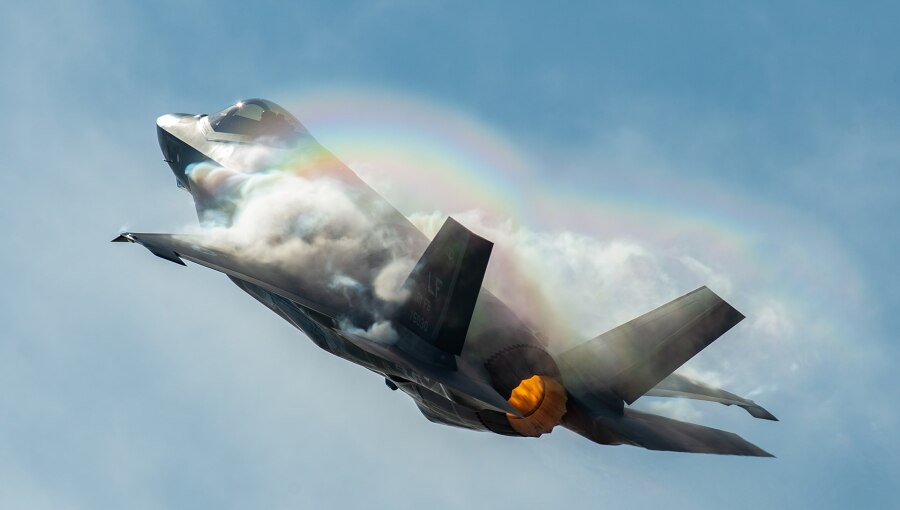
Just days before Iran claimed to have hit one of the US Air Force's most formidable jets - an F-35 stealth fighter - a Chinese social media account published a detailed guide on how such an attack could be carried out.

The video, posted in mid-March by an account called Laohu Talks World – laohu being Chinese for tiger with the first character ‘lao’ (老) also the first character used in the Chinese word for teacher – laoshi (老师), showed how Tehran could use run of the mill Iranian air defence systems to track and target America’s most advanced fighter jet.

The video in question quickly went viral, in the process attracting tens of millions of views. Then just days later, on March 19, Iran said its air defences, long-deemed backward by Western standards given its mix of older Soviet-era and domestically developed systems – had engaged an F-35A during an early morning mission over central Iran. In doing so, Iranian officials claimed to have forced the aircraft to make an emergency landing. The timing of the Iranian success against an F-35 prompted an immediate response from Chinese netizens with some describing it as strikingly prescient.

Since the start of Operation Epic Fury, a growing number of Chinese online accounts with science, technology, engineering, and mathematical backgrounds have been posting wide-ranging military analysis on how Iran can and should counter US air capabilities. These posts, which include in-depth technical explanations and tactical advice, are shared without subscription fees or obvious official support. However, given China’s use of its so-called civilian fishing fleets in the East China Sea to stretch Taiwanese and Japanese defence capabilities over the past five years, that such a form of decentralised knowledge-sharing during wartime should have no official backing is suspect at best.

The F-35 tutorial’s central argument, that forces in Iran could use low-cost systems against a fifth-generation stealth fighter, has at least a degree of technical credibility, however.

The F-35 Lightning II was designed to evade radar using its shape coupled to specialised production materials and hidden weapons bays. But stealth capabilities alone do not make the aircraft invisible, and its limitations are well known and recorded. Electro-optical and infrared sensors, which operate passively, do not trigger radar warning systems, and while the F-35 carries its own infrared sensor capabilities, it may not react fast enough to counter close-range threats. In the days after the March 19 incident it was noted that what happened was likely a passive EO/IR intercept. This in turn suggests the aircraft and pilot likely received no radar warning before the aircraft was damaged.

Analysts have since suggested that using a sudden radar burst against fifth-generation fighters to allow immediate tracking and firing of air defences, particularly once the aircraft has passed overhead, is easier than as it approaches; the long-standing reality being that attacking aircraft from behind is more successful than from any other angle. Whether or not the Chinese PLA Air Force is somehow involved, though, remains questionable. Officially China has kept its distance from the conflict, though reports point to Beijing having at least sold offensive drones and components to Iran in the months before the strikes began.

As such, what makes these civilian tutorials different is their public, unpaid, and supposedly unofficial nature and it remains unclear whether or not Beijing views this grassroots support as a problem, or is in some way behind it.