Sunday, April 05, 2026

Putin’s Destructive ‘Deathonomics’ Doomed to Failure, Lea and Taskin Argue

Paul Goble

Sunday, April 5, 2026


            Staunton, April 2 – The term “deathonomics,” introduced by Vladislav Inozemtsev to describe the way in which Putin has used monetary payments to get Russians to die for him in Ukraine not only is far more pernicious than many assume but is doomed to failure, according to Aaron Lea and Borukh Taskin.

            The two Israeli analysts of Russian background say that Putin’s deathonomics is “rooted in the GULAG and not merely as a metaphor but through an actual economic genealogy. The GULAG was the core of the Stalinist economy, a system in which death was embedded within the production plan as depreciation (kasparovru.com/material.php?id=69CE4433B2723).

“Stalin, at least, feigned the construction of a civilization—canals, factories, mines,” the two analysts argue; but “Putin creates nothing save for the short-term consumption of the payouts issued for death. Operating within the Russian Federation today is the GULAG motto: ‘You die today; I’ll die tomorrow.’"

This represents the quintessence of an ethics of survival at the expense of others—a mindset in which the present feeds upon the future. Varlam Shalamov understood that the Gulag’s primary product was the elimination of the "inner witness"; for a person who survives through complicity or silence loses the capacity to bear witness against the system.”

In Putin’s Russia, they point out, “a family which accepts a death payout has effectively silenced not only its own voice but also the very question of meaning; the "coffin money" has purchased their consent, rendering their conscience an inconvenient burden.” But this transaction does more than that.

“When death becomes a private contractual arrangement between the state and a contractor, the very space of shared existence—what the ancient Greeks termed the polis—is abolished. Deathonomics supplants political will with a market transaction, thereby rendering collective refusal structurally impossible while engaging in an act of demographic cannibalism.”

As economists have shown, Lea and Taskin observe, this process costs “the economy 30 to 40 years of potential labor, tax revenue, and innovation for every person killed—replacing long-term human capital with short-term inflationary demand, and effectively transforming into a financial pyramid scheme where the interest is paid in the lives of those yet unborn.”

But as it does that, it also dooms the Putin system because that system “rests on a temporal arbitrage as the Kremlin pays more for death than a life is worth. Yet this reosurce is finite, the labor market is overheated, and wages on the home front are rising even as the pool of individuals for whom contract payouts exceed lifetime earning potential falls.”

And that means, the analysts say that “Putin has fallen into the trap of escalating subsidies: lower the payouts, and recruitment collapses; raise them, and budgetary ruin accelerates. The true civilizational tragedy lies not in the fact that this pyramid scheme will eventually collapse, however, but in what will be left in its wake.”

Russian society, of course, “will survive deathonomics, but it will continue with a rewritten moral code, one in which the price of a human life having been established, ‘the inner witness,’ the moral compass within [that survivors of the GULAG talked about] has been abolished.”

“Consequently,” Lea and Taskin argue, the era of "Post-Putinism" will not usher in a new, democratic Putin figure; rather, it will entail the absolute dominion of the security services over a population that has unlearned how to be human.” But even that is not the most serious consequence of Putin’s innovation.

Whatever some think, “deathonomics is not the cause of the economic catastrophe” now facing Russia. Rather I is the very embodiment of the maxim, ‘you die today and I’ll die to tomorrow,’ an invoice for centuries of the systemic devaluation of the individual, now being presented for settlement which generations yet unborn will be obligated to pay.”

Choirs seek to protect a musical tradition little changed since Queen Elizabeth I

A campaign is underway to protect England's choral music tradition, which has thrived for nearly 500 years


By DANICA KIRKA 
Associated Press
April 4, 2026, 

LONDON -- On a gray afternoon in the days before Easter, a dozen or so schoolchildren straggled into a side building at Rochester Cathedral and began their transformation.

Off went the jackets and backpacks, on came burgundy cassocks and white surplices. Then they trooped into the cathedral, opened their mouths and sang as one. The youthful gaggle had become a choir, giving voice to a tradition of choral music in the Church of England that has survived largely unchanged for almost 500 years.

“I think for me, it’s one of the sounds of our country,’’ said Adrian Bawtree, the choir’s music director. “All of our cathedrals are beautiful, sacred spaces where you can come and just sit and be and you can be immersed, bathed, nourished, sent out back into the world transformed by an experience in 30 minutes.”

The epitome of that tradition is Choral Evensong, an evening service of hymns, psalms and prayers laid out by Archbishop Thomas Cranmer, the first Protestant archbishop of the Church of England, in 1549. The service is performed by the choir, with the congregation participating simply by listening.

But that tradition is under threat as the demands of modern life, declining church attendance and tight funding make it harder to find and train the next generation of choristers.

Enthusiasts are trying to reverse that, launching a campaign for the government to recognize English choral services as an important part of Britain’s culture under a U.N. program that seeks to protect “intangible cultural heritage,” as well as historic buildings and natural wonders.

The U.K. government is seeking nominations for a nationwide inventory of cultural traditions — from Morris dancing to the craft of building dry stone walls — that should be preserved. Protecting such traditions is crucial to strengthen community identity and bolster the U.K. economy as heritage tourism generates billions of pounds in annual spending, the government says.

While many people have been introduced to English choral services through the angelic voices of the choristers in flowing robes and Elizabethan ruffs who sing at royal weddings and carol services, choirs perform every day in much more humble settings.

And many are struggling, according to the Cathedral Music Trust, which was founded in 1956 to stem the decline of church music after World War II. Last year it gave 500,000 pounds ($661,000) to 28 cathedrals and churches around the country.

It can be a lot. Rochester, for example, spends about 250,000 pounds ($330,000) a year on music, a substantial outlay for a provincial cathedral but less than some.

The trust hopes recognition of the English choral tradition will bring attention and much-needed funding to choirs, which it says are an important training ground for the musicians of tomorrow, both religious and secular.

“Whilst it happens every day, it is actually quite fragile,” trust CEO Jonathan Mayes said. “It takes an awful lot of work and it takes a lot of funding to actually make it happen and that doesn’t come without effort.’’

Preserving Evensong is important historically because the service was instrumental in the development and spread of the modern English language, said Diarmaid MacCulloch, an expert on Christianity and an emeritus professor at the University of Oxford.

The service is based on the Book of Common Prayer, compiled by Cranmer to make English the language of the Church of England after it broke away from the Latin-dominated Catholic Church during the Protestant Reformation.

The idea was to create services everyone could be part of.

“It is very much a drama, and it is a drama which has been performed by the people of England from 1549 through to the present day,” MacCulloch said. “It’s far more a vehicle of public consciousness performance than any play of Shakespeare.’’

And while a growing number of choirs including Rochester now take girls as well as boys, in other respects it hasn't changed much since then.

“The service would be really quite recognizable to Queen Elizabeth I as much as Queen Elizabeth II," MacCulloch said. "And that’s quite remarkable.”

Bawtree, the music director at Rochester Cathedral, is one of those working to preserve the tradition as he oversees the youngest singers, aged 9-13, known as choristers, as well as a youth choir for older children. All are backed by professional adult singers.

Bawtree said he was captured by church music the first time he heard an organ play and a choir sing when he was about 9 years old. Now he wants people to know that services like Evensong make it possible for anyone to turn up and listen to beautiful choral music, regardless of their beliefs.

“When I heard it, it was like big octopus arms came and grabbed me and said, ‘You’ve got to be part of this.’ So I think I am trying to speak to that 9-year-old child and saying actually this is something that could speak to most people, if not everyone.

“And because I had that experience, I would like to share that with future generations and be passionate about that," he said. "We talk in the world of mindfulness and the power of music to transform lives. This is an extraordinary arena where that can happen.”

___

Associated Press religion coverage receives support through the AP’s collaboration with The Conversation US, with funding from Lilly Endowment Inc. The AP is solely responsible for this content.
'Mysterious glowing object' seen streaking through Indonesian skies

It's the remains of a Chinese rocket, according to the country's National Research and Innovation Agency


Residents in Indonesia's Lampung and Banten reported seeing a "mysterious glowing object" on Saturday (April 4) night).
PHOTO: Social media

PUBLISHED ONApril 05, 2026 
BYSean Ler
ASIA ONE

Residents in Indonesia's Lampung and Banten on Saturday (April 4) reported seeing a "mysterious glowing object" streaking across the skies, with some speculating that it may have been a meteor shower.

The video of the object with trailing flames went viral on social media.

Some expressed concern, fearing that the object could be a missile or military projectile due to the accompanying loud, rambling sound.

In a statement published on Sunday, the Indonesian National Police (INP) said the National Research and Innovation Agency (BRIN) has confirmed that it was space debris re-entering the atmosphere and not a natural celestial body or military munitions.

"The bright object witnessed by residents, which appeared to break into several pieces, was the remains of a Chinese CZ-3B rocket," Indonesian news agency Antara quoted BRIN astronomy professor Thomson Djamaluddin as saying.

Professor Thomas said that orbit analysis showed the debris was part of China's Long March 3B (CZ-3B) rocket, moving from the direction of India towards the Indian Ocean.


Explaining the phenomenon, he added: "As the object entered the dense atmosphere, it continued moving while burning and breaking apart."

In its statement, the police also assured the public that such re-entries are monitored, adding that it serves a reminder of the increasing density of space junk in low Earth orbit.

According to the National Aeronautics and Space Administration's (Nasa) Orbital Debris Programme Office, debris left in orbits below 600km normally fall back to Earth within several years, while those at altitudes of 800km may take centuries.

In a set of frequently asked questions, Nasa's programme office said that most of the debris do not survive the severe heat that occurs during re-entry.

"Components which do survive are most likely to fall into the oceans or other bodies of water or onto sparsely populated regions like the Canadian Tundra, the Australian Outback or Siberia.

"During the last 50 years an average of one catalogued piece of debris fell back to Earth each day. No serious injury or significant property damage caused by re-entering debris has been confirmed," it added.

SPACE/COSMOS


From ‘bird leg syndrome’ to solar storms: Roberta Bondar breaks down Artemis II mission

By Prisha Dev 
 Global News
Posted April 4, 2026 


WATCH: Canada’s first female astronaut talks historic Artemis II lunar mission.


As the four Artemis II astronauts prepare for their historic flyby of the moon on Monday, Roberta Bondar, Canada’s first female astronaut, says this mission signals a leap in developments for future space travel.

Speaking with Global News, Bondar said the mission will push humans farther into deep space than they have travelled in decades, exposing the crew to conditions not experienced since the Apollo era.

The mission, known as Artemis II, will send four astronauts around the moon before returning to Earth on April 10, 2026.

The crew, made up of three Americans and one Canadian, will travel a total of more than 400,000 kilometres from Earth — farther than any human has travelled before — and then loop behind the moon and return home.

“People liken this to Apollo 8, but they were much closer,” she said. “This flyby will be about 4,000 miles out (from the moon), so they’ll be exposed to the background radiation of space and subjected to any solar wind or solar storms.”

Bondar said that distance will give the astronauts a rare vantage point, both scientifically and visually.

“They are really out there in deep space, where we haven’t been before,” she said. “They are going to be looking at the dark moon differently and take pictures of the sun in ways we have not been able to see because human beings have not been there.”

The crew has recently passed a new milestone of being closer to the moon than to Earth in their deep space journey.

“The Earth is quite small and the moon is definitely getting bigger,” pilot Victor Glover said from space.

Beyond the visuals, the mission is also a test of how the human body responds to space flight over longer distances.

“They look pretty good actually,” Bondar said of the crew. “They do have these smartwatches on now that will be looking at aspects of their physiology, their sleep cycle and some of the stresses they will face.”

That data will help researchers better understand how to prepare astronauts for future missions deeper into space.

Bondar also pointed to well-documented physical changes astronauts experience in orbit, including what is often referred to as “bird leg syndrome.”

“Your body gets rid of about two litres of blood volume through the kidneys,” she said. “In space, you don’t need as much, whereas on Earth you need about five litres because gravity pulls blood into your legs.”

She said Artemis II is part of a broader effort to refine how humans and technology work together in space.

“They’re trying to look at ways of making these kinds of missions not just smarter, but safer.”

“These early flights are all about trying to understand the technology,” she added. “These are really early days and about learning to make things smarter for the next flight, and the next flight.”

The Artemis II crew is expected to splash down in the Pacific Ocean following its lunar flyby, marking a key milestone in NASA’s plan to return humans to the moon and eventually travel to Mars.

Live updates can be followed on NASA’s official website, including a stream of the Orion’s journey through space.

– With files from The Canadian Press


Artemis astronauts catch first human glimpse of Moon’s 'Grand Canyon'

Crew peers at the massive Orientale basin during historic lunar flyby, seeing regions of the Moon never viewed by human eyes.

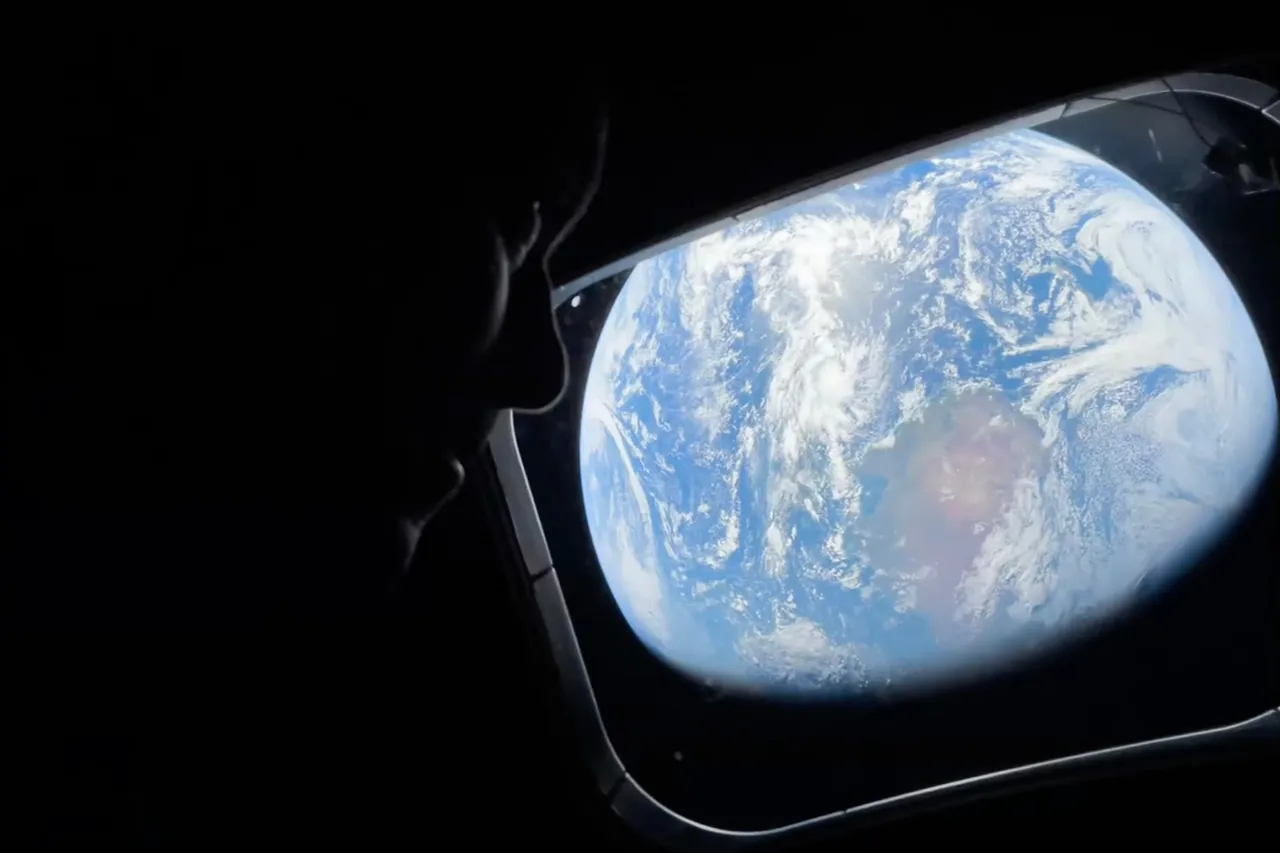
In this photo by NASA on Saturday, April 4, 2026, Commander Reid Wiseman gazes at Earth from Orion spacecraft Integrity during the Artemis II mission. / AP


The Artemis astronauts have taken in sights of the Moon never before seen by human eyes, crew members reported as their spacecraft crossed the two-thirds mark on their journey to a long-anticipated lunar flyby.

As the astronauts went to bed in the early hours of Sunday, closing out the fourth day of their 10-day mission, they were nearly 200,000 miles (321,869 kilometres) from Earth and 82,000 miles from the Moon, according to NASA's online dashboard.

The US space agency published on Sunday an image taken by the Artemis crew, showing a distant Moon with the Orientale basin visible.


"This mission marks the first time the entire basin has been seen with human eyes," NASA said. The massive crater, which resembles a bullseye, had been photographed before by orbiting cameras.

Speaking to Canadian children live from space, astronaut Christina Koch said the crew was most excited to see the basin, sometimes known as the Moon's "Grand Canyon."

"It's very distinctive and no human eyes previously had seen this crater until today, really, when we were privileged enough to see it," Koch said during the question-and-answer session hosted by the Canadian Space Agency.


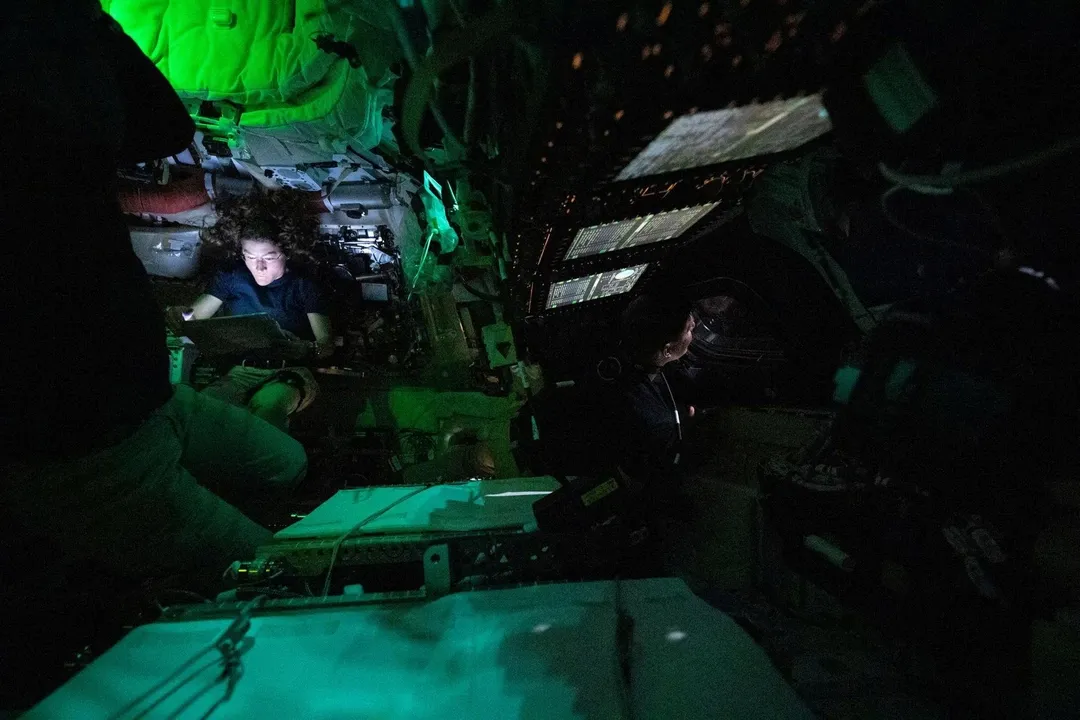
NASA astronaut Christina Koch is illuminated by a screen inside the darkened Orion spacecraft on the third day of the agency's Artemis II mission. /Reuters

The next major milestone is expected overnight Sunday into Monday, at which point the astronauts will enter the "lunar sphere of influence," where the Moon's gravity will have stronger pull on the spacecraft than Earth's.

If all proceeds smoothly, as the Orion spacecraft whips around the Moon the astronauts, Americans Koch, Reid Wiseman and Victor Glover along with Canadian Jeremy Hansen, could set a record by venturing farther from Earth than any human before.

Flyby plans reviewed


NASA said the Artemis crew has completed a manual piloting demonstration and reviewed their lunar flyby plan, including reviewing the surface features they must analyse and photograph during their time circling the Moon.

Earlier, the astronauts kicked off their day with a meal that included scrambled eggs and coffee, NASA said, and had woken up to the tune of Chappell Roan's pop smash "Pink Pony Club."

"Morale is high on board," commander Reid Wiseman told Houston's Mission Control center as the space crew's work day began.


RelatedTRT World - Artemis II crew crosses midpoint to Moon, captures stunning Earth views


The father of two girls was in high spirits in part because he had the chance to speak with his daughters from space.

"We're up here, we're so far away, and for a moment, I was reunited with my little family," he told a live press conference. "It was just the greatest moment of my entire life."


It's a feat Wiseman has dubbed "Herculean" and which humanity has not accomplished in more than half-a-century.

The astronauts have had geology training in order to be able to photograph and describe lunar features, including ancient lava flows and impact craters.

They'll see the Moon from a unique vantage point compared with the Apollo missions of the 1960s and 70s.

Apollo flights flew some 70 miles above the lunar surface, but the Artemis 2 crew will be just over 4,000 miles at their closest approach, which will allow them to see the complete, circular surface of the Moon, including regions near both poles.

Never before seen

The Artemis 2 astronauts have already seen brand-new perspectives.

"Last night, we did have our first view of the moon far side, and it was just absolutely spectacular," Koch, the mission specialist, said during a live interview from space.

John Honeycutt, manager of NASA's Space Launch System programme, shared at a briefing Saturday a new image transmitted by the astronauts.


‘It just makes me feel like a little kid’


"On the far left, you can see features of the Moon that have never been seen by human eyes until yesterday," Honeycutt said, explaining that only robotic imagers had previously "seen" that region.

The Artemis 2 crew has been busy taking photographs including with smartphones, devices NASA recently approved to take aboard spaceflights.

The space agency had previously released images from Orion that included a full portrait of Earth, featuring its deep blue oceans and billowing clouds.

The Artemis 2 mission is part of a longer-term plan to repeatedly return to the Moon, with the goal of establishing a permanent lunar base that will offer a platform for further exploration.

It's a highly anticipated journey that demands exacting precision, but there's still room for the astronauts to live out their childhood dreams of spaceflight.

"It just makes me feel like a little kid," said Hansen recently, describing the joy of floating.


Artemis II astronauts will study the Moon's surface using mainly their eyes


Despite the technological advancements since the Apollo mission, the astronauts aboard the Orion spacecraft will use the most basic instrument to study the surface of the Moon – their eyes. During the lunar flyby, which will last for several hours, the crew will study certain lunar sites and phenomena as part of 10 objectives chosen by NASA.


Issued on: 05/04/2026 - 
By: FRANCE 24

An image of Earth taken by NASA's Artemis II astronaut commander Reid Wiseman inside the Orion capsule on April 3, 2026. © AP

More than 50 years after humans first flew around the Moon, Artemis astronauts will repeat the feat on Monday and use the most basic instrument to study it: their eyes.

Despite the technological advancements since the Apollo missions, NASA still relies on the eyesight of its astronauts to learn more about the Moon.

"The human eye is basically the best camera that could ever or will ever exist," Kelsey Young, the lead scientist for the Artemis 2 mission, told AFP.

"The number of receptors in the human eye far outweighs what a camera is able to do."

Although modern cameras may be superior to human eyesight in some respects, "the human eye is really good at color, and it's really good at context, and it's also really good at photometric observations," Young said.

Humans can understand how lighting changes surface details, like how angled lighting reveals texture but reduces visible color.

In just the blink of an eye, humans can detect a subtle color shift and understand how lighting changes the contours of a landscape like the Moon's surface, details which are scientifically useful but difficult to ascertain from photos or videos.

Artemis 2 astronaut Victor Glover, who pilots the Orion spacecraft, said before liftoff this week that eyes were a "magical instrument."
Field scientists

To ensure they made the most of their proximity to the Moon, the four Artemis 2 crew members underwent more than two years of training.

Young said the goal was to turn the astronauts into "field scientists" via a combination of classroom lessons, geological expeditions to Iceland and Canada, and multiple simulated flybys of the Moon, just like the mission they are on.

The three American astronauts -- commander Reid Wiseman, pilot Glover and mission specialist Christina Koch – along with Canadian astronaut Jeremy Hansen, all had to memorize the Moon's "Big 15," or the 15 features of the Moon that will allow them to orient themselves.

Using an inflatable Moon globe, they practiced seeing how the angle of the sun changed the colors and textures of the lunar surface, honing their observation and note-taking skills for the big moment.

"I can tell you, they are excited and they are ready," Young said with a smile.
'About the size of a basketball'

The Artemis astronauts' mission is to study certain lunar sites and phenomena as part of 10 objectives chosen by NASA and ranked in priority order based on scientific interest.

During the Moon flyby, which will last for several hours, the crew will have to observe the celestial body with their naked eyes, along with cameras they have on board.

Noah Petro, head of NASA's planetary geology lab, told AFP that the Moon will look to the astronauts "about the size of a basketball held at arm's length."

"The question I'm most interested in is, are they going to be able to see color on the lunar surface," Petro said.

"I don't mean rainbow colors, but you know, dark browns or tan colors because that tells us something about the composition, and that tells us something about the history of the Moon."

David Kring of the Lunar and Planetary Institute told AFP he is not expecting any earth-shattering discoveries because of the multiple lunar probes and high-resolution images of the Moon taken since the Apollo missions.

Nevertheless, "having astronauts describing what they're seeing... That is an occurrence that at least two generations of people on Earth have never heard before," he said.

The Artemis 2 flyby will be broadcast live by NASA, save for a period for when the spacecraft is behind the moon.

"Just listening to their practice descriptions in the mission simulations... It brings chills up my arms," Young said.

"I am absolutely confident that these four people are going to deliver some incredible descriptions."

(FRANCE 24 with AFP)


Artemis II astronauts will study the Moon's surface using mainly their eyes


Despite the technological advancements since the Apollo mission, the astronauts aboard the Orion spacecraft will use the most basic instrument to study the surface of the Moon – their eyes. During the lunar flyby, which will last for several hours, the crew will study certain lunar sites and phenomena as part of 10 objectives chosen by NASA.


Issued on: 05/04/2026 - 
By: FRANCE 24

An image of Earth taken by NASA's Artemis II astronaut commander Reid Wiseman inside the Orion capsule on April 3, 2026. © AP

More than 50 years after humans first flew around the Moon, Artemis astronauts will repeat the feat on Monday and use the most basic instrument to study it: their eyes.

Despite the technological advancements since the Apollo missions, NASA still relies on the eyesight of its astronauts to learn more about the Moon.

"The human eye is basically the best camera that could ever or will ever exist," Kelsey Young, the lead scientist for the Artemis 2 mission, told AFP.

"The number of receptors in the human eye far outweighs what a camera is able to do."

Although modern cameras may be superior to human eyesight in some respects, "the human eye is really good at color, and it's really good at context, and it's also really good at photometric observations," Young said.

Humans can understand how lighting changes surface details, like how angled lighting reveals texture but reduces visible color.

In just the blink of an eye, humans can detect a subtle color shift and understand how lighting changes the contours of a landscape like the Moon's surface, details which are scientifically useful but difficult to ascertain from photos or videos.

Artemis 2 astronaut Victor Glover, who pilots the Orion spacecraft, said before liftoff this week that eyes were a "magical instrument."
Field scientists

To ensure they made the most of their proximity to the Moon, the four Artemis 2 crew members underwent more than two years of training.

Young said the goal was to turn the astronauts into "field scientists" via a combination of classroom lessons, geological expeditions to Iceland and Canada, and multiple simulated flybys of the Moon, just like the mission they are on.

The three American astronauts -- commander Reid Wiseman, pilot Glover and mission specialist Christina Koch – along with Canadian astronaut Jeremy Hansen, all had to memorize the Moon's "Big 15," or the 15 features of the Moon that will allow them to orient themselves.

Using an inflatable Moon globe, they practiced seeing how the angle of the sun changed the colors and textures of the lunar surface, honing their observation and note-taking skills for the big moment.

"I can tell you, they are excited and they are ready," Young said with a smile.
'About the size of a basketball'

The Artemis astronauts' mission is to study certain lunar sites and phenomena as part of 10 objectives chosen by NASA and ranked in priority order based on scientific interest.

During the Moon flyby, which will last for several hours, the crew will have to observe the celestial body with their naked eyes, along with cameras they have on board.

Noah Petro, head of NASA's planetary geology lab, told AFP that the Moon will look to the astronauts "about the size of a basketball held at arm's length."

"The question I'm most interested in is, are they going to be able to see color on the lunar surface," Petro said.

"I don't mean rainbow colors, but you know, dark browns or tan colors because that tells us something about the composition, and that tells us something about the history of the Moon."

David Kring of the Lunar and Planetary Institute told AFP he is not expecting any earth-shattering discoveries because of the multiple lunar probes and high-resolution images of the Moon taken since the Apollo missions.

Nevertheless, "having astronauts describing what they're seeing... That is an occurrence that at least two generations of people on Earth have never heard before," he said.

The Artemis 2 flyby will be broadcast live by NASA, save for a period for when the spacecraft is behind the moon.

"Just listening to their practice descriptions in the mission simulations... It brings chills up my arms," Young said.

"I am absolutely confident that these four people are going to deliver some incredible descriptions."

(FRANCE 24 with AFP)

The significance of the space mission that's making history

April 4, 2026
NPR
Heard on All Things Considered

By Rob Schmitz
Linah Mohammad
Tinbete Ermyas


Former NASA chief of staff Bale Dalton talks about the work that went into the Artemis mission plan and what to watch for on the journey.


ROB SCHMITZ, HOST:

The Artemis II's Orion capsule is on its way to the moon. Its crew will travel more than 250,000 miles from Earth, the farthest humans have ever traveled into space. To talk more about this historic mission and what it means, we've called Bale Dalton. He's the former NASA chief of staff and has worked on the Artemis program. Welcome, Mr. Dalton.


BALE DALTON: Hi, Rob. Thanks so much for having me.


SCHMITZ: So this week, we witnessed NASA send a crew to the moon for the first time in more than 50 years. What was going through your mind during the liftoff?


DALTON: Well, it's obviously a incredible joy as a central Floridian to have so many people - hundreds of thousands of people - visit Central Florida for this incredible launch. You know, what's going through my mind at any time is, you know, my friends - Reid, Victor, Christina and Jeremy - are, you know, taking this mission and inspiring us all in our return to deep space and around the moon after 54 years. So both a mixture of inspiration and awe that I always have watching what NASA does and, you know, some anticipation for what my friends, this crew, are going to experience on behalf of all humanity.


SCHMITZ: And let's get into that. I mean, this was a viral moment. It was livestreamed on NASA's website. And as of now, the video of launch has more than 18 million views on YouTube. Can you talk a little bit about how NASA's strategy of communicating this launch to the public has gone?


DALTON: Absolutely. I mean, well, for me, it was an incredible honor to help lead NASA, you know, helping direct the efforts of tens of thousands of engineers, scientists, researchers and, of course, astronauts throughout 14 different facilities across our nation, you know, showing the world every day what Americans can accomplish when we work together. And, you know, NASA has some real value here in showing the world what is possible when that happens.


SCHMITZ: So one big change since the end of the Apollo program is the development of successful private space exploration companies like SpaceX or Blue Origin. How has this competition that they pose changed how NASA goes about its goals?


DALTON: Well, I think the future of space exploration and, of course, the future of NASA is these public-private partnerships and fostering this not only interest in going to space and doing the hard things and exploring, but also realizing how much it can foster our industry here. So not just, you know, inspiration of folks, but also how our industry and Americans are making things. I mean, the Moon To Mars program supports alone almost 100,000 jobs, which I think...


SCHMITZ: Wow.


DALTON: ...Is incredible and certainly meaningful for us here in central Florida.


SCHMITZ: So, you know, looking beyond Artemis II, if all goes as planned, NASA plans to put people on the moon as soon as 2028 as part of the Artemis IV mission. Now, NASA administrator Jared Isaacman has plans for a moon base as well, something I've read that you also support. Now, it's worth pointing out here that China aims to put people on the moon by 2030 and also has plans for a lunar base. How important is it that the US builds a base on the moon before China does that?


DALTON: Well, I think this - you know, Moon To Mars and the Artemis campaign is, you know, an extension of what our future plans in space are going to be. And, you know, we're going back to the moon this time, first of all, to a different part of the moon - the South Pole, where we think, you know, water ice is. And we're going there to learn how to live, work, and cultivate resources like that water ice to help inform how we might do future human exploration through space. And I think the competition here is paramount. You know, we here in America have the competitive edge in our aerospace, which is, you know, visible in our space exploration. And, you know, in a time of limited resources and limited space, we need to make sure that responsible actors are the ones that are doing this exploration.


SCHMITZ: So let's go back to Artemis II. If all goes to plan, the crew should circle the moon on Monday. It's expected that they will lose communications with Earth for about 30 minutes or so. So what do you think mission control will be like during that time?


DALTON: Well, I think many folks might find themselves jealous of the Artemis crew getting, you know, between 30 and 60 minutes of solace and silence and able to just be with their thoughts as they see parts of the moon that have never been seen with human eyes before. But there in mission control, and certainly in my own mind, it will be a time of tense anticipation, of waiting to hear from them again on the other side. And - but it just goes to show the amount of effort and the amount of anticipation that's gone into this crew doing things that have never been done before - I mean, as you already said, traveling away from Earth on a total of 685,000-mile journey, being the furthest into space as any humans have ever been before.


SCHMITZ: As the former chief of staff for NASA, what are you going to be watching for as the mission continues?


DALTON: Well, there's a number of different milestones that this crew will be checking out, and a lot of those are in the weeds. As an engineer myself, I'm very interested in seeing come back and the testing of the equipment and the types of things that need to be done for our future missions to actually land on the surface of the moon. But I'm most anticipating seeing that crew and the Orion capsule named Integrity come down safely under the parachutes and the astronauts being retrieved by some of my former colleagues in the Navy flying helicopters and manning the ships that will retrieve the crew. So I'm looking forward to them safely back on earth.


SCHMITZ: That's Bale Dalton. He's the former chief of staff for NASA. Thank you.


DALTON: Thanks so much, Rob. I appreciate it.


(SOUNDBITE OF MUSIC)


Copyright © 2026 NPR. All rights reserved. Visit our website terms of use and permissions pages at www.npr.org for further information.

Accuracy and availability of NPR transcripts may vary. Transcript text may be revised to correct errors or match updates to audio. Audio on npr.org may be edited after its original broadcast or publication. The authoritative record of NPR’s programming is the audio record.


‘Ancient Immigrant’ Star Puzzles, Delights Astronomers


An image of our Milky Way galaxy with the position of the Ancient Immigrant star (SDSS J0715-7334) marked with a star symbol. The solid red line shows the path the Ancient Immigrant has taken through our galaxy; the dashed blue line shows the path expected for a star born in the Large Magellanic Cloud. 
CREDIT Image Credit: Vedant Chandra and the SDSS collaboration Background ESA/Gaia image, A. Moitinho, A. F. Silva, M. Barros, C. Barata, University of Lisbon; H. Savietto, Fork Research, under a Creative Commons license CC BY‐SA 3.0 IGO.

By 

A class of undergraduate students at University of Chicago has used data from the Sloan Digital Sky Survey (SDSS) to discover one of the oldest stars in the universe, a star that formed in a companion galaxy and migrated to the Milky Way.

The ten students found the star as part of their “Field Course in Astrophysics” course at the University of Chicago, led by Professor Alex Ji, the deputy Project Scientist for SDSS-V, and graduate teaching assistants Hillary Andales and Pierre Thibodeaux.

SDSS, an international collaboration of over 75 scientific institutions across the globe, has been operating for 25 years with a commitment to make data from its survey publicly available and broadly usable to all.  In its latest phase, it uses robots to rapidly acquire spectra of millions of objects across the sky with the aim of improving our understanding of how stars, black holes and galaxies grow and evolve over cosmic time.

In Professor Ji’s class, SDSS is embedded into the curriculum.  The students spent the first several weeks looking through data from the newest phase of the SDSS, searching for interesting stars. After examining several thousand, they made a list of 77 to further observe on a field trip to Las Campanas Observatory.

They then spent their Spring Break at Carnegie Science’s Las Campanas Observatory in Chile, using the Magellan Inamori Kyocera Echelle (MIKE) instrument on the Magellan telescopes. The night of March 21st, 2025 was their first night on the telescope. The second star they observed, named SDSSJ0715-7334, turned out to be the one that justified the trip.

“We found it the first night, and it completely changed our plans for the course,” Ji said.

The plan was to observe each star for 10 minutes, but the second night the students observed it for three hours. “I was looking at that camera the whole night to make sure it was working,” said Natalie Orrantia, one of the students who made the discovery.

The star turned out to be the most pristine ever found, composed almost completely of hydrogen and helium. This composition suggests it is one of the oldest stars ever seen. Analysis of its orbit shows it formed in the Large Magellanic Cloud and migrated into the Milky Way billions of years ago. These two facts led Alex Ji, the students’ Professor at University of Chicago, to call the star an “ancient immigrant.”

“This ancient immigrant gives us an unprecedented look at conditions in the early universe,” said Ji. “Big data projects like SDSS make it possible for students to get directly involved in these important discoveries.”

Astronomers refer to any elements heavier than hydrogen and helium as “metals,” and the amount of those elements present in a star is known as its “metallicity.” With only 0.005 percent of the metals found in our Sun, SDSSJ0715-7334 has the lowest metallicity of any star yet observed in the Universe – more than twice as metal-poor as the previous record holder.

“We analyzed the star for a large swath of elements, and the abundances are quite low for all of them,” said Ha Do, another of the students who discovered the star.

What does it mean for a star to have low metallicity? Because elements heavier than hydrogen and helium can only be produced in supernova explosions, stars with few of these elements must have formed from gas before most of the supernovae in the Universe ever occurred. In other words, the star must be ancient, from the first few generations of stars that ever formed.

The team also used data from the European Space Agency’s Gaia mission to find the distance to the star and its motion through our galaxy. By tracing its motion back through the billions of years the star has existed, the team identified the birthplace of the star: in the Milky Way’s largest companion galaxy, the Large Magellanic Cloud.

The Ancient Immigrant contained further surprises for the students who discovered it. Ji divided the class into groups, each focusing on a different type of analysis of the star. Orrantia and Do led the team that studied the carbon content of the star, which turned out to be so low that it was undetectable.

“The star has so little carbon that it suggests an early sprinkling of cosmic dust is responsible for making it,” said Ji. “This formation pathway has only been seen once before.”

Contributing to such a discovery so early in their careers has helped Orrantia and Do decide to continue to pursue graduate careers in astronomy.

“To be able to actually contribute to something like this, it’s very exciting,” Do said.

“These students have discovered more than just the most pristine star.” said Juna Kollmeier, the Director of SDSS-V.   “They have discovered their inalienable right to physics.  Surveys like SDSS and Gaia make that possible for students of all ages everywhere on Earth and this example shows that there is still plenty of room for discovery.”

US seeks $152M to reopen Alcatraz as high-security prison: Report


April 5, 2026 
MIDDLE EAST MEMO


An aerial view of Alcatraz Island and the City view in San Francisco, California, United States on April 4, 2026 as U.S President Trump seeks $152 million to rebuild and reopen Alcatraz Island as a secure prison. [Tayfun CoÅŸkun – Anadolu Agency]

The White House requested $152 million for a project to reopen the infamous Alcatraz prison in San Francisco Bay, California, as an operational prison, as part of a proposed budget for the 2027 fiscal year, according to Fox News on Saturday, Anadolu reports.

US President Donald Trump proposed $152 million to begin the project, part of a $1.7-billion prison system funding increase to improve pay and address staffing shortages.

The budget request includes funding to rebuild Alcatraz into a modern high-security prison, covering initial costs.

Alcatraz, closed in the 1960s due to high costs, later became a tourist site but may be rebuilt as a modern high-security prison.

Initial funding is proposed, though California politicians are skeptical over costs and feasibility.

Former House Speaker Nancy Pelosi called the plan “absurd,” saying rebuilding Alcatraz would waste taxpayer money and insult the public’s intelligence.

The site currently generates about $60 million in revenue as a tourist attraction, according to the National Park Service.

The request will need to be approved by the US Congress.
Israeli occupiers torch Palestinian property in West Bank villages

Witnesses say occupiers opened fire, set poultry farms ablaze in southern Nablus attack

Awad Rjoob |05.04.2026 -  TRT/AA


RAMALLAH, Palestine/ISTANBUL

Israeli occupiers attacked the Palestinian towns of Qusra and Jalud in southern Nablus on Saturday in the occupied West Bank, opening fire and setting property ablaze, according to Palestinian media and witnesses.

The official Palestinian news agency Wafa said occupiers attacked Qusra, triggering confrontations with residents.

The agency said the attackers attempted to storm homes in the western part of the town before Israeli forces entered. No injuries were immediately reported.

Palestine Voice Radio later published images showing fires burning in facilities in Qusra.

The broadcaster also reported a simultaneous attack by Israeli occupiers on the outskirts of Jalud in southeastern Nablus.

Witnesses told Anadolu that occupiers opened fire during the attacks and torched poultry farms between Qusra and Jalud.

Israel has intensified operations in the West Bank, including East Jerusalem, since launching a military campaign in the Gaza Strip on Oct. 8, 2023. Palestinians view the escalation, including killings, arrests, displacement and settlement expansion, as a step toward the formal annexation of the territory.

In a landmark opinion in July 2024, the International Court of Justice declared Israel’s occupation of Palestinian territory illegal and called for the evacuation of all settlements in the West Bank and East Jerusalem.

*Writing by Tarek Chouiref
Over 1,400 killed in Lebanon since beginning of Israeli attacks on March 2

Health Ministry says latest 24-hour toll includes 54 dead, 156 wounded

Mohammad Sio |05.04.2026
TRT/AA


ISTANBUL

More than 1,400 people have been killed in Lebanon since Israeli attacks began on March 2, the country’s Health Ministry said Saturday, as the conflict continues to take a heavy toll on civilians.

In a statement, the ministry said the death toll has reached 1,422, with 4,294 others wounded over the same period.

It added that 54 people were killed and 156 injured in the past 24 hours alone.

Israel has carried out airstrikes and a ground offensive in southern Lebanon since a cross-border attack by the Lebanese group Hezbollah on March 2, despite a ceasefire that took effect in November 2024.

Hezbollah has fired barrages of rockets into Israel since early March, saying the attacks are in response to continued Israeli strikes on Lebanon, as well as the killing of Iran’s then-Supreme Leader Ayatollah Ali Khamenei in a joint US-Israeli airstrike on Feb. 28.
Israeli occupation murders over 72,292 Palestinians since beginning of genocide on Gaza


QNA/Gaza
GULF NEWS
Published on April 05, 2026 

The Israeli occupation forces (IOF) murdered at least 72,292 Palestinian civilians and injured at least 172,073 others since the beginning of the genocide that the Israeli occupation has been committing against the Gaza Strip in October 2023.

The PalestiniaMinistry of Health in the Gaza Strip said in a statement on Sunday that hospitals across the Gaza Strip received four martyrs - four of whom have been pulled out from under the rubble, in addition to five injured persons.

The statement indicated that many of the victims remain under the rubble and scattered on the streets, as ambulance and civil defense crews are still unable to reach them.

Since the "ceasefire" agreement went into effect in October 2025, the IOF murdered at least 716 Palestinians, and injured at least 1,968 others, while 759 bodies were pulled out from under the rubble.


Report: 2.47 million Palestinian children face growing risks amid Israeli aggression

2.47 million Palestinian children face growing risks amid Israeli aggression

Occupied Jerusalem, April 5 (SANA) Around 2.47 million Palestinian children are living in the West Bank and Gaza Strip, accounting for 43 percent of the population and facing risks under Israeli occupation, according to the Palestinian Central Bureau of Statistics.

The figures, released in a report marking Palestinian Children’s Day and cited by the Palestinian news agency WAFA, highlight the scale of challenges facing children amid continued Israeli aggression and humanitarian strain. The report said 1.38 million children live in the West Bank and 1.09 million in Gaza.

By the end of 2025, at least 72,289 Palestinians had been killed in Gaza, including 21,283 children, representing about 30 percent of the total, according to the data.

The impact has extended beyond military operations, with 157 children reported to have died from hunger and 25 from extreme cold in displacement camps.

Around 44,486 children have been injured, accounting for roughly 26 percent of total injuries.

More than 10,500 children are reported to be suffering from severe, long-term injuries, while around 4,000 remain at risk due to limited access to healthcare.

According to United Nations data, more than 3,700 children have been hospitalized due to malnutrition. About 64 percent of children face food shortages, while over 60 percent of those aged six to 23 months suffer from acute nutritional deprivation.

Human rights groups have reported a rise in violations against Palestinian children, particularly in the West Bank.

More than 1,655 children have been detained by Israeli forces since the war on Gaza began, including around 600 in 2025 alone, according to prisoner advocacy groups.

Reports indicate that children in detention face harsh conditions and limited access to basic rights.

The conflict has also had a significant psychological impact, with more than 1.1 million children experiencing trauma.

An estimated 58,000 children in Gaza have lost one or both parents, adding to social and economic pressures.

The report highlights the long-term risks facing Palestinian children, including limited access to healthcare, education and basic services.

N.J/A.B