Wednesday, April 08, 2026

PANNIER: Uzbekistan’s air pollution officials search for lasting solutions
PANNIER: Uzbekistan’s air pollution officials search for lasting solutions
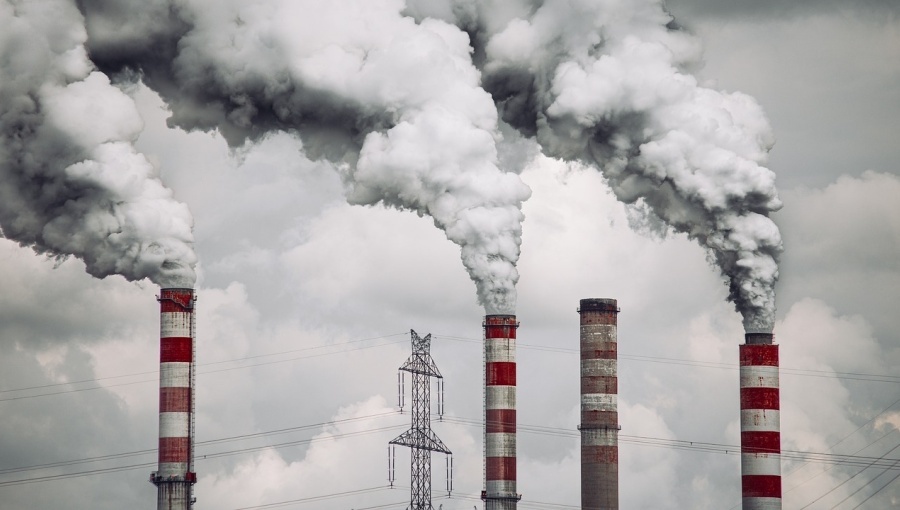
Most of eastern Central Asia suffers horrendous difficulties with air pollution. / Janusz Walczak via PixabayFacebook
By Bruce Pannier April 7, 2026

Uzbekistan’s air pollution problem has noticeably worsened over the last several years, but at the end of March authorities strengthened efforts to combat the dilemma.

The government introduced a series of measures aimed at lowering the choking pollution and effects caused by increasingly frequent dust storms.

Previous steps have not been sufficiently effective, but the government has unveiled a five-year plan specifically to deal with air quality issues.

Toxic to breathe

It is not only Uzbekistan but most of the eastern part of Central Asia, where most of the region’s population lives, that suffers heightened levels of air pollution.

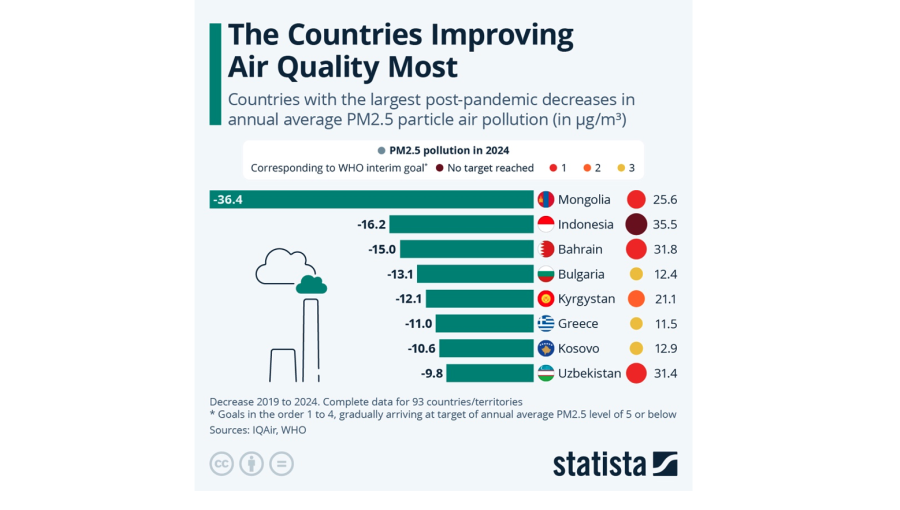
Decades of using coal as a primary source of generating electricity and heating homes has contributed to the pollution problems now being seen.

More recently, winds blowing over the desiccated Aral Sea bed in western Central Asia have brought ever greater amounts of dust eastward, darkening the skies as far away as Tajikistan in the region’s southeastern corner.

On January 3, 2024, the website IQAir, which monitors air quality globally, rated the air quality in the Uzbek capital Tashkent as “very unhealthy,” and second only to New Delhi in terms of pollutants.

On February 21-22, 2024, IQAir ranked Tashkent as having the worst air quality in the world. Also on February 22, Kazakhstan’s capital Astana and Kyrgyzstan’s capital Bishkek ranked 9th and 19th, respectively.
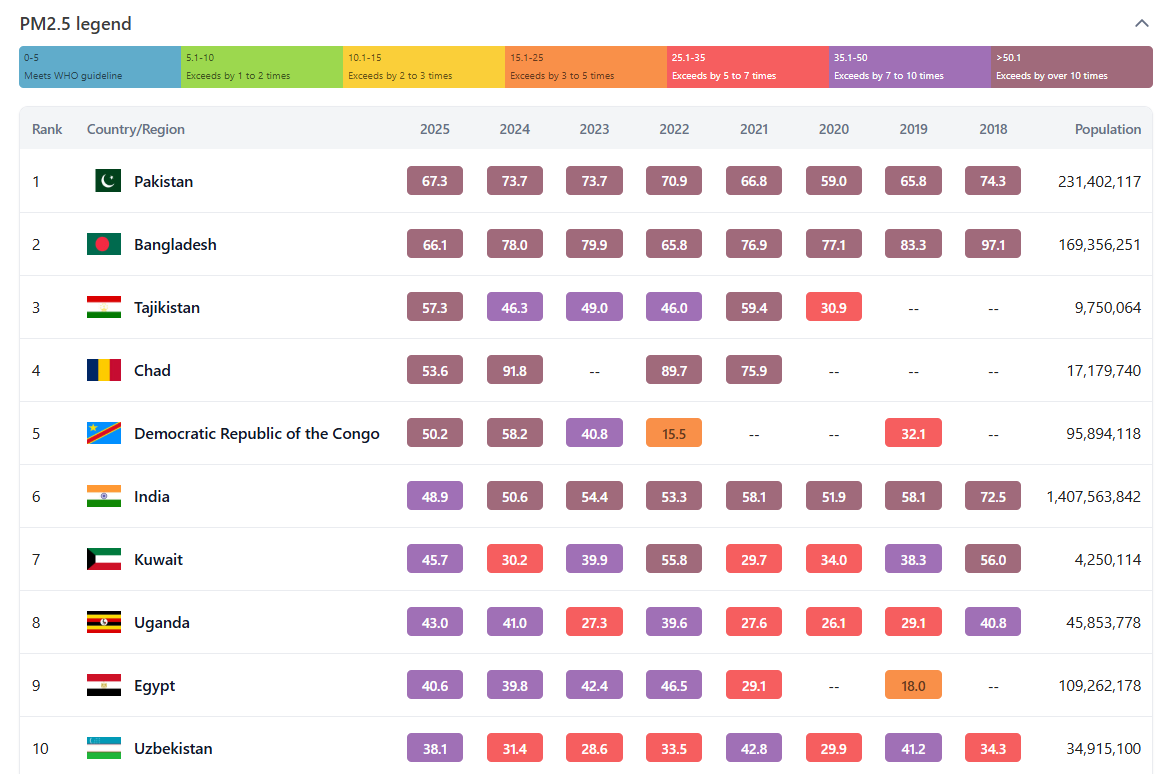


World's most polluted countries & regions
(Ranking based on annual average PM2.5 concentrations (μg/m³). PM2.5 refers to fine particulate matter air pollution that is 2.5 micrometres or less in diameter, in other words, small enough to enter deep into the lungs and bloodstream).

Graphic credit: IQAir.

Tashkent does not even have the worst air pollution in Uzbekistan. Yearly averages show Uzbekistan’s eastern city of Ferghana, home to one of the country’s oil refineries, has the worst air quality problem.

Then there are the dust storms. Not long ago, dust storms were rare in Central Asia, but in recent years they have become common events.

In 2025, Tajikistan was hit by 63 dust storms, up from 35 in 2024.

A huge dust storm blew into Tashkent on May 17, 2025, cutting visibility on main streets to a few hundred metres.

Dust blown from the dried-out Aral Sea area often carries alkaline soil left as the water evaporated from the seabed. This alkaline soil causes respiratory ailments in people and destroys crops.

Time to get serious

In January 2024, as air pollution was growing worse, activists staged a flashmob under the hashtag #TozaHavoKerak (clean air needed), calling on authorities to find a lasting solution to the problem.

Protests of any kind are extremely rare in Uzbekistan, so the event itself was an indication of public desperation at the air quality situation.

After the horrible air pollution in the first two months of 2024, Uzbek authorities started to broadcast warnings to alert the public about rising levels or air pollution or to when dust storms were coming. It didn’t ease the problem. It only reminded the population that it was hazardous to breathe.
On February 21, 2024, Uzbek President Shavkat Mirziyoyev signed an order for a “Day without Automobiles” in Tashkent. One day per month, people in the Uzbek capital were to leave their vehicles at home and use public transportation to get to work.

State employees were told to set a “personal example” by taking public transportation to and from work.

It was billed as part of the “Uzbekistan-2030” strategy, but it never caught on and air pollution in Tashkent and other parts of Uzbekistan continued to plague residents.

So, two weeks ago, Mirziyoyev signed a decree on “Measures to Implement the National Project ‘Clean Air’ Aimed at Improving Air Quality.”

The project establishes targets for cleaning up the air, such as a 10.5 % reduction in the release of toxic substances and reducing the number of days when pollution hits dangerous levels.

The strategy is being rolled out gradually, starting in Uzbekistan’s section of the Fergana Valley, where the highest concentration of people lives, and then moving west, and finishing in Karakalpakstan and Khorezm in December this year.

The strategy also specifies that starting in May, the 10th and 25th of every month will be the “Day without Automobiles,” though the decree also mentions a “Week with Automobiles.” This time, “civil servants are strictly prohibited from using official vehicles.”

New bicycle lanes will appear across Tashkent and starting from August 1, people can trade in their older vehicles and receive financial credit on the purchase of new cars.

Tashkent will introduce a system that alerts residents via SMS, the media, and using digital platforms to an expected drastic worsening of air quality. And naturally, fines for violating air protection rules are substantially increased and fines for repeat offenders will be fined more than doubled.

Companies that fail to report full and accurate data on emissions also face stiff fines.

On April 1, the Green Nation programme was launched. The goal is to increase Uzbekistan’s “green coverage” area from the current 14.2% to 30% by 2030.

There are also plans to  plant “green belts” in 33 districts to mitigate the effects of dust storms.

The same day the programme was unveiled, work started on planting “green walls” in the Surhandarya and Syrdarya provinces to screen out dust.

The race Is on

Uzbekistan has been working on developing the country’s renewable energy output, particularly solar and wind.

Of some 86.7-billion-kilowatt hours (kWh) of domestically produced electricity in 2025, some 16.8 billion kWh came from renewable energy sources, a 29% increase from 2024. Uzbekistan’s Energy Ministry noted that the boost in renewable energy use prevented some 4.7 tonnes of pollutants from being released into the air.

But Uzbekistan is aiming at a rapidly moving target. A big push in industrialisation combined with a population that since 2015 has been increasing at an average of 700,000 people annually creates an expanding demand for energy.

Uzbekistan was once a natural gas exporter, but for the last four years the country has been boosting gas imports, mainly from Russia and delivered via a pipeline that not long ago carried Uzbek gas to Russia.

It seems that every autumn, officials say the country can meet its energy needs through winter, but shortly after the New Year reports appear about sales of coal and wood soaring.

The new “clean air” programme Mirziyoyev signed runs from 2026 to 2030. Previous attempts at combatting air pollution did not include a long-term strategy, so this latest attempt is, if nothing else, more structured and enduring with specific goals.

The question now is whether these new regulations and targets, coupled with developing renewable energy sources can meet the demands of a growing number of factories and plants and an increasing population and still alleviate a pollution problem that has accumulated over the course of decades.


New research reveals that cutting emissions is not the only way to save lives from air pollution


Stockholm Environment Institute


  • 52% of the global decrease in air pollution mortality rates was driven by reductions in vulnerability, such as improved access to quality healthcare and poverty reduction, rather than just cleaner air (between 1990 and 2019)  


  • Without these unintended “shields”, 1.7 million more people would have died globally from air pollution in 2019 

A major new global modelling study led by researchers at Stockholm Environment Institute (SEI) at the University of York challenges the international focus on air pollution. Published in The Lancet Planetary Health, the study finds that reducing population vulnerability is as important as cutting emissions for saving lives. 

The research reveals that while reducing exposure to pollutants is critical, measures such as universal access to quality healthcare and poverty reduction played a crucial, and often overlooked, role in saving lives over the last 30 years. 

A population’s risk of harm from air pollution is shaped by a complex set of socioeconomic and health factors, including pre-existing medical conditions, smoking and the quality and accessibility of medical care. In some regions where air quality has not improved, air pollution mortality rates have still dropped exclusively because of reductions in these vulnerability factors. 

“While cleaning our air remains a critical goal, our findings demonstrate that reducing emissions is only part of the solution,” said Chris Malley, lead author of the study from SEI at the University of York. “To improve public health, we must also focus on the factors that make people susceptible to harm. Integrating healthcare improvements and poverty reduction into air quality strategies is an essential tool for protecting the world's most vulnerable populations from the deadly effects of air pollution.” 

Key findings: 

  • Between 1990 and 2019, global air pollution mortality rates decreased by 45%. Approximately 52% of the decrease in global air pollution mortality rates was due to reductions in vulnerability, rather than just lower pollution levels. 

  • Without the global actions that reduced people's vulnerability to air pollution, an estimated 1.7 million more people would have died from air pollution-related causes in 2019 alone. 

  • Global poverty plummeted from 45% in 1990 to 21% in 2019, acting as a massive, unintended shield against the health burdens of smog. 

  • Public health efforts such as reducing obesity, cutting smoking rates, and treating hypertension are rarely included in air pollution strategies, despite their significant impact on reducing mortality. 

The study also highlights the benefits of combining reductions in air pollution exposure with efforts to strengthen resilience. Both Europe and North America saw similar declines in air pollution exposure between 1990 and 2019. However, reductions in air pollution-related mortality were almost twice as large in Europe, reflecting greater progress in reducing vulnerability through health and social improvements. 

The study concludes that air quality strategies must evolve to include interventions that reduce non-air-pollution health determinants to complement traditional exposure reduction efforts. 

Notes to editors  

About the study  

“Estimating the vulnerability contribution to 1990–2019 changes in the health burden of ambient air pollution: a global modelling study” was published in The Lancet Planetary Health. It can be read here

About Stockholm Environment Institute (SEI)  

Stockholm Environment Institute is an international non-profit research institute that tackles climate, environment and sustainable development challenges. We empower partners to meet these challenges through cutting-edge research, knowledge, tools and capacity building. Through SEI’s HQ and seven centres around the world, we engage with policy, practice and development action for a sustainable, prosperous future for all. 

About the University of York  

A member of the prestigious Russell Group, the University of York is a dynamic, research-intensive university committed to institutional excellence and social purpose. 

Media contact 

Toto Reissland Lichman, Engagement and Research Communications Manager, Stockholm Environment Institute York, toto.reissland@sei.org, +44 (0)7976 098139 


From decades-long studies of humble grasses, new clues to climate resistance


Nearly 40 years of data on Midwestern prairies reveal that coping with weather extremes isn’t just a numbers game


Michigan State University

Kellogg Biological Station Long Term Ecological Research Site, Michigan State University 

image: 

Kellogg Biological Station Long Term Ecological Research Site, Michigan State University

view more 

Credit: Kellogg Biological Station Long Term Ecological Research Site, Michigan State University


In parts of the Midwest and Great Plains, feathery yellow goldenrod and stands of big bluestem sway alongside Indiangrass and other prairie plants, stretching up to eight feet tall.

Now, in the search for ways to help ecosystems withstand the weather extremes made worse by climate change, it seems that humble grassland plants like these may have some of the answers.

new analysis of nearly 40 years of data from three tracts of North American grassland confirms what researchers have long said: that biodiversity can be a natural defense against climate threats.

But the study also reveals that coping with climate extremes isn’t just a numbers game where the more species an ecosystem has, the better. Multiple dimensions of biodiversity can help nature survive — and thrive — in harsh conditions, the researchers report.

The findings were published April 7 in the journal Ecology Letters.

When it comes to coping with climate threats and other disturbances, the general rule of thumb has been that having more species helps. But most past studies have been limited to a single location or isolated weather events, said Ashley Darst, a doctoral candidate at Michigan State University who co-led the work.

To address this gap, the 15-person research team analyzed nearly four decades of data collected between 1980 and 2022 at three natural grasslands in Minnesota, Michigan and Kansas, including one of the largest remaining tracts of unplowed tallgrass prairie in North America.

The sites were part of the U.S. Long-Term Ecological Research Network, established in the 1980s by the National Science Foundation to better understand long-term changes to ecosystems.

For years, a generation of researchers have taken careful stock of the plants that grow here, tracking changes in what species are present, their relative abundance, how much plant material they produce. They have also recorded changes in temperature and rainfall over time.

Across the three sites, the researchers identified a total of 28 dry or rainy spells that met the criteria for once-a-decade weather events — conditions so extreme that you might expect to happen only once every 10 years.

In 1988, for example, nearly half of the country was gripped by the worst drought since the Dust Bowl. Rainfall that spring and summer in the central U.S. was the lowest it had been in nearly a century. River levels were at record lows. Yields of corn, soybeans, wheat and other grain crops dropped by 25% to 50% or more. 2012 was another year of deadly heat and scorching drought for the Corn Belt. Crops withered and dried up. Cattle went hungry or were sold off.

At the other extreme, 2019 was marked by drenching rains and record-breaking snowfall that made it the wettest year ever recorded for the Midwest. Farms were inundated, delaying planting season and making it difficult to harvest crops.

Sifting through the data, the researchers found that overall, plots with greater biodiversity were indeed more resistant to extreme climatic events. But the key dimensions of biodiversity that helped them cope in wet years weren’t the same as those for dry years.

“It’s context-dependent,” said study co-lead Joshua Ajowele, a doctoral candidate in biology at the University of North Carolina Greensboro.

In extreme dry years, species-rich plots tended to fare better — as measured by how much plant material they produced — than those with fewer species.

The results also showed that plots whose species abundances were more evenly distributed were more likely to bounce back afterwards.

But in wet years it wasn’t the number of species that mattered, or their relative abundance. Rather, certain species were more important to the health of the ecosystem than others. Plots with high relative abundance of the dominant species were more stable in the face of record rain and flooding.

The link between climate threats and biodiversity goes both ways, the researchers said. Ecosystems weakened by a loss of biodiversity are less resistant to extreme weather. In turn, extreme weather can make it harder for species to hold on, further reducing biodiversity and resistance to future events.

“So you kind of get this weird feedback effect,” said Darst, who is a member of MSU’s Department of Integrative Biology and the Ecology, Evolution, and Behavior Program. “As we get more and more extreme events, we might be eroding the protection against them.”

Extreme weather isn’t the only threat in the era of global change, Ajowele said. Other factors like nutrient pollution from agricultural runoff and nitrogen-laden smog can reduce biodiversity too.

“These factors in combination would have a more detrimental effect,” Ajowele said.

As major droughts and floods occur more often, then, the researchers hope that by understanding how prairie plants cope, they can uncover important lessons for the extremes that lie ahead for other ecosystems too.

“You have to look at more than just species richness,” Darst said.

“Other components of these communities could be important in shaping how they respond to extreme weather,” Ajowele added.

Other study co-authors include researchers from Arizona State University, Colorado State University, Dartmouth College, Denison University, Kansas State University, the University of Massachusetts, and the University of Minnesota.

This research was made possible by funding from the U.S. National Science Foundation (DEB-1234162, DEB-1831944, DEB-1440484, DEB-2025849, DEB-1832042, DEB-2224712, DEB-0823341, DEB-0218210, IOS-9632851, and DEB-9011662).

CITATION: "Multiple community properties drive ecosystem resistance and resilience to extreme climate events across mesic grasslands," Joshua A. Ajowele, Ashley L. Darst, Nameer R. Baker, Rachael R. Brenneman, Caitlin Broderick, Seraina L. Cappelli, Maowei Liang, Mary Linabury, Matthew A. Nieland, Maya Parker-Smith, Smriti Pehim Limbu, Rosalie S. Terry, Moriah L. Young, Max Zaret, Marissa Zaricor. Ecology Letters, April 7, 2026. DOI: 10.1111/ele.70380


It's kept under wraps: breathlessness reduces sexual satisfaction


Flinders University
Professor David Currow 

image: 

Professor David Currow, Strategic Professor at the Flinders Ageing Alliance, Flinders University. 

view more 

Credit: Flinders University


Chronic breathlessness affects every part of a person’s life – including their sex life, with people experiencing  breathlessness saying they have greatly reduced satisfaction with their overall sexual life.

Flinders University researchers have found from a national survey that the often-underplayed condition of chronic breathlessness can not only affect people’s physical condition but also limit their enjoyment of such intimacies as sex.

Lead author, Professor David Currow, Strategic Professor at the Flinders Ageing Alliance, says up to one in 100 Australians is housebound or struggles with tasks such as dressing or undressing because of chronic breathlessness.

This chronic symptom is experienced by 4% - 10% of the general population in high-income countries, with higher rates in low-resource countries and 25% of the middle-aged population, and rising proportions in older populations, yet its significance is not widely discussed.

“This is a significant problem because chronic breathlessness is largely invisible, even to close family members,” says Professor Currow.

“People give up doing many everyday things to avoid breathlessness and their worlds shrink.”

The researchers, including international experts in Sweden and the US, and the University of Technology Sydney in Australia, evaluated associations between breathlessness and individuals’ perceived satisfaction with sexual lives and explored mediating factors in this relationship.

A cross-sectional, online, population-based survey of more than 10,000 Australian adults, of which 52% were women (average age 45), had 42% report they were very dissatisfied with their overall sexual life. Nine percent of all people reported that breathlessness had impacted their overall sexual life.

People with chronic breathlessness were one and one-half times more likely to report that they were not satisfied with their sexual lives – having controlled for age, sex and body mass index.

“Increasing breathlessness severity is associated with the likelihood of a person’s overall sexual life being impacted negatively,” says Professor Currow. “The high prevalence rates of dissatisfaction with overall sexual life and perceived impacts for people with chronic breathlessness align with high rates of sexual dissatisfaction and impacts on sexual health reported by people with chronic obstructive pulmonary disease (COPD), asthma and poorer physical fitness.”

Early identification of sexual health concerns and associated psychological distress can guide timely interventions, including counselling, pulmonary rehabilitation and practical strategies for intimacy.

“The interplay between a person’s perceived satisfaction with their sexual life and a range of social and health factors is complicated,” explains Professor Currow.

“A wide variety of factors may underpin satisfaction with a person’s sexual life – such as hormonal, physical, physiological and psycho-social influences – any of which may be compromised in people with chronic breathlessness.”

The study also indicates an indirect relationship between breathlessness and perceptions related to overall sexual life potentially mediated by emotional functioning, something not found for physical nor social functioning.

The research – ‘Associations between breathlessness and individuals’ satisfaction with sexual life: a nationally representative internet survey’, by Max Olsson, Jacob Sandberg, Slavica Kochovska, Sungwon Chang, Diana Ferreira, Steven Pantilat, Magnus Ekström and David Currow – has been published in BMJ Open Respiratory Research. DOI: 10.1136/bmjresp-2025-003907.


Counting the silence: How years of data crunching led to female artists making up majority of Brit Award nominees


Linda Coogan Byrne on gender-based exclusion in the UK and Irish music industries


Frontiers

Linda Coogan Byrne 

image: 

Linda Coogan Byrne

view more 

Credit: Maria Del Carmen.


by Linda Coogan Byrne

Radio in the background of a room can feel almost invisible. It hums in kitchens, cars, and shops. Radio sits somewhere between news and everyday life. In Ireland and the United Kingdom, it still reaches close to nine in ten adults every week. During the first Covid lockdown, listening numbers rose even further. We know that in moments of uncertainty, people turn to familiar voices.

But familiarity is not neutral. It is, and always has been, curated.

Official Irish Singles Chart data revealed a vast gap. An entire stretch from 2010 to 2020 showed that these charts had never placed a solo Irish woman at number one. At a time when women across the country were putting out records, touring abroad, and building their audiences, this was wild to me.

Upon introspection, that absence was not random. It reflected what was happening on national radio playlists.

My curiosity was no longer a thing I could abate. In 2020, during lockdown, I began analyzing broadcast airplay data across Ireland and the UK. I launched Why Not Her?, an independent audit examining gender representation across radio and festival programming. The question was simple: who is actually being played during peak listening hours, when audiences and advertising revenues are at their highest, and why?

Skipping female artists

The first findings were shocking to me but validating to women in music. Across mainstream Irish radio, domestic female artists accounted for just 7.7%of airplay. On some stations, Irish women did not appear in heavy rotation for extended periods, sometimes for five years at a time. Heavy rotation refers to the highest tier of a station’s playlist where tracks are scheduled multiple times a day. It’s a programming decision that plays a significant role in shaping which artists receive widespread exposure and ultimately commercial traction.

Heavy rotation is not simply a marker of popularity. It is a commercial mechanism. These are the songs repeated when audiences are largest and cultural familiarity is built. They shape public recognition and influence which artists are perceived as successful.

The broader ecosystem of the music industry follows a predictable pattern. Airplay drives streaming. Streaming influences charts. Charts shape festival booking, label investment, export funding, and media coverage. Exposure compounds. So does exclusion. The decade-long chart drought for Irish women was not a mystery. It was the outcome of this system.

When I presented this data to the Broadcasting Authority of Ireland, I was told meaningful change would take at least five years. I was warned that shifting playlists too quickly might upset male presenters who ‘had mouths to feed’. A senior programmer suggested that women and artists of color could be introduced gradually during overnight slots, when fewer people were listening. Inclusion, apparently, was safest in the dark.

This is how gatekeeping typically operates in cultural industries: rarely through explicit bans, but often through habit, risk aversion, and assumptions about audience preference. Yet audience preference is shaped by repetition. If women are not played, they do not become familiar. If they are not familiar, they are considered commercially risky. The cycle reinforces itself.

Data interrupts that cycle. Why Not Her? was built on spreadsheets and publicly available industry data using Radiomonitor, a system that tracks the worldwide airplay of songs and is relied upon by record labels and broadcasters. I did not invent new metrics. I simply counted what was already happening and published the results.

The data did not stay quiet. The reports prompted national and international media coverage, parliamentary discussion, and internal industry reviews. We expanded the analysis to the UK, where the response was notably different. Monitoring and accountability entered the conversation, and unlike in Ireland, accountability came to the forefront. When we published the UK data, they reacted, improved, and did better. This is what happens when bias is put to question and those in power answer with the will to do better. It is that simple. Not rocket science. 

By 2024, women had overtaken men – for the first time since our analysis began – in our UK Top 100 radio airplay chart report. This shift was not symbolic. It was reflected in the 2026 Brit Award nominations, 70% of which went to women artists. There is that ecosystem in full correlated proof. A year earlier, several female artists were cited in UK industry reports to significantly have contributed to reaching a historic £1.57 billion in revenue.

Making equality matter

The lesson is clear. Change does not occur because attitudes soften. It occurs when disparities are measured, published, and repeated back to institutions until they either act or defend the imbalance.

The implications extend beyond radio. Streaming platforms are often described as neutral systems where music succeeds based on listener choice. In reality, however, recommendation algorithms learn from historical listening patterns. When past exposure disproportionately favors male artists, those patterns are reproduced through automated recommendation systems. Without deliberate intervention, inequality becomes embedded in code.

Data alone does not resolve inequality. What it does is remove plausible deniability.

So what happens next?

Behind every percentage point in these datasets is an artist trying to build a career. Behind every absence is a voice that could have shaped cultural memory but was never given the same exposure.

If cultural institutions are serious about equality, representation must be treated as a measurable performance indicator. Broadcasters and festivals should publish annual gender data on programming, bookings, and leadership. Public funding should be linked to demonstrable progress. And the decision-making structures that shape playlists and line-ups must become more representative themselves.

Radio still matters because it shapes familiarity. Familiarity shapes careers. And careers shape cultural history.

Why Not Her? began as a question. After six years of evidence, it has become a diagnosis. Once silence is quantified, it stops appearing accidental. It becomes a choice. The question for the music industry is no longer whether the imbalance exists. It is what it chooses to do next.


GMO pictures may reinforce existing views, deepening the divide


A new paper in JCOM shows that images of GMOs tend to reinforce pre-existing attitudes, amplifying polarization rather than changing minds


Sissa Medialab

Coactive image 

image: 

An example of "coactive" image used in the experiements

view more 

Credit: Bailey et al, JCOM, 2026


Images have long played a powerful role in shaping public perceptions of genetically modified organisms (GMOs), often reinforcing emotional reactions more than scientific understanding. A new experimental study published in the Journal of Science Communication (JCOM) explores how different types of images can influence people’s attitudes toward GMOs — and suggests that pictures may reinforce existing views, further polarizing them.

Powerful tools

Images are powerful tools, especially when it comes to food: they can push consumers toward one choice and steer them away from another. 
Already at the beginning of this millennium, the “war” against GMOs relied heavily on images to convey negative messages — and scientifically misleading information, if not outright falsehoods — about foods produced using this technology. You may be familiar with the term “frankenfood”, popularised in a number of communication campaigns that paired images of food with those of the famous “creature” invented by Mary Shelley. Greenpeace’s campaigns are among the most famous examples, but they are far from unique: many other actors have used — and continue to use — this type of communication strategy.

Rachel Bailey is a researcher at the School of Communication at Florida State University who studies how images in the media can automatically influence people’s choices and opinions, drawing on approaches from evolutionary psychology. “I study how the media can naturally encourage people to do different sorts of things in automatic ways based on our own biological imperatives. And images tend to be quite helpful in that,” Bailey explains. 

Bailey and colleagues (Jay Hmielowski, Myiah Hutchens, Pooja Ichplani, Jessica Sparks and Sun Young Park) have just published an experimental study in JCOM investigating how images may influence public attitudes toward GMOs. 

Through the platform YouGov, the team recruited nearly a thousand participants, forming a sample representative of the U.S. population. Participants in the experiment read a short neutral description of GMOs accompanied by one of three possible conditions: no image, an image of an apple, or an image of an apple being injected with a substance using a syringe — intended to evoke the idea of “unnaturalness”.

Before the experiment, participants were classified according to their initial attitude toward GMOs (positive, negative, or uncertain). After viewing the text and images, they were asked to answer a series of questions measuring their attitudes toward GMOs, their willingness to try them, and the positive and negative components of their evaluation — from which the researchers calculated their level of “ambivalence” toward GMOs.

Deepening the divide
Contrary to what one might expect, in Bailey’s experiment the “positive” image — the apple alone — had a small effect on avoidance intentions among those who already supported GMOs.

The stimuli defined by the researchers as coactive (the apple with the hypodermic syringe, combining both a positive element — the apple — and a negative one — the syringe suggesting artificiality) produced an interesting result: “Compared to the no-image condition, the coactive image made people who were already supportive toward GMOs even less negative,” Bailey explains.

What emerges is a kind of opinion-extremizing effect: the images tended to reinforce attitudes that were already present. “The positive cue can make positive people more positive, but in exploratory analyses, the coactive cue did make the skeptics and the uncertain folks even less positive  towards GMOs,” Bailey comments.

Bailey’s study confirms that images can have important effects on people’s opinions — particularly when food is involved — but in ways that are not always easy to predict, highlighting the importance of careful research. “I think images are still one of the best ways that we can change people’s opinions or at least lead them to be more open to a change of opinion in a persuasive context,” she says. “In this case, people have very strong attitudes. Those who had really strong attitudes towards GMOs were pretty stuck in those ideas. And that makes sense. So just an image, one cue over a very short period of time, didn’t change much for them.”