Wednesday, April 08, 2026

Putin Seen Making Ever More Mistakes, Sending Approval Rating Down – Analysis


April 8, 2026
By Paul Goble

Russian anger over President Vladimir Putin’s moves against the internet is growing and spreading even to groups long thought to be his most loyal supporters (The Moscow Times; Kavkaz Realii; Vazhnye Istorii, April 3; see EDM, April 6). Russian commentators are pointing to other mistakes the Kremlin leader has been making, and polls show that his approval rating is falling to the lowest level since before he launched the full-scale invasion of Ukraine (The Moscow Times; Agentstvo; Radio Svoboda, April 3). He now faces a buildup of negativity that one Russian sociologist calls “a perfect storm” (Echo, April 5).

There are even signs—and this is surely more important in the Russian system—that opposition to Putin’s policies is spreading within Russian elites, increasing the likelihood that they will coalesce into groups that will seek and perhaps even succeed in blocking Kremlin policies that they do not approve of (Agentstvo, April 4).

None of this, to be sure, means Putin is about to be overthrown—all of it could lead him, as it has in the past when he felt at all cornered, to take even more repressive and aggressive steps. This combination of factors, however, does suggest that he will no longer be able to act as if opposition is irrelevant and will likely have to devote more time to rebuilding his authority among elites and in the population than he has in recent times.

Putin’s moves against the internet are increasingly unpopular because they have affected the lives of so many Russians, including members of the elite in government, the military, and business, who have grown accustomed to using various internet channels (see EDM, April 2;Agentstvo, April 4).

Recent polls show that support for and trust in the Kremlin leader have fallen to seven-year lows. The decline reflects anger over his internet policies, a flood of bad news at home and abroad in recent months, and signs that Putin does not intend to change course. This marks a shift from the past, when he often backed away from the more extreme aspects of his policies or sought to isolate unpopular ones by restricting their impact, as was the case with his war against Ukraine, where, instead of general mobilization, he relied on huge bonuses to encourage enlistment (see EDM, September 11, 23, October 9, 21,November 5, 2025, February 12, March 2).


That policy, however, is also failing. In 2022, only 15 percent of Russians had a close relative in the war. Now more than twice that share do (Echo, April 5). Russian analysts argue that popular anger over Putin’s moves against the internet is compounded by other concerns, including the lack of progress in Ukraine toward either victory or peace, failures in Venezuela and Iran, and deteriorating economic and social conditions at home (The Moscow Times, April 3).

Putin has responded to protests about the internet in two ways—repression and silence. He has ordered widespread arrests and detentions of those who have taken to the streets to protest his actions. He has not spoken out about the internet restrictions or any of these other problems in recent times, reducing his public appearances in the last quarter by a significant amount compared to a year ago (see EDM, April 6). The Kremlin leader may assume that repression is enough, but his failure to address various issues may result in an even larger problem, analysts say, as it contributes to the sense that he is out of touch (The Moscow Times, April 3).

The Kremlin leader may not care very much about popular opposition to his internet policies. He still has reliable security forces to control the situation, and his popularity ratings are above 60 percent in polls released by his regime (Echo, April 5). Putin certainly has reason to worry about the appearance of opposition to his internet policies among members of his elite, especially technocratic groups that favor development over tighter control. Ever more members of these groups have been speaking out, contributing to the sense, not only among other elite groups but also in the Russian population, that splits are developing in the Kremlin. This perception encourages others to resist, in the hope of tipping the political balance away from Putin and toward those who share their views (Echo, April 5). [1]

The question now is how far this process, involving the alienation of the Russian population and of Russian elites beyond the super-loyalist siloviki segment, will go. Russian commentator Sergey Shelin suggests that Putin has been committing more mistakes and angering more ordinary people and members of the elites than at any time since he began his expanded war against Ukraine. While the situation has not yet reached a critical level and, as a result, Putin may be able to ride out this storm, it will come with increased difficulty, especially if he does not return to the tactics he used in earlier crises his regime has faced (The Moscow Times, April 3).

In six earlier crises since Putin became president, Shelin says, the Kremlin leader not only took public positions to seize the propagandistic high ground but also modified his policies. This signaled that he was paying attention to the population and would avoid angering it more than he felt necessary. Now Putin is doing neither, however, appearing in public far less frequently and showing no signs of being willing to modify his original decisions. This increasingly sclerotic approach has come to a head over the last three months, as the Kremlin has suffered a series of policy defeats abroad amid a rising tide of problems at home. Dictators fail when the number of problems grows too large for them to handle. Such rulers, however, risk serious problems if they do not show themselves responding to crises and act as if they are not required to (The Moscow Times, April 3).


That is where the Putin dictatorship now stands. The number of problems is growing, although likely not yet to the point where they alone will be enough to bring the Kremlin leader down, Shelin suggests. Putin’s failure to react now is undermining his rule, perhaps not enough to lead to his ouster in the immediate future but likely reducing the number of additional crises that could prove sufficient to produce that outcome.

[1] For a detailed, heavily footnoted survey of who among the Russian elites has spoken out on Putin’s moves against the internet, see, in particular, the compilation at Agentstvo, April 4.


This article was published at The Jamestown Foundation

Paul Goble

Paul Goble is a longtime specialist on ethnic and religious questions in Eurasia. Most recently, he was director of research and publications at the Azerbaijan Diplomatic Academy. Earlier, he served as vice dean for the social sciences and humanities at Audentes University in Tallinn and a senior research associate at the EuroCollege of the University of Tartu in Estonia. He has served in various capacities in the U.S. State Department, the Central Intelligence Agency and the International Broadcasting Bureau as well as at the Voice of America and Radio Free Europe/Radio Liberty and at the Carnegie Endowment for International Peace. Mr. Goble maintains the Window on Eurasia blog and can be contacted directly at paul.goble@gmail.com .
U.S. Army’s Dark Eagle: 
America’s Long-Range Hypersonic Weapon (LRHW) – Analysis


Artist notional rendering of the Long Range Hypersonic Weapon, Dark Eagle. 
Photo credit: Lockheed Martin.


April 8, 2026 
The Congressional Research Service (CRS
By Andrew Feickert and Ebrima M’Bai

What Is the Army’s Long-Range Hypersonic Weapon?

The Army’s Long-Range Hypersonic Weapon (LRHW)—also known as Dark Eagle —with a reported range of 1,725 miles, consists of a ground-launched missile equipped with a hypersonic glide body and associated transport, support, and fire control equipment. The LRHW is intended to provide the Army with a long-range, conventional precision strike capability against time sensitive and heavily defended targets, particularly in contested environments.

The Director of Operational Test and Evaluation (DOT&E) notes that, “Army commanders will use the LRHW (Dark Eagle) to engage adversary high-payoff and time-sensitive targets. U.S. Strategic Command (USSTRATCOM), with direction from the National Command Authority, will serve as the employment authority for LRHW missions.”

On April 24, 2025, the Army formally designated the LRHW as the Dark Eagle.


LRHW Components

Missile


The missile component of the LRHW is being developed by Lockheed Martin and Northrop Grumman. When the hypersonic glide body is attached, it is referred to as the Navy-Army All Up Round plus Canister (AUR+C). The missile component serves as the common two-stage booster for the Army’s LRHW and the Navy’s Conventional Prompt Strike (CPS) system, which can be fired from both surface vessels and submarines.
Common Hypersonic Glide Body

The Common Hypersonic Glide Body (C-HGB) is based on the Alternate Re-Entry System developed by the Army and Sandia National Laboratories. Dynetics, a subsidiary of Leidos, currently is under contract to produce C-HGB prototypes for the Army and Navy. The C-HGB uses a booster rocket motor to accelerate to well above hypersonic speeds and then jettisons the expended rocket booster. The C-HGB, which can travel at Mach 5 or higher on its own, is planned to be maneuverable, potentially making it more difficult to detect and intercept.

LRHW Organization and Units


The LRHW battalion is organized into batteries. According to the Army, the “LRHW system [battery] consists of Army ground support equipment—one battery operations center (BOC), four transporter erector launchers, a BOC support vehicle and up to eight All-Up Rounds plus Canister.”

The 5th Battalion, 3rd Field Artillery Regiment, at Joint Base Lewis-McChord (JBLM), WA, was designated to operate the first battery of eight LRHW missiles. The battalion, also referred to as the Long-Range Fires Battalion, is part of the Army’s 1st Multi-Domain Task Force (MDTF), a unit in the Indo-Pacific-oriented I Corps stationed at JBLM. Other LRHW batteries are planned for Long-Range Fires Battalions in the remaining MDTFs scheduled for activation.

LRHW Testing and Program Activities

According to the January 2023 Congressional Budget Office (CBO) study U.S. Hypersonic Weapons and Alternatives, extensive flight testing is necessary to shield “hypersonic missiles’ sensitive electronics” to understand “how various materials perform,” and predict “aerodynamics at sustained temperatures as high as 3,000° Fahrenheit.” The Army originally planned for three flight tests of the LRHW before the first battery fielding in FY2023. On October 21, 2021, the booster rocket carrying the C-HGB vehicle reportedly failed a test flight, resulting in what defense officials characterized as a “no test,” as the C-HGB had no chance to deploy. Reportedly, a June 2022 test of the entire LRHW missile also resulted in failure.

Flight Test Delays


In October 2022, the Department of Defense (DOD), which is “using a secondary Department of War designation” under Executive Order 14347 dated September 5, 2025, “delayed a scheduled LRHW test to assess the root cause of the June 2022 no-test.”
March 2023 LRHW Test Scrubbed

On March 10, 2023, it was reported that. “On March 5, [DOD] was preparing to execute Joint Flight Campaign-2 featuring the Army version of the prototype weapon launched at Cape Canaveral Space Force Station, FL, when the countdown was halted…. “As a result of pre-flight checks during that event, the test did not occur.”

Cancelled September 2023 LRHW Test and Program Delay

On September 6, 2023, it was reported that, “[DOD] “planned to conduct a flight test at the Cape Canaveral Space Force Station, Florida, to inform hypersonic technology development. As a result of pre-flight checks, the test did not occur.”

On September 14, 2023, in an Army statement to Bloomberg News, the Army reportedly acknowledged it would not be able to meet its goal of deploying the LRHW by the end of FY2023.

Successful LRHW Flight Test

On June 28, 2024, DOD announced that, “The U.S. Navy and U.S. Army recently completed an end-to-end flight test of a hypersonic missile from the Pacific Missile Range Facility, Kauai, HI.”

Reportedly, the two-stage missile was launched from a ground stand in Hawaii across the Pacific Ocean more than 2,000 miles to a test range in the Marshall Islands, with the missile flying its intended course and releasing the C-HGB, which flew to the target.

December 2024 LRHW Flight Test

On December 12, 2024, DOD announced that, “The U.S. Army’s Rapid Capabilities and Critical Technologies Office, in collaboration with the U.S. Navy Strategic Systems Programs, recently completed a successful end-to-end flight test of a conventional hypersonic missile from Cape Canaveral Space Force Station, Florida.”

This is the second successful end-to-end flight test of the All Up Round (AUR) this year and was the first live-fire event for the Long-Range Hypersonic Weapon system using a Battery Operations Center and a Transporter Erector Launcher.

March 2026 LRHW Flight Test

On April 2, 2026, DOD announced that, “The U.S. Army’s Portfolio Acquisition Executive Fires, in partnership with the U.S. Navy’s Portfolio Acquisition Executive Strategic Systems Programs, conducted a successful launch of a common hypersonic missile from Cape Canaveral Space Force Station, Florida, on March 26, 2026.”
First Operational LRWH Fielding Expected

Reportedly, on March 20, 2026, an Army official stated that “the Dark Eagle battery based at Joint Base Lewis-McChord [JBLM] in the Pacific Northwest will receive its first operational [LRHW] missiles soon” and that “Bravo Battery, 1st Battalion, 17th Field Artillery Regiment, 3rd Multi-Domain Task Force, based at JBLM, has been designated to operate” the LRHW.

LRHW Procurement and Estimated Missile Cost

According to the January 2023 CBO study, purchasing 300 Intermediate-Range Hypersonic Boost-Glide Missiles (similar to the LRHW) was estimated to cost $41 million per missile (in 2023 dollars)
.

 In CRS discussions with Army program officials, the Army stated that the “fly away cost” for the eight missiles requested in the Army’s FY2025 budget request would exceed CBO’s 2023 per missile cost estimate, but future missile costs could likely decrease as order quantities increased.

During June 4 and 5, 2025, Army Posture testimony to the House and Senate Armed Services Committees, then Chief of Staff of the Army General Randy George stated the following regarding the LRHW:

We are getting ready to do some tests this summer, with long-range missiles that are a tenth of the price. And when you start talking about “magazine depth” … we can invest in things that are much more cost-effective.

Oversight Consideration for Congress


Congress could consider additional oversight of the LRHW program.

LRHW Missile Costs, Operational Testing, and Stockpile

Congress has expressed its concern regarding the cost of LRHW missiles as well as further operational testing and missile stockpile requirements. As the Army begins procurement of its first eight missiles, continues fielding LRHW batteries, conducts additional operational tests, and builds missile stockpiles, Congress might decide to require more frequent updates from Army program officials. Enhanced oversight of the LRHW program as it attempts to achieve full operational capability could better inform future congressional budgetary decisions and the program’s overall direction.


About the authors:
Andrew Feickert, Specialist in Military Ground Forces
Ebrima M’Bai, U.S. Army Fellow

Source: This article was published by the Congressional Research Service (CRS).

The Congressional Research Service (CRS) works exclusively for the United States Congress, providing policy and legal analysis to committees and Members of both the House and Senate, regardless of party affiliation. As a legislative branch agency within the Library of Congress, CRS has been a valued and respected resource on Capitol Hill for nearly a century.


The world could run out of chocolate by 2050

The world could run out of chocolate by 2050
Is the world going to run out of chocolate by 2050? The accelerating climate crisis is making it more difficult to grow cacoa plants. / bne IntelliNews

By bne IntelliNews April 7, 2026

The world could face a severe shortage of chocolate by 2050 as climate change disrupts cocoa production in key growing regions, according to scientific estimates and industry data.

Rising temperatures and declining rainfall in West Africa — particularly in Ghana and Côte d’Ivoire, which together account for up to 70% of global cocoa output — are placing increasing strain on crop yields. Researchers warn that as much as half of the land currently suitable for cocoa cultivation could become unusable within the next 25 years. But over the past two years, cocoa production has plummeted by as much as 40% due to changes in the weather.

The last three years have been the hottest in recorded history and even hotter years are ahead as the Climate Crisis accelerates faster than scientists predicted. For every 1℃ increase in air temperature, the atmosphere is able to hold around seven per cent more moisture, which can cause more intense and heavy rainfall. Cocoa plants love humidity, but they drown if there is too much rain.

That is already dramatically changing rainfall patterns that threaten to turn formerly fertile regions into barren wastelands and make parts of the planet uninhabitable for human life and unproductive for agriculture.

The projected decline reflects cocoa’s sensitivity to climatic conditions. The crop requires a narrow range of temperature, humidity and rainfall, leaving it vulnerable to even modest environmental shifts. Prolonged dry seasons and higher average temperatures have already begun to reduce productivity in some areas.

Ghana raised the price it pays cocoa farmers by more than 60% for the 2025/26 season to pressure top producer Ivory Coast and boost production. Ghana's cocoa industry was on the brink of crisis in 2024 as local Licensed Buying Companies (LBCs) face potential collapse, threatening the livelihoods of smallholder farmers and destabilising the country's cocoa supply chain

The tightening supply outlook has been reflected in global markets. Cocoa prices have surged by more than 400% in recent years, driven by poor harvests and mounting concerns over long-term availability. The sharp increase has added pressure on manufacturers, many of whom have responded by reducing the size of chocolate products while maintaining prices.

Industry participants are also exploring adaptation strategies, including the development of more resilient cocoa varieties and shifting cultivation to higher altitudes. However, such measures face logistical and economic constraints, particularly for smallholder farmers who dominate production in West Africa.

The cocoa belt sits in the band 20 degrees north and south of the equator, where there are the best conditions to grow the cocoa trees, everywhere from Mexico to Fiji. The steady moisture a cocoa tree needs to thrive is being replaced with consistent rainfall along with a climb in temperature as weather patterns move due to global warming.

In 2024 Côte d'Ivoire saw 40% more rain than expected, submerging plantations and damaging crops. By December, the rains had vanished, leaving cocoa trees to wither in scorching heat. In Peru, wildfires destroyed vast areas of farmland, in Mexico, cocoa farming is on the decline as extreme heat and erratic rainfall push young farmers to abandon the industry altogether. And in Brazil, Ecuador, and Indonesia, rising temperatures and unpredictable weather patterns are putting cocoa production at risk.

In addition to climate change, a fungus has plagued cocoa plants in South America for decades. However, scientists from the University of California, UC Berkley, are using CRISPR gene-editing to tweak the DNA of cocoa to make it more disease-resistant, according to reports.

Researchers are already looking for alternatives to keep the billion-dollar chocolate industry going and focused on carob, a climate-resilient plant grown in the Mediterranean that thrives in hot, arid climates with very low water requirements. After roasting, it releases a "unique aroma” that resembles cocoa – but doesn’t quite taste the same. But through the use of enzymes to increase bitterness and enhance sweetness, researchers are hoping to create a viable alternative.


Can pipelines make a comeback?

Can pipelines make a comeback?
/ bne IntelliNewsFacebook
By Newsbase April 7, 2026

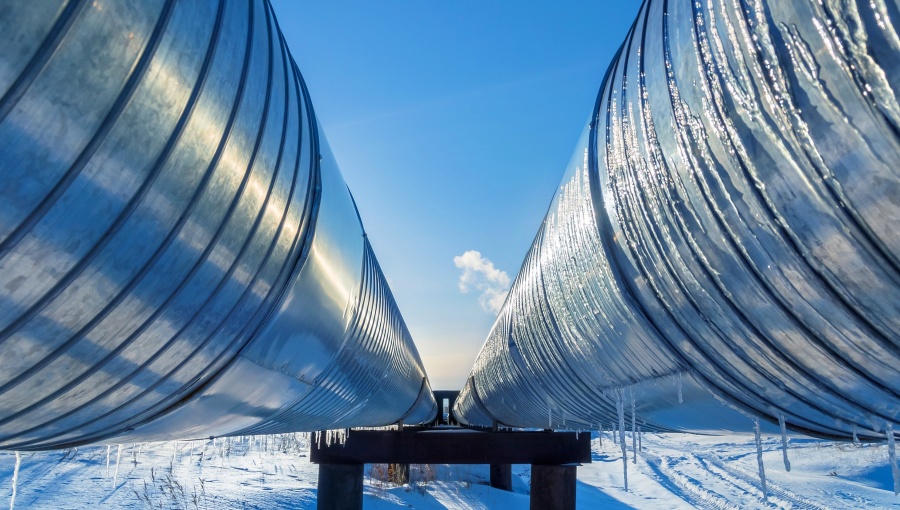
The shock to LNG supply is forcing buyers to confront both physical disruption and rising dependence on the US, which could revive interest in long-stalled pipeline projects.

WHAT: A fifth of global LNG supply has been knocked offline, exposing the market’s reliance on a handful of producers and leaving the US accounting for roughly a third of remaining flows.

WHY: The crisis highlights twin vulnerabilities—geographic concentration of supply and growing dependence on US LNG—prompting concerns over both physical disruptions and potential geopolitical leverage.

WHAT NEXT: Attention will turn to whether projects such as Power of Siberia 2 and expansions of the Southern Gas Corridor can gain momentum, although political, commercial and security constraints mean only a limited number are likely to advance.


The ever-escalating US-Iran war has exposed how vulnerable the global LNG market is to supply shocks, given that production of the fuel is heavily concentrated in only a handful of countries.

Iran’s blockade of the Strait of Hormuz and subsequent strikes against Qatar’s Ras Laffan liquefaction hub has caused global LNG production to drop by a fifth. Of remaining global flow, about a third comes from the US, whose increasingly erratic foreign policy calls into question the reliability of this supply. Some US allies in Europe have already raised this concern, fearing that Washington might one day weaponise US LNG to exert political pressure.

The meteoric rise of LNG trading over the past decade had led to a belief that large-scale gas pipeline projects were mostly a thing of the past. But in light of these key vulnerabilities, major consumers of natural gas may reconsider long-delayed pipeline projects, which—while not without geopolitical risks of their own—are less exposed to the global price swings and shipping disruptions that define the LNG market.

The key question now is which of these projects could receive a meaningful tailwind from the current crisis.


Power of Siberia 2

NewsBase considers Power of Siberia 2 as the pipeline project most likely to make significant headway as a result of the Middle East crisis. Russia has been trying to convince China to sign a long-term supply contract to underpin its construction for seven years now, but Beijing has been wary of relying too much on its northern neighbour for gas, given that it already imports 38bn cubic metres (bcm) per year from Siberia via the Power of Siberia 1 pipeline, and is set to receive a further 10 bcm per year from a new Far East pipeline later this decade. Beijing has also been pushing for a price cut. 

China is the world’s biggest LNG importer, but until recently received about a fourth of its supply from Qatar. A third comes from Australia and the rest from Malaysia, Russia and others. As geopolitical tensions between Beijing and Washington mount, China views reliance on US LNG as increasingly risky. China can always fall back on domestic coal for its energy security, but as far as gas is concerned, LNG may be viewed as a more unreliable source of supply as a result of the crisis.

Power of Siberia 2 would transport 50 bcm per year of gas from the Russian Arctic to China via Mongolia. Beijing could view such large quantities of Russian gas supply as a strategic vulnerability. And even if a supply contract is signed tomorrow, the pipeline would not deliver meaningful volumes until the early-to-mid 2030s. Even so, NewsBase believes the crisis presents an opportunity that Moscow will be eager to capitalise on.


Southern Gas Corridor expansion

An expansion of the existing Southern Gas Corridor (SGC) network that pumps Azeri gas to Europe might seem like the most obvious project to get a greenlight as a result of the crisis. But NewsBase still doubts whether the EU will provide the necessary conditions to enable it to go ahead.

SGC has been flowing over 10 bcm per year of Azeri gas to southern Europe for seven years. After Russia cut most of its pipeline gas supply to Europe, Brussels agreed with Baku on doubling shipments to 20 bcm per year by 2027. With deliveries reaching under 13 bcm per year, this target is sure to be missed.

The Azeri side has criticised the EU for discouraging the long-term supply contracts and financing necessary to support increased SGC deliveries. These policies are rooted in concerns that support for new fossil fuel projects would derail its ambitious climate agenda. Despite a spike in gas prices in Europe over the past month, Brussels has shown no indication it will shift its position. As such, while a SGC expansion has a very strong economic rationale, it simply lacks the needed political will.


EastMed

The 10 bcm per year EastMed pipeline that would pipe gas from Israel to Europe looks far riskier now than it did prior to the war, for obvious reasons. The project has been on hold for years already, largely because of limited support from Europe. The EU is simply uninterested in large-scale pipeline projects which it feels would lock in natural gas use for longer.


TAPI

The 33 bcm per year Turkmenistan-Afghanistan-Pakistan-India (TAPI) project was first conceived in the 1990s and has hardly made any progress since then. That said, Turkmenistan does appear to be making some incremental headway, having completed its section some years ago and finished some initial works in Afghanistan.

The ultimate question is whether Pakistan and India will support the project fullheartedly. In the past, both countries have favoured more flexible LNG supply instead. After many decades of mutual deep-rooted mistrust, India is also reluctant to rely on gas supply through Pakistan. 

The crisis may prompt a rethink of energy policy in both countries. With limited access to market, Turkmen gas could potentially be secured at a cost lower than typical LNG prices, provided that the Turkmen government is sufficiently pragmatic. Pakistan frequently grapples with energy shortages – this has been the case for years – while India has ambitious plans to expand the role of gas in its energy mix over the coming years and curb its use of coal. TAPI might be the solution.


African options

Initial agreements on the Nigeria-Morocco gas pipeline were first reached in 2016 and the project has barely made any headway since. A memorandum The two countries signed a memorandum of understanding on construction in 2022 at the height of the prior energy crisis. With a proposed capacity of 30 bcm per year, it would deliver gas to Morocco for onward delivery to Europe through existing pipelines. 

NewsBase views this 5,600-km project as a very unlikely prospect, considering that it will involve coordination between no less than 13 West African nations whose territories it would possible through and, for reasons stated earlier, will struggle to get any tangible support from the EU. 

Prospects for the shorter Trans-Saharan pipeline that would run from Nigeria through Niger to Algeria looks equally dim. The 4,000-km pipeline would also carry 30 bcm per year of Nigerian gas for onward supply to Europe. Both projects are beset by regulatory and policy risks and will not receive the political will from Brussels that is necessary.


JD Vance praises Viktor Orban, accuses EU and Ukraine of meddling in Hungarian elections

THE REAL MEDDLER IS RUSSIA

JD Vance praises Viktor Orban, accuses EU and Ukraine of meddling in Hungarian elections
/ Facebook/Viktor OrbanFacebook
By bne IntelliNews April 8, 2026

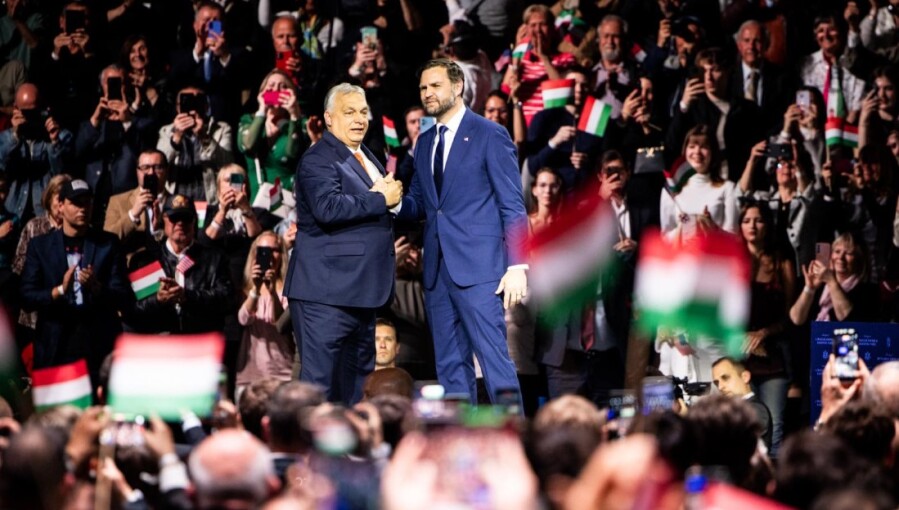
US Vice President JD Vance praised Hungarian Prime Minister Viktor Orban for his leadership on energy security, calling him a model for other European leaders to follow amid the continent's ongoing energy crisis at a joint press conference in Budapest on April 7.

Despite the geopolitical tension, Vance paid a visit to Budapest to endorse US President Donald Trump's strongest EU ally, just days before the pivotal elections on April 12. After 16 years of supermajority rule, Hungary's veteran leader is at risk of losing out to a younger challenger, former Fidesz cadre Peter Magyar, whose grassroots movement has become the largest political bloc in two years.

During a joint press conference at Orban's office in the Castle, Vance emphasised the importance of energy independence and affordability for European families, stating that EU leaders should have followed Hungary's energy policies under Orban. 

While energy prices were high across the continent, Hungary had managed to mitigate these increases more effectively than most, he said. Analysts point out that while Hungary previously benefited from a clear price advantage in purchasing crude oil from Russia, a situation that held before the Iran war, this advantage did not translate into lower prices for consumers.

Although the specifics of Hungary's long-term gas contract with Gazprom, signed in 2021, remain confidential, trade data indicate that Budapest is not currently experiencing a price benefit. Reports suggest that the pricing follows the TTF benchmark, with a two-month delay.

He added that his visit also sought to highlight the moral cooperation between the U.S. and Hungary, driven by shared values of Western civilisation and Christian traditions.

He accused Brussels bureaucrats of trying to undermine Hungary's economy, energy independence, and political leadership, calling the level of interference from the European Union "truly disgraceful." Vance said,

"Hungary is facing one of the worst examples of foreign election interference that I've ever seen. The bureaucrats in Brussels have tried to destroy the economy of Hungary and drive up consumer prices, simply because they hate "this guy", he said.

Vance also expressed his support for Orban ahead of Hungary's parliamentary election, although he said the United States will cooperate with Hungary's next government, regardless of who leads it, when asked by Reuters.

"I am confident that Viktor Orban is, of course, going to win", he added.

Orban was heard saying: "That is the plan," while making a hand gesture that roughly conveyed "not so sure." In an interview with the radical right Ultrahang portal, he said the gesture signalled that the battle is still open and said: "We're gaining momentum now as we can focus on the campaign from March 15, while opposition does not have the burden of governance," he added.

Opposition leader Peter Magyar said Vance's comment at the press conference indicates that Washington is no longer counting on Orban's election victory. The new Tisza-led government would regard the US as a key partner, both as a Nato ally and an economic partner, and he extended an invitation to the US leaders to visit Budapest for the occasion of the 70th anniversary of the 1956 Hungarian Revolution on October 23.

At the same time on X, and at his many rallies over the past weeks, Magyar stressed that Hungarian history is not written in Washington, Moscow, or Brussels; it is written in Hungary's streets and squares.

Vance also praised Orban's diplomatic efforts, saying he "has done more than anyone to help the U.S. leadership understand what Ukraine and Russia need to achieve peace."

In a later interview with pro-government Index.hu he said that the prime minister's international role extends beyond Hungarian politics. "Viktor is one of those statesmen in the world whom we can rely on. He is truly capable of mediating and engaging in dialogue with both the Ukrainians and the Russians. For this reason, he is an invaluable asset to us. This is why I support Viktor. The opposition is not my focus," he added.

Vance said that "elements within the Ukrainian intelligence services" were trying "to put their thumb on the scale" of US and Hungarian elections, without providing evidence.

Later at a campaign rally at a Budapest sports hall, dubbed Hungarian-US Friendship Day 2026, Vance put Trump on speakerphone. The US president called Orban "a fantastic man" and praised their "tremendous relationship".

"Remember this: he didn't allow people to storm your country and invade your country as other people have," he said, referring to Orban's anti-immigration policies.

In his speech, the Hungarian leader heaped praise on the strategic partnership and cooperation with the US, thanks to Trump, who "put an end to the power of the globalist elite ruling in the name of ideologies and proclaimed the era of strong nations."

Bilateral relations entered into a new golden age, he said, highlighting tangible benefits such as visa-free travel, economic collaboration, joint defence initiatives, and shared energy projects.

In his speech, he underscored the "civilisational and spiritual" foundation of the Hungarian-American friendship, invoking the shared values of freedom and independence as central to the relationship.

The Hungarian prime minister devoted much of his speech to criticising the European Union, framing Brussels as a stronghold of progressive forces that are "holding Europe captive." He accused the EU of imposing harmful policies, such as gender ideology, open borders, and interventionist foreign policies that have led to economic instability.

He sharply criticised the EU's sanctions regime targeting Russia, calling them "irresponsible" and likening them to "suicide." He warned that these sanctions would result in skyrocketing energy prices and the depletion of Europe's energy supplies.

He lashed out at Brussels for "not representing us, but colluding with the Ukrainians" in the energy blockade of Hungary, and for trying to trivialise the "attempted sabotage of the TurkStream pipeline."

Orban concluded his speech by urging a united front between freedom-loving Americans and Hungarians to preserve Western civilisation. He identified three key areas for action: defeating progressive forces in Brussels, ending the war in Ukraine, and resolving the energy crisis.

Orban framed Hungary's election as a decision between two paths: one of submission, where Hungary loses significance, where the country would be forced to send soldiers and money to Ukraine. The other path is one of freedom, where the nation stands proudly on its own. He urged voters to support peace, Hungary's security, and its future, believing that choosing freedom could spark a European "reclamation movement" of patriotic governments.


Hungary '56 - Andy Anderson - libcom.org

Mar 27, 2005 · Andy Anderson's pamphlet, written in 1964 and published by Solidarity is invaluable as a guide to the events of the Hungarian uprising of 1956.


Argentina revokes press credentials amid probe into alleged Russian disinformation network

Argentina revokes press credentials amid probe into alleged Russian disinformation network
The move follows findings by an international consortium of investigative media that a Russian network known as “La Compañía” financed the placement of pro-Russian content in Argentine media between June and October 2024.Facebook
By bnl editorial staff April 8, 2026

Argentina’s government revoked press credentials for several local media outlets on April 6 following allegations they were linked to a Russian-backed disinformation campaign uncovered by an international investigation, escalating tensions between President Javier Milei’s administration and the press.

Journalists from outlets including Ámbito Financiero, C5N, La Patriada FM, A24, El Destape and Tiempo Argentino were denied access to the presidential palace and, in some cases, Congress, according to reporters and media organisations. One journalist said that she was informed upon arrival that her name was on a list barring entry, EFE reported.

The move follows findings by an international consortium of investigative media that a Russian network known as “La Compañía” financed the placement of content in Argentine media between June and October 2024. According to leaked documents cited in the investigation, the network allocated about $283,000 to publish at least 250 articles under fake aliases across more than 20 outlets to promote pro-Russia narratives amid the war in Ukraine. Since taking office in December 2023, Milei has emerged as a staunch supporter of Kyiv, in stark contrast to the previous Peronist administration, which took a more neutral stance on the conflict. This is said to have alarmed Moscow and prompted the Kremlin to mount a covert influence operation targeting Argentine outlets, according to the investigation.

Argentina’s government echoed the findings, saying the operation sought to “disseminate false information and influence Argentine public opinion in favour of foreign geopolitical interests,” a claim previously raised by the State Intelligence Secretariat (SIDE).

President Milei described the revelations as highly serious and pledged further action. “We will pursue this to the fullest extent to identify all the direct and indirect actors who participated in this illegal espionage network,” he said on social media. He added that “‘journalists’ and ‘media outlets’ linked to this are only the tip of the iceberg of something much bigger.”

The investigation reported that the alleged network used intermediaries such as agencies and consultants to distribute content, some of which contained distortions or falsehoods, while other pieces were published under fabricated identities, including AI-generated profile images. Several targeted outlets denied receiving payments, although some sources acknowledged compensation linked to private actors concerned about government policies.

The probe also suggested the network attempted to inflame regional tensions, including by circulating false claims about Argentine actions targeting infrastructure in neighbouring Chile.

Press freedom groups criticised the government’s decision to restrict access. The Buenos Aires Press Union (SiPreBA) said the measure aimed to silence critical journalism, stating that authorities were preventing accredited reporters from entering official institutions.

The revocation comes after the government introduced stricter accreditation rules in May 2025, including tighter quotas, scoring requirements and enhanced conduct regulations. The latest developments add to a broader climate of friction between the administration and the media, marked by accusations of censorship, budget cuts affecting public outlets and reports of hostility towards journalists during protests.