Saturday, April 11, 2026

‘Truly Insane’: Pentagon Threatened Pope After He Condemned Trump’s Military Attacks

The US “has the military power to do whatever it wants in the world,” a top official told the Vatican’s US representative. “The Catholic Church had better take its side.”
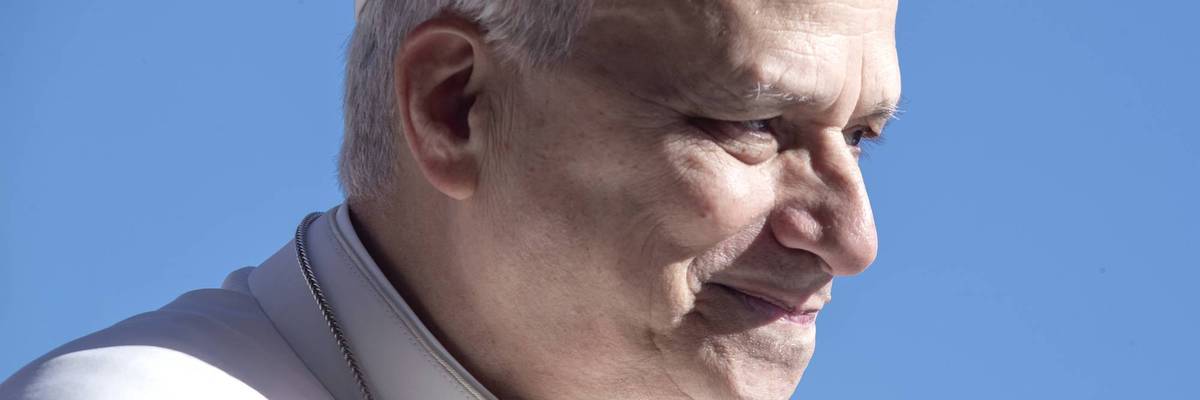

Pope Leo XIV leads his weekly general audience in St. Peter’s Squarein Vatican City on April 8, 2026.
(Photo by Maria Grazia Picciarella/SOPA Images/LightRocket via Getty Images)


Julia Conley
Apr 09, 2026
COMMON DREAMS


Pope Leo, the first American to be named the head of the worldwide Catholic Church, has spoken out against President Donald Trump’s policies frequently this year as the US has invaded Venezuela and Iran and threatened Cuba’s 10 million people with an oil blockade that has crippled the island’s economy and healthcare system—and according to new reports, his criticism has followed a warning from a Pentagon official who demanded the Vatican take the “side” of the White House in foreign disputes.

The Free Press originally reported this week that after the pope’s “State of the World” address on January 9, US Undersecretary of Defense for Policy Elbridge Colby called Cardinal Christophe Pierre, the Vatican’s US diplomatic representative, to Washington..
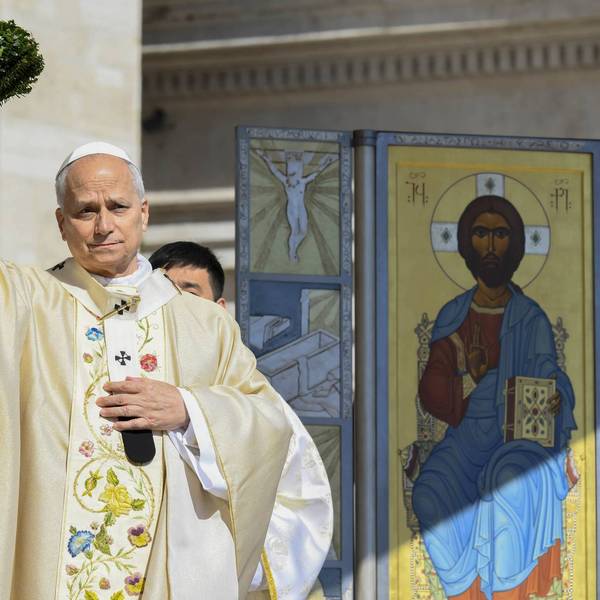

In Latest Rebuke of Trump and Hegseth, Pope Says ‘God Does Not Bless Any Conflict’


Colby told Pierre that the US “has the military power to do whatever it wants in the world.”

“The Catholic Church had better take its side,” he said, according to The Free Press.

Another Pentagon official alluded to the Avignon papacy, a period in the 14th century in which the French monarchy ordered an attack on Pope Boniface VIII and forced seven successive popes to relocate from Rome to Avignon in France.

According to Christopher Hale of the Substack blog Letters From Leo, who independently confirmed the meeting had taken place, Vatican officials took the remarks about the Avignon papacy as “a threat to use military force against the Holy See.”

“Bringing up the Avignon papacy as a threat is truly insane,” said progressive organizer Jonathan Cohn.


The pope is unlikely to visit the US during Trump’s presidency as a result of the meeting, Hale reported. Pope Leo rejected an invitation to the White House for the United States’ 250th anniversary celebration on July 4, and is reportedly planning to visit the island of Lampedusa in the Mediterranean that day, where thousands of North African immigrants have arrived as they attempt to reach Europe.

The pope, reported Hale, “is too deliberate a man to have chosen that date by accident.”

The Pentagon meeting took place days after Pope Leo angered the Trump administration, including Defense Secretary Pete Hegseth, by lamenting the fact that “a diplomacy that promotes dialogue and seeks consensus among all parties is being replaced by a diplomacy based on force, by either individuals or groups of allies.”


He made the comments days after the US invaded Venezuela, killing dozens of people and abducting President Nicolás Maduro, and as the US continued its boat bombing campaign that began last year in Latin America.

Since then, the pope has made numerous statements in recent weeks as the US joined Israel in bombing Iran and Trump issued increasingly bellicose threats to attack the country’s population of 93 million people.

He said on Tuesday, hours before a two-week ceasefire was reached between the US, Iran, and Israel, that Trump’s threat to wipe out the “whole civilization” of Iran was “truly unacceptable.”

“There are certainly issues of international law here, but even more, it is a moral question concerning the good of the people as a whole, in its entirety,” said Pope Leo. “Let’s look for solutions in a peaceful way.”

He also appeared to reject a call from Hegseth last month when the defense secretary asked Americans to pray for US troops in Iran “in the name of Jesus Christ.”

“Brothers and sisters, this is our God: Jesus, King of Peace, who rejects war, whom no one can use to justify war,” said the Pope in his homily on Palm Sunday days later. “He does not listen to the prayers of those who wage war, but rejects them, saying: ‘Even though you make many prayers, I will not listen: your hands are full of blood.’”

The New Republic reported that prior to the January meeting Pierre was called to, there were no public records of meetings between the Vatican and Pentagon officials, “let alone an instance in which the world power suggested that it could force the Bishop of Rome into captivity.”

When asked about the meeting on Wednesday, Vice President JD Vance—a Catholic convert—at first claimed not to know who the Vatican’s US representative was, before saying the reported was “uncorroborated.”


The Defense Department also denied The Free Press’ account of the meeting, saying the characterization was “highly exaggerated and distorted.”

Writer Pedro Gonzalez noted that former Trump adviser Steve Bannon discussed strategies to “take down” the late Pope Frances with convicted sex offender Jeffrey Epstein, according to files on Epstein that were released by the Department of Justice.

“It is for this and other reasons that people take seriously the report about the Trump-Vance administration threatening Pope Leo to bend the knee or else,” said Gonzalez. “These people are insane. Their hunger for power is bottomless. Moral resistance will be met with intimidation and threats, whether it’s in America or in Rome.”

Catholic Herald journalist confirms Pentagon delivered 'bitter lecture' to Vatican official
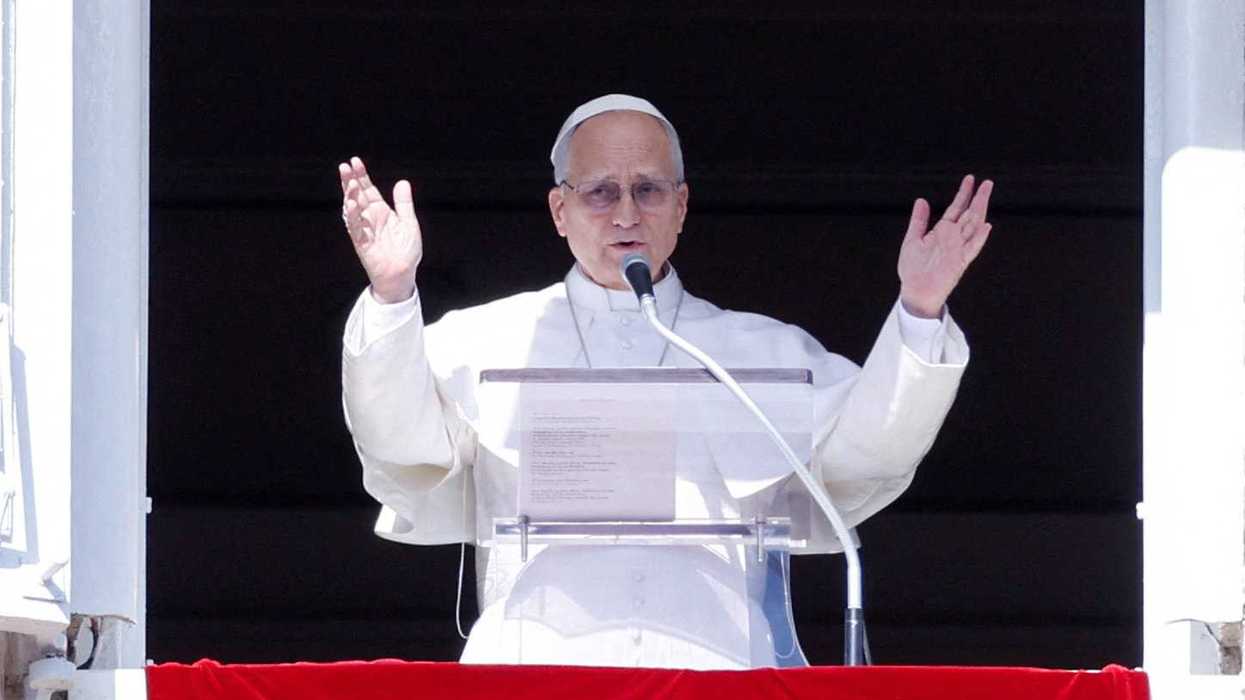

Pope Leo XIV leads the Angelus prayer from a window of the Apostolic Palace, at the Vatican, February 15, 2026. REUTERS/Remo Casilli

Sarah K. Burris
April 09, 2026 
ALTERNET

A journalist with The Catholic Herald has confirmed that the Pentagon attacked Pope Leo XIV and the Catholic Church. What appears to be in dispute, however, is which U.S. Pentagon official made the threat.

Niwa Limbu, an accredited Vatican correspondent, wrote on X that two sources said it was not Elbridge Colby who threatened the Vatican in a closed-door meeting this week. The DOD's undersecretary of defense for policy had been accused by The Free Press of being the source of a "bitter lecture."

"The United States has the military power to do whatever it wants in the world. The Catholic Church had better take its side," he was accused of saying.

But Limbu said that details about Colby are now in dispute.

In a post on X, Limbu said that Cardinal Christophe Pierre suggested over the phone that there was a media blackout over the topic. His Eminence commented, "I would prefer not to speak."

Holy See Press Office aide Matteo Bruni also declined to comment on the Pentagon meeting.

Writer and humorist Emily Zanotti, who is Catholic, argued that it isn't unusual for the Vatican to screw up PR.

She also had a few comments on getting down to the truth on Vatican issues.


"A few things can be true here: 1) It doesn’t quite make sense why the PENTAGON summoned a Vatican ambassador; 2) Bringing up Avignon is straight up insane, if it happened, which seems likely, and that’s aggressive towards Catholics," she wrote.

She also pointed out that she doesn't believe Christopher Hale is a reliable source. She wondered if "the Vatican probably just went 'WTF' and moved on, and until an actually reliable source, like @PillarCatholic confirms any Vatican response, you simply shouldn’t believe any suggestions."

Vice President JD Vance told reporters he wants to get the situation sorted out.

“I would actually like to talk to Cardinal Christophe Pierre and, frankly, to our people, to figure out what actually happened,” he said. “I think it’s always a bad idea to offer an opinion on stories that are unconfirmed and uncorroborated, so I’m not going to do that.”

There is a larger conversation in the Catholic community because Defense Secretary Pete Hegseth's brand of Christian nationalism, and the broader evangelical-focused "MAGA" movement, has made Catholics feel unwelcome. The DOD was criticized last week for having a "Protestant-only" Good Friday service. Typically, there isn't a mass on Good Friday. What was odd to some, however, is that the email sent to all staffers singled out Catholics when it didn't need to.

"There will be a Protestant Service (No Catholic Mass) for Good Friday today at the Pentagon Chapel,” the email read last week.

Anti-Catholicism dates back generations. President John F. Kennedy's candidacy was in question as voters wondered whether he was loyal to the U.S. or the Vatican.

Hegseth's pastor, Doug Wilson, has a history of anti-Catholicism that is well documented. As Right Wing Watch reported in March, Wilson explained in his ideal Christian nation, “public displays of idolatry” would be banned, including Catholic parades. Wilson is one of many in the Trump administration with some anti-Catholic sentiment and antisemitic beliefs, an MS NOW column explained.


Pentagon denies Trump official threatened war against the Pope
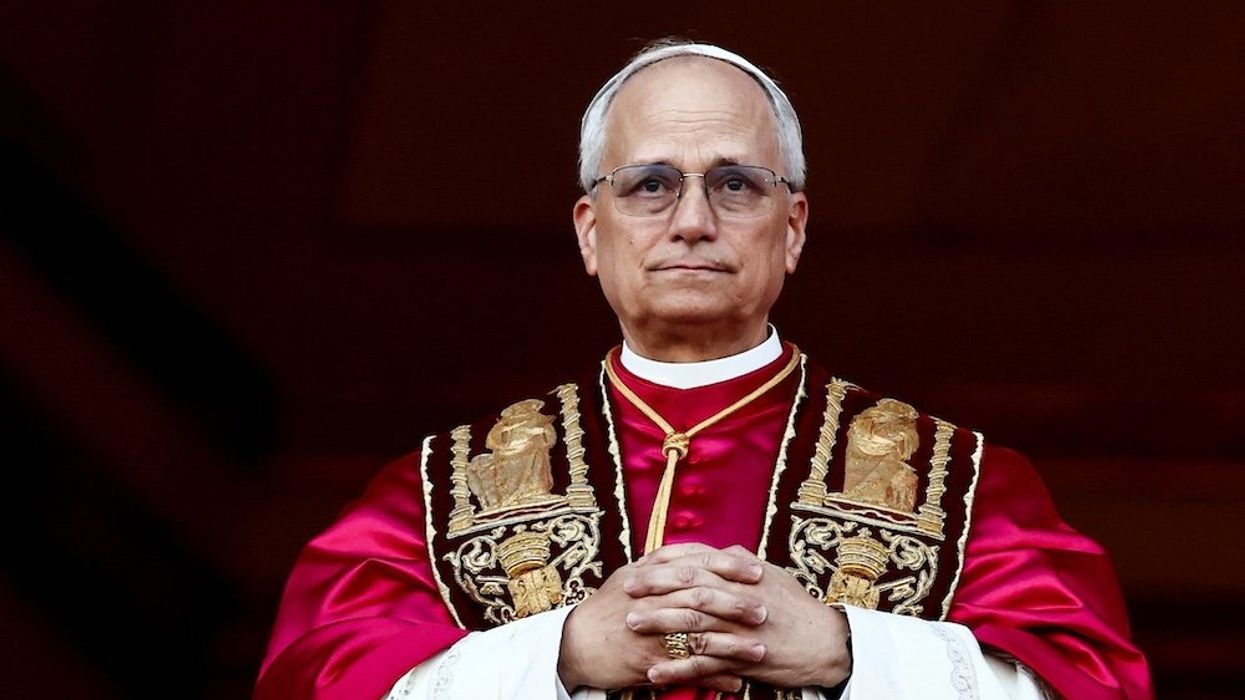

Newly elected Pope Leo XIV, Cardinal Robert Prevost of the United States appears on the balcony of St. Peter's Basilica, at the Vatican, May 8, 2025. REUTERS/Yara Nardi
April 09, 2026 
ALTERNET

On Wednesday, reports emerged that the Trump Pentagon threatened to wage war against the Pope. The following day, however, the agency released a statement denying the claims, asserting that the meeting between Administration and Vatican officials was “respectful and reasonable.”

The denial of hostility comes in the wake of a story involving a closed-door meeting between Under Secretary Elbridge Colby and Cardinal Christophe Pierre — Pope Leo XIV’s then-ambassador to the United States — in which the former told the latter, “America has the military power to do whatever it wants in the world. The Catholic Church had better take its side.”

According to Pope Leo XIV chronicler Christopher Hale, as tensions rose, one U.S. official “reached for a fourteenth-century weapon and invoked the Avignon Papacy, the period when the French Crown used military force to bend the bishop of Rome to its will.”


Supposedly, this “bitter lecture” from the Trump Administration came in response to the president’s anger over the Pope’s January state-of-the-world address, particularly his advocacy for “a diplomacy that promotes dialogue and seeks consensus among all parties is being replaced by a diplomacy based on force.”

Trump and the Pentagon took this as a challenge to the president’s so-called “Donroe Doctrine,” a portmanteau of “Donald” with the “Monroe Doctrine,” the latter of which historically asserted American supremacy over the Western Hemisphere.


But now, while a Pentagon statement confirms that the meeting happened, it denies the belligerent tone.

“We can confirm that Cardinal Christophe Pierre had a meeting on January 22, 2026, at the Pentagon where he and several officials had discussed current affairs,” the statement read, but went on to claim that the “characterization of the meeting is highly exaggerated and distorted. The meeting between Pentagon and Vatican officials was a respectful and reasonable discussion. We have nothing but the highest regard and welcome continued dialogue with the Holy See.”

Whatever the content of the meeting, it was an unprecedented event, as there is no previously documented case of a Vatican official being summoned to the Pentagon.


In Echoes of Corbyn and Mamdani, Insurgent Candidate Wins Canadian New Democratic Party Leadership


Avi Lewis now leads the New Democratic Party after a campaign reminiscent of left-leaning politicians in the US and UK.

April 8, 2026

At the center is leader of Canada's New Democratic Party Avi Lewis.Canada’s NDP / Le NPD du Canada

Truthout is an indispensable resource for activists, movement leaders and workers everywhere. Please make this work possible with a quick donation.

Canada’s left-leaning New Democratic Party (NDP) has elected a new leader, someone whose campaign drew comparisons to the politics and style of U.S. figures like Bernie Sanders, Alexandria Ocasio-Cortez, and Zohran Mamdani. On March 29, the NDP elected Avi Lewis on the first round of balloting with 55 percent of the vote in his first successful political campaign.

The NDP was decimated in the April 2025 federal election. Former leader Jagmeet Singh lost his own electoral district, and the party only won seven seats, four short of what’s needed to maintain its official party status. It was the worst showing for the NDP in its 64-year history.

Lewis also came in third in that election in his electoral district, his second third-place finish in the two elections that he has run in.

But a commitment to be unapologetically left and a promise to overhaul the party were his key to his victory in the NDP leadership race. Lewis’s allies won key positions within the party, clearing the path for him to implement his campaign promises.

For decades, the NDP has watered down its left-wing policies. But with a Liberal government that has promised to pull tens of billions of dollars from federal departments to fund the military, party members are hungry for a left turn. Are Canadians ready for it?


Advocates Put Palestinian Rights on the Ballot as Canada’s Election Nears
Over 300 Canadian electoral candidates have endorsed a 5-point “Vote Palestine” platform thanks to activist pressure. By Jillian Kestler-D’Amours , TruthoutApril 23, 2025


Who Is Avi Lewis?

Lewis’s campaign was ambitious. He promised to implement national rent controls, build 1 million public housing units, increase taxes on the wealthy, expand the electricity power grid to phase out oil and gas, and fund free public transit. “We can have nice things, but we gotta fight for them together,” he said in one campaign video. The promise to be boldly progressive was music to the ears of many New Democrats who have been frustrated that the NDP has not been able to articulate a compelling reason for the high cost of housing and food, or a solution to the crisis.

Lewis’s campaign capitalized on widespread opposition to U.S. foreign policy, including the thousands of actions that Canadians have taken to show their solidarity with Gaza over the past several years. During his victory speech, he took aim at both U.S. foreign policy and Canada’s willingness to go along with it, saying:

We need a government … that acts with moral clarity when it matters. When missiles are falling on schools and hospitals; when Israel commits a genocide in Gaza, we call it by its name and we do everything in our power to bring it to an end. When the U.S. and Israel start an illegal and reprehensible war against Iran that sets the world on fire, we say Canada should have absolutely no role in it whatsoever.

While other NDP leadership candidates had similar positions on U.S. foreign policy, Lewis was able to rise above his peers by taking cues from social movement organizing, activists, and successful left-wing campaigns south of the border.

Lewis has very little partisan political experience himself, though he comes from a political dynasty. His grandfather, David Lewis, led the federal NDP from 1971 to 1975, and Avi Lewis’s father, Stephen Lewis, led the Ontario wing of the party from 1970 until 1978. His mother is iconic feminist journalist Michele Landsburg. Lewis, 57, has mostly stayed out of public life, until his first election campaign in 2021.

Some Canadians will remember Lewis as a host on the television channel MuchMusic. After that, he worked for CBC on the debate show “CounterSpin” and later, for Al Jazeera. He has produced a handful of documentaries. His wife, Naomi Klein, is a key left-wing voice in American politics. His campaigns have featured non-Canadian celebrity endorsements from Jane Fonda, Billy Bragg, and V (formerly known as Eve Ensler).

The Liberals under Prime Minister Mark Carney managed to eat most of the NDP’s support by framing a vote against Carney as a de facto vote for Conservative leader Pierre Poilievre. The strategy worked during the 2025 election, and many people who would normally vote NDP voted Liberal, hoping that Carney would take on Donald Trump and protect Canada’s sovereignty.

While the NDP is now riddled with campaign debt, Lewis nonetheless out-fundraised all of the other candidates combined by pulling in more than 1 million Canadian dollars. That is equivalent to one-quarter what the entire party raised in the 2025 election.

A Rising Left to Combat a Right-Wing Liberal Party?

From 2022 to 2024, the NDP propped up Justin Trudeau’s deeply unpopular minority Liberal government. Trudeau betrayed his promise on electoral reform, souring many progressive Canadians on his tenure. And he became a symbol of Canadians’ frustrations with how the pandemic was handled, thanks to an aggressive right-wing movement to pin every pandemic-related inconvenience on Trudeau personally. In exchange for minor concessions like a dental care program for some low-income Canadians and coverage for diabetes medication and birth control under the public health insurance program, the NDP voted “yes” on confidence motions to keep Trudeau in power. Over the course of the agreement, the NDP voted 38 times alongside the Liberals out of 55 motions total, including for motions that wouldn’t have triggered an election.

In early 2025, staring down a federal election, the Liberals swapped Trudeau out for former two-time central banker Mark Carney. The NDP didn’t pivot, and Jagmeet Singh, who had attached himself to Trudeau through the confidence motions, came in third in his own electoral district.

Carney’s tenure has been a radical departure from the Trudeau era. He has promised more than $60 billion in cuts from the federal budget — cuts so deep that some journalists have noted similarities between his plan and what Trump’s so-called “Department of Government Efficiency” managed to accomplish.

Carney’s cuts are far-reaching. For example, they will result in fewer food inspectors, close experimental farms where research is done to make improvements to agriculture in Canada, and eliminate prison-based librarians. While there has been some outrage over these cuts, Carney’s popularity has grown slightly since he was elected. He has enticed enough politicians to change their party affiliation to the Liberals, NDP members included, that a majority government is within reach: Of the three by-elections to be held on April 13, two seats are seen as Liberal strongholds, and the Liberals won the third riding by a single vote in 2025. If Carney wins two of these seats, he will have his majority, and, due to Canada’s parliamentary system, will not need to form a coalition government.

Lewis is starting his tenure on difficult political terrain. He was barely noticed outside of the party faithful during the leadership race. The NDP membership only grew to 100,000 people during the race compared to 124,000 during the party’s last leadership race in 2017. When Naheed Nenshi ran to be leader of the Alberta NDP in 2024, 69,000 people in that province alone joined to vote in it. Despite the fact that the race had started on September 1, by mid-March, one poll showed that just 13 percent of Canadians selected Avi Lewis as their first choice (44 percent said they didn’t recognize any of the candidates’ names). While that was higher than the other leadership candidates, it has not turned Lewis into a household name, and many Canadians will first hear about him from a mainstream press, other politicians, and pundits who are antagonistic to left politics.


Backlash

Already, backlash to Lewis has been intense. One of the party’s seven members of parliament (MPs) switched to the Liberal Party during the final days of the leadership campaign (with rumors that Lewis will lose another MP to the provincial left-wing party Québec Solidaire). Then, immediately after Lewis’s victory, the leaders of the Alberta and Saskatchewan wings of the NDP criticized him publicly for being too far left. The leader of the Manitoba wing, Premier Wab Kinew, assured reporters that he supported Lewis even if their views didn’t line up perfectly.

Pundits and journalists were next. The National Post warned people to not “underestimate the appeal of Lewis’ Third Worldism”; the Calgary Herald said that a Lewis NDP “looks more communist than social democratic”; and The Globe and Mail columnist Konrad Yakabuski declared that in the wake of Lewis’s win, the NDP has “an antisemitism problem.” Never mind that Yakabuski is not Jewish, and Lewis — along with his new principal secretary and the new president of the party Niall Ricardo — are.

In anticipation of these attacks, the grassroots organization Independent Jewish Voices reminded Canadians that “the NDP is now Canada’s most Jewish-led party.”

A letter to the editor in The Globe that went viral on social media pointed out that Lewis’s father Stephen, who died shortly after Avi won the leadership race, was being praised by the same news outlets that were denigrating Avi Lewis, despite the two having virtually the same politics.

The Lewis campaign has so far withstood the attacks without giving into criticism, something that his team has no doubt learned from watching how other, similar campaigns in the U.K. and U.S. have unfolded.

Replicating Other Campaigns?

On March 30, Lewis delivered a speech to more than 1,000 delegates gathered in Winnipeg for the NDP convention. His victory was assured when, the day before, a slate critical of the party establishment and supportive of Lewis swept in through a very narrow election. His victory speech felt more like a victory lap than a crossing of the finish line.

He ended the speech with a nod to his cross-border allies: “This is about all of us, coming together to find our place and our power in the thrilling work in building our shared future. A government that works for the many, not for the money.” That slogan harkens to Jeremy Corbyn’s famous slogan for the many, not the few, and has appeared on podium signs behind Alexandria Ocasio-Cortez during some of her public events. Lewis’s campaign demands and rhetoric closely mirror the populist rhetoric that underpinned Ocasio-Cortez and Bernie Sanders’s “Fighting Oligarchy” tour.

This isn’t too surprising, given that Lewis has worked with Ocasio-Cortez before. He co-wrote the script for the short video A Message from the Future with Alexandria Ocasio-Cortez in 2019, working alongside Naomi Klein, who has been involved in campaigns for Sanders, Ocasio-Cortez, and Zohran Mamdani. Lewis’s statement celebrating Mamdani’s victory said that Mamdani’s energy is “the same energy and vision that’s driving our campaign here in Canada.” He promised to create a public grocery service, a nod to one of Mamdani’s central campaign promises.

Lewis isn’t an insurgent member of a party that has enough reach in national politics to win the highest offices of the state, like Ocasio-Cortez is. Nor has he been elected before and practiced in the art of being a politician like Mamdani is. But he has clearly learned from their successes, hoping to borrow their more effective tactics. In a video with Klein the night of Mamadani’s victory, Lewis talked about how progressives need to understand that audacious proposals are key to securing electoral victories, which is what he takes from the Mamdani campaign.

Lewis doesn’t have the internal opposition that Sanders and Ocasio-Cortez have faced within the Democratic Party; the NDP leaders who have criticized him are now marginal in the party. The federal council and party executive support him; the path is clear for Lewis to put his bold words into action.

With no seat in the House of Commons, Lewis has the benefit of being free from the demands of parliamentary life. He won’t be tied down in Ottawa, present in the House of Commons for votes where, as the leader of a party without status, he is given very little time to push forward any motions. However, he will need to win a seat in the next few years to cement his position in the Canadian political landscape.

As social conditions continue to deteriorate, fueled by global crises like the war on Iran, there has scarcely been a better time for a left-wing insurgency. Will Lewis be able to rise to the occasion?


Nora Loreto
Nora Loreto is a writer and activist based in Quebec City. She is also the president of the Canadian Freelance Union.


Naphtha shortages leading to petrochemical plants force majeures and record prices

Naphtha shortages leading to petrochemical plants force majeures and record prices
Naphtha is a critical feedstock for petrochemical plants, but shortages have led to some plants in Asia reneging on contracts and sent prices to a record highs. / bne IntelliNews
By Ben Aris in Berlin April 10, 2026

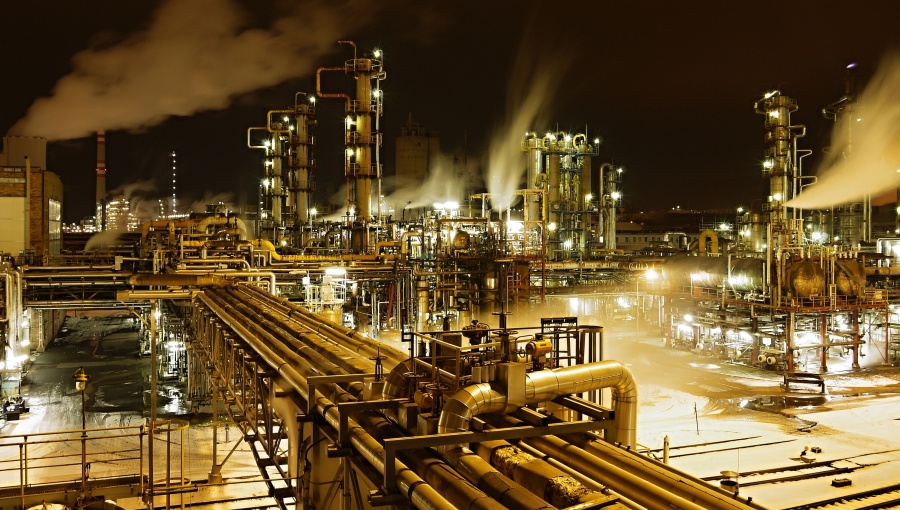
Petrochemical producers across Asia have begun shutting down operations after disruptions to shipping through the Strait of Hormuz sharply reduced supplies of naphtha and liquefied petroleum gas (LPG), two critical feedstocks for the region’s chemical industry.

“Naphtha and LPG are the light end of the refining barrel, and boy, oh, boy, how important their roles are in the world that we live in,” Shanaka Anslem Perera, an independent analyst said, describing the immediate effect of constrained flows on Asia’s petrochemical system.

Indonesia's Chandra Asri (TPIA.JK) has declared force majeure on all contracts while two Japanese buyers, Maruzen Petrochemical and Mitsui Chemical, cancelled second-half April naphtha import tenders, Reuters reports. Pre-war Asia sourced roughly 4mn metric tonnes (36mn barrels) of Middle ​East naphtha monthly.

The disruption drove the benchmark naphtha ​refining margin in Asia to four-year high of about $173 per tonne over Brent crude. Naphtha was trading at $918 per tonne as of April 10, up by 88% YTD.

Some Asian buyers are mulling returning to Russian naphtha, another major supplier, in the worst case scenario. As of early 2026, Russia remains a top global exporter of naphtha, shifting its focus from Europe to Asia and the Middle East, with India and Taiwan as significant, though sometimes fluctuating, key buyers.

Last year between February 2022 and mid-2025, Taiwan became Russia’s biggest buyer, importing over $4.9bn in Russian naphtha, with Formosa Petrochemical the major buyer. This year South Korea's LG Chem (051910.KS) has also significantly stepped up imports from Russia, Reuters reports, after the US eased sanctions on buying Russian oil products in March. South Korea relies on imports to satisfy about 45% of its ‌naphtha demand, three quarters of which used to come from the Gulf.

Russian energy company Novatek is set to increase naphtha exports from its Ust-Luga complex in March to about 550,000 metric tons (t), from 360,000 t in February, market sources said and LSEG data showed.

Rising production in Ust-Luga and easing ice conditions in the Baltic Sea will allow Novatek to boost naphtha exports to Asian markets, where supply challenges due to the Gulf conflict have sent prices to record highs.

The Ust-Luga complex has three processing units with a capacity of 3 metric MMtpy each. It refines stable gas condensate into light and heavy naphtha, jet fuel, fuel oil and gasoil.

Novatek processed about 630,000 t of gas condensate at Ust‑Luga in February, when severe frost and heavy ice caused a shortage of ice‑class tankers, curbing loadings, traders said.

In March so far, processing rates at the Ust-Luga complex have averaged nearly 28,000 tonnes a day and could exceed 850,000 tonnes for the month, market sources added.

Despite sanctions, Russia supplies over one-fifth of the global market, with exports totalling roughly 30–35mn tonnes per annum.

Petchem building block

Naphtha, a light petroleum fraction also known in the industry as Tops, FRN, LVN or HVN, is the primary feedstock used in steam crackers. The process produces olefins including propylene, ethylene and butadiene, which form the basis for a wide range of plastics and chemical products.

“Naphtha is the basic building block for petrochemical plants. You feed naphtha into steam crackers to produce olefins like propylene, ethylene and butadiene, which is then used for downstream petchem products. This is the very starting point of where any of our plastics come from,” Perera said.

Asia relies heavily on Middle Eastern supplies of naptha. It is also used to dilute the super-heavy Venezuela crude that is so viscous it can’t be flowed through pipes like normal oil. About 60% of naphtha imports originate from the Gulf.

The supply squeeze has been compounded by lower refinery utilisation across the region, reducing domestic output of feedstocks. Steam crackers, like refineries, cannot operate at very low utilisation. It’s an all or nothing process.

Several Asian producers have already declared force majeure on petrochemical deliveries as feedstock shortages deepen.

LPG, which can also be used as a cracking feedstock, has provided little relief. Refining systems typically yield only about 1–2% LPG, meaning output falls sharply when refinery runs decline.

“The yield of LPG from the refining kit is only a mere 1–2%, yet imagine needing to turn down the intake and get only 0.5–1% yield. That's a drastic 50% reduction of available supply,” Pereras says.

Governments in major consuming markets have intervened to prioritise household supply. India and the Indonesian government then quickly mandated for maximum LPG to be diverted out from the petchem sector into cooking gas, another common use for LPG, as well as car fuel. The disruption could leave petrochemical plants offline for an extended period even if crude flows recover.


Seoul’s missing $7.8bn central bank surplus

Seoul’s missing $7.8bn central bank surplus
/ Greg Schneider - Unsplash
By IntelliNews April 10, 2026

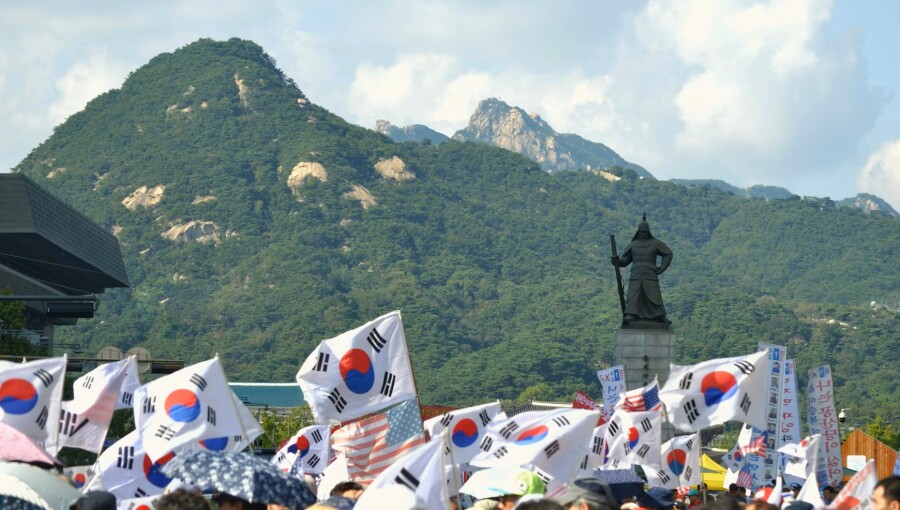
South Korea submitted a KRW26.2trillion ($19.2bn) "war supplementary budget" to the National Assembly that unusually omits surplus funds from the Bank of Korea (BoK), drawing fire from legislative watchdogs on April 9, Chosun Daily reports.

The decision to bypass the central bank’s net profits, which are typically used to bolster state spending or repay debt, marks a significant departure from fiscal norms established over the last two decades. While the government utilised these resources during the previous year's supplementary cycle, their exclusion from the current March 31 proposal has prompted warnings that the administration is "stockpiling ammunition" for a potential second intervention later this year.

The move has raised transparency concerns as the administration appears to be shielding a multi-billion dollar windfall from legislative oversight. By keeping the BoK surplus off the books, the government retains a massive liquid reserve that remains outside the immediate deliberative control of the National Assembly. This strategy represents a subtle but important shift in fiscal priority, moving away from debt reduction toward a state of high-readiness as geopolitical tensions in the Middle East continue to threaten global energy prices and supply chains.

Budget office warnings

The National Assembly Budget Office voiced significant apprehension regarding the funding structure in its "Analysis of the First Additional Budget for 2026." Since 2008, the state has consistently integrated BoK surpluses or previous year carry-overs into supplementary spending plans. However, the current proposal differs from past cases in that excess BoK funds already deposited into the national treasury were not reflected in revenue adjustments.

The National Assembly Budget Office argued the approach fails to align with the intent of Article 17 of the National Finance Act, which stipulates that all income of a fiscal year shall be revenue and all expenditures shall be expenses. Sidestepping this protocol could fundamentally weaken the transparency and efficacy of how the nation manages its purse strings, the report suggested.

"The failure to utilise Bank of Korea surplus funds in this supplementary budget's resources raises concerns about undermining the transparency and efficiency of fiscal management," stated the National Assembly Budget Office on April 9. By withholding these funds from the revenue adjustment process, the government has essentially blocked the National Assembly from deliberating on how to use them—such as repaying additional government bonds or identifying new spending projects.

The scale of the withheld funds is substantial, totalling KRW10.705 trillion ($7.8bn) based on the central bank’s performance last year. This figure significantly overshot initial government projections of KRW6.4191 trillion ($4.34bn). According to Chosun Daily, a robust US dollar was the primary driver for this windfall, contributing an unexpected KRW3.4539 trillion ($2.34bn) to the final tally as the central bank’s foreign exchange-related earnings surged.

Despite having this capital physically present in the national accounts, the Ministry of Planning and Budget has chosen not to earmark it for the current KRW26.2 trillion ($17.72bn) package. In turn, this has led to accusations that the executive branch is effectively "hiding" money in its wallet. Under normal circumstances, these funds would be used to lower the national debt ratio, which has seen significant upward pressure recently. However, by keeping the surplus as a non-tax revenue "reserve," the government maintains a level of flexibility that bypasses the traditional democratic process of fiscal control.

Ministry discretion as tax fears grow

The Ministry of Planning and Budget defended the decision, maintaining that whether to adjust revenue based on BoK surplus funds is entirely at the government’s discretion. Officials pointed toward a volatile economic landscape and the "triple shock" of high interest rates, a weak KRW, and high energy prices as the primary reasons for their caution.

According to The Korea Economic Daily, the ministry is wary of potential tax revenue shortfalls later in the year as global market conditions shift. There is also lingering uncertainty regarding the collection of non-tax revenues, specifically the proceeds from the sale of NXC (the holding company of gaming giant Nexon) tax-in-kind shares. The government acquired these shares as part of an inheritance tax settlement, but the success of such a high-stakes divestment remains speculative. If these shares fail to sell at the anticipated valuation or within the desired timeframe, the government will face a significant budget hole. Consequently, the central bank surplus is being framed by the ministry as a vital "emergency buffer" to protect the state against these multi-faceted financial risks.

Beyond the immediate concerns of tax shortfalls, there is a growing consensus among observers that the administration is "stockpiling ammunition." There are also strong indications that the March 31 budget might not be the last intervention for the year. High-ranking officials have hinted that geopolitical instability in the Middle East, specifically the impact of the conflict involving Iran, could necessitate further fiscal expansion to manage surging oil prices and domestic inflation.

Hong Ik-pyo, Cheong Wa Dae Senior Secretary for Political Affairs, stated after the war supplementary budget was submitted that a second supplementary budget may be needed in 2H26 if the war in the Middle East continues. This sentiment was echoed by Park Hong-keun, the Minister of Planning and Budget, who noted on April 7 that a second additional budget remains a distinct possibility. According to reports from The Straits Times, this expansionary stance marks a hallmark of the current administration’s "pre-emptive response" strategy to protect consumers from the rising cost of living.

A shift from debt reduction to crisis readiness

This strategy represents a shift in fiscal priority. Usually, excess funds are used to pay down national debt, which recently topped $800bn following massive stimulus pushes. However, a researcher from a government-funded research institute noted that the government currently views the BoK surplus as "money already in its wallet." Rather than using these funds to lower the national debt ratio—which Trading Economics models suggest could trend around 49.3% of GDP—the government appears prioritised on maintaining immediate liquidity to handle future shocks.

While this provides the government with a flexible "war chest," it circumvents the traditional democratic process of fiscal control. The National Assembly Budget Office remains firm in its stance that these funds should have been integrated into the formal review process. By doing so, the legislature could have determined if the KRW10.705 trillion ($7.24bn) would be better spent on immediate relief or if it truly needed to be held in reserve.

As the Middle East crisis continues to influence global energy prices and supply chains, the South Korean government’s fiscal conservatism—or strategic hoarding, depending on the perspective—will remain a point of intense political friction. The tension between the executive’s need for "emergency ammunition" and the legislature’s demand for "fiscal transparency" defines the current state of Korea’s 2026 economic policy. For now, the surplus remains untouched, waiting for a potential second wave of economic pressure that many in the administration believe is inevitable. Under this "ammunition" strategy, the government is essentially betting that the cost of transparency today is a price worth paying for the flexibility to act tomorrow.

Falling battery prices make round-the-clock solar power supply viable in India

Falling battery prices make round-the-clock solar power supply viable in India
/ bno IntelliNews
By IntelliNews April 10, 2026

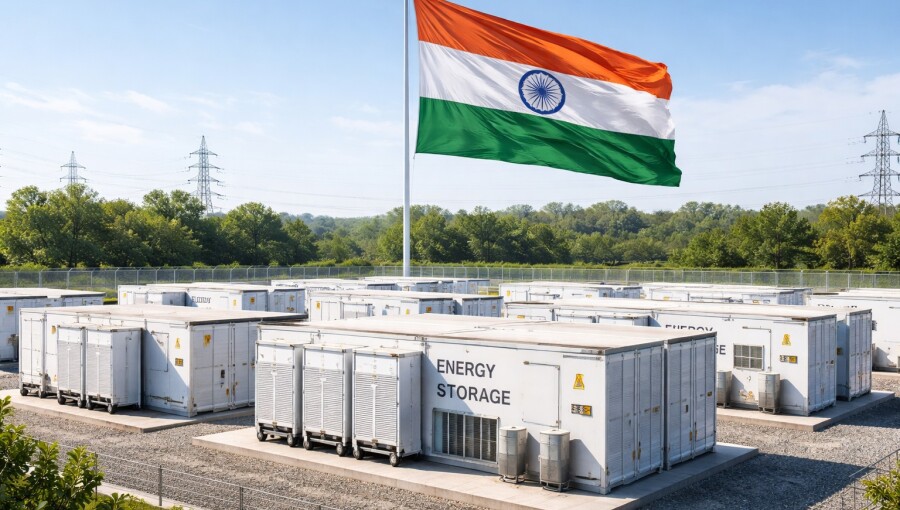
A recent report by energy think tank Ember says that declining battery storage costs have reached a level where it makes it economically viable for solar power to store and supply most of India’s electricity demand. The report says that solar combined with batteries may meet up to 90% of the country’s electricity requirement at competitive costs.

The report, which was published on April 7, says that a major reduction in battery prices over the last two years has significantly changed the dynamics of India’s renewable energy space. The estimated cost of battery storage saw a reduction of almost 40% in 2024 and nearly 31% in 2025. This makes round-the-clock solar power extremely attractive.

The report argues that if solar generation is combined with battery storage, nearly 90% of India’s electricity demand can be fulfilled at a levelised cost of electricity (LCOE) of about INR5.06 ($0.055) per kilowatt-hour. This is similar to, or cheaper than, the average power procurement costs in many Indian states.

In order to get to that level of supply, India would require almost 930 gigawatts (GW) of solar capacity and 2,560 gigawatt-hours (GWh) of battery storage. This is equivalent to nearly 4.9 GW of solar and 13.5 GWh of storage capacity per 1 GW of average demand. Even if India achieves this scale, only about 5% of solar generation every year would need to be curtailed due to excess supply.

Ember report says that India’s solar potential is vast and mostly untapped. The country boasts of about 143 GW of installed solar capacity, which represents just a fraction of its estimated 3,343 GW ground-mounted solar potential. This potential alone could generate approximately three times India’s current electricity demand.

To unlock this potential, battery storage will play a significant part because of its intermittency. While solar power output peaks during the day, batteries assist in storing the excess energy, which can be utilised during the evening and night. Ember report highlights that during months with strong sunlight, such as January to April, solar and batteries could meet nearly 100% of daily electricity demand.

However, the main challenge is the monsoon season. During the cloudy months, there would be long periods of low solar output, which would limit the ability of batteries to maintain supply over several consecutive days. In July, which is the peak monsoon month in India, solar and battery systems could meet around 66% of demand due to reduced solar generation. This highlights the need for a diversified energy mix, including wind and hydro, to complement solar during such periods.

At the state level, findings presented by Ember are equally important. The analysis of the ten largest electricity-consuming states shows that solar-plus-battery systems could meet between 83% and 92% of their annual electricity demand. Seven of these states could achieve 90% or more, with Andhra Pradesh leading at 92%, while Uttar Pradesh records the lowest share at 83%.

The report also says that the cost of power generated through solar and batteries is already lower than current procurement costs in several states. In six major states, solar-plus-storage systems are already delivering around 90% of electricity demand, which could be 15% lower than current power purchase costs. The southern state of Karnataka could achieve a cost reduction of 21%, while the western state of Gujarat could see savings of around 7%.

Even if the transmission costs for sourcing solar power from resource-rich regions are taken into consideration, the overall economics remain attractive. Additional costs of around INR1.2 to 1.5 per unit for transmission and losses do not in any major way reduce the competitiveness of solar-plus-battery systems, especially when there exist policy support schemes such as waivers on interstate transmission charges.

The report further highlights the reduction in costs of solar and battery storage, with the increasing costs of power produced through coal. Recent coal power tariffs in India have ranged between INR5 and INR6.3 per unit, driven by higher capital costs, stricter environmental regulations, declining coal quality and operational inefficiencies. In comparison, solar-plus-storage tariffs are typically fixed over the contract period, offering greater price stability and insulation from fuel price volatility.

The recent auctions of solar-plus-storage projects in India have discovered rates that are as low as INR2.9 to INR3.5 per unit for systems with four-hour battery storage. When it comes to a six-hour battery storage project auction, early 2026 saw a tariff of INR3.12 per unit, pointing to a further drop in the future, Ember noted.

The Ember report expects the economics of solar and battery storage to become even more attractive, which may lead to wider deployment. While achieving 100% solar-based electricity would require significantly higher investment, reaching 90% is both technically feasible and economically viable.

According to Ember, the most significant question is no longer whether solar can lead India’s power system, but how fast the system can be scaled up. With significant solar resources, reducing technology costs and supportive policy frameworks, India can easily become a global leader in clean energy, Ember added. This will also reduce the country’s dependence on imported fossil fuels.

Palestine:

Gaza flotillas - stand together, for as long as it takes


Saturday 11 April 2026, by Nico Dix, William Donaura


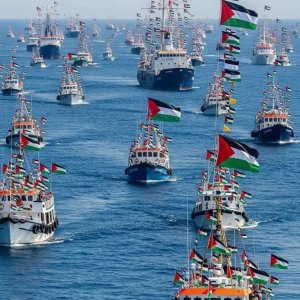
On Saturday, 4 April, in Marseille’s Vieux-Port, at the foot of the Mucem museum, several hundred people crowded the pier to cheer the 19 humanitarian boats of the flotilla setting sail for Gaza.

Speeches, slogans, music and even a batucada in the colours of Palestine: the fervour and hope were palpable. “Bravo, we’re proud of you,” people shout as boats pass by in front of the jetty.

In l’Estaque, a popular organization

Hope also animated the activists of the flotillas in the morning, at the port of l’Estaque. After months of work on an improvised construction site brought to completion, thanks in particular to the mobilization of the inhabitants of this district of Marseille, the flotillas are finally ready for departure.

“We have already won,” says Nemo, skipper of the Ryoko boat, renamed “the Nour” in tribute to the struggle of Palestinian women. “It’s a victory in the sense that we managed to organize ourselves in a non-hierarchical way, in an autonomous way and we managed to take this place, so it’s a popular victory, because nothing was expected.”

The coalition had contacted several ports, but none had responded, and the shipyard was therefore set up in l’Estaque on the proposal of its inhabitants. There, the preparation of the boats and collective life have worked thanks to self-organisation: “We work in the form of a collective, with centres of skills, centres of desire, centres that make sense for people. And people are invested in it,” explains Nemo.

A multifaceted mobilization

This motivation of all is of course rooted in the continuity of the mobilization for Palestine of the last two years, but it is also found in the political commitment of everyone.

“It is the struggle of all oppressed peoples that is symbolized by the struggle of the Palestinian people,” says Tino, an activist on board and member of the navigation centre. For him, the flotilla “is also a way of mobilizing on land around the Palestinian question and anti-imperialist issues.” He thought that the question of war would be central in the coming years and hoped that the flotilla would allow “a broad and common front against the war.”

Beyond the symbols, Claude Léostic (Association France Palestine Solidarité) reminds us that the genocide is still underway in Gaza and that “this humanitarian flotilla is first and foremost aimed at the Palestinians, to show them that our solidarity is intact.” But for her, this initiative is also aimed at our leaders whose “behaviour is scandalous and illegal.” She describes the flotilla as a citizen pressure to “move the lines”, a message to end our leaders’ complicity with Israel’s genocidal and colonial policies.

“We are trying to put pressure from our workplaces to put an end to partnerships with Israel,” says Linda Sehili, a member of the international committee of the trade union Solidaires. “This flotilla is the continuation of our militant, political and trade union actions. And this is only the beginning; we will have to remobilize everywhere on the territory with collectives for the right to self-determination of Palestinians.”

In the face of genocide, building solidarity

There is indeed an urgent need to remobilize: the new Israeli law on the death penalty for Palestinians and the Yadan law are at the centre of the discussions. A brutalization of Western colonialism, while, as a report by Urgence Palestine and the Palestine Youth Movement has just revealed, “between October 2023 and March 2026, more than 525 shipments of military equipment were shipped by French manufacturers” to Israel.

Faced with these flows of death, the flotilla embodies a flow of solidarity. It carries medical equipment, seeds and fishing boat repair materials. Obviously, the flotilla is not an end in itself. It is an anchor point for the construction of a huge movement of solidarity. This is the challenge for all the activists and all the organizations of this flotilla.

This is what motivates Tino: “The flotilla is a means of action that allows you to regain control of things. Everyone feels very powerless in the face of the situation there. We have to remain humble, we are not going to change the face of the world, but it is a vector of hope.”

L’Anticapitaliste