Sunday, April 19, 2026


Tankers U-Turn in Persian Gulf as Iran Closes Hormuz Again

  • Iran's IRGC declared Saturday that control of the Strait of Hormuz has 'returned to its previous state,' effectively re-closing the waterway hours after Trump announced it was fully open.

  • Tehran says the continued U.S. naval blockade of Iranian ports -- which Trump vowed to maintain until a nuclear deal is reached -- constitutes a violation of the ceasefire and amounts to 'piracy.'

  • Ship tracking data shows minimal traffic through the strait despite conflicting claims, with some tanker convoys attempting passage while others turned back in the Persian Gulf.

...and it's closed.


Iran's Islamic Revolutionary Guard Corps declared Saturday that control of the strait has "returned to its previous state," walking back a brief opening announced Friday and directly contradicting a claim from President Donald Trump that the world's most critical oil chokepoint was fully open for business.

Tehran's joint military command said the strait is now under "strict management and control of the armed forces" and accused the U.S. of "piracy" -- a reference to Washington's ongoing naval blockade of Iranian ports, which the IRGC says violates the terms of the ceasefire. Until that blockade is lifted, the strait stays shut.

The reversal came just hours after oil markets had already priced in the opening. Brent crude fell roughly 9.5% to around $89.89 a barrel Friday after Trump announced the strait was open. WTI slid more than 10% to $84.89. Those moves are likely to reverse when markets open.

The back-and-forth traces a familiar arc from this conflict. The war began Feb. 28 when the U.S. and Israel struck Iranian military targets. Iran shut the strait within days. After weeks of aerial bombardment and failed negotiations, the U.S. imposed a full naval blockade of Iranian ports on April 13 following the collapse of Islamabad talks. Iran agreed to limited reopening after a Lebanon ceasefire took hold -- then reversed course Saturday after Trump said the American blockade "will remain in full force" until Tehran signs off on a nuclear deal.

"As President Trump said, the Strait of Hormuz is completely open for business, and Iran has agreed to never close the Strait again," White House deputy press secretary Anna Kelly said in a statement. The statement made no reference to the IRGC's announcement.

On the water, the picture is murky. Reuters reported a convoy of liquefied petroleum gas carriers and product tankers departing the Gulf and transiting the strait. Bloomberg, meanwhile, reported several oil tankers had turned back in the Persian Gulf after appearing to attempt passage. Ship tracking data confirms minimal traffic in the region.

The conditions Iran has set for transit haven't changed: commercial vessels only, no cargo or ships linked to "hostile countries," movement along Iranian-designated routes, and coordination with IRGC forces. Military vessels are barred. In practice, that means most Western-linked shipping still can't move freely.

The strait handles roughly 20% of global oil supply -- around 20 million barrels per day. The IEA has warned recovery of Middle East oil output could take up to two years. Pakistan's army chief wrapped up a three-day visit to Tehran on Friday aimed at arranging a second round of nuclear talks after Islamabad produced no deal.

For now, the strait is closed, the blockade holds, and the gap between what Washington is saying and what Tehran is doing is as wide as it has been since the conflict began.

By Michael Kern for Oilprice.com

Cruise Ship Reports “Splash” in Strait as Five Ships Escape Persian Gulf
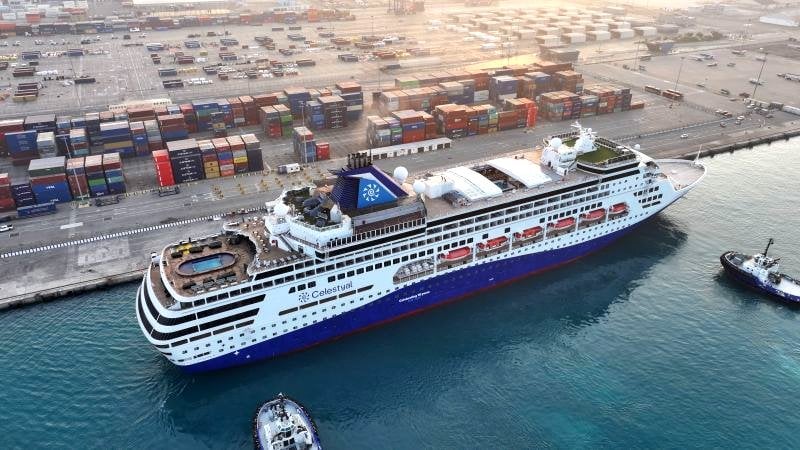
Celestyal Journey cruise ship
Celestyal Cruises' two ships were the first to depart through the Strait of Hormuz (Cruise Saudi file photo of Celestyal Journey)

Published Apr 18, 2026 11:00 AM by The Maritime Executive


Taking advantage of the relative calm with the current ceasefire and reports that the Strait of Hormuz is open, the first of the cruise ships began their outward journey. Six cruise ships had been caught inside the Persian Gulf when hostilities began and have remained for the past 47 days alongside at ports including Port Rashid, UAE, and Doha, Qatar, while their passengers were repatriated.

Three cruise ships, MSC Cruises’ MSC Euribia (184,000 gross tons), and the sister ships Mein Schiff 4 and Mein Schiff 5 (each 99,000 gross tons) were seen on AIS sailing together on Saturday through the Strait of Hormuz. The ships were staying on the southern side, remaining in Omani waters. 

The master of one of the cruise ships reported to the monitoring operation UKMTO (UK Maritime Trade Operations) that it saw a “splash” close to the ship. It happened when they were approximately three nautical miles east of Oman. It is unclear if a missile or drone was fired, but it came after UKMTO received reports that a containership was struck in the Strait and IRGC speedboats shot at a tanker. Iran said on Saturday that the Strait is again closed due to violations in the ceasefire, just a day after both the Iranians and Donald Trump declared the Strait open.

The first of the cruise ships to begin the exit sailings was the Celestyal Discovery (42,289 gross tons), which departed from Port Rashid on April 17 and successfully transited the Strait into the Gulf of Oman on her way to Muscat. Built in 2003, the ship was acquired by Celestyal in 2024 as part of its two-ship fleet. Her running mate, Celestyal Journey (55,819 gross tons), began the transit several hours later, departing from Doha, on her way to the Strait and then to Oman.

For a small company, getting its two ships out of the Persian Gulf and starting the repositioning is critical for Celestyal. The company was forced to cancel its revenue trips through the end of April and hopes to resume commercial service at the beginning of May in the Greek Islands. Celestyal Journey has a capacity for a total of 1,360 passengers, and Celestyal Explorer has a capacity for 1,260 passengers. The two ships in total have a normal complement of just over 1,000 crew.

While making statements to assure the travel community that it was still financially strong, Celestyal also told UK regulators that it was reviewing parts of its business. It had said that due to the financial strain and the uncertainty on the restart, it was looking at possibly a small downsizing of parts of its business.
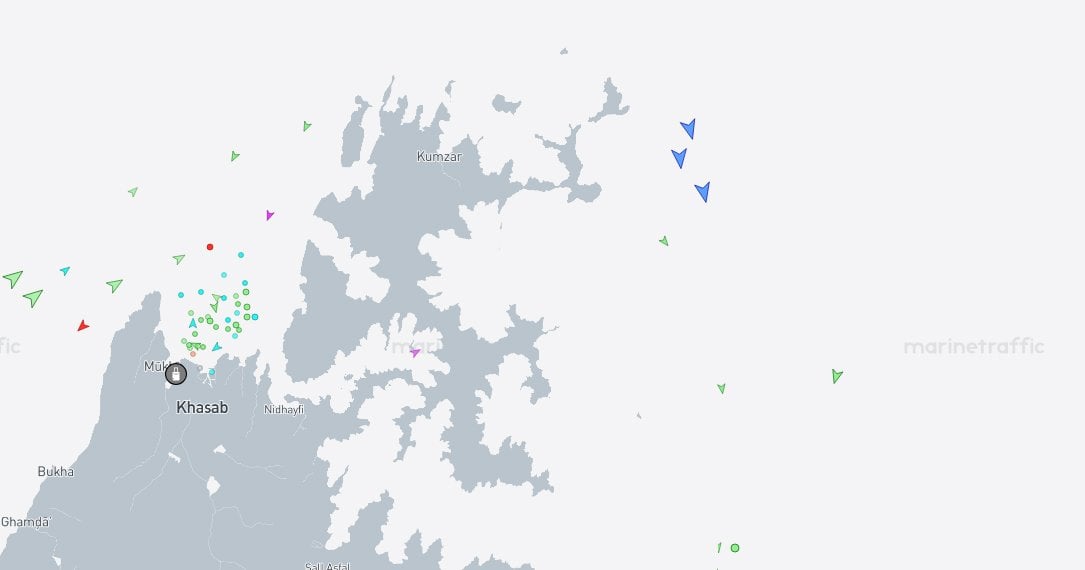
 

Mein Schiff 4, Mein Schiff 5, and MSC Euribia sailing together through the Strait of Hormuz staying in Omani waters on Saturday, April 18 (MarineTraffic)


Hours after the first Celestyal ship appeared to have made the transit, and Donald Trump and the Iranians said the Strait of Hormuz was open to all ships, more cruise ships also got underway. Reports are that the MSC Cruises’ MSC Euribia had to first refuel before she got underway. Similarly, Mein Schiff 5 (99,000 gross tons), operated by the partnership between TUI Group and Royal Caribbean Group, also got underway from Doha bound for Oman, and was followed by her sister ship, Mein Schiff 4.

One other cruise ship, Aroya (150,695 gross tons), has not gotten underway, although its AIS shows that it would be repositioning from Dammam to outside the Strait, going to Fujairah, both in Saudi Arabia. Aroya, registered in Malta, is operated by a company set up by Cruise Saudi. She had been scheduled to reposition to the Mediterranean for the summer season.

MSC days ago proposed that its cruise ship could possibly be used to evacuate stranded crewmembers or others from the Gulf region. As late as the beginning of this week, it said it was uncertain when the ship would be able to leave the Persian Gulf.

All the ships were able to repatriate their passengers, but it is unclear what the different cruise lines did with their crews. TUI had reported that it repatriated the crews from its two ships, leaving only skeleton crews aboard. 

Once the ships exit the Persian Gulf, the cruise line faces another safety decision. Celestyal and Aroya had run their ships through the Red Sea and the Bab al-Mandeb despite the safety concerns from the Houthis. TUI, however, had sent its ships around Africa. All the ships will be sailing just with crew, but so far, only Celestyal Discovery is showing a route to the Suez Canal. TUI and MSC have not said how they will route the ships to the Mediterranean.

The Middle East had been a strong market for the cruise industry, especially for repositioning ships from Europe for winter season cruises. MSC Cruises, however, has already announced its plan to reposition its ships for next year away from the Persian Gulf and the Middle East. MSC World Europa (215,863 gross tons), which was scheduled to sail between November 2026 and April 2027 in the Persian Gulf, will make her first appearance in the Caribbean for a replacement season sailing from Martinique and Guadeloupe.

It is anticipated that other cruise lines that had planned to sail next year in the Persian Gulf will also reposition their ships for alternate destinations.


Iran Fires on Containership, Tanker and Cruise Ship Saying Hormuz is Closed
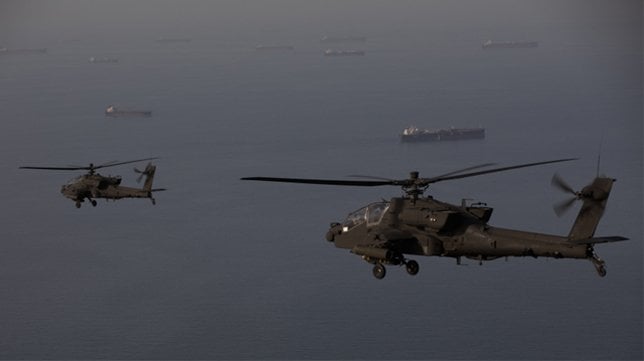
US helicopters over Strait of Hormuz
US overflying the Strait of Hormuz on April 17 (US Central Command)

Published Apr 18, 2026 11:34 AM by The Maritime Executive


Iranian officials on Saturday reversed the previous statements and once again declared the Strait of Hormuz is closed, along with renewing their strict conditions. Several ships are reporting they were fired upon, while others said they were told the Strait is closed and were forced to turn back from their attempts to exit the Persian Gulf.

The monitoring operation UKMTO (UK Maritime Trade Operations) has received reports of a series of incidents taking place on Saturday in the Strait of Hormuz. An unidentified containership reported that it was struck by a projectile while it was sailing 25 nautical miles northeast of Oman in the Strait. The report says that containers were damaged, but there was no fire, and the crew was not injured.

This incident happened after an unidentified tanker also reported that it had been attacked. Two IRGC gunboats approached the tanker and opened fire with no VHF contact or challenge. The crew and vessel reported no damage.

UKMTO also received a report from a cruise ship of a “splash” near the ships as they were transiting the Strait of Hormuz. Yesterday, two cruise ships operated by Celestyal Cruises made it out of the Persian Gulf without incident. Two cruise ships from Germany’s TUI Group, Mein Schiff 4 and Mein Schiff 5, along with MSC Cruises’ MSC Euribia, were showing on AIS as sailing together in Omani waters as they were exiting the Persian Gulf. A total of five cruise ships were attempting to escape the Persian Gulf.

Iranian officials accused the United States of violations of the ceasefire and negotiations. Yesterday, Iran said the Strait would be open to all traffic for the remainder of the ceasefire. Today, they announced that because the United States continues to blockade its ships and ports, the Strait will be immediately closed. 

“Two Indian vessels were forced back west out of the Strait of Hormuz by Iran's Sepah (IRGC) Navy,” reports TankerTrackers.com in a social media posting. “Firing was involved. One of the vessels is an Indian-flagged VLCC supertanker carrying two million barrels of Iraqi oil.”

The latter reports, apparently coming from the hardliners in Iran, said they would continue to assert total control and require all ships to receive permission from the IRCG and that the ships would be subject to inspections. Iran also reported its assertion that it will charge a toll for all ships to transit the Strait.

This came after Trump reported the Strait was open and typed “thank you” to the Iranians on social media. He continues to assert that "It's working out very well," referencing the blockade and the negotiations. He asserted they were close to further announcements after there were reports of a new round of negotiations scheduled for Monday.


Traffic Confusion in the Strait of Hormuz
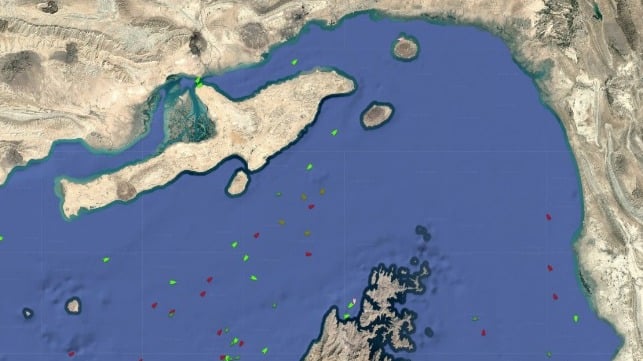
After an initial surge of interest, traffic volume at Hormuz has subsided once more (Pole Star)
After an initial surge of interest, visible traffic volume at Hormuz has subsided. Four boxships (brown) were adrift in the center of the waterway at day's end (Pole Star)

Published Apr 17, 2026 5:18 PM by The Maritime Executive


Iranian Foreign Minister Abbas Araghchi said in a post on X on April 17 that the Strait of Hormuz ‘is open for all commercial vessels for the remainder of the U.S.-brokered 10-day truce between Israeli forces and Iran-backed Hezbollah agreed between Israel and Lebanon’. He said ships would need to follow the Iranian routing past Larak Island, which had been prescribed by Iran's Ports and Maritime Organisation.

Based on AIS data, it appears that there was a small increase in movements early afternoon, but by midnight traffic had eased off. Most traffic was sticking to Iranian waters on the eastern side of the approaches to the Strait. No traffic was seen using the internationally-recognized Traffic Separation Scheme (TSS), but some ships were transiting the Strait on a direct east-west route through Omani waters close in to the Musandam peninsula, and through what Iran has designated a danger area. Amongst these ships was the Maltese-registered cruise liner Celestyal Discovery (IMO 9221566). The multiplicity of routes being followed by different vessels in restricted waters, some moving in opposite directions, inevitably raises the danger of collision when compared to a TSS.


The IMO Secretary-General Arsenio Dominguez, in a speech made at the second French/British-led Hormuz security summit in Paris on April 17, has called for the restitution of previous arrangements in force in the Strait of Hormuz governing the transit of shipping. Both Iran and Oman are legally committed to maintaining the IMO’s Traffic Separation Scheme established in 1968, to which all nations who are signatories to the IMO’s Convention on Safety of Life and Sea are obliged to follow. The Convention has been ratified by 164 nations, including the United States, Iran, Oman plus the remainder of the GCC countries.

The Secretary-General told the conference that until the current war the scheme had worked successfully without interruption, and that the scheme specifically rejects “any imposition of tolls, fees or discriminatory transit measures for the passage through a strait used for international navigation.” Oman, as the owner of the territorial waters in the narrows through which both inward and outward TSS channels pass, has been a strong advocate for maintaining this status quo. As a free navigational service for the international maritime community, Oman maintains a naval station on Didamar Island in the Strait from which ships using the TSS are controlled.


France Opposes U.S. Involvement in Post-War Hormuz Security Mission
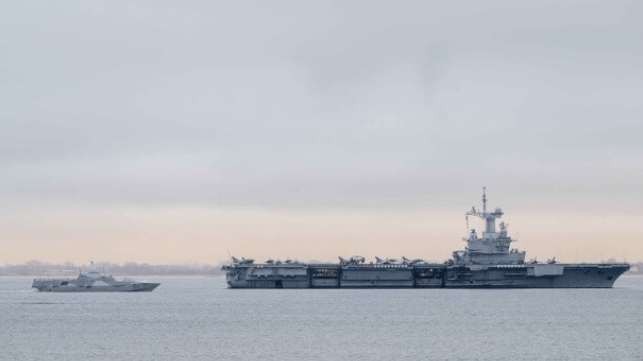
Marine Nationale
File image courtesy Marine Nationale

Published Apr 16, 2026 10:26 PM by The Maritime Executive


France is uninterested in allowing American forces to join a European-led coalition to police the Strait of Hormuz in a post-conflict scenario. This could put it at odds with Germany, where leaders have publicly stated a preference to take a cooperative approach with the U.S. Navy, Politico reports. 

"We won’t enter into a coalition with the U.S.," an official close to the French presidency, speaking to the outlet, "and I don't think the Germans will either."

France has explicitly voiced its intention to launch the mission without American involvement, despite the U.S. Navy's abundant resources. French President Emmanuel Macron has said that only "non-belligerent countries" can join the coalition, ruling out the prospect of recruiting the U.S. forces currently involved in the naval blockade of Iranian seaports. 

Part of the European concern is that EU naval forces could end up getting drawn into the U.S. blockade, or (at minimum) perceived as acting as a part of it. For this reason, the alliance has been at pains to emphasize that its activities would be strictly defensive, aimed solely at restoring shipowner confidence in the safety and security of the strait. The multinational patrol mission would not begin work until after a negotiated peace settlement between Iran and the U.S.

"Whatever the pressure, and there's been some considerable pressure, we're not getting dragged into the war," UK Prime Minister Keir Starmer said Monday in an address to Parliament.

On Friday, the leaders of Italy, France, Germany and the UK will meet again in Paris to discuss the Hormuz security coalition further. They will be joined by more than two dozen other nations (virtually) for a broad dialogue.

 

U.S.-Flagged Cargo Ship Goes Missing During Passage of Typhoon Sinlaku

Sinlaku
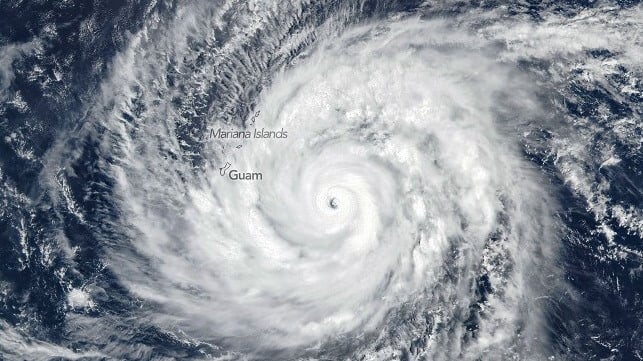
Super Typhoon Sinlaku spins towards the Northern Marianas Islands, April 13. The cargo ship Mariana was under way north of Saipan, in the outer bands of this storm (NASA)

Published Apr 17, 2026 10:28 PM by The Maritime Executive


The U.S. Coast Guard reports that a small U.S.-flagged cargo ship went missing off the coast of Saipan during the passage of Super Typhoon Sinlaku. An upturned hull - not yet identified - was spotted Saturday morning at a position 100 nautical miles away.

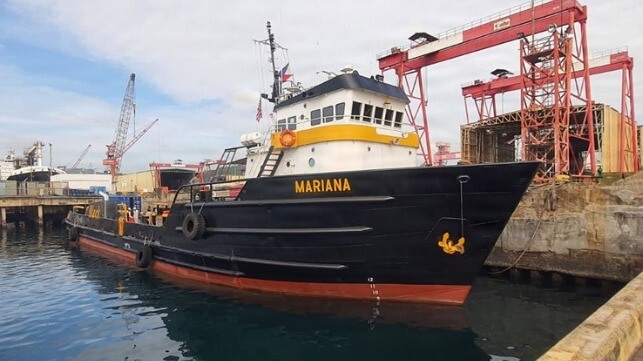
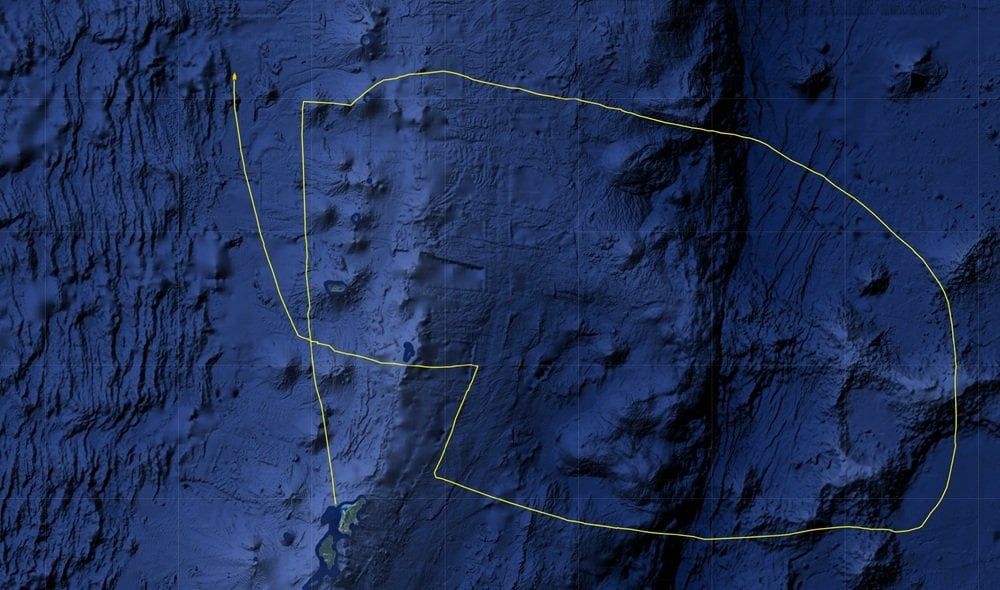
The Mariana is a U.S.-flagged offshore supply vessel repurposed for cargo and employed on a regular freight route between Guam, Tinian and Saipan. On the afternoon of April 11, as Sinlaku approached the islands, Mariana departed Saipan with six crewmembers aboard. She deviated from her usual itinerary, heading north - away from the path of the storm. Over the next few days, Mariana loitered on a circular loop to the east of the island, then resumed her northward track in the early hours of Wednesday morning. 

Courtesy USCG

Courtesy Pole Star Global

Mariana was under way at a position about 140 miles to the northwest of Saipan on Wednesday when her starboard engine failed, according to the Coast Guard. The crew called in the casualty, and Joint Rescue Coordination Center Honolulu took over management of the response. The JRCC set up an hourly communications schedule with the vessel and checked in regularly. All personnel on board were in good health. 

On Wednesday evening, the Coast Guard lost communications with the Mariana and was not able to reestablish contact. The vessel's AIS signal was last received at about 1400 hours local time that afternoon, according to data provided by Pole Star Global, at a position of roughly 17° 25' N / 145° 08' E.

The JRCC dispatched an HC-130J search plane from Honolulu to look for the Mariana on Thursday, but winds in the area were too heavy, and the aircrew was forced to return to Guam. 

Weather conditions in the region were rough due to Super Typhoon Sinlaku, which roared through the Northern Marianas Islands midweek. High wind conditions affecting Saipan and Tinian on Tuesday and Wednesday, and the storm caused damage and widespread power outages on shore. Typhoon-force winds extended out to about 250 nautical miles from the center of the storm. Sinlaku is now moving off to the northeast, but a small craft advisory remains in effect near Saipan, with winds still blowing in the range of 25 knots.

Early Saturday, the Coast Guard conducted another aerial search pattern based on Mariana's last known position. The HC-130 Hercules aircrew spotted a capsized vessel's hull at a position about 34 nautical miles northeast of Pagan, approximately 100 nautical miles from Mariana's last known position and about 200 nautical miles north of Saipan. The Coast Guard is working to identify the sighting, and multiple aircrews - including one from Japan - will be flying further search missions over the weekend.  


Zim's Employees Go Out On Strike as Hapag Merger Moves Forward

ZIM
File image courtesy ZIM

Published Apr 17, 2026 6:29 PM by The Maritime Executive


Employees of Israeli shipping firm Zim have gone on strike to protest the labor terms of the firm's sale to Hapag-Lloyd, according to local media. Union officials told CTech that they are concerned that Hapag-Lloyd wants to offer early retirement to many longtime employees instead of keeping them on. 

On Thursday, about 900 of Zim's employees went out on strike amidst talks on a new collective bargaining agreement for the workers' union. On the side of management, Zim, Hapag-Lloyd and the Israeli investment fund FIMI are all involved in the discussion, according to Israeli business news outlet CTech. The walkout covers almost all of Zim's employees in Israel, and has reportedly shut down the carrier's local operations.

The $4.2 billion merger deal will see Hapag-Lloyd and FIMI buy all of Zim and delist it from the NYSE. Hapag will keep most of the line's global operations and chartered-in tonnage; FIMI will keep Zim's routes to and from Israel, along with its owned tonnage, preserving the carrier's national-defense role.

The sale was controversial from the start, as Zim is part of the origins, identity and security of the modern state of Israel. Critics have warned that the surviving Israeli-owned component of Zim will be too small to prosper, and that the transition will lead to downsizing and layoffs.

It is the second time that the union has initiated labor action since the deal was announced. In mid-February, the workers committee at Zim staged a "warning strike" in protest of the deal and the prospect of job losses, supported by the Histadrut (General Federation of Labor in Israel). The strike ended after the two sides agreed on a $300 million severance package for 500 affected workers. 

"ZIM is not just another company in Israel. It is a strategic asset of the State of Israel, representing a critical link in national security, in the stability of supply and in the ability to maintain trade by sea even in emergencies. Any harm to the stability of the company or to its employees means harm to the national interest of the State of Israel," said the Histadrut in a statement during the February strike.  

The union will soon have different company leadership to negotiate with. Zim CEO Eli Glickman, a previous and unsuccessful bidder for ownership of the shipping line, has announced plans to step down after a six-month notice period. The company's board is searching for a successor. In a statement, Glickman said that he, too, disagreed with the company's sale. 

"In recent months, the Board promoted a merger process with Hapag-Lloyd. While I respect this direction, after careful reflection, I concluded that I cannot continue as CEO. Leadership, to me, is not a title – it is a commitment that must align with the road ahead," he said in a statement. 


Canada Investigates Bridge Allision on the Welland Canal

Welland Canal
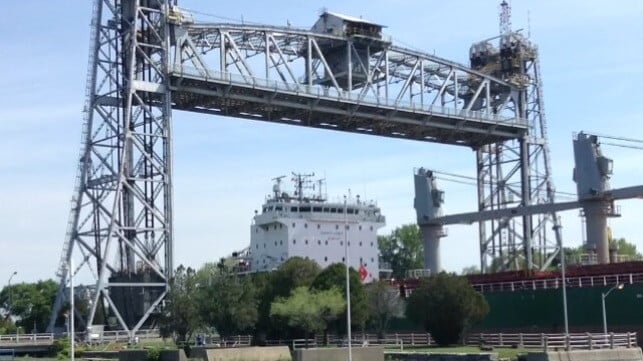
Bridge 21 (file image courtesy Cameron Whitehall / CC BY SA 4.0)

Published Apr 17, 2026 11:42 PM by The Maritime Executive


Marine investigators in Canada have launched an investigation after a general cargo vessel struck a bridge while transiting the busy Welland Canal in Port Colborne, Ontario.

The Transportation Safety Board of Canada (TSB) said it was deploying a team of investigators following the incident involving cargo vessel BBC Tokyo, which came into contact with the Clarence Street Bridge (also known as Bridge 21) while transiting the canal on April 16.

"The TSB will be gathering information and assessing the occurrence," the board said in a statement, without providing further details.

Reports in Ontario indicate the vessel made contact with the east side tower of the bridge while heading downbound in Port Colborne around noon. This prompted the St. Lawrence Seaway Management Corp. to close the bridge for several hours as a precaution.

Immediate assessments showed no major damage to the bridge, and it was reopened about 10 hours later. There were no injuries reported or impacts on the environment. Bystander photos suggest that the BBC Tokyo sustained scrapes along the starboard side. 

Owned and operated by German shipping company Briese Heavylift, the 149-meter BBC Tokyo is a multipurpose heavylift vessel that transports a wide range of cargo, including wind turbine blades. The ship is designed for specialized transport through confined waterways such as the Welland Canal.

Investigators will seek to determine the circumstances in which the vessel struck Bridge 21, one of two vertical lift bridges constructed in Port Colborne in 1929 to accommodate traffic over the canal. The construction of the Port Colborne harbor railway in the mid-1990s meant that Bridge 20, which connected Port Colborne to railway lines on the western side of the canal, was no longer necessary; it was removed in 1997.

Bridge 21, which was designed for cars and connects the east and west sides of the city, has remained in use and is one of three operating vertical lift bridges over the canal, which is part of the St. Lawrence Seaway.

The canal is a busy waterway with about 3,000 ships transporting approximately 40 million tonnes of cargo annually. It has been rebuilt many times over the years to accommodate larger vessels.

BBC Tokyo's strike on Bridge 21 is the latest incident in which a ship transiting the canal has come into contact with a bridge. In August 2001, the lake freighter Windoc collided with Bridge 11 in Allanburg, closing vessel traffic for two days. The accident destroyed the ship's wheelhouse and funnel, ignited a large fire on board, and caused minor damage to the vertical-lift bridge.

Another incident occurred in September 2015 when the cargo ship Lena J collided with Bridge 19 in Port Colborne, forcing its closure to vehicle and pedestrian traffic for months.

Top image: Bridge 21 (file image courtesy Cameron Whitehall / CC BY SA 4.0)


Can Coral be Bred for Better Tolerance to Heatwaves?

Coral bleaching
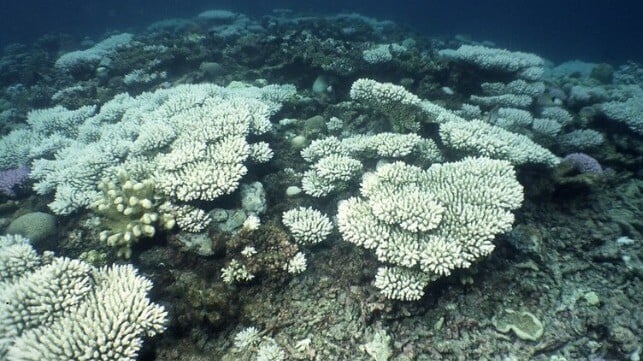
Without intervention, coral bleaching poses an existential threat to reefs

Published Apr 17, 2026 5:18 PM by The Conversation


[By Liam Lachs, Adriana Humanes and James Guest]

As global warming accelerates, extreme heatwaves are causing widespread death of tropical reef corals. Most corals rely on tiny algae cells living within their tissues that photosynthesise and produce energy. Corals use this energy to build their skeletons that create the reef structure.

In our warming world, evolution of heatwave tolerance will be critical for coral populations to persist. Natural adaptation occurs over many generations and is probably already under way. But these adaptation rates could be outpaced by ocean warming.

Scientists and reef managers are now calling for “assisted evolution” to help accelerate adaptation. One promising approach is selective breeding to enhance heatwave tolerance.

Our new study explores how such interventions could help corals withstand future heatwaves.

By examining the genetic basis of heat tolerance and other important life history traits including growth, energy reserves and reproduction, we reveal both the potential, and limits, of evolutionary adaptation to extreme heat stress. This work focuses on a captive-bred coral population we reared over eight years in Palau, an archipelago in the west Pacific.

The field of quantitative genetics can shed light on complex traits such as growth and heat tolerance, which are typically influenced by hundreds to thousands of genes. These tools can help us maximise evolutionary responses to selection, and have long been used in agriculture and animal breeding – from the crops we eat to the dogs we have at home.

Two key concepts are central. “Genetic merit” describes the value of an individual for breeding, and “genetic correlations” describe how traits share their underlying genetic basis.

Estimating these requires measuring certain traits like heat tolerance, and collecting information about relatedness among individuals, such as full- or half-siblings. But this is difficult in wild corals, which disperse widely and are typically unrelated to neighbouring individuals on the reef.

Our captive population, containing both related and unrelated individuals, provides a rare opportunity to apply quantitative genetics to adult corals.

Imagine a major heatwave has caused widespread coral mortality. Which corals should we select for propagation or breeding? dChoosing survivors seems intuitive, but survival alone does not guarantee a genetic predisposition for heat tolerance. A coral could survive by chance – perhaps it was shaded or had higher energy reserves, while all its relatives died. Selecting such individuals for breeding would fail to improve heatwave tolerance of future generations.

However, if entire families tend to survive or perish together, that indicates a genetic basis for heatwave tolerance. Using quantitative genetics in such cases can help make more informed choices.

But if no natural heatwave occurs, how can we proactively identify good corals for management? To do this, we need a proxy: an easy-to-measure trait that is genetically correlated with — and so predicts — an individual’s genetic merit for heatwave survival.

We tested coral heat tolerance under four different temperature exposures, ranging from a month-long exposure of 32.5°C to a rapid heatshock reaching 38.5°C.

These high experimental temperatures go beyond what happens in nature. As the simulated conditions grew hotter, we found ever weaker genetic correlations with marine heatwave survival. These tolerance traits exhibit somewhat distinct underlying biology, so careful trait choice is essential. Testing the wrong proxy traits to identify target corals will fail to deliver any heatwave survival enhancement.

But adaptation involves more than just heat tolerance. Individual growth, energy reserves and reproduction are all critical for healthy populations. If enhancing heat tolerance comes at the cost of traits like these, it would undermine population viability.

Encouragingly, we found no detectable negative genetic correlations among any of the traits we studied.

Matching future stress

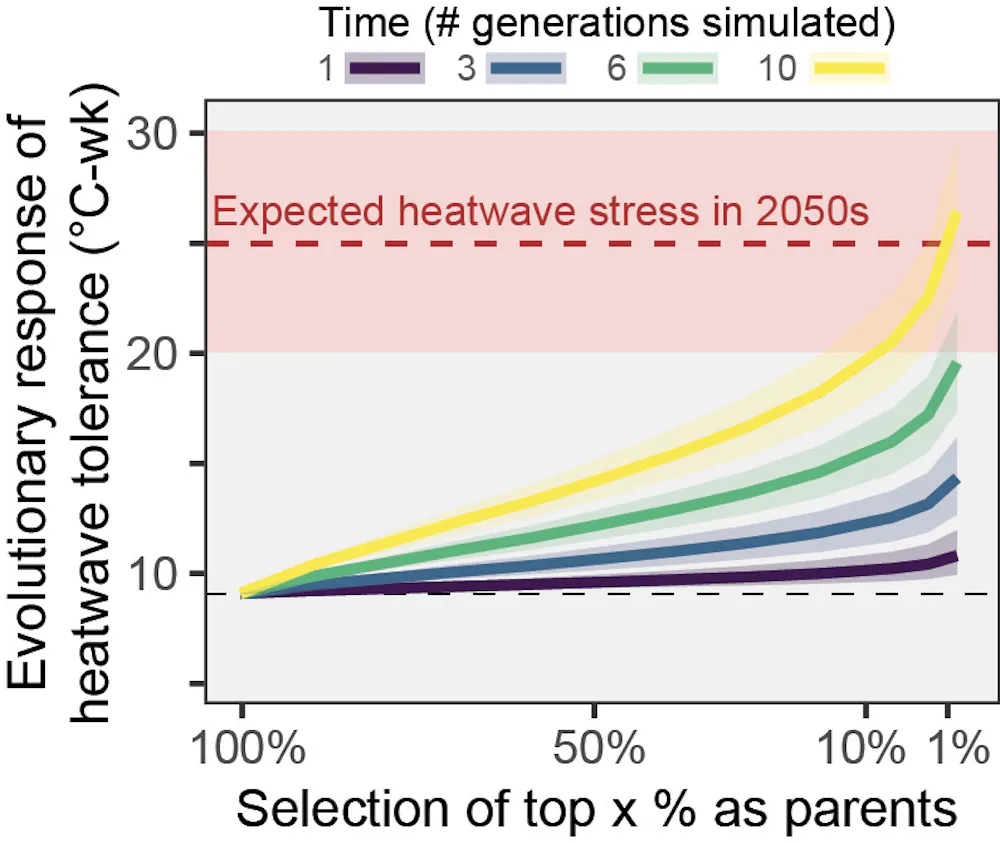
To explore how assisted evolution could enhance heat tolerance over time, we developed a computer simulation. This showed us it was possible to reach tolerance levels capable of withstanding future heatwaves, but only under certain conditions.

Selection needed to directly target long-term heatwave survival. This meant choosing only the top 5% most tolerant corals as parents for breeding, and it had to be repeated over multiple generations.

Evolution of heatwave tolerance in response to selection across ten simulated generations (blue-yellow). Expected future heatwave stress is shown in red. CC BY-NC-ND

But such intense selection introduces other challenges, such as maintaining genetic diversity and scaling up selection efforts. If we need to breed from 50 corals to maintain genetic diversity and do only top-5% selection, then we need to test 1,000 corals. That becomes logistically very challenging.

Our modelling results show assisted evolution can deliver meaningful gains in coral heatwave tolerance. But success will depend on careful trait choice and strong, sustained selection.

Reducing greenhouse gas emissions remains essential to mitigate future warming. Alongside this, strategic management of local ecosystems — from conservation to assisted evolution — will be crucial to help key species adapt and persist in our rapidly warming world.

Liam Lachs is Postdoctoral Research Associate in Climate Change Ecology and Evolution, Newcastle University.

Adriana Humanes is Postdoctoral Research Associate in Coral Reef Ecology, Newcastle University, Newcastle University.

James Guest is a Reader in Coral Reef Ecology, Newcastle University.


This article appears courtesy of The Conversation and may be found in its original form here

The Conversation

The opinions expressed herein are the author's and not necessarily those of The Maritime Executive.

More Teens Used Cannabis After Adult Recreational Use Was Legalized In California


April 19, 2026 
By Eurasia Review

Teen cannabis use in Northern California increased following the legalization of adult recreational cannabis and later declined during the COVID-19 pandemic, according to new research from Kaiser Permanente published in JAMA Network Open.

“We saw adolescent cannabis use begin to rise after legalization was passed and before retail sales began,” said lead author Kelly Young-Wolff, a research scientist with the Kaiser Permanente Division of Research. “This suggests that changes in social norms and perceptions may play an important role in shaping teen behavior.”

The study analyzed 1.3 million well-child pediatric visits among Kaiser Permanente patients aged 13 to 17 between 2011 and 2024. At each well-child visit, adolescents completed a confidential screening questionnaire that included questions about substance use.

Cannabis use among teens had been steadily declining for years prior to legalization, from 10.4% reporting past-year use in 2011 to 6.8% in 2016, the year California voters approved recreational cannabis. After legalization, rates began increasing, reaching 8.1% in 2017 and 9.5% in 2018, and continued to rise as retail sales were implemented.

The authors suggested the increase may reflect shifting perceptions and greater access. Adolescents may have viewed cannabis as more socially acceptable and less risky, alongside increased availability, lower prices, and the rise of vaping products, including flavored options.

Additional studies are needed to better understand how local cannabis policies, including retail access and advertising, affect adolescent cannabis use following state legalization, the researchers said.

The findings are consistent with national data showing declines in adolescent substance use during the pandemic. Possible contributing factors include reduced social interaction, increased parental supervision, and decreased access to substances.
Smarter Forest Practices Could Help Protect B.C. Forests From Wildfire And Climate Stress – Interview


Dr. Suzanne Simard CREDIT: Dr. Suzanne Simard


April 19, 2026
By Eurasia Review


New research from the UBC-based Mother Tree Project is shedding light on how forests respond to harvesting and climate stress, including practices aimed at reducing wildfire risk.

Dr. Suzanne Simard, a forest ecologist who leads the project, has spent more than a decade studying how Douglas fir forests recover after disturbance. The Mother Tree Project has produced multiple peer-reviewed studies, with more findings to come as the long-term research continues. Dr. Simard’s new book, When the Forest Breathes, builds on those findings and outlines a different approach to forest stewardship.

In this Q&A, she discusses what the research shows, what may need to change in B.C.’s forests, and the ideas behind her new book, which she will launch at a public Earth Day event April 22 at UBC’s Chan Centre for the Performing Arts.

What did you learn in your latest study examining thinning practices and wildfire risks near Whistler?

Many communities are thinning forests to reduce wildfire risk, often without clear evidence of the ecological trade-offs. We studied a community forest near Whistler with partners from the Lil’wat Nation and Squamish Nation to better understand those impacts.


In younger forests, careful thinning kept overall carbon levels stable in the short term and increased plant diversity, tripling the number of herb species. But it also simplified the forest structure and increased the dominance of Douglas fir. Forests made up mostly of one species are more vulnerable to pests, disease and climate stress.

More intensive clearing had much larger effects. In nearby old-growth areas, it reduced total ecosystem carbon by 42 per cent, with above-ground carbon five times lower than in intact forests.

The Mother Tree Project is designed as a 100-year study and started more than a decade ago. What have you found so far?

We compare different harvesting approaches in Douglas fir forests across B.C.’s Interior, alongside uncut areas. We track new tree growth, biodiversity and how much carbon is stored in trees and soils.

One clear pattern is that intact and lightly harvested forests store far more carbon. They also support stronger recovery over time.

We’ve also found that leaving mature trees standing—the overstory—helps forests regenerate and adapt, especially as drought becomes more common. These trees support native plant communities and reduce the spread of invasive species. By contrast, more intensive approaches can remove up to half of the carbon stored in a forest ecosystem.

How are Indigenous stewardship practices shaping what forestry could look like in B.C.?

Indigenous peoples have cared for these forests for thousands of years through systems grounded in long-term responsibility and close observation. In this work, First Nations partners are involved from the beginning—helping shape research questions, study design and how results are interpreted and applied.

What needs to change in the forestry sector?

Our research shows that more intensive approaches can disrupt the systems forests rely on to recover. Retaining mature trees and protecting soils, biodiversity and underground fungal networks are all critical, especially as climate extremes increase. It also points to the need to protect remaining intact old-growth and primary forests, which play an outsized role in storing carbon and supporting biodiversity. Equally important, we should ensure that Indigenous leadership is central to how forests are managed.


How does your new book connect to this research?

When the Forest Breathes brings together findings from the Mother Tree Project with what we’re continuing to learn about how forests function as living, connected systems. It’s also about shifting how we see forests, from resources to be extracted, to communities that sustain climate, biodiversity and human well-being.

The Earth Day event brings together science, music, Indigenous performance and legal perspectives. Why does it matter to bring these voices together now?

Science alone doesn’t always change how people relate to forests. Bringing together science, Indigenous leadership, art and music can create a deeper connection and a broader understanding of what’s at stake. It helps people see forests not just as timber, but as living systems that support communities, culture and climate.