Sunday, April 19, 2026


"Energy Dominance" In Action

Middle East crisis has made the U.S. the marginal supplier
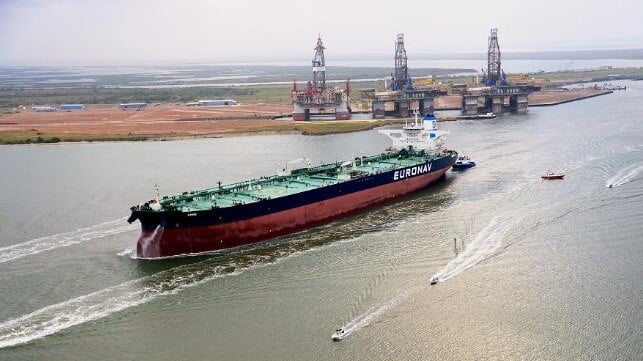
A VLCC in ballast arrives at Port of Corpus Christi (file image courtesy Port of Corpus Christi)

Published Apr 17, 2026 7:38 PM by Erik Broekhuizen / Poten & Partners


The crisis in the Middle East and in particular the effective closure of the Strait of Hormuz has upended global oil markets. Both crude oil and refined products are now in short supply. Refiners around the world are desperate to get their hands on alternative sources of crude oil, almost at any price. However, the options are limited and dwindling. The volume of Russian and Iranian oil in floating storage is shrinking fast since the U.S. has lifted some of its restrictions, allowing countries to buy these previously sanctioned barrels. Several countries have tapped into their strategic petroleum reserves, but most of this oil is being allocated to domestic refiners and not traded internationally. So, the focus has shifted to the Atlantic Basin, where several producers (Venezuela, Canada, Brazil) have some capability to ramp up production and exports. However, in this Weekly Tanker Opinion we want to highlight the United States.

The United States is by far the largest oil producer in the world. In 2018 it surpassed Russia and Saudi Arabia due to advancements in hydraulic fracturing (fracking) and horizontal drilling. U.S. crude oil exports, which (re)started in earnest after the crude export ban was lifted about 10 years ago, quickly ramped up from 500,000 barrels per day in early 2016 to average more than 4.0 Mb/d in 2023 and 2024. According to data released by the U.S. Energy Information Administration (EIA) on Wednesday, exports climbed to 5.2 million bpd, the highest in seven months. This was due to record demand from Asian and European buyers, who are scrambling to replace barrels from the Middle East that are trapped inside the Persian Gulf because of the war.

U.S. crude oil exporters are expanding their reach. Greece has bought U.S. crude for the first time ever, while Turkey bought a cargo for the first time in a year. The one limitation that could cap the U.S. export potential is the specifications of the U.S. crude. West Texas Intermediate (WTI), the main U.S. export, is a light sweet crude, while the refiners are trying to replace medium sour barrels from the Middle East. Mars crude is a medium sour grade produced in the U.S. Gulf of Mexico, but its production volumes are limited.

At the same time as exports surged, U.S. crude imports took a dive. Imports from Canada were at their lowest level for this year. Flows from Saudi Arabia and Iraq were down significantly as well, for obvious reasons. As a result, net imports of crude oil (the difference between imports and exports), narrowed to 66,000 barrels per day last week, the lowest on record in weekly data that goes back to 2001. This means that the U.S. nearly turned into a net crude exporter last week for the first time since World War II. Exports are expected to increase significantly in the coming weeks and this switch to a net exporter could become reality.

However, as a result of this ramp up in flows, the U.S. is approaching its export capacity. The U.S. is capable to export up to 6.0 Mb/d, according to estimates from industry experts. Pipeline capacity and export infrastructure are the limiting factors. U.S. exporters have become very adept at maximizing exports with a combination of direct loadings in U.S. Gulf ports and reverse lightering in designated areas offshore. However, outside of Corpus Christi, which can partially load a VLCC (only one reverse lightering needed), the Louisiana Offshore Oil Port (LOOP) is the only U.S. facility in the U.S. Gulf that can fully load a VLCC. More deepwater terminals are being planned, but none are available during this crisis.

U.S. refiners have also ramped up production and exports, motivated by strong refining margins and high crack spreads. In recent weeks, we have seen seaborne clean product exports (excluding LPG, lubes and chemicals) exceed 3.5 Mb/d driven by increased flows to Asia. These volumes represent record-highs.

The booming crude oil and refined product exports from the U.S. have benefited all tanker segments. The desire to get access to barrels (and get them quickly) has motivated certain Asian charterers to import crude from the U.S. Gulf on Aframaxes, routing it via the Panama Canal. These are not trades you would expect to see in normal circumstances, but these are not normal circumstances. When the conflict ends, vessels will reposition and eventually normal trade patterns will resume. Until that time, we do expect increased volatility and higher freight rates for most tanker segments to continue.

This research note appears courtesy of Poten & Partners.

The opinions expressed herein are the author's and not necessarily those of The Maritime Executive.


Riding the LNG Wave
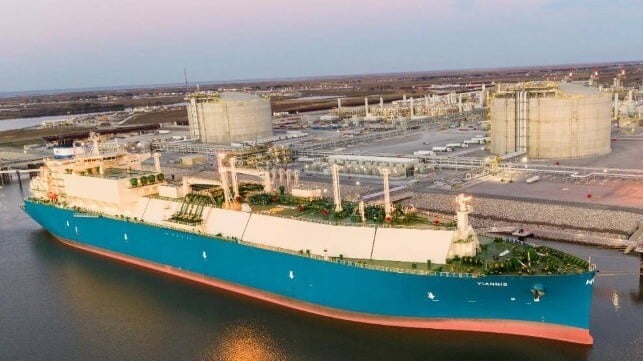
Calcasieu pass
File image courtesy Venture Global LNG

Published Apr 17, 2026 11:42 PM by Sean Hogue

(Article originally published in Jan/Feb 2026 edition.)


The age of global LNG is upon us.

In the latter half of 2025, the global supply increased nearly seven percent. This came largely from North America, which frankly has LNG down to a science. It's abundant here. We know how to extract it in an environmentally conscious manner, and we have the infrastructure to process, store and move it.

New U.S. LNG projects reaching final investment decisions in 2025 included Louisiana LNG, Corpus Christi Trains 8 & 9, CP2 phase 1, Rio Grande LNG Train 4 and Port Arthur Phase 2. This new wave further solidifies the U.S.'s position as the world's largest LNG supplier with global market share expected to increase from about 25 percent last year to 33 percent by the end of the decade.

The rise in supply is expected to drive increased global demand in 2026, primarily from Asia, but also from other global markets as they invest in infrastructure to effectively import this clean, abundant energy source.

And as LNG produces 30 percent less CO? than heavy fuel oil and nearly zero sulfur oxides, it's the cleanest of fossil fuels and an ideal choice for meeting emissions targets over the next decade.

Although achieving that goal is not without its challenges.

Class guidance

In ABS's 2025 Sustainability Outlook, "Vision Meets Reality," the authors rightly note that "from a total cost of ownership perspective, clean fuels currently present a weak economic case due to their high costs and limited availability." And while clean fuels such as ammonia may play a role in the energy transition, they're unlikely to achieve significant decarbonization by 2040.

Conversely, LNG offers lower base costs and an established supply chain, contributing to its being specified in over 70 percent of alternative-fuel newbuild orders.

The cruise, ro/ro, car-carrying and container industries have widely adopted alternative fuels over conventional ones. As ABS has become the largest classification society by gross tonnage in service as of 2025 while maintaining a strong presence in the tanker, gas carrier and containership sectors, it stands perfectly positioned to guide shipowners in their transition journey.

Lloyds Register (LR) is another source of expert advice to vessel operators in their energy transition journey.

The energy transition challenge is really a risk management problem. What fuel to choose? What equipment to purchase? Which ones will be readily available long term with the global infrastructure to support them?

LR's approach is not prescriptive – it remains firmly fuel agnostic. The company has invested significantly in the study of all alternative fuels including its involvement in the Methane Abatement in Maritime Innovation Initiative. This collaboration, led by Safetytech Accelerator, unites industry leaders, tech innovators and maritime stakeholders working together toward the goal of significantly reducing methane emissions from LNG use as a marine fuel.

"Methane slip," as it's known, is the release of unburned methane into the atmosphere from engines using natural gas or liquefied natural gas (LNG) as fuel. It occurs when combustion isn't 100 percent efficient. Because methane is a potent greenhouse gas (over 25 times stronger than CO? over 100 years), minimizing slip is crucial for climate change mitigation.

A significant milestone for LR is the recent renewal surveys and drydocks for P&O Cruises' Iona and Carnival Cruise Line's Mardi Gras – the first major LNG drydocks for large passenger vessels in Europe. The work represented the execution of a highly sophisticated technical program, the culmination of more than a year of detailed collaboration, planning and risk management.

Drydocking a LNG-fueled cruise ship is a fundamentally different exercise from a conventional refit. With vessels spending only a brief period out of service, LNG system maintenance windows are correspondingly narrow.

"Starting 18 months in advance," explains Andrew Bennett, Machinery Survey Policy Manager in LR's Technical Directorate, "we worked closely with the client to understand their specific operation, maintenance and drydocking challenges and helped them develop detailed schedules with optimized surveys agreed in advance and aligned to meet their requirements."

Bunkering Expertise

Running on LNG requires a bunkering infrastructure to support the operation.

Headquartered in Jacksonville, Florida, TOTE Services is playing a critical role in bringing LNG fuel to the maritime sector through their design and construction of the bunker barges Clean Jacksonville and Clean Everglades, operated by Seaside LNG.

The Clean Jacksonville was the first membrane LNG barge in the world. Membrane technology provides a better space-to-weight ratio and replaces the older, pressure vessel technology used previously for storage and transport. TOTE has completed over 400 bunkering operations with the Clean Jacksonville since it was first launched.

Another newbuild support vessel entering the market in 2025 was the Soaring Eagle, an inland tug operated by Colonial Towing, a subsidiary of the Colonial Group. It will operate as part of an articulated tug-and-barge unit transporting up to 32,000 barrels of fuel products between Charleston, South Carolina and Jacksonville, Florida. Soaring Eagle is the fourth vessel to join the current active fleet of Colonial Towing.

Also in Florida, Glander International Bunkering is making moves with a recent change of leadership. Michael Cammarata replaced long-time Managing Director Larry Messina, who retired after 34 years of service. Cammarata has spent his entire career in bunkering, having joined the company back in 1988.

As such, he brings decades of experience and deep market insight into his role. He also brings strong relationships across the industry. His appointment ensures continuity for the Florida office. It also supports future growth and long-term success.

Global FIDs

We've looked at the U.S.-based projects. But what about the rest of the world?

Chevron's Gorgon LNG project received a $2 billion final investment decision at the end of 2025 to develop Stage 3 off Australia's northwest coast. The development will be used as backfill for the existing LNG export operation and will link the offshore Geryon and Eurytion natural gas fields to Gorgon's existing infrastructure on Barrow Island.

In Gorgon Stage 3, six wells will be drilled across two fields, part of a series of planned subsea tiebacks.

Shell's plans for drilling at the Crux field, also offshore northern Australia, were accepted around the same time. Crux's gas will be sent as backfill to the Prelude floating LNG vessel, the world's largest.

In southern Australia, U.S. oil company ConocoPhillips has just finished its first exploration well in the region and will now move to a nearby location for a second well.

Chevron also made a final investment decision early in January to expand Israel's Leviathan natural gas field, a move that will significantly boost gas production in the eastern Mediterranean. The decision comes weeks after Israel finalized what Prime Minister Benjamin Netanyahu described as the largest energy deal in the country's history – a long-term gas export agreement with Egypt valued at about 112 billion shekels, roughly $35 billion.

The Leviathan expansion provides the upstream capacity needed to support those larger export commitments over time. Chevron operates Leviathan alongside Israeli partners. When the expanded project comes online later this decade, it will further help entrench Israel's role as a regional gas supplier.

A strong outlook

With new projects sanctioned, infrastructure expanding, and class, operators and bunkering providers aligned around practical risk management, the LNG market enters 2026 with strong momentum.

Growth will be in delivered capacity, proven technology and real-world operating experience. As demand accelerates and standards continue to evolve, LNG is positioned to remain the cornerstone of global marine and energy growth through the next decade.


The opinions expressed herein are the author's and not necessarily those of The Maritime Executive.


 

US Coast Guard Plans to Homeport First Two Finnish Icebreakers in Alaska

The Davie/Helsinki Shipyard variant of the Arctic Security Cutter (Davie)

Published Apr 16, 2026 10:34 PM by The Maritime Executive


After considerable pressure from Alaska's congressional delegation, the Coast Guard has decided that the first two of its new Finnish-built icebreakers will be homeported in Alaska, where they will be close to sea ice but far from the Lower 48's maintenance infrastructure and housing markets.

The new Arctic Security Cutter is a medium icebreaker program with two designs and two contracting consortia. The first contract award covers up to six hulls and went to Finland's Rauma Marine (two hulls) and Gulf Coast yard Bollinger (four hulls). The second award for up to five hulls went to Canadian shipbuilder Davie and its Finnish subsidiary, Helsinki Shipyard. The first two will be built in Finland, the remaining three at Davie's yards in Port Arthur and Galveston, formerly owned by Gulf Copper. Davie and Helsinki will be working to a different, well-established design. The award will yield two classes of vessel (or variants, per the Coast Guard) in one program of record - not unlike the Littoral Combat Ship (LCS) or the Medium Endurance Cutter (WMEC). 

The first two hulls should deliver by the end of 2028; a third vessel could also end up in Alaska, according to the state's congressional delegation. Once commissioned, they will need homeport facilities and housing for crew and support staff, the service emphasized. 

“Homeporting these two Arctic Security Cutters in Alaska is a decisive step forward in securing America’s Arctic frontier,” said Secretary of Homeland Security Markwayne Mullin in a statement. “These vessels will deliver the enduring operational presence our nation needs to protect sovereignty, deter foreign adversaries, and safeguard vital resources for the American people.”

Alaska is on the front lines of contact with Russian and Chinese interests in the Arctic, and that competition has been heating up in recent years. Adm. Kevin Lunday, Coast Guard commandant, described the homeporting decision as a strategic choice. 

"By strategically positioning these state-of-the-art icebreakers in Alaska, the Coast Guard will maximize our ability to defend our northern border and approaches, while reinforcing America’s maritime dominance in a crucial region," he said. 

The Coast Guard is also investing in infrastructure improvements in Juneau, Alaska to accommodate the newly-purchased commercial icebreaker Aiviq, now renamed USCGC Storis. The new base will cost about $300 million - but may not be ready until 2029, Adm. Lunday told a Senate hearing in February. 

The West Coast's large commercial drydock facilities are concentrated in Seattle, Portland and San Diego, supported by a network of suppliers and well-developed housing and labor markets. Almost all of the large fishing companies, cruise operators and domestic shipping services for the Alaska market are based out of Seattle, the closest metropolis in the Continental U.S. to the northern reaches of the Pacific. Seattle is also the Coast Guard's primary base for icebreakers. 

Alaska has a critical housing shortage, a hurdle for opening new operations centers in the state. "In almost every community, housing is an issue, and it’s an issue throughout the whole state," said Sen. Dan Sullivan (R-AK), speaking to the Alaska Beacon. "This is where we need to get the state, the cities, the boroughs also, to come to the table."


Pacific Basin Cancels Methanol Vessels Due to Climate-Rules Uncertainty

Pacific Basin
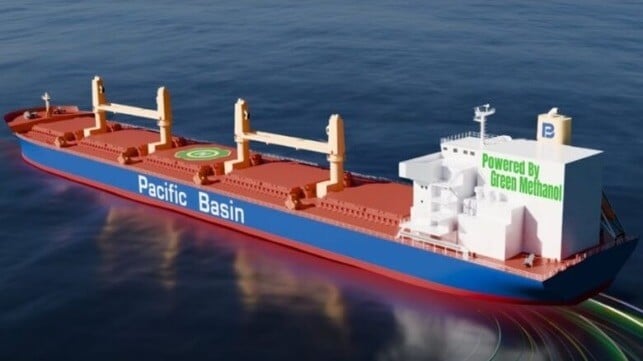
Illustration courtesy Pacific Basin

Published Apr 17, 2026 3:37 PM by The Maritime Executive


Pacific Basin Shipping, one of the world's largest operators of dry bulk vessels, is partially abandoning plans to anchor its future fleet growth on green methanol after terminating a contract for four dual-fuel Ultramax newbuilds.

As one of the world's leading owners and operators of Handysize, Supramax and Ultramax dry bulk vessels, Pacific Basin operates around 250 ships, of which over 100 are owned and the rest chartered. Four years ago, the Hong Kong-based shipping company said it was putting green methanol at the center of its ambitions to build zero-emission vessels. In November 2024, it went ahead and placed its first order for the construction of four 64,000 dwt dual-fuel vessels at Nihon Shipyard Co. through Mitsui & Co.

In a reversal announced April 16, the company announced it had reached agreements with the two yards to terminate the contract for the four vessels and convert the agreements into a purchase of four conventional Ultramax newbuilds, with an option for two more. In making the decision, Pacific Basin cited renewed uncertainty around the timing and final shape of a global regulatory framework designed to drive the green fuel transition.

Converting the deal from dual-fuel to conventional vessels means the company will spend $39.2 million for each of the vessels ($156.8 million cumulatively) as opposed to spending $45.4 million each on the methanol ships ($181.6 million cumulatively). The vessels are expected to be delivered between 2028 and mid-2029.

Despite altering the deal, the company highlighted that the agreement with Mitsui & Co. includes an option to acquire two 64,000 dwt dual-fuel (methanol/fuel oil) Ultramax newbuilds at a cost of $45.5 million each ($91 million in total) with delivery expected between April 2030 and March 2031.

Pacific Basin said that the decision is a financially prudent response to uncertainty around the timing and final shape of the Net-Zero Framework (NZF), the IMO proposal designed to create a global standard for shipping decarbonization. In October last year, International Maritime Organization member states failed to adopt the previously agreed-upon framework owing to political divisions. Members voted to adjourn discussions for one year, and the mechanism's future is uncertain. 

Though Pacific Basin expects some form of a NZF-type global mechanism to be adopted eventually, the company sees a better deal for its shareholders if it avoids a near-term investment in expensive dual-fuel vessels. 

"The disciplined renewal and growth of our fleet with modern, efficient ships is a core priority for Pacific Basin so that we can continue to meet strong customer demand, comply with tightening fuel-efficiency regulations, increase our market outperformance and deliver long-term shareholder value," said Martin Fruergaard, Pacific Basin CEO.

He added that while the newbuild commitments align well with that priority, the importance of having vessels with super-efficient designs cannot be overstated in the current high-fuel-cost environment.

Pacific Basin has also placed another order for two 40,000 dwt Handysize newbuilds at a cost of $59.6 million. The ships, in addition to an order for two placed last year, will be built at China's Jiangmen Nanyang Ship Engineering Co. yard and are expected to be delivered in the second half of 2028.  


Russian Strike Hits Foreign-Flagged Bulker Off Coast of Odesa

Russian strike
Courtesy State Emergency Service of Ukraine

Published Apr 15, 2026 9:46 PM by The Maritime Executive


On Tuesday morning, Russian forces hit a foreign-flagged merchant ship at a port in the Odesa region, according to Ukrainian authorities. It is the latest in a long string of Russian strikes on civilian vessels in and around Ukraine, part of Moscow's effort to damage the Ukrainian economy. 

"A Russian drone hit a civilian merchant ship under the Liberian flag, which was heading along the sea corridor to load corn," Ukraine’s Ministry of Community and Territorial Development said in a brief notice. "The crew managed to quickly extinguish the fire. Fortunately, no one was injured. The ship continued its movement and reached the port."

Reuters has identified the vessel as the Lady Maris (IMO 9228071), a bulker flagged in Liberia, owned in the UAE and managed in India.

In addition, the Russian strike hit the port of Izmail and damaged an additional ship flagged in Panama.

Operations continue, the agency said. "Ukraine continues to ensure the operation of the sea corridor and fulfill export obligations, despite constant risks," said the ministry. 

On Wednesday morning, Russia struck again with a volley of ballistic missiles and a total of more than 300 long-range attack drones, according to Ukraine's air force - the majority reportedly built to the Iranian-derived Shahed drone design. Port-related warehouses and administrative buildings were hit in the Odesa region.

Russian attacks have reportedly cut Ukraine's grain shipping activity by about one third, forcing exporters and shipowners to continually reroute shipments from one loading terminal to another in order to take advantage of functioning infrastructure. The attacks could worsen, warned Ukrainian President Volodymyr Zelensky: the country's armed forces have so far been able to fend off the worst Russian ballistic missile strikes using U.S.-supplied Patriot batteries and PAC-3 interceptors, paid for by European nations and donated to Ukraine. Those interceptors are now in high demand and short supply due to ultra-high consumption in the Mideast, a consequence of the Israeli-American conflict with Iran. 

"If the war drags on, there will be fewer weapons for Ukraine," Zelensky told German broadcaster ZDF. "We have such a shortage right now – worse than ever."


Royal Navy Pays a Visit to Pitcairn, the UK's Sole Pacific Territory

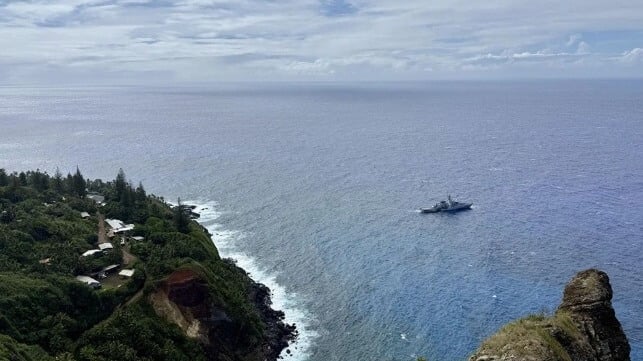
HMS Tamar off Pitcairn (Royal Navy)

Published Apr 17, 2026 8:56 PM by The Maritime Executive


Unlike the French, the United Kingdom has for the most part given up what used to be its empire, retaining only a ceremonial role in the governance of most its former colonies. However, the UK still has direct control of a small number of overseas territories, sufficiently spread around the world for US military planners to be able to usually find a small British-owned island somewhere close by should a crisis arise, and from which operations can be supported.

One such speck of red in the middle of nowhere is the island of Pitcairn, deep in the southern Pacific Ocean. Pitcairn is still inhabited by descendants of Royal Navy mutineers who deserted from HMS Bounty in 1789. But historical antagonisms appear to have been put aside by descendants of the mutineers during a visit in early April by the offshore patrol vessel HMS Tamar (P233).

HMS Tamar conducted fishery protection patrols across the Pitcairn 325nm-wide sea area, which includes outlying unpopulated Henderson Island, Oeno, Dulcie and Sandy Island. The embarked Diving & Threat Exploitation Group on board HMS Tamar also neutralized a large quantity of unstable ammonium nitrate on Pitcairn Island. With their disposal task completed, the embarked team is now available for mine clearance tasks elsewhere.

HMS Tamar is a River Class Batch 2 offshore patrol vessel built by BAE Systems on the Clyde in Scotland. The type has been sold to Brazil, Bahrain and Thailand, where armed with a 76mm gun it has been active in maritime disputes with Cambodia. Unlike some other vessels in the Royal Navy beset with maintenance issues, the River Class have proven to be remarkably reliable, to the extent that they can be double-crewed to increase their time at sea.

The principal criticism of the Batch 2 ships is that for very little extra money the hulls could have supported a hangar to have a helicopter permanently on board plus further weapons systems, including the 76 mm gun with which Thai ships are equipped. HMS Tamar and her sister ship HMS Spey (P224) are permanently based in the Indo-Pacific, and are home-ported at the UK Fleet Support Base in Singapore.


Sweden Busts Bulker for Washing Russian Coal Residue Into the Baltic

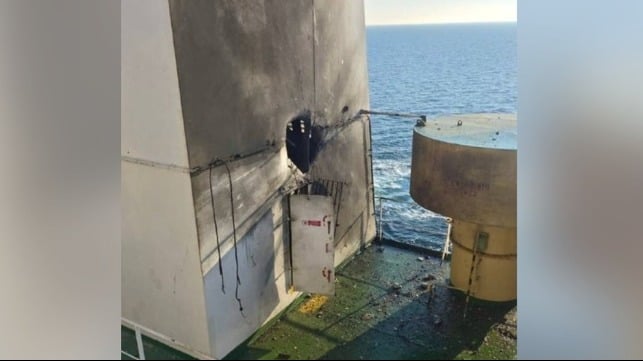
Courtesy Kustbevakeningen

Published Apr 12, 2026 8:10 PM by The Maritime Executive


After years of tolerating under-regulated tonnage linked to Russian trade in the Baltic, NATO member nations have begun cracking down on traffic to and from the St. Petersburg region. That initiative has focused on irregularities aboard "shadow fleet" tankers, but all vessels capable of dragging anchor across a subsea cable are getting scrutiny. The latest boarding occurred Sunday morning, when Swedish authorities caught a Chinese-owned bulker in an apparent marine pollution violation. 

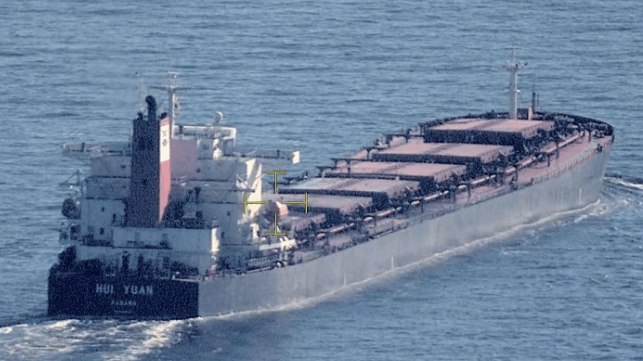
At about 0800 on Sunday morning, the Swedish Coast Guard patrol vessel KBV 003 interdicted the Panama-flagged bulker Hui Yuan at a position off Ystad, to the south of Sweden. Officials with the Kustbevakningen suspected that the ship had washed off coal residue into the water, which is forbidden in Sweden's Baltic waters. 

On questioning, the master of the vessel admitted that he "committed these crimes out of negligence," Swedish prosecutor Hakan Andersson told SVT. The ship posted a bond to cover the possibility of future fines, and she has been allowed to depart, as is customary. 

Hui Yuan is Panama-flagged and owned in Guangzhou. She loaded a cargo of coal at the Utramar terminal near Ust-Luga, Russia last week, and is now broadcasting her destination as Las Palmas, Spain. It is unclear whether she would intend to unload in Las Palmas, since the EU has banned the importation of Russian coal.

"The shipping industry should know that Swedish authorities are working close together to maintain order at sea. We are acting to increase maritime safety and protect the environment. If there is a suspicious vessel, we do intervene, based on the prevailing conditions," said Daniel Stenling, Deputy Head of the Swedish Coast Guard’s Operations Department.


Tankers U-Turn in Persian Gulf as Iran Closes Hormuz Again

  • Iran's IRGC declared Saturday that control of the Strait of Hormuz has 'returned to its previous state,' effectively re-closing the waterway hours after Trump announced it was fully open.

  • Tehran says the continued U.S. naval blockade of Iranian ports -- which Trump vowed to maintain until a nuclear deal is reached -- constitutes a violation of the ceasefire and amounts to 'piracy.'

  • Ship tracking data shows minimal traffic through the strait despite conflicting claims, with some tanker convoys attempting passage while others turned back in the Persian Gulf.

...and it's closed.


Iran's Islamic Revolutionary Guard Corps declared Saturday that control of the strait has "returned to its previous state," walking back a brief opening announced Friday and directly contradicting a claim from President Donald Trump that the world's most critical oil chokepoint was fully open for business.

Tehran's joint military command said the strait is now under "strict management and control of the armed forces" and accused the U.S. of "piracy" -- a reference to Washington's ongoing naval blockade of Iranian ports, which the IRGC says violates the terms of the ceasefire. Until that blockade is lifted, the strait stays shut.

The reversal came just hours after oil markets had already priced in the opening. Brent crude fell roughly 9.5% to around $89.89 a barrel Friday after Trump announced the strait was open. WTI slid more than 10% to $84.89. Those moves are likely to reverse when markets open.

The back-and-forth traces a familiar arc from this conflict. The war began Feb. 28 when the U.S. and Israel struck Iranian military targets. Iran shut the strait within days. After weeks of aerial bombardment and failed negotiations, the U.S. imposed a full naval blockade of Iranian ports on April 13 following the collapse of Islamabad talks. Iran agreed to limited reopening after a Lebanon ceasefire took hold -- then reversed course Saturday after Trump said the American blockade "will remain in full force" until Tehran signs off on a nuclear deal.

"As President Trump said, the Strait of Hormuz is completely open for business, and Iran has agreed to never close the Strait again," White House deputy press secretary Anna Kelly said in a statement. The statement made no reference to the IRGC's announcement.

On the water, the picture is murky. Reuters reported a convoy of liquefied petroleum gas carriers and product tankers departing the Gulf and transiting the strait. Bloomberg, meanwhile, reported several oil tankers had turned back in the Persian Gulf after appearing to attempt passage. Ship tracking data confirms minimal traffic in the region.

The conditions Iran has set for transit haven't changed: commercial vessels only, no cargo or ships linked to "hostile countries," movement along Iranian-designated routes, and coordination with IRGC forces. Military vessels are barred. In practice, that means most Western-linked shipping still can't move freely.

The strait handles roughly 20% of global oil supply -- around 20 million barrels per day. The IEA has warned recovery of Middle East oil output could take up to two years. Pakistan's army chief wrapped up a three-day visit to Tehran on Friday aimed at arranging a second round of nuclear talks after Islamabad produced no deal.

For now, the strait is closed, the blockade holds, and the gap between what Washington is saying and what Tehran is doing is as wide as it has been since the conflict began.

By Michael Kern for Oilprice.com

Cruise Ship Reports “Splash” in Strait as Five Ships Escape Persian Gulf

Celestyal Journey cruise ship
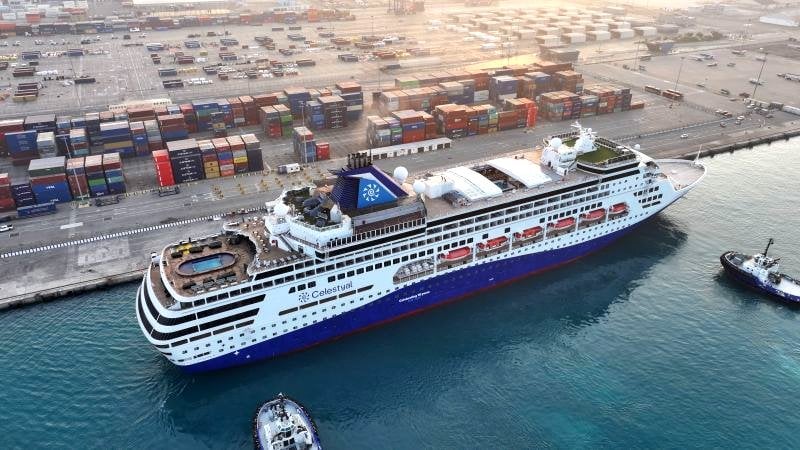
Celestyal Cruises' two ships were the first to depart through the Strait of Hormuz (Cruise Saudi file photo of Celestyal Journey)

Published Apr 18, 2026 11:00 AM by The Maritime Executive


Taking advantage of the relative calm with the current ceasefire and reports that the Strait of Hormuz is open, the first of the cruise ships began their outward journey. Six cruise ships had been caught inside the Persian Gulf when hostilities began and have remained for the past 47 days alongside at ports including Port Rashid, UAE, and Doha, Qatar, while their passengers were repatriated.

Three cruise ships, MSC Cruises’ MSC Euribia (184,000 gross tons), and the sister ships Mein Schiff 4 and Mein Schiff 5 (each 99,000 gross tons) were seen on AIS sailing together on Saturday through the Strait of Hormuz. The ships were staying on the southern side, remaining in Omani waters. 

The master of one of the cruise ships reported to the monitoring operation UKMTO (UK Maritime Trade Operations) that it saw a “splash” close to the ship. It happened when they were approximately three nautical miles east of Oman. It is unclear if a missile or drone was fired, but it came after UKMTO received reports that a containership was struck in the Strait and IRGC speedboats shot at a tanker. Iran said on Saturday that the Strait is again closed due to violations in the ceasefire, just a day after both the Iranians and Donald Trump declared the Strait open.

The first of the cruise ships to begin the exit sailings was the Celestyal Discovery (42,289 gross tons), which departed from Port Rashid on April 17 and successfully transited the Strait into the Gulf of Oman on her way to Muscat. Built in 2003, the ship was acquired by Celestyal in 2024 as part of its two-ship fleet. Her running mate, Celestyal Journey (55,819 gross tons), began the transit several hours later, departing from Doha, on her way to the Strait and then to Oman.

For a small company, getting its two ships out of the Persian Gulf and starting the repositioning is critical for Celestyal. The company was forced to cancel its revenue trips through the end of April and hopes to resume commercial service at the beginning of May in the Greek Islands. Celestyal Journey has a capacity for a total of 1,360 passengers, and Celestyal Explorer has a capacity for 1,260 passengers. The two ships in total have a normal complement of just over 1,000 crew.

While making statements to assure the travel community that it was still financially strong, Celestyal also told UK regulators that it was reviewing parts of its business. It had said that due to the financial strain and the uncertainty on the restart, it was looking at possibly a small downsizing of parts of its business.
 

Mein Schiff 4, Mein Schiff 5, and MSC Euribia sailing together through the Strait of Hormuz staying in Omani waters on Saturday, April 18 (MarineTraffic)


Hours after the first Celestyal ship appeared to have made the transit, and Donald Trump and the Iranians said the Strait of Hormuz was open to all ships, more cruise ships also got underway. Reports are that the MSC Cruises’ MSC Euribia had to first refuel before she got underway. Similarly, Mein Schiff 5 (99,000 gross tons), operated by the partnership between TUI Group and Royal Caribbean Group, also got underway from Doha bound for Oman, and was followed by her sister ship, Mein Schiff 4.

One other cruise ship, Aroya (150,695 gross tons), has not gotten underway, although its AIS shows that it would be repositioning from Dammam to outside the Strait, going to Fujairah, both in Saudi Arabia. Aroya, registered in Malta, is operated by a company set up by Cruise Saudi. She had been scheduled to reposition to the Mediterranean for the summer season.

MSC days ago proposed that its cruise ship could possibly be used to evacuate stranded crewmembers or others from the Gulf region. As late as the beginning of this week, it said it was uncertain when the ship would be able to leave the Persian Gulf.

All the ships were able to repatriate their passengers, but it is unclear what the different cruise lines did with their crews. TUI had reported that it repatriated the crews from its two ships, leaving only skeleton crews aboard. 

Once the ships exit the Persian Gulf, the cruise line faces another safety decision. Celestyal and Aroya had run their ships through the Red Sea and the Bab al-Mandeb despite the safety concerns from the Houthis. TUI, however, had sent its ships around Africa. All the ships will be sailing just with crew, but so far, only Celestyal Discovery is showing a route to the Suez Canal. TUI and MSC have not said how they will route the ships to the Mediterranean.

The Middle East had been a strong market for the cruise industry, especially for repositioning ships from Europe for winter season cruises. MSC Cruises, however, has already announced its plan to reposition its ships for next year away from the Persian Gulf and the Middle East. MSC World Europa (215,863 gross tons), which was scheduled to sail between November 2026 and April 2027 in the Persian Gulf, will make her first appearance in the Caribbean for a replacement season sailing from Martinique and Guadeloupe.

It is anticipated that other cruise lines that had planned to sail next year in the Persian Gulf will also reposition their ships for alternate destinations.


Iran Fires on Containership, Tanker and Cruise Ship Saying Hormuz is Closed

US helicopters over Strait of Hormuz
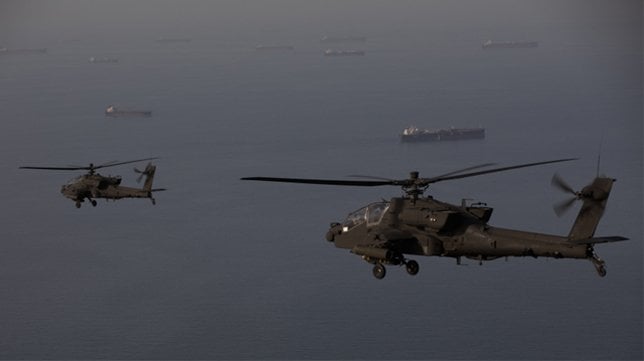
US overflying the Strait of Hormuz on April 17 (US Central Command)

Published Apr 18, 2026 11:34 AM by The Maritime Executive


Iranian officials on Saturday reversed the previous statements and once again declared the Strait of Hormuz is closed, along with renewing their strict conditions. Several ships are reporting they were fired upon, while others said they were told the Strait is closed and were forced to turn back from their attempts to exit the Persian Gulf.

The monitoring operation UKMTO (UK Maritime Trade Operations) has received reports of a series of incidents taking place on Saturday in the Strait of Hormuz. An unidentified containership reported that it was struck by a projectile while it was sailing 25 nautical miles northeast of Oman in the Strait. The report says that containers were damaged, but there was no fire, and the crew was not injured.

This incident happened after an unidentified tanker also reported that it had been attacked. Two IRGC gunboats approached the tanker and opened fire with no VHF contact or challenge. The crew and vessel reported no damage.

UKMTO also received a report from a cruise ship of a “splash” near the ships as they were transiting the Strait of Hormuz. Yesterday, two cruise ships operated by Celestyal Cruises made it out of the Persian Gulf without incident. Two cruise ships from Germany’s TUI Group, Mein Schiff 4 and Mein Schiff 5, along with MSC Cruises’ MSC Euribia, were showing on AIS as sailing together in Omani waters as they were exiting the Persian Gulf. A total of five cruise ships were attempting to escape the Persian Gulf.

Iranian officials accused the United States of violations of the ceasefire and negotiations. Yesterday, Iran said the Strait would be open to all traffic for the remainder of the ceasefire. Today, they announced that because the United States continues to blockade its ships and ports, the Strait will be immediately closed. 

“Two Indian vessels were forced back west out of the Strait of Hormuz by Iran's Sepah (IRGC) Navy,” reports TankerTrackers.com in a social media posting. “Firing was involved. One of the vessels is an Indian-flagged VLCC supertanker carrying two million barrels of Iraqi oil.”

The latter reports, apparently coming from the hardliners in Iran, said they would continue to assert total control and require all ships to receive permission from the IRCG and that the ships would be subject to inspections. Iran also reported its assertion that it will charge a toll for all ships to transit the Strait.

This came after Trump reported the Strait was open and typed “thank you” to the Iranians on social media. He continues to assert that "It's working out very well," referencing the blockade and the negotiations. He asserted they were close to further announcements after there were reports of a new round of negotiations scheduled for Monday.


Traffic Confusion in the Strait of Hormuz

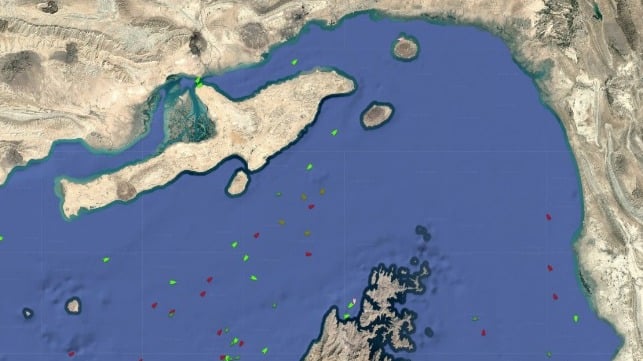
After an initial surge of interest, traffic volume at Hormuz has subsided once more (Pole Star)
After an initial surge of interest, visible traffic volume at Hormuz has subsided. Four boxships (brown) were adrift in the center of the waterway at day's end (Pole Star)

Published Apr 17, 2026 5:18 PM by The Maritime Executive


Iranian Foreign Minister Abbas Araghchi said in a post on X on April 17 that the Strait of Hormuz ‘is open for all commercial vessels for the remainder of the U.S.-brokered 10-day truce between Israeli forces and Iran-backed Hezbollah agreed between Israel and Lebanon’. He said ships would need to follow the Iranian routing past Larak Island, which had been prescribed by Iran's Ports and Maritime Organisation.

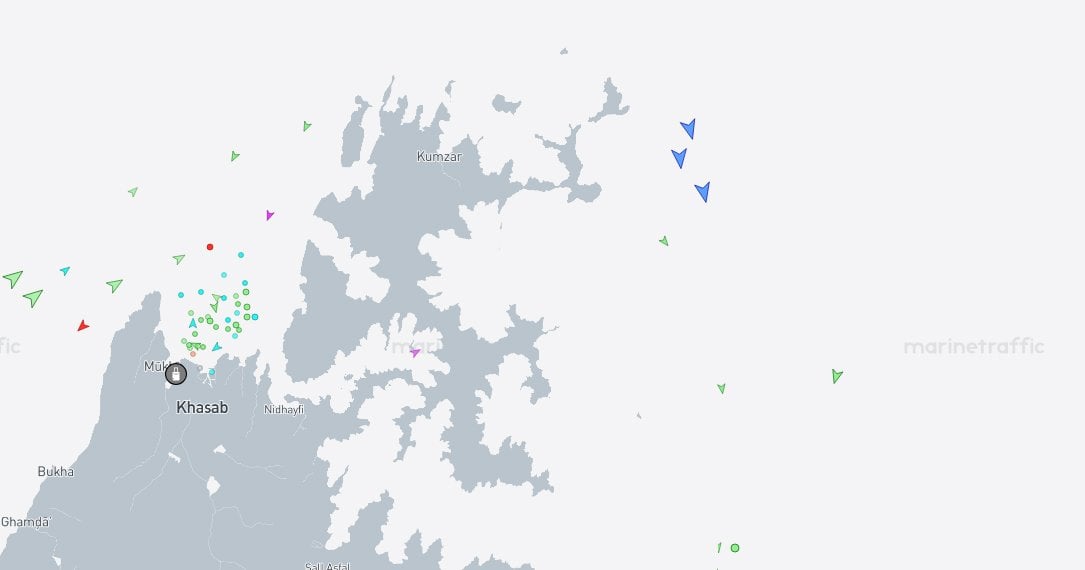
Based on AIS data, it appears that there was a small increase in movements early afternoon, but by midnight traffic had eased off. Most traffic was sticking to Iranian waters on the eastern side of the approaches to the Strait. No traffic was seen using the internationally-recognized Traffic Separation Scheme (TSS), but some ships were transiting the Strait on a direct east-west route through Omani waters close in to the Musandam peninsula, and through what Iran has designated a danger area. Amongst these ships was the Maltese-registered cruise liner Celestyal Discovery (IMO 9221566). The multiplicity of routes being followed by different vessels in restricted waters, some moving in opposite directions, inevitably raises the danger of collision when compared to a TSS.


The IMO Secretary-General Arsenio Dominguez, in a speech made at the second French/British-led Hormuz security summit in Paris on April 17, has called for the restitution of previous arrangements in force in the Strait of Hormuz governing the transit of shipping. Both Iran and Oman are legally committed to maintaining the IMO’s Traffic Separation Scheme established in 1968, to which all nations who are signatories to the IMO’s Convention on Safety of Life and Sea are obliged to follow. The Convention has been ratified by 164 nations, including the United States, Iran, Oman plus the remainder of the GCC countries.

The Secretary-General told the conference that until the current war the scheme had worked successfully without interruption, and that the scheme specifically rejects “any imposition of tolls, fees or discriminatory transit measures for the passage through a strait used for international navigation.” Oman, as the owner of the territorial waters in the narrows through which both inward and outward TSS channels pass, has been a strong advocate for maintaining this status quo. As a free navigational service for the international maritime community, Oman maintains a naval station on Didamar Island in the Strait from which ships using the TSS are controlled.


France Opposes U.S. Involvement in Post-War Hormuz Security Mission

Marine Nationale
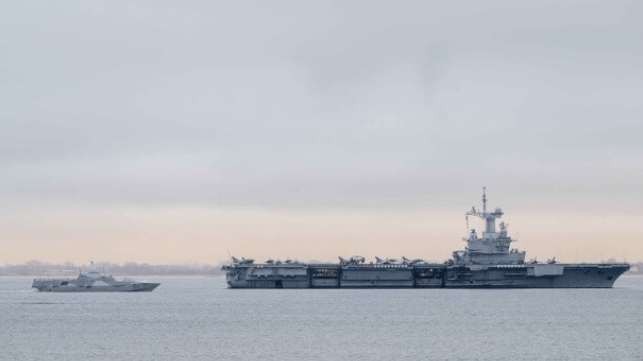
File image courtesy Marine Nationale

Published Apr 16, 2026 10:26 PM by The Maritime Executive


France is uninterested in allowing American forces to join a European-led coalition to police the Strait of Hormuz in a post-conflict scenario. This could put it at odds with Germany, where leaders have publicly stated a preference to take a cooperative approach with the U.S. Navy, Politico reports. 

"We won’t enter into a coalition with the U.S.," an official close to the French presidency, speaking to the outlet, "and I don't think the Germans will either."

France has explicitly voiced its intention to launch the mission without American involvement, despite the U.S. Navy's abundant resources. French President Emmanuel Macron has said that only "non-belligerent countries" can join the coalition, ruling out the prospect of recruiting the U.S. forces currently involved in the naval blockade of Iranian seaports. 

Part of the European concern is that EU naval forces could end up getting drawn into the U.S. blockade, or (at minimum) perceived as acting as a part of it. For this reason, the alliance has been at pains to emphasize that its activities would be strictly defensive, aimed solely at restoring shipowner confidence in the safety and security of the strait. The multinational patrol mission would not begin work until after a negotiated peace settlement between Iran and the U.S.

"Whatever the pressure, and there's been some considerable pressure, we're not getting dragged into the war," UK Prime Minister Keir Starmer said Monday in an address to Parliament.

On Friday, the leaders of Italy, France, Germany and the UK will meet again in Paris to discuss the Hormuz security coalition further. They will be joined by more than two dozen other nations (virtually) for a broad dialogue.


U.S.-Flagged Cargo Ship Goes Missing During Passage of Typhoon Sinlaku

Sinlaku
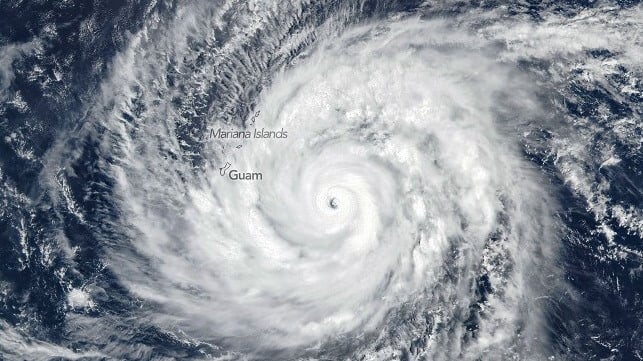
Super Typhoon Sinlaku spins towards the Northern Marianas Islands, April 13. The cargo ship Mariana was under way north of Saipan, in the outer bands of this storm (NASA)

Published Apr 17, 2026 10:28 PM by The Maritime Executive


The U.S. Coast Guard reports that a small U.S.-flagged cargo ship went missing off the coast of Saipan during the passage of Super Typhoon Sinlaku. An upturned hull - not yet identified - was spotted Saturday morning at a position 100 nautical miles away.

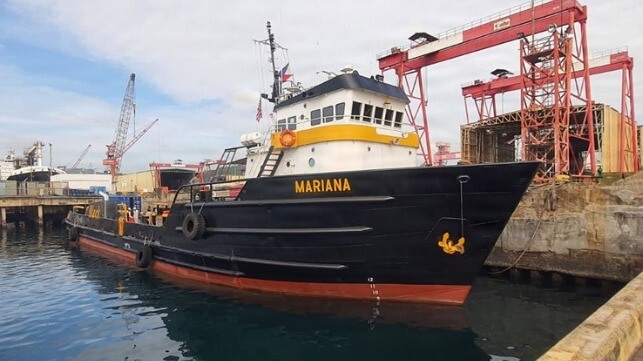
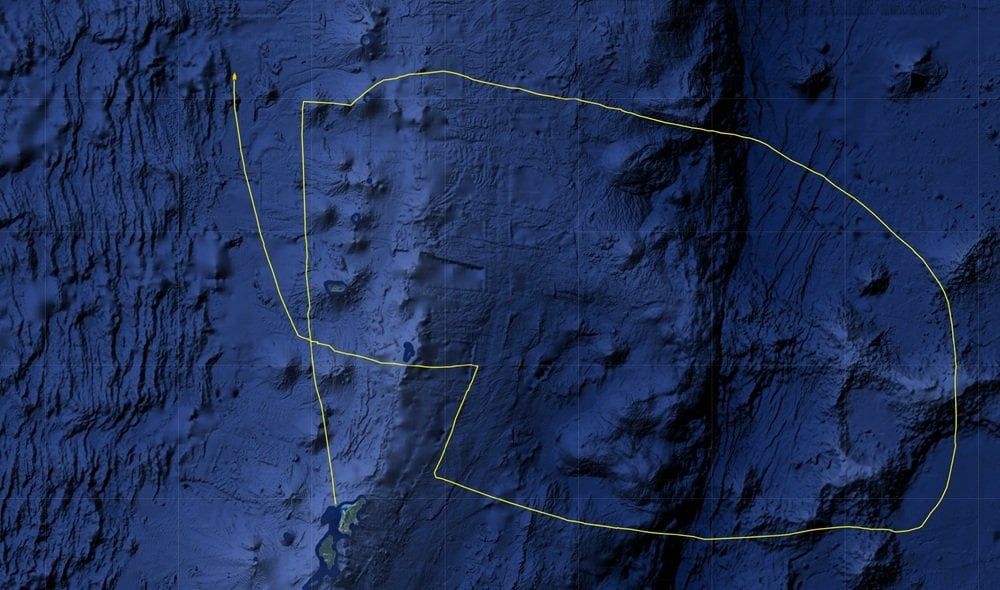
The Mariana is a U.S.-flagged offshore supply vessel repurposed for cargo and employed on a regular freight route between Guam, Tinian and Saipan. On the afternoon of April 11, as Sinlaku approached the islands, Mariana departed Saipan with six crewmembers aboard. She deviated from her usual itinerary, heading north - away from the path of the storm. Over the next few days, Mariana loitered on a circular loop to the east of the island, then resumed her northward track in the early hours of Wednesday morning. 

Courtesy USCG

Courtesy Pole Star Global

Mariana was under way at a position about 140 miles to the northwest of Saipan on Wednesday when her starboard engine failed, according to the Coast Guard. The crew called in the casualty, and Joint Rescue Coordination Center Honolulu took over management of the response. The JRCC set up an hourly communications schedule with the vessel and checked in regularly. All personnel on board were in good health. 

On Wednesday evening, the Coast Guard lost communications with the Mariana and was not able to reestablish contact. The vessel's AIS signal was last received at about 1400 hours local time that afternoon, according to data provided by Pole Star Global, at a position of roughly 17° 25' N / 145° 08' E.

The JRCC dispatched an HC-130J search plane from Honolulu to look for the Mariana on Thursday, but winds in the area were too heavy, and the aircrew was forced to return to Guam. 

Weather conditions in the region were rough due to Super Typhoon Sinlaku, which roared through the Northern Marianas Islands midweek. High wind conditions affecting Saipan and Tinian on Tuesday and Wednesday, and the storm caused damage and widespread power outages on shore. Typhoon-force winds extended out to about 250 nautical miles from the center of the storm. Sinlaku is now moving off to the northeast, but a small craft advisory remains in effect near Saipan, with winds still blowing in the range of 25 knots.

Early Saturday, the Coast Guard conducted another aerial search pattern based on Mariana's last known position. The HC-130 Hercules aircrew spotted a capsized vessel's hull at a position about 34 nautical miles northeast of Pagan, approximately 100 nautical miles from Mariana's last known position and about 200 nautical miles north of Saipan. The Coast Guard is working to identify the sighting, and multiple aircrews - including one from Japan - will be flying further search missions over the weekend.