Monday, May 04, 2026

From the oceans into our bodies: Plastic pollution 'associated with obesity and dementia'

Issued on: 29/04/2026 

Play (10:15 min) From the show


François Picard is pleased to welcome Merijn Tinga, a biologist, artist and activist affectionately known as the Plastic Soup Surfer. He joins us, not only as a scientist or activist, but as someone who spends hours a day on the water, experiencing directly the forces we so often abstract away. From the surfboard, everything becomes clear: "You become one with the wind, with the waves… you have one focus." And yet back on land, "you're immersed by this throwaway culture".

His journey from Oslo to London, Paris, Nice, and now towards Rome, is a way to carry a simple, yet powerful and universal message across borders: effective solutions already exist. The deposit return scheme is one of them. It is practical, proven and capable of reducing pollution significantly. Beyond systems, this is mainly about awareness.

For our guest, plastic pollution is no longer an external issue, it is literally within us, in our bodies, our brains, even in unborn children. This demands not only technological responses, but a shift in how we see our relationship with nature. We are not separate from it. We are part of it. This is about balance and being in harmony with nature, the environment and all of our surroundings.


VIDEO BY:  François PICARD

Imprisoned Iranian Nobel laureate Mohammadi rushed to hospital following cardiac 'crisis'


Iran’s imprisoned Nobel peace prize winner Narges Mohammadi has been transferred to hospital to receive urgent care after experiencing a “catastrophic deterioration” of her health, a foundation run by her family said on Saturday. Mohammadi was moved on Friday after suffering a heart attack and experiencing two episodes of “complete” unconsciousness, it said.


Issued on:  03/05/2026 - 
By: FRANCE 24
Video by: Ethan HAJJI/Florent MARCHAIS

Iranian Nobel laureate Narges Mohammadi was imprisoned in mid-December.
© AFP/ File picture
01:47


Detained Nobel Peace Prize winner Narges Mohammadi has been hospitalised in Iran, her supporters said, “following a catastrophic deterioration of her health”.

Mohammadi, who won the peace prize in 2023 in recognition of more than two decades of rights campaigning, was arrested in December in Iran’s eastern city of Mashhad after speaking out against the country’s clerical authorities at a funeral ceremony.


Her supporters had been issuing warnings for months about her health, saying in late March that she had suffered a suspected heart attack but received inadequate medical treatment.


In a statement posted by her foundation on Friday, they said she was “urgently transferred to a hospital in Zanjan today” after a rapid deterioration, “including two episodes of complete loss of consciousness and a severe cardiac crisis”.

The statement said her family described the move as a “last-minute action” that could prove too late.

In Oslo the Norwegian Nobel Committee urged the Iranian authorities “to immediately transfer Narges Mohammadi to her dedicated medical team in Tehran”.

“Without such treatment, her life remains at risk,” committee chair Jorgen Watne Frydnes said. “Her life is now in the hands of the Iranian authorities.”

In a social media post, her lawyer Mostafa Nili said Mohammadi initially refused to be transferred to hospital after fainting the first time from a sudden drop in blood pressure, because of previous warnings from medics that Zanjan hospital was not capable of treating her.

But, following a second collapse and a further deterioration, she was moved to the facility.

“According to the neurologist, despite her serious cardiac issues, addressing her neurological state is currently the clinical priority,” Nili said.

Over the past quarter of a century, Mohammadi, 53, has been repeatedly tried and jailed for her campaigning against Iran’s use of capital punishment and its mandatory dress code for women.

(FRANCE 24 with AFP)
ANALYSIS


'We cannot give up': Hong Kong journalists navigate fear, surveillance and shrinking space


Hong Kong’s government on Friday slammed foreign media and press freedom groups, rejecting claims of a crackdown on press freedom as “slander” after jailed media tycoon Jimmy Lai was awarded a free speech prize in Germany. Press freedom in the city has sharply declined since a 2020 National Security Law clamped down on dissent. Journalists face visa denials, surveillance, self-censorship and legal threats, while independent outlets struggle to survive.


Issued on: 03/05/2026 - 
FRANCE24
By: Natasha LI


An Apple Daily employee works in the printing room after the last edition of the newspaper is printed in Hong Kong early on June 24, 2021. © Anthony Wallace, AFP

In a defiant statement slamming foreign media on Friday, Hong Kong accused an “anti-China organisation” of attempts to “sugarcoat” the “criminal acts” of imprisoned media tycoon Jimmy Lai, who was awarded Thursday a Freedom of Speech Prize by Germany’s Deutsche Welle.

In the same statement, authorities dismissed Reporters Without Borders’ latest Press Freedom Index as biased, saying it was being used to “smear” Hong Kong. The index now ranks the city 140th globally, down from 18th when it was first published in 2002.

Once widely seen as a beacon of free expression in Asia, Hong Kong has increasingly become a place where journalism itself can carry legal risk.

And that reality is no longer limited to local reporters.


Earlier this week, RSF revealed that a French journalist had been denied entry to Hong Kong, detained at the airport and deported back to Paris – the first publicly documented case of its kind involving a foreign correspondent.
Detained and deported

For Antoine Védeilhé, a former FRANCE 24 China correspondent now working on a documentary for France Télévisions, the case marked a turning point.

He has reported across Asia for nearly a decade and covered Hong Kong extensively since 2016, including the 2019 pro-democracy protests. Until recently, he says entering the city had never been a problem.

That changed in November 2025.

“At passport control, they stopped me immediately,” he said. “They took me into an immigration room, kept me there for three hours, interrogated me, searched all my belongings, and carried out a full body search.”


He was then escorted directly to a flight back to Paris.

“They gave no explanation and no documents. Nothing,” he said. “Only that it was for immigration reasons.”

Later, through sources in Hong Kong’s immigration department, he was told he had been flagged as a “foreign agent” – a label commonly used in cases linked to national security concerns.

The following day, his employer received an anonymous email warning against broadcasting his documentary, “Hong Kong ne répond plus” (Hong Kong Is No Longer Answering), which examines the city’s political transformation under Beijing’s tightening control.

“It was clearly meant to intimidate us,” Védeilhé said. “They were suggesting that even in France, the National Security Law could apply.”

His cameraman, who was allowed entry, was followed by plainclothes officers from the moment he arrived at his hotel.


“They didn’t try to hide it,” he said. “It was exactly like mainland China.”

Fearing for the safety of sources, the team cancelled all planned interviews.

“This is how reporting stops,” he said. “People won’t meet you if it puts them at risk.”
Visa weaponisation

“What Antoine was subjected to was unprecedented, even among foreign correspondents,” said Aleksandra Bielakowska, advocacy manager for Asia-Pacific at RSF.

While at least 13 journalists have been denied visas, refused renewals or barred from entering Hong Kong in recent years, she says this case marks an escalation.

“This is really an intensification because it is the first time we see this scale of transnational repression reaching foreign journalists in Europe,” she said.

Bielakowska said the evidence strongly suggests the operation was coordinated by national security police.

“They had a file on him, with his photo, identifying him as an agent. They knew his sources, they knew who he was working with, and his contacts were also harassed,” she said.

She added that Hong Kong is increasingly adopting the same pressure tactics long used by Beijing against foreign media – visa refusals, surveillance and intimidation.

“China has used visa weaponisation for years,” she said. “But what is happening now in Hong Kong is different because it is no longer just about refusing access. It is about creating fear everywhere.”

She says the message to journalists is clear: reporting critically on Hong Kong can carry consequences even outside the city.
‘Criminalisation of journalism itself’

Hong Kong’s press freedom crisis accelerated after Beijing imposed the sweeping National Security Law in June 2020, following the mass pro-democracy protests of 2019.


For many journalists, the decisive moment came two months later, when police raided Apple Daily and arrested its founder Jimmy Lai.

“That was the message,” Bielakowska said. “If you keep reporting, you will face the same charges.”

Since then, independent media outlets including Apple Daily, Stand News and Citizen News have shut down, while dozens of journalists have been arrested, prosecuted or forced into exile.

Earlier this year, Hong Kong courts handed Lai what was described as the harshest sentence – 20 years – ever imposed on a journalist under national security charges –effectively condemning the 78-year-old publisher, imprisoned since 2020, to spend the rest of his life behind bars.

According to the Committee to Protect Journalists, at least eight journalists are currently imprisoned in Hong Kong.

Lai was awarded Deutsche Welle’s Freedom of Speech Award in absentia on Thursday.

For Bielakowska, the trend is unmistakable.

“Press freedom in Hong Kong is facing systemic collapse,” she said. “This is the criminalisation of journalism itself.”
Invisible red lines

For the journalists who remain, the challenge is often less direct censorship than navigating an invisible red line – the unclear boundaries of what authorities will tolerate.

“There are red lines that cannot be crossed,” Bielakowska said. “But no one tells you exactly where they are.”

Unlike mainland China, where independent journalism has largely been pushed underground, Hong Kong still has a small number of independent outlets trying to survive.

But they work in constant uncertainty.

Mak Yin-ting, an RFI correspondent and former head of the Hong Kong Journalists Association, says authorities rarely need to ban stories outright.

Instead, ambiguity itself becomes the tool.

“If they don’t like what you’re writing, they can accuse you of sedition,” she said.

Under Article 23, Hong Kong’s domestic national security legislation, sedition charges can carry up to 10 years in prison for publishing false or misleading statements – wording journalists say remains dangerously vague.

“It’s basically up to interpretation,” Mak said. “They are importing the same methods of censorship used in mainland China.”

Self-censorship has become routine.

Many outlets now avoid politically sensitive commentary altogether. Some no longer seek outside analysis on controversial issues, while others simply reproduce government statements word for word without presenting the original facts being disputed.

“That is already part of self-censorship,” Mak said. “You write (only) the government’s statements, but not what actually happened.”

Even accessing basic information has become harder.

“Government data is becoming very hard to find,” she said. “They are basically deleting everything that might be sensitive.”

Public databases and official reports that were once available online for more than a decade are now removed after one or two years, making investigative reporting significantly harder.

Private archives are also disappearing, with some major outlets deleting years of previous reporting.

“It’s not only about fear of arrest,” Bielakowska added. “Even gathering information becomes harder because sources themselves are afraid to speak.”

Many officials, academics and civil servants no longer agree to interviews, even on conditions of anonymity.

“The authorities have created such an atmosphere of fear that many first-hand sources simply don’t want to go on record anymore,” she said.
‘They can be next’

Despite the pressure, some journalists continue reporting – fully aware of the risks.

“They know that at any time, they can be next,” said Bielakowska.

To protect junior reporters and freelancers, some editors choose to sign all articles under their own names.

“The editor-in-chief becomes the face of the media,” Bielakowska said. “If arrests happen, it becomes the sacrifice of one person rather than the whole newsroom.”

She points to the Hong Kong Journalists Association – one of the few remaining independent press organisations still operating in the city – as proof that resistance remains.

“It’s not only courage, but commitment to press freedom,” she said.

Veteran journalists who remember a freer Hong Kong continue to hold the line.

“It was top of the top,” Bielakowska said of Hong Kong’s press corps in the early 2000s. “Some of the best investigative journalists in the world were there.”


That memory still drives many reporters today.

“They remember what Hong Kong was. That is why they still have the strength to continue.”

For Tom Grundy, founder and editor-in-chief of Hong Kong Free Press, the pressure has become part of daily newsroom life.

“Since the onset of the security law, the city has seen the harassment of journalists, over 60 civil society groups disappear, newsrooms raided and journalists jailed.”

His own outlet has not been spared.

“In short, HKFP has unfortunately suffered harassment, intimidation and bureaucratic scrutiny, and it has escalated over recent years,” he said.

Still, he insists there remains a narrow space for independent journalism. “The space gets tighter and tighter, but it’s not quite mainland China.”

“We can still show up to press conferences and ask tough questions to officials,” he said. “It’s better to be in than out, and we can still maintain accuracy, nuance and understanding by being in the city with Hong Kongers.”

But the limits are increasingly visible.

“Nevertheless, it’s harder to get people to speak from all parts of the political spectrum,” he said. “For features, opinion pieces – these kinds of things – it’s very, very tough.”

For many, simply continuing to publish has become an act of resistance.

“We try to keep calm and carry on and navigate the red lines,” Grundy said.
‘We cannot give up’

For press freedom advocates, the greatest danger is not only repression inside Hong Kong, but the growing sense abroad that the battle has already been lost.

“There is this thinking among policymakers in Europe and the US that Hong Kong is lost – that there is nothing left to do,” Bielakowska said. “That is a mistake.”

She warns that treating the city’s clampdown on freedoms as inevitable only strengthens Beijing’s strategy.

“There should be no normalisation.”

But sustaining that work depends on external support – from visa pathways and legal protection to funding for independent journalism.

Neighbouring countries have become part of this fragile support network. Taiwan, in particular, has emerged as an important refuge for journalists and activists fleeing pressure from Hong Kong and mainland China, offering a place where some have been able to rebuild their work in relative safety.

Bielakowska describes the island, which ranks 28th out of 180 countries, as one of the few remaining spaces in the region where press freedom is still broadly protected. South Korea ranks 47th while Japan ranks 62nd.

Yet she says support remains inconsistent and largely ad hoc. While some individuals have been quietly assisted or allowed to settle, there is still no structured system for supporting exiled media workers.

And even where journalists do find safety abroad, she warns the pressure does not necessarily end. Democracies, she says, must take transnational repression more seriously.

“What happened to Antoine shows this is no longer only a Hong Kong issue,” she said.

For Mak, the fight for press freedom has become a simple question of endurance.

“It is like tug-of-war,” she said. “If one side abandons, you lose everything.”

As long as independent journalists remain – in Hong Kong or in exile – she says silence is not an option.

“We cannot give up.”
Ukraine battlefield: Advanced Ukrainian drones raise concerns among Russian forces
Issued on: 02/05/2026 - 
13:38 min From the show

From Ukraine’s evolving battlefield, where drone warfare is redefining front lines and so-called “killing zones,” to reports of “Martian drones” and their impact on both Russian and Ukrainian forces, we also look at the expanding use of unmanned systems in rescue operations, including the evacuation of a 77-year-old woman in Odesa region. FRANCE 24’s Gavin Lee is joined by Olena Krizhanivska, a Ukrainian defence analyst specialising in drones and unmanned systems and founder of Ukraine’s Arms Monitor.


Produced by Gavin Lee, Andrew Hilliar, Maya Yataghene and Guillaume Gougeon


OUR GUESTS


Olena KRYZHANIVSKA 
Ukrainian Defence Analyst, specialising in drones and unmanned systems and military technology


BY:  Gavin LEE

Andrew HILLIAR

Maya YATAGHENE

Guillaume GOUGEON
VIDEO BY:

Andrew HILLIAR

Gavin LEE

Guillaume GOUGEON


 Ukrainian drones strike Russia's Primorsk oil port


Ukrainian drones struck Russia's Primorsk port and a number of vessels in the Baltic Sea on Sunday as part of a wave of attacks targeting Russian energy infrastructure. Ukraine's President Volodymyr Zelensky said the strikes aimed to limit "Russia's war potential". The Kremlin warned that attacks on its oil infrastructure would send global oil prices rising further.


Issued on:  04/05/2026 - 
By: FRANCE 24


A handout satellite image taken on March 23, 2026 shows smoke rising from the Russian oil terminal at Primorsk. © Planet Labs PBC, via AFP


Ukraine launched a wave of drone attacks on targets across Russia on Sunday, hitting the Baltic Sea port of Primorsk and setting it on fire, and striking a number of vessels, as it steps up ​attacks on ‌energy infrastructure and other targets.

Ukraine's President Volodymyr Zelensky commented on the latest wave of strikes, ⁠which also hit one oil tanker in the port, a Karakurt-class missile ship and a patrol boat, saying significant damage had been caused to the infrastructure of ‌the oil terminal port.

In a post on Telegram, Zelensky said Ukraine had struck the Karakurt-class missile ship, ⁠a patrol boat, and an oil tanker in the Baltic Sea, adding that "each such result further limits Russia’s war potential".

Ukraine hits oil facilities in Russia

© France 24
02:00


Alexander Drozdenko, governor of the northwest region which hosts the port, said more than 60 ​drones were downed overnight.

He said the fire at Primorsk, a major oil exporting outlet, ‌was quickly extinguished and there had been no oil spill following the attack.
Ukraine continues to develop long-range capabilities

Primorsk, one of Russia's largest export gateways, has capacity to handle 1 million barrels per day of oil supply. It has been hit multiple times in ‌recent months as as US-brokered talks to end the Ukraine war have stalled.

Zelensky earlier on Sunday said Ukrainian forces also struck two shadow fleet tankers in waters ​at the entrance to the Russian Black Sea port of Novorossiysk.

"These tankers had been actively used to transport oil – not anymore," Zelensky said on Telegram. "Ukraine's long-range capabilities will continue to be developed comprehensively – at sea, in the air, and ​on land."
Russia unfazed by the attacks

Kremlin spokesman Dmitry Peskov said that global oil prices may rise further if ​Ukraine continues to hit Russia's oil infrastructure, Russian TV reported.

“If additional volumes of our ​oil are dropped from the market, prices will rise further from current levels, which are already above $120 a barrel," Peskov said. "That would mean that even with lower export volumes, ​our companies would earn more money and the state would receive more revenue.”


Other Russian regions also reported drone attacks on Saturday and Sunday.

Moscow regional governor Andrei Vorobyov said on Saturday evening that a 77 year-old man had died in a village following a drone strike. And Sergei Sobyanin, mayor of the city of Moscow, said four drones were downed on their ⁠way to the Russian capital.

Vasily Anokhin, governor of the western Smolensk region, said three people, including a child, were injured on Sunday after a drone ⁠attacked an apartment ​block there.

Russian troops were meanwhile inching towards the city of Kostiantynivka in Ukraine's eastern Donetsk region, Ukraine's top army official said on Saturday.

(FRANCE 24 with Reuters)
Two foreign activists seized from Gaza aid flotilla appear before Israeli court

Spanish national Saif Abu Keshek and Brazilian Thiago Avila were brought before an Israeli court Sunday after Israeli troops seized them from a flotilla attempting to bring humanitarian aid to the besieged Gaza Strip. Avila told his lawyers that he had been beaten so badly in Israeli custody that he passed out twice.


Issued on: 03/05/2026 -
By: FRANCE 24

People gather in front of the European Commission office in Barcelona in support of activists Saif Abu Keshek and Thiago Avila, members of the Global Summud Flotilla seized by Israel, in Barcelona, Spain, May 2, 2026. © Bruna Casas, Reuters

An Israeli court Sunday extended by two days the detention of two foreign activists from a Gaza-bound flotilla who were brought to Israel for interrogation, a rights group representing them said.

The flotilla of more than 50 vessels had set sail from France, Spain and Italy with the aim of breaking an Israeli blockade of Gaza and bringing humanitarian supplies to the devastated Palestinian territory.

They were intercepted by Israeli forces in international waters off Greece early on Thursday, with Israel saying it had removed some 175 activists – two of whom were taken to Israel for questioning.

Spanish national Saif Abu Keshek and Brazilian Thiago Avila appeared before a court in the southern city of Ashkelon on Sunday.

AFP footage showed the two being escorted into the courtroom, with Avila's hands cuffed behind his back and Abu Keshek's feet shackled.

"The court extended their detention by two days," Miriam Azem, international advocacy coordinator at the rights group Adalah, told AFP.

Adalah said the state attorney had presented a list of suspected offences committed by the pair, including "assisting the enemy during wartime" and "membership in and providing services to a terrorist organisation".

But Adalah's lawyers challenged the state's jurisdiction, arguing against the "unlawful abduction" of the two activists in international waters.

Its lawyers told the court Avila and Abu Keshek had testified to "severe physical abuse amounting to torture, including being beaten and held in isolation and blindfolded for days at sea".

Screenshot of a post by the Adalah Center for Human Rights on X on May 2, 2026. © Screenshot, X


No formal charges were filed against the two, it said.

"We argued that ... they were part of a humanitarian mission that aimed to provide humanitarian aid to the civilians in Gaza, and not to any other organisation, whether terrorist or not," lawyer Hadeel Abu Salih told journalists after the hearing.

"We deny all the accusations that were presented ... and demand these two men be released immediately," she said.

Spain's government called for Abu Keshek's "immediate release", the foreign ministry said in a statement to AFP, indicating the Spanish consul had accompanied Abu Keshek to the hearing.

Adalah's lawyers had met the two men at Ashkelon's Shikma Prison on Saturday.

They said Avila recounted being "subjected to extreme brutality" by Israeli forces when the vessels were seized, saying he was "dragged face-down across the floor and beaten so severely that he passed out twice".

Abu Keshek was also "hand-tied and blindfolded ... and forced to lie face-down on the floor from the moment of his seizure" until reaching Israel, it said.


Rebuilding Gaza Strip: Labour Day is the last thing on Palestinians' minds
© France 24
01:48

Israel's foreign ministry said the pair were affiliated with the Popular Conference for Palestinians Abroad (PCPA) – a group accused by Washington of "clandestinely acting on behalf of" Palestinian militant group Hamas.

It said Abu Keshek was a leading PCPA member, and that Avila was also linked to the group and "suspected of illegal activity".

The Global Sumud Flotilla's first Mediterranean voyage to Gaza last year drew worldwide attention, before being intercepted by Israeli forces off the coasts of Egypt and Gaza.

Avila was one of the organisers of that flotilla, which was also intercepted by Israeli forces, with crew members – including Swedish activist Greta Thunberg – arrested and expelled.

Israel controls all entry points into Gaza, which has been under an Israeli blockade since 2007.

Throughout the Gaza war, there have been shortages of critical supplies in the Palestinian territory, with Israel at times cutting off aid entirely.

(FRANCE 24 with AFP)

The Joy of Revolution and Related Texts

Dear Friends and Contacts,

I'm pleased to announce my new book: The Joy of Revolution and Related Texts, published by PM Press.


“It may seem absurd to talk about revolution. But all the alternatives assume the continuation of the present system, which is even more absurd.”

Well known for his translations of works by Guy Debord and the Situationist International, Ken Knabb is himself the author of many radical texts. The Joy of Revolution has been translated into seven other languages and is widely considered his most significant work. While there have been countless histories of past revolutions and countless examinations of the many flaws of the present society and of the many methods proposed for reforming them, it would be difficult to name a single book that more clearly and concisely explores the problems and possibilities of a modern, situationist-type revolution.

Following a brief overview of the absurdities of the present social system and the failures of past efforts to change it fundamentally, The Joy of Revolution examines the pros and cons of a wide range of radical tactics, first in the context of “normal” or “ordinary” conditions, then in the very different context of radical situations—those rare breakthroughs where masses of people start to call everything into question and real change becomes possible. It then concludes with some speculations on how a postrevolutionary global network of diverse liberated communities might work, and where we might go from there.

For this new edition, Ken has added some notes and updates to his original work and appended a number of his more recent texts—detourned comics; book reviews; a refutation of anarcho-primitivism; reports on two remarkable radical movements in France; a series of texts and talks on the Occupy movement (in which Ken was an enthusiastic participant); observations on the coronavirus shutdown; and analyses of the increasingly vicious and delirious Trump regime and the new forms of popular resistance it has inspired.

Print or ebook versions can be ordered direct from the publisher: PM Press.

Ken Knabb knabb@bopsecrets.org

Sunday, May 03, 2026

China opens tariff-free trade to nearly all African countries

China will extend zero-tariff treatment to all African countries with diplomatic ties from Friday, in what Beijing called a “significant measure” to deepen China-Africa trade and investment ties.


Issued on: 01/05/2026 - RFI

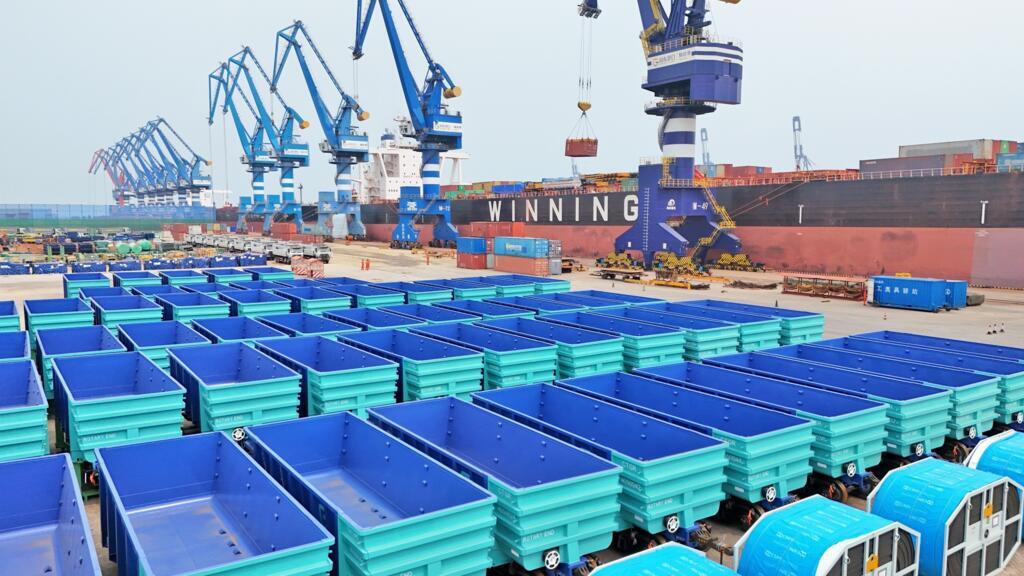
Goods for export to Africa are consolidated and loaded onto ships at Yantai Port in Shandong province. CFOTO/Future Publishing via Gett - CFOTO

China’s State Council tariff commission said earlier this week that the zero-tariff treatment will run until 30 April 2028. The move expands an earlier policy in force since 1 December 2024 by adding 20 African countries to the 33 already covered, bringing the total to 53.

The only condition is that countries must have diplomatic relations with Beijing, leaving Eswatini, which maintains ties with Taiwan, excluded.

China’s commerce ministry said the move would help create “development opportunities for African countries” at a time when “unilateralism and protectionism are on the rise”.


Record levels


China-Africa trade reached record levels last year.

China’s customs data showed total trade between China and Africa hit about €320.2 billion in 2025, up 17.7 percent year on year, while Africa’s trade deficit with China widened to about €93.8 billion.

Chinese exports to Africa rose to about €207.0 billion, while imports from Africa reached about €113.1 billion.

However, the economic impact of Beijing’s tariff move is likely to remain limited.

“China already applied zero tariffs to a number of products from which Africa benefited on the same basis as other countries,” said Thierry Pairault, an economist and China specialist at France’s social sciences institute Ehess.

“There were preferential tariffs under the WTO and preferential treatment for least developed countries. At least 96 percent of products were already benefiting from zero-customs duties.”

Limited impact


This means the reform affects only a small share of trade. The biggest African exports to China are raw materials that were already low-tax or untaxed.

“For crude oil, it is the same – the gain is nil,” Pairault said, adding that the same was true for minerals.

“This removal of customs duties is fairly limited, since African products going to China were already lightly taxed,” Émilie Laffiteau, a researcher at Iris, a Paris-based international relations think tank.

There may be some limited gains for processed or agricultural goods, but obstacles remain substantial. China has “an emerging chocolate industry that is highly protected”, Pairault said, while “sanitary and administrative barriers” could still block exports.

He estimated the potential gains at “between €92 million and €276 million at most”, far from enough to close Africa’s trade deficit with China.

But Beijing’s main goal is also to send a message.

“If on one side you have the United States saying I am increasing, and on the other saying I am lowering, it is obvious that China’s brand image improves,” Pairault said.

This story has been adapted from the original version in French by Alexis Bedu and edited for clarity
PETULENT VLADIMIR TRUMP

US to withdraw about 5,000 troops from Germany

Washington (United States) (AFP) – US Defense Secretary Pete Hegseth has ordered the withdrawal of about 5,000 troops from Germany within the next year, the Pentagon said on Friday, in the latest rift in transatlantic ties over the Mideast war.


Issued on: 02/05/2026 - RFI

US Secretary of Defense Pete Hegseth, pictured during a congressional hearing on April 29, 2026, has ordered the withdrawal of some 5,000 US troops from Germany © Kevin Dietsch / GETTY IMAGES NORTH AMERICA/AFP/File

The move came as US President Donald Trump announced that tariffs on cars and trucks from the European Union will increase to 25 percent next week, accusing the bloc of not complying with a trade deal inked last summer.

Trump has renewed criticism of German Chancellor Friedrich Merz, who said Monday that Iran was "humiliating" Washington at the negotiating table. Trump said Merz "thinks it's OK for Iran to have a nuclear weapon. He doesn't know what he's talking about!"

On Wednesday, the American leader said Washington was "studying and reviewing the possible reduction" of US troops in Germany, and that he would decide in a "short period of time."

Pentagon spokesman Sean Parnell said in a Friday statement that "We expect the withdrawal to be completed over the next six to twelve months."


"This decision follows a thorough review of the Department's force posture in Europe and is in recognition of theater requirements and conditions on the ground," Parnell added.

During both of his terms in office, Trump has made a number of threats to slash US troop numbers in Germany and other European allies, saying he wants Europe to take on greater responsibility for its defense rather than depending on Washington.

Trump on Friday accused German automakers like Mercedes-Benz and BMW of ripping off Americans, saying that Germany and "other European nations have not adhered to our trade deal."

Germany would likely be hit hard by a sharp vehicle tariff, as it is responsible for a significant portion of EU auto exports.


'Why shouldn't I?'


Trump now appears determined to punish allies who have failed to back the war or contribute to a peacekeeping force in the crucial Strait of Hormuz waterway, which Tehran's forces have effectively closed.

On Thursday, Trump said he may pull US troops from Italy and Spain due to their opposition to the war, telling reporters in the Oval Office: "Italy has not been of any help to us and Spain has been horrible, absolutely horrible."

"Yeah, probably, I probably will. Why shouldn't I?" Trump said.

As of December 31, 2025, there were 12,662 active-duty US troops in Italy and 3,814 in Spain. In Germany, there were 36,436.

Speaking during a visit to Morocco, German Foreign Minister Johann Wadephul said Thursday that Germany was "prepared" for a reduction in US troops and was "discussing it closely and in a spirit of trust in all NATO bodies."

While saying he was "relaxed" about the idea of fewer US troops in Germany, Wadephul said that large American bases in Germany are "not up for discussion at all."

He said for example that the Ramstein Air Base had "an irreplaceable function for the United States and for us alike."

Ukraine support

The EU said Thursday that the deployment of US troops in Europe was in Washington's interest, and that the United States was "a vital partner in contributing to Europe's security and defense."

Trump meanwhile took aim at Merz again, telling him to focus on ending the Ukraine war instead of "interfering" on Iran.

European powers have been on alert since Russia invaded Ukraine in 2022, and a spate of drone incursions in the last year, as well as US promises to move away from defending the continent, have pushed the issue to the top of the agenda.

Merz has made national security a priority, announcing unprecedented investments in an army that has been underfunded and under-equipped for decades.

He has also reaffirmed support for Ukraine, for whom Germany has been the second-largest individual supplier of aid after the US.

(AFP)
Why is Europe heating twice as fast as the rest of the planet?

Europe has been warming twice as fast as the global average since 1980, a new report shows, with 2025 marked by extended heatwaves across the continent, from the Arctic to the Mediterranean. RFI examines the reasons why.


Issued on: 02/05/2026 - RFI

 
A woman tries to put out a wildfire in Santa Baia De Montes, northwestern Spain, 14 August, 2025. AP - Lalo R. Villar

The European State of the Climate report, published by the European Union's Copernicus Climate Change Service and the World Meteorological Organization (WMO), shows last year was the third warmest on record.

The average air temperature was 1.47°C above pre-industrial levels – close behind 2024, which saw an average increase of 1.6°C, and 2023.

Europe (extending to Turkey and parts of Russia) has been warming twice as fast as the global average since 1980, at a rate of +0.56°C per decade since 1996 compared to +0.27°C.

In comparison, Africa is warming at an average of 0.36°C, Asia 0.46°C, North America 0.42°C, and Central and South America 0.27°C.

WMO secretary-general Celeste Saulo noted that 2025 was marked by long heatwaves from the Mediterranean to the Arctic Circle which were becoming "more frequent and severe".

Arctic region


Four factors contribute to explaining this phenomenon in Europe, the first of them geographical.

Samantha Burgess, strategic climate leader at the Copernicus Climate Change Service (C3S), said: "Europe includes part of the Arctic region. And the Arctic is warming three to four times faster than the global average."

This, she explained, pulls the average upwards, as the polar region has warmed by 0.75°C per decade.

Fennoscandia, the region encompassing Norway, Sweden, Finland and Russia's Kola Peninsula, experienced 21 out of 30 days in July with temperatures exceeding 10.2°C.

This was unprecedented in its severity, the duration – the previous record was 11 days – and the geographical extent.
Europe is warming twice as fast as the global average, according to the European State of the Climate report. © C3S/ECMWF


"Generally speaking, most of this region experiences up to two days of intense heat per year, where the perceived temperature reaches 32 degrees or higher," Burgess explained.

A peak of 34.9°C was recorded on 17 July in Frosta, Norway, just below the Arctic Circle.

"Changes in atmospheric circulation are contributing to heat waves. These are becoming more frequent and intense, from the Mediterranean to the Arctic Circle," she added, saying that three consecutive weeks of severe heat stress in the Fennoscandia region "highlights the impact of climate change".
In July 2025, Fennoscandia experienced its longest and most intense heat wave. © DWD/C3S/ECMWF/Met Norway

Shrinking snow cover

The third reason for Europe's rapid heating may seem contradictory: the reduction of air pollution.

"We have fewer air pollutants or aerosols," said Burgess. "These aerosols form clouds that act like a mirror: they prevent solar energy from reaching the earth. Now that we have improved air quality, the albedo – the reflectivity of clouds – is reduced. We therefore receive more solar radiation."

The fourth factor stems from the same principle: the decrease in snow cover in Europe.

By March 2025, this cover had decreased by 30 percent compared to the 1991-2020 average – the third lowest snow cover on record. This shrinkage also reduces albedo, the reflectivity of white surfaces.


With less snow and more dark rock to absorb more energy, the Alpine regions of Europe are warming faster than the continental average.

Furthermore, the melting of glaciers, both in the mountains and on the polar ice caps, is accelerating.

Greenland lost 139 gigatonnes of ice in a single year, the equivalent of 100 Olympic-sized swimming pools, while Iceland lost the second largest ice mass in its history.


A boat crosses a frozen sea inlet outside of Nuuk, Greenland, 6 March, 2025 
AP - Evgeniy Maloletka


While this melting contributes to rising sea levels, rising sea temperatures are also an issue – 86 percent of European waters experienced at least one severe marine heatwave in 2025.

For the Atlantic Ocean, it marked the fourth consecutive year of record temperatures. For the Mediterranean, it was the second hottest year on record, just behind 2024.

From rain to fires

Europe experienced multiple extreme weather events in 2025, from storms and floods to drought and wildfires.

Storm Eowyn, which hit Ireland, the United Kingdom and Norway in January last year, was classified by the UK Met Office as the most powerful storm to hit the country in more than a decade.

Over the summer, fires scorched a record 1 million hectares of European land, a large number of them in northern countries such as the Netherlands, England and Germany.

"The fire season started exceptionally early," said Burgess, as early as February in the UK and Ireland.

She added that Portugal and Spain experienced an extremely wet spring, with multiple storms and floods causing regional vegetation to grow very rapidly.

This period was then followed by heat waves.

Spain endured a record of more than 50 days with temperatures exceeding 32°C in 2025. The southern regions of both countries experienced six days of temperatures exceeding 46°C.

The abundant vegetation dried, creating ideal conditions for large fires – 65 percent of the area burned in Europe last year was in these two countries.

Last year was marked by mega-fires in southern Europe, particularly in Spain and Portugal. © EFFIS/CEMS/C3S/ECMWF


"Portugal is located in the part of Europe most severely affected by climate change," Burgess noted.

"[It] could be considered an example of how climate change is already having serious effects in southern Europe, particularly due to extreme heat, drought and forest fires. This situation reflects trends across the Mediterranean region, rather than isolated national anomalies."

Carlo Buontempo, director of the C3S service, said the risks, scale and duration of wildfires are increasing.

"That’s where we need to build resilience," he said, citing measures such as clearing brush, protecting national parks and the need for firebreaks to prevent the fire from spreading.

Last year was the third driest for European soils since 1992, and ranks among the top 10 driest of the last 50 years. In May, a third of the continent suffered from extreme agricultural drought.

Average annual rainfall was 10 to 40 percent lower in northwestern and eastern Europe. Approximately 70 percent of rivers had a flow rate below the 1992-2020 average.

Carbon sinks

Last year also saw massive loss of Europe's peatlands – wetlands covered with dense, low-lying vegetation. Falling groundwater levels dry out the peat, making the area highly flammable.

"Fires can spread rapidly and, above all, smoulder underground for weeks or even months, making them very, very difficult to extinguish," said Claire Scannell, an Irish meteorologist.

These ecosystems are vitally important for their role as carbon sinks, while their degradation transforms them into sources of greenhouse gas emissions.

A seagrass meadow close to the beach of Falckenstein, near Kiel, Germany. REUTERS - LISI NIESNER

Meanwhile, biodiversity is also suffering in the sea, according to the Copernicus report.

Mediterranean Posidonia seagrass meadows – underwater meadows that extend over nearly 20,000 km² along the coast – are particularly under threat.

"These seagrass meadows are biodiversity hotspots that shelter thousands of fish and provide essential nursery habitats," Scannell explained.

"They protect coastlines from erosion and storm surges. Furthermore, they act as carbon sinks and can store carbon up to 30 times faster than a tropical rainforest. However, over the past 50 years, these meadows have declined by 34 percent, due in part to climate change."

Despite conservation measures being implemented, the report found that: "Europe is not on track to meet most of the objectives of its Biodiversity Strategy. Protected areas are increasing, but the total remains below 20 percent. Bioindicator species, including pollinators and birds, continue to decline."


The renewables path

In a bid to move towards clean energy sources, 14 of the 27 EU member states now generate more electricity from renewable sources than from fossil fuels.

Across much of the continent, the increased amount of sunshine has translated into above-average solar energy production. However, the outlook for hydroelectric energy is less favourable.


Flow rates in the European river network were below average for 11 out of 12 months of 2025, putting pressure on energy infrastructure.

"Hydropower, as a form of renewable energy, is one of the sectors most closely linked to climate. We must therefore prepare for increased pressure during peak demand periods. We saw this a few years ago with the drought in northern Italy," said Buontempo.

The European Framework for Adaptation to Climate Change is expected in the second half of 2026.

This article has been adapted from the original version in French by Géraud Bosman-Delzons.
PRIMITIVE ACCUMULATION OF CAPITAL

Hijackings off Somalia raise fears that piracy is back on the rise

Reports of multiple hijackings off the coast of Somalia are raising fears that piracy may be reviving after a relative lull over the past decade. Increased traffic round the Horn of Africa amid the war in the Middle East, along with the diversion of naval forces, could be creating more opportunities for pirates to strike.


Issued on: 02/05/2026 - RFI

Somali maritime police patrol in the Gulf of Aden off the coast of Puntland State in Somalia, on 26 November 2023. © AP - Jackson Njehia

By: Anne-Marie Bissada

In the past 10 days, pirates have hijacked at least three boats off the coast of Somalia. The Honour 25 oil tanker was seized on 21 April, followed by a dhow on 25 April and the Sward, a merchant vessel, on 26 April.

According to the Maritime Security Centre Indian Ocean (MSCIO), the European Union Naval Force's tracking service, the three incidents were ongoing as of 29 April.

MSCIO has issued a warning to vessels in the area to "maintain a heightened level of vigilance", particularly within 150 nautical miles of the Somali coast between Mogadishu and Hafun on the Indian Ocean.


Security vacuum


Piracy off the coast of Somalia, concentrated near the semi-autonomous region of Puntland, shot up between 2008 and 2013, before international naval patrols and tighter security on commercial ships helped bring down attacks.

Following a lull, activity picked up again in late 2023 during the Red Sea crisis – when Iran-backed Houthis in Yemen began launching missiles and armed drones at Israel in response to the war in Gaza.

The Houthis also seized or attacked merchant and naval ships they believed to be affiliated with Israel, the US or the UK. By April 2024, some 40 vessels had been targeted.

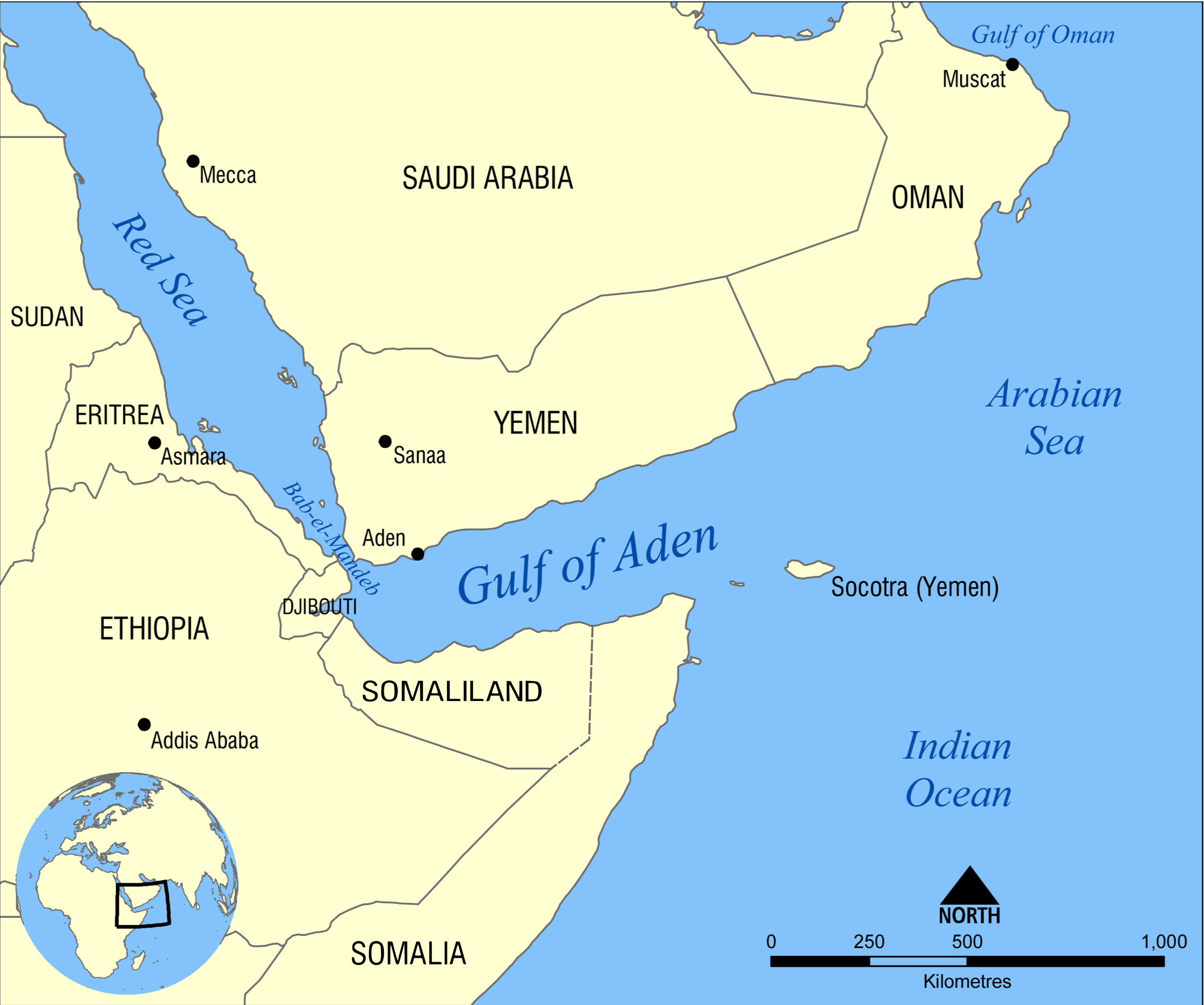
Somalia's coastline spans the Indian Ocean and the Gulf of Aden, near the entrance to the Red Sea and directly across from Yemen. © NormanEinstein, via Wikimedia Commons


In response, local and international naval forces that had been patrolling Somali waters were deployed closer to the Red Sea, says David Willima, a maritime security researcher at the Institute for Security Studies (ISS) in South Africa.

“So that place had a security vacuum, which is when these groups were able to take advantage,” he tells RFI.

Many boats were then forced to take the longer route around Africa, through the Indian Ocean towards South Africa’s Cape of Good Hope, to avoid the Red Sea. For pirates off Somalia, the increase in traffic and reduced naval forces nearby meant more opportunity to hijack ships.

Now, as Iran blockades the Strait of Hormuz in response to US-Israeli strikes, vessels are once more seeking an alternative route around the Horn of Africa. Meanwhile naval patrols are being diverted to the Middle East.


Widening inequality

Several of the underlying reasons pushing people into piracy have not changed over the years. “Some of it is just pure criminality,” says Willima. “Some of it is connected to a lack of livelihood alternatives.”

Many Somalis living on the coast have traditionally made their livelihoods by fishing. But foreign fleets have increasingly encroached on their waters, whether operating illegally or authorised by questionable licences – such as a 2018 deal that allowed Chinese companies to fish within 24 nautical miles of Somalia's shores for $1 million.


Increased fishing has contributed to a decline in stocks – pushing fishermen further out into deeper and riskier seas, according to Enact, an EU-funded research site on transnational organised crime in Africa.

Faced with dwindling incomes, some fishers resort to illegal activities, says Willima. Some turn to “criminality on land” and others look to piracy, which is seen “as another lucrative avenue to make money”.

The same groups continue to be drawn to piracy, he says. “These are people [who] have looked at the sea as a source of livelihood for generations. Where livelihoods have been eroded, inequalities have deepened.”