It’s possible that I shall make an ass of myself. But in that case one can always get out of it with a little dialectic. I have, of course, so worded my proposition as to be right either way (K.Marx, Letter to F.Engels on the Indian Mutiny)
Wednesday, February 25, 2026
‘Not giving it back’: Trump jokes about stealing gold medal from Team USA hockey player
US men's hockey gold medalist Charlie McAvoy celebrates with his medal and national flag during the men's victory ceremony at the Milan Cortina 2026 Olympics on Feb. 22, 2026. REUTERS/Alessandro Garofalo
President Donald Trump hosted the US men's Olympic hockey team in the Oval Office on Tuesday, joking that he would take one of the players' gold medals.
Trump has taken other people's awards in the past, including the Nobel Peace Prize, which was presented by Venezuelan opposition leader María Corina Machado. He teased the Olympic gold medalists visiting the White House that he would put on one of the medals.
"Absolutely, I'll put it on. I'm not giving it back," Trump joked to winger Matthew Tkachuk.
Trump and the men's hockey team have come under fire after comments made following the men's hockey team's win, which came after the US Women's hockey team secured their own gold medals at the Winter Olympics in Milan.
Following the men's team victory, the president lamented during a phone call with the team about having to invite the women's team to the White House, which also won gold at the Olympics.
"And we have to — I must tell you — we're going to have to bring the women's team," Trump told the men's hockey team during a phone call. "[If I don't] do that, I do believe I probably would be impeached, OK?" The women's team later rejected the president's invitation.
'I stood alone': Dem escorted from SOTU speaks out after dramatic challenge to Trump
Representative Al Green, Democrat of Texas, protests before U.S. President Donald J. Trump delivers the first State of the Union address of his second term to a joint session of Congress in the House Chamber of the United States Capitol in Washington, D.C., on Tuesday, February 24, 2026. Kenny Holston/Pool via REUTERS
WASHINGTON — Rep. Al Green (D-TX) broke his silence after he was forced out of the State of the Union address Tuesday night over confronting President Donald Trump.
Just as the president entered the House Chamber, Majority Leader of the House Rep. Steve Scalise (R-LA) ripped a sign of Green's that said "Black people aren't apes" moments before Trump delivered his speech.
"As you know, the president has depicted the former president, the Obamas, as apes. And if we tolerate this level of racism and perpetuate it, I refuse to tolerate it," Green told Raw Story.
"I don’t want to see it normalized," he explained. "And that’s why I flashed this [sign] to the president so there would be no questions where I stand. He needs to know that there’s some people who have the courage to tell him things that he doesn’t want to hear and that nobody else will tell him. And on some issues, it’s better to stand alone than not stand at all. So I stood alone…”
Trump's big address ripped as 'most openly racist in history': 'Went full ethnic-cleanser'
U.S. President Donald J. Trump exits the House Chamber after delivering the first State of the Union address of his second term to a joint session of Congress in the House Chamber of the United States Capitol in Washington, D.C., on Tuesday, February 24, 2026. Kenny Holston/Pool via REUTERS
President Donald Trump delivered the longest State of the Union address in history Tuesday night, and buried within the nearly two-hour speech was a series of attacks on undocumented migrants and Somali Americans, attacks that qualified the address as the “most openly racist State of the Union in modern history," Zeteo argued in an analysis published Wednesday.
“President Trump spent protracted portions of the nationally televised address spewing his hatred of Somali Americans with all the dignity and panache of banned 4chan content,” the analysis reads, authored by Zeteo reporters Asawin Suebsaeng and Andrew Perez. “After nearly an hour of wind-up, Trump went full ethnic-cleanser.”
Trump has attacked Somali Americans since last year, calling them “garbage” and declaring that he didn’t “want them in our country.” His attacks were first sparked by the alleged mass fraud scandal in Minnesota uncovered by the controversial investigation into Somali daycares by MAGA influencer Nick Shirley.
Those attacks only ramped up Tuesday night after Trump, again, went after the Somali community.
“The Somali pirates who ransack Minnesota remind us that there are large parts of the world where bribery, corruption, and lawlessness are the norm, not the exception,” Trump said during his address. “Importing these cultures through unrestricted immigration and open borders brings those problems right here to the USA.”
Outside of Trump’s racially charged attacks, Suebsaeng and Perez also declared the address to be “certainly one of the worst” in history, noting what they characterized as the lukewarm response from lawmakers in attendance.
“It was also the longest State of the Union address ever – and certainly one of the worst – and Republicans’ constant agreement and laughing along with Trump came across like the sound of one hand clapping,” the analysis reads.
Trump mercilessly mocked after 'bragging' about kicking people off of food stamps
U.S. President Donald Trump delivers the State of the Union address in the House Chamber of the U.S. Capitol in Washington, D.C., U.S., February 24, 2026. REUTERS/KEVIN LAMARQUE
President Donald Trump was swiftly mocked on Tuesday after he bragged about kicking people off food assistance.
Trump said during his State of the Union address that his administration helped "lift" 2.4 million people out of the Supplemental Nutrition Assistance Program, which provides food assistance to more than 41 million people nationwide. His comments came at a time when his administration cut funding for the popular program by more than $186 billion through his "One Big Beautiful Bill Act."
Political analysts and observers mocked Trump's comments on social media.
"Trump let millions of people in need go hungry and is now bragging about it," Sen. Andy Kim (D-NJ) posted on X.
"Interesting way to say he kicked people off of SNAP," Illinois Gov. JB Pritzker, a Democrat, posted on X.
"Trump didn’t 'lift' anyone off food stamps—he kicked them off. He’s forcing millions to go hungry," Sen. Patty Murray (D-WA) posted on X. "By the way, you can work full time and STILL qualify for SNAP. My family needed SNAP growing up—it’s not charity, it’s an investment. Fund SNAP. Reverse the cuts."
"Trump cut millions of people's food assistance and is bragging about it. We need to repeal the Big, Ugly Law," Rep. Gabe Amo (D-RI) posted on X.
Woman severely injured by Trump's ICE thrown out of State of the Union
Aliya Rahman is removed from the chamber during U.S. President Donald Trump's State of the Union address to a joint session of Congress in the House Chamber of the U.S. Capitol in Washington, D.C., U.S., February 24, 2026. REUTERS/Nathan Howard
A woman who was brutally injured by President Donald Trump's Immigration and Customs Enforcement agents in Minneapolis, Minnesota, last month was thrown out of the State of the Union address on Tuesday.
Aliya Rahman, who was invited to attend the speech, was removed from the gallery after Trump began discussing alleged fraud in Minnesota. Trump claimed that the Somali-American community in Minnesota has taken about $19 billion from taxpayers through fraud schemes, although he has provided no evidence supporting that total.
Rahman was forcibly removed from her car during a traffic stop conducted by Trump's ICE agents in January. She told a House panel earlier this month that ICE agents threatened to kill her. She added that they forcibly dragged her from her car, causing her serious injuries.
Fed-up congresswoman walks out of State of the Union as Trump rambles
Chief Justice of the U.S. Supreme Court John Roberts, U.S. Supreme Court Justice Elena Kagan, U.S. Supreme Court Justice Brett M. Kavanaugh, U.S. Supreme Court Justice Amy Coney Barrett and Chairman of the Joint Chiefs of Staff General Dan Caine attend U.S. President Donald Trump's State of the Union address to a joint session of Congress at the U.S. Capitol in Washington, D.C., U.S., February 24, 2026. REUTERS/Evelyn Hockstein
A second Democrat has departed President Donald Trump's State of the Union Address, as he continued to outline various policies he wants to see Congress pass.
"Representative Lauren Underwood, Democrat of Illinois, has walked out," reported Annie Karni of The New York Times.
Underwood's departure comes after Rep. Al Green's (D-TX) dramatic exit, following multiple Republican efforts to seize his sign saying "BLACK PEOPLE AREN'T APES," which was a protest against a racist post Trump promoted on his Truth Social platform earlier this month.
The president reportedly has a record-length speech planned, with some members expecting it could last all the way to midnight.
'Cringe': Trump's SOTU speech derided as 'national embarrassment' by internet
President Donald J. Trump delivers the first State of the Union address of his second term to a joint session of Congress in the House Chamber of the United States Capitol in Washington, D.C., on Feb. 24, 2026. Kenny Holston/Pool via REUTERS
A wave of critiques rolled in Tuesday night after President Donald Trump's State of the Union address, with plenty of people saying that the president's speech sounded eerily like one of his MAGA campaign rallies.
The president gave a rambling, record-breaking speech in the House Chamber amid growing concerns over his handling of priorities among voters, the economy and looming potential military action with Iran.
People shared their reactions on social media:
"This is a MAGA variety show masquerading as a #SOTU using campaign rally rhetoric. It is a national embarrassment and the world sees it as such," BBC political analyst Mary Anne Marsh wrote on X.
"MAGA has become cringe. I'm not sure when it happened. But, as a movement, it has become cringe. It has become everything it poked fun at with progressives with they way they react to events and talk about society. They've even created their own vocabulary. It's fascinating," fintech growth specialist Spencer Horton wrote on X.
"This isn’t a state of the union. It’s a MAGA rally, complete with tirades, partisan aggression, and wandering stories. And of course, it’s really long," Robert E. Kelly, professor of political science at Pusan National University in South Korea, wrote on X.
"To everyone watching the SOTU — welcome to a Trump rally!! Once upon a time, overtly political speeches on the House floor were frowned upon. They were meant to call for unity and speak to the American people. That changed with Trump…. and yet, MAGA blames the press for a divided country," Sofia B. Kinzinger, wife of former Rep. Adam Kinzinger and longtime GOP comms strategist, wrote on X.
"We’ve learned nothing about the state of our union in this nearly 2-hour rally. No sense of where we’re headed or what’s going on with Iran. It’s all just a show for Trump. Once again, his ego reigns supreme and takes something away from the many remarkable stories and people recognized tonight. And that’s really quite sad. #SOTU," communications consultant and strategist Maura Gillespie wrote on X.
Hyperscale AI data centers require city-scale electricity loads, making dependable baseload power a strategic necessity.
Microsoft and Amazon are forming direct nuclear partnerships and pursuing advanced reactor technologies to secure long-term energy supply.
Energy infrastructure, particularly nuclear generation and uranium supply, is emerging as a structural beneficiary of AI-driven demand growth.
For years, Silicon Valley took electricity for granted. The cloud sounded intangible, almost detached from the physical world. But now, artificial intelligence is ending that illusion. Behind every large language model and AI assistant sits a growing fleet of data centers that require enormous and continuous amounts of power.
Industry analysts estimate that a single hyperscale AI data center can demand 300 to 500 megawatts of electricity, comparable to the consumption of a mid-sized city. Multiply that across dozens of facilities under construction, and energy supply becomes less of an operating expense and more of a strategic constraint.
Microsoft and Amazon are responding with moves that signal a fundamental shift. Instead of relying solely on renewable energy contracts or traditional grid access, which alienates communities by driving up utility bills, both companies are securing direct relationships with nuclear power generation. In practical terms, they are beginning to operate like long-term energy planners rather than pure technology companies.
AI Turns Electricity into a Strategic Advantage
Modern AI systems run continuously. Training models, serving queries, and maintaining uptime require stable, round-the-clock power. Intermittent resources such as wind and solar remain essential parts of the energy mix, but they cannot guarantee the steady output required by massive computing clusters without additional firm generation or storage.
For years, technology companies relied on renewable energy credits to balance their emissions claims. That accounting approach becomes harder to maintain when the scale of electricity demand rises dramatically. If an AI facility must operate regardless of weather conditions or time of day, dependable baseload power becomes indispensable.
Electricity is shifting from a background cost to a defining competitive factor.
Microsoft’s Nuclear Strategy Moves from Theory to Reality
Microsoft’s involvement in restarting the former Three Mile Island Unit 1 reactor, now known as the Crane Clean Energy Center, represents one of the clearest signals of this transition. Constellation Energy secured a $1 billion Department of Energy loan in late 2025 to accelerate the restart, with commercial operation targeted around 2027.
Restarting an existing reactor offers a faster path to reliable carbon-free generation than building new infrastructure from scratch. For Microsoft, the project provides long-term power certainty while helping stabilize the surrounding grid.
The company is also pursuing longer-term energy innovation. Microsoft signed a power purchase agreement tied to a planned fusion facility developed by Helion Energy, reflecting a willingness to invest in future technologies that could provide high-density energy at scale. Fusion remains an ambitious goal, but the partnership underscores how seriously Microsoft views future electricity constraints.
Taken together, these steps show a company moving beyond buying power toward influencing how it is produced.
Amazon’s Approach: Control, Location, and Vertical Integration
Amazon’s strategy emphasizes control over energy supply. Its acquisition of the Cumulus Data Center campus from Talen Energy provides direct access to electricity generated by the Susquehanna nuclear facility. This “behind-the-meter” model allows the company to avoid some transmission bottlenecks and grid congestion challenges that increasingly delay new data center development.
Co-locating computing infrastructure with firm generation can shorten timelines and reduce uncertainty. As utilities struggle to expand transmission networks fast enough to meet demand, proximity to power becomes a competitive advantage.
Amazon is also investing in advanced nuclear development. Partnerships involving Energy Northwest and X-energy aim to deploy small modular reactors capable of delivering nearly a gigawatt of reliable capacity tailored to industrial-scale electricity needs.
Rather than treating energy procurement as a secondary function, Amazon appears to be integrating it directly into its long-term infrastructure strategy.
Why Nuclear Energy Is Returning to the Conversation
Renewable energy continues to grow rapidly, but the requirements of AI highlight the need for complementary sources of firm generation. High-performance computing environments cannot tolerate frequent power variability.
Nuclear energy aligns with several critical requirements:
Capacity factors typically exceeding 90 percent
Continuous output suited for constant workloads
Minimal direct carbon emissions
Operational lifetimes measured in decades
These attributes make nuclear power an increasingly attractive partner for large-scale AI infrastructure.
Implications for Investors
The convergence of artificial intelligence and energy infrastructure is reshaping how markets evaluate certain sectors. Nuclear operators and energy infrastructure companies are increasingly viewed as strategic enablers of technological growth rather than slow-moving defensive assets.
Companies such as Constellation Energy and Vistra benefit from existing generation fleets aligned with rising data center demand. Meanwhile, renewed interest in nuclear capacity could strengthen the uranium supply chain, supporting companies like uranium producer Cameco.
Electricity supply is emerging as a structural driver of technology investment decisions.
The Real Constraint Behind the AI Boom
Technology companies spent years trying to abstract away the physical world. Artificial intelligence is forcing a return to fundamentals. Computing power ultimately depends on energy density, infrastructure, and reliability.
Microsoft and Amazon are not abandoning renewable energy goals. They are acknowledging that scaling AI requires firm power that operates continuously. In that sense, the next phase of technological competition may hinge less on software breakthroughs and more on access to dependable electricity.
The companies that secure reliable energy first may hold the strongest advantage in the race to scale artificial intelligence.
U.S. scientists are developing an innovation that could reduce nuclear waste storage time by 99.7%, transmuting long-lived radioactive materials into shorter-lived isotopes.
The Jefferson Lab project, funded under the $8.17 million NEWTON program, is advancing new superconducting accelerator technology, though it remains in the research phase and years away from large-scale deployment.
Meanwhile, countries like Finland and Sweden are moving ahead with deep geological repositories, as nuclear power capacity is projected to more than double globally by 2050.
For decades, nuclear energy has been regarded as the black sheep of the energy universe, thanks to drawbacks such as high costs, risk of thermal runaway leading to catastrophic accidents as well as the hazardous by-products of nuclear plants. Nuclear waste is notorious for the fact that it can remain dangerously radioactive for many thousands of years. Currently, there are thousands of metric tons of used solid fuel from nuclear power plants worldwide and millions of liters of radioactive liquid waste from weapons production sitting in temporary storage containers.
Thankfully, the world has just come closer to finding a permanent solution to its nuclear menace: scientists in the U.S. Department of Energy’s Thomas Jefferson National Accelerator Facility (Jefferson Lab) are currently developing an Accelerator-Driven Systems (ADS) designed to transmute long-lived nuclear waste into shorter-lived isotopes, potentially cutting the required storage time for nuclear waste by 99.7%.
The Jefferson Lab particle accelerator employs high-energy proton beams to strike a heavy metal target (like liquid mercury), triggering spallation to create neutrons. These neutrons then bombard the nuclear waste (minor actinides and long-lived fission products), "burning" them up and converting them into more stable or shorter-lived elements. The fission reactions triggered by this process generate heat, which can be converted into carbon-free electricity. This process can reduce the required isolation time for nuclear waste from approximately 100,000 years to just 300 years.
The Jefferson Lab project is funded the $8.17 million NEWTON (Nuclear Energy Waste Transmutation Optimized Now) program aimed at developing highly efficient, superconducting radio frequency (SRF) cavities, specifically designing niobium-tin cavities for these high-power proton linear accelerators. Traditional particle accelerators rely on expensive cryogenic cooling systems to reach superconducting temperatures.
Jefferson Lab is advancing a cost-effective particle accelerator technology by coating pure niobium cavities with a thin layer of tin, forming a Niobium-Tin high-performance intermetallic compound superconductor that can be used to generate powerful magnetic fields. This innovation allows cavities to achieve superconducting states at a higher temperature of 18 Kelvin.
That said, the Jefferson Lab project is still in the research and optimization phase. Back in 2024, Finland unveiled Onkalo, the world's first permanent deep-geological repository for high-level nuclear waste. Located on Olkiluoto Island and situated over 400 meters deep in stable bedrock, Onkalo uses multi-barrier KBS-3 systems that isolates spent fuel for 100,000 years. The KBS-3 method involves placing spent fuel into copper canisters, which are then placed in tunnels, surrounded by bentonite clay, and sealed in bedrock to prevent radiation leaks. The project, operated byPosiva, has been in development for over 25 years. Onkalo is considered a major breakthrough in nuclear energy sustainability.
But Finland is not alone. Last October, Sweden commenced construction of a deep-earth nuclear waste repository similar to Finland's' Onkalo. About a dozen European countries are also planning deep geological repositories for their nuclear waste. Here in the U.S., government officials have proposed storing the country’s nuclear waste in a repository beneath Yucca Mountain in Nevada about 300 m below ground level and 300 m above the water table. However, this idea has gone in and out of favor with changes in the presidency. For now, nuclear waste simply accumulates mainly where it’s generated--at the power plants and processing facilities, with some having been sitting in interim storage since the 1940s. In Hanford alone, more than 200 million liters of radioactive liquid waste--a mix of liquid, sediment, and sludge--has been sitting in tanks waiting to be processed. Obviously, storing this kind of high-level liquid waste indefinitely is hardly sustainable.
The challenge of safely handling nuclear waste is likely to remain at the forefront of the global energy sector even as nuclear energy enjoys a renaissance. Global nuclear capacity is projected to more than double to over 1,000 GW(e) by 2050, driven by decarbonization goals, surging electricity demand primarily from AI data centers and the pursuit of energy security. Half of all global capacity expansion to 2050 is expected to come from China, with its nuclear fleet on track to overtake the U.S. as the world’s largest by 2030. China is building over 30 new reactors, representing nearly one-third of the world’s ongoing nuclear plant construction. China is investing heavily in both large-scale Gen III/IV reactors and small modular reactors (SMRS), aiming for rapid modernization. But China is not alone: roughly 50 countries including Egypt, Bangladesh and Turkey are now exploring or planning nuclear programs, which could add ~160 GWe by 2050.
Environmental approval for Saskatchewan uranium project
Australia-headquartered Paladin Energy Limited has received approval from the Government of Saskatchewan for its Environmental Impact Statement for development of its Patterson Lake South project, located in the Athabasca Basin, Canada.
Patterson Lake South (Image: Paladin)
The Saskatchewan Minister of Environment formally approved the company's Environmental Impact Statement (EIS) for the shallow, high grade Patterson Lake South (PLS) project on 18 February. The approval follows technical acceptance of the document in June 2025 and an extensive public review period from July to September last year.
Paladin is proposing to construct, operate and decommission underground and surface facilities to support the mining and processing of uranium ore at the PLS project, which it acquired in 2024 through its acquisition of Canadian uranium project developer Fission Uranium Corporation. The main components include an underground mine, an onsite mill to process an average of 1,000 tonnes of ore per day, surface facilities to support the short- and long-term storage of waste rock and ore, an underground tailings management facility, water-handling infrastructure and an effluent treatment circuit, and additional infrastructure to support mining activities.
"The Environmental Assessment approval is an important regulatory milestone for the PLS Project and a prerequisite for permits and licences issued by provincial and federal authorities leading to construction and operation," Paladin said.
The company said it continues to work closely with the Canadian Nuclear Safety Commission (CNSC) to progress the project within its licensing process at the federal level. Paladin is advancing the technical detail needed to support the application for a construction licence submitted to the CNSC by Fission Uranium Corporation in April 2023.
"The Patterson Lake South Project supports the province's Growth Plan and Saskatchewan's role as an energy supplier," added Minister of Environment Darlene Rowden. "I am pleased to see this project moving forward with strong environmental safeguards. The environmental and sustainability aspects of the PLS Project have been subject to our robust Environmental Assessment process including scrutiny of our review panel of subject matter experts and having undergone considerable public and indigenous consultation. I commend Paladin on its approach to the approval process and congratulate their team on achieving this important milestone in their development."
Paladin Managing Director and CEO Paul Hemburrow said: "Paladin is delighted that the Minister, the Saskatchewan Government and its environmental regulatory agency have formally recognised that our approach to delivering a sustainable and safe development at the PLS Project is both environmentally and socially appropriate and achievable. The PLS Project is an economically and strategically important development within Canada and we will continue to progress the construction licencing process with the CNSC."
PLS is on the southwest margin of the Athabasca Basin and incorporates the Triple R deposit, which is both high grade and shallow - mineralisation starts just 50 metres below the surface. The deposit has indicated mineral resources of 114.9 million pounds U3O8 (44,196 tU) at an average grade of 1.94% U3O8, inferred resources of 15.4 million pounds at an average grade of 1.10% and probable reserves of 93.7 million pounds at an average 1.41% U3O8, all reported at a cut-off grade of 0.25%.
In 2023, Fission Uranium Corporation filed an NI 43-101 technical report summarising the feasibility study for the project, including a construction timeline of 3 years with an estimated initial capital cost of CAD1.155 billion (USD840 million) for a ten-year life-of-mine with total production of 90.9 million lbs U3O8 (35,000 tU), and an average unit operating cost of CAD13.02 per pound U3O8.
Contract signed for generic Polish BWRX-300 design
GE Vernova Hitachi Nuclear Energy and Orlen Synthos Green Energy have signed an agreement to develop a detailed technical design of the BWRX-300 small modular reactor adapted to Polish regulations, safety standards and environmental conditions.
(Image: OSGE)
The Poland Generic Design Agreement was signed during a ceremony on Tuesday at the US Department of Energy in Washington DC. Participants included US Deputy Secretary of Energy James Danly, Poland's Minister of Energy Miłosz Motyka, Poland's Government Plenipotentiary for Strategic Energy Infrastructure and Deputy of Minister of Energy Wojciech Wrochna, as well as representatives from GE Vernova Hitachi Nuclear Energy (GVH), Orlen Synthos Green Energy (OSGE) and Synthos Green Energy (SGE).
Following the signing of the contract, OSGE will invest in the development of a detailed BWRX-300 design that will serve as a reference design for SMR projects in Poland.
Poland's Ministry of Energy said the agreement guarantees "faster investment preparation, lower costs, and the integration of Polish industry into the supply chain", adding that the agreement "constitutes a formal step towards building a Polish fleet of SMR reactors". It said: "The so-called generic design will be a common, standard documentation for all future power plants of this type in the country. This will eliminate the need to create complete documentation from scratch for subsequent investments, and changes will be limited to elements specific to a given location."
"Poland has the potential to become a European leader in small modular reactor (SMR) technology," said Polish Minister of Energy Miłosz Motyka. "A further decisive step toward that objective has just been taken. To ensure a stable, zero-emission power system and predictable market conditions for industry, we are advancing in parallel both large-scale nuclear power plants and small modular reactor technology. SMRs provide critical baseload support for energy-intensive industries, contribute to price stability for end-users, and represent a powerful growth stimulus for the Polish nuclear supply chain. In the context of steadily increasing electricity demand, the deployment of both technologies is essential."
"This is a decision of strategic importance for Poland's energy transition," Polish Secretary of State at the Ministry of Energy Wojciech Wrochna said. "The generic design constitutes the cornerstone for building a standardised reactor fleet under a repeatable deployment model. Standardisation translates into lower unit capital expenditures and enhanced cost competitiveness. It also creates a significant opportunity to strengthen domestic industrial capabilities and to secure meaningful participation of Polish companies in the execution of advanced nuclear technology projects."
"This investment by OSGE is a gamechanger for the future of nuclear energy in Poland," said GVH CEO Jason Cooper. "Advancing the generic design of the BWRX-300 to accelerate its deployment in Poland is another example of what can be achieved with shared vision and investment."
Rafał Kasprów, CEO of OSGE, added: "The agreement concluded today provides for the design of a nuclear power plant in accordance with Polish regulations. It will be applicable to the deployment of a fleet of BWRX-300 reactors across multiple locations in Poland. This project approach, which forms a core element of OSGE's strategy, will enable significant cost reductions through design standardisation and the development of a robust supply chain. As a result, it will lower the cost of electricity for the Polish power system and, ultimately, for end consumers."
In December 2021 GE Hitachi, BWXT Canada and SGE - part of the Synthos Group - signed a Letter of Intent to cooperate in deploying BWRX-300 SMRs in Poland. OSGE - a joint venture between chemical producers SGE and PKN Orlen - plans to deploy a fleet of 24 BWRX-300 reactors in Poland. It has begun development at three separate sites and aims to complete the first unit, in Włocławek, by 2032.
The Ministry of Energy said it is finalising work on a roadmap for SMRs, which is intended to streamline the investment process and identify good practices for potential investors.
The BWRX-300 is a 300 MWe water-cooled, natural circulation SMR with passive safety systems that leverages the design and licensing basis of GEVH's US Nuclear Regulatory Commission-certified ESBWR boiling water reactor design and its existing, licensed GNF2 fuel design. GVH's first BWRX-300 is under construction at Ontario Power Generation's Darlington site in Canada, with completion expected by the end of the decade
Partners discuss licensing for Brazil's phosphate-uranium project
The Santa Quitéria Project is expected to produce about 2,300 tonnes of uranium concentrate per year, as part of Brazil's plan to become self-sufficient in nuclear fuel production.
The uranium phosphate deposit located in Itataia (Image: INB)
Tomás Albuquerque, President of Indústrias Nucleares do Brasil (INB), met with the Governor of Ceará, Elmano de Freitas, as well as Marlos Costa, President of Brazilian Nuclear Energy Holdings Company (ENBPar), Marcelo Oliveira, the CEO of INB's project partner the fertiliser specialists Galvani, and others, including the regional coordinator of the INB Santa Quitéria Project, José Roberto de Alcântara.
The meeting was focused on "aligning the licensing process for phosphate and uranium exploration in the state, as well as discussing strategic investments in infrastructure", INB said.
The project is to be implemented at Fazenda Itataia, in the municipality of Santa Quitéria. The collophanite deposit at Itataia is composed of 99.8% phosphate and 0.2% uranium. The deposit - located in the interior of the state of Ceará - is the largest discovered uranium reserve in Brazil.
INB says the projected annual production is approximately 1.05 million tonnes of phosphate fertiliser and 220,000 tonnes of dicalcium phosphate for animal feed: "Furthermore, the project is expected to produce approximately 2,300 tonnes of uranium concentrate per year, destined to supply the Angra 1, Angra 2, and, in the future, Angra 3 nuclear power plants. This initiative reinforces the country's strategy of self-sufficiency in nuclear fuel production, with potential for export."
The Santa Quitéria Project is currently in the preliminary environmental licensing process with the Brazilian Institute of Environment and Renewable Natural Resources (IBAMA) - it was accepted for environmental review in March 2022.
Background
According to World Nuclear Association, following active exploration in the 1970s and 1980s, Brazil has reasonably assured resources of 210,000 tonnes of uranium.
Uranium has been mined in Brazil since 1982, but the only operating mine is INB's Lagoa Real/Caetité mine, with a capacity of 340 tU per year. The mine has known resources of 10,000 tU at 0.3%U.
According to figures reported at the time plans for an extraction plant were announced in 2020 the Itatiaia deposit has an estimated 142,200 tU, inter-mixed with phosphates. The deposit has exploitable reserves of 79.5 million tonnes of ore, at grades of 11% P2O5 and 0.0998% U3O8, equating to about 8.9 million tonnes of P2O5 and 79.3 thousand tonnes of U3O8. The project would increase Brazil's production of phosphate fertilisers by an estimated 10%.
Brazil has a long-established nuclear energy sector. Two pressurised water reactors - Angra 1 and 2 - supply about 3% of the country's electricity. There are also plans to complete a third unit at Angra and potential new capacity is being explored, including via a microreactor being developed in the country.
Orano submits environmental report for Project IKE
Orano has submitted its Environmental Report to the US Nuclear Regulatory Commission for Project IKE, a gas centrifuge uranium enrichment facility planned for Oak Ridge, Tennessee.
A rendering of Orano's planned Project IKE facility (Image: Orano)
The Environmental Report (ER) provides an in-depth assessment of potential environmental impacts and demonstrates Orano's commitment to environmental protection, public health and safety, transparency, and regulatory compliance.
"The submission represents a major licensing milestone and reflects more than a year of comprehensive environmental analysis, technical evaluation, and interagency coordination," Orano said. "With the ER submitted, the project advances to the next phase of NRC review and is on track for complete facility licence submission to the NRC later this year."
"With 50 years of safe commercial uranium enrichment operations, including 15 years with gas centrifuges, we have a clear understanding for evaluating our Project IKE development," said Orano USA CEO Jean-Luc Palayer. "We are pleased to reach this early review stage with the NRC and to submit a detailed and comprehensive Environmental Report addressing the required analyses, including land use, air quality, water quality and use, public and occupational health, and socioeconomics."
In September 2024, together with the State of Tennessee, Orano announced the selection of Oak Ridge as its preferred site to construct a multi-billion-dollar centrifuge uranium enrichment facility called Project IKE. The selected Project IKE site is in Roane County near Oak Ridge, Tennessee, on greenfield property owned by the US Department of Energy (DOE).
In early January, Orano was selected by the DOE to receive USD900 million of funding to build an enriched uranium production facility in the USA. The total cost of the project is estimated at nearly USD5 billion. At that time, Orano said it was now "able to address the next steps of the project, in particular, a finalisation of the contract and the filing of a licence application with the US Nuclear Regulatory Commission in HY1 of 2026".
Orano noted that the licensing process can last up to three years, though new NRC efficiencies may shorten that duration.
Production of low-enriched uranium at the new facility is scheduled to begin in 2031.
Philippines streamlines licensing for nuclear projects
The Philippine government has completed a "harmonised, whole-of-government licensing and permitting flowchart" for nuclear power plant projects, a key step toward enabling the safe and efficient operation of nuclear power facilities by 2032.
(Image: Philippines DOE)
The Department of Energy (DOE) said the streamlined end-to-end licensing framework was formulated during a Focus Group Discussion on Harmonising Nuclear Power Plant Licensing in the Philippines held on 11 February in Bonifacio Global City. Led by Energy Undersecretary Rowena Cristina Guevara, Finance Undersecretary Catherine Fong and Philippine Nuclear Research Institute Director Carlo Arcilla, the discussion gathered more than 100 stakeholders from the private sector, academia and 24 government agencies under the Nuclear Energy Programme Inter-Agency Committee (NEP-IAC).
The regulatory pathway spans seven major phases requiring sequential and parallel approvals. These include: business registration and foundational permits; environmental clearances and nuclear siting requirements; licensing by the Philippine Atomic Energy Regulatory Authority (PhilAtom) to construct or secure a provisional permit; energy sector-specific approvals and licenses; operational and support registrations and permits; construction monitoring and oversight; and licensing for operation, testing and commissioning.
The DOE said the government hopes to present the NEP-IAC-validated flowchart to prospective nuclear power project proponents who wish to invest in the Philippines, alongside relevant policies and investment incentives.
In response to the 1973 oil crisis, the Philippines decided to build the two-unit Bataan plant. Construction of Bataan 1 - a 621 MWe Westinghouse pressurised water reactor - began in 1976 and it was completed in 1984 at a cost of USD460 million. However, due to financial issues and safety concerns related to earthquakes, the plant was never loaded with fuel or operated. The plant has since been maintained. There have been several proposals over the years to either start up the plant or convert it to a gas-fired plant.
In March 2022, then President Rodrigo Duterte signed an executive order that outlined the government's position for the inclusion of nuclear energy in the Philippines' energy mix, taking into account economic, political, social and environmental objectives. The country aims to have its first nuclear power plants operational by 2032, with an initial capacity of 1,200 MW, expanding to 2,400 MW by 2035 and reaching 4,800 MW by 2050.
"By finalising this harmonised licensing roadmap, we are sending a clear signal that the Philippines is preparing for nuclear energy with discipline and foresight," said Energy Secretary Sharon Garin. "Our commitment is straightforward: strong safety oversight, predictable processes, and transparent public engagement, so that when proponents are ready to invest, government is ready to evaluate, regulate, and deliver our 2032 target responsibly."
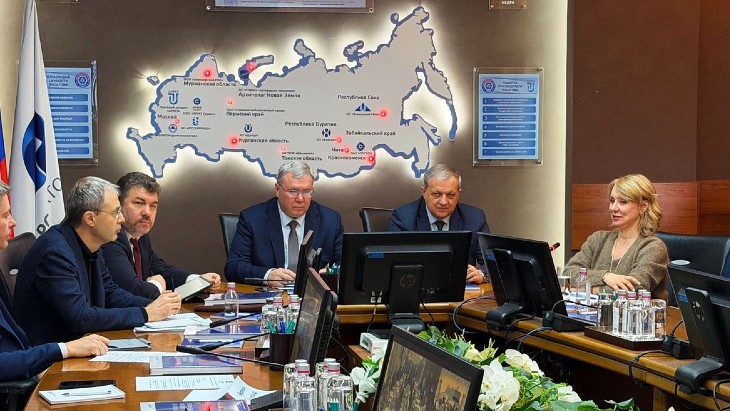
Russian uranium mining hit targets in 2025, expansion planned
Rosatom has reported that uranium mining companies achieved their production plans in 2025 and are expanding their mineral resource base.
(Image: Rosatom)
In a report of the annual meeting of Rosatom’s mining division Rosatom Nedra with stakeholders, it noted that licences have been obtained for the development of the Shirondukuyskoye deposit in eastern Siberia, and the Tetrakhskoye deposit, in the Republic of Buryatia.
In addition, it said, JSC Khiagda was constructing new production infrastructure to develop the Namarusskoye and Dybrynskoye deposits and that the first uranium was produced at the JSC Dalur Dobrovolnoye deposit in the Kurgan Region.
Viktor Svyatetsky, First Deputy Director General and Executive Director of Rosatom Nedra, said: "Our key objective is to expand our uranium mineral resource base to meet the needs of the Russian nuclear energy industry … in 2026, we will complete the bulk of capital mining work at the Shirondukuyskoye deposit, with the aim of further extracting about 400 tonnes of uranium from it, beginning in 2028. There are plans to bring the Elkon project out of hibernation. This uranium deposit currently holds the largest reserves in Russia."
A project to modernise the Krasnokamensk Thermal Power Plant has been taking place with a goal of increasing electricity generation by 60 MW to help the development of uranium projects and ensure a stable supply of electricity and heat to Priargunsky Industrial Mining and Chemical Union's flagship uranium mining enterprise and the city of Krasnokamensk.
Oleg Kazanov, director of the Federal Agency for Subsoil Use (Rosnedra), said: "The rapid growth of uranium consumption in Russia and globally requires a new approach to ensuring our country's raw material supply. Over the next 7-10 years, we will need to increase the volume of economically viable uranium reserves within the three existing mining centres, and over the next 15-20 years, we will need to create new mining centres."
The meeting also heard that non-uranium businesses now account for 37.5% of revenue, helped by commercial production beginning at the Severnoye gold deposit in the Republic of Sakha (Yakutia), where 1.5 tonnes of gold have been mined. Further geological exploration work has been taking place, as well as various projects being developed related to rare earths.
Contract for Sellafield plutonium storage containers
UK pressure vessel manufacturer LTi Metaltech Ltd has been awarded a contract worth more than GBP45 million (USD60 million) by Sellafield Ltd to manufacture and supply containers for use in Sellafield's Product and Residue Store Retreatment Plant.
A rendering of the completed SRP (Image: Proicere Digital)
In January last year, the UK government took the decision that the country's stockpile of civil plutonium would be disposed of, rather than used to produce mixed-oxide (MOX) fuel for nuclear power plants. The inventory arose from the reprocessing of used nuclear fuel undertaken over many decades. The UK's stockpile of some 140 tonnes of civil plutonium is currently stored at the Sellafield site in Cumbria, in line with regulatory requirements.
Once commissioned, the Sellafield Product and Residue Store Retreatment Plant (SRP) will prepare plutonium for long‑term storage ahead of its future immobilisation. The plant will treat existing plutonium stocks and repackage them into durable, modern containers known as 100‑year cans. That will ensure the material is capable of being transferred to an immobilisation facility where it will be converted into a stable waste form, suitable for consignment to a geological disposal facility.
Under the contract, LTi Metaltech - part of the wider LTi Group - will deliver products designed to support the re-packaging of special nuclear materials to nuclear quality requirements, with rigorous inspection and full material traceability embedded throughout manufacture. The team will work closely with Sellafield and project stakeholders throughout mobilisation and delivery to ensure all items meet technical, regulatory and schedule expectations.
Across the contract term, SRP will require multiple product types, with projected demand ranging from approximately 4,500 to 9,500 units, depending on product category. Delivery will be split into two phases: an initial three to four year development phase, followed by a 10-year volume production phase aligned to programme needs.
"Sellafield has safely and securely managed plutonium since the 1940s, developing world leading expertise in the process and being recognised as the UK's centre of excellence for plutonium management," said James Riddick, Sellafield Ltd chief supply chain officer. "It's a mission of national significance and requires expertise across a vast supply chain. LTi Metaltech is now part of this mission and was selected for its robust high-integrity manufacturing approach, specialist capability, and a delivery model aimed at consistent, repeatable supply over the life of the contract."
LTi Metaltech Managing Director Edgar Rayner added: "We're proud to support Sellafield's mission, and the contract award reflects our ethos of 'making stuff that matters', delivering high-integrity products for projects where safety and reliability are critical. This contract is an important milestone for LTi Metaltech and a strong endorsement of our manufacturing capability."
SRP is one of the largest and most complex projects under way at Sellafield. It is being delivered through Sellafield's Programme and Project Partners (PPP) model, which brings together KBR, Amentum, Morgan Sindall Infrastructure and Altrad Babcock, supported by a wider supply chain.
The main construction of 30-metre-tall SRP began in February 2020 with the first concrete pour for the base slab. The facility is set to be ready for active commissioning in 2027 and is expected to remain in operation until about 2060.








_13714.jpg)
_87299.jpg)
_29831.jpg)
_85211.jpg)
_55035.jpg)
_64503.jpg)