Monday, March 09, 2026


Venezuela acting government sends mining reform bill to legislature


Caracas skyline, Venezuela. Stock image.

Venezuela’s ruling party-controlled National Assembly on Monday approved a mining law expected to open the sector to private and foreign investment, the latest salvo in a package of US-backed changes to the still-sanctioned country’s economy.

The administration of US President Donald Trump has supported a series of moves by Acting President Delcy Rodriguez to attract investors and stabilize the country since a January US raid that captured President Nicolas Maduro, with Trump repeatedly praising Rodriguez for cooperating with the US.

A draft of the law seen by Reuters but not yet made public repeals a 1999 mining regulation law, allows foreign and domestic companies to exploit gold, diamonds and rare earths and increases concessions from 20 years to 30 years.

Though mineral deposits remain the property of the state, disputes will be resolved through international arbitration, according to the draft, which also creates new tax calculations for mining projects.

The law, which must be subject to two debates before it can pass, is likely to be approved given the socialist party’s control of the legislature.

It was backed by lawmakers in an initial vote despite abstentions from at least one opposition party, which complained that lawmakers had received the draft just before the session began and had not had time to review it.

Rodriguez’s brother Jorge Rodriguez, who heads the National Assembly, rejected the complaint, saying all legislators had received the draft at the same time.

US Interior Secretary Doug Burgum sounded an optimistic note about the law during a visit to Venezuela last week, saying it will create opportunities for companies and that Rodriguez has promised to ensure their security.

The day after Burgum concluded his visit, the US issued a license authorizing certain transactions involving Venezuelan-origin gold, allowing transactions with state-owned mining company Minerven and its subsidiaries, so long as contracts are governed by US law.

Rodriguez has hailed a recent oil reform, which lowered taxes, expanded the oil ministry’s decision power and granted autonomy for private producers, among other measures, as a model for the mining changes.

Venezuela owes billions of dollars to industrial conglomerates, oil and mining companies after deep waves of nationalizations two decades ago, including to Crystallex, Gold Reserve and Rusoro Mining.

Exploration has not yet taken place in Venezuela to confirm reserves of rare earths, a grouping of 17 metals used to make magnets that turn power into motion.

 South Africa

Merafe Resources posts profit plunge as soaring power costs shut smelters


Glencore Magareng chrome mine South Africa (Image courtesy of Glencore).

South Africa’s Merafe Resources reported a 72% slide in full-year profit on Monday, after suspending operations at its ferrochrome smelters due to high electricity costs.

Merafe’s headline earnings per share fell to 12.2 South African cents in the year ended December 31, 2025, from 42.9 South African cents previously.

The company, which operates a ferrochrome joint venture with Glencore, idled its plants in April 2025 citing soaring power costs and increased competition from Chinese smelters.

As a result, ferrochrome output from the Glencore-Merafe joint venture fell 63% to 112,000 metric tons in fiscal 2025. Production costs rose 14% during the year, mainly due to lower output.

South African smelters are struggling to compete with Chinese rivals amid power tariffs that have surged more than 900% since 2008, putting thousands of jobs at risk.

In January, South Africa’s energy regulator approved a 35% reduction in electricity tariffs for Merafe and fellow producer Samancor, allowing Merafe to restart its largest plant, the Lion smelter, last month.

On February 27, state power utility Eskom offered a further 29% tariff cut to the distressed smelters, pending regulatory approval.

(By Nelson Banya; Editing by Sumana Nandy and Tom Hogue)

PUTIN'S BANDITS

Hungary detains Ukraine convoy carrying over $80M in cash and gold

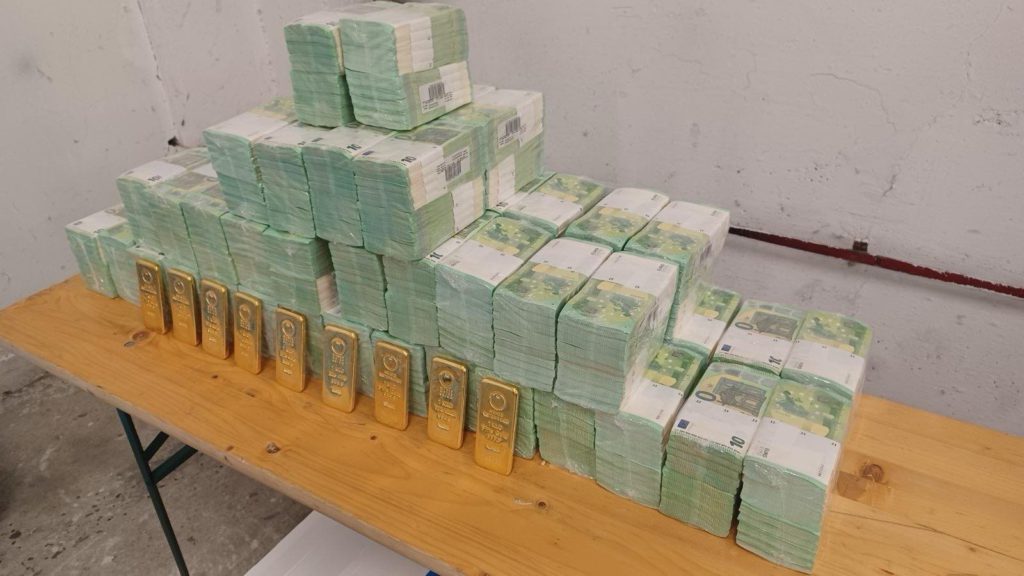
Photo showing cash and gold seized by the “Ukrainian gold convoy action”. Image source: Government of Hungary | Facebook

Hungary detained seven Ukrainian nationals transporting over $80 million in cash and gold through the country, authorities said, prompting Kyiv to accuse Budapest of unlawfully seizing the funds and taking its people hostage.

Hungary’s National Tax and Customs Administration (NAV) said the group was stopped during what officials described as the “Ukrainian gold convoy operation,” after authorities intercepted two armoured vehicles travelling from Austria to Ukraine.

Hungarian officials said they were surprised by the large amount of cash found with the Ukrainian men, who were reportedly wearing military tactical uniforms at the time of their detention.

According to authorities, the convoy was carrying about $40 million, €35 million and 9 kilograms of gold (worth about $1.5 million at current prices) when it was halted on suspicion of money laundering.

The Hungarian government, through its Facebook account, released on Friday a video and several photographs of the operation showing stacks of cash and gold bars laid out on tables.

Péter Szijjártó, Hungarian Minister for Foreign Affairs and Trade, said the individuals were detained due to “legitimate concerns” that the money and gold belonged to the Ukrainian war mafia. Since January, Ukrainians have reportedly transported about $900 million and €420 million in cash through Hungary, as well as 146 kilograms of gold bars, Szijjártó added.

Balázs Orbán, the Political Director of the Hungarian Prime Minister, raised his concerns about the amount of money passing through the country. “Whose money is this? What was it meant to finance? Who benefits from it?” Orbán wrote on X.

Hungarian authorities said they have launched a criminal investigation and are working with counter-terrorism forces, noting that one of the detained individuals was a former Ukrainian intelligence general.

They added that the seven Ukrainians have been expelled from the country, though the fate of the seized cash and gold remains unclear.

‘Taking hostages’

Ukraine’s foreign minister, Andrii Sybiha, condemned the move. “This is state terrorism and racketeering,” he wrote on X, and later alleged that the detention was part of “Hungary’s blackmail and electoral campaign.”

The foreign ministry also warned Ukrainian citizens to avoid travelling to Hungary for the time being due to the seizure.

The Ukrainian government said its national police also opened criminal proceedings against Hungary on “illegal deprivation of liberty” or “kidnapping” of bank employees.

According to Sybiha, the detainees were employees of state-owned lender Oschadbank conducting a routine transfer of foreign currency and precious metals between banks, as Ukraine’s airspace remains closed due to Russia’s invasion.

The incident has further strained relations between the two countries, already at odds over the suspension of Russian oil shipments through the Druzhba pipeline and Hungary’s opposition to additional European Union financial aid for Ukraine.


Endeavour Mining reports fatality at Burkina Faso mine


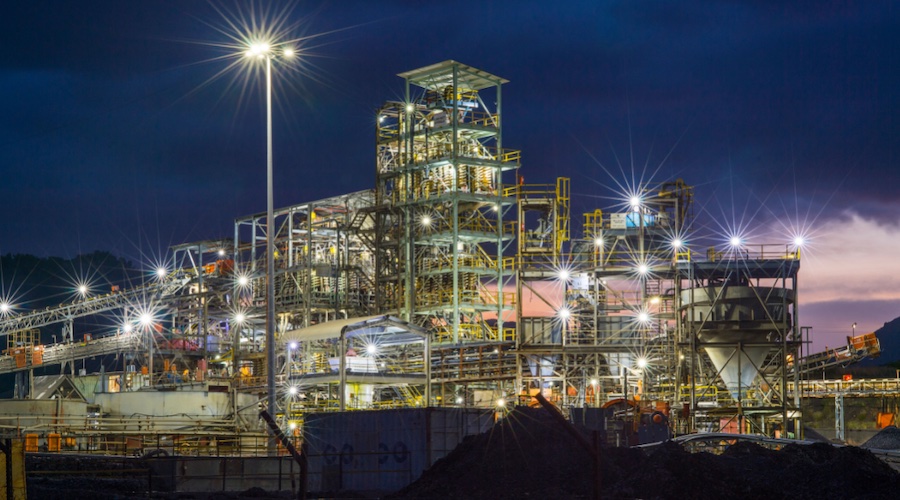
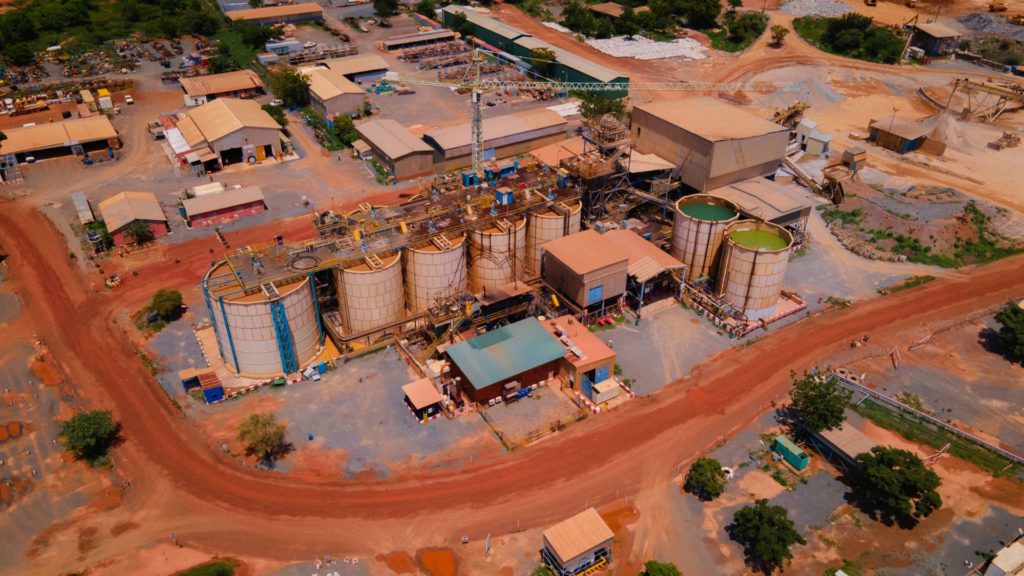
Carbon-in-leach plant at Mana. Credit: Endeavour Mining

Endeavour Mining (LSE, TSX: EDV) says a contractor died last Friday at its Mana mine in Burkina Faso due to injuries sustained during maintenance activities.

Mining and processing activities on the site remain uninterrupted, while a comprehensive internal investigation into the incident is being conducted, the gold miner said in a press release on Monday.

Endeavour Mining fell as much as 3% in Toronto. By midday, the stock traded at around C$83.90 apiece with a market capitalization of C$20 billion ($14.7 billion).

One of the cornerstone assets in Endeavour’s West Africa-focused portfolio, the Mana mine has been in operation for over a decade, producing more than 2.1 million oz. of gold during that span. It started out as an open-pit operation and recently transitioned into underground.

In addition to Mana, the company also operates the Houndé mine located 60 km to the south. Both are owned 85% by Endeavour, with the Burkina Faso government owning the remaining 15%.

BAN DEEP SEA MINING

TMC says consolidated permit application passes US compliance


TMC submitted its consolidated application earlier this year. (Image courtesy of Richard Baron | The Metals Company.)

Deep-sea mining hopeful TMC the metals company (Nasdaq: TMC) took a key step forward in the US regulatory process for securing its permit to explore and extract minerals from the Pacific Ocean floor.

In a press release on Monday, TMC said its application for an exploration licence and commercial recovery permit has been deemed to be “in substantial compliance” by the National Oceanic and Atmospheric Administration (NOAA) within its new regulations.

In January, the NOAA revised the Deep Seabed Hard Mineral Resources Act — the federal law regulating deep-sea mining exploration in international waters — to essentially combine the exploration licence and commercial recovery permitting processes. Previously, deep-sea mining companies had to follow a two-step sequential process.

The revision was first proposed in July 2025 after President Donald Trump signed an executive order aimed at bolstering the deep-sea mining industry, part of a broader push to counter China’s control on the critical minerals supply chain.

Shortly after, TMC, through its US subsidiary, submitted a consolidated application, becoming the first company to do so under the streamlined process. The application replaces the one it filed in April 2025 under the old regulations.

65,000 km2 area

“NOAA’s determination reflects the depth of work our team and partners have put into understanding this resource and how it can be responsibly developed,” Gerard Barron, chairman and CEO of TMC, stated in the press release.

For years, the Vancouver-based company has been preparing to mine part of the Pacific Ocean between Hawaii and Mexico known as the Clarion-Clipperton Zone, looking to tap into the seafloor polymetallic nodules that contain essential battery metals such as manganese, nickel, copper and cobalt contained in the

“After more than a decade of environmental research, successful offshore trials and commercial-scale metallurgical processing, we believe polymetallic nodules can provide a new and lower-impact source of critical metals for the US,” Barron said.

TMC’s consolidated application covers a commercial recovery area of approximately 65,000 km2, more than double the 25,000 km2 from its previous application. According to TMC, the licensed area contains an estimated resource of 619 million tonnes of wet nodules and potential exploration upside of an additional 200 million tonnes.

Shares of TMC rose as much as 4% to $6.00 apiece in New York, giving the company a market capitalization of $2.42 billion.

Greenpeace opposition

TMC’s efforts to mine the ocean floor has long faced opposition from industry groups for its potential impacts on the natural environment, and its application for the consolidated licences has placed the company under further scrutiny.

Environmental group Greenpeace International, which previously fought with TMC on the issue in 2023, said on Monday that the company’s application for “unilateral” deep-sea mining licences from the Trump administration violates its existing contracts under international law.

Seabed mining beyond national jurisdiction is currently regulated by the International Seabed Authority (ISA), which was created by the United Nations Convention on the Law of the Sea. However, ISA has spent years formalizing deep-sea mining rules to no avail due to unresolved differences over acceptable levels of dust, noise and other factors from the practice.

In its statement, Greenpeace urges the ISA to take action against TMC, including considering not renewing the contract, alleging the company of breaching the “core contractual obligations under the United Nations Convention on the Law of the Sea.”

CRIMINAL CAPITALI$M

Phoenix Copper fires chair, CFO over secret payments

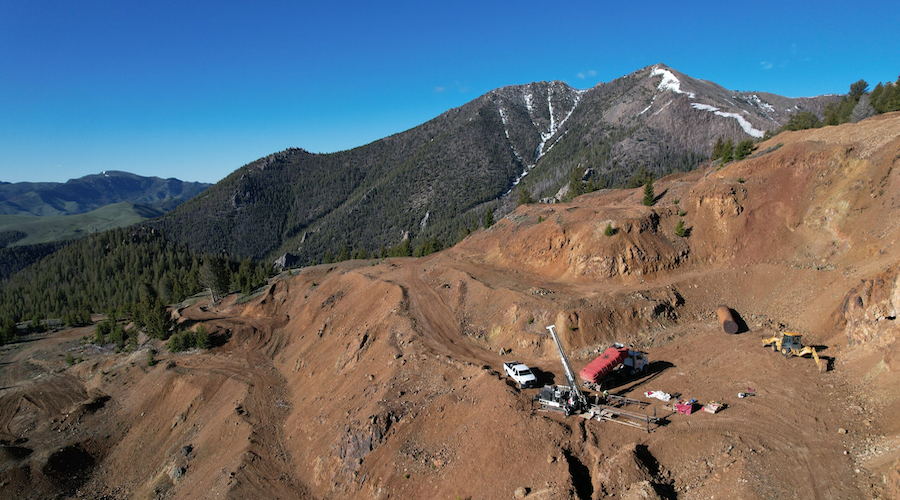
The Empire Copper Reserve project in Idaho. (Image courtesy of Phoenix Copper.)

Phoenix Copper (AIM: PXC) has dismissed its executive chairman and chief financial officer after an internal investigation uncovered undisclosed related-party payments and unauthorized transactions tied to fundraising activities.

The US-focused copper miner said Monday that former executive chairman Marcus Edwards-Jones and CFO Richard Wilkins were removed after the board determined about $1.765 million had been paid between 2016 and 2025 to Lloyd Edwards-Jones, a corporate finance advisory firm owned by Edwards-Jones. 

The company said the payments were made by Wilkins in connection with fundraising transactions without the knowledge or approval of the board, and Wilkins shared in the proceeds.

Phoenix said the transactions qualified as related-party dealings under AIM rules but were never disclosed or approved by independent directors or the company’s nominated adviser.

The probe also uncovered an additional £610,000 (about $815,000) in unauthorized payments. Some funds were transferred to an intermediary linked to bond financing without board approval, while others were made despite explicit instructions from directors not to proceed.

Both former executives have indicated they are willing to cooperate with efforts to recover the funds, the company said.

Independent non-executive director Catherine Evans has stepped in as interim chair and is working with CEO Ryan McDermott to strengthen governance and financial controls. Phoenix has also appointed an interim CFO to oversee completion of its 2025 audit.

Auditor Crowe UK has been informed of the findings. The company said it does not currently expect its historical financial statements to require restatement, aside from disclosing the payments as related-party transactions in its 2025 accounts.

Phoenix added that its working capital position remains tight. After reviewing cash flow and implementing cost reductions, the company said its existing cash balance should fund operations until the end of the second quarter of 2026.

Trump's Secret Weapon in the Rare Earth Race

REalloys (NASDAQ: ALOY) and a small number of other North American companies are doing what the rest of the Western world failed to do for three decades: They are breaking China’s "kill switch" on the U.S. defense supply chain.

While the U.S. defense sector has long been reliant on international processing for these materials, REalloys has established itself as the only North American facility currently producing the specialized alloys essential for high-performance magnets used in advanced defense systems.

China’s dominance isn't in the dirt. It’s in the downstream conversion. And as the U.S. government injects $8.5 billion to reclaim the supply chain, the industry has realized a cold truth: factories don’t run on rocks, they run on metals.

“China didn’t win this by mining. It won by building the entire system—separation, refining, metals, magnets—all connected," says REalloys CEO Lipi Sternheim. "Our competitors, no matter how well-funded, are at least three years away from production. We are already here.”

By the time rare earths became strategically visible, the infrastructure that determined who could actually build was already concentrated in one place. Then it was weaponized, with Beijing placing restrictions on rare earth exports in order to control which defense and advanced manufacturing programs received supply.

“That loss of end-to-end rare earth capability outside China is exactly what REAlloys was built to close,” Sternheim said.

And things are moving quickly, in tandem with the U.S. Department of Defense’s eye on the critical metal prize: domestic processing.

REalloys has addressed the rare earth bottleneck that has constrained Western manufacturing for decades by reestablishing domestic conversion capacity, turning separated material into metals and alloys inside North America through its partnership with the Saskatchewan Research Council (SRC). Now, it’s the only North American company with North American supply from a heavy rare earth refinery.

With that conversion capacity in place, REalloys has moved to lock in feedstock, including a long-term offtake agreement tied to Kazakhstan.

Through a long-term non-binding offtake agreement with AltynGroup, REAlloys will pull rare earth feedstock out of Kazakhstan and route it straight into its North American metallization and alloying system. The material does not leave the chain as concentrate.

Oxides and concentrates don’t power anything. Metals and alloys do.

Until rare earths are converted into metal and alloy form, they cannot be used in motors, magnets, or weapons systems. That conversion step is where control has been lost for decades — and where most Western supply chains break.

By routing material all the way through to metals and alloys inside the United States, REAlloys is solving the part of the problem that cannot be fixed later, substituted, or rushed in a crisis.

The feedstock is tied to AltynGroup’s Kokbulak project, where rare earth-bearing material is recovered from an existing iron ore operation. The concentrate includes both light and heavy rare earths, including dysprosium and terbium.

North America has handled foreign rare earth material before, but almost always handed it back offshore before it reached metal or alloy form. This arrangement is built to stop that handoff. Material enters the chain and stays in the chain until it becomes defense-grade output.

This is not future capacity. The Kazakhstan feedstock will be routed into a system that is already running.

REalloys operates the only facility in North America capable of converting rare earths through metallization and alloying at scale, including heavy rare earth elements.

That capability sits at its Euclid, Ohio site, where rare earth metals and alloys are already being produced for U.S. government customers.

This is the step in the chain where rare earths become usable for defense systems, motors, and high-performance magnets– and it is the step the West no longer controls. With new U.S. rules taking effect in 2027 restricting the use of Chinese rare earths in defense and federally backed manufacturing, existing domestic conversion capacity is becoming more relevant by the quarter.

There is no parallel facility in North America handling heavy rare earth conversion at this level. Building one is not a short-term exercise. Processing, metallization, and alloy qualification take years to permit, finance, construct, and qualify with defense customers. Even under accelerated timelines, meaningful competition is measured in half-decades, not quarters.

REalloys (NASDAQ: ALOY) has assembled that capability into a single operating system.

Kazakhstan provides scale-ready feedstock. Hoidas Lake in Saskatchewan adds a second upstream source. The partnership with the Saskatchewan Research Council anchors midstream processing. Euclid closes the loop by turning material into defense-grade metals and alloys. This is not a collection of projects moving independently. It is a single conversion system designed to keep material inside Western control all the way to finished output.

The U.S. government is now saying out loud what defense planners have been warning about privately for years.

This week, Washington convened talks with allied and partner countries explicitly aimed at weakening China’s grip over critical minerals supply chains. The issue has moved out of the realm of industrial competition and into national security planning, at a point where there is almost no buffer left.

China has already used rare earth controls to cut off specific military and industrial customers.

In late 2025, Beijing imposed an explicit ban on exports of certain rare earth materials and processing technologies for military use, blocking shipments tied to defense and weapons manufacturing. The restrictions were not broad trade measures. They were targeted at materials and know-how required for guidance systems, magnets, and advanced electronics used by foreign militaries.

Japan has been on the receiving end as well.

Chinese authorities have recently tightened export controls and licensing around rare earths and related materials amid renewed political friction with Tokyo, reviving a playbook Japan knows well. In 2010, China abruptly curtailed rare earth exports to Japan during a diplomatic dispute, disrupting automotive and electronics supply chains and forcing emergency stockpiling.

The Pentagon has already crossed the line from concern to intervention.

Complementing DoD’s downstream focus, the U.S. government is launching a $12 billion strategic critical-minerals stockpile that will include rare earths, lithium, nickel, cobalt, and other essential elements. The initiative aims to reduce U.S. dependence on China and ensure material availability for defense, advanced manufacturing, and technology sectors by acquiring and holding key feedstocks and intermediates.

Using Defense Production Act authorities and direct financing, it has pushed capital into domestic rare earth processing and magnet production, including MP Materials (NASDAQ: MP), to keep U.S. weapons programs from remaining hostage to Chinese-controlled metals. Using Defense Production Act authorities and direct financing, it has pushed capital downstream into domestic rare earth processing and magnet materials to keep U.S. weapons programs from remaining dependent on Chinese-controlled metals.

Government action is still moving through policy channels and legacy projects, while REAlloys is already producing rare earth metals and alloys inside the United States–the layer the Department of Defense now treats as critical.

REalloys is right at the downstream choke point. The hardest part of the supply chain is already built, demand is real, and the barriers to entry are high.


CAPITAL STRIKE

Chevron Warns California Cap-and-Invest Changes Threaten Energy Supply

Chevron is urging California officials to reconsider proposed amendments to the state’s Cap-and-Invest (C&I) carbon market program, arguing that the changes could increase fuel costs, accelerate refinery closures, and undermine energy security across the state and the broader United States.

In a letter addressed to California Governor Gavin Newsom and state energy regulators, the company warned that revisions under consideration by the California Air Resources Board (CARB) could place severe pressure on the state’s remaining refining sector. According to Chevron, the regulatory changes risk destabilizing fuel supply while driving up gasoline prices for consumers.

The proposed amendments aim to tighten greenhouse gas emissions limits for businesses participating in California’s carbon trading system. Chevron contends that the measures could significantly increase the cost of emissions allowances, which refiners must purchase to comply with the program.

The company estimates that the policy could add more than $1 per gallon to gasoline prices by 2030 if carbon allowance prices rise toward projected levels of roughly $135 per ton. California’s existing Cap-and-Invest framework already contributes about $0.24 per gallon to gasoline costs, according to data cited from the California Energy Commission.

Chevron argues that higher compliance costs could force additional refinery closures in the state. California has already lost roughly 18% of its refining capacity in recent years due to plant shutdowns and conversions to renewable fuel production.

A further decline in refining capacity could tighten fuel supply, leading to increased price volatility and greater reliance on imported petroleum products. Imports, the company noted, can take longer to arrive during supply disruptions and may carry higher lifecycle emissions.

Beyond consumer costs, Chevron emphasized potential economic consequences. The company says the petroleum sector supports more than 536,000 jobs statewide and contributes roughly $64 billion annually in tax revenues across federal, state, and local levels.

The industry also generates an estimated $166 billion in economic value for California through direct operations and supply chains, making it a significant contributor to the state’s broader economy.

Chevron further warned that weakening California’s refining infrastructure could have implications for national security. Refineries in the state supply fuels used by more than 30 U.S. military installations and support aviation fuel production for both civilian and defense operations across the Pacific region.

A shrinking refining base could leave the West Coast increasingly dependent on imported fuels, potentially exposing the region to global supply disruptions and logistical delays during emergencies.

California has pursued some of the most aggressive climate policies in the United States, including a legally mandated transition toward net-zero emissions. The Cap-and-Invest program is a central component of the state’s strategy to reduce greenhouse gas emissions while funding climate programs through the sale of carbon allowances.

However, the debate highlights a broader tension facing policymakers: balancing decarbonization goals with concerns about energy affordability, industrial competitiveness, and supply reliability.

Chevron is calling on state leaders to revise the proposed amendments and adopt what it describes as a more balanced policy framework that maintains emissions reductions while preserving refining capacity and fuel supply stability.

By Charles Kennedy for Oilprice.com

Shell to Sell Jiffy Lube Network to Monomoy in $1.3 Billion Deal

Shell plc (NYSE: SHEL) has agreed to sell Jiffy Lube International and its subsidiary Premium Velocity Auto (PVA) to an affiliate of Monomoy Capital Partners for $1.3 billion, marking a strategic exit from the U.S. quick-lube service business while maintaining its core lubricants brands.

The transaction, announced Monday, involves Pennzoil Quaker State Company—Shell’s U.S. lubricants subsidiary—divesting the Jiffy Lube brand and its network of franchised automotive service centers. The deal also includes the sale of Premium Velocity Auto, the second-largest Jiffy Lube franchisee, which operates more than 360 locations across 20 U.S. states.

As part of the agreement, Shell will enter into a long-term lubricants supply arrangement with Monomoy, ensuring that Jiffy Lube locations continue to use Shell products after the sale. The transaction is expected to close in the second half of 2026, subject to regulatory approvals and customary closing conditions.

The $1.3 billion divestment enables Shell to monetize a non-core retail service business while preserving demand for its lubricant brands through a supply agreement with the new owner.

Shell executives said the move aligns with the company’s broader effort to optimize its downstream portfolio and allocate capital toward higher-return opportunities.

“By capitalizing on a strong market opportunity, this divestment allows us to monetize an asset that is not central to Shell’s lubricants portfolio in the U.S. and reinvest in opportunities that generate higher returns,” said Machteld de Haan, President of Downstream, Renewables and Energy Solutions at Shell.

Shell will retain ownership of its core lubricant brands—including Pennzoil, Quaker State, Rotella, and other Shell-branded products—along with manufacturing, marketing, and distribution operations across the U.S. and Canada. These businesses supply consumer, commercial, and industrial lubricant markets.

Jiffy Lube has been part of Shell’s lubricant operations in the United States for more than two decades. The brand operates over 2,000 service centers across the U.S., with additional licensees in Canada, offering oil changes, lubrication services, and light automotive repairs for cars and light trucks.

According to Shell, Jiffy Lube accounts for roughly 6.5% of the company’s total lubricants volume in the U.S. and Canada.

Premium Velocity Auto, included in the sale, is one of the largest operators within the franchise network, running hundreds of service centers under the Jiffy Lube brand.

The divestment reflects a broader trend among energy majors to streamline downstream portfolios and focus on core operations with stronger margins or strategic alignment with the energy transition.

Shell has been actively reshaping its asset base in recent years, prioritizing integrated energy operations, LNG trading, and low-carbon businesses while reducing exposure to non-core retail operations. The company remains a dominant player in the global lubricants market, having led the sector by volume for more than 19 consecutive years, according to Kline & Company.

In the United States, Shell maintains a large energy footprint, including its position as the largest producer in the deepwater Gulf of Mexico, the largest buyer of U.S. LNG, and the operator of approximately 12,000 branded retail fuel stations nationwide.

Monomoy Capital Partners, a private investment firm focused on middle-market industrial and consumer businesses, is expected to expand Jiffy Lube’s footprint and operational platform following the acquisition.

With the addition of Premium Velocity Auto’s store network, the deal gives Monomoy direct control over a large portion of the Jiffy Lube ecosystem while maintaining franchise relationships across the broader network.

By Charles Kennedy for Oilprice.com


Solar and Storage Could Reshape Rural Electricity Markets

  • Rural electric cooperatives may face disruption from cheaper on-site renewables.

  • Co-ops serve about 12% of the U.S. population but operate over 40% of the nation’s power lines.

  • Financial pressure could grow across the system, as co-ops remain tied to long-term fossil power contracts with generation providers while renewable alternatives become cheaper for rural customers.

Rural electric cooperatives may be next in line for meaningful disruption from lower-cost, renewable power generation technologies such as wind and solar.  The co-operative movement, a creation of FDR's New Deal, has survived the past ninety six years with a simple mandate: provide low-cost, reliable electricity in under-served rural areas.

From a business perspective rural electrification always seemed like a terrible idea. The electric utility has to spend prodigiously on poles and wires for a sparsely populated area with a few customers per mile who provide an insignificant amount of steady revenues on that enormous investment. And to make it worse from a business perspective,   all the farmers wanted in 1935 was mostly electric light and maybe power for a radio. Urban utilities, on the other hand, had over 20,000 customers per mile of distribution line, making for a proper business. The investor owned utilities at the time looked at the outsized capital expenditures for a rural power distribution network and its dismal revenue prospects and said, in effect, “no thanks”.

This rural-urban divide in the electric utility industry generated a bitter conflict within the industry, now long gone from the public’s imagination. But it still manifests itself plainly on a utility’s balance sheet. Rural utilities, not surprisingly, have a relatively large percentage of assets devoted to power transmission and distribution activities, especially on a per customer basis—all those miles of poles, wires, and small substations to move electricity across a large, sparsely populated service area. Said differently, the US’s power co-ops today serve about 12% of the population, but they have about 40+% of the nation’s transmission and distribution network and cover more than 50% of the land mass of the US.

Even today, rural power distribution costs on a per customer basis are very high, about four times higher than for an urban utility. Until recently, we saw this as a competitive strength. A relatively wide and protected moat for their business. The existing rural T&D system is too expensive to replicate, so we viewed competitive threats as minimal. Now, on- site power generation (and storage) with renewables could pose an existential competitive threat. If the storage and generation are on the customers’ premises, then the expensive distribution network becomes irrelevant and a potentially stranded asset. And because this renewable power is also cheaper than current fossil alternatives, this renders the power generation contracts to serve the co-op’s load at risk as well.

In the US, there are over 800 power co-ops serving more than 40 million people. And there are about 60 larger generation and transmission (G&T) co-ops,that own mostly fossil-fired power generation assets, which sell power to the distribution co-ops under long-term contracts. If we are correct, utility customers in these rural areas might realize substantial savings by switching to on-site solar. There are two reasons for this: 1) the new solar power providers don’t have that extensive rural electricity distribution network to support physically and financially, and 2) their power costs are cheaper than coal and gas. From a business competition perspective, this isn’t even a remotely fair fight. To us, this is what utility stranded asset risk really looks like when it’s caused by a technology transition.

In our rural electrification model in the US, we broke up the integrated electric utility into two parts, the distribution entity (the co-ops) and the Generation and Transmission entities providing power. But the financial stresses of more rapid solar and renewables adoption will affect each part of the business differently. The co-ops will lose lucrative customers as large commercial and industrial loads get bid away by solar developers offering lower power costs. But real financial stresses will also occur between the co-ops and their power providers, the G&Ts. The co-ops are contractually obligated to purchase mostly fossil-fired power from the G&Ts, but the co-ops now find themselves purchasing power that is now uncompetitively priced versus renewables. And this situation will likely get worse. The current fuel mix, according to the industry’s association, NRECA, is about 25% coal, 35% gas, 14% nuclear, with the rest being renewables and hydro. It is the financial tensions between co-ops and G&Ts that may give fixed-income investors some cause for concern.

The cooperatives are customer-owned businesses dedicated to providing reliable electric service at the lowest possible cost. They can raise money at a lower cost than their individual customers, and they have service staff that covers big, sparsely populated territories. They could become sellers, owners, and maintainers of on-site generation and storage and mini-grids. But those new businesses do not address the real issue: what to do with the existing infrastructure? That is where the financial risk lies.

What a new technology like renewables exposes here is an underlying and unavoidable physical and financial fragility of rural electrification based on the prevailing technology at the time, central station power. that reached customers through a relatively high-cost distribution system. But now, renewables produce electricity at lower cost, are faster to deploy at scale, and, because their power is generated on site, they don’t need any of the extensive distribution system nor the fossil-fired plants built to serve it. For a rural utility today we might say their assets are being stranded at both ends.

By Leonard Hyman and William Tilles for Oilprice.com


How China Plans to Tackle Its Massive Solar Panel Waste Problem

  • The global solar power boom, largely fueled by China's dominant manufacturing, is set to create a staggering 88 million tons of solar waste by 2050.

  • Recycling solar panels remains costly and complex, with the current process costing about ten times more ($20–$30 per panel) than sending them to a landfill ($1–$2 per panel).

  • China has set a lofty goal to recycle 250,000 tons of solar panels by 2027 and 1.5 million tons by 2030, which, if successful, will serve as a crucial mass-scale pilot project for the rest of the world.

Solar power is on a meteoric rise around the world. Over the next five years, solar photovoltaics will account for an astonishing 80 percent of new renewable power additions, according to estimates from the International Energy Agency. And that will amount to a whole lot of added capacity on a global scale. Despite a pivot away from clean energy in some policy spheres, renewables have simply become too cheap to fail, and installations are expected to more than double by 2030.

A huge amount of the world’s installed solar pv growth has been made possible by China’s unprecedented and unrivalled investment in expanding its photovoltaic supply chains. A flood of cheap solar panels out of China has fuelled a global renewable revolution while also helping to establish China as the world’s first electro-state. While other countries are advancing homegrown renewable manufacturing sectors, “concentration in China for key production segments is set to remain above 90% through 2030” according to the International Energy Agency’s Renewables 2025 report. 

While China’s domination of the global solar sector has been a major boon for the Chinese economy, as well as Beijing’s political leverage in terms of both hard and soft power, the solar boom is set to leave the country with a major problem. A huge wave of solar installation leads to a huge wave in solar panel decommissioning, and that wave is about to crash upon Beijing. 

Solar waste is a huge issue in the global renewables market, expected to amount to a staggering 88 million tons by 2050. At present, virtually all spent solar panels go directly to landfill, presenting a massive-scale issue for the environment as well as for resource loss. The scale of this issue is set to explode, as low- and middle-income countries experience a boom of small-scale solar using panels with relatively short lifespans. While utility-scale solar operations use panels with a lifespan of approximately 22 years, many of the solar panels supporting solar booms in emerging economies last just four or five years before they have to be decommissioned or, ideally, recycled or repaired.

As the scale of this issue balloons, solar panel recycling has received a fair amount of attention in research. But the recycling process remains costly and complex. In fact, recycling a solar panel costs about ten times more than trashing it. A 2021 article from the Havard Business Review states that recycling a single panel costs an estimated $20–$30, whereas sending that panel to the landfill costs just $1–$2.

As such, recycling photovoltaic solar panels is “a money-losing enterprise” according to MIT. Addressing the global solar waste issue will require a coordinated and cross-sectoral effort to make the venture economically viable. “Boosting recycling rates will take a mix of new solar panel designs, recycling technologies, and policy,” the MIT Climate Portal article goes on to say.

But now, China is making bold claims that it is going to begin recycling solar panels in huge numbers. Beijing is attempting to lead the charge on various scrapping methods as China prepares to contend with 1.5 million tons of solar panels that will need to be recycled or otherwise scrapped by the end of the decade. A recent notice from six Chinese government agencies states that the nation intends to recycle 250,000 tons of solar panels by just 2027. The government also says that it will encourage manufacturers to use recycled materials in the production of new products.

It’s not clear exactly how China is going to accomplish these lofty goals, but the rest of the world will likely be able to learn a great deal from the mass-scale pilot project. “Recyclability is a problem that can be solved,” says MIT, “and the world’s rapid transition to clean energy gives us a rare chance to address our waste problems from the ground up.”

By Haley Zaremba for Oilprice.com