Saturday, April 04, 2026

UAE's Biggest Gas Plant Forced Offline for Second Time Since War Began

Operations at the Habshan gas facilities, the biggest gas processing site in the United Arab Emirates, were suspended early on Friday following a fire that erupted after an attack, Abu Dhabi Media Office said.

The Habshan onshore facilities are part of one of the world's largest gas processing plants, which is operated by Abu Dhabi's national oil company ADNOC. The five plants of the vast Habshan Complex have 14 processing trains and 6.1 bscfd capacity, according to the company.

This is the second time operations at Habshan have been suspended following attacks since the war began.

Abu Dhabi Media Office said on Friday that the "Abu Dhabi authorities are responding to an incident of falling debris at the Habshan gas facilities, following successful interception by air defence systems."

"Operations have been suspended while authorities respond to a fire. No injuries have been reported," the media office added.

Apart from hosting the UAE's largest gas processing complex, Habshan is home to oil facilities and is the starting point for the Habshan-Fujairah crude pipeline to Fujairah, the port that sits outside the Strait of Hormuz and can help re-route part of UAE's oil exports away from the de facto closed chokepoint.

Fujairah itself has also been targeted by Iran in several attacks since the war began.

Separately, another Gulf producer, Kuwait, also reported another Iranian attack on Friday. Kuwait Petroleum Corporation (KPC) confirmed that the Mina Al-Ahmadi refinery was targeted in a drone attack early on Friday, resulting in fires in several operational units.

No injuries have been reported in the attack, which is the second on the refinery, located 50 kilometers (31 miles) south of Kuwait City. The facility has the capacity to process 346,000 barrels per day (bpd) of crude oil.

Mina Al-Ahmadi was hit by drone attacks on March 20, which caused fires in several units.

By Charles Kennedy for Oilprice.com 

D.E.I.

BP’s New CEO Faces a Defining Test as War Boosts Profits

  • BP is benefiting from a war-driven surge in oil profits, boosting investor sentiment.

  • Meg O’Neill arrives with a reputation for decisive leadership but faces unresolved strategic questions.

  • Investors are demanding a clear long-term direction beyond short-term gains from geopolitical disruption.

In one sense it’s a baptism of fire – in another, hardly at all. Meg O’Neill’s arrival as the first female chief executive of BP comes, in a sense, at an auspicious moment. 

Oil majors’ earnings are set for a significant windfall from the conflict in Iran, with those of BP and Shell forecast to see a combined £5bn this year – and that’s if the war is limited in timeframe.

That cannot mask, though, the scale of the task facing O’Neill, who arrives from Australia’s Woodside Petroleum with a formidable reputation for rapid, hard-nosed corporate decision-making.

“Right now, we’re operating in an environment of significant complexity: geopolitical tension, conflict, rapid technological change and shifting global energy demand,” she told colleagues yesterday.

“There’s always more to do and I believe we can safely accelerate performance and drive innovation, sustainability and growth.”

BP needs it now more than ever. Its target for reducing net debt to $14bn-$18bn by the end of 2027, partly driven by asset sales, may be within reach a year early, but that will do little to address the more fundamental questions being posed by the company’s shareholders: how to shape a strategy which returns it to long-term sustainable growth.

O’Neill’s predecessor, Murray Auchincloss, was resistant to big strategic decisions that would shift BP away from the diversified energy group it had become and back towards its roots as a more focused – but smaller – oil and gas exploration and production company.

His new chairman, the former CRH boss Albert Manifold, had no truck with that resistance, repeatedly telling investors that he wanted to drive radical change at BP to improve its performance.

“That’s how we make bp simpler, stronger and more valuable,” O’Neill wrote. “I’m committed to providing clear direction and consistency so we can move forward together with confidence.”

The Iran war has put the wind in BP’s sails, with its shares up by nearly half since her appointment was announced. Investors will want rapid evidence of O’Neill’s strategic vision, though, to be convinced that her arrival isn’t yet another false dawn.

By Mark Kleinman for CityAM


BP Names Carol Howle Deputy CEO to Lead Strategy Overhaul

BP has named long-serving executive Carol Howle as deputy CEO, effective immediately, in a move that consolidates strategic oversight at a critical juncture for the company. Howle will retain leadership of BP’s powerful supply, trading and shipping (ST&S) division while taking on responsibility for the company’s ongoing portfolio review and long-term strategy development.

The restructuring also shifts BP’s strategy and sustainability team under Howle’s supervision, centralizing decision-making as the company reassesses its trajectory beyond its 2027 targets.

The appointment comes amid a broader leadership transition at BP, with Meg O’Neill recently stepping into the CEO role. The move signals a push toward tighter strategic alignment and capital discipline, as the company navigates investor pressure to balance energy transition ambitions with returns from its core hydrocarbons business.

BP has faced scrutiny in recent years over shifting energy transition targets and capital allocation priorities, particularly as peers recalibrate toward more oil and gas investment following weaker-than-expected returns from low-carbon ventures. The creation of a strengthened deputy CEO role suggests BP is seeking to streamline execution and sharpen focus on value generation.

Howle’s continued oversight of ST&S—one of bp’s most profitable units—further underscores the importance of trading operations in supporting earnings stability during periods of market volatility.

Howle brings 25 years of experience at BP to the role, having led ST&S since 2020. She also served as interim CEO in December 2025, positioning her as a central figure in the company’s leadership bench.

Her expanded responsibilities place her at the center of bp’s strategic reset, particularly as the company evaluates asset portfolios and investment priorities in a rapidly evolving energy landscape.

The leadership reshuffle may be viewed positively by investors seeking clearer strategic direction and improved capital efficiency. By consolidating strategy, sustainability, and portfolio review under a single executive, BP appears to be aiming for faster decision-making and more coherent execution.

The emphasis on disciplined capital allocation and operational reliability aligns with broader industry trends, as oil majors prioritize shareholder returns amid uncertain energy transition pathways.

By Charles Kennedy for Oilprice.com

How the U.S. and Europe Are Betting Differently on Energy Security


  • Hornsea 3, set to become the world's largest offshore wind farm at 2.9 GW, connected its first seabed export cable to the UK coast on March 26, a key step toward its 2027 completion.

  • France is launching tenders for 12 GW of offshore and floating wind capacity by 2027 under a 'Made in Europe' initiative designed to prioritize local supply chains and reduce external energy dependence.

  • The Trump administration is paying TotalEnergies $1 billion to exit U.S. offshore wind projects representing more than 4 GW of potential clean power, redirecting those funds toward oil and gas.

Europe is making a push for a robust homegrown offshore wind sector at the same time that the United States is gutting its own. The world's largest wind farm, currently under construction in the North Sea, made major progress on March 26 when it successfully connected its first export cable from the seabed to the coast of the United Kingdom. Meanwhile, France plans to auction off 10 offshore and floating wind projects with a combined capacity of 12 gigawatts by 2027 as part of a ‘Made in Europe’ initiative.

In the UK, the connection of the undersea cable for the massive Hornsea 3 offshore wind project marks a significant milestone for the offshore wind capacity and for European collaboration on making a more independent and autonomous energy industry. The project, which will benefit consumers in the United Kingdom, is being headed by Ørsted, a company from Denmark, while the cable installation is being carried out by Belgium’s Jan De Nul Group. When finished in 2027, the project will have a power generation capacity of 2.9 gigawatts, enough to power 3.3 million homes.

“Hornsea 3 will be a cornerstone in achieving the UK government’s climate and clean energy targets while increasing energy independence and creating local jobs,” Duncan Clark, Head of Ørsted UK & Ireland, was quoted by Interesting Engineering. “It will make a significant contribution towards the UK Government’s ambitious target of 50 GW of offshore wind by 2030 and net-zero by 2050.

It will also help to increase the United Kingdom and Europe’s energy independence, a pressing issue in today’s geopolitical climate. In France, the upcoming tenders for offshore wind energy will prioritize local supply chains. “We want these bids to be done as much as possible with our technologies, our factories, our employees,” said French Finance Minister Roland Lescure. “This is a long-term strategy to secure our industrial supply chains,” he continued.

The push for homegrown offshore wind comes as a part of the bloc’s larger energy security strategy, which has been kicked into overdrive by the current global energy crisis reverberating out of the Strait of Hormuz. The current crisis marks the third time in four years that European energy markets have been kneecapped by their dependence on global supply chains to keep the lights on. European leaders are determined to make sure that it doesn’t happen again.

Meanwhile, on the other side of the Atlantic, the United States is taking a completely different approach to energy security. Instead of diversifying domestic energy production in the interest of building up resilience to global market shocks, the United States is piling all of its eggs back into the petro-basket. In fact, the Trump administration is paying a French company TotalEnergies $1 billion to abandon offshore wind projects that could have generated over 4 GW of clean power. Instead, that money will be channeled into oil and gas.

“When the Trump administration came to power and began setting U.S. energy policy, we said that we’ll have to reconsider, clearly, these offshore wind project developments,” says Patrick Pouyané, the CEO of TotalEnergies. However, this doesn’t mean that they will be backing off of offshore wind development entirely. “To be clear, we don’t renounce onshore wind,” Pouyané went on to say. “We continue to invest in onshore solar, onshore wind, batteries [in other countries].”

Few examples more accurately and powerfully capture the growing divide in energy policy between the United States and Europe. While Europe tries to shore up energy autonomy and independence through renewables, the United States is targeting energy dominance through fossil fuels. Some experts say that this play will end up costing United States consumers more per megawatt hour of energy – and end up costing the world in terms of climate-related externalities.

By Haley Zaremba for Oilprice.com


How the Iran War Became NATO’s Biggest Crisis

  • Trump told Reuters he is "considering" withdrawing from NATO after European allies declined to send navies to reopen the Strait of Hormuz, which handles roughly 20% of global oil supply.

  • Spain closed its airspace to U.S. military planes, France blocked weapons flights to Israel, and Britain restricted base access to defensive missions only, prompting Trump to call the alliance a "paper tiger."

  • With Brent crude hovering near $100 a barrel and U.S. gas prices above $4 a gallon, analysts warn the standoff could deteriorate further if NATO Secretary-General Mark Rutte fails to change Trump's mind during a Washington visit next week
  • .

President Donald Trump told Reuters on Wednesday that he is considering withdrawing the United States from the 76-year-old alliance after European allies declined to send warships to reopen the Strait of Hormuz to global shipping.

"Wouldn't you if you were me?" he asked.

Earlier this week, in an interview with Britain's The Telegraph, he called NATO a "paper tiger" and said Russian President Vladimir Putin shared the assessment.


The spat has a straightforward trigger.

The Strait of Hormuz, the narrow chokepoint between Iran and Oman through which roughly 20% of the world's oil flows, has been effectively closed to commercial traffic since the war began. Oil prices have surged in response, with Brent briefly touching $120 a barrel before retreating. The EIA now forecasts Brent will average $79 per barrel for the full year, a sharp revision from its pre-war estimate of $58. U.S. gasoline prices have crossed $4 a gallon.

Trump wants allies to help reopen it, but they’ve largely said no. 

Spain closed its airspace to U.S. military planes involved in the conflict. France refused to let planes carrying weapons to Israel pass over French territory. Britain allowed American bombers to use its bases, but only for defensive strikes, not offensive ones, prompting Trump to publicly lambast the country's "special relationship." Poland's defense minister said Warsaw has "no plans" to move its Patriot air-defense systems to the Middle East.

Secretary of State Marco Rubio made clear the administration is keeping a ledger. In an interview with Al Jazeera, he called the allies' response "very disappointing" and said the value of NATO, if it only works one direction, is something that will "have to be re-examined."

The energy dimension compounds all of it. Analysts at Macquarie put 40% odds on oil hitting $200 a barrel if the strait remains closed into Q2. Iran has begun laying naval mines in the waterway. The White House, for its part, has responded to the price surge by lifting sanctions on Russian oil, a move that European capitals see as yet another accommodation toward Moscow at their expense.

That dynamic surfaced sharply at a G7 foreign ministers meeting near Paris last week. 

EU foreign policy chief Kaja Kallas asked Rubio when U.S. patience with Vladimir Putin over Ukraine would run out. Rubio, according to five people familiar with the exchange, responded with irritation. The meeting did not end warmly.

There are reasons to take Trump's NATO threats with some skepticism. He made similar noises during his first term and then praised European leaders effusively at NATO's annual summit in June 2025. A 2023 law co-sponsored by Rubio bars any president from withdrawing without congressional approval, though legal experts say Trump could test that in court. Analysts also note that, as commander-in-chief, he could simply choose not to defend a NATO member under attack, no formal exit required.

"The big question is, let's say there is an actual armed attack on NATO. Would there be a political decision to come to the aid of that ally?" former U.S. ambassador to NATO Ivo Daalder told Axios. For countries that share a border with Russia, that is not an academic question.

NATO Secretary-General Mark Rutte, who has managed a working relationship with Trump, is scheduled to visit Washington next week. He has talked Trump down before. Whether the same approach works now, with oil above $100 and European governments actively blocking U.S. war operations, is an open question.

Julianne Smith, the U.S. ambassador to NATO under President Biden, put it plainly: "I do think we're turning the page of 80 years of working together."

By Michael Kern for Oilprice.com


Trump unveils up to 100% tariffs on patented drugs

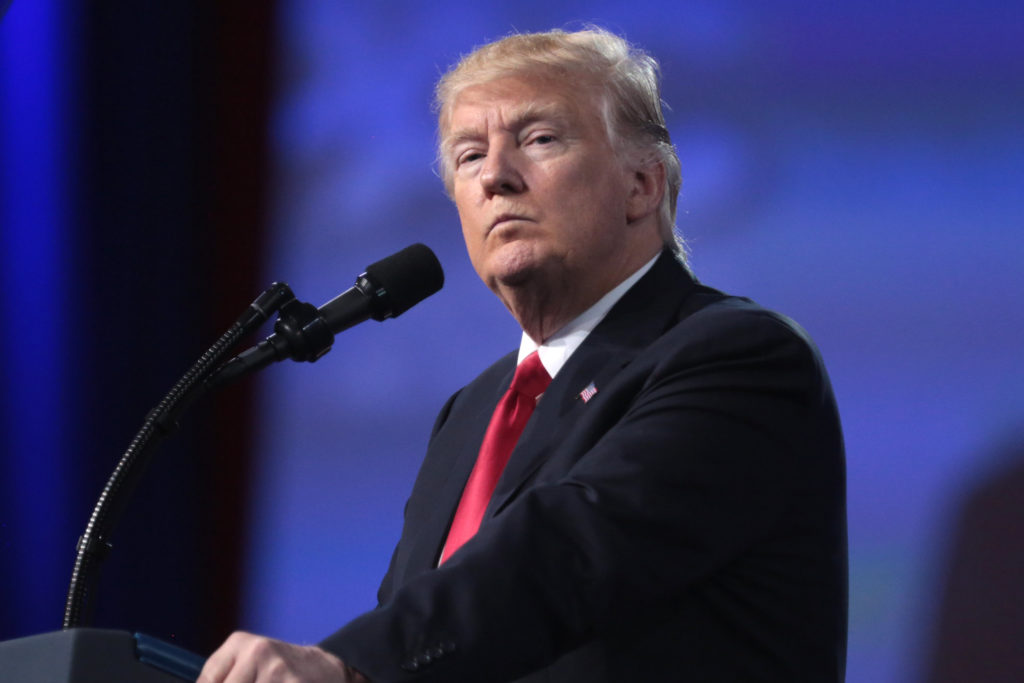
resident Donald Trump answers questions from reporters after signing an executive order in the Oval Office of the White House Tuesday, 31 March 2026, in Washington.
Copyright AP Photo/Alex Brandon

By Doloresz Katanich with AP
Published on 

Companies in the EU, Japan, Korea and Switzerland face a lower, capped tariff rate under existing trade agreements with the US.

President Donald Trump signed an executive order on Thursday that could impose long-threatened tariffs of up to 100% on certain patented drugs from companies that do not reach agreements with his administration in the coming months.

Companies that have signed a “most favoured nation” pricing deal and are actively building facilities in the US to bring production of patented pharmaceuticals and their ingredients onshore will have a 0% tariff.

For those that do not have a pricing deal but are building such projects in the US, a 20% tariff will apply, rising to 100% within four years.

A senior administration official told reporters on a press call that companies still have months to negotiate before the 100% tariffs take effect — 120 days for larger companies, and 180 days for others.

The official, speaking on condition of anonymity to preview the executive order before it was issued, did not identify any companies or drugs at risk of being hit by the increased tariffs but noted the administration had already reached 17 pricing deals with major drugmakers, 13 of which have signed.

In the order, Trump wrote that he deemed such actions necessary “to address the threatened impairment of the national security posed by imports of pharmaceuticals and pharmaceutical ingredients.”

It comes on the first anniversary of Trump’s so-called Liberation Day, when the president unveiled sweeping new import taxes on nearly every country in the world, sending the stock market reeling.

Those “Liberation Day” tariffs were among the duties the Supreme Court overturned in February.

Some warned of the consequences of the tariffs announced on Thursday. Stephen J. Ubl, CEO of the pharmaceutical industry trade group PhRMA, said taxes “on cutting-edge medicines will increase costs and could jeopardise billions in US investments."

He pointed to America’s already large footprint in biopharmaceutical manufacturing and noted medicines sourced from other countries “overwhelmingly come from reliable US allies.”

Trump has launched a barrage of new import taxes on America’s trading partners since the start of his second term and has repeatedly pledged that very high tariffs on foreign-made drugs were forthcoming.

But the administration has also used the threat of new levies to strike deals with major companies — like Pfizer, Eli Lilly and Bristol Myers Squibb — over the last year, with promises of lower prices for new drugs.

The EU, Japan, Korea and Switzerland will see a 15% US tariff on patented pharmaceuticals, matching previously agreed rates for most goods, and the UK will get 10% — which Thursday’s order noted would “then reduce to zero” under future trade agreements.

The UK previously said it had secured a 0% tariff rate for all British medicines exported to the US for at least three years.

Trump also unveils update to metal tariffs

In addition, on Thursday, Trump rolled out an update on his 50% tariffs on imported steel, aluminium, and copper.

Starting Monday, tariff rates on those metals will be calculated based on the “full customs value” of what US customers pay when buying foreign metal under the latest order, which administration officials say will prevent importers from other countries from avoiding higher payments.

Products fully made of steel, aluminium and copper will continue to be tariffed at 50% for most countries.

But the administration is also changing how tariffs are calculated for derivative metals — or finished goods that contain some of these metals, but are not made entirely of them.

For a product with metal that amounts to less than 15% of its entire weight (like the cap on a perfume bottle), only country-specific tariffs will now apply, officials told reporters on Thursday.

But for products with more metal, such as a largely steel washing machine, they said a 25% tariff will apply to the whole value.

More sectoral taxes are expected

Thursday’s orders are the latest example of Trump turning to sector-specific duties. The president used Section 232 of the 1962 Trade Expansion Act to impose the levies, the same authority he cited to impose import taxes on cars, lumber and even kitchen cabinets.

And many expect to see more product-specific import taxes in the future.

That's because a ruling from the Supreme Court struck down tariffs Trump imposed using another law — the 1977 International Emergency Economic Powers Act — to immediately slap tariffs on any country, at nearly any level.

While the 20 February court decision marked a significant blow to Trump's economic agenda, the president still has plenty of options to keep taxing imports aggressively.

Beyond sectoral levies, Trump also imposed a 10% tariff on all imports under a separate legal power just hours after the Supreme Court’s ruling, but that duty can only last for 150 days. Some two dozen states have already challenged the new tariffs.

Trump has argued his steep new import taxes are necessary to bring back wealth that was “stolen” from the US. He says they will narrow America’s decades-old trade deficit and bring manufacturing back to the country. But Trump has also turned to tariffs amid personal grudges, or in response to political critics. And disrupting the global supply chain has proven costly for businesses and households that are already strained by rising prices.


Trump restructures broad metals tariffs but keeps 50% rate

Credit: Gage Skidmore | Flickr, under licence CC BY-SA 2.0.

The Trump administration said it will maintain 50% tariffs on many imported steel, aluminum and copper products, even as it moves to simplify duties for goods made with negligible amounts of the metals.

A senior administration official cast the changes as necessary to simplify a complicated policy and provide more fairness to businesses grappling with President Donald Trump’s tariff regime. The official spoke on condition of anonymity to provide details before the president formally announced them.

Under the new structure, goods with total steel, aluminum or copper content below 15% will be effectively exempted from the metals tariffs, a White House statement said. Some other derivative goods will be subject to a lower 25% rate if they are deemed to be “substantially made” of one of the metals, according to the statement.

Products made abroad but entirely with American metals will face a lower 10% tariff rate, the White House said. Some “metal-intensive industrial equipment and electrical grid equipment” will be taxed at 15% through 2027, a move intended to bolster the US industrial base.

Despite the changes, 50% tariffs will be maintained on a large number of derivative products — including, for example, imported steel pipe. And the levy will be assessed against the full value of the product, not merely its metal content, according to the official.

Comex copper rose as much as 1.4% right after the announcement before giving back the gain to trade 0.5% lower late afternoon Thursday in the US.

The shift follows months of lobbying by companies that said they were unfairly hit by previous duties targeting metals imports. Though the administration argues the levies are designed to encourage domestic manufacturing, an extension of the tariffs to so-called derivative products meant they were applied even to items containing small metal elements, just a fraction of the overall product’s weight and value.

The revised metal tariffs, which were established under Section 232 of the Trade Expansion Act of 1962, come one year after Trump launched the core of his second-term trade agenda, which imposed sweeping levies on goods from dozens of other countries in a bid to foster more US manufacturing, expand American access to other markets and rebalance global trade flows.

While the US Supreme Court earlier this year struck down Trump’s country-by-country levies because they were imposed using an emergency law, the president has been moving to rebuild that tariff wall using other authorities. The administration on Thursday is also unveiling tariffs on imported drugs, with higher levies for products made by companies that are not manufacturing products in the US or who have not struck deals with the White House to lower costs for American consumers.

Officials on Thursday cited consumer products such as dental floss, which has a small metal piece to cut the floss but otherwise lacks significant steel or aluminum content, as an example of products that would be see relief from the metal tariff changes. Washing machines are also expected to benefit.

The structure could result in higher duties for some imported steel and aluminum goods — with the promise of easier compliance to soften the blow. Previously, the steel and aluminum tariffs were applied to derivatives based on the amount of those metals they contain, making it difficult to quickly calculate the appropriate charges.

Supporters of the revised approach on metals said it would buttress the administration’s efforts to reshore domestic manufacturing.

“This action will help ensure these tariffs function as intended to support domestic production and American workers,” said Jon Toomey, president of the Coalition for a Prosperous America, a group representing US manufacturers.

November midterm elections to determine control of Congress are likely to hinge on voters’ feelings about the state of the US economy. Tariffs and the war in Iran have contributed to rising costs for Americans, posing a risk to Trump’s Republicans.

The senior administration official downplayed the revised tariff scheme’s impact on consumer prices.

Trump last year imposed a 50% levy on foreign steel and aluminum in a measure aimed at Chinese overcapacity. The decision wound up hitting other major trading partners hard, including Canada, the European Union, Mexico and South Korea. Later the administration expanded covered products to include the so-called derivative products that contained the metals.

(By Jennifer A. Dlouhy, Joe Deaux and Catherine Lucey)


Trump to reduce steel, aluminum tariff rates for derivative products

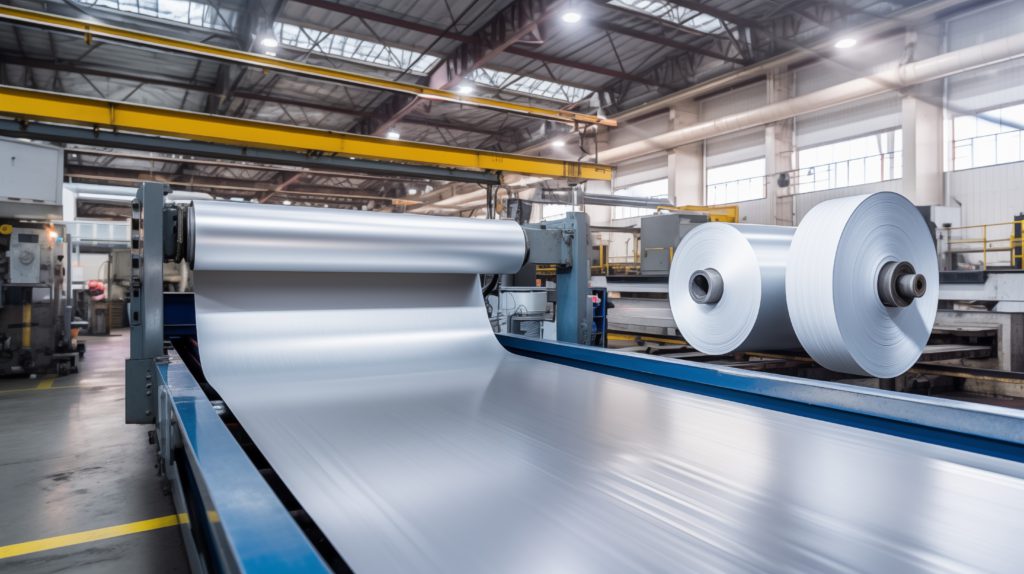
Stock image.

The Trump administration plans to reshape its steel and aluminum tariff regime, keeping a 50% tariff for commodity steel and aluminum imports while reducing duties on derivative products made from the metals to 15% or 25%, depending on the product, two sources familiar with the plans said.

The details could change and will be subject to a tariff proclamation from President Donald Trump, which is expected as early as Thursday.

A White House spokesperson did not immediately respond to Reuters‘ request for comment. The tariff adjustment plan was first reported by the Wall Street Journal.

The sources told Reuters that the change is being made to simplify an overly complicated tariff regime put in place last year when Trump doubled the rate of his Section 232 tariffs on steel and aluminum to 50%.

That increase also added the tariffs to thousands of derivative products made with the metals to encourage domestic production, from tractor parts to stainless steel sinks and gas ranges. But the 50% duty only applied to the steel and aluminum content of the product, creating a compliance headache for importers to calculate that figure.

The latest change will apply the lower tariff on the total value of the imported derivative product, making it easier to comply, the sources said.

Trump’s proclamation is expected to include a revised annex listing products subject to the tariffs and duty rates. The sources said that steelmaking equipment may qualify for the lower 15% rate, as the Trump administration imposed the higher tariff rates last year to encourage more investment in domestic steel production.

Such equipment is often imported from Germany and Italy, such as furnace ladles and rolling-mill machinery, and made from sophisticated heat-resistant alloys.

(By David Lawder and Carlos Méndez; Editing by Chris Reese and Andrea Ricci)


Co

Congo gives cobalt miners until end-April to use 2025 export quotas


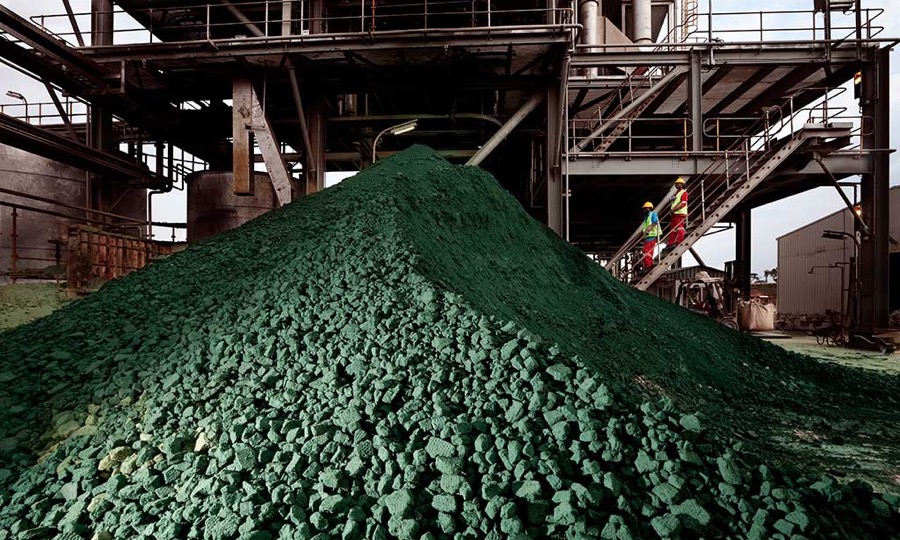
Processing facilities at Tenke Fungurume mine in 2016 before the CMOC acquisition. (Image courtesy of Lundin Mining.)

Democratic Republic of Congo’s mining regulator has said that miners must use all unfulfilled fourth-quarter 2025 export quotas by April 30, warning that any unused volumes after that will be forfeited and reallocated to a strategic reserve.

Quotas for the first quarter of 2026 can be shipped until June 30, alongside those for the second quarter, ARECOMS said, confirming total quotas allocated for 2026 remain valid.

ARECOMS chair, Patrick Luabeya said in a statement signed on Monday but issued on Tuesday that the measures, including the withdrawal of quotas for non‑compliance, “enter into force on March 31, 2026”.

Congo, which supplies about 70% of the world’s cobalt, imposed export quotas last year after a months-long export ban aimed at curbing global supply, a move that helped lift prices.

Congo’s mining chamber did not immediately respond to a request for comment.

Delayed quota shipments

Reuters previously reported that while companies resumed shipments after exports resumed, operational and logistical constraints under the new quota system slowed execution of allocated volumes.

Industry reaction was mixed.

A source at top cobalt producer CMOC said the April 30 deadline was sufficient, as the company had already loaded its entire fourth-quarter quota and had yet to start drawing on first-quarter allocations.

A source with CMOC’s trading arm IXM, meanwhile, said the extension “seems long enough, but still hard”, citing a lack of clarity in the regulator’s timeline, while a source at China’s Huayou called the decision “good news”.

The sources asked for anonymity because they were not authorized to speak on the matter.

(By Ange Kasongo, Tom Daly and Maxwell Akalaare Adombila; Editing by Alexander Smith)

US firm Virtus Minerals buys Congolese cobalt producer Chemaf


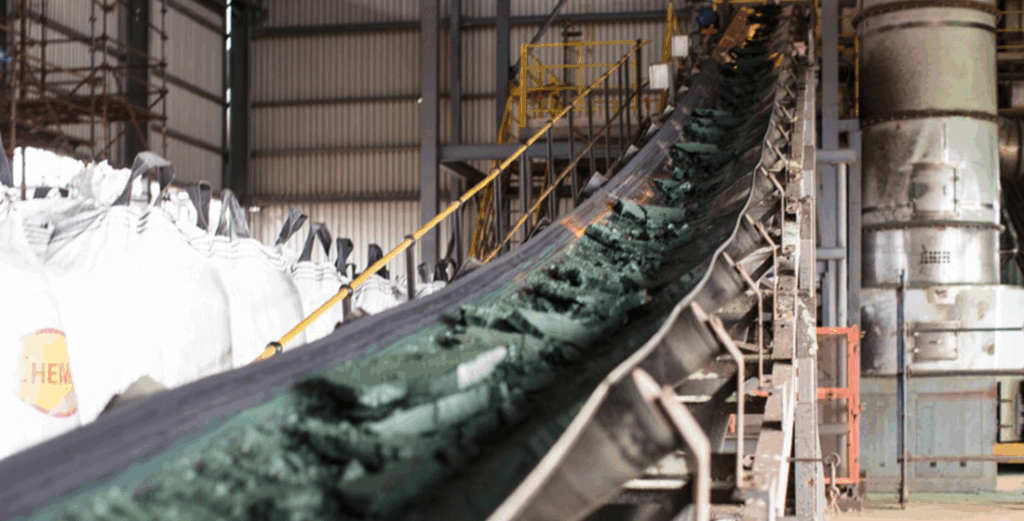
Cobalt processing. Credit: Chemaf

US firm Virtus Minerals has acquired Congolese cobalt and copper producer Chemaf, US Under Secretary of State for Economic Affairs Jacob Helberg said on Tuesday.

Congo has been seeking to develop a minerals partnership with Washington and has drawn up a list of assets, including Chemaf’s mines, to attract US investment into a sector long dominated by Chinese firms.

“US firm Virtus’ acquisition of the Chemaf mines in the DRC is HUGE for America and for the people of the DRC,” Helberg said in a post on X.

Virtus had earlier said it had agreed to acquire Chemaf for about $30 million. Chemaf also has $200 million in unsecured debt and $700 million in secured debt.

The deal had faced opposition from the CEO and chair of state miner Gecamines, prompting Congo to remove them from their positionsReuters reported last month.

Chemaf is privately owned, and Gecamines has no stake in it. However, the miner owns the lease to Chemaf’s mines, and any bid for control of Chemaf cannot proceed without its approval.

The Wall Street Journal, which first reported on the deal earlier on Tuesday, said Virtus has also committed to raising about $720 million in investment.

(By Ruchika Khanna, Natalia Bueno Rebolledo and Clement Bonnerot; Editing by Rashmi Aich)