Sunday, May 03, 2026

PRIMITIVE ACCUMULATION OF CAPITAL

Hijackings off Somalia raise fears that piracy is back on the rise

Reports of multiple hijackings off the coast of Somalia are raising fears that piracy may be reviving after a relative lull over the past decade. Increased traffic round the Horn of Africa amid the war in the Middle East, along with the diversion of naval forces, could be creating more opportunities for pirates to strike.


Issued on: 02/05/2026 - RFI

Somali maritime police patrol in the Gulf of Aden off the coast of Puntland State in Somalia, on 26 November 2023. © AP - Jackson Njehia

By: Anne-Marie Bissada

In the past 10 days, pirates have hijacked at least three boats off the coast of Somalia. The Honour 25 oil tanker was seized on 21 April, followed by a dhow on 25 April and the Sward, a merchant vessel, on 26 April.

According to the Maritime Security Centre Indian Ocean (MSCIO), the European Union Naval Force's tracking service, the three incidents were ongoing as of 29 April.

MSCIO has issued a warning to vessels in the area to "maintain a heightened level of vigilance", particularly within 150 nautical miles of the Somali coast between Mogadishu and Hafun on the Indian Ocean.


Security vacuum


Piracy off the coast of Somalia, concentrated near the semi-autonomous region of Puntland, shot up between 2008 and 2013, before international naval patrols and tighter security on commercial ships helped bring down attacks.

Following a lull, activity picked up again in late 2023 during the Red Sea crisis – when Iran-backed Houthis in Yemen began launching missiles and armed drones at Israel in response to the war in Gaza.

The Houthis also seized or attacked merchant and naval ships they believed to be affiliated with Israel, the US or the UK. By April 2024, some 40 vessels had been targeted.
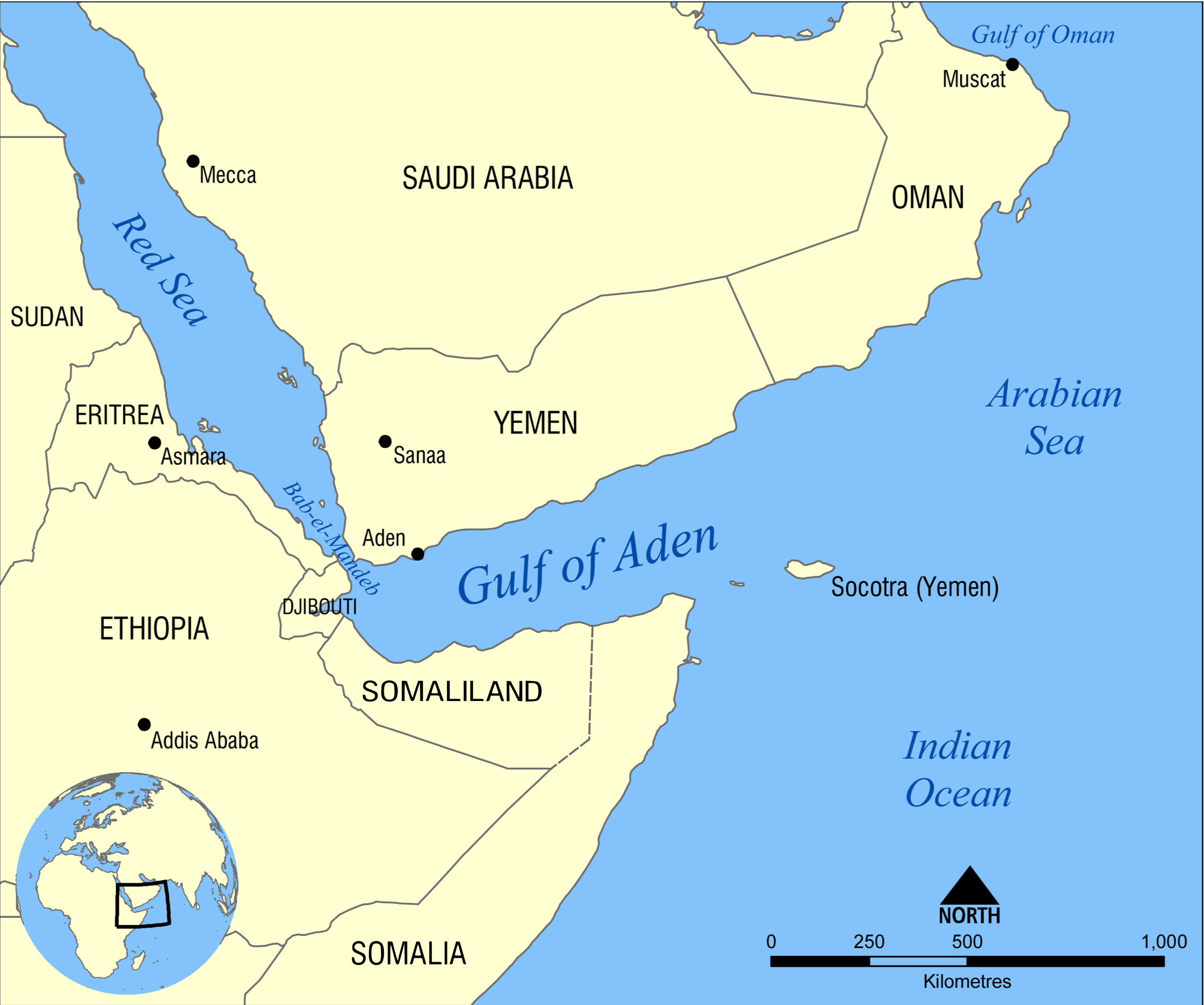
Somalia's coastline spans the Indian Ocean and the Gulf of Aden, near the entrance to the Red Sea and directly across from Yemen. © NormanEinstein, via Wikimedia Commons


In response, local and international naval forces that had been patrolling Somali waters were deployed closer to the Red Sea, says David Willima, a maritime security researcher at the Institute for Security Studies (ISS) in South Africa.

“So that place had a security vacuum, which is when these groups were able to take advantage,” he tells RFI.

Many boats were then forced to take the longer route around Africa, through the Indian Ocean towards South Africa’s Cape of Good Hope, to avoid the Red Sea. For pirates off Somalia, the increase in traffic and reduced naval forces nearby meant more opportunity to hijack ships.

Now, as Iran blockades the Strait of Hormuz in response to US-Israeli strikes, vessels are once more seeking an alternative route around the Horn of Africa. Meanwhile naval patrols are being diverted to the Middle East.


Widening inequality

Several of the underlying reasons pushing people into piracy have not changed over the years. “Some of it is just pure criminality,” says Willima. “Some of it is connected to a lack of livelihood alternatives.”

Many Somalis living on the coast have traditionally made their livelihoods by fishing. But foreign fleets have increasingly encroached on their waters, whether operating illegally or authorised by questionable licences – such as a 2018 deal that allowed Chinese companies to fish within 24 nautical miles of Somalia's shores for $1 million.


Increased fishing has contributed to a decline in stocks – pushing fishermen further out into deeper and riskier seas, according to Enact, an EU-funded research site on transnational organised crime in Africa.

Faced with dwindling incomes, some fishers resort to illegal activities, says Willima. Some turn to “criminality on land” and others look to piracy, which is seen “as another lucrative avenue to make money”.

The same groups continue to be drawn to piracy, he says. “These are people [who] have looked at the sea as a source of livelihood for generations. Where livelihoods have been eroded, inequalities have deepened.”
Lighting the way to protect Kenya's lions and the livestock they prey on

As a boy, Richard Turere saw up close the threat lions posed to his family's livestock – and the threat to the lions in turn. His ingenious solution to the problem is now being used by conservation organisations and wildlife authorities across East Africa.


Issued on: 03/05/2026 - RFI

Richard Turere installs his lighting solution, which is now used across East Africa. © Richard Turere

By: Anne Macharia in Nairobi

On the dry plains alongside Amboseli National Park, nights can be stressful for families who rely on livestock for their livelihood. As darkness falls, predators emerge from the surrounding bushes.

For generations of these Maasai pastoralists, lions sneaking into animal enclosures have caused severe losses. And the result is that if lions kill livestock, people will kill lions – a practice conservationists say has greatly contributed to the declining lion population across East Africa.

Richard Turere grew up in one of these communities, where cattle represented money, food and the family's survival. From a young age, Turere was in charge of guarding his family’s herd.

During the day, he watched the cattle while they grazed across the savannah. At night, he helped secure them inside a protective pen called a boma, made from thorny branches.


ADVERTISING

However, the lions were not deterred.

“Lions would come almost every night,” he recalled. "They were not afraid.”

Behavioural patterns


The young Turere began to notice a pattern in how the lions approached the cattle enclosure.

When he walked around the boma with a torch, the lions stayed away. But when he returned to the house and the light from the torch stopped moving, the predators came creeping back towards the enclosure.

He realised the lions were more afraid of human activity than of the light itself – and this sparked an idea.

Using spare parts he found at home – old batteries, wiring and bulbs from broken vehicles – Turere built a system of lights around the cattle enclosure.

But instead of shining continuously, he rigged the bulbs to blink in sequence, creating the illusion of human movement. To a lion watching in the darkness, the flashing lights looked like a person walking around the enclosure with a torch.

The effect was immediate: the lions stopped attacking.

Soon, neighbours were asking 11-year-old Turere to set up the same system for their livestock enclosures.

A conservation tool


The conflict between predators and livestock is one of the toughest challenges for conservationists across Africa.

Dr. Paula Kahumbu, a Kenyan conservationist and wildlife advocate with WildlifeDirect, has stressed that solving human-wildlife conflict is crucial for the survival of large predators.

“Communities must see benefits and solutions,” she said. “Otherwise, wildlife becomes an enemy.”

Today, versions of Turere's lighting system are used in several communities in East Africa. Experts say the technology works because it tackles the root of the conflict.

As for the boy who came up with this solution, Turere is now 23 and working in conservation, as well as expanding Lion Lights.

After his invention gained international attention, he received a scholarship to attend the prestigious Brookhouse School in Kenya, going on to study wildlife conservation – having got a head start at the age of 11, thanks to some discarded batteries and bulbs and one bright idea.
Madagascar revives Vara Mada mining project as key investment awaits approval

Madagascar’s largest mining venture – dormant for more than two decades – is gaining momentum once again. Formerly known as “Base Toliara” and rebranded “Vara Mada” in December 2025, the project aims to extract strategic minerals including ilmenite, zircon and monazite.


Issued on: 03/05/2026 - RFI

The Ilakaka-Sakaraha Sapphire Mine in Madagascar. Getty Images/Lihee Avidan

Backed by the United States and led by US company Energy Fuels, the revamped Vara Mada project could operate for up to 38 years in Madagascar's impoverished south-west.

The final hurdle now lies in securing a formal investment agreement with the Malagasy government – a document that will need to be made public and approved by both the Constitutional High Court and Parliament before work can begin.

Located in Ranobe – around 45km north of the southwestern city of Toliara – the Vara Mada site represents an investment of about €854 million.

Its primary focus is monazite, a mineral rich in rare earth elements that are essential for modern technologies ranging from electronics to renewable energy systems.

Rebuilding trust

China currently supplies close to 80 percent of the world’s rare earths, making alternative sources highly strategic. By tapping Madagascar’s reserves, Vara Mada could help diversify supply chains – an increasingly important goal for Western economies.

Despite its promise, the project has had a turbulent history. First explored in the early 2000s, it has passed through several owners and undergone multiple rebrands without ever reaching production. In 2019, it was suspended following strong local opposition and social unrest.

Energy Fuels says it is determined to turn the page. Senior vice president Mike Van Akkooi has acknowledged past shortcomings, emphasising a renewed focus on transparency and dialogue with local communities.

The company, he says, wants to rebuild trust and ensure that residents fully understand both the opportunities and the risks.

A balancing act

At the heart of the revival effort is the pending agreement with the Malagasy authorities. Described by the company as an “employment contract”, it will define the full framework for the investment.

This includes a stability clause – ensuring that agreed terms remain in place throughout the life of the project – as well as provisions for international arbitration in case of disputes.

If approved, the economic impact could be substantial. During the construction phase alone, Energy Fuels expects to inject more than €427 million into Madagascar’s economy – a figure it says would twice exceed the country’s current levels of foreign direct investment.

The timeline is ambitious – construction could begin as early as 2027, with production targeted between 2029 and 2030. For a region that ranks among the poorest in Madagascar, the project promises jobs, infrastructure and a potential economic boost.

Yet enthusiasm is far from universal. In the deep south of the country, the project remains controversial, with some residents and activists continuing to voice concerns over environmental damage and potential health risks.

As Vara Mada edges closer to a reality, Madagascar finds itself balancing significant economic opportunity against the need for environmental safeguards and community trust – a familiar challenge in the global race for critical resources.

This article has been adapted from the original version in French by Sarah Tétaud.
Controversial EU-Mercosur free trade deal comes into force

The European Union's mammoth trade deal with South American bloc Mercosur provisionally enters into force on Friday, despite a pending court ruling on its legality.


Issued on: 01/05/2026 - RFI
Ursula von der Leyen and Brazilian President Luiz Inacio Lula da Silva speak after a meeting about the EU-Mercosur deal in Rio de Janeiro, Brazil, 16 January. AP - Bruna Prado

The agreement to create one of the world's biggest free-trade zones was sealed in January after more than 25 years of intermittent negotiations.

The deal, which eliminates tariffs on more than 90 percent of trade between the two sides, has proven divisive in Europe, with France leading opposition over concerns some of its farmers will be left worse off.

But, backed by a majority of EU countries, Brussels went ahead as it pushes to diversify trade in the face of challenges from the United States and China.

"A lot of work went into getting this landmark deal over the line; now it's time to invest the same effort into making sure our citizens and businesses reap its benefits immediately," said European Commission President Ursula von der Leyen.

"From day one, tariffs are reduced and new market opportunities are opened."

To mark the day, EU chiefs von der Leyen and Antonio Costa will hold online talks with leaders from the Mercosur nations, which include Argentina and Brazil.

Together, the EU and Mercosur account for 30 percent of global GDP and more than 700 million consumers.


Court of Justice

The agreement favours European exports of cars, wine and cheese, while making it easier for South American beef, poultry, sugar, rice, honey and soybeans to enter Europe.

The application of the deal comes after the European Parliament referred it to the EU's Court of Justice in January, instead of giving it the green light.


French farmers with messages reading 'Save your farmers. Ursula go away' and 'No Mercosur' at a demonstration against the free trade agreement near the European Parliament in Strasbourg, 20 January. © Yves Herman/Reuters


France unsuccessfully attempted to block the deal over worries for its farmers, who fear being undercut by cheaper goods from agricultural powerhouse Brazil and its neighbours.

The staunch French opposition to the pact caused a public rift with Germany, pitting the EU's two largest economies against one another.

(with newswires)

Women Farmers in Ghana Turn to Agroecology to Confront Climate Change

Source: African Arguments

In Ghana’s transitional ecological belt, where once-dense forests are steadily giving way to savannah, climate change is no longer a distant concern but an everyday reality. Erratic rainfall, prolonged dry spells, and declining soil fertility are eroding rural livelihoods, with women who form the backbone of smallholder agriculture bearing the greatest burden.

This region, known for cultivating staple crops such as maize, cassava, yam, and plantain, is experiencing a worrying decline in food production. The transitional zones of Bono, Bono East, and Ahafo, long regarded as key agricultural hubs, are seeing reduced yields largely due to unreliable rainfall and rising temperatures.

Farmers report increasing crop failures linked to unpredictable weather patterns, while heat stress is hindering crop growth and reducing overall yields. These challenges come at a time when global targets such as Sustainable Development Goal (SDG) 2, which aims to end hunger, and SDG 13, focused on climate action, are becoming harder to achieve. For many farmers, these goals feel increasingly out of reach.

Even when rains do fall, they are often irregular and poorly distributed, making it difficult to plan planting seasons. This unpredictability has disrupted traditional farming calendars and contributed to consistently lower yields. Many farmers describe 2024 as particularly devastating, with large portions of maize farms lost due to insufficient rainfall.

Faustina Amponsah, a farmer from Faaman in the Techiman North Municipality of Bono East Region, shares her experience:

‘The challenge is that when I plant my maize, I do not get enough rain for it to grow. At this time, when we expect rainfall, it doesn’t come. This is partly due to illegal logging, which has affected the rainfall pattern.’

In response to these challenges, and after receiving training from ActionAid Ghana, many women farmers are turning away from synthetic fertilisers and chemical weedicides — often linked to soil degradation — and adopting agroecology as a more sustainable alternative.

Agroecology applies ecological principles to farming, promoting systems that are resilient, biodiverse, and environmentally friendly. By blending scientific knowledge with traditional practices, it supports both food production and ecosystem health. These methods are especially valuable in regions facing erratic rainfall and extreme weather, as they improve farms’ ability to withstand climatic stress.

Faustina and other women farmers have begun integrating agroecological practices into their work. She now produces compost using household organic waste such as cassava peels, yam skins, and plantain residues, applying it to her fields instead of synthetic fertilisers.

‘We were taught to dig a pit where we dump our waste. From time to time, we add soil and mix it. Eventually, it turns into compost, which we use as fertiliser. This is cheap to produce — we do not buy anything, just waste from our homes.’ — Faustina Amponsah, smiling as she explains.

Another beneficiary, Judith Kumbata, highlights how the training has transformed her farming approach:

‘We were taught how to use organic fertilisers on our farms. We now apply it to crops like garden eggs, tomatoes, and okra, among others.’

She adds that since adopting these methods, yields have improved, and she is encouraging other women in nearby communities to follow suit.

‘We are seeing an improvement in yields after adopting this method. I pray this gets to other women farmers across Ghana, and the men farmers should also be introduced to it.’

Through these adaptive practices, women farmers are not only responding to climate change but also building more resilient and sustainable agricultural systems.

Dr Rechiatu Asei, a soil scientist and lecturer at Sunyani Technical University, commends the farmers for embracing agroecology, particularly in light of climate change impacts in the transitional zone.

‘Farmers using agroecological practices such as intercropping, agroforestry, and organic soil management suffer far less damage during droughts than those practising conventional monoculture.’

She notes that agroforestry — planting trees alongside crops — helps buffer crops against temperature extremes while conserving soil moisture.

‘Agroecology improves soil health and water retention. Healthy soil is the first line of defence against climate stress.’

Dr Asei also emphasises natural pest control.

‘Climate change is altering pest behaviour, bringing new insects and diseases. Agroecology uses biodiversity to manage pests without chemicals.’

She encourages farmers to intercrop maize with legumes such as cowpea or groundnuts. Beyond environmental benefits, she adds, agroecology also improves farmers’ incomes:

‘Agroecology increases farm income and diversifies risk. One of the most important findings is that it pays.’

Meanwhile, illegal logging continues to worsen climate challenges in the region. A total of 21 forest reserves across Bono, Bono East, and Ahafo have experienced varying degrees of degradation, further disrupting rainfall patterns and agricultural productivity. Monitoring these reserves remains difficult due to limited resources and personnel.

In response, EcoCare Ghana is supporting farmers to adopt sustainable practices and build resilience. Project Officer Enock Danso Okyere explains:

‘Food production has been low in the transitional region over the past years. We have trained farmers in climate-smart agriculture that does not harm the environment, and encouraged tree planting on farms and along river bodies.’

With support from the European Union, EcoCare Ghana is also implementing the Landscapes and Environmental Agility across the Nation (LEAN) project, which promotes alternative livelihoods.

‘Under this project, we have trained farmers in snail rearing, beekeeping, and aquaculture to provide additional sources of income.’

Beyond agroecology, many women farmers are actively involved in afforestation. Faustina Amponsah, now a lead distributor of seedlings in her community, is helping to restore degraded lands.

‘We have received seedlings to plant and restore the forests. When the trees grow, I believe they will improve rainfall patterns. This will go a long way to improve our farming activities.’

Yet despite these successes, women farmers continue to face significant challenges. One major obstacle is limited access to credit: banks and other financial institutions in Ghana are often unwilling to provide loans to support the expansion of women-led farms. The government could help address this gap by offering soft loans through the various Metropolitan, Municipal and District Assemblies across the country.

Through agroecology, alternative livelihoods, and tree planting, women farmers in Ghana’s transitional belt are not just adapting to climate change — they are reshaping their future. Despite the growing threats, their efforts demonstrate that sustainable, community-driven solutions can strengthen resilience, restore ecosystems, and secure livelihoods for generations to come.

This article was originally published by African Arguments; please consider supporting the original publication, and read the original version at the link above.Email

Michael Sarpong Mfum is a Ghanaian multimedia journalist with a background in English and linguistics. He reports for Citi FM, Channel One TV, AFP, RFI, and Bird Story Agency.

The Feminization of Poverty: A Socialist Feminist Perspective

Source: Originally published by Z. Feel free to share widely.

When we speak of poverty in political or academic discourse, we often tend to treat it as a neutral phenomenon, as though it falls upon everyone equally and in the same way. Yet a critical class-based lens exposes the falsity of this supposed neutrality, affirming that poverty is not distributed evenly, and that women bear its burden in a more acute and enduring way.

This is precisely where the concept of the feminization of poverty comes in, not merely as a statistical description, but as a critical analytical tool that reveals the structural relationship between the capitalist economic system and gender relations, and the multiple forms of exclusion and marginalization that arise from both.

The concept emerged in the 1970s to describe the ongoing rise in poverty rates among women, particularly as the number of women bearing sole responsibility for supporting their families grew. Since then, it has become clear that poverty is neutral neither in terms of gender nor in terms of class, and that it is tied to power structures that determine who holds resources and who is denied them.

The latest data from UN Women indicate that 9.2% of women and girls live in extreme poverty, compared to 8.6% of men and boys, with the gap worsening in the 25 to 34 age group, where women are 25% more likely to live in extreme poverty. World Bank reports show that the global gender wage gap stands at 23%, rising to 47.9% in regions of the Global South such as South Asia. These figures confirm that poverty is not gender-neutral, yet numbers alone are insufficient for understanding what is happening, as they describe symptoms without digging into the roots.

When Exploitation Is Twofold

The feminization of poverty cannot be explained by focusing solely on the wage gap; it must be understood within the framework of a deeper economic structure that systematically reproduces gender inequality. Capitalism does not merely produce class disparity, it also reproduces gender disparity through the organization and division of labor in ways that serve the interests of capital above all else.

This is what Clara Zetkin saw with clarity when she argued that the working woman faces a twofold exploitation, neither dimension of which can be understood without the other: she is exploited as a worker paid less than a man in the labor market, and she is exploited within the family through unpaid domestic labor that guarantees the reproduction of the workforce without costing capital a single penny. Anuradha Ghandy reaffirmed this analysis, noting that this dual exploitation takes even sharper forms in Global South contexts, where class, caste, and gender intersect in a single system of domination.

One of the most important manifestations of this system is the separation between economically recognized productive labor and the unpaid labor necessary for the continuation of life. The domestic and care work performed by women forms the foundation for social reproduction, yet it receives no economic recognition, which diminishes its value and excludes women from economic independence. When socialist feminism demands recognition of this labor and its transformation into a collective responsibility, through public nurseries, care facilities, and social services, it is not calling for a partial reform. It is calling for a fundamental reorganization of the relationship between production and social reproduction at the heart of the economic system.

At the same time, women are integrated into the labor market in an unequal manner, concentrated in low-wage, precarious sectors with little stability or protection. Rather than becoming a vehicle for economic liberation, paid work frequently becomes an extension of dependency, particularly in the context of persistent wage discrimination and limited professional advancement. This situation is compounded by the double burden women carry as a result of combining paid labor with unpaid domestic work, without any fair redistribution of roles. This duality is neither a biological fate nor a culturally neutral inheritance; it is the product of a class-based economic system that needs to keep women in the position of the flexible worker who can be pushed to the margins when the market demands it, then recalled when cheap labor is needed.

Crises and Austerity: When Women Pay for Crises They Did Not Create

What makes the picture more complex is that economic crises, conflicts, and climate change deepen the feminization of poverty, with women disproportionately affected by these shifts, particularly in the most fragile societies. In a global context where economic exploitation intersects with historical forms of domination, women across vast regions of the world become more exposed to the harshest forms of poverty and marginalization.

Yet the issue does not stop at exceptional crises. The austerity policies imposed by international financial institutions on Global South countries over decades represent a glaring example of the feminization of poverty as a deliberate political decision. When public services such as education, health, and welfare are cut back, they do not disappear. Instead, their burden shifts onto women, who compensate with their bodies and time for what neoliberal policy has stripped from state budgets. Austerity, in this sense, is not a neutral policy; it is a gendered policy whose costs women pay first and most heavily.

The struggle against austerity policies and the struggle for women’s rights cannot be separated. The woman who loses access to public education when schools are privatized, the woman forced to leave work when public nurseries close, the woman who bears the care of the sick when health budgets are slashed; all of them pay the price of economic decisions made in international institutions that are neither elected nor held accountable. For this reason, confronting the feminization of poverty is inseparable from confronting the global capitalist economic system that produces and reproduces it.

This gap is equally visible in the realm of employment, where women’s participation in the labor market is lower than men’s, and where a large proportion of working women are in precarious, low-wage jobs with limited protection. Women suffer to a greater degree from food insecurity and the absence of social protection systems, a reality that deepens their economic vulnerability and makes any external shock more capable of pushing them below the threshold of subsistence.

From Diagnosis to Change: Toward Radical Policies, Not Superficial Ones

What makes this phenomenon particularly dangerous is that it is not confined to individual suffering; its effects extend to household welfare, contribute to the intergenerational reproduction of poverty, and constrain development potential by marginalizing women’s roles and excluding their economic and social contributions. The feminization of poverty thus becomes an expression of a structural dysfunction requiring radical treatment, not partial solutions that soothe symptoms without touching the roots.

This is where the divide between the class perspective of socialist feminism and liberal reformist feminism becomes apparent. Liberal currents limit themselves to demanding women’s empowerment within the existing system without challenging its structure, focusing on individual empowerment through education, training, and access to microfinance. The socialist feminist perspective, by contrast, holds that these tools are insufficient unless accompanied by fundamental change in relations of production, property, and power. The woman who obtains a small loan in a society that excludes her from education, burdens her with unpaid domestic work, and subjects her to precarious labor laws remains a prisoner of the same structure, even if her situation improves marginally.

Confronting this phenomenon demands policies grounded in both gender equality and the elimination of class exploitation together. This includes achieving wage equality, guaranteeing women’s legal rights at work, broadening social protection to cover the most vulnerable groups, and investing in education and training to economically empower women. It also requires recognition of the economic value of care work, the provision of public services that reduce its burden, and a redistribution of roles within the family and society that allows for more equitable participation in both paid and unpaid labor.

Yet these measures, however necessary, remain insufficient unless they bring about a change in the nature of property relations that structurally make women’s labor cheaper, more precarious, and less protected. Full recognition of care work does not mean merely including it in GDP calculations; it means transforming it into a collective responsibility borne by the state and society, not by women alone. And achieving wage equality does not mean only raising the minimum wage; it means dismantling the class hierarchy in the labor market that makes women, particularly those from the lower classes, the most vulnerable in every crisis.

Ultimately, eliminating the feminization of poverty cannot be separated from a critique of the capitalist economic structure that produces it. The issue is not merely about improving living conditions; it is about a fundamental reconsideration of how labor is organized and how resources and power are distributed within society. As long as women bear the burden of reproducing life without recognition, without wages, and without protection, any talk of equality remains a discourse suspended in the air, never touching the ground on which millions of women stand every day.

Statistical Sources

A Danish leftist-feminist activist and writer of Iraqi origin, Bayan Saleh is a feminist activist, writer, and long-time leftist organizer. She co-founded the Independent Women’s Organization in Erbil in 1991, was active in the Worker-Communist Party of Iraq and the Committee for the Defense of Iraqi Women’s Rights, and represented the committee at the UNHCR in Turkey. Since 2001 she has been a member and candidate of the Danish Red-Green Alliance, and since 2003 she has served on the editorial board of Al-Hiwar Al-Mutamaddin. She coordinates the Center for Women’s Equality, is a member of Amnesty International, and has served in leading positions in the Danish Women’s Council. Bayan has led multiple projects on migrant and refugee women’s rights in Denmark, Kurdistan, and the Middle East, and frequently participates in Scandinavian and international conferences on women’s rights, migration, and equality. Her educational background includes a BSc in Agriculture (University of Mosul, Iraq), diplomas in administration and IT (Denmark), and professional qualifications in psychotherapy and family counseling. She currently works as a family counselor and project manager supporting migrant women in Denmark.


Women in Conflict Zones

Source: World Beyond War

Webinar: Women in Conflict Zones

Retired U.S. Army Reserve colonel Ann Wright will open the webinar with the latest update on U.S. Central Command (CENTCOM) activities in the region. Dr. Jamila J. Ghaddar will talk about her work archiving conflicts across the region.

This webinar aims to create a space for examining the gendered impacts of war and violent conflict for all people who experience gender-based oppression. 

Speakers

Hanan Awwad has been the President of WILPF Palestine since she started the Section in 1988. An academic, writer, editor and cultural advisor by profession, her main expertise lies in various areas including (resistance) literature, human rights and women’s rights. Hanan received a PhD from Oxford University, has published twelve books and received multiple awards for her work in defending human rights and dignity. Hanan is also a member of the Palestinian National Council and has represented Palestine in more than 700 conferences.

Nagham Al Baba is a student and youth activist from Gaza. She is engaged in raising awareness about the impact of conflict on young people, especially women, and speaks about the realities of life and education in conflict-affected areas.

Dr. Parisa Babaali is an Iranian American data scientist in the US Tech industry whose work bridges science, ethical AI, and human-centered innovation. She was born and raised in Iran during the 1979 revolution and travels regularly to Iran and keeps in contact with activists in Iran. She is an advocate for peace and uses her voice to speak against violence and the human cost of conflict. Passionate about advancing women in STEM, she mentors and supports the next generation of female leaders in the society. Parisa works extensively on addressing social determinants of health and advancing equity, using data and AI to uncover disparities and drive more inclusive outcomes across communities.

Hania Bitar founded The Palestinian Youth Association for Leadership and Rights Activation (PYALARA) in 1999, and she continues to lead it until today.

She started her career as an English teacher at Bethlehem University, then worked as a business manager at the weekly Jerusalem Times newspaper.

In 2005, she co-founded the International Women’s Commission for a Just and Sustainable Peace between Israel and Palestine with Palestinian, Israeli, and international women leaders.

In 2006, she ran in the Palestinian Legislative Council elections as part of the “Third Way” list. She also served as a member of the Board of Trustees of the Arab American University in Jenin, and on the boards of several Palestinian NGOs such as MIFTAH and the Women’s Centre for Legal Aid and Counselling (WCLAC).

She founded the Global Solidarity for Peace in Palestine, which now includes more than 150 organizations, networks, and activists working worldwide to support Palestinian rights and issues.

In 2025, she was awarded the Seán MacBride Peace Prize by the International Peace Bureau (IPB) in recognition of her outstanding work in promoting peace, human rights, and resisting injustice under difficult conditions.

She is a founding member of the Media and Information Literacy Experts Network (MILEN). She was also selected as one of the Young Global Leaders and Young Arab Leaders.

In early 2026, she was elected as the representative of Arab Region to the UNESCO Global Alliance for Media and Information Literacy (MIL).

She is the author of many articles and a keynote speaker at various national and international conferences. In addition to her leadership skills, she is a professional media figure and an influential personality.

Jamila Ghaddar is a South Lebanese archivist and historian of liberation movements and the Arab region. She has been organizing in the anti-Zionist struggle her whole life. Jamila is co-lead of the Fighting Erasure-Digitizing Gaza’s Genocide & the War on Lebanon project; and Assistant Professor at University of Amsterdam. She lives between Lebanon and Netherlands, learning more about the bloody trail of Dutch empire and how to fight erasure in active zones of genocide and war.

Shirine Jurdi is a highly accomplished expert in Women, Peace, and Security (WPS) with over 20 years of experience in peacebuilding, conflict resolution, and gender equality across the MENA region. Her career is marked by a deep commitment to empowering women and youth in conflict-affected areas, ensuring their voices are heard in peace processes and recovery efforts. Shirine has collaborated with renowned organizations such as WILPF, MENAPPAC (GPPAC), Arab States CSOs and Feminist Network, Choueifat Women’s League, Local Mediators Network Marj’oun Hasbaya to design and implement programs that bridge global agendas with local implementation.

Shirine’s work spans a diverse range of initiatives, from documenting peacebuilding initiatives to the impact of war on women and youth to advocating for gender-sensitive policies in post-conflict recovery. She has led groundbreaking projects, including murals on UNSCR 1325; storytelling documentaries on WPS in Libya, Tunisia, Iraq, and Lebanon, and policy papers on the role of women in peacebuilding amid war. Her expertise also extends to environmental impacts of militarization, where she has championed women’s leadership in addressing the environmental consequences of conflict.

As a skilled facilitator and trainer, Shirine has conducted workshops on WPS and Youth, Peace, and Security (YPS) in countries like Lebanon, Iraq, Tunisia, Libya and Georgia. She also fostered collaboration among civil society organizations and integrating climate change and small arms prevention into peacebuilding agendas. Shirine’s contributions have been recognized globally, and she has been invited to speak at high-profile events such as the UN Commission on the Status of Women (CSW), COP28, Conference on Conventional Weapons (CCW), Control Arms and others.

Shirine holds a master’s degree in International Affairs from the Lebanese American University and has pursued doctorate studies in Peace and Conflict Studies at Tokyo University of Foreign Studies. She is a passionate advocate for amplifying voices, aiming to contribute to a more peaceful and inclusive world. Awarded certificate on ceasefire in negotiation from UNDPPA. Recognized for her dedication, Shirine was awarded the International Young Women’s Peace and Human Rights Award from Democracy Today in 2019.

Ann Wright is a retired U.S. Army Reserve colonel and a 29-year veteran of the Army and Army Reserves. She was also a diplomat in Nicaragua, Grenada, Somalia, Uzbekistan, Kyrgyzstan, Sierra Leone, Micronesia, Afghanistan, and Mongolia. She received the State Department’s Award for Heroism for her actions during the civil war in Sierra Leone. She resigned from the Department of State on March 19, 2003, in opposition to the Iraq war. She is the co-author of Dissent: Voices of Conscience and appeared in the documentary “Uncovered”. Ann is a board member of CODEPINK and an advisory board member of Veterans For Peace, International Peace Bureau, World BEYOND War, Gaza Freedom Flotilla, NO to NATO, Hawaii Peace and Justice, Pacific Peace Network, and Women Cross DMZ.

This article was originally published by World Beyond War; please consider supporting the original publication, and read the original version at the link above.