Showing posts sorted by relevance for query magic mushroom. Sort by date Show all posts

Saturday, May 13, 2023

London's 1st magic mushroom store, the latest in Ontario, could test limits of authorities' tolerance

Story by Alessio Donnini • CBC - Yesterday 

Achain of illegal magic mushroom dispensaries is expanding to London, Ont., in a move that is expected to test the limits of what law enforcement in the city will tolerate.

FunGuyz, one of several stores selling psilocybin products in Ontario, will be the first of its kind in London and harkens back to the days when illegal pot shops first opened.

The franchise, which will be located on Richmond Street, describes itself as a "medical mushroom dispensary." The company has nine other locations, in Toronto, Barrie, Niagara Falls, St. Catharines and Wasaga Beach.

"Everyone loves it. Everyone loves us," said Edgar Gurben, a spokesperson for FunGuyz.

He said to buy a bag of magic mushrooms, psilocybin-infused edibles or capsules filled with hallucinogenic mushroom powder, customers need to sign a waiver and show valid photo ID. Psilocybin is a drug that turns into psilocin, a highly hallucinogenic compound known for its euphoric effects, when ingested.


Shroomyz is another example of a chain of illegal mushroom dispensaries. The chain started in Ottawa before eventually expanding to Toronto and beyond.© Sara Jabakhanji/CBC

Psilocybin and psilocin are both classified as Schedule III substances and are illegal to sell or possess in Canada under the Controlled Drugs and Substances Act. The owners of FunGuyz say they aren't particularly concerned about the law.

"When the police do come and raid us, they take the product, and whoever is working there will get a charge. We open back up, we have a good lawyer, and we get our [court] cases dropped," said Gurben.

Other dispensaries, including in Toronto and Hamilton, were raided almost immediately after opening in late 2022 and charges were laid against the sellers.

London police stopped short of saying they would raid the FunGuyz dispensary when it opens. Spokersperson Sandasha Bough said in a statement that law enforcement resources are prioritized within the context of community safety and harm.

"In London, individuals who illegally possess or traffic in substances that are scheduled in the Controlled Drugs and Substances Act are dealt with by the London Police Service," Bough said.

According to the City of London, there is no recourse that can be taken against illegal dispensaries within the confines of bylaw enforcement.

"Business licences must comply with municipal, provincial and federal laws," said Orest Katolyk, the director of municipal compliance.


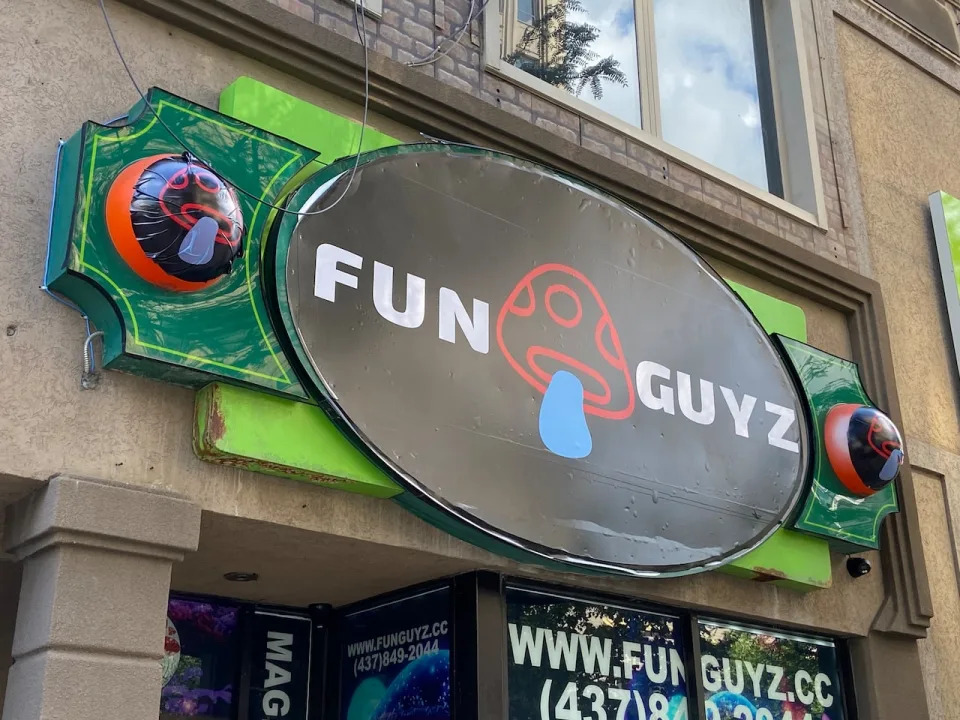
Large signage plastered across the side of the building at 256 Richmond advertises the online store that FunGuyz offers.© Alessio Donnini/CBC News

It's clear that despite the law, the company aims to continue operating in all 10 of its locations, with the stated purpose of providing psilocybin for medical use.

"What we're doing here is we're giving people access to psilocybin in a clean, safe manner," said Gurben. "We have clients who use it to overcome addictions or other mental health problems."

The drug is currently showing promising results in clinical trials and being used to treat mental health disorders such as anxiety, obsessive compulsive disorder, depression, and substance abuse issues, according to Health Canada.

Still, the regulatory body says evidence is limited, as few trials have been completed.

Doctors frustrated


The continued trend of mushroom dispensaries operating in defiance of the law has left some doctors seeking to prescribe psilocybin frustrated.

"Why do we live in a country right now where the government is only allowing access to this substance in a less safe manner. How does that all line up with the objectives of the substances act, which are health and public safety?" said Nicholas Pope, an Ottawa-based lawyer who is currently part of a large charter challenge to strike down the law that prohibits psilocybin for medical purposes.

Pope also represents doctors seeking Section 56 exemption requests, which would allow them to use psilocybin for patient care.

Pope said he has personally witnessed people walking out of mushroom dispensaries with police officers in sight and no enforcement action taken, which adds insult to injury.

"I don't have anything against these dispensaries operating. We're in this situation where it's de facto allowed for recreation," said Pope. "It's technically illegal, but the chances are extraordinarily low that you would get prosecuted."

He calls it an "absurd and wrong" situation, where patients who could benefit from the drug are unable to while some enjoy it recreationally. Medicinal use of psilocybin involves a number of highly trained specialists from physicians to psychotherapists, which cannot be achieved by personal use, he added.

Regardless of how judges and lawmakers decide to handle the future of psilocybin in Canada, more regulatory attention and care will be necessary, says Jacob Shelley, an associate professor in the Faculty of Law and School of Health Studies at Western University.

"We see the playbook has already been kind of played out with cannabis, right? We saw how [illegal cannabis] dispensaries evolved and kind of pushed the government to address and deal with them existing in kind of the space before legalization," said Shelley.

"We need to invest more regulatory attention to how we're going to ensure that these products are not being sold to consumers in a way that's harmful without the proper regulatory kind of oversight."

Tuesday, April 12, 2022

Study: Psychedelic mushroom ingredient helps reduce depression


Psilocybin, the ingredient that gives psychedelic mushrooms their mind-altering effects, appears to have therapeutic benefits for people with depression, according to a new study.
 File photo by Shots Studio/Shutterstock.


April 11 (UPI) -- Psilocybin, the ingredient that gives so-called psychedelic mushrooms their mind-altering effects, helps reduce the symptoms of depression, a study published Monday by Nature Medicine found.

Based on brain scans of roughly 60 people receiving the compound as a treatment for depression, it appears to foster improved communication between different regions of the brain, even after its hallucinogenic effects have worn off, the researchers said.

This may be how psilocybin works as a treatment for depression and other mental health disorders, they said.

"These findings are important because for the first time, we find that psilocybin works differently from conventional antidepressants," study co-author David Nutt said in a press release.

RELATED Magic mushroom' therapy may interact with other medicines

It appears to work by "making the brain more flexible and fluid, and less entrenched in the negative thinking patterns associated with depression," said Nutt, head of the Imperial Center for Psychedelic Research at Imperial College in London.

Psilocybin is one of a number of psychedelics being explored as a potential therapy for mental health disorders.

Several studies have examined the use of a synthesized form of the drug to treat patients with depression and anxiety, with promising results.

RELATED 'Magic mushroom' drug psilocybin edges toward mainstream therapy

These findings, taken from two combined studies, reveal that people who responded to psilocybin had evidence of increased brain connectivity both during their treatment and up to three weeks later, the researchers said.

This enhanced connectivity was associated with self-reported improvements in their depression, according to the researchers.

Patterns of brain activity in depression can become rigid and restricted, leading to repetitive negative thinking, they said.

RELATED Study finds 'magic mushroom' hallucinogen as good as antidepressants

Similar changes in brain connectivity were not seen in those treated with a commonly used prescription antidepressant, which indicates the psychedelic may work differently in treating the condition, the researchers said.

For the two studies, the researchers analyzed functional magnetic resonance imaging, or fMRI, scans of the brains of nearly 60 participants, about half of whom received psilocybin, while the remainder were treated with the anti-depressant escitalopram.

All participants also attended talking therapy sessions with registered mental health professionals. Brain scans were taken before and then one day or three weeks after participants received drug therapy, the researchers said.

Both studies found that depression patients treated with psilocybin experienced improvement in their symptoms, based on responses to clinical questionnaires, the data showed.

Analysis of the brain scans revealed altered communication or connectivity between brain regions, particularly those that are thought to be more segregated in depressed patients, according to the researchers.

There was a correlation between this effect and symptom improvement in both studies, although the strength and duration of effect varied between participants, the researchers said.

However, the effect was strongest in participants who reported an improvement in their symptoms, they said.

Still, the researchers caution that though these findings are encouraging, they are based on studies conducted under controlled, clinical conditions, using a regulated dose of psilocybin formulated in a laboratory, with extensive psychological support from mental health professionals.

People with depression should not attempt to self-medicate with psilocybin, as taking magic mushrooms or psilocybin in the absence of these careful safeguards may not have a positive outcome, the researchers said.

"We don't yet know how long the changes in brain activity seen with psilocybin therapy last and we need to do more research to understand this," study co-author Robin Carhart-Harris said in a press release.

"We do know that some people relapse, and it may be that after a while their brains revert to the rigid patterns of activity we see in depression," said Carhart-Harris, a psychologist and neuroscientist at the University of California-San Francisco.

Friday, July 07, 2023

Magic mushroom store in Windsor raided by police a week after opening


CBC
Thu, July 6, 2023

On Thursday, the Windsor Police Service raided the magic mushroom store Fun Guyz, only a week after it opened downtown. (Michael Evans/CBC - image credit)

The newly opened magic mushroom store Fun Guyz was raided by police Thursday afternoon.

The raid happened a week after the store opened on June 29.

A co-owner of Fun Guyz, who said his name was Edgars Gorbans, said he got the news the store was being raided while setting up another location in Montreal.

"It's normal," said Gorbans, "I've been through multiple raids, right? So it doesn't shock me anymore."

Windsor Police Service said in a statement Thursday night they seized 1,120 psilocybin capsules, 184 grams of dried psilocybin mushrooms as well as various amounts of psilocybin-infused products. They also confiscated $5,535.

The raid was conducted by members of the Drugs and Guns Unit.

Windsor was the 11th store location for Fun Guyz — on 395 Ouellette Avenue — with their first store opening six months ago. He said all of them have been raided before.


Owner of Fun Guyz Edgars Gorbans told CBC Windsor this raid was particularly damaging, as police took everything they could, including signage, TVs, and more.

Owner of Fun Guyz Edgars Gorbans told CBC Windsor that police took signage, TVs and more. (Michael Evans/CBC)

What did shock Gorbans this time was around was that police took signs, ATMs, TVs and more, on top of their product.

"With what's in the warrant, they shouldn't be taking TVs ... they're just trying to cause as much damage as possible, to make it hard for us to reopen," he said.

Gorbans said in other raids, Fun Guyz stores have been able to reopen a couple hours after the police leave, and fight every charge they're handed. The same will happen for the Windsor location.

"Once they take the product and leave, they're not coming back to bother us," he said.

Windsor Police Service said they received multiple complaints about the store and the fact that it was selling magic mushrooms.

Windsor Police Service said they received multiple complaints about the store. (Michael Evans/CBC)

Const. Adam Young with the Windsor Police Service was at the scene of the raid. He said police received "numerous complaints" from the community since the store opened.

Young said he couldn't comment on any arrests being made due to the investigation, but Gorbans said no arrests were made.

Police said in the statement a 21-year-old employee present at the store was charged with with possession of a substance for the purposes of trafficking. The service added that the investigation is ongoing.

Though the production, sale and possession of magic mushrooms are illegal in Canada and police have arrested store operators, similar shops are popping up elsewhere in Ontario and across the country.

Gorbans told CBC Windsor shortly after opening most people walk into the store looking to microdose — taking small amounts of a drug at a time — and treat things like anxiety, post-traumatic stress disorder and depression, though no psilocybin products are currently approved for medical use.

"They [customers] love that they can come in and speak to someone before they purchase and be guided by someone to do psilocybin," he said on Monday.


Gorbans said the store will likely reopen a few hours after the raid, just like they've done with every other location across Ontario.

Gorbans said the store will likely reopen a few hours after the raid, just like they've done with every other location across Ontario. (Michael Evans/CBC)

Psilocybin is the psychoactive substance in magic mushrooms.

The store does not recommend people use the product for recreational use, he added.

"We're more trying to be basically trying to push people to use them for medical reasons. But obviously, we can't control someone [who] takes more than the microdose amounts available."

FunGuyz makes customers sign waivers when purchasing, and Gorbans says they don't sell to anyone under 19.

For those who don't approve of the storefront, Gorbans asks they take some time to research and asks people to worry about other drugs being used in the city, like crack and cocaine.

"[These are] mushrooms that grow from the ground, right? Not made in a lab," he said.

Tuesday, March 29, 2022

'Magic mushroom' therapy may interact with other medicines

"Psilocybin has been around in Western society since the late 1950s, before many of our psychiatric medications have existed," 

By HealthDay News

A voter-approved initiative to allow psychoactive mushrooms as a therapy for mental health disorders will begin in Oregon early next year, but the drug has been edging toward being accepted as a mainstream medication in recent years. 
Photo by Shots Studio/Shutterstock.

Psilocybin, the psychedelic substance in "magic" mushrooms, is generating lots of interest as a potential treatment for a host of mental ills, but new research warns there is little data on how it might interact with more traditional psychiatric medications.

"There's a major incongruence between the public enthusiasm and exuberance with psychedelic substances for mental health issues -- and what happens when they combine with the existing mental health treatments that we have now," said study author Dr. Aryan Sarparast. He is an assistant professor of psychiatry at Oregon Health & Science University (OHSU), in Portland.

A voter-approved initiative to allow psychoactive mushrooms as a therapy for mental health disorders will begin in Oregon early next year, but the drug has been edging toward being accepted as a mainstream medication in recent years.

So, the researchers wanted to learn more about how psilocybin interacts with widely prescribed medications such as antidepressants.


The investigators analyzed 40 studies dating back to 1958, including 26 randomized controlled studies, 11 case reports and three epidemiological studies.

Only one of the studies examined how psilocybin interacts with antidepressants, while all of the clinical trials were conducted with healthy volunteers who received a psychiatric medication and a psychedelic at the same time.

The findings highlight the need for further research on combining traditional mental health treatments with psilocybin, according to the authors of the paper published recently in the journal Psychopharmacology.


While Sarparast said some patients with mental health conditions may benefit from taking psilocybin, he is concerned that the lack of evidence on drug interactions will make many healthcare providers want to take patients off existing medications before being given psilocybin, forcing patients into a difficult choice.

"That's a very, very tough place to be," Sarparast said in a university news release.

Still, a review of scientific literature misses a lot of data gathered on the real-world use of magic mushrooms, noted study co-author Dr. Christopher Stauffer, an assistant professor of psychiatry at OHSU and a physician-scientist at the VA Portland Health Care System.


"Psilocybin has been around in Western society since the late 1950s, before many of our psychiatric medications have existed," Stauffer said. "Nonetheless, people attempting to navigate Oregon's psilocybin services in the context of ongoing psychiatric treatment should work closely with knowledgeable professionals."

More information

There's more on psilocybin at the U.S. Drug Enforcement Administration.

Copyright © 2021 HealthDay. All rights reserved.

Monday, June 10, 2024


Unregulated sales of a toxic and hallucinogenic mushroom endanger public health


UNIVERSITY OF CALIFORNIA - SAN DIEGO


Americans’ interest in a potentially harmful “magic mushroom” is soaring, with Google searches skyrocketing 114 percent from 2022 to 2023, according to a new study by researchers at the University of California San Diego Herbert Wertheim School of Public Health and Human Longevity Science. In a paper published in the American Journal of Preventive Medicine, the scientists suggest that the growing market for Amanita muscaria may be sparked in part by emerging clinical research supporting the safety and efficacy of psilocybin as a treatment for depression. 

Like psilocybin mushrooms, Amanita muscaria mushrooms have psychotropic effects. These include a feeling of weightlessness, visual and auditory hypersensitivity, space distortion, unawareness of time, and colored hallucinations. The psychotropic effects are produced by compounds that naturally occur in the mushroom called muscimol and ibotenic acid, its biosynthetic precursor. 

However, in addition to being psychotropic, these compounds can also be more toxic than fentanyl, cocaine, and PCP, according to the scientists’ review of estimates from published mouse studies. Nevertheless, gummies and chocolates containing these compounds are being marketed with health-related claims such as mitigation of anxiety, depression, and other conditions, often by vague references to clinical studies related to psilocybin, which is not as toxic and produces different psychotropic effects. 

“There is a lot of interest in the therapeutic potential for psilocybin and for good reason. But at the same time, a growing industry may be trying to capitalize on this interest by marketing other mushrooms.  For example, some manufacturers are calling Amanita muscaria products ‘magic mushroom gummies’ and not disclosing what mushroom they contain, or not making it clear Amanita muscaria is a different mushroom than psilocybin and has essentially no clinical evidence supporting its use as a therapy,” said Eric Leas, Ph.D., M.P.H., assistant professor in the UC San Diego Herbert Wertheim School of Public Health and Human Longevity Science and senior author on the paper.

Psilocybin and muscimol work in different ways. Psilocybin is an antidepressant that primarily binds to serotonin receptors, activating a neural pathway that mediates happiness and optimism. Amanita muscaria however is a depressant, similar to alcohol and benzodiazepines, which suppress the central nervous system. Leas believes that marketing Amanita muscaria as a psilocybin-type product violates consumers’ right to informed consent. 

“There may be some pharmaceutical potential to Amanita muscaria, but muscimol does not have the same effects on the body as psilocybin, so it probably would not have the same treatment applications if it ever went through drug development. For this reason, it is misleading not to clearly distinguish between muscimol and psilocybin. If someone is consenting to a psychedelic experience, they have a right to know what substance they are taking and receive accurate information about its potential health benefits and health risks.”

False marketing may be enabled by lack of federal regulation of Amanita muscaria. Under the 1970 Controlled Substances Act, psilocybin is a Schedule 1 drug, making its manufacture, distribution, import/export, possession and use illegal. In 2017, the FDA designated psilocybin as a “breakthrough therapy” and in 2023 loosened restrictions to allow drug developers and scientists to conduct clinical trials with psilocybin, including some that are taking place at UC San Diego. Nevertheless, it continues to be a Schedule 1 controlled substance, and, therefore its use is disallowed out of the context of clinical trials.

Not so for Amanita muscaria. Although there are several published case studies of hospitalizations and deaths resulting from Amanita muscaria consumption, to date it is not included on a Controlled Substances list (except for the State of Louisiana, where sales are restricted). However, it is often marketed as a dietary supplement, products covered by regulations enforced by the U.S. Food and Drug Administration and the Federal Trade Commission. 

“We have found that many manufacturers use supplement labeling, including ‘Supplement Facts’ panels,” said Leas. “However, there is a process for bringing a supplement to market that involves presenting safety data and filing an application, and we cannot find any evidence that any of these manufacturers have gone through this process, and this makes the current products sold in this manner illegal.

“In my view, if a manufacturer wanted to develop a dietary supplement from Amanita muscaria, the application probably would not be approved because of muscimol and ibotenic acids’ inherent risks,” he added. “But right now it is the ‘Wild West,’ and companies are profiting from delayed enforcement while putting consumers at risk.” 

The authors are making several general recommendations. The most restrictive would be to put Amanita muscaria on the Controlled Substances list, where it could first be evaluated for its medical potential and abuse liability before it is widely sold. However, if Amanita muscaria is not placed on a drug schedule, they recommend commonsense precautions, such as setting age restrictions, accurate dosing standards, childproof packaging, and marketing aimed at adults rather than children, all now required for legal sales of recreational cannabis. The authors would also like to see mental health professionals help their patients distinguish between psilocybin and Amanita muscaria

The authors’ key takeaway is that “companies who are making these products are pushing the limits of our regulations. They are getting away with making a buck until someone tells them they can't. Given the substantial risks associated with using Amanita muscaria products, it is a buyer beware marketplace where consumers are at risk and are not accurately informed. The time for a public health first response is now.”

Co-authors include: Nora Satybaldiyeva, Wayne Kepner, Kevin H. Yang, Raquel M. Harati, Jamie Corroon, and Matthieu Rouffet, of UC San Diego.

The work is supported in part by grant T32IP4684 from the California Tobacco Related Disease Research Program and grant K01DA054303 from the U.S. National Institute on Drug Abuse.

# # #

Friday, May 10, 2024

FunGuyz mushroom dispensary in Chatham-Kent raided days after opening

CBC
Thu, May 9, 2024 

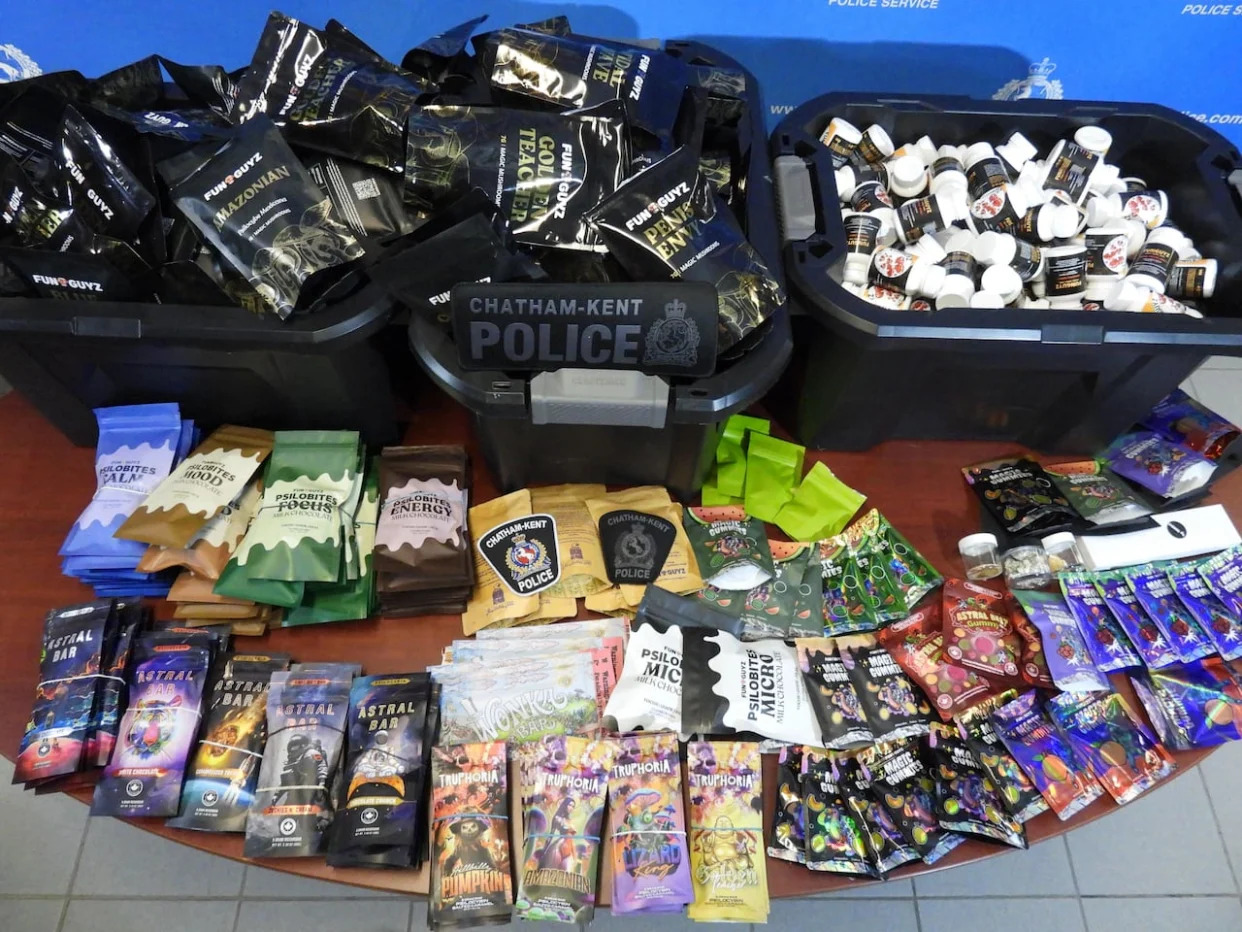
Chatham-Kent police say they seized more than $20,000 worth of product after executing a search warrant at a storefront on King Street West in Chatham, Ont., on Wednesday. (Chatham-Kent Police Service - image credit)


Chatham-Kent police have raided a FunGuyz psilocybin mushroom store that opened on King Street West in Chatham, Ont., a few days prior.

Officers who had a warrant to search the property seized more than 370 packages of psilocybin, worth over $20,000, police said in a media release on Thursday.

No arrests have been made at this point.

The raid took place on Wednesday. Police said the business opened four days before that. The location is less than a kilometre away from the police station.

"The Chatham-Kent Police and our community remain committed to actively combatting unlawful businesses," the police service said. "It is important to note that the possession, sale, and production of magic mushrooms, psilocybin, and psilocin are illegal."

FunGuyz is a magic mushroom dispensary that opened on Ouellette Avenue in Windsor's downtown. It's one of a few chains that have popped up across Ontario.

FunGuyz has a magic mushroom dispensary on Ouellette Avenue in Windsor's downtown. (Lamia Abozaid/CBC)

Despite operating illegally, FunGuyz has a growing list of stores, largely in Ontario. There are 23 locations listed on the FunGuyz website, which does not yet mention the Chatham store.

The downtown Windsor's location has been raided by police multiple times since it opened last summer.

Spokespeople for the business have previously told CBC News that they are fighting for legalization and will reopen locations that get raided.

"We're not out here selling to kids, you know, we're not bothering anyone, we open up doors... to the public. That's all," said one spokesperson who gave the name Edgars Gorbans in a July 2023 interview.

Gorbans later admitted he gave CBC News a fake name.

Thursday, April 22, 2021

MAGIC MUSHROOM THERAPY IN CANADA

In February of 2018, Laurie Brooks, a 51-year-old nurse in Abbotsford, B.C., learned she had colon cancer. Next came radiation, chemotherapy and a surgery that removed an eight-centimetre-long tumour. But at her one-year surgery follow-up, her oncologist found that the cancer had metastasized. She had anywhere between six months and a year to live
.
© Photo: Jackie Dives Laurie Brooks claims magic mushrooms helped with her anxiety.

Brooks and her husband, Glenn, who runs a home-renovation business, have four kids in their 20s. After the check-up news, she couldn’t sleep and cried constantly. She became withdrawn and felt anger at both the situation and at herself. At times she was gripped by an unshakable feeling that she had personally done something wrong. She feared having to inform her kids, for the second time, that their mother was dying. Soon she found that she couldn’t move her left arm—a psychosomatic side effect of her emotional distress. “I didn’t deal with any of the emotional stuff,” she says. “I just shoved that down inside while I got through the physical challenges of cancer.”


Then a family friend suggested a way she could find a measure of peace and deal with all that emotional stuff: take magic mushrooms.

In the last few years, an underground network of Canadian psychotherapists and medical practitioners, inspired by successful clinical trials, has helped patients gain access to psychedelics such as magic mushrooms, the gnarled fungi containing the naturally occurring chemical psilocybin. Many of those patients are terminally ill or are suffering from chronic depression or anxiety. They believe that psychedelics alleviate their suffering and help them get more in touch with their emotions. Psychedelics have been called the new cannabis—at least in Canada.

Brooks contacted a B.C. therapist who has helped other cancer patients experience magic-mushroom trips. Although she had never dabbled in mind-expanding drugs before, and was nervous, she wanted to spend what may be her final months living “authentically,” finding the self that was so often lost in her identification as a wife and mother and cancer patient.

Lying in a comfy bed and flanked by the therapist and a close friend, Laurie took three grams of magic mushrooms—a high dose guaranteed to send her on a trip. She’d prepared a mantra to guide her through the psychedelic experience. “Trust, be open and let go,” she told herself.

Before long, her mind opened into a realm of kaleidoscopic colours that she first found entertaining and then just a bit annoying. She next found herself pitched into a cold darkness. As she wrote in the notes she compiled post-trip, “It was like I was floating around in space but there weren’t any stars. It was just pitch black.”

At one point during her trip, while her hallucinations were peaking, Laurie visualized herself as a prisoner. “I saw myself in jail, with shackles on my wrists, and the shackles fell off, and the jail door slid open.” Brooks was free.

As the hallucinations subsided and she settled back into our shared, everyday reality, she realized she could move her left arm again. She swung it in wide circles.

In the recreational culture of psychedelics, users often talk about the “afterglow.” It’s a feeling of clarity or emotional well-being that persists after the drugs themselves have worn off. It’s like the opposite of a hangover. The sun seems warmer. You notice dew on each blade of grass glistening anew. Many patients only need to experience a magic-mushroom trip once to feel like the treatment was a success.

A year after her trip, Brooks was still glowing. “Everybody looks at me and says, ‘You don’t look sick at all!’” she reflects. “I don’t have all the fear and anxiety anymore.”
A long and controversial history

Before psychedelics like magic mushrooms gained notoriety in the 1960s as the preferred drugs of the Woodstock generation, ancient and Indigenous cultures prized them for millennia for the experiences they produced. Psychedelics induced states of consciousness with deep mystical and spiritual dimensions.

So-called “classical psychedelics”—a category that includes psilocybin, LSD, mescaline and a few configurations of dimethyltryptamine, or DMT—are psychologically powerful and spiritually potent. At the same time, they pose no real risk of addiction. Medical researchers believe that these drugs function by affecting the serotonin, a neurotransmitter that affects everything from mood to memory. The ceremonial and prehistorical use of these compounds has much to do with them being readily available in nature. That includes the bulbous and prickly peyote cactus, to DMT-containing “pink carpet” perennials native to South Africa, to the formidable Psilocybe azurescens mushrooms that peek up from the fertile soil of Oregon’s Columbia River Delta. LSD, meanwhile, is a chemical derivative of ergot, itself a fungal growth common on rye plants.

Scientists are now reassessing psychedelics as a promising therapeutic. In 2006, a team at Baltimore’s Johns Hopkins University led by neuropharmacologist Roland Griffiths demonstrated that psilocybin stimulated spiritual and deeply emotional experiences (comparable to the birth of a child or the death of a parent) in 30 volunteers. The resulting paper gave scientific heft to what generations of recreational users already knew: that psychedelics could facilitate profound (or “mystical-type”) experiences and lead to a shift in a user’s perception of themselves and their place in the world.

The therapeutic potential of such a revelation seemed limitless. Subsequent Hopkins research revealed that psilocybin could produce “substantial and sustained decreases in depression and anxiety in patients with life-threatening cancer.”

This research spurred a psychedelic renaissance: a period of renewed clinical and recreational interest in these compounds. Writer Michael Pollan, prompted both by the Hopkins research and a nagging sense of emptiness in his own life, experimented with a range of psychedelics, which he wrote about in his 2018 bestseller How to Change Your Mind.

In the first episode of her Netflix series The Goop Lab, actor and wellness guru Gwyneth Paltrow dispatched her staff to a magic-mushroom ceremony at a Jamaican beach resort. And in late 2019, Canadian businessman Kevin O’Leary announced his investment in MindMed, a start-up using psychedelics to treat addiction. It’s one of several Canadian businesses trying to capitalize on the hype.
Therapy and bad trips

Canada has long played a central role in psychedelics research. The field of psychedelic therapy was pioneered at Weyburn Mental Hospital in the 1950s, under Dr. Humphry Osmond and Dr. Abram Hoffer. It was Osmond who, in a correspondence with novelist and mind-expansion aficionado Aldous Huxley, coined the word psychedelic, meaning, roughly, “mind-manifesting.”

In their earliest medical applications, psychedelics like psilocybin and LSD were used to induce states of temporary psychosis—in order to observe and understand those states.

These applications were not always well-intentioned, or even consensual. In the 1950s and ’60s, Montreal’s Allan Memorial Institute was the site of countless psychedelic trials that were overseen by Scottish psychiatrist Ewen Cameron, funded by the CIA and partially underwritten by the Canadian government as a means of exploring the potential of mind control.

In one case, the wife of a Manitoba MP sought Cameron’s help in treating postpartum depression, only to be unwittingly dosed with LSD and subjected to brainwashing tapes. (A group of these victims sued the CIA in the 1980s and won.)

Osmond and Hoffer’s work led to the idea that these potent hallucinogens could also be powerful therapeutic tools. Clinicians analyzed the effects of psychedelic drugs in treating everything from alcoholism to schizophrenia and arrived at a crucial conclusion: that a positive psychedelic experience, one that facilitated a profound and lasting change in the patient, relied significantly on a positive mental outlook and an encouraging environment. Treat patients like they’re mad and they’ll behave accordingly. Treat them like they’re sick, in need of healing, and that healing is more likely to occur.

Much of the ’60s-era panic around these substances centred on “bad trips,” in which a powerful drug produced a state of mental frenzy resembling psychosis. In one famous 1969 case, Saskatchewan-born radio host Art Linkletter’s 20-year-old daughter, Diane, jumped out a window—a death her dad attributed to LSD.

The association of psychedelics with the ’60s counterculture had a blowback effect on serious-minded clinical research. Erika Dyck, Canada Research Chair in the History of Medicine at the University of Saskatchewan, notes in her book Psychedelic Psychiatry how, as mind expansion moved from the clinic to the campus, “Medical authorities promoting psychedelic psychiatry were perceived as indirectly endorsing a cultural revolution.”
In 1968, LSD was added to Canada’s Narcotic Control Act, rendering both recreational and medical use illegal. In 1974, psilocybin was outlawed. Both LSD and psilocybin are now listed under Schedule III of Canada’s Controlled Drugs and Substances Act.


The doctor who believes magic mushrooms can help

More than anyone, Dr. Bruce Tobin is responsible for legitimizing psychedelics therapy in Canada today. He’s worked as a private psychotherapist for the last 35 years and is a former professor of child and youth care at the University of Victoria. He’s 73 years old, lanky and friendly, with a white beard and a wide smile framed by a messy mop of hair.

© Photo: Nik West Psychotherapist Bruce Tobin is leading experiments with psychedelic therapy in Canada.

Tobin was drawn to the field by the results of studies and clinical trials, especially those at Johns Hopkins. He struck up an informal alliance—a friendship, really—with some of the top researchers at the university. In January 2017, he filed a class-action exemption application with Health Canada for access to psilocybin for people who met specific criteria, in order to provide therapeutic treatments. He founded TheraPsil—a non-profit with five employees—in the fall of 2019 while waiting for that application’s results.

After that first application was denied, Tobin and his staff focused on bulking up scientific, evidence-based arguments for psilocybin. Then, they reapplied with individual applications focused on granting compassionate access to specific patients suffering from intractable end-of-life anxiety. Tobin was ready to take the case to the Supreme Court, and failing that, practise a little civil disobedience himself by joining the ranks of on-the-sly psychedelic therapists.

Then, to his surprise, the government approved the first batch of his patient applications last August. “My sense is that, initially, Health Canada hoped that by more or less ignoring my application, I’d go away,” Tobin says, speaking from his home just north of Victoria, in North Saanich. “I’m not going away.”

Tobin’s mission is personal. In his career, he’s watched as various pharmaceutical cure-alls passed in and out of fashion. He also saw his own mother struggle with depression and anxiety—pharmaceuticals only numbed or exacerbated the root causes of her pain. He calls psilocybin an “existential threat” to Big Pharma and daily regimens of prescription drugs. The treatment is safe, relatively inexpensive (versus a lifetime of pricey prescription drug renewals), the outcomes are better, and, in many cases, it need only be undertaken once. New studies from Johns Hopkins show that patients who took the treatment four years ago are still reporting the positive effects—the benefits of a long, long afterglow.

Tobin recommends psilocybin should only be taken after establishing a rapport between the patient and the therapist. “This isn’t an easy process, where you simply take a pill and the heavens open and you’ll have transcendent, mystical experiences,” he says. “In many sessions there is difficult emotional work to be done.”

Like any therapy, these sessions hinge on confronting repressed, buried or otherwise uncomfortable feelings. The hallucinations, in many cases, function as metaphorical mini-movies. Imagine being confronted by some terrifying monster, then defeating it. Or think of Laurie Brooks busting herself out of the prison of her own inhibitions.

While fanciful and conjured in the mind, such experiences feel deeply real to the patient. And with proper therapeutic guidance (often termed “integration”), these profound lessons can be carried over into waking life when the drug’s effect subsides.

The power of the experience is further attributed to its ability to stir these feelings in a relatively compact session. Psychedelic enthusiasts describe the experience as being like years of therapy condensed into six or eight hours. Tobin is quick to dismiss such hyperbole, but he admits there is a measure of truth in such proclamations. “The effect of the medicine,” he explains, “makes it such that a person is able to process a lot more material than is normally accessible to them in any ordinary state of consciousness.”

The exemptions granted by Health Canada allow select patients to possess and consume psilocybin. As with cannabis—which began its route to medical decriminalization and, eventually, legality, with a similar exemption—these end-of-life therapy applications are the thin end of the wedge.

Other research companies in Canada are already squeezing through the door Tobin cracked open, seeking exemptions to study the effects of psychedelics in treating everything from obesity to cluster headaches to treatment-resistant depression. Health Canada has recently granted further exemptions to clinical researchers and biotechnology companies, plus 17 licences to psilocybin producers that supply clinics and researchers. Therapists are also seeking exemptions to take the drug in their training, in order to gain a more robust understanding of the psychedelic experience they hope to one day administer.

“The science is swiftly moving,” says Tobin. “The therapeutic merits of psilocybin don’t just pertain to end-of-life issues.”

Tobin believes his scientific credibility helped his application in the eyes of the government. And it’s the continued provability of psilocybin’s benefits that seems likely to shape its expanded legal framework. For now, however, psychedelics are primarily used for one noble end: easing the fear of death in people with terminal diagnoses.
Making the last days better

On August 12, 2020, in Saskatoon, about a four-hour drive from the now-demolished Weyburn Mental Hospital, Thomas Hartle became the first Canadian since 1974 to legally consume magic mushrooms.

Hartle, a 52 year-old father of two who works as an IT technician, was diagnosed with stage four colon cancer in 2016. Treatments put the cancer in remission for a couple years, but it returned in the summer of 2019, along with emotional distress, anxiety and crippling panic attacks.

The chemotherapy also led to neuropathy, a form of nerve damage that can cause numbness and weakness in the extremities. Researching Hericium erinaceus, a stringy mushroom used in some Eastern medicine practices to treat nerve damage, Hartle stumbled across the Johns Hopkins research on psilocybin and end-of-life distress. His interest was piqued, though he remained a little incredulous. “My experience with psychedelics was strictly through books and the media,” he explains. “To me, psychedelics were a party drug that people used in the ’60s.”

Hartle’s exploratory googling also led him to TheraPsil. Last spring, he reached out, and they added him to their exemption applications. After a few lengthy phone calls and some introductory screening, Tobin flew to Saskatoon to spend some time with Hartle and his family and build the sort of trusting relationship that is integral to the success of any therapeutic process. While Hartle tripped behind an eye mask, safely ensconced in his bed and listening to calming music, Tobin kept watch, making sure everything was going smoothly and offering words of encouragement.

“Less is kind of more,” Tobin explains. “We don’t want to put ourselves into the picture. The more invisible I become, the better, so the patient can focus exclusively on their inner experience.”

I spoke to Hartle a few weeks after the trip, and just a day after he began a new round of chemotherapy. He remained irrepressibly chipper. Before Hartle’s psilocybin trip, Tobin administered a Hamilton assessment—a scale that rates anxiety. A score of 25 to 30 would mean moderate to severe anxiety. Hartle ranked 36. During the treatment, Tobin asked him to rate his anxiety again. Hartle reported a zero. No anxiety. The day after the trip, he scored a mere six points: mild anxiety, verging on nonexistence.

Hartle hasn’t suffered a panic attack since the treatment. He has become more open with people around him and even learned to view his chemo treatments with grace. “To be fair,” he confesses, “everything about chemotherapy does kind of suck. But as opposed to dwelling on it, I have just experienced it and let it go.”

It’s too soon to speculate on how the rush of investors will shape the next phase of this psychedelic renaissance. What’s becoming clear, through all the hype and hallucinatory reveries, is that for patients suffering from acute anxiety and end-of-life distress, psilocybin offers serious, long-lasting relief, making those last days more livable. For patients like Brooks and Hartle, there are still bad days. But, as Hartle himself puts it, in what could stand as a tag line for a whole new wave in psychiatric medicines, “The bad days are better.”

The post Magic Mushrooms May Help People with Terminal Cancer appeared first on Reader's Digest.

Sunday, December 05, 2021

'Magic mushroom' drug psilocybin edges toward mainstream therapy

By Dennis Thompson HealthDay Reporter

Psilocybin, or "magic mushrooms," is now legal for mental health treatment in Oregon, a result of a ballot initiative.
 File Photo by Shots Studio/Shutterstock.

Tony Head was depressed and fearing death from stage 4 prostate cancer when, as part of a supervised scientific trial, he took a large dose of the psychedelic agent in "magic mushrooms," psilocybin.

Head donned a mask and headphones to shut out the world around him, and had an experience that changed the course of his life.

"At some point in that time I felt like a higher power or something -- I didn't see anything, I didn't see any type of image -- I felt like something connected and touched me and as soon as it did, I just started crying," Head, an award-nominated actor who lives in New York City, said in an interview with HealthDay Now.

He said the one-time therapy helped relieve much of the anxiety surrounding his prognosis.

RELATED Study finds 'magic mushroom' hallucinogen as good as antidepressants

"I think it taught me how to live better and not worry about dying," he added.

"I was blown away by what had just happened. It's an unimaginable experience, at least it was for me," Head added. "It's something that can't be explained, but I can tell you it is probably one of the most important things that ever happened to me."

Psychedelic therapy focused on psilocybin has garnered much new interest lately as a potential treatment against anxiety, depression and other mental ills.

RELATED Tiffany Haddish on taking mushrooms: 'Everybody looked like Phylicia Rashad'

In fact, the drug is now legal for mental health treatment in Oregon, a result of a ballot initiative. The recent release of Hulu's miniseries Nine Perfect Strangers has also focused fresh attention to the concept of microdosing psilocybin as a means of therapy.

Long history

It's a field that foundered in the 1960s as psychedelic drugs became associated with the left-wing counterculture, explained Dr. Charles Grob, a professor of clinical psychiatry and biobehavioral sciences with the UCLA School of Medicine.

RELATED Oregon votes to legalize psychedelic mushrooms in therapy settings

However, prior to that, psychedelics like psilocybin had shown "great promise" in mental health research, Grob told HealthDay Now.

"In the '50s and '60s, there was a period of time when psychedelics were really considered the cutting edge of psychiatric research, and there was tremendous enthusiasm," Grob said. "There were reports of patient populations who did not respond well to conventional treatments that did very well."

Even Hollywood leading man Cary Grant turned to psychedelics during that early period. The actor took LSD as many as 100 times under the care of a Beverly Hills doctor, according to the documentary Becoming Cary Grant.

"After weeks of treatment came a day when I saw the light," Grant said in the film. "When I broke through, I felt an immeasurably beneficial cleansing of so many needless fears and guilts. I lost all the tension that I'd been crippling myself with."

Now, a new generation of researchers are exploring the possibilities of these drugs to help people in crisis.

Head, 69, took his psilocybin trip as part of a research effort at Johns Hopkins University in Baltimore, after doctors had told him he probably had three to five years to live. Head has appeared in the HBO dramas The Wire and The Deuce and had a small role in the 2019 movie Joker.

His psilocybin experience lasted for about seven hours, and during it he felt as though he had come into contact with a "higher power" existing in a place beyond death.

"The biggest thing I got out of this was it taught me how not to fear dying. I don't fear death. I don't want to suffer for years like that, but I don't fear death at all," Head said. "I think wherever death is or leads to, it's going to be a good place.

"I think it taught me how to live better and not worry about dying," he added.

Head says he also got everything he needed from psilocybin during his single high-dose trip.

"I have no wish to do it again. I don't need to do it again," he said.

Recalibrating the mind

Just how do psychedelics work their magic on the brain? According to Grob, psilocybin and its pharmaceutical cousins "profoundly alter our state of consciousness" by acting on certain receptors in the brain.

"We also know the circuitry of the brain is briefly modified and in a sense, goes offline and creates more of a resting state," Grob said. "It's almost as if the brain for a period of time goes offline and then recalibrates in an enhanced state.

"It's an alteration of what's called the default mode network, where regions of the brain that normally are very much in communication basically briefly disconnect and create a greater sense of calm and less internal chatter, and perhaps more opportunity to perceive beyond what is normally within our field of awareness," Grob continued.

Research from the 1950s and '60s, as well as more recent studies, have shown psilocybin's promise in helping people like Head who are suffering an existential crisis, Grob said.

Psychedelics have also shown potential in people dealing with alcoholism and addiction, he added.

"Investigators observed dating back to the '50s that individuals with one powerful experience of a psychedelic, with one powerful altered state, appeared to have lost their craving and are able to establish and maintain sobriety," Grob said.

When use turns to abuse

The drug's promise does need to be weighed against its potential for abuse, however, Grob said.

"Going back to the '60s, there's no lack of examples of individuals who misused and abused the drug and got themselves into some serious situations which no one would want to replicate," Grob said. "There are inherent risks when this drug is ingested in uncontrolled settings, without proper facilitation by an experienced psychotherapist who is trained in administering this model."

Grob also noted that psilocybin and other psychedelics still require more research to fully understand their risks and benefits, given that academic study into the drugs fizzled out after the 1960s.

"We have today the opportunity to take a fresh look at these compounds, utilizing optimal conditions," Grob said. "We have the support of many high-level officials within academia. The regulatory agencies are far more receptive."

For example, there needs to be rigorously controlled studies to test the potential benefits of microdosing, the psychedelic treatment highlighted by Nine Perfect Strangers, Grob said.

"It's still more in the realm of conjecture, and the positive reports we're hearing are essentially anecdotal case reports," Grob said. "These individuals do report on occasion a very remarkable transformation, remarkable therapeutic outcome, but we really don't know for sure whether this is a real phenomenon or a placebo effect."

More study needed


Psilocybin has garnered more interest in modern research and therapy than LSD because it has a few advantages over the more powerful psychedelic, Grob said.

A psilocybin trip tends to be much shorter than with LSD, although it can extend to as long as six or seven hours. The trip also tends to be easier to guide, more visionary, and less likely to create anxiety or paranoia in the patient, Grob said.

People running these studies will need to seriously consider the patient's mindset and expectations and place them in a positive, carefully controlled setting, Grob said.

"You take all those factors into account, there's a good likelihood you can guide someone through this altered terrain in a safe manner and allow them to have the kind of experience that might endow them with the kind of insight and the kind of positive transformative experience that leads to therapeutic change," Grob said.

Head said that he can definitely see the potential of psilocybin to help treat people with addiction and other mental health issues, if it's used in a supervised way.

"This drug opens a door to put you in another place that you wouldn't normally be able to get to in your brain," Head said. "It has that kind of effect on you."

More information

Johns Hopkins Medicine has more about its psychedelics research program.

Copyright © 2021 HealthDay. All rights reserved.


Thursday, July 16, 2020

Magic mushroom compound provides anti-anxiety and antidepressant effects lasting years, study finds

Single dose of psilocybin leads to decreased demoralisation and improved spiritual wellbeing among cancer sufferers, long-term research indicates


Harry Cockburn
Tuesday 28 January 2020

A single dose of psilocybin, a compound found in psychedelic mushrooms, can result in “significant improvements” in reducing stress and anxiety in cancer patients for as long as five years after it was administered, a new study suggests.

A research team at New York University‘s Grossman School of Medicine, who were following up a landmark 2016 study into psilocybin, found that in conjunction with psychotherapy, cancer patients experienced improvements in emotional and existential distress.

In the earlier study, the team reported that the use of psilocybin produced “immediate, substantial, and sustained improvements in anxiety and depression and led to decreases in cancer-related demoralisation and hopelessness, improved spiritual wellbeing, and increased quality of life”.

After a follow-up assessment, six-and-a-half months later, psilocybin was associated with “enduring anti-anxiety and antidepressant effects”.

The new study — a long term follow up of the same set of patients — found the positive effects had continued.

“Participants overwhelmingly (71 to 100 per cent) attributed positive life changes to the psilocybin-assisted therapy experience and rated it among the most personally meaningful and spiritually significant experiences of their lives,” the researchers said

“Adding to evidence dating back as early as the 1950s, our findings strongly suggest that psilocybin therapy is a promising means of improving the emotional, psychological, and spiritual wellbeing of patients with life-threatening cancer,” said the 2016 parent study’s lead investigator, Dr Stephen Ross.

“This approach has the potential to produce a paradigm shift in the psychological and existential care of patients with cancer, especially those with terminal illness.”

The researchers said psilocybin could become a useful tool for enhancing the effectiveness of psychotherapy and ultimately relieving these symptoms.

Although the precise mechanisms are not fully understood, scientists believe the drug can make the brain more flexible and receptive to new ideas and thought patterns. In addition, previous research indicates the drug targets a network of the brain, the default mode network, which becomes activated when we engage in self-reflection and mind wandering, and which helps to create our sense of self and sense of coherent narrative identity.

‘Absurd’ magic mushrooms and MDMA are class A drugs, expert tells MPs

In patients with anxiety and depression, this network becomes hyperactive and is associated with rumination, worry, and rigid thinking. Psilocybin appears to acutely shift activity in this network and helps people to take a more broadened perspective on their behaviours and lives.

The follow-up study is the longest-spanning exploration of psilocybin’s effects on cancer-related psychiatric distress to date, the authors say.

“These results may shed light on how the positive effects of a single dose of psilocybin persist for so long,” said Gabby Agin-Liebes, lead author of the long-term follow-up study.

“The drug seems to facilitate a deep, meaningful experience that stays with a person and can fundamentally change his or her mindset and outlook,” she said.

The research is published in the Journal of Psychopharmacology.


Magic mushroom compound psilocybin found safe for consumption in largest ever controlled study

‘Clinically reassuring’ results boost development of psychoactive ingredient as depression treatment, researcher says


Andy Gregory
Wednesday 18 December 2019 

The largest controlled study of psilocybin – the psychoactive ingredient in magic mushrooms – has found the compound safe for human consumption, bringing researchers one step closer to developing a psilocybin-based treatment for depression.

Volunteers who received doses of the psychedelic compound experienced no serious adverse effects in phase one clinical trials at Kings College London (KCL).

Psilocybin has been tipped as a potentially groundbreaking treatment for mental health disorders that could replace antidepressants, with some research suggesting it could also aid those dealing with addiction.

“The results of the study are clinically reassuring and support further development of psilocybin as a treatment for patients with mental health problems that haven’t improved with conventional therapy, such as treatment-resistant depression,” said KCL’s Dr James Rucker, the study’s lead investigator.

Most of the minor adverse events recorded were of the expected psychedelic nature, researchers found, with changes to sensory perception and mood, but no negative effects on cognitive and emotional functioning.

The phase one trials – which sought to test the compound’s safety, not its therapeutic value – compared the effects of varying doses of the psilocybin-based drug COMP360 and placebos in 89 healthy volunteers

There were 25 dosing sessions in total. In each session, six participants would receive either 10mg or 25mg doses or a placebo during a one-on-one session with a therapist lasting roughly six hours, with a follow-up period of 12 weeks.​

Research by the company behind the trial, Compass Pathways, into using psilocybin as a treatment for depression has been fast-tracked in the US, receiving special “breakthrough therapy” status from the Food and Drug Administration.

Watch more

Magic mushrooms ‘could be replacing antidepressants within five years’

It is currently running phase two studies across Europe and North America involving 216 patients who suffer with depression that hasn’t responded to treatment.

“This study is part of our overall clinical development programme in treatment-resistant depression,” Compass Pathways’ co-founder Dr Ekaterina Malievskaia said.

“We wanted to look at the safety and tolerability profile of our psilocybin, and to look at the feasibility of a model where up to six one-to-one sessions are held at the same time.

“We are focused on getting psilocybin therapy safely to as many patients who would benefit from it as possible [and] are grateful to the many pioneering research institutions whose work over the years has helped to demonstrate the potential of psilocybin in medicine.”

In June, The Independent reported that participants in the first trial comparing psilocybin to antidepressants at the world’s first psychedelic research centre, at Imperial College London, described a cathartic emotional “release” and “reconnection” during psilocybin therapy.

As the study’s lead Dr Robin Carhart-Harris pointed out, this is the polar opposite of antidepressants, which patients often complain leave their emotions “blunted”.

Saturday, December 24, 2022

Have a safe trip: Oregon trains magic mushroom facilitators


A bell hangs at the entrance to a psilocybin facilitator training venue near Damascus, Ore., on Dec. 2, 2022. People are being trained in how to accompany patients tripping on psilocybin as Oregon prepares to become the first state in America to offer controlled use of the psychedelic mushroom to the public. 
(AP Photo/Andrew Selsky)


ANDREW SELSKY
Thu, December 22, 2022

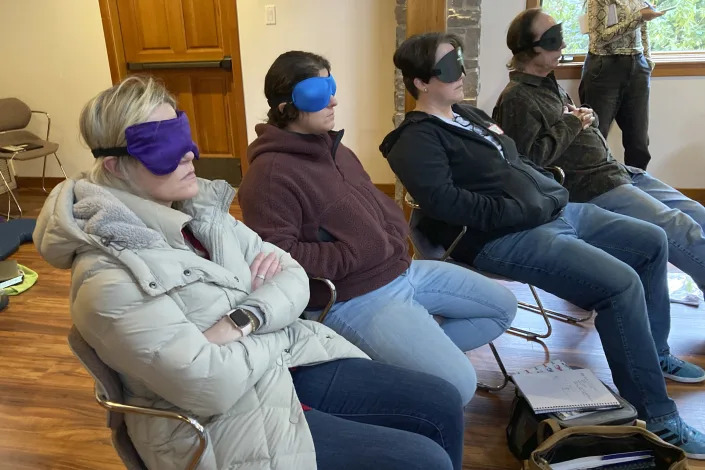
DAMASCUS, Oregon (AP) — At a woodsy retreat center in Oregon, some 30 men and women are seated or lying down, masks covering their eyes and listening to serene music.

They are among the first crop of students being trained how to accompany patients tripping on psilocybin, as Oregon prepares to become the first U.S. state to offer controlled use of the psychedelic mushroom to the public.

Expected to be available to the public in mid- or late-2023, the program is charting a potential course for other states. Oregon voters approved Ballot Measure 109 on psilocybin by an 11% margin in 2020.

In November, Colorado voters also passed a ballot measure allowing regulated use of “magic mushrooms” starting in 2024. On Dec. 16, California state Sen. Scott Wiener of San Francisco introduced a bill to legalize psilocybin and other psychedelic substances.

“Psychedelics help people heal from trauma, depression & addiction,” Wiener tweeted. “Why are they still illegal in California?”


InnerTrek, a Portland company, is now training around 100 students, in three groups, to be licensed “facilitators” who will create a safe space for dosing sessions and be a reassuring, but nonintrusive, presence. Some classes in the six-month, $7,900 course are online but others are in-person, held near Portland in a building resembling a mountain lodge with Tibetan prayer flags flapping in the breeze nearby.

Because psilocybin use is still illegal, the only mushrooms at the training center were the shitake ones served in the miso soup at lunch.

Trainer Gina Gratza told the students that the space, or “container,” for a dosing session at a licensed center should include a couch or mats for clients to sit or lie on, an eye mask, comfort items like a blanket and stuffed animals, a sketch pad, pencils and a bucket for vomiting. A session typically lasts at least six hours.

Music is an important part of the experience and should be available, from speakers or on headphones. (Researchers at the Johns Hopkins Center for Psychedelic and Consciousness Research in Baltimore have developed a playlist that “ seeks to express the sweeping arc of the typical medium- or high-dose psilocybin session.”)

“You are here to support safe passage and hold the container that powers a release and an unfolding,” Gratza told the students. “Be mindful of how you’re speaking and what the energy of what you’re putting out may be conveying.”

Trainers emphasized that those taking psilocybin should be given the freedom to explore whatever emotions emerge during their inner journeys. They shouldn’t be consoled if they’re crying, for example. Expressing anger is fine but there should be agreement beforehand that there will be no throwing of objects or hitting.

“We’re not guiding,” Gratza said. “Let your participants’ experiences unfold. Use words sparingly. Let participants come to their own insights and conclusions.”

Tom Eckert, the architect of Ballot Measure 109, is now moving it along as InnerTrek’s program director. He said it’s not about people getting “high” for the sake of it, but to use psilocybin to improve lives.

Researchers believe psilocybin changes the way the brain organizes itself, permitting a user to adopt new attitudes more easily and help overcome depression, PTSD and other issues.

“What we’re bringing forward here in Oregon is a platform for psilocybin services,” Eckert said in an interview. "And service means a sequence of sessions in which a psilocybin experience is contextualized. So, there’s preparation beforehand and integration afterwards. It’s a therapeutic sequence.”

Oregon is pioneering the regulated use of psychedelic mushrooms in the U.S., but psilocybin, peyote and other hallucinogenic substances have been used by the native peoples of Mexico and Central America to induce altered states of consciousness in healing rituals and religious ceremonies since pre-Columbian times.

Its cultivation and use is legal in a handful of other countries, including Jamaica, where some high-end mushroom resorts have sprung up. A program run by the Heroic Hearts Project, a veteran service organization, brings military vets with PTSD and athletes who have experienced trauma to the jungles of Peru for restorative sessions with ayahuasca, a plant-based psychedelic.

In October, the Canadian province of Alberta announced the first provincial regulations for psychedelic-assisted therapy. The new regulations, which take effect in January, require a psychiatrist to oversee any treatment, according to the Canadian Broadcasting Corporation.

Psilocybin remains illegal in the rest of Canada, but that hasn't stopped shops in Vancouver, British Columbia, from openly selling magic mushrooms. The police aren't getting involved and are instead targeting violent criminal organizations that produce and traffic harmful opioids, the CBC reported.


A shop in Portland called the Shroom House was also allegedly selling psilocybin openly until police busted the operation on Dec. 8 and arrested the store owner and manager.

In the last election, several rural counties in Oregon opted out of allowing psilocybin services in unincorporated areas within their borders, although several towns in those counties stayed in. Heavily populated counties with the state's biggest cities — Portland, Eugene and Bend — also did not opt out, although the county containing the capital Salem did.

The Oregon Psychiatric Physicians Association and the American Psychiatric Association opposed Measure 109, saying it “is unsafe and makes misleading promises to those Oregonians who are struggling with mental illness.” You don't need to be a medical professional to get a facilitator license, they pointed out.

Eckert, though, said the status quo isn't working.

“We need a revolution in mental health care,” Eckert said. “The current way we are working with mental health simply isn’t cutting it, and we see that in the outcomes. We have something of a mental health crisis here in Oregon and beyond.

“I'm not trying to throw away the existing structure,” he added. "There’s definitely value there, but there’s something missing, clearly.” 
___


Saturday, December 18, 2021

He was the Canadian head of the world’s largest pot company. His next big bet? A rare fungus worth $10,000 a kilogram – Toronto Star

It’s worth tens of thousands of dollars per kilogram, grows out of the corpse of a caterpillar, and for centuries has only been found in the heights of the Himalayas.

Now Bruce Linton, the former CEO of cannabis giant Canopy Growth, has his eye on this fungus, and it may play a key role in his next massive money-maker.

Linton is a founding investor in Mood Science, a young company that’s researching the properties of cordyceps sinensis and other fungi with potential health benefits, dubbed “functional mushrooms.”

Mood Science is launching a line of drops, gummies and more using cordyceps, which the company claims can help with stress, energy and focus. And in the background, Mood Science will also conduct research into psilocybin, or “magic mushrooms,” which some believe are the future of mental health treatment.

Sitting at a table in Strange Love, a white-marbled financial-district cafe run by Mood Science’s sister company that boasts functional-mushroom-boosted coffee, Linton said he was struck not only by the monetary value of cordyceps sinensis, but also by its purported health benefits.

Functional mushrooms are not psychoactive like their magical cousins. Though they have been used in traditional medicine for centuries, research is still thin on their purported health benefits. But many companies in the psychedelics industry are getting into functional mushrooms.

Linton has had his eye on psychedelics for a while. After his departure from Canopy Growth, he told The Canadian Press he saw “untapped value” in the psychedelics industry.

Psilocybin, a naturally occurring psychedelic compound produced by more than 200 species of fungi, is a long game, Linton told the Star, whereas functional mushrooms can go to market right now because they aren’t psychoactive.

“(Psilocybin will) become increasingly more legal in more places,” he predicts. “So what you want to be able to do is start here in the functional, build your science, your brand, your competencies, and then when you can, you smash them all together.”

Linton built Canopy Growth into the world’s largest cannabis company. But can he do the same with mushrooms? There are a lot more unknowns in the mushroom world, from tight regulations on psychoactive mushrooms, to a lack of scientific research on the growing market of functional mushrooms and fungi including cordyceps sinensis.

The functional and the fun

Functional mushrooms and fungi are finding their way into everything these days, including coffee, skin care, supplements and gummies. These mushrooms are often marketed in North America with a variety of health claims; cordyceps, for example, is often advertised as an energy booster or “Himalayan Viagra.”

Vague promises made about functional mushrooms include improving mental performance, boosting immunity and improving quality of sleep. Comedian turned podcaster Joe Rogan recommends coffee mixed with lion’s mane and chaga. Reality TV star Kim Kardashian has reportedly used skin care made with reishi.

Many of these functional fungi have been used in traditional medicine for thousands of years in countries including China, Russia and Japan to treat a variety of ailments.

Psychoactive mushrooms, on the other hand, have been illegal in Canada since 1974, but there’s a growing body of research into their potential use in psychotherapy, including in end-of-life care.

But while functional mushrooms and their magic cousins have very different effects, it’s not uncommon for a psychedelics company to get into the functional — a.k.a. legal — mushroom business, said Simeon Schnapper, general partner at JLS Fund, a venture capital firm that invests in psychedelics and technology.

For example, Silo Wellness, a Canadian-based company that offers psychedelic mushroom retreats (in Jamaica, where it’s legal), recently partnered with the late Bob Marley’s family to release a line of functional mushroom products.

The idea is to establish a brand and a revenue stream for the company, with an eye to a more colourful future, said Schnapper.

Linton was drawn in by the sleek branding of Strange Love, whose financial district location has all the trappings of a trendy cafe: tall windows, white marble, pink and green branding, a neon sign reading “All you need is love.”

He likened the Strange Love cafes to Tokyo Smoke, acquired by Canopy Growth in 2018. Tokyo Smoke started out as a cannabis lifestyle brand, said Linton, gaining market awareness before it was licensed to actually sell cannabis.

Around the same time, Canopy Growth bought ebbu, a Colorado-based hemp research company, adding to the firm’s scientific strength, said Linton. He sees the relationship between Strange Love and Mood Science in the same way, which influenced his decision to invest.

Mood Science founder David Tran was a founding investor in Strange Love, which was started by Chris Nguyen in 2016 and now has three locations in Toronto.

Mood Science founder David Tran, above, was a founding investor in Strange Love, which was started by Chris Nguyen in 2016 and now has three locations in Toronto.

Both Nguyen and Tran come from a sales and marketing background, with Tran most recently in the fashion industry. Neither has a background in science. Strange Love also has a naturopathic doctor on its team.

Tran founded Mood Science during the COVID-19 pandemic after integrating functional mushrooms into his health regimen. He wants Mood Science to be “the Tesla of adaptogens,” and is betting on huge growth in the use of functional fungi in the wellness community.

“I think what we’re doing is really a reaction to the growing trend in the market,” he said. “Consumers want to go more natural, holistic, with their wellness, and they want to get away from pharmaceuticals.”

This isn’t Linton’s first foray into fungi; he is on the advisory board for psychedelics company Red Light Holland, and was on the board for psychedelics company Mind Medicine.

But now he’s interested in bringing the science of mushrooms into people’s everyday lives.

Mood Science is actively looking for acquisitions that can help bolster the science side of the company, said Linton, who is serving as an executive advisor for the company.

“The reason a winner occurs is because they make a number of rapid decisions that get their momentum and rate of acceleration going better than anyone else’s. And I think we’re in that spot,” he said.

‘People want to buy outcomes’

Cordyceps sinensis or Ophiocordyceps sinensis, also known as the caterpillar mushroom, is particularly difficult to cultivate. It grows in the wild, at high-altitude locations in the Himalayas where the parasitic fungus takes over the body of a ghost moth caterpillar, eventually killing it.

Cordyceps sinensis is used in traditional Chinese medicine to boost energy, endurance and libido, among other bodily functions.

The caterpillar mushroom has become increasingly rare due to overharvesting and the changing climate. Decades of attempts to artificially cultivate the growth from the host larvae, called a “fruit body,” were not successful. In recent years, however, researchers in China have succeeded in cultivating it in a lab.

But Mood Science is taking the insect out of the equation, cultivating the mycelia of cordyceps sinensis — like the roots of a plant without the plant itself — in liquid, in a lab in Colorado, Ohio. The result is Cordycell, Mood Science’s proprietary cordyceps sinensis compound. Tran calls it a “molecular mushroom.”

Mood Science is not the first to do this. There are a number of cordyceps sinensis products on the market today that use the mycelia, the vegetative part of a fungus, instead of the fruit body, which is easier to cultivate, said Nicholas Money, a mycologist at Miami University in Ohio.

So what makes Cordycell different from other products?

For one, Mood Science claims it has exclusive access to a strain of cordyceps sinensis belonging to Penn State University, a claim the Star was unable to verify via Penn State.

Tran said Cordycell has up to 15 times more sought-after derivatives of the fungi — such as cordycepin — than other products on the market today, and said Mood Science is able to “formulate clinically dosed products that help consumers with focus, energy, better sleep, and supporting stress.”

Money said while it’s certainly possible that Cordycell has significantly more cordycepin, further research is needed to determine cordycepin’s properties.

In fact, while Mood Science and many other natural wellness companies say mushrooms and fungi have medicinal properties, there is currently no widely accepted research to support these claims.

Mood Science bases its claims on the traditional uses of functional mushrooms, as well as some scientific studies done on their effects.

There’s more research on some mushrooms than others, but overall, the scientific community is still in the early days of exploring functional mushrooms, said Money; good research on the real effects of cordyceps sinensis and other functional fungi is “almost nonexistent” at this point, he said.

“I’m not saying that it doesn’t have these properties,” Money said. “But at the moment, this is faith-based medicine rather than medicine for which there’s a strong scientific rationale.”

Mood Science has partnered with an Ontario lab that specializes in testing cannabis and is currently developing protocols for testing Cordycell and other fungi to learn more about their properties.

Cordycell will officially launch in 2022, said Tran, in an array of products such as gummies and drops.

Mood Science is focusing on selling and researching functional mushrooms for now, but it also has two Health Canada licenses to conduct research into psilocybin.

“Not only are we gonna have the baseline infrastructure and all the fancy equipment to analyze the functional mushrooms, but we can analyze … psychedelic mushrooms,” said Tran. “We don’t know where the industry will go. But we think that knowledge will be valuable.”

One major claim made by the Mood Science team has yet to be proven, and that’s cordyceps sinensis’ potential use in treating mild depression, which as of yet has very little research to back it up.

Tran hinted that research into cordyceps sinensis’ potential mental health effects could begin in 2022.

Much like with cannabis, “people want to buy outcomes,” said Linton.

“I just think science is going to be a bigger part of this than people expect.”

This isn’t ‘Cannabis 3.0’

Science aside, Linton is betting money on the future success of the mushroom business, from the functional to the magical. But experts in emerging industries say it may be a long road ahead.

Michael Armstrong, an associate professor in the Goodman School of Business at Brock University, said while some parallels can be drawn between the cannabis industry and the psychoactive mushroom industry, there are also some key differences.

Far fewer Canadians use mushrooms recreationally, he said. So while he thinks it’s possible that psilocybin will become more widely available for medical purposes, Armstrong isn’t putting money on them being legalized recreationally.

“It’s not going to be cannabis 3.0,” he said.

But it’s not a bad idea for psychedelics companies to get into functional mushrooms, Armstrong said, so they can still get to know what customers are looking for, and build brand recognition.

It helps on the revenue side, too — Mood Science isn’t profitable right now, but Strange Love is, according to Tran.

Armstrong said the legalization of cannabis in Canada has made people more open-minded about other natural products, including previously banned substances.

“We legalized it and the world didn’t fall apart,” he said. “What else have we banned and have not studied?”

Schnapper agrees that magic mushrooms are on their way to being used in medical settings, but he also thinks that the growing popularity of microdosing magic mushrooms could signal a potential recreational market for psilocybin.

As for functional mushrooms, the more companies that get into this market, the more consumers will demand research to back up claims, said Schnapper.

The functional mushroom play has a lot of upfront costs and it’s a crowded market, but if it’s done well, it is a good revenue opportunity to help fund the science side of a business, he said.

Linton said Mood Science is moving fast, despite difficulty raising money in such an evolving market.

Nevertheless, the company has managed to attract investment, said Linton, including from Canadian fashion designer and entrepreneur Joe Mimran.

Linton said the legalization of cannabis has paved the way for psilocybin, which he predicts could be approved for medical use in five years or less, even if recreational psilocybin is a long way off.

Now, about a year into his investment, Linton is feeling good about his decision.

If he wasn’t, “I wouldn’t have done this interview,” said Linton.