Dubai is experiencing its largest outflow of foreign residents in decades as the Iran war enters its third week, threatening the emirate's carefully built reputation as a global hub for wealthy expatriates, finance and tourism.
This latest Emirates exodus has drawn comparisons to Hong Kong's pandemic-era talent drain, when strict Covid restrictions in 2022 triggered a mass departure of bankers, lawyers and professionals that took years to reverse. During those years, many in the UAE ended up locking themselves away in their apartments; however, that threat wasn't so apparent.
More than 37,000 flights have been cancelled since the conflict began on February 28, according to previous data from Emering Travel. Dubai International Airport is operating at roughly 70% of capacity. Private jet departures reached $250,000 in the first days of the war, with some evacuees leaving pets and belongings behind. Local veterinarians reported being overwhelmed by abandoned animals.
Flight schedules tell a clear picture: "Emirates, Etihad Airways and Qatar Airways have all been forced into reduced or limited schedules since the conflict began on 28 February, when joint US-Israeli strikes on Iran triggered retaliatory missile and drone barrages across the Persian Gulf," Emerging Travel reported on March 19.
Major Western financial institutions have pulled staff from Dubai. Goldman Sachs, Citi, Standard Chartered and other firms ordered employees to work from home or relocate after Iran threatened to target banks and technology companies with US connections. The Dubai International Financial Centre's landmark ICD Brookfield tower, home to BlackRock, Bank of America, JPMorgan and BNP Paribas, stands largely empty. The rot is spreading; the Dubai stock exchange has fallen roughly 17% since the war began, while unemployment among expatriates rose to 12% in February, according to KPMG. Several UAE-based companies are now offering several roles on websites, including Linkedin, where the list continues to grow as people choose not to return.
In a bid to stem the blood loss, the UAE is now even considering relaxing tax residency rules for expatriates who left during the conflict, with authorities expected to assess applications on a case-by-case basis, the report said. Under current rules, residents must spend at least 183 days per year in the country to maintain their tax status. Dubai is home to 237 centimillionaires and at least 20 billionaires. Around 9,800 millionaires relocated to the emirate in 2025, bringing an estimated $63bn in wealth. If they pull their cash out of local NBD or other banks.
"Dubai has already seen its safety and security selling point damaged. It is really important for its economy and image to retain these expats," tax partner Elsa Littlewood of BDO told the Financial Times. British nationals face a particular dilemma due to the hurdles of hoops they have to jump through. Returning to the UK risks triggering tax residency, potentially exposing worldwide income to British taxation. Tax advisers have urged departing expats to consider third countries rather than going home. HMRC said it would assist those returning, but many are considering other options, including Georgia's capital, Tbilisi.
However, for those who remain, the atmosphere is one of unease rather than outright panic.
One Dubai resident who asked not to be named, speaking with IntelliNews, said the past few weeks had been difficult with colleagues with children already departing for countries including Australia and Britain, while many have said they will stick through it, hoping the situation returns to some sort of normal in the next few hours. Residents describe a city that functions but under visible strain, with evacuation alerts interrupting social occasions and the sound of air defence interceptions audible at night.
"One of the things I loved most about my time in Dubai was the lifestyle. The city has an incredible food scene—fresh salads, grilled meats, colourful fruit platters, and so many international dishes that eating out never gets boring," said one resident speaking with IntelliNews.
"During my time in Dubai, one thing that really stood out was how active the lifestyle is. Early in the mornings and again in the evenings, you see people everywhere walking, jogging, and cycling along the city’s paths and waterfront areas. It feels like fitness is simply part of everyday life here," they added, whilst asking not to use their names due to the restrictive rules of spreading information.
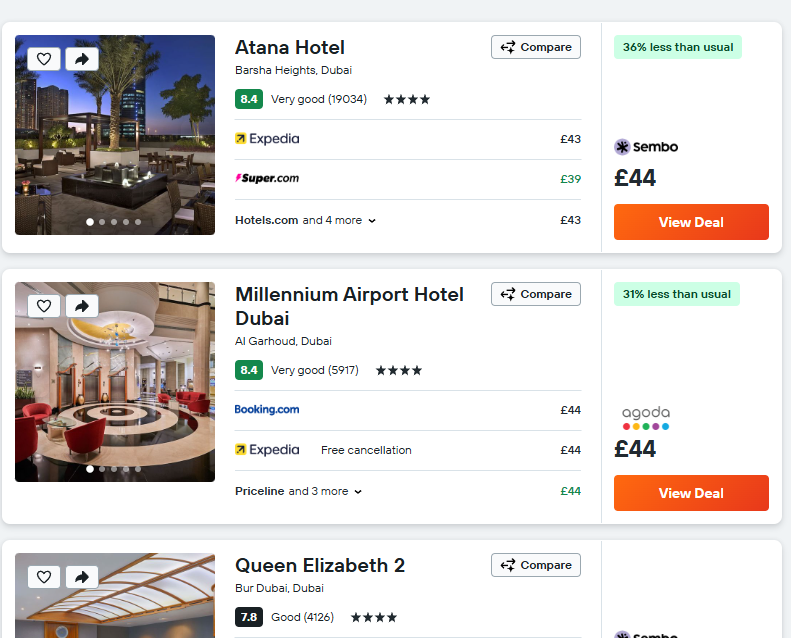
Hotels have slashed prices. Beach clubs and tourist areas along Jumeirah sit largely empty at the height of peak season. Low-paid migrant workers from India, Pakistan and Bangladesh are being sent home or put on forced leave with no guarantee of return. According to searches on several hotel booking price-comparison websites, historically low prices are currently available at a raft of popular branded hotels, according to Kayak.com, Booking.com and Skyscanner.
The UAE has intercepted 314 ballistic missiles, 15 cruise missiles and 1,672 drones from Iran since the war began. Eight people have been killed and 157 wounded. Strikes have hit the Fairmont hotel on Palm Jumeirah, caused fire damage at the Burj Al Arab, struck Dubai airport three times and hit the vicinity of the US consulate.
Authorities have arrested more than 100 people, including one British tourist, for sharing images of strikes or interceptions on social media under the UAE's cybercrime laws.
Dubai’s thriving global financial hub faces wartime stress test
In the space of just three decades, Dubai has built itself into one of the world’s major financial hubs – a magnet for global banks, investors and wealthy expatriates. But the war in the Middle East is testing that success, raising questions about whether the flows of capital, trade and tourism that fuel its economy can hold if the conflict spreads.
Issued on: 22/03/2026 - RFI
The emirate is not only a symbol of luxury and spectacle, it has also become a key centre for finance and international commerce in the Gulf, attracting companies and wealthy individuals from around the world.
Dubai’s economic model is unusual in the region. Unlike several of its neighbours, its prosperity is not built mainly on oil. Instead, Dubai has focused on services, tourism, global trade and financial activity, strengthening its position as the main financial hub serving the Middle East, Africa and South Asia.
At the heart of that strategy is the Dubai International Financial Centre, which opened in 2004 and now hosts more than 8,800 companies including international banks, investment funds, law firms and wealth management firms.
Stability at risk
Dubai’s rapid rise as a financial centre has rested on two main pillars: favourable taxation and business-friendly regulations that attract foreign companies, and the stability the emirate has long projected in a region often marked by geopolitical tensions.
That sense of security is now under strain as the war threatens the flows of trade, tourism and investment that Dubai depends on.
The city itself has begun to feel the impact of the conflict. Drones and missiles have struck infrastructure in Dubai, including its airport, where a nearby drone strike sparked a fire at a fuel tank facility and disrupted flights.
The United Arab Emirates briefly closed its airspace early on Tuesday as a precaution on the back of missile and drone threats. Meanwhile debris from intercepted drones reportedly struck buildings in Dubai’s financial district.
Beyond the immediate damage, such incidents risk weakening the confidence that underpins international finance.
“It’s hard to overstate the peril for Dubai’s economic model,” Jim Krane, a fellow at Rice University’s Baker Institute for Public Policy, told Reuters.
The longer the conflict continues, he warned, the greater the risk that investors will begin looking for alternatives.
No exodus yet
So far, however, there has been no large-scale departure of capital or financial workers. Expatriates employed in the finance sector have not left in significant numbers.
Some companies have taken precautionary steps, including bringing employees home or allowing staff to work remotely. But no widespread panic has taken hold so far.
If the conflict drags on, however, the situation could change.
Dubai’s difficulties could create opportunities for other financial centres in the region. Saudi Arabia, for example, is trying to position Riyadh as an alternative economic hub. However, with most Gulf countries affected by regional tensions, this reduces their relative appeal.
Wealth managers in Singapore told Reuters that several Dubai-based clients had begun exploring transfers of assets to the city-state as geopolitical tensions rise.
For now, however, advisers say many investors are following developments closely and taking what one wealth manager described as a “wait and watch approach”.
With reporting by newswires and partially adapted from this story in French.

No comments:
Post a Comment