Left Foot Forward
This report sheds light on public attitudes to climate policy

New research has found that opposition to net-zero policies to address the climate emergency has been overstated. This has been published as part of a report from the Institute of Public Policy Research (IPPR) and Persuasion UK.
According to the report, over 60 per cent of the public support the UK’s target to get to net-zero carbon emissions by 2050. Their analysis comes from three years’ worth of data from polling firm YouGov.
The research indicates that the claims of a voter backlash against climate policies are overstated and that there is limited evidence that climate policy is driving voters to defect from Labour to reform. According to the analysis, just 4 per cent of Labour-to-Reform switchers cite climate or net-zero as a reason for changing their vote.
However, the analysis identified there is a significant gap between public opinion and politicians’ perceptions of it. According to the research, MPs are underestimating support for net-zero, with Tory MPs understating public backing by 18 percentage points.
The researchers attributed this misperception to a rapidly polarising political environment, in which rhetoric on climate has become decidedly more negative since 2022 despite little change in voter attitudes.
The report also highlighted the role of the media in amplifying a sense of backlash. IPPR and Persuasion UK analysis reveals that in 2025, online news coverage was more than two and a half times (160 per cent) as negative towards net-zero than public sentiment.
Becca Massey-Chase, principal research fellow and head of citizen engagement at IPPR, said: “Claims of a voter backlash against net zero have taken hold in Westminster, but the evidence shows they are largely a political myth. The British public continues to support climate action, and politicians risk fighting the wrong battle if they assume otherwise. The real danger is not public opinion – it is elite division and media narratives creating a false sense of risk.”
As a result of all the findings, the researchers have argued progressive politicians risk making a serious electoral miscalculation if they dilute climate ambition in response to populist right attacks.
The IPPR has therefore set out four priorities on net-zero policy it has for progressives that it says will resonate with voters. These are:Making a confident case for climate action: net zero remains electorally safe territory, and retreating from it risks losing support, particularly among younger and progressive voters.
Putting climate impacts back on the agenda: highlighting real-world effects such as flooding and extreme heat increases public engagement and resolve.
Future-proofing progress: encourage cross-party voices to reduce polarisation.
Building trust through fair policies: measures that reduce bills, support clean technologies and involve communities directly can embed long-term support.
Sam Alvis, associate director of environment and energy security at IPPR, said: “Some politicians are deliberately trying to undermine public support for climate action. But the public still cares about protecting themselves and their children from the impacts of climate change. In the face of these constant attacks, policymakers must focus on making clean energy choices simple, affordable, and part of everyday life.”

Chris Jarvis is head of strategy and development at Left Foot Forward
‘The public support net zero; Labour should too’
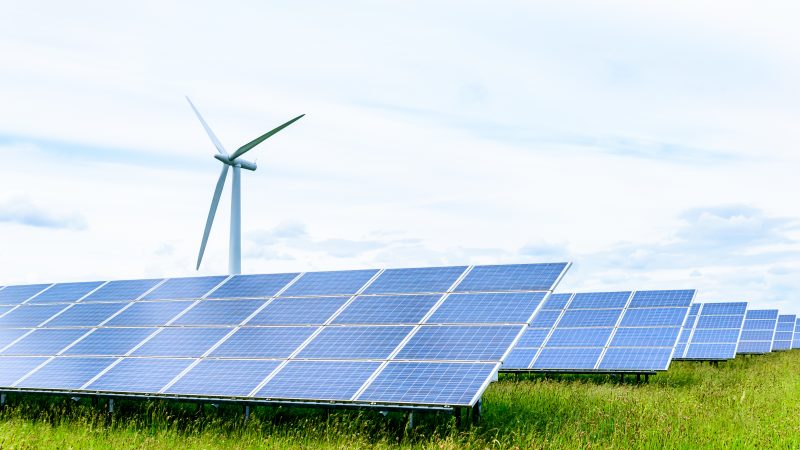
The idea of a widespread public backlash against net zero is a right-wing confection – a story told and sold by populist politicians and right-wing media. Across the UK, people of all backgrounds, incomes and politics care about climate change and want action to reduce emissions and tackle the impacts of extreme weather.
New research by IPPR and Persuasion UK finds that, in 2025, online news coverage of net zero was more than two and a half times as negative as public sentiment. Only around a quarter of the public have oppositional views towards net zero, yet negative online news made up around 71% of coverage.
Is it any wonder then that there is a huge perception gap between MPs and the public on this issue? MPs across the board significantly underestimate public support for climate policies. At least 57% of Labour MPs assume public support for net zero is lower than it is, and Labour MPs’ confidence in the electoral advantage of net zero policies has almost halved in the last few years. To be really clear, there has not been a steep drop in public support over this time. Climate policy is highly polarised at the level of elite politics – with the Conservatives and Reform UK against net zero – but this does not reflect where the public are at. Parties that are against net zero are at odds with the majority of voters.
Despite the negative media coverage and messages from Reform calling “net stupid zero” a “net killer”, most anti-net zero arguments aren’t landing. Only 15% of voters name net zero as one of the main culprits in rising energy bills – even Labour voters who are now considering voting Reform (about 3% of the electorate) don’t think it’s the main reason. People are generally much more likely to blame profiteering, privatisation and dependence on foreign gas. Similarly, the idea that net zero is driving industrial decline has very low resonance with Labour voters. Nor do voters – including Welsh voters – blame net zero for steelworks closures, such as in Port Talbot.
This isn’t to say that the public’s support for net zero is unshakeable. The biggest threat it faces is low confidence and lack of trust in government, meaning people feel it simply can’t be done. This particularly matters for policies where people are being asked to make changes to their lives, such as through consumer choices. The upside is that Labour has a strong track record on delivering on climate policies since the general election – they need to shout about this and take credit for it.
The other significant threat to net zero support is from political partisanship. As people move to Reform, they are more likely to become anti-net zero, not because Reform has won the arguments on this issue, but because their political allegiance sways their views. Only 4% of Labour-to-Reform switchers cite climate or net zero as a reason for changing their vote. But once someone is pro-Reform, and crucially, once they are anti-Labour, they are more likely to also be anti-net zero.
What does this mean for the government? Firstly, it should be clear that climate policy is electorally safe territory on which to be proactive. Reneging on net zero would be one of the most vote-losing positions Labour could adopt with its 2024 voters. Voters aren’t moving to Reform because of Labour’s climate policy, but softness on this issue could lose Labour votes to the left.
Secondly, the government needs to get climate up the agenda. The public support climate action, but it has fallen down their list of priorities. The more people care about an issue, the less likely they are to be swayed by partisan narratives. Government needs to focus on climate impacts, like flooding and extreme heat, and tie them back to net zero, while communicating more on the UK’s strong record in cutting emissions and increasing energy security.
Finally, climate policy can and should tackle cost-of-living pressures. The public doesn’t blame climate policy for high costs, and most people, across all incomes, don’t feel that net zero has a negative impact on their daily life. But the cost of living is the public’s number one concern. Climate policy can address this by supporting the uptake of clean consumer technologies that lower costs – such as helping homeowners switch to solar – and by better managing the upfront energy costs as the UK rebuilds its energy infrastructure.
Delivering under the pressure of right-wing attacks demands fresh confidence and commitment from government. There’s a risk that Labour capitulates to the right on climate. This would be a vote losing move. Instead, by highlighting the benefits of clean energy, protecting and supporting households, and tackling the impacts of extreme weather, Labour can confidently make climate policy a dividing line with the right, without fear of a voter backlash.


No comments:
Post a Comment