Hantavirus contact person to be brought to Germany for testing
06.05.2026, DPA

Photo: Alexander Woelfl/SDMG/dpa
A person who came into contact with hantavirus on the Hondius cruise ship is to be brought to Dusseldorf for medical testing, a hospital in the western German city said on Wednesday.
The University Hospital in Dusseldorf said the transportation and precautionary medical testing of the person would take place on Wednesday. It added that the person concerned is asymptomatic and presumed not to be infected with the virus.
"This is a contact person with no confirmed evidence of a hantavirus infection. Admission is purely precautionary for medical evaluation," the hospital emphasized.
Three passengers of the Hondius - which is anchored off Cape Verde after sailing across the Atlantic from Argentina with just under 150 people on board - have died amid an outbreak of hantavirus.
Another passenger has tested positive for the virus after returning to Switzerland.
According to the World Health Organization (WHO), three people suspected of having hantavirus have been evacuated from the cruise ship. WHO head Tedros Adhanom Ghebreyesus said they are on their way to receive medical treatment in the Netherlands.
It was initially unclear whether the person who is to be transported to Dusseldorf had been in contact with one of these three people.
The WHO is working with the operators of the Hondius to closely monitor the health of passengers and crew and to arrange evacuations if necessary.
"At this stage, the overall public health risk remains low," the WHO head wrote on X.
Human Spread Of Hantavirus Not Ruled Out On Cruise Ship
By Dominika Tomaszewska-Mortimer
Hantavirus victims on a ship in the Atlantic Ocean may have been infected prior to joining the cruise and human-to-human transmission on board cannot be ruled out – although it is rare – the World Health Organization (WHO) said on Tuesday.
The deadly disease outbreak has triggered an international public health response. Seven individuals of the 147 passengers and crew have been reported ill and three have died in what remains a fluid situation, WHO’s chief of Epidemic and Pandemic Preparedness and Prevention Dr Maria Van Kerkhove told reporters in Geneva.
“One patient is in intensive care in South Africa, although we understand that this patient is improving,” she said, while two patients still on board the ship, which is currently off the coast of Cabo Verde, are being prepared for medical evacuation to the Netherlands for treatment.
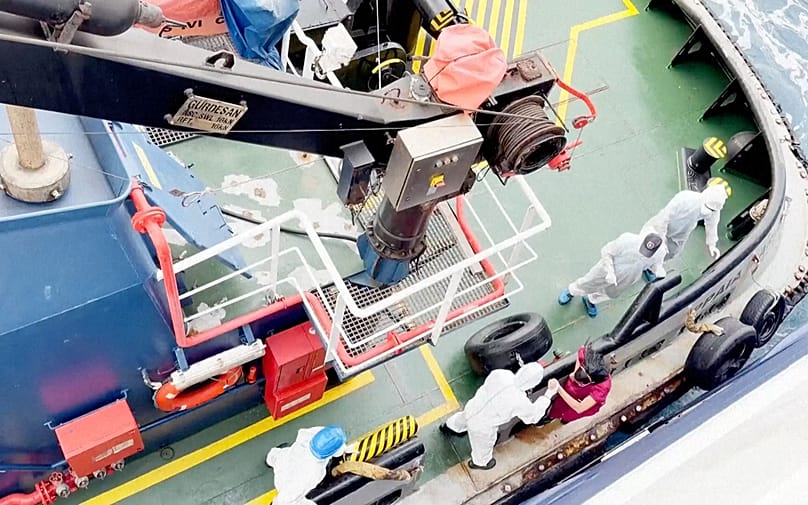
Dr Van Kerkhove stressed that the situation is being closely monitored. As a precaution, passengers have been asked to remain in their cabins while disinfection and other public health measures are carried out. Medical teams from Cabo Verde are providing support on board the ship.
“The plan is, and our highest priority is, to medically evacuate these two individuals” to make sure that they receive the required care, she insisted.
There are no other symptomatic patients on board. A third suspected case who reported a mild fever at one point “is currently doing well”, the WHO official said.
Spain cooperation
The ship is set to continue on to the Canary Islands. Ahead of arrival, Dr Van Kerkhove said that WHO is working with the Spanish authorities who “have said that they will welcome the ship to do a full epidemiologic investigation, full disinfection of the ship, and of course to assess the risk of the passengers”.
Hantaviruses are carried by rodents and can cause severe disease in humans. Thousands of infections are estimated to occur each year. People usually get infected through contact with infected rodents or their urine, their droppings, or their sali
Discussing the suspected origins of the outbreak, Dr Van Kerkhove said that the initial patients, a husband and wife, boarded the boat in Argentina.
“With the timing of the incubation period of hantavirus, which can be anywhere from one to six weeks, our assumption is that they were infected off the ship,” she said. “This was an expedition boat… many of the people on board were doing bird watching” and “seeing a lot of different wildlife.”
The cruise stopped at several islands off the coast of Africa, Dr Van Kerkhove continued, some of which “have a lot of rodents”.
“There could be some source of infection on the islands as well for some of the other suspect cases,” she said. “However, we do believe that there may be some human-to-human transmission that’s happening among the really close contacts” such as the husband and wife and others who have shared cabins.
Past outbreak lessons
Transmission of infection between people is uncommon, but limited spread has been reported among close contacts in previous outbreaks of the Andes virus, which is part of the hantavirus group.
There are no specific treatments for hantavirus other than supportive care.
“Typically, people will develop respiratory symptoms, so respiratory support is really important,” Dr Van Kerkhove said, stressing that some people require mechanical ventilation. Intensive care may be required, especially if the condition of patients deteriorates.
Directing her message at the people on the boat, where more than 20 nationalities are represented, the WHO official said: “We just want you to know we are working with the ship’s operators” and with the travellers’ countries of origin.
“We hear you. We know that you are scared,” she said. “We’re trying to make sure that the ship has as much information as they can…that you’re cared for and of course, that you get home safely.”
Hantavirus cruise highlights the environmental risks of ‘last chance tourism’, scientists warn
By Ruth Wright with AP
Published on 06/05/2026 - EURONEWS
Trips to Antarctica “need to be regulated appropriately, as you would with any of the world’s sensitive and precious ecological sites,” says one expert.
Some of the most remote destinations on Earth are irreversibly melting away, giving rise to 'last chance tourism' - an industry built around the desire to see places like Antarctica before they disappear.
But a deadly outbreak of the rare hantavirus aboard a Dutch cruise ship has experts warning that tourists can inadvertently contaminate very fragile ecosystems.
Hantavirus is confirmed to have killed two people and suspected to have killed another onboard the MV Hondius, a cruise ship which left Argentina on 1 April and visited Antarctica and several isolated islands.
The ship has been at the centre of an international health scare since Saturday, after it was revealed that the rare disease, generally spread from infected rodents, was at the centre of an outbreak onboard the "ice-strengthened cruise ship".
The 107-metre polar explorer vessel is currently off the coast of Cape Verde, awaiting the evacuation of passengers who require medical attention. From there, the ship is hoping to sail to the Canary Islands but local authorities have not yet granted permission for the boat to dock there.
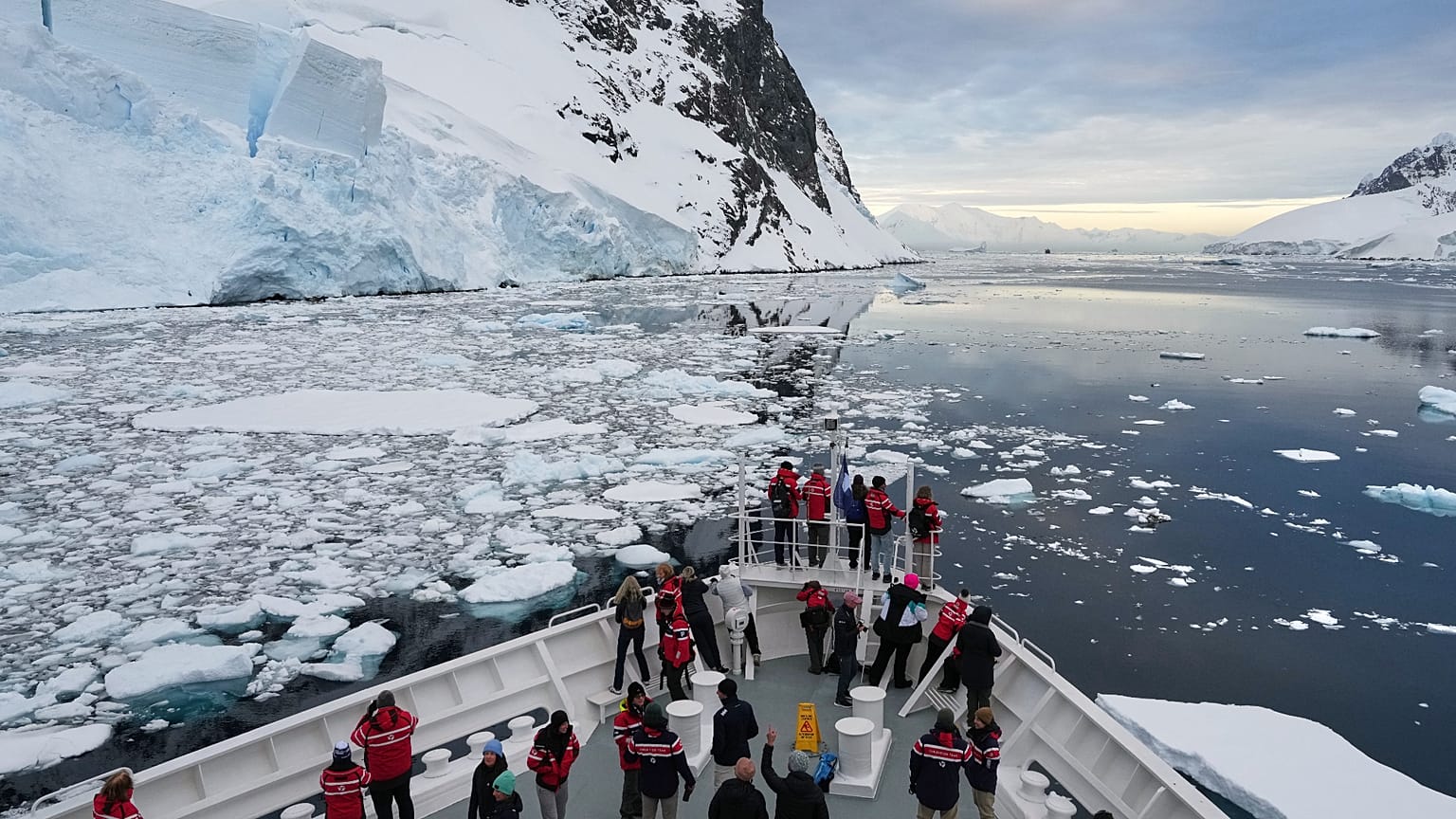
Tourism to the bottom of the world is soaring. Experts warn that with more visitors comes an increased risk of contamination, illness and other damage to the continent.
While visitor numbers are still small – in part due to the high costs and time it can take – they are growing so fast that scientists and environmentalists are sounding alarms.
Most expeditions head to the Antarctic Peninsula, one of the fastest-warming places in the world. From 2002 to 2020, roughly 149 billion metric tons (164 billion tons) of Antarctic ice melted per year, according to the National Aeronautics and Space Administration.
A common route is to voyage south from Argentina toward Antarctica before heading north up the coast of Africa – the same route taken by the cruise ship MV Hondius.
Bird flu has spread to Antarctica
Officials have not indicated any evidence of contamination from the MV Hondius.
However, flocks of migratory birds brought avian flu from South America to Antarctica in recent years, according to the US Centers for Disease Control and Prevention.
That outbreak prompted the International Association of Antarctica Tour Operators and others to harden rules for tourists’ conduct and hygiene to protect visitors from being contaminated.
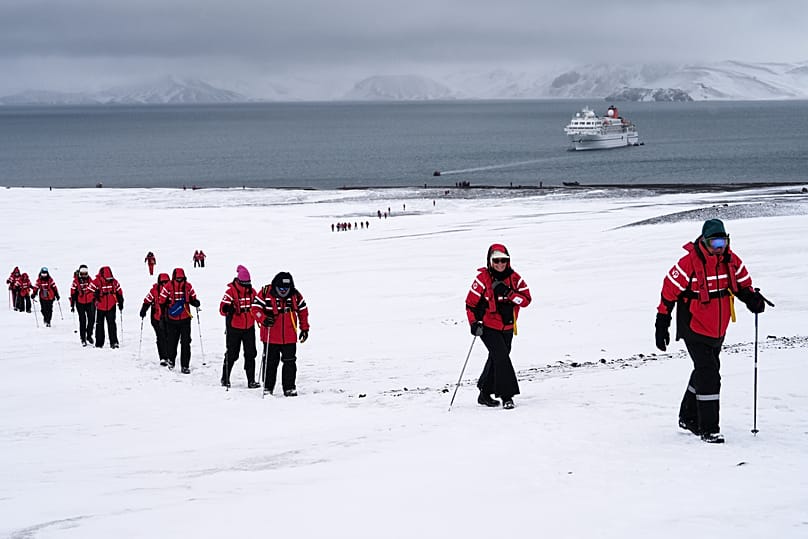
To protect the fragile ecosystem from invasive species large and microscopic, visitors are told to stay away from animals and to avoid touching the ground with anything but their feet.
“There are rules that people are bound by when they’re heading south,” Nielsen said, describing her five voyages as a former guide. Crews and passengers use vacuums, disinfectants and brushes to scrub shoes and equipment clear of bugs, feathers, seeds and microbe-carrying dirt.
“Between the tongues and the laces of the boots you can find a lot of things,” she said.
Cruise ships have been struck by outbreaks of diseases like norovirus, which can spread quickly in a ship's close quarters. In 2020, a COVID-19 outbreak on the Diamond Princess turned the cruise ship into an incubator for the then-mysterious virus.
Hantavirus usually spreads by inhaling contaminated rodent droppings.
Explosive growth of trips to the southern continent
In 2024, more than 80,000 tourists touched down on the vast ice-cloaked continent and 36,000 viewed from the safety of ships, according to data collected by the International Association of Antarctica Tour Operators.
The International Union of Concerned Scientists estimates that tourism to Antarctica has grown tenfold in the past 30 years.
That number could rise further in the next decade as costs fall with more ice-capable hulls hitting the water and technological advances, says Hanne Nielsen, a senior lecturer of Antarctic law at the University of Tasmania. Her colleagues at the university estimate the annual figure could triple or quadruple to over 400,000 visits in that time.
The Hondius' island hopping cruise
WHO is investigating possible human-to-human transmission on the cruise ship, said Dr. Maria Van Kerkhove, WHO’s director of epidemic and pandemic preparedness. Officials suspect the first infected person likely contracted the virus before boarding, she said, and officials have been told there are no rats on board.
Antarctica is governed by the Antarctic Treaty, which in 1959 enshrined the territory as a scientific preserve used only for peaceful purposes. A series of rules that followed “aim to ensure that all visits, regardless of location, do not adversely impact the Antarctic environment or its scientific and aesthetic values,” according to the treaty’s secretariat.
Companies and scientific ventures voluntarily comply with biosecurity guidelines and submit environmental impact assessments for Antarctic operations.
RelatedCruises have doubled in size since 2000: NGO calls for €50 tax to stem ‘out of control’ emissions
The treaty was written when tourism numbers were much lower, Christian said.
“Activity needs to be regulated appropriately, as you would with any of the world’s sensitive and precious ecological sites,” Christian said from Hiroshima, Japan, where she was preparing for an Antarctic Treaty Consultative Meeting. There she'll join calls to strengthen protections for Antarctica's penguins, whales, seabirds, seals and krill — tiny creatures at the base of the food chain.
For now, the lure of the frozen frontier continues to draw visitors.
“You can put a footprint in Antarctica and it’s still there 50 years later,” Christian said.

No comments:
Post a Comment