IMO Adopts World’s Largest Emission Control Area and Other Issues at MPEC
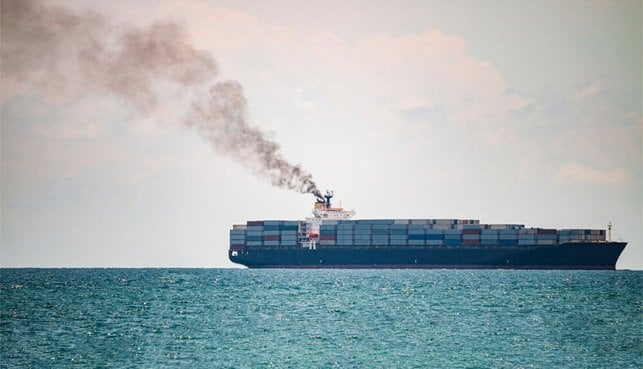
While much of the Marine Environment Protection Committee (MPEC 84) was bogged down with political positioning and stalling tactics, the International Maritime Organization (IMO), however, reports decisions on a number of key initiatives, including the North-East Atlantic Control Area (ECA) as well as efforts on plastics and ballast water. The new Atlantic ECA is being billed as the world’s largest emission control area, extending the efforts in Northern Europe with a far broader reach.
The efforts for the ECA had begun with 27 EU member states and had been gaining support as it moved through the process at the IMO. Iceland, the United Kingdom, and the European Commission also endorsed the launch of the ECA, which was formalized during this week’s MPEC session.
The entry into force date was set as September 1, 2027, with the ECA taking effect 12 months later in 2028. It covers an area extending 200 nautical miles into the ocean and a region spanning from Greenland, Iceland, the Faroe Islands in the north, to encompass Ireland, the mainland of the United Kingdom, France, Spain, and Portugal. It will also link the existing ECAs in the Baltic, North Sea, and Mediterranean and connect them with the recently approved ECAs in the Norwegian Sea and Canadian Arctic.
The adoption introduces stricter emission limits on nitrogen oxides (NOx) and sulfur oxides (SOx) as well as particulate matter. According to the IMO, ships within the ECA will have to use fuel with a sulfur content of no more than 0.10 percent.
The other key initiatives adopted by MPEC include a strategy and action plan to address marine plastic litter from ships. It focuses on work to improve port reception facilities and waste processing. It updates and supersedes earlier actions in 2021 and 2025.
The focus on plastics also extends to a code for transporting plastic pellets (i.e. nurdles). They have become a key focus after several high-profile incidents where they were released into the environment. The committee agreed to develop a mandatory code governing the maritime transport of plastic pellets in freight containers.
MPEC also adopted a package of amendments to the Ballast Water Management Convention. The guidelines were revised along with the requirements for the development of ballast water management plans.
Work was also advanced on underwater radiated noise. MPEC agreed in principle to extend the experience-building phase by two years to the end of 2028. The aim is to address the barriers member states face in applying the guidelines that had previously been adopted for reducing underwater noise from shipping that is harmful to marine life.
IMO Delays Decisions but Maps Steps for Net-Zero Framework at Close of MPEC
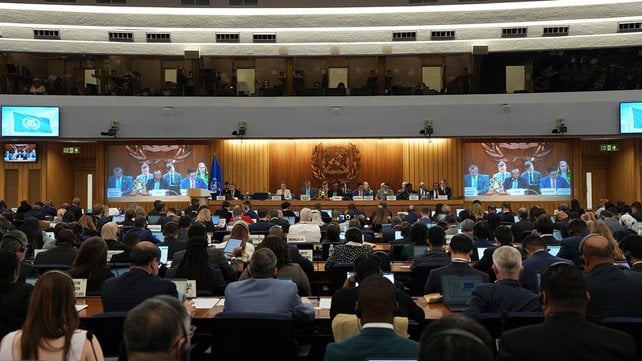
Two weeks of hard-fought discussions at the International Maritime Organization (IMO) on the approach to the Net-Zero Framework (NZF) and efforts to control greenhouse gas emissions came to a close on Friday with a general consensus that there was progress. With the opposition of the United States and others, however, the meeting concluded with the agreement to have more meetings, without selecting a framework.
The first week consisted of a working group that set the framework for constructive discussion and moved forward some of the basic principles. The full Marine Environment Protection Committee meeting (MPEC 84) took place this week, with all member states as well as a lot of backroom discussions and sidetracks before the closing session on Friday, May 1. The conclusion was that the working groups would reconvene in September and November, ahead of the next MPEC session starting on November 30 and a Second Extraordinary Session on December 4.
“We are back on track, but we have to rebuild trust,” said IMO Secretary-General Arsenio Dominguez at the conclusion of the sessions on Friday. “I encourage you to maintain this momentum through your intersessional work and to prepare submissions that can bring the membership together,” he told member states in his closing remarks.
The IMO highlighted constructive discussions centered on the adoption of “mid-term measures” on emissions. It noted that multiple proposals had been tabled while highlighting that the intersessional working group had made progress and worked toward a broad consensus.
Many groups broadly agreed that there was progress with the World Shipping Council, for example, saying the meeting was “encouraging.” WSC President & CEO Joe Kramek said, “These are complex and, at times, difficult discussions. But continued engagement from governments is essential to keep progress moving.”
Thomas Kazakos, Secretary General of the International Chamber of Shipping, also called it “a constructive dialogue.” The ICS said it welcomed the decision to convene additional negotiations in September.
The full number of member states supporting the Net Zero Framework varies by report but is generally set at between 55 and 59. The feeling was that “the pendulum was swinging back” with support building. Yet, the IMO failed to settle on a single structure, saying it would continue to consider alternatives.
Last fall, Saudi Arabia succeeded in stalling the discussions with a motion to table the discussions for another year. The United States, Liberia, Panama, and others mounted strong opposition.
The United States continued its strong opposition, calling the focus on alternative fuel, which it insists does not exist, flawed, and the pricing structure for carbon emissions a tax on consumers. The U.S. expanded its efforts, including the attendance of the newly appointed chairman of the Federal Maritime Commission, Laura DiBella. She released a statement “ensuring full FMC attention on the serious economic harm that would be caused by the NZF.” She underscored the need to consider viable alternatives submitted by several other countries while reiterating the Trump administration’s position that a carbon price “would force American consumers to pay a carbon tax for shipments transiting international waters.”
DiBella said despite the persistence of a “minority bloc” that had previously overwhelmed the “silent majority,” the “silent majority” had found its voice this week. The United States and its allies succeeded in keeping an alternative proposal from Liberia under discussion. At the closing, the chair of MPEC confirmed that they would continue to consider alternatives while telling member states that they could submit further revisions for consideration or additional proposals.
The U.S. State Department issued a statement saying it had “successfully delivered … by forcing the organization to negotiate on alternative proposals that will not harm American consumers and businesses.” It said it had forced the body to authorize future negotiations that examine multiple alternative proposals while continuing to call the NZF “fundamentally flawed.” It took credit along with Saudi Arabia, Liberia, Panama, and Argentina for “successfully brokering a diplomatic path forward” to further discuss alternative proposals, including those from Japan, Panama, Argentina, and Liberia.
"The USA and their allied petrostates weren't successful in stopping climate negotiations at the IMO,” says Lukas Leppert, Policy Officer at NABU (Germany's largest environmental association, Nature And Biodiversity Conservation Union). “However, they obstruct the final adoption of necessary and agreed measures.”
Vanuatu and other small Pacific island nations were among the strongest proponents continuing their push, saying decisive action is needed. In its official statement to the IMO, Vanuatu stressed that the decarbonization of international shipping is not optional but “a strategic necessity for the Pacific,” noting the immense vulnerability of Pacific Island countries to climate change impacts.
“What started off as a legitimate framework, with a carbon pricing at its core for a chance at a just transition, has been weakened along the way,” said Anaïs Rios, Senior Shipping Policy Officer, Seas At Risk. It was among the groups criticizing the delay, saying shipping must play its fair share in the efforts to reduce emissions.
Member states, including Australia, also expressed concern at the endless discussions and lack of a consensus and path forward. It said it fears these steps are just setting the process back.
For now, the agreement was to keep discussing and reviewing proposals. However, hope was building that the member states were moving forward and that agreements might be reached by the end of the year.

No comments:
Post a Comment