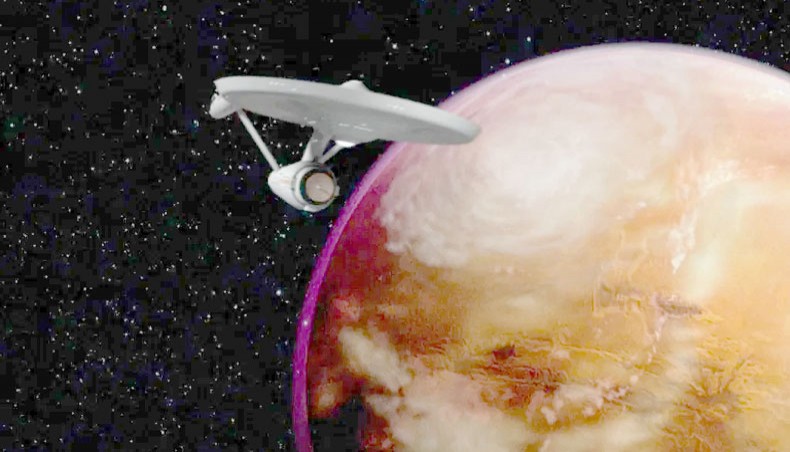
Showing posts sorted by relevance for query CAPITALISM IN SPACE. Sort by date Show all posts

Thursday, September 21, 2006

Space Litter


Do we now have to start a campaign to stop litter in space? Its bad enough on our streets and in our parks. Now it has downed the Atlantis return mission. Not once, not twice, but three times. Mysterious objects in space, UFOs, or that's what happens when you flush your garbage into the galaxy. Shuttle Landing Delay: UFO or Litter?

Sheesh. How do they know it ain't the three missing bolts that floated off during the repairs. Of course space litter could also be from exploded satellites from the undeclared war in space.

Litter, garbage, the result of the planned obsolescence the throw away culture of of capitalism in space. And wait till we get more space tourists. More litter. Duck here comes another one.....

Tossed in space, litter-ally

It's a junkyard out there in space, and sometimes astronauts accidentally contribute to the litter.

In 1965, the first American spacewalker, Ed White, lost a spare glove when he went outside for the first time. From that time on, astronauts have accidentally added some of the more unusual items to the 100,000 pieces of space trash that circle Earth.

In July, spacewalker Piers Sellers sheepishly reported that he lost a spatula. Nicknamed "spatsat" by space junk watchers, it will return to Earth in a fireball early next month.

This week the Atlantis astronauts made their own contributions to the space debris in low orbit when a couple of bolts escaped from the addition they were connecting to the International Space Station.


ESA Science & Technology: Space is big, but not big enough

According to Douglas Adams, in his famous book The Hitch-Hikers Guide to the Galaxy, space is big. However, it seems near-Earth space is not big enough. In December 2001, the Space Shuttle pushed the International Space Station away from a discarded Russian rocket booster that was due to pass uncomfortably close. Space litter is a growing problem but smarter satellite design may help in the future

MSW Management | Beyond The Pail

"Marking" litter is currently an especially acute problem in space. When we earthlings began our space exploration, we followed an age-old tradition. Pioneers and explorers have always done whatever it takes to "get there" the first time and have given little or no thought to what they leave behind or no thought at all to cleaning up after themselves. Note that the Mars record to date is that two out of every three "lander" missions have produced nothing but space junk!

When, however, standard roadside litter is compared to the discard of "official" EPA hazardous wastes - lead-acid car batteries or industrial canisters full of used solvents or nuclear wastes - many of us also believe that the litter we're used to seeing takes a secondary place.

But what happens to this view when items common in refuse and litter - such as French fries or plastic bags - get frozen solid and hit you or anything else at a speed of 20,000 ft/sec? If you are traveling in the same direction at the same speed, the litter will just float alongside; but if you are going at some other angle, and especially if you are moving in the opposite direction, it could shoot right through you! Ouch!

COSMIC LITTER:
Japan Moves to Counter Space Debris (June 30, 1998)


Space is getting to be a crowded neighborhood. (Courtesy of NASDA)

Japan is taking steps to clean up the space debris that is hurtling around Earth at tremendous speeds, threatening to collide with satellites and render them useless. There are said to be about 35 million objects, large and small, that can be classified as space debris, including pieces of rockets and satellites launched in the past. Japan's countermeasures include construction of a facility to monitor debris by radar and a telescope to help skirt collisions. In the future, Japan hopes to apply its strength in unmanned robot technology to develop a satellite that could collect the litter flying around Earth.

SEE:

Space

NASA


Space Station


Find blog posts, photos, events and more off-site about:
, , , , , , , , , ,
, , , , , , ,

Saturday, April 11, 2020

THE WEEK OF THE PINK SUPER MOON 
TRUMP PRIVATIZES LUNA

President Trump has decided to turn his attention to mining the moon during this difficult time for the nation.

According to documents released by the White House, Donald Trump paused his efforts around the growing coronavirus crisis to sign an executive order.

This order will leave the US free to mine the moon for resources.

The document says the order rejects the 1979 global agreement known as the Moon Treaty .


The Moon Treaty of 1979It was deliberated and developed by the Legal Subcommittee for the Committee on the Peaceful Uses of Outer Space (COPUOS) from 1972 to 1979. ... Specifically, the Moon Treaty applies to the Moon and other celestial bodies in the solar system excluding the Earth.Oct 24, 2011

The Moon Treaty: failed international law ... - The Space Review


This treaty says any activity in space should conform with international law.
The order states: "Americans should have the right to engage in commercial exploration, recovery, and use of resources in outer space.

"Outer space is a legally and physically unique domain of human activity, and the United States does not view it as a global commons."

Trump now wants to 'mine the moon for resources' because causing havoc on Earth obviously isn't enough for him

INDEPENDENT UK

Picture: CHRIS KLEPONIS / POOL/iStock/Getty/Twitter

In news that no one expected to read in the middle of a pandemic, Donald Trump has signed an executive order to mine the moon for resources.

Yes, that is something that the president of the United States actually did while hundreds of thousands of his citizens are being impacted by a deadly virus. Priorities!

In a document released by the White House, Trump's order controversially rejects the 1979 global Moon Treaty agreement, which stated that any activity in space should abide by international law.

According to Trump's order, it states that:

Americans should have the right to engage in commercial exploration, recovery, and use of resources in outer space.

Outer space is a legally and physically unique domain of human activity, and the United States does not view it as a global commons.

In response, the Russian space agency has accused Trump of trying to 'privatise space.' In a statement, Roscosmos said:

Attempts to expropriate outer space and aggressive plans to actually seize territories of other planets hardly set the countries (on course for) fruitful cooperation.

For some, this may bring back memories of the Cold War 'space race' between the US and the Soviet Union but for many, they have just been left baffled that Trump would choose to concentrate on this during one of the most testing periods the world has experienced for a generation.

This isn't a million miles away from the premise of the sci-fi film Moon, where mankind attempts to harvest minerals from our lunar friend. Even that movies director, Duncan Jones, was a bit taken aback when he heard this news.

Let's not forget that in June 2018, Donald Trump tweeted that the moon was 'a part of Mars' so we cannot wait to see how this is going to play out.

SEE
DECEPTION POINT DAN BROWN

THE MOON IS A HARSH MISTRESS ROBERT HEINLEIN 


CAPITALISM IN SPACE 


Moon Treaty - Wikipedia
https://en.wikipedia.org › wiki › Moon_Treaty

The Agreement Governing the Activities of States on the Moon and Other Celestial Bodies, better known as the Moon Treaty or Moon Agreement, is a multilateral treaty ... After ten more years of negotiations, the Moon Treaty was created in 1979 as a ... It proposed to do so by having the state parties produce an "international ...
History · ‎Provisions · ‎Legal status · ‎List of parties

Moon Agreement - unoosa
https://www.unoosa.org › oosa › ourwork › spacelaw › treaties › intromoo...

The Agreement was adopted by the General Assembly in 1979 in resolution 34/68. ... of the Outer Space Treaty as applied to the Moon and other celestial bodies, ... are the common heritage of mankind and that an international regime should be ... on Outer Space · Space Object Register · Publications · Did you know?

Outer Space - United Nations Treaty Collection
https://treaties.un.org › Pages › ViewDetails

Agreement governing the Activities of States on the Moon and Other Celestial ... 34/68of the General Assembly of the United Nations dated 5 December 1979. ... which States are obliged to observe in their international relations, as set forth in ...

The 1979 Moon Agreement - A Space Law analysis on Space ...
https://www.spacelegalissues.com › the-1979-moon-agreement

Jul 17, 2019 - The 1979 Moon Agreement reaffirms and elaborates on many of the ... This text is the genesis of what has become known as “Space Law”. ... not yet parties to the international treaties governing the uses of outer space to ratify ...

Moon Treaty - McGill University
https://www.mcgill.ca › iasl › centre › research › space-law › moon-treaty

The "Moon Treaty" Opened for signature at New York on 18 December 1979 ... International co-operation in pursuance of this Agreement should be as wide as ... prejudice to the international regime referred to in paragraph 5 of this article.

Agreement Governing the Activities of States on the Moon and ...
https://www.nti.org › learn › treaties-and-regimes › agreement-governing-...

Oct 26, 2011 - The Moon Agreement was signed in December 1979 following an initiative by the ... The Moon Agreement supplements the Outer Space Treaty and ... as well as the public and the international scientific community, to the ...

The Moon Agreement of 1979: What Relevance to Space ...
https://www.peacepalacelibrary.nl › 2010/09 › the-moon-agreement-of-19...

Sep 3, 2010 - It also expresses a desire to prevent the Moon from becoming a source of international conflict. As a follow-on to the Outer Space Treaty, the ...

• Chart: The Countries That Signed The Moon Treaty | Statista
https://www.statista.com › Topics › Space exploration

Jul 19, 2019 - The Agreement Governing the Activities of States on the Moon and ... also known as the Moon Treaty or Moon Agreement, was created in 1979 to ... It also seeks to avoid the Moon becoming a space for international conflict.


Aug 19, 2015 - Hans-Kurt Lange, who worked as an illustrator in NASA's Future Projects Division, modeled 2001's space suits on NASA's, using the same ...


Mar 27, 1997 - The genius is not in how much Stanley Kubrick does in "2001: A Space Odyssey," but in how little. This is the work of an artist so sublimely ...

Apr 4, 2018 - Kubrick may have set out to make a science-fiction film, but 2001: A Space Odyssey, which turns 50 this week, is closer to home than we think, ...

Monday, March 29, 2021

 LANGUAGE OF SPACE EXPLORATION RHETORIC CAN AFFECT PUBLIC PERCEPTION OF SPACE ACTIVITIES

Would we want futuristic Mars settlements to operate like modern-day Earth towns, or could we do better?

UNDARK

By Joelle Renstrom

Last month, NASA’s Perseverance rover landed on the surface of Mars to much fanfare, just days after probes from the UAE and China entered orbit around the Red Planet. The surge in Martian traffic symbolizes major advancements in space exploration. It also presents an opportune moment to step back and consider not only what humans do in space, but how we do it — including the words we use to describe human activities in space.

The conversation around the language of space exploration has already begun. NASA, for instance, has been rooting out the gendered language that has plagued America’s space program for decades. Instead of using “manned” to describe human space missions, it has shifted to using gender-neutral terms like “piloted” or “crewed.” But our scrutiny of language shouldn’t stop there. Other words and phrases, particularly those that invoke capitalism or colonialism, should receive the same treatment.

To some extent, language influences the way we think and understand the world around us. A dramatic example comes from the Pirahã tribe of the Brazilian Amazon, whose language contains very few terms for describing numbers or time. A capitalist culture in which time equals money likely wouldn’t make sense to them. Similarly, language likely affects humans’ thoughts and beliefs about outer space. The words scientists and writers use to describe space exploration may influence who feels included in these endeavors — both as direct participants and as benefactors — and alter the way people interact with the cosmos.

Take, for example, John F. Kennedy’s 1962 Moon Speech, in which he three times used the words “conquer” and “conquest.” While Kennedy’s rhetoric was intended to bolster U.S. morale in the space race against the USSR, the view of outer space as a venue for conquest evokes subjugation and exploitation and exemplifies an attitude that has resulted in much destruction on Earth. By definition, conquering involves an assertion of power and mastery, often through violence. Similarly, former President Donald Trump is the most recent American president to use the term “Manifest Destiny” to describe his motives for exploring space, tapping into a philosophy that suggests humanity’s grand purpose is to expand and conquer, regardless of who or what stands in the way.

In a recent white paper, a group comprising subject-matter experts at NASA and other institutions warned of the hazards of invoking colonial language and practice in space exploration. “The language we use around exploration can really lead or detract from who gets involved and why they get involved,” Natalie B. Treviño, one of the paper’s coauthors, told me.

Treviño, who researched decolonial theory and space exploration for her Ph.D. at Western University in Canada, is a member of an equity, diversity, and inclusion working group that makes equity-related recommendations in the planetary science research community. She notes that certain words and phrases can be particularly alienating for Indigenous people. “How is an Indigenous child on a reserve in North America supposed to connect with space exploration if the language is the same language that led to the genocide of his people?”


Perseverance rover's MASTCAM-Z has captured its first high-resolution panorama of its landing site in the Jezero Crater on Mars. The image will help the mission team narrow down rocks of interest to return to Earth for study. Image: NASA

In a 2020 perspective for Nature Astronomy, Aparna Venkatesan of the University of San Francisco, also a coauthor of the recent white paper, wrote with colleagues that in the dialects of the Indigenous Lakota and Dakota, the concept of thought being rooted in language, space, and place “is epitomized by the often used phrase mitakuye oyasin, explained by Lakota elders as a philosophy that reminds everyone that we all come from one source and so need to respect each other to maintain wolakota or peace.” It’s difficult, if not impossible, to reconcile the ideas of wolakota and conquest, especially given the increasing weaponization of space.

Treviño argues that the word “frontier,” the guiding metaphor for American space exploration, is also problematic. The crossing of new frontiers — because frontiers always must be pushed or crossed — is inevitably “tied to nationalism, and nationalism is tied to conquest, and conquest is tied to death,” she says. When humans push frontiers, they often do so with the belief that it is their right as individuals or as representatives of a country or state. Throughout history, this sense of entitlement has been taken as license to wipe out Indigenous people and fauna, pollute rivers, and otherwise demonstrate ownership and mastery.

Foundational concepts such as “conquest,” “frontier,” and “Manifest Destiny,” can affect not only how people think about space but also how they act toward it. In their Nature Astronomy paper, Venkatesan and her colleagues argue that in addition to promoting colonialist ideals, such concepts promote space capitalism and a lack of regulation. Potent symbols of this trend are the more than 3,000 operational satellites currently orbiting Earth, many of them privately owned. For people who use the stars to navigate, or who incorporate celestial bodies into cultural, spiritual, and religious practices, this intrusion into the skies threatens to compromise a way of life. And it is a sobering reminder that space and the sky don’t really belong to everyone after all. The lack of protections and regulations for the night sky — as well as monetary incentives for commercial satellites, which make up almost 80 percent of U.S. satellites — make it vulnerable to the highest bidder.

“Treating space as the ‘Wild West’ frontier that requires conquering continues to incentivize claiming by those who are well-resourced,” writes Venkatesan and her colleagues. In fact, the staking of claims in space has already begun, with space tourism predicted to develop into a lucrative industry, and with the U.S. government opening the doors to commercial endeavors such as the mining of asteroids and the colonization of Mars.

While scientists often devote themselves to questions of feasibility, scalability, and affordability, they rarely give as much thought and effort to questions of inclusivity and morality. “In the space community, when ethics or values or planetary protection come up, they’re immediately coded as feminine and they’re immediately coded as not as important,” Treviño told me. For many scientists, she says, “thinking about ethics isn’t nearly as important as building the rovers that are going to go to the moon.”

The “act first, ask questions later” approach typifies the mindset that has led some to argue that humans need to colonize space to survive. But attitudes and ethics cannot be applied retroactively. Science might get people to Mars, but without ethics, what are the chances of survival?

In Kennedy’s words, space exploration is our species’ most “dangerous and greatest adventure.” It makes sense to address factors that influence human behavior in space — and that will ultimately determine our odds of success there — sooner rather than later. That includes asking everyone, not just NASA or Elon Musk, what we want an interplanetary future of humanity to look like. Would we want futuristic Mars settlements to operate like modern-day Earth towns, or could we do better?

Crafting a code of ethics for space exploration may seem daunting, but our words offer a potential starting point. Space is one of few places humans have gone that thus far remains peaceful. Why, then, use the language of war, imperialism, or colonialism to describe human actions there? Eliminating the language of genocide and subordination from the space discourse is one easy step anyone can take to encourage the great leaps for humankind that we dream of for the future, on Earth and beyond.

Joelle Renstrom is a science writer who focuses on robots, AI, and space exploration. She teaches at Boston University.

This article was originally published on Undark. Read the original article.

Friday, March 12, 2021

Privatised space colonisation will be disastrous

As private corporations begin to stake claims and enclose the commons of space, the rest of us lose our rights to it. We must avoid this outcome at all costs. Space cannot be privatised or exploited for profit, but must remain a commons for the benefit of all humanity.

by Elic Weitzel | Published: 00:00, Mar 12,2021


— Dissident Voice/Memory-alpha

ELON Musk and his company SpaceX have become a regular feature in news cycles. SpaceX succeeded in landing a team of astronauts on the International Space Station in November 2020, in partnership with the National Aeronautics and Space Administration. The next month, the company lost a rocket in an explosion while attempting to land after a test flight. Another rocket exploded during landing in early February. In mid-February, SpaceX launched sixty satellites as part of the Starlink programme to provide broadband internet access to the globe, and is now working to double the speed of this internet service and extend it to most of the planet by the end of 2021. Additional crewed missions to the International Space Station are planned for the coming months, as is a four-person civilian-only space voyage.

These accomplishments and setbacks from SpaceX and the world’s richest man are the most recent in a long series of launches by the first private company to engage in spaceflight. SpaceX is pushing many new boundaries to popular acclaim, but they are also simply the most recent continuation of a decades-long effort to privatise space travel, albeit an effort that is accelerating in recent years.

Yet, while SpaceX may be developing beneficial new technologies and finding ways to lower the costs of space travel, their free-market perspective on space exploration will not provide the benefits they claim. Such privatisation will only reproduce the earth’s current exploitative economy and environmental destruction in outer space.

Our climate and economic crises today are not inevitable outcomes of human existence, or of human population growth as other space-obsessed technocrats like Jeff Bezos have argued. They are instead the result of a particular set of social and economic forces, mostly arising during the last five centuries, which constitute capitalism. Capitalism requires the exploitation of both nature and people, leads to outward expansion and colonisation, and is really the root cause of climate change.

Yet instead of working to develop new social and economic structures here on earth, Elon Musk is planning the colonisation of Mars explicitly as a backup plan for earth. He is not alone, as Jeff Bezos’s own aerospace company, Blue Origin, operates with the long-term goal of outsourcing destructive manufacturing to space in order to save earth by shifting the exploitation of nature and people into orbit. With plans such as these, SpaceX and related companies are advocating escapism instead of dealing with the reality of deteriorating conditions on our own planet. By failing to acknowledge that privatising industry and taking advantage of workers and the environment are the true causes of these earthly crises, SpaceX will inadvertently reproduce the same conditions that are destroying the earth in space.

We need not engage in speculation informed by science fiction to know this, either. History is full of examples of privatised, for-profit exploration and colonisation that have caused more harm than good. For some of the clearest lessons, we can look to the colonisation of what is now the United States, just a few hundred years ago.

***

THIS past autumn marked the four hundredth anniversary of the Mayflower landing on the shores of what is now Massachusetts. Stories of this ship and its pilgrim passengers are familiar to many people who were educated in the American school system. As the common narrative goes, these Puritan settlers sought freedom from religious persecution in England, and thus set sail to the ‘new world.’ The Mayflower arrived in North America, and finding the land beautiful and productive, the pilgrims ‘fell upon their knees and blessed the God of heaven’ for delivering them to safety and freedom.

Yet key details of this story were not emphasised in our elementary school educations, such as the motivations behind the actual owners of the Mayflower. The pilgrims did not own the ship they sailed upon, nor could they have afforded the voyage on their own. They needed investors, and the financial backers of this journey were not religious separatists seeking freedom, but some of the modern world’s first international venture capitalists. They funded the pilgrims in the hope that they could reap the rewards of a profitable colony in North America capable of yielding cheap goods for European markets: largely fish, timber, and furs. The pilgrims who established a colony at Plymouth may have been seeking liberty, but the financiers who backed them hardly cared. They were just in it for the money, and there was a lot to be made.


There was also a lot of damage to be done. Within fifteen years of the Mayflower making landfall, epidemic disease had decimated the indigenous population of New England. Wars and genocide followed, with indigenous peoples being killed and enslaved across the continent, before largely being forced onto reservations which still experience shockingly poor conditions today.

All the while, the land of New England was gradually being divided into privately owned parcels of land in a process known as enclosure. When European colonists arrived in New England, they entered into a variety of agreements with native peoples pertaining to land rights. European settlers often paid indigenous tribes or leaders for the right to limited use of tribal land, but the colonists often interpreted these transactions as wholesale, permanent purchase of land. These lands which were often communally owned by the tribe and managed as a ‘commons’ — land or resources collectively owned by a community — were slowly carved up into privately owned parcels over the course of the 17th and 18th centuries.

This privatisation of land ownership and the incorporation of colonial New England into a globalised market economy led to profound environmental destruction nearly immediately. Settlers cleared forests for timber and farmland, nearly deforesting much of New England by the early 20th century. Beaver and deer were all but exterminated in the region by the 19th century, hunted for their pelts which were sold for profit in European markets. As early as 1646, Portsmouth, Rhode Island established the first prohibitions on hunting deer out of season, recognising that the species’ population was dwindling. All of this local extirpation and deforestation occurred within a few decades of European arrival in New England, while the indigenous peoples of the region had hunted deer and beaver and managed their forests sustainably for millennia prior.

Exploitation of labour arose alongside this exploitation of nature. European settlers in 17th century New England exploited indigenous hunters to acquire beaver furs, obtaining these pelts at little cost to themselves through the exchange of cheap cloth, metal trinkets, and shell beads. Merchants then in turn exploited these European settlers, paying only a small fraction of what these furs would be worth, and manufacturers back in Europe exploited their workers, paying them less than their labour was worth to produce products like fashionable felt hats for sale to the high-society aristocrats of the time.

This exploitation of nature and labour is not a bug, but a feature of privatised, for-profit capitalist ventures. It is inherent in a capitalist economic model, as history has shown time and again. If profit maximisation for the benefit of investors and owners is the goal, as it was for the owners of the Mayflower and as it is for SpaceX, the necessary materials and labour must be cheaply obtained. If they are not cheap, earnings will suffer.


Colonisation is a short-sighted solution to this problem. Colonialist companies and nations incorporate peripheral locations into their global economic system, where resources and labour can be cheaply obtained. The mercantile capitalism of the 17th century Atlantic world reflected this economic structure, with abundant timber, furs, and fish being obtained at low costs in New England and returned to European markets where they had greater value. Whether in the form of colonialist extraction of raw materials or the contemporary outsourcing of jobs, this search for cheap labour and resources is necessary for the perpetuation of capitalism, and remains the structuring force behind the global economy to this day.

This same outward expansion in search of cheap raw materials and labour is exactly what will end up driving the colonisation of space. The moon, Mars, and even asteroids may all become the peripheral, privatised, and exploited locations that permit corporations on earth to profit. Similar to indigenous understandings of certain land rights in pre-colonial New England, space is currently viewed as a global commons. This means that all people have rights to it and none should be able to claim exclusive rights over it. The Outer Space Treaty of 1967 prevents any nation from claiming territory in space, although the treaty is known to be vague concerning the power of corporations in space and will certainly be challenged legally in the coming years. The enclosure and privatisation of space may therefore lead not only to the direct and immediate exploitation of the environment and of people, but may also lay the groundwork for long-term systems of exploitation and dispossession.


***

ELON Musk intends to colonise Mars as soon as possible. Thankfully, there is no potential for genocide of indigenous Martians as there was for indigenous ‘Americans’ and other indigenous peoples around the world under European colonialism. Yet because the endeavour is privatised and operating under centuries-old colonialist mindsets, exploitation and destruction will assuredly manifest in other ways.

Mining and resource extraction is one avenue for profit, although Musk acknowledges that it is unclear if the natural resources on Mars could be extracted for the profit of companies on earth. Even if the costs of transporting raw materials back to earth are too great, natural resources extracted in space could be manufactured in space and shipped to earth. Colonisation of Mars may therefore differ slightly from cases of colonisation on earth, but the fundamental exploitative relationship remains.

Plus, there are other ways to profit besides the extraction of raw materials. Space tourism by wealthy thrill-seekers is poised to be a cash cow for companies, and a relatively autonomous SpaceX colony on Mars could also have a potentially great degree of freedom to profit from all sorts of business ventures, especially if they are legally independent of the United States government as has been hinted. Musk has also alluded to other ‘extraordinary entrepreneurial opportunity’ on Mars, ranging from manufacturing to restaurants to tourism. However, it remains to be seen just how the financing, ownership, and taxation of these enterprises will be handled in what may be a semi-autonomous colony. In the case of English colonists arriving in North America, it was often the case that the company financing the colony claimed ownership over all property and all economic products of the settlers for a set number of years. Any colonists on a settled Mars will certainly be exploited as well, in one form or another, for the profit of shareholders and company executives. More than a colony of earth, Mars may become a colony of SpaceX, and this is a troubling thought.


Resisting exploitation is exceedingly difficult in a privately funded, owned, and operated colony because such a colony is, by its very nature, undemocratic. Private companies like SpaceX are not democracies. Chief executive officers are not elected representatives of the employees and business decisions are not voted upon by all workers. Thus, with a corporation calling the shots, settlers on Mars may have disturbingly little input in decision-making processes concerning their businesses and lives.

Fundamentally, the privatisation of space exploration is not the beneficial solution that many think it is. It will simply result in a continuation of the colonial exploitation of nature and people as our capitalist global economy transcends our own atmosphere. Exploitation is an inherent part of such for-profit ventures in a capitalist system, and this will carry over into space. Privatised exploration of our solar system will be biased towards profitable ventures instead of those with public benefits and will certainly have numerous detrimental environmental impacts.

As private corporations begin to stake claims and enclose the commons of space, the rest of us lose our rights to it. We must avoid this outcome at all costs. Studying the repercussions of historical and contemporary colonialism on earth permits us to engage with questions of space exploration from a decolonial and democratic perspective. Space cannot be privatised or exploited for profit, but must remain a commons for the benefit of all humanity.


DissidentVoice.org, March 9. Elic M Weitzel is a human ecologist, anthropologist and archaeologist interested in understanding humans in their environmental and social contexts. He is affiliated with the department of anthropology at the University of Connecticut.

Monday, June 09, 2025


The Pragmatic-Demolition of  Techno-Feudalism


A short and direct critique


One of the greatest tricks capitalism ever played on the global intelligentsia was convincing some of them that it no longer exists, that it is dead and gone, having vanished in plain sight from the face of the earth. And in the last few years, a branch of political economy has risen arguing exactly this, whereby capitalism has unraveled and devolved into techno-feudalism. That is, that capitalism has exited the stage of world history, or has started to do so, only to be replaced by techno-feudalism, i.e., a socio-economic formation, where markets have been usurped and/or abolished in favor of highly-organized and highly-controlled internet platforms, who are owned and operated by one-person, or a select few, that control every aspect of their digital fiefdoms. Techno-feudalism is the idea that capitalism has receded, along with profits and the profit-imperative, in favor of central-bank money, i.e., fiat money, now taking the place of all profit-making. For these theoreticians of techno-feudalism, capitalism is dead. And like an old battle weary baby boomer, gently easing him or herself into a warm tub, filled with Epsom salt, capitalism as well, has gently eased itself into the hot tub of techno-feudalism and dissolved itself into a new post-capitalist socio-economic regime, without kicking up a fuss.

Ultimately, this is false. It is false, in the sense that: 1) the world economy is, on most counts, functioning and operating according to the logic of capitalism, namely, that 99.9999% of the world economy continues to be all about the maximization of profit, which also includes these internet fiefdoms. In the sense that the maximization of profit by any means necessary, for share-holders, continues to be the driving force of the system. Granted, in certain instances, profits may be derived from the central-banks through quantitative easing practices, i.e., the soaking up of easy money by giant corporations, who buy back their own shares, rather than by selling commodities to consumers. Notwithstanding, from the share-holders’ perspective, this is still profit, regardless where the capital surplus comes from. Subsequently, nowadays, profits can come from anywhere in all sorts of forms, whether it is from quantitative easing, accumulation by dispossession, rent, war, and/or from interest payments etc. Wherever it comes from, it is profit through and through, a surplus, which is then classified under the category of profit or revenue, regardless of its source. Hence, if it is a surplus, it is a profit, a revenue of some kind. In the sense that, in the age of techno-capitalist-feudalism, whatever an entity or entities can get away with in the marketplace and/or the sphere of production is ultimately valid, legitimate, and normal.

Therefore, despite what some academics’ argue, profit is still the central-operating-code of all these so-called internet fiefdoms, whether they are conscious of this fact or not. True, these digital platforms are about the cultivation and harvesting of personal information, but all this information-gathering is fundamentally about amassing profit, namely, super-profits in an anonymous and indirect manner. These digital platforms convert personal data into profit, whether by selling these data-sets to advertisers, or by improving their own technology to better stimulate individual customer purchases and services on their own specific platforms. As always, the point is capitalist revenue, i.e., profit-making by any means necessary, at the lowest financial cost, as soon as possible.

And finally, 2) whatever its make-up, the newly-risen, neo-feudal tech-aristocracy continues to subscribe heart and soul to the logic of capitalism. In the sense that its origins lie in the logic of capitalism, or more specifically, the logic of capitalism super-charged to its utmost neoliberal extremes. This new aristocracy is capitalist to the core. It seeks to capitalize on resources and people, by any means, in order to amass capital for itself at the expense of the workforce/population, as it always has throughout its history. And rent is a method of amassing capital. Consequently, this new aristocracy is not a technological aristocracy per se, it is a capitalist aristocracy, first and foremost. It is an aristocracy that uses the tools of machine-technology as a means to amass power, profit, and capital, for itself. That is, this aristocracy uses the tools of machine-technology to better align itself with the dictates of the logic of capitalism. For this aristocracy, technology is not an end-in-itself, but, a means to amass more power, profit, and capital, nothing more and nothing less. Thus, capital accumulation is still the end-game of all the financial maneuvers, all the algorithmic innovations, all the rent-extractions, and all the power-plays that these internet fiefdoms engage-in. The highest possible return on capital investment continues to be the bottom-line, regardless of where this return comes from, or what the theoreticians of techno-feudalism claim. Lest we forget that these internet fiefdoms do invest massively in research and development, more so than at any other time in history.

Subsequently, the software of the system encoded upon everything and everyone is still the logic of capitalism, while the hardware of the system is continually changing and mutating into all sorts of monstrous forms. And, naturally, the theoreticians of techno-feudalism want you to solely focus on the constantly mutating hardware of the capitalist-system, forgoing the hidden immutable software of the system, namely, the software driving the whole system. In the sense that it is only in this manner that the techno-feudal argument holds any water. Forget the software, only concentrate on the hardware, and ye shall believe, believe as an enchanted zealot in the opulence of the techno-feudal sci-fi fantasy and hypothesis.

Specifically, the economic theoreticians of techno-feudalism are those individuals who would look-upon the first generation terminator model, i.e., the T-800, from the first terminator film as the only authentic cyborg worthy of being called, a terminator. While, the second generation terminator model, i.e., the T-1000, from the second installment of the terminator films would not be a terminator in their eyes, but, something totally different, something that has completely transcended the definition of what a terminator is and what it constitutes. The T-1000 is not a terminator, if you follow the logic of techno-feudalism, because it does not behave, or look, as the original terminator does. The T-1000 is made of liquid metal, while the first generation T-800 is made of living tissue, covering its stainless steel skeleton. Thereby, they are two totally different incompatible entities. Indeed, the T-1000 is not a terminator, but an entity that is totally new and different, unrecognizable as a terminator in relation to the T-800.

And, indeed, the whole set of arguments about the validity of techno-feudalism revolve around such theoretical tricks and sleights of hand. That capitalism is no longer capitalism because it does not function and operate as capitalism once did in its distant past. Capitalism has evolved into something completely different, as the initial terminator, i.e., the T-800, has evolved into something completely different, the T-1000. What the theoreticians of techno-feudalism do not notice, or simply fail to mention, is that all the multi-varied versions of capitalism, as well as the multi-varied versions of terminators, share the same immutable software. They share the same central-operating-code, which is their defining immutable characteristic. Due to the fact that the T-800 and the T-1000 were algorithmically programmed to achieve the same end, to kill John Conner by any means necessary. This is what defined these cyborg-machines as terminators, not their make-up, their radically different hardware. Just as the old form of capitalism and its newer model, i.e., techno-capitalist-feudalism, share the same end, the same code, i.e., the maximization of profit, by any means necessary, at the lowest financial cost, as soon as possible. Despite the fact that both function and operate in radically different manners and have radically different hardware.

Ultimately, to achieve and maximize capital is the algorithmic thread that unites all prior forms of capitalism with all its newest model versions, since, surplus value from the central banks, or surplus value from the exploitation of laborers, or surplus value from rent, or wherever else, amounts to the same thing, profiteering at the expense of another, regardless how that profiteering is made, or where that profiteering comes from. As a matter of fact, the tired and antiquated feudal mechanism of rent extraction was appropriated by emerging capitalism, where it was upgraded, supercharged, and welded-tight to industrial capital, as its own.

In short, capitalist rent is a type of profiteering; capitalist profit is a type of profiteering. Rent is stolen unpaid work, i.e., surplus value; profit is stolen unpaid work, i.e., surplus value. And both rent and profit are fundamental types of capitalist revenue, namely, they are two sides of the same capital coin. And both are the embodiment of magnitudes of force and influence, capable of bending existence to the will of a capitalist entity. Finally, rent and profit are methods by which to accumulate capital, in the sense that profit and rent are both capital, as well as specific modes of capital accumulation. And both have been present in and across the system since the dawn of capitalism and even before that.

Notwithstanding, the theoreticians of techno-feudalism do not acknowledge this fact. For them, profit is profit only when 1) it is private, i.e., it is strictly made by private enterprises; and 2) it comes strictly from the sphere of commodity-production, i.e., the exploitation of workers in the production sphere. While, rent is rent when it is a fee commanded and paid for, pertaining to the use of a piece of private property, whatever that property is. Specifically, for these theoreticians, rent and profit do not intermingle and they do not embody the same substance, i.e., force and influence. For them, rent and profit are different because their modes of capital accumulation are different. As a result, the theoreticians of techno-feudalism skip over many fundamental economic facts, concerning the certainty that rent and profit are capital, and that rent and profit comprise their own individual methods of capital accumulation. That is, that the end-game of both profit and rent is the same, i.e., to accumulate as much capital as force and influence will allow. Like the T-800 and the T-1000, rent and profit have the same fundamental objective, the same central-operating-code, namely, to accrue the maximum amount of capital by any means necessary, as soon as possible! In the sense that both methods of capital accumulation have been subsumed and integrated into the accumulation processes of totalitarian-capitalism. Whereby, today, profit-making and rent-extraction function and operate in tandem at the behest of the logic of capitalism and the 1 percent.

And more importantly, the whole techno-feudalist theoretical framework and argument hinges on profit and rent being radically dissimilar and distinctly separated; when, in reality, they are in principle the same. They are both surplus value, forms of power, and profiteering modes of capital accumulation, modes by which to absorb and extract value from another, gratis. Rent is paid out of newly created surplus value; and profit is paid out of newly-created surplus value. All the same, the theoreticians of techno-feudalism pass over these fundamental economic facts in silence, concealing their inherent similarities and their primary importance as capitalist gain.

Above all, the theoreticians of techno-feudalism do not give credence to Mark Fisher’s notion that capitalism is “a monstrous, infinitely plastic entity, capable of metabolizing and absorbing anything with which it comes into contact”, akin to the T-1000 terminator.1 The theoreticians of techno-feudalism do not acknowledge that capitalism can change its hardware in an infinity of forms, gothic, gruesome, and sadistic, whatever it needs to do; all the while still adhering to its immutable uncompromising software demanding endless capital accumulation. These techno-feudal theorists never mention the immutable software of capitalism, its central-operating-code, the same for the last 250 years. And just like the T-1000 terminator, capitalism will end and disappear only when its software, its central-operating-code, ends and disappears in the hellish crucible of molten metal, that is, the anarchist revolution.

For example, under the old form of capitalism we had yachts, but now, under the new form of capitalism, i.e., totalitarian-capitalism, or more importantly, techno-capitalist-feudalism, we have super-yachts. Similarly, under the old form of capitalism we had privately-owned backyard air-fields, but now, under the new form of capitalism, we have privately-owned backyard space launch centers. Of course, the theoreticians of techno-feudalism would have you believe that super-yachts, or privately-owned backyard space launch centers, are the product of a wholly different system that has abandoned the logic of capitalism. However, one can clearly see and comprehend that super-yachts and backyard space launch centers are just a logical progression of the logic of capitalism, supercharged to the Nth degree. One develops out of the other, thanks to a new fanatical form of neoliberalism, neoliberalism on methamphetamine, manically driving backwards towards feudalism redux, that is, FEUDALISM 2.0.

Indeed, even the billionaire caste is a grotesque abomination of the logic of capitalism, out of control and out of whack. In the sense that thousands must be rendered destitute and homeless in order to manufacture a single billionaire. And being Frankenstein monsters, these grotesque billionaire mutants of totalitarian-capitalism unhinged, will eventually have to be hunted down with pitchforks and blowtorches, if the multitude of peasant-workers are to overcome and abolish the horrors of techno-capitalist serfdom, once and for all.

As a result, capitalism is not dead, but, has only amplified itself to its utmost logical extreme. It has become totalitarian and super-exploitative. In the sense that the logic of capitalism still powers all the newly-risen fiefdoms of the era of techno-capitalist-feudalism. And just like the old form of capitalism, the new form of capitalism has a ruling caste, which, in most instances, is still ironically the same ruling caste that was in power during the reign of the old form of capitalism. And just like the old form of capitalism, the members of this new form of capitalism, comprising its so-called new ruling caste, continue to be the sole owners of the means and forces of production, while, the workforce/population continues to be dominated by a capitalist wage-system, like in the old days, when the old antiquated form of powdered-wig capitalism ruled supreme.

Today, just like in the past era of run-of-the-mill traditional-capitalism, peasant-workers only have their labor-power, or creative-power, to sell to the owner or owners of the means and forces of production. The only difference in-between the old form of capitalism and the new form of capitalism, i.e., the age of monopoly-capitalism and the age of super-monopoly, or techno-capitalist-feudalism,  is that today peasant-workers can be paid below subsistence levels, whereas before, they were not. In fact, workers now have to work multiple jobs and more hours to make ends meet, since they have no benefits and are paid largely below subsistence levels. Therefore, the logic or software of capitalism has not disappeared. And to say that it has is a gross exaggeration. In other words, the age of monopoly has simply given way to the age of super-monopoly, namely, the dark age of techno-capitalist-feudalism. Wherein, the logic of capitalism continues to thrive and multiply, ad nauseam. Because capitalism has always been dead, dead and congealed, namely, a congealed set of power-relations, which vampire-like live the more, the more creativity they suck, from all their unsuspecting, living peasant-workers.2

In sum, the specter of capitalism haunts techno-feudalism as software, as its hidden code lodged deep within its radically incompatible ever-mutating hardware. Thereby, the specter of capitalism haunts all the theoretical machinations and the minutia of techno-feudalism, since, techno-feudalism, or more accurately, techno-capitalist-feudalism, is the result of the capital/labor relationship at its most lopsided, oppressive, and technologically dominating. The capital/labor relationship continues to hold; it continues to hold at the center of techno-feudalism, or more accurately, techno-capitalist-feudalism. In the sense that the logic of capitalism pervades, envelops, infects, and poisons, all aspects of society and techno-feudalism, since, the logic of capitalism continues to be the foundation and the fundamental under-girder of society and techno-feudalism, a foundation that techno-feudalism refuses to acknowledge or even address, adequately. (Let us not forget that, like its predecessors, techno-feudalism continues the long history of the critique of capitalism by talking once again about the central concept of capitalism, i.e., CAPITAL, whether this is monopoly-capital, rentier-capital, digital-capital, communicative-capital, surveillance-capital, and/or the new all-terrifying poltergeist of cloud-capital). In short, techno-feudalism distorts the aberrant monstrosity of techno-capitalist-feudalism, the horror-show that is the despotic age of totalitarian-capitalism, whereby, super-monopoly and super-profits are multi-varied, ruthless, and fundamentally undisciplined.

As it happens, in the dark age of techno-capitalist-feudalism, super-exploitation is 24/7. Whereupon, there is no escape or chance of relief, as the newly-minted post-industrial serfs, i.e., the 99 percent, are forever bound in all sorts of insidious Malthusian traps, financial Catch-22s, crippling debt etc., which have them all going around in circles in and across a hopeless set of bureaucratic labyrinths, all designed to keep them stationary and subservient upon the lower-stratums of the system. As a result, the ruminations of techno-feudalism are scientifically disingenuous. They skew the facts and the true reality of the billions of peasant-workers, toiling under the jackboot of capitalist exploitation, capitalist debt, capitalist rent, and a capitalist wage-system of piecemeal slavery. Subsequently, techno-feudalism is a disservice to workers. To drop the term “capitalist” from techno-capitalist-feudalism, only muddies the clear blue waters of the terminal stage of capitalist development, namely, the new dawning epoch of totalitarian-capitalism, that is, the new dystopian age of techno-capitalist-feudalism, run-amok.

Just because the old capitalist bourgeoisie has embraced digital algorithms and invasive surveillance technologies as its own, and has abstracted itself at a higher-level of socio-economic existence, away from the workforce/population, whereby, it now appears invisible and increasingly distant from the everyday lives of workers, does not mean the old capitalist bourgeoisie has melted away into thin air, or has been usurped by a new, strictly technological aristocracy. What has happened is that the old capitalist bourgeoisie has become a techno-capitalist-feudal-aristocracy, since, the logic of capitalism, capitalist profit, capitalist rent, and capitalist technological innovations, continue to inform and motivate this authoritarian feudo-capitalist aristocracy.

In the end, economic supremacy resides with the capitalists, since, they control the repressive-state-apparatuses, while the tech-lords do not. Therefore, these feudo-capitalist lords only exist by virtue of and by the good grace of traditional capitalists, who control the repressive-state-apparatuses. The tech-lords do not have their own repressive-state-apparatus, thereby, they will always remain secondary, merely a small part of the overall feudo-capitalist aristocracy, forever at the mercy of those who control the military, namely, all those blood thirsty repressive-state-apparatuses of the state-finance-corporate-aristocracy, the 1%.

In view of these damning facts, techno-feudalism is a bust, a wrong turn, a wrong-brained play on words, leading to a theoretical dead-end that only empowers capitalist supremacy at the expense of    workers’ liberation and self-management. It must be jettisoned. The fact of the matter is that the logic of capitalism continues to rule, because the peasant-workers, i.e., the anarcho-proletarians, the punks have yet to overthrow the capitalist mode of production, consumption, and distribution, from the active theater of world history. Thus, within the so-called evolutionary whimper of techno-feudalism, the logic of capitalism is thriving, laughing all the way to the bank. It will never go quietly and orderly into that good night. Capitalism will only go out with a bang, a loud resounding cataclysmic bang. As capitalism came into this world soaked in blood from head to toe; and it will only leave this world gushing blood, allover the globe.3 Because, devoid of the epic blast of rampant anarchist revolution, capitalism invariably marches-on as, and in the form of, techno-capitalist-feudalism. Ergo, in the dark age of TCF:

Resistance is feudal and the guillotine is forever!

ENDNOTES:

1 Mark Fisher, Capitalist Realism (United Kingdom: Zero Books, 2009), p. 6.

2 Karl Marx, Capital (Volume One), Trans. Ben Fowkes, (London, Eng.: Penguin, 1990), p. 342.

3 Karl Marx, Capital (Volume One), p. 926.

Michel Luc Bellemare's latest book, Techno-Capitalist-Feudalism, was published in September 2020. He is also the author of The Structural-Anarchism Manifesto: (The Logic of Structural-Anarchism Versus The Logic of Capitalism). Michel Luc is a member of the Metis Algonquin Nation of Ontario, Canada. Read other articles by Michel Luc.