Showing posts sorted by relevance for query STRIKE. Sort by date Show all posts

Monday, April 29, 2019

1919 
WAS THE YEAR OF GENERAL STRIKES
 ACROSS THE WORLD
IN NORTH AMERICA THEY BEGAN WITH 
SEATTLE


Seattle General Strike - University of Washington
The Seattle General Strike of February 1919 was the first twentieth century solidarity strike in the United States to be proclaimed a “general strike.” It led off a ...
‎Seattle General Strike: Video ... · ‎Seattle General Strike: News ... · ‎Map


Seattle General Strike: Industrial Workers of The World
The Seattle General Strike is an event very important in the history of the Pacific Northwest. On February 6, 1919 Seattle workers became the first workers in ...


Setting the record straight on the 1919 Seattle General Strike | The ...
https://www.seattletimes.com/.../setting-the-record-straight-on-the-1919-seattle-general-st...
Feb 6, 2019 - In 1919, Seattle's General Strike shut down the city for 6 days — but in the 100 years since, its stories have grown a little murky.


Why the Seattle General Strike of 1919 should inspire a new .
theconversation.com/why-the-seattle-general-strike-of-1919-should-inspire-a-new-ge...
Feb 6, 2019 - It was the Seattle General Strike of 1919, which began on Feb. 6 and lasted just five days. By many measures, the strike was a failure. It didn't ...


Seattle General Strike: Labor's Most Spectacular Revolt | Labor Notes
Feb 6, 2019 - On February 6, 1919, Seattle's workers struck—all of them. In doing so they took control of the city. The strike was in support of 35000 shipyard ...


Seattle's 1919 General Strike Ignited a Labor Movement - CityLab
https://www.citylab.com/life/2019/02/seattle-general-strike-1919-labor.../582424/
Feb 8, 2019 - The Seattle General Strike paralyzed the city for six days. After 101 of 110 local unions affiliated with the Central Labor Council voted for the ...


What the Seattle General Strike can teach workers today | Opinion
Jan 30, 2019 - As the 100th anniversary of the Seattle General Strike draws near at a time when present-day activists, advocates, everyday workers and civic ...


Seattle: The 1919 General Strike | International Socialist Review
The United States has one of the richest histories of class struggle in the world. One of the best examples is the Seattle General Strike of 1919. Unfortunately for ...


Seattle General Strike, 1919 - HistoryLink.org
Feb 4, 1999 - The Seattle General Strike began at 10 a.m. on February 6, 1919, and paralyzed the city for five days. Never before had the nation seen a labor ...


How the Seattle General Strike of 1919 shut down the city
Jan 23, 2019 - More than 65000 workers walked off the job for the Seattle General Strike of 1919. But many history students don't hear anything about it.


[PDF]The Seattle General Strike of 1919 - America in Class
For six days in February 1919, the first “general strike” in American history paralyzed the port city of Seattle, Washington. Two weeks earlier, the shipyard ...


Everything You Need to Know About the General Strike that Shut ...
inthesetimes.com/working/.../1919_seattle_general_strike_anniversary_labor_unions
Feb 6, 2019 - On February 6, 1919, the city of Seattle ground to a halt as 60,000 workers walked off the job in a general strike that would last 6 days. Workers ...


Seattle, “the Soviet of Washington” - Jacobin
Oct 3, 2018 - Decades before Amazon dominated the city, Seattle was the fiery site of labor unrest, radical action — and the US's only true general strike.


The Seattle General Strike: Robert L Friedheim: Amazon.com: Books
The Seattle General Strike [Robert L Friedheim] on Amazon.com. *FREE* shipping on qualifying offers.


100 years after Seattle 1919: Is the general strike making a comeback ...
https://www.peoplesworld.org/.../100-years-after-seattle-1919-is-the-general-strike-ma...
Feb 7, 2019 - A new film, commemorating centennial of the Great Seattle General Strike of 1919, plus a panel of experts in worker history and rights, tackled ...


1919: The Seattle general strike - Libcom.org
Sep 10, 2006 - A general strike of 100,000 workers, which saw the city shut down and all essential services provided under workers' control. The First World ...


The Seattle General Strike of 1919 | Department of History
Feb 6, 2019 - This week marked the 100-year anniversary of the Seattle General Strike, a five-day period that saw nearly half of the city's workforce walking ...


What was socialism like during the Seattle General Strike? - Big Think
Feb 25, 2019 - In February 1919, most of the various trade unions of Seattle voted to begin a general strike. Ostensibly in support of striking longshoremen, the ...


Seattle General Strike - Verso
Seattle_general_strike. Seattle General Strike. The Forgotten History of Labor's Most Spectacular Revolt. by Cal Winslow. Paperback; Ebook; Hardback.


OPINION: 1919 Seattle General Strike Exemplified Solidarity | South ...
https://southseattleemerald.com/.../opinion-1919-seattle-general-strike-exemplified-sol...
Feb 7, 2019 - by Teresa Mosqueda and April Sims This week marks the 100-year anniversary of the Seattle General Strike, a five-day solidarity work ...


The Seattle Worker February 2019: Seattle General Strike Centennial ...
Feb 19, 2019 - The Seattle local of the IWW presents a new issue of their publication, celebrating the 100 year anniversary of the Seattle general strike.


What was socialism like during the Seattle General Strike? - Big Think
Feb 25, 2019 - In February 1919, most of the various trade unions of Seattle voted to begin a general strike. Ostensibly in support of striking longshoremen, the ...


Seattle General Strike - Verso
Seattle_general_strike. Seattle General Strike. The Forgotten History of Labor's Most Spectacular Revolt. by Cal Winslow. Paperback; Ebook; Hardback.


OPINION: 1919 Seattle General Strike Exemplified Solidarity | South ...
Feb 7, 2019 - by Teresa Mosqueda and April Sims This week marks the 100-year anniversary of the Seattle General Strike, a five-day solidarity work ...


Topic: Seattle General Strike - History Day at Special Collections ...
Apr 12, 2019 - History Day at Special Collections: Topic: Seattle General Strike. Special Collections is a great resource for all your Pacific Northwest primary ...


Seattle workers general strike for fair wages, 1919 | Global Nonviolent ...
The Seattle General Strike was the first general strike in the U.S. and marked the beginning of a post-WWI era of labor conflict. Conditions for a general strike in ...


Seattle General Strike, 1919: "Nothing moved but the tide" - Freedom ...
For six euphoric days a century ago, Seattle's workers took over and ran the city. Industry barons trembled. “All of Seattle was silenced as organized labor went ...


The Seattle General Strike and the "Great Red Scare" | AHA
The first of these is on the Seattle General Strike of 1919. We begin with an archive of editorial cartoons at CUNY and two representative statements from public ...


When workers' power ran Seattle | SocialistWorker.org
Feb 6, 2019 - ONE HUNDRED years ago, workers in Seattle not only shut their city down with a general strike, but they ran it for five days, from February 6-11 ...


Book Review: Labor History: The Seattle General Strike - Vernon H ...
Book Review: Labor History: The Seattle General Strike. Show all authors. Vernon H. Jensen · Vernon H. Jensen. Professor New York State School of Industrial ...


Seattle General Strike | The American Historical Review | Oxford ...
by HG Gutman - ‎1965
Herbert G. Gutman; The Seattle General Strike, The American Historical Review, Volume 71, Issue 1, 1 October 1965, Pages 334, ...


Sunday Video: Seattle General Strike of 1919 | The Urbanist
Sep 3, 2017 - Seattle made history in 1919 with the first general strike in American history. The strike stemmed from the industrial boom of World War I during ...


Book Reviews : The Seattle General Strike. By ROBERT L ...
Book Reviews : The Seattle General Strike. By ROBERT L. FRIEDHEIM. (Seattle: University of Washington Press, 1964.) Show all authors. John E. Crow.


SEE OTD 100 YEARS AGO THE WINNIPEG GENERAL STRIKE BEGAN https://plawiuk.blogspot.com/2019/05/this-day-in-history-100-years-ago-today.html

Monday, July 19, 2021

Mine, steel, auto workers were involved in some of the biggest strikes in American history

Thomas C. Frohlich and John Harrington
24/7 Wall Street


The coronavirus pandemic’s devastating effect on the world’s economies has shined a harsh light on the value of labor – it is the most vulnerable commodity in our economic system. In the countless examples of workers' struggles in U.S. history, this power has been leveraged – with varying degrees of success – to negotiate and improve labor conditions across all manner of workplaces.

Many elements of gainful employment Americans may take for granted, such as health benefits, a living wage, and the 40-hour work week, were won by organized labor. Here are the best jobs in America.

Even though a wave of strikes hit the U.S. as recently as 2018, union membership has declined for decades. This pattern can be seen in our ranking of strikes by cumulative work stoppage days, with the nation’s largest worker actions tending to have occurred earlier than the less massive strikes. For a geographical perspective on union strength, here are the states with the strongest and weakest unions.

24/7 Wall St. reviewed data from the Bureau of Labor Statistics as well as media and archive reports on historic work stoppages to determine the largest worker strikes in American history.

'Social distancing' is a scammer's dream:Here's how to not be a victim

Struggling to pay the bills:Restaurants, other small businesses find a friend in banks

31. Detroit Newspapers Strike

• Duration: July 13, 1995 to Feb. 19, 1997

• No. of strikers: 2,500

• Cumulative days off the job: 1,012,500

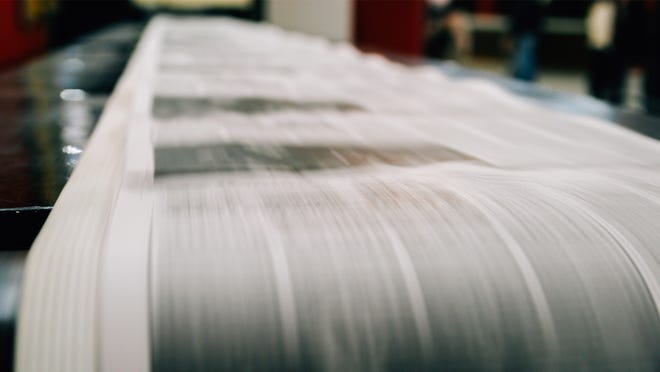
Unions representing journalists, printers, truck drivers, maintenance workers, and other laborers went on strike over management's attempt to create a merit-based raise system and limit overtime. The newspapers hired replacement workers, and the union called off the strike.

30. Boeing Machinists Strike of 2008

• Duration: Sept. 6, 2008 to Nov. 1, 2008

• No. of strikers: 27,000

• Cumulative days off the job: 1,053,000

The International Association of Machinists and Aerospace Workers ended an eight-week strike in November 2008 with an agreement that the union said protected factory jobs, prevented some outsourcing of posts at Boeing, and retained health care benefits. Boeing management said the accord gave the company more labor flexibility.

29. Wheeling Pittsburgh Steel Corp. Strike

• Duration: Oct. 1, 1996 to Aug. 12, 1997

• No. of strikers: 4,800

• Cumulative days off the job: 1,142,400

A 10-month strike involving steel workers at eight plants in three states ended in August 1997. The union said the agreement boosted pension benefits for the company's steel workers and provided for early retirements. The accord allowed Wheeling to reduce workforce by 20%. The company closed in 2012.

28. Trucking Strike of 1994

• Duration: April 6, 1994 to April 29, 1994

• No. of strikers: 71,000

• Cumulative days off the job: 1,180,500

The 23-day strike, the nation's longest trucker strike, ended on April 29, 1994. The agreement limited companies' ability to hire part-time workers, paving the way for more items to be shipped by rail instead of by truck.


27. Northwest Airlines Strike

• Duration: Aug. 20, 2005 to Nov. 6, 2006

• No. of strikers: 3,000

• Cumulative days off the job: 1,183,800

The mechanics' strike against Northwest Airlines proved to be a disaster for the striking workers and their union. Northwest replaced all of the strikers, and some of the strikers and laid-off workers crossed the picket line. The strike also failed because none of the other unions supported the picket lines.

26. UAW Strike of 1996

• Duration: March 8, 1996 to March 22, 1996

• No. of strikers: 136,000

• Cumulative days off the job: 1,260,000

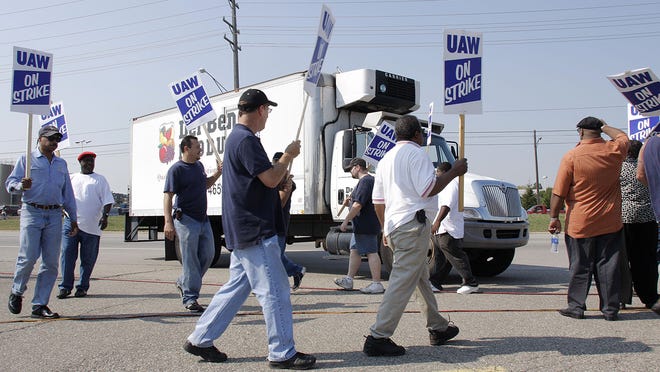
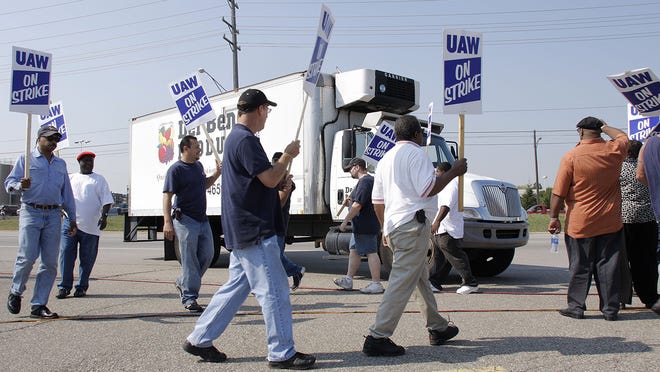
The United Auto Workers strike ended on March 22, 1996, when union leaders agreed to allow General Motors to outsource parts operations in exchange for the company's promise to retain and add jobs at two plants.


25. The U.S. Postal Strike of 1970

• Duration: March 18, 1970 to March 25, 1970

• No. of strikers: 210,000

• Cumulative days off the job: 1,260,000

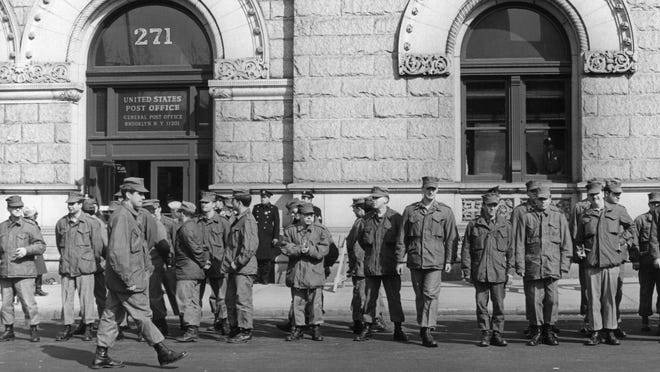
More than 200,000 employees in 30 cities participated in the U.S. Postal Strike of 1970. Comprising a significant share of the nation's 750,000 postal workers, activists halted mail service in New York, Detroit, and Philadelphia, triggering President Richard Nixon to declare a national emergency. Despite the military's efforts to quell the strikes, a deal was eventually struck resulting in higher pay and better labor conditions under the Postal Reorganization Act of 1970.

24. General Motors Strike

• Duration: Sept. 16, 2019 to Oct. 25, 2019

• No. of strikers: 46,000

• Cumulative days off the job: 1,334,000

The work stoppage by the United Auto Workers in the fall of 2019, the longest against General Motors in 49 years, cost GM about $4 billion, according to the automaker. Under terms of the four-year accord, pay for older workers will increase 6% each year. Hourly workers were to receive an $11,000 signing bonus. The union also thwarted a company demand for workers to pay a greater share of health-care expenses.

23. Kaiser Aluminum Corp. Strike

• Duration: Oct. 1, 1998 to Sept. 18, 2000

• No. of strikers: 3,000

• Cumulative days off the job: 1,479,000

After several round of negotiations, aluminum workers rejected Kaiser's proposal and went on strike on Sep 30, 1998. The union cited, among other issues, the company's failure to repay losses incurred during compensation cut agreements made in the 1980s that were made to stave off bankruptcy. After nearly two years of numerous failed negotiations and snags, a deal was finally agreed upon on Oct 1, 2000.

22. Boeing Strike of 1995

• Duration: Oct. 6, 1995 to Dec. 14, 1995

• No. of strikers: 33,000

• Cumulative days off the job: 1,551,000

Machinists and assembly line workers in 1995 won significant wage increases as a result of a strike that lasted over a month. Additionally, while Boeing would continue to increase its practice of contracting jobs overseas, the deal included the concession that any worker affected by subcontracting would be entitled to retraining for work elsewhere at the company.

21. Charter Communications Inc. Strike

• Duration: March 28, 2017 to ongoing

• No. of strikers: 1,800

• Cumulative days off the job: 1,578,600

Charter Communications workers started striking in March 2017 to fight changes to their retirement and health care benefits made after Charter acquired Time Warner and rebranded as Spectrum in 2016. Before the coronavirus outbreak hit the U.S., the strike was the longest ongoing strike in the United States.


20. 1934 West Coast Waterfront Strike

• Duration: May 9, 1934 to July 17, 1934

• No. of strikers: 35,000

• Cumulative days off the job: 1,750,000

Starting with 12,000 dock workers in the spring of 1934, the West Coast Waterfront Strike included at its peak 35,000 laborers across various marine industries and lasted for 83 days. Though not included in the tally for this particular strike, Teamsters and other unions showing solidarity with the longshoremen brought the total workers on strike during this time to 130,000. The strikers achieved their goals through arbitration in October 1934 after ending the strike in July.

19. United Parcel Service Strike of 1997

• Duration: Aug. 4, 1997 to Aug. 21, 1997

• No. of strikers: 180,000

• Cumulative days off the job: 2,032,500

UPS workers represented by the Teamsters went on strike against the delivery services company over pay and benefits. The Teamsters agreed to a five-year contract after originally asking for a shorter-term deal. UPS agreed to create 10,000 full-time jobs from part-time posts, an increase from its original offer of only 1,000. The workers' $8 an hour base pay was boosted by 50 cents an hour, and the average driver's pay was lifted by $3.10 an hour over the life of the contract. UPS wanted to change the pension plan, but that plan remained in place, a victory for the union.

18. Bituminous Coal Operators Association Strike

• Duration: May 10, 1993 to Dec. 14, 1993

• No. of strikers: 16,800

• Cumulative days off the job: 2,203,000

The United Mine Workers of America agreed in December 1993 to end a strike that affected miners in five states by extending the contract that had lapsed the previous February. The dispute was over companies with union workers creating nonunion subsidiaries and transferring work to them. That issue was deferred.


17. 1913 Paterson Silk Strike

• Duration: Feb. 25, 1913 to July 28, 1913

• No. of strikers: 23,000

• Cumulative days off the job: 2,530,000

Workers at silk mills in the New Jersey city that was one of the cradles of the Industrial Revolution went on strike over an increase in loom assignments to four from two that would have reduced the workforce. As the strike dragged on, sometimes turning violent, some strikers returned to work, while others who continued to strike were replaced. The strike succeeded in forcing the companies to delay the proposed workplace change.

16. The New York City Tugboat Strike of 1988

• Duration: Feb. 16, 1988 to Dec. 20, 1993

• No. of strikers: 1,600

• Cumulative days off the job: 2,895,200

Tugboat operators, whose ranks had been on the decline for many years, staged a failed strike that led to lower wages for many members of their union, The International Organization of Masters, Mates & Pilots.


15. General Motors Strike

• Duration: June 5, 1998 to July 29, 1998

• No. of strikers: 152,200

• Cumulative days off the job: 3,313,000

A bitter strike at General Motors in 1998 ended after the automaker said it would not shutter factories where the workers were on strike and agreed to invest $180 million in new equipment at one of the facilities. The United Auto Workers agreed to work-rule changes that would increase production.

14. Caterpillar Strike

• Duration: June 20, 1994 to Dec. 3, 1995

• No. of strikers: 14,000

• Cumulative days off the job: 4,063,000

Union members at Caterpillar, the world's largest heavy equipment manufacturer, returned to work in December 1995 after a failed long strike. Workers had gone on strike in June 1994, protesting unfair labor practices. They had been working without a contract since 1991. The new contract placed limits on job security and overtime pay, and gave Caterpillar leeway to lay off workers more frequently.

13. Passaic Textile Strike

• Duration: Jan. 25, 1926 to March 1, 1927

• No. of strikers: 15,000

• Cumulative days off the job: 4,215,000

The Passaic Textile Strike of 1926 involved more than 15,000 wool and silk workers in the Passaic, New Jersey, region. Workers reacted to a 10% pay cut and were galvanized later by police violence against demonstrators. Union demands included, among other items, time-and-a-half pay for overtime, a 40-hour workweek, sanitary working conditions, and no discrimination against union members.


The strike failed. Of the nine mills affected, even the few that settled disputes with workers broke their deals, firing many of the workers and rehiring them at lower wages.

12. The 1934 Textile Worker Strike

• Duration: Sept. 3, 1934 to Sept. 23, 1934

• No. of strikers: 400,000

• Cumulative days off the job: 5,600,000

Textile workers went on strike to protest a cut in pay as their workweeks were being reduced. The strike idled the textile industry in North Carolina. The workers, however, lacked the means to continue the struggle. Their cause was also undermined by a glut of textile inventory. In September, President Franklin Roosevelt personally intervened to ask the workers to return to the mills and they did so.

11. Southern California Supermarket Strike

• Duration: Oct. 12, 2003 to Feb. 29, 2004

• No. of strikers: 67,300

• Cumulative days off the job: 5,718,100

Workers represented by United Food and Commercial Workers went on strike against supermarket company Von's because management wanted to change the health benefits of workers, which under the expiring contract were paid by the company. Soon afterward, supermarket companies Ralphs and Albertson's, whose contracts with their unions were also terminating, locked out employees. After a nearly five-month strike, management succeeded in getting workers to pay more for their health care benefits.


10. The 1946 Union of Electrical, Radio and Machinist Workers' Strike

• Duration: Jan. 15, 1946 to March 14, 1946

• No. of strikers: 174,000

• Cumulative days off the job: 7,308,000

Accruing 7.3 million days of work stoppage at a time when unions had considerably more power than they do today, the 1946 strike by electrical workers is the 10th largest in U.S. history. Starting in mid-January, after months of negotiations for higher wages, about 174,000 employees of several large electrical manufacturing companies went on strike. The strike was part of several massive organized labor campaigns conducted in 1946.


The wave of strikes at the time led to President Harry Truman's Labor Management Relations Act of 1947, also known as the Taft-Hartley Act, which restricted the power of labor unions and is still in force today.

9. The Great Southwest Railroad Strike

• Duration: March 1, 1886 to May 4, 1886

• No. of strikers: 200,000

• Cumulative days off the job: 9,400,000

As railroads were rapidly expanding throughout the American West in the late 19th century, railroad workers went on strike in what is known as The Great Southwest Railroad Strike. Workers began protesting the grueling work hours and brutal conditions. The strike against the Union Pacific Railroad and the Missouri Pacific Railroad began after a railroad employee was fired for attending a union meeting in Texas. The job action spread to four other states and turned violent. The railroads hired replacement workers, and the strike faltered when other unions failed to support the strikers.

8. Pullman Strike

• Duration: May 11, 1894 to July 20, 1894

• No. of strikers: 260,000

• Cumulative days off the job: 13,260,000

Due in part to the fallout from the economic recession between September 1893 and May 1894, railroad car manufacturer Pullman Palace Car Company cut pay by about 25% for workers without reducing living expenses in the company town near Chicago, where they lived. When workers presented the problem to company president George M. Pullman – the possibility of starvation added to already poor living conditions, low wages, and a 16-hours workday – they were fired.

By mid-summer, hundreds of thousands of workers were on strike. A federal court-issued injunction and the military were needed to suppress the workers. President Grover Cleveland declared Labor Day a national holiday during the strike.

7. Anthracite Coal Strike of 1902

• Duration: May 12, 1902 to Oct. 23, 1902

• No. of strikers: 147,000

• Cumulative days off the job: 15,141,000

The Anthracite Coal Strike of 1902 pitted coal miners in Pennsylvania who wanted higher pay and shorter work hours against coal mine companies that claimed their operations were not that profitable. The strike led to the formation of a commission that arbitrated an agreement that included pay increases and reduced work hours. It marked the first time the federal government intervened as a neutral party and not on the side of employers. The job action also boosted the labor movement.

6. American Association of Advertising Agencies Strike

• Duration: May 1, 2000 to Oct. 30, 2000

• No. of strikers: 135,000

• Cumulative days off the job: 17,280,000

Actors belonging to the Screen Actors Guild and the American Federation of Television & Radio Artists ended their strike in October of 2000. The union defeated an attempt by the American Association of Advertising Agencies and the Association of National Advertisers to discontinue residuals paid to actors for television commercials.

5. United Auto Workers Strike of 1945

• Duration: Nov. 21, 1945 to March 13, 1946

• No. of strikers: 225,500

• Cumulative days off the job: 17,363,500

After abiding by a no-strike vow during WWII and deferring wage increase demands, organized labor asked for higher pay once the war ended, and the automobile sector was no exception. The United Auto Workers requested a 30% wage hike in November of 1945. GM countered with a 10% increase. Negotiations reached an impasse, and the laborer began work stoppage. The job action ended when GM said it would give workers a 17.5% pay hike, paid vacation, and overtime pay.

4. The Railroad Shop Workers Strike

• Duration: July 1, 1922 to Sept. 1, 1922

• No. of strikers: 400,000

• Cumulative days off the job: 18,000,000

In response to a 12% wage cut, about 400,000 railroad workers went on strike on July 1, 1922. While nearly the largest strike in U.S. history, the workers were ruthlessly broken by various violent measures, including the hiring of 16,000 gunmen, National Guard deployment, and targeted hits by private detectives.


The unrest demonstrated in the Railroad Shop Strike led to the passage of the Railway Labor Act, which provided the right for workers to organize and join unions.

3. The Steel Strike of 1919

• Duration: Sept. 22, 1919 to Jan. 8, 1920

• No. of strikers: 350,000

• Cumulative days off the job: 26,600,000

Disagreements between labor and management in the steel industry had been mediated by the War Labor Board during World War I. After the war ended, however, workers claimed companies refused to recognize unions. Postwar inflation was also eroding incomes. Steel workers went on strike in September 1919, but the job action was hampered by bad organization as well as ethnic and racial tensions within the steel union. Also, management exploited the public's fears of Bolshevism. Strikers crossed picket lines, and the strike ended unsuccessfully for the unionized steel workers.

2. The Steel Strike of 1959

• Duration: July 15, 1959 to Nov. 1, 1959

• No. of strikers: 500,000

• Cumulative days off the job: 38,000,000

In mid-July 1959, around 500,000 steel workers walked off the job in defiance of President Dwight D. Eisenhower's pleas to continue bargaining. The strikers' goal was to amend a clause in their union contract to give management more control over the number of workers assigned to a task, as well as the power to introduce new work rules or machinery that would affect how many employees or hours were needed.

The union ended up victorious, although the strike is considered to have led to increases in foreign steel imports – a trade pattern that would ultimately hurt American steel workers

.


1. United Mine Workers of America Strike of 1946

• Duration: April 1, 1946 to Dec. 7, 1946

• No. of strikers: 400,000

• Cumulative days off the job: 70,400,000

The United Mine Workers of America, under the leadership of legendary union boss John L. Lewis, went on strike in April 1946, seeking a health plan for workers and retirees. As the strike dragged on, President Harry Truman stepped in and placed the mines under the control of the federal government. Eventually, the government forged an agreement with the union that returned control of the mines to companies and provided for raises in pay and improvements in mine safety, as well as establishing a framework for creating a retirement fund.

Friday, April 10, 2026

UK

The 1926 General Strike

Jeff Slee explores an historic confrontation ahead of next month’s hundredth anniversary.

This May is the centenary of the General Strike, the biggest event in the history of the British working class. It lasted nine days, and up to 3 million workers covering all the main sections of British industry took part. There had been a general strike before, in 1842, but the working class was much smaller then.

The strike was in defence of the miners, against the demands of the mine owners for wage cuts, longer hours, and the ending of national agreements. Many of the workers involved feared that they too would be faced with similar demands from their bosses.

Britain in the 1920s

A hundred years ago, Britain was a manufacturing country. Coal was the main source of energy for homes, industry and generating electricity. Transport of people and goods – including coal – over longer distances was by rail. In towns and cities, people took buses or trams. Only the rich had cars. Millions of workers worked in the mines, transport, the docks, steel making, shipbuilding, and other engineering industries. Coal, the biggest of these industries, employed over a million miners – about one in ten of Britain’s male workforce.  All these industries were in private ownership, except for London’s docks which were run by the public sector Port of London Authority, and buses and trams which were run by local councils.

In the first quarter of the 20th century, trade unions had grown in size, organisation and militancy. Between 1900 and 1926, trade union membership rose from 2 million to 5 ½ million – at its peak in 1920 there were over 8 million trade unionists. Strikes caused the loss of many millions of working days each year. The miners’ union, the Miners’ Federation of Great Britain (MFGB) – which later became the NUM – had a membership of over ¾ million and the most industrial power of any British union.

The prelude to the General Strike

In 1925 the UK coal industry was in a downturn. The coal owners demanded that miners take wage cuts and work longer hours, and that agreements should be made at district level instead of national level. The MFGB refused, and appealed to the TUC General Council for support. The Railway and Transport unions agreed to support them, and the General Council – together with the railway and transport unions – ordered a stoppage of all movement and import and export of coal from July 31st. This was to be followed by a sympathetic strike – a generalised strike – if the coal owners imposed a lockout on the miners.

Tory Prime Minister Stanley Baldwin and his Government, working closely with the coal owners, wanted a general reduction in wages – not just in coal but for all workers. They also wanted to break the power of the TUC General Council – the TUC had created the General Council in 1921 to be their leadership, and the Government and bosses feared that it would lead co-ordinated and generalised strikes.

Faced with the threat of a widespread strike, the government and the coal owners backed down. The Government provided a nine-month subsidy to coal owners to maintain wages, which was to expire on April 30th 1926. And they set up a Royal Commission on the reorganisation of the coal industry.

The Government, knowing that they had only postponed a confrontation between themselves and coal owners – their class – and the miners and trade union movement  – the working class – used those nine months to plan and organise to win that confrontation. They built up coal stocks, including using coal imports. The Government set up an emergency civil administration system to keep transport and food and coal distribution running. This was based on ten regions each to be run by a Civil Commissioner assisted by civil servants. And they set up a strike-breaking organisation, the Organisation for the Maintenance Of Supplies (OMS).

In contrast, the TUC did not plan or organise for when the nine-months pause would end. There was no clear agreement between the General Council and the MFGB on what the aims of a strike would be, or how a decision would be taken on the terms of any proposed settlement.While the MFGB was clear on their demand of “Not a penny off the pay, not a minute on the day”, the TUC General Council never formally adopted this as their aim. They reserved the right to make a deal that would mean worse pay and conditions for the miners.

The General Strike

In April 1926 the Government’s coal subsidy ended, and the coal owners again demanded wage cuts, longer hours and the ending of national agreements. They threatened to lock out the miners if the MFGB did not agreed to these demands. On Saturday May 1st, a special TUC conference voted overwhelmingly for a general strike. The Government had prepared for a war on the working class, and when TUC representatives met them that weekend to try and reach a deal, the Prime Minister showed little interest.

So the coal owners locked out the miners, and at midnight on Monday May 3rd, the General Strike began. The General Council called out all transport workers, printers, iron and steel workers, metal and chemical workers, building workers, electrical and gas workers. From Tuesday May 4th there were no trains, buses or trams, no power, no newspapers, no building work done. From May 11th the General Council also called out shipyard workers and engineers.

The strike was enthusiastically supported and almost completely solid. For example, 99% of London Underground employees were out; the various rail companies reported that only a few percent of goods trains were running. Mass picketing was effective across the country. The Government were unable to break the strike, despite bringing in the army and navy, strengthening the police, and using young upper-class volunteers to try to keep transport running.

The TUC had not planned how the strike was to be run in cities and towns, but everywhere local trade union organisations rose to the occasion and started running the strike in their localities. In some places, this was done by Trades Councils, which were then much more numerous, strong and well-supported than now, building on a long history of local co-operation and organisation by trade unionists. In other places, this role was taken on by union Councils of Action or Joint Strike Committees which were rapidly set up and got themselves organised.

Running the strike in their localities included taking responsibility for organising mass pickets, producing local strike newspapers, and issuing permits for what transport they decided could still run.  Employers had to go to these committees to ask for permission if they wanted to move goods such as coal or foodstuffs. In a very real way this strike led to alternative working-class organs of state power at local level. The Government’s Civil Commissioners were unable to organise local services: power was with the strikers’ organisations.

For example, “in Newcastle the Government’s Commissioner” [ one of those the Government had created before the strike to run local services during the strike] “was forced to go to the Joint Strike Committee with a suggestion  for dual control of food services in view of the breakdown of the efforts of the OMS.” (Allen Hutt, The Post-War History of the British Working Class, Left Book Club 1937).

End of the Strike

By Wednesday May 12th the strike was stronger than ever, with no signs of any significant return to work and the shipyard workers and engineers having enthusiastically joined the strike the day before. But the backbone of the TUC General Council members was weaker than ever. They were frightened of the power of the strike and just wanted to find any way out. That day, the General Council met with Prime Minster Stanley Baldwin and called off the General Strike, without any concessions from the Government.

Millions of workers – dismayed by the decision of the General Council – stayed on strike on ThursdayMay 13th. The General Council resorted to issuing a statement making the completely false claims that “The General Strike… has made possible the resumption of negotiations in the coal industry, and the continuance, during negotiations, of the financial assistance given by the Government” to get union members back to work.

Some employers took the opportunity to announce wage cuts, longer hours, and victimisations of union militants, but many workers, notably on the railways, refused to return to work until the owners had withdrawn threats to their conditions and contracts.

The miners stayed out, and did not return to work until November 1926 – defeated in the  end, having to accept wage cuts and longer hours.

The General Strike and the miners’ strike following it caused 162 million working days ‘lost’ (the word used in Government statistics) to strike action in 1926. This represented more days than in all the 50 years from 1975 to now added together.

The Tory Government used their victory over the General Strike to press forward with attacks on the working class. They cut unemployment benefit and extended the clause which was used to deny unemployment benefit altogether to those workers who were deemed as “not genuinely seeking work”. The Trades Disputes and Trade Unions Act 1927 made much trade union activity illegal, including banning general strikes, all sympathetic strikes and strikes which could be considered as likely to coerce the Government directly or indirectly. Mass picketing was banned, as was the closed shop in public services.

Within the trades unions and the Labour Party, the defeat of the strike, and the demoralisation, wage cuts, unemployment and loss of union membership that followed, reinforced the dominance of those leaders who had sold out the General Strike and their approach of seeking a subservient position in a partnership with employers and the ruling class.

The Labour Party and the General Strike

The Labour Party and the trade unions were more closely linked at all levels than they are now. National Union of Railwaymen General Secretary JH Thomas (more on him later) was a member of the TUC General Council, one of those who led their efforts to avert the General Strike and then to call it off once it was under way. He was at the same time the Labour MP for Derby; he had been a minister in the short-lived 1924 Labour Government and was to become a minister in the 1929 Labour Government – one of those who betrayed the Party by forming the National Government with Liberals and Tories in 1931. Speaking for the Opposition in the House of Commons on May 3rd in the debate on the strike, he showed how far the General Council was prepared to let down the miners to avoid a strike, when he said:

“For ten days, we said to the Government: You force the coal owners to give us some terms, never mind what they are, however bad they are. Let us have something to go upon” and “in a challenge to the Constitution, God help us unless the Government won.” (Ralph Miliband, Parliamentary Socialism, p 134).

Labour leader Ramsey MacDonald said hours before the strike started: “I don’t like General Strikes”, and spent the strike talking to the Government to try and get anything that could be used to call off the strike.

Some of those in high positions of the Party took a better position. The then Labour Party women’s publication The Labour Woman in its editorial of June 1926 said:“The most important thing is that the people themselves now know and feel their own power. Genuine class-consciousness was born in the ten days of the strike… The General Strike has made a united working class.” 

And in the months that followed the defeat of the General Strike, while much of the Labour and trade union leadership left the still-striking miners to starve to defeat, Dr Marion Phillips – the Chief Woman Officer of the Labour Party – led a committee which raised £313,000 (equivalent to about £17 million now) to relieve  the suffering of mining families.

Many rank and file Labour Party members were also active trade unionists, and played their part in local organisation of the strike. Labour Party members with their local Party banners took part in union demonstrations at the start of the strike. The Independent Labour Party – a large leftish group then affiliated to the Labour Party but opposed to its leadership – “provided couriers, canteens, and entertainment, throwing their entire organisation into solidarity to support the strikers and their families” and ”ILP halls across the country became staging grounds for organising distribution” of strike bulletins (Simon Hannah, A Party with Socialists In It, p30). Aneurin Bevan, then a young miner and already a leading Labour figure in South Wales, ran the Council of Action in his home town of Tredegar.

Why the General Strike Failed

The General Strike did not fail because of any weakening of support from the working class, but because the trade union leadership did not want it. They did not want to challenge the ruling class: they just wanted to be accepted by it as junior partners. This leadership included men like Transport Workers’ leader Ernest Bevin, later to be Foreign Secretary in the Attlee Government, and NUR leader JH Thomas, who said in a speech during the strike that” I have never favoured the principle of a General Strike” and denounced “those who, on whatever side they may be, are talking of a fight to a finish.”

The militant miners’ leader A J Cook wrote later that “the only desire of some leaders was to call off the General Strike at any cost, without any guarantees for the workers, miners or others.”

The TUC General Council included many men (at that time all the union leaders were men) from very poor backgrounds who had started out as workplace militants. Some had led strikes in the past: in 1919, JH Thomas as NUR General Secretary had led a national railway strike that succeeded in defeating bosses’ demands for wage cuts, and Ben Tillett was one of the leaders of the famous 1889 London Dock Strike.

But what those leaders did not have was the understanding that the interests of the working class as a whole are opposed to the interests of the bosses’ class. They accepted the world view of the British ruling class – many boasted about how patriotic they were – and just wanted fairer pay and conditions for workers within the system, provided the system could afford it. They could and did lead strikes and argued for their own sections of workers, but did not want confrontations where the working class as a whole was up against the ruling class.

Jeff Slee is a retired rail worker and former RMT National Executive Committee member.

Image: Tyldesley miners outside the Miners Hall during the 1926 General Strikehttps://picryl.com/media/tyldesley-miners-outside-the-miners-hall-during-the-1926-general-strike-0b56de Licence: Public Domain Mark 1.0 Universal PDM 1.0 Deed

Wednesday, August 23, 2023

UAW members vote on strike in case Ford, GM deal doesn’t happen

James Dornbrook - Kansas City Business Journal
Tue, August 22, 2023


With thousands of jobs and billions of dollars in economic impact at stake, negotiations over a new labor contract for United Auto Workers members are reaching a crucial phase for the Kansas City-area economy.

The UAW is trying to negotiate a new labor contract with Ford Motor Co. and General Motors Co., which have about 9,500 full-time-equivalent employees at their area production plants.

Mahomes, Kelce invest in popular Kansas City-area pickleball concept

Ford’s Kansas City Assembly Plant (7,250 employees) in Claycomo produces the Ford F-150 and the Ford Transit. GM’s Fairfax Assembly Plant (2,229 employees) in Kansas City, Kansas, produces the Chevrolet Malibu and the Cadillac XT4.

The UAW labor contract is set to expire Sept. 14, and the parties still haven’t reached an agreement.

Concerned about the pace of the negotiations, the union asked members to authorize a strike if the contract expires. The UAW needs to have strike authorization in hand by Thursday. That doesn’t mean a strike will happen; it simply gives UAW leadership authority to call a strike.


Can the UAW afford to strike all three Detroit automakers?


Jamie L. LaReau, Detroit Free Press
Wed, August 23, 2023

In 1998, about 9,200 union members at two General Motors components' plants in Flint went on strike. Flint Metal Center made sheet metal stampings used on most of GM's vehicles; Flint East made the electronics.

The strike at those two important plants forced production to stop at nearly 30 other GM assembly plants and 100 parts plants across North America. Nearly 193,000 GM hourly workers were then laid off and those nonstriking members collected unemployment benefits. The 9,200 strikers were paid from the union's then-$700 million strike fund.


Striking United Auto Workers union workers demonstrate in front of the General Motors Corp. Metal Fabricating Plant on June 10, 1998, in Flint, Mich., as an auto transport truck passes. Nearly 3,400 hourly UAW employees went on strike Friday, June 5, l998 forcing the various GM plants in North America to shut down due to a lack of parts.

That strategy of using key component plants to take down other plants meant the strike could last long (54 days in this case) and cost the union less compared with taking all 202,200 workers off the line and paying them from the strike fund. The strike and shutdowns cost GM about $2 billion in lost profits, according to an article in MLive.

"It was far less costly to the union, but inflicted considerable pain to General Motors, not as painful as a complete shutdown, but it worked," said Harley Shaiken, professor emeritus at the University of California, Berkeley.

That plan or something similar could be an option this year if the UAW decides to strike one or all of the Detroit automakers next month, experts said. If the tactic is employed, "It can bring down the system and ... this could be a very, very serious situation," said Marick Masters, a business professor and labor expert at Wayne State University.

A United Auto Workers flag flies on a truck outside General Motors' Flint Metal Center in Flint, Mich., on June 17, 1998. A rally was held at the plant where the workers walked out on June 5 in protest of staffing levels, health and safety issues and subcontracting issues.

Labor watchdogs list several tactics the union could take if it strikes. The key for union leaders would be to find the strategy that will inflict the most pain on the company while doing the least damage to the union's $825 million strike fund. For the automakers, it means being prepared to mitigate the damage from a number of scenarios.
Strike authorization vote: Turnout matters

The United Auto Workers declined to comment for this article. In a statement to the Detroit Free Press, President Shawn Fain said, "The UAW does not discuss strike strategy."

Fain also does not discuss the strike fund and how long it could support paying $500 a week to some 150,000 UAW members at GM, Ford Motor Co. and Stellantis, which owns Jeep, Ram, Chrysler, Dodge and Fiat, if it came to that. When asked about the strike fund's ability to fund such a strike at a rally Sunday, he told media that the workforce and the union are prepared to do what needs to be done to get a fair contract.

UAW President Shawn Fain speaks with media during the shift change at the GM Factory ZERO Detroit-Hamtramck Assembly Center in Detroit on July 12, 2023. The UAW will be starting contract talks with management this week.

This week, UAW members at the Detroit Three are being asked to give union leaders the OK to call for a strike. Bargainers continue to negotiate as they come up against the Detroit Three's contract expiration at 11:59 p.m. on Sept. 14.

The strike authorization vote is usually a formality but this year’s heated rhetoric adds more significance to the process. The automakers and the union leaders are watching the vote turnout as an indicator of strike enthusiasm, labor experts said.

"The rallies and the strike vote allow the UAW to collect data as to how willing the workers are to go on strike and that will be calibrated into the union's strike strategy," Masters said. "And, if there is reluctance, that will have an impact on how hard they push these bargaining demands."

The strike authorization results are expected later this week. If voter turnout is high for something that is considered a foregone conclusion, it means the membership is engaged and ready to walk, Shaiken said. That alone could be enough to win a good contract because the companies won't want a strike. For automakers, in today's competitive world, lost sales to imports or competitors like Tesla during a strike are sales they may never get back, he said.

Strike scenario No. 1: Total Conflict

If the automakers won't meet the demands of the UAW, which include wage raises, cost-of-living adjustments, shorter work weeks, pension benefits and more, here are a few strategies the union can deploy in the event of a strike: The first being the "total conflict" approach.

" 'We’re going out on strike across the board and nobody is going to make another automobile at our plants until this is resolved.' That’s maximum pain on both sides of the bargaining table," said Erik Gordon, a business professor at Ross School of Business at University of Michigan. "The idea is, 'We’re going to bring the industry to its knees.' "


Erik Gordon, University of Michigan Ross School of Business professor.

With that approach, Gordon said the automakers could probably last longer than the union because they have more money. But Shaiken added that the broader economic impact could hurt ancillary companies such as smaller suppliers to automakers who could be forced out of business in a prolonged strike against all three car companies.

If all of the nearly 150,000 U.S. union autoworkers at the Detroit Three went on strike, at $500 a week in strike pay, it would cost the union about $75 million a week and six weeks would eat up $450 million — about half the strike fund. That would not include the cost of paying for medical insurance, which is hard to calculate, Masters said, because some workers might be covered by a spouse's insurance. But he estimates medical could add another $100 million in costs over six weeks. The UAW website says the union will cover medical costs and prescription drugs during a strike if the automaker discontinues coverage.

Also, the union would lose a big part of its revenue because all those striking workers would not be paying dues while on strike.

"The cost is higher but they hope, by maximum impact, the strike would be shorter," Masters said of this strategy. "It’s a risk."

The other pain point, Gordon noted, is "although the UAW workers might say they want to strike and they might have saved up for a strike, after you go eight weeks on $500 a week, you realize that — apart from having trouble paying your bills — that new fishing boat you were going to buy, you’re not going to buy now. That vacation you were going to take, you're not going to take it."

Scenario No. 2: The traditional approach

The traditional approach means, about a week before the contract deadline, the UAW selects a target company, usually an automaker they believe will give way on the union's most important issues. If they have a strike, they strike that company only.

This is the tactic the UAW took in 2019 when it went on strike against GM for 40 days. The six-week work stoppage cost GM $3.6 billion and had broad impact across the industry. The UAW paid nearly $81 million in benefits to striking workers.

Strikers walk the line at GM Romulus Powertrain, Monday, Oct. 14, 2019.

Shaiken said even a traditional strike causes economic damage to both sides, but it is less costly than striking multiple companies. For example, if Ford were to be the target, the UAW would be funding 57,000 strikers at about $28.5 million a week (about $171 million over six weeks), not including health care costs. In 2019, GM cut off its health care coverage for strikers, putting those costs in the hands of the union. But the negative public image of doing so prompted GM to reinstate health care coverage about a week later.

Shaiken expects the union would go this route because if they don’t, "Lost sales go to nonunion carmakers and those sales may not be coming back. No. 2, it is far more costly to the UAW to be paying $500 to 150,000 workers, that’s $75 million a week. Third, (in a strike against all three) you're talking 2% of the gross domestic product because you’ve got suppliers who have to start laying off workers, you’ve got level two or level three suppliers that are more vulnerable to bankruptcies and you open the possibility to federal intervention.”

Finally, "Once you get the first company, then the others do fall in line," Shaiken said. "So doing a target is more effective."

A variation of scenario 2

But Gordon said this classic option above isn't consistent with Fain's messaging to date.

“Fain has positioned the contract bargaining as more of a class war than, ‘Just give us these economics,’ “ Gordon said. “It’s ‘Management is the enemy, management is greedy, look how much more management makes than you do.’ So if you pick one company, are you saying that GM’s management is more reviled than Stellantis’ management or Ford’s management is?”

Masters suggests a variation of the traditional approach could be in play, which could be striking one automaker completely and some key parts of the others — enough to hurt the other two, but not be as costly to the union.

"All of these scenarios have implications for solidarity and draining the strike fund so they’re going to take all these things and weight them and come up with an algorithm to devise a strategy that will work best for them," Masters said.
Scenario No. 3: Back to 1998

Labor experts said an "asymmetric" attack is another option. That's the 1998 model: Strike some key component plants across GM, Ford and Stellantis and fund those smaller strikes out of the strike fund as other employees continue to pay into the strike fund, keeping revenue flowing. Then, when other plants must be idled because they can't get key components, those workers get paid by unemployment and possibly sub pay by the company.


Fred Johnson, right, an automatic press operator at the Flint Metal Center, and Richard Stevens, left, a quality control technician, rally passing drivers to honk their horns outside the center in Flint, Mich., on July 13, 1998.

There is just one problem with that, Gordon said.

"Figuring out which key component plants of the automaker — because it can’t be a supplier — they will hit is complicated," Gordon said. “What is the part that is most common across the carmaker's line that you can’t get from a supplier? Engines? Maybe a stamping plant? You have to figure out what appears in an entire platform that would hurt them."

A more doable option would be to strike an automaker's plants that make its biggest sellers.

“Shut down the plants making the pickup trucks and stay on the line in the plants making the cars," Gordon said. "It’s good tactic, but not as good as the shutdown of selective components. But it might be easier to do because you know how to shut down the plants building the F-150, the Silverado or RAMs. That’s doable.”

Masters said Fain is keeping the automakers off balance by not following tradition so far. He forewent the traditional handshake, for example, when negotiations officially started last month.

“One of the things that’s impressed me most about Shawn Fain is he’s keeping all his options open, I don’t think they want the companies to know precisely what they’re going to do whereas in the past the companies kind of knew what they were going to do," Masters said.


UAW president Shawn Fain talks to Ford workers outside of Ford's Michigan Assembly Plant in Wayne on Wednesday, July 12, 2023.

He said striking key component plants or plants where the bestselling vehicles are made, might be the best options in terms of managing union costs and balancing impact, but "the question is how are the companies prepared to deal with that? You can easily imagine a scenario where key strikes at key locals could be very impactful.”

More: GM confirms future wage hike for UAW members, but other demands 'threaten' company health

More: 2 auto unions to bargain with the Detroit 3 at same time, each want a share of profits

Contact Jamie L. LaReau: jlareau@freepress.com. Follow her on Twitter @jlareauan. Read more on General Motors and sign up for our autos newsletter. Become a subscriber.

This article originally appeared on Detroit Free Press: How the UAW could strike the Detroit 3 without draining strike funds