Showing posts sorted by relevance for query Yazidi. Sort by date Show all posts

Monday, July 25, 2022

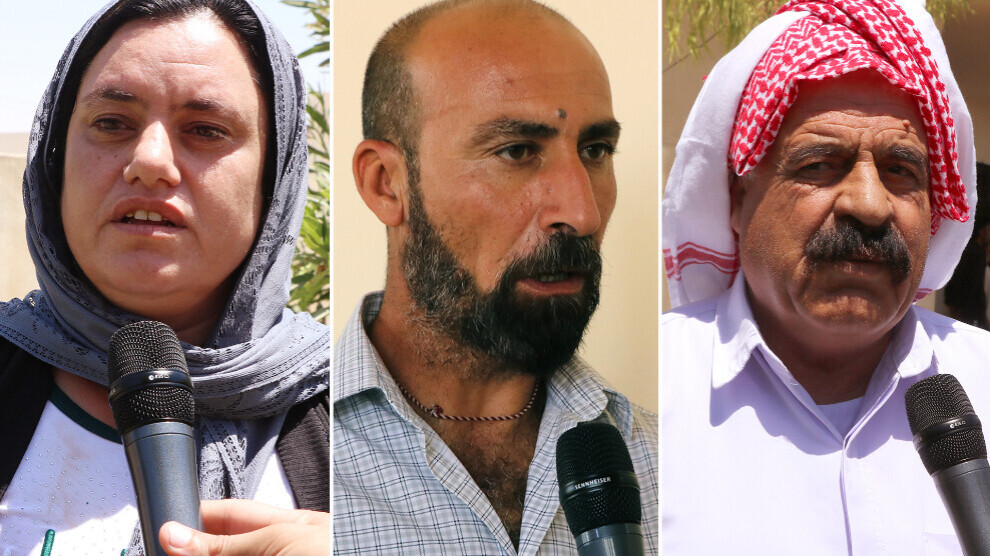
Yazidi institutions' representatives: We must unite to prevent new massacres

The Yazidi institutions representatives said that the Yazidi people should be united so that new massacres do not happen, and that the only solution is to govern themselves.


ÎBRAHÎM ÊZIDÎ
SHENGAL
Saturday, 23 Jul 2022, 

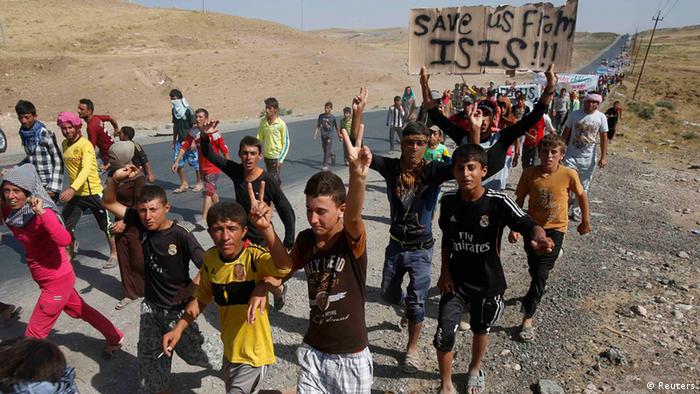
It has been 8 years since the massacre of the Yazidi community by ISIS mercenaries in front of the whole world. Despite this, thousands of Yazidis are still far from their lands, and the fate of thousands remains unknown. The Iraqi government has not taken any steps for the rights of the Yazidi people, either. For this reason, Yazidi institutions and organizations say that they do not trust anyone and that the only solution for the Yazidi people is to govern themselves.

On 3 August 2014, the Yazidi community were subjected to a great massacre. While the whole world remained silent, the PKK guerrillas rushed to save the Yazidi people. After Shengal was liberated by the guerrillas, the Yazidi people established their own defense force and institutions. The Yazidi people, who said that they would not allow a similar massacre to happen again, added that they would increase their struggle.

We can prevent new massacres by organising ourselves

Wetha Reşo, a member of the Yazidi Women's Freedom Movement (TAJÊ), commemorated those who lost their lives in the 3 August 2014 massacre and said: "We need to know well who sold us out. Eight years have passed since the massacre, yet the fate of thousands of our people is still unknown. We must increase our struggle to save the Yazidi women and girls who are still held in ISIS hands. We must do whatever we can for them. As the Yazidi people, we know ourselves now, so we will not rely on those who allowed the last massacre."

Reşo continued: "We will organize even more so that new massacres do not occur. We know that if we organize, we can prevent new massacres. We now have power and will. We built our institutions, we established our defense force. When the massacre was carried out, neither Iraq nor the South Kurdistan government took care of us. Because we are Yazidis, the whole world remained silent to our cries. Thanks to our heroic martyrs who rushed to save us, we survived the massacre. We will never forget those who gave their lives for us. They will always live in our hearts."

Yazidi people should be united

Shengal Democratic Autonomous Assembly member Xelef Qasim underlined that the Yazidi people were also attacked for their faith, and added: "They wanted to massacre and destroy the Yazidi community. This is the reason why thousands of Yazidis were killed. The Yazidi people should unite wherever they are. We need to be united. The conspiracy against the land, language, culture and faith of the Yazidi people still continues. Every Yazidi should know this. We need to put up a common struggle to stand up to these conspiracies. Many Yazidis lost their money financially at the time of the massacre. Our situation was very good, but we saw that it did not save us from the massacre. The only solution to prevent these massacres from happening again is to govern ourselves."

How will those who do not respect our religion give us rights?

Saleh Êzdîn, a member of the Yazidi Freedom and Democracy Party (PADÊ), said that the Yazidi people have been living in these lands for 5,000 years.

Saleh Êzdîn, who criticized the Iraqi government's approach to the Yazidi people, said: "The Iraqi government must accept the rights of the Yazidi people. We have suffered tens of massacres and been subjected to genocide. Despite all this, Iraq does not accept our religion. How will those who do not respect our religion give us our rights? If there were a government in Iraq it might have prevented the violations of our rights. But how will Iraq, which is heading towards disintegration, give us our rights? South Kurdistan has been occupied by the Turkish state. If we wait for the Iraqi government, we will not get our rights."


Saturday, December 18, 2021

Iraq: After tragedy, new freedoms, opportunities for Yazidi women

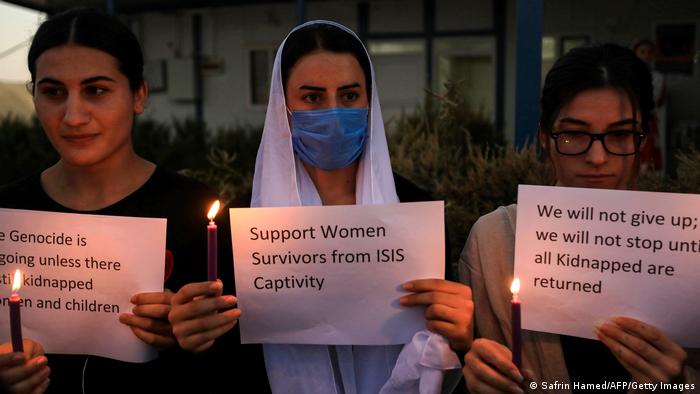
Historically Iraq's Yazidi community was isolated, under-resourced and very conservative. Seven years after the "Islamic State" tragedy, the community is more open to the world — and Yazidi women are benefiting.


Yazidi women have taken a leading role as advocates for their community

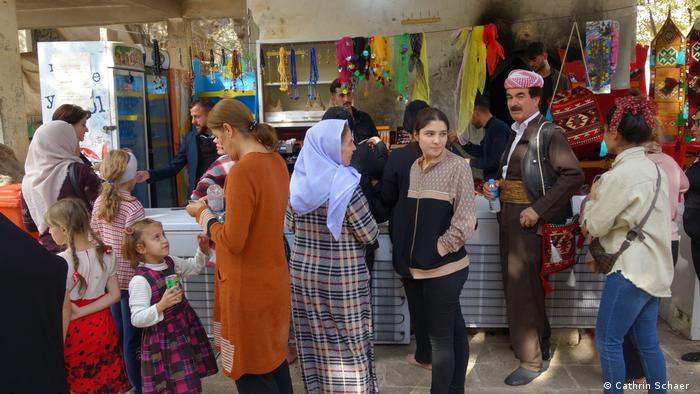
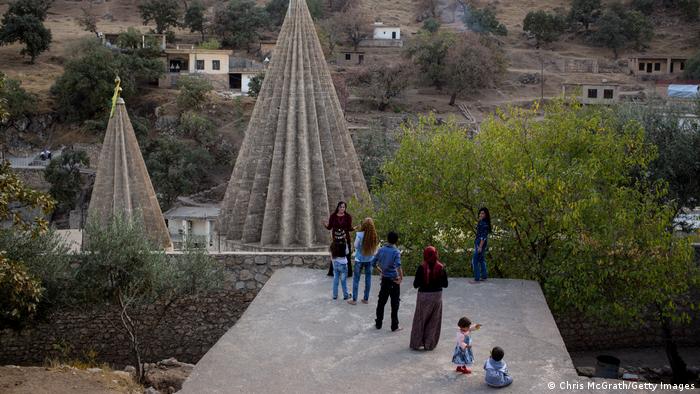
"We really appreciate your visit," Luqman Suleiman told a group of tourists from around Iraq and Germany recently, when he met them at the entrance of the Yazidi temple, Lalish. For the ethno-religious Iraqi minority this site in northern Iraq is the equivalent of the Vatican to Catholics, or Mecca to Muslims. Every Yazidi is expected to come here at least once in their lifetime. And these days, more outsiders are coming here too.

"It is really so important that people come here and listen to the Yazidis," Suleiman, a spokesperson and guide at the temple, said. "You shouldn't listen to other people. They may speak falsely about us."

Suleiman was talking about long-standing prejudices against his community in Iraq. Their highly secretive and ritualistic religion — traditions and rules are passed on orally and outsiders are prohibited from knowing most of them — has made the minority a target of the Muslim majority in the country.


Luqman Suleiman (second from right) at a small souvenir stand inside the Lalish compound

The Yazidi faith has been described as "dualist" because they believe that good and evil are part of the same divinity. This is also why some Iraqis have described them as "devil worshippers" and, for example, won't eat any food prepared by Yazidi hands.

It is the same sort of prejudice that made the small religious community, which is thought to number around half a million inside Iraq, a target for the extremist group known as the "Islamic State (IS)."  As the extremists took over swathes of the country in 2014, the minority's marginal status was part of the reason why the IS militants felt they could kill, rape and enslave thousands of members of the community with impunity.

Unexpected outcomes

The Yazidi minority was forever changed by the IS group's brutal assault on them. By the time the extremists were more or less pushed out of northern Iraq in 2017, thousands of Yazidis had been killed or kidnapped. Several international bodies now classify the events as a genocide. Today, around 240,000 are still living in camps for the displaced, many in grinding poverty.

But the community has also changed in some ways that were perhaps not quite so predictable.


Outsiders can tour the Lalish temple compound but many areas are only open to Yazidis

"The Yazidi community has transformed toward more openness," said Murad Ismael, head of the Sinjar Academy, an institute in northern Iraq providing education to locals in the area. "The Yazidi community has nothing to hide but I believe, in the past, many thought it was better to not discuss identity or faith. I also think the world today is more passionate and supportive to the Yazidis, which encourages them to be more open."

Newfound freedoms

One noticeable change has come in Yazidi women's rights, Suleiman told his curious visitors.

"Before the IS group came, a woman was not free to leave her village without a male guardian," Suleiman said. "But after the IS time, people have more of an open mind. Women can leave their village and catch a plane to Europe, if they want to," he said, smiling and gesturing at the sky above the hills surrounding the 4,000-year-old temple.


Previously Yazidi women had a much lower literacy rate than Yazidi men or local Muslim women

"In the past, the community would not have accepted that," confirmed Naven Symoqi, a Yazidi activist and journalist from Sinjar, the district where many Iraqi Yazidis reside. " But after many Yazidis became displaced, they ended up in different parts of Iraq and they saw different ways of doing things."

That experience, said a local in northern Iraq, who worked with Yazidis in a displaced persons' camp, has had impact. "Imagine if you come from a really isolated agricultural community without many resources, where many people were not educated beyond primary school level. And then you've been displaced, you're in a camp, and there are all these NGOs running programs on education and women's rights," the source told DW. The person requested anonymity in order to speak candidly about the community with which they still work.

Women drivers

Symoqi marvels at the fact there are now driving schools for women in town. She also knows of Yazidi women studying at universities and praises Amera Atto, a Yazidi who competed in 2021's Miss Iraq contest.

Yazidi women involved in local survivor networks are also doing things they never would have before, such as traveling to cities to meet male politicians to discuss justice and compensation.


Because of the murders of their male relatives, many Yazidi women became heads of their own households, pointed out Abid Shamdeen, executive director of Nadia's Initiative.

His nonprofit organization, founded by Nadia Murad, a Yazidi survivor and Nobel Peace Prize recipient, has been able to help Yazidi women set up their own small businesses, rebuild homes and access education. "We have seen that these kinds of projects have a profoundly positive impact on Yazidi women," Shamdeen told DW. "After IS' destruction, Yazidi women have very much taken the lead in advocating on behalf of their community, both locally and globally."

Yazidi women are also benefiting from better access to education and job opportunities, the Sinjar Academy's Ismael added. "There are more women employed and some even own small businesses or lead NGOs. This is really something new to the Yazidis of Iraq."

Underage marriage

Despite it's awful origins, this new attitude could be seen as a positive development. The Yazidi religion has strict rules. You cannot convert into it, nor can you leave it. Adherents may not even marry out of their own caste within the community, let alone outside of the religion.


Previously many Yazidi women were not able to travel independentl without being harshly judged

In one high-profile case from 2007, Dua Khalil Aswad, a young Yazidi woman, who was thought to have converted to Islam for love was beaten to death in public, including by members of her own family. 

In 2011, after a growing number of suicides among young Yazidi females, researchers from the International Organization for Migration conducted community interviews to find out why this was happening. They concluded "the marginalization of women and the view of the woman's role as peripheral" were to blame, alongside isolation, unhappy arranged marriages, unemployment among females and community and sectarian tensions.

More to come

Still, community members told DW that, despite recent changes, much remains to be done.

For one thing, the former camps worker explained, there's still a big difference between the way Yazidi survivors and other women in the community are treated.


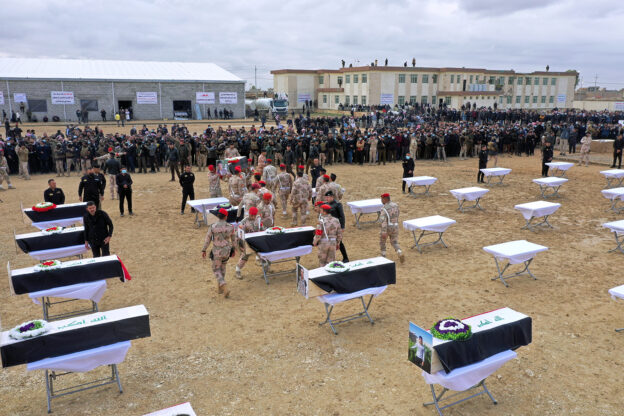
In early December, Yazidis held a ceremony to bury 41 community members killed by the IS group

"Some are welcomed back by their families, others are not. Although the community doesn't like to talk about it like this, it's a bit of a disaster," the source said. "And all this [the new rights Yazidi women have] is still only possible with the permission of male family members. It's still deeply patriarchal here. Then again," they concluded, " these things take time. And once people are given opportunities, it's very hard to take them away again."

"Definitely there is still some social friction," Ismael agreed. "It will take time and education," he argued. "But I think in many ways Yazidi women led by example, during and after the genocide. [They] were at the forefront of everything that happened and in many ways became symbols of the people."


Kholoud al-Amiry assisted with this report in Iraq.

 
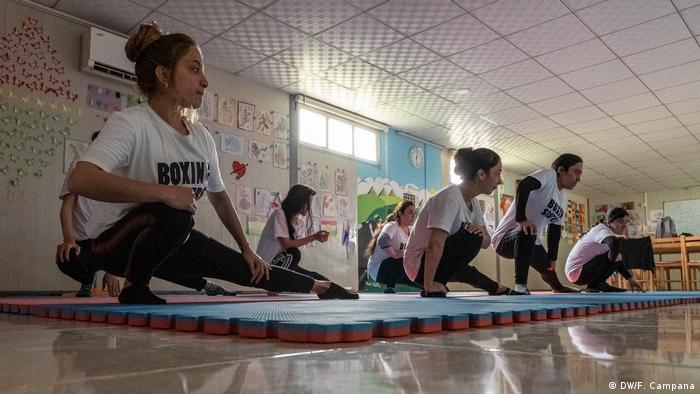
AFTER 'ISLAMIC STATE,' YAZIDI WOMEN LEARN TO BOX
The warm-up
The "Boxing Sisters" program was launched in late 2018 by Lotus Flower, a British NGO in Iraqi Kurdistan. Five days a week Yazidi women and girls gather for a two-hour training session in the Rwanga IDP camp. Many of these women were subjected to physical, emotional and sexual violence while held captive by the "Islamic State" (IS) before arriving at the camp.

Friday, February 21, 2025

Genocide Drove the Yazidi From Their Homeland. A Decade Later, Some Are Returning.

ISIS wrecked 80 percent of public infrastructure and 70 percent of civilian homes in Sinjar City and surrounding areas.
February 17, 2025
Hussein Findi and his wife Ghassal Sado return to their half-destroyed home in Sinjar in January 2025.Jaclynn Ashly


Fadil Murat Shamo, 22, is still struggling to rebuild his life after ISIS (Islamic State of Iraq and Syria, also known as Daesh) militants killed most of his family when they took over the predominantly Yazidi district of Sinjar in northern Iraq more than a decade ago. As a child, he spent five years in ISIS captivity and was indoctrinated to become a soldier.

It was a fate that befell thousands of Yazidi, a long-persecuted group whose faith is rooted in Zoroastrianism and who were declared infidels by ISIS. About a decade after the United States invaded Iraq, sparking a sectarian civil war and creating conditions for what was then al-Qaeda in Iraq to flourish, ISIS invaded Sinjar on August 3, 2014, prompting most Yazidi to flee their homes.

The Yazidi who became trapped in Sinjar endured ineffable horrors. Within days, nearly 10,000 people were killed, with almost half of them executed — either shot, beheaded or burned alive — while the rest died from starvation, dehydration or injuries during the ISIS siege of Mount Sinjar, to where scores of Yazidi fled during the onslaught. Nearly 7,000 Yazidi were kidnapped. Young women and girls taken captive were sold as sex slaves, while boys like Shamo were forced to fight as child soldiers.

Never miss another story

Get the news you want, delivered to your inbox every day.

Email*


Nearly 2,800 of these women and children are still missing today. Some are known to be in ISIS captivity, while the whereabouts of others are uncertain. Some villages in Sinjar are mass graveyards — yet to be exhumed.

More than a decade after what the United Nations declared a genocide, traumatized Yazidi continue to trickle back to their ancestral lands in Sinjar — finding both hope and sorrow waiting for them there.

Related Story
News |
War & Peace
Solidarity Activists Are Raising Alarm Over Impending Turkish Attacks on Rojava
The Kurdish movement in North and East Syria is facing existential threats from Turkey following the fall of Assad.
By Ella Fassler , TruthoutDecember 24, 2024

According to the International Organization for Migration (IOM), more than 100,000 Yazidi have so far returned to Sinjar, but the majority remain displaced. Those returning are battling serious physical and mental trauma — exacerbated by perpetual feelings of insecurity — while infrastructure and job opportunities are still severely lacking. Across the district, buildings and homes remain damaged or destroyed.

“Returning for those of us who lost loved ones is very hard,” Shamo tells Truthout, sitting on the floor of the home he constructed in the northern part of Sinjar after he returned in 2020. “We will never be the same again after ISIS.”

“But it brings me some happiness when I see Yazidi families coming back home. Returning will not heal us, but it is a nice feeling to see Sinjar coming back to life.”
“Wanted to Die”

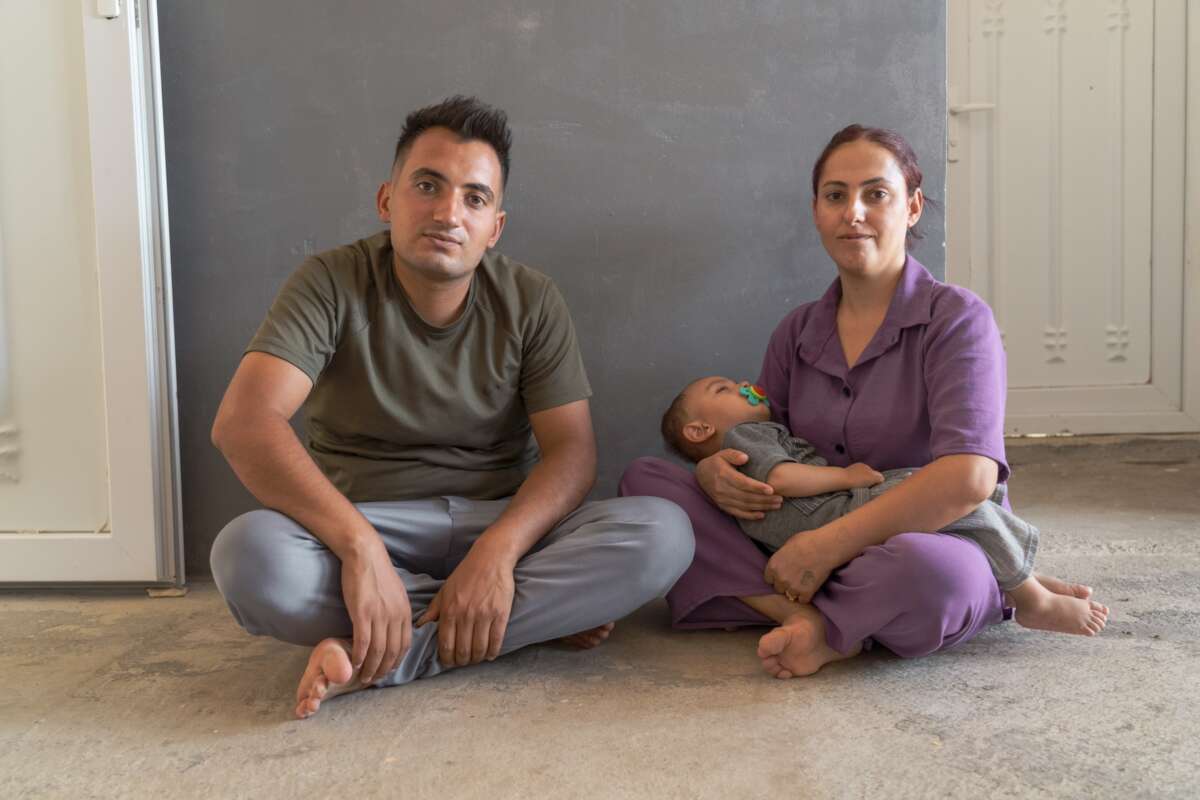
Shamo was 12 years old when he was abducted by ISIS, along with his parents and siblings, including his sisters. First, the militants separated Shamo and his sisters from their parents and elder brother. Then, Shamo says, his small sisters were collected and sold into slavery, while he was transported to Mosul with 33 other boys.Fadil Murat Shamo sits with his wife and small child.Jaclynn Ashly

“They kept us at a private house in Mosul where we were forced to learn the Quran, their ideologies and how to fight,” Shamo remembers. “We stayed there for one year. It was like a prison. We weren’t allowed outside and we never saw the sunlight. There was just one small window in the building.”


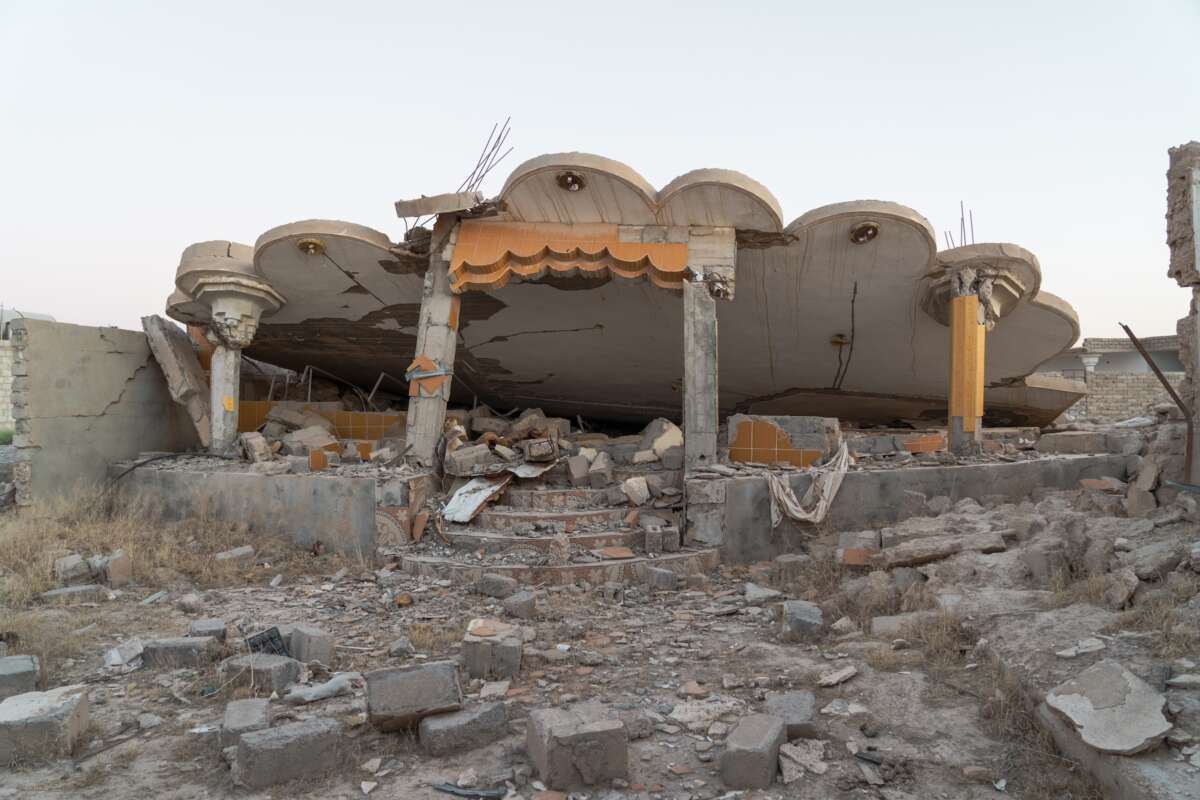
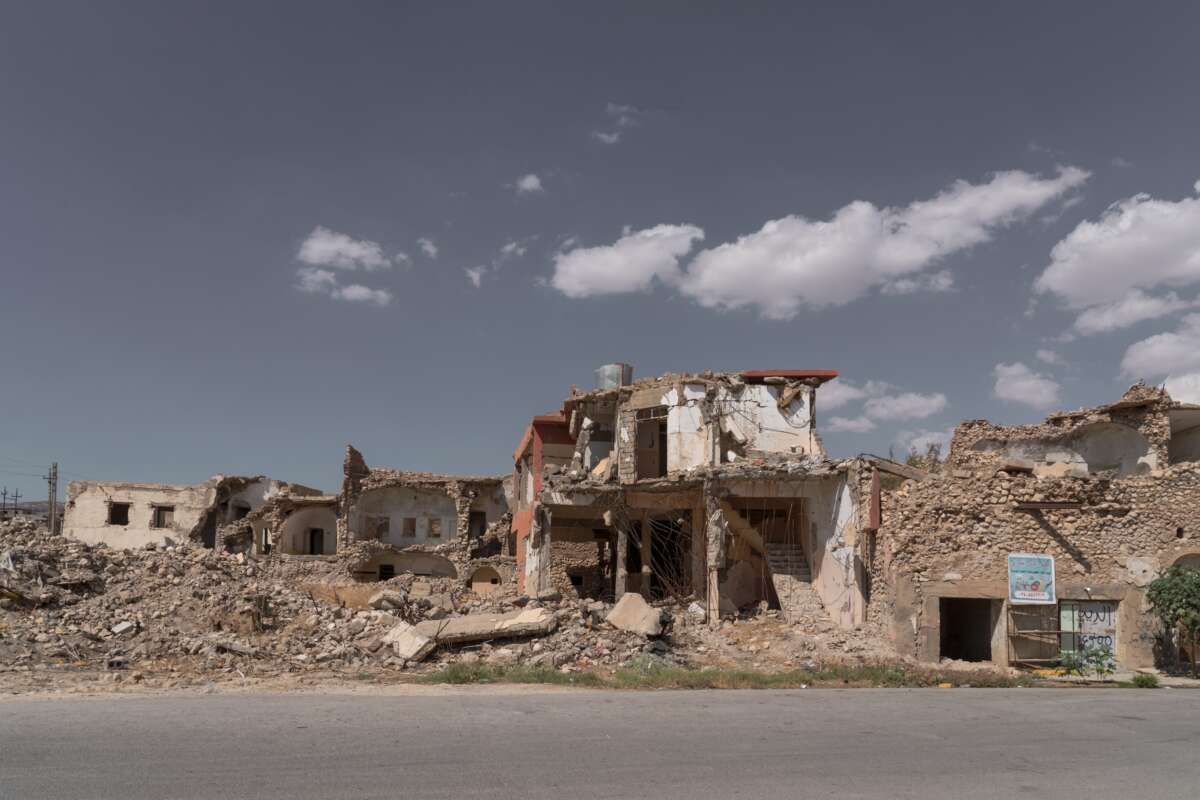
The old city remains in complete ruins — with bullet-riddled buildings and collapsed roofs and walls.

Once the militants thought the boys were ready, they transported them to Raqqa, the capital of the Islamic State in Syria, to join their ranks as ISIS fighters. Only 10 of these boys survived, Shamo says.

“They killed our whole families so all of us just wanted to die,” Shamo recounts, fiddling with his thumbs. “The most unimaginable things became everyday life. We witnessed beheadings so often that they became normal. But we never actually believed that when we died, we would become martyrs and go to heaven. Everyone blew themselves up or died in battle because they hated this life — not because they wanted heaven in the next life.”

After three years of fighting as a soldier, Shamo was able to get smuggled out of ISIS territory, ending up in al-Hol camp (Kempa Holê) in Kurdish-controlled northern Syria, which continues to hold tens of thousands of women and children from former ISIS territory

.
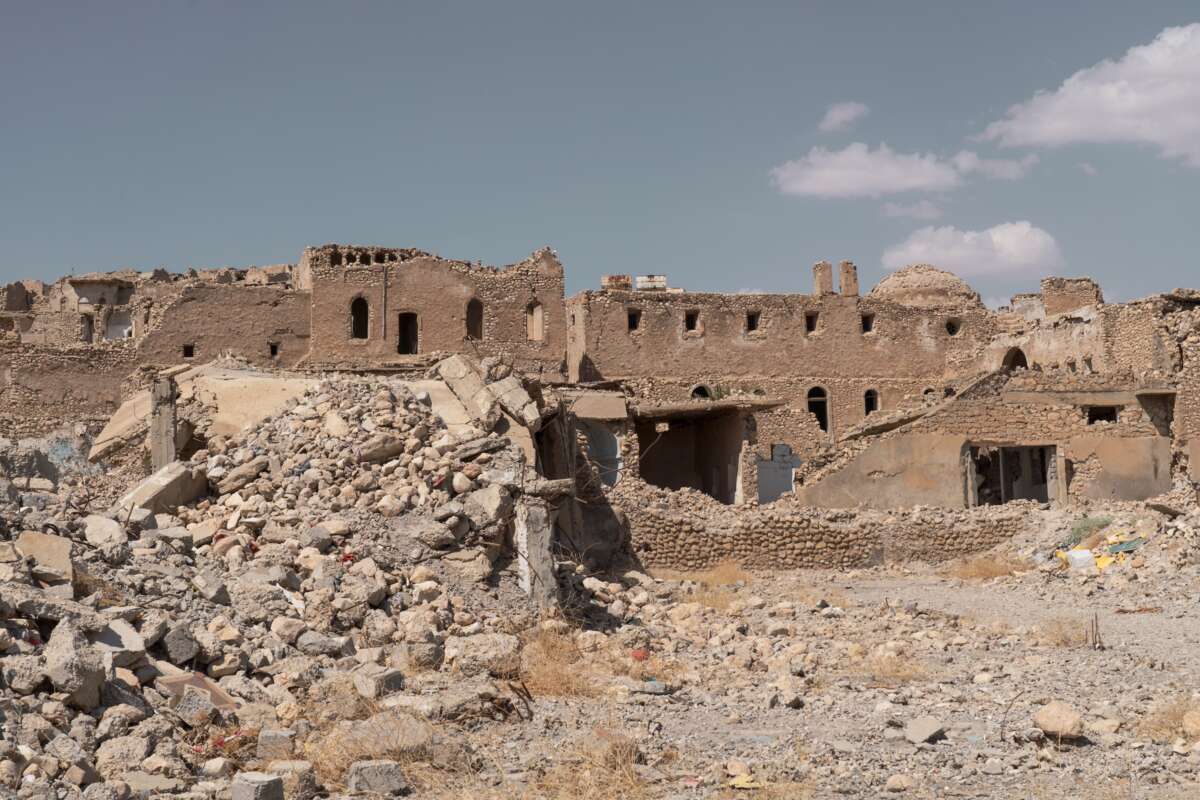
Ruined buildings are shown of a village in northern Sinjar, where Yazidi have recently begun to return. Jaclynn Ashly

He was eventually repatriated to Iraq, where he stayed at one of numerous internally displaced people (IDP) camps in Iraqi Kurdistan. His sisters were also smuggled out of ISIS territory two years prior and are now living in the camps. His parents and brother, however, are still missing — assumed to have been killed.

In 2020, Shamo decided he would return to Sinjar. According to the IOM, which assists Yazidis to voluntarily return to Sinjar, 2020 saw the highest number of returns out of any year since the group began collecting data in 2018.

Despite finding his childhood home destroyed, Shamo saw a glimmer of hope in his return. “After I returned, I focused all my energies on rebuilding my life,” Shamo says. “I got married and had children. Now I have my own family. This has helped me to recover from what happened to me.”
“Sick of the Camps”

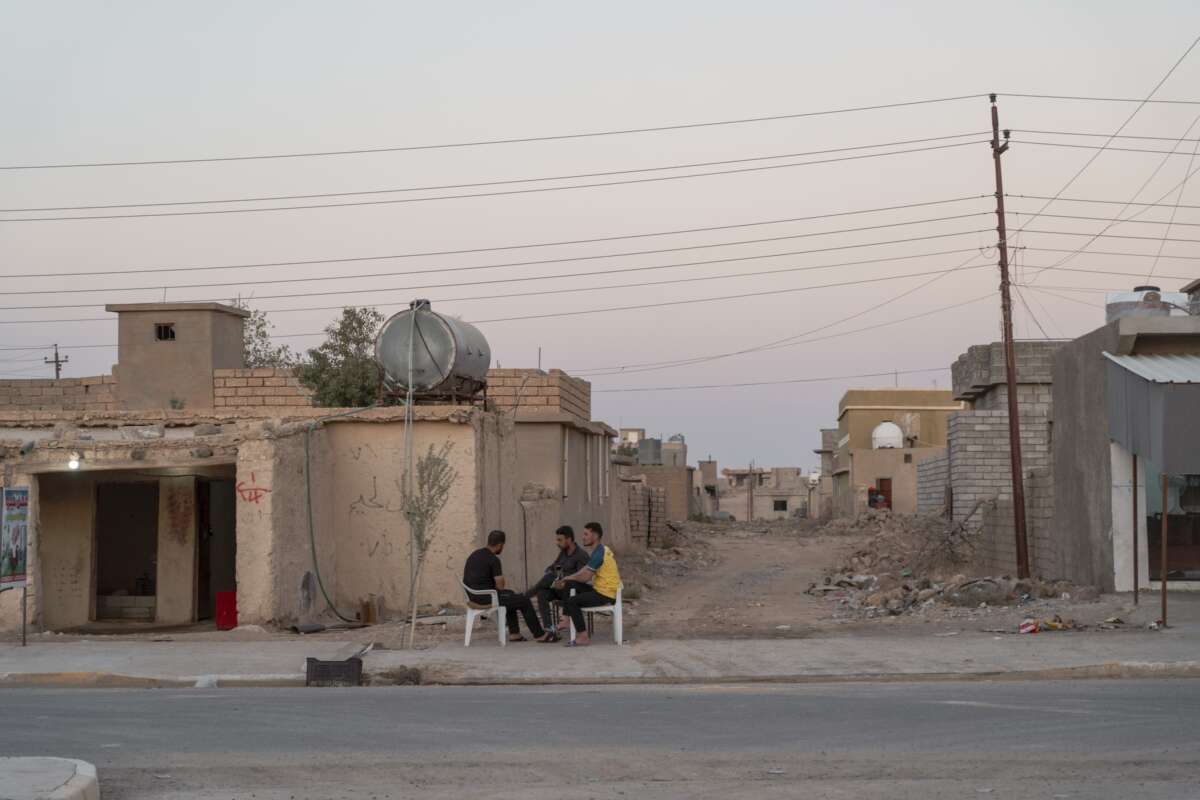
But not everyone returning to Sinjar is as hopeful. Others see no future there — only unresolved wounds and crumbling buildings. Sinjar’s main town still bears the scars of the fighting that raged there in 2014 until a fightback driven by Kurdish forces dislodged ISIS militants from the town the following year. The old city remains in complete ruins — with bullet-riddled buildings and collapsed roofs and walls. In some areas, there are still warning signs of the lethal threat of land mines and war munitions.

Many Yazidi do not have the money to rebuild; some are sleeping on the floors of half-standing houses. Infrastructure is still wrecked, while the federal Iraqi government and the autonomous Kurdistan Region of Iraq tussle for control over the area.People sit among the partly destroyed buildings of a village in northern Sinjar, where Yazidi have recently begun to return.Jaclynn Ashly

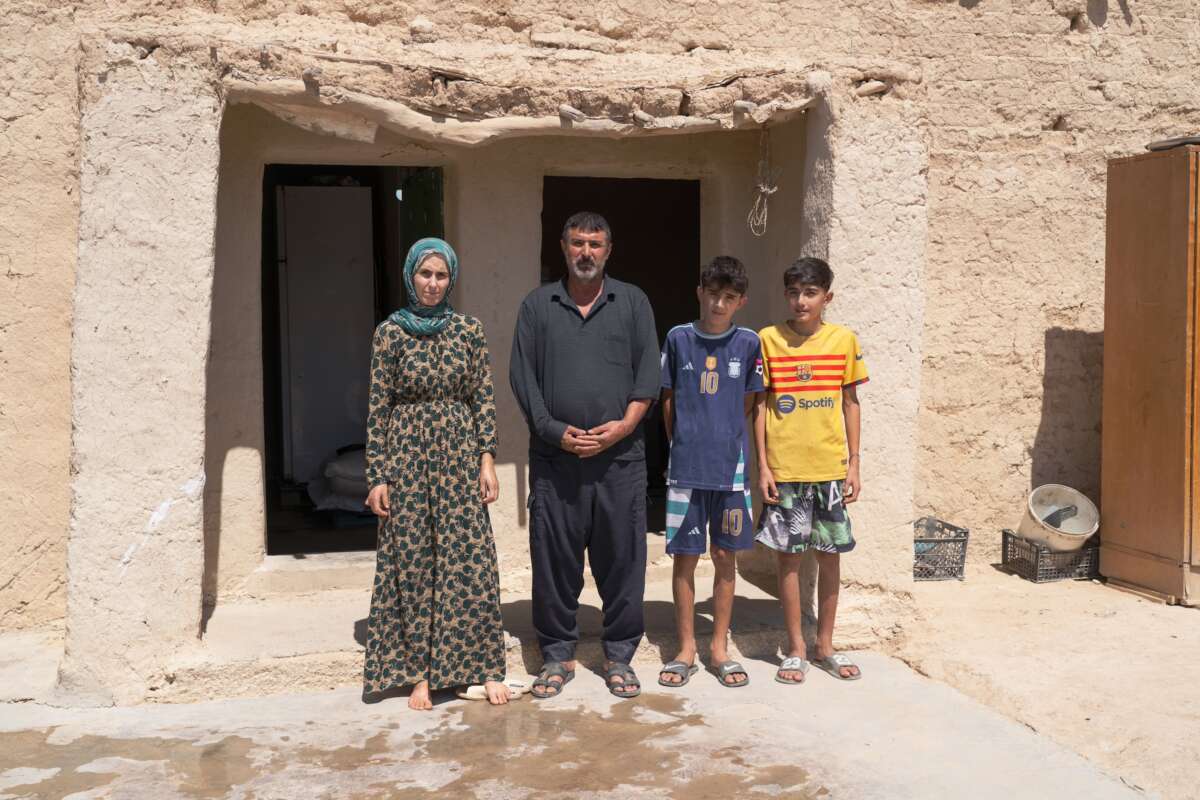
When Amy Hussein, 48, returned to Sinjar last year with his six children, ages 9 to 22, he found his home was reduced to rubble. He is now living in his brother’s home, which he was in the process of constructing before ISIS militants overran the area. His brother is living abroad in Germany, where many Yazidi were granted asylum.

“You see over there,” Hussein says, pointing to one of many abandoned homes in his small village in the northern part of Sinjar. “At this home, about 25 members of the family were taken captive by ISIS. All of them are now either killed, missing or living as refugees in Europe.” He shakes his head and digs his shoe into the dried dirt. “I came back here only because I was so sick of living in the IDP camps,” he adds.

Amy Hussein stands with his wife and two sons. Jaclynn Ashly

“But it’s still hard. For those of us who survived the genocide, we don’t know anything about our fate or our future.”

With ISIS’s destruction of around 80 percent of public infrastructure and 70 percent of civilian homes in Sinjar City and surrounding areas, a lack of basic services and adequate shelter means those returning are in an uphill battle to rebuild their lives. According to the IOM, there are still challenges in accessing running water, electricity, health care and education for families in Sinjar.

Public education is sometimes not readily available, in part due to damage or destruction of schools. Where it is accessible, the quality of education is undermined by overcrowding, with some schools accommodating students from multiple villages, and staffing shortages, as thousands of teachers remain displaced.

Many families here have received financial support from IOM to return and to rebuild their homes, but they say that it is not enough. Hussein, who received about 700,000 Iraqi dinar ($534) from IOM, says it helped him put up some windows and doors in his brother’s half-constructed home, but the funds quickly dried up.

About 2,200 Yazidi are receiving monthly stipends — about $650 — through the Yazidi Survivors Law, which the Iraqi parliament passed in 2021 and which provides a reparations framework for many survivors of ISIS crimes, particularly women and girls subjected to sexual violence, as well as child survivors who were abducted before the age of 18. The law focuses on the Yazidi community, but also includes reparations for survivors from the Christian, Turkmen and Shabak minority groups.

Many Yazidi do not have the money to rebuild; some are sleeping on the floors of half-standing houses.

Shamo, who was abducted by ISIS when he was 12, is a recipient of this monthly stipend, which has helped him rebuild and sustain himself in Sinjar despite widespread unemployment.

The Iraqi government, through the Ministry of Migration and Displaced (MoMD), also provides a return grant of 4 million Iraqi dinar ($3,052) for Yazidi families residing inside the IDP camps and 1.5 million Iraqi dinar ($763) for those outside the camps. Those whose homes and properties were destroyed or damaged can also apply for compensation from the government.

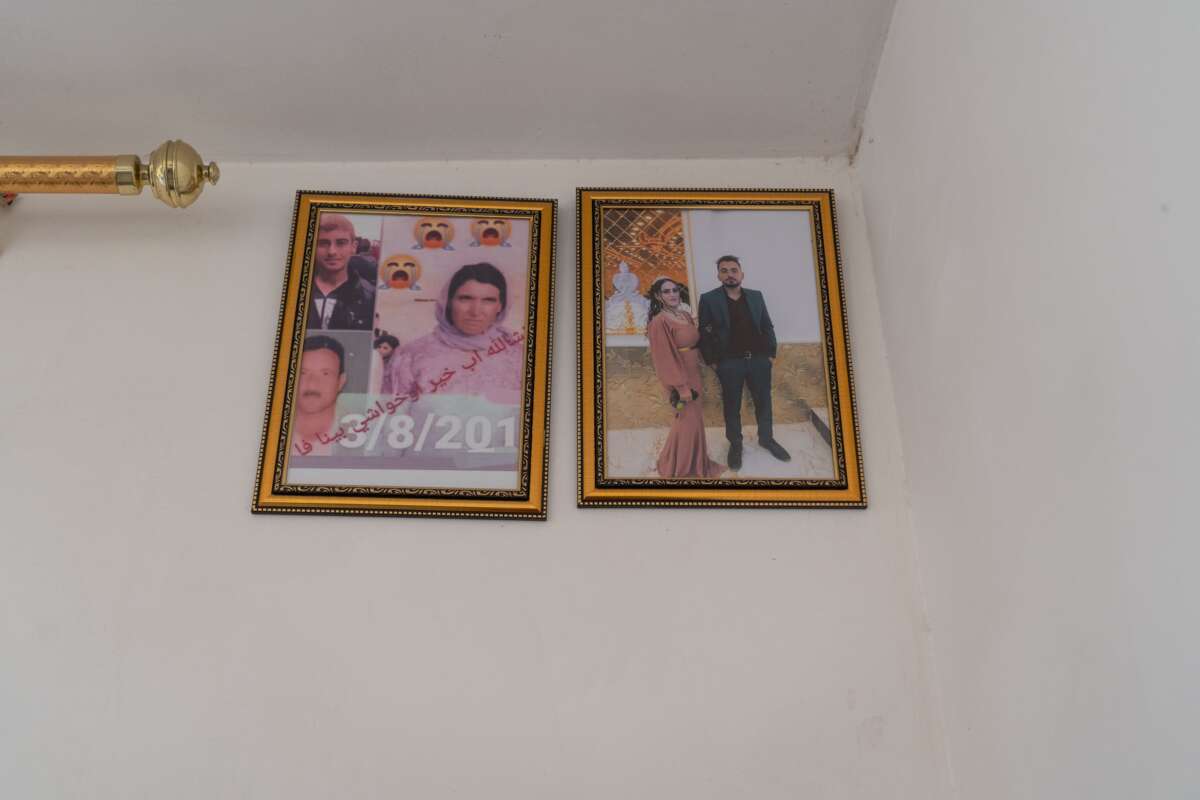
Photos hang on the wall of Shamo’s parents and brothers, who are still missing and believed to have been killed by the Islamic State. Jaclynn Ashly

Yet of all the recently returning Yazidi Truthout spoke to, none had received this government assistance. Jamal Saido, the documentation and protection officer at Nadia’s Initiative, founded by Nobel Peace Prize Laureate and Yazidi survivor Nadia Murad, says this is likely due to the extremely slow pace of the application process, which can often drag on for many months.

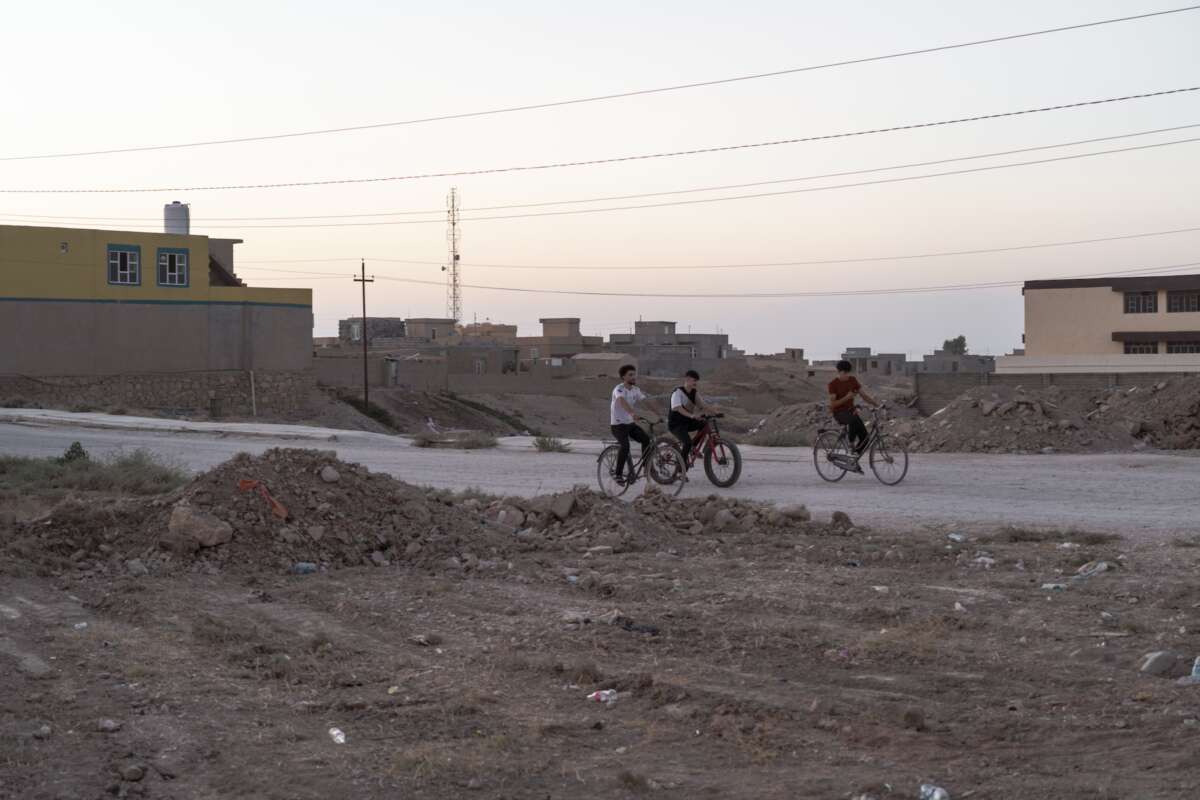
Young people ride bikes through a village in northern Sinjar, where Yazidi have recently begun to return.Jaclynn Ashly

Tired of waiting, many Yazidi families have returned on their own without government or organizational support.


“Because of Fear”

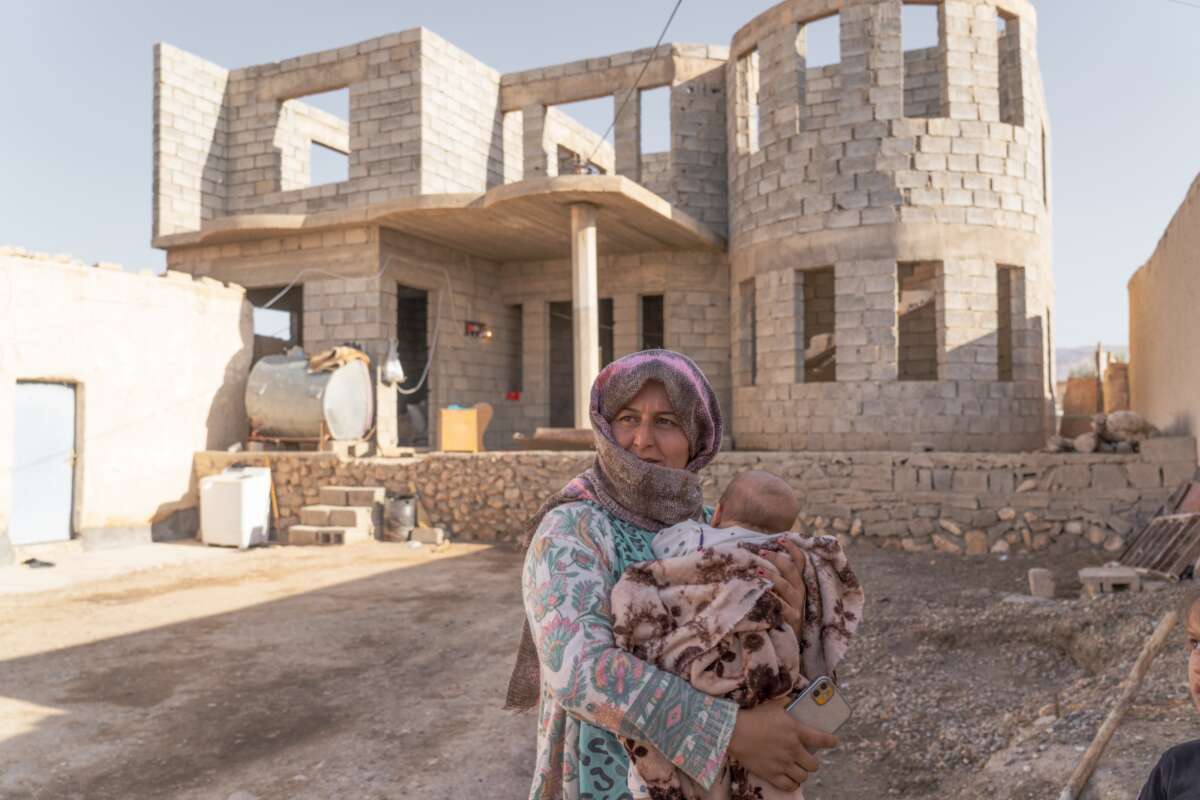
Sahar Hajimalo, 30, just returned to Sinjar a few days ago — after spending more than a decade in Chamishku camp in Zakho. The mother of three children, from ages 10 years to 2 months, returned to the home her family had started constructing before the ISIS invasion.

“Living in the camps, nothing ever belonged to us,” Hajimalo tells Truthout, balancing her 2-month-old on her hip. “We wanted to return to the only things that still belong to us — our home and land.”

Sahar Hajimalo, 30, just returned to Sinjar a few days ago and is sleeping on the floor of a half-constructed home. Jaclynn Ashly

Hajimalo says she has not received any financial assistance, but decided to return on her own. Her husband is also unemployed. With much of the infrastructure and buildings still damaged or destroyed in Sinjar, along with the majority of the Yazidi population still displaced, there is a major lack of employment and business opportunities for those returning.

Hajimalo and her family now sleep on the floor of a small room in her half-constructed home, bundled up in blankets during the nights. “The conditions here are not great,” she says. “But the situation in the camp was becoming unbearable. We didn’t want to be displaced for the rest of our lives.” Some returning Yazidi have erected tents to live in, while others have moved into the homes of those who were killed or displaced because their own homes were destroyed, according to residents.

An IOM survey conducted last year revealed that 85 percent of displaced Yazidi said they were not returning to Sinjar due to issues around accessing housing, employment, making a livelihood or starting a business, along with inadequate access to basic services. According to the IOM, 80 percent of Yazidi households, whether returnees or internally displaced people, do not have a stable income.
Sinjar’s old city is still in ruins. Jaclynn Ashly

About 85 percent of Sinjar’s population was dependent on agriculture for their livelihoods before 2014. But the ISIS militants wiped out Sinjar’s natural resources, sabotaged its irrigation canals and wells, stole or destroyed farming equipment and razed the farmland. Many families also lost their documentation that proves land ownership during the chaos of fleeing their homes, leaving them without access to their properties on which to farm.

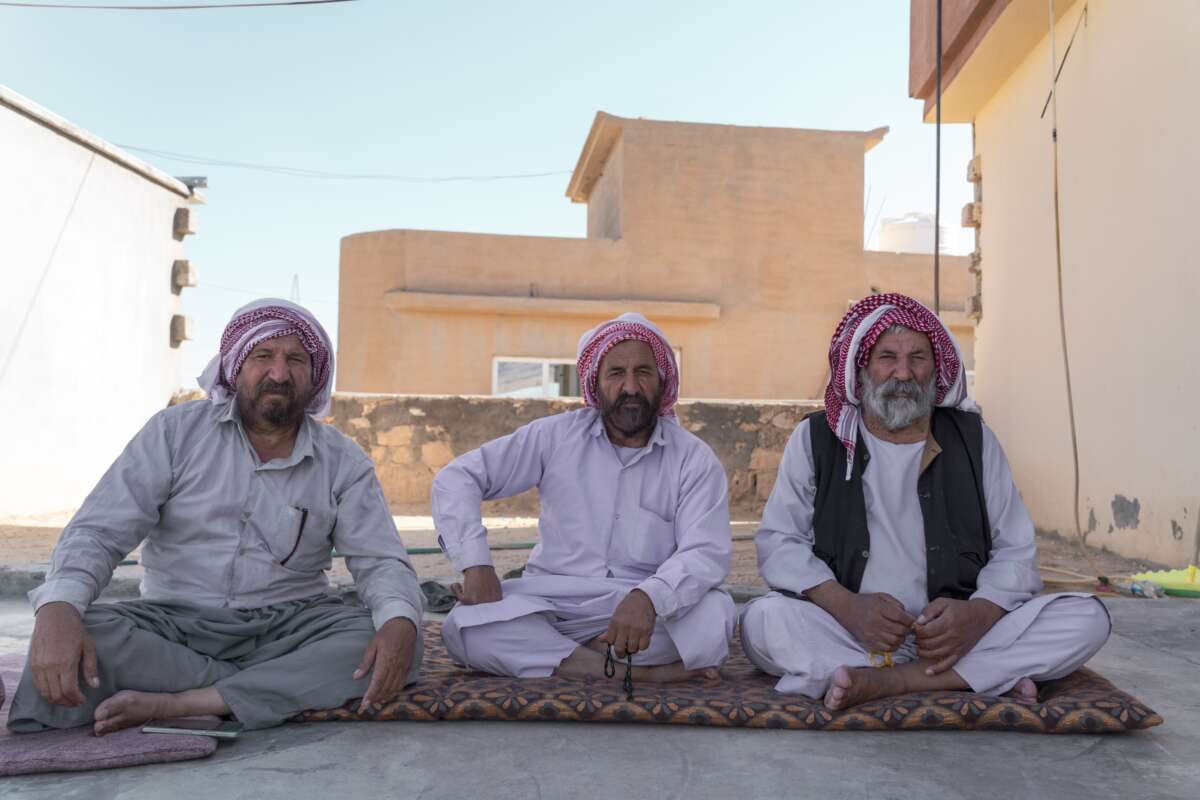
Omar Uso, 74, sits beside his two sons on a mat laid out in front of his home, which he began constructing about a year ago with help from local organizations. The family finally returned a month ago after construction was completed.

“Before ISIS, we had vehicles and a lot of livestock — over 300 sheep, but we left everything behind,” Uso tells Truthout. “ISIS burned down our homes and looted our vehicles, tractors, generators, animals, everything.” According to Uso, 70 people from his village were captured by ISIS and out of them only two elderly women survived.

“It would take a huge investment to get back all that was stolen from us and build up our farm again, and it’s just not possible right now,” Uso explains.

Omar Uso (right) sits beside his two sons at his home in Sinjar. Jaclynn Ashly

Uso says there is also rising hate speech against the Yazidi in Iraqi Kurdistan and this is driving many to return to Sinjar, despite not having proper homes or livelihoods. These tensions followed statements made last year by Qasim Shasho, a Yazidi politician and commander of the Yazidi Peshmerga unit in Sinjar, who declared that the Yazidi would always be under threat as long as “Mohammed and his religion exist”; however, Shasho claimed his words were misinterpreted and were meant only for extremist groups.

Nevertheless, this public comment elicited uproar, with some Sunni clerics making direct threats of violence against the Yazidi living in camps around Duhok in public speeches and social media. At least dozens of Yazidi families, reminded of the terror they endured in 2014, fled their homes in fear of potential attacks.

Uso’s son Barjis tells Truthout that the primary reason for him returning to Sinjar two weeks ago was due to continued feelings of insecurity in the IDP camps. “The camps don’t feel safe anymore,” Barjis says. “I had work and more opportunities in Kurdistan, but I came back here because of fear.”
“Kill Us Again”

This fear is felt throughout the entire Yazidi community in Iraq — among those returning to Sinjar and those still displaced. “Yazidi are living in total uncertainty in different environments,” explains Saido from Nadia’s Initiative. “Some are living in IDP camps and they are scared to return to their lands where they were subjected to genocide with little support to assist them in rebuilding their lives. Others are also scared of staying in the camps.”

“Wherever the Yazidi are in Iraq, they have been living in total uncertainty and insecurity for more than a decade now,” he adds. “They are still living in complete fear that something will happen to them again at any moment. It’s difficult for them to feel safe, regardless of where they are.”

Sinjar’s old city is still in ruins. Jaclynn Ashly

According to Saido, those returning to Sinjar are suffering from PTSD and have experienced flashbacks upon returning to their destroyed villages and homes. Shamo, who was indoctrinated to fight as a child soldier for ISIS, concedes that he is often unable to sleep. “Psychologically, I’m still not normal,” Shamo tells Truthout. “I have hope in my future here in Sinjar. But I can’t help my mind from remembering and thinking too much. It has been more than 10 years that I haven’t heard anything about my parents and brother. Even to just calm my mind down to sleep for one night is very difficult for me.”

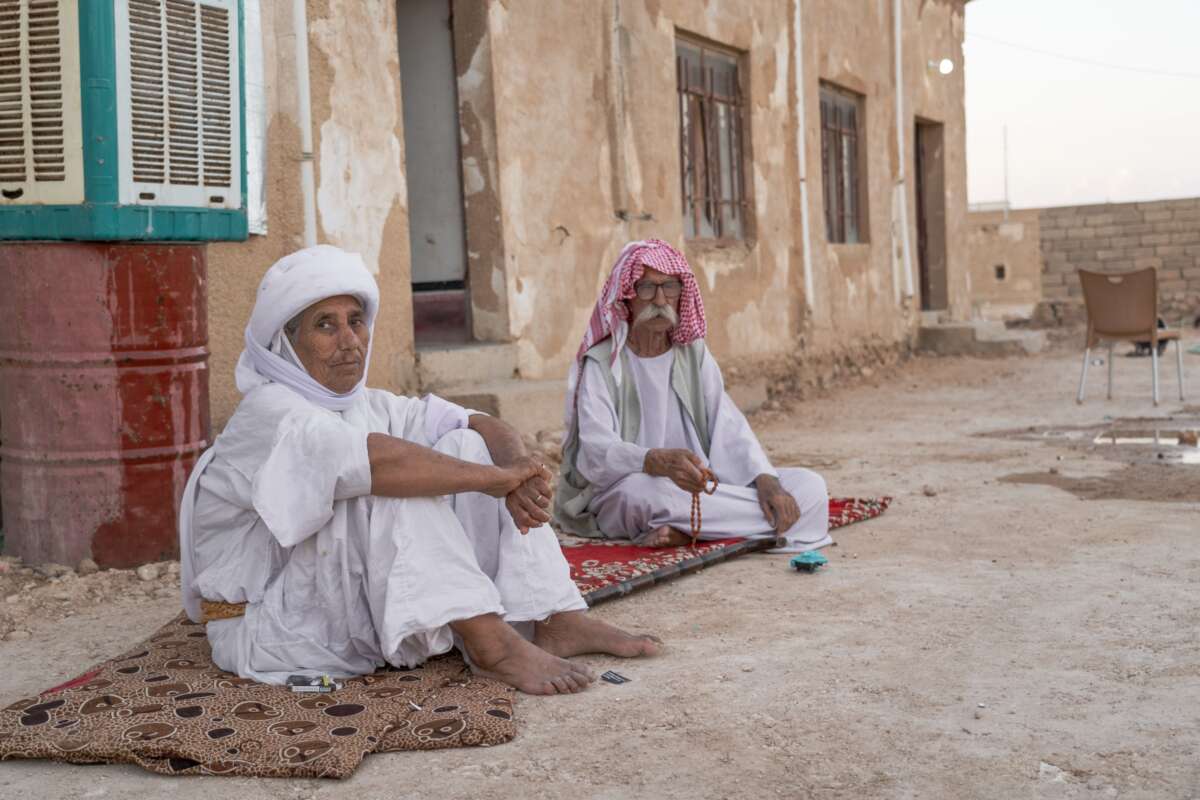
Hussein Findi, 107, and his wife, 85-year-old Ghassal Sado, returned to their half-destroyed home in Sinjar about a month ago. They also say it was increased hate speech targeting the Yazidi in Iraqi Kurdistan that prompted them to leave the Kabarto IDP camp and return to Sinjar. “Nowhere in Iraq is safe for the Yazidi, so we might as well return to our homeland,” Findi says, seated cross-legged on the concrete floor of one of the only rooms of his home that was not destroyed by ISIS.

“But this violence is not new to the Yazidi,” Findi tells Truthout, gliding a string of prayer beads between his fingers. “What ISIS did to us is not the first genocide against the Yazidi; they have killed us before and they will kill us again.”

Historians believe that there were at least 74 different genocidal acts that were committed against the Yazidi by various actors through the centuries. The Yazidi refer to these massacres as the 74 Firmans, literally meaning an official decree or order. This word has become synonymous with genocide within the Yazidi community, because most of the episodes were committed in furtherance of Islamic Fatwas calling for violence against the Yazidi.

“The Yazidi will never be safe in this country,” Findi laments. “But if they come for us again, I would much rather be killed in my homeland than in an IDP camp.”

This article is licensed under Creative Commons (CC BY-NC-ND 4.0), and you are free to share and republish under the terms of the license.

Jaclynn Ashly is a multimedia freelance journalist who has worked in more than a dozen countries. She specializes in telling in-depth stories that relate to human rights, migration, culture, climate change and politics.

Saturday, March 29, 2025

Yazidis call attention to nearly 3,000 captives still missing a decade later

(RNS) — Jamileh Naso, president of the Canadian Yazidi Association, said the global Yazidi community has meticulously documented and tracked the names of those abducted, but their efforts need international support.


FILE - Mourners prepare to bury the remains of Yazidi victims in a cemetery in Sinjar, Iraq, Saturday, Feb. 6, 2021. (AP Photo/Farid Abdulwahed)
David I. Klein
March 24, 2025

ISTANBUL (RNS) — The fate of nearly 3,000 Yazidis taken captive by the Islamic State group in Iraq remains unknown, officials from Iraq’s Kurdistan Regional Government announced earlier this month. And with a resurgence of ethnic violence in Syria and funding cuts to U.S. international aid by President Donald Trump, rescues are becoming increasingly difficult, Yazidi leaders said.

Jamileh Naso, president of the Canadian Yazidi Association, told RNS the global Yazidi community has meticulously documented and tracked the names of those abducted — many over a decade ago when the Islamic State invaded their region — but their efforts can only go so far without international support.

The main organization active in rescuing Yazidi captives has been Iraqi Kurdistan’s Office of Rescuing Abducted Yazidis, which announced the most recent numbers in early March.

“One of the primary concerns is the lack of transparency in the process,” Naso said. “Families are often left without clear updates or information about their missing loved ones. Many have had to rely on smugglers or personal contacts to obtain any news, which should not be the case when an official government office is tasked with these efforts.”

Yazidis are an ethnic and religious minority in the Middle East, with the largest population concentrated in northern Iraq. The centuries-old monotheistic faith blends teachings and beliefs from other religions including Gnostic Christianity, Judaism, Sufi Islam and Zoroastrianism with ancient local traditions.

In 2014, the Islamic State captured the Sinjar region, a Yazidi refuge in Northern Iraq, and began massacring and enslaving residents. As a non-Muslim minority group, the Islamic State viewed Yazidis as outside the Sharia law it was imposing on the fledgling state it carved out of Iraq and Syria.


FILE – In this photo taken Saturday, Jan. 10, 2015, internally displaced Yazidi women bake bread at a refugee camp in Bamarny village in Dahuk of the Kurdistan region, 260 miles northwest of Baghdad, Iraq. (AP Photo/Seivan Salim)

During its brief but brutal rule over parts of Iraq, Yazidis faced harsh repression. Thousands were killed and thousands more kidnapped and subjected to torture, indoctrination and sexual slavery. Yazidi women and girls were particularly targeted by the Islamic State.

“The enslavement of Yazidi women by (the Islamic State group) in 2014 was not just an atrocity, it was an attempt to annihilate a people,” said Omar Mohammed, a senior research fellow on extremism at George Washington University. “When ISIS overran Sinjar, it marked the beginning of a genocide. Men were executed en masse, young boys were taken and indoctrinated as fighters, and thousands of women and girls were abducted, sold and subjected to systematic rape and abuse. They were trafficked like commodities across ISIS territories, their identities erased and their suffering normalized by a twisted ideology that justified their enslavement.”

In 2016, the United Nations ruled the atrocities committed by the Islamic State group as an act of genocide, and a decade on, Yazidi communities around the world are still hopeful loved ones will be found.

RELATED: Islamic State’s genocide was not limited to killing and enslaving Yazidis, Christians and other communities − it also erased their heritage

However, Naso noted, in several cases, rescues led by the Kurdistan Regional Government have been delayed due to political disputes and funding battles, driving families to take dangerous personal actions.

“While their work is commendable, there are significant challenges and limitations that must be acknowledged. The rescue operations outside the officials are heavily reliant on ransoms, forcing Yazidi families — many of whom live in extreme poverty — to pay thousands of dollars to retrieve their loved ones,” she said.

Bureaucracy isn’t the only thing inhibiting rescues. As of 2023, the al-Hol refugee camp in northeastern Syria was home to some nearly 50,000 people, a large portion of whom are surrendered Islamic State group fighters and their families. However, among them are believed to be hundreds to thousands of Yazidi captives.

While the camp is guarded by the Syrian Democratic Forces, within it, observers have reported former Islamic State fighters still hold significant power. And with the ouster of Bashar al-Assad’s regime in Syria in December 2024, recent outbreaks of violence have left a vacuum of authority for coordinating rescues.

“We don’t even know who to negotiate with at this point. … But I hope we can find a way to do something,” Khairi Bozani, an adviser for Yazidi affairs to the Kurdistan Region Presidency, told Kurdish media in late February, noting no one has been rescued from al-Hol since Assad’s fall.

Though the recent outbreak of ethnic violence in Syria, which saw massacres of Alawites and some Christians, was largely focused on the western coast and far from al-Hol, there are fears the instability will create an opening for Islamic State cells to regroup.


Jamileh Naso, president of the Canadian Yazidi Association. (Courtesy photo)

“The resurgence of ISIS-linked attacks in parts of Syria means that Yazidis who returned to the region remain at risk,” Naso said. “Women and children who escaped captivity are now living in areas that are once again becoming unsafe. Many Yazidis in Syria remain displaced in refugee camps, and with ongoing conflict, they have even fewer options for return or resettlement. Food shortages, medical crises and lack of humanitarian access have made conditions worse.”

“Until Syria is fully stabilized and governed by actors committed to justice and security, Yazidis cannot safely live there, let alone expect meaningful efforts to find and rescue those still missing,” she added.

Syria isn’t the only focus point. In one highly publicized case, a 21-year-old Yazidi woman, Fawzia Amin Sido, was rescued from Gaza amid the Israel-Hamas war in Oct. 2024, more than a decade after she was captured in Sinjar as an 11-year-old.

“The case of the Yazidi woman found in Gaza should have been a wake-up call to the international community,” Naso said. “It proved what many of us have known for years — that Yazidi captives have been trafficked beyond Iraq and Syria. There is strong evidence that Yazidis have been taken to Turkey, Lebanon, Libya and even the Gulf states. Some were sold into domestic servitude, others were forced into marriage under false identities and some were simply disappeared into underground trafficking networks.”

It’s all the more reason international cooperation is need to expand the search beyond just Iraq and Syria, she added.

“Countries that have influence in these regions — including Turkey, the UAE and Qatar — must be pressured to conduct investigations and assist in rescues. There must be diplomatic consequences for countries that fail to take action against human trafficking networks that still hold Yazidis captive,” Naso said.

Alongside advocating for more resources for Yazidi refugees in Canada, Naso is also seeking more involvement from western states in the rescue of Yazidi captives and the prosecution of Islamic State war criminals. Under the Biden administration, U.S. Secretary of State Antony Blinken met with Yazidi leaders and reiterated American support for Iraqi Yazidis and rescuing captives. However, little effort has been made under the new Trump administration, she said.

“The shift in U.S. administrations has directly impacted efforts to assist Yazidis, both in terms of funding for rescue operations and political priorities,” Naso said. “The decline in U.S. leadership on this issue has meant that Yazidis have had to rely on grassroots efforts, NGOs and community-driven initiatives to search for missing loved ones. This is unacceptable. The U.S. played a key role in dismantling ISIS militarily, and it must play an equal role in bringing justice to the survivors.

“The world has said ‘never again’ too many times. Now, we need them to prove it,” she said.

Friday, March 26, 2021

Iraq's Yazidis warn of ongoing threats from extremists

A new law to aid Yazidi female survivors isn't enough. The Yazidi community says it's only a matter of time before they are attacked again.


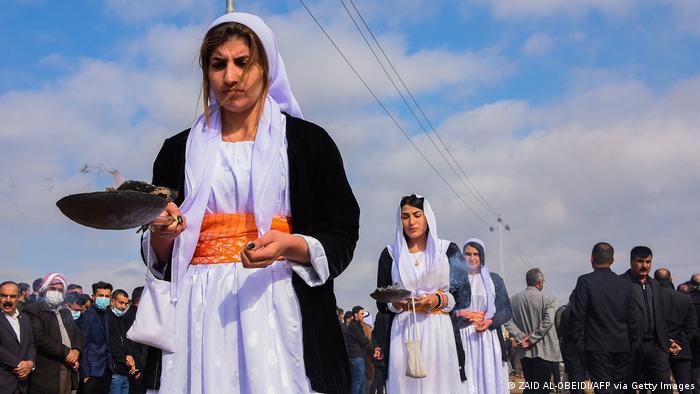
Yazidi women burn incense while participating in a mass funeral for those slain by the Islamic State terror group in Sinjar

In a landmark decision this month, Iraq's parliament passed the Yazidi Female Survivors Law, recognizing the atrocities committed by the extremist group known as "Islamic State," or "IS," against the ethno-religious group as genocide.

When "IS," an Islamist terror group, took control of swathes of northern Iraq between 2014 and 2017, it killed, kidnapped and enslaved thousands ofYazidis, while tens of thousands more were forced to flee their homes.

"The passage of the law represents a watershed moment," the United Nations' International Organization for Migration (IOM) said in a statement after the law was passed on March 1. It makes Iraq one of the first Arab countries to focus "institutional attention on female survivors of conflict-related sexual violence."

The bill was hailed by Iraqi President Barham Salih as "an important step."


But even while the law aims to "prevent the recurrence of violations," not everyone is convinced it will live up to its promises. Yazidi survivors say the existential threats that fueled "Islamic State's" genocidal campaign against them still persist in Iraq.
How does the law help survivors?

The law pledges to provide assistance to victims of "IS," primarily Yazidi female survivors who were kidnapped and later freed — but also members of other minorities who suffered the same fate, including Turkmen, Christian and Shabak Iraqis.

Under the new law, Iraq will provide a monthly stipend, residential land or free housing and psychological support to victims. Survivors of "IS" attacks will also be granted hiring priority for 2% of all public sector jobs.
 

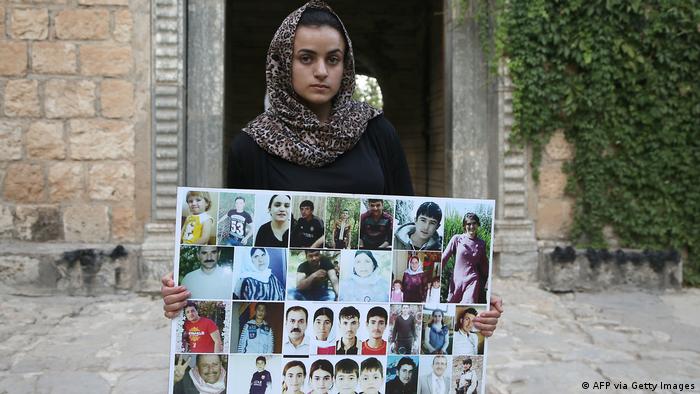
A Yazidi survivor holds portraits of IS victims from her village of Kocho located near Sinjar, Iraq


Kidnapped Yazidi children will also receive support and the legal status of children born of survivors will also be addressed.

Moreover, the legislation marks August 3 — the day of a major "IS" attack on Yazidi communities in 2014 — as a national day of remembrance and establishes a special government office for Female Yazidi Survivors' Affairs, which will open in northern Iraq's Ninawa province. Ninawa is home to the Sinjar district, where the majority of Yazidis once lived.

Survivors have nobody

Ghazala Jango, a Yazidi woman from Sinjar, said the bill was, "essential for female survivors, given that the majority of them had no one to support them. All their family members were killed."

Jango was 18 when the extremist group attacked Sinjar in 2014. Researchers say that some 10,000 Yazidis were killed or kidnapped during the assault and tens of thousands more were forced to flee into the nearby mountains. Jango was among them, having escaped on foot.


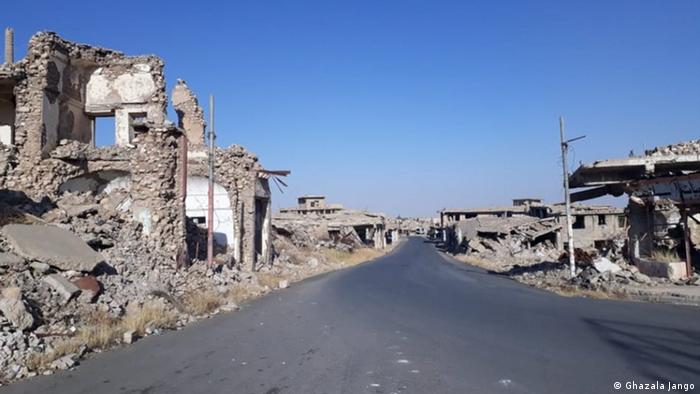
In August 2020, Sinjar was still in ruins, never having recovered from an attack by the Islamist terror group Islamic State (IS)


Six years later, she is back in Sinjar, where she works with the Yazidi-run Youth Bridge Organization, helping Yazidi families return to their homes. Even though it has been four years since then Iraqi Prime Minister Haider al-Abadi declared victory over "IS," the Yazidi community is still suffering, Jango told DW.

The new law will help improve the financial situation of Yazidis, "who have been living in poverty for almost seven years," she added. But, she says, it can't help survivors feel safer, "It is only financial support … it does not guarantee protection,"¨Jango argues.
Many broken promises

Other Yazidis interviewed by DW echoed this sentiment. They are skeptical that the Iraqi government will deliver on the promises it has made.

"I hope this law will not just be a law on paper but will be a practical solution to help them," said Ahmed Khudida Burjus, deputy director of Yazda, a multi-national, Yazidi-led organization that aims to assist the community in the aftermath of the genocide.

"In the past six years, many promises have been made and very little has been done. Yazidi villages and towns ravaged by Daesh [IS] still lie in ruins," he noted, using the colloquial term for the group.


THE ISLAMIC STATE ATTACK ON YAZIDIS ON IRAQ'S MOUNT SINJAR
In search of protection
Thousands of Yazidis fleeing the brutality of IS militants sought refuge on Mount Sinjar. Many have since found shelter in a camp in northern Iraq, but around a thousand are still reportedly trapped on the high terrain. PHOTOS 12345678910

It's about more than just rebuilding, Burjus argued, "Everything is related — security, justice and rebuilding and development."

And this is why the new Yazidi Female Survivors Law, while positive, is not enough. Burjus and other advocates for the community explain that the real problem is how the majority of Iraqis feel about the local Yazidi minority.

Devil worshippers


Thanks to misconceptions about their religion among Iraq's Muslim majority, Yazidis have long been labelled "devil worshippers."

The community has a long history of persecution dating back to the 16th century, and many groups, from invading Turks to local Kurds, have tried to convert them to Islam. "I am the descendent of 72 genocides," is still a common phrase among Yazidis.


The Lalish Temple in Iraq's Ninawa province houses the tomb of Sheikh Adi ibn Musafir and is the Yazidis' holiest site

"Yazidis lost everything and they trust neither the Kurdish nor the Iraqi government," 26-year-old Saud, a Yazidi man originally from Sinjar, said. Saud requested DW not use his real name because speaking out against the local Iraqi-Kurdish military could put him in danger.

In 2014, Iraqi-Kurdish forces were supposed to be in charge of security in the Sinjar area — which is adjacent to the semi-autonomous northern region of Iraqi Kurdistan — but when "IS" attacked, Iraqi-Kurdish soldiers withdrew, leaving civilians to fend for themselves.

"Our neighbors are Sunnis and Kurds. We were betrayed by all these tribes," said Saud, who lived in Iraqi displacement camps for 18 months before being granted asylum abroad. Saud says he'd like to return home to Iraq but believes there are no guarantees of his safety.

Broader reconciliation required

According to German psychologist Jan Ilhan Kizilhan, a professor at Baden-Wuerttemberg Cooperative State University (DHBW) who has worked with more than a thousand Yazidi survivors in Germany, the medical, financial and psychological support the law promises will not suffice. True change will require "reconciliation between Yazidis and Muslims, who supported the 'IS' group," Kizilhan told DW.

Yazda's Burjus says negative attitudes towards Yazidis persist and permeate all aspects of society in Iraq.


"The majority of the population of Iraq sees Yazidis as infidels," he explains. "When they work in restaurants, no one eats their food — because it's made by a Yazidi."

"That's why we never feel safe," the community advocate concludes. "And because there is no plan to eradicate these threats against Yazidis, whenever the opportunity arises, another extremist group will do it again [attack the Yazidi community]. It's only a matter of time."


Friday, August 04, 2023

Nine years ago the Yazidis genocide in Shengal

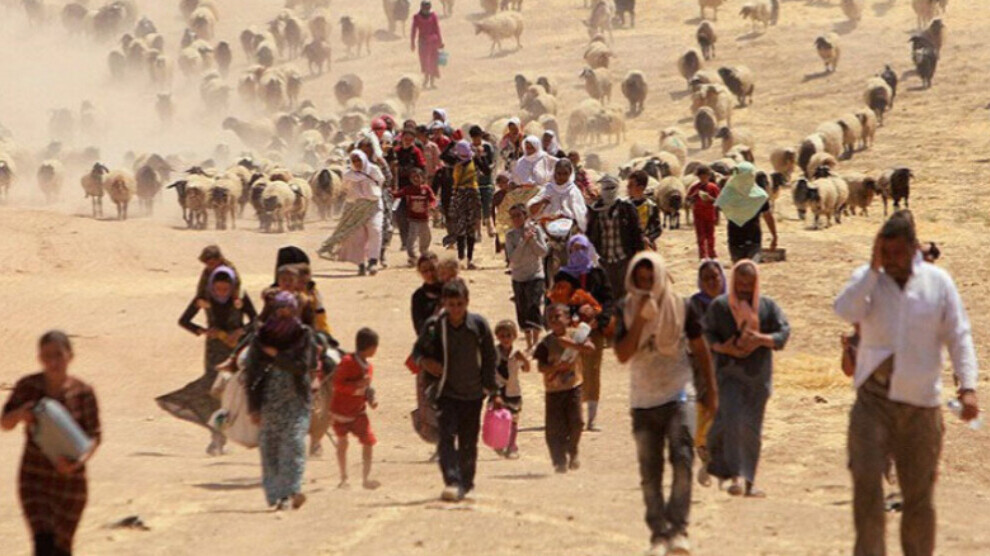
The 74th genocide arrived at the doors of the Yazidi community on 3 August 2014. The Islamic State killed, raped, kidnapped thousands in Shengal.

ANF
NEWS DESK
Thursday, 3 Aug 2023, 07:49

The Yazidi (Êzidî) Kurds, who have been living in the Mesopotamian region for thousands of years, have, throughout history, always been subjected to genocides and cruel betrayals and massacres and, on 3 August 2014, suffered the 74th genocide (or Ferman as they call it).

The Yazidi Kurds, who call the genocides perpetrated on them 'Ferman', the Kurdish term for decree, fell this time into the grip of almost total annihilation, captivity and enslavement by the ferocious ISIS gangs. But what was more suffocating for the Yazidis than the stranglehold of ISIS, was the betrayal that clad itself in a black garment.

A WELL-PREPARED GENOCIDE


When the ISIS gangs stood at the doors of Shengal, thousands of Peshmerga and asayish members of the Kurdistan Democratic Party (KDP) chaired by Masoud Barzani, who until that very moment controlled the Shengal town, made a quick getaway without shooting even one single bullet. As a result of the flight of the KDP Peshmerga, thousands of Yazidis were slaughtered by the ISIS gangs, thousands more were abducted, predominantly women and children, and sold at markets into slavery. Interestingly, shortly before the genocide took place, the KDP forces seized all the arms and weapons the Yazidis had at that time and took into custody three of the twelve guerrillas of the People's Defense Forces (HPG) and the Free Women's Troops (YJA-Star), who came to the rescue of the fleeing Yazidi people. All this made it indeed very clear, how well prepared and organized this extensive genocide actually was.

THE UN REPORT ON THE GENOCIDE

According to the investigations of the High Commissioner of Human Rights of the United Nations, which were made public in October 2014, the results of the attacks launched on 3 August 2014 were as follows:

- around 5000 Yazidi men were massacred

- around 100 Yazidi men were beheaded

- 7000 Yazidi girls and women were abducted and sold at slave markets

- A number of Yazidi girls and women were raped

- Some Yazidi women were forced to marry ISIS commanders

The estimated number of unknown cases was much higher than what was written in the report of the United Nations.

GENOCIDES AGAINST YAZIDIS THROUGHOUT HISTORY


The Yazidis, who follow one of the most ancient faiths of Mesopotamia, have suffered in the course of history 74 genocides. Most of those mass murders were perpetrated by the Ottoman empire. Because most of these genocides to wipe out the Yazidi community were ordered by the leading Ottoman Shahs via a fiat, the Kurdish Yazidis dubbed those genocides, therefore, with the Kurdish term for "decree". The first genocide was ordered in the year 1246 by the lord of Zengi of Mosul, Bedreddin Lulu, the last one by the Neo Ottoman AKP and its ally KDP and perpetrated by the ISIS gangs. In each and every genocide, the name of Islam was used.

Some of the genocides that were perpetrated in the course of history against the Yazidi community and mostly ordered by the Ottoman Shahs, are listed here:

* In 1246 the massacre of Lalesh, directed by the lord of Zengi of Mosul Bedreddin Lulu

* In the 16th century mass murder of the Yazidis in Shêxan was ordered by a fatwa of Shekhulislami Osmani Ebu Siud Efendi and by a decree given by Sultan Suleyman

* In 1638 the governor of Amed, Melek Ahmed Pasha had a massacre executed in Shengal

* In 1650 mass killing of the Yazidis was decreed by Murad IV, perpetrated by Governor of Van, Shemsi Pasha in Mosul

* In 1715 a massacre was committed in Shengal by the Governor of Baghdad, Hasan Pasha

* In 1733 mass murder of the Yazidis in Shexan by the Governor of Baghdad Ahmed Pasha

* In 1752 mass murder in Shengal by the Governor of Baghdad, Suleyman Pasha

* Between 1732-1733 Nadir Shah ordered a massacre of the Yazidis in between Surdash and Kirkuk

* In 1733 the mass murder of the Yazidis at the shore of Lake Zap by the Celiliyan

* In 1735 Nadir Shah commanded the mass killing of the Yazidis in Mahabad, Saldûz and Meraxi

* In 1742 Alî Takî Han, one of Nadir Shah's loyalists, committed a massacre of the Yazidi people in Saldûz

* In 1743 Nadir Shah perpetrated a mass killing of the Yazidi Kurds in Kirkuk, Hewler and Altunköprü

* In 1773 Nadir Shah ordered a massacre of Yazidis at the shore of Lake Zap

* In 1787 the Celiliyan committed a mass murder against the Yazidis in Shexan

* In 1798 Deputy Governor of Baghdad Abdulazaz Bin Abdullah Beg had a massacre against the Yazidis perpetrated in Shexan

* Between 1753 and 1800 Ottoman Shahs ordered the pillaging, imposition of heavy taxes, enslavements and genocides of the Yazidi Kurds (about six major attacks were conducted in Shengal, Shexan and Mosul)

* In 1809 Governor of Baghdad Suleyman Pasha ordered a mass killing of the Yazidis in Shengal

* In 1824 massacre against the Yazidis in Shengal ordered by the Governor of Baghdad Ali Pasha

* Between 1832-1834 mass killings were commanded by the Lord of Soran Muhammed Pasha

* In 1835 Governor of Mosul Muhammed Ince Bayraktar had a massacre perpetrated in Shengal

* In 1836 Reshid Pasha had a massacre committed in Shengal

* In 1837 Hafiz Pasha had a massacre committed in Shengal

* In 1844 mass killing of Yazidis took place in Botan

* In 1892 the Islamisation politics of Abdulhamit the 2nd on the Yazidi community led to mass murders of the Yazidis

For more detailed information, one is advised to read the book "Yazidis in the clutches of fatwas, genocides and massacres" written by Prof. Dr. Kadri Yildirim and the book titled "A people defying genocides, the Yazidis" by journalist Mazlum Özdemir.


THE MASSACRE OF 2007

One of the more recent mass killings against the Yazidi Kurds took place in 2007. On the 14th August 2007 attacks were carried out by four bomb laden trucks in the villages of Siba Shex Xidir and Til Izer of Shengal. As a result, 300 people were killed. No investigations were launched in this case whatsoever. It was reported that this massacre was perpetrated by a group of gangs called Ensar El Sune affiliated with Al-Qaeda, which tried at that time to get some foothold in Southern Kurdistan. However, many sources say that the Turkmen Front of Iraq (ITC) was involved in the attack, which was forged by the Turkish secret service in Southern Kurdistan.

The Yazidis called this attack until the 3rd August 2014 "the last decree".

SHENGAL’S STATUS BEFORE 3 AUGUST GENOCIDE

The Kurdish Yazidis were predominantly living in the Shexan district of Duhok, Shengal district of Mosul and the villages of surrounding districts. In 1975 under the Iraqi Ba'ath regime, the Yazidis were forcibly resettled. In each and every genocide they faced, the Yazidi people saved themselves from the protective arms of Mount Shengal. But in 1975 they were removed by force from the villages of the mountains and resettled in Khanasor, Til Izer, Sinune, Siba Shex Xidir, Kocho and Dugurê and around 15 other villages on the foothills of the mountain.

When, in 2003, the US intervened in Iraq and toppled the regime of Saddam Hussein, a new constitution was prepared for Iraq. According to article 140 of this constitution, Shengal was left as a so called "disputable area" between the government of Southern Kurdistan and the central government of Iraq. A referendum was planned for 2007 to be held in Shengal as well, but until today that referendum was never realised.

However, unlike the cities of Kirkuk, Jalawla, Khanaqin and Tuz Khurmatu, the KDP established its monocracy in Shengal. The city was allegedly "under the protection" of the Peshmergas and asayish of the KDP and the federal police of Iraq.

SHENGAL’S SITUATION PRIOR TO AUGUST 3 GENOCIDE

After imposing its absolute rule on Shengal in 2003, the KDP promoted backward traditions of society and profited until the end from the caste system of the Sheiks, through which it kept the Yazidi people under its control. The KDP even used the faith of the Yazidis for its own advantage and supported this sheikh system, keeping tabs on the entire Yazidi people.

One of the commanders of the Shengal Resistance Units (YBŞ) Tîrêj Şengal talked with the ANF about the latest genocide of the Yazidis and the system, which the KDP had established in Shengal, saying: "They made everyone who went to them into one of their Peshmerga and paid them a wage. They told them, go eat and drink and get your money, but do not think. They did not appreciate it when people were talking about things like honour, freedom and values. So the people stayed unorganised and uneducated until the end."

PRESSURES ON WOMEN IN THE YAZIDI SOCIETY

Member of the Yazidi Women's Freedom Movement (TAJÊ) Xoxê Dexîl talked about the Yazidi society before the outbreak of the genocide and drew attention to the violence and pressure the Yazidi women were subject to in society, saying: "The status of the women was very weak in the Yazidi society, almost not existent. To put it in other words, a woman was as good, as much as the pressures she was subject to and as much as she was silenced! But one must not let out the continuous resistance of women against this. Yet those struggles were mostly constricted to some private people. However, when we saw after the genocide the women from Rojava and those in the guerrillas, we started to organise ourselves with their help."

TOWARDS 3 AUGUST GENOCIDE

On the 10th of June 2014 when ISIS invaded Mosul, Shengal ran into danger more than any other district of Mosul. The Kurdish People's Leader Abdullah Öcalan issued many warnings for Shengal's protection. In the context of those foresights of Öcalan, the PKK sent a unit of 12 guerrillas to Mount Shengal. On the growing imminent threats that were hovering over Shengal, the leadership of the PKK got in contact with the KDP and called attention to the grave situation. The PKK made clear that it could send some of its forces to Shengal, but the KDP did not answer this call made by the PKK.

A FORCE OF 11000 WELL-EQUIPPED MEN WERE ON SITE


After invading Mosul, the ISIS gangs charged Tal Afar, a district of the Turkmen community in the immediate vicinity of Shengal. A great number of the Shia Turkmen people here fled to Shengal. The gangs were now very close to attacking Shengal next. However, instead of commencing the necessary preparations, the KDP suddenly began to seize the arms and weapons of the Yazidi people, telling them: "We will protect you". According to official statistics that were revealed afterwards, prior to the barbaric attacks of the ISIS gangs on Shengal, the number of the Peshmerga and asayish members of Southern Kurdistan and the Iraqi Federal Police, traffic police and armed units that were affiliated with some other political parties comprised altogether 11000 personnel positioned in Shengal and the surrounding villages.

“THEY WERE HERE FOR MONEY, AND FLED WHEN DANGER APPROACHED”

YBŞ Commander Tîrêj Şengal gave the following information about the military force in Shengal: "At that time, when the ISIS gangs took over all the areas around Shengal one after another, we still did not believe that we could be next. Because we were surrounded by a massive army of Peshmergas and even Iraqi soldiers. And we trusted them. They used to tell us: 'We will protect you'. But unfortunately, they fled when the attacks started. Only when we asked them why they ran away, did we understand that they did not consider this place their soil and had been conscripted for the "duty to defend" only for the money. As they saw the danger approaching, they fled as soon as they were ordered to do so, without even looking back once."

THEY SEIZED THE ARMS OF YAZIDI YOUTHS


Shengal Autonomous Council Deputy Co-chair Qehtan Xelîl recalled that the Peshmerga of the KDP seized all the weapons and arms of the young Yazidis shortly before the start of the genocide and stated: "On the crossing from Shengal to Tal Afar, the KDP had set up a checkpoint. When ISIS swept over ravaging, all the arms of the Yazidi youth were taken away from them here. They assured us with words like: 'We will protect you, don't worry, you don't need to take up arms'. And they seized all the weapons there. However, during the genocide they did not even shoot a bullet, they did not give one martyr and had not even one of their fingers bleed. They all ran away."


YPG: We will always stand with our Yazidi people

“In the event of an attack against our Yazidi people, we will take it as an attack directed against us and act accordingly. Our heroic martyrs entrusted us with the defence of Shengal,” said the YPG.

ANF
NEWS DESK
Thursday, 3 Aug 2023, 16:34

The General Command of People’s Defense Units (YPG) released a statement marking 3 August, the ninth anniversary of the beginning of the ISIS genocide against the Yazidi population of the Shengal (Sinjar) region of southern Kurdistan (northern Iraq) in 2014.

Calling the Yazidi genocide one of the most tragic and traumatic massacres in human history, YPG stated: “The forces responsible for the Shengal region at the time, as well as all regional and international states remained blind, deaf and dumb about this genocide, which was a great shame not only for the region but the entire humanity. All world powers are responsible for defending the rights of the Yazidi community and supporting their freedom struggle to make sure that they are not subjected to similar massacres again.”

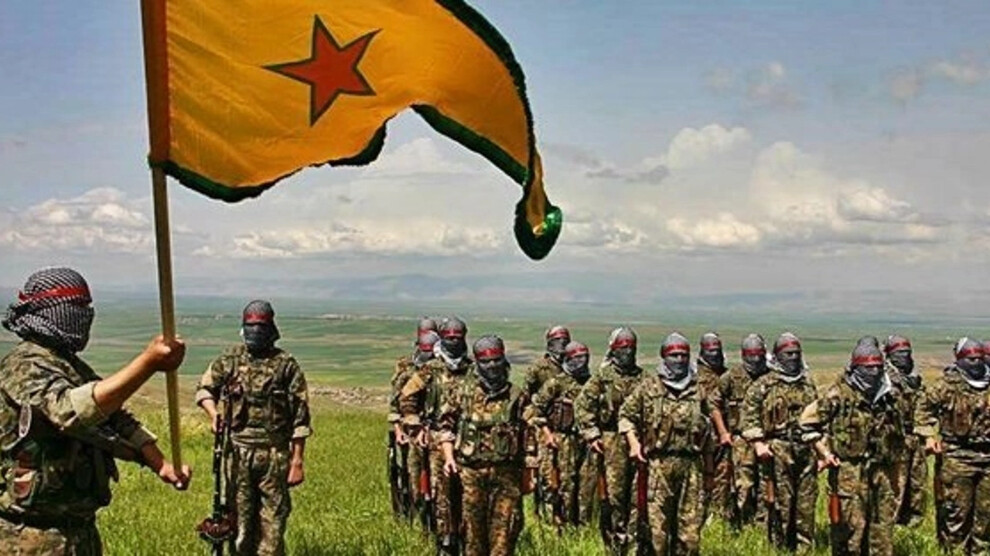
Pointing to the heroic resistance put up by the HPG (People’s Defense Forces), YPG (People’s Defense Units) and YPJ (Women’s Defense Units) to defend Shengal, YPG noted that young women and men in Shengal took part in the resistance alongside the YPG-YPJ fighters and prevented a terrible genocide.

The YPG stressed that the invading Turkish state seeks to complete the Yazidi genocide that ISIS left unfinished, calling on the international powers and states to intervene in the Turkish state that collaborates with ISIS and to call it to account.

The YPG statement concluded: “We will always stand with our Yazidi people as we did in the past and do today. In the event of an attack against our Yazidi people, we will take it as an attack directed against us and act accordingly. Our heroic martyrs entrusted us with the defence of Shengal.”


US STATE DEPT.
The 9th Anniversary of the Yezidi Genocide

PRESS STATEMENT

MATTHEW MILLER, DEPARTMENT SPOKESPERSON

AUGUST 3, 2023

Today we remember the victims and stand in solidarity with survivors of the Yezidi genocide perpetrated by ISIS terrorists. ISIS abducted and killed thousands of Yezidis, forcing boys to become child soldiers and selling women and girls into sexual slavery. The number of people killed remains unknown, and discoveries of mass graves continue. The scars of that experience are borne by Yezidis around the world to this day.

Our support for the Yezidi community is unwavering. As we reflect on this day, we continue to press for justice and accountability for victims and survivors and respect for the human rights of all Yezidis, including the freedom of religion or belief. We urge full implementation of the Yezidi Survivors’ Law, as well as the 2020 Sinjar Agreement, in consultation with the communities that call Sinjar home. Governance and security officials should reflect the diversity of the communities that they serve.

By pursuing justice and accountability, addressing the drivers of violence, and preventing genocide and other atrocities in the future, Iraq has the opportunity to embark on a new path that leads to greater peace, stability, and prosperity for all of its communities. With this approach, Iraq can serve as an example of mutual respect and coexistence for the region and the world. Yezidis are crucial in this effort. So while we keep alive the memory of the victims and recognize the survivors and their suffering, we also honor the strength, resilience, and determination of Yezidis.