Red Scare 3.0

Senator Joseph McCarthy (right) with a map of Communist Party organizations, 1954 – Public Domain
On July 16, 2026, the Trump administration launched the Red Scare 3.0. In a press release, the White House proclaimed in bold type: “an unprecedented global offensive against the transnational threat of Radical Left terrorism.” It then added, “Under the leadership of President Donald J. Trump, far-left extremism will be treated with the same seriousness and ferocity the world has long reserved for jihadist terrorism.”
Key administration spokesmen championed the new offensive:
+ Sec. of State Marco Rubio: “Today, we face a new wave of this old evil. Here in the United States, the share of left-wing terrorist attacks and plots has risen to levels not seen in decades… “
+ Sec. of the Treasury Scott Bessent: “…We will dismantle the networks that sustain political terrorism, however respectable their fronts may be. We will pursue those who enable political violence, however distant their jurisdictions.”
+ Homeland Security Advisor Stephen Miller: “… We must stay the course and be completely unflinching in the pursuit of justice against these enemies of civilization.”
Sec. Rubio, added, the U.S. “Department of State under the leadership of Secretary Rubio is convening governments from across the globe at the Ministerial on the Resurgence of Political Terrorism to address the rise of far-left political terrorism as a transnational threat.”
+++
American’s first Red Scare took place from 1917 to 1921. Pres. Woodrow Wilson’s terror campaign against American radicals, dissidents, immigrants and workers makes the current Trump-Rubio effort look like a pathetic puppet show. Wilson jailed his charismatic Socialist opponent, the 63-year-old Eugene Debs, for opposing America’s descent into the carnage of the First World War.
As members of the Industrial Workers of the World — known as the Wobblies — organized actions across the country. Debs declared, Lenin and Trotsky were the men of the hour.”
In response, on Flag Day in 1918, Wilson proclaimed, “Force, force to the utmost, force without limit.” That year, his administration began overseeing the banning of small radical magazines like The Masses, and the hounding of any publication not on board with the war.
As Adam Hochschild reminds us in his book, American Midnight: The Great War, a Violent Peace, and Democracy’s Forgotten Crisis:
“angry mobs burned Black churches to the ground and chased down pacifists and immigrants. Well over a thousand men and women were jailed solely for what they had written or said, even in private. Department of Justice reports, an astonishing 250,000 people joined a nationwide vigilante group.”
Emma Goldman wrote, “We had nothing left, neither literature, money, nor even a home. The war tornado had swept the field clean.”
+++
The second Red Scare dragged on between 1947 and 1954. In 1954, Senator Joseph R. McCarthy (R-W) was at the height of his campaign against “communism,” alleging that hundreds of Communists had infiltrated the State Department and other federal agencies.
On March 9, 1954, millions of Americans watched as Edward R. Murrow used his national news program on CBS to attack McCarthy. He warned, “No one man can terrorize a whole nation unless we are all his accomplices.”
In June ’54, the Senator turned his rage against the U.S. Army, charging it with lax security at a top-secret army facility. (McCarthy’s chief counsel was Roy Cohn, Donald Trump’s early mentor.) The resulting Senate hearings, known as the Army-McCarthy hearings, galvanized the nation.
The Army was represented by Joseph Welch, a Boston attorney. On June 9, 1954, McCarthy charged that one of Welch’s associates, Frederick Fisher, was a communist. In response, Welch pointed a finger at McCarthy and declared, “Until this moment, senator, I think I never gauged your cruelty or recklessness. … Let us not assassinate this lad further, senator. You have done enough. Have you no sense of decency?”
Symbolically, the Welch-McCarthy standoff marked the end of the second Red Scare. Clay Risen’s Red Scare: Blacklists, McCarthyism, and the Making of Modern America brings the past up to today, noting, “There is a lineage to the American hard right of today and to understand it, we need to understand its roots in the Red Scare.”
Looking back more than a half-century, Risen’s study is informed by a revealing insight: “It is a great irony of the Red Scare that by the time it began, the era of Soviet espionage was almost entirely in the past.”
Risen argues that the Red Scare began shortly after WW-II ended, in 1946, when Billy Wilkerson, the publisher of The Hollywood Reporter and a staunch anti-Communist Catholic, admitted at confession, “Father, I’m launching a campaign [against communists], and it’s gonna cause a lot of hurt.” The priest comforted him, saying, “Get those bastards, Billy.”
He reminds readers that the Red Scare was foreshowed by 1940 Alien Registration Act (aka Smith Act), which made it a crime to advocate for the violent overthrow of the government; in 1951, the Supreme Court upheld it as constitutional.
In 1947, Pres. Harry S. Truman, worried that he would lose to a Republican challenger in the upcoming ’48 election, took on the growing anti-communism issue and signed Executive Order 9835, “Prescribing Procedures for the Administration of an Employees Loyalty Program in the Executive Branch of the Government.” It established a Loyalty Review Board as part of the Civil Service Commission to investigate “the political sympathies, affiliations, and memberships of all federal employees.”
Risen argues that the “red scare” was an outgrowth of a long-simmering conflict between social conservatives (often middle Americans) and New Deal progressives (often big-city, Easterners) that took on intensified vehemence as the Cold War came to define U.S. foreign – and domestic – policy. In addition to McCarthy, the book profiles many familiar figures like J. Edgar Hoover and Richard Nixon as well as Julius and Ethel Rosenberg, Whittaker Chambers, Alger Hiss, J. Robert Oppenheimer.
The book also retells many old tales involving House Un-American Activities Committee (HUAC) and Senate hearings as well as that of the Hollywood Ten, the Peekskill Riot and the trials of 12 Communist Party members. Equally revealing, it spotlights the lesser discussed the roles of people like Elizabeth Bentley, an ex-Communist, whose revelations helped open the door for the showdown between Chambers and Hiss.
Most disturbing, Red Scare is filled with the stories of ordinary Americans drawn into the communist orbit as a result of the economic devastation of the Great Depression and the U.S.-Soviet alliance of WW-II. They include teachers, factory workers and government employees who were not only socially shamed but often lost their jobs.
Risen reminds readers that in the late ‘40s and early ‘50s, suspicion of possible being involved in communist espionage led the FBI to conducted 4.76 million background checks and investigated 26,236 individuals who held or applied for government jobs. He also notes that 6,828 people resigned or withdrew their applications, and 560 were fired.
Risen acknowledges that there were “two strands of the Red Scare – the culture war and the politics of Cold War security ….” He stresses, “Anti-communist fervor was both a catalyst and a symptom of the return to rigid gender roles, and with it a hard turn against homosexuality as a threat to the older ways.” While most of his book explores the politics of “security,” he notes that thousands of homosexual employees were fired or forced to resign from the federal workforce because of their sexuality. Dubbed the Lavender Scare, it was the second front in the anti-Communism crusade, promoted by Christian conservatives, Republican politicians and congressional investigation.
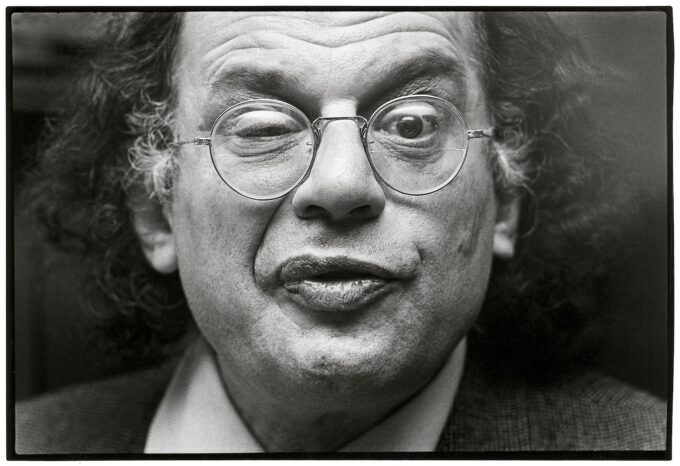
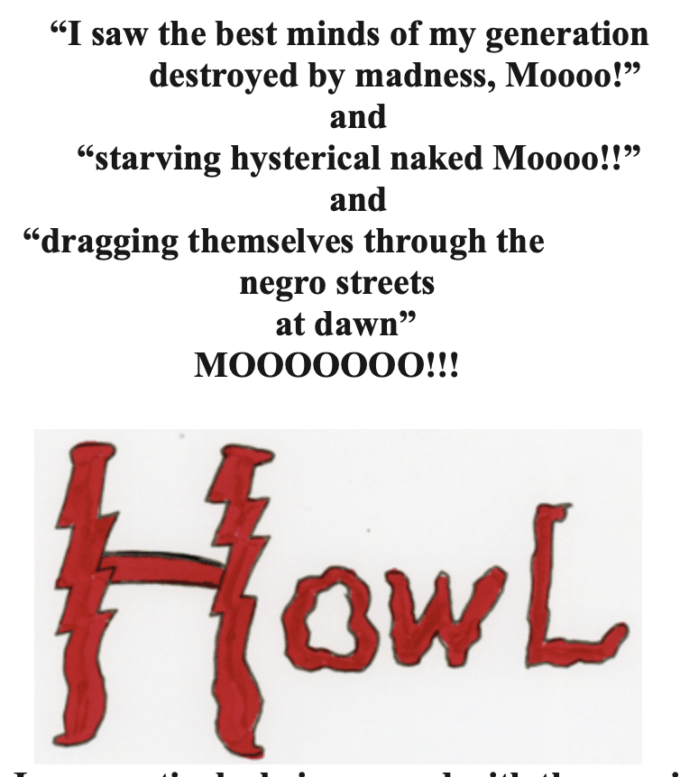
While Risen mentions the growing Civil Rights movement as an emerging social force challenging the inherent racism of the anti-Communist campaign, he seems unaware of a deeper critical force taking shape during the ‘50s – what one could broadly call the incipient counterculture. This emerging force is most evident in the era’s radical literature, represented by works like Ray Bradbury’s Fahrenheit 451(1953) and Allen Ginsberg’s Howl & Other Poems (1956); in 1957, City Lights’ publisher Lawrence Ferlinghetti and bookstore manager Shig Murao were arrested for publishing the book.
The era also saw the release of other works that would refashion the era, including Herbert Marcuse’s Eros and Civilization (1955), the most utopian, visionary work of the era; he sites Alfred Kinsey’s Sexual Behavior in the Human Male (1948), but doesn’t acknowledge that by ’53, when Sexual Behavior in the Human Female was published, it had sold over 265,000 copies. Truly, the post-WW-II era witnessed Red Scare 2.0 – and a lot more.
+++
Today’s Red Scare 3.0 is driven by the growing opposition to Trump’s foreign and domestic policies. Trump needs a new front to contest the opposition and give him – and his Republican Party backers, especially in Congress — a wedge they can use to fight the challenges they face. Nothing is better than an ill-defined yet omni-threatening enemy.
Upon taking office in January 2025 for his second term as president, Trump singled out his first enemy – immigrants. He issued a series of executive orders that restricted immigrants’ rights and set loose ICE — the U.S. Immigration and Customs Enforcement agency – to aggressively arrest, detain and deport allegedly illegal “criminal” immigrants.
Trump targeted his second “enemy” in his campaign against “communists,” socialist, Antifa and other radicals. He set in motion Red Scare 3.0 when he issued the National Security Presidential Memorandum-7 (NSPM-7) in September 2025. It set out a comprehensive strategy to investigate, disrupt and prosecute “left-wing” individuals and groups allegedly associated with “domestic terrorism” and organized political violence.
In September 2025 Trump also designated “Antifa” as a “domestic terrorist organization. In an Executive Order, he noted:
“Antifa is a militarist, anarchist enterprise that explicitly calls for the overthrow of the United States Government, law enforcement authorities, and our system of law. It uses illegal means to organize and execute a campaign of violence and terrorism nationwide to accomplish these goals.”
Going further, he insisted:
“Antifa recruits, trains, and radicalizes young Americans to engage in this violence and suppression of political activity, then employs elaborate means and mechanisms to shield the identities of its operatives, conceal its funding sources and operations in an effort to frustrate law enforcement, and recruit additional members.”
Over the last 10 months: the Justice Department has built task forces staffed by counterterrorism prosecutors; that FBI has created and NSPM mission center; the IRS is investigating nonprofit organizations; and the Justice Department has begun to charge – and convict! – leftist activists.
In the wake of ICE killings of Renée Nicole Good and Alex Pretti, 15 Minneapolis-area residents were indicted for “conspiracy to impede or injure federal officers.” In Texas, eight protesters were accused of having connections to antifa and were sentenced to decades in federal prison over a shooting outside the Prairieland immigration detention center.
In a Fourth of July speech at the National Mall, Trump railed against an allegedly growing threat of “communism.” “America will never be a communist country. Won’t happen,” he said. Adding, “It’s like a cancer. You’ve got to cut it out. … Our warriors did not fight communism on battlefields across the world only to have that menace rear its ugly head right back here in America. We’re not going to let it happen.”
In June 2025, while Zohran Mamdani was the Democratic Socialist of America (DSA) New York mayorial candidate, Trump ranted:
“Let’s say this, if he does get in, I’m going to be president and he is going to have to do the right thing, but they’re not getting any money. He’s got to do right thing. It’s shocking that I would have assumed that. I used to say we will never have a socialist in this country. No, but we’ll have a communist. I mean, he’s a communist, he gonna be mayor of New York.”
Nevertheless, Mamdani secured an overwhelming electoral victory, reflecting the DSA’s growing appeal, especially among younger voters. Led by Sen. Bernie Sanders (I-VA) and Rep. Alexandria Ocasio-Cortez (D/WFP-NYC), DSA-identified candidates recently secured primary victories in New York State, Colorado and other elections.
The 2026 midterm elections are but three-plus months away and it looks like the Republicans will lose their strangle-hold on the Congress. As Heather Cox Richardson reports on her Substack column, a Washington Post/Ipsos poll found “Only 37% of those polled approve of his job performance, while 61% disapprove. The percentage who “strongly” approve of Trump has dropped to a new low of 15%. Only 26% of Independents approve of his job performance, while 71% disapprove.” She also notes, “Sixty-six percent of Americans say groceries are unaffordable.”