Showing posts sorted by date for query GYPSY. Sort by relevance Show all posts

Monday, March 09, 2026

When cultural assimilation became a survival strategy


MARCH 5, 2026

Profssor Corinne Fowlerco-investigator on The Rural Racism Project, led by Professor Neil Chakraborti, discusses new research project findings about racism in the countryside.

In 2025, the Centre for Hate Studies at the University of Leicester released three reports which detailed the research findings of their Rural Racism Project. Led by Professor Neil Chakraborti and funded by a Leverhulme grant, this research project ran between 2023 and 2025. The co-investigators were Professor Corinne Fowler, Dr. Amy Clarke and three postdoctoral researchers: Dr. Viji Kuppan, Dr. Rachel Keighley and Dr. Adrian Yip.

We conducted in-depth interviews with minoritised residents and visitors to rural areas, white rural residents, community organisations and service providers. The research team also embarked on an extensive investigation of online forums, social media and public comments posted below news media articles on the topic of racism in the countryside. Project participants were also asked to produce personal reflections, poems and biographical writing which communicated the emotional experience and impact of racism in the countryside. This combined evidence provided a rich, nuanced and up-to-date description of racism.       

The project produced three reports (The Rural Racism Project: Towards an Inclusive Countryside | The Centre for Hate Studies | University of Leicester). The first is entitled Unpacking Experiences of Hostility, which drew on 115 in-depth interviews. This report focuses on how racism has been experienced, expressed and navigated by minoritised individuals.

The key findings of this report is that rural life is both enriching and attractive to those we interviewed, but that the experience of racism is both common and persistent. Nature plays an essential role in well-being and physical health but the benefits are marred by both interpersonal and institutional racism. Minoritised individuals and groups commonly find it hard to feel they belong in an environment where racism is widely and frequently expressed.

We found that interpersonal racism is frequently expressed through persistent watching and aggressive staring, hostile body language and deliberate exclusion. One commonly reported example was the persistent experience of not being served in a restaurant, café or pub. Participants also told us about overtly threatening behaviours such as name-calling, racial slurs, direct intimidation or threats. The more subtle experiences of racism often go unreported and therefore do not show up on official statistics (ironically, a low statistical incidence of recorded racist incidents in the countryside was levelled at the project team by hostile media as well as the Countryside Alliance).

The first reason for not reporting racism is that complainants’ identity is too obvious, given their visibly minoritised status in majority-white villages and hamlets. One woman of Caribbean heritage told us that, though she had been living in a village for decades, new neighbours conducted a relentless racist campaign against her, hoping to drive her out of the village (and here I have had to omit the details of her neighbours’ overtly racist actions to protect her from being recognised). She feared violent reprisals if she complained to the authorities or reported it to the police.

Another reason is that racist incidents can be as subtle as they are persistent, but often do not amount to criminal offences and cannot be reported or recorded as such. Nonetheless, these experiences are unpleasant and impact negatively upon victims’ mental well-being. Examples of subtle microaggressions that interviewees told us about include being repeatedly questioned about origins and place of birth, being quizzed about the countryside code and being stereotyped or scrutinised.

Racism in the countryside is not merely interpersonal. Some of the worst sufferers from racism were schoolchildren who, when facing racial slurs and physical violence in the playground, found that schools responded inadequately, or did not intervene. One participant was told almost daily that he should go back to Africa, but nothing was done about it. Meanwhile, anti-racist curriculum materials which might help combat such attitudes are scarce or non-existent. We also found that local authorities and service providers routinely dismiss or minimise people’s experience of racism.

In the context of the rise of far-right populism, nationalist and exclusionary ideas about British identity frame minoritised individuals as outsiders, normalising the expression (and harms) of racism. Participants told us that racism was worsened by racist reporting on immigration and social media campaigns by the far right. Minoritised groups face both career stagnation and a lack of skilled job opportunities. Racism, we learned, has disrupted people’s careers, forced their businesses to close and prompted relocation to urban spaces. One interviewee told us that a Facebook campaign was launched against his family with the purpose of driving them out of the village.

Processing racism takes its toll. For minoritised individuals it results in chronic stress, anxiety, fear, exhaustion and anger. Anticipating, or bracing yourself to deal with, racism – as well as the experience of being a visible minority – also places psychological burdens on minoritised individuals. Participants described how they altered their behaviour, accent, language and appearance to avoid or minimize discrimination. Cultural assimilation became a survival strategy in response to the pressure to conform to local norms, behaviours and tastes. Racism also affects White communities by corroding trust, reinforcing social divisions and limiting the opportunities for connection with those from different cultures.

Our second report is called Unpacking Expressions of Hostility. Drawing on close collaboration with 20 community research partners and using creative writing, arts-informed methods and participant interviews, we investigated how racism is embedded in heritage practices, the built environment, cultural memory, and everyday human encounters. As well as highlighting how inequity is hard-baked into local systems and processes, this methodology gave us greater access to people’s internal worlds as well as providing insights into the emotional impact of experiencing racism. We were able to identify prevalent and pervasive myths which were challenged by those we spoke to.

The first myth is that minoritised communities have no affinity with the countryside. Our evidence directly contradicts this, showing that participants’ selfhood is often profoundly shaped by rural landscapes both in England and through memories and traditions associated with the countryside in ancestral homelands like Kashmir or Jamaica.

A second myth was that racism in the countryside is a figment of people’s imagination. The prevalence of this myth was confirmed by our extensive social media and discourse analysis (featured in our third report). Refusals of hospitality, slow service, exclusion from conversation, intrusive questioning about origins or disapproving looks evade admissible proof. Another commonly expressed concern is that the formation of now-popular Black and Muslim walkers’ groups is unnecessary and divisive. This overlooks the role of such groups in responding to genuine real-world exclusion or prejudice by finding safety in numbers or seeking out relaxing time with friends and neighbours.

Our second report also addresses the myth that rural history is White history. This imagines the countryside as untouched by empire, whereas archival and creative work by our collaborators (as well as by prominent historians like David Olusoga and Miranda Kaufmann) reveals the extent to which rural lives have been shaped by colonial labour, the influx of colonial wealth and migration from the colonies. Indeed, we found that these revisionist histories of rural Britain are actively attracting minoritised groups to the countryside. We also found widespread ignorance about the centuries-long contribution of Romany (Gypsy), Roma and Irish Traveller communities to everyday labour, traditions and ecologies of rural England. Their exclusion is not accidental but built into laws, policies, practices and cultural assumptions.

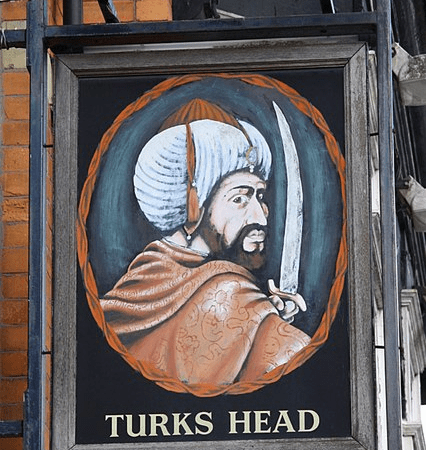
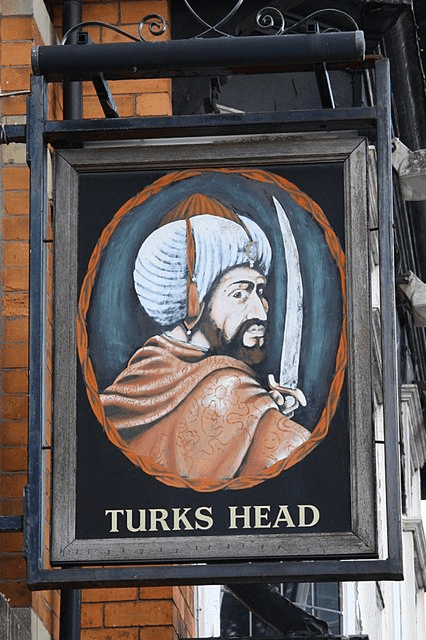
Our third report – Unpacking the Backlash –   collected and analysed 193,000 words from below- the-line comments under news articles as well as social media posts and public debates about rural racism, heritage, and access to the countryside. It found widespread reluctance to explore the colonial history of rural Britain as well as fierce resistance to removing overtly racist pub-names, including The Turk’s Head and The Black Bitch.
We also found frequent claims that the countryside was being invaded by foreigners and assertions that minoritised groups lack affinity with nature or knowledge about how to behave in the countryside. We further found that expertise on this topic was routinely dismissed, with academic rigour, qualifications or methodologies being questioned. Academics who speak or write about these topics are accused of selecting examples of racism based on preconceived beliefs, producing opinion pieces rather than evidence-based work.

More virulent still, was the force of denial that any problem exists. Rather, assertions that racism exists in the countryside were dismissed as figments of victims’ imaginations – an often-repeated question is “are the fields racist?” – and even personal testimony is commonly dismissed as being “made up”. So the battle to recognise that there is a problem presents a major barrier to acknowledging the issue and moving towards an evidence-based understanding of racism in the countryside today. 

Corinne Fowler is Professor of Colonialism and Heritage at the University of Leicester. Her book Our Island Stories: Country Walks Through Colonial Britain is published by Penguin Allen Lane.

Image: https://commons.wikimedia.org/wiki/File:The_sign_of_the_Turks_Head_-_geograph.org.uk_-_1300151.jpg Source: From geograph.org.uk Author: Richard Croft, licensed under the Creative Commons Attribution-Share Alike 2.0 Generic license.

Monday, December 01, 2025

On Being Female in a Potentially Fascist Country


 December 1, 2025

Image by Jørgen Håland.

It’s strange so many years later, in the United States of America, to feel as if I’m living in a country threatening to become like the Russia of Vladimir Putin that I spent years experiencing earlier in this century. To start, let me tell you a little something about that.

For decades as a young adult, I lived and traveled in Russia. I was an anthropology doctoral student and human rights worker, studying the effects of President Vladimir Putin’s centralizing policies and that country’s Christian nationalist media on the everyday lives of Russians. In one of my last projects, I investigated the government’s practice of separating kids with disabilities (and poorer kids generally) from their parents and detaining them in closed institutions. My report detailed how much changes in society when the government excludes swaths of the population from basic services like healthcare, education, and even just access to city streets. The answer? Everything.

That marginalization was part of a governing process aimed at further enriching the wealthiest few and those in power. It reflected the leadership of figures lacking a basic understanding of what all people need and deserve. I consider that a hallmark of a fascist regime.

One of my last evenings in Russia was a chilly November night in 2014 in the northern city of St. Petersburg. Mothers and children, grandparents and teenagers alike stepped with care to avoid slipping on black ice and bumping into (and possibly falling thanks to) large plastic advertisements for fast food, clothing, cosmetic dentistry, plastic surgery, and even IVF treatments sticking up like weeds on the cobblestoned sidewalks of the city’s center.

Those glowing placards seemed to replace what had once been a slew of different kinds of people when I first traveled to Russia as a college student in the late 1990s. In the same central train stations of that city, old women then sold carrots and beets from cardboard boxes they had lugged from their country homes. Young women could sometimes be seen in bikinis and stiletto heels (even in that weather!) with beer advertisements scrawled across their chests. Uzbek and Tajik men scrambled to finish construction on new stores, restaurants, and apartment buildings before winter set in. Roma mothers, their babies strapped to their backs in jewel-toned scarves, begged for money for food and housing.

Sometimes, when traffic grew too congested for their liking, Russia’s newly rich — aptly dubbed “New Russians” in the country’s popular press — drove their luxury Mercedes and BMWs onto the sidewalks, forcing pedestrians like me, along with mothers pushing strollers and a few wind-worn men and women hurrying to work, to scatter in panic. Despite the chaos and a significant amount of deprivation (more on that later), for many I met then, much seemed possible, including working for ever larger companies, migration, and new luxuries. Electronic remixes of Western songs like “If I Were a Rich Girl” and Cher’s “Believe” blasted from vendors’ tinny sounding boom boxes on repeat.

By the time of my last trip to Russia in 2014, however, shiny buildings had been built, older ones renovated, and developers with close ties to Russia’s political elite were even richer, thanks to the country’s growing oil wealth. Roma (or gypsy) families were no longer anywhere to be seen, as St. Petersburg’s government had conducted “purges” of the city’s informal Roma settlements. Nor were old women selling their wares on the streets, while Central Asian migrants from poorer countries to Russia’s south seemed ever fewer and less visible during the busiest times. Indeed, local authorities were rounding them up and detaining them without warrants, based on appearance and language alone. (Sound familiar?)

Having spent years interviewing families who could no longer access this new cityscape with their kids who used wheelchairs or were blind or deaf, all I could think was:  I’m lucky to be able to go home to the United States.

That last night in 2014, I was also nearing the end of the first trimester of my first pregnancy. I rubbed my still barely visible baby bump as I spotted an old friend from St. Petersburg who was waiting to meet me for dinner at a nearby cafe. As I sat down with her, a waitress approached our table. She noted my American accent and told me with gentle, motherly scorn that I shouldn’t be traveling while pregnant. As if on cue, stomach cramps made me double up. After a trip to the restroom revealed that I was bleeding, I started to wonder if the waitress had been right. Was it possible that my relentless travel had caused me to miscarry — and in a country where I knew women sometimes faced withering criticism and blame for poor pregnancy outcomes? Just stay with me until I go home, I implored the baby I carried.

At least, my friend understood. Before she gave birth to her healthy son in the 1990s, when Russia’s newly privatized healthcare system included few viable options for working-class women, it took exhausted, overworked doctors weeks after she started feeling sick during her first pregnancy to determine that the baby inside her had actually died. She had an abortion without anesthesia and returned to her teaching job right away to make ends meet. And stories like hers were anything but unique then.

Politicized Reproductive Health

By 2014, urgent-care clinics and hospitals were plentiful enough in large cities like St. Petersburg and Moscow, but many were exorbitantly expensive even for young Americans like me. Worse yet, the attitudes of medical workers toward women who couldn’t or wouldn’t have babies had not exactly softened under a president — Vladimir Putin, of course — known for describing women as “guardians of the hearth and linchpins of large families with many children.”

Fearing the worst, my friend snapped into action, calling around to several acquaintances until one located an obstetrician she trusted who traveled from her home on the outskirts of the city to a clinic downtown.

In the 1990s, following the collapse of the Soviet empire, the International Monetary Fund and other international lenders pushed Russia to slash public spending and rapidly privatize state functions as part of the deal for their crucial loans to a society then in trouble. In the end, such changes dismantled the Soviet Union’s social safety net, including universal healthcare.

Well-connected elites carved up many of the remaining state assets and used them for their own private gain. Included in Russia’s newly privatized healthcare system were private clinics for the ultra-wealthy offering hotel-like amenities, including private rooms, hot tea, and soft background music. Ordinary Russians who couldn’t afford such ritzy private services used the remaining state clinics, though they were often overcrowded, undersupplied, and understaffed in the austere new world so many Russians had no choice but to navigate, especially outside the big cities. What’s more, as anthropologist Michele Rivkin-Fish has pointed out, private healthcare facilities didn’t mean better quality care, as medical workers and all kinds of public figures tended to encourage married, racially White (Slavic) Russian women to have more children, no matter the dignity and long-term health of women in Russia more broadly.

It would be an understatement to say that, by the time I left there in 2014, politics infused every aspect of Russian life. I’ll never forget, for instance, that a colleague of mine, who researched military abuses against ethnic minorities in Russia’s southernmost republics, had to leave the country to give birth after she received threatening anonymous text messages claiming that she and her unborn child were linked to Islamic insurgents in that part of the country.

While I had some reason to be afraid myself in that context, I wasn’t nearly high profile enough to truly worry and I was lucky as well. After all, my friend had a friend who indeed had a doctor she trusted. So, in the end, I was able to get an ultrasound, which showed that I still had a healthy pregnancy.

I traveled back to the U.S. and gave birth to my son the very same day that Donald Trump descended that golden escalator to announce his candidacy for president of the United States (claiming that thousands of people were awaiting him below when only a few score were there) and launched his bid on the claim that Mexico was sending “rapists” to the United States.

Nah, I thought, as I watched the cooing baby in my arms. Probably won’t happen. I took my boy home and, being a military spouse, struggled with the military health insurance system, Tricare (aka Try-For-Care), to get coverage for basic costs like a breast pump. (No such luck, because, as an insurance rep told me, I was supposed to stay home and breastfeed him directly.) As for medicine for a common mouth infection in newborns, I got it but only after multiple appeals. I was then in an America plagued by privatization, ongoing foreign wars, and a lack of corporate accountability, but at least, my family would be okay — for now.

Back in the U.S.A.

And here we all are.

I wish I could say that my family — and yours — live in a reality that’s different from the one I left in Russia when I took my pregnant self home in 2014. I look around at what’s happening in our country and worry that we may already be on a superhighway to the sort of class- and race-stratified autocracy that it took Russia so many years to become after the Soviet Union collapsed.

In particular, in the years since the Supreme Court overturned the right of American women to have abortions in 2022, 41 states have put abortion restrictions into effect, including 14 with outright bans. Some 40% of women now live in states with such bans or significant restrictions. In a handful of states like Idaho and Texas, women and expectant parents have had to cross state lines to get routine miscarriage- or pregnancy-related healthcare because doctors can face criminal or civil liabilities for providing it. (It may not be coincidental that in states with severe abortion restrictions, infant mortality has gone up significantly, particularly among people of color.) I could go on about the ways this administration and its allies on the Supreme Court and elsewhere are denying poor and middle-class women basic healthcare, but I’m sure you already get the picture.

Maybe since most Americans haven’t lived under an actual dictatorship the way many Russians have, state capture here is faster and easier, especially in a country with a resurgent Evangelical right (After all, didn’t Jesus say, “Suffer little children…”?)

New Americans?

These days, many people in my community and in my day job as a psychotherapist have lost hope that Donald Trump’s government could change things for the better. Many now tell me that they might not even vote in an upcoming election because government can’t be trusted to tell the truth and act on behalf of ordinary people. I’ve heard folks say that they can rely only on themselves (and maybe loved ones) to help them in crises like driving across state lines for healthcare. Among some of the highly educated parents I know in my DOGE-stricken D.C. suburb, I see not mass outrage or the urge to mobilize as much as a desire to homestead and foster a post-apocalyptic self-reliance, much in the style of Cormac McCarthy’s The Road.

Well, good luck, and thanks for helping Trump consolidate power.

But for now, the one thing I think we still do have that Russia doesn’t is mass demonstrations like the recent No Kings Day ones where a record seven million Americans turned out nationally and a (relatively) free press, which is not to be taken for granted or let go easily. To show up in public as fully human and speak out for others is itself a sign of hope and possibility. Rage-filled political leaders and their minions would not invest so much time in intimidating those who speak out if free speech didn’t matter so much. (Think of that Trump-ordered military flyover while Epstein abuse survivors held a press conference in Washington recently.)

In days marked by so much uncompromising confrontation, I’m reminded of anthropology’s insight that, during a period of upheaval and movement, the people going through it can change significantly, though usually with some risk and pain. Migrations, mass demonstrations, even pregnancy — all of them hold the potential for self-transformation, particularly when people accompany one another on their journeys. The reason we should show up at demonstrations, write op-eds, and protest in any way we can imagine is to stand in solidarity with one another, even if we don’t change the minds of the people watching us. (We might, though!) In other words, collective action is its own form of social transformation. It is a way to forge, if not a new America, then new Americans who will not let democracy die without a struggle. Without it, I fear we’re likely to end up with Donald Trump’s version of Vladimir Putin’s Russia — at least, the one I left in 2014.

That’s why what we all do next matters so much. Remember that, in a democracy, we the people are the government. Whether we’re finding a service for someone who needs it, offering a friend in need a ride, warning of federal police or National Guard in the neighborhood, speaking out against abuse, or just meeting friends for dinner, the exercise of our civil rights is a thread from which our democracy hangs. Such actions also alter the landscapes we hold in our imaginations, whether we like it or not. Simply put, as long as there are more people than military in the streets, the message to those who are scared is simple: this might feel like a foreign land, but you’re not alone.

This piece first appeared on TomDispatch.

Andrea Mazzarino co-founded Brown University’s Costs of War Project. She is an activist and social worker interested in the health impacts of war. She has held various clinical, research, and advocacy positions, including at a Veterans Affairs PTSD Outpatient Clinic, with Human Rights Watch, and at a community mental health agency. She is the co-editor of the new book War and Health: The Medical Consequences of the Wars in Iraq and Afghanistan.

Thursday, November 20, 2025

The bromance between André Ventura and Luis Montenegro in Portugal

Thursday 20 November 2025, by Françisco Louçã


The media hype in Portugal about the “survival” of the Bloco de Esquerda (Left Bloc) has the same function as the anti-gypsy posters of André Ventura (president of the far-right Chega party), namely, to distract through a gesture with one hand, while the other takes care of more lucrative tasks.


I am therefore led to fight two misconceptions: the one according to which the problem of the left is delineated and the one that ensures that the country is condemned to the new normality of the close relationship (bromance) between André Ventura and Luis Montenegro. [Montenegro was prime minister of Portugal from April 2024, at the head of a centre-right government led by the PSD-Social Democratic Party.]]
The malaise

With 2% for the Bloco de Esquerda, 2.9% for the Communist Party (PCP) and 4.1% for the Livre (Green Party), and the Socialist Party (PS) overtaken in number of deputies by Chega (because the latter has monopolized the votes of the Portuguese abroad), the recent parliamentary elections have shown the state of distress of the left and the centre. Together, they now account for less than a third of the vote, which means less than 20% of the electorate. None of these parties has the capacity to reconstitute a majority. They lost the parliamentary and municipal elections. And some do not want to understand this, because sectarianism, the most toxic characteristic of the Portuguese left, leads those who look in the mirror to ignore the world or, worse still, to pretend that the difficulties lie in their neighbour.

On the other hand, the right-wing and far-right majority has been consolidated, and has gained the power to revise the constitution. It can change the composition of the Constitutional Court and other bodies and will strengthen its positions because it has the wind in its sails. Their alliance was a historic gamble, which aimed to convince public opinion that there was a holy war between the ethnic Portuguese and the horde of dangerous invaders who were already in the citadel, according to the Passos Coelho-Ventura-Montenegro version. [1] The advance of this crusade constitutes the greatest transformation of Portuguese politics since 25 April 1974: the terrain has changed and so have the protagonists.

This shift of the political regime through the new balance of forces is the result of the convergence of two crises. The first was the collapse of the absolute majority of the PS (which governed until a year and a half ago – until 2 April 2024, and since November 2015 – remember?), which caused a fracture in Portuguese society, and which tends to be overshadowed by the daily feverishness. Its effect has been to pave the way for the installation of the right as a political space, excluding from the field of possibility any reference to protection measures at work or for housing (the rise in housing prices, under the effect of Airbnb tourism and the purchase of housing by Europe’s “retirees”, is unbearable for wage earners). The second crisis, from which we must not turn away, is caused by the naturalization of inequalities and the glorification of an insatiable and despotic neoliberalism: life thus becomes an ordeal for the majority of the population, precisely those who are led to believe that the fault lies with the colour of the immigrants’ skin. This double crisis explains the surprising fact that the cultural affirmation of the new balance of forces no longer hesitates to erect a monument to Trump, Netanyahu and Milei. The “jesters” and the “criminals” are the heroes of revenge.
The power of caste

To deal with this, the theory of the three bodies (interrelations between three actors) has been brandished, which leads to the recommendation of a compromise: the centre (and the left) should offer their support to the right to save it from the unstable proximity of the far right. It is obvious that this leads to a failure that arouses shame and disarray, reducing the PS to an ambiguous policy that renounces presenting alternatives, as in the case of its support for a “bad” and “uncredible” budget, and thus follows the drift. In view of the presidential election in January 2026, this strategy is being interpreted in a theatrical way by António José Seguro (who was secretary general of the PS from 2011 to 2014), which is not new. Indeed, a dozen years ago, the current candidate for the presidency of the PS – alongside various declared candidates, among them André Ventura, Luis Marques Mendes linked to the PSD and Catarina Martins of the Bloco – tried to conclude a “national salvation” agreement that would have led the PS to align itself with the government of Passos Coelho. It was Mário Soares (president of Portugal from 1986 to 1996, who died in 2017) who prevented him from doing so, threatening to leave the PS if the affair succeeded.

Can we therefore be surprised by a presidential campaign whose main concern seems to be to deny the relevance of left-wing values? This headlong rush has become the candidate’s refrain, which reveals an unprecedented electoral manoeuvre, because it is the first time that I have heard an emphatic call for a vote that declares itself useless. Moreover, the imbroglio is deepening, because, if we are to believe the latest poll, this theory of the three bodies would advise a vote for Admiral Henrique Gouveia e Melo in order to guarantee him a presence in the second round and thus avoid Ventura. The world is certainly round.

The “pacification”" of the PS therefore has a history, which began with Seguro and continues today. However, this is a profound process because it corresponds to the “pacification” of politics. Former prime minister Antonio Costa himself set the tone by lamenting that “people feel like strangers in their own country,” which led Leitão Amaro to raise the level to a conspiracy of “demographic reengineering” aimed at filling the country with immigrants. As Público pointed out, the fact that the deputy who kisses everyone (Filipe Melo de Chega, in September, mimed a “hug” from the socialist Isabel Moreira during a parliamentary debate) calls for the expulsion of a black deputy “to her country” is already a mainstream policy. The Montenegro-Ventura bromance is the consecration of this hard and xenophobic right-wing current.

What I mean here is that we can defeat this current by knowing its weak points. Its first fragility is the arrogance of the caste. Notice how tycoons mount presidential candidacies, how arms or public procurement contractors pour funds into the Chega party, or how they finance the Observador-Iniciativa Liberal (a right-wing party that calls the regime set up after the Carnation Revolution a “left-wing dictatorship”). In fact, as in all the authoritarian reversals of the ruling class in the past, there is a boundless greed here. Formed by the state and fuelled by the state, the caste accumulated its wealth through the plundering of taxes, the threat of the sword, and colonial ideology. That’s what it’s back to today, with laws that protect the accumulation of real estate and tax cuts for the coffers of the biggest corporations, and it’s also why racism against the colonized from within (including the Roma, long-time residents) is so natural to it. They repeat the language of their origin.

Hence its second and main weakness: this policy of “pacification” does not respond to anything. For the people, this only means that life in our cities is becoming an ordeal, that pensions and salaries are literally plundered by rents and that the supermarket charges exorbitant prices. We are driven from our land by the caste. It is in the revolt against this unbearable life that there lies the strength to constitute a new majority, a new response from the left and a new project for Portugal. The slogan is “to live.” The caste forbids the hope of a normal life to people who work and want to breathe. It must be overcome in order to live.

3 November 2025

Article first published in Público. Translated by International Viewpoint from A l’Encontre.


Attached documentsthe-bromance-between-andre-ventura-and-luis-montenegro-in_a9274.pdf (PDF - 913.7 KiB)
Extraction PDF [->article9274]

Footnotes


[1] Pedro Passos Coelho, Prime Minister from June 2011 to November 2015, at the head of a centre-right government (PPD/PSD, CDS/PP) which applied severe austerity measures.

Portugal
“There is a strategic impasse on the left on the issue of race”
Building an anti-liberal left in Portugal is difficult but necessary
The crossroads of the Portuguese left
Victory for right, neo-fascists in second place in Portuguese elections
Hard questions for Left Bloc after a terrible parliamentary election


Françisco Louçã is an economist and a Left Bloc member of the Portuguese parliament. He was the candidate of the Left Bloc in the presidential election of January 2005 (where he won 5.3% of the votes).

International Viewpoint is published under the responsibility of the Bureau of the Fourth International. Signed articles do not necessarily reflect editorial policy. Articles can be reprinted with acknowledgement, and a live link if possible.