Showing posts sorted by date for query MV Sounion. Sort by relevance Show all posts

Wednesday, November 05, 2025


UN Report Details Houthis' Attack Capabilities

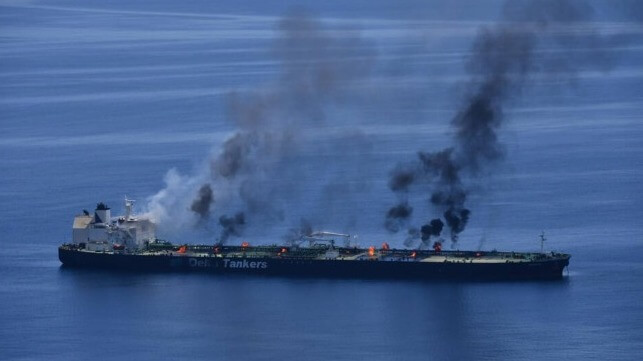
Sounion on fire
Courtesy EUNAVFOR

Published Nov 4, 2025 7:34 PM by The Maritime Executive


The annual report of the Panel of Experts on Yemen has an established reputation for producing carefully researched and well-substantiated information, and this latest report identifies that sanctions imposed on the Houthis have been relatively ineffective in constraining their ability to purchase equipment needed to mount their attacks on shipping.

The report identifies an increase in arms shipment seizures, which it attributes mostly to the closure of port facilities in Houthi controlled areas following US and Israeli attacks. Consignments have been diverted from Hodeidah to Aden instead, and material seized which the Houthis had been attempting to smuggle through border controls with false customs declarations hidden in nondescript containers. Although still dazed after the 12-Day War, Iran still seems to be supporting the Houthis.

The experts assess that Israeli, UK and US strikes over the summer have depleted stocks of missiles and drones, and killed a number of technical experts, but that sufficient capability and expertise remains for the Houthis to continue their campaign - though the attrition was no doubt a factor in the Houthis agreeing to pause their attacks following Omani mediation. A tangible consequence of the air strikes had been the erosion of trust between Houthi leaders, who fear strikes had been aided by some amongst their number, suspicions which have led to increased surveillance and arrests.

In terms of Houthi attacks, the UN experts counted 101 ballistic missiles fired at Israel, of which 57 were intercepted, 38 failed and four impacted in Israel. Most were launched from Sa‘dah and Amran Governorates. IRGC Quds Force Brigadier Abdulreza Shalai has now apparently left, but other IRGC and Hezbollah members remain in Yemen to assist the Houthis with these missile and drone operations.

At sea, 25 vessels were attacked, nine of which were merchant vessels. MV Eternity C (IMO 9588249), MV Magic Seas (IMO 9736169) and MV Sounion (IMO 9312145) were sunk and suffered casualties, the crew of MV Galaxy Leader (IMO 9237307) taken hostage were released, and MV Cordelia Moon (IMO 9297888, now MV Walrus) was damaged by a planted explosive device. 

These attacks have generally followed the same pattern; the target is surrounded by armed groups in small boats and attacked with drones, bringing it to a halt. It is then attacked with ballistic missiles whose targeting mechanisms are insufficiently sophisticated to be able to hit moving targets. The attack on the MV Minervagracht (IMO 9571521) in the Gulf of Aden on September 29, post the cut-off period for the UN report, suggests that this particular technical limitation may have been overcome, and that the Houthis are now able to engage fast-moving targets.

The report details extensive links between the Houthis and Al Shabaab terrorists in Somalia.  The Houthis provide arms and training, Al Shabaab facilitate use of Somali ports for shipments of arms to the Houthis. Al Shabaab militants are trained by the Houthis in Yemen. This cooperation exists notwithstanding that the two groups are at opposite ends of the Shi'a-Sunni extremist divide.

The report also details how the "Houthis have a child recruitment strategy which combines ideological indoctrination, militarized education and selective access to aid," and how this is "reshaping Yemeni society to produce a generation of loyal, uneducated fighters."

In summary, the capability of the Houthis to mount attacks on maritime targets associated with Israel in particular and the West generally has been reduced but not destroyed, which has prompted the Houthis to pause to restock. The ideological determination to carry on the war remains undiminished, and has perhaps been enhanced by identifying external enemies that can act as a focus for patriotic ardor; in this context, the Houthis talk of an entirely fictitious "17 nation anti-Houthi coalition." 

There is some disunity in Houthi ranks, and the internal security crackdown can be expected to diminish operational efficiency - frightening some into withdrawal and disabling some competent leaders falsely accused. The Houthi capability and intent remains therefore more or less intact; what is more uncertain is if the Houthis can maintain the unity of their coalition, and whether those they wish to target will allow them to spread their influence and continue to threaten innocent passage.

Tuesday, June 17, 2025


Diversifying Threats to Maritime Security in the Western Indian Ocean

Pirate interdiction
File image courtesy EUNAVFOR Operation Atalanta

Published Jun 17, 2025 11:57 AM by CIMSEC


[By Captain Harifidy A. Alex Ralaiarivony]

The WIO region serves as an essential gateway linking Asia, the Pacific, and the Middle East, occupying a central position in the world’s economic and strategic balance. This criticality is underscored by the significant maritime traffic transiting through or operating within the region, including major routes and chokepoints like the Red Sea, Bab-El-Mandeb Strait, and the Strait of Hormuz. This latter alone sees the passage of 20.9 million barrels of crude oil and 130 ships daily, highlighting the region’s importance for global energy exports.

The year 2024 demonstrated a notable intensification in the complexity and diversity of threats to maritime security in this vital area. While traditional concerns such as illicit trafficking (drugs, arms, human beings) and illegal fishing persist, new challenges, particularly the Houthi attacks in the Red Sea and a re-emergence of maritime piracy, demanded significant attention. The RMIFC, through its fundamental missions of collecting and disseminating critical maritime information, actively participated in regional operations to respond to these challenges. 

The overall number of maritime security events recorded within the RMIFC’s area of interest has shown a steady increase over the past eight years, from 640 events in 2017 to 1145 events in 2024.

Key elements contributing to the RMIFC’s ability to address these events include the expansion of its information exchange processes and efforts to build and maintain information sharing networks. The regional maritime security architecture, comprising regional (RMIFC and Regional Centre for Operational Co-ordination [RCOC]) and national centers and liaison officers, interacts with international communities and benefits from technical support and cooperation.

Building on the foundation of the Program for the Promotion of Maritime Security (MASE) (2010-2023), which enhanced maritime security and created an enabling environment for economic development, the current EU-funded Safe Seas Africa Program (SSA) (signed July 2024) aims to consolidate and expand these achievements by strengthening the regional architecture, capacities of information centers, operational coordination, and national centers. The RMIFC’s main objectives include processing maritime information to create Maritime Situational Awareness and a Comprehensive Regional Maritime Picture, supporting regional maritime operations, serving as an information sharing platform, promoting cooperation, and contributing to reports and studies.

Salient Threats in 2024 

While all maritime security threats in the Eastern and Southern Africa and the Indian Ocean (ESA-IO) region warrant attention, some demonstrated particular salience in 2024. 

Maritime Extension of Conflicts (Red Sea Crisis) 

This category saw the most significant increase in 2024, accounting for 128 out of 175 total acts of violence at sea, compared to only 69 incidents of maritime violence in 2023.4 The crisis stemmed from Houthi attacks starting in November 2023. These attacks initially targeted Israeli-linked vessels but expanded to include vessels of US and UK interest following airstrikes against the Houthis, and eventually, other vessels without clear affiliation.

The main modes of action identified include pretending to be Yemeni authorities, using unmanned aerial vehicles (UAVs or drones), manned skiffs with weapons, and anti-ship missiles (terminal guided and ballistic). While the effectiveness of these methods was estimated to be less than 10%, they caused serious consequences, including fatalities and severe damage to vessels. This maritime extension of the conflict is undeniably the most salient new kinetic threat due to its direct impact on international shipping and the sheer volume of incidents recorded in this category. 

Piracy 

Potentially linked to the unrest caused by the Houthi attacks and the subsequent reorientation of naval resources, piracy showed a concerning resurgence in 2024. While the phenomenon remains below the endemic levels of 2008-2013, 18 incidents classified as piracy were recorded in 2024, a sharp increase compared to previous years, and a notable rise since late 2023.

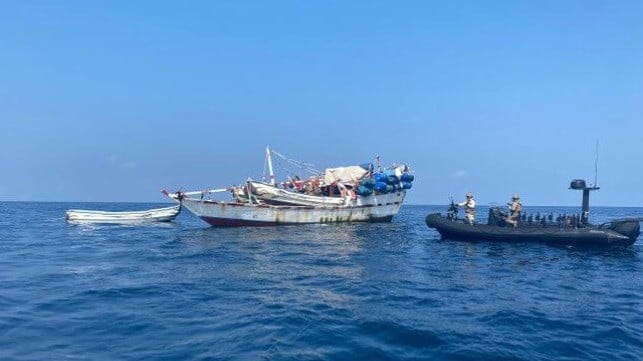
This resurgence, particularly in the Somali Basin, reintroduces a threat that had been strongly contained for years, opening a window of opportunity for pirate networks. The pirates’ strategy involves hijacking fishing dhows to use as mother ships to attack larger vessels up to 600 nautical miles or more off the coast. The report notes that most pirated vessels did not have Private Armed Security Teams (PAST). 

Maritime Incidents 

While not inherently criminal, the significant increase in maritime incidents in 2024 highlights a critical safety and security challenge. A total of 512 maritime incident events were recorded, a 20% increase compared to 426 in 2023. This surge was particularly notable in the sub-categories related to pollution and accidents. Increased traffic, potentially due to the re-routing around the Cape of Good Hope, and the use of vessels in poor condition navigating bad weather, are identified as main factors contributing to incidents and loss of life.

Suspicious Activity Reporting (SAR) and Medical Evaluation (MEDEVAC) operations also saw a considerable increase (8% and 16% respectively), indicating increased demands on response capabilities. The potential for major oil spills, such as the threat posed by the attack on MV Sounion, remains a high-risk incident within this category.

Illicit Trafficking 

Illicit trafficking, particularly of drugs and arms, continues to pose a significant and persistent challenge to regional stability. While the total quantity of drugs seized (42.24 tons) was significantly lower in 2024 compared to the preceding years (over 100 tons in 2021-2023), the number of drug smuggling incidents (127) remains high.

This paradox is partly attributed to the Red Sea crisis diverting naval resources traditionally engaged in counter-narcotics missions. The northern Indian Ocean is the primary area for seizures, linked to proximity to production areas, though transshipments occur along routes towards the East African coast. Six cases of weapon and drone trafficking were documented, including arms destined for Houthi rebels.

Illegal, Unreported and Unregulated (IUU) Fishing 

IUU fishing is recognized as a major and ongoing challenge that threatens marine ecosystems, the blue economy, food security, and can contribute to social conflict and fuel criminal networks. The RMIFC recorded 69 incidents related to IUU fishing in 2024.10 While the total number is lower than trafficking incidents, the persistent nature and widespread environmental and economic impacts make it highly salient, particularly for coastal African states dependent on marine resources. IUU fishing also may contribute to the resurgence of piracy. 

Other Threats (Terrorism, Cybercrime) 

Maritime terrorism incidents recorded in 2024 were few (2 events in Mozambique) but involved kidnappings and arrests of suspected terrorists near coastal areas, indicating insurgents maintain freedom of movement by boat in certain regions. Maritime cybercrime saw only one recorded event (hacking of the US Fifth Fleet), but the report highlights significant potential vulnerabilities in ports, vessels, and data systems, with potential for major disruption and financial loss.

Impacts Extending into Africa and Beyond 

The impacts of these maritime security threats extend significantly into African coastal states and have broader international consequences. The most direct and widespread economic impact in 2024 stemmed from the Red Sea crisis. The reorientation of shipping flows towards the Cape of Good Hope disrupted usual routes. This has resulted in a very sharp increase in insurance premiums, a lengthening of sea routes by almost 10 days (reducing vessel and container availability), and a collapse in revenues for Egypt from the Suez Canal transit. The maritime sector has been forced to reorganize permanently, with new alliances and logistics hubs emerging, suggesting a return to previous traffic levels is not expected soon.

Piracy resurgence also increases costs for security, insurance, and potential ransom payments. IUU fishing losses, estimated at millions of dollars per year, harm local economies and prevent job creation in the blue economy. Illicit trafficking, particularly of drugs and arms, fuels terrorist and criminal networks and undermines regional stability. Arms trafficking linked to conflict zones further destabilizes the region, while ransom money from piracy can influence local politics and increase criminal activities. Weak governance and lawlessness in turn can enable criminal groups, including pirates, to gain control over institutions. Injury, loss of life, and environmental degradation result from all of these threats. 

Response Strategies: Direct, Multilateral, and Mitigation

Effectively addressing these diverse threats requires a comprehensive approach involving actions at national, regional, and international levels. National governments and their maritime agencies play a crucial role in responding directly to threats within their jurisdiction or involving their flagged vessels through law enforcement and patrols and strengthening laws and regulations. National maritime agencies conduct SAR and MEDEVAC operations, directly saving lives at sea. Anti-pollution teams respond to spills. Campaigns to inform local communities about risks and engage them in conservation are direct local actions. Implementing robust cybersecurity systems, training staff, and developing incident response plans are direct actions for shipping companies and ports. Merchant vessels can adhere to Best Management Practices (BMP) (version 5 recommended for piracy) and employ Private Armed Security Teams (PAST).

Going beyond national responses, given the transnational nature of most maritime threats, multilateral cooperation is critical to successful mitigation. The Regional Maritime Security Architecture in the WIO region is built on this principle. The Regional Maritime Information Fusion Centre (RMIFC) is central to the regional mechanism, enabling information exchange and coordination. Its ability to fuse data from various sources is key to building maritime situational awareness for both national and international agencies. The European Union’s SafeSeas Africa (SSA) program specifically supports these centers.15 Programs like MASE and SSA aim to strengthen the technical, material, and human capacities of regional and national centers. Workshops and Tabletop exercises enhance collaboration and information sharing frameworks.

RCOC and international partners collaborate on joint operations targeting specific threats. Multinational forces like the Combined Maritime Force (CMF) and the Combined Task Force (CTF) 150 that operates underneath it, conduct counter-narcotics operations. EUNAVFOR operations (ATALANTA, ASPIDES) respond to piracy and the Red Sea crisis.

Private industry plays a role as well. Shipping interests have re-routed traffic around the Cape of Good Hope to mitigate the risk in the Red Sea, though this is not without its own set of challenges. The permanent reorganization of the maritime industry with new alliances and logistics hubs is a form of long-term adaptation. Increased insurance premiums are a market-based mitigation of financial risk. Adherence to safety regulations and BMP5 mitigates the risk of incidents and piracy. 

Putting all these together, strengthening early warning systems and climate change adaptation mitigate the impact of natural events, which can exacerbate other vulnerabilities. Improving information sharing and coordination of operations mitigates the potential for major maritime disasters, even if incidents occur. While complex, addressing underlying factors such as poverty, lawlessness, and IUU fishing (by strengthening governance, promoting sustainable practices, developing the blue economy) can help mitigate the conditions that fuel piracy and trafficking. Efforts to reduce the demand for illegal wildlife products also contribute to mitigation. Developing and strengthening oil spill contingency plans (regional and national) and having trained response teams in place are key to mitigating the environmental damage from pollution incidents. Waste reduction initiatives and clean-up campaigns mitigate the impact of marine litter on ecosystems like coral reefs.

Conclusion 

The maritime security landscape in the WIO region is dynamic and increasingly challenging. The RMIFC Activity Report 2024 clearly illustrates that while persistent threats like IUU fishing and illicit trafficking remain significant, the resurgence of piracy and, particularly, the maritime extension of regional conflicts in the Red Sea introduced critical new dimensions in 2024. These threats have profound and far-reaching impacts, affecting economic stability, human safety, environmental health, and regional governance across Africa and beyond. The Red Sea crisis dominated in terms of direct kinetic attacks and immediate global economic disruption in 2024, while IUU fishing and illicit trafficking represent high-volume, persistent challenges that fuel criminal networks and undermine long-term sustainability. The increase in maritime incidents highlights the growing pressures on safety and response capabilities in busy waterways, exacerbated by re-routing. 

Responding effectively requires a multi-pronged approach. Direct actions by national forces and ship operators are essential for immediate response and deterrence. However, the transnational nature of these threats mandates robust multilateral cooperation through established Regional Maritime Security Architecture mechanisms like the RMIFC and RCOC, supported by international partners and joint operations. Furthermore, strategies focused on mitigation are necessary to address the broader consequences of these threats, from economic disruption and pollution to the underlying conditions that enable criminal activity. 

Future policy actions should prioritize sustaining and enhancing the regional maritime security architecture, fostering information sharing and coordination, building national capacities, and ensuring resources are available to address both persistent challenges and emerging crises. Continued vigilance and collaborative action, informed by timely and comprehensive data from centers like the RMIFC, are paramount to safeguarding the vital maritime domain of the WIO region for the benefit of all stakeholders.

Captain Harifidy A. Alex Ralaiarivony is the director of the Regional Maritime Information Fusion Center in Antanarivo, Madagascar. He is the former Head of International Relations in the Madagascar Ministry of Defence. Captain Ralaiarivony holds a Master 2 (M2) in Strategy, Defense, Security and Conflict and Disaster Management from the Center for Research and Political and Strategic Studies – University of Yaoundé II (Centre de Recherche et d’Etudes Politiques et Stratégiques -Université de Yaoundé II); earned a Secondary Military Teaching Certificate from the International Higher War School of Yaoundé (Ecole Superieure Internationale de Guerre de Yaoundé), and a Naval Higher Studies Diploma from the French Naval Academy. He is currently pursuing a degree in international law, international economics, and politics at the Center for Diplomatic and Strategic Studies in Madagascar.

This article appears courtesy of CIMSEC and may be found in its original form here, including extensive footnotes. 

The opinions expressed herein are the author's and not necessarily those of The Maritime Executive.
Thursday, October 03, 2024

CHEEKY BUGGERS

Prepare for attack, with best regards: Houthis issue email alert to shipping fleets


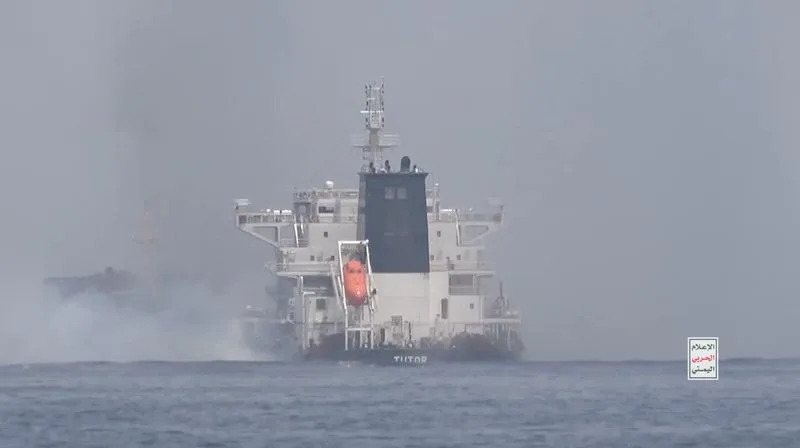
Smoke rises after an explosion on a ship that Houthis say is an attack by them on Greek-owned MV Tutor in the Red Sea


By Renee Maltezou, Jonathan Saul

Updated Thu, October 3, 2024 

ATHENS/LONDON (Reuters) -On a warm spring night in Athens, shortly before midnight, a senior executive at a Greek shipping company noticed an unusual email had landed in his personal inbox.

The message, which was also sent to the manager's business email address, warned that one of the company's vessels travelling through the Red Sea was at risk of being attacked by Yemen's Iranian-backed Houthi militia.

The Greek-managed ship had violated a Houthi-imposed transit ban by docking at an Israeli port and would be "directly targeted by the Yemeni Armed Forces in any area they deem appropriate," read the message, written in English and reviewed by Reuters.

"You bear the responsibility and consequences of including the vessel in the ban list," said the email, signed by the Yemen-based Humanitarian Operations Coordination Center (HOCC), a body set up in February to liaise between Houthi forces and commercial shipping operators.

The Houthis have carried out nearly 100 attacks on ships crossing the Red Sea since November, acting in solidarity with Palestinians in Israel's year-long war in Gaza. They have sunk two vessels, seized another and killed at least four seafarers.

The email, received at the end of May, warned of "sanctions" for the entire company's fleet if the vessel continued "to violate the ban criteria and enter the ports of the usurping Israeli entity".

The executive and the company declined to be named for safety reasons.

The warning message was the first of more than a dozen increasingly menacing emails sent to at least six Greek shipping companies since May amid rising geopolitical tension in the Middle East, according to six industry sources with direct knowledge of the emails and two with indirect knowledge.

Since last year, the Houthis have been firing missiles, sending armed drones and launching boats laden with explosives at commercial ships with ties to Israeli, U.S. and UK entities.

The email campaign, which has not been previously reported, indicates that Houthi rebels are casting their net wider and targeting Greek merchant ships with little or no connection to Israel.

The threats were also, for the first time in recent months, directed at entire fleets, increasing the risks for those vessels still trying to cross the Red Sea.

"Your ships breached the decision of Yemen Armed Forces," read a separate email sent in June from a Yemeni government web domain to the first company weeks later and to another Greek shipping company, which also declined to be named. "Therefore, punishments will be imposed on all vessels of your company ... Best Regards, Yemen Navy."

Yemen, which lies at the entrance to the Red Sea, has been embroiled in years of civil war. In 2014, the Houthis took control of the capital, Sanaa, and ousted the internationally recognized government. In January, the United States put the Houthis back on its list of terrorist groups.

Contacted by Reuters, Houthi officials declined to confirm they had sent the emails or provide any additional comment, saying that was classified military information.

Reuters could not determine whether the emails had been also sent to other foreign shipping companies.

Greek-owned ships, which represent one of the largest fleets in the world, comprise nearly 30% of the attacks carried out by Houthi forces to early September, according to Lloyd's List Intelligence data that did not specify whether those ships had any ties with Israel.

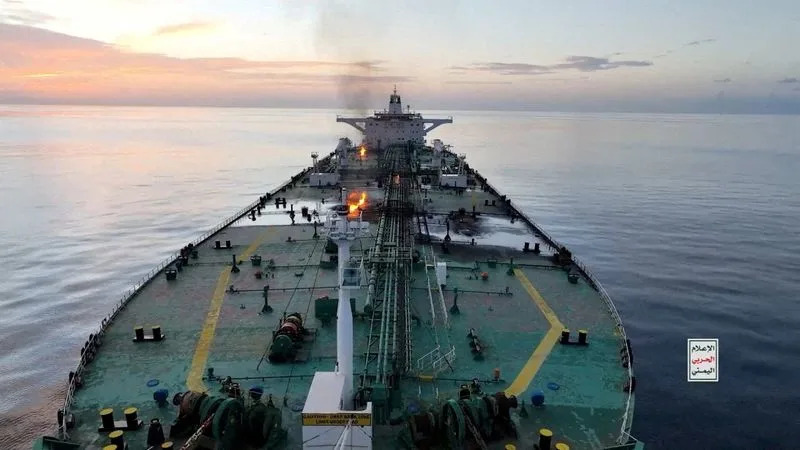
In August, the Houthi militia - which is part of Iran's Axis of Resistance alliance of anti-Israel irregular armed groups - attacked the Sounion tanker leaving it on fire for weeks before it could be towed to a safer area.

The strikes have prompted many cargoes to take a much longer route around Africa. Traffic through the Suez Canal has fallen from around 2,000 transits per month before November 2023 to around 800 in August, Lloyd's List Intelligence data showed.

Tensions in the Middle East reached a new peak on Tuesday as Iran hit Israel with more than 180 missiles in retaliation for the killing of militant leaders in Lebanon, including Hezbollah leader Sayyed Hassan Nasrallah on Friday.

NEW PHASE

The European Union's naval force Aspides, which has helped more than 200 ships to sail safely through the Red Sea, confirmed the evolution of Houthis' tactics in a closed door meeting with shipping companies in early September, according to a document reviewed by Reuters.

In the document, shared with shipping companies, Aspides said the Houthis' decision to extend warnings to entire fleets marked the beginning of the "fourth phase" of their military campaign in the Red Sea.

Aspides also urged ship owners to switch off their Automatic Identification System (AIS) transponders, which shows a vessel's position and acts as a navigational aid to nearby ships, saying they had to "shut it off or be shot".

Aspides said the Houthis' missile strikes had 75% accuracy when aimed at vessels operating with the AIS tracking system on. But 96% of attacks missed when AIS was off, according to the same briefing.

"Aspides are aware of those emails," its operational commander, Rear Admiral Vasileios Gryparis, told Reuters, adding that any response should be carefully considered and that companies are strongly advised to alert their security experts if contacted before sailing.

"In particular, for the HOCC, the advice or guidance is not to respond to VHF calls and e-mails from “Yemeni Navy” or the “Humanitarian Operations Command Center” (HOCC)."

The Houthis' email campaign began in February with messages sent to shipowners, insurance companies and the main seafarers union from HOCC.

These initial emails, two of which were seen by Reuters, alerted the industry the Houthis had imposed a Red Sea travel ban on certain vessels, although they did not explicitly warn companies of an imminent attack.

The messages sent after May were more menacing.

At least two Greek-operated shipping companies that received email threats have decided to end such journeys via the Red Sea, two sources with direct knowledge told Reuters, declining to identify the companies for security reasons.

An executive at a third shipping company, which has also received a letter, said they decided to end business with Israel in order to be able to continue to use the Red Sea route.

"If safe transit through the Red Sea cannot be guaranteed, companies have a duty to act – even if that means delaying their delivery windows," said Stephen Cotton, General Secretary of the International Transport Workers' Federation, the leading union organisation for seafarers, which received an email from HOCC in February. "The lives of the seafarers depend on it."

The email campaign has increased alarm among shipping companies. Insurance costs for Western ship owners' have already jumped because of the Houthi's attacks, with some insurers suspending cover altogether, the sources told Reuters.

Greece-based Conbulk Shipmanagement Corporation stopped Red Sea voyages after its vessel MV Groton was attacked twice in August.

"No (Conbulk) vessel is trading in the Red Sea. It mainly has to do with the crew safety. Once the crew is in danger, all the discussion stops," Conbulk Shipmanagement CEO Dimitris Dalakouras told a Capital Link shipping conference in London on Sept. 10.

Torben Kolln, managing director of German-based container shipping group Leonhardt & Blumberg, said the Red Sea and wider Gulf of Aden was a "no go" area for their fleet.

Contacted by Reuters, the companies did not respond to a request for comment on whether they had been targeted by the Houthi email campaign.

Some companies continue to cross the Red Sea due to binding long-term agreements with charterers or because they need to transfer goods in that particular area. The Red Sea remains the fastest way to bring goods to consumers in Europe and Asia.

The Houthis have not stopped all traffic and the majority of Chinese and Russian-owned ships - which they do not see as affiliated with Israel - are able to sail through unhindered with lower insurance costs.

"We are re-assuring the ships belonging to companies that have no connection with the Israeli enemy that they are safe and have freedom (of movement) and (to) keep the AIS devices going on all the time," according to an audio recording of a Houthi message broadcast to ships in the Red Sea in September shared with Reuters.

"Thank you for your cooperation. Out."

(Reporting by Renee Maltezou and Jonathan Saul; Additional reporting Yannis Souliotis in Athens and Mohamed Ghobari in Aden; Editing by Lisa Jucca)

Saturday, September 21, 2024

Israel’s New Campaign of “Terrorism Warfare” Across Lebanon


What we know about Israel's bloody attacks targeting consumer electronic devices in Lebanon


September 20, 2024
Source: Dropsite


Source: X

For the second day in a row, electronic devices across Lebanon, including walkie talkies, exploded on Wednesday, killing 14 people and injuring over 450, according to Lebanon’s health ministry.

The attack came one day after thousands of pagers across the country exploded at the same time, killing eleven people—including a 9-year-old child—and wounding nearly 3,000, including many civilians and government and hospital workers. Hezbollah and the Lebanese government blamed Israel for the attacks.

“Everyone’s scared to send text messages, to make calls, and they’re afraid to open laptops. It’s definitely led to some level of complete disorientation, fear, confusion, paranoia. It has huge psychological effects,” said Amal Saad, a leading expert on Hezbollah. “People have started to say, ‘Okay, this is going to be the new type of warfare. This is going to be how they’re going to fight. It’s going to be terrorism warfare. So this is the new normal now.’ People are preparing themselves for more of this.”

Israeli Prime Minister Benjamin Netanyahu released a brief video statement on Wednesday after the second round of attacks. “I have said it before: We will return the citizens of the north to their homes in security, and that’s exactly what we are going to do.”

“We have many capabilities that we have not yet activated,” Israeli lieutenant general Herzi Halevi said, regarding Israel’s plans for military operations at the northern border with Lebanon.

The second attack appeared timed to cause total panic among the civilian population and to undermine confidence in Hezbollah’s ability to control and contain Israel’s assault. On Wednesday, multiple explosions went off at a funeral for some of those killed on Tuesday, according to the AP whose reporters witnessed the attack.

“I’m starting to realize,” Saad said, “the objective behind this was to terrorize and paralyze and demoralize.”

Hezbollah’s leader Hassan Nasrallah is scheduled to give a public speech Thursday where he is expected to address how these attacks were conducted and to lay out the group’s plans for a military response. “Hezbollah has to respond and will respond,” Saad said. Israel, she said, has at times denied or downplayed the effectiveness of Hezbollah’s attacks. To restore morale, “you need it to be indisputable that Hezbollah did this,” she said. “If it’s a different type of response that Israel can conceal and hide, I’m not sure how effective that’s going to be.”

At approximately 3:30 p.m. local time on Tuesday, thousands of pagers across Lebanon sprang to life, beeping and vibrating. The message on the screen indicated an error. “The message was: Fault. Fault. And it continued to beep and heat up before the explosion of the pager,” said Ali Jezzini, a security analyst and journalist in Lebanon who has been speaking to hospital workers treating the wounded.

Many victims, he said, lifted the devices to examine the pagers and as they did so, they exploded, causing injuries to their faces and hands. “It did give a code and it continued to ring and vibrate. So that’s why they had to hold it in their hands to check what’s happening. It was faulty, it was not responding, so that’s why they kept it in front of their faces and the palms of their hands, because they’re trying to figure out what’s wrong with it. That’s why most of the injuries are like that. It didn’t explode right away.”

The widespread physical injuries are intended to have a larger psychological effect, according to Jezzini. “I would compare it to an operation made by the Americans in Vietnam where they actually planted faulty ammunition that made the guns explode for the Viet Cong on the NVA and during the Vietnam war,” said Jezzini, referring to an operation called Project Eldest Son.

“Psychologically, it does actually help to, you know, make the fighter lose confidence in his equipment. That’s the aim.” He compared it to a psyop, intended to “alter the perception of Hezbollah’s leadership” and perhaps force it into a ceasefire.

Speaking to Israeli troops at the Ramat David Airbase on Wednesday, Israeli Defense Minister Yoav Gallant made no mention of the explosions but he did declare “the start of a new phase in the war” saying, “the center of gravity is moving north. We are diverting forces, resources, and energy toward the north.”

The United Nations Security Council will meet on Friday over the attacks following a request by Algeria on behalf of Arab states.

Experts are still searching for the precise mechanism that triggered the explosions in the pagers yesterday. The most likely scenario, based on available evidence, is that the pagers were rigged with some form of explosive material or mechanism before being delivered to Lebanon. That would mean Israeli agents were able to access the devices at the point of manufacture or to interdict the supply chain. Officials in Lebanon have said they believe the pagers contained 10-20 grams of explosive material. The devices were then detonated through a message, code, or pulse pushed to the devices, which triggered whatever mechanism had been installed.

“I have to give credit to those that fabricated those pagers, very ingenious,” said Mike Vining, a legend in the world of U.S. covert operations, one of the first members of Delta Force and an expert on explosives. “When I was in the military at my old job we developed a lot of tricks. I am saddened about the fact that innocent people were injured. The goal is never to hurt the innocent.”

Vining told Drop Site News that he had no inside knowledge of the operation in Lebanon, but offered some plausible theories on how the pagers were rigged and detonated. “Probably had some pure PETN explosives in the pagers,” he said, referring to pentaerythritol tetranitrate, a highly explosive substance. “I believe from what I see, first the lithium battery is shorted and explodes and that causes the PETN to detonate. What makes me think this is that the pager got hot and smoked first. A single signal must have been what triggered the reaction.”

“Sources today in Lebanon were saying that the [pagers] have passed the inspections on multiple airports, such as X-rays,” said Jezzini, making it difficult to place blame on one single agency for allowing the attack to happen.

Reporting by Al-Monitor and Axios has suggested that Israel decided to move forward with the attack out of concerns that Hezbollah was on the brink of discovering the rigged pagers, but this remains unconfirmed. United Nations Secretary-General Antonio Guterres also echoed the point at a briefing at UN headquarters: “What has happened is particularly serious, not only because of the number of victims that it caused, but because of the indications that exist that this was triggered, I would say, in advance of a normal way to trigger these things, because there was a risk of this being discovered.”

Multiple news outlets have reported that Israeli defense minister Yoav Gallant informed U.S. Defense Secretary Lloyd Austin that Israel was going to carry out an operation in Lebanon, but offered no specifics. The U.S. has officially denied any involvement or foreknowledge of the plot. “We were not aware of this operation and we were not involved in it,” said U.S. State Department spokesperson Matthew Miller on Tuesday.

The model of the pagers matches that of a model manufactured by a Taiwanese company called Gold Apollo. Images of damaged devices shared online after the blasts showed labeling matching the AR-924 model built by the company, along with the company name.

The AR-924 was listed on the company’s website prior to its removal this week. In statements issued by the company after the attacks, Gold Apollo denied manufacturing the product and said the model in question is produced and sold by BAC Consulting KFT, a Hungarian company that had been authorized to use its branding. In public comments, Taiwan’s Ministry of Economic Affairs said that its records showed no direct exports to Lebanon by Gold Apollo.

The president of Gold Apollo, Hsu Ching-Kuang, told the press that a year after signing their partnership, BAC made the unusual request to design its own products but with Gold Apollo’s trademark. According to Hsu, payments to Gold Apollo from BAC reportedly came from a bank account registered to an unnamed country in the Middle East, causing occasional delays and freezes in payment, despite BAC being based in Hungary, an arrangement he called “strange.”

BAC is based in Budapest and was established in 2022, publicly available information shows. A company website, since taken offline, describes the role of BAC in developing, “international technology cooperation among countries for the sale of telecommunication products,” and “scaling up a business from Asia to new markets.”

Business records listed for the company in Hungary show around $584,000 in revenue for the company in 2023 along with only $320 in fixed assets. Reporters from the Associated Press who visited the building listed as the headquarters of BAC in a residential neighborhood of Budapest found a building used as a site for headquarter addresses of multiple companies.

The CEO of the company is listed as Cristiana Bársony-Arcidiacono. A LinkedIn page for Bársony-Arcidiacono indicates that, prior to her role at BAC she had previously worked for the European Commission, as well as a “strategic advisor” for consulting firms in various countries. (The EU Commission denied she was ever a staff member, but could not rule out the possibility she worked as a contractor.) After the attacks, Bársony-Arcidiacono was quoted in press reports confirming her company’s licensing arrangement with Gold Apollo, but stating, “I don’t make the pagers. I am just the intermediate. I think you got it wrong.”

In a statement posted on Twitter on Wednesday, Zoltan Kovacs, a spokesperson for the government of Hungary, also called BAC “a trading intermediary, with no manufacturing or operational site” in the country. “The referenced devices have never been in Hungary,” he added.

Globally, many condemned Israel’s use of such a widespread tactic that, by design, would clearly harm and kill civilians. “It’s not just fighters” being maimed, Saad said. “Hezbollah is such a huge grassroots organization, there are so many people who work [in its civil institutions]. My friend’s cousin lost his eyes and his fingers yesterday because he’s a nurse in Al Rassoul Al Azam Hospital. He’s a part time nurse in that hospital, but he’s a student. And there are many, many people who are connected to Hezbollah in this way just through part time work.”

“Customary international humanitarian law prohibits the use of booby traps – objects that civilians are likely to be attracted to or are associated with normal civilian daily use – precisely to avoid putting civilians at grave risk and produce the devastating scenes that continue to unfold across Lebanon,” Lama Fakih, Middle East and North Africa Director at Human Rights Watch, said in a statement.

Rep. Alexandria Ocasio-Cortez called for information from the U.S. State Department as to whether any funding from the U.S. went into the attack. “This attack clearly and unequivocally violates international humanitarian law and undermines US efforts to prevent a wider conflict,” she posted on Twitter. “Congress needs a full accounting of the attack, including an answer from the State Department as to whether any US assistance went into the development or deployment of this technology.”

“It’s the only way to wage war for the Israelis, the dirty war,” said Jezzini. “They are aiming to change the whole perspective of the world on how to wage war and what is legitimate or not to survive. So instead of complying with international law, they are trying to change the whole concept of international law. That is real danger here.”


Jeremy Scahill has reported from Afghanistan, Iraq, Somalia, Yemen, Nigeria, the former Yugoslavia, and elsewhere across the globe. Scahill has served as the national security correspondent for The Nation and Democracy Now!. Scahill's work has sparked several congressional investigations and won some of journalism’s highest honors. He was twice awarded the prestigious George Polk Award, in 1998 for foreign reporting and in 2008 for “Blackwater.” Scahill is a producer and writer of the award-winning film “Dirty Wars,” which premiered at the 2013 Sundance Film Festival and was nominated for an Academy Award.


Taiwan questions two in probe into Hezbollah pagers

By AFP

September 20, 2024

Hsu Ching-kuang speaking to reporters on September 18 when he denied his Gold Apollo company had anything to do with the exploding Hezbollah pagers - Copyright AFP Yan ZHAO

Two people from Taiwanese companies were questioned multiple times as part of a probe into pagers that exploded while being used by Hezbollah operatives in Lebanon, Taipei investigators said Friday.

Questions and speculation have swirled over where the devices came from and how they were supplied to Hezbollah, after hundreds of pagers and walkie-talkies detonated across Lebanon on Tuesday and Wednesday, killing at least 37 people and wounded nearly 3,000.

The New York Times reported this week that Israel had inserted explosive material into a shipment of pagers from Taiwan’s Gold Apollo, citing American and other anonymous officials.

But Gold Apollo’s head Hsu Ching-kuang denied producing the devices, pointing the finger instead at Hungary-based partner BAC Consulting KFT, who it allowed to use its trademark.

On Thursday, as part of a probe by Taiwanese investigators, Hsu and a woman from a different company were questioned by prosecutors.

Local media reported that the woman questioned was Wu Yu-jen, a representative connected to BAC Consulting KFT, who had set up a company based in Taipei called “Apollo Systems”.

“Our country takes the case very seriously,” said the prosecutors office from Taipei’s Shilin district in a statement Friday.

“We instructed the Investigation Bureau’s national security station to further interview two people from Taiwanese companies as witnesses yesterday.”

The two witnesses were allowed to leave after multiple rounds of questioning.

“We will clarify the facts as soon as possible such as whether Taiwanese companies are involved or not,” the office said.

It also said investigators searched four locations, including in New Taipei City’s Xizhi district, where Gold Apollo is located, and Taipei’s Neihu district.

Neihu district is the listed address of Apollo Systems, according to a company register website, which also showed that the firm was established in April this year.

Wu did not speak to reporters when she was brought in for questioning, according to local TV footage.

Hsu, who was shuttled back and forth between his office and the prosecutors office on Thursday, also declined to comment on the investigation.

Earlier this week, his company said the pager model mentioned in media reports “is produced and sold by BAC”.

But a Hungarian government spokesman said BAC Consulting KFT was “a trading intermediary, with no manufacturing or operational site in Hungary”.


The Pager Attack: Will There Be an Impact on Trade in the Mideast?

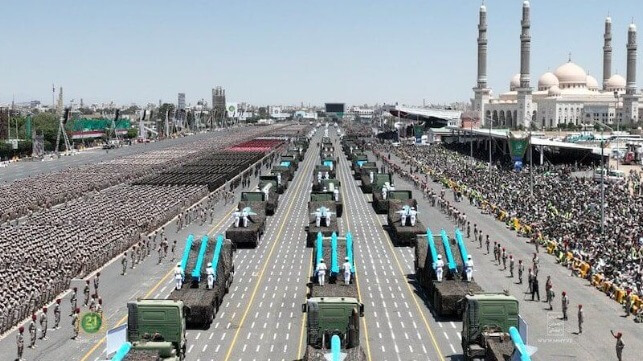
Houthi antiship missiles on display (Houthi Military Media file image)
Houthi antiship missiles on display. Like Hezbollah, the Houthi militia is allied with the Iranian-led Axis of Resistance (Houthi Military Media file image)

Published Sep 18, 2024 5:49 PM by The Maritime Executive


There is no forensic proof that ties Israel definitively to the attack on Hezbollah members (and the Iranian ambassador) in Lebanon on September 17. But from a risk analysis perspective, it should be a working assumption that Israel was responsible.

It appears that Israel has a track record of delivering similar such ‘supply chain’ attacks.  In August 2023, after a series of unexplained explosions in ballistic missiles, Iranian authorities discovered that electrical connector devices procured from Russia had been swapped out for identical-looking devices within which a small explosive charge on a long-delay fuse had been concealed.  Besides damage caused by missiles already deployed in silos, the whole missile fleet had to be taken offline while each missile was cleared of intruder devices. 

The assassination of Ismail Haniyah in Tehran on July 31, 2024 is believed to have been carried out with a different intruder device:  a bomb smuggled into the target’s bedroom, based on the prediction that Haniyah would at some unknown time in the future be billeted in the room.

The devastating and deeply humiliating character of the pager attacks poses a major headache for Hezbollah. Its retaliation and response needs to be of a similar scale and effect. Thus the customary response of firing drones and missiles into northern Israel - which are more a nuisance than damaging - would be considered inadequate. A massive increase in the scale of such attacks might suffice, but risks drawing the United States into the conflict as Israel’s backstop defender. 

Any Israeli counter-strikes into Lebanon would also upset the modus vivendi between the Lebanese state and Hezbollah, whose presence is tolerated only on the general understanding that it does not compromise the Lebanese state. Israel is likely to know if Hezbollah has a trump card or a doomsday response already prepared; but if it does have such knowledge, and Hezbollah has a plan for such a contingency, then this did not inhibit the initiation of the pager attack. A home-grown Hezbollah response is likely therefore to be a long-term aspiration.

In these circumstances, Hezbollah might normally look to its sponsor - Iran - for help. Indeed, the pager attacks threaten the credibility and value of Iran’s long-term commitment to Hezbollah, Iran’s most successful Axis of Resistance investment. An Iranian desire to exact revenge will be high. But despite promises to do so, Iran has not yet attempted to retaliate for the assassination of Ismail Haniyah.

Indeed, Iran appears nervous and defensive at present. Statements from air defense, air force and navy commanders in recent weeks have all focused on Iran’s ability to defend itself, as opposed to the Iranian ability to mount attacks.  Both Iran’s regular and IRGC navies until last week had not released details of any ship movements from many months; in the first such announcement last week, it became apparent that the 98th Flotilla rotation in the Red Sea had been extended, and that one of the ships of the 99th Flotilla deploying to replace it was a turn-around which had also formed part of the 98th Flotilla - all indicative of a fleet under pressure. 

Moreover, the Houthi agreement to allow the salvage of the crude oil tanker MV Sounion in the Red Sea is likely a consequence of pressure from Iran, suggesting that back-channel communications with Iran, via Oman and elsewhere, are having some effect in calming Iranian belligerency.

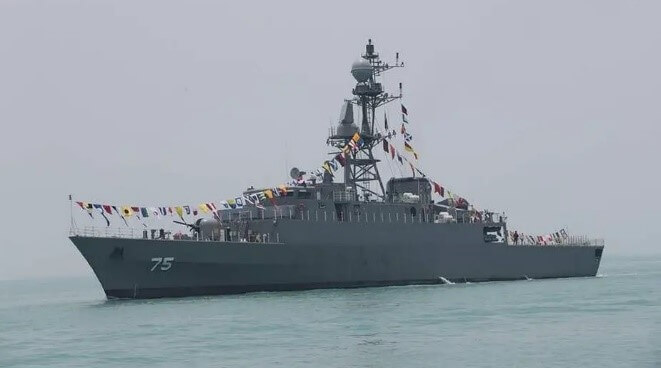
Flotilla 99, with IRINS Dena (F75) and tanker/store ship IRINS Bushehr (K422), deployed to the Red Sea on 1 September 2024

On balance, it is difficult to see where the Axis of Resistance will strike back after the pager attacks. The one member of the alliance which remains undaunted however appears to be the Houthis, whose maritime attacks have been successful both politically and militarily. Being both headstrong and tactically innovative, the chances are high that the initial response will come from the Houthis - probably in the form of further attacks and kidnapping attempts at sea.

The opinions expressed herein are the author's and not necessarily those of The Maritime Executive.


Houthis Down Another Reaper Amidst Ongoing U.S. Vessel-Protection Strikes

Houthi fighters examine a purported drone crash site, Sept. 15 (Houthi military media)

Published Sep 17, 2024 9:31 PM by The Maritime Executive


On Monday, Yemen's Houthi rebels claimed to have shot down another American MQ-9 Reaper attack drone, a mainstay of U.S. Air Force antiterrorism operations in the Middle East. 

Houthi spokesman Yahya Saree said that the group shot down the MQ-9 with a "locally-made surface-to-air missile" over Dhamar Governorate on Sunday. He claimed that it was the 10th Reaper that the group has downed in the course of its conflict with U.S. forces. 

As evidence, Saree released a video purporting to show the shootdown and a second clip showing Houthi personnel combing through an apparent crash site. Some of the components visible in the footage are consistent with an MQ-9, including a three-bladed propeller at the rear of the aircraft. 

U.S. defense officials did not confirm the claimed shoot-down. In a statement, U.S. Central Command said only that it destroyed one unspecified missile system in a Houthi-controlled area of Yemen on Sunday. The Houthi munition was targeted and destroyed "to protect freedom of navigation and make international waters safer." Centcom's forces regularly strike Houthi positions in order to prevent the launch of antiship missiles and drones at merchant vessels and warships in the Red Sea. 

The Houthi militia is backed by Iran and benefits heavily from Iranian weapons technology, according to Western analysts. On Sunday, the group claimed that it launched a new class of "hypersonic" ballistic missile aimed at a target in central Israel, more than 1,200 miles away from the Yemeni border. The missile appears to have penetrated Israel's air defenses, and interceptors damaged but did not destroy it, Israeli officials said. Nine people suffered minor injuries from falling debris. 

Israeli defense officials said that the missile was supersonic, not hypersonic, and that it did not maneuver in flight. Maneuvering hypersonic missiles require highly advanced aerospace technology, and only a handful of nations have advanced hypersonic programs. 

Israeli Prime Minister Benjamin Netanyahu promised swift retaliation, and he reminded Houthi leaders of the devastating Israeli airstrike on the port of Hodeidah two months ago.