Monday, February 10, 2020

FIRST NATIONS PROTESTS
First Nation protests force VIA Rail to cancel trains between Toronto, Montreal and Ottawa
TORONTO -- Anti-pipeline protesters in Belleville, Ont. have forced VIA Rail to suspend service between Toronto, Montreal and Ottawa for the second day in a row.
The protests, in support of the Wet’suwet’en First Nation, come after six people were arrested near a worksite in northern British Columbia where the RCMP had recently enforced an injunction against the Nation’s hereditary chiefs and their supporters.
At issue is the $6.6-billion Coastal GasLink pipeline, which will deliver natural gas from the Dawson Creek area to a facility near Kitimat, B.C.
The company behind Coastal GasLink has signed agreements with 20 elected First Nation councils along its 670-kilometre path with the exception of the Wet'suwet'en who say the project has no authority without their consent.
As a result of the protests in Belleville, service between Ottawa and Toronto and between Montreal and Toronto has been interrupted in both directions as VIA Rail works to refund tickets for affected trips.
“VIA Rail will be automatically refunding all segments affected by this service disruption. Please note that your refund may take up to 10 days to process,” the company says in an important notice on their website.
VIA Rail goes on to say that none of the trains on these two routes will operate until the issue is resolved.
The Ontario Provincial Police said that they are monitoring the protests.
Protesters block CP Rail tracks in Toronto
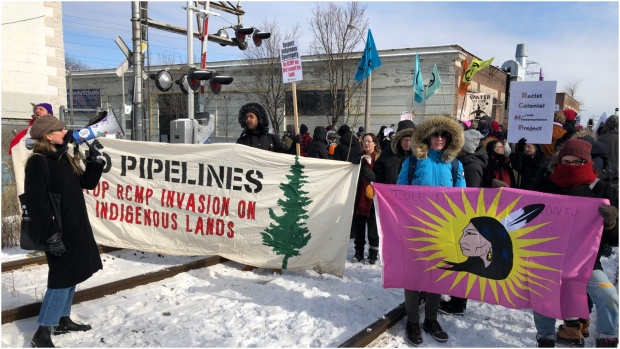
On Saturday, protesters in solidarity with the Wet'suwet'en First Nation blocked the Canadian Pacific (CP) Rail tracks at Bartlett Avenue in Toronto’s west end.
In a news release, the group behind the demonstration said they chose the CP tracks as the site of their protest due to the company’s involvement in transporting pipeline materials to B.C.
SCENE
“The Coastal GasLink project needs to be permanently stopped, and the RCMP must leave the territory immediately as the Hereditary Chiefs have demanded,” Alie Hermanutz, a protest supporter, said in the release.
Speaking to CP24, Indigenous environmental justice advocate Vanessa Gray says the RCMP is attacking the Wet’suwet’en people standing in the way of the pipeline’s construction.
“There are families living on the territory, they have been living there for years, there are different clans and Hereditary Chiefs who all are opposed to the Coastal Gaslink pipeline,” Gray said.
“They have every right to be in their own land and territory and we’re here to shutdown Canada until the RCMP stand down.”
GO Transit's Barrie line was briefly interrupted by the demonstration, but later resumed service.
Toronto Police told CP24 that they are aware of the protest, but as long as the demonstrations remain peaceful, officers will not take any action.


Protesters remain despite court ruling

Quinte News
FIRST NATIONS PROTESTS CANADA


US health care needs its Filipino nurses, so why is the system stacked against them?

With the existing workforce ageing, a historic shortfall looming and Trump limiting immigration, the system’s best hope lies with the nurses themselves
Charley Lanyon 2 Feb, 2020

There is a moment in Jo Koy’s 2012 stand-up special, Lights Out, when he asks the California crowd how many of them are Filipino. What sounds like most of the audience applauds. “Somewhere in Glendale …” the Filipino-American comedian quips of the Los Angeles suburb, “there’s an empty hospital.” The theatre explodes with laughter.

Every Californian – or at least those who have ever been sick – would get the joke. Like good Mexican food or being allowed to make a right turn on red, depending on the expert care of Filipino nurses is something of a Californian birthright.

Filipinos account for less than 4 per cent of the state’s population but 20 per cent of its registered nurses. Like so many American immigration stories, theirs is one of colonialism, racism, war and sacrifice; and it’s one many Americans seem to have forgotten. 

United States President Donald Trump swept into office on a wave of anti-immigrant sentiment and is actively retooling the immi­gration process to make it as difficult and unpleasant as possible for applicants, including medical professionals. And yet hospitals are short-staffed, health care costs are ballooning and 44 million US citizens have no health insurance.

Californians of every political stripe face a stark truth: hospitals need immigrants, especially those from the Philippines, more than ever. Without them, American health care, for all its glaring flaws, would cease to exist.

What began as a way to educate so-called ambassadors in the US to send back to the Philippines was exploited as a way to shore up an American nurse shortageCatherine Ceniza Choy, professor of ethnic studies, University of California, Berkeley

Hope lies, at least in part, with the Filipino workers themselves, who are stepping up and assuming positions of power in unions, colleges and on hospital boards, and driving the conversation around American nursing and health care. And not just in California.

But while Filipino nurses are finding their voices and exercising their power, they are also ageing. There are more than a million nurses in the US over the age of 50, which means one-third of the workforce will reach retirement age in the next 10 to 15 years. Without comprehensive immi­gration changes that encourage more foreign health care workers to settle in the US, the country is set to learn a hard lesson about how dependent it has become on immigrants for its most vital – literally life-sustaining – needs.

All eyes are on this year’s presidential election and carers, health care advocates and political action groups representing nurses are pushing hard for immi­gration and health care reform before it’s too late.

Catherine Ceniza Choy, a professor of ethnic studies at the University of California, Berkeley, is author of the book Empire of Care: Nursing and Migration in Filipino American History (2003), which starts at the end of the 19th century, when the Philippines had the misfortune of being one of America’s first forays into colonialism.


The complex ties between mothers and their domestic helpers


Why are there so many Filipino nurses? Son of US nurse digs into history


Despite powering global trade, Filipino seamen face growing threats


First claimed by Spain in 1521,
the Philippines – the only Asian country named after a European monarch – would spend more than 300 years under Spanish rule. Just as inde­pendence seemed at hand, on the eve of Spain’s defeat in the Spanish-American war, in 1898, the European country ceded the archipelago to the US, giving it one of its first overseas territories.


“When the US colonised the Philippines, the US govern­ment introduced formal nursing education because they wanted their soldiers taken care of,” says Leo-Felix Jurado, a professor in the department of nursing at William Paterson University, in New Jersey, and executive director of the Philippine Nurses Association of America (PNAA). “As a result, the Philippine educational system was very much a US educational system.”

Choy puts it more bluntly: “The message was, you’re not civilised, we’re going to civilise you.”

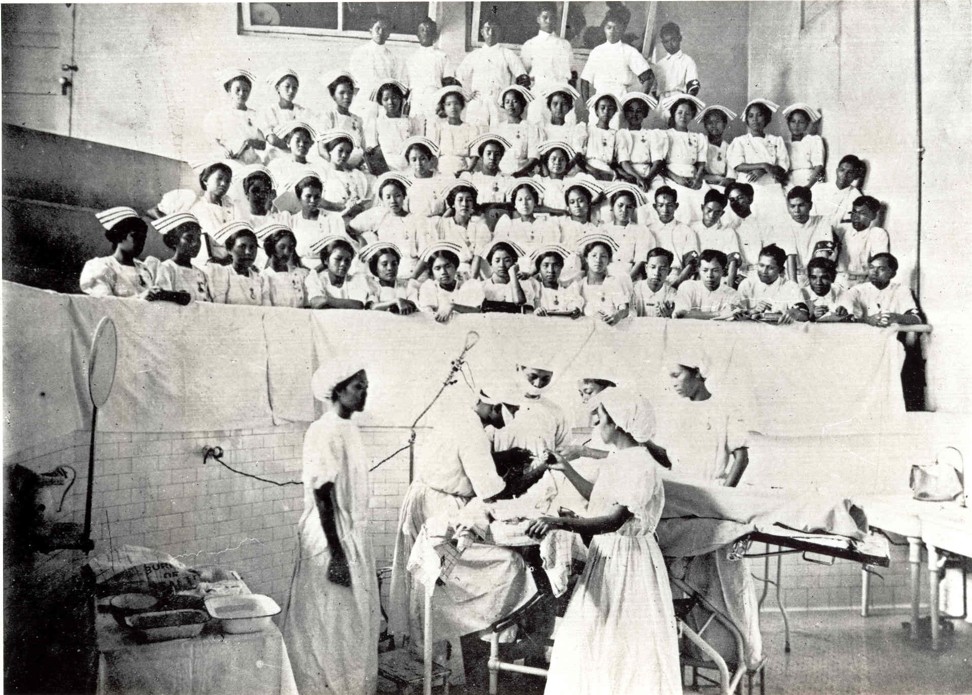
Filipino student nurses watch a surgery being performed at Manila’s Philippine General Hospital, circa 1915.


In the first decades of the 20th century, this educational link became increasingly formalised and groups of vetted, upper-class Filipinos called pensionados, or “students on a pension”, were awarded scholarships to travel to the US to study health care.


“The idea was that they would [return to the Philippines to] occupy positions in education, hospitals and the colo­nial government,” Choy says. “It established a mindset that, if you are going to be socially, economically mobile and gain professional opportunities in the Philippines, one great way to do that is to study in the US.”


While no longer a colony after World War II, ties between the US and the Philippines remained strong. In 1948, the US Congress passed the Information and Education Exchange Act, establishing an exchange visitor programme (EVP) and opening up the “nursing pipeline”.


“What began as a way to educate so-called ambassadors in the US to send back to the Philippines was exploited as a way to shore up an American nurse shortage,” Choy says. “There were even American hospitals putting ads in Philippine newspapers advertising job opportunities.”


So began a pattern: first the EVP, then the 1965 Immigration and Nationality Act and the 1989 Immigration Nursing Relief Act and, most recently, in the noughties, “visa compromises” removing limits on the number of nurses that could enter the US and work. Whenever the US faces a nursing shortage, Congress passes immigration reform to entice Filipino immigrant nurses. “At the same time, when the US doesn’t need more nurses, they basically close the gate,” says Jurado, who has written a dissertation on the relationship between US immigration reform and overseas nurses.

Catherine Ceniza Choy, a professor of ethnic studies at the University of California, Berkeley.
In the Philippines, after
president Ferdinand Marcos declared martial law in 1972, he used his new powers to move towards a labour-export economy, actively encouraging his countrymen to find work overseas and send back money to help bolster the faltering economy. Those who did so were described by state propaganda as patriots, even “national heroes”.


It wasn’t hard to convince the nurses. Their quality of life in the Philippines still lags well behind that in the US, and medical technology, especially in public hospitals, can be antiquated. As for nurse’s salaries, the average in the Philippines is about US$700 a month, compared with around US$6,300 a month in America.


“When I graduated, I worked at the Philippine General Hospital, a public hospital [in Manila],” recalls Dahlia Tayag, a clinical nurse at the University of California’s San Diego Medical Centre, who came to the US in 1983. “We didn’t have health insurance in the Philippines at that time. If you couldn’t afford your medical care, you were just going to die. If a patient needed a blood transfusion and had no money, I would take up a collection from my co-workers to buy blood.”


Filipinos say they are taught at a young age to prioritise the good of the group over the individual, to work hard and to respect authority – all essential values in the high-pressure, hierarchical world of nursing. Faith is also a central pillar for many Filipinos and the core values of Catholicism, such as service and care for the less fortunate, are taken to heart and actively practised.


“Filipinos as a whole are very compassionate, very caring people,” says Zenei Cortez, a Filipino-American nurse and president of National Nurses United, the country’s largest nurses’ union. “We have utmost respect for our elders. There’s a saying that every Filipino is related. We call someone else’s mother ‘mother’, someone’s aunt ‘aunt’. We treat our patients like they are our own family and that’s what I think makes Filipinos the best caregivers.”

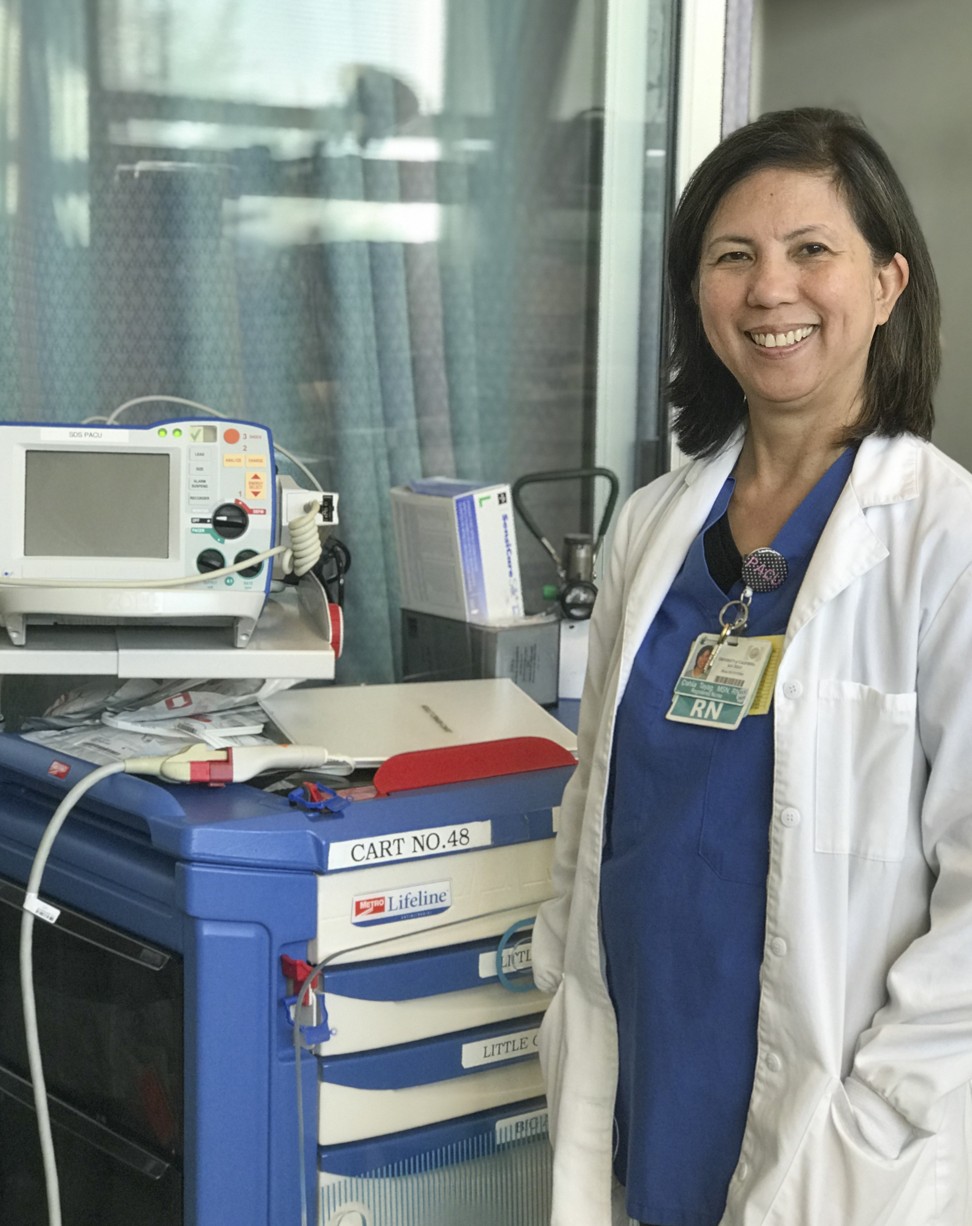
Dahlia Tayag, a clinical nurse at the University of California’s San Diego Medical Centre.


In Philippine hospitals, there are no visiting hours, and family members are allowed, even expected, to be with the patient at all times. This inclusion in care is a tenet Filipinos bring with them, and American medical workers and administrators are slowly realising its efficacy in the healing process.


“Now hospitals in the US are trying to adopt that kind of Filipino practice,” Jurado says. “We’re seeing a trend towards getting rid of limitations on visiting hours and making sure family members are involved in decision making.”


In America, thanks to legal and liability issues, it can be impossible for students to get on-the-job experience, so Tayag is part of an initiative to take US-trained nursing students to the Philippines. There, “students get full hands-on care experience”, she says. “You can’t even compare it. When we graduate from nursing school over there, we are ready to work.”


Adjusting to American hospitals can be difficult, however. First there is a language barrier – high-speed medical English can be hard for even fluent English-speaking Filipinos – and there is new technology to learn, and a foreign work culture to navigate.


Marlon Saria, an oncology clinical nurse specialist at Providence Saint John’s Health Centre, in Los Angeles, says even applying for jobs in the US is dauntingly different. “In the Philippines, we don’t email. We don’t apply online. I did not know all these things were possible here. So I was driving to every hospital, trying to apply on paper to each of the human resources offices.”


As a Filipino, in spite of being educated and trained here in America, I have to work a little harder than my colleagues and counterparts. You have to con­stantly prove yourselfZenei Cortez, president, National Nurses United


When he did secure a job – thanks to a Filipino hiring manager who understood his situation – he still felt out of his depth. “All I could say at that time was, ‘Can you repeat that, please?’ Like, ‘Excuse me?’ I could not understand what people were saying, so I would hate to pick up the phone,” Saria recalls. A well-meaning patient even taught him how to pronounce “insulin” correctly.


“The first six months were really rough because the culture is very different: the paternalistic doctor culture in the Philippines versus here, where you can actually talk back to your boss,” Saria remembers. “And in California, everything was automated; you have IV [intravenous] pumps, you have automated blood pressure machines. Everything in the Philippines is still manual.”


Many Filipino nurses also face racial discrimination, and while the work environment is improving, especially in states and cities with large immigrant populations, many nurses feel they are judged by different standards to their white counterparts.


“I’ve found that, as a Filipino, in spite of being educated and trained here in America, I have to work a little harder than my colleagues and counterparts. You have to con­stantly prove yourself,” says Cortez, who has seen blatant discrimination first hand. She recalls applying for a nursing job in the 1990s. “The manager told me – and this is word for word – that she cannot hire another Filipino in the department because there were already way too many. I was so dumbfounded. Then I got p***ed off. I knew my rights. That’s how I got involved in the union, because with their backing I was able to win the position,” she says.


Like her, today many Filipino nurses are demanding more: including a voice in determining their futures and the future of their profession. As well as bedside nurses, Filipinos are taking on faculty jobs at university medical departments, leadership roles in unions and hospital admin­istrations, spearheading research, writing policy and even editing the textbooks used to teach the next generation of nurses.


Why has it been so hard for Filipinos to break the bamboo ceiling? The phrase ‘impostor syndrome’ comes up a lotMarlon Saria, oncology clinical nurse specialist


The PNAA, which last year celebrated its 40th birthday, has 52 chapters across the US. “Many of its leaders are administrators, such as chief nursing officers in big hospitals; deans and professors of colleges of nursing; researchers, entrepreneurs and many advanced practice nurses,” Jurado says.


“There are two tracks of so-called power,” says Cortez. “We have a lot of Filipino nurses going for higher education because they want to be in management, then there’s another group seeking higher education because they want to excel as direct-care frontline nurses. In both cases, it’s because we want to make a difference and uplift the profession of nursing. I hope to inspire the Filipino nurses: if you speak the truth and you are advocating for what is right for our profession, and fighting for what we need to take care of our patients, we can accomplish anything.”


Still, the cultural and professional values that make them such good nurses have also made their fight for power and representation slow-going.


“Why has it been so hard for Filipinos to break the bamboo ceiling?” Saria asks. “The phrase ‘impostor syndrome’ comes up a lot.”


“If something is said by someone [further] up in the hierarchy, we tend not to answer back because in our culture the elders are always right,” Cortez says. “But it’s changing, a new wave is coming.”


In California at least, that wave has arrived. The nurse-to-patient ratio law, enacted in 2004, has drastically improved the lives of nurses and patients alike. Unique to California – that the only state to pass such a law is also the state with the most Filipino nurses is lost on no one – it requires that there must be one nurse for every five patients in the general population, and one nurse for every two patients in intensive care.

Marlon Saria, an oncology clinical nurse specialist at Providence Saint John’s Health Centre, in Los Angeles.


The law was intended to improve the quality of care for patients, which it does, but it has also increased nurse employment by almost 15 per cent since 2004, andimproved the safety and quality of life for hospi­tal nurses by radically decreasing burnout and exhaustion. One study from the Economic Policy Institute, a non-profit think tank based in Washington, showed the law reduced nurse injuries by more than 30 per cent.


“A lot of the energy to get it passed was from nurses, and the majority of nurses here in California are Filipinos,” says Cortez. “It was a lot of work and a lot of convincing that I personally had to do. Going to Filipinos and telling them we always need to keep our eye on the prize because it’s just a matter of time and we will win it, and we did win the ratio after more than a decade of fighting.”


Despite so many hard-fought successes, Filipino-American hospital staff are facing their biggest challenge yet: an ageing population of carers, in a country that lacks the political will to shore up its looming nursing shortfalls with increased immigration, as it has always done in the past.


Meanwhile, Trump has claimed to have a “great relation­ship” with the Philippines, then referred to impoverished, labour-exporting nations as “s***hole countries” and portrayed immigrants as murderers and job-stealers, not lifesavers and healers. His idea of reform is to strictly limit the number of immigrants and make the already labyrin­thine legal process even more complicated.


“It would be really, really bad for health care in America if the country turned its back on immigrants,” Tayag says. “Hospitals and other health care agencies are filled with immigrants. If they limit that and there’s not enough people going into the field of nursing, it would be a disaster for our patients. There would be no one to take care of them.”


If Americans have learned one thing in the past century, it is that when it comes to health, the wisest thing they can do is include Filipinos in the conversation.


“If you’re not at the table,” says Saria, across his work-crammed desk in the hospital, “you’re on the menu.”
---30---


Hong Kong protests: teachers who criticised government on social media say they are living in fear

A teacher says mere expression of personal feelings about prevailing political situation among friends on social media may also prove costly

Primary school teacher and pro-democracy district councillor Law Pei-lee terms it white terror, though Education Bureau says it handles each case carefully


Chan Ho-him  10 Feb, 2020


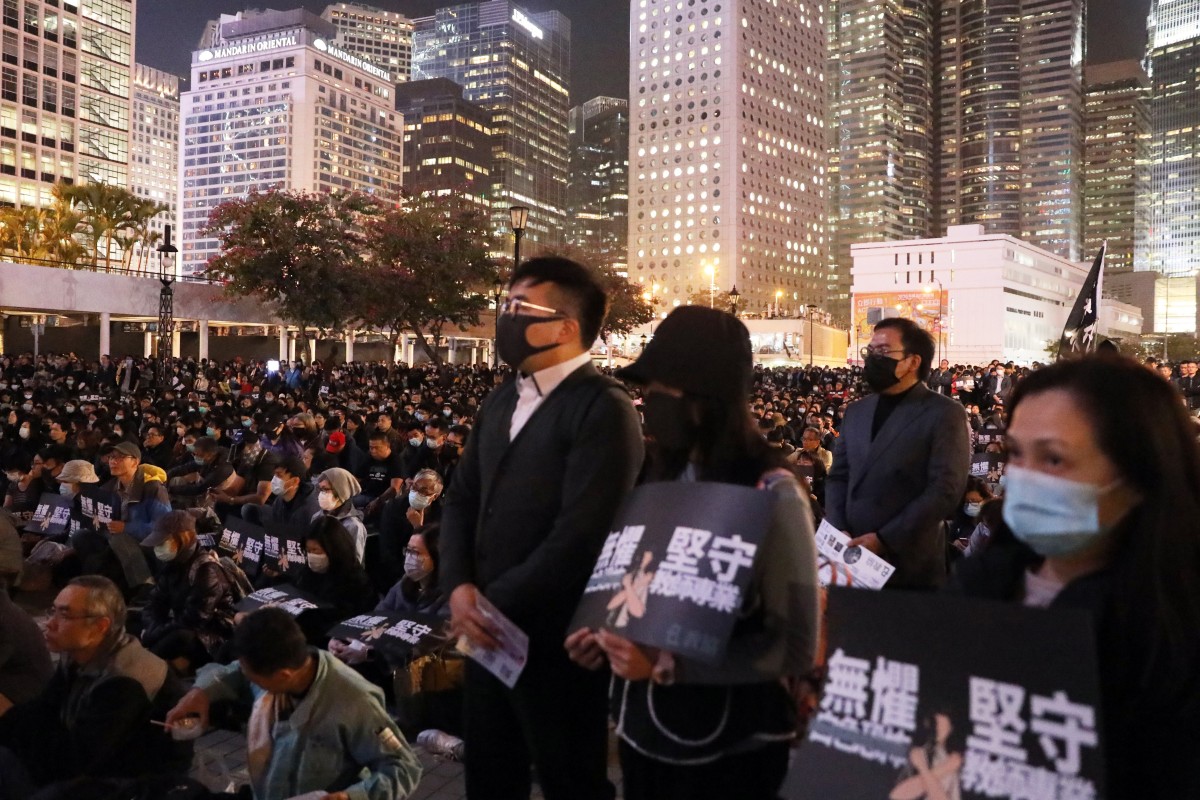
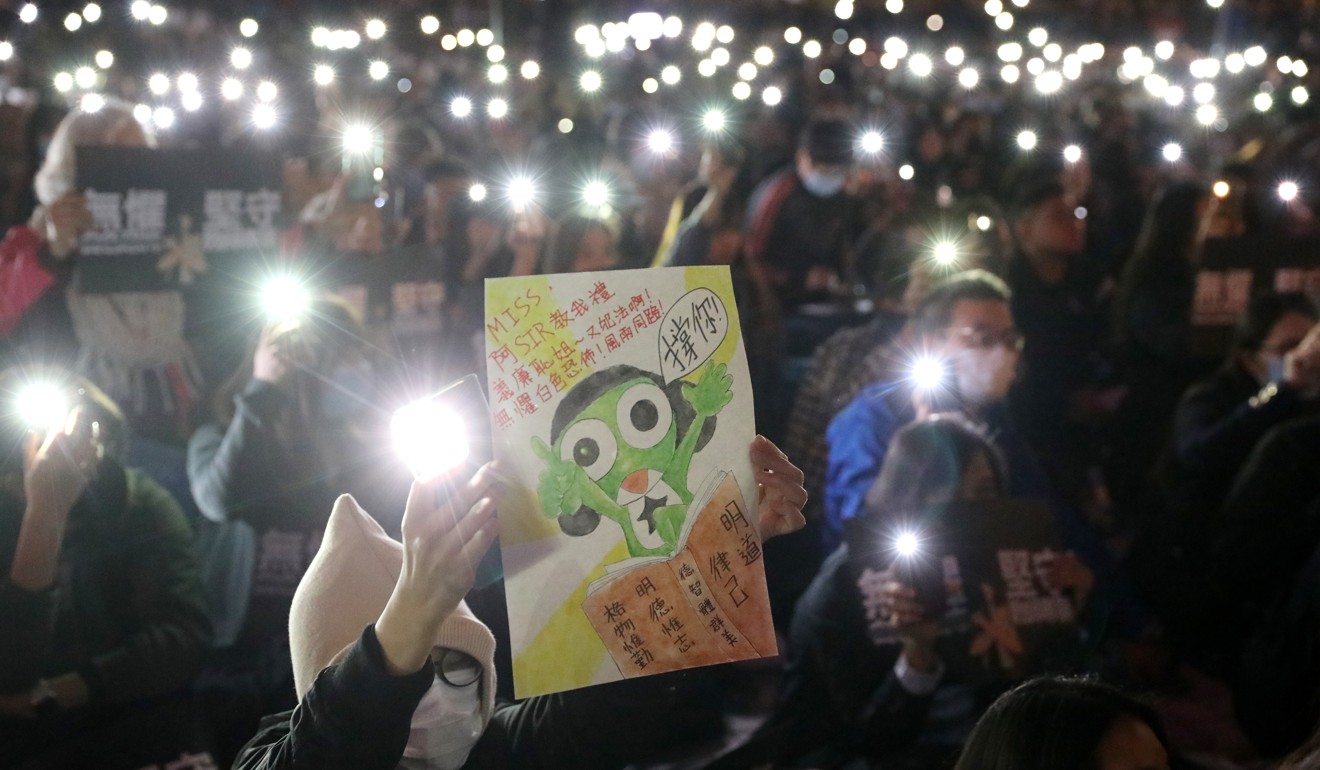
Teachers and their supporters at an anti-government protest at Edinburgh Place in Central. Photo: K.Y. Cheng

When Charlie Chow shared on Facebook criticisms against the government during the
extradition bill protests last summer, the teacher did not expect the messages would cause a series of problems several months later.


Chow, who agreed to speak only using a pseudonym, was among 32 teachers who were penalised by the Education Bureau between June and December last year – either with warning, condemnation and advisory letters, or verbal reminders. The letters warned them if they were to commit professional misconduct again, they might risk losing their jobs.


Latest figures from the bureau showed that out of the 147 complaints they received between June and December, wrongdoings had been confirmed in 65. Some 32 cases have been closed, with follow-up actions taken.

Teachers protest against the Education Bureau’s handling of protest-related cases in Hong Kong on January 3. Photo: K.Y. Cheng

Chow, who has five years’ teaching experience, recalled the complainer had written a letter directly to the bureau. The complainer’s identity has not been revealed.

“When I wrote the comments, I was merely expressing some of my feelings about the prevailing political situation, but the complainer saw it differently and felt it was inappropriate,” Chow said.

Teachers ‘not given a chance to defend themselves’ after Hong Kong protests
20 Dec 2019


The bureau later concluded some social media posts Chow shared on Facebook were inappropriate.

But Chow said while some of the Facebook posts criticised the government’s policies, they were mild and there were no insults, hate speech, or foul remarks.

The posts were also strictly for Facebook friends, who did not include any students or their parents, the teacher added.

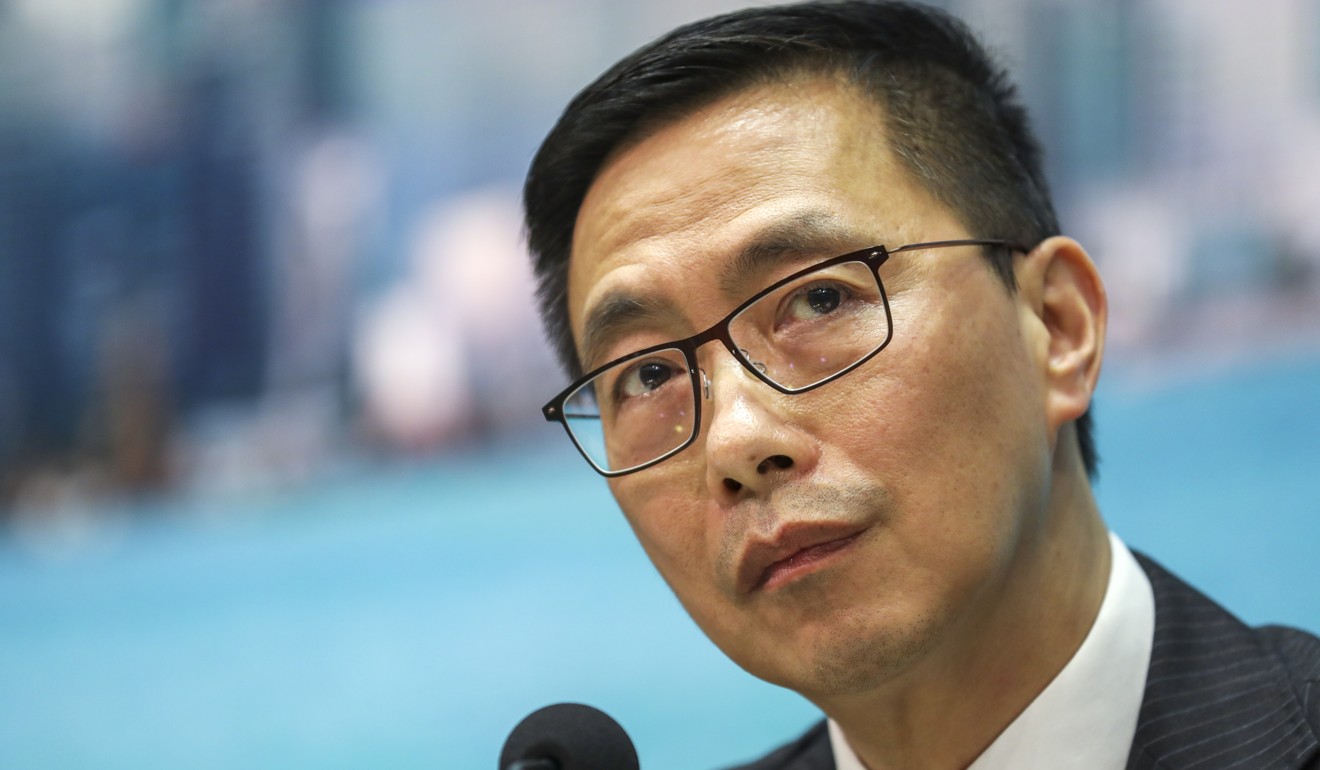
Secretary for Education Kevin Yeung warned teachers that remarks made in private domains could also be subjected to professional misconduct. Photo: Winson Wong


“I don’t know how the complainer could have got that information.


“I felt so sad and angry. A teacher should also be able to enjoy basic freedom of speech on private social media platforms, but now I feel like the freedom to be able to express myself has been compromised,” Chow said.

I felt so sad and angry. A teacher should also be able to enjoy basic freedom of speech on private social media platformsCharlie Chow (name changed), teacher


Chow was among more than 20 teachers who complained to Professional Teachers’ Union, the biggest teachers’ union in Hong Kong, representing about 85 per cent of educators.

Most of these cases involved remarks made on social media, with nine teachers getting warning, condemnation and advisory letters from the bureau.

Hong Kong school says it will not interfere in teacher’s political views
13 Sep 2019


The union criticised the bureau for not giving clear examples of remarks which could constitute professional misconduct, which made it difficult for teachers to follow a set practice.

The city’s anti-government protests erupted in June last year, triggered by the now-withdrawn extradition bill, and turned into wider and increasingly violent demonstrations seeking greater democracy and police accountability.


Secretary for Education Kevin Yeung Yun-hung had earlier warned teachers that remarks made in private domains could also be subjected to professional misconduct, because they could reflect their value judgments and personalities.

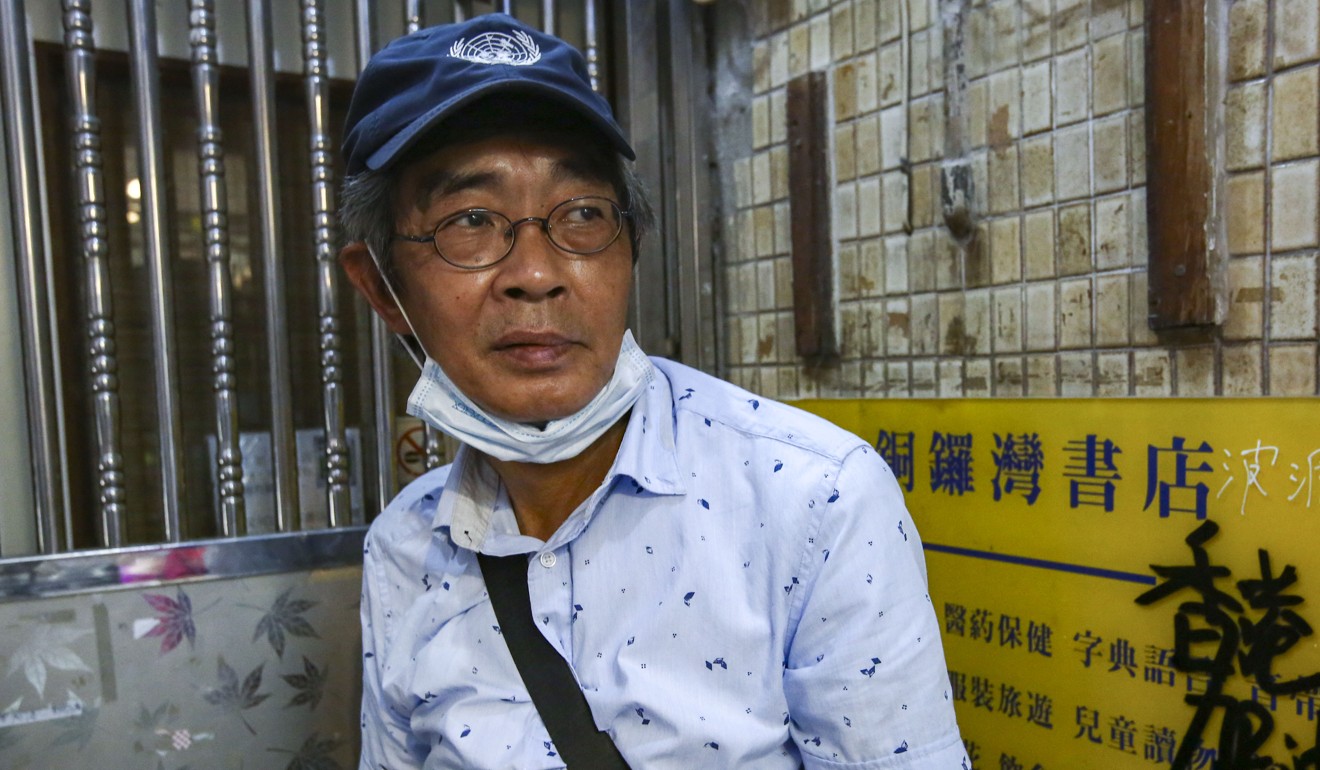
Causeway Bay bookseller Lam Wing-kee who was detained in mainland China. Photo: Edmond So


Another educator against whom complaint was lodged was Law Pei-lee, a primary school teacher for 27 years, who has now been elected a pro-democracy district councillor.


She said her school was notified by the bureau last September after a parent complained that she had been “spreading fears and bias among young students”.

Arrested teacher suspended following appeal from government
12 Dec 2019

She said the letter claimed that she praised students who had joined protests and talked in class about the case of Lam Wing-kee, a Causeway Bay bookseller
who went missing and was later found in mainland custody three years ago.

Law dismissed the accusation she had praised students who took part in protests, but admitted she had told students about Lam during a lesson which was “based on pure facts”. She also said the letter described her as a liberal studies teacher, but the subject was not taught at primary schools.

“The school management believed in me, but the bureau asked for a second and third explanation on the matter,” Law said. Follow-up actions by the bureau are still pending and she is worried about her future.

It’s white terror when the investigation has been going on for months and you’re unsure whether anything would happenLaw Pei-lee, primary school teacher

“It’s white terror when the investigation has been going on for months and you’re unsure whether anything would happen. The same has also happened to other teachers.”

The bureau told the Post it would not comment on individual cases, but said it had handled each complaint carefully and considered all evidence and information thoroughly.