Monday, February 10, 2020

Montreal's snowiest February 7 in over 90 years
As of 11 am Friday morning, local meteorologists claim that today is the city’s snowiest February 7 in 91 years.

According to YUL Weather Records, the last time Montreal experienced this much snow on February 7, 1929.


Tyler Jadah Feb 7 2020 @orettasunshine/Instagram


February’s first workweek is concluding with historical amounts of snow for Montreal.

See also:
21 shots of what a very snowy Montreal looks like right now (PHOTOS)
53 schools are closed across Montreal today due to inclement weather
Expect delays on the STM due to challenging driving conditions


Plus, Mother Nature isn’t finished yet. According to Environment Canada, “a total of 15 to 25 centimetres of snow is likely through this evening.” As the now is forecasted to persist throughout the rest of the day, northeasterly winds will gust up to 60 km/h.

🥈With a 11am snow total of 16cm, today is #Montréal‘s snowiest Feb 7th in more than 90 years, since Feb 7th, 1929. pic.twitter.com/5gh9t3tOFb

— Montreal Weather Records (@YUL_Weather) February 7, 2020


The weather agency urges travellers to postpone all non-essential travel until visibility and road conditions improve.

And hey, if we’re going to deal with snow, we may as well do so in historical proportions.


21 shots of what a very snowy Montreal looks like right now (PHOTOS)

Tyler Jadah
|
Feb 7 2020, 7:21 am

@shaunethompsonphotography/Instagram


Montreal has been blanketed with 15 cm of snow (and counting) since yesterday evening.


The province-wide whiteout is expected to pummel an additional 30 cm of snow throughout the rest of the day.

Amidst school cancellations, shovelling, and trying to navigate a car through the blizzard, nothing brings people together like posting snowstorm pictures onto social media.

The snowy silver lining is at least it’s a Friday…
See also:
53 schools are closed across Montreal today due to inclement weather
Chartered plane from Wuhan carrying 176 Canadians lands in Ontario
Google is opening a new office in Montreal

Whether you’re studying, working from home today, or if you’re still trying to convince your boss to let you go home, here’s what the warm and dry virtual world of Instagram looked like this morning after Montreal’s latest snowstorm.
Light earthquake rattles Ontario-Quebec border

Megan Devlin Feb 2 2020

Northern Ontario/Shutterstock


There was a light earthquake Sunday afternoon near Ontario-Quebec border.

Earthquakes Canada said the magnitude 4.0 quake happened near Haileybury, Ontario, which is an hour and a half drive north of North Bay.

Earthquakes of that strength can usually be felt, but don’t cause much damage.

According to the Government of Canada’s website, the causes of earthquakes in eastern Canada are not well understood, because the region is not near a tectonic plate boundary. Ontario is part of the stable interior of the North American plate.


See also:
9 earthquakes strike the coast of British Columbia over 3-day span
Blue Jays’ Hyun-Jin Ryu lands on MLB Network’s ‘Top 10 Right Now’ list
US airlines suspend flights to China due to coronavirus outbreak

“Seismic activity in areas like these seems to be related to the regional stress fields, with the earthquakes concentrated in regions of crustal weakness,” the website says.

About four earthquakes exceeding magnitude 4.0 are felt every year in Ontario, according to the government.


Earthquake rattles area near Gracefield, QC
Josh Pringle CTVNews Ottawa.ca Monday, February 3, 2020


OTTAWA -- A minor earthquake rattled western Quebec on Sunday.
Natural Resources Canada says a 3.0 magnitude earthquake struck 26 km northwest of Gracefield, Quebec just after 3 p.m.
No damage was reported.
On January 13, a 4.2 magnitude earthquake was felt in Salaberry-de-Valleyfield, Quebec, about 60 km east of Cornwall.
Several residents reported feeling that earthquake.

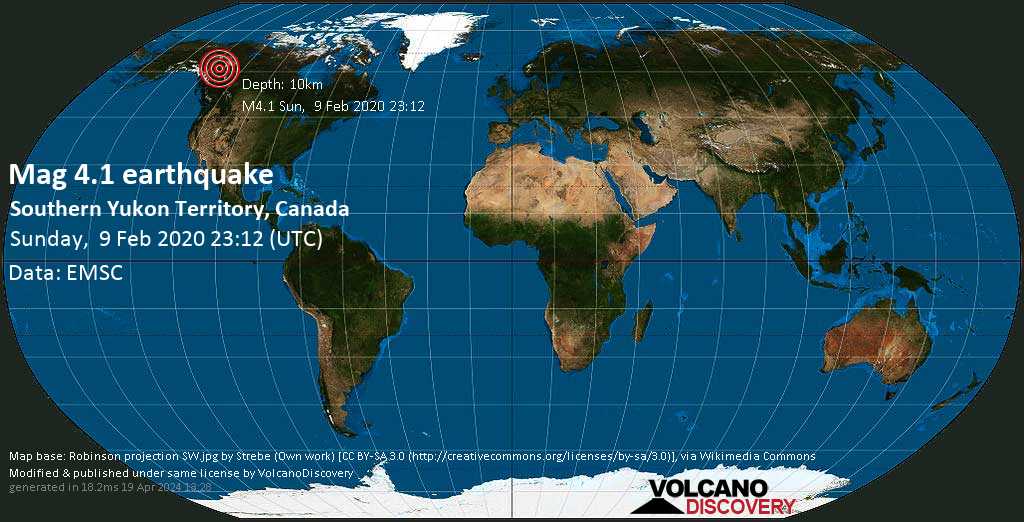
M 4.1 quake: Southern Yukon Territory, Canada on Sun, 9 Feb 23h12

Light magnitude 4.1 earthquake at 10 km depth
M 4.1 quake: Southern Yukon Territory, Canada on Sun, 9 Feb 23h12

Earthquake data (EMSC):

Date & Time: Sun, 9 Feb 23:12:10 UTC - 14 hours ago
Hypocenter depth: 10.0 km
Magnitude (Richter scale): 4.1

Did you feel the earthquake? Submit an I-felt-it report !

Latest  "I-felt-it" reports  about this quake:

77-Year-Old Amateur Astronomer Discovers Rare Galaxy Double Nucleus

Allen Lawrence Astronomer
Allen Lawrence, a 77-year-old who earned an Iowa State master’s degree in astrophysics in 2018, is first author of a paper revealing a rare double-nucleus structure in a well-known, nearby galaxy. Larger photo. Credit: Christopher Gannon/Iowa State University
Allen Lawrence, wrapping up a long career as an electrical engineer, was serious about moving his astronomy hobby beyond the 20-inch telescope he’d hauled to star parties under the dark skies of Texas and Arizona.
So in 2011 – in his late 60s, after 30 years of operating his own consulting firm around Green Bay, Wisconsin – he enrolled in some courses at the University of Wisconsin-Madison. It wasn’t long before he went around Sterling Hall asking about joining a research team.
Jay Gallagher, now the W. W. Morgan & Rupple Bascom Emeritus Professor of Astronomy at Wisconsin, offered Lawrence the chance to study one of two galaxy systems. Lawrence picked a nearby system studied since the 1960s and featuring the interaction of two galaxies, a larger one known as NGC 4490 (nicknamed the “Cocoon Galaxy” because of its shape) and a smaller one known as NGC 4485. The system is about 20% the size of the Milky Way, located in the Northern Hemisphere and about 30 million light years from Earth.
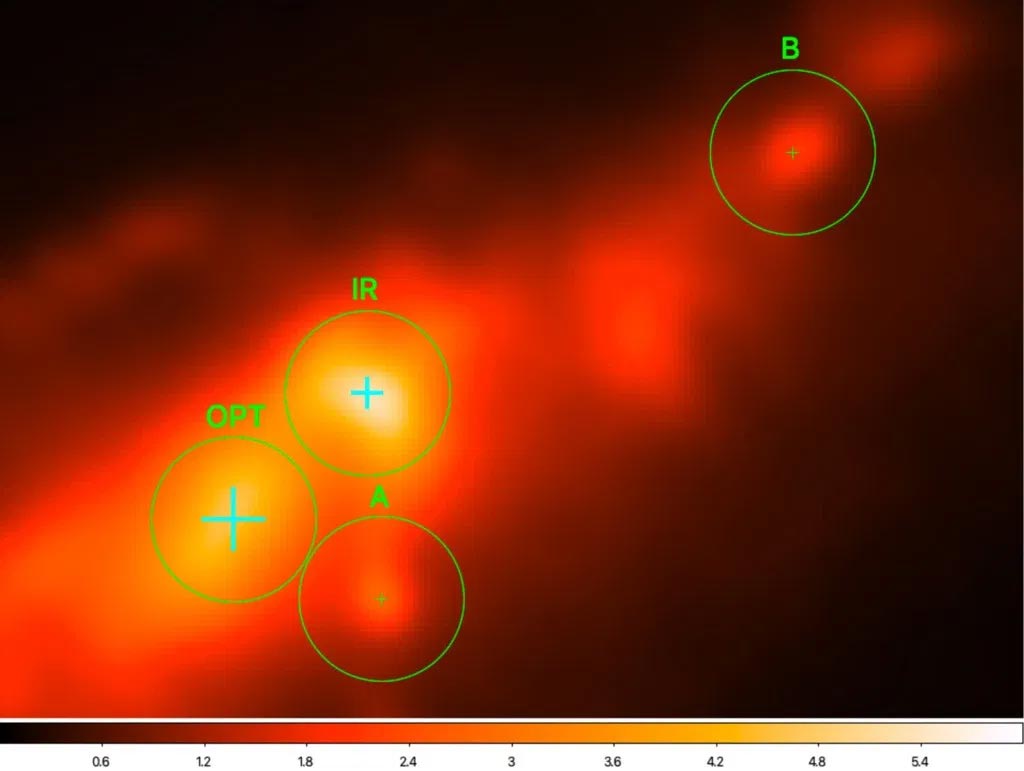
Double Nucleus of NGC 4490
IR – Infrared Nucleus, OPT – Optical Nucleus. Credit: A. Lawrence, C. Kerton, C. Struck, et. al.
After taking a look at some infrared images from NASA’s Wide-field Infrared Survey Explorer, Lawrence said it looked like the larger galaxy had a rare double nucleus. One nucleus could be seen in visible wavelengths, the other nucleus was hidden in dust and could only be seen in infrared and radio wavelengths.
Well – after years of study, including earning an Iowa State University master’s degree in 2018 and continuing to work with Iowa State astronomers – Lawrence, at 77, is the first author of a paper revealing the NGC 4490 galaxy does, indeed, have a double nucleus. The paper is now online and has been accepted for publication by the Astrophysical Journal.
Co-authors of the paper are Iowa State’s Charles Kerton, an associate professor of physics and astronomy; and Curtis Struck, a professor of physics and astronomy; as well as East Tennessee State University’s Beverly Smith, a professor of physics and astronomy.
“I saw the double nucleus about seven years ago,” Lawrence said. “It had never been observed – or nobody had ever done anything with it before.”
Iowa State Astronomers
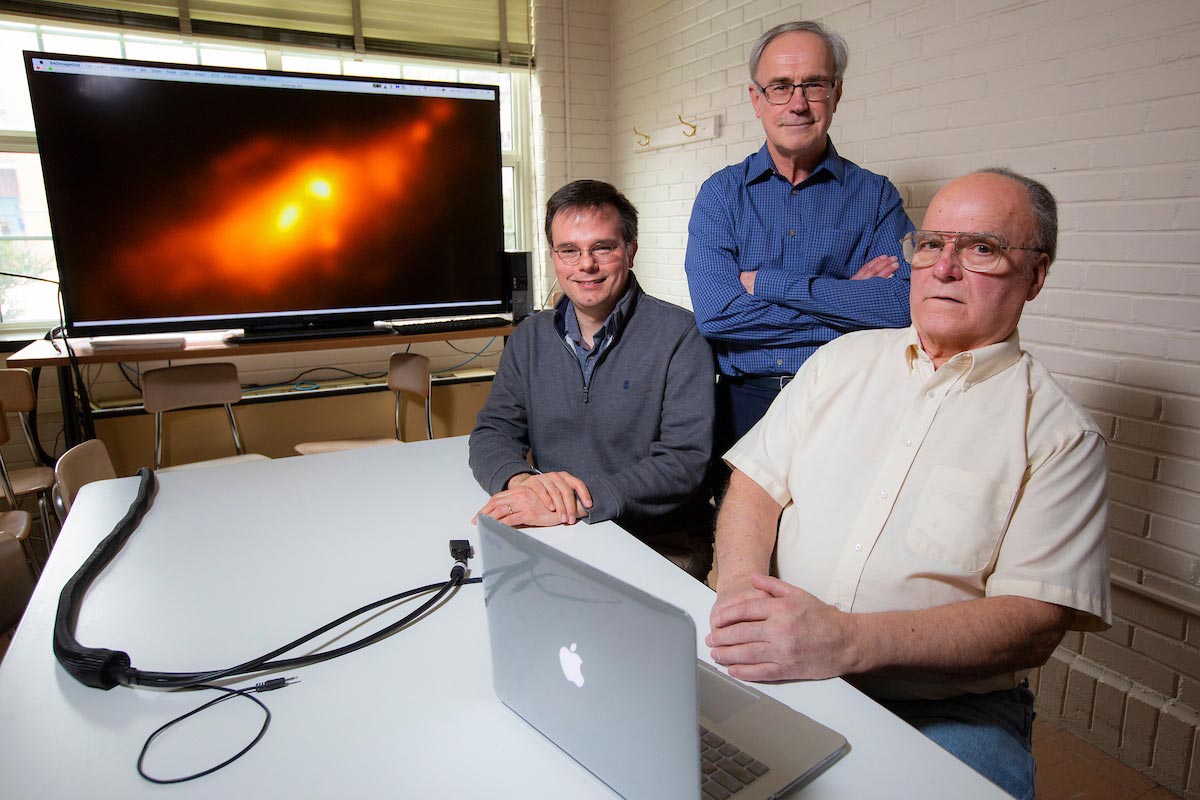
Iowa State astronomers – Left to right, Charles Kerton, Curtis Struck and Allen Lawrence – have revealed a rare double-nucleus structure in a nearby and well-known galaxy. Credit: Christopher Gannon/Iowa State University
Some astronomers may have seen one nucleus with their optical telescopes. And others may have seen the other with their radio telescopes. But he said the two groups never compared notes to observe and describe the double nucleus.
The new paper describes “a clear double nucleus structure.” It says both nuclei are similar in size, mass and luminosity. It says both are similar in mass and luminosity to the nuclei observed in other interacting galaxy pairs. And, it says the double nucleus structure could also explain why the galaxy system is surrounded by an enormous plume of hydrogen.
“The most straightforward interpretation of the observations is that NGC 4490 is itself a late-stage merger remnant” of a much-earlier collision of two galaxies, the authors wrote. A merger could drive and extend the high level of star formation necessary to create such a large hydrogen plume.
The astronomers said there are other reasons they find the study of this system interesting:
Struck, who studies colliding galaxies, said double-nucleus galaxies are very rare, especially in smaller galaxies such as this one. And, he said astronomers think a double nucleus could contribute to the buildup of super massive black holes found in the center of some galaxies.
And Kerton, who researches star formation, said, “This project demonstrates that using multiple wavelengths from space- and ground-based observations together can really help us understand a particular object.”
Reference: “Revealing the Double Nucleus of NGC 4490” by AL Lawrence, C. R. Kerton, Curtis Struck, Beverly J. Smith, 16 January 2020, Astrophysics of Galaxies.
arXiv: 2001.05601
Bumble Bees Are Going Extinct in Time of Climate Chaos – “We Have Now Entered the World’s Sixth Mass Extinction Event”


By UNIVERSITY OF OTTAWA FEBRUARY 6, 2020


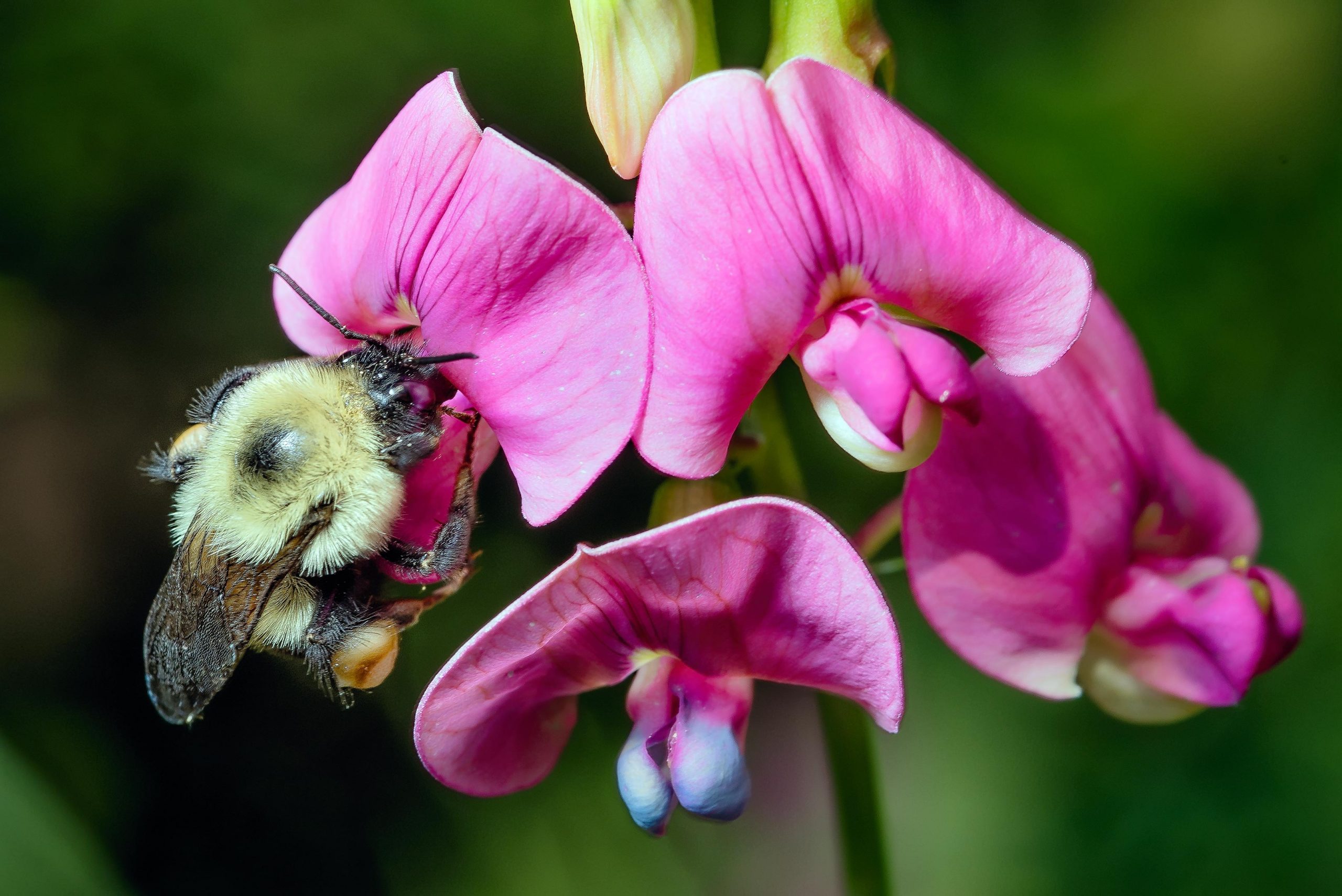
The Common Eastern Bumble Bee, Bombus Impatiens. Credit: Antoine Morin
University of Ottawa researchers develop technique to predict impact of climate change on species extinction risk.

When you were young, were you the type of child who would scour open fields looking for bumble bees? Today, it is much harder for kids to spot them, since bumble bees are drastically declining in North America and in Europe.

“We have now entered the world’s sixth mass extinction event, the biggest and most rapid global biodiversity crisis since a meteor ended the age of the dinosaurs.” — Peter Soroye

A new study from the University of Ottawa found that in the course of a single human generation, the likelihood of a bumble bee population surviving in a given place has declined by an average of over 30%.

Peter Soroye, a Ph.D. student in the Department of Biology at the University of Ottawa, Jeremy Kerr, professor at the University of Ottawa and head of the lab group Peter is in, along with Tim Newbold, research fellow at UCL (University College London), linked the alarming idea of ”climate chaos” to extinctions, and showed that those extinctions began decades ago.

“We’ve known for a while that climate change is related to the growing extinction risk that animals are facing around the world,” first author Peter Soroye explained. “In this paper, we offer an answer to the critical questions of how and why that is. We find that species extinctions across two continents are caused by hotter and more frequent extremes in temperatures.”

“We have now entered the world’s sixth mass extinction event, the biggest and most rapid global biodiversity crisis since a meteor ended the age of the dinosaurs, ” says Peter Soroye.
Massive decline of the most important pollinators on Earth

“Bumble bees are the best pollinators we have in wild landscapes and the most effective pollinators for crops like tomato, squash, and berries,” Peter Soroye observed. “Our results show that we face a future with many less bumble bees and much less diversity, both in the outdoors and on our plates.”

Climate change means places are getting hotter than ever before, and these extremes appear to be driving the disappearance of bumble bees across continents. Credit: Peter Soroye, University of Ottawa.

The researchers discovered that bumble bees are disappearing at rates “consistent with a mass extinction.”

“If declines continue at this pace, many of these species could vanish forever within a few decades,” Peter Soroye warned.
The technique

“We know that this crisis is entirely driven by human activities,” Peter Soroye said. “So, to stop this, we needed to develop tools that tell us where and why these extinctions will occur.”

“Predicting why bumble bees and other species are going extinct in a time of rapid, human-caused climate change could help us prevent extinction in the 21st century.” — Dr. Jeremy Kerr

The researchers looked at climate change and how it increases the frequency of really extreme events like heatwaves and droughts, creating a sort of “climate chaos” which can be dangerous for animals. Knowing that species all have different tolerances for temperature (what’s too hot for some might not be for others), they developed a new measurement of temperature.

“We have created a new way to predict local extinctions that tells us, for each species individually, whether climate change is creating temperatures that exceed what the bumble bees can handle,” Dr. Tim Newbold explained.

Using data on 66 different bumble bee species across North America and Europe that have been collected over a 115-year period (1900-2015) to test their hypothesis and new technique, the researchers were able to see how bumble bee populations have changed by comparing where bees are now to where they used to be historically.

“We found that populations were disappearing in areas where the temperatures had gotten hotter,” Peter Soroye said. “Using our new measurement of climate change, we were able to predict changes both for individual species and for whole communities of bumble bees with a surprisingly high accuracy.”


A new horizon of research

This study doesn’t end here. In fact, it opens the doors to new research horizons to track extinction levels for other species like reptiles, birds, and mammals.

“Perhaps the most exciting element is that we developed a method to predict extinction risk that works very well for bumble bees and could in theory be applied universally to other organisms,” Peter Soroye indicated. “With a predictive tool like this, we hope to identify areas where conservation actions would be critical to stopping declines.”

“Predicting why bumble bees and other species are going extinct in a time of rapid, human-caused climate change could help us prevent extinction in the 21st century,” says Dr. Jeremy Kerr.
There is still time to act

“This work also holds out hope by implying ways that we might take the sting out of climate change for these and other organisms by maintaining habitats that offer shelter, like trees, shrubs, or slopes, that could let bumble bees get out of the heat,” Dr. Kerr said. “Ultimately, we must address climate change itself and every action we take to reduce emissions will help. The sooner the better. It is in all our interests to do so, as well as in the interests of the species with whom we share the world.”

Reference: “Climate change contributes to widespread declines among bumble bees across continents” by Peter Soroye, Tim Newbold and Jeremy Kerr, 7 February 2020, Science.
DOI: 10.1126/science.aax8591

The paper Climate change contributes to widespread declines among bumble bees across continents is published in Science.

Funding: J.K. is grateful for Discovery Grant and Discovery Accelerator Supplement from the Natural Sciences and Engineering Research Council of Canada (NSERC) and funds from his University Research Chair in Macroecology and Conservation at the University of Ottawa. J.K. is also supported through infrastructure funds from the Canada Foundation for Innovation. This collaboration was funded by a Royal Society grant to T.N. and J.K. and an NSERC Postgraduate Scholarship award to P.S. to work with J.K. T.N. was supported by a Royal Society University Research Fellowship and a grant from the UK Natural Environment Research Council (NE/R010811/1).
CTHULHU STUDIES;  CEPHALOPODS 

#Cuttlefish Have Complex Cognitive Abilities – Can Make Decisions Based on Future Expectations

European Common Cuttlefish
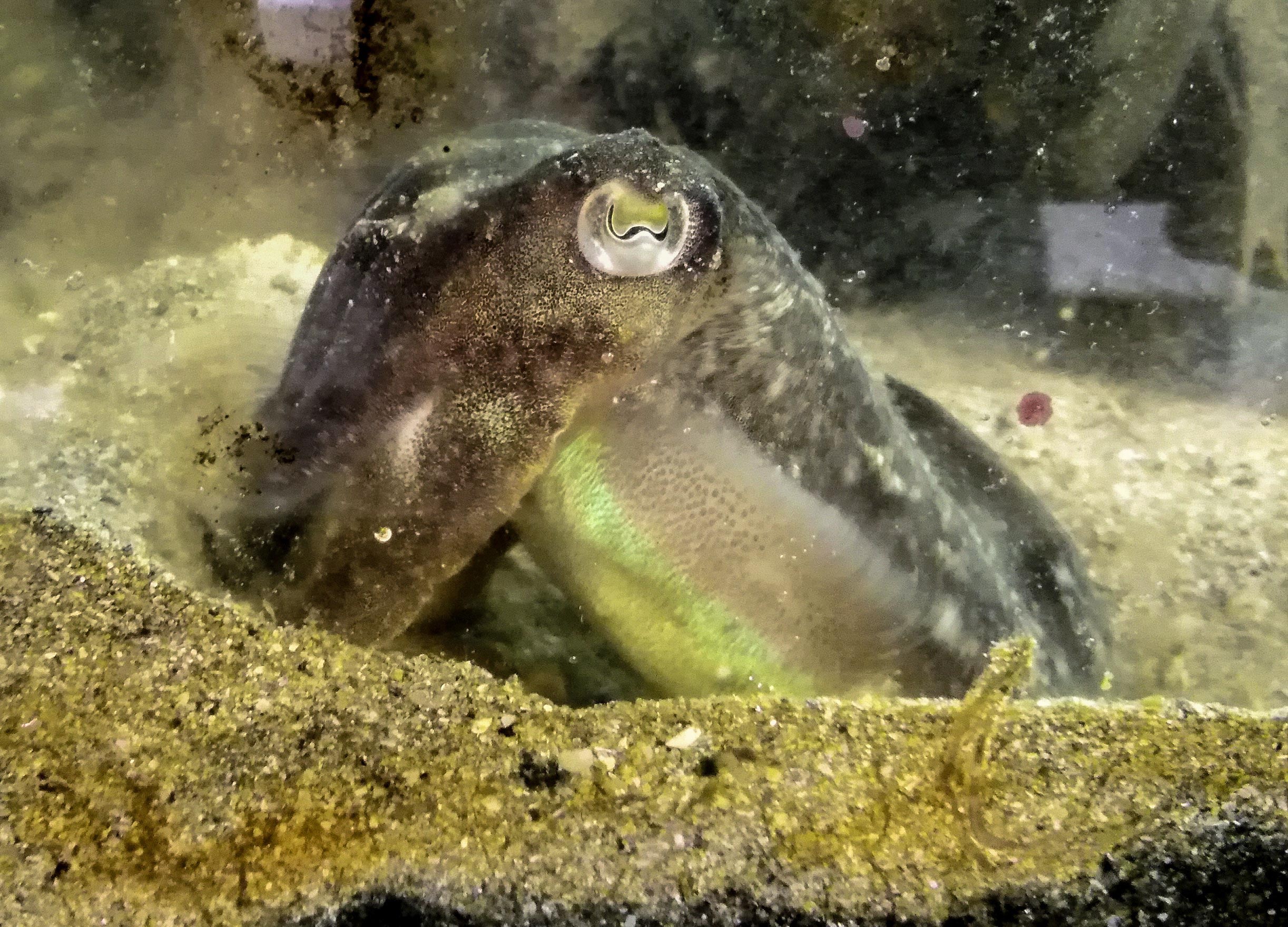
This is a European common cuttlefish, Sepia officinalis. Credit: Pauline Billard
When cuttlefish know that shrimp — their favorite food — will be available in the evening, they eat fewer crabs during the day. This capacity to make decisions based on future expectations reveals complex cognitive abilities.
“It was surprising to see how quickly the cuttlefish adapted their eating behavior — in only a few days they learned whether there was likely to be shrimp in the evening or not. This is a very complex behavior and is only possible because they have a sophisticated brain,” said Pauline Billard, a Ph.D. student in the University of Cambridge’s Department of Psychology and Unicaen, France, and first author of the report.
Cuttlefish foraging behavior can be described as either selective or opportunistic. Observing the European common cuttlefish, Sepia officinalis, when the researchers reliably provided one shrimp every evening, the cuttlefish became more selective during the day and ate significantly fewer crabs. But when they were provided with evening shrimp on a random basis, the cuttlefish became opportunistic and ate more crabs during the day.
Random provision of evening shrimp meant that the cuttlefish could not predict whether their favorite food would be available for dinner each day, so they made sure they had enough to eat earlier in the day. When conditions changed, the cuttlefish changed their foraging strategy to match.
The researchers saw the animals quickly shift from one eating strategy to another based on their experience. By learning and remembering patterns of food availability, the cuttlefish optimize their foraging activity not only to guarantee they eat enough — but also to make sure they eat more of the foods they prefer.
Cuttlefish eat a wide range of food including crabs, fish, and squid, depending on what is available. Despite such a generalized diet, they show strong food preferences. To test this, the researchers tested twenty-nine cuttlefish five times a day, for five days, by putting crab and shrimp at an equal distance from the cuttlefish at the same time and watching what they ate first. All showed a preference for shrimp.
Animals must constantly adapt to changes in their environment in order to survive. Cuttlefish hatch with a large central nervous system, which enables them to learn from a young age. They are capable of remembering things that happened in the past, and using this information to adjust their behavior in anticipation of the future.
Cuttlefish are a type of cephalopod. In evolutionary terms, cephalopods and vertebrates diverged around 550 million years ago, yet they are remarkably similar in the organization of their nervous systems.
“This flexible foraging strategy shows that cuttlefish can adapt quickly to changes in their environment using previous experience,” said Professor Nicola Clayton in the University of Cambridge’s Department of Psychology, who led the study. “This discovery could provide a valuable insight into the evolutionary origins of such complex cognitive ability.”
Reference: “Cuttlefish show flexible and future-dependent foraging cognition” by Pauline Billard, Alexandra K. Schnell, Nicola S. Clayton and Christelle Jozet-Alves, 5 February 2020, Biology Letters.
DOI: 10.1098/rsbl.2019.0743
This research was funded by ANR (the French National Research Agency).

Startling ‘Flammable Ice’ Discovery Offers Up Clue to Life on Other Planets


 UNIVERSITY OF ABERDEEN FEBRUARY 7, 2020


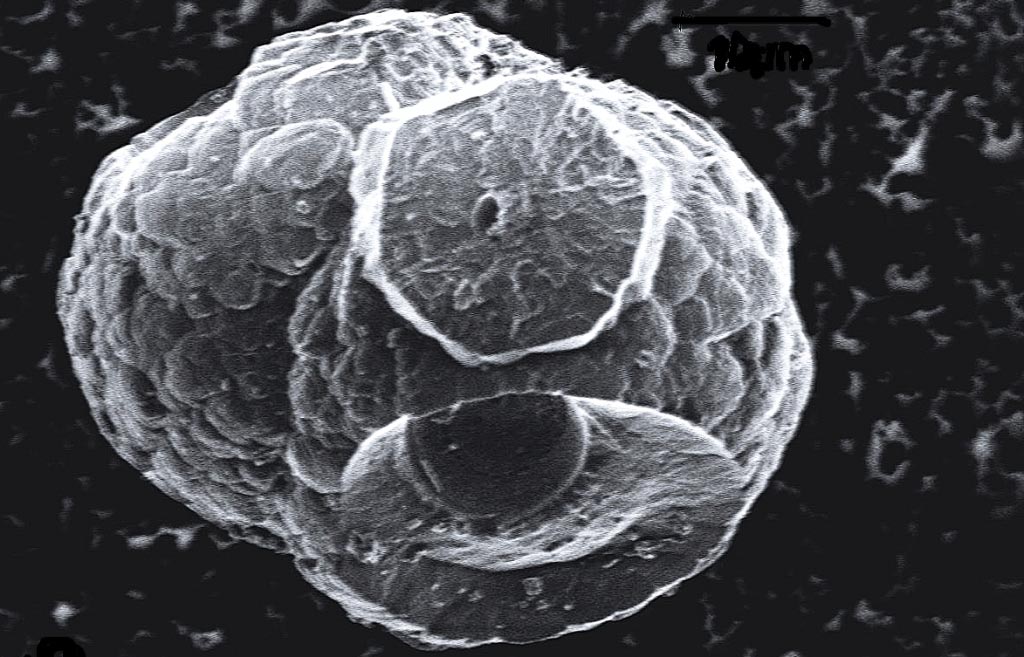
Scientists have dubbed this image of a microhabitat that grew in methane hydrate the ‘Death Star’ — it grew from microbial activity at near-freezing temperatures, deep underwater, in one of the countless isolated pockets of saltwater and oil found within methane hydrate. Credit: University of Aberdeen

Scientists studying so-called ‘flammable ice’ in the Sea of Japan have made a startling discovery — the existence of life within microscopic bubbles.

The microhabitats are grown by microbes within tiny bubbles of oil and water found in sheets of frozen gas and ice, and offer a tantalizing clue as to the potential for life on other planets.

The tiny bubbles are scattered within large underwater rafts of hydrate, known as ‘flammable ice’ or methane hydrate, which forms when ice traps methane within its molecular structure.

The discovery of the microhabitats is revealed in a paper published in the journal Scientific Reports, a Nature publication. It stemmed from a larger project led by Professor Ryo Matsumoto from Meiji University in Japan, which was investigating methane hydrate as an energy source that emits less waste-carbon than traditional fossil fuels.

“Providing they have ice and a little heat, all those frigid cold planets at the edge of every planetary system could host tiny microhabitats with microbes making their own tiny atmospheres and ecosystems, just as we discovered here.” — Dr. Stephen Bowden

Dr. Glen T. Snyder, lead author of the study, was melting hydrate to study methane gas when he noticed an unusual powder consisting of microscopic spheroids with mysterious dark cores. He then set about collecting a group of like-minded scientists to investigate further.

Using analytical techniques pioneered at the University of Aberdeen and suited to small sample quantities, Dr. Stephen Bowden from the University’s School of Geosciences was able to show that oil was being degraded in the microenvironments within the methane hydrate.

“In combination with the other evidence collected by my colleagues, my results showed that even under near-freezing temperatures, at extremely high pressures, with only heavy oil and saltwater for food-sources, life was flourishing and leaving its mark,” Dr. Bowden said.

Dr. Snyder continued: “The methane in ‘methane hydrate’ is known to form as microbes degrade organic matter on the seafloor.

“But what we never expected to find was microbes continuing to grow and produce these spheroids, all of the time while isolated in tiny cold dark pockets of saltwater and oil.

“It certainly gives a positive spin to cold dark places, and opens up a tantalizing clue as to the existence of life on other planets.

Dr. Bowden added: “It certainly changes how I think about things. Providing they have ice and a little heat, all those frigid cold planets at the edge of every planetary system could host tiny microhabitats with microbes building their own ‘death stars’ and making their own tiny little atmospheres and ecosystems, just as we discovered here.”

Reference: “Evidence in the Japan Sea of microdolomite mineralization within gas hydrate microbiomes” by Glen T. Snyder, Ryo Matsumoto, Yohey Suzuki, Mariko Kouduka, Yoshihiro Kakizaki, Naizhong Zhang, Hitoshi Tomaru, Yuji Sano, Naoto Takahata, Kentaro Tanaka, Stephen A. Bowden and Takumi Imajo, 5 February 2020, Scientific Reports.
DOI: 10.1038/s41598-020-58723-
y

Optical Backflow of Light Demonstrated For First Time – Theorized More Than 50 Years Ago by Quantum Physicists

Artist's Concept Optical Backflow

“Abnormal” behavior predicted more than 50 years ago may help scientists probe the atmosphere and gauge the environment.

Researchers at Tel Aviv University have for the first time demonstrated the backflow of optical light propagating forward. The phenomenon, theorized more than 50 years ago by quantum physicists, has never before been demonstrated successfully in any experiment — until now.
“This ‘backflow’ phenomenon is quite delicate and requires exquisite control over the state of a particle, so its demonstration was hindered for half a century,” explains Dr. Alon Bahabad of the Department of Physical Electronics at TAU’s School of Electrical Engineering, who led the research for the study. “This phenomenon reveals an unintuitive behavior of a system comprised of waves, whether it’s a particle in quantum mechanics or a beam of light.
“Our demonstration could help scientists probe the atmosphere by emitting a laser beam and inducing a signal propagating backward toward the laser source from a given point in front of the laser source. It’s also relevant for cases in which fine control of light fields is required in small volumes, such as optical microscopy, sensing and optical tweezers for moving small particles,” Dr. Bahabad says.
The study, published on January 16, 2020, in Optica, was conducted by Dr. Bahabad’s graduate students Dr. Yaniv Eliezer, now at Yale University, and Thomas Zacharias.
Light is similar to quantum particles in that both can be constructed from interfering waves. Such a construction, in which several waves are added together to produce a new wave, is known as a superposition. If a special superposition of waves, all propagating forward, is constructed, the overall wave can realize what’s called “optical backflow.”
In their holography experiment, the scientists split and reassembled a laser beam in the form of light waves that propagated at positive angles with respect to an axis. The different light beams had to be constructed very carefully, with precise values for their strength and delay. Once the superposition was created, a small slit was set and moved perpendicularly to the beam to, in effect, measure the direction of the beam in different locations.
The light escaping from the slit was revealed in most locations as moving at a positive angle. But in some locations, the light escaping the slit propagated at a negative angle, even though the light hitting the other side of the slit was comprised of a superposition of beams all propagating at a positive angle.
“We used holography to create a clear manifestation of the backflow effect,” adds Dr. Bahabad. “We realized at some point that we can utilize a previous study of ours, where we discovered the mathematical phenomenon known as suboscillation, to help us design a beam of light with backflow.
“To conclude, if interfering waves, all going in one direction, are constructed in a special manner, and you were to measure the direction of propagation of the overall wave at specific locations and times, you just might find the wave going backward. This wave can describe a particle using quantum mechanics. This surprising behavior violates any intuition that we gained from our daily experience with the movement of macroscopic objects. Nevertheless, it still obeys the laws of nature.”
Reference: “Observation of optical backflow” by Yaniv Eliezer, Thomas Zacharias and Alon Bahabad, 16 January 2020, Optica.
DOI: 10.1364/OPTICA.371494
Obama-backed documentary 'American Factory' wins Oscar


By Sandra Gonzalez, CNN Sun February 9, 2020

Now PlayingNetflix documentary...


Source: CNN
Netflix documentary directors on working with the Obamas (2019) 02:14

(CNN)Barack and Michelle Obama's production company now has an Oscar-shaped feather in its hat.

"American Factory," a film backed by the Obama's Higher Ground Productions, on Sunday took home the award for best documentary feature.

The film, about a culture clash at a Dayton, Ohio manufacturing plant, was the first project produced by the duo's new production outfit and marks a running start for the company.
The film hails from filmmakers Julia Reichert and Steven Bognar. It was released through Netflix as part of a lucrative deal Higher Ground has with the streaming service.

"Working people have it harder and harder these days, and we believe that things will get better when workers of the world unite," Reichert said in her acceptance speech.
The former president congratulated the filmmakers on their win.

Congrats to Julia and Steven, the filmmakers behind American Factory, for telling such a complex, moving story about the very human consequences of wrenching economic change. Glad to see two talented and downright good people take home the Oscar for Higher Ground's first release. https://t.co/W4AZ68iWoY— Barack Obama (@BarackObama) February 10, 2020

"Congrats to Julia and Steven, the filmmakers behind American Factory, for telling such a complex, moving story about the very human consequences of wrenching economic change. Glad to see two talented and downright good people take home the Oscar for Higher Ground's first release," Obama wrote in a tweet.

The film had been competing against "The Cave," "The Edge of Democracy," "For Same" and "Honeyland' in its category.


How India uses colonial-era sedition law against CAA protesters

Legal experts say authorities misuse legal provisions to slap protesters with colonial-era law to stifle dissent.


by Anumeha Yadav20 Jan 2020

New Delhi, India - In the first week of the new year, police in the eastern Indian state of Jharkhand registered a criminal complaint against more than 3,000 people protesting against a new citizenship law, accusing them of "sedition" among other charges.

India has seen nationwide protests since mid-December following the passage of Citizenship Amendment Act (CAA) that activists and opposition politicians have described as divisive, discriminatory and against the country's secular constitution. The new law is being challenged in the Supreme Court.
More:

In Jharkhand, a tribal assertion met with fierce police crackdown

Microsoft CEO Nadella criticises India's citizenship law

UN report condemns Kashmir's Public Safety Act

The sedition provision, which was drafted by the British colonial rulers in 1870, comes under Section 124A of the Indian Penal Code.

Rights activists say the law has been used to suppress dissent in India particularly against marginalised communities and minorities.

Nationwide protests are taking place across India since December 13 against CAA [Javed Sultan/Anadolu]

Over the past 18 months, more than 10,000 tribal farmers in mineral-rich Jharkhand state were accused of sedition in 19 police cases for opposing acquisition of lands for so-called developmental projects.
Law is not meant to suppress people's voice, but to create a sense of security among the people.

HEMANT SOREN, CHIEF MINISTER OF JHARKHAND STATE

Following criticism, Jharkhand's newly elected Chief Minister Hemant Soren announced the withdrawal of sedition charges slapped by his predecessor belonging to Prime Minister Narendra Modi's Bharatiya Janata Party (BJP).

Soren told Al Jazeera that he had asked for an inquiry into why the police used the charge against those who peacefully demonstrated in Wasseypur - a working-class Muslim neighbourhood in Dhanbad district, which was the subject of the 2012 Bollywood hit Gangs of Wasseypur.

"Charge of sedition is a serious allegation which needs to be applied with careful scrutiny. In this case, we have asked the officials to drop the charges and provide an explanation."

"Law is not meant to suppress people's voice, but to create a sense of security among the people. My government will respect law and protect people," said Soren, who comes from the Santhal tribal community.

Soren government has also dropped charges against more than 10,000 Adivasis slapped by the previous BJP government.
Attack on dissent

The sedition provision punishes anyone seen to "excite, or attempt to excite feelings of disaffection against the government", even though this may be by their words alone. It is a non-bailable offence, and has life imprisonment as the maximum punishment.
READ MORE
Crackdown on lawyers narrows road to justice in Kashmir

Jawahar Raja, a lawyer based in New Delhi, explained that once police add the sedition charge, the maximum quantum of punishment increases, and the courts then view it as a serious offence, making it harder for the accused to secure bail, even if booked only for a speech offence. "The process of a long-drawn trial then becomes the punishment," said Raja.

Aloka Kujur was among the more than 10,000 slapped with sedition cases in Jharkhand. She says "the police booked her under sedition for a Facebook post in 2018".

Kujur, who publishes magazines on literature and art, said the police issued a warrant to confiscate her property for her post that mentioned the threat to a rape victim.

"I faced threats online. The local newspapers started publishing official statements saying that anyone with Marxist and Maoist books will be arrested. I had to give away my small collection of books, as I was unsure what will the police misconstrue against me using this sedition charge," she said.

Police continue to misuse the provision even though the Supreme Court in 2016 said criticising the government does not amount to sedition [File: Danish Siddiqui/Reuters]

Kujur recounts how prosecution lawyers called her "anti-national" in the court during her trial.

In a similar case, an 83-year-old Jesuit priest, Stan Swamy, who has documented police abuse in tribal areas across the country, was charged with sedition in 2018 for his Facebook posts. One of his posts was a statement by the then home minister calling for dialogue.

Swamy declined to speak to Al Jazeera as he is facing police case in the western Maharashtra state. His associate Solomon said because of the sedition charge, the elderly activist was forced to stop writing on human rights abuses.
Our state governments are using colonial-era laws to suppress even peaceful dissent of our own people.

SADAF JAFAR, ACTIVIST

Referring to the recent sedition cases, a senior Jharkhand police official admitted that the local police acted with excessive hostility against anti-CAA protesters.

"I cannot comment on use of sedition in previous cases against tribal farmers, but in this instance, the district police action shows a lack of knowledge and a lack of professional competence," Anil Palta, additional director general of police (training), Jharkhand, told Al Jazeera.

"If a provision of prevention of assembly of more than four persons, Section 144 is violated, the protesters ought to have been booked under Section 188, for disobedience, a bailable order. It was very far-fetched of the district police to apply sedition charges."
Harsh police action

The harsh police action against anti-CAA protesters particularly in BJP-ruled states has alarmed rights activists.
READ MORE
India protests: 'Police caught... and shot him'

More than 20 people have been killed in India's most populous state Uttar Pradesh (UP) where some of the initial protests turned violent. Authorities in the state have also said they would seek compensation from protesters for damages to state properties.

Sadaf Jafar, a political activist, was arrested from Lucknow, the capital of UP during anti-CAA protests.

"The police arrested me and imprisoned me for 20 days, I was not allowed to inform anyone," Jafar told Al Jazeera.

"We are supposed to be in an elected democracy, but our state governments are using colonial-era laws to suppress even peaceful dissent of our own people."

Jafar alleged she was tortured and called Pakistani in custody because of her Muslim name. "They beat me so much that three weeks later, my ankles are still swollen and blue, and my limbs hurt when I breathe."
Repeated cases of sedition show the police have been brainwashed to act like colonial masters.

SOLOMON, ACTIVIST

Al Jazeera reached out to the office of the director general of police of UP and the circle officer of the area where Jafar was held but received no response at the time of the publication of the article.

Last December, about 600 anti-CAA protesters were accused of sedition in UP but later police dropped the charge.

Across India, a number of people have been slapped with sedition charges for protesting against the law that people say is part of Modi's Hindu supremacist agenda as it makes faith as the basis for citizenship.

In the BJP-ruled Karnataka state, police invoked sedition case against a student for holding a "Free Kashmir" placard on January 9.

Last August, the Hindu nationalist government stripped Indian-administered Kashmir of its special status and imposed a crippling communications and security lockdown in the Muslim-majority region.

Subsequently, thousands of Kashmiris, including minors, were thrown into jails under Public Safety Act (PSA), which Amnesty International has dubbed "lawless law". Under PSA people can be imprisoned for up to two years without trial.

Between 2016 and 2018, the National Crime Records Bureau data shows, 332 people were arrested under the sedition provision, but only seven were convicted.

Lawyers point out that the problem is not the conviction, but opposition to the government is termed "anti-national", making it easier for the police to make arrests citing any protests as a threat to national security.
Governments exploit legal loopholes

Legal scholars pointed out that the police continue to misuse the provision even though the Supreme Court in 2016 reiterated that criticising the government does not amount to sedition, or even to defamation.

"Though the court upheld the Section 124A of sedition to be constitutional, it has watered down the provision," said Chitranshul Sinha, a Supreme Court lawyer and author of The Great Repression - The Story of Sedition in India.
READ MORE
Crackdown on lawyers narrows road to justice in Kashmir

He added that the Supreme Court said only an action that incites or has the "tendency" to incite violence or public disorder can be construed as seditious. "But the definitions of 'tendency', 'public disorder' have been left open so wide to interpretation that the police routinely use it to suppress dissent," he explained.

Gautam Bhatia, a lawyer and scholar, said colonial-era laws that criminalised any opposition has no place in a democracy.

In his book Offend, Shock or Disturb: Free Speech Under the Indian Constitution, Bhatia has documented how during India's independence movement, the British colonial government had accused Indian nationalist leaders, including Mahatma Gandhi, and cultural activists under the same section for their writings, speeches, and theatre plays.

"The sheer breadth of its language allows it to be misused," said Bhatia.

"The police book thousands as 'unnamed' claiming they will add the names as they get further evidence, and as the case proceeds they are allowed to file supplementary charge-sheets in which they, for instance, can add names of any farmers from a village or a demonstrator or a political organiser, thus keeping a sword dangling over their heads to chill dissent."

Modi, who has been accused of turning authoritarian, has plans to overhaul the Indian Penal Code, most of which draws from the British colonial laws. But it has caused concern among activists as the right-wing government may further add stringent provisions in the law.

It recently amended the Unlawful Activities Prevention Act to empower the government to declare individuals "terrorists" and seize their properties.

Rights activists fear the law can be misused - a charge the government has denied.

Solomon, the Jharkhand activist, told Al Jazeera: "Repeated cases of sedition show the police have been brainwashed to act like colonial masters."

"The result is that the most vulnerable communities suffer."


SOURCE: AL JAZEERA