Sunday, February 16, 2020

It doesn’t matter if China hacked Equifax
Hop on the cybersecurity hayride from hell.


Violet Blue, @violetblue 02.14.20
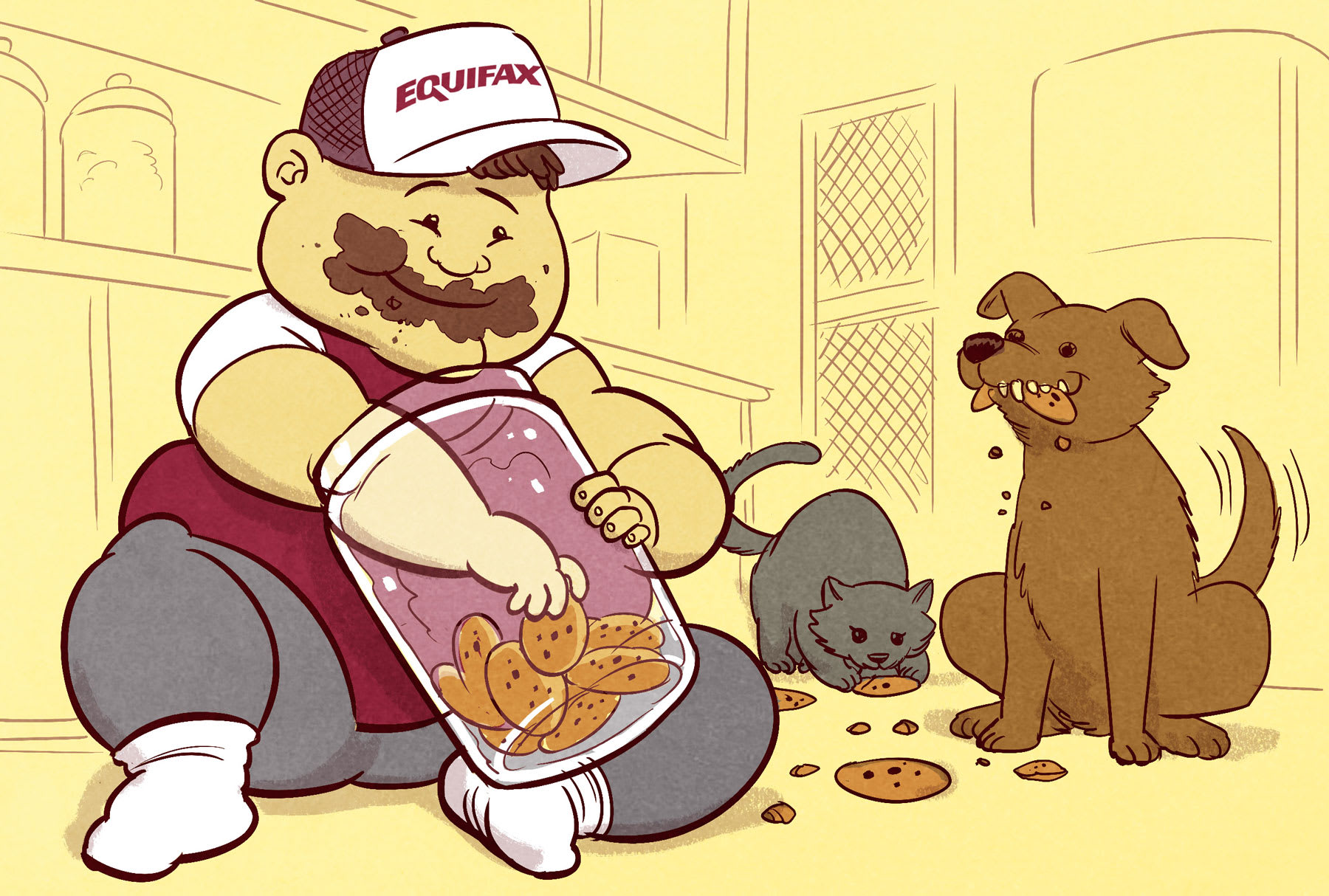
Illustration by Koren Shadmi

On Monday the FBI and AG Barr announced "an indictment last week charging four members of the Chinese People's Liberation Army (PLA) with hacking into the computer systems of the credit reporting agency Equifax and stealing Americans' personal data and Equifax's valuable trade secrets." China's military refutes the charges.

It was a message of PR reprieve for the skinsuits at Equifax, who spend their life cycles profiting from tracking and trading our personal and financial information (and we're powerless to stop them). Especially now as we're seeing reports about how four Chinese hackers "took down Equifax."

That sure sounds a lot better (for them) than the fact that Equifax's security failures were so bad for so long that a breach was inevitable. One month after Equifax admitted the breach, press and pundits remarked on the multitude of issues saying it was probable "that more than one group of hackers broke into the company."

Yeah, something makes me think China's hackers are more of the "hoarders" variety, not the 'sing Kumbaya' sharing kind — and our stolen Equifax data was definitely shared. "Katie Van Fleet of Seattle says she's spent months trying to regain her stolen identity, and says it has been stolen more than a dozen times," reported NBC. "I didn't sign up to use Equifax, so I feel all of that stuff has been taken, and now I am left here trying to sweep up the pieces and just trying to protect myself and protect my credit," Van Fleet said.

And that's the thing: None of us signed up for Equifax. Yet here we are.
Stop me if you've heard this one before


In late 2017, the plucky little credit bureau that built its business nonconsensually getting dirt on Americans in order to deny them insurance claims (Equifax) suffered a wholly predictable calamity, endemic to powerful corporations whose engines are fueled by arrogance, hubris, and greed.

In early September 2017, Equifax was forced to reveal a breach it had known about for months. It impacted approximately 143 million U.S. consumers, as well as information on some Canadians and up to 44 million British residents, putting the total just shy of 200 million.

The stolen files were described as "records." But by early 2018 Equifax was forced to admit "records" meant our names, home addresses, dates of birth, Social Security numbers, credit records, drivers licenses, passports, and really, just everything.

By March 2018, the company revealed it found a few more breach victims in its couch cushions. "In September last year Equifax said it had discovered that 145 million US customers may have had their information stolen," BBC cavalierly reported. "Its investigation into the breach has revealed that the details of a further 2.4 million Americans went astray."

The company had been warned by a security researcher to fix its vulnerabilities months before the first attack was alleged to have happened. That researcher shared their findings with press, showing that a public web portal allowed anyone "with no authentication whatsoever ... to access the personal data of every American, including social security numbers, full names, birthdates, and city and state of residence." What's more:

While probing Equifax servers and sites, the researcher said that they were also able to take control—or get shell access as hackers refer to it—on several Equifax servers, and found several others vulnerable to simple bugs such as SQL injection, a common, basic way of attacking sites. Many servers were running outdated software ... Equifax had thousands of servers exposed on the internet...

The researcher reported all of this to the company. "If it took me three hours to find that website, I definitely think I'm not the only one who found it," they told Motherboard. "It wasn't just one breach. It was maybe dozens."

Six months after that first researcher notified the company about the vulnerability, Equifax patched it — but only after the massive breach had already taken place, according to Equifax's own timeline.

When called in on the carpet for a congressional hearing about the privacy and consumer identity apocalypse Equifax ushered into our cursed timeline, WSJ reported that Equifax's temporary chief executive told Congress he wasn't sure whether the company was encrypting consumer data. Equifax was indeed storing unencrypted user data on a public-facing server, and "didn't encrypt its mobile applications either. — and when it did encrypt data, it left the encryption keys on the same public facing servers."

Eventually, one big class-action lawsuit revealed that wasn't all: we found out Equifax used 'admin' as a username and password internally.

But okay. They want us to blame China.


The breach earned Equifax a lot of public humiliation — besides all the bad press, at least 240 lawsuits were filed. Still, it seemed like the company liked that sort of thing. Security company FireEye quietly removed its boasting about protecting Equifax from its website, but was still hired to handle Equifax's incident response.

Equifax's response to everything was a masterclass in how to do everything wrong.

Right after the breach, it came out that Equifax had been rated an "F" in app security; the company responded by silently disappearing its apps from the Apple App Store and Google Play (Android).

Equifax tried to blame the breach on a single vulnerability in Apache Struts; Apache wasted no time releasing a statement showing Equifax was to blame for not patching it. The company had been notified about it six months before the alleged incident occurred.

Within an hour of the breach's public admission, information emerged that three Equifax executives sold stock just before the breach and after the company had internal knowledge of the incident (a month prior to the public acknowledgement).

Speaking of profiting off our pain... One of the engineers who worked on coding Equifax's "equifaxsecurity2017.com" website was found to have abused people's information for insider trading Equifax stock. This was the WordPress site Equifax sent consumers to, to find out whether they were impacted by the breach. It was totally broken: Visitors got different answers with every query. It also told visitors that Equifax's credit monitoring service was not available, and to check back later in the month; many noticed you could enter any gibberish to get the same answers.

It also seemed for a while that those who signed up for credit monitoring waived some legal rights.

Then, the $700 million data breach settlement. This turned into $125 per person. Except Equifax only planned to pay 248,000 of the actual victims — and over four and a half million applied, bringing the payout down to $6.80 per victim.
Stock in golden parachutes is way up



From any angle, we consumers — none of whom consented to being in Equifax's databases — got the worst of it. Equifax was pwned in a completely stupid and avoidable way and are now the biggest plop in the swirling toilet bowl of our modern privacy apocalypse.

Even though officials were mad at Equifax for a minute and consumers want to burn them to the ground and salt the earth, they're doing just fine. NY Post reported that the company's big corporate clients are giving the despicable data dealers a pass. "The embattled credit bureau said Friday it hasn't lost any significant business."

The outlet reminded us, "Equifax largely does business with banks and other financial institutions — not with the people they collect information on." According to GovTech, "A year after the worst data breach in U.S. history to date, Atlanta-based Equifax has been chastened, but its business model is unchanged and the company churns on, virtually undamaged by legislative, regulatory or prosecutorial penalties."

Equifax got a "get out of jail free" card: The Consumer Financial Protection Bureau decided not to do a damn thing about it. Former Director of the CFPB Richard Cordray had authorized an investigation, Reuters wrote, "But Cordray resigned in November and was replaced by [Mick] Mulvaney, President Donald Trump's budget chief."

Mulvaney, head of the CFPB, pulled the agency back from doing a full-scale probe and indefinitely suspended plans for on-the-ground tests on how Equifax protects its data. "The CFPB also recently rebuffed bank regulators at the Federal Reserve, Federal Deposit Insurance Corp and Office of the Comptroller of the Currency when they offered to help with on-site exams of credit bureaus," reported Reuters.

So, I'm sorry Scooby gang. It doesn't matter who hacked the "credit risk assessment" company no one can opt out of. Old Man Equifax is going to get away with it.

Imagine a company with the dated incompetence of Yahoo security circa 2013-14. The arrogance and greed, growth-at-all-costs-to-society hubris of Uber circa 2009-2017. The "hot or not" contempt for human beings and rapey privacy machinations as Facebook circa 2004-present.

Equifax, for being the world's oldest, old-timey, redlining-era, data-plantation owner (circa 1899) that couldn't even set up a WordPress site in 2017 sure knows how to keep up with the techbro Jonses. Loads of money and zero consequences has a way of keeping you nimble like that.

It's quite insane, really.
UK energy minister says country is ‘now off coal’ – despite still operating four major coal-fired plants


An all-party U.K. parliamentary group for renewable and sustainable energy event in London has again confirmed the view the government remains unmoved by calls for support for the solar sector. However, a window of opportunity may be about to open for rooftop PV thanks to proposed legislation for new homes building standards.

FEBRUARY 13, 2020 


U.K. energy minister Kwasi Kwarteng falsely claimed the nation is ‘now off coal’ at a parliamentary event this week.

Image: Policy Exchange/Flickr

The invitation to the winter reception held in London this week by the U.K. government’s all-party parliamentary group for renewable and sustainable energy (Praseg) stated energy minister Kwasi Kwarteng would give “a keynote address reflecting on U.K. leadership on renewable and sustainable energy and outlining his aspirations for the sector in the future”.

Despite that promise, little of substance was offered at the House of Commons event on Tuesday other than a vague low-carbon aspirations.

Kwarteng began his speech by reflecting on the country retiring its coal-fired power fleet, stating: “In 1913, the U.K. mined 287 million tons of coal and, in 100 years, we are now off coal – a remarkable achievement.”

pv magazine understands the U.K. still operates four major coal-fired power stations, one of which – Fiddler’s Ferry in Cheshire, northwest England – is due to go offline in March. Coal-fired power supplied 5.1% of U.K. electricity in 2018 and that figure is expected to have fallen a further 2% last year after the Cottam plant in Nottinghamshire, in the English east midlands, closed in the autumn and the Aberthaw B power station, near Barry in South Wales, was shuttered in December. The government has committed to ending all “unabated” coal-fired generation by 2025 and this month said it would consult on bringing that deadline forward to October 1, 2024.

With the Conservative government of Theresa May having committed to a net-zero carbon economy by 2050 – in one of the final acts of a Brexit-riven administration – Kwarteng voiced his concern about emissions from the housebuilding sector and the urgency of decarbonizing space heating.

“These are the challenges I think [of] as a minister every day,” he added. “We are on a journey [towards a sustainable energy system] and we try to bring the population together with us.”

It was left to members of the new intake of MPs elected in December to offer encouragement to representatives of the solar sector and wider energy community in the audience.

Window of opportunity?

Lia Nici, Conservative MP for Great Grimsby in the English North East, spoke about new buildings installing renewable energy technologies so “we don’t have to retrofit in 10 years’ time”.

Her remarks came after the Ministry of Housing, Communities and Local Government in October opened a consultation related to its proposed Future Homes Standard. Specifically, the ministry asked for feedback about ‘part L’ of the standard – which concerns the conservation of fuel and power in new dwellings – and the consultation closed on Friday with the government’s preferred option to publish part L in the middle of the year and bring its provisions into force by the end of the year.

The U.K. Solar Trade Association (STA) welcomed the part L proposals which consider two alternative legislative options to improve energy efficiency in building standards.

The ‘Future Homes Fabric’ standard would deliver a 20% reduction in carbon emissions by mandating “very high fabric standards” and the ‘Fabric plus technology’ option would deliver a 31% emissions reduction “through a more minor increase to fabric standards alongside use of low-carbon heating and/or renewables, such as photovoltaic panels,” said the consultation document. The latter is the government’s preferred option because it “would deliver more carbon savings and result in lower bills for the householder,” added the document. Shifting some of the burden onto clean energy installations would also placate the U.K.’s powerful housebuilding lobby, which can be expected to resist any move towards more stringent building standards.

Newly-elected Labour MP for Sheffield Hallam, Olivia Blake, told the Praseg gathering community energy is a key issue which needs support. Her Labour colleague for Leicester East, Claudia Webbe, added solar rooftops should also be part of the U.K.’s future energy system.

Given the Conservative government’s apparent lack of enthusiasm for solar, however, any Future Homes Standards decision to use solar panels to help make new homes more energy efficient appears the more likely source of relief for the beleaguered sector.
Solar and wind generation outpaced coal in Europe last year

Renewables generated more electricity than coal in the EU for the first time ever in 2019, driving the sharpest reduction in the European power sector’s carbon emissions in three decades, according to a new report.

FEBRUARY 7, 2020 


Eastern European nations have been slower to kick the coal habit, the report noted.


Image: LWBogdanka/Wikimedia Common

Solar and wind generated more electricity than coal across Europe last year, according to The European Power Sector in 2019 report published by London-based non-profit group Sandbag and German thinktank Agora Energiewende.

Coal-fired generation plunged 24% across the EU in 2019, driving a 12% reduction in the power sector’s CO2 emissions – the biggest decline seen since 1990.

Dave Jones, an electricity analyst for Sandbag, highlighted the “urgent” push across Europe away from coal. Given thermal power still accounts for 30% of global fossil fuel emissions, said Jones, Europe is a “test bed” for the replacement of coal with solar and wind power capacity.

“Europe is leading the world on rapidly replacing coal generation with wind and solar,” said Jones. “As a result, power sector CO2 emissions have never fallen so quickly.”

Solar capacity doubled

The EU member states that added the most new solar and wind generation capacity also recorded the biggest declines in coal use. Solar arrays and wind farms accounted for 18% of electricity generation across the European Union in 2019, at 569 TWh, while coal-fired capacity fell to just 15%, for 469 TWh, the thinktanks said, noting coal generated twice as much electricity as solar and wind on the continent as recently as five years ago.

Around 16.7 GW of solar was installed across the bloc last year, up sharply from the 8.2 GW deployed in 2018 according to statistics from industry body SolarPower Europe. Wind capacity is expected to have expanded around 14 GW, Sandbag and Agora Energiewende said.

Around half of the European Union’s lost coal capacity has been replaced by solar and wind facilities with gas accounting for the rest, partly because low prices have made gas more competitive than coal. The authors of the report noted Eastern European nations have reduced their reliance on coal at a slower rate than their Western European neighbors.

Coal-free

With Greece last year pledging to eliminate coal by 2028 and Hungary setting a 2030 deadline, 20 of the EU’s 27 member states are on course to be coal-free by the end of the decade.

Sandbag and Agora Energiewende said the economics of energy production increasingly favor renewables over fossil fuels and pointed to record-low auction prices for solar electricity in Portugal as an example. Between 2010 and last year, coal’s share of the continent’s electricity mix fell around 10 percentage points while solar and wind together rose by 13.

Varying capital costs appear to favor wind over solar in Europe, according to a recently published study by Germany’s DLR Institute of Networked Energy Systems. That said, a report published this week by research institute the Fraunhofer ISE predicted lignite open-cast ponds at shuttered coal mines in Germany could host up to 56 GW of floating PV capacity.

Here’s How Scientists Think Coronavirus Spreads From Bats to Humans


Bats carry tons of viruses, but they don't usually get sick from them.

By Emma Fidel
Feb 13 2020, 1:51pm
Bats carry tons of viruses. But scientists think one in particular has recently infected the human population and killed nearly 1,400 people: China’s new coronavirus.
Scientists don’t really know why, but bats usually don’t get sick from the viruses inside them. A recent genetic study, however, found that the coronavirus in bats and the one making humans sick are a 96% match.

In the past, other animals have passed viruses between bats and humans. For example, humans contracted the SARS coronavirus from civet cats, which caught it from bats. And the MERS coronavirus traveled from bats to camels to humans.
This time, Chinese scientists think pangolins could be the middlemen, but their research hasn’t been made public yet. The scaley, armadillo-like creatures are the most trafficked animals in the world and are used in traditional Chinese medicine. It’s possible that pangolins came into contact with bats in markets or other human enclosures, virologists said.
Scientists don’t need to know where the virus came from to develop a vaccine. But identifying the origin can help contain the current outbreak and prevent future ones.
“After the SARS outbreak, the government banned the sale of civet cats because we have now determined that civet cats could lead to more coronavirus exposures,” Arinjay Banerjee, a virologist at McMaster University, said. “So something similar could happen if with 100% confidence we can identify that it was this animal.”

Canadian Soldiers Are in Iraq, But Their Mission Is Uncertain Amid Iran-US Conflict

Iraq has requested that the U.S. remove its troops from the country; what that means for the Canadian troops deployed in a training capacity remains to be seen.

By Mack Lamoureux Jan 6 2020,


The future of Canadian military members in Iraq is unclear as the fallout from the U.S. assassination of a top Iranian military official continues.

Last week, the growing tension between Iran and the United States reached a fever pitch when the U.S. killed Qassem Soleimani, one of Iran’s top generals, with an airstrike in Iraq. This came less than a week after an attack by an Iranian-backed militia on a U.S. military location left one American contractor dead. Iran has vowed to retaliate against the United States for the killing of Soleimani.

Over the weekend, Iraqi lawmakers voted on a recommendation that all foreign troops should be removed by the country. The recommendation originally came from the country’s interim prime minister, hasn't been formally requested and is, at this stage, non-binding. U.S. President Donald Trump has already refused to pull out the American troops in Iraq and has threatened “very big sanctions” on the country.

Canada did not participate in the 2003 invasion of Iraq, but has participated in several training missions. These missions include a North Atlantic Treaty Organization (NATO) mission led by Major-General Jennie Carignan of the Canadian Armed Forces and Operation Impact, which is led by the United States. The exact number of Canadian military members active in Iraq isn’t public, but it is believed to be in the hundreds. In March 2015 Canadian serviceman Sergeant Andrew Joseph Doiron was killed by friendly fire.

Todd Lane, a spokesman for Defence Minister Harjit Sajjan, told VICE in a statement that “Canada continues to monitor and evaluate the situation.”

“Our goal, as a Coalition, remains a united and stable Iraq, and preventing the re-emergence of Daesh [ISIS],” said Lane. “The NATO mission and Operation Impact's mandate remain the same, but all training activities in Iraq are suspended temporarily as we continue to monitor the security environment.”

Right now, the keyword regarding everything involved in the conflict—including Canada—is uncertainty. The international partners involved in the NATO mission elected to hold an emergency meeting on Monday to debate the future of the suspended mission. Thomas Juneau, a University of Ottawa professor specializing in the Middle East and former analyst for the Defence Department, said that on every side—Iraqi, Iranian, and American—the next move is unknown.

“We are in uncharted territory,” said Juneau. “There is a huge amount of uncertainty right now as to the way ahead. On every level.”

Representatives from 29 allied countries involved in the NATO mission met in Brussels Monday and agreed to temporarily suspend the NATO mission in Iraq. NATO Secretary-General Jens Stoltenberg said the organization is resolute in their support of the United States and urged for de-escalation.

The role that Canada plays within the Iran/U.S. is inconsequential at best, according to Juneau.

“We are just not important enough to play a role. In terms of shaping the overall evolution of the dispute. We don't have a role,” he said. “I mean, yes, in backchannels, Canada will talk to the players and so on, the diplomats will do what they do. We don't fundamentally have a role in this dispute.”

Beyond calling for de-escalation last week, Canada’s response to the conflict has remained low-key. The government has updated its travel advisory for several countries in the Middle East, including Iraq, advising its citizens to avoid the nations due to heightened tensions.


But with Canadian forces still stationed in Iraq, the possibility of Canada becoming involved isn’t zero. The odds of that happening, and what it would or could look like, remains to be seen.

“If the situation escalates and violence flares up in Iraq between Iran and the U.S., or between the U.S. and Iraq and their allies on the ground—we're there,” said Juneau. “We have hundreds of troops there, including some that are co-located or located not far from potential targets.”

“So there is a risk. That being said, as much as I don't want to minimize that risk, I don't want to overplay it in the sense that right now, for me, the most plausible scenario in the short term is not escalation.”
People Keep Getting Killed in El Salvador After They're Deported From the U.S.

At least 138 people deported from the U.S. have been subsequently murdered in El Salvador.


By Paul Blest Feb 5 2020

At least 138 people deported from the United States to El Salvador since 2013 have subsequently been murdered, according to a Human Rights Watch report released Wednesday.

Over 200,000 people were deported from the United States and Mexico to El Salvador between 2014 and 2018, according to the report. And although the level of violence due to gang activity has resulted in asylum recognition rates as high as 75 percent in other Central American countries, the U.S. granted asylum to just 18 percent of El Salvadorans who applied for it from 2014 to 2018, the report said.

In addition to the 138 confirmed cases of murder, the report also identified over 70 cases in which deportees were “subjected to sexual violence, torture, and other harm,” or who simply went missing when they returned to the country. Human Rights Watch stressed there was no official tally of those killed or injured, however, and said that the actual casualty toll is “likely greater.”

READ: El Salvador just elected a 37-year-old populist as its next president

“U.S. authorities have knowingly put Salvadorans in harm’s way by sending them to face murder and attacks on their safety,” HRW’s Alison Parker, a co-author of the report, said in a statement. “Salvadorans are facing murder, rape, and other violence after deportation in shockingly high numbers, while the U.S. government narrows Salvadorans’ access to asylum and turns a blind eye to the deadly results of its callous policies.”

El Salvador has had some of the highest homicide rates in the world in recent years, although the Central American nation saw a promising drop in 2019. Much of the violence is the result of gang activity, on behalf of groups such as MS-13 and Barrio 18.

HRW estimates that of the 1.2 million Salvadorans currently living in the United States, as many as three-quarters are undocumented or have a just temporary authorization to live here.

The Trump administration previously tried to end Salvadorans’ participation in the program, and in 2018, then-Attorney General Jeff Sessions ruled out domestic abuse and gang violence as legitimate causes to grant asylum.

Last year, the U.S. and El Salvador signed an agreement in which the U.S. vowed to help El Salvador improve its security and anti-gang efforts in exchange for requiring asylum seekers passing through El Salvador to seek asylum in that country first. As part of the deal, the U.S. also extended the temporary protected status of Salvadorans through the end of 2020.

READ: Trump is in complete control of GOP immigration policy

The HRW recommended that the Trump administration reverse some of its most far-reaching immigration restrictions, such as the Migration Protection Protocols, the “asylum bans,” and the aforementioned Asylum Cooperation Agreements, which were also signed with Guatemala and Honduras.

The group also urged Congress to make protections for TPS and DACA recipients permanent, and to freeze funding for DHS, ICE, and CBP “unless and until abusive policies and practices that separate families, employ unnecessary detention, violate due process rights, and violate the right to seek asylum are stopped.”

“Instead of closing the door to the thousands of Salvadorans fleeing their homeland, the United States should provide them with full and fair asylum procedures and dignified treatment,” Parker said. “Before deporting Salvadorans, U.S. authorities should take into account the extraordinary risks of harm they may face upon return.”


Cover: A group of Salvadoran migrants start their journey towards the United States in San Salvador, on January 20, 2020. (Photo: MARVIN RECINOS/AFP via Getty Images)

Trump Held a Pep Rally for Border Patrol Agents and They Chanted ‘Four More Years’

'Keep America Great' hats for everybody!


By Alex Lubben Feb 14 2020,


THEY OWE HIM THEIR JOBS


President Donald Trump worked a crowd of border patrol agents on Friday, touting all that he’d done for them during his term. And the crowd, the members of the National Border Patrol Council, a union that represents Border Patrol agents, ate it up.

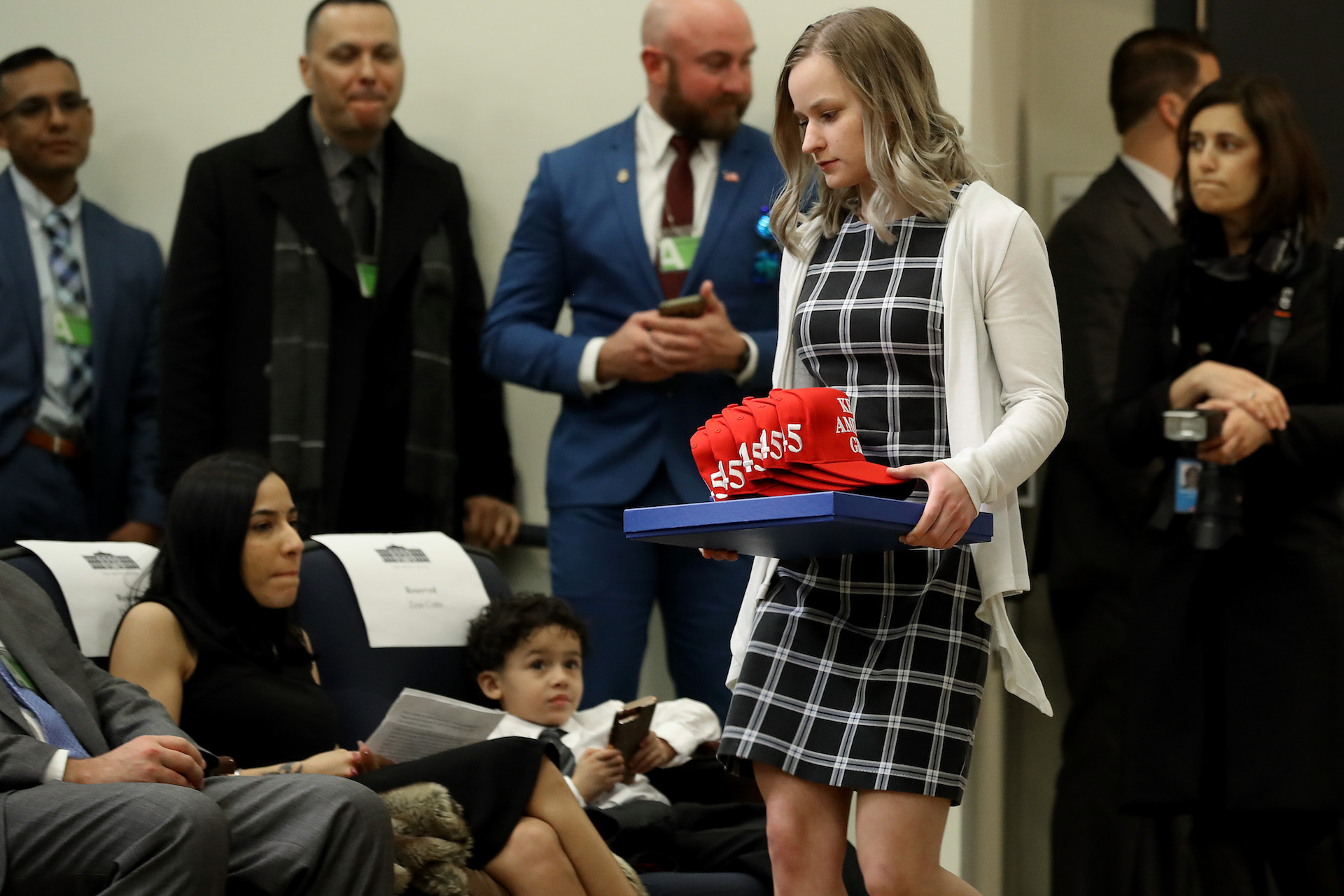
He took the stage to chants of “four more years!” and was applauded for mentioning how much he’d done for border patrol agents. His aides handed out Trump’s signature red “Keep America Great” hats to the crowd as he spoke.

“In my State of the Union address, I shared the story of Maria Fuertes, the 92-year-old great-grandmother who was allegedly raped, beaten, and murdered by a criminal illegal alien in New York City,” Trump read from his prepared remarks. Then he went off-script.

“I’ll take the word ‘allegedly’ out, do you mind if I do that?” he said. “The lawyers put it in. If you don’t mind I’ll take it out. She was raped, beaten, and murdered.”

The person charged with Fuertes murder has not been convicted.

A STACK OF "KEEP AMERICA GREAT" HATS IS CARRIED OUT BEFORE U.S. PRESIDENT DONALD TRUMP SPEAKS TO MEMBERS OF THE NATIONAL BORDER PATROL COUNCIL IN THE SOUTH COURT AUDITORIUM IN THE EISENHOWER EXECUTIVE OFFICE BUILDING FEBRUARY 14, 2020 IN WASHINGTON, DC. (PHOTO BY CHIP SOMODEVILLA/GETTY IMAGES)

Trump also held up pictures of different sections of the wall and bragged about the advanced engineering that’s gone into its construction. The wall’s got anti-climbing tech, which he said has led to firefighters having to pull people off the wall who attempt to climb it and get stuck.

It’s see-through, because near sections of the wall that were opaque, the president said that Border Patrol agents were literally getting hit over the head when traffickers were launching their 150-pound bags of drugs over the wall with catapults.

He’d wanted an imposing concrete wall, but the drug-projectiles are what convinced him it had to be see-through. “As soon as they said that, that was the thing that got me. I said, ‘You’re right, you gotta be able to see what’s on the other side,’” the president said.

The wall’s even got some high-tech black paint to heat it up and make it more difficult to climb.


“We’re going to spray paint it black,” he said. “The black makes it extraordinarily hot, especially in areas along the Mexican border. It’s not known for cold weather, it’s known for quite hot weather. You don’t have too much snow in this area, right.”
“In fact, if you had any, that would be called climate change, right?” he added, to laughter from the crowd. “When they do that, I’m there, I’m a believer.”

He also touted Republican-introduced legislation that would allow victims of crimes perpetrated by undocumented immigrants to sue sanctuary cities for damages.

And as Trump was on stage Friday, the New York Times reported that the agency would be moving specially trained forces away from the border to sanctuary cities.

In cities like Chicago and New York, those agents will crackdown on illegal immigration inside the country, rather than at the border.

Cover: U.S. President Donald Trump speaks to members of the National Border Patrol Council in Washington, D.C., U.S., on Friday, Feb. 14, 2020. (Photo: Oliver Contreras/SIPA/Bloomberg via Getty Images)

This article originally appeared on VICE US.
WOMEN ALLOWED TO SMOKE IN PUBLIC IN SAUDI ARABIA
Ivanka Trump praises Saudi Arabia for gender equality progress at Global Women’s Forum

Kingdom and four other countries lauded by speakers at Global Women’s Forum in Dubai

US president’s adviser Ivanka Trump and heads of World Bank and IMF among those 
attending gathering


BY CALINE MALEK · 16 February 2020 ARAB NEWS, SAUDI ARABIA

Ivanka Trump, advisor to US President Donald Trump, congratulated the Kingdom and four other countries in the MENA region for instituting significant reforms over the past two years. (AFP) 

WHERE IS HER HIJAB/NIQAB

Kingdom and four other countries lauded by speakers at Global Women’s Forum in Dubai
US president’s adviser Ivanka Trump and heads of World Bank and IMF among those attending gathering

DUBAI: Ivanka Trump has commended Saudi Arabia for its efforts in empowering women by changing laws to respect women’s freedom of movement and access to credit and financial services.

Speaking on the first day of the Global Women’s Forum, organized by the Dubai Women Establishment, in Dubai on Sunday, Trump, advisor to US President Donald Trump, congratulated the Kingdom and four other countries in the Middle East and North Africa (MENA) region for instituting significant reforms over the past two years.

“Progress ultimately builds upon progress,” she said. “Bahrain has introduced legislation to prevent discrimination in the workplace; Jordan eliminated legal restrictions on women’s ability to work at night; Morocco expanded women’s land rights; and Tunisia introduced critical laws to combat domestic violence.

“We all need to applaud these achievements and advancements. And yet, we won’t grow complacent because there is still so much more work to be done.”

Trump said too many women continue to face obstacles to entering the workforce, starting their own businesses, reaching their full potential and charting their own future.

In the region, on average, women have only half the legal rights of men, yet their economic equality has the potential to add $600 billion to the global annual GDP by 2025.

“This number represents far more than an economic boom,” she said. “It represents millions of lives full of promise, mothers who can provide for their children, daughters who could be the first to graduate high school, and young women who could start businesses and become job creators. This is the future that we can and must achieve together.”

She lauded the courage to shatter the barriers of inequality and blaze a new path of opportunity that gives hope to millions.

White House economists have found that if nations address the five legal barriers, namely accessing institutions, building credit, owning and managing property, traveling freely and restrictions on women’s employment, women’s economic activity could increase the annual global GDP by around $7.7 trillion.

“Imagine the lives transformed, the cities that would be built, the new schools that would open their doors, the children that could be helped, if we could come together and make these reforms a part of our future,” Trump said.

“Every woman here today has an incredible story, from brave innovators to bold entrepreneurs that are bringing greater opportunity to their home countries. You are the women who are going to imagine new industries, discover new cures, create works of beauty and improve lives around the world.”

She asked nations in the region to come together to continue to work as a whole to break new ground, to institute changes, legally and culturally, that will give every woman a chance to determine her own destiny and bring greater peace and prosperity to this region and to the world.

And, although slow, progress is happening. According to the International Monetary Fund (IMF), the gender gap dropped to 20 percent in 2018 compared to 27 percent in 1990.

“I’m convinced the tide is turning,” said Kristalina Georgieva, the IMF managing director.

“We are finally seeing women stepping up and men supporting that because gender equality is morally right but, beyond that, it’s great economics.”

She praised women entrepreneurs, especially in small and medium-sized enterprises (SMEs), that are now categorically proven to be better than men. “If we want the economy to prosper, we have to create space,” she said.

“Knowing that 40 countries are growing five percent or more, but the rest of the world is sluggish, we need the boost that women can provide.”

A world with 100 percent gender equality would add $172 trillion to global wealth, according to the most recent data. “We would be a much richer world,” Georgieva said.

“The time for women is turning in the Middle East. If we are to just bring the MENA to par with the more advanced economies, over the (coming) years, there would be $1 trillion more in output for everybody to share. So, we are talking about very significant improvements.”

Beyond economic impact, women create a more diverse workplace and boardrooms, while ultimately “making better decisions. We know that what women often bring more of is consensus orientation,” she said.

“When women are engaged, then we have more peace on the planet, it’s a proven fact. So, for the wellbeing of our societies, the advancement of women is a fabulous gift.”

Furthermore, the World Bank estimates that increasing female labor force participation in the region to the levels of men could boost regional GDP by 47 percent.

“Currently, $575 billion in regional income is lost because of gender-based discrimination in laws, social norms and practices that constrain women’s rights and opportunities,” said David Malpass, president of the World Bank Group.

“Fortunately, more countries recognize that their economies can only reach their full potential with full participation of both women and men. We are focusing on helping countries achieve good development outcomes.”

Malpass mentioned two key areas where the bank has been working hard, namely laws and regulation and broadening of access to finance. He said, historically, the region has had the lowest score in its “Women, Business and the Law” (WBL) report but, this year, it made the most progress.

“Jordan, Lebanon, Algeria and Bahrain made many reforms,” he said.

“The UAE, and Saudi Arabia in particular, made the most reforms. The UAE has pushed for legislative reforms, including equal pay and female representation in corporate boardrooms, while, in the Kingdom, laws were changed to protect women from employment discrimination and to prohibit employers from dismissing women during pregnancy and maternity leave. And there’s room for every country to improve.”

In the report, Saudi Arabia was ranked 70.6 out of 100 – a 38.8 jump since its last ranking – placing it first among GCC countries and second in the Arab world. “We have committed to double our corporate sourcing for women-owned firms by 2023,” Malpass said.

“We are helping unlock constraints faced by women. There’s still much to do and everyone can play a role.”


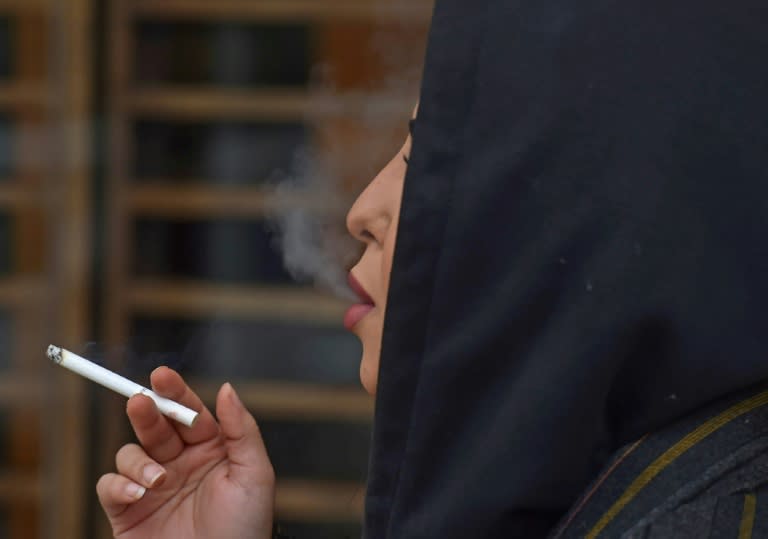
'Happy I can choose': New era sees Saudi women light up in public


Haitham EL-TABEI,
AFP•February 16, 2020


Some Saudi women are embracing cigarettes, shisha pipes or vaping as a symbol of emancipation (AFP Photo/FAYEZ NURELDINE)

Riyadh (AFP) - Rima settles in a chair at an upscale Riyadh cafe, looks around carefully and, seeing no one she recognises, drags on her electronic cigarette before exhaling a cloud of smoke.

"I feel that smoking in public is a part of exercising my newly won freedoms. I am happy that now I can choose," the 27-year-old Saudi who works for a private company in the capital told AFP.

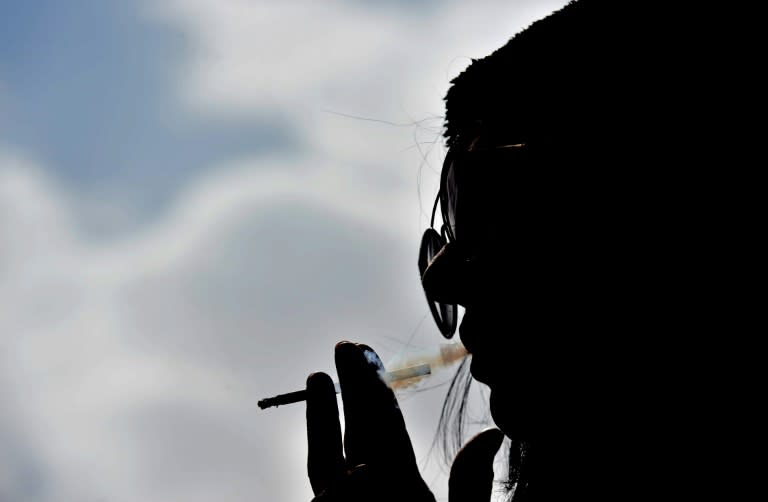
Like Western feminists of the early 20th century, in an era of social change in Saudi Arabia some women are embracing cigarettes, shisha pipes or vaping as a symbol of emancipation.

The sight of women smoking in public has become much more common in recent months, an unthinkable prospect before the introduction of sweeping reforms in the ultra-conservative kingdom

The kingdom's ambitious de facto ruler, Crown Prince Mohammed bin Salman, has rolled out an array of economic and social innovations to project a moderate, business-friendly image.

Women are now allowed to drive, attend public sporting events and concerts, or obtain passports without the approval of a male guardian.

Rima, who started smoking two years ago, dismisses concerns about the harmful effects of tobacco, but is worried her family will find out.

She says she is prepared for a showdown.

"I won't tell them that this is about my personal liberty, because they won't understand that women are free to smoke like men," said Rima, dressed in a traditional black abaya with gold embroidery matching the hijab that covered her hair.

Najla, 26, who like Rima asked to use a pseudonym, said that despite the rapid social changes, double standards still existed, and that it was still considered a "scandal and disgrace" if women smoked.

The only woman lighting up amid several tables of male smokers, she said she intended to "challenge society" and ignore the occasional dirty looks.

"My rights will be fully respected when my family accepts me as a smoker," she said, recalling that a friend was sent to an addiction clinic when her parents found out about her smoking.

Najla started smoking while still a school student and, like her, up to 65 percent of female Saudi high schoolers light up secretly, according to a 2015 study by the medical faculty at King Abdulaziz University cited by Arab News.

- 'Everything is allowed' -

Despite the limitations, in a country where until just a few years ago religious police would chase and hit women for infractions like wearing nail polish or allowing a strand of hair to escape from their hijab, the changes have been head-spinning.

"Most of our women clients order shisha. It's something that was totally unimaginable just three months ago," a Lebanese waiter told AFP at an up-market cafe in north Riyadh.

Heba, a 36-year-old longtime smoker who sat at a table nearby, described growing up in a closed country where "everything was forbidden to women".

"I never imagined I would be able to smoke shisha in public next to men," she told AFP.

"Now, everything is allowed. Women venture out without hijab, without abaya and they even smoke publicly."

But even as the kingdom has introduced reforms, it has attracted condemnation for a heavy-handed crackdown on dissidents including intellectuals, clerics and female activists.

In 2018, authorities arrested at least a dozen women activists just before the historic lifting of the decades-long ban on female motorists.

Many of the detained have accused interrogators of sexual harassment and torture. Saudi authorities reject the accusations.

"There is no doubt that at the persona level there is more freedom," said Walid al-Hathloul, whose sister Loujain is on trial over allegations of having contacts with foreign media and diplomats.

"But the reforms in favour of women are part of a public relations campaign to improve the kingdom's human rights record," he told AFP.

"The arrest and demonisation of women activists is proof of this -- it's designed so that the reforms will not be credited to the activists."
The Untold Story of How Trump’s Fixers Silenced Stormy Daniels Just Days Before the 2016 Election

DIRTY DEALS

A new book exposes for the first time the extraordinary efforts by Michael Cohen, David Pecker, and others to hush up a porn star about her sexual fling with the future president.


Joe Palazzolo
 Michael Rothfeld Updated Jan. 14, 2020


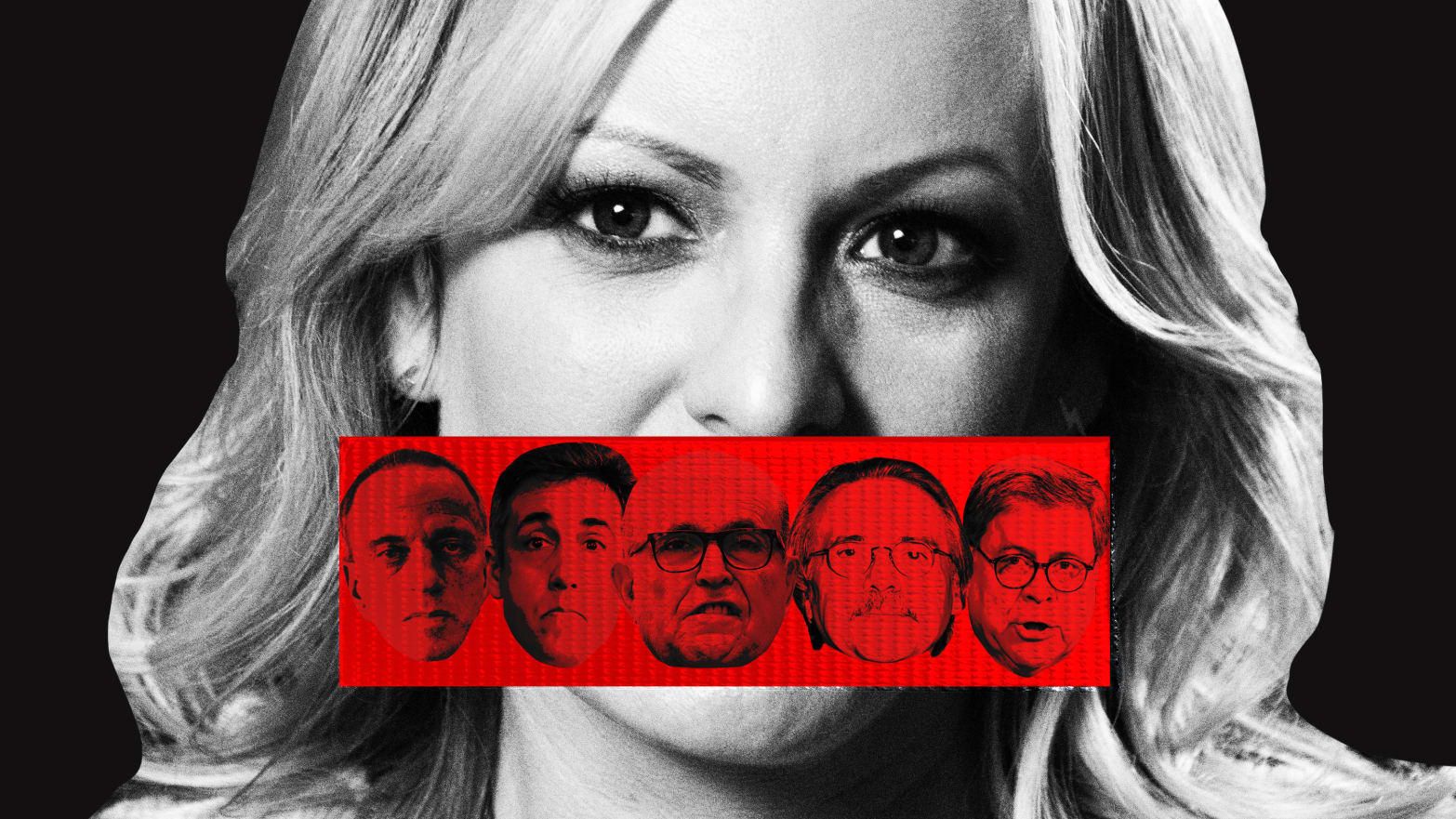
Photo Illustration by The Daily Beast/Getty
This is an adapted excerpt from The Fixers: The Bottom-Feeders, Crooked Lawyers, Gossipmongers, and Porn Stars Who Created the 45th President, by Pulitzer Prize-winning investigative reporters Joe Palazzolo and Michael Rothfeld, to be published Tuesday by Random House.

The Access Hollywood video changed the math for Stormy Daniels as well as for Donald Trump.

Before it emerged, reporters had already focused on allegations of Trump making unwanted sexual advances and objectifying women. Afterward, more women came forward with stories about the Republican candidate’s bad behavior.

They told of incidents that could have been charted on a map like stops on a cross-country trip spanning the decades; women spoke of unpleasant and unwelcome encounters with Trump at the U.S. Open tennis tournament, at Mar-a-Lago, on the set of The Apprentice, at beauty pageants, during a flight, in a nightclub, and on and on, all consonant with the Access Hollywood revelation.

Trump denied all the accusations but issued a videotaped apology for the explosive report, saying that the words he had spoken on the tape “don’t reflect who I am.”

“I’ve said and done things I regret, and the words released today on this more-than-a-decade-old video are one of them,” he said. “I said it. I was wrong. And I apologize.”

How the Stormy Daniels Story Almost Got Out in 2016
SQUEEZE PLAY


Adam Rawnsley


All of Donald Trump’s Accusers: A Timeline
SERIOUS STUFF


Olivia Messer


The media frenzy breathed oxygen into Daniels’s flagging efforts to sell the story of her own Trump tryst. Extramarital sex with a porn star, even one who’d slept with Trump willingly, would still damage his fading chances. Her agent, Gina Rodriguez, had already begun talks about Daniels with Good Morning America. They weren’t advanced, but they were a card Rodriguez could now play.

On Saturday, October 8, following the worst day of Trump’s campaign, Rodriguez, Dylan Howard, then the editor of American Media’s National Enquirer, and lawyer Keith Davidson began a series of conversations about Stormy Daniels that would last into the night. They realized her story was more marketable now than it had been when Rodriguez first pitched Howard in April, before the Access Hollywood tape placed Trump’s treatment of women in the national spotlight.

“Trump is fucked,” Davidson texted Howard that afternoon. The editor agreed: “Wave the white flag. It’s over people!”

A few hours later, Davidson emailed Rodriguez: “Have you heard from Stormy lately?” Howard followed up with her about a half hour later. He asked Daniels’s manager to send him a pitch so he could elevate it to his boss, David Pecker.

“He likely will pay,” Howard texted.

Rodriguez emailed him a brief description of her client’s claims:
Donald Trump had sex with Stormy Daniels while his current wife was pregnant.
He flew Stormy to his Pageant and told her he would get her on Celebrity Apprentice which he never did.
She met him while at a celebrity golf tournament and The Wicked girls were at the event.
Stormy will take a lie detector and go on the record.
RELATED IN POLITICS


Adulterer-in-Chief Throws Red Meat to His Evangelical Base


The GOP’s DGAF Defense


There’s No Defending Trump, So His Team Will Try the Bidens


As the discussions about Daniels took shape, Michael Cohen was visiting his daughter in London, where she had enrolled in a study-abroad program for college. He hadn’t been in regular touch with Trump or Hope Hicks, the candidate’s spokeswoman, in recent weeks. But now they sought him out as the Access Hollywood scandal roiled the campaign.

“Hicks had heard from another campaign aide that a rumor was circulating of another tape, this one of Trump cavorting with prostitutes in Moscow during a trip there for the Miss Universe pageant in 2013.”

On that Saturday night in London, Cohen had a conference call with Hicks and Trump, followed by a call with Hicks alone. Hicks had heard from another campaign aide that a rumor was circulating of another tape, this one of Trump cavorting with prostitutes in Moscow during a trip there for the Miss Universe pageant in 2013.

Hicks had been told that TMZ might have access to the tape, and she knew that Cohen was close to Harvey Levin, the gossip outlet’s founder. Hicks asked Cohen to let her know if he heard anything from Levin. She also impressed on him, in the event he spoke to any reporters, that the campaign’s messaging was that Trump’s remarks on the Access Hollywood recording were merely “locker room talk.”

The Moscow tape was bad, but it was just a rumor. Cohen had a more immediate problem. He learned from Pecker and Howard that Daniels was still shopping her story. Cohen, Pecker, and Howard exchanged a series of calls after Cohen got off the phone with Hicks.

Cohen lobbied Pecker to buy Daniels’s story, and for a brief time that Saturday night it seemed as if American Media might repeat the favor the publisher had done for Trump in a “catch and kill” deal by locking up Karen McDougal’s story.

Less than an hour after receiving the pitch from Rodriguez that Howard had requested, he texted her to set a price.

“How much for Stormy?” Howard wrote.

“250k,” Rodriguez replied.

She told Howard that Good Morning America and the British tabloid the Daily Mail were both hot for the story. The ABC show had expressed some interest but didn’t pay sources. Rodriguez had fabricated the $250,000 offer from the Daily Mail, hoping to goad American Media into buying.

“Well I will buy it but I ain’t got 250K! Lol. GMA can’t pay her—they can license pix etc. I will tie it up ASAP if we can get a realistic price,” Howard texted.

He told Rodriguez he could get her $100,000 for the story, an offer she rejected with an “Lol,” before starting a rapid-fire negotiation by text.

“Ok what about 150k,” Rodriguez countered.

“110,” Howard replied.

“125k,” Rodriguez responded.

“120,” Howard hit back.

“Sold,” Rodriguez wrote.

But it wasn’t sold. Howard still needed approval from Pecker to buy the story. He told Rodriguez he’d be back in touch by the following morning.


“Woman wants 120k. Has offers from Mail and GMA want her to talk and do lie detector live. I know the denials were made in the past—but this story is true.”

Minutes after signing off with Rodriguez, Howard texted his boss.

“Woman wants 120k. Has offers from Mail and GMA want her to talk and do lie detector live. I know the denials were made in the past—but this story is true. I can lock it on publication now to shut down the media chatter and we can assess next steps thereafter. Ok?”

“We can’t pay 120k,” Pecker texted back.

Howard realized that Daniels would be Cohen and Trump’s problem now.

“Ok. They’d need to handle. Perhaps I call Michael and advise him and he can take it from there, and handle,” Howard said.

“Yes a good idea,” Pecker texted.

After speaking with Howard once more, Cohen was ready to do a deal, but he didn’t have anyone to deal with.

Gina Rodriguez wasn’t a lawyer, and anyway Cohen had already threatened to end her career and sue her and Daniels into oblivion. She wasn’t going to negotiate with him directly.

Howard, now the middleman, turned to Davidson, a friend with whom he shared celebrity gossip, but Davidson was still wary of Cohen. When Davidson had tested the idea of a deal for Daniels’s story in September, Cohen responded with fury and threats.

That Time Michael Cohen Threatened The Daily Beast
DARK TOWER

Brandy Zadrozny,

Tim Mak


Davidson needed convincing that Cohen was willing to negotiate in good faith. Howard agreed to contact Cohen (again) to vouch for Davidson and to get Cohen’s assurances that he wouldn’t try to ambush Davidson. When they spoke, Howard told Cohen that Davidson was a friend. Be nice, he said.

Davidson soon relented and agreed to negotiate with Cohen. Howard, having brokered the peace, first texted Pecker to let him know that Cohen had agreed to handle the story and leave American out of it. “Spoke to MC. All sorted. Now removed. No fingerprints. I’ll recap with you face to face,” Howard said. “Great work Thx,” Pecker replied.

Howard then texted Cohen to let him know Davidson had come around. “Keith will do it. Let’s reconvene tomorrow,” Howard said in a text to Cohen. Cohen, for whom it was past 2 a.m., texted back after waking up. “Thank you,” he replied. He texted again a few minutes later to give Howard the name of his shell company, Resolution Consultants, which Cohen planned to use to funnel the money to Davidson.

Rodriguez kept up the pressure on October 9, telling Howard that she had another offer for Daniels’s story, this one for $200,000, a lie meant to prod the deal along. After waking up the next morning, a Monday, Howard checked in with Rodriguez and linked Cohen and Davidson via text, using coded language.

“Keith/Michael: connecting you both in regards to that business opportunity. Spoke to the client this AM and they’re confirmed to proceed with the opportunity. Thanks. Dylan. Over to you two.”

Davidson texted Cohen about an hour and a half later. “Michael—if we are ever going to close this deal—In my opinion, it needs to be today. Keith.”

The two lawyers soon got on a call. Cohen wanted to buy the story, but he balked at Daniels’s six-figure demand.

“You forget what I do. I know everybody in this business. This story isn’t worth shit,” Cohen said.


“Spoke to the client this AM and they’re confirmed to proceed with the opportunity. Thanks. Dylan. Over to you two.”

Davidson said $130,000 was as low as Rodriguez and Daniels were willing to go. Daniels wanted to get at least $100,000. After Rodriguez’s commission and Davidson’s $10,000 fee, she would get around $96,000—close enough.

“That’s the drop-dead number,” Davidson told Cohen.

He told Cohen that Daniels had a competing offer from a media company. Cohen pressed Davidson for details, but he pleaded ignorance. It was Rodriguez’s deal, he said. Davidson told Cohen he knew only that the company had offered $130,000.

In fact, Rodriguez had no offer. She had invented it to use as leverage with Cohen, just as she had concocted the other offers she used to try to entice Howard. It worked.

Three days after a video of Trump talking about grabbing women by their genitals entered the public domain, Cohen and Davidson had a deal. Cohen reluctantly agreed to match the offer he believed Daniels had from another company, and, in return, Daniels would sign a contract barring her from discussing her alleged one-night stand with Trump.

Davidson drafted the contract and used pseudonyms to conceal the names of the parties, a typical practice in deals of this kind. Trump was identified as David Dennison and Daniels was described as Peggy Peterson. Davidson had borrowed the name David Dennison from a guy he knew in high school; Peggy Peterson was also his creation. In the contract, the names were shortened to the initials “DD” and “PP,” indicating that Trump was the defendant and Daniels was the plaintiff.

American Media’s payment to Karen McDougal and involvement in the Stormy Daniels deal would bring the publisher to the brink of criminal prosecution by federal authorities in Manhattan. But Pecker, Howard and American Media avoided charges by cooperating with the federal prosecutors, who used their information against Michael Cohen.

Howard acknowledged the personal risk he had taken in helping Trump, in a series of previously unreported text messages sent on election night.

“Jesus. He’s in with a massive chance,” Howard wrote in a 10:20 p.m. text to his relative in Australia, where it was already the afternoon of the next day. The Enquirer’s editor’s family members didn’t like Trump.

“Oh no. When will we know,” came the reply from the family member.

“Probably an hour or so. But he’s flipped states no one expected him to do. Or they’re neck and neck,” Howard messaged, before offering a bit of gallows humor.

“At least if he wins, I’ll be pardoned for electoral fraud,” Howard wrote.


The Daily Beast also asked the authors of The Fixers for their thoughts on Trump’s key fixers:
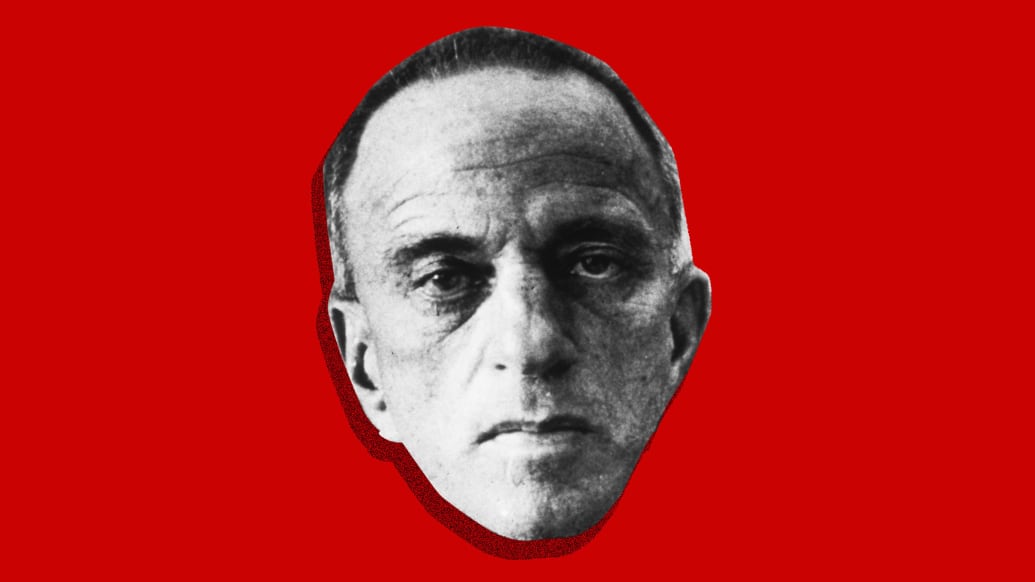
Roy Cohn


The First Fixer, Roy Cohn shepherded young Donald Trump through the Manhattan scene of the 1970s, introducing him to Cohn’s famous friends and to New York politicians who could help Trump’s business. Cohn’s work for Trump including acting as a bridge between Trump and organized criminals who dominated the construction industry; lying about Trump’s net worth to improve his client’s standing on the Forbes 400; and helping Trump obtain a 40-year tax abatement, the longest in city history, for his Grand Hyatt Hotel in Manhattan.
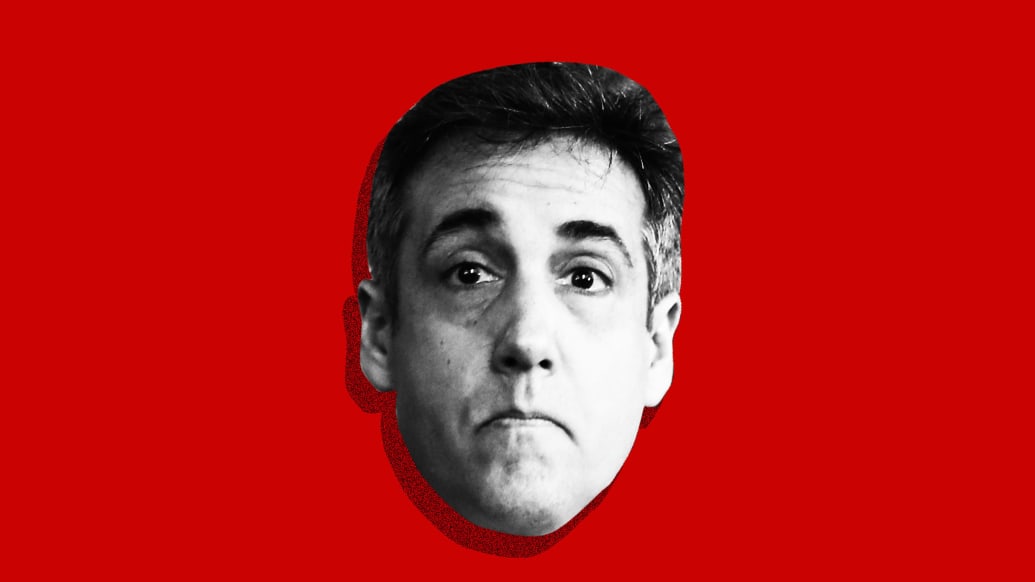
Michael Cohen


Michael Cohen, a personal injury lawyer and taxi medallion owner, went to work for the Trump Organization in 2007, the year after he helped Trump defeat a condo board uprising at one of his buildings. Cohen, who wore a pistol in an ankle holster, used threats to kill negative media stories, including about alleged affairs involving Stormy Daniels and Trump, and Donald Trump Jr. and Aubrey O’Day. Before the 2016 presidential campaign, Cohen tried to rig online polls in Trump’s favor. In 2016, he paid Daniels $130,000 for her silence and helped orchestrate a $150,000 payment by the National Enquirer’s publisher to former Playmate Karen McDougal to buy her story of an affair with Trump. After Cohen was investigated for those payments and other crimes, he pleaded guilty, pointed his finger at Trump, and was given a three-year prison term.
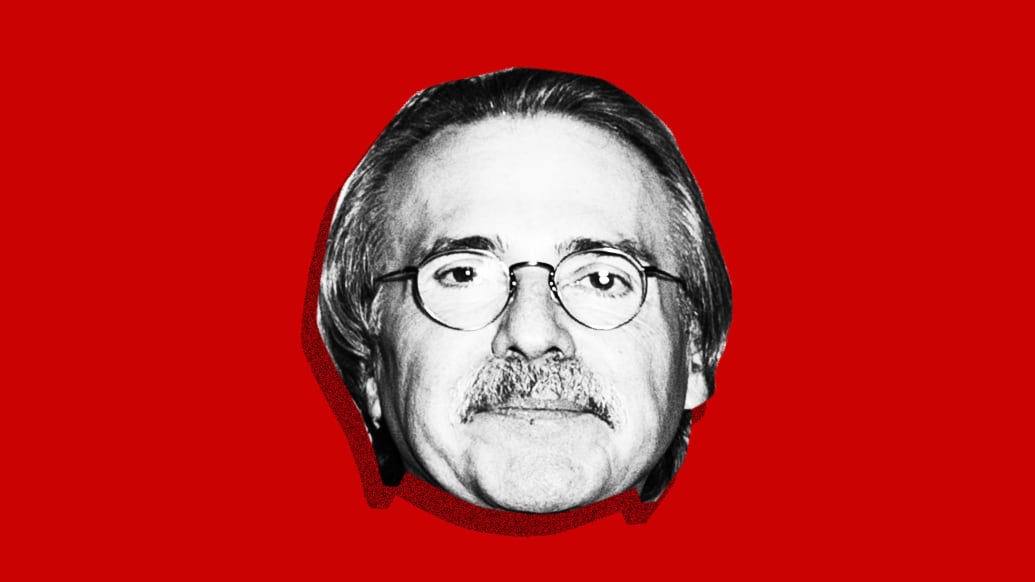
David Pecker


Pecker used his National Enquirer and other tabloids to boost political Trump ambitions in 1999, 2011, and 2015-16, while attacking his opponents. He suppressed negative stories about Trump over the years, while puffing up Trump in his pages with labels like “ga-jillionaire.” In 2015, his company paid $30,000 to a former Trump doorman who was peddling a rumor about a Trump love child, suppressing the story. The next year, Pecker authorized the “catch and kill” contract with McDougal and helped broker the Stormy Daniels deal with Cohen. He used his publications to help other powerful associates, including Arnold Schwarzenegger and Ron Perelman.
Rudy Giuliani


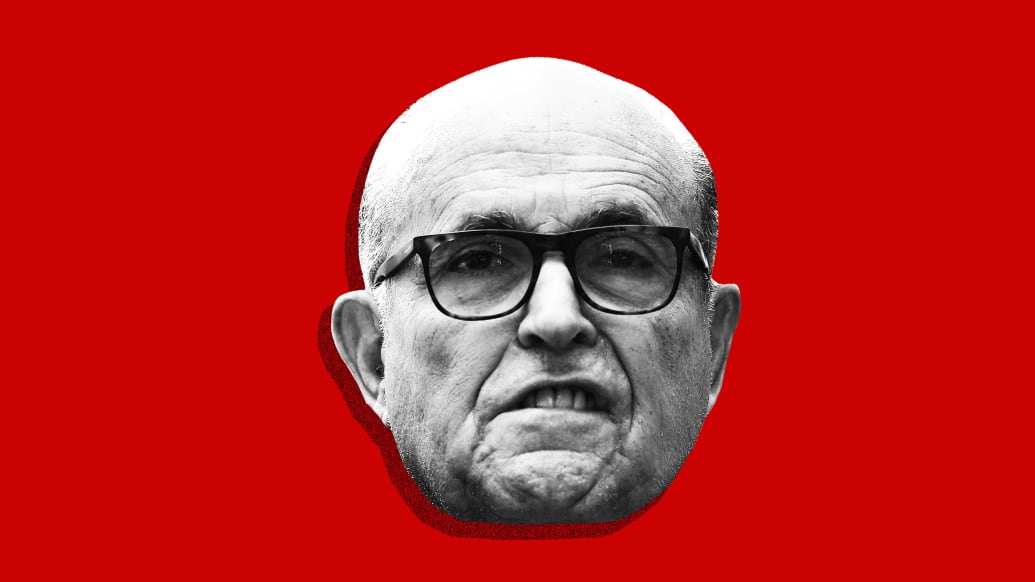
While Giuliani was U.S. attorney in Manhattan in the late 1980s, Giuliani’s office interviewed Trump in an inquiry into his possible money-laundering involving a Trump Tower real-estate deal. The matter was dropped without becoming a formal investigation. Around that time, Trump became co-chairman of Giuliani’s losing 1989 New York City mayoral campaign. In 2016, Giuliani backed Trump for president. He joined Trump’s legal team in 2018, to fight the Mueller investigation into Russian interference and potential obstruction by Trump. Giuliani attacked Cohen in the media after he turned against Trump. In 2019, Giuliani pressed authorities in Ukraine to investigate former Vice President Joe Biden and Biden’s son, and alleged Ukrainian interference in the 2016 election. He also helped engineer the firing of Marie Yovanovitch, the American ambassador to Ukraine, whom he saw as unfavorable to Trump’s interests.
William Barr


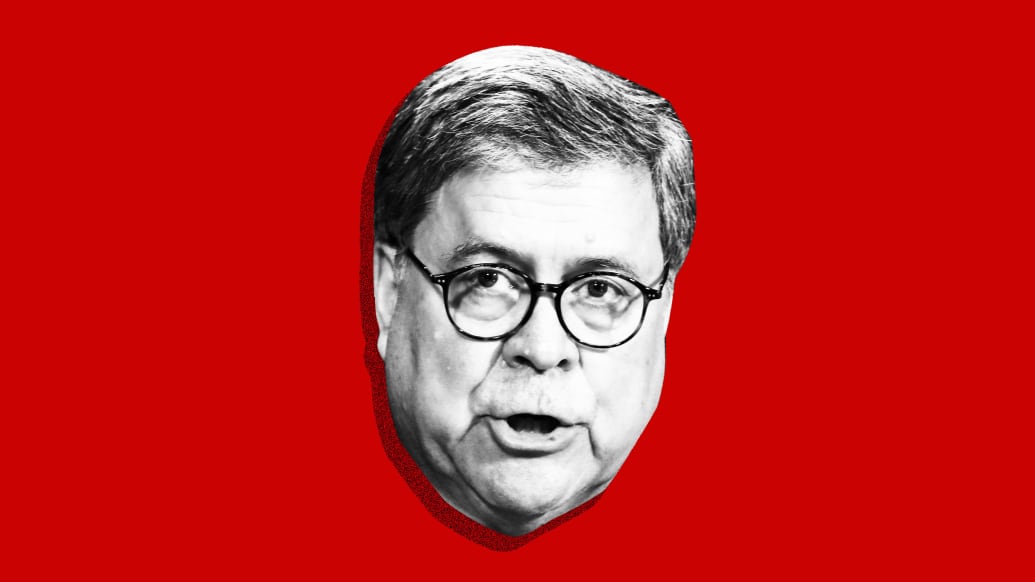
Before he was confirmed attorney general of the United States, William Barr sent an unsolicited 19-page page memo to the Justice Department describing Special Counsel Robert Mueller’s obstruction investigation of Trump as “fatally misconceived.” Once in office, Barr determined, with his deputy, that Mueller had gathered insufficient evidence to establish obstruction. More recently, Barr has been supervising an investigation of the origins of the FBI’s probe into links between the Trump campaign and Russia. He and the federal prosecutor leading the investigation have disputed a finding by the Justice Department’s watchdog that the FBI was justified in opening the counterintelligence investigation in 2016. In congressional testimony, Barr characterized the covert investigation as "spying."

The Fixers
Buy on Amazon$28


‘Chinatown’: The Twisted Characters Behind a Hollywood Masterpiece

CAN'T FORGET IT

It is perhaps the darkest movie to ever come out of Hollywood. Sam Wasson talked to The Daily Beast about his new book profiling the film’s collaborators.


Nathan S. Webster
 Updated Feb. 16, 2020 


Photo Illustration by The Daily Beast/GettyThe Daily Beast

What makes a movie like Chinatown break a heart? What desperation did Sam Wasson try to touch, as he wrote The Big Goodbye, about Chinatown’s creation during the long-gone ’70s filmmaking era?

Roman Polanski gave Wasson the answer: talking about watching Of Mice and Men as a teenage boy and leaving a Warsaw theater with Lenny’s death in the forefront of his mind. Wasson wrote, “it was unlikely Polanski would still be thinking about the ending… if it hadn’t hurt as it had.

“What made him remember, years later, the film with love, was the tragedy.”

The power of pain and failure had a disciple in Chinatown’s screenwriter Robert Towne. Early in the absorbing and gossipy The Big Goodbye, Wasson captures Towne’s creation of the narrative arc of his private detective Jake Gittes, who “would only think he knew the world.”

Towne knew that, “By the end of the story, Gittes would capitulate to a new and terrible awareness of corruption… all his venality, his air of self-possession would come crashing down.”

To create Gittes, Towne channeled the most extreme aspects of his close friend Jack Nicholson’s self-admiring personality, writing the part with Nicholson always in mind. Gittes became a glib, cocky “popinjay” who, as Wasson puts it, “would mind his hair, his fresh-pressed suits, his Venetian blinds. He would be class-conscious, maybe a little Hollywood… Towne’s hero would do it for the money.”

The Man Who Almost Drowned LA
WATER WIZARD


Jon Wilkman


And then, “The detective would lose the case, the woman, himself. He would lose, Towne came to realize, everything.”

Wasson’s motivation to explore Chinatown, the noir classic of corruption’s triumph, came from our era’s “Chinatown-ization of Hollywood and America—my own Chinatown-ization of loss and futility,” Wasson told The Daily Beast.

“What’s the precedent for this emotional component in the movies? The cinematic myth… for this corrupt force?” he said. Just as Polanski saw the enduring memory of tragedy and betrayal from Of Mice and Men, Wasson saw in Chinatown an answer for his own question. “If I was Greek, it would have led me to Greek tragedy. I write about film, so it led me to Chinatown.”

The Big Goodbye recreates the early-’70s partnership of Towne, director Polanski, Nicholson, and producer Robert Evans, creative talents at their most towering, visionary, flawed, far-reaching and often petty. The book works as eulogy or valediction. Both words mean the same thing; it’s a choice of how to see a life.

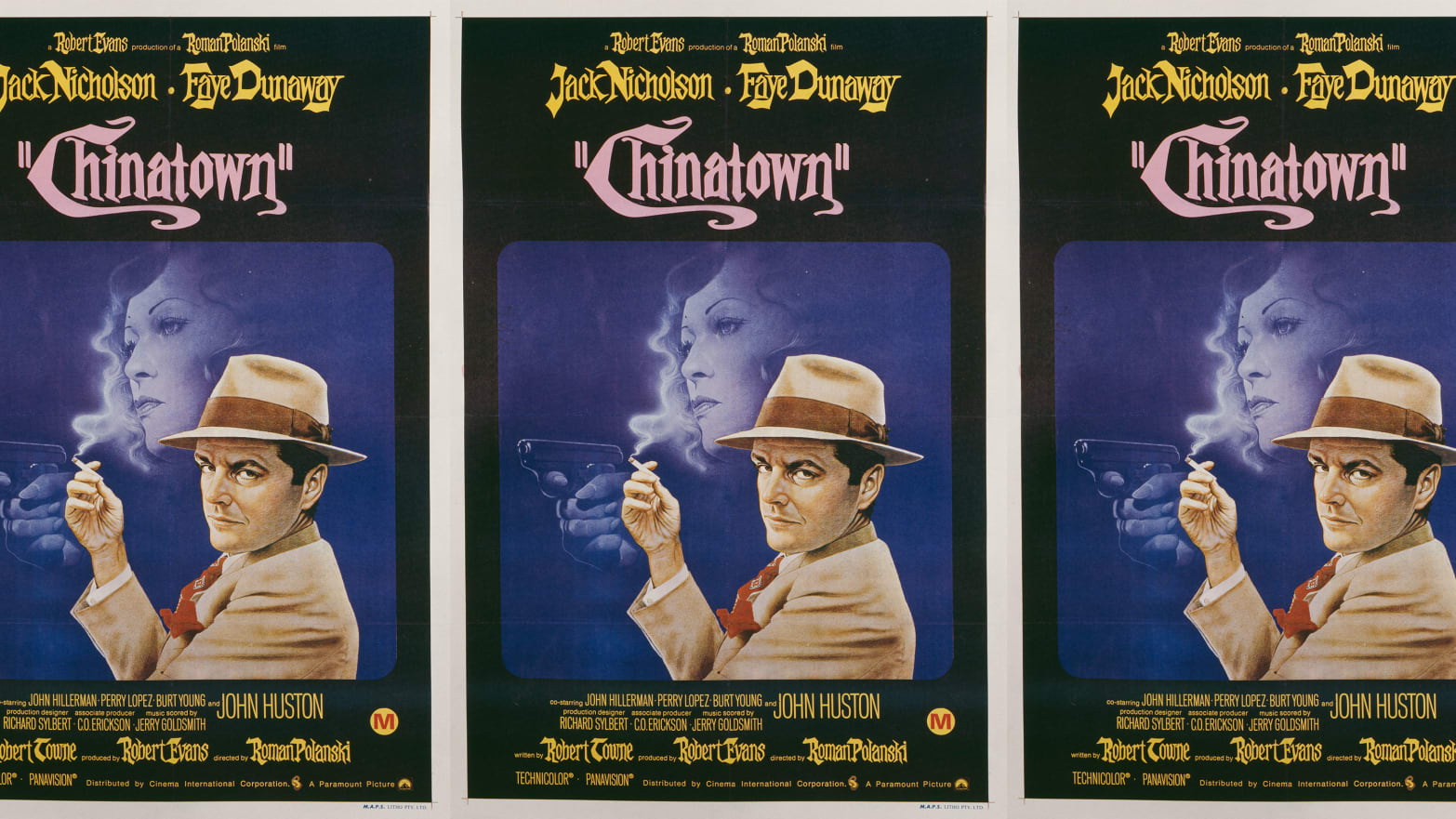
Chinatown’s throwback opening credits and Jerry Goldsmith’s score establish the ’30s mood of the movie’s plot, creating that world right from the typeface. Nicholson’s first appearance frames him at his desk in perfect lighting, making a practiced spin to a liquor cabinet, pouring cuckold Burt Young a shot of whiskey. Each of them acts with an almost affected sense of performance, aware they are moving, speaking ingredients of a larger whole.

Wasson showcases Polanski the director within the creative process of the film set. Polanski’s vision smoothed out Chinatown with color and light, shadow and framing—a Los Angeles of style and California cool, hiding the irredeemable rot of a villain like Noah Cross; by the uncharitable, the comparison could be considered subtext for Polanski himself.


“'Chinatown' is an ugly movie. You can’t make a movie like that if you haven’t suffered under corruption, if you don’t know what evil is.”
— Sam Wasson


“I knew the Polanski of it all would be a challenge for some people,” said Wasson, “but that inspired me, because I’m all about what’s on the screen.

“Chinatown is an ugly movie. You can’t make a movie like that if you haven’t suffered under corruption, if you don’t know what evil is.”

That doesn’t mean the movie is ever visually ugly. Polanski’s films are “full of elements for the eye to enjoy; those inner contradictors and complexity make the movies so good,” Wasson told The Daily Beast. “The work itself is often very funny. Horror doesn’t walk in the door looking like a bad guy.”

Wasson was referring to demonic Ruth Gordon from Polanski’s earlier Rosemary’s Baby, but it applies to John Huston’s avuncular Noah Cross. After all, the incestuous Cross’ worst on-screen act is only mispronouncing Gittes’ name with a bemused contempt.

As Wasson writes, that lack of obvious threat can apply to Polanski in 1977, presenting a 13-year-old girl with a bottle of champagne: “Should I open it?” And suggesting to her, “Let’s take some photos in the Jacuzzi.”

It’s easy, with such a history, to see Polanski as only another Noah Cross deserving no redemption or empathy. Getting away with it.

Thirty-six years before Polanski had access to Jacuzzis in mansions on Mulholland Drive, Wasson writes that Roman’s father “Ryszard hugged and held [Roman] with unsettling intensity… on Podgorze Bridge, returning to the Warsaw ghetto, he was weeping uncontrollably: ‘They took your mother…’” Bula Polanski, taken by the Nazis to her death, was pregnant at the time.

In August 1969, Polanski was in England where he took a call from his agent Bill Tennant: “There was a disaster in the house.”

Polanski “heard the words, but he did not understand, because the words were not true. They just had spoken.”

Sharon Tate was eight months pregnant when she was murdered. The deaths, the manhunt, the trials, the notoriety, the war, the Holocaust, the camps, all inescapable, a drumbeat of memory without respite.

“You have to show violence the way it is,” Polanski would say. “If you don’t upset people, then that’s obscenity.”

In Chinatown, Polanski used himself to play the Cross henchman who slashed Nicholson’s nose, filming take after take with a dangerous spring-loaded knife.

He posed and reposed the prone actress playing a murdered woman for a five-second scene: “‘And the leg’—he bent the leg unnaturally and stood up to assess the results—‘it is right.’”

“Everyone thought Roman was replaying the death of his wife,” the actress, Diane Ladd, told Wasson. “It was a very scary day.”

Wasson does not use the term Post-Traumatic Stress Disorder. He provides examples of behavior by a man who lost his pregnant mother and pregnant wife to violence.


“'Between takes, Dunaway would look over to her director,' Wasson writes. 'She thought, he’s enjoying this moment far too much.'”

“All I could do is tell a story that unfolds like a Greek tragedy,” Wasson said. “Roman’s not the only person who survived the Holocaust. I’m not inclined to say X caused Y. I’m in the grey. Bad things happened to him, and he did bad things.”

Within that gray is the art of Chinatown made by people with self-destructive flaws, some risen to crimes like Polanski’s, others melancholy like Jack Nicholson’s star-crossed love and infidelity toward Angelica Huston, or producer Robert Evans’ cocaine habit and the slow-slipping loss of his magic touch, and Towne’s awful behavior toward his ex-wife and unshared credit with a hidden writing partner. After the picture wrapped, they all slouch toward private Bethlehems of their futures.

Nicholson comes off the best, despite any number of personal mistakes.

“Writing about Jack, who’s had a career this long, I got to see what’s consistent, going back to before he was famous,” Wasson said. “It was nice to really walk around in those shoes.”

Nicholson wasn’t interviewed for the book, though Wasson mined numerous articles for Nicholson’s previous commentary. One has to think Nicholson is content with society’s current memory of him and his career.

As recapped by Wasson, Chinatown’s final scene provides that insight into how audiences choose what to remember—or what version of a tragedy sticks in the heart. As they filmed the movie’s violent climax, Polanski’s focus was Nicholson’s final line, “as little as possible,” murmured by Jake Gittes, staring at Evelyn Mulwray’s corpse in the car, shot through the eye. The line reprises an earlier moment in the film when the cynically confident Gittes is telling Mulwray about his time as a police detective in Chinatown: “What were you doing there?” Faye Dunaway’s Mulwray asks. “As little as possible,” Gittes says.

Wasson recapped, “Now, in the ending,” which Polanski insisted be literally “set in Chinatown, the line would reappear, echoing a note of terrible irony.”

Despite Polanski’s intent, “As little as possible” is not what’s remembered, nor even the defeat it represents. Instead, “Forget it, Jake. It’s Chinatown” became that moment, a shrugging passivity its lasting advice. Best to just fly away.

The movie’s denouement took place on a real-life Chinatown street. Polanski crafted his ending shot as a crane pull-up that climbed above the scene, the little people and their fates: “a sweeping flourish, rising as it does from the ground level of Gittes’ devastation to a more godly vantage point, from despair to a kind of cinema majesty.”

In the narrative of Hollywood, that crane-up provides a perfect segue—that last, big goodbye that Wasson promised.

“Though it offers no hope or resolution,” he wrote, “ending Chinatown with a grand crane-up evokes a lost Hollywood… imbuing the wreckage with a shiver of romantic awe, not just in the movement itself, the feeling of sudden floating, but in a kind of longing for tradition that might be called classical.”

What comes next are movies like Jaws and Star Wars, of course, the summer blockbusters that changed the game as far as movie production--but Billy Jack, a low-budget populist action pic came first. Opened simultaneously in 60 L.A. theaters, Billy Jack made a million dollars in six days, and $32 million overall; Wasson writes that when Warners applied the same “four-walling” strategy, opening simultaneously in as many theaters as possible, to The Exorcist, it grossed $160 million.

As recaptured by Wasson, Chinatown feels apart from that drive for profit; a stately pace, only short splashes of action, and a menacing silence characterize the film. The ugliness succeeds through captivation. Like the California dam disaster that is part of the movie’s water-related plot, the pressure builds quietly, then all at once. A metaphor for 1973 Hollywood.

Wasson writes: “When he heard about [The Exorcist] gross, Warners executive Dick Lederer walked into executive Barry Beckerman’s office and threw The Exorcist numbers down in front of him.

“Kid, the fun is over,” Lederer announced. “We’ve been having a good time out here and been very successful, but it’s gonna get real serious after this.”


“'That look on Jack’s face at the end, he looks lobotomized. It’s not an accident,' Wasson said.”

Chinatown’s first location shoot was Oct. 15, 1973, the chase in the orchard. On Oct. 26, Martin Scorsese’s Mean Streets opened in Los Angeles. A banner blurb on its full-page ad in The Los Angeles Times said the movie “doesn’t just explode—it erupts with volcanic force.” The writer was the same Jon Landau who would call Bruce Springsteen the future of rock ’n’ roll.

Mean Streets opens with natural street lighting, a jerky camera filming Harvey Keitel waking from a nightmare, bathed in blue neon. Ronnie Spector’s “Be My Baby” pounds into the speakers, the opening credits a montage of cuts and sound—a Wall of Sound, just like Phil Spector intended.

Chinatown cinematographer John Alonzo was unimpressed with Polanski’s ending crane shot: “Roman, you’re contriving a shot. You’re contriving it because you don’t know how to end the picture. You’re performing cinematic gymnastics.” He couldn’t see a point in an affected flourish.

What would Alonzo have said to Scorsese? Mean Streets used tracking shots from just over Keitel’s head as he strolls through a strip club; Robert DeNiro enters a scene to the Rolling Stones “Jumping Jack Flash;” the camera pans half-speed down a bar. In 1973, it must have felt unrecognizable.

After Mean Streets came The Exorcist, Dog Day Afternoon, Saturday Night Fever, Network; character and plot, but also action, frenzy, movement, motion, sound, all in a rush.

Single moments might seem quaint. Polanski filmed the famous “my sister, my daughter” scene, and the impact sharpens because overt violence is uncommon in the film. Gittes loses his cool, slapping Dunaway’s Evelyn Mulwray across her face, again and again. Nicholson felt nervous about the scene, didn’t want to hit a woman, showing it with his ice-cold expression. Unlike Mean Streets, with flourishes and spins and sounds in every scene, Polanski frames Nicholson’s cold stare, Dunaway’s unhinged eyes, and the horror of two shattered people meant to blow up on a 60-foot screen. It’s personal.

“Between takes, Dunaway would look over to her director,” Wasson writes. “She thought, he’s enjoying this moment far too much. The young girls, his sarcasm and needless cruelty, directing movies. It was about power for him. All of it. Her face burned where Jack’s slaps had landed… her neck ached.

“‘Once more please, fellows,’ her director said. ‘Once more…’”

Chinatown the movie ends with the crane lifting away from Gittes failure, Mulwray’s corpse, and Noah Cross’ triumph—in real life, that climb kept going, above the finale’s defeat and cynicism: “The only place left to go was up, to The Sting, to Happy Days, to ‘a mix of nostalgia and parody,’ the mass denial of the terrible truths Gittes was powerless to undo,” Wasson writes.

“That look on Jack’s face at the end, he looks lobotomized. It’s not an accident,” Wasson told the Beast, how Nicholson’s performance captures the devastation of calling every shot wrong, of being on the wrong side. It’s finally too hard to keep looking—“forget it, Jake,” indeed.

Producer Robert Evans died late last year; his interviews were with Wasson, “hours and hours” of storytelling, looking back, about long ago. Evans and Wasson explain the creation of Chinatown’s score, composed by Jerry Goldsmith, notable for Uan Rasey’s melancholy trumpet. Goldsmith narrates California, connecting sound with sight, a mournful sound for bleak scenes.

Wasson told the Beast his book is also an attempt at connection, a message in a bottle: “What’s the purpose of biography, of art? To get close to these things, to greatness and to danger, to understand what makes these things happen. I like to be around people who will teach me.”

Evans told Wasson about hearing Goldsmith’s score: “It was out of the darkness, a faith. The ache, the longing, dying but sweetly pleading, like a happy memory drowning in truth.”

Why read The Big Goodbye, about Chinatown’s creation by flawed visionaries? Why remember?

“The sound stunned Evans. Like Polanski’s crane, a lift, redemption, grace. The feeling was that word he lost so much trying to find and hold on to—‘romance.’” Star-crossed, I’m sure he meant, the wistful kind of sorrow.