Monday, November 23, 2020


How Hong Kong authorities are gradually taking over public broadcaster RTHK

By Pacific Media Watch -
November 14, 2020

"Journalism is not a crime" protest in Hong Kong ... RTHK's freelance producer Bao Choy speaks with reporters in front of a court on November 10. Image: Global Voices/Stand News


By Rachel Wong in Hong Kong

Hong Kong’s government-funded broadcaster, Radio Television Hong Kong (RTHK), is under fire again.

Last week, police arrested freelance TV producer Bao Choy Yuk-ling under allegations that she made a false statement to obtain information on car owners, claiming that she had violated the Hong Kong’s Road Traffic Ordinance.

Choy obtained the information during her reporting for the documentary 7.21: Who Owns the Truth?, aired on the programme Hong Kong Connection.
READ MORE: A Hong Kong reporter’s account of the crackdown on press freedom under the national security law
Hong Kong’s pro-democracy legislators resign en masse

The documentary investigated individuals potentially involved in the Yuen Long attacks of 2019, in which a pro-Beijing mob of more than 100 men stormed the Yuen Long MTR station wielding steel rods and canes and attacked protesters returning home from an anti-extradition demonstration.

The incident left 45 people injured, including journalists and commuters, and became one of the most notorious events of Hong Kong’s year-long protests.

Using surveillance footage from the nearby area, the documentary producers were able to track down the legal owners of the cars who took the rod-wielding men to Yuen Long.


Hong Kong reporters have for years used car plate records in their reporting for media outlets of different political camps, most commonly by crime, traffic, and entertainment beat reporters.

First to be arrested for car plates probe
Choy is the first to be arrested for the practice. If convicted, she could face a HK$5,000 (US$645) fine and six months’ imprisonment.

Choy – who appeared in court on November 10 – told reporters her case was no longer a personal matter but involved the public interest and press freedom. Dozens of members of the media gathered outside the court to show support.


Choy’s documentary 7.21: Who Owns The Truth?


Her case was adjourned to January and she remains free on bail.

But this was not the first time the government appeared to have cracked down on RTHK, which in theory enjoys editorial independence despite receiving public funding and has traditionally been allowed to cover politically sensitive topics.

Hong Kong journalists get approval for protest march against producer’s arrest after police objections overturned https://t.co/hcJPO0259p pic.twitter.com/50H1rYMXl7
— Hong Kong Free Press HKFP (@hkfp) November 13, 2020

Amid the political turmoil since the pro-democracy movement erupted last year and the national security law was enacted in July, the public broadcaster has been under fire from various quarters as the government appears to tighten its grip.

Below is a list of some of the recent developments:

RTHK staff required to pledge loyalty

Most of RTHK staff is employed on civil service terms. The government has decided that all those who joined the civil service on or after July 1, when the national security law came into force, should pledge allegiance to the Hong Kong Special Administrative Region and promise to uphold its constitution known as the Basic Law.

In addition to newcomers, the requirement also applies to existing staff members whose employment is confirmed after completing probation, when contracts are renewed, or when they are up for promotion.

Questions arise as to whether the public broadcaster can stay impartial in its reporting after staff have been compelled to pledge allegiance to the government.

Acting deputy steps down, citing health reasons
The public also raised eyebrows when the Deputy Director of Broadcasting Kirindi Chan resigned in June after serving less than a year in the position. She cited health and personal reasons.

At that time, the broadcaster was criticised for airing a 20-episode programme about the national security law that was perceived to be sympathetic to Beijing.

The programme attended a direct request by RTKH’s government-appointed advisory board, who instructed the broadcaster to ease public concerns about the then-looming law.

Chan served more than 30 years at the broadcaster and had overseen numerous current affairs shows, but in her latest position, she was not directly involved in the production of the controversial programmes.

Amen Ng, director of corporate communications and standards at RTHK, said Chan’s main duty was administration and the decision was not political.

Nabela Qoser probation extended
RTHK has also come under pressure to rein in reporters who ask “disrespectful” questions of senior officials.

In September, the public broadcaster reopened an investigation into Nabela Qoser, an assistant programme officer who had provoked complaints from the public when she confronted the city’s leader Carrie Lam at a press conference after the July 21 Yuen Long mob attack on MTR travellers.

Lam was asked: “Did you learn about it only this morning? Were you able to sleep well last night?” and Qoser also asked her to “speak like a human.”

An initial investigation found that Qoser had done nothing wrong, but shortly before completing her three-year probation period, she was informed that it would be extended for another 120 days for further inquiries.

Union chair Gladys Chiu slammed the decision and said asking difficult questions should not hinder a reporter’s prospects of promotion or confirmation of employment. Lam refused to comment on the case, which she described as a human resources issue.

Interview with WHO top adviser criticised
In March, RTHK News programme The Pulse was criticised by the Hong Kong government for allegedly breaching the One China policy after its producer Yvonne Tong asked questions about Taiwan’s efforts to join the World Health Organisation.

In a video call, Tong asked the WHO’s Dr Bruce Aylward to comment on the Taiwan government’s performance in containing the covid-19 pandemic, and whether the organisation would reconsider the island’s membership.

Dr Aylward appeared to have hung up the call and evaded the question after reconnection.

Secretary for Commerce and Economic Development Edward Yau said the programme breached the principle that there is only one sovereign China. The Director of Broadcasting Leung Ka-wing should be held responsible for RTHK‘s deviation from its charter, Yau added, and RTHK should educate the public about One Country, Two Systems.

Review team set up, pressure by advisory board
In July, the Commerce and Economic Development Bureau set up a team to review RTHK’s governance and management, following the Communications Authority’s findings of bias, inaccuracy and hostility to the police force.

The review aimed to ensure the broadcaster complied with the service charter and codes of practice on programming standards issued by the authority. Charles Mok, the lawmaker representing the IT sector, said he feared the review would compromise the station’s editorial and creative freedom.

In May, the satirical show Headliner received a warning from the Communications Authority after the authority ruled as “substantiated” complaints that an episode aired in February had denigrated and insulted the police force.

The episode implied that police had more protective gear than healthcare staff when the covid-19 pandemic first emerged.

Eventually, the 31-year-old show suspended production after airing the final episode in June.

Personal view programme suspended
In April, the Communications Authority warned the broadcaster over its personal view programme Pentaprism, after it substantiated complaints that an episode contained inaccuracy, incitement of hatred to the police and unfairness. It featured a guest host who criticised the police handling of unrest around the Hong Kong Polytechnic University in November last year.

Complaints about four other episodes which featured guest hosts commenting on police anti-protest operations were also substantiated in September. RTHK decided to suspend the programme in early August, before it received the warnings.
National anthem to be aired every morning


The latest development is that starting from November 16, 2020, the Chinese national anthem – March of the Volunteers – will be aired at 8am every day ahead of news reports on all RTHK radio channels.

Spokesperson Amen Ng said that according to its charter, the public broadcaster should enhance citizens’ understanding of One Country, Two Systems and nurture their civic and national identity. The new arrangement is necessary, she said.

This article was originally published on Hong Kong Free Press (HKFP) on 11 November 2020. This edited version is published by Global Voices and the Pacific Media Centre under a content partnership agreement.
Early big-game hunters of the Americas were female, researchers suggest

Challenges age-old 'man-the-hunter' hypothesis

For centuries, historians and scientists mostly agreed that when early human groups sought food, men hunted and women gathered. Not so, say researchers.

Date:November 5, 2020
Source:University of California - Davis

Vicunas in Peru highlands (stock image).
Credit: © Wasim / stock.adobe.com

For centuries, historians and scientists mostly agreed that when early human groups sought food, men hunted and women gathered. However, a 9,000-year-old female hunter burial in the Andes Mountains of South America reveals a different story, according to new research conducted at the University of California, Davis.


"An archaeological discovery and analysis of early burial practices overturns the long-held 'man-the-hunter' hypothesis," said Randy Haas, assistant professor of anthropology and the lead author of the study, "Female Hunters of the Early Americas." It was published today (Nov. 4) in Science Advances.

"We believe that these findings are particularly timely in light of contemporary conversations surrounding gendered labor practices and inequality," he added. "Labor practices among recent hunter-gatherer societies are highly gendered, which might lead some to believe that sexist inequalities in things like pay or rank are somehow 'natural.' But it's now clear that sexual division of labor was fundamentally different -- likely more equitable -- in our species' deep hunter-gatherer past."

In 2018, during archaeological excavations at a high-altitude site called Wilamaya Patjxa in what is now Peru, researchers found an early burial that contained a hunting toolkit with projectile points and animal-processing tools. The objects accompanying people in death tend to be those that accompanied them in life, researchers said. It was determined that the hunter was likely female based on findings by the team's osteologist, James Watson of The University of Arizona. Watson's sex estimate was later confirmed by dental protein analysis conducted by UC Davis postdoctoral researcher Tammy Buonasera and Glendon Parker, an adjunct associate professor.

Revealing a broader pattern

The surprising discovery of an early female hunter burial led the team to ask whether she was part of a broader pattern of female hunters or merely a one-off. Looking at published records of late Pleistocene and early Holocene burials throughout North and South America, the researchers identified 429 individuals from 107 sites. Of those, 27 individuals were associated with big-game hunting tools -- 11 were female and 15 were male. The sample was sufficient to "warrant the conclusion that female participation in early big-game hunting was likely nontrivial," researchers said. Moreover, the analysis identified the Wilamaya Patjxa female hunter as the earliest hunter burial in the Americas.

Statistical analysis shows that somewhere between 30 to 50 percent of hunters in these populations were female, the study said. This level of participation stands in stark contrast to recent hunter-gatherers, and even farming and capitalist societies, where hunting is a decidedly male activity with low levels of female participation, certainly under 30 percent, Haas explained.

The study was conducted in collaboration with multiple UC Davis labs. Parker, a forensic expert in the Department of Environmental Toxicology, helped determine sex through a proteomic technique he recently developed. In Professor Jelmer Eerkens' lab, Jenny Chen, an undergraduate researcher at the time of the study, discovered the distinct isotopic signature of meat consumption in the bones, further supporting the conclusion that the Wilamaya Patjxa female was a hunter.

While the research answers an old question about sexual division of labor in human societies, it also raises some new ones. The team now wishes to understand how sexual division of labor and its consequences in different times and places changed among hunter-gatherer populations in the Americas.

Co-authors of the paper include Watson, Arizona State Museum and School of Anthropology, University of Arizona; Chen, now a graduate student in the Department of Anthropology, Penn State University; Sarah Noe, UC Santa Barbara Department of Anthropology; John Southon, W.M. Keck Carbon Cycle Accelerator Mass Spectrometer Facility, UC Irvine; Carlos Viviano Llave, Peruvian co-director of the field work and Collasuyo Archaeological Research Institute affiliate; and from UC Davis: Buonasera, Department of Environmental Toxicology and anthropology; Kevin Smith and Eerkens of the Department of Anthropology; and Parker, Department of Environmental Toxicology. Haas is also associated with the Collasuyo Archaeological Research Institute in Peru.

A National Science Foundation grant contributed to this study.


Story Source:

Materials provided by University of California - Davis. Original written by Karen Nikos-Rose. Note: Content may be edited for style and length.


Journal Reference:
Randall Haas, James Watson, Tammy Buonasera, John Southon, Jennifer C. Chen, Sarah Noe, Kevin Smith, Carlos Viviano Llave, Jelmer Eerkens, Glendon Parker. Female hunters of the early Americas. Science Advances, 2020; 6 (45): eabd0310 DOI: 10.1126/sciadv.abd0310


University of California - Davis. "Early big-game hunters of the Americas were female, researchers suggest: Challenges age-old 'man-the-hunter' hypothesis." ScienceDaily. ScienceDaily, 5 November 2020. <www.sciencedaily.com/releases/2020/11/201105083724.htm>.

Sunday, November 22, 2020

Among the reasons not to pet this 'puffball' of a rodent: Its fur packed with poison, study finds

Joel Shannon
USA TODAY


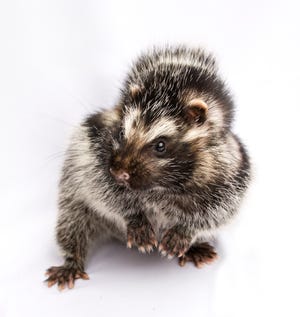
A study has shed new light on a mysterious and rare rodent, confirming a long-held suspicion that the tiny creature's fur is laced with poison.

The study of the African crested rat published Tuesday in the "Journal of Mammology" found the rodent chews a plant-based poison and licks it into specialized hairs in its fur, according to a release from the Smithsonian’s National Zoo & Conservation Biology Institute

"Its fur is packed with a poison so lethal it can fell an elephant, and just a few milligrams can kill a human," the release says.

There are no known instances of the rats injuring people but there have been reports of dogs becoming ill or dying after attempting to attack the rats, according to a statement from Sara Weinstein, the study's lead author, emailed to USA TODAY.

Petting one would be ill-advised for a number of reasons, Weinstein said. 

"Touching their fur would not kill you, although if it's fur on a live crested rat you'd probably get bitten by a very annoyed 2 lb. rodent," the statement said. 

If someone got that far, they would want to immediately wash their hands to prevent the poison from coming in contact with their mouth, eyes or any open cuts — that's where the poison could prove deadly, Weinstein said.

The African crested rat is found in eastern Africa and rarely seen by humans, the study says. For those who do encounter it, they'll see a "rabbit-sized rodent" that "resembles a gray puffball crossed with a skunk."

While experts previously believed the creatures were solitary, recorded observations and trapping suggest that the rodents are monogamous and may form family groups.

Observing the elusive rat was a challenge, researchers reported: “Out of 30 traps, we finally got two animals. That was a win. This rat is really rare," the release quotes study co-author Katrina Nyawira.

The source of the poison, as observed by researchers: the “African poison arrow tree,” — a plant often used to create arrow poisons.

The secret social lives of giant poisonous rats 

Date:November 19, 2020
Source:University of Utah

Summary:

The African crested rat is the only mammal known to sequester plant toxins for chemical defense. 

A new study confirmed that the rabbit-sized rodent licks poison from the bark of Acokanthera schimperi, known as the poison arrow tree, into specialized fur. 

The researchers also discovered an unexpected social life -- the rats appear to be monogamous and may even form small family units with their offspring.


The African crested rat (Lophiomys imhausi) is hardly the continent's most fearsome-looking creature -- the rabbit-sized rodent resembles a gray puffball crossed with a skunk -- yet its fur is packed with a poison so lethal it can fell an elephant and just a few milligrams can kill a human. In a Journal of Mammology paper published today, the University of Utah, Smithsonian Conservation Biology Institute, and National Museums of Kenya researchers found the African crested rat is the only mammal known to sequester plant toxins for chemical defense and uncovered an unexpected social life -- the rats appear to be monogamous and may even form small family units with their offspring.

"It's considered a 'black box' of a rodent," said Sara Weinstein, lead author and Smithsonian-Mpala postdoctoral fellow and postdoctoral researcher at the University of Utah. "We initially wanted to confirm the toxin sequestration behavior was real and along the way discovered something completely unknown about social behavior. Our findings have conservation implications for this mysterious and elusive rat."


People in East Africa have long suspected the rat to be poisonous. A 2011 paper proposed these large rodents sequester toxins from the poison arrow tree (Acokanthera schimperi). A source of traditional arrow poisons, Acokanthera contains cardenolides, compounds similar to those found in monarch butterflies, cane toads and some human heart medications. Cardenolides, particularly the ones in Acokanthera, are highly toxic to most animals.

"The initial 2011 study observed this behavior in only a single individual. A main goal of our study was to determine how common this exceptional behavior was," said co-author Denise Dearing from the University of Utah.

When threatened, the African crested rat lives up to its name and erects a crest of hair on its back to reveal a warning on its flanks -- black and white stripes running from neck-to-tail on each side of its body. The 2011 study hypothesized that the rats chew the Acokanthera bark and lick the plant toxins into specialized hairs at the center of these stripes.

In the new study, researchers trapped 25 African crested rats, the largest sample size of the species ever trapped. Using motion-activated cameras, they documented nearly 1,000 hours of rat behavior. For the first time, they recorded multiple rats sequestering Acokanthera toxins and discovered many traits that suggest the are social, and likely monogamous.

"Everyone thought it was a solitary animal. I've been researching this rat for more than ten years, so you would expect there to be fewer surprises," said Bernard Agwanda, curator of Mammals at the Museums of Kenya, co-author of this study and the 2011 paper. "This can carry over into conservation policy."


A rich social life

As a postdoctoral fellow at the Mpala Research Centre, Weinstein first searched for the rats with camera traps, but found that they rarely triggered the cameras. Weinstein was then joined by Katrina Nyawira, the paper's second author and now a graduate student at Oxford Brookes University. Together, they spent months experimenting with live traps to capture the elusive rodents.

"We talked to rangers and ranchers to ask whether they'd seen anything." said Nyawira. Eventually they figured out that loading the traps with smelly foods like fish, peanut butter and vanilla, did the trick. "Out of 30 traps, we finally got two animals. That was a win. This thing is really rare."

Those two animals changed the course of the study. They first caught an individual female, then caught a male at the same site two days later.

"We put these two rats together in the enclosure and they started purring and grooming each other. Which was a big surprise, since everyone we talked to thought that they were solitary," Weinstein said. "I realized that we had a chance to study their social interactions."

Weinstein and Nyawira transformed an abandoned cow shed into a research station, constructing stalls equipped with ladders and nest boxes to simulate their habitat in tree cavities. They placed cameras in strategic spots of each pen and then analyzed every second of their footage, tracking the total activity, movement and feeding behavior. The aim was to build a baseline of normal behavior before testing whether behavior changed after the rats chewed the toxin cardenolides from the poison arrow tree.

"They're herbivores, essentially rat-shaped little cows," Weinstein said. "They spend a lot of time eating, but they walk around, mate, groom, climb up the walls, sleep in the nest box."

The footage and behavioral observations strongly support a monogamous lifestyle. They share many of the traits common among monogamous animals: large size, a long life span and a slow reproductive rate. Additionally, the researchers trapped a few large juveniles in the same location as adult pairs, suggesting that offspring spend an extended period of time with their parents. In the pens, the paired rats spent more than half of their time touching each other, and frequently followed each other around. The researchers also recorded special squeaks, purrs and other communicative noises making up a wide vocal repertoire. Further behavioral studies and field observation would uncover more insights into their reproductive and family life.

After the researchers established a baseline of behavior, they offered rats branches from the poison arrow tree. Although rats did not sequester every time the plant was offered, 10 rats did at least once. They chewed it, mixed it with spit, and licked and chewed it into their specialized hairs. Exposure to the Acokanthera toxins did not alter rat behavior, and neither did eating milkweed, the same cardenolide-enriched plant used as chemical defense by monarch butterflies. Combined, these observations suggest that crested rats are uniquely resistant to these toxins.


"Most people think that it was a myth because of the potency of the tree," said Nyawira. "But we caught it on video! It was very crazy."

The rats were selective about using Acokanthera cardenolides, suggesting that rats may be picky about their toxin source, or that anointed toxins remain potent on the fur a long time, just like traditional arrow poisons from the same source.

African crested rat conservation

The African crested rat is listed as IUCN species of least concern, but there's little actual data on the animals. Agwanda has studied African crested rats for more than a decade -- and sees indications that they're in trouble.

"We don't have accurate numbers, but we have inferences. There was a time in Nairobi when cars would hit them and there was roadkill everywhere," said Agwanda, who continues to monitor the populations. "Now encountering them is difficult. Our trapping rate is low. Their population is declining."

The research team is planning future studies to better understand their physiology and behavior. "We are particularly interested in exploring the genetic mechanisms that allow the crested rats and their parasites to withstand the toxic cardenolides" said co-author Jesús Maldonado of the Smithsonian Conservation Biology Institute and Weinstein's Smithsonian-Mpala Postdoctoral fellowship co-advisor.

"We are looking at a broad range of questions influenced by habitat change. Humans have cleared forests to make farms and roads. We need to understand how that impacts their survival," Agwanda said. Additionally, Agwanda is building an exhibit at the Museums of Kenya to raise awareness about this unique poisonous animal.


Story Source:

Materials provided by University of Utah. Original written by Lisa Potter. Note: Content may be edited for style and length.


Journal Reference:
Sara B Weinstein, Katrina Nyawira Malanga, Bernard Agwanda, Jesús E Maldonado, M Denise Dearing. The secret social lives of African crested rats, Lophiomys imhausi. Journal of Mammalogy, 2020 DOI: 10.1093/jmammal/gyaa127


University of Utah. "The secret social lives of giant poisonous rats." 
 ScienceDaily, 19 November 2020. 


Large predatory fish thrive on WWII shipwrecks off North Carolina coast
High-tech analyses of a U-boat and Nicaraguan freighter offer detailed glimpse into unexpected 'islands of habitat'

Date:November 17, 2020

Source:Ecological Society of America

During a 2016 National Oceanic and Atmospheric Administration (NOAA) expedition to explore a pair of World War II shipwrecks that lie off the North Carolina coast, marine scientists ensconced within glass-domed submersibles navigated to the Atlantic Ocean seafloor in the hope of profiling the fish communities residing on the wrecks. Some of the findings of this joint ecological-archaeological undertaking were published this week in the Ecological Society of America's journal Ecosphere.

The two ships, a German U-boat and a Nicaraguan freighter, had not been seen by humans since they sank nearly 80 years ago during the Battle of the Atlantic. "These World War II shipwrecks are important historical monuments, but are also valuable habitat for fish," said Katrina Johnson, the paper's first author and a senior at Bates College in Lewiston, Maine.

Johnson, who grew up spending summers on a small Connecticut island only accessible by boat, jumped at the opportunity to join the research team analyzing the data gathered during the 2016 joint mission, even though she was not able to participate in the mission herself. The expedition team -- led by the paper's other coauthors -- had fitted the manned submersibles with advanced video and laser scanning equipment, which elicited high-definition three-dimensional imagery requiring extensive processing and analyzing. The project lent itself well to Johnson's long-standing interest in the underwater world, and she, like the rest of the team, was surprised by the extent of fish life thriving on the wrecks.

According to Avery Paxton, Ph.D., a co-author on the study and a research associate at the NOAA National Centers for Coastal Ocean Science (NCCOS) in Beaufort, N.C., the findings raise questions about how fish find these remote sites in the first place. "Since the shipwrecks are such small islands of habitat on the sandy seafloor, it was surprising to see so many large-bodied groupers, like snowy and Warsaw grouper, occupying the shipwrecks," Paxton said. "This phenomenon warrants further study to determine how common this may be in other deep habitats."

The researchers used lasers to acquire 3D snapshots of fish to a millimeter level of precision. For instance, the detailed photos allowed the team to measure the size of a grouper hovering beside the rivet of the U-boat's hull or to document the position of a wreckfish beside the barrel of the deck gun.

For fish community ecologists, these kinds of details are essential. They can explain why fish populations decide to call a shipwreck home rather than a rocky reef, for example, and whether the thousands of shipwrecks and other submerged human-made structures scattered on the ocean floor could serve as a significant source of fish habitat in the future.

"Seeing so many large predators on such a relatively small habitat begs the question of how and whether they are feeding on these sites," said Chris Taylor, Ph.D., a research ecologist at NCCOS and a co-author of the study. "We know some related species aggregate in very large numbers to spawn, and some species like Goliath grouper tend to aggregate on artificial habitats. But we don't think that's happening here."

The success of the joint archaeological-ecological mission has opened the door to additional collaborative ventures, which could potentially be carried out by unmanned underwater vehicles in the future.

Journal Reference:
Katrina H. Johnson, Avery B. Paxton, J. Christopher Taylor, Joseph Hoyt, John McCord, William Hoffman. Extracting ecological metrics from archeological surveys of shipwrecks using submersible video and laser‐line scanning. Ecosphere, 2020; 11 (11) DOI: 10.1002/ecs2.3210

Ecological Society of America. "Large predatory fish thrive on WWII shipwrecks off North Carolina coast: High-tech analyses of a U-boat and Nicaraguan freighter offer detailed glimpse into unexpected 'islands of habitat'." ScienceDaily. ScienceDaily, 17 November 2020. <www.sciencedaily.com/releases/2020/11/201117192550.htm>.
Plant evolves to stay hidden from harvesting humans


Summary:A plant used in traditional Chinese medicine has evolved to become less visible to humans, new research shows

Date:November 20, 2020
Source:University of Exeter

Scientists found that Fritillaria delavayi plants, which live on rocky slopes of China's Hengduan mountains, match their backgrounds most closely in areas where they are heavily harvested.

This suggests humans are "driving" evolution of this species into new colour forms because better-camouflaged plants have a higher chance of survival.

The study was carried out by the Kunming Institute of Botany (Chinese Academy of Sciences) and the University of Exeter.

"It's remarkable to see how humans can have such a direct and dramatic impact on the colouration of wild organisms, not just on their survival but on their evolution itself," said Professor Martin Stevens, of the Centre for Ecology and Conservation on Exeter's Penryn Campus in Cornwall.

"Many plants seem to use camouflage to hide from herbivores that may eat them -- but here we see camouflage evolving in response to human collectors.

"It's possible that humans have driven evolution of defensive strategies in other plant species, but surprisingly little research has examined this."

In the new study, the researchers measured how closely plants from different populations matched their mountain environment and how easy they were to collect, and spoke to local people to estimate how much harvesting took place in each location.

They found that the level of camouflage in the plants was correlated with harvesting levels.

In a computer experiment, more-camouflaged plants also took longer to be detected by people.

Fritillaria delavayi is a perennial herb that has leaves -- varying in colour from grey to brown to green -- at a young age, and produces a single flower per year after the fifth year.

The bulb of the fritillary species has been used in Chinese medicine for more than 2,000 years, and high prices in recent years have led to increased harvesting.

"Like other camouflaged plants we have studied, we thought the evolution of camouflage of this fritillary had been driven by herbivores, but we didn't find such animals," said Dr Yang Niu, of the Kunming Institute of Botany. "Then we realised humans could be the reason."

Professor Hang Sun, of the Kunming Institute of Botany, added: "Commercial harvesting is a much stronger selection pressure than many pressures in nature. "The current biodiversity status on the earth is shaped by both nature and by ourselves."

The research was funded by Chinese Academy of Sciences and National Natural Science Foundation of China.

Journal Reference:
Yang Niu, Martin Stevens, Hang Sun. Commercial Harvesting Has Driven the Evolution of Camouflage in an Alpine Plant. Current Biology, 2020; DOI: 10.1016/j.cub.2020.10.078

University of Exeter. "Plant evolves to stay hidden from harvesting humans." ScienceDaily. ScienceDaily, 20 November 2020. www.sciencedaily.com/releases/2020/11/201120113916.htm

JFK conspiracy theory is debunked in Mexico 57 years after Kennedy assassination

This man visited the Soviet embassy in Mexico City while Lee Harvey Oswald was in Mexico in 1963. U.S. officials think it may be Oswald.
(Image: © Corbis via Getty Images)

Most conspiracy theories surrounding President John F. Kennedy’s assassination have been disproven. Kennedy was not killed by a gas-powered device triggered by aliens or by actor Woody Harrelson’s dad.

But speculation about Kennedy’s Nov. 22, 1963 murder in Dallas continues, fueled by unreleased classified documents, bizarre ballistics and the claim of assassin Lee Harvey Oswald – who was later killed on live TV while in police custody – that he was “just a patsy.”

Several JFK assassination experts, like the former New York Times investigative reporter Phillip Shenon, see Mexico as the best place to find answers regarding a possible conspiracy and who was behind it.

Just over a month before Kennedy’s killing, Oswald took a bus from Texas to Mexico City. He arrived Friday morning, Sept. 27, 1963 and left very early on Wednesday, Oct. 2, according to American and Mexican intelligence.


Was Oswald a kind of rogue James Bond who went south of the border to consort with communists, Cuban revolutionaries and spies – or just a deranged killer?

I dug into that question while researching my book on conspiracy narratives in Mexico, and I think I found something everybody else missed: a hole in the story of the very man who started a tenacious conspiracy theory about Oswald’s Mexico trip.

Communist Mexico City

Mexico was a Cold War hot spot in the mid-20th century, a haven for Soviet exilesAmerican leftists fleeing the anti-communist persecution of McCarthyism and sympathizers with Cuba’s Castro regimeEvery communist and democratic country had an embassy in Mexico City – the only place in the Western Hemisphere where these enemies coexisted more or less openly.

According to witnesses from the Cuban and Soviet diplomatic missions, Oswald visited their embassies repeatedly on Friday and Saturday. He was desperately seeking visas to those countries, which Americans were then prohibited from visiting.

Told such documents would take months to process, Oswald got in a heated argument with the Cuban consul, Emilio Azcué. Oswald also forced a KGB volleyball match on Saturday morning to be canceled when he brandished a weapon at the Soviet consulate, before bursting into tears and leaving.

Those events are well documented by the CIA, which in the 1960s had ramped up its Mexico operations to monitor communist activity, even hiring 200 Mexican agents to help. The Mexican Secret Service, whose 1960s-era files Mexico has recently begun to declassify, also tracked Oswald on Sept. 27 and Sept. 28, 1963.

Oswald’s whereabouts for the next three-and-a-half days, however, remain unknown.

A conspiracy theory is born

A main conspiracy about Oswald’s undocumented time in Mexico City puts him in contact with dangerous Mexicans on the left side of the Cold War.

This story originated in March 1967, when the American consul in the Mexican coastal city of Tampico, Benjamin Ruyle, was buying drinks for local journalists.

One of them – Óscar Contreras Lartigue, a 28-year-old reporter for El Sol de Tampico – told Ruyle he’d met Oswald in 1963 when he was a law student at Mexico’s National Autonomous University.

Contreras said he’d been in a pro-Castro campus group and that Oswald had begged this group for help getting a Cuban visa. According to Contreras, Oswald spent two days with these National Autonomous University students, then met up with them again a few days later at the Cuban Embassy.

Evidently afraid for his life, Contreras wouldn’t tell Ruyle much more. He said he himself had traveled to Cuba, knew people in the Castro regime and had blown up the statue of a former Mexican president on campus in Mexico City. Contreras feared persecution for his political activities.

Contreras did say this wasn’t the first time he was sharing his story, though. After JFK was shot, Contreras told Ruyle, he’d commented to his editor that he’d recently met Oswald.

The Contreras question

Contreras’ account hinted at suspicious, previously unknown connections between Oswald and communist Cuba made shortly before JFK’s assassination.

His story was, according to a memo later sent from CIA headquarters, “the first solid investigative lead we have on Oswald’s activities in Mexico.” U.S. government officials needed to find out if Contreras was a trustworthy source.

Three months after Ruyle’s happy hour, a CIA official from Mexico City went to Tampico to question Contreras. During the six-hour interrogation, Contreras still refused to go into details, but he did say Oswald never mentioned assassination – only that he said repeatedly he “had to get to Cuba.”

In 1978, a researcher from the U.S. House Select Commission on Assassinations named Dan Hardway went to Mexico to investigate the JFK assassination. He was unable to interview Contreras despite several attempts, but in an influential report warned his account should not be dismissed.

The New York Times reporter Shenon, who interviewed Oscar Contreras for a 2013 book on the JFK assassination, also found Contreras credible. Shenon wrote that Contreras – whom he calls a “prominent journalist” – “went much further” in their interview than he had with the CIA, alleging “far more extensive contacts between Oswald and Cuban agents in Mexico.”

Dan Hardway, who is now a lawyer in West Virginia, still believes Contreras. After reading Shenon’s book, he reiterated in 2015 that Lee Harvey Oswald might have been part of a wider Cuban intelligence web.

Hole in the web

Óscar Contreras died in 2016, so I could not interview him myself.

But in my investigation, a minute detail of his biography grabbed my attention – an apparently overlooked contradiction that could undermine his entire story.

In Contreras’ telling, he fled the National Autonomous University campus and moved to Tampico around 1964. Yet Contreras also allegedly told his “editor” about his encounter with Oswald after the 1963 Kennedy assassination.

College newspapers aren’t common in Mexico, and Contreras was a law student. So how could he have had an editor in 1963?

I thought his hometown paper, El Sol de Tampico, might hold the answer. Digging through its archives, I found that the newspaper ran a Sunday gossip column in the early 1960s called “Crisol,” or “melting pot.”

Óscar Contreras became the reporter for “Crisol” on June 6, 1963, and continued writing the gossip column in September and October that year.

While Lee Harvey Oswald was in Mexico City, Contreras was 300 miles away in Tampico. In flamboyant prose, faded back issues of the local paper show, he chronicled the sumptuous wedding receptions, quinceañeras and yacht excursions of Tampico’s high society.

Three dark days

I believe the Sol de Tampico archives discredit Contereras’ account.

A political correspondent may live far from where his newspaper is published. But for a gossip columnist, that would be dereliction of duty.

This revelation plunges Oswald’s fall 1963 trip to Mexico back into the dark.

There are other conspiracy theories, including that Oswald had a Mexican mistress who took him to a party of communists and spies.

But it’s more likely Mexico holds no hidden clues to JFK’s assassination.

Conspiracy theories offer assurances of depth and closure, a promise that the biggest enigma of the 20th century is solvable. But from what we know about what Oswald did and didn’t do in Mexico City, he was a volatile, disorganized loner who couldn’t even handle travel logistics.

JFK’s assassination is a cold case. And in Mexico, only exhausted leads remain.

This article is republished from The Conversation under a Creative Commons license. Read the original article.

Follow all of the Expert Voices issues and debates — and become part of the discussion — on Facebook and Twitter. The views expressed are those of the author and do not necessarily reflect the views of the publisher. This version of the article was originally published on Live Science.

Solar power stations in space could be
 the answer to our energy needs

By Amanda Jane Hughes, Stefanie Soldini 

Artist's conceptions of a solar power satellite, dubbed
 the Integrated Symmetrical Concentrator SPS concept.
(Image: © NASA)


It sounds like science fiction: giant solar power stations floating in space that beam down enormous amounts of energy to Earth. And for a long time, the concept – first developed by the Russian scientist, Konstantin Tsiolkovsky, in the 1920s – was mainly an inspiration for writers.


A century later, however, scientists are making huge strides in turning the concept into reality. The European Space Agency has realised the potential of these efforts and is now looking to fund such projects, predicting that the first industrial resource we will get from space is “beamed power”.

Climate change is the greatest challenge of our time, so there’s a lot at stake. From rising global temperatures to shifting weather patterns, the impacts of climate change are already being felt around the globe. Overcoming this challenge will require radical changes to how we generate and consume energy.

Renewable energy technologies have developed drastically in recent years, with improved efficiency and lower cost. But one major barrier to their uptake is the fact that they don’t provide a constant supply of energy. Wind and solar farms only produce energy when the wind is blowing or the sun is shining – but we need electricity around the clock, every day. Ultimately, we need a way to store energy on a large scale before we can make the switch to renewable sources.

Benefits of space

A possible way around this would be to generate solar energy in space. There are many advantages to this. A space-based solar power station could orbit to face the Sun 24 hours a day. The Earth’s atmosphere also absorbs and reflects some of the Sun’s light, so solar cells above the atmosphere will receive more sunlight and produce more energy.


But one of the key challenges to overcome is how to assemble, launch and deploy such large structures. A single solar power station may have to be as much as 10 kilometres squared in area – equivalent to 1,400 football pitches. Using lightweight materials will also be critical, as the biggest expense will be the cost of launching the station into space on a rocket.

One proposed solution is to develop a swarm of thousands of smaller satellites that will come together and configure to form a single, large solar generator. In 2017, researchers at the California Institute of Technology outlined designs for a modular power station, consisting of thousands of ultralight solar cell tiles. They also demonstrated a prototype tile weighing just 280 grams per square metre, similar to the weight of card.

Recently, developments in manufacturing, such as 3D printing, are also being looked at for this application. At the University of Liverpool, we are exploring new manufacturing techniques for printing ultralight solar cells on to solar sails. A solar sail is a foldable, lightweight and highly reflective membrane capable of harnessing the effect of the Sun’s radiation pressure to propel a spacecraft forward without fuel. We are exploring how to embed solar cells on solar sail structures to create large, fuel-free solar power stations.

These methods would enable us to construct the power stations in space. Indeed, it could one day be possible to manufacture and deploy units in space from the International Space Station or the future lunar gateway station that will orbit the Moon. Such devices could in fact help provide power on the Moon.

The possibilities don’t end there. While we are currently reliant on materials from Earth to build power stations, scientists are also considering using resources from space for manufacturing, such as materials found on the Moon.

Another major challenge will be getting the power transmitted back to Earth. The plan is to convert electricity from the solar cells into energy waves and use electromagnetic fields to transfer them down to an antenna on the Earth’s surface. The antenna would then convert the waves back into electricity. Researchers led by the Japan Aerospace Exploration Agency have already developed designs and demonstrated an orbiter system which should be able to do this.

There is still a lot of work to be done in this field, but the aim is that solar power stations in space will become a reality in the coming decades. Researchers in China have designed a system called Omega, which they aim to have operational by 2050. This system should be capable of supplying 2GW of power into Earth’s grid at peak performance, which is a huge amount. To produce that much power with solar panels on Earth, you would need more than six million of them.

Smaller solar power satellites, like those designed to power lunar rovers, could be operational even sooner.

Across the globe, the scientific community is committing time and effort to the development of solar power stations in space. Our hope is that they could one day be a vital tool in our fight against climate change.

This article is republished from The Conversation under a Creative Commons license. Read the original article.

Follow all of the Expert Voices issues and debates — and become part of the discussion — on Facebook and Twitter. The views expressed are those of the author and do not necessarily reflect the views of the publisher. This version of the article was originally published on Live Science.