Monday, July 12, 2021


Researchers reveal robust ethane-trapping porous organic cage for efficient ethylene purification application
Researchers reveal robust ethane-trapping porous organic cage for efficient ethylene purification application
Credit: Prof. YUAN’s Group

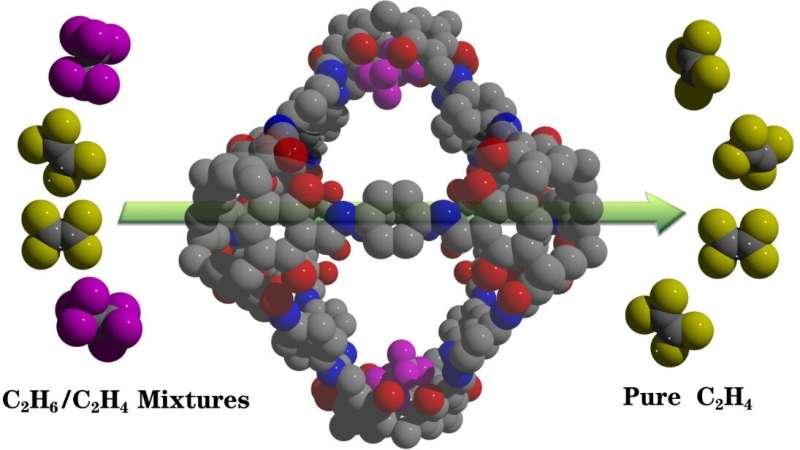
The removal of ethane (C2H6) from its analogous ethylene (C2H4) is of great importance in the petrochemical industry, and is highly challenging due to their similar physicochemical properties. The use of emerging porous organic cage (POC) materials for C2H6/C2H4 separation is still in its infancy.

Calix[4]resorcinarene, a kind of macrocyclic cavitand with an intrinsic cavity and eigh polar upper-rim phenolic groups, has been documented as excellent building block to construct cage compounds with tunable cavities for encapsulating various guest molecules.

In a study published in Nature Communications, the research group led by Prof. Yuan Daqiang from Fujian Institute of Research on the Structure of Matter of the Chinese Academy of Sciences reported that a [6+12] octahedral calix[4]resorcinarene-based POC (CPOC-301) is an excellent C2H6 -selective material, and can be used as a robust absorbent to directly afford high-purity C2H4 from C2H6/C2H4 mixture.

The researchers prepared CPOC-301 via self-assembly of tetraformylresorcin[4]arene and p-phenylenediamine under mild condition.

Single-crystal X-ray diffraction revealed that CPOC-301 has a truncated octahedron structure, with eight trigonal ports having edge length reaching about 12 Å, and a large cavity with inner diameter as well as volume that respectively reach 16.8 Å and 4270 Å3. The solid-state packing of CPOC-301 suggested that it possesses a one-dimensional channel, with a diameter of ~7 Å, viewed from [001] direction.

The nitrogen (N2) gas adsorption isotherm of CPOC-301 showed a typical type I curve with a small fraction of a type IV adsorption behavior. The maximum N2 adsorption is 670 cm3 g-1, and the calculated Brunauer–Emmett–Teller (BET) of CPOC-301 is up to 1962 m2 g-1. Moreover, CPOC-301 exhibited preferential adsorption of C2H6 over C2H4 at room temperature.

The ideal adsorbed solution theory (IAST) calculation result demonstrated that C2H6/C2H4 selectivity range for CPOC-301 is from 1.3 to 1.4 at 293 K. The breakthrough curves further proved that CPOC-301 can efficiently realize the complete separation of C2H4 from C2H6/C2H4 mixtures, and its separation performance does not obviously change within seven continuous cycles.

Molecular modeling studies suggested the exceptional C2H6 selectivity is due to the suitable resorcin[4]arene cavities in CPOC-301, which form more multiple C–H···π hydrogen bonds with C2H6 than with C2H4 guests.

This study sheds light on the design and synthesis of POCs based on supramolecular cavitands as "porous additives" in column and membrane separation applications for industrially important gases in the future.


Explore further

Proton solid oxide electrolytic cell facilitates non-oxidized dehydrogenation of ethane

More information: Kongzhao Su et al, Efficient ethylene purification by a robust ethane-trapping porous organic cage, Nature Communications (2021). DOI: 10.1038/s41467-021-24042-7
Journal information: Nature Communications 


The UK wastes millions of tonnes of food every year—here's how we can change that

The UK wastes millions of tonnes of food every year: here’s how we can change that
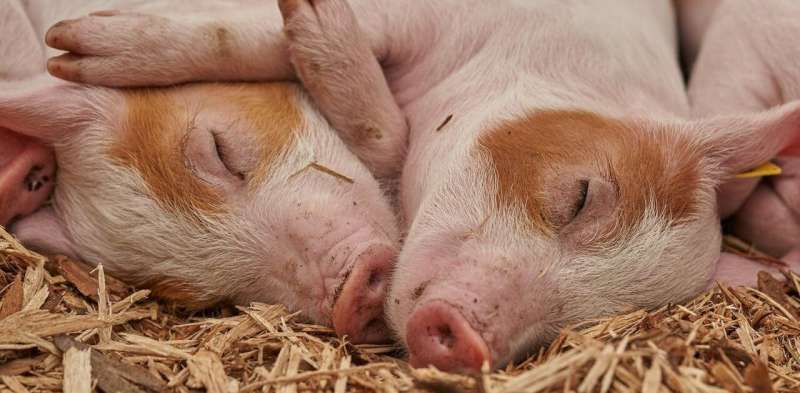
UK pig farms have some of the highest welfare standards in the world. Credit: RoyBuri/Pixabay

Food waste is a huge problem for the environment. Making and getting rid of excess food accounts for around 8-10% of greenhouse gas emissions. In fact, if global food waste were a country, it would rank third in the world for greenhouse gas emissions after China and the US. Globally, we throw away around a third of all food we produce.

Food waste starts on farms, which often produce more  than is needed in order to protect against the risk of bad weather, disease, and variable supermarket sales. Consumers tend to be fickle in their tastes, be it due to the weather or what's just been featured on popular TV cooking shows. Grocery stores strive to respond to these changing demands, passing last-minute orders to farmers who are expected to deliver as soon as possible. Unfortunately, this is only achieved by producing far more food than is necessary.

Supermarkets themselves are caught up in a vicious cycle of overstocking and then using discounts to clear their large inventory. Bombarded with promotions, consumers buy more than they need, frequently resulting in wasted food. We are conditioned to chase the cheapest promotions without realising how much cheap food really costs farmers and our environment.

In the case of pig farmers in the UK, this system is causing an industry-wide crisis. UK pig farms are governed by the highest regulatory standards in the world, to ensure the best health and welfare for the animals.

But if consumers keep demanding cheaper and cheaper meat, it could make UK pig production economically unsustainable, driving farmers out of business. If that happens, the UK would inevitably see an increase in imported pig meat which doesn't comply with national standards—actively promoting poorer farming practices. For example, when reared in environments with a greater number of pigs per pen than UK standards, animals have lower access to food and water and lack stimulation, causing a much lower quality of life.

Feeding pigs contributes at least 60% to the cost of raising them. If we could either reduce the price of pig feed or increase the price of pigs themselves—for example, by convincing consumers that eating lower amounts of higher quality meat would be better for pigs, people and the planet—we could begin to design a healthier, more sustainable food industry.

The UK wastes millions of tonnes of food every year: here’s how we can change that
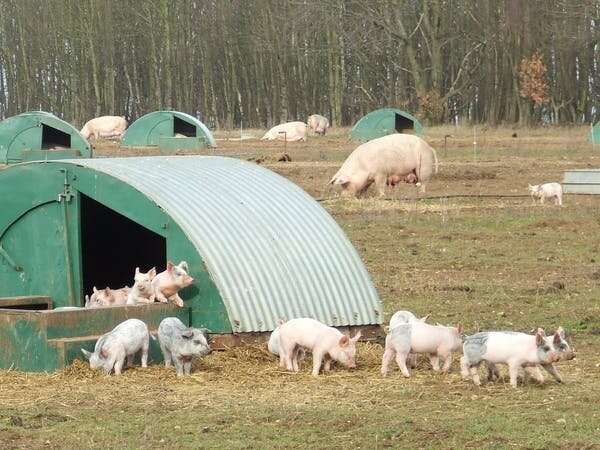
The UK has high standards when it comes to pig farming. Credit: Keith Evans/GeographCC BY

Solution #1: feed unavoidable food waste to pigs

Let's start with unavoidable food waste, like bones, skin and peelings. This makes up about 2.5 million tonnes of UK food waste. While this may be inedible to humans, it could be fed to omnivorous animals like pigs.

Experts agree that food waste containing animal protein could be safely used to create sustainable pig and chicken feed, relieving financial pressure on farms. Japan already produces "ecofeed", a high-quality fermented liquid animal feed made from waste, at half the cost of conventional feed—whose ingredients are often imported.

Converting leftovers to animal feed also has significant climate-related benefits . If we were to feed surplus food to pigs globally, we could save the equivalent of 31 million tonnes of soybeans and 20 million tonnes of grains, equivalent to 16 million hectares of land—that's prime farming land the size of England and Wales combined.

If UK pigs were fed solely on leftovers, farms could still produce around a quarter of current UK —and farmers could use savings to promote their welfare.

Solution #2: treat farmers as partners

Another option to fight food waste could be to change the -supermarket relationship, so that retailers treat farmers as long-term partners. By moving away from the current, imbalanced model, which shifts risk largely onto farmers, the two could work together to bear the cost of disease or changeable customer demand.

The UK wastes millions of tonnes of food every year: here’s how we can change that
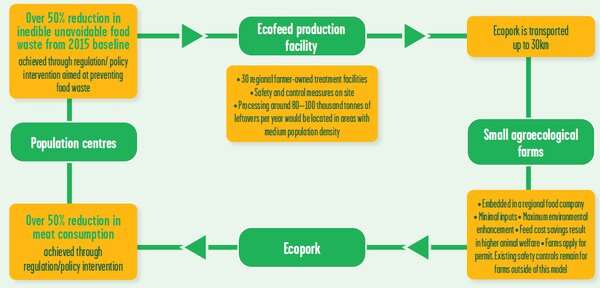
Feeding pigs solely on leftovers could still produce around a quarter of current UK pigs and farmers could use savings to promote welfare. Calculations for this diagram will soon be made available at feedbackglobal.org. Credit: Krysia Woroniecka/Feedback, Author provided

This  requires retailers and farmers to share their data in order to adopt better crop forecasting techniques. For example, thanks to a growing online food shopping trend, supermarkets now have the ability to analyse huge amounts of consumer data to predict shopping trends. Such intelligence could be shared with farmers to help them better plan planting cycles.

Rather than just providing cheap calories, supermarkets could expand their social role to include actively caring for the wellbeing of customers, communities, and farmers.

This approach also involves  promoting consumption of local, seasonal food. These days, many retailers sell wonky vegetables—similar efforts could turn surplus food at farms into fresh chilled food in stores, or deliver them to restaurants and food banks.

Research shows that preventing food  at its source in this way can save nine times more carbon emissions compared with sending it to be recycled.

Ultimately, the world needs fewer livestock fed on leftovers if we are to deliver nutritious food for all. And as for UK pig farmers? It seems that reducing  could literally save their bacon.


Explore further

Right to food strategy could eliminate food waste on farms

Provided by The Conversation 

This article is republished from The Conversation under a Creative Commons license. Read the original article.The Conversation


Social norms influence willingness to protect the climate

climate
Credit: CC0 Public Domain

People contribute only very little to climate protection, because they underestimate the willingness of others to contribute. This is the central result of a new study by the behavioral economists Peter Andre, Teodora Boneva, Felix Chopra and Armin Falk, members of the Cluster of Excellence ECONtribute at the Universities of Bonn and Cologne, published as an ECONtribute Discussion Paper.

The researchers show that information about  and behaviors increases the  to contribute to . The study also shows the extent to which economic preferences and moral values are decisive for individual attitudes toward  protection. The results are based on an extensive survey experiment in the U.S.

Proportion of climate protection supporters significantly underestimated

Around 8.000 representatively selected adults in the U.S. had the opportunity to win $450 in the experiment. In advance, they had to indicate how much of this amount they would be willing to donate to a climate protection organization in case they win. With the total sum, they could offset the annual CO2 emissions of an average American. Based on the amounts given, the scientists were able to measure the extent to which people were willing to support the fight against  at their own expense.

On average, respondents said they would donate half of the money they won to climate protection. The participants were also asked to estimate the proportion of their compatriots that actively engage in climate protection or consider the fight against climate change to be important, according to surveys. They significantly underestimated the actual proportion of those actively involved in climate protection (62 percent) and those in favor of climate protection (79 percent). If participants were informed about these figures before making their decision, their willingness to donate was five to six percent higher. The effect is particularly large among people who deny climate change or are at least doubtful about it.

Women donate more than men on average

On average, women donate $17 more to climate protection causes than men do.

Democrats contribute $45 more than Republicans do. The willingness to donate increases in household income, but actually declines for Republicans with higher educational attainment. The analysis of personality traits shows that patience and the intent to contribute to the welfare of others have a  on willingness to protect the climate. Participants whose  apply universally to all people are more willing to donate than those who feel more committed to their own group.

"Climate protection is a matter of cooperation. But people tend to be cooperative to a certain extent only: If you cooperate, I'll cooperate. That's why it's especially important to uncover and correct misconceptions about others' willingness to cooperate in the fight against climate change," explains Armin Falk, professor at ECONtribute at the University of Bonn and director of the briq Institute on Behavior & Inequality. In order to achieve  and acceptance for climate policy measures, he states that it is crucial that climate protection is perceived as a social norm.

Broad-based information campaigns could have a self-reinforcing effect here, according to the researchers.


Explore further

Climate change increases migration at the expense of the poor

More information: Fighting Climate Change: the Role of Norms, Preferences, and Moral Values, ECONtribute Discussion Paper No. 101, online:
www.econtribute.de/RePEc/ajk/a … tribute_101_2021.pdf
Provided by University of Bonn 


Deforestation in Brazil will be hard to stop, no matter who's in charge

Even if Bolsonaro leaves power, deforestation in Brazil will be hard to stop
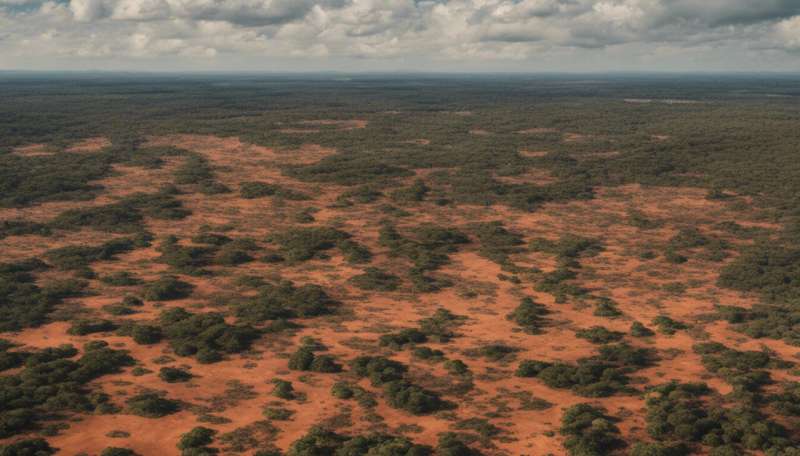
Credit: Tarcisio Schnaider / shutterstock

Deforestation in the Brazilian Amazon made global headlines in 2019, thanks to massive wildfires and the election of anti-environmentalist president Jair Bolsonaro. Brazilians took to the streets against it, and retailers and consumers threatened to boycott Brazilian products. But while the pandemic has dominated the headlines in 2020 and 2021, deforestation continues to rise.

With polls showing Bolsonaro could lose the 2022 election, would a change in government help? To understand why deforestation is increasing in Brazil we must look at changes in  since Bolsonaro came to office, but we must also delve into some structural issues that won't be resolved easily—even by a different president.

Ups and downs

In the late 1960s, the  made a strategic decision to occupy the Amazon region. It wanted to guarantee sovereignty over the territory, while reducing pressure for  in southern Brazil and integrating the country's remaining frontier region into modern capitalism. People were encouraged with fiscal incentives and new land property rules to replace the forest with pasture for livestock.

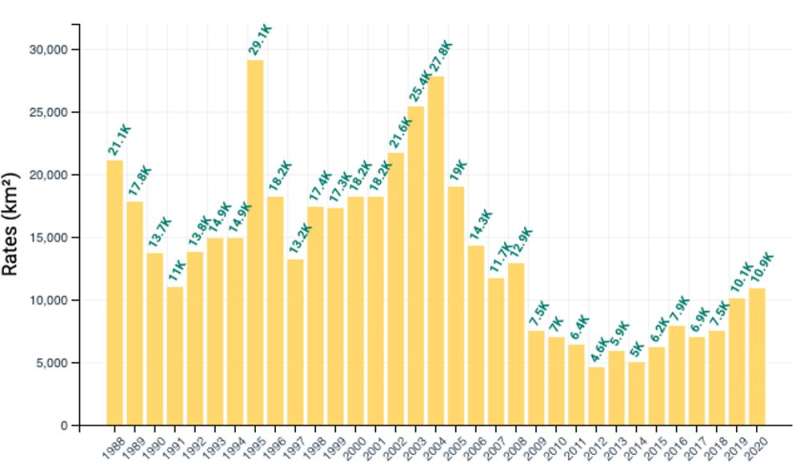
Deforestation increased faster around newly built roads and dams, as well in areas better connected to consumer markets. Between 1988 and 2004, an average of 20,000km² of forest was cut each year.

In the mid-2000s, a new federal administration, led in the ministry of the environment by ex-rubber tapper Marina Silva, took office, with a different agenda for the forest. It created new conservation areas and strengthened . Transnational initiatives such as the soy moratorium, the UN's Redd (reducing emissions from deforestation and forest degradation) program and the Amazon Fund added incentives to keep the forest standing. By the end of the 2000s, the amount of deforestation had substantially declined, reaching its lowest point of 4,571km² in 2012.

Even if Bolsonaro leaves power, deforestation in Brazil will be hard to stop
10,000km² – Amazon deforestation in 2020 – is about the size of Lebanon or Jamaica. Credit: TerraBrasilis / INPE, CC BY-SA

Numbers start to increase again by 2015, partly because a rising economic crisis and the Car Wash corruption scandal meant there were different domestic priorities. Bolsonaro was elected and he appointed people aligned to his anti-environment rhetoric to key positions in the ministries and governmental agencies.

They defunded deforestation monitoring, halted deforestation law enforcement and left offenders unpunished, arguing that it had created an "industry of fines". Bolsonaro and his appointees acted continuously to revoke environmental protection policies, including those for indigenous land.

In 2019, the amount of deforestation reached 10,000km² and remains high. The number of fires has also increased, and in 2021 is expected to be the highest since 2007.

Two views on development and the Amazon

Two different views on development underline the different positions on deforestation. The first says that the forest is an obstacle to development. Development in this view requires modern activities—including agriculture and mining—to replace the wild, allowing income for local populations and furthering the country's position in the global economy. The second view says that the forest has value in itself, both locally and globally. It is home to biodiversity and traditional living styles that cannot be replaced. In addition, it plays a role in regional climatic patterns and Earth systems regulation so should be preserved.

Even if Bolsonaro leaves power, deforestation in Brazil will be hard to stop
‘The Amazon can’t take it anymore’: sign at a protest in Rio de Janeiro, 2019. Credit: Andre Luiz Moreira / shutterstock

Most groups in Brazilian society defend a combination of both views. This is true even of a substantial part of the agribusiness sector, which is aware of consumer pressure and the long-term consequences of deforestation.

Yet  aligned with an extreme interpretation of the first view have always played a role in Brazilian politics. In 2018, these groups, represented by the likes of extreme-right party PSL, won more seats in the federal parliament. Combined with Bolsonaro's election, this meant their voice and agenda gained priority in policy-making.

Is replacing Bolsonaro the solution?

Replacing Bolsonaro would likely reduce the rate of deforestation in the short term. None of the other candidates expected to run in the 2022 election share his extreme views on science, the environment and the law, while Brazil's president does have considerable power to set political priorities and appoint key environmental roles. However to reduce  in the long run, at least three structural issues need to be tackled.

The first concerns enforcement of land tenure rules. In rural private properties in the Amazon, native vegetation should be kept in 80% of the land. The law requires all private rural properties in Brazil to be registered with georeferencing and to restore  if needed, but more than a third of farmland is yet to be registered in the system, part of it in the Amazon.

Even if Bolsonaro leaves power, deforestation in Brazil will be hard to stop
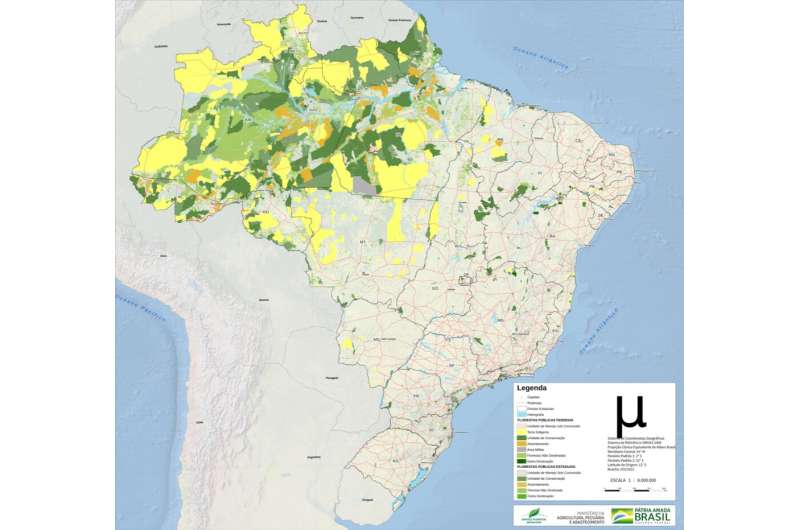
‘Florestas Não Destinadas’: areas in light green are still non-designated. Credit: Serviço Florestal BrasileiroCC BY-SA

Land grabbing also needs to be punished, not rewarded. A substantial amount of land in the Amazon is still non-designated, meaning its legal status as public or private land is not yet determined, and no law applies to it. Land grabbers invade these areas, deforest them and later claim it as their property—these claims are usually granted due to lax monitoring and laws.

Finally, traditional and indigenous populations need better protection, while Brazil must take a new development path that inserts the region in the contemporary economy without cutting the forest, like Amazonia 4.0. The latter will weaken support for old-fashioned ideas of forest versus development, reducing the appeal of Bolsonaro's anti-environmental rhetoric for many people.


Explore further

Worst June for Brazil Amazon forest fires since 2007: data

Provided by The Conversation 

This article is republished from The Conversation under a Creative Commons license. Read the original article.The Conversation


New June record for deforestation of Brazilian Amazon

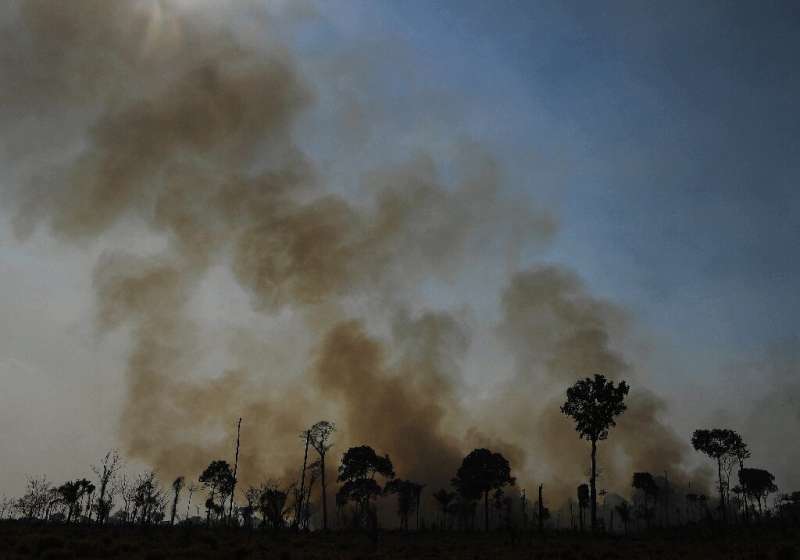
This file photo taken on August 16, 2020, shows a burnt area of Amazon rainforest reserve in Para, Brazil
This file photo taken on August 16, 2020, shows a burnt area of Amazon rainforest reserve in Para, Brazil.

Deforestation of the Brazilian Amazon reached a record in June for the fourth consecutive month, according to official data released Friday.

A total of 1,062 square kilometers of forest was destroyed—an area almost the size of the city of Rio de Janeiro.

This was up from 1,043 km2 in the same month last year, said the INPE research institute, which uses  to measure .

In total, 3,609 km2 of Amazon was lost in the first quarter of 2021, up 17 percent from the same period last year.

The figure was the highest for a month of June since the INPE started gathering data in 2015.

Since coming to power in 2019, far-right President Jair Bolsonaro has promoted the commercialization of the Amazon and described NGOs trying to protect the jungle as a "cancer."

However, he recently pledged to eliminate Brazil's illegal deforestation by 2030, some 10 years ahead of target, though environmentalists say he is insincere.

Last month, vice president Hamilton Mourao announced a  against Amazonian deforestation.

Two weeks ago, Brazilian Environment Minister Ricardo Salles resigned after the Supreme Court ordered an investigation into allegations he was involved in a timber trafficking scheme.

He was replaced by Joaquim Alvaro Pereira Leite, allied to one of the country's largest agricultural lobby groups.

The Brazilian Amazon also marked its worst June for  since 2007 this year, with some 2,308 fires detected—an increase of 2.3 percent from the same month last year.


Explore further

Worst June for Brazil Amazon forest fires since 2007: data

© 2021 AFP


Omitting delays from outbreak models grossly underestimates epidemic severity

farm
Credit: CC0 Public Domain

For livestock diseases, like foot-and-mouth disease (FMD) and swine flu, rapid culling and carcass disposal are well-established strategies for halting an outbreak and limiting its impact. However, even when infection is quickly detected delays in these interventions may permit pathogen transmission from infected farms.

A team of researchers has discovered that by neglecting to include response delays in their analyses, modelers grossly underestimate epidemic severity and its long-term consequences. The findings could also have implications for human diseases, including COVID-19.

"Livestock  outbreaks can have devastating consequences economically, socially and politically," said Matthew Ferrari, associate professor of biology. "For example, preventing FMD outbreaks incurs an  of $1.5 billion worldwide in FMD-free countries and an order of magnitude more in countries where the disease is endemic. This cost could be dramatically reduced if diseased herds are quickly detected and removed to prevent transmission to other animals."

Using the 2001 FMD outbreak in the United Kingdom as a case study, Ferrari, along with lead author Yun Tao, a former postdoctoral fellow at Penn State who is now an Intelligence Community Postdoctoral Research Fellow at the University of California Santa Barbara, and their colleagues, created a model to simulate how different response times would have affected the overall outbreak outcome.

"The United Kingdom government set ambitious targets for preventing the spread of FMD, yet there were still significant response lags that exacerbated the outbreak outcomes," said Ferrari.

The researchers used individual farm records collected by the United Kingdom Department for Environment, Food and Rural Affairs during the outbreak to explore the effects of three factors—farm size, control demand and farm density—on response delays. They defined farm size as the number of livestock on a farm to be culled, control demand as the number of farms scheduled for control and farm density as the number of infected farms within a geographical radius of 5 kilometers. Next, they simulated different delay times within a variety of contexts, including infected farms that were not yet culled and farms that were culled but with carcasses remaining.

"Our results demonstrated that farm size and control demand were key factors correlated with culling and disposal activities on individual farms," said Tao. "Specifically, veterinary response teams took longer to initiate responses on larger farms, which are major sources of potential spread. They also took longer when the outbreak was at its worst, likely because the system was overburdened."

For farm size, the team's model predicted that a  that was larger by 100 animals was culled 3.7% slower, and the carcasses disposed of 2.2% slower. The number of farms that were waiting in the queue to be culled also correlated with drops in both culling and disposal efficiencies. For every 10 farms in the queue, the daily culling rate was reduced by 13% and the daily disposal rate by 8.4%.

The findings published March 3 in the Journal of The Royal Society Interface.

"Our results suggest that models that assume fixed, timely responses grossly underestimate epidemic severity and its long-term consequences," said Tao. "Including response dynamics and recognition of partial controllability of interventions in our models can help inform management priorities during epidemics of ."

Ferrari added that the findings could have also implications for modeling human infectious diseases. "For a variety of reasons, we have seen healthcare and testing delays during the COVID-19 pandemic. Recognizing how operational delays may be exacerbated by the outbreak itself is a first step to developing robust strategies that could reduce the number of people who become sick in an ."


Explore further

Dutch report new coronavirus infection on mink farm

More information: Yun Tao et al, Causes of delayed outbreak responses and their impacts on epidemic spread, Journal of The Royal Society Interface (2021). DOI: 10.1098/rsif.2020.0933

When resistance is futile, new paper advises RAD range of conservation options

When resistance is futile, new paper advises RAD range of conservation options
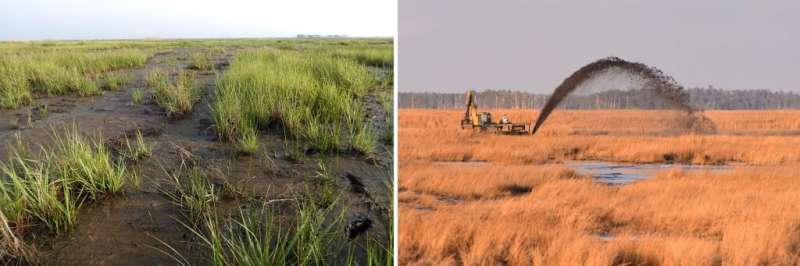
Passive revegetation (left) following thin-layer placement by a low-ground pressure excavator (right) at a tidal marsh at Blackwater National Wildlife Refuge, MD. This "direct" strategy confronts ecosystem transformation from sea-level rise. Credit: D Curson/Audubon Society (left) and Middleton Evans (right).

Major ecosystem changes like sea-level rise, desertification and lake warming are fueling uncertainty about the future. Many initiatives—such as those fighting to fully eradicate non-native species, or to combat wildfires—focus on actively resisting change to preserve a slice of the past.

However, resisting ecosystem transformation is not always a feasible approach. According to a new paper published today in the Ecological Society of America's journal Frontiers in Ecology and the Environment, accepting and directing ecosystem change are also viable responses, and should not necessarily be viewed as fallback options or as last resorts. The paper presents a set of guiding principles for applying a "RAD" strategy—a framework that involves either resisting, accepting or directing ecosystem changes.

"We are facing the harsh reality that in some locations, ecosystems are transforming at such a pace that we won't be able to restore or rehabilitate them to what they once were," said Abigail Lynch, the paper's lead author and a research fish biologist at the United States Geological Survey (USGS) National Climate Adaptation Science Center. "The RAD framework provides a common language for starting productive conversations about what comes next—when we need to consider options to accept and direct change in addition to just trying to resist it."

The paper was a collaborative effort by 20 federal, state and academic researchers from across the United States. It zeroes in on three National Wildlife Refuges (NWRs) along the East Coast, where  is increasing at three to four times the global average rate and transforming ecosystems and local communities. Managers of the three NWRs have applied all three of the responses outlined in the paper:

  • John H Chafee NWR (Rhode Island): managers are resisting the effects of sea-level rise by depositing dredged sediment on waterlogged salt marshes and securing the sediment with bags of recycled oyster shells.
  • Chincoteague NWR (Virginia): After years of resisting dune overwash, managers are now allowing storm-induced waves to fill in waterfowl impoundments, accepting the landward transport of sand and moving National Park Service visitor infrastructure.
  • Blackwater NWR (Maryland): Managers are directing the effects of sea-level rise by facilitating marsh migration upwards. Assisted marsh migration is ten times cheaper than trying to restore marsh in situ.

According to Erik Beever, a research ecologist at the USGS Northern Rocky Mountain Science Center, research affiliate faculty at Montana State University and a coauthor of the paper, the importance of considering costs and benefits is paramount when selecting a course of action within the RAD framework.

"A 'resist' approach may involve less cost in the immediate term or may allow the persistence of a culturally treasured species, but it may involve substantially higher costs over the course of a period as short as 10-15 years," said Beever. "For example, if that treasured species' bioclimatic niche no longer occurs within the management area, facilitating its persistence will require more intensive and more costly efforts."

Accepting ecosystem change can involve a fundamental shift in the way of life for communities that rely on an ecosystem's goods and services. However, solutions that focus on resisting change are becoming increasingly impractical as ecological changes occur more frequently and more dramatically. The paper contends that three broad feasibility criteria—ecological, societal, and financial—must be considered when deciding which RAD strategy is most suitable.

Natural resource managers are using options from within the RAD framework to tackle a variety of problems across many different systems, including:

  • Loss of corals in the Mexican state of Quintana Roo
  • Spruce bark beetle epidemic and wildfires on Alaska's Kenai peninsula, where white spruce forests are transforming into grasslands
  • Projected decline of cisco populations under warming conditions in Minnesota lakes

In the RAD framework, accepting change is not a passive approach; rather, it is a deliberate course of action geared toward a defined set of objectives. While the framework still needs to be tested and fine-tuned, the authors ultimately view it as a strategy of empowerment.

"It might be tempting to throw one's hands up in the air when faced with drastic and transformative environmental change, but there are options available," said Laura Thompson, a coauthor who is a research ecologist at the USGS National Climate Adaptation Science Center and adjunct faculty member at the University of Tennessee, Knoxville. "This RAD framework provides the full range of strategies."


Explore further

New research highlights decline of greater sage-grouse in the American West, provides roadmap to aid conservation

More information: Abigail J Lynch et al, Managing for RADical ecosystem change: applying the Resist‐Accept‐Direct (RAD) framework, Frontiers in Ecology and the Environment (2021). DOI: 10.1002/fee.2377