Tuesday, July 13, 2021

Rocky Mountain glaciers experienced about a month of melt during 10-day heat wave: expert

Adam Lachacz
CTVNewsEdmonton.ca Digital Journalist
Published Sunday, July 11, 2021


EDMONTON -- The recent heat wave amplified glacier melt in the Rocky Mountains along the Icefields Parkway, resulting in lasting consequences for Alberta and areas relying on glacial headwaters.

University of Alberta atmospheric sciences associate professor Jeff Kavanaugh examined the impacts the heat wave had on the Wapta Icefield, a headwater source for waters flowing past Calgary.

He looked at temperatures registered at weather stations along the Icefields Parkway, a 232-km stretch of highway winding along the Continental Divide that is home to 100 glaciers.

“What I saw was that it was incredibly warm,” Kavanaugh said, as he compared temperatures experienced in the area over the past 12 years.

Temperatures at that time of year were around 16 degrees Celsius at the elevation where the glacier is located. On June 29, the temperature was at 27 degrees Celsius.

Last year during the same time in June, there was one day where the ice field encountered temperatures around 26 degrees, however, it was for a matter of hours.

“We were about nine degrees, 10 degrees Celsius higher, on average, for the entire 10-day span (of the heat wave),” Kavanaugh said.

Sustained warm temperatures were even experienced during the night meaning glaciers saw little cooling respite.

“With this bump up, we didn’t see cooling,” he added. “A quite dramatic change.

“We’ve had an additional month of melt, equivalently, built into this brief heat dome time.”

Kavanaugh calculated that the glacial melt experienced during the heat wave was about three times the amount of the average melt between 2009 and 2020. According to him, the amount he calculated was confirmed by data collected at headwater discharge stations at Lake Louise.

GLACIAL LIFECYCLE AT RISK AS CLIMATE CONTINUES TO WARM

For Kavanaugh, an alarming trend has been the level at which the snow accumulation zones for glaciers are moving higher and higher in elevations per year.

“Glaciers grow where you receive more snowfall every year than what melts away,” he explained. “That is generally high up in the mountains.

“With that build up of snow, year-over-year, eventually, the snow gets thick enough to compact into ice. Then eventually that ice becomes thick enough to start to deform under its own weight. That is what we call a glacier.”

The natural lifecycle for a glacier, Kavanaugh says, is for it to grow during the winter, forcing its extremities to flow toward lower elevations where they slowly melt.

“A glacier is always a battle between accumulation, flow, and melt,” he acknowledged.

“Right now what we are seeing is the elevation at which snow persists year-in year-out is rising. So you have a smaller area gathering snow and a larger and larger area losing snow and ice mass.”

“The mass balance is changing,” Kavanaugh added.

That change over time was unsustainable, but as more events like the recent heat wave occur, the risk of losing glaciers increases significantly, Kavanaugh says, since there is more glacial ice exposed.

“Now that we’ve exposed more glacial ice, the rest of the summer will have an outsized impact on melt,” he said. “This year will get a lot of melt, which will be great for agriculture, our populations, and healthy for the fish.

“But this is unsustainable because we are losing the area in which ice is accumulating and we are increasing the area in which it is being lost.”

LOSS OF GLACIERS HAS ‘MASSIVE’ IMPACT ON WATER SUPPLY


Glaciers supply much of Alberta and western Canada with drinking water, especially at times of the year when other sources of water are at their lowest, Kavanaugh said.

“Glaciers pick up the slack right when we need it the most,” he said, as they provide water supply after the snow pack has melted away, rainfall is at its lowest, and evaporation from the landscape is at its maximum.

“We’ve come to rely on these summer supplies of water provided by the glaciers. And they’re not going to last much longer.”

With files from CTV News Edmonton’s David Ewasuk


UN sets out Paris-style plan to cut extinction rate by factor of 10

Ambitious draft goals to halt biodiversity loss revealed, with proposed changes to food production expected to ‘raise eyebrows’

The agreement, to be scrutinised at the Kunming summit, aims
 to address how to feed the world’s growing population while 
protecting the environment. 
Photograph: David Talukdar/REX/Shutterstock

The age of extinction is supported by


Patrick Greenfield
@pgreenfielduk
Mon 12 Jul 2021 

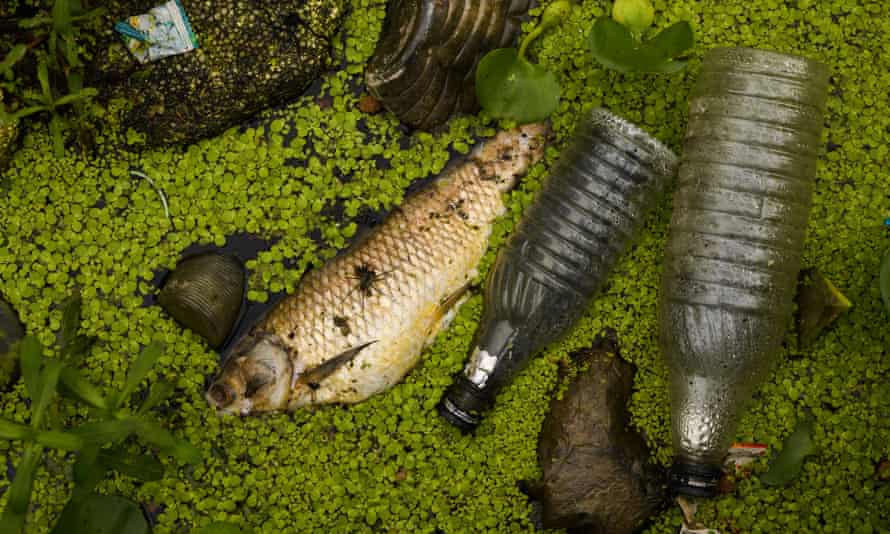
Eliminating plastic pollution, reducing pesticide use by two-thirds, halving the rate of invasive species introduction and eliminating $500bn (£360bn) of harmful environmental government subsidies a year are among the targets in a new draft of a Paris-style UN agreement on biodiversity loss.

The goals set out by the UN Convention on Biological Diversity (CBD)to help halt and reverse the ecological destruction of Earth by the end of the decade also include protecting at least 30% of the world’s oceans and land and providing a third of climate crisis mitigation through nature by 2030.

The latest draft of the agreement, which follows gruelling virtual scientific and financial negotiations in May and June, will be scrutinised by governments before a key summit in the Chinese city of Kunming, where the final text will be negotiated.

Alongside the 2030 draft targets, new goals for the middle of the century include reducing the current rate of extinctions by 90%, enhancing the integrity of all ecosystems, valuing nature’s contribution to humanity and providing the financial resources to achieve the vision.

The Guardian understands that the summit, scheduled for October, is expected to be delayed for a third time due to the coronavirus pandemic. It is now likely to take place in Kunming in the first half of 2022, pending in-person preparatory negotiations that could happen in Switzerland early next year.


UN’s Kunming biodiversity summit delayed a second time

Read more


Basile van Havre, co-chair of the CBD working group responsible for drafting the agreement, said the goals were based on the latest science. He added that, if adopted, it could represent a significant shift in global agriculture.

“Change is coming [in food production],” he said. “There will be a lot more of us in 10 years and they will need to be fed so it’s not about decreasing the level of activity. It’s about increasing the output and doing better for nature.

“Cutting nutrient runoff in half, reducing pesticide use by two-thirds and eliminating plastic discharge: those are big. I’m sure they’re going to raise some eyebrows as they present significant change, particularly in the agriculture.”

Last month, Van Havre warned the world was running out of time for an ambitious deal at Kunming, which is part of a multi-decade ambition to live in harmony with nature by 2050.

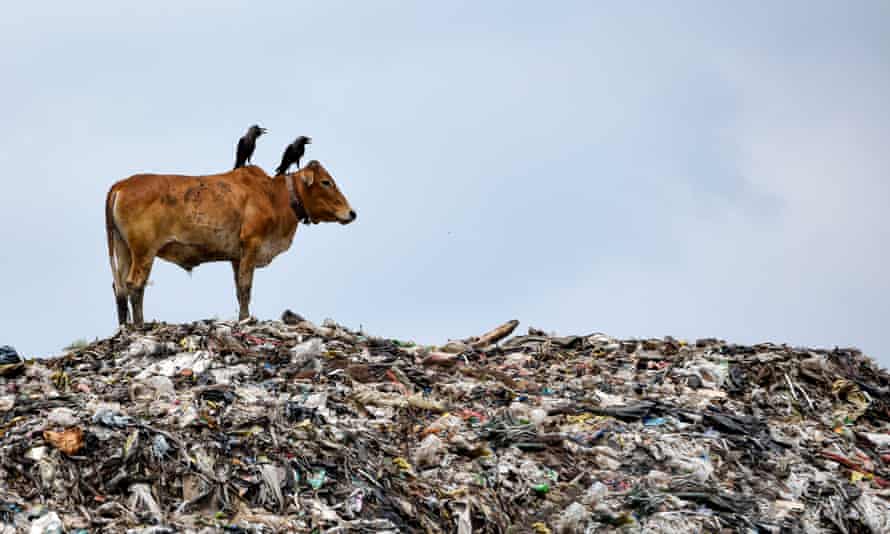
Scientists have warned that humanity is causing the sixth mass extinction in the planet’s history, driven by overconsumption of resources and overpopulation. One million species are at risk of extinction largely due to human activities, according to the UN’s assessment, threatening the healthy functioning of ecosystems that produce food and water.
The plan includes the goal of protecting 30% of the world’s oceans by 2030. 
Photograph: Soumyabrata Roy/NurPhoto/REX/Shutterstock

In the latest set of 21 targets to be negotiated at Kunming, nature-based solutions such as restoring peatlands and adopting regenerative agriculture will contribute at least 10 GtCO2e (gigatonnes of equivalent carbon dioxide) a year to global climate crisis mitigation efforts – around a third of the 32 GtCO2e annual emission reductions needed as identified in the UN Environment Programme emissions gap report 2020 – while ensuring there are no negative impacts on biodiversity.
Advertisement


“We wanted to put [the contribution of nature] into an absolute number. We don’t control what is happening on the climate change agenda but science is telling us this is what we can bring to the issues,” Van Havre said. “The challenge is going to be how we do the carbon accounting.”

Other targets include efforts to restore freshwater and marine habitats, maintain genetic diversity of wild and domesticated species, increase financial flows to developing countries, improve business disclosures on how their activities damage the environment and respect the rights of indigenous communities in biodiversity decision-making.

Prof Sir Robert Watson, who has previously led the UN’s scientific organisations for climate and biodiversity, and has held various senior roles within the UK government, Nasa, the World Bank and the US government, welcomed the draft targets but cautioned that some were unrealistic and difficult to measure. Governments have failed to fully meet targets to stem the destruction of nature for consecutive decades, including the aims for the 2010s, which are known as the Aichi targets.

“Overall, the paper recognises and addresses all of the key issues, as did the 20 Aichi targets. The question is whether governments can set appropriate national targets and regulatory and legislative frameworks to enable the other actors, especially the private sector and financial institutions, to play their part,” Watson said.

“I would have hoped that the paper would have explicitly acknowledged that the issues of biodiversity, climate change and land degradation must be addressed together and the goals, targets and actions of the three conventions should be jointly developed and harmonised.”

The targets and goals must now be negotiated at in-person talks, where they will be updated after feedback from national governments. Once agreed, the final accord will be adopted by the 196 parties to the CBD.

Elizabeth Maruma Mrema, executive secretary of the CBD, said: “Urgent policy action globally, regionally and nationally is required to transform economic, social and financial models so that the trends that have exacerbated biodiversity loss will stabilise by 2030 and allow for the recovery of natural ecosystems in the following 20 years, with net improvements by 2050.”

Find more age of extinction coverage here, and follow biodiversity reporters Phoebe Weston and Patrick Greenfield on Twitter for all the latest news and features


Natural landscapes key to Canadian cities, rural areas for building climate resilience, experts say

'We're being reminded that climate change is happening faster than we were even anticipating'

The Nature Trust of B.C. purchased 61 hectares of land in the South Okanagan known as the Park Rill Floodplain. Officials say preserving the land will help in the fight against climate change. (Supplied by the Nature Trust of B.C.)

In the South Okanagan area of B.C. lies an important area of grassland and wetlands known as the Park Rill Floodplain.

It's home to species at risk like the peregrine falcon and the western screech owl. And as of last week, the 61 hectares of land are now protected from development after being purchased by the Nature Trust of B.C.

The area is being added to the White Lake Basin Biodiversity Ranch conservation complex in the South Okanagan, said Jasper Lament, CEO of the Nature Trust of B.C.

"Grasslands are very important carbon sinks ... and the White Lake Basin Biodiversity Ranch is a key grassland landscape in the southern interior of British Columbia," he said.

Investing in natural infrastructure like the Park Rill Floodplain will be key to building climate resilience in Canada, according to a new report by the International Institute for Sustainable Development (IISD) released Monday.  

The report's authors said one-third of Canada's public infrastructure — from roads to buildings to wastewater facilities — is crumbling under the pressures of climate change and extreme weather conditions. 

More than 200 wildfires were burning in B.C. on Friday as a recent heat wave and parched conditions combined to raise the fire risk in many parts of the province to high or extreme. (Darryl Dyck/The Canadian Press)

But there is a glimmer of hope. The report's authors said that preserving and investing in natural infrastructure — a naturally occurring area managed by people — could be one solution to deal with changing weather patterns and increasing temperatures. 

"The Prairies alone this past decade have experienced some of the costliest extreme weather on record: flooding, drought, wildfires, and that's just the past 10 years," said Darren Swanson, lead author of the report and an associate with the IISD.

"That's really the catalyst for why this is important. It's important to design infrastructure with the future in mind, because designing infrastructure based on past climate just doesn't cut it anymore."

What needs to happen

Investing in natural infrastructure, like salt marshes or green roofs and trees in urban settings, and incorporating natural elements into man-made landscapes will help to build climate resilience, according to Swanson and the report's contributors. But investing in natural infrastructure can only be one piece of the puzzle, they say.

Swanson said more money, effort and thought need to be put into making infrastructure in the country more climate-resilient.

Using concrete in buildings that respond better to freeze-thaw cycles; beefing up stormwater and drainage systems; and dealing with changing rainfall patterns are other ways both the public and private sector could strengthen Canada's infrastructure, according to the report.  

Governments on the municipal, provincial and federal levels also need to be investing and planning for climate change, Swanson said.

"We're being reminded that climate change is happening faster than we were even anticipating," he said. 

"Even with the recent heat dome across western Canada and the northwestern United States, that was coming and happening quicker than what the climate models were projecting. The timeline is quite urgent because we are seeing the [changes] now." 

At least 200 people fled their homes on a moment's notice after a fast-moving wildfire tore through the community of Lytton in B.C.'s Fraser Valley almost two weeks ago. Conditions in the area were dangerously dry and windy after the record-breaking heat wave. (Edith Loring Kuhanga/Facebook)

The report notes the estimated infrastructure deficit to deal with climate resilience in the country ranges from $150 billion to $1 trillion. That number is $25-30 billion alone for First Nations, the report says, which notes northern Indigenous communities are at the greatest risk from drastic climate change.

But the responsibility to invest in making sure buildings, roads and information systems are climate-resilient shouldn't fall only to governments, Swanson said — the private sector also needs to keep this top of mind. 

"We're seeing that there needs to be more and diverse financing sources to really pave the way, so to speak, to seeing climate-resilient infrastructure become really mainstream," Swanson said. 

"Investments in billions of dollars, both built and natural, are really needed to close this infrastructure gap."

ABOUT THE AUTHOR

Stephanie Dubois is a journalist with CBC Edmonton. Share your stories with her at stephanie.dubois@cbc.ca


CFL legend Allen to join Raiders' coaching staff

Damon Allen will work with the NFL's Las Vegas Raiders' coaching staff as part of the Bill Walsh Diversity Coaching Fellowship program.

Volume 90%
 

Damon Allen will work with the NFL's Las Vegas Raiders' coaching staff as part of the Bill Walsh Diversity Coaching Fellowship program.

It's the same program former CFL quarterback Henry Burris participated in last year with the Chicago Bears. The Bears decided to keep Burris on their staff for the 2021 season.


Allen, 57, played 23 seasons in the CFL with Edmonton (1985-88, 1993-94), Ottawa (89-91), Hamilton (1992), Memphis (1995), B.C. (1996-2002) and Toronto (2003-07). He led teams to four Grey Cup titles and three times was named the championship game MVP.

When Allen retired in 2008, he was the leading passer in pro football history (72,381 yards). He has since been passed by Drew Brees (80,358), former CFL star Anthony Calvillo (79,816) and Tom Brady (79,204).

Allen's older brother, Marcus, spent 11 seasons as a running back with the Raiders (1982-92), when the team was based in Los Angeles. Marcus Allen ran for 191 yards and scored two touchdowns in claiming MVP honours in leading the franchise past Washington 38-9 in Super Bowl XVIII.

Marcus Allen was inducted into the Pro Football Hall of Fame in 2003. Damon Allen was enshrined in the Canadian Football Hall of Fames in 2012.

Damon Allen will embark on his coaching tenure with the Raiders July 23.

"I'm thankful to the Bill Walsh Diversity Coaching Program for giving coaches a chance to take part in this fellowship," Allen said in a statement. "I'm beyond excited that the Las Vegas Raiders selected me for this opportunity to learn, collaborate and communicate with some of the best minds in the NFL."

Damon Allen also ran for 11,920 yards during his CFL career, which ranks him third all-time. He entered Canada's Sports Hall of Fame in 2018.

The fellowship program offers minority coaches a chance to work with NFL coaches and staffs during training camp., It was established in 1987 and is named after Bill Walsh, a three-time Super Bowl-winning head coach who died in 2007, and allows participants the chance to use NFL training camps, off-season workout programs and minicamps to observe and gain experience to ultimately gain a full-time NFL coaching position.

This report by The Canadian Press was first published July 12, 2021.


Former CFL quarterback Allen to join Raiders’ coaching staff as part of Walsh program


 https://www.canoracourier.com/former-cfl-quarterback-allen-to-join-raiders-coaching-staff-as-part-of-walsh-program-1.24341179

Picture Courtesy of THE CANADIAN PRESS/Chris Young


Richard Branson's disappointing space jaunt


Opinion by Holly Thomas

Mon July 12, 2021


'Indescribably beautiful': Branson recounts historic space flight 04:03


(CNN)On Sunday, Richard Branson fulfilled his boyhood dream by launching himself 53 miles high to the edge of space. "To all you kids out there -- I was once a child with a dream, looking up to the stars. Now I'm an adult in a spaceship ... If we can do this, just imagine what you can do," Branson gushed at the top of the flight, while his three companions -- Virgin Galactic employees Beth Moses, Colin Bennett and Sirisha Bandla -- floated around him.

The journey was a landmark moment for the fledgling space tourism industry, and with Amazon founder Jeff Bezos in hot pursuit (Bezos' own self-funded trip to space is slated for July 20), and Elon Musk planning to launch an all-civilian crew into orbit later this year, the billionaire space race looks set to kick space tourism into gear in earnest in the near future. But the implications of these developments aren't quite as rosy as Branson's overly optimistic message implies -- and dreaming big billionaire-style might come at a hefty toll for the rest of us.

First, there's the environmental cost of space travel. Virgin Galactic claims that the carbon footprint for passengers of its suborbital space flight is comparable to that of a business class ticket on a transatlantic flight (which is about 0.2 kilograms per kilometer or 0.44 pounds per .62 miles -- amounting to a massive 2,220 kilo output per passenger over a typical 11,100-kilometer flight or 2.45 tons over a 6,897-mile flight).


But space flights are longer than transatlantic ones, and carry far fewer passengers. Per passenger, per kilometer, Branson's 11,260-kilometer (6,996-mile) journey to the edge of space cost 12 kilograms (26 pounds) of CO2. The company says that emissions will be offset -- but it's still an enormous price to pay for the sake of a few minutes in zero gravity.


Branson's advice to Bezos after historic space flight 00:51

Blue Origin -- Jeff Bezos' space company -- claims its ship's environmental impact will be comparably low thanks to its liquid hydrogen/liquid oxygen engines, which don't emit carbon. However the production of hydrogen fuels depends heavily on fossil fuels like natural gas, and the steam reformation process which creates them releases carbon dioxide.

Whether the environmental impact of such trips is offset or not -- let's hope they are -- this feels like a weird moment for the richest people in the world to direct their outrageous resources toward an endeavor with no immediate benefits to the overwhelming majority of society.

At the time of this writing, the Western US is experiencing another day of record-breaking temperatures, with over 24 million people under heat alerts and more than 100 deaths (which some Oregon officials are referring to as a mass casualty event). Across 12 states, 55 large fires burned 768,307 acres over the weekend, and Death Valley reported a low temperature of 107.7 degrees overnight -- the highest overnight low ever recorded in North America. According to scientists, the recent heat wave in the Pacific Northwest would have been "virtually impossible" without the effect of human-caused climate change. Mitigating further climate damage is the most urgent challenge currently facing the planet -- one which should interest the world's billionaires far more than that of stepping just over the well-trod threshold of space.

The often-cited financial incentive for getting in on the space tourism game -- which looks set to boom to the tune of about 5 billion dollars by 2025 -- sounds relevant until you consider the fact that the men hoping to cash in are already rich beyond most people's wildest dreams. Branson is worth nearly $8 billion, with his Virgin Group operating in 35 countries worldwide, owns more than 40 companies and employs a workforce more than 60,000 strong. Jeff Bezos and Elon Musk have been tripping over each other throughout the coronavirus pandemic, trading places as the world's richest person -- with Bezos currently valued at about $211 billion, an all-time world record. If these three men pooled their resources, they could tackle any number of pressing global problems -- and still be wealthier than almost anyone on Earth.

For all Branson's enthusing over imagination, his trip into space was effectively a much-diluted, far posher version of a feat already achieved more than 60 years ago by Yuri Gagarin's groundbreaking flight in Vostok 1. Gagarin, a Soviet carpenter's son who survived the Nazi occupation of Russia, actually accomplished something far greater, by orbiting for 108 minutes before returning to Earth. With reserved tickets for future Virgin Galactic flights priced between $200,000 and $250,000, the only barrier Branson has broken is that between the super-rich and their ability to spend a few minutes floating just within the sub-orbital zone which allows passengers to experience weightlessness.

Astronauts who have traveled far further than Richard Branson tend to describe a feeling of unity and coherence, and an overwhelming sense of the Earth's fragility, when they look back on the bright globe hanging in the blackness of space.
In his book "The Orbital Perspective," NASA astronaut Ron Garan said that he couldn't help thinking, as he gazed back upon this "paradise," of "the nearly one billion people who don't have clean water to drink, the countless number who go to bed hungry every night, the social injustice, conflicts, and poverty that remain pervasive across the planet."

If only Richard Branson had paid a little more attention to those who paved the way.


Holly Thomas is a writer and editor based in London. She tweets @HolstaT. The opinions expressed in this commentary are solely those of the author. View more opinion articles on CNN.

Space travel is open for business, but what about the environmental impact?


Cameron FrenchCTVNews.ca writer


Published Monday, July 12, 2021 


TORONTO -- Billionaire Sir Richard Branson rocketing to space on his Virgin Galactic winged rocket ship was another step in the beginnings of what some see as a significant new era of space exploration – space tourism.

But the promise of a future with regular launches carrying private citizens into orbit and beyond also comes with concerns about the environmental impact of all those rocket launches, including their potential carbon footprints and the impact of elements they will deposit in the upper atmosphere.

It’s an issue that hasn’t garnered much attention in the past, likely because the amount of emissions from factories, cars, jet airplanes and various other sources is currently much more significant than from space rockets. In 2020, for instance, there were 114 attempted orbital launches in the world, according to NASA. That compares to the airline industry’s more than 100,000 flights each day on average, according to flightradar24.com.

But the new version of the space race, one in which Branson’s Virgin Galactic is just one of several private players, opens the door to a massive expansion in the number of launches that researchers are struggling to wrap their heads around, says Eloise Marais, an associate professor of physical geography at University College London who is currently conducting research on pollutant emissions from rocket launches.

“It’s really hard to know how much the space sector is going to grow in the future,” she told CTVNews.ca in an interview.

While many might assume that the biggest environmental threat from increased space travel is from higher greenhouse gas emissions, Marais’ research is focused on an area some see as a more significant threat, which is the potential damage to the ozone layer, which helps shield the Earth from the sun’s harmful ultraviolet radiation.

Fears about damage to the ozone layer from chlorofluorocarbons in aerosol sprays and air conditioners prompted a phasing out of their use starting in the late 1980s. But Marais’ research, which is still in progress, shows the potential for damage to the layer from the enormous amounts of fuel rockets use to get them to the speeds necessary to reach space.

“A rocket is very high energy, very high temperature and so it emits things like nitrogen oxides which once released directly into the stratosphere can contribute to depleting ozone,” says Marais.

While launch systems such as the Russian Soyuz craft that currently ferries astronauts to and from the International Space Station, as well as Elon Musk’s SpaceX vehicle, use liquid rocket fuel, there are even more destructive effects from systems that use solid fuel, such as Virgin Galactic, says Marais.

“Solid rocket fuel is really the worst,” she said. “They produce a lot of chlorine, a lot of nitrogen oxides and those are quite efficient at depleting ozone.”

She isn’t the first researcher to point to the potential threat to the ozone layer from space flight.

“While there are a number of environmental impacts resulting from the launch of space vehicles, the depletion of stratospheric ozone is the most studied and most immediately concerning,” Jessica Dallas, currently a senior policy advisor at the New Zealand Space Agency, wrote in an analysis of research on space launch emissions published last year in the Journal of Cleaner Production.

In a separate report from 2019, authors Martin Ross and James Vedda of research firm The Aerospace Corporation, wrote that the current concerns about rocket emissions are similar to early concerns about space debris, which have since become an acknowledged threat to the space industry.

“Today, launch vehicle emissions present a distinctive echo of the space debris problem. Rocket engine exhaust emitted into the stratosphere during ascent to orbit adversely impacts the global atmosphere,” they wrote.

They point both to the threat to the ozone layer from chlorine emissions, and also to the potential threat of particles such as soot and alumina expelled from rockets into the upper atmosphere which can absorb and reflect solar energy, and change the temperature of both the upper atmosphere and the Earth’s surface. The possible heating of the upper atmosphere from this can also damage the ozone layer.

Marais said she hopes her research can help guide future space industry regulation that may become necessary as the space tourism industry expands.

“We essentially want to advocate against the use of solid rocket fuel. Because the space sector is inevitably going to grow, but we certainly want it to grow more responsibly,” she said.
What does Richard Branson’s historic space flight mean for the future of space travel?

Tom Yun
CTVNews.ca writer
Published Sunday, July 11, 2021


CTV National News: Richard Branson reaches space


TORONTO -- In the wake of British billionaire Richard Branson’s historic journey to the edge of space on Sunday, astronomers are heralding this achievement as a significant step forward when it comes to making space exploration more accessible.

The 71-year-old founder of Virgin Galactic isn’t the first civilian to visit space. However, he is the first to make that journey with a commercial spaceflight company. He made the successful journey on Sunday.

“Well, it's definitely a notable day for the business of space and space tourism. While we've had private individuals who've gone to space before, it's always been at very high costs,” said York University earth and space science Prof. John Edward Moores in an interview with CTV News Channel.

The first space tourist was U.S. millionaire Dennis Tito, who shelled out US$20 million in 2001 for a trip to the International Space Station. Virgin Galactic, on the other hand, is charging US$250,000 for the flight, with more than 600 would-be space tourists having already booked reservations.

“While still out of reach for the vast majority of people, this probably expands the number of private individuals who could consider a trip to space,” said Moores.

Yale University astronomy and physics Prof. Priyamvada Natarajan called Branson’s journey, “a real milestone for human exploration.”

“The instinct for exploring and to go beyond is so deeply human that this was nevertheless going to be the next frontier, and (Branson) must be really, really thrilled, I can imagine,” she told CTV News Channel.

Branson’s journey went off without a hitch and Moores says this also underscores the improvements that Virgin Galactic has made when it comes to safety.

“There's always a little bit of risk and Virgin Galactic has had accidents and setbacks in the past, just like NASA and other space agencies,” he said. “But with every flight… things get just a little bit safer as well and opens it up to a bigger group of people with not as much training as what we think of when we think of an astronaut classically.”

Branson isn’t the only billionaire interested in space. Amazon founder Jeff Bezos is also set to travel to space on July 20 with his own space company, Blue Origin.

Elon Musk’s SpaceX also has plans for a maiden commercial spaceflight in September, though Musk himself hasn’t said whether he plans on making any trips to space himself. SpaceX plans to take tourists on more than just brief, up-and-down trip. They will instead go into orbit around the Earth for days, with seats costing well into the millions.

Private space companies such as Virgin Galactic, SpaceX and Blue Origin have already been taking on a growing role in participating in space missions led by governmental space agencies such as NASA.

“Space travel tends to be all about collaboration,” said Moores. “These companies are not really launching the missions themselves. They're in a sense, contractors. So, if you have a mission you want to launch and you have the money, you can bring groups of these companies together to actually accomplish that.”

For these companies, space tourism is the next step. Even though it will still be financially out of reach for most, Moores says the advent of commercial spaceflight can make space accessible to the public in other ways, as more people experience the “excitement” and “thrill of discovery.”

“With advances like these, eventually you'll get more people who can share that excitement of actually having been there and can come back and tell their story to others,” Moores said.

With files from The Associated Press


Ottawa submits new greenhouse gas targets to UN, plans changes to carbon-pricing 'benchmark'

Environment minister says he wants to even out differences and exemptions in carbon pricing among provinces

People attend a climate change protest in Montreal on Saturday, September 26, 2020. (Graham Hughes/The Canadian Press)

The federal government officially submitted Canada's new greenhouse gas emissions target to the United Nations this morning, formally committing the country to reducing emissions by 40 to 45 per cent below 2005 levels by 2030.

Meanwhile, Environment Minister Jonathan Wilkinson has written to his provincial counterparts to say he plans to amend the federal carbon-pricing benchmark to eliminate some of the discrepancies and exemptions that have emerged as provinces implemented their own policies over the last few years.

"As we discussed, and as our respective officials have discussed over the past several months, Canada has committed to updating its approach to carbon pricing to make it more fair and rigorous," Wilkinson said in the letter sent to provincial ministers today.

In an interview, Wilkinson said the federal government is willing to work "collaboratively" with the provinces but he doesn't expect support for the changes to be unanimous.

Minister of Environment and Climate Change Jonathan Wilkinson speaks to media during the Liberal cabinet retreat at the Fairmont Hotel in Winnipeg on Jan. 19, 2020. (Mike Sudoma/Canadian Press)

Canada's submission to the UN — formally known as the Nationally Determined Contribution (NDC) — confirms a target that was first announced in April when Canadian officials participated in an international climate summit convened by the United States.

According to the NDC, that target would mean cutting Canada's total emissions to between 401 and 438 megatonnes by 2030. In 2018, the last year for which information is available, Canada accounted for 729 Mt of emissions.

The Liberal government says that when current and recently announced policies are taken into account, emissions are on track to fall to 468 Mt by 2030 — a decline of 36 per cent below 2005 levels.

Six months to come up with a plan

Under the terms of the recently enacted Net-Zero Emissions Accountability Act, Wilkinson has six months to present a plan to meet the new target.

In the meantime, Wilkinson is looking to make changes to the federal carbon-pricing benchmark, which sets out the minimum standards provinces must meet when they implement their own fuel charge for consumers or an industrial system for large emitters.

recent report from the Institute for Climate Choices, commissioned by the federal government, said that design choices and exemptions at the provincial level have led to differences in coverage and price across the country.

In the interests of making emissions reductions efficient and fair, the report's authors said, federal, provincial and territorial ministers should "should work towards developing a common standard of emissions coverage for carbon pricing" — and "point-of-sale rebates" on fuel should be eliminated.

Levelling the field

"If you look at the price on pollution, it accounts for about a third of the [total] reductions that we have identified, but it only does so if, in fact, systems are structured in such a way that they drive incremental reductions and that they are relatively similar across provinces and territories," Wilkinson told CBC News.

The new benchmark would come into effect for 2023.

In his letter, Wilkinson said provincial policies will have to cover the same proportion of emissions that would be covered by the federal backstop and that measures to prevent "carbon leakage" — businesses relocating production to countries with lower emissions standards — will be restricted to sectors that require it.

Governments will not be allowed to "weaken the price signal" with rebates or reductions in other gas taxes, Wilkinson wrote. In two provinces — New Brunswick and Prince Edward Island — carbon taxes on fuel were partially offset by corresponding cuts to the provincial gas tax.

New requirements would also be applied to the purchase of carbon offsets, Wilkinson said in his letter.