Tuesday, July 13, 2021

Biden’s clean energy plan would cut emissions and save 317,000 lives

A new report has found that a policy standard would be most effective to reach the goal of 80% renewable energy use by 2030
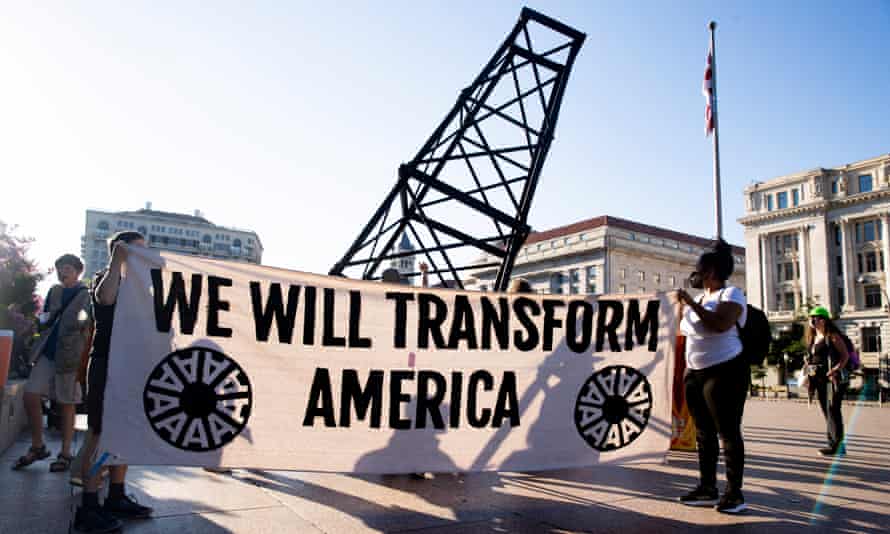

Climate activists march outside the White House to protest against fossil fuel use and to urge Joe Biden to prioritize clean energy climate policy.
 Photograph: Michael Reynolds/EPA

Oliver Milman
@olliemilman
Mon 12 Jul 2021 

A Biden administration plan to force the rapid uptake of renewable energy would swiftly cut planet-heating emissions and save hundreds of thousands of lives from deadly air pollution, a new report has found amid growing pressure on the White House to deliver a major blow against the climate crisis.

Of various climate policy options available to the new administration, a clean energy standard would provide the largest net benefits to the US, according to the report, in terms of costs as well as lives saved.

A clean energy standard would require utilities to ratchet up the amount of clean energy, such as solar and wind, they use, through a system of incentives and penalties. The Biden administration hoped to include the measure in its major infrastructure bill but it was dropped after compromise negotiations with Republicans.
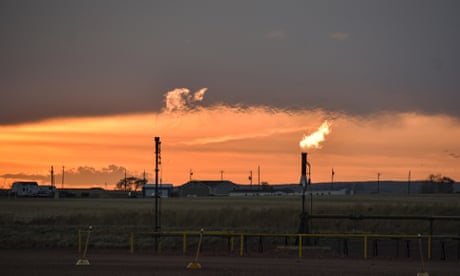

North Dakota sues over Biden’s halt in oil and gas leases on public lands


But the new report, conducted by a consortium of researchers from Harvard University, Georgia Institute of Technology and Syracuse University, suggests it would be the most effective tool in reaching a White House goal of 80% renewable energy use by 2030. Joe Biden has said he wants all electricity to be renewable by 2035.
Advertisement


A clean energy standard to reach the 80% goal by the end of the decade would save an estimated 317,500 lives in the US over the next 30 years, due to a sharp reduction in air pollution from the burning of coal, oil and gas. In 2030 alone, 9,200 premature deaths would be avoided once the emissions cut is achieved. The number of lives saved would be “immediate, widespread and substantial”, the report states.

A total of $1.13tn in health savings due to cleaner air would be achieved between now and 2050, with air quality improvements most acutely felt by black people who currently face disproportionate harm from living near highways and power plants.

Every state in the US would gain better air quality, the report found, although the greatest benefits would go to Ohio, Texas, Pennsylvania and Illinois, all states with substantial fossil fuel infrastructure.

The rapid switch to renewables would cost around $342bn until 2050, via capital and maintenance costs, although fuel costs would dwindle as renewables are cheaper to run than fossil fuels. The study added, however, that the financial benefits from addressing the climate crisis would dwarf this figure, at nearly $637bn.

“The cost are much lower than we expected and the deaths avoided are much higher; there really is a huge opportunity here to address climate change and air quality,” said Kathy Fallon Lambert, a study co-author and an air quality expert at the Harvard TH Chan School of Public Health.

“This would be a huge leap in ambition and we’d see that in the health impacts, there would be millions of fewer asthma attacks, for example. And this doesn’t even consider the health impacts from heat and other climate-related causes.”

Lambert said a clean energy standard would be “extremely effective” at slashing emissions, far more so than other proposals such as a carbon tax.

Biden is facing pressure from environmentalists, as well as major companies such as Apple and Google, to implement the new standard after it was dropped from the infrastructure bill. The president has said the measure will be included in a new reconciliation bill that can pass along party lines, although that will require every single Democratic senator to vote for it, which will prove a challenge.

The White House is determined this will happen however, with Gina McCarthy, Biden’s top climate adviser, saying the measure is a “non-negotiable” in the next infrastructure package.

“We need to make sure that we’re sending a signal that we want renewable energy and that it’s going to win,” McCarthy told Punchbowl News last week.
Goldfish dumped in lakes grow to monstrous size, threatening ecosystems

Minnesota pet owners warned not to release fish into wild, where they wreak havoc on native species


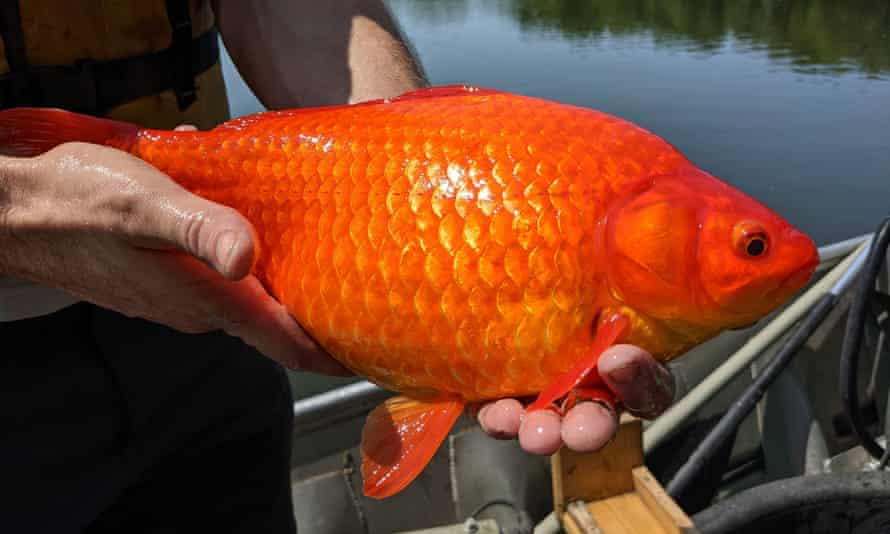
As many as 200m goldfish are bred for the pet trade every year; too many of them end up dumped in lakes where they grow to a monstrous size. Photograph: City of Burnsville

Edward Helmore
Mon 12 Jul 2021 

Authorities in Minnesota have appealed to aquarium owners to stop releasing pet fish into waterways, after several huge goldfish were pulled from a local lake.

Officials in Burnsville, about 15 miles south of Minneapolis, said released goldfish can grow to several times their normal size and wreak havoc on indigenous species.

“Please don’t release your pet goldfish into ponds and lakes!” the city tweeted on Friday. “They grow bigger than you think and contribute to poor water quality by mucking up the bottom sediments and uprooting plants.”

Last November, officials in nearby Carver county removed as many as 50,000 goldfish from local waters. The county water management manager, Paul Moline, said goldfish “are an understudied species” with “a high potential to negatively impact the water quality of lakes”.

Like carp, goldfish can easily reproduce and survive through low levels of oxygen during the Minnesota winter.

“A few goldfish might seem to some like a harmless addition to the local water body – but they’re not,” the Minnesota department of natural resources advised.

Ecological destruction wrought by released aquarium pets is not new. Carnivorous lionfish, native to the Indo-Pacific but believed to have been released by Florida pet owners after Hurricane Andrew in 1982, have killed off dozens of Caribbean species, allowing seaweed to overtake the reefs.

Goldfish have received less attention than other invasive species, including Asian carp and zebra mussels, but warnings have been issued in Virginia and Washington state as well as Australia and Canada.

In 2013, Scientific American reported that researchers trawling Lake Tahoe netted a goldfish that was nearly 1.5ft long and weighed 4.2lb. The author of a report on California’s aquarium trade said: “Globally, the aquarium trade has contributed a third of the world’s worst aquatic and invasive species.”

Wildlife officials in Virginia warned recently that “pet owners should never release their aquatic organisms into the wild” after an angler caught a 16in goldfish.

The costs of rehabilitating waterways infested with goldfish is substantial. Carver county in Minnesota signed an $88,000 contract with a consulting firm to study how to eradicate shoals.

The Washington Post reported that in 2018 Washington state officials said they would spend $150,000 rehabilitating a lake near Spokane. In Alberta, Canada, an invasive-species expert called a goldfish problem “scary”.

It is estimated that as many as 200 million goldfish are bred each year, most ending up on domestic display.
Cuban president claims protests part of US plot to ‘fracture’ Communist party

Cuban officials blame the US for Sunday’s demonstrations as Biden calls on island’s leaders to hear citizens’ ‘clarion call for freedom’


02:04Thousands join rare anti-government protests in Cuba – video


Tom Phillips and Ed Augustin in Havana
Mon 12 Jul 2021 

The Cuban president, Miguel Díaz-Canel, has attacked the “shameful delinquents” he claimed were trying to “fracture” his country’s communist revolution after the Caribbean island witnessed its largest anti-government protests in nearly three decades.

As Cuban officials blamed the US for Sunday’s demonstrations, Joe Biden called on the island’s leaders to hear its citizens’ “clarion call for freedom”.

“The Cuban people are bravely asserting fundamental and universal rights,” Biden said in a statement.

In a televised address on Monday morning Díaz-Canel, who recently succeeded Raúl Castro as the Communist party’s top figure, painted the protests as part of a United States-backed, social media-driven plot to stir up public discontent and overthrow the Cuban regime.

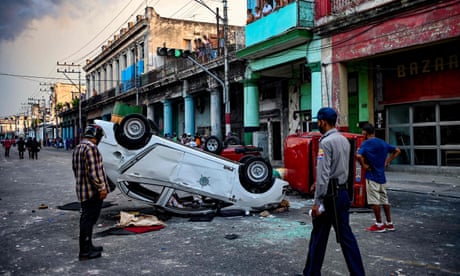
“The approach wasn’t peaceful yesterday,” the 61-year-old politician claimed, criticising the “completely vulgar” behaviour of some demonstrators who he accused of throwing rocks at police and destroying cars. Díaz-Canel conceded other protesters had legitimate concerns over food shortages and blackouts, although he blamed those problems on US sanctions. “It’s legitimate to feel dissatisfaction,” the party’s powerful first secretary said in the broadcast.


Thousands march in Cuba in rare mass protests amid economic crisis


Rogelio Polanco Fuentes, a top party official who runs its ideology department, denounced the protests as part of a well-funded US-sponsored effort to create “instability and chaos” in Cuba, which is currently experiencing its worst economic slump in decades as well as a worsening Covid crisis.

Polanco Fuentes compared Sunday’s protests to the failed US-backed uprising against Venezuela’s authoritarian leader, Nicolás Maduro, in 2019. “We are living through new chapters of the non-conventional war … in other places they have called these Colour Revolutions … or soft coups,” Polanco said.

Cuban dissidents rejected those claims about the protests which rippled across Cuba on Sunday, with thousands taking to the streets to denounce the lack of medicine and food and the lack of political freedoms.

By Sunday afternoon the demonstrations had reached one of Cuba’s most iconic locations: the seafront Malecón in the capital Havana where thousands of protesters were seen chanting “homeland and life” and “freedom”. The Malecón promenade was the setting of Cuba’s last significant street demonstrations, a sudden and short-lived explosion of dissent in 1994 known as the “Maleconazo Uprising”.

“What is happening is absolutely historical for us … I think this is a point of no return. Things will never be there same after this,” said Carolina Barrero, a 34-year-old Havana-based activist. “We are talking about thousands and thousands and thousands of people, all across the island. In every little town there was protest, [it was] completely spontaneous.

“They were shouting: ‘We don’t have fear any more!’ ‘We want freedom!’ and ‘Abajo la dictadura!’ (Down with the dictatorship!)’” added Barrero, an art historian who said she had recently been placed under house arrest after being detained reading a poem outside Cuba’s culture ministry.

Paul Hare, the former British ambassador in Havana, said Cuba’s leaders would be concerned by the highly unusual eruption of dissent, and particularly how it had been organized with the help of social media. Word of the protests spread rapidly on Sunday, as celebrities and influencers shared news of the marches using the hashtag #SOSCuba.

“What Cuba’s government has always dreaded is a coordinated movement, as opposed to sporadic protests … They see it as the possible genesis of an organized rival political movement,” Hare said.

“The hardliners will be saying: ‘Be careful – this could get out of hand’ … They will be worried [about the protests]. It is a sign that the Communist party is no longer able to vertically dictate what policy should be,” Hare added.

Cuban activists said they were unimpressed with Díaz-Canel’s initial response to their demands, and particularly his call on Sunday for “revolutionaries” to hit the streets to confront protesters’ provocations “with firmness and bravery”.

“What worries me the most is how they are trying to lay the ground for a wave of repression,” said Claudia Genlui Hidalgo, a 30-year-old dissident who saw several friends arrested on Sunday. “When he says ‘revolutionaries to the street’, he’s inciting violence.”

Barrero said she hoped the protests would lead to a peaceful transition away from one-party rule but was also troubled by the possibility of conflict and by Díaz-Canel’s description of the protests as “counter-revolutionary mercenaries”.

Hare predicted there would now be a political crackdown on those identified as protest ringleaders as Communist party security chiefs fought to prevent a repeat.

World leaders reacted to Cuba’s unexpected convulsion on Monday with Mexico’s president, Andrés Manuel López Obrador, saying he hoped a peaceful resolution could be reached “without the use of force, without confrontation and without violence”. “The Cubans must decide [the solution] because Cuba is a free, independent and sovereign nation – there must be no interventionism,” López Obrador added.

A spokesperson for Russia’s foreign ministry also cautioned against “outside interference” that sought to “encourage the destabilization” of the communist-run island.
‘It’s a hotbed’: Miami’s role in Haiti murder plot fits decades-long pattern

Exile communities, ready supply of military veterans, history of corrupt local politics and drugs money make city a nexus for mayhem


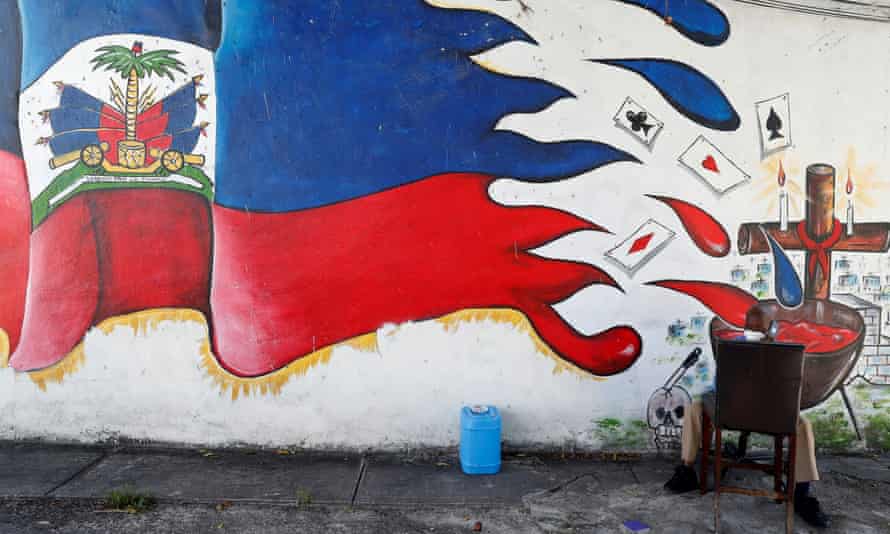
A man sits next to a mural in the Little Haiti neighborhood of Miami.
 Photograph: Shannon Stapleton/Reuters

Julian Borger
Tue 13 Jul 2021 

One of the less surprising developments in the unfolding mystery of the assassination of Haitian president Jovenel Moïse is the central role of Miami in the whole story.

For decades, Miami has been the launching pad and a byword for half-baked plots and coups – from the Bay of Pigs, the failed invasion of Cuba in 1961, to last year’s harebrained raid on Venezuela, and now, allegedly, last week’s murder of the Haitian president. Most of the supposed participants were killed or arrested in the 24 hours after the murder.

The main suspect, Christian Emmanuel Sanon, is a Haitian with strong ties to the Miami area, as does another Haitian-American detained by the Haiti authorities, and the security firm alleged to have recruited the Colombian mercenaries accused of involvement in the attack has an office in Doral, just by Miami International Airport and Donald Trump’s golf resort.

The security firm reportedly named by some of the plotters, calls itself the Counter Terrorist Unit Federal Academy (CTU) and is run by a Venezuelan exile. When Miami Herald reporters went to knock on the door of its modest offices, no one opened the door.


'His head wasn't in the world of reality': how the plot to invade Venezuela fell apart

It is all reminiscent of the ill-fated Operation Gideon, a brazen abortive raid on Venezuela in May last year, hatched in Miami by exiles and mercenaries run by a gung-ho former Green Beret, Jordan Goudreau. That plot left eight people dead and 100 arrested. As in Haiti, the raiders were paraded in front of the cameras by the government they were supposed to overthrow, to rub in the humiliation.

Miami has all the ingredients required for an nexus of mayhem: several exile communities, dreaming and scheming about a return to power in their home countries, a ready supply of military veterans with Latin American and Caribbean experience from US Southern Command, headquartered in Doral, and a long history of corrupt, ethnically-driven local politics to provide a permissive environment.

Narco-dollars from the cocaine trade have historically served as the connective tissue and lubricant between these three pillars.

In her book on Miami, author Joan Didion wrote that its exiles were under “a collective spell, an occult enchantment from that febrile complex of resentments and revenges and idealizations and taboos which renders exile so potent an organizing principle”.

The urban sprawl that runs up the coast from Miami to Fort Lauderdale to West Palm Beach is home to the diaspora of most Latin American states, but the three most significant and active communities today are Cuban, Venezuelan and Haitian.

The Cubans have traditionally been based in Little Havana, just west of downtown Miami. A few miles to the north is the densely packed neighbourhood of Little Haiti. The Miami Venezuelans are more dispersed but the biggest concentration is in Doral.

“It’s the exile headquarters of the world,” said Anne Louise Bardach, who reported extensively on the city for her book Cuba Confidential: Love and Vengeance in Miami and Havana. “It’s because Florida is a peninsula that is basically a dagger cutting into the Caribbean and aimed at Latin America.”

The exile communities, Bardach said, operate almost like autonomous countries, with their own internal governance, their political machines, their own radio stations and newspapers.

“It’s a hotbed: people aching for their homeland,” she said. “They are all governments-in-waiting, and they all think they are about to take power next week.”

Each of the exile communities inevitably has its own relationship with US intelligence and their aspirations have played a role in US foreign policy.


Haiti president’s assassination: what we know so far


Cuban exile militias trained in the Everglades ever since the 1959 revolution, coming under the control of Jorge Mas Canosa, an exile who became a major force in Florida politics and in Washington. The Cuban and Venezuelan diaspora vote played a major part in swinging Florida to Trump in 2016 and 2020.

The city’s Haitian community has historically had less clout, but it has been a major force in Haitian affairs, while helping drive the demand for the security companies that have sprouted up across South Florida.

“The longstanding precarious nature of Haiti’s security environment is such that Haitian elites have long relied upon private security firms to ensure their own personal security,” said Jenna Ben-Yehuda, a former Haiti analyst at the US state department, and now president of the Truman National Security Project.

“The presence of private security has been pervasive throughout Haiti for decades, probably exceeding the number of Haitian national police officers.”

There are plenty of firms run by former US special forces soldiers seeking a comfortable retirement, like Goudreau. The firm named by the Haitian police as recruiting the Colombians in the attack on Moïse, CTU, did not have quite the same pedigree. Its owner, Tony Intriago, boasted of police experience in Latin America, and special forces connections, according to a Miami Herald profile, but none of it was confirmed. The Haitian police have so far not presented evidence of CTU’s involvement, and Intriago has been unavailable for comment since the assassination.

The initial signs suggest that the Haiti operation was aimed at something far more ambitious than mere murder, up to and including regime change. The fact that it fell well short, and simply added to the misery and chaos of its target country, is in many ways, just another Miami hallmark.


History shows us that outsiders can never bring peace to Afghanistan


The US and British withdrawal has set off panic, but the truth is they were exacerbating the problem they were trying to solve

What Afghans really need help with is getting everyone else to leave them alone.’ 
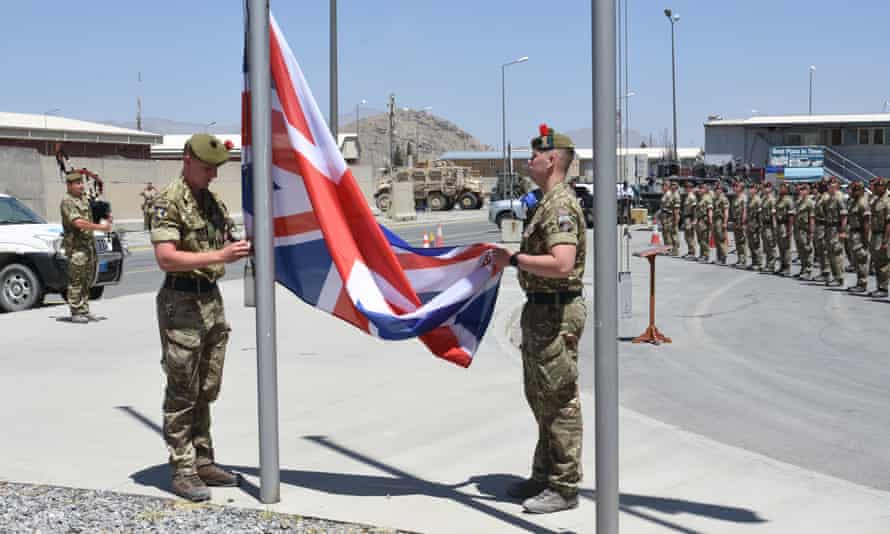
A British army flag-lowering ceremony. 

Photograph: Ministry of Defence/Getty Images

Mon 12 Jul 2021

Friends keep asking me to sign petitions urging President Biden to change his mind about withdrawing troops from Afghanistan. They all agree that the US can’t stay in the country for ever but this, they say, is not the time to leave: the Taliban are surging, and the social gains of the past 20 years are in jeopardy.

I’ve not signed any of those petitions. Yes, the Taliban have committed horrific offences, and they won’t stop. And they must be stopped. Just the other day I saw a video of villagers in northern Afghanistan burying a dozen civilians killed by a bomb: an old woman wept because her whole family had been wiped out. Oh, but wait – that bomb was dropped by the government, delivered by drone.

Both sides in this war kill civilians. I’d sign any petition that would stop the fighting and bring peace. What’s more, when this war ends, I hope the government now in Kabul emerges victorious. I hope Afghans resume their social and material progress on every front. But I can’t forget a pattern of Afghan history so blatant that I’m amazed it’s not central to this conversation.

The government in Kabul has never been able to secure authority in Afghanistan as a whole when it is held in place by an outside power’s military.

In 1839, the British replaced the Afghan monarch Dost Mohammed with his rival Shah Shuja, who had just as legitimate a claim to the throne as he. But the British had put him in power, so the country went up in flames and two years later the whole British community in Kabul had to flee on foot, most of them dying on the way out.

In 1878 the British tried again: this time, they ousted Afghan ruler Sher Ali and tried to rule the country through his son, Yaqub. Sure enough, the British cantonment was sacked, their representative was killed, the country went up in flames. The British had to give up and leave the country to a strongman, Abdul Rahman, who knew what he needed to do to secure his position with Afghans: he made a deal with the British and Russia to keep them both out of Afghanistan.

Jump ahead to 1978: the Soviets helped Afghan communists topple the last of the Afghan ruling family and elevated their own man, Nur Muhammad Taraki, to power. What happened? The country went up in flames. The Soviets sent in 100,000 troops to keep the communists in power, but that only turned the fire into a bonfire. The war raged for 10 years until at last the Soviets simply left – with the country eviscerated.

Then came the Americans. They dropped a fully formed government on to Kabul, picked Hamid Karzai to run the country, and clothed him in all the markers of legitimacy recognised in western democracies: constitution, parliament, elections. Under Karzai, girls went back to school, women’s rights improved, infrastructure was restored, progress was made.

Sure enough, however, as with all the previous great power attempts to manage Afghans through Afghan proxies, Kabul proved unable to secure countrywide legitimacy. Resistance brewed in the villages and spread to the cities.


Taliban sweep through Herat province as Afghan advance continues


In its war with forces based in the countryside, the Kabul government was hobbled by one huge disadvantage – the outside military forces that were helping it hold power. Because of that, it had no narrative to counter the one the Taliban wielded, which said: the government in Kabul isn’t Afghan, it’s a bunch of puppets and proxies for Americans and Europeans whose main agenda is to undermine Islam. Drones and bombs could not defeat that narrative but only feed it.

The US and Nato can’t stay in Afghanistan for ever, but is this the time to leave? The answer has to be yes if, as I am arguing, the US and Nato military presence in Afghanistan is causing the very problem it is supposed to be solving.

Many people assume the Taliban are the face of what Afghanistan would be without US help. But the American military presence might be obscuring the single most crucial fact: the Taliban don’t represent Afghan culture. They too are, in a sense, an alien force.

Before the Soviet invasion 40 years ago, it’s fair to say most Afghans were deeply devoted Muslims. The underlying issue among Afghans was not Islam or not-Islam but which version of Islam: Kabul’s urban, progressive version or the conservative version of the villages. Afghans involved in that debate were the ones who rose up against the Soviet invaders.

But the Taliban are not those Afghans. The Taliban originated in the refugee camps of Pakistan. Their worldview was moulded in religious schools funded by elements of Pakistan’s military intelligence agency. They were armed by Islamists from the Arab world, some of whom are in the country now, calling themselves Taliban. If the western military presence were removed, the Afghan energy that refuses to accept outsiders telling them who to be might recognise the Taliban as the alien force.

The great irony of the western project to bring democracy and social progress to Afghanistan is this: Afghans have a powerful progressive current of their own. It’s Islamic, not secular, but it is progressive. In the six decades after the country gained independence from the British and before it was invaded by the Soviets, Afghanistan was governed by Afghans. During that time, what did that Afghan government achieve? It liberated Afghan women from the previously obligatory burqa. It promulgated a constitution. It created a parliament with real legislative power. It set up elections. It built schools for girls nationwide. It pushed for coeducation. It opened women’s access to a college education at Kabul University and it opened public employment opportunities for them in professions such as medicine and law. It is staggering to look back at that era.

As the US and British withdrawal proceeds, the country is surrounded by outside forces hungering to get in: Pakistan, Iran, Russia, India, China. Before any of them succeed, there ought to be a global conference at which international actors can work out a way to keep one another out of Afghanistan. For what Afghans really need help with is getting everyone else to leave them alone.


Tamim Ansary is the author of Games Without Rules: The Often-Interrupted History of Afghanistan


An Australian soldier’s heroics under fire to save an Afghan interpreter put our ministers to shame

There is still a chance to save the hundreds of locally engaged staff who trusted us


‘If it appears that Australia has cut and run ... that is because it has. The global optics – and the reality for those left behind – are appalling.’ 
Photograph: Corporal Raymond Vance


Tue 13 Jul 2021

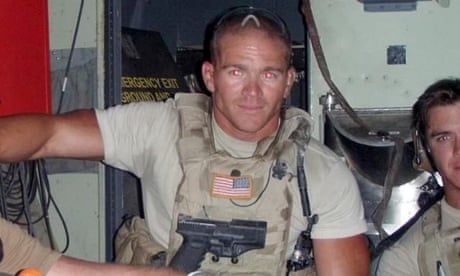
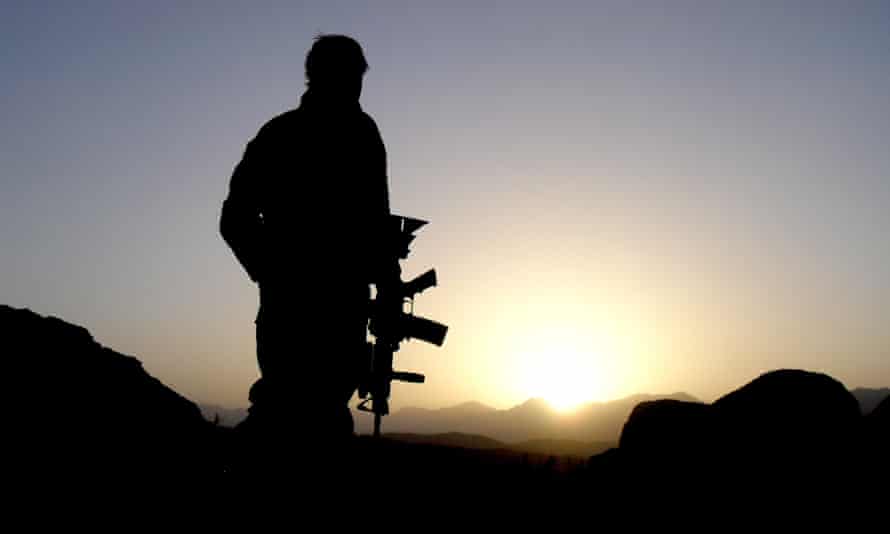
The Australian Special Air Service trooper Mark Donaldson was awarded the Victoria Cross for gallantry after his vehicle convoy came under enemy fire in Afghanistan’s battle of Khaz Oruzgan in September 2008.

The citation for Donaldson’s VC outlines how the enemy attacked his convoy with machine guns and rocket-propelled grenades, pinning it down and causing many casualties. Donaldson deliberately distracted the enemy, drawing fire on himself so that the wounded could be saved and brought to the vehicles.


‘A tragic and wasted opportunity’: Australia’s inglorious exit from Afghanistan

The convoy’s escape was slow and perilous. The vehicles were full of wounded; Donaldson and the uninjured had to run, exposed, beside them to escape fire.

“During the conduct of this vehicle manoeuvre to extract the convoy from the engagement area, a severely wounded coalition force interpreter was inadvertently left behind,” the citation reads. “Of his own volition and displaying complete disregard for his own safety ... Donaldson moved alone, on foot, across approximately 80 metres of exposed ground to recover the wounded interpreter.

“His movement, once identified by the enemy, drew intense and accurate machine gun fire from entrenched positions. Upon reaching the wounded coalition force interpreter ... Donaldson picked him up and carried him back to the relative safety of the vehicles then provided immediate first aid before returning to the fight.”

Donaldson moved quickly and decisively. It was, clearly, unthinkable for him to leave the wounded interpreter – to abandon him to a certain battlefield death.

Right now the federal government should take Donaldson as the exemplar when it comes to the treatment of locally engaged staff who worked with Australian military forces before they were ingloriously pulled out of Afghanistan in mid-June.

Instead, with the resurgent Taliban retaking Afghanistan and targeting those locally engaged staff, including interpreters, the federal government is dragging the chain – tying up the processing of the asylum claims of the locally engaged staff in unnecessary bureaucracy. While there is still a chance to save the hundreds of Afghans who trusted Australia and supported its military and aid enterprises, they should be immediately removed to another safe country for visa processing. The cost, danger and strategic difficulty of doing that in a country again falling to the Taliban should not be a consideration.

Ministers insist that security vetting for protection visas is happening as fast as possible in Afghanistan. Clearly it is not happening fast enough for those former interpreters and other staff facing death or who have already been killed for serving those the Taliban regard as the invading “infidel”. A major impediment in the visa processing is the permanent closure of the Australian embassy in Afghanistan in May – a move that also heavily compromises realistic chances of prosecuting Australian troops for alleged war crimes.

The last of the US forces will abandon Afghanistan in late August.

If it appears that Australia has cut and run, pre-emptively, diplomatically and militarily, before the American retreat ... that is because it has. The global optics – and the reality for those left behind – are appalling.

The former prime minister John Howard committed Australian troops to the invasion of Afghanistan in 2001 and, in so doing, to Australia’s longest war. He speaks of Australia’s “moral obligation” to the Afghan locally engaged staff. Notwithstanding the irony of being proselytised to about the morality of the tail-end of this century’s main Middle East wars by Howard (who diverted Australian military resources to the disastrous invasion of Iraq in 2003 on the most spurious of pretexts, allowing terrorist cells and the Taliban to re-emerge in Afghanistan) he has a point about the interpreters.

The world, meanwhile, is watching how the US and its allies, not least Australia, meet their moral obligations on the back of their Afghanistan retreat.

Australia already had poor form in this space, having abandoned many locally engaged staff when it pulled out of South Vietnam in 1972.

Australia’s refusal to protect Afghan interpreters from the Taliban is a catastrophic moral failure


“I’ve got Afghan guys who I worked closely with who I’m now writing references for,” says former police officer and war crimes investigator David Savage, who was severely injured and almost killed by a suicide bomber while working on an Australian aid project in Afghanistan in 2012.

“I’ve written directly to the [federal] ministers responsible and I literally just get stock standard replies, you know there is a process and if they fit our criteria they’ll be eligible for visas. If they wanted to bring them here with the urgency required to save them, they could. This is an avoidable tragedy.

“And it’s just strategically dumb in the long term as well. Who would risk their lives for Australia after this? Sure, nothing might happen for a while. But Australia is going to end up going into another country – whether it’s a peacekeeping mission, war or aid delivery. And which locals would put their hands up to say, ‘Yeah, we will trust the Australians’?”

As Labor’s Joel Fitzgibbon, defence minister when Donaldson risked his life to retrieve that wounded Afghan interpreter, says: “Donaldson’s VC citation should be reproduced on the mousepad of every Minister who sits on the National Security Committee.

“I’ve no doubt the issue is not a simple one and there will be those with questionable claims. I have first-hand experience. But only two key questions need be asked and answered: did this person assist, and are they now at risk as a result of the help they provided?”
Interview

Jackson Browne: ‘I think desire is the last domino to fall’


The singer-songwriter discusses his new album and how his age and the current political landscape has shifted his musical direction

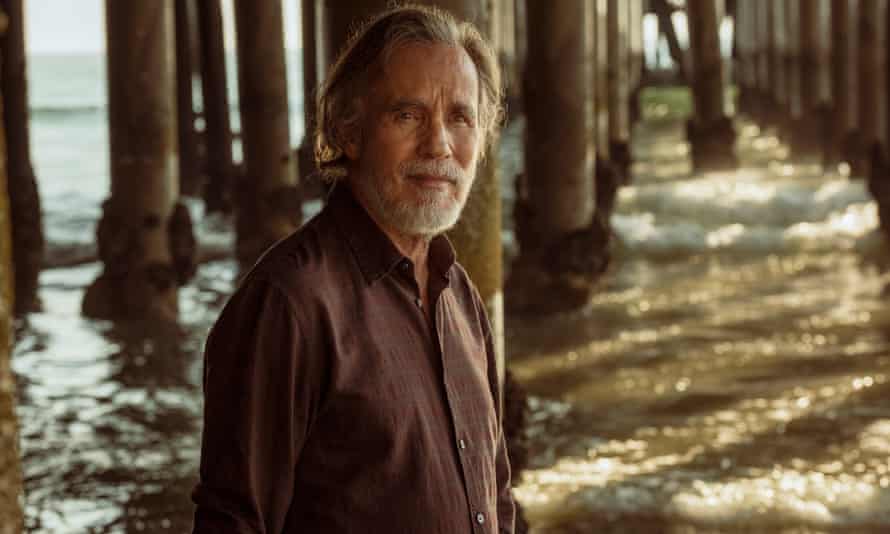
Jackson Browne: ‘What’s more personal than your political belief?’ 
Photograph: Nels Israelson

Jim Farber
Tue 13 Jul 2021 06.36 BST

In the nearly seven years leading up to Jackson Browne’s new album, Downhill from Everywhere, he entered a new decade of life (his 70s), became a grandfather and saw fresh waves of activists, from the MeToo movement to Black Lives Matter, replace the ones that had inspired him in the 60s and 70s. At the same time, many of his new songs center on a theme most people associate with the bloom of youth: desire. “I think desire is the last domino to fall,” Browne said in a phone interview from his LA home. “Desire is eternal, like hope. It’s just your capacity to act on it that changes,” he added with a dark laugh.

It’s that capacity that Browne ponders and challenges throughout the album, from its restless opening track, Still Looking for Something, to its finale, Song for Barcelona, which presents that Spanish city’s vibrancy as its own avenue for renewal. With characteristic eloquence and reach, Browne addresses desire in all its forms, whether that be for a romantic connection, a sense of purpose, a political goal or simply to experience something new.

Despite the scope of his yearning, Browne kept his perspective tight by framing everything from a well-seasoned point of view. “I’m old, you know,” said the 72-year-old songwriter. “It’s one of the undeniable facts of this life that it doesn’t last forever. So, I think my questions now have more to do with, ‘what can be accomplished in the time I have left?’ And, ‘what are we here for in the first place?’”

Such philosophical questions have served as both a spur and a muse for Browne ever since he first garnered attention as a teenage poet prodigy in the late 60s, when he wrote such improbably heavy songs as These Days. Not that he finds the gravity of such songs unlikely. “Kids have a very intense emotional life,” he said. “They just don’t get credit for it.”

He believes some of his flair for capturing grave emotions comes from listening to a lot of older blues and folk musicians from a young age. “When you sing an old song, you take on that feeling,” he said. “Also, my mother had this great collection of blues lyrics that treated them like an anthology of poems. That stuff hit me like a thunderbolt. ‘Man, this is the stuff!’ I thought. It’s a distillation of the human spirit.”

The political side of older folk songs inspired him to become his own kind of musical activist. In that spirit, the new album continues Browne’s common pattern of balancing politically minded pieces with personal ones. Still, he pushes back against the assumption that there’s a clear separation between the two. “What’s more personal than your political belief?” he said. “It’s highly personal.”

At the same time, he’s well aware that many people find songs with a political message preachy and pedantic. For him, such criticisms go with the territory. “You try not to preach,” he said. “But the problem is, if you’re too oblique, no one knows what the hell you’re talking about.”

He believes the resistance by some listeners to political music comes from a kind of guilt. “They can feel like they’re being lectured to simply because they don’t know much about the subject,” he said. “And they get the feeling they should know more.”

He has experienced such awkwardness first-hand while performing political songs he has written like Lives in the Balance. “I could tell people were getting restless,” he said, “so, I said to the audience, ‘I can see that I’m making some of you uncomfortable, but I feel like maybe that’s what I should do.’”
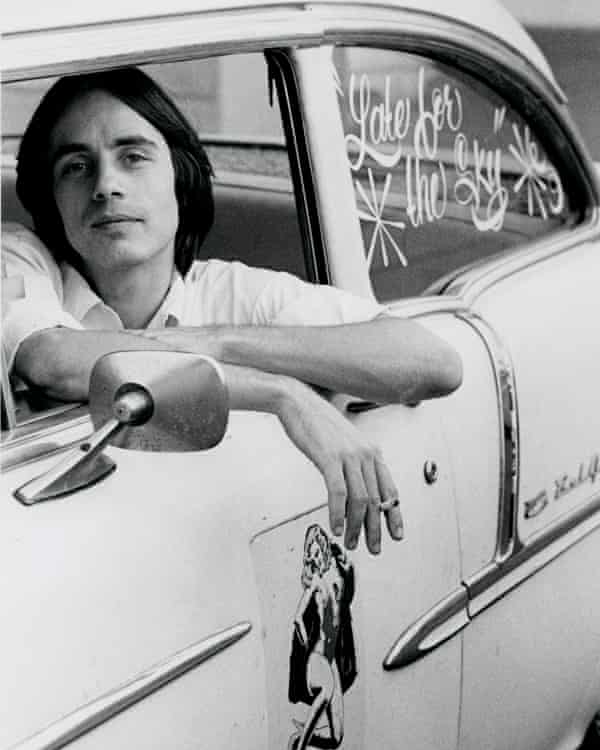
Photograph: Library of Congress

For the new album, Browne wrote a song called Until Justice is Real, whose title echoes the rallying cry of the activist group Color of Change. Their stated mission is “to create a more human and less hostile world for Black people in America”. Another song on the album, The Dreamer, deals with the vexing issues surrounding Mexican immigration to the US. Such messages arrive at an opportune time. In the last few years, young people have become more politically involved than at any time since Browne was young. “For a long time, it didn’t seem like youth engaged in anything like this,” the songwriter said. “Maybe it’s that now the problems are so severe, they can’t be ignored.”

While the return to activism may stir Browne, the rise of Donald Trump, and what that has revealed, has shaken his deepest assumptions about both politics and human nature. “Like a lot of people, I fundamentally believed that we were on a gradual ascent towards solving the problems that we have had all along, having to do with inclusion and opportunity and justice,” he said. “I thought that things were getting better. Evidently, I was wrong. We can’t pretend any more than we don’t have the same divisions in this country that we’ve had since the civil war.”
Advertisement


But if Browne’s world view has darkened, his own life seems to be on the upswing. He says he’s now more excited about making music than he has been in years, buoyed by his band, who contributed more to the songwriting process than usual for the new album. More, the lyrics to several new songs, including Human Touch and Minutes to Downtown, capture a man who, late in life, has found a new romantic involvement. In the latter song, he sings, “I didn’t think I would ever feel this way again/no, not with a story this long and close to the end.”

Along the way, the song’s narrator offers a key detail, referring to “the years I’ve seen that fell between my birth date and yours”, clearly speaking to a younger lover. When asked about the lines, Browne takes a long pause. “I hate to disclose stuff about the personal part of the song because songs are about the listener,” he said. But, “in this case, I’m telling the truth about my own situation.”
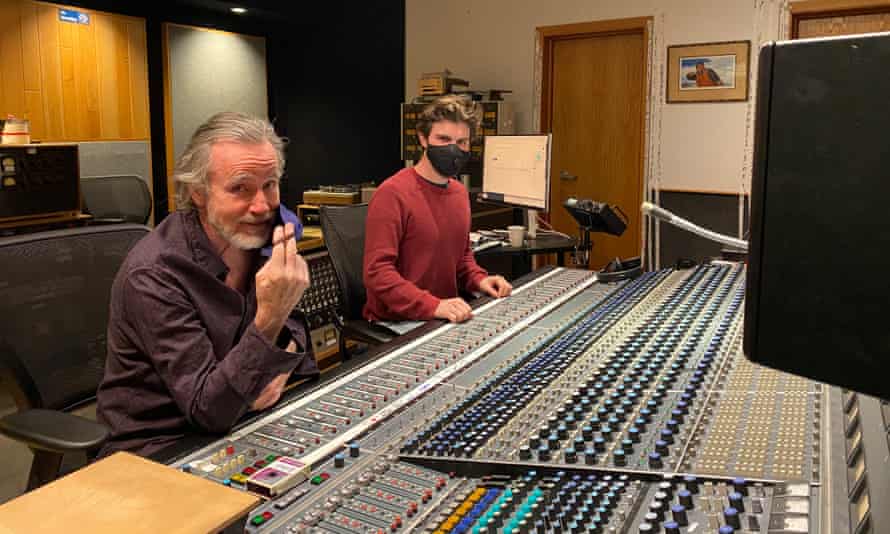
Jackson Browne and Kevin Smith at Groove Masters. Photograph: Photo by Lori Fletcher

He wouldn’t be more specific but he stressed that, to him, “the more telling part of the lyric is the line about ‘a river changing course’. I actually looked it up and that can happen. Rivers do change course, but it’s a long process. I think my life has changed course. I’ve taken on a commitment to personal growth. And it’s late,” he added.

Browne deals with such late-breaking quests in a humorous way in the album’s single, Cleveland Heart, which finds him travelling to the famous Cleveland Clinic to have an artificial heart transplant. In the song, he says of that miraculous device, “they’re made to take a bashing / and never lose their passion. They never break and they don’t ache,” he sings. “They just plug in and shine.”

“It’s the whole idea of eliminating human frailty,” he said. “Wouldn’t that be great? Automatic happiness!”

In the video for the song – which features songwriter Phoebe Bridges playing a nurse – Browne once again underscores his age by letting his hair go grey. “I’m as vain as the next person,” he said. “But what are you going to do? To me, when I see an old guy with a dye job it interferes with my enjoyment of the person’s work. If you’re talking about what’s really going on in a life, you can’t be wearing a disguise.”

Browne’s sustained quest to be frank led him to close the album with Song for Barcelona, which imagines a life for him beyond music, made possible by a city he has long loved. “The song is about coming to terms with mortality and life’s temporal changes,” he said. Barcelona “is a place I could imagine myself going to live at some point. I would be like one of those little old people you encounter on the street – another person in the crowd.”

Downhill from Everywhere is released on 23 July


How a tax haven is leading the race to privatise space

Luxembourg has shown how far a tiny country can go by serving the needs of global capitalism. Now it has set its sights on outer space


Illustration: Ben the Illustrator

The long read

FROM 2017


Safe space: the cosmic importance of planetary quarantine


As the pace and ambition of space exploration accelerates, preventing Earth-born organisms from hitching a ride has become more urgent than ever


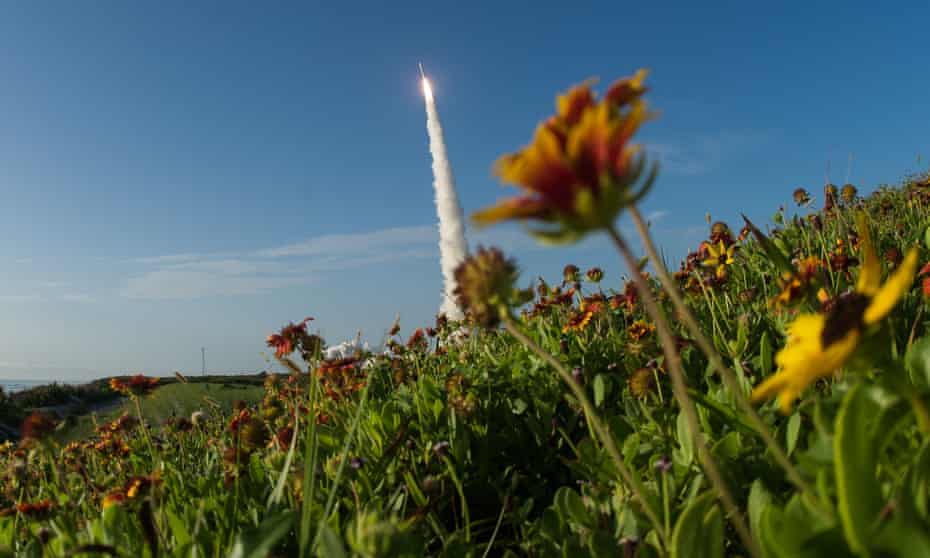
A rocket carrying Nasa’s Perseverance rover to Mars launches from Florida in July 2020. Photograph: Xinhua/Rex/Shutterstock

The long read


by Geoff Manaugh and Nicola Twilley

Tue 13 Jul 2021


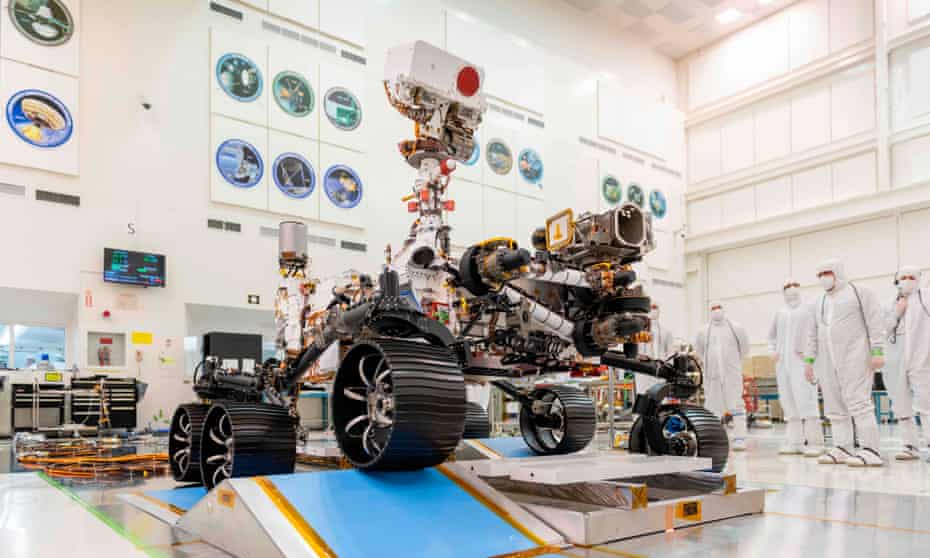
“This, what you’re doing today, never happens,” Nasa’s David Seidel told us. “This is a rare chance,” agreed the director of the Jet Propulsion Laboratory, Michael Watkins, welcoming us into the lab’s spacecraft assembly facility, located in the hills outside Pasadena, California. The exceedingly unusual adventure awaiting us was a trip into the clean room where Perseverance, Nasa’s latest Mars rover, having been assembled under conditions of exacting sterility, sat awaiting shipment to Cape Canaveral.

Our visit, in December 2019, had been prefaced by a long email laying out extremely detailed rules: we were instructed not to wear any perfume, cologne, makeup or dangly earrings; flannel, wool or frayed clothing was not allowed; even our fingernails had to be smooth, rather than jagged. After a quick welcome, our phones and notebooks were confiscated, and a hi-tech doormat vacuum-brushed the soles of our shoes. In the gowning room, we were issued with face wipes, a sterile full-body “bunny suit”, plastic overshoes, hood, gloves and face mask, then offered a mirror in which to admire the final look. Finally, we were sent through the air shower – an elevator-sized chamber studded with nozzles that blasted us with pressurised air from all sides, in order to dust off any final stray particles – before stepping out into a white-floored, white-walled room filled with white-suited engineers.


The rover itself – a white go-kart the size of an SUV – was cordoned off behind red stanchions. The obsessive attention to cleanliness required in order to enter the rover’s presence was, in part, to protect the machine’s sensitive optical equipment and electronics: volatile chemicals, loose fibres or even flakes of human skin could damage its delicate circuitry or settle on one of its 23 camera lenses. But the primary purpose was planetary quarantine: preventing the importation of Earth life to Mars. “I don’t know that we can say it’s the most sterile object that humans have ever created,” said one engineer. “But it’s extremely clean.”

It is a condition of space exploration that we cannot search for life on alien planets without bringing along very small amounts of very small Earth life. This process is known as forward contamination, and minimising it, if not preventing altogether, is the ultimate responsibility of Nasa’s planetary protection officer – “the second-best job title at Nasa,” according to Cassie Conley, who held it from 2006 until 2018. (The best job title, Conley told us, was director of the universe, but that position was sadly eliminated in an institutional reorganisation.)


The practice of planetary quarantine dates back to the 1950s, when it became clear that rocket technology was shortly going to put outer space within human reach for the first time. In an ideal universe, the robotic spacecraft that we send to explore the cosmos would be sterile. (Humans are, by definition, contaminants.) In reality, for technical and economic reasons, they are not. But the consequences of transferring biological material between celestial bodies are a fractal example of unknown unknowns: we don’t know what forms of Earth life might survive a space journey, which of them might then flourish in whatever extraterrestrial conditions await them, and whether life even exists elsewhere in the solar system, let alone how it might be harmed by Earth life – or vice versa.

Faced with such extreme uncertainty, but unwilling to stay at home, spacefarers, like so many before them, have turned to quarantine as the buffer that will allow them to explore space without endangering Earth or inadvertently polluting the cosmos. Quarantine as a practice – a period of time, traditionally 40 days, in which a suspicious person or object is watched for signs of disease until proven safe – was formalised and named during t e Black Death in the 14th century. Its rationale, and its implications, have become familiar to generations of humans during outbreaks over the subsequent centuries, most recently during the Covid-19 pandemic. On a daily basis, the complex calculus of quarantine is used to balance freedom of movement and risk in the global commodities trade – in cattle, for example, or citrus, or cacao plants. In a cosmic context, however, where the potential threat is almost entirely speculative but the stakes are existential, what role should quarantine play?

The person in charge of protecting “all the planets, all the time” – as international planetary protection policy puts it – works out of a small office inside Nasa’s headquarters, a squat, undistinguished building in Washington DC. Just a couple of blocks north, in between the US Botanic Garden and the Air and Space Museum, lies a fairly recent addition to the Mall: the National Museum of the American Indian. It was established in response to the revelation that the National Museum of Natural History held the skeletons of nearly 20,000 Native Americans in its collections. Those remains, collected by force as the spoils of colonisation, are a reminder of the much larger toll incurred when two long-separated biospheres came into contact: “The greatest destruction of lives in human history,” according to the geographer W George Lovell. The concept of planetary quarantine arose at least partially in response to the catastrophic impact of that initial encounter.
Advertisement


It is impossible to know how many people lived in the Americas in 1491, before European explorers made first contact, but historians estimate that nine out of every 10 people in the New World died in the century or so that followed – most from infectious diseases. Before the conquistadors had even set foot in the major cities of South and Central America, their microbes had travelled ahead of them, passed from body to body, causing mass deaths. Without any previous exposure to smallpox, measles, influenza, typhus or diphtheria, the indigenous people of the Americas had no immunity to these common Old World diseases – and no concept of quarantine, having never had much need for it.

In 1957, as the Soviets successfully launched Sputnik and the cold war militarisation of space began to ramp up, some scientists began to worry that the encounter between Earth organisms and any lifeforms that might exist elsewhere in the solar system might also result in mutually assured destruction. Even prior to Nasa’s founding in 1958, the Stanford microbiologist Joshua Lederberg had begun making the case for an international agreement to prevent the contamination of extraterrestrial environments with Earth life, and vice versa. “We are in a better position than Columbus was to have our cake and eat it, too,” he wrote, arguing that planetary quarantine was essential to the “orderly, careful, and well-reasoned extension of the cosmic frontier”.
Neil Armstrong, Buzz Aldrin and Michael Collins speaking to their wives through the window of a mobile quarantine facility in July 1969. Photograph: Nasa Nasa/Reuters

Lederberg seems to have been primarily motivated by concern for the scientific loss that would occur if Earth life wiped out alien life, rather than the ethical dimensions of such a tragedy. “The overgrowth of terrestrial bacteria on Mars would destroy an inestimably valuable opportunity of understanding our own living nature,” he argued.


Others felt humans had a moral responsibility to avoid causing harm elsewhere in the galaxy. CS Lewis, better known for chronicling the fantasy world of Narnia, also wrote a space-themed trilogy in which he despaired at the idea that a flawed and sinful humanity, “having now sufficiently corrupted the planet on which it arose”, would overcome “the vast astronomical distances which are God’s quarantine regulations” and “seed itself over a larger area”. In the science community, one of Lederberg’s allies, the young astronomer Carl Sagan, later wrote that if there was life on Mars, humans must leave the planet alone. “Mars then belongs to the Martians, even if they are microbes,” he declared.

Largely as a result of Lederberg and Sagan’s campaign, the International Council of Scientific Unions, a non-governmental organisation dedicated to international cooperation in the advancement of science, formed Cospar, the Committee on Space Research, which still sets the ground rules for extraterrestrial exploration.

Cassie Conley, the former planetary protection officer, who often wears her hair in a long braid, is personally more aligned with Lewis. “I don’t particularly like humans,” she told us, as we sat in her office, the light outside fading. “I think we screwed up this planet well enough that we don’t deserve another one – but that’s just my personal bias and I’m very careful not to bring it into my job.”

Conley got that job when some of the tiny worms she had sent into orbit aboard the space shuttle Columbia in 2003, in order to study muscle atrophy in microgravity, were found to have survived the shuttle’s disastrous explosion. Her experiment provided an inadvertent demonstration that multicellular life might be able to survive a meteorite impact – and thus potentially spread between planets on meteors – and it caught the eye of then planetary protection officer John Rummel.
Advertisement


Rummel invited Conley to Washington on a year’s placement, and then, as he gradually eased his way toward the exit, left her to inherit the role. As a scientist, Conley is deeply curious about what we might find elsewhere in the universe. “I’m very interested in understanding the evolution of life,” she told us. But she is more invested in ensuring that we don’t do something that precludes the possibility of answering those questions before we even have the ability to ask them. “The best way to prevent forward contamination is simple: don’t go there,” she said. “But we’ve already decided we want to go there, so it’s a case of: in the absence of information, don’t do something that might reduce your ability to get information in the future.”

Back in the 1960s, as the scientific community tried to decide what form planetary protection should take, Nasa engineers were faced with two irreconcilable demands: internally, management insisted that anything the agency sent into space must be utterly sterile, while, on national television, John F Kennedy promised that the US would put a man – and his trillions of accompanying bacteria – on the moon by the end of the decade. In the absence of any absolute certainties, Cospar dithered, eventually deciding that planetary quarantine would have to operate based on a complex algebra of acceptable risk, in which the probability that a viable microbe would be brought to a planet on a landing craft would be divided by a guesstimate of how likely it was to survive there, in order to arrive at a global contamination allowance that could be divided between each spacefaring nation.

To fill in the parameters in that formula, Nasa began looking at the bacterial kill rates of different sterilisation techniques used in the food-processing industry, as well as in the army’s bioweapon laboratories at Fort Detrick in Maryland. Using a particularly hardy spore-forming bacteria as their model for a series of tests, Nasa scientists fumigated, irradiated and baked spacecraft components before smashing them to see how many bugs survived, lurking in cracks and in the threads of screws and bolts. They determined that it was possible to clean a spacecraft sufficiently well that only one in every 10,000 landings would transport a viable microorganism.
Engineers in Nasa’s jet propulsion laboratory in Pasadena, California with the Perseverance rover in 2019. Photograph: Nasa/JPL-Caltech/AFP/Getty


The likelihood that Earth life could survive on a particular solar system body was even harder to pin down. Somewhat arbitrarily, Cospar recommended that, for planets of biological interest, the total acceptable risk be kept to no more than a one in 1,000 chance of seeding another planet with terrestrial life in the course of exploring it. In the end, “acceptable” simply meant a figure that was the best engineers could achieve without breaking the budgets of member states’ space agencies. The total risk – a 0.1% chance of contamination – was then divided up among the spacefaring nations, with the US, as one of just two spacefaring superpowers, receiving nearly half of the total allocation.

Once astronauts get involved, though, all bets are off. Cospar’s framework is intended to cover only the short window of time during which a planet remains uncontaminated (and thus alien) enough to be of “biological interest”. Originally, this period was set at an optimistic 20 years – in the heady days of the space race, scientists estimated that, for example, dozens of missions to Mars would take place during that time, allowing its indigenous biology to be thoroughly understood. It has since been extended.

By the mid-70s, as the Apollo programme drew to a close and as Viking 1 and Viking 2, the first Martian landers, sent back data that painted a picture of a much harsher, drier environment than many scientists had hoped for, it began to seem as if the rest of the solar system was lifeless – making the need for quarantine moot. Indeed, many at Nasa and other space agencies chafed under planetary protection protocols, whose implementation made missions more expensive and limited onboard experiments to those whose hardware could survive the rigours of decontamination.

Crafting the original Cospar standards for what measures would adequately protect an imagined form of life in an unknown landscape from an inadequately defined threat was little more than an exercise in speculative extrapolation. In the 90s, Nasa embarked on a series of research programmes designed to reduce this uncertainty. The better the data in their models of probable contamination, the more precisely tailored the level of protection could be. (In human terms, this is analogous to implementing quarantine based on data from robust testing and contact tracing, so that most normal life and economic activity can continue, as opposed to a complete, indiscriminate lockdown.)

In the past two decades, a series of missions has begun to fill in some of the gaps in our knowledge of conditions in the solar system, sending back promising news of briny oceans on one of Jupiter’s moons, Europa, and abundant sources of molecular energy on Enceladus, one of Saturn’s satellites. A series of probes and rovers sent to Mars has returned signs of liquid water and seasonal methane clouds. “Mars continues to surprise us,” Conley said. “This is a good problem to have.” Even the Earth’s moon seems more interesting than it used to, with recent observations confirming the presence of water ice at its poles and in the “cold traps” created by permanently shadowed regions.
Advertisement


Meanwhile, a lot of new research, much of it Nasa-funded, has redefined our understanding of the extraordinary capabilities of Earth microbes. In deep caves and deserts, thermal vents at the bottom of the sea, and even cans of irradiated ground meat, researchers have discovered microbes that can survive crushing pressure, blistering heat and caustic alkalinity, without sunlight, water or any of life’s typical thermodynamic levers. Many of these so-called extremophiles seem well adapted to Martian conditions, particularly beneath that planet’s surface.

To learn more, we visited the New Mexico home of the speleo-biologist (a researcher of cave-dwelling organisms) Penelope Boston, who, at the time of our visit in August 2012, was serving on Nasa’s planetary protection advisory committee. Boston’s first real caving experience, decades earlier, was in the nearby Lechuguilla Cave, where she twisted her ankle, popped a rib, acquired an infection that swelled her eye shut, and discovered several novel organisms – microbes whose metabolism, life cycle and chemical proclivities rendered them almost unrecognisable as biology.

“I really think it’s the subsurface of Mars where the greatest chance of extant life, or even preservation of extinct life, would be found,” Boston told us as we sat on her couch, surrounded by space-themed art and memorabilia. The cave organisms that Boston has since spent much of her career studying exist on an entirely different timescale, she explained, reflecting an environment in which they have few or no predators but extremely limited sources of energy. “I think this is a long-term, evolutionary repository for living organisms,” Boston said. On Mars, whose environment seems to oscillate between freezing aridity and something that is perhaps more clement, Boston speculates that subterranean life could lie dormant for millennia, reawakening only when conditions improve.
An image captured by Perseverance on Mars. Photograph: Nasa/JPL-Caltech/Zuma Wire/Rex/Shutterstock


Boston’s work has led her to implement planetary protection protocols here on Earth, to avoid introducing surface life into the extreme depths that she explores. Nasa’s current planetary protection officer, the bio-geochemist Lisa Pratt, who took over from Conley in 2018, has discovered the extraordinary capabilities of subterranean life herself: her earlier research included the discovery of slow-growing bacteria living under enormous pressure at the bottom of a goldmine in South Africa, where they subsist solely on the byproducts of radioactive energy.

Unfortunately, the other extreme environment in which many of these extremophiles thrive is the spacecraft assembly room in which we visited Perseverance, the rover Nasa was about to send to look for life on Mars. Nasa’s rigorous cleaning and decontamination processes turn out to inadvertently select for the kinds of microorganisms that don’t mind high heat, extreme aridity and low nutrient levels. Dotted around the facility, in between the rover, its heat shield and its descent stage, were what the microbiologist Kasthuri Venkateswaran called “witness plates” – two-inch-square samples of the materials used to build the spacecraft, which he periodically swabs to develop a snapshot of the room’s bacterial inhabitants.

Venkateswaran, who is universally known as Venkat, told us that his inventories of clean-room biodiversity have revealed the mundane and the extraordinary living side by side. “I don’t want to see the headline that dog shit is in the Jet Propulsion Laboratory clean room,” he warned us, before admitting that, despite all the precautions, microbes that are found almost exclusively in dogs’ guts still show up on his witness plates, shed by engineers with pets. Meanwhile, in 2009, Venkat discovered an entirely new genus of extremely salt- and acid-tolerant bacteria on the surface of a spacecraft, which he named Rummeliibacillus, after John Rummel, the former planetary protection officer. In 2016, researchers came across Rummeliibacillus again, this time in soil from Antarctica. Other novel organisms isolated from the clean room have since shown up in a Colorado mine and a hydrothermal vent at the bottom of the Indian Ocean.

Venkat’s microbial census serves several purposes. He archives them, storing thousands of strains of bacteria in a special freezer in anticipation of a future scenario in which life is discovered in a sample from Mars, and researchers need to rule out the possibility that we actually carried it there and back with us. He also uses them as model organisms with which to develop new cleaning and sterilisation technologies. “If we’re able to knock these hardies, then we will be able to kill the other stuff also,” he said.

Recently, he has started sending some of the toughest candidates up for 18-month stints aboard the International Space Station, to test whether they might be able to survive a lengthy journey under the intense UV radiation of space. One strain of Bacillus pumilus, named SAFR-032 (where SAF stands for spacecraft assembly facility), was damaged but not killed by its vacation in the vacuum of space – which, Venkat told us, means it could “potentially survive for millions of years once deposited on the Martian surface”. (He is now analysing the survivors to see whether their unique UV-resistant biochemistry could be adapted for use in sunscreen.)

Some of Earth’s extremophiles are now Martians; that much is evident. “We know there’s life on Mars already because we sent it there,” Nasa’s former chief scientist John Grunsfeld admitted in 2015. Whether these microbes can emerge from dormancy and grow – whether they, as Venkat put it, are capable of “making the red planet green” – is much less well understood. Nasa’s research programme was designed to accumulate the data necessary to produce a more efficient planetary quarantine programme. But while it has yielded a wealth of new knowledge about Earth and space, it seems to have raised more questions than it has answered.

“We can use all these wonderful instruments that we load on to vehicles like Curiosity and we can send them there,” Penelope Boston admitted. “We can do all this fabulous orbital stuff. But, frankly speaking, as a person with at least one foot in Earth science, until you’ve got the stuff in your hands – actual physical samples – there is a lot you can’t do.”

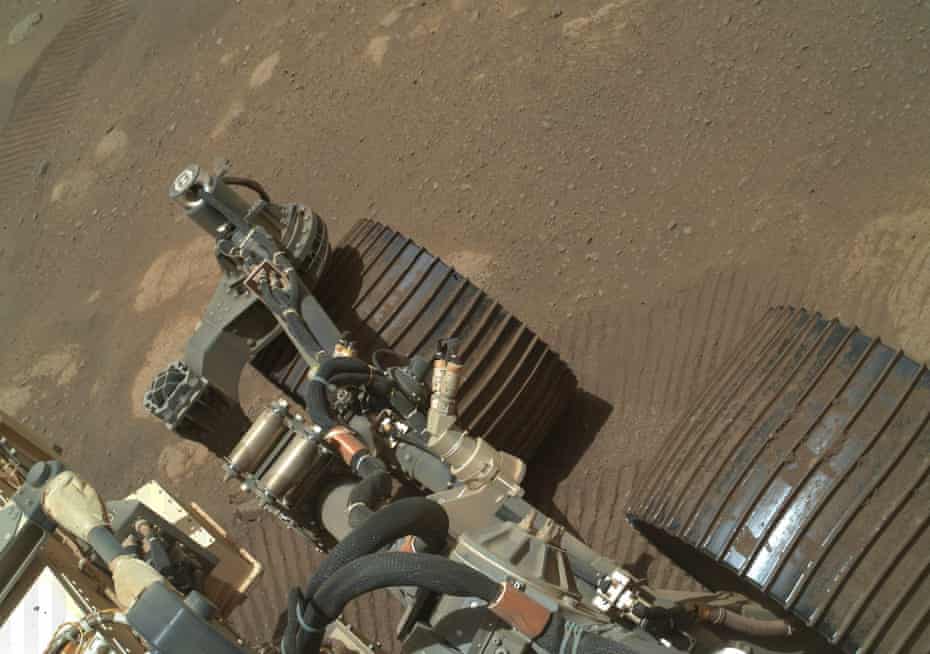
Perseverance, or Percy, as Nasa has begun to call it, which embarked on its journey to Mars just a few months after our visit, and landed safely in February 2021, represents the first step towards alleviating that frustration. We marvelled at it from behind stanchions as engineers pointed out the UV spectrometer intended to search for trace organic chemistry, and the tiny chunk of Martian meteorite, recovered from Oman and donated by London’s Natural History Museum, that is mounted on to the instrument’s robotic arm to serve as a calibration target. We scribbled notes about which deodorant technicians are allowed to wear (Mitchum unscented) on special, shiny blue clean-room paper, bonded with polyethylene so it doesn’t shed lint and particles – in the context of spacecraft assembly, normal paper is considered a contaminant. But the part we really wanted to see – the carousel of 43 cigar-sized metal tubes that will ultimately hold the Martian rocks that Perseverance will drill and cache – wasn’t there.

As it turned out, the tubes were in a nearby building, awaiting final sterilisation: oven-baking at high temperatures for an extended period in a process that would damage the other instruments on the rover but will successfully eliminate any trace of terrestrial biochemistry. After that, they would be shipped to Cape Canaveral separately, in a vacuum backfilled with inert gas. “They don’t get installed until right before we actually find our way out to the top of the rocket itself, because we want to keep them as pristine as possible,” David Gruel, the mission assembly, test and launch operations manager, told us. “They’re certainly the cleanest thing we’ve ever taken to Mars.”

“Officially, every time we go into space, we go into quarantine first,” the retired Italian astronaut Paolo Nespoli told us. “I did a total of five official quarantines – one time at Cape Canaveral and four times with the Russians in Baikonur.”

Even before humanity tackles the much larger challenge of sending people to another planet – and bringing them safely back, along with any alien germs they might have picked up – quarantine has become an essential part of the spaceflight pre-launch timeline. The practice can be traced back to Apollo 7, an 11-day mission that was intended to test the future lunar command module. All three astronauts came down with severe head colds, and, in microgravity, the congestion proved more debilitating than on Earth. Tempers frayed, culminating in a minor mutiny in which the astronauts defied ground control by refusing to wear their helmets during re-entry and landing, so that they could still “pop” their ears and relieve sinus pressure.

Charles Berry, the Nasa flight surgeon at the time, immediately instituted a strict quarantine protocol to protect astronauts from any exposure to germs that might make them sick in space, even refusing to let Richard Nixon have a prelaunch dinner with the Apollo 11 astronauts. “I guess that’s as close as I ever came to getting fired in my life,” Berry recalled in his Nasa oral history. “If they came down with anything, whatever it was – a cough, a sniffle or anything else – we were going to have to prove that it didn’t come from the moon.”

Nespoli didn’t pay much attention to quarantine during his spaceflight days: “You do it because it needs to be done.” That said, he was intrigued by the difference between the American implementation of quarantine and its Russian equivalent. “Somehow the quarantine in the United States, it’s a very hectic time,” he said. Nasa keeps astronauts busy with technical meetings, training sessions, rigid mealtimes and treadmill sessions in the tiny exercise room. “You do this, you do that – a lot of things are happening,” Nespoli recalled. The astronauts are confined to a single, artificially lit building in order to shift their circadian clock on to the flight schedule, or MET (Mission Elapsed Time), as it’s officially known. “It doesn’t matter if it’s 3am outside. They tell you it’s 10 o’clock in the morning and you get bright light,” he said. “You get shifted in this way.”

“Now, the Russians, to be frank, they don’t care.” Nespoli laughed. “They have a completely different attitude.”

In Baikonur, the crew stay in a huge compound originally built to house the head of the Russian space agency. The astronaut Scott Kelly wrote that it is “affectionately called ‘Saddam’s Palace’ by Americans,” thanks to its marble floors, glittering chandeliers, ensuite Jacuzzis and pressed linen tablecloths. “I wouldn’t say it’s a vacation, because it’s not quite like that, but it’s much more relaxed,” Nespoli told us. He recalled going for walks in the extensive grounds, unwinding with the help of the in-house massage therapist, and enjoying three-course lunches and dinners every day.

“You still do the training and the technical stuff,” Nespoli said, but the Russians seem to understand that the crew needs to rest and recharge, letting go of Earthly stress before the rigours of space.

Reflecting on quarantine during the early months of the Covid-19 pandemic, Nespoli was struck with renewed force by this prior experience. “Quarantine in Baikonur is really a moment where you just let go of everything,” he said. Beyond its obvious value in risk reduction, under the right circumstances quarantine can also offer an emotional and intellectual buffer – a necessary psychological cushion before crossing from one world to another.

Similarly, the extended isolation posed by space travel itself – trapped for months on end in a confined space, connected to friends and family only through video calls – was made bearable by considering the alternative. “I was glad I was inside,” Nespoli said, “because if I was outside, I would have been dead. I think you can look at that as like lockdown in a certain way: you are quarantined, but you feel kind of free, because you are safe.”


This is an edited extract from Until Proven Safe: The History and Future of Quarantine by Geoff Manaugh and Nicola Twilley, published by Macmillan on 22 July and available at guardianbookshop.com

Follow the Long Read on Twitter at @gdnlongread, listen to our podcasts here and sign up to the long read weekly email here.

South Africa violence ‘rarely seen in history of our democracy’

President Cyril Ramaphosa addresses unrest in response to jailing of Jacob Zuma


01:03South Africa military deployed to tackle violence over Zuma jailing – video


Jason Burke and agencies
Tue 13 Jul 2021 

South African president Cyril Ramaphosa has said the deadly violence gripping the country is unprecedented post-apartheid as he deployed troops to help police crush the violence and looting prompted by the jailing of ex-president Jacob Zuma.

Ten people have died, some with gunshot wounds sustained before the army was deployed, and 489 people have been arrested. Among those killed was a 15-year-old boy who was shot in the chest with a rubber bullet, local media reported.

Jacob Zuma’s imprisonment is a victory for South Africa’s post-apartheid constitution
Mark Gevisser

Around 2,500 soldiers were sent to the streets of the country’s two most densely populated provinces, Gauteng, where Johannesburg, the country’s largest city and economic powerhouse is located, and KwaZulu-Natal, Zuma’s home province. In Durban, the largest city in KwaZulu-Natal, paramedics were attacked during the violence, local agency News24 reported.

“Over the past few days and nights, there have been acts of public violence of a kind rarely seen in the history of our democracy,” said Ramaphosa in a televised address on Monday, adding that he was speaking with “a heavy heart”.

Overwhelmed police are facing mobs who have ransacked stores, carting away anything from crates of alcohol to beds, refrigerators and bath tubs.

Ramaphosa said he had “authorised the deployment of defence force personnel in support of the operations” of the police.

Earlier the army said they would assist police “to quell the unrest that has gripped both provinces in the last few days”.

It was the second successive day Ramaphosa had addressed the country on the violence.

South Africa’s supreme court sentenced Zuma to 15 months in prison for contempt, after he defied its order to give evidence at an inquiry investigating high-level corruption during his nine years in power, which ended in 2018.


01:02Jacob Zuma sentenced to 15 months in prison for contempt of court – video


It is the first time a former president has been jailed in post-apartheid South Africa and has been seen as a landmark for the rule of law in the troubled country, as well as a victory for Ramaphosa.

Ramaphosa ousted Zuma, who faced a slew of corruption allegations, in 2018 after taking over the leadership of the ruling African National Congress the previous year.

Zuma’s jailing will further strengthen the moderate and pragmatic faction of the ruling party, and significantly undermine the entrenched networks within the government and South Africa’s bureaucracy loyal to the former leader, analysts say.

Zuma’s core supporters, echoing the ex-president’s line, say he is the victim of a witch-hunt orchestrated by political opponents. The 79-year-old former anti-apartheid fighter remains popular among many poor South Africans.


Health service buckling as third coronavirus wave fuelled by Delta variant sweeps across South Africa


The centre of the unrest is Zuma’s home region, KwaZulu-Natal. In its capital, Pietermaritzburg, smoke billowed from the roof of a large shopping mall on Monday. Banks, shops and fuel stations in the city were shut.

A police helicopter hovered over the Johannesburg suburb of Soweto, where looters casually made off with giant TV sets, microwave ovens, clothes and linen, for hours. Many businesses were shuttered. A mall in Johannesburg’s upmarket Rosebank suburb closed early following “a tipoff that the looters are on their way,” a security guard told AFP.

In the meantime, chemists helping the government’s Covid-19 vaccination campaign warned that the unrest gripping the country would slow inoculations in the continent’s worst-hit country.

“Our vaccination programme has been severely disrupted just as it is gaining momentum,” said Ramaphosa.

– With Agence France-Presse