Monday, July 04, 2022

WORLD BANK
Small islands in Southeast Asia: Awash in a sea of plastic

Environmental Engineer
With nearly 10,000 inhabited islands, there are thousands of diverse island communities across Southeast Asia facing the challenge of beaches covered in plastic. 
Photo: Shutterstock / Mario De Moya F


Imagine standing on a beautiful island beach - soft sand, blue water, palm trees swaying in the breeze – gentle waves from the sea are lapping at your feet... but with each wave comes plastic bags, bottles and wrappers. The beach is covered in plastic.

This is the situation facing islands and archipelagic countries across the world, from the Caribbean to the Pacific Islands and islands off the coasts of Africa. But nowhere is it more noticeable than in Southeast Asia. The region is a hotspot for plastic pollution, making up half of the top 10 contributors to plastic waste washed into the ocean. With nearly 10,000 inhabited islands, there are thousands of diverse island communities across Southeast Asia facing the challenge of beaches covered in plastic.

Managing plastic waste on small and remote islands can be particularly challenging. There are often limited waste collection and treatment options on the islands, resulting in much plastic waste dumped or burned in the open, with serious risks to community health and the environment. The lack of easy transport connections to other islands and the mainland mean that it is expensive to treat the waste elsewhere, where there may be larger populations and better treatment options available.

So how can plastic waste management on small and remote islands be improved? We need to consider opportunities for plastic recycling and innovative technological solutions that can help. But technology will not provide an easy fix, it is also essential to reduce the amount of plastic waste produced in the first place.

Having access to markets for recycled plastic is a key factor in determining opportunities for plastic recycling. If the recyclable plastics can be transported along with other valuable recyclables to the mainland or a nearby island recycling hub at a reasonable cost, then these should be fed into existing recycling infrastructure to be effectively and responsibly processed. Small-scale artisanal recycling to produce souvenirs may be able to be implemented on islands where there is a tourist market.

Photo: Shutterstock / Yusnizam Yusof

Unfortunately, there is no single ‘silver bullet’ technological solution to the problem of plastic waste on islands. All recycling technologies require specific types and quality of plastic waste. These technologies must therefore be integrated into a broader waste management system with incentives for separation and pre-treatment of plastic waste. This is a challenge in small and remote island contexts. And even then, recycling technologies cannot be used to treat all plastic waste – a combination of technologies and other solutions is required. This could include disposing of plastic waste in a controlled manner, such as into a sanitary landfill on the mainland or a small, controlled landfill on the island.

The World Bank, in cooperation with the Ministry of Environment and Water, Malaysia, has produced the Technology Options for Plastic waste in Island Contexts (TOPIC) Toolbox. The TOPIC Toolbox was developed by a team from cyclos and Lasaju. Funding was provided by PROBLUE, an umbrella multi-donor trust fund, administered by the World Bank, that supports the sustainable and integrated development of marine and coastal resources in healthy oceans. The TOPIC Toolbox helps island decision makers identify potentially viable technologies and other solutions for treating plastic waste on their islands, empowering them to make effective investment and policy decisions on treatment options.

Using tools such as the TOPIC Toolbox to understand viable treatment options is necessary to manage the plastic waste that will inevitably be produced. But for beaches in Southeast Asia to be free of plastic, upstream solutions are essential to reduce the amount of plastic waste produced in the first place. Upstream solutions can include policies to reduce the import and use of specific problematic plastic items on islands and encourage the use of alternatives, such as the plastic bag and straw ban introduced in Samoa in 2019. Key island sectors, such as tourism, play an important role in implementing these upstream solutions.
 
Photo: Shutterstock / Alen Thien

The World Bank is working with countries across Southeast Asia on marine plastics, including on strengthening countries’ upstream plastics policies. The new Southeast Asia Regional Program on Combating Marine Plastics (SEA-MaP) Regional Project with the Association of Southeast Asian Nations (ASEAN) will implement many actions in the ASEAN Regional Action Plan for Combating Marine Debris in the ASEAN Member States. This will support innovative solutions and plastics policy harmonization across the region, including upstream solutions to reduce the amount of plastic waste produced.

By working together at the regional, national and island level to reduce plastic waste, we can imagine a day when it will be possible to stand on an island beach anywhere in Southeast Asia and enjoy the sand and the sea without waves filled with plastic bags, bottles and wrappers.

Russian oil tankers get India safety cover via Dubai company


The logo of Russian state shipping company Sovcomflot is seen on the multifunctional icebreaking standby vessel "Yevgeny Primakov" moored in central St. Petersburg

By Nidhi Verma and Jonathan Saul

NEW DELHI/LONDON (Reuters) -India is providing safety certification for dozens of ships managed by a Dubai subsidiary of top Russian shipping group Sovcomflot, official data showed, enabling oil exports to India and elsewhere after Western certifiers withdrew their services due to global sanctions against Moscow.

Certification by the Indian Register of Shipping (IRClass), one of the world's top classification companies, provides a final link in the paperwork chain - after insurance coverage - needed to keep state-owned Sovcomflot's tanker fleet afloat and delivering Russian crude oil to overseas markets.

Data compiled from the IRClass website shows that it has certified more than 80 ships managed by SCF Management Services (Dubai) Ltd, a Dubai-based entity listed as a subsidiary on Sovcomflot's website.

An Indian shipping source familiar with the certification process said most of Sovcomflot's vessels had now migrated to IRClass, via the Dubai arm.

Shipping industry publication TradeWinds reported last week that most of the Sovcomflot international tanker fleet that was declassified due to sanctions had been transferred to IRClass in April and May.

Classification societies certify that ships are safe and seaworthy, which is essential for securing insurance and for gaining access to ports.

Russia's crude oil sector, hit by strict sanctions due to Moscow's invasion of Ukraine, has been forced to seek buyers outside the West while turning to Russian transporters and insurers to handle its exports.

India, which has refrained from condemning Russia given its longstanding security ties, has sharply boosted Russian crude oil purchases in recent months.

Western sanctions against Russia prompted many oil importers to shun trade with Moscow, pushing spot prices for Russian crude to record discounts against other grades.

That provided Indian refiners, which rarely used to buy Russian oil due to high freight costs, an opportunity to snap up low-priced crude. Russian grades accounted for about 16.5% of India's overall oil imports in May, compared with about 1% in all of 2021.

TOP TIER

India's ship certifier is one of 11 members of the International Association of Classification Societies (IACS), top-tier certifiers that account for more than 90% of the world's cargo-carrying tonnage.

The Russia Maritime Register of Shipping was also part of the group until March, when its membership was withdrawn following a vote by 75% of IACS' members. Membership in IACS, which sets technical standards, typically makes a certifier more attractive for insurers, ports, flag registries and shipowners seeking safety assurances.

The four leading IACS members, from the UK, Norway, France and the United States, have stopped services to Russian companies due to the sanctions.

A spokesperson for IRClass, however, when asked about the certification data for Sovcomflot's fleet, responded: "Indian Register of Shipping, as an international ship classification society, reiterates that we have not classed vessels which are owned, flagged or managed by Russian companies."

The spokesperson declined to comment further on the matter, including on the Dubai unit's connection to its Russian parent.

Sovcomflot is subject to sanctions and other restrictions by the UK and the European Union, while Washington has restricted its financial activities. The company did not immediately respond to a request for comment.

An IACS spokesman said that IRClass' actions were not a matter for discussion by the association.

"IACS is not involved in the operational and commercial activities of its members, including appraisal, approval surveying and testing of vessels and equipment and the issuing of classification and statutory certificates where authorised," he said.

"As such, these developments do not get discussed within the association."

Sovcomflot's chief executive told reporters last week that the group had insured all its cargo ships with Russian insurers and the cover met international rules.

People familiar with the situation told Reuters this month that state-controlled Russian National Reinsurance Company had become the main reinsurer of Russian ships, including Sovcomflot's fleet.

(Reporting by Nidhi Verma and Jonathan Saul and Reuters reporters; Editing by Edmund Klamann)
'Superwasp' Threatens America's Forests With Females Capable of Producing 1,000 Offspring
ON 6/23/22 

A super wasp able to produce 1,000 offspring is threatening vast forests in North America, a new study has revealed.

The Sirex woodwasp (Sirex noctilio) lays its eggs on pine trees in a mucus and a fungus that are both deadly to the host.

The species, native to Asia, Europe, and North Africa, has already wiped out forests in New Zealand, South America, and Australia.

Now the wasp, which can measure up to one and a half inches, is threatening North American pine forests.

The Sirex woodwasp lays its eggs on pine trees in a mucus and a fungus that are both deadly to the host.
MATTHEW AYRES/ZENGER

In the U.S. climate, a single female would be able to produce more than 1,000 offspring - 100 times more than in the southern hemisphere.

Zenger News obtained a statement from Dartmouth College on June 16 that read: "While a single female Sirex wood wasp in Spain has the potential to generate about 10 offspring over five subsequent generations, in North America each female could potentially produce 1,000 offspring."

The statement, referencing a Dartmouth College study, also stressed that "nature's defenses are currently keeping the insect under control."

The Dartmouth College study, funded by the U.S. Forest Service and published in the academic journal NeoBiota, says America needs to be constantly on alert.

The statement warns that the breed "has the potential to reproduce at rates 2-3-times higher in North America than in its native range in Europe, Asia and North Africa."

It went on: "While the wasp's impacts have been limited so far, it could pose a threat under the right conditions as it spreads throughout its newly adopted continent."

Flora Krivak-Tetley, a postdoctoral researcher at Dartmouth and first author of the paper, said: "Understanding why invasive species are destructive in some places and not in others gives us the tools to respond to them quickly."

She added: "The Sirex wood wasp is perfect for exploring this question because its impacts on forests vary in different parts of the world."

The statement explained: "Unlike yellow jackets and other common wasps, Sirex wood wasps eat wood rather than fruit and meat.

"The insect injects a fungus and a dose of venom into trees to weaken and even kill them.

"They also place their eggs in the trees, where the larvae hatch and feed on wood that is pre-digested by the fungi."

Krivak-Tetley said: "These wasps are cool, and a bit different than wasps many of us are familiar with."

Krivak-Tetley, who conducted the research as a Ph.D. candidate at Dartmouth, added: "The larvae tunnel through tree trunks, mature inside the wood, and emerge as adults. They don't sting people, they sting trees."

The Dartmouth College statement said: "The Sirex wood wasp is considered to be a minor tree-eating scavenger in its native range. In those areas, it is kept in check by natural enemies and the limited availability of suitable pine trees to serve as hosts."

But the study stressed that the insect is able to "kill large numbers of trees and be expensive to manage in non-native areas."

It gave the examples of New Zealand, Australia, Chile, Argentina, and other countries in the Southern Hemisphere, saying that these are places where the wasp "has no natural enemies."

The statement said that "the invasive is responsible for major attacks against stands of pine trees that were imported for commercial plantations."

Sirex noctilio, also known as the Sirex woodwasp, is seen here in the larval stage. The Sirex woodwasp lays its eggs on pine trees in a mucus and a fungus that are both deadly to the host, meaning that forests could be threatened by the wasp's mass reproduction.
MATTHEW AYRES/ZENGER

They added: "Unlike other invasive insects that may be limited in range by sensitivity to temperature and other climatic conditions, Sirex wood wasps are not restricted by temperature extremes within their range. They are only constrained by the presence of predators, competitors and the availability of host pines."

Matthew Ayres, professor of biological studies at Dartmouth and senior researcher on the study, said: "This wasp will continue to expand its distribution in North America."

He added: "It can apparently tolerate the climate anywhere that pine trees occur."

The statement explained: "The insect's invasiveness is compounded in pine forests that are overstocked and water-stressed. Sirex wood wasps are also difficult to monitor, which makes them harder to control."

The wasp was first detected in North America in 2004, according to researchers, and "it is believed to have entered the continent inside wood packaging material used in shipping at a cargo port on Lake Ontario in upstate New York."


The Sirex woodwasp then migrated throughout the northeastern U.S. and parts of Quebec and Ontario in Canada.

"Non-native species arrive from distant lands all of the time," Ayres said.

"Sirex wood wasps arriving from Europe found forests that resembled their homeland, but that also included many of the same natural enemies – from nematodes to woodpeckers."

Sirex noctilio, also known as the Sirex woodwasp, was first spotted in North America in 2004.
FLORA KRIVAK-TETLEY/ZENGER

The study assessed the impact of the Sirex woodwasp in the U.S.' Northeast, comparing data to information on the species' activities in its native habitat of Galicia, Spain.

The statement said: "According to the research in New York, Pennsylvania and Vermont, the wood wasp has the potential to be over 150 percent more productive in the areas studied in the U.S. than in Spain. As a result, there is increased potential for rapid population growth and localized outbreaks of the wasp in North America than in the insect's native range.


"While a single female Sirex wood wasp in Spain has the potential to generate about 10 offspring over five subsequent generations, in North America each female could potentially produce 1,000 offspring."

Krivak-Tetley said: "When we first observed the Sirex wood wasp in North America, we said 'oh no, we better brace ourselves for this.'"

She added: "We are not sure how it will go in other parts of the continent but, for the moment, nature has rallied to its own defense against this wood wasp."


The experts expect "the population to expand south into the U.S.' 'wood basket' states — from North Carolina to East Texas—that contain large expanses of valuable, fast-growing pine forests."

The statement explained: "The U.S. West, with pines already at risk from drought, fire and beetles, could also be susceptible to the invasive species. The wildcard is whether natural competitors and predators will keep them in check, or if the larger resource base will allow them to spread."

Ayres said: "This wasp will continue to spread throughout North America and can be expected to eventually show up everywhere there are pine trees.

"The good fortune we've enjoyed so far with the Sirex wood wasp could change if the insect reaches areas with higher resource availability and fewer natural enemies."

The researchers are now working on comparing ways in which the wood wasp populations grow in the north and south of the country to "better understand the conditions that lead to impactful invasions."

The study was authored by Flora E. Krivak-Tetley, Jenna Sullivan-Stack, Jeff R. Garnas, Kelley E. Zylstra, Lars-Olaf Hoeger, MarĂ­a J. Lombardero, Andrew M. Liebhold, and Matthew P. Ayres.

CRIMINAL  CAPITALI$M
Singaporean who impersonated others to buy $7.5m of cloud services jailed

Ho Jun Jia at the State Courts in May. He had impersonated two people to deceive Amazon Web Services and Google. ST PHOTO: KELVIN CHNG

Wong Shiying
PUBLISHED
JUN 23, 2022


SINGAPORE - A Singaporean impersonated two people to deceive Amazon Web Services (AWS) and Google into providing about US$5.4 million (S$7.5 million) worth of cloud computing services so he could run a large-scale cryptocurrency mining operation.

Ho Jun Jia, 32, who had illegally obtained their personal information on the Dark Web, was sentenced to 10 years’ jail on Thursday (June 23).

One of his victims was Mr Marc Merrill, the American co-founder and co-chairman of Riot Games, known for developing popular games such as League of Legends and Valorant.


Ho had used Mr Merrill's details to open an account on AWS and charged about $7 million to the latter's American Express (Amex) card for cloud computing services to mine for cryptocurrency.

Ho had pleaded guilty earlier to 12 charges including cheating, unauthorised access to computer material and drug consumption.

Another 15 similar charges were taken into consideration for his sentencing.

He is out on a $180,000 bail paid for by his father after District Judge Brenda Tan allowed him to defer serving his sentence by a month to settle his personal affairs.

Ho's case was first reported in October 2019, when the United States Department of Justice issued a statement saying he had been charged with federal crimes including wire fraud and aggravated identity theft.

In 2017, he forged US driving licences for others using Photoshop and offered them on a Dark Web forum. In return, the forum owner gave him the names, addresses and credit card details of 70 people.

Mr Merrill's name caught Ho's attention as he knew of the developer's association with Riot Games.

He was able to get Mr Merrill's username and password to his Amex account. Upon logging in, he changed the e-mail address to a similar sounding one and took control of the account.

Ho then used Mr Merrill's details to register for a new account with AWS.

On at least 40 occasions between November 2017 and January 2018, he used Mr Merrill's Amex card to purchase about US$5.2 million in cloud computing services.

He persuaded AWS to continue providing the services even after not paying a bill worth US$1.8 million.

He also used Mr Merrill's details to register and buy cloud-computing services worth around US$250,000 through the Google cloud platform.

Mr Merrill ultimately did not lose any money as the services refunded the payments.

Ho went on to run the same scheme with AWS using the details of a man named Harold Borland, cheating the company into providing US$21 worth of cloud computing services.

Between November 2017 and March 2018, Ho mined about 1,470 units of cryptocurrency Ether. He later sold 203 units for around $350,000, which he spent on personal expenses.

Ho was also convicted of drug offences in 2019 for taking methamphetamine.

In sentencing, District Judge Tan said he had illegally obtained a massive value of services through the use of stolen identities.

"Given the magnitude of his offending, the extent of harm caused and the sophistication employed, deterrence is the dominant sentencing consideration," she said.

The district judge noted that he had not made any restitution to his victims.

For cheating by personation, Ho could have been jailed for up to five years and fined.

For each count of unauthorised access to computer material, Ho could have been fined $5,000 and jailed for up to two years.

PITIFUL CHUMP CHANGE
Canada renews its humanitarian contribution with CAD $16.8 million to assist millions of women and girls in the Arab States region

23 June 2022
New funding from Canada will help to respond to the urgent needs health and protection needs of women and girls in the Arab States region. © UNFPA Yemen

UNITED NATIONS, New York - New funding from Canada will help UNFPA, the United Nations sexual and reproductive health agency, respond to the sexual and reproductive health needs of women and girls, and prevent and respond to gender-based violence in the humanitarian settings in the Arab States region mainly in Syria, Iraq, Libya, Iraq and other countries where humanitarian needs continue to increase.

For more than a decade, protracted crises throughout the region – from Yemen to Libya and beyond – have taken a massive toll on every single person, but women and girls in particular have paid a very heavy price. They face increased risks of maternal death and unintended pregnancy, and life-threatening violence, including sexual violence, while at the same time lack access to essential health services. Existing gender inequalities have been exacerbated, and the extended erosion of protection mechanisms. In many occasions, the absence of legal accountability has led to a growing sense of acceptance of violence against women and girls as a social phenomenon - a worrying trend of ‘normalization’. Women and girls' health, rights and dignity are at risk on a daily basis and it is essential that their needs are put at the front and centre of the humanitarian response.

“Women and girls in Syria, Iraq, Jordan, Lebanon, Yemen and Libya face enormous challenges, including mounting risks to their health and safety,” said Dr. Luay Shabaneh, UNFPA Regional Director, Arab States. “We are grateful to the Government and People of Canada and their support to safeguard women and girls’ rights, including their right to give birth safely and to live free from violence.”

The bulk of Canada’s funding of CAD $15 million will support UNFPA to provide lifesaving sexual and reproductive health services, including emergency obstetric care; and preventive, protective, and responsive services for women and girls survivors of violence. Reproductive health supplies, including equipment and medicines, will be distributed to health facilities, while Dignity Kits, containing essential hygiene supplies, will be provided to the most vulnerable women and girls. This funding will support UNFPA’s continued humanitarian operations in Iraq, Jordan, Lebanon Syria and Yemen for the next two years.

Canada is also contributing CAD $1.8 million to support the coordination of the humanitarian response to gender-based violence in the region. Service providers’ skills to deliver quality sexual and reproductive health services, as well as services to address gender-based violence, will be strengthened, while robust data systems for the planning and monitoring of service delivery will be enhanced.

Canada’s renewed commitment to the women and girls of the Middle East will support UNFPA to ramp up its humanitarian response.

This grant is part of Canada’s overall support for UNFPA development and humanitarian activities, amounting to over CAD $85.4 million in 2021 alone.
AI Improves Robotic Performance in DARPA’s Machine Common Sense Program

by DefenceTalk
June 23, 2022
in Technology News


Researchers with DARPA’s Machine Common Sense (MCS) program demonstrated a series of improvements to robotic system performance over the course of multiple experiments. Just as infants must learn from experience, MCS seeks to construct computational models that mimic the core domains of child cognition for objects (intuitive physics), agents (intentional actors), and places (spatial navigation).

Using only simulated training, recent MCS experiments demonstrated advancements in systems’ abilities – ranging from understanding how to grasp objects and adapting to obstacles, to changing speed/gait for various goals.

“These experiments are important milestones that get us closer to building and fielding robust robotic systems with generalized movement capabilities,” said Dr. Howard Shrobe, MCS program manager in DARPA’s Information Innovation Office. “The prototype systems don’t need large sensor suites to deal with unexpected situations likely to occur in the real world.”

Rapidly Adapting to Changing Terrain

In one experiment, researchers at the University of California, Berkeley developed a rapid motor adaption (RMA) algorithm that allows quadruped robots to adapt rapidly to changing terrain. Using the RMA algorithm and proprioceptive feedback (the sense of self-movement and body position), the robots successfully navigated through a range of both real-world and simulated terrain.

The algorithm is trained completely in simulation without using any domain knowledge-like reference trajectories or predefined foot trajectory generators and is deployed without any fine-tuning. Real-time terrain adaption is essential for quadruped robots to help military units with load carrying and sensing.

Carrying Dynamic Loads

Oregon State researchers demonstrated the ability for a bipedal robot to learn how to carry dynamic loads with only proprioceptive feedback. The robot, known as Cassie, learned commonsense behaviors in a simulated-to-real learning environment. Cassie adapted its gait to account for changes in load dynamics, such as sloshing liquids or balancing weights. After training in simulation, Cassie was able to walk on a treadmill for several minutes with four different types of dynamic loads. In contrast, before the learned commonsense training, Cassie fell immediately.

Understanding How to Grasp Objects

In natural environments, humans encounter a vast variety of possible tools, tool variations, and objects. This variety presents a challenge for robots. They must foresee all possibilities to function, which is why it’s important that they’re equipped with a general grasping capability rather than a specialized capability, for a predefined set of objects.

University of Utah researchers as part of the Oregon State University MCS team developed an active, grasp-learning algorithm that allows robots with multi-fingered hands to dexterously grasp previously unseen objects when trained entirely in simulation.

The new approach enabled the robot to grasp with higher than 93% real-world success on novel objects compared to 78% of existing passive learning approaches.

Additional Research

Another technical area within MCS seeks to develop computational tools that learn from reading the web, like a research librarian, to construct a commonsense knowledge repository capable of answering natural language and image-based questions about commonsense phenomena.

MCS researchers from the University of Washington and two teams from the University of Southern California, Information Sciences Institute are currently using a variety of approaches, including hyperbolic learning. This technique learns the commonsense structure of human behavior and physics from large collections of videos to forecast human actions up to 30 seconds in the future.

The researchers are also building a scalable, machine-authored, symbolic knowledge base that will provide a higher quality, larger, and more diverse representation of the world.

“By focusing on commonsense, we are creating the possibility for systems to have the flexibility of human learning and the breadth of human knowledge,” Shrobe said. “Fusing this knowledge with advanced robotics could result in highly capable, mission-critical systems that humans will want to have as partners.”

Sunday, July 03, 2022

RIP
Peter Brook, Tony-Winning Theater Director, Dies at 97

Tim Gray
Sun, July 3, 2022

NO REVOLUTION WITHOUT GENERAL COPULATION
Peter Brook, the British-born director who won Tonys and Emmys but is best known for his theater work ranging from Broadway’s “Marat/Sade” and “Irma La Douce” to experimental productions like “The Mahabarata,” has died. He was 97.


Brook’s death was confirmed by his long-time publisher, and later the BBC, on Sunday. He died in Paris, where he has lived since the 1970s. One of Brook’s final works, at 92 years old, was “The Prisoner,” which he wrote and staged in Paris as well as the Edinburgh festival and London’s National Theatre. Just this year, he staged directed “The Tempest Project” with Marie-HĂ©lène Estienne, his long-time collaborator.

His career spanned eight decades and included opera, plays, musicals, as well as film and TV productions. After decades of bringing an unorthodox approach to traditional works from the likes of Shakespeare and Puccini, he moved to Paris, where he became even more daring and experimental: In one piece, audiences watched a French theater troupe perform in a language the actors had invented themselves.

Brook’s most memorable productions include the 1964 “Marat/Sade,” which brought dazzling theatricality to Peter Weiss’ complex play about the Marquis de Sade and the inmates at an asylum. When it transferred to Broadway in 1966, Brook won a Tony, and won a second for his startling “Midsummer Night’s Dream.”

That Shakespeare production, which debuted in England in 1970, featured a plain white-box set by Sally Jacobs and few props or set pieces. The actors appeared in factory-worker clothes or colorful baggy suits like from a Chinese circus, and swung on trapezes, spun plates and juggled while performing. The result was theater magic, illuminating Shakespeare’s text by making it seem contemporary, playful and accessible.

In Variety’s Jan. 27, 1971 review, Hobe Morrison hailed Brook as “one of the most daringly creative stage directors in the world” and predicted that it would set a standard for future productions. “Dream” featured such then-unknown actors as Patrick Stewart and Ben Kingsley, who decades later told Variety, “That production changed my life.”


Brook was born in London and educated at Westminster and Magdalen College Oxford. His first job as director was for a 1943 “Dr. Faustus” in London. From 1947 to 1950, he was director of productions at the Royal Opera House, Covent Garden. Among his productions was Strauss’ “Salome” featuring sets by Salvador Dali. He later directed operas for the Metropolitan Opera and the Aix en Provence Festival.

He worked with the Royal Shakespeare Company from 1950 through 1970, including directing Paul Scofield in “King Lear,” Laurence Olivier and Vivien Leigh in “Titus Andronicus” and John Gielgud in “Measure for Measure.”

In his 1979 memoir “Gielgud: an Actor and His Time,” the thesp wrote, “Peter Brook has become something of a legend now, but in the 1950s at Stratford he was still very young, approachable and jolly….He did everything himself, designed the scenery, found the music, controlled the lighting.” The actor added, “I would do anything he asked me. I trust him entirely for his beautiful taste and marvelous imagination.”

Throughout his career, Brook questioned theatrical conventions and tried to break boundaries whenever possible.

In 1970, Brook and Micheline Rozan founded the International Centre for Theatre Research, a group of multinational actors, artists, dancers and musicians. It then became the International Center for Theatre Creations and established a permanent base, the Bouffes du Nord Theatre.

His theater company became less theatrical and more primal, using myth, legend, music, mime and improvisation. They generally avoided traditional Western theater venues and traveled throughout the Middle East and Africa with their work in the early 1970s. Many pieces were performed both in French and English. Sometimes the actors improvised text, and sometimes they used no text at all.

Aside from many original pieces and works by relatively unknown writers, productions there include “The Iks” by Colin Turnbull (1975); works by Chekhov, Samuel Beckett, Caryl Churchill and Athol Fugard; and adaptations of Mozart and Oliver Sachs.

Brook was influenced by the experimental theater work of Antonin Artaud, Jerzy Grotowski and Bertolt Brecht, but he said his greatest influence was Joan Littlewood, whose credits included “Oh, What a Lovely War.”

His experiments were always interesting but not always successful. Reaction was split on his 1985 “Mahabarata,” a two-part, nine-hour retelling of the epic Sanskrit poem that is India’s equivalent of Homer’s works. In a 1987 review when the production toured in the U.S., Variety called it an act of “admirable lunacy,” declaring that there were “two hours of dazzling theatrical brilliance spread out over a nine-hour running time.” The review concluded that in condensing the original, there were few concessions to Western audiences; key aspects of the Eastern mythology were never explained, and the minimalist simplicity and dialog made the tale seem flat and remote.

In 2008, he resigned as artistic director of Bouffes du Nord, handing the reins over to Olivier Mantei and Olivier Poubelle. However, Brook continued to work with them.

In 2014, he was still working hard at age 89. There was a U.S. tour of “The Suit.” He and Estienne, working with musician-composer Franck Krawczyk, adapted Can Themba’s 1950s short story set in a South African Township. The work used four actors and three musicians and everything from songs by Billie Holiday to Schubert and African songs. Also in 2014, Theatre des Bouffes du Nord premiered “The Valley of Astonishment,” the third in a series of plays that he and Estienne spent more than 20 years developing.

Brook’s films were mostly versions of his staged work: “Marat/Sade” (1967)
, the anti-Vietnam war piece “Tell Me Lies” (1968), “King Lear” (1971) and a 2002 TV version of “Hamlet” starring Adrian Lester. Two notable exceptions were his stark black-and-white adaptation of William Golding’s “Lord of the Flies” in 1963, and the intellectual “Meetings With Remarkable Men” (1979).

He won a 1984 Emmy Award for “La tragedie de Carmen” (based on a theater piece) and a 1990 International Emmy for “The Mahabharata” miniseries.

His 1968 book “The Empty Space,” in which he advocated continual exploration and spontaneity in theater work, became a bible of experimental theater, translated into more than 15 languages. His autobiography “Threads of Time” was published in 1998, and he also wrote “The Shifting Point” (1987) and “There Are No Secrets” (1993).

He was awarded Commander of the Order of the British Empire in 1965 and Commandeur de la LĂ©gion d’honneur (France) in 2013. Brook was also the subject of a 2014 docu, “Peter Brook: The Tightrope,” made by his son Simon and showing Brook at work with actors.

Brooke was married to actor Natasha Parry for 64 years, until her death in 2015. He is survived by his children with Parry, a son and daughter.

Manori Ravindran contributed to this story.


A statement https://twitter.com/NickHernBooks/status/1543535566242955264?s=20&t=09SrYhIeuCKWW6xc2R-1FQ from his publisher confirmed his death on Sunday.


Peter Brook, Paris-based British theatre visionary, dies at 97


British theatre and film director, playwright and actor Peter Brook poses during a photo session at the Bouffes du Nord theatre in Paris on February 27, 2018.
 © Lionel Bonaventure, AFP

Text by:  FRANCE 24

Issued on: 03/07/2022 - 

Peter Brook, who has died aged 97, was among the most influential theatre directors of the 20th century, reinventing the art by paring it back to drama’s most basic and powerful elements.

Brook, born in Britain but resident in France for decades, died on Saturday, French newspaper Le Monde reported, citing the director's entourage.

“Peter Brook gave us the most beautiful silences in the theatre, but this last silence is infinitely sad,” Rima Abdul Malak, France's culture minister, wrote on Twitter.

“With him, the stage was stripped back to its most vivid intensity. He bequeathed so much to us,” she added, saying he would remain “forever the soul” of the Bouffes du Nord theatre in Paris where his work was based.
An almost mystical figure often mentioned in the same breath as Konstantin Stanislavsky, the Russian who revolutionised acting, Brook continued to work and challenge audiences well into his 90s.

Best-known for his 1985 masterpiece “The Mahabharata”, a nine-hour version of the Hindu epic, he lived in Paris from the early 1970s, where he set up the International Centre for Theatre Research at the Bouffes du Nord, an old music hall.

A prodigy who made his professional directorial debut at age 17, Brook was a singular talent right from the start.

He mesmerised audiences in London and New York with his era-defining “Marat/Sade” in 1964, which won a Tony award, and wrote “The Empty Space”, one of the most influential texts on theatre ever, three years later.

Its opening lines became a manifesto for a generation of young performers who would forge the fringe and alternative theatre scenes.

“I can take any empty space and call it a bare stage,” he wrote.

“A man walks across an empty space whilst someone else is watching him, and this is all that is needed for an act of theatre...”

For many, Brook’s startling 1970 Royal Shakespeare Company production of “A Midsummer Night’s Dream” in a white-cube gymnasium was a turning point in world theatre.

It inspired actress Helen Mirren to abandon her burgeoning mainstream career to join his nascent experimental company in Paris.

African odyssey

Born in London on March 21, 1925, to a family of Jewish scientists who had emigrated from Latvia, Brook was an acclaimed director in London’s West End by his mid-20s.


Before his 30th birthday he was directing hits on Broadway.

But driven by a passion for experimentation that he picked up from his parents, Brook soon “exhausted the possibilities of conventional theatre”.

His first film, “Lord of the Flies” (1963), an adaptation of the William Golding novel about schoolboys marooned on an island who turn to savagery, was an instant classic.

By the time he took a production of “King Lear” to Paris a few years later, he was developing an interest in working with actors from different cultures.

In 1971 he moved permanently to the French capital, and set off the following year with a band of actors including Mirren and the Japanese legend Yoshi Oida on a 13,600-kilometre (8,500-mile) odyssey across Africa to test his ideas.

Drama critic John Heilpern, who documented their journey in a bestselling book, said Brook believed theatre was about freeing the audience’s imagination.

“Every day they would lay out a carpet in a remote village and would improvise a show using shoes or a box,” he later told the BBC.

“When someone entered the carpet the show began. There was no script or no shared language.”

But the gruelling trip took its toll on Brook’s company, most of whom fell ill with dysentery or tropical diseases.

Mirren later described it as “the most frightening thing I have ever done. There was nothing to hold onto”.

She parted company with Brook soon after.

He “thought that stardom was wicked and tasteless ... I just wanted my name up there”, she told AFP.

‘The best director London does not have’

Brook continued to experiment at the Bouffes du Nord, touring his productions across the globe.

His big landmark after “The Mahabharata” was “L’Homme Qui” in 1993, based on Oliver Sacks’ bestseller about neurological dysfunction, “The Man Who Mistook his Wife for a Hat”.

Brook returned to Britain in triumph in 1997 with Samuel Beckett’s “Happy Days” and his wife, the actress Natasha Parry, in the lead.

Critics hailed him as “the best director London does not have”.

After turning 85 in 2010, Brook relinquished leadership of the Bouffes du Nord but continued to direct there.
Eight years later, aged 92, he wrote and staged “The Prisoner” with Marie-HĂ©lène Estienne – one of the two women with whom he shared his life.

The real-life story was based on his own spiritual journey to Afghanistan just before the Soviet invasion to shoot a film called “Meetings with Remarkable Men” in 1978.

It was adapted from a book by mystical philosopher George Gurdjieff, whose sacred dances Brook performed daily for years.

Soft-spoken, cerebral and charismatic, Brook was often seen as something of a Sufi himself.

But Parry’s death in 2015 shook him. “One tries to bargain with fate and say, just bring her back for 30 seconds,” he said.

Yet he never stopped working despite failing eyesight.

“I have a responsibility to be as positive and creative as I can,” he told The Guardian. “To give way to despair is the ultimate cop-out,” he said.

(FRANCE 24 with AFP)
AUSTRALIA
WorkSafe charges St Basil's aged care with workplace safety breaches over 2020 COVID outbreak

The outbreak began with one staff member contracting the virus in July 2020.
(ABC News: Danielle Bonica )

Victoria's workplace regulator has charged a Melbourne aged care facility where 45 residents died of COVID in 2020 with alleged offences relating to staff safety during the outbreak.

Key points:

After a St Basil's staff member caught COVID in July 2020, the virus spread to 94 employees

WorkSafe alleges the facility failed to implement proper use of PPE to help prevent spread

Separate court action relating to a coronial inquest into the COVID cluster remains unresolved


The charges WorkSafe has brought against the St Basil's aged care facility in Fawkner relate to its alleged failure to implement the use of personal protective equipment (PPE) after one staff member tested positive for COVID-19 in July 2020.

A subsequent outbreak at the aged care facility, which remains the subject of a coronial inquest, resulted in 94 staff members testing positive for the virus and 45 residents dying of COVID-related complications.

The facility could face fines of up to $1.49 million for each of the offences WorkSafe has alleged occurred under the Occupational Health and Safety Act.

The regulator alleges that St Basil's failed to require its workers to wear PPE, train them and ensure they were able to competently use the equipment and supervise its use.

Separate Supreme Court action relating to former managers of the facility giving evidence at the coronial inquest remains unresolved.

The WorkSafe charges relating to St Basil's are due to be heard in the Melbourne Magistrates' Court on August 1.

The regulator said several other investigations into how the COVID-19 risk was managed at Victorian workplaces remained ongoing.

Analysis: China casts a giant shadow over emerging nations' chase for debt relief


REUTERS
Published: Jul 3, 2022 

From a US$360 million project to expand Zambia's international airport in Lusaka to a US$1.4 billion city port in Sri Lanka's capital of Colombo, China is the missing piece in the puzzle of a number of debt talks underway in developing markets.

As the second-largest economy and the biggest bilateral creditor in the world, China is a dominant lender to many smaller, riskier developing nations. But Beijing has kept a low profile, not only on lending conditions but also on how it renegotiates with borrowers in distress.

That became more evident after the Covid-19 pandemic hit. Many economies buckling under economic strain are seeking debt relief.

Now, the pressure is rising on China to take a more active role in helping strained economies overhaul their debt burdens. Leaders of the Group of Seven rich democracies on Tuesday called on China specifically when urging creditors to help countries.

Poorest countries face US$35 billion in debt-service payments to official and private-sector creditors in 2022, with over 40 percent of the total due to China, according to the World Bank.

But analysts say the International Monetary Fund (IMF) and World Bank's premise of fair burden-sharing in debt relief talks could set them on a collision course with China, putting the prospect of comprehensive debt restructurings into question.

"Chinese 'Belt and Road' money is everywhere – so we will see this over and over in sovereign debt restructurings," said Dennis Hranitzky, head of sovereign litigation at law firm Quinn Emanuel.

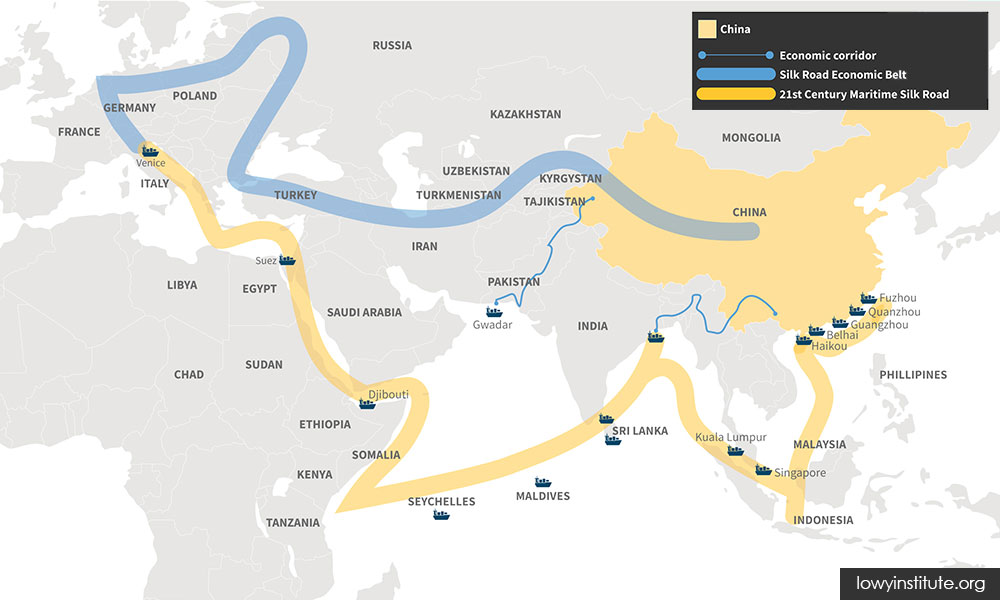
China’s Belt and Road initiative

According to Beijing, the Belt and Road Initiative unveiled in 2013 is a platform for international cooperation in infrastructure, trade, investment and financing linking China with other parts of Asia, the Middle East, Europe and Africa.

China's Foreign Ministry and central bank did not respond to requests for comment.

Zambia and Sri Lanka are test cases on how fast debt talks evolve. Both also need to restructure with overseas bondholders and hammer out IMF programmes.

"China's engagement on debt talks is not in the hands of the IMF nor governments," said Polina Kurdyavko, head of emerging markets at BlueBay Asset Management in London.

"Bringing China to the negotiating table in a timely manner could be the biggest challenge in the upcoming debt restructurings."

Opacity

Chinese lending is mostly extended by state-controlled agencies and policy banks and is often opaque.

A working paper of the National Bureau of Economic Research in the United States found half of the 5,000 loans and grants extended to 152 countries from 1949 to 2017 have not been reported to the IMF or the World Bank, despite China being a member of both multilaterals.

"Opacity is a recurrent problem with some of these Chinese loans," said Matthew Mingey, senior analyst with Rhodium Group, adding that China had stricter confidentiality clauses on its commercial loans.

Data compiled over three years by AidData, a US research lab at the College of William & Mary, found terms of Chinese state-owned banks' loans require borrowers to prioritise them for repayment.

Examinations of 100 Chinese loans with 24 low- and middle-income countries showed - when compared to those of other bilateral, multilateral and commercial creditors - demands for an unusual level of confidentiality, in some cases, "even the fact of the contract's existence", the study led by Georgetown Law professor Anna Gelpern found.

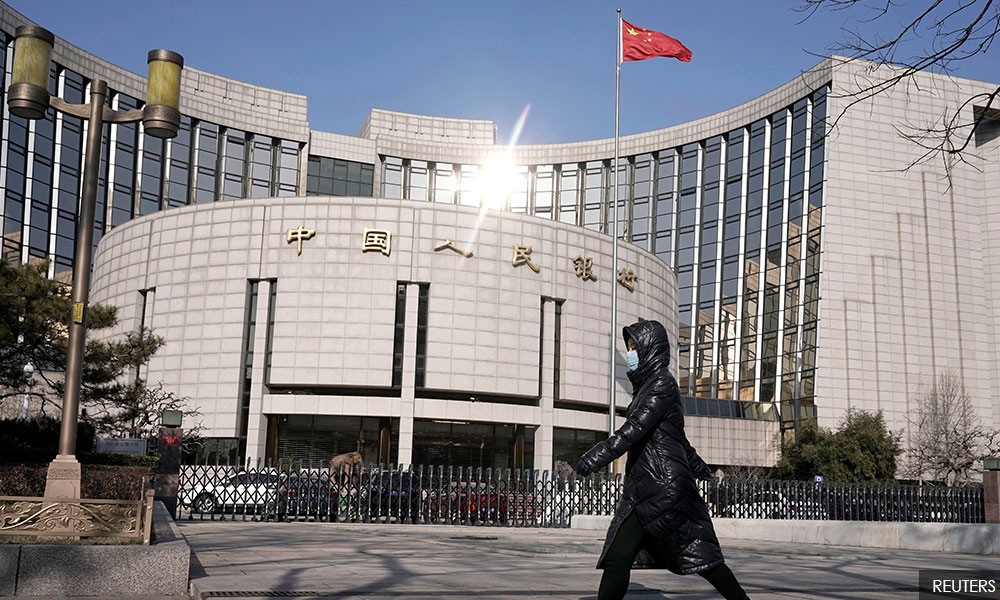
Headquarters of China’s central bank, the Peoples Bank of China, in Beijing

Where China has agreed to ease debt burdens, details are often unclear.

The plethora of Chinese lenders also adds to the complexity, though the Export-Import Bank of China and the China Development Bank feature most heavily.

"When it comes time to renegotiate, individual Chinese banks may not necessarily have an idea of what other Chinese banks are doing," said Mingey.

Glacial


Progress has often been slow.

Zambia is seeking relief on US$17 billion of external debt after becoming the first Covid pandemic-era default more than two years ago. Some of the slow progress is due to China's lack of experience with tricky debt restructurings, people familiar with the matter say.

Sri Lanka's talks are moving faster, with the IMF confirming it is on track for a new programme. China's approach, though, is not yet clear.

Meanwhile, some 60 percent of low-income countries are in, or at high risk of, debt distress, according to the IMF.

Seventeen smaller emerging economies have seen premium investors demand to hold their debt soar to levels effectively shutting them out of international markets. That number is higher than during peak-Covid-19 or the 2008 global financial crisis.

In late 2020, the Group of 20 launched a Common Framework to bring creditors such as China and India to the negotiation table along with the IMF, Paris Club and private creditors. Along with Zambia, Chad and Ethiopia have applied to restructure under this new, yet-to-be tested mechanism.

But the framework also "has added a bureaucratic layer to the already complex debt restructuring process" that could discourage other countries from joining, said Patrick Curran, senior economist at Tellimer.

- Reuters
AMERICANIZATION 
Three people killed, three injured in shooting at popular Danish shopping centre


Denmark's Prime Minister has said a shooting rampage at a shopping centre in Copenhagen was a "cruel attack" that left three people dead and three others in a critical condition.

Key points:

Copenhagen's main hospital says it has received a "small group of patients" for treatment

It has called in extra staff, including surgeons and nurses

A policeman said: "We know that there are several dead … [and] several injured"


"It is incomprehensible. Heartbreaking. Pointless," Ms Frederiksen said.

"Our beautiful and usually so safe capital was changed in a split second."

Copenhagen police inspector Søren Thomassen said the three victims were a man in his 40s and "two young people".

It comes after a gunman opened fire inside the busy Field's mall shopping centre in the Danish capital on Sunday, killing and wounding several people.

Copenhagen police, who arrested a 22-year-old Danish man and charged him with manslaughter, said they could not rule out the attack was an "act of terrorism".

People shown fleeing from Field's shopping centre, after Danish police said they received reports of a shooting,(Reuters: Ritzau Scanpix/Claus )

The capital's main hospital, Rigshospitalet, had received a "small group of patients" for treatment, a spokesman said.

It had called in extra staff, including surgeons and nurses, the spokesman added.

Local media published images showing heavily armed police officers at the scene of the attack, as well as people running out of the mall.

Footage published by tabloid Ekstra Bladet showed one person being carried by rescue workers into an ambulance on a stretcher.

'Pure terror'

People react outside Field's shopping centre after police announced there was a shooting.(Reuters: Ritzau Scanpix/Olafur Steinar Gestsson)

Gun violence is relatively rare in Denmark.


When the shots rang out, some people hid in shops while others fled in a panicked stampede, according to witnesses.

Eyewitness Mahdi Al-Wazni told local news the shooter "seemed very violent and angry".

"He spoke to me and said it (the rifle) isn't real as I was filming him.

"He seemed very proud of what he was doing."
Space to play or pause, M to mute, left and right arrows to seek, up and down arrows for volume.


Video captures people fleeing Copenhagen shopping centre gunman.(Reuters)

IT consultant Hans Christian Stoltz, 53, was bringing his daughters to see Harry Styles perform at a concert scheduled for Sunday night near the mall.

He said what happened was awful.

"It is pure terror," he said.

"You might wonder how a person can do this to another human being, but it's beyond … beyond anything that's possible."

Organisers called off the Harry Styles concert, at the nearby Royal Arena, by order of police.

On Snapchat, Styles wrote: "My team and I pray for everyone involved in the Copenhagen shopping mall shooting. I am shocked. Love H."


Laurits Hermansen told Danish broadcaster DR he and his family were in a clothing store at the shopping centre when he heard "three to four bangs. Really loud bangs".

"It sounded like the shots were being fired just next to the store," he said.

Inspector Thomassen said the suspect was an "ethnic Dane", a phrase typically used to mean someone who is white.


Danish broadcaster TV2 published a grainy photo of the alleged gunman, a man wearing knee-length shorts and a tank top and holding what appeared to be a rifle in his right hand.

POPULAR WITH MIGRANT COMMUNITY


People leave Field's shopping centre, after Danish police said they received reports of shooting, in Copenhagen, Denmark, July 3, 2022. 
Ritzau Scanpix/Olafur Steinar Gestsson via REUTERS  


Shortly after the shooting, the royal palace said a reception with Crown Prince Frederik connected to the Tour de France cycling race had been cancelled.

The first three stages of the race were held in Denmark this year, the palace said in a statement.

The reception was due to be held on the royal yacht moored in Soenderborg, the town where the third stage ended.

AP/Reuters


The official guide to Copenhagen

Copenhagen, København S, Amager, Ă˜restad
© Fields PR Photo: Fields PR

Field's
Show on map
Directions
View photos
Arne Jacobsens Allé 12, 2300 København S
70 20 85 05
Fields.Info@steenstrom.com
www.fields.dk
Activities, Shopping

Field’s is the largest shopping center in Denmark and is situated just 9 minutes away from the city centre by Metro. More than 140 shops and restaurants are waiting to be explored. Here you will find both Danish and international fashion brands together with interior design, jewelry, and a large supermarket.