Thursday, October 27, 2022

Damaged Nord Stream 1 gas pipeline in re/insurance dilemma

 25th October 2022 - Author: Kassandra Jimenez-Sanchez

As the mystery surrounding the explosions that damaged undersea gas pipelines between Russia and Germany remains unsolved, Nord Stream 1’s re/insurers are trying to figure out how to handle potential claims worth hundreds of millions of dollars, reports Reuters.
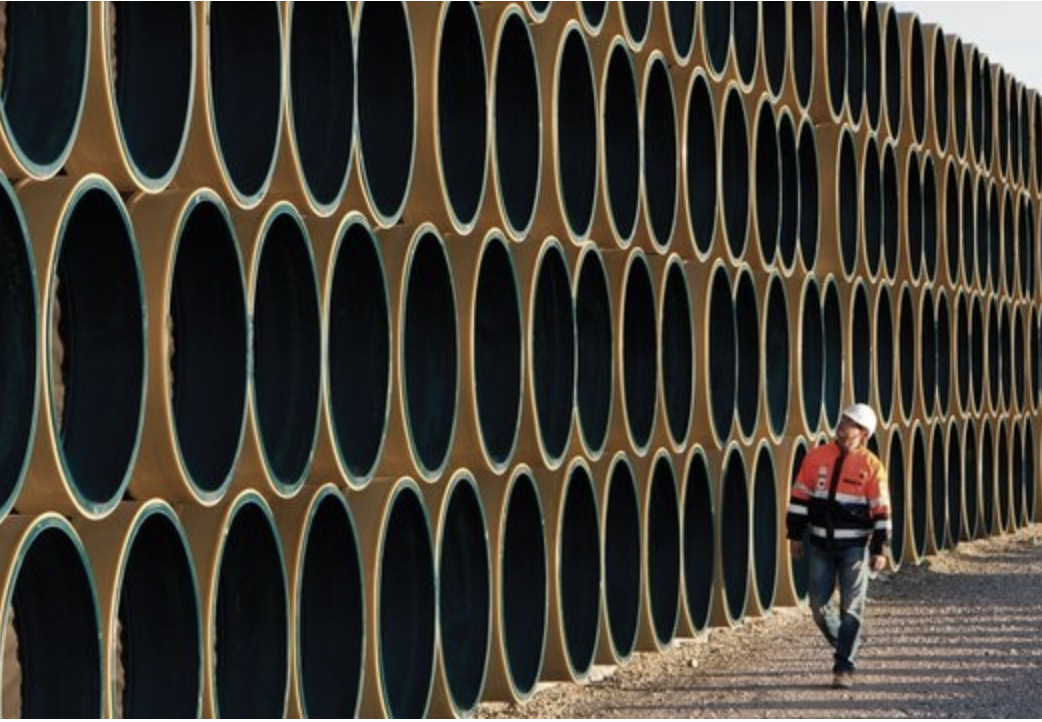
nord-stream-pipesAccording to industry sources familiar with the matter, Munich Re and syndicates within the Lloyd’s of London market are among the major underwriters for Nord Stream 1, the pipeline bringing gas to Europe under the Baltic Sea.

They added that it was unclear whether they would renew its cover. If this is to happen, the possibility of the Nord Stream 1 ever being repaired and restarted becomes more remote.

Although no claims have been filed for the pipeline damage, sources told Reuters that Nord Stream 1’s underwriters could deny any submissions on the grounds of self sabotage or war, neither of which are generally covered by insurance.

There is still speculation regarding who was behind alleged sabotage hat severed the pipelines at the centre of an energy crisis prompted by Russia’s invasion of Ukraine. The only fact is that the damage was caused by powerful blasts, which was confirmed by Danish police.

Although damage would not affect the renewal of a property insurance policy, it could lead to higher premiums, according to Tim Shepherd, a Mayer Brown litigation partner.

Stakes are high for underwriters of the Nord Stream’s pipeline system, which according to its website, was built with €7.8 billion ($7.6 billion) of investment.

The news agency has not been able to identify all its underwriters. However, another source has said that Swiss insurer Zurich, also had exposure to Nord Stream 1.

“Even if you are taking a small size (of cover), it is a big risk,” one of the four industry sources said. It added, “The issue is going to be what happens if you can’t prove it is a state sponsor (responsible for the blasts), you end up with a massive claim for damage.”

Nord Stream 1’s major shareholder, with a 51% stake, is a subsidiary of Russian energy group Gazprom, a company subjected to US, UK and Canada sanctions as well as some restrictions by the European Union.

Two Reuters sources have said that renewal of Nord Stream 1 cover by the Lloyd’s syndicates would be challenging given the risk of tighter sanctions on Gazprom, which would prevent paying claims.

German energy companies Wintershall and E.ON hold 15.5% each. French energy provider ENGIE has a 9% stake. An E.ON spokesperson said Nord Stream 1’s operating company was responsible for operational issues, including insurance.

“Nord Stream AG remains in close contact with relevant authorities about the recent incident. Due to prevailing uncertainties, we as a shareholder continuously monitor developments and are in close contact with the other relevant stakeholders,” the spokesperson said.

Dutch natural gas infrastructure company N.V. Nederlandse Gasunie, which also has a 9% stake, said it would assess the situation as soon as there was more clarity.

According to Reuters, to avoid any claims, lawyers have said that Nord Stream’s insurance companies will need to prove their policy doesn’t cover the damage from the blast.

While property policies generally exclude malicious damage, policyholders often purchase additional coverage, which is likely in Nord Stream’s case, according to legal and insurance sources.

Russian President Vladimir Putin has said the United States and its allies blew up the pipelines, an allegation that has been dismissed by the White House. US resident Joe Biden has said damage to Nord Stream was a deliberate act of sabotage.

Moscow has denied any involvement, but the West has pointed fingers at Moscow. Earlier this month, French President Emmanuel Macron said that Nordic leaders had told their European partners it was still impossible to say at this stage who was behind the damage.

If a Western state actor was found responsible, Reuters highlighted, the damage might be designated as an act of terror, which one broking source said might be covered by insurance.

However, if Russia is implicated, insurance companies could argue it was “self-sabotage”, given Gazprom is state owned. If this is the case, as it was a deliberate act by the policyholder, they would not be allowed to file an insurance claim, David Pryce, managing partner at Fenchurch Law, explained.

Additionally, if Russia is found to be involved in the Nord Stream 1 damages, it would be considered an act of war, something that is typically excluded by insurance policies Reuters stated.

Europe Under Control Of US Mafia – OpEd

Nord Stream Gas Pipelines. Credit: RFE/RL

By 

Who benefits from the sabotage of the Nord Stream pipelines which connect Germany to natural gas in Russia? The U.S. has the means, motive, and opportunity and was publicly opposed to the project for many years. Yet the crime victims are strangely silent about identifying the probable perpetrator.

“And ultimately this is also a tremendous opportunity.  It’s a tremendous opportunity to once and for all remove the dependence on Russian energy and thus to take away from Vladimir Putin the weaponization of energy as a means of advancing his imperial designs.  That’s very significant and that offers tremendous strategic opportunity for the years to come…” – Secretary of State Antony Blinken

On September 26, 2022 both the Nord Stream 1 and Nord Stream 2 pipelines were damaged in an explosion which spewed natural gas into the Baltic Sea between Sweden and Poland. There was never any serious consideration that the cause was accidental. Sabotage was immediately suspected.

Of course, the United States blamed Russia, but Russia has no reason to sabotage the Nord Stream 2 pipeline which they spent millions of dollars building, only to have it go unused after what it calls its special military operation in Ukraine. The United States was vehemently opposed to the project and the Trump and Biden administrations publicly said as much many times.

When Germany’s chancellor, Olof Scholz , visited Washington in February of this year Joe Biden publicly said that the U.S. would “bring an end” to Nord Stream 2 if Russia crossed the border with Ukraine. In his odd way, Biden again gave the game away. The instigation of the Ukraine crisis was meant to shut the project and sanction Russia.

Of course, Germany and other European countries depend on Russian natural gas, but the U.S. has a solution. Liquefied Natural Gas (LNG), fracked gas, produced in the U.S. is presented as the substitute. The idea of ending Nord Stream 2 killed two birds with one stone, hurting Russia and helping the U.S. fracking industry all at the same time.

The disruption to Europe’s energy markets caused prices to soar and Europeans to bitterly complain. Before the pipeline explosion Germans took to the streets demanding that their government’s sanctions policy be jettisoned and their fuel supplies returned to normal. Shortly after the protest demands became quite vocal, the pipeline exploded.

One would think that Europeans would be outraged to see their already limited energy supply cut even further but they are strangely quiet. Sweden announced that it wouldn’t participate in a Joint Investigative Team because of fears that national security would be compromised. That’s a strange position to take considering that a terror attack took place near that country.

The countries involved are more than likely silent because they know that their super power ally, the United States, was involved in the sabotage. They murmur about Russia being the culprit but they also know that makes no logical sense whatsoever.

Europe is under the thumb of the United States, which is determined to turn allies into impoverished vassal states. France is suffering from fuel shortages created by sanctions against Russia and a general strike has been called. Italians are also protesting high fuel prices and are calling for an end to that country’s EU and NATO memberships. But these governments dare not complain.

The U.S. runs a protection racket not unlike that of its infamous organized criminal gangs. The state is reminiscent of characters in the movie Goodfellas, who promised partnerships with local businesses only to loot them and then set them on fire. The Biden administration is akin to a mafioso boss. European governments do nothing but grovel out of fear, which is just what the criminal gang wants.

The truth of U.S. “partnerships” with allies has been revealed as a gigantic fraud. In reality these countries are living under occupation and now there is no pretense that they will be treated any differently from other countries living under U.S. control. Germany, Italy, Spain, Poland, and the UK all have U.S. troops stationed on their soil. Germany has gold reserves held by the Federal Reserves. They are not truly independent and the Nord Stream sabotage shows it.

Russia isn’t the only country the U.S. is trying to weaken. The hegemon has come out of the closet. It has no friends, only enemies and puppets and all end up being treated badly. Europe went along with the scam only to see the ruble rise in value and the euro decline. It turned out that Russia had a strong economy while the Europeans were very weak.

The war in Ukraine isn’t going their way either. Russia has mobilized thousands of new troops and is shelling Ukrainian infrastructure at will. The tables have turned in every respect.

Europe is like an abused wife, living in fear but not knowing how to leave her tormentor. The Biden administration’s team of foreign policy incompetents blow up pipelines in desperation and don’t think about the consequences. American LNG firms will make a killing, but Russia may carve up Ukraine. Europe will be much worse off.

Of course, Biden and company do not behave in a predictable or rational manner. No one knows what they will do. If they would sabotage pipelines, they might also make good on Biden’s outbursts about nuclear war. Their desperation and criminality have brought the entire world to the brink.


Margaret Kimberley

Margaret Kimberley's is the author of Prejudential: Black America and the Presidents. Her work can also be found at patreon.com/margaretkimberley and on Twitter @freedomrideblog. Ms. Kimberley can be reached via e-Mail at Margaret.Kimberley(at)BlackAgendaReport.com."
Twitter is losing its most active users, internal documents show

PUBLISHED TUE, OCT 25 2022
Sheila Dang

KEY POINTS

Twitter is struggling to keep its most active users engaged, which underscores a challenge faced by Elon Musk as he approaches a deadline to close his $44 billion deal to buy the company.

“Heavy tweeters” account for less than 10% of monthly overall users but generate 90% of all tweets and half of global revenue.

The research also found a shift in interests over the past two years among Twitter’s most active English-speaking users that could make the platform less attractive to advertisers.


The Twitter logo is seen on an iPhone mobile device in this illustration photo on 12 October, 2022.

STR | Nurphoto | Getty Images

“Is Twitter dying?” billionaire Elon Musk mused in April, five days before offering to buy the social media platform.

The reality, according to internal Twitter research seen by Reuters, goes far beyond the handful of examples of celebrities ghosting their own accounts. Twitter is struggling to keep its most active users — who are vital to the business — engaged, which underscores a challenge faced by the Tesla chief executive as he approaches a deadline to close his $44 billion deal to buy the company.

These “heavy tweeters” account for less than 10% of monthly overall users but generate 90% of all tweets and half of global revenue. Heavy tweeters have been in “absolute decline” since the pandemic began, a Twitter researcher wrote in an internal document titled “Where did the Tweeters Go?”

A “heavy tweeter” is defined as someone who logs in to Twitter six or seven days a week and tweets about three to four times a week, the document said

The research also found a shift in interests over the past two years among Twitter’s most active English-speaking users that could make the platform less attractive to advertisers.

Cryptocurrency and “not safe for work” (NSFW) content, which includes nudity and pornography, are the highest-growing topics of interest among English-speaking heavy users, the report found.
At the same time, interest in news, sports and entertainment is waning among those users. Tweets on those topics, which have helped Twitter burnish an image as the world’s “digital town square,” as Musk once called it, are also the most desirable for advertisers.

Twitter declined to specify how many of its tweets are in English or how much money it makes from English speakers. But the demographic is important to Twitter’s business, some analysts say.

The platform earned more ad revenue from the United States alone than all other markets combined in its fourth quarter, according to its investor letter, and most ads in the United States are likely targeting English-speaking users, said Jasmine Enberg, an analyst at Insider Intelligence.

Twitter’s study examined the number of heavy tweeters in English who displayed an interest in a topic, based on the accounts they followed, and how that number of users changed over the past two years.

Twitter was motivated to investigate “disturbing” trends among users that may have been masked by overall growth in daily active users and better understand the decline in the company’s most active users, the documents said. The study made no specific conclusions about why heavy users of the platform are declining.

Asked to comment on the internal documents’ findings, a Twitter spokesperson said on Monday: “We regularly conduct research on a wide variety of trends, which evolve based on what’s happening in the world. Our overall audience has continued to grow, reaching 238 million mDAU in Q2 2022,” the spokesperson said, using an acronym for monetizable daily active users.

‘Not safe for work’ content

The number of heavy users interested in NSFW and cryptocurrency content grew, the research found.

Twitter is one of the few major social media platforms that permits nudity on its service, and the company has estimated that adult content constitutes 13% of Twitter, according to a separate internal slide presentation seen by Reuters. The presentation did not elaborate on how the figure was calculated.


Advertisers generally steer clear of controversy or nudity for fear of damaging their brands. Major advertisers including Dyson, PBS Kids and Forbes suspended advertising due to accounts that were soliciting child pornography on Twitter, Reuters reported in September.

In response to the September story, Twitter said it “has zero tolerance for child sexual exploitation” and was investing more resources into its work against such material.

Twitter’s most active English-speaking users were also increasingly interested in cryptocurrencies, reaching an all-time high in late 2021, the internal documents showed. But interest in the topic has declined since the crypto price crash in June, and the study noted cryptocurrencies may not be an area of growth in the future.

Current and former Twitter employees who spoke with Reuters said they feared Musk’s calls for less content moderation and his reported plans to gut the staff, which they said will exacerbate the deterioration of the quality of content.

“Devastating’ losses

Topics that have traditionally made Twitter a popular platform for its millions of users are now in decline among the most active English-speaking users, the documents show.

Interest in world news, as well as liberal politics, showed spikes during major events such as the attack on the U.S. Capitol on Jan. 6, 2021. But the categories have since lost the highest number of heavy Twitter users and have shown no signs of recovery, the report said.

Twitter is also losing a “devastating” percentage of heavy users who are interested in fashion or celebrities such as the Kardashian family. These users are likely decamping to rival platforms such as Meta Platforms’ Instagram and ByteDance’s TikTok, a Twitter researcher wrote.

The study also expressed surprise about the decline in interest for e-sports and online streaming personalities, which were previously growing quickly across Twitter. “The big communities are now in decline,” the report said.

“It seems as though there is a significant discrepancy between what I might imagine are our company values and our growth patterns,” one Twitter researcher wrote.
Twitter employees hit out at Elon Musk’s plans to cut 75% of staff

Staff at the social media platform have reportedly written an open letter about the billionaire’s proposal


By Rachael Davies
2 days ago

Twitter employees have slated Elon Musk’s reported plans to replace or remove the jobs of 75 per cent of the social media platform’s workforce if his deal to buy it proceeds.

The billionaire’s plans, which were reported in The Washington Post last week, would account for 5,500 of the 7,500-strong workforce. Mr Musk previously described Twitter’s workforce as bloated, saying it had a “strong, left-wing bias”.

Before the deadline to agree on a deal on Friday, October 28 , TIME reports that it has seen a draft of an open letter that Twitter employees plan to circulate.

The employees demand that Mr Musk commits to preserving the company’s existing workforce. They argue that he should not discriminate against employees based on their political beliefs. There are also demands that the potential buyer must commit to fair severance policies and clearer communication about working conditions.

“Elon Musk’s plan to lay off 75% of Twitter workers will hurt Twitter’s ability to serve the public conversation,” reads the letter. “A threat of this magnitude is reckless, undermines our users’ and customers’ trust in our platform, and is a transparent act of worker intimidation.

“We demand to be treated with dignity, and to not be treated as mere pawns in a game played by billionaires.”

The identities and number of people who have signed the as-yet-unpublished letter have not been made public. Employees have reassured possible signatories that “signatures will not be made public unless we have critical mass”.

The letter outlines the potential damage cutting the workforce so drastically, citing the impact that Twitter has on communities around the world. This includes “uplifting independent journalism in Ukraine and Iran”.

Many people have expressed concern about issues with content moderation and network outages if key teams are left understaffed. It has not yet been confirmed if or when the open letter will be made public, having only been reviewed by TIME so far.

PM Sunak faces a very different economy to the one he left as chancellor

By , Senior Lecturer in Economics, The Open University

As the incoming UK prime minister, Rishi Sunak has the immediate advantage of perceived success in his two years as chancellor. His tenure ended last July when he resigned due to a difference of opinion with then-prime minister Boris Johnson over the economy. But during his time as chancellor, he is credited with rescuing households and businesses from the effects of the COVID pandemic lockdowns by launching an innovative and impressively timely furlough scheme. He reversed a “small state” approach to become the private sector’s temporary paymaster, spending an unprecedented £70 billion to shorten the recession.

This image of having saved the nation by minimising the loss of national output and employment during the pandemic has outshone the less successful moments of his chancellorship. This includes inadequate fraud-proofing of furlough supports, the coronavirus surge that followed his “eat out to help out” hospitality revival scheme and the discussion of his well-sheltered family finances.

But as he takes up the UK’s highest office, the economic supports that enabled the furlough scheme have largely fallen away. The government’s long-term borrowing costs, previously close to zero, had risen above 5% by mid-October, even with the Bank of England shoring up demand to keep bond yields down. At the same time, consumer borrowing has also risen in cost, dowsing any hope of a post-pandemic bounce-back of growth-promoting investment.

The UK now faces a worsening credit rating, which is adding to the risk premium (and therefore cost) that investors place on public debt. And consumers are unlikely to spend their way out of the expected recession. Millions are already struggling to meet rising food, fuel and mortgage bills, knowing their energy costs could jump again when the current price cap ends in April 2023.

In the US, where Sunak earned his MBA and made his fortune, post-crisis presidents are often seen as “Lone Ranger” figures. They ride into town (with a masked companion) to resolve a desperate situation, winning over an initially sceptical public with effective steps that overcome past rivalries and injustices.

Contemporary American Conservatives have emphasised additional plot twists: the Ranger must overcome prejudices and sidestep rigid laws to save the day. This certainly speaks to the task ahead for Sunak as he becomes the fifth UK prime minister in six years.

Staggering under stagflation

Unusually, UK firms are experiencing widespread labour shortages right now, among other supply constraints that usually characterise the peak of a boom rather than the brink of a recession. That’s down to the decade-long stagnation of UK labour productivity. This is a problem that Sunak as a backbencher wanted to tackle with doses of deregulation and labour-market discipline, but which as chancellor he left unresolved.

Productivity growth picked up after the UK propelled the EU to complete its single market from 1992. So Sunak’s support for leaving the EU remains an obstacle to his re-uniting the Conservatives and rebuilding badly burnt bridges with European trade partners. Their importance has been heightened by the declining chance of any transatlantic trade deal and the slowdown in the Chinese economy, which will dampen growth across emerging Asia.

So what’s a new prime minister to do? Having resigned from the cabinet in July, triggering the very Conservative infighting that has now led him to the top job, Sunak can leave the difficult fiscal choices to Jeremy Hunt, his successor as chancellor. But the prime minister still bears ultimate responsibility for the direction the government takes to deal with the economy. Hunt’s statements so far have rescinded most of Kwasi Kwarteng’s mini-budget, indicating that the new government has no room for tax reduction and could be preparing for more painful cuts in public spending instead.

If Hunt sticks to the Conversatives’ election-winning 2019 pledge of no rises in income tax, VAT or national insurance, the government will probably need to deploy “stealth taxes”. This means leaving working people to be taxed more as their wages rise to keep pace with prices while a four-year freeze in tax thresholds imposed by Sunak is still in place. Social benefits could also be allowed to erode through being raised by less than inflation.

The present high rate of inflation would also, in the past, have eased the government’s financial pressures by eroding the costs of public and private debt. But that shield has worn thin. Payments on 25% of the government’s debt are now aligned with the inflation rate, and lenders are rapidly passing on the rise in borrowing costs to mortgage and credit card borrowers.

Former prime minister David Cameron could cite an outgoing Labour government’s budget hole for earlier austerity rounds. But Sunak will struggle to blame his predecessors for the new fiscal squeeze the UK faces. Supporters of Kwarteng are likely to continually remind him – as ex-prime minister Liz Truss did on her way to beating him in the previous leadership contest – that tightening fiscal policy now will only deepen the recession predicted by the Bank of England and many independent analysts.

The rescuer from Number 11 must become “Austerity Rishi” now he’s moved next door. This could make it far more difficult for the Lone Ranger to ride into the sunset after saving the day.

theconversation.com/uk

BOTH ARE TAX CHEATS

Britain's new Prime Minister and his wife are far richer than King Charles III and Camilla


Stewart Perrie
Published 
Britain's new Prime Minister and his wife are far richer than King Charles III and Camilla

Featured Image Credit: PA Images / Alamy Stock Photo. David Levenson / Alamy Stock Photo

Rishi Sunak's and his wife Akshata Murty's reported wealth has been revealed after he become the UK's newest Prime Minister and it's simply jaw-dropping.

Sunak and Murty have built up a sizeable fortune over the years and it's even bigger than the biggest name in British culture.

The Sunday Times Rich List places Rishi and Akshata's wealth at a casual £730 million (AUD$1.3 billion).

While you might gawk at such a figure and cry into your beans and toast, that only makes them the 222nd richest people in the UK.

Imagine more than 200 people being richer than you when you have three-quarters of a billion dollar fortune.

Rishi Sunak is anticipated as becoming the UK's next Prime Minister. Credit: Russell Hart/ Alamy Stock Photo

Sunak and Murty's wealth is more than double that of King Charles III and Queen Consort Camilla

The Guardian says the new British King and his wife have a fortune that ranges from £300 million (AUD$536 million) to £350 million (AUD$626 million).

News Corp reports Rishi Sunak is expected to be one of the richest Prime Ministers in UK history; that is, if he's not on the top of that list.

He earned a sizeable wealth from his days as a hedge fund manager before moving into politics.

However, it's his wife's investments that see the power couple have such an eye-watering fortune.

Akshata is the daughter of one of India's richest men, N.R. Narayana Murthy, who is the founder of tech giant Infosys.

Her stake in the company is worth around £690 million (AUD$1.2 billion), according to news.com.au.

Murty's father issued a statement to Bloomberg after Rishi was confirmed to be Britain's next Prime Minister.

“We are proud of him and we wish him success. We are confident he will do his best for the people of the United Kingdom," he said.

Credit: PA Images / Alamy Stock Photo

Sunak was elected the new PM after Liz Truss revealed she was stepping down from the top job.

The former chancellor, 42, became the outright favourite to hold the position after former Prime Minister Boris Johnson said he would not be announcing a leadership bid.

When announcing his renewed bid to become Prime Minister, Sunak - who worked as Chancellor of the Exchequer promised to lead the UK with 'integrity, professionalism and accountability'.

His statement read: "The United Kingdom is a great country but we face a profound economic crisis.

"The choice our Party makes now will decide whether the next generation of British people will have more opportunities than the last.

"That's why I am standing to be your new Prime Minister and Leader of the Conservative Party. I want to fix our economy, unite our Party and deliver for our country.

"I served as your Chancellor, helping to steer our economy through the toughest of times."


“Sunak, the Messiah? No, he’s a very naughty, naughty little boy!
October 26, 2022,  


British Indians, across the length and breadth of the U.K., were “cock-a-hoop” yesterday, as one Tory MP put it (who says that anymore?). Indeed, this year’s Diwali delivered a very special gift. Our first brown Prime Minister; the historical significance of the moment was overwhelming for many. The inevitable Ram & Sita memes were doing the rounds like a whirling Dervish (“Dervish”, who says that anymore?) and the queue of Indian parents outside Winchester College, looking to enroll their offspring, has grown exponentially overnight. Poor little Asian kids; becoming a doctor is no longer good enough. However, we would do well to remember that while Lord Ram returned to Ayodhya having soundly vanquished his foes, Rishi Sunak has reached his summit purely through attrition i.e. he hid under a table while all the other candidates either withered away or imploded of their own accord. Moreover, if there had been another nominee and the vote had gone to the membership, it’s quite doubtful that the largely white congregation would have voted for him. Let’s also not forget that it was Rishi and his Brexit pals that created the economic debacle that caused the leadership crisis in the first place.

This is our “Obama moment” someone gushed at me over dinner last night. “Oh Purleeez” I responded. Let’s not get carried away and put Sunak in the same league as a seasoned international statesman like Obama. Sunak, who’s only been a serving MP for the last seven years, has little to no diplomatic credentials nor the gravitas to match. Skills that are critical at present given the heightened geopolitical tensions in Europe and the far east. Rishi is a chancer by comparison. Also, importantly, Obama won a general election and wears full length, big boy trousers unlike our leader.

As for calling out the gaping chasms in his predecessor’s mini budget, a lobotomized apricot could see the problems with embarking on an unfunded programme of huge tax cuts. No one was surprised that Liz Truss didn’t have a Scooby Doo (clue) about public finances, so it’s hardly something to hang one’s hat on.

Moreover, it was the Tory Party’s ill-conceived Brexit project, built on fables and lies, that precipitated the UK’s financial woes in the first place. Anyone who hasn’t figured out that leaving the largest free trading bloc in the world was only going to lead one way, having already knocked around 5% off our GDP (by some estimates), needs to wake up. Brexit was always about creating enough dislocation to create excess gains for the elite few at the expense of the majority. Rishi Sunak was and is a hardcore champion of that Brexit agenda.

As a result of the last few weeks of economic turmoil, caused almost completely by the battle for supremacy within the Tory Party (three different PM’s in the last three months), Sunak will now have to embark on a programme of tax hikes and severe public spending cuts. This on top of the burgeoning energy costs and climbing interest rates only spells more misery for the average family. Yet the government still refuses to tax those who are making super profits at this time – the energy companies.

Rishi has to get Brexit “really” done i.e. fix the highly contentious and potentially flammable Irish border issue, get inflation under control and bring interest rates back down, bag some significant international trade deals, not kill the public sector through a programme of austerity while still reducing government borrowing, get immigration under control (to keep the party hard liners happy), reduce regional economic disparities (so called “level up”) and unite the party which has been left deeply fractured by endless internal battles. That’s just the in-tray on day one. All the while, Boris Johnson (still fantasizing about rising awkwardly like a rather odd shaped phoenix from the burnt remnants of his political career) will be waiting in the wings, plotting and attempting to destabilise the Sunak government; not to mention the opposition party who are way ahead in the polls and baying for a general election now.

There’s no doubt that Rishi is the best qualified candidate the Tories have at this moment (the best of a bad bunch if you will) and his appointment, certainly in the short term, will give financial markets a much needed breather from all the recent volatility. However, if “Rishi Rich” fails, we could see GBP fall below the US Dollar, the UK losing whatever global status and influence it has left (both politically and economically), the price of goods and services continue to rise, potential social unrest and the country heading to a general election and yet another PM sooner rather than later. That’ll be it for another non-white PM for a while. It will also prove an existential moment for the Tories who will probably be sent into exile for a generation and deservedly so. From the Empire to Brexit chaos, a three-hundred year, right wing programme of greed is finally coming to a conclusion, one way or another.


Arup Ganguly has spent 27 years in the global banking sector and currently sits on the boards of several companies in the tech and finance space. Arup has been a guest columnist