Thursday, October 27, 2022

Protests break out in Tibetan capital against China’s strict Covid restrictions

Tibetans take to Lhasa streets in first demonstrations since 
2008 Tibetan Uprising.
By RFA Tibetan
2022.10.26


Protests break out in Tibetan capital against China’s strict Covid restrictionsIn this combo of image grabs from citizen videos taken Wednesday, Oct. 26, 2022, residents protest in a street in the Tibetan capital Lhasa, China. A rare protest broke out in at least two locations in Lhasa, angry over a harsh COVID-19 lockdown in the city, sources in Tibet told RFA Tibetan Service.
 Credit: Citizen video

Angry residents in the Tibetan regional capital of Lhasa took to the streets on Wednesday to protest the harsh COVID-19 lockdown that Chinese authorities have imposed on them for more than two months, Radio Free Asia has learned.

They were the first protests in the city since the 2008 Tibetan Uprising, a series of demonstrations against the Chinese government’s treatment of the ethnic minority group. Chinese police and military forces crushed that uprising, killing dozens.

Videos obtained by RFA show scores of protesters on the streets. A daytime video shows people mostly standing or milling about, with officials in white protective suits standing nearby. In two nighttime videos, crowds and cars block a large street and the crowd surges forward while raising their voices. 

Protesters can be heard speaking both in Tibetan and Mandarin Chinese in the videos, but it's hard to decipher what they were saying.


Sources informed RFA’s Tibetan Service that the protesters warned Chinese officials that they would "set off a fire" if they refused to lift Covid lockdown restrictions, enacted under Beijing’s Zero-Covid Policy. 

The protesters did not specify what they meant exactly, but they might have alluded to self-immolations, more than 150 of which have happened since 2009.

Based on street signs and restaurant names that RFA located on maps, the protesters appeared to be on the street in the “Chakrong” area, in Lhasa’s Chéngguān district in the eastern part of the city, as well as in the Payi area of the city.

One source also told RFA that Tibetans in Lhasa fear that scuffles between civilians and Chinese police could turn violent.

The lockdown in Lhasa began in early August as COVID numbers there and throughout China continued to climb. 

Lhasa residents have said on social media that the lockdown order came without enough time to prepare, leaving some residents short on food, and making it difficult for those infected with the virus to find adequate treatment.

RFA reported late last month that a source inside Tibet confirmed reports on social media that Tibetans in Lhasa were jumping from buildings.

Formerly an independent nation, Tibet was invaded and incorporated into China by force more than 70 years ago, and Tibetan spiritual leader the Dalai Lama and thousands of his followers later fled into exile in India and other countries around the world following a failed 1959 national uprising against China’s rule.

Chinese authorities maintain a tight grip on the region, restricting Tibetans’ political activities and peaceful expression of cultural and religious identity, and subjecting Tibetans to persecution, torture, imprisonment and extrajudicial killings.

Tibetans are not alone in suffering particularly harsh Chinese zero-COVID lockdowns and other restrictions. 

RFA reported last month that at least 22 people died of starvation or lack of medical attention due to China’s COVID lockdown policies in the northern Xinjiang city of Ghulja.

Videos posted by desperate Uyghurs on Chinese social media platforms—and quickly deleted by government censors—show local people under strict zero-COVID lockdowns struggling to access food and medical care, with some saying family members had starved to death.

Translated by Tashi Wangchuk. Written in English by Eugene Whong.

CAMBODIA

Hun Sen threatens to dissolve Candlelight Party over connection to Sam Rainsy

Trigger appears to be the opposition leader’s comments about the king.
By RFA Khmer
2022.10.26

Hun Sen threatens to dissolve Candlelight Party over connection to Sam RainsySupporters of the Candlelight Party take part in a rally on the last day of campaigning for the commune elections in Phnom Penh, Cambodia, June 3, 2022.
 AFP

Cambodian Prime Minister Hun Sen on Wednesday threatened to dissolve the opposition Candlelight Party if it does not clarify its stand on alleged insulting comments about King Norodom Sihamoni by exiled opposition leader Sam Rainsy.

Sam Rainsy, co-founder of the now banned opposition Cambodia National Rescue Party, or CNRP, fled to France in 2015 to avoid arrest for various charges.

On Monday, he posted a comment on Facebook  that in 2005, Hun Sen forced the king to support a “treasonous act” – a reference to signing a border treaty with Vietnam – otherwise he would abolish monarchy. Sam Rainsy also blamed Hun Sen for using the king to shield his dictatorship.

“The king today has no national conscience, not even a little,” Sam Rainsy said in the video. “After Hun Sen, the king of Cambodia betrayed the nation, because we supplemented others, betrayed the nation completely, because we cut off Khmer territory to foreigners.”

On Wedneday, Hun Sen responded by demanding the Candlelight Party make its stance on Sam Rainsy clear.

“Is Sam Rainsy right or wrong? I want the Candlelight Party to clarify its stand on Sam Rainsy’s statement claiming the King has no conscience. The party’s leaders need to clarify before our compatriots,” Hun Sen told a crowd at a public gathering in Kampong Chhnang province.

Hun Sen, who has ruled Cambodia for nearly four decades, also urged party activists to join his ruling party, saying the Candlelight Party is at risk of being dissolved. 

In 2017, Cambodia’s Supreme Court dissolved the CNRP, a move that allowed Hun Sen’s ruling Cambodian People’s Party to capture every seat in the National Assembly in 2018 general elections.

“It isn’t a small story, and [it’s] not a joke,” Hun Sen said. “The Candlelight Party members must immediately defect to avoid any problem [because Sam Rainsy’s supporters in the party] want to topple the government and monarchy.”

On Tuesday, Cambodia’s Ministry of Justice alleged that Sam Rainsy had seriously insulted the king and ordered Phnom Penh Municipal Court to take immediate and strict legal action against him, though he has been sentenced to life in prison and permanently barred from engaging in politics.

Hun Sen recently tried to convince party activists to condemn Sam Rainsy for supposedly insulting the king, calling on party vice presidents Thach Setha and Son Chhay to issue a statement.

The prime minister also said he learned of a phone conversation between CNRP co-vice president Eng Chhai Eang and Candlelight Party officials about setting up the party’s network in Ratanakiri province. The prime minister told the crowd that political parties can’t work with “convicts” in accordance with the law. 

“With this, I want to tell you [the Candlelight Party] that you are facing any issue for yourself, so what you should do is to clarify your stand over Sam Rainsy’s comment. Is it right or wrong? I want an affirmation from you,” said Hun Sen. 

He went on to say that he has a problem with the Candlelight Party because the party was founded by Sam Rainsy. 

Senior Candlelight Party officials said they have no connection to Sam Rainsy. Thach Setha, who also serves as the party’s spokesman, said the Candlelight Party acted in accordance with the law and has a leadership structure that has nothing to do with Sam Rainsy. 

He said the party would issue a statement on its stand, but would not condemn Sam Rainsy as a person. 

"We work independently, we have full sovereignty of our party, we do not accept orders from anyone,” Thach Setha said. “We will make a statement but not name a specific person, and [condemn] all of those who insult the king. Those who abuse the constitution, we will also condemn. We fight to protect Cambodia and the throne.” 

Political analyst Em Sovannara said the country’s leaders should not compromise national interest with political conflict, and that Cambodia has no law prohibiting citizens or politicians from talking to “convicts.” 

"Yes, if we talk about communication, it is not illegal,” he said. “Any person has the right to communicate, the accused, the convict or the prisoner. The politician has the right to communicate.”

Translated by Samean Yun for RFA Khmer. Written in English by Roseanne Gerin.

 Uyghur demonstration in Washington, D.C. Photo Credit: Malcolm Brown, Wikipedia Commons

Palestine And Uyghur: Muslim But Different Policies – OpEd

By 

The discrimination against Muslim Uyghur in Xinjiang, China has been a prominent issue. In early September, the United Nations High Commissioner for Refugee (UNHCR) brought up the issue into its table and offered its members a vote. As a result, 19 of 49 countries rejected or refused to have investigated China’s Uyghur. Of those countries, Indonesia was one of them. The rejection of those countries including Indonesia was to refuse the debate of Human Rights violations in Xinjiang. 

For some contexts, in recent years, there have been numerous reports revealed about Xinjiang’s Muslim. The reports asked for the Chinese government to take its accountability for its massive human rights violence such as mass detention, political indoctrination, and forced assimilation. The latest report from Amnesty International noted that there are several missing of Muslim Uyghur. Since August 2020, Weilina Muhatai, an ethnic Kazakh woman living in Xinjiang, and her two sons, Muhayanti Haleyora and Parisati Haliyoula, has been missing. In another case, Halitoula Tuerxun died in detention in December 2020. 

Regarding its rejection, the Indonesian government argued that Indonesia does not want to be involved in political tensions between China and the United States. The vice ministry of foiregn affairs in Jenewa, Febrian A Ruddy said, “Indonesia considered that the approach proposed by submitted countries and Human Rights Councils does not make a significant action for Human Rights […] hence based on the considerations, Indonesia does not take a agreed position towards the debate.”

Through Indonesia’s action about human rights, many researchers ask Indonesia’s empathy and inquire about the basic principle of Indonesia’ s foreign policy called free and active. They said what we called “free and active” has been misinterpreted by the government. 

Palestine is active mode, but Uyghur is in silent 

CNN Indonesia also has highlighted that why Indonesia always focuses on Palestinian issue but in the sametine, Indonesia denies Uyghur issue. 

Similar to the reports of Uyghur disrimination, there are many reports that involve Indonesia supporting Palestine’s sovereignty. According to Antara News, on July 2022, Indonesia Ambassador to Spain, Muhammad Najib said Indonesia was continuing to support Palestine. He said, “Indonesia always stands together with Palestine, now and forever.” 

Indonesia also encouraged its support by fostering communication and exchanging views with Palestine’s envoy, when Indonesia’s envoy met Husni Abdel Wahed, Palestinian Ambassador to Spain. 

Furthermore, in May 20, 2021, the Indonesian Minister for Foreign Affairs, Retno Marsudi on the General Debate of the 67th Plenart Meeting of the UN General Assembly at the UN, New York, USA affirmed that Indonesia’s present on Palestinian issue is for humanity, justice, and ceasefire. “The continued occupation and the aggression by Israel does not only warrant condemnation but is also a grave violation of international law.  The UN must immediately take concrete action,” said Retno Marsudi. 

But, Indonesia’s support to Palestine does not exist as same policy as Uyghur Muslim. 

Reported by Jakarta Post in Dec. 23, 2019, Moeldoko, Presidential Chief of Staff said Indonesia does not have a need to meddle in the internal affairs of China. Thus, China has rights to control its resident by its policy, including Uyghur Muslim. 

Indonesia hurts its constitution: Neutrality?

Both involved actors, Palestine and Uyghur, are Muslim aligning with Indonesia’s population that mostly 90 percent are Muslim. 

Though that fact, Muslim Arbi, the Director of Gerakan Perubahan, argued that Indonesia’s action in UNHCR contrats with the substance Undang-Undang Dasar (UUD) 1945 and humanity concept as the basic principle of Indonesia’s foreign policy. 

In Indonesia’s constitution, particularly about Indonesia’s foreign policy, article 3 in 1999, the doctrine of free and active is not only about neutrality, but also how Indonesia can act wisely to respond to international problems. Consequently, Indonesia should promote peace, sovereignty, and social justice. That point also emphasises that Indonesia is active in solving any disputes. 

At this point, Indonesia should make a clear stance against Uyghur. Indonesian diplomats do not do a vast amount of research about their decision. Despite a lack of knowledge, a good decision is supposed to represent the interest of Indonesia’s people. In fact, the Indonesian government does not do that. 

For examples, reported by CNN Indonesia in Dec. 2019, Front Pembela Islam (FPI) and its 10 million followres, did a demonstration in front of China Embassy in Jakarta, Indonesia. They asked for justice for Uyghur Muslim. The action was also held in the same place in 2022. They did that because of the similarity of identity. In Islam, even though they are a foreign citizen who lives in other countries and they are a Muslim, the Muslim people will say “we are brothers.” Muslim will refer to Al-Hujurat verse 10. 

Hence Indonesia’s decision on Uyghur issue not only hurts Indonesia’s Muslim people, but also the constitution. 

M Habib Pashya, a researcher at the Center for Indonesia-China Studies (CICS)

Uyghur demonstration in Washington, D.C. Photo Credit: Malcolm Brown, Wikipedia Commons

Malala And Greta Thunberg: Two Global Icons Spurned In Their Own Countries – OpEd


By 

Two teenage girls, Malala Yousafzai from Pakistan and Greta Thunberg from Sweden, swiftly came under the global spotlight due to their life-risking campaigns for the girl’s education and the climate change – two noble causes –, respectively. Within the few years of their campaigns, they have succeeded in magnetizing millions to their causes across the world. Thus, they have emerged as the powerful voices echoing on the streets, in the legislative houses and on the international forums world over. However, unfortunately, they are spurned in their own countries, by their own people. 

In fact, the Taliban rank and file had escaped to Pakistan in the face of the US attack on Afghanistan in 2001. The Taliban foot-soldiers had gathered in the Af-Pak tribal areas on the Pakistani side. Plus, they kept crossing Af-Pak border back into Afghanistan to attack the US-led coalition forces. This embarrassed the US. The US demanded the Pakistani government to operate against the Taliban gangs. Pakistan succumbed to the US pressure and conducted cleansing operations in 2002. The Taliban retaliated against the Pakistani government. Besides, in the process, the Pakistani Taliban, who used to support the Afghan Taliban against the US, banded together and formed the Tehrik-i-Taliban Pakistan in 2007.

Accordingly, the TTP envisioned overthrowing Pakistani government, to establish caliphate in Pakistan and to institute the Islamic laws. To attain its agenda, the TTP began fighting the Pakistani forces in the Federally Administrative Areas of Pakistan, especially made Sawat Valley the center of its operations. The Taliban demolished state installations, mainly girls’ schools and the hospitals. They banned girls’ education, entertainment activities, and for that matter forbidden women’s walking out of home

At this time of gloom, Malala Yousafzai, an 11-year-old girl, came out, raised the voice against the Taliban’s demolishing of schools and the other brutalities. Moreover, she was banished to a far-flung area as an internally displaced person in the face of the state forces’ operations against the Taliban militants in her home town. Thus, within a few years, she became a powerful advocate of education, especially of the female education in a region the Taliban swept through. Unfortunately, on Oct 9, 2012, at the tender age of 14, the Taliban gang singled out Malala on a school bus back to her home from the school and shot two bullets in her head

In fact, even before she was shot, Malala had already assumed fame as an education activist across the globe. Thus, a global sympathy poured out just the news of the Taliban’s shooting her reached the masses. Resultantly, critically injured Malala was hurriedly flown to the Queen Elizabeth Hospital, UK, to receive a perfect treatment. Luckily, Malala survived the Taliban bullets and returned to the normal life after an intense care at the hospital, perfect specialist treatment and many surgeries. But her sacrifice for the protection and the promotion of the girls’ education was duly paid. That incident of shooting her earned her international fame and soon she became a global icon. As a fact, she was revered with an opportunity to address the UN General Assembly in 2013, and she was rewarded with the most prestigious prize in the world – Noble Peace Prize – in 2014.

However, the majority of the Pakistanis, her country fellows, hate her. She is despised and labeled as the stooge of the West, especially of the US and Israel – a typical conspiratorial blame, ubiquitous in Pakistan. On the other hand, the Taliban, their sympathizer and admirer politicians, religious extremist influencers, religious extremist outfits, organizations and their fundamentalist religious philosophies are cherished in Pakistan.

The TTP – an umbrella militant organization – is a feral militant organization. It has wiped out thousands of the Pakistani army soldiers and the common innocent people – children, women and the old. Consequently, The Pakistani army and the air force have been fighting the Taliban militants since 2001, and up to date. However, the Pakistani military hasn’t been able to remove a single head of the Pakistani Taliban. It was the US drone strikes that have been eliminating the successive TTP leadership. The US drone strikes killed the Pakistani Taliban founder, Nek Mohammad and in a series Baitullah Mehsud, Hakimullah Mehsud and many others. Ironically, the Pakistani state, government and the society furiously react to the every US drone attack that kills the Taliban leaders. Needless to say, they had exuded rage upon the killing of the Al Qaeda leader Osama bin Laden as well.

Moreover, Imran Khan who had spent his prime-age-time-period in Europe, America and the non-Muslim world with an entirely western life style unleashed the fury over the killing of the TTP chief, Hakimullah Mehsud who was the butcher. In addition, Khan asked his party government in Khaber Pakhtunkhuwa to pass a resolution the KP assembly to block NATO supply routes to Afghanistan. In a similar fashion, Afia Sidique, a Pakistan citizen who is serving an 86-year imprisonment upon her involvement in killing the NATO forces is held in high esteem and adored with the title “daughter of the nation.

Besides, when the government decided to negotiate the Taliban as they had already shot Malala and killed thousands, demolished schools, hospitals and the other infrastructure worth of millions, the Taliban nominated Khan the one member of their negotiating team. Although Khan had apologized the Taliban to be their team member, he ensured them that he would facilitate the dialogue. 

Even though Khan was an aggressively pro-Taliban politician, and the society feared the Taliban most yet he was elected the prime minister in 2018 general elections. Though the Pakistan National Assembly ousted Khan through the vote of no-confidence before he completed his full tenure, he is the most popular politician in Pakistan and is one the top influential in the Muslim world. However, Malala, a noble laureate, can’t move freely in Pakistan.

In fact, like Malala, Greta Thunberg is also a global figure. She is a teenage Swedish girl. She is a climate activist. Her climate campaign has aroused millions to protect the Earth mother. In 2019, she was nominated for the Noble Peace Prize. However, Greta too, like Malala, is disowned in her own country. 

Sweden is one of the most democratic, progressive and happiest country in the world. In Sweden, around half a dozen political parties contested the 2022 elections. One of the contestant parties was the Green Party of Sweden, which could secure only 18 seats in the 349 member house. The Green party participated in the last elections with the manifesto promising a clean and green Sweden, and the Europe. However, the results of the elections displayed the surge in the vote percentage for an extremist and anti-migrant party. Thus, as Malala in Pakistan, Greta’s philosophy was defeated in her own country, by her own people. 

The societies and the states the usurping communities, classes, groups, outfits and the individuals preponderate and rule hate the truth and the reality. They monopolize the state and the state resources. Since the state resources use to be on their hand, they propagate their usurping ideas, narratives and information effectively compared to any other revisionist socio-political group or individual. In this situation, the resistant socio-political groups and their ideas, narratives and information are suppressed at the state level and loathed in the society. Thus, in these states and the societies the truth is a despicable thing and the fake and the lies are sacralised.

Raza Shahani Teaches at the Department of Pakistan Studies, Shah Abdul Latif University Khairpur, Sindh, Pakistan

 Stuff photographer wins New Zealand Geographic Photographer of the Year

Taranaki-based photographer Andy MacDonald has been named New Zealand Geographic Photographer of the Year, marking the third consecutive year Stuff photographer has taken out the prize.

MacDonald was awarded the prestigious title for a portfolio of images covering social stories, landscapes and wildlife.

“The images were full of colour, action and meaning,” said New Zealand Geographic publisher James Frankham.

READ MORE:
Stuff photographer scoops New Zealand Geographic Photographer of the Year award
'In the right place with the right lens': Stuff photojournalist Alden Williams wins prestigious award
Wellington photographer takes out New Zealand Geographic photographer of the year award

“It’s the result of hard graft as a photojournalist, and the eye of an artist looking for patterns, juxtaposing subjects, making angles.”

Macdonald receives a $30,000 Heritage Expeditions voyage for his win.

He also won the Lightforce Aerial category at the New Zealand Geographic awards.

Stuff photographer Andy MacDonald has been named New Zealand Geographic Photographer of the Year for his portfolio of images covering social stories, landscapes and wildlife.
ANDY MACDONALD/SUPPLIED
Stuff photographer Andy MacDonald has been named New Zealand Geographic Photographer of the Year for his portfolio of images covering social stories, landscapes and wildlife.

In addition to MacDonald’s big win, Stuff photographers also took out awards across three other categories.

Ryan Anderson won Electric Kiwi Young Photographer of the Year for his portfolio of social documentary photography.

Ricky Wilson claimed the Lumix Society award for his image of a dressing room at a drag cabaret on Auckland’s Karangahape Road.

New Zealand Geographic publisher James Frankham said that MacDonald’s photos were “full of colour, action and meaning”.
ANDY MACDONALD/SUPPLIED
New Zealand Geographic publisher James Frankham said that MacDonald’s photos were “full of colour, action and meaning”.

The Resene Built Environment category was won by Mike Scott for his photo of a silhouette on a bridge in Hamilton.

More than 6000 entries were submitted to seven different categories in this year’s contest – the largest number of submissions in the competition’s history.

“2022 marked a change for Kiwis, a cautious re-emergence from social distancing into a world of gradually increasing freedoms,” Frankham said in a statement.

MacDonald’s images were the “result of hard graft as a photojournalist”, said New Zealand Geographic publisher James Frankham.
ANDY MACDONALD/SUPPLIED
MacDonald’s images were the “result of hard graft as a photojournalist”, said New Zealand Geographic publisher James Frankham.

“We were flooded with images of quiet hope, resurgent social gatherings, and in particular, photographs of nature that were dramatically backlit or featured figures dwarfed in their landscape – images of the natural world that evoked awe, scale and the intrinsic power of land and sea.”

Finalists’ work is being showcased at a free public exhibition at the Britomart Precinct in downtown Auckland, and is also available to view on the New Zealand Geographic website.

Stuff photographer Andy MacDonald has been named New Zealand Geographic Photographer of the Year.
ANDY MACDONALD/SUPPLIED
Stuff photographer Andy MacDonald has been named New Zealand Geographic Photographer of the Year.
New UK Prime Minister’s Cabinet Raises Rights Concerns

Rishi Sunak Needs to Reaffirm Britain’s Commitment to Human Rights


Yasmine Ahmed
Director, United Kingdom
HRW
@YasmineAhmed001


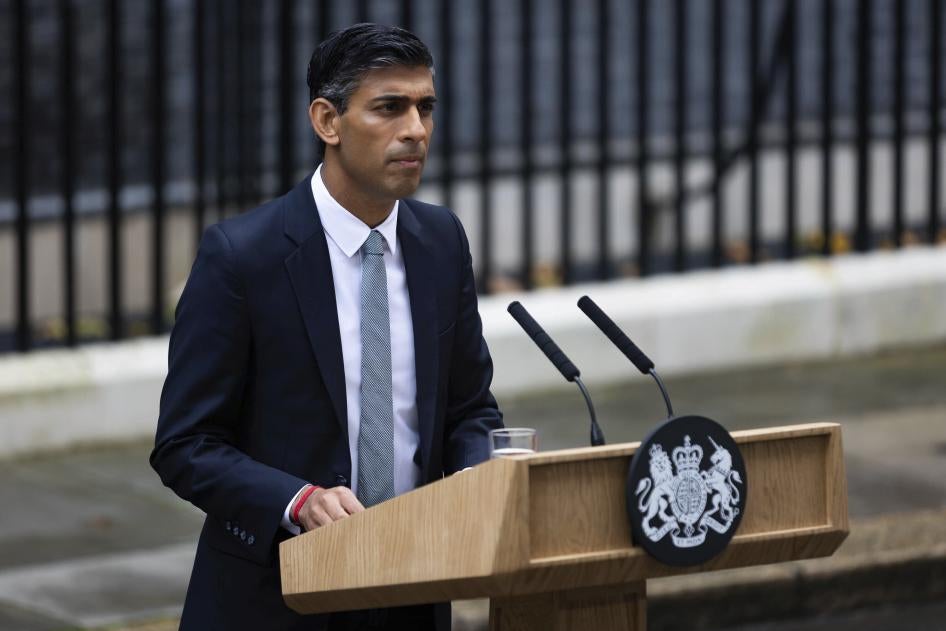
Rishi Sunak makes his first speech as British prime minister outside 10 Downing Street, London, October 25, 2022. 
© 2022 KGC-254/STAR MAX/IPx via AP Photo

These are unprecedented times in modern British politics. Rishi Sunak has become the third Prime Minister in less than two months, taking the helm during a political, social, and economic tempest. The task ahead of him is herculean, with an estimated 8 million people in the UK struggling to pay their bills and the country's reputation widely derided in international media.

Touted as the candidate who could steady the ship, Sunak's cabinet appointments have already sparked concerns about the direction of his government, particularly regarding human rights.

Among Sunak’s most controversial appointments is Suella Braverman who returns as home secretary, just six days after resigning for breaching the ministerial code. Braverman infamously told a reporter during her previous term that it was her “dream” and “obsession” to see asylum seekers expelled to Rwanda. If this weren’t concerning enough, last week, in a column for the Telegraph last week, she urged the UK government to “take a firm line on trans ideology” and called for measures that would limit the “impact” of modern slavery laws and the European Convention on Human Rights (ECHR). If the UK were to withdraw from the ECHR, something Braverman has called for and Sunak has suggested he would consider, it would join Russia as the only other country that has done so.

Joining Braverman is Dominic Raab, who returns to the role of Justice Secretary and Deputy Prime Minister less than two months after he was sacked by former Prime Minister Truss. Another critic of the ECHR, Raab is perhaps best remembered for tabling the controversial and widely criticized bill of rights. This bill would repeal and replace the Human Rights Act, which gives life to the ECHR in UK domestic law, and undermine rights protections in the UK. Although the plan was shelved briefly under Truss’ leadership, it remains before Parliament, ready to be resurrected. This mustn’t happen. At a moment of incredible upheaval, now is not the time to strip people of their rights and renege on the UK’s international commitments.

Rishi Sunak has promised to rule with compassion, a statement that seems at odds with these appointments. If his government is to “have integrity, professionalism and accountability at every level,” he needs to stand up for human rights and reaffirm his commitment to the ECHR and Human Rights Act.
UN Officials: Syria Facing `Acute Violence’ and Worst Economic Crisis

Wednesday, 26 October, 2022 

Lebanese army soldiers stand guard as Syrian refugees prepare to return to Syria from Wadi Hmayyed, on the outskirts of the Lebanese border town of Arsal, Lebanon October 26, 2022. REUTERS/Mohamed Azakir
Asharq Al-Awsat


Syria is facing “acute violence,” the worst economic crisis since the war began in 2011, and a rapidly spreading cholera outbreak with more that 24,000 suspected cases reported throughout the country and at least 80 deaths, UN officials said Tuesday.


UN special envoy Geir Pedersen told the UN Security Council that the conflict remains “very active” across the country despite the “strategic stalemate” that has blocked efforts to launch a political process between the government and opposition.


He pointed to infighting between armed opposition groups in Afrin in northern Aleppo province in recent weeks, pro-government airstrikes in the northwest, violence in the northeast, security incidents in the southwest, airstrikes attributed to Israel on airports in Damascus and Aleppo, and discovery in the northeast of one of the largest ISIS arms caches since its so-called caliphate fell in 2017, The Associated Press reported.


In recent weeks, Pedersen said, the Syrian currency, the pound, “lost a tremendous amount of its value … which in turn saw food and fuel prices jump to even higher record prices.” And he warned the economic crisis “will only get worst for the vast majority” with winter approaching and additional funding needed urgently.


Reena Ghelani, director of operations for the UN humanitarian office, told the council that “communities in Syria are caught in the middle of a spiraling security, public health and economic crisis” that has left many “struggling to survive.”


She said the cholera outbreak is made worse by Syria’s severe water shortage, and compounded by insufficient and poorly distributed rainfall in many places, severe drought-like conditions, low water levels in the Euphrates River and damaged water infrastructure.


“The crisis is likely to get even worse: The outlook from now to December suggests an increased probability for below-normal precipitation and above-normal temperatures,” Ghelani said. “If this materializes, it will further exacerbate an already dire water crisis.”


She said a three-month plan to respond to the cholera outbreak, coordinated by the UN, needs $34.4 million to assist 5 million people with water, sanitation and hygiene needs and 162,000 with health services. The UN will make available about $10 million but “much more is needed,” she said.


The water scarcity has also impacted crops with the lowest wheat harvest since the war began as well as the livelihoods of farmers under threat, Ghelani said.


In addition, the rate of food insecurity “is spiraling out of control,” malnutrition rates are rising, and “Syrians today can afford only 15% of the food they were able to purchase three years ago,” she said.


With winter approaching in weeks, Ghelani said, the number of people across the country needing assistance to survive the cold has increased 30% from last year, including some 2 million in the northwest, mostly women and children living in camps with limited or no access to heating, electricity, water or sewage disposal.


Humanitarian organizations have launched winterization efforts, but the program is “grossly underfunded,” Grelani said, pointing to the sector that provides shelter, blankets, heating, fuel, winter clothes and other non-food items which is only 10% funded.


A 2012 UN road map to peace in Syria approved by representatives of the United Nations, Arab League, European Union, Turkey and all five permanent Security Council members calls for the drafting of a new constitution and ends with UN-supervised elections with all Syrians, including members of the diaspora, eligible to participate.


At a Russia-hosted Syrian peace conference in January 2018, an agreement was reached to form a 150-member committee to draft a new constitution. It took until September 2019 for the committee to be formed, and after eight rounds of talks little progress has been achieved so far.


UN envoy Pedersen said he continues “to work to unblock obstacles to reconvening the constitutional committee” and is pushing key parties “to engage on step-for-step confidence building measures to help advance” the road map.

Swedish military takes another look at Nord Stream blasts


The new inspection was initiated at the behest of the Swedish navy and was independent of the ongoing Swedish criminal investigation into the leaks. The navy would not say what it was looking for.


https://p.dw.com/p/4Ij0A


Sweden's Armed Forces said on Wednesday it had begun new inspections in the Baltic Sea at the sites of suspected explosions that ruptured the Nord Stream pipelines last month.

"The Swedish Armed Forces are this week carrying out complementary seabed surveys at the gas leaks with minesweepers," the armed forces said on Twitter. "The investigation is done at our own initiative and is not part of the police investigation."

Military officials did not want to be drawn into what sparked the new probe. "I can't comment on what we are looking for, why we are there; but we had the need to come back to do an additional search," a spokesperson for the military said.

Swedish prosecutors and police earlier this month wrapped up a crime scene investigation with the help of the navy and coast guard.
Nord Stream 'explosions' caused damage

Both Sweden and Denmark have concluded that "powerful explosions" had caused "extensive damage" to pipelines bringing gas from Russia to Europe.

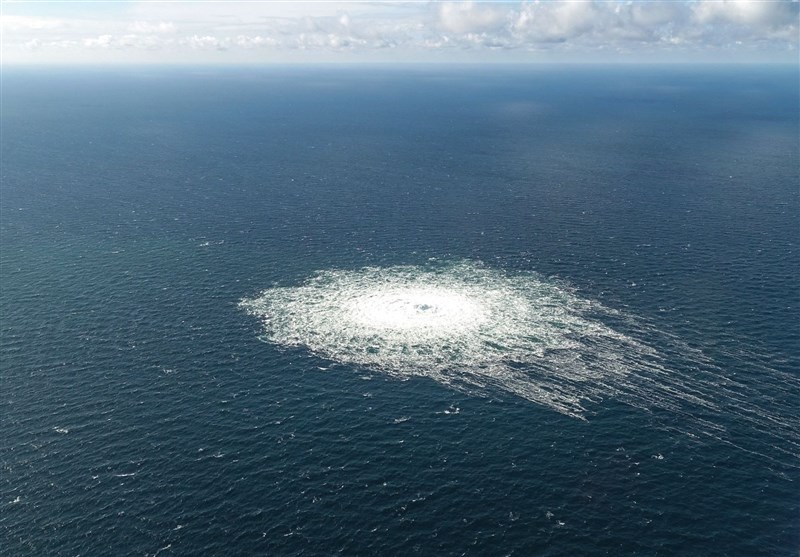
The four leaks detected at the Nord Stream 1 and Nord Stream 2 pipelines have caused major environmental concerns as well as compounded issues for Europe's increasingly tight energy supply.

The Nord Stream pipelines were already at the center of political tensions prior to the leaks. Moscow cut natural gas supplies to Europe in a suspected retaliation for sanctions against Russia's invasion of Ukraine.

European leaders believe the leaks are the result of sabotage and have said Moscow is to blame.

The Kremlin has, in turn, blamed Washington, saying the US was trying to ensure EU reliance on the US as an energy partner instead of Russia. The administration of US President Joe Biden has categorically denied this claim.

lo/sms (AFP, Reuters)


Swedish Military Conducting New Investigation at Nord Stream Bombing Site


October, 27, 2022 

TEHRAN (Tasnim) – Two minesweepers from the Swedish Armed Forces arrived at the site of the Nord Stream subsea network to carry out new examinations of the damaged pipes.

The Swedish crime scene investigation was completed some time ago, but the military has now decided that it needs to supplement the material which has already been collected.

“We felt the need for completion, and to do more research,” Swedish Navy spokesman Jimmie Adamsson told the country's media, Sputnik reported.

The Navy said that the ships at the scene of the explosion are the HMS Vinga and the HMS Sturkö.

“Their main job is to search for mines or to go down with submarines. There is no connection to mines in this case - the connection is that they are equipped to carry out work and investigations underwater,” Adamsson said, refusing to comment on previous finds and whether the Swedish military is looking for something in particular.

The investigation is expected to be completed later this week.

In late September, powerful explosions rocked the pipelines of the Nord Stream network, which plays an important role in transporting Russian gas to Europe, with massive leaks of fuel and “unprecedented” damage reported by the operator.

Moscow branded the attack international terrorism, and the European Union and national leaders said that the gas link was sabotaged. The Swedish and Danish authorities also voiced suspicions of sabotage, citing recorded explosions in the area, but both forbade Russia to investigate the attack.

Denmark, Germany and Sweden have all launched separate investigations into the leaks — Denmark and Sweden because the explosions occurred in their economic zones, and Germany because that is where the pipelines terminate. However, they have remained tight-lipped over their findings and conclusions.

According to Kremlin spokesman Dmitry Peskov, Russia is working through diplomatic channels to gain access to the investigations on Nord Stream, but has so far come up against a wall of resistance. The spokesman also stressed that the Kremlin has no new data on the subject, since Russia is currently deprived of the opportunity to take part in the investigations.

Russia's Foreign Ministry spokeswoman Maria Zakharova said that the investigation of terrorist attacks can only be considered reliable and objective if Moscow participates in it.

Footage shot off the coast of the Danish island of Bornholm by Swedish media earlier this month showed a massive half-meter-wide gash in one of the pipes. Traces of a powerful explosion are also visible on the seabed floor.

Since explosions on the Nord Stream pipeline network, several European nations have tightened security around key infrastructure. Swedish security authorities have urged energy infrastructure operators to up their preparedness and vigilance. And in neighboring Norway, the authorities boosted security at oil and gas installations, deploying the Home Guard.

Recently, it was reported that three German frigates will stay in Norway after NATO drills to protect the Nordic country's oil and gas installations.

Ever since the EU slapped Russian energy with sanctions because of the war in Ukraine, Norway has replaced Russia as the EU's biggest energy supplier, harvesting record revenues and drawing accusations of profiteering and preying on fellow European nations in their hour of need.