Tuesday, November 08, 2022


Africa faces climate disaster but is also a beacon of hope

Jennifer Collins

Africa is suffering most from climate change but, with proper support, could also play an "indispensable, positive role in the planet's climate change future," Kenyan President William Ruto says.

The rich nations most responsible for the fossil fuel emissions that have warped the climate must meet decarbonization pledges and help developing countries hardest hit by global heating, Kenyan President William Ruto said at the UN COP27 climate conference in Egypt.

African countries have contributed little to emissions but are "most severely impacted by the ensuing crisis," Ruto said on Monday, speaking on behalf of the African Group of Negotiators (AGN).

He called "delaying tactics" and "procrastination" on climate action "cruel and unjust." At the same time, Ruto told world leaders that Africa could play an "indispensable, positive role in the planet's climate change future" because of its untapped renewable energy resources, vast tracts of land and youthful, dynamic workforce.

Ruto announced plans to convene an African continental summit focusing on climate action, green growth and sustainable transformation next year. He also announced a plan to increase Kenya's tree cover from about 12% to 30% over the next 10 years.

Africa the most vulnerable to climate change

African nations combined contribute no more than 3% to cumulative CO2 emissions, while the United States, the European Union and United Kingdom are responsible for nearly half.

Yet they are the most vulnerable to ravages that go hand-in-hand with a warming planet.

Leah Namugerwa, a young Ugandan climate activist, said during Monday's opening talks that, at 14 years old, she had witnessed "landslides killing so many people because of harsh weather conditions" and asked whether it was "justice for world leaders to choose profits over lives."

Meanwhile, a historic prolonged drought in Kenya has caused over 90% of water sources to dry up. Crops are failing, and animals are dying, meaning that many people do not have enough to eat. Ruto said the drought had "visited misery on millions of people" and had caused over a billion dollars in economic losses.

Dead livestock are just one outcome of the devastating drought in Kenya
Kossivi Tiassou/DW

Polluters must pay


The government has diverted large amounts of money from health and education to provide food aid to millions of affected Kenyans, Ruto said. Having to make such trade-offs is an example of how climate change harms the development of vulnerable states and the futures of their citizens, he added.

African nations, as well other climate-vulnerable states, are demanding an official mechanism by which rich polluters pay compensation to cover the costs of severe loss and damage caused by global heating. But wealthy nations fear being on the hook for all extreme weather events.

It's a major sticking point in negotiations. Still, on Monday, Belgium pledged €2.5 million to help Mozambique, joining Scotland and Denmark as the third nation to make a funding commitment to help developing countries deal with unavoidable climate loss and damage.

Africa's six-point climate plan

Action on loss and damage is part of a six-point action plan put together by AGN for delivering on the promises made at the Paris climate conference in 2015.

The plan states that climate change is a "global problem that will require global solutions," but adds that the causes and impacts are unequal and inequitable. That has to be reflected in any solutions.

"It is vital that developed countries finally hold to their promise to deliver the agreed climate finance that can pay for adaptation, a loss-and-damage fund and accelerate decarbonization," Nemera Gebeyehu Mamo, state minister at Ethiopia's Planning and Development Ministry and AGN chair, wrote in the plan.

Wealthy nations have so far failed to live up to their commitments to provide $100 billion a year by 2020 to help developing countries pay for adaptations such as flood defenses or drought-resistant crops.
Climate-vulnerable nations need funding to help with climate adaptation measures like proper flood defenses

Ruto said on Monday that failure to fulfill the pledges made in 2009 has created a persistent "distrust."

The UK agreed to speed up the flow of climate financing to Kenya to fast-track six green investment projects when the leaders of both countries met at COP27 on Monday.

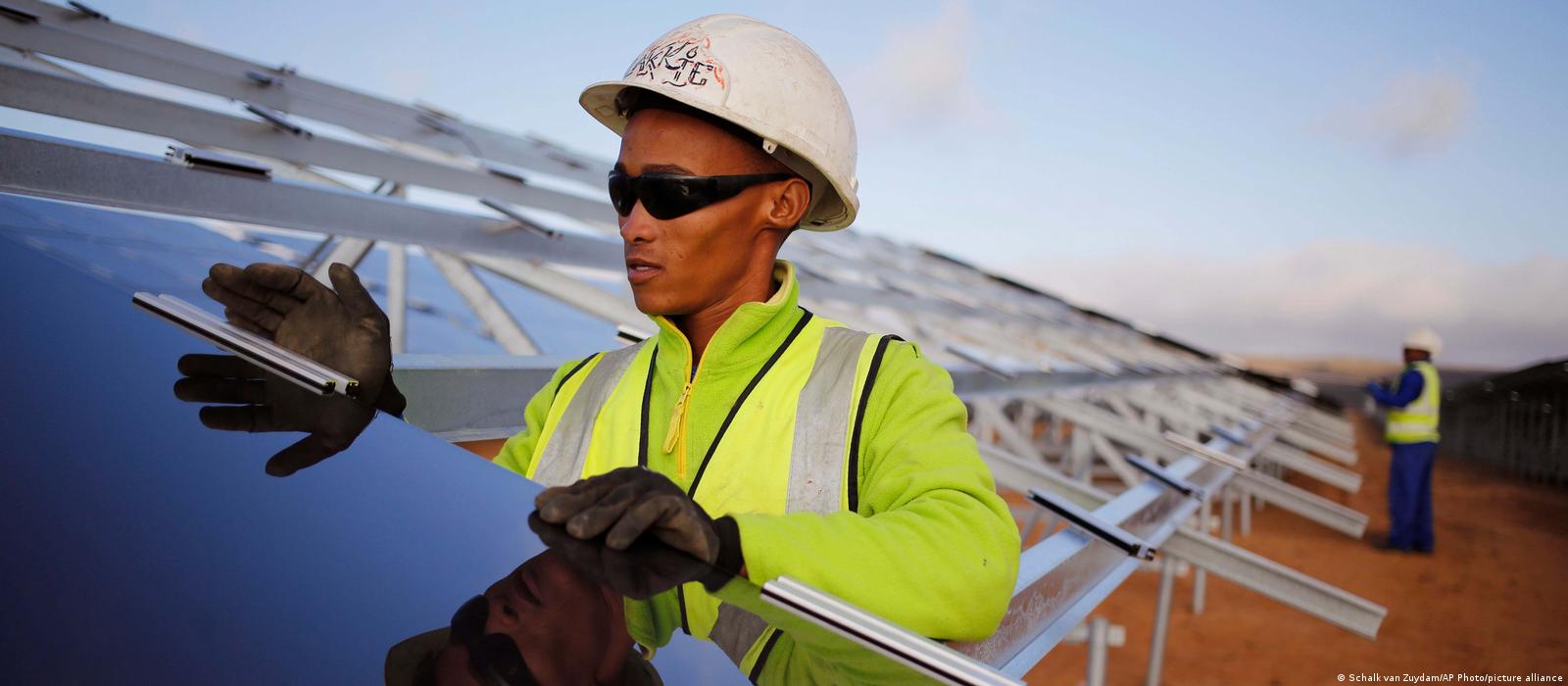
The AGN also called for more support outside of financing for adaptation measures and to help the continent move quickly to green energy sources such as solar and wind power. That includes providing technology and training.

Countries frequently hit by drought, such as Spain and Senegal, announced an alliance to share knowledge and technology to help manage their water resources at the climate conference on Monday.
Africa: A continent abundant with green energy

Environmentalist and former US Vice President Al Gore said at the climate conference on Monday that the Global North had to "move beyond the era of fossil fuel colonialism."

Instead of supporting a transition to renewables, European countries are scrambling to find alternatives to Russian fossil fuels and are in a "dash for gas" in African countries.

Gore called the moves a "dash down a bridge to nowhere, leaving the countries of the world facing climate chaos and billions in stranded assets, especially here in Africa."
Africa has huge untapped renewable energy potential
www.vestas.com

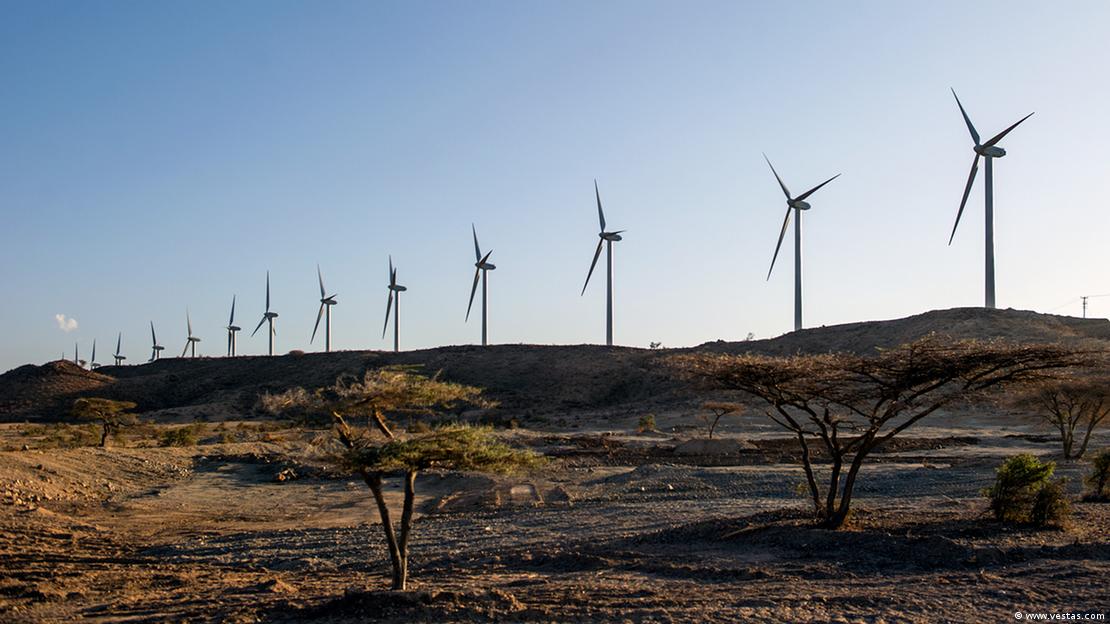
Just 2% of global investments in renewable energy over the past 20 years were made in Africa, according to the International Renewable Energy Agency (IRENA), an intergovernmental body that promotes green energy use.

But Africa has huge potential, Nemat Shafik, a leading economist and director of the London School of Economics, told world leaders at the COP.

"Many African countries are rich in sunshine, wind, rivers and forests. With support, they could leapfrog the dirty energy systems of the past," Shafik said. "The green industrial revolution could be the new growth story for Africa."

Edited by: Tamsin Walker

India: Conjugal rights debate puts focus on jail reform

After India's Punjab state became the first in the country to allow conjugal rights for prisoners, rights activists hope the scheme could be a nationwide example.

Murali Krishnan New Delhi

Since September, prisoners in the northern Indian state of Punjab have been allowed conjugal visits, which proponents say can improve rehabilitation and preserve family bonds during jail terms.

The conjugal visit scheme, India's first, is allowed in 17 of Punjab's 26 prisons after a test run at three prisons.

"It will improve marriage ties, reduce stress on prisoners and hopefully help in reformation. Priority will be for shortlisted prisoners with good behavior," said Harpreet Singh Sidhu, the state's director general of prisons, when the scheme started.

The visits are limited to meetings of two hours every two months in a secure room with an attached bathroom and basic furniture. Gangsters, high-risk prisoners and inmates involved in sexual offenses are excluded.
Will other states follow Punjab?

Currently, there is no nationwide provision in the legal framework governing prisoners allowing conjugal visit rights. Some activists say this should change.

"The Punjab prison department has taken an important step by providing low-risk prisoners the opportunity to meet with their spouses," Madhurima Dhanuka, the head of the prison reforms program at the Commonwealth Human Rights Initiative, told DW.

"There are a number of benefits of granting facilities like this especially as prisons are considered to be places of reformation and rehabilitation," she added.

India's packed prisons may be courting disaster

Conjugal visits are allowed in many countries around the world to add incentives for prisoners to follow rules and maintain good behavior.

"As society evolves, there is realization and increased understanding of the value of continued conjugal relations for the well-being of a person," Dhanuka said.

In Indian prisons, family members of incarcerated people have a tough time waiting in long queues leading to jam-packed visitors rooms inside the prison, for a visit that is usually brief.

But the issue of conjugal visits currently remains in the hands of state-level courts. For example, the Madras High Court in the southern state of Tamil Nadu has ruled that conjugal visits are "a right and not a privilege."

Reforming India's jails

India's prison population continues to rise, with more than 554,000 prisoners recorded in 2021, an increase from around 466,000 in 2018. More than 77% of these prisoners are sitting in pre-trial detention, according to official figures.

Navsharan Singh, a political scientist and researcher, told DW that alternatives to incarceration should be considered for different categories of offenders.

This would include allowing those awaiting trial to have the chance to live in their communities and to give support to their children and family members.

She added that women prisoners also need to be included in conjugal visit schemes.

"At the moment, the policy seems to be framed with male prisoner as the norm," said Singh.

Uma Chakravarti, a historian and filmmaker, who has documented prisons in India, said more needs to be done to "humanize" conditions and administration of prisons, before expanding rights to conjugal visits.

"Why privilege conjugality over other relationships in Indian jails? There is absolutely no human bonding in prisons. Jail conditions are abysmal and that should be improved first. Dignify jails and then let's take it to another level," Chakravarti told DW.

Edited by: Wesley Rahn
Greek PM slams wire-tapping claims as 'incredible lie'


A Greek newspaper has reported that more than 30 people, including government ministers, have been under state surveillance. But Prime Minister Kyriakos Mitsotakis said the claims were made "without the faintest proof."

Greek Prime Minister Kyriakos Mitsotakis on Monday slammed a report about him wiretapping his own ministers as "an incredible lie" as his conservative government vowed to ban the sale of spyware.

The development comes after a newspaper reported that more than 30 people, including ministers and business people, had been under state surveillance via phone malware.

The main opposition party has threatened to table a no-confidence motion over the scandal.

PM says there is no proof

Greece's Supreme Court has ordered an investigation, while Syriza, the far-left party of former PM Alexis Tsipras, demanded the government shed light on the affair before the next election, which is due next year.

Mitsotakis hit back on Monday, though, calling the report by left-wing weekly newspaper Documento, which is close to Syriza, "shameful."

"We have a publication revealing a series of people allegedly under surveillance without the faintest proof that that was actually happening," he told private broadcaster Antena1.

"I have never claimed there wasn't any surveillance. It's another thing to accuse the prime minister of orchestrating this action," he said.
Snowballing scandal

The newspaper report is part of an ongoing wiretapping scandal that has sparked outrage in Greece, as the European Union takes a closer look at the use and sale of spyware.

A Greek prosecutor began an inquiry earlier this year while the alleged targets include a former conservative prime minister and the current foreign and finance ministers.

jsi/dj (AFP, Reuters)
Japan to tighten rules on donations to religious groups after Abe murder

By AFP
November 8, 2022

A government investigation is under way into the Unification Church in Japan - Copyright AFP Kazuhiro NOGI

The Japanese government will propose a new law to prevent harmfully large donations to religious groups, Prime Minister Fumio Kishida said Tuesday, after Shinzo Abe’s assassination heightened scrutiny of the Unification Church.

Kishida has been battling criticism over links between the sect and politicians since former premier Abe was shot dead in July.

The man accused of Abe’s murder reportedly resented the Unification Church over massive donations his mother made that bankrupted the family.

Kishida said he had met people who had suffered because of large financial contributions to the church, which denies wrongdoing and has pledged to prevent “excessive” donations.

“It was heartbreaking to hear their stories,” the prime minister told reporters as he outlined plans to curb “malicious donations” in which members of religious groups are pressured to donate often excessive amounts.

“Regarding the new legislation to help victims of malicious donations … the government will do its utmost to submit the bill as soon as possible,” hopefully during the current parliamentary session which ends December 10, he said.

Details of the law are under discussion, but it will focus on “banning socially unacceptable and malicious recruitment practices” and “allowing donations to be recalled”, Kishida said.

Last month, he ordered a government investigation into the Unification Church, officially known as the Family Federation for World Peace and Unification.

The probe could lead to a dissolution order, which would cause the church to lose its status as a tax-exempt religious organisation, though it could still continue to operate.

Founded in Korea in 1954 by Sun Myung Moon, the church — whose members are sometimes referred to as “Moonies” — rose to global prominence in the 1970s and 80s.

It is famous for its mass wedding ceremonies, and groups affiliated with the church have secured addresses from powerful speakers over the years, including Abe and former US president Donald Trump, neither of whom belonged to the sect.

The government’s approval ratings have plummeted in recent months and recently hit the lowest level since Kishida took office last year when a Japanese minister resigned following scrutiny over his links to the church.

Australian Insurer Warns Of 'Distressing' Data Threat

By AFP News
11/07/22 
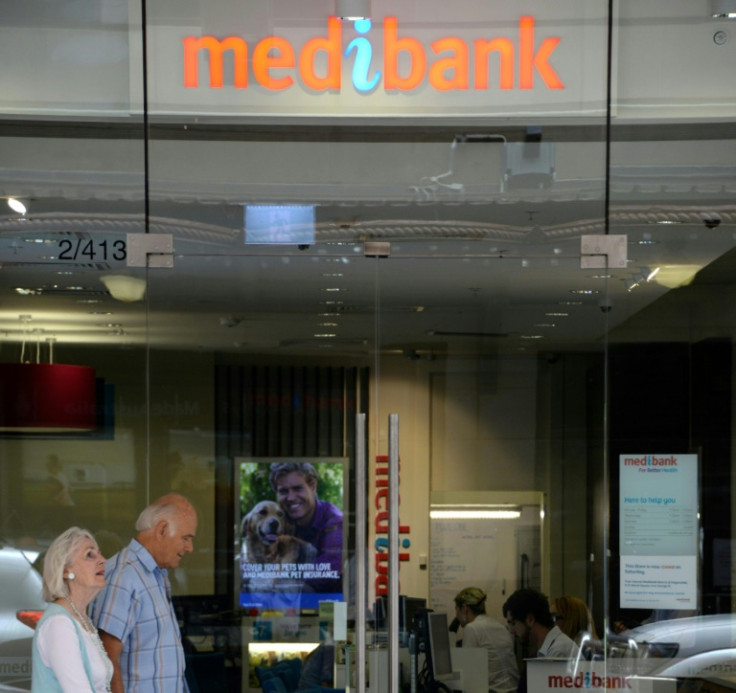
Medibank Private, one of Australia's largest insurers, has told customers to be "vigilant" after a purported hacker threatened to release data within 24 hours from a hack affecting 10 million people

Amajor Australian health insurer warned Tuesday of a "distressing" threat by a purported hacker to release data within 24 hours from a hack affecting 10 million people.

Medibank Private, one of Australia's largest insurers, told customers to be "vigilant" after the reported threat, issued a day after it had ruled out paying any ransom demand.

The warning came a day after a hack originally thought to have breached the data of 3.9 million customers had in fact given access to the names, birth dates, addresses, phone numbers and emails of about 9.7 million former and existing clients.

On Tuesday, an anonymous poster on a hacking blog -- widely cited by Australian media -- said "data will be publish in 24 hours".

It was not possible to confirm whether the poster was connected to the hack or had access to people's stolen information.

"We knew the publication of data online by the criminal could be a possibility, but the criminal's threat is still a distressing development for our customers," Medibank chief executive David Koczkar said, calling for customers to be "vigilant".

"We unreservedly apologise to our customers," he added, describing the "weaponisation" of their data as malicious.

The hacker could also attempt to contact customers directly, the company warned.

The data breach of Medibank -- one of Australia's largest insurers -- included 1.8 million international customers.

The company had said in Monday's announcement that they believe "all of the customer data accessed could have been taken by the criminal", which contained people's health claims along with codes exposing their diagnoses and medical procedures.

Passport numbers and the visa details of international students were also part of the data hack.

Medibank said it was working with the Australian government and with the police, who were trying to prevent the sharing and sale of the stolen data.

Cybercrime experts had advised that paying a ransom had only a "limited chance" of ensuring the return of the stolen data, Koczkar said, adding that it could encourage the direct extortion of its clients.

IBT Fast Start - Let the best of International News come to you
Sign up and stay up to date with our daily newsletter.
You can unsubscribe at any time. By signing up you are agreeing to our Terms of Service and Privacy Policy.

"It is for these reasons that we have decided we will not pay a ransom for this event," he said.

Two law firms said Tuesday they had joined forces to investigate a possible class action lawsuit against Medibank.

"We believe the data breach is a betrayal of Medibank Private's customers and a breach of the Privacy Act," said a joint statement by Bannister Law and Centennial Lawyers. "Medibank has a duty to keep this kind of information confidential."

The Medibank hack followed an attack on telecom company Optus in September that exposed the personal information of some nine million Australians -- almost a third of the population.

Twitter takeover raises fears of climate misinfo surge

Researchers and campaigners say that climate misinformation is thriving
Researchers and campaigners say that climate misinformation is thriving.

Climate deniers looking to block action and "greenwashing" companies could have free rein on Twitter after Elon Musk's takeover, analysts warned as leaders pursued anti-warming efforts at the COP27 summit.

The Tesla billionaire and self-declared free-speech absolutist has fired thousands of staff -– with sustainability executives Sean Boyle and Casey Junod among those signing off from the platform last week.

Musk has promised to reduce Twitter's content restrictions and after the takeover announced plans to create a "content moderation council" to review policies.

"It's not clear what Mr Musk really plans to do. However... if he removes all attempts at content moderation, we can expect a surge of disinformation, as well as increases in misleading and greenwashing advertisements," said Naomi Oreskes, a professor of the history of science at Harvard University who has authored leading studies on  misinformation.

"Greenwashing" means companies misleading the public about their impact on the planet through messages and token gestures.

"We may also see an increase in hateful comments directed towards climate scientists and advocates, particularly women," Oreskes said.

Following the buyout, one climate journalist tweeted that he had received death threats on the platform. He did not immediately respond to a request for comment.

Sustainability execs axed

Researchers and campaigners say that despite measures announced by social platforms, climate misinformation is thriving, undermining belief in climate change and the action needed to tackle it.

Twitter and other tech giants such as Facebook and Google have said they are acting to make false claims less visible.

But the Institute for Strategic Dialogue think tank said in a detailed study this year that messages aiming to "deny, deceive and delay" regarding  were prevalent across .

Under Twitter's policy before the takeover, it said "misleading advertisements on Twitter that contradict the  on climate change are prohibited".

"We believe that climate denialism shouldn't be monetised on Twitter, and that misrepresentative ads shouldn't detract from important conversations about the climate crisis," Boyle and Junod wrote in an Earth Day post on Twitter's blog.

Both posted messages on November 4 with the hashtag "LoveWhereYouWorked", indicating they were among those laid off after Musk's $44-million takeover. They did not immediately respond to requests for comment.

Scientists at risk

Beyond , some specialists warned that climate scientists themselves face threats if moderation falters.

A surge in hate speech drove Twitter's head of safety and integrity Yoel Roth to respond, trying to calm concerns. He tweeted that the platform's "core moderation capabilities remain in place".

Musk wrote on November 4 that "Twitter's strong commitment to content moderation remains absolutely unchanged."

"I worry that scientific falsehoods will find a bigger platform on Twitter under Musk's leadership," said Genevieve Guenther, founder of the media activism group End Climate Silence.

"But I worry even more that the website will start deplatforming  and advocates who criticise right-wing views, preventing them from connecting to each other and to decision-makers in media and government."

Blue ticks at COP?

Among Musk's plans is an $8 monthly charge for users to have a blue tick by their name—currently a mark of authenticity for officials, celebrities, journalists and others.

"To me, this is opening the door to highly coordinated disinformation and manipulation," said Melissa Aronczyk, an associate professor in communication and information at Rutgers University.

Musk said the move aims to reduce  by making it too expensive for trolls to have multiple accounts.

Aronczyk argued the system would give a mark of authenticity to those willing to pay for a blue tick to push an agenda.

She pointed to the controversy around Hill+Knowlton Strategies—a PR company working for big fossil fuel companies -– reportedly hired by host Egypt to handle public relations for the COP27 summit.

"Picture every Hill+Knowlton staffer working for COP27 creating a network of blue-check accounts to promote the business-led initiatives at the summit. Or downplaying the conflicts. Or ignoring protests," Aronczyk said.

"It's basically letting corporate greenwashing become the default communication style around ."

© 2022 AFP


Twitter layoffs before US midterms fuel misinformation concerns
Canada facing ‘aggressive games’ from China, others amid interference report: Trudeau

Aaron D'Andrea - Yesterday 

Prime Minister Justin Trudeau attends and speaks at the opening ceremony of the Triennial Congress of Ukrainian Canadians at the Delta hotel in Winnipeg, Friday, Oct. 28, 2022. 
THE CANADIAN PRESS/John Woods

China and other nations are playing “aggressive games” with democracies, Justin Trudeau says amid reports Beijing is allegedly targeting Canada with a vast campaign of foreign interference.

The prime minister on Monday responded to a Global News investigation that detailed alleged efforts by China to fund a clandestine network of at least 11 federal candidates who ran in the 2019 election, among other allegations of election interference in that campaign.

“We have taken significant measures to strengthen the integrity of our elections processes and our systems, and we'll continue to invest in the fight against election interference, against foreign interference of our democracy and institutions,” Trudeau told reporters in Montreal.

“Unfortunately, we're seeing countries, state actors from around the world, whether it's China or others, are continuing to play aggressive games with our institutions, with our democracies.”

Read more:
Canadian intelligence warned PM Trudeau that China covertly funded 2019 election candidates, sources say

In January, Canadian intelligence officials presented Trudeau and several cabinet ministers with a series of briefings and memos with the allegations, including other detailed examples of Beijing’s efforts to further its influence and subvert Canada’s democratic process, sources told Global News.

Those efforts allegedly involve payments through intermediaries to candidates affiliated with the Chinese Communist Party (CCP) and placing agents in the offices of MPs to influence policy, according to recent information from the Canadian Security Intelligence Service (CSIS).

Furthermore, the national spy agency believes China has been seeking to co-opt and corrupt former Canadian officials to gain leverage in Ottawa, and mounting aggressive campaigns to punish Canadian politicians whom the People’s Republic of China (PRC) views as threats to its interests.

Chief among the allegations is that CSIS claims China’s Toronto consulate directed a large clandestine transfer of funds to a network of at least 11 federal election candidates and numerous Beijing operatives who worked as their campaign staffers.

Video: Trudeau warned about interference by China: sources

The funds were reportedly transferred through an Ontario MPP and a federal election candidate staffer. Separate sources aware of the situation said a CCP proxy group, acting as an intermediary, transferred around $250,000.

The 2022 briefs said some, but not all, members of the alleged network are witting affiliates of the CCP. The intelligence did not conclude whether CSIS believes the network successfully influenced the October 2019 election results, sources said.

Canada’s national spy agency can capture its findings through warrants that allow electronic interception of communications among Chinese consulate officials and Canadian politicians and staffers.

Sources told Global News they revealed details from the 2022 briefs to give Canadians a clearer understanding of China’s attacks on Canada’s democratic system. Out of fear of retribution, they have asked for their names to be withheld.

Video: Former Canadian ambassador to China says it ‘should be easy’ for Ottawa to identify Beijing as strategic rival

In response to the briefing details, experts said the alleged interference points to weakness in Canada’s outdated espionage and counterintelligence laws, which sophisticated interference networks run by China, Russia and Iran are exploiting.

The 2022 intelligence asserts that China conducts more foreign interference than any other nation, and interference threats to Canada increased in 2015 when Chinese President Xi Jinping elevated the CCP’s so-called “United Front” influence networks abroad.

Back in Montreal, Trudeau said Ottawa is “constantly working with our intelligence committees and officials” to better improve national security. He cited the creation of the National Security and Intelligence Committee of Parliamentarians in 2018 as an example.

“We will continue to make the investments and changes necessary to both hold up our rights, our freedoms and our values as Canadians while keeping us safe from those who would do harm to those values and rights and freedoms,” Trudeau said.

“The world is changing and sometimes in quite scary ways, and we need to make sure that those who are tasked with keeping us safe every single day are able to do that.”

-- with files from Global News’ Sam Cooper

WWII

Allies’ successful first invasion but a ‘botched’ job: Operation Torch, 80 years on

525
SHARES
1.5k
VIEWS


French soldier Louis Laplace described the shock for the Vichy forces as the Allies landed. “All of a sudden the sirens were going off; it was the first time I heard them in North Africa,” recounted the soldier in Vichy forces’ anti-aircraft division. “A few minutes later, we saw a plane flying low over the water, releasing a curtain of smoke. And then I realised that he was American.”

The British and Americans had decided on the operation a few months before. Winston Churchill’s advocacy of landings in North Africa triumphed over widespread scepticism in Washington. Franklin D. Roosevelt was receptive to Churchill’s strategic vision, overriding his military staff

Roosevelt wanted US troops involved in a big operation in the fight against Nazi Germany “to stifle popular clamour at home for action”, noted Richard Overy, a professor of history at Exeter University and the author of several books on the Second World War including ‘Why the Allies Won. The US president was “also aware of America’s growing dependence on Middle Eastern oil, and Torch would be a way of getting a foothold on an area close to the oil”, Overy continued.

Torch was part of the climax of the long-running North Africa campaign – the predominant theatre for the Western Allies at this point in the war. Britain won a series of resounding victories over fascist Italy in the desert, but were forced onto the back foot when Adolf Hitler deployed German troops under General Erwin Rommel to rescue the Italians.

Then Torch was executed just before the British completed their remarkable victory in the Battle of El Alamein in Egypt on November 11, when Field Marshal Bernard Montgomery’s forces defeated Rommel’s Afrika Corps – the turning point for the Western Allies against Nazi Germany.

The Allies relied on local resistance to carry out the landings, however small it was. In Algeria, they were able to rely on a group of around 400 Résistants which had formed upon the Fall of France in May 1940; French pied noirs in Algeria mainly backed Vichy at the time. The vast majority of the Resistance band were young Jews appalled at the Vichy regime’s anti-Semitic measures. Medical student José Aboulker, who became the leader of the network in Algiers, was among them.

‘Very tough fighting’

ADVERTISEMENT

With strong contributions from monarchist Resistance fighter Henri d’Astier de la Vigerie, they gave “tactical information to make the Anglo-American landings easier”, said French historian Tramor Quemeneur, author of the book 8 novembre 1942, Résistance et débarquement allié en Afrique du Nord  (“November 8, 1942: the Resistance and the Allied Landings in North Africa”).

Torch was a colossal logical undertaking, with some 107,000 Allied troops deployed (84,000 American and 23,000 British) as well as 110 transport ships. The high command selected nine landing sites on the North African coast; six in Morocco and three in Algeria.

In Algiers, that Resistance of some 400 people made it easy to put the Vichy forces out of action. They seized the strategic administrative and military centres in the Algerian city and arrested the main military leaders, including Admiral François Darlan – a hugely important figure, formerly the number two to Vichy’s leader Marshall Philippe Pétain, and at that point the commander-in-chief of the Vichy French army – and General Alphonse Juin, commander-in-chief of Vichy forces in North Africa.

But elsewhere things were much more difficult for the Allies. Despite the Resistance taking out the Vichy high command, nearly 500 American and British troops were killed.

“The fighting was very tough,” Quemeneur observed. Vichy officers benefitted from some intelligence regarding the landing plan in Oran. In Morocco and the city of Oran on the Algerian coast, Vichy forces were “ordered to fight – and they did”, the French historian put it. By fighting the Allies directly, Vichy removed any hint of ambiguity about its pro-Nazi position.

“Torch was a pretty botched operation, prepared in haste with [inexperienced] US troops and too little equipment,” Overy said. “Success depended on Montgomery’s progress in the […] desert, and assistance from British air force commanders in getting combined and effective use of air power. In the end, German and Italian forces were bled white by British naval and air power in the Mediterranean, which blockaded the Axis forces in Tunsia. Nevertheless, for the Americans it was a long learning curve, with no real experience to go on.”

Five days after Montgomery’s forces clinched their victory over Rommel over in Egypt, the Allies defeated their opponents in Morocco and Algeria on November 16.

The Germans responded to the landings by occupying the whole of France on November 11, not just the north and Atlantic coastline. The so-called Free Zone in the south, administered by Vichy, no longer existed. Then on November 22, the Allies cemented their success in Operation Torch by signing a political and military co-operation agreement with Darlan as he switched sides.

As well as humiliating Vichy, Operation Torch led to the Western Allies’ successful Italian campaign, starting with the landings on Sicily in 1943. “Torch paved the way for the defeat of Benito Mussolini’s regime as well as the withering of Axis strength in the Mediterranean,” Quemeneur observed.

But unlike the Soviet victory at Stalingrad and the British victory at El Alamein, Torch was not significant enough to be a “pivotal moment” in the fight against Nazi Germany, said French historian Jean-Marie Guillon.

Eventually, the Western Allies’ decisive blow to Nazi Germany came from the D-Day landings in 1944. “The only way victory could be achieved in the West was invasion from Britain and victory in the Battle of the Atlantic,” Overy put it. “Torch contributed very little to this except to show how deficient amphibious warfare doctrine was, and the need to introduce very great improvements.”

The post Allies’ successful first invasion but a ‘botched’ job: Operation Torch, 80 years on appeared first on France 24.

Veteran French designer Philippe Starck now looks to space


Philippe Starck, the prolific French architect and designer who has made everything from lemon juicers to wind turbines, shows no sign of slowing down and is increasingly turning his eye to space.


French designer Philippe Starck says space is part of 'necessary change'© JOEL SAGET

Visiting an exhibition at the Museum of Decorative Arts in Paris featuring some his early work, the 73-year-old seemed bemused by the volume of items on display.

"I don't have the software for periods and dates," he told AFP when asked about the period.

"To me, the 1980s were like being abandoned in an Amazon jungle with nothing to eat, wild animals everywhere, a rusty machete... I just did what I could. And when you do what you can, you don't remember what's going on elsewhere."

Starck made his name as an interior decorator for Paris nightclubs in the 1970s, before landing a dream commission to refurbish the Elysee Palace apartments for president Francois Mitterrand in 1983.

He went on to design luxurious hotels and restaurants around the world.

But he also gave the world an uber-electic range of everyday items, from his futuristic lemon juicer to electric bikes, toothbrushes, water bottles -- and on to boats, wind turbines and control towers.

- 'Pure creativity' -

There was always a hint of humour and surrealism, he said, but also a desire to "democratise design" by keeping things affordable.

"We managed to remove two zeros from prices," he said. "At the time, in today's prices, sitting on something designer cost 20,000 euros, which wasn't right. Today, it's 700 euros, which isn't bad."

These days, Starck cares less about household objects and has his eyes on bigger things.

There is a long-awaited "laboratory for pure creativity" being built in Qatar, and immediately after the exhibition, he was due at the launch of a new hydrogen energy project.

But his real focus appears to be skyward: working with US company Axiom Space on the living quarters it plans to connect to the International Space Station, and teaming up with NASA for a new astronaut training camp.

The focus on space is part of our "necessary change" as a species, he said.

"Except when we're dead, we've been fixed by gravity, but that's clearly over, so I'm tackling it head-on."

Some early memories remain -- being left with some old toys and his grandfather's workbench during the holidays as a young child: "I made my first items on that workbench and I haven't stopped since."

A surreal early inspiration comes to him: seeing Mick Jagger dancing around with a neon tube in some film.

"I found it extraordinary and chic -- I thought to myself that someone should make it for real so that everyone could be Jagger for a minute."

Poll documents the critical role of people over 50 as caregivers and helpers for older loved ones

Supporting everything from health care needs and personal care to home repairs and finances brings both challenges and rewards

Reports and Proceedings

MICHIGAN MEDICINE - UNIVERSITY OF MICHIGAN

More than half of people over 50 say they’ve helped at least one person over 65 take care of their health, personal hygiene, home or finances in the past two years, a new University of Michigan poll finds.

And more than 70% of this group provided such help to someone they don’t live with -- whether it’s a parent, another relative or a neighbor.

This kind of caregiving and other help -- almost all of it unpaid -- doesn’t just affect the older adult receiving it, according to new data from the National Poll on Healthy Aging. It also impacts the people over 50 who are doing the helping.

Nearly all say they get something positive out of the experience. But many say it’s more difficult than they expected -- especially for those helping an older adult who has many needs, or someone with mild cognitive impairment, Alzheimer’s disease or another type of dementia, the poll finds.

The poll is based at the U-M Institute for Healthcare Policy and Innovation and supported by AARP and Michigan Medicine, U-M’s academic medical center.

The new results are being presented this week by poll deputy director Erica Solway, Ph.D., at the Gerontological Society of America meeting. November is also National Family Caregivers Month.

“The challenges of helping someone you know as they grow older should not be underestimated, but neither should the potential rewards,” says Courtney Polenick, Ph.D., an assistant professor of psychiatry and caregiving researcher at Michigan Medicine who worked with the poll team. “These data show the importance of supporting those who help our nation’s oldest adults. Not only have 54% of people over 50 done this in the past two years during the pandemic, but about two-thirds of that group are actively doing it right now.”

The poll asked people between the age of 50 and 80 whether they had helped at least one person over age 65 with a variety of tasks in the past two years, ranging from food shopping and house cleaning to bathing, dressing, going to medical appointments, managing medications, helping with health insurance and financial duties, and home repairs and modifications.

“I see this routinely in my primary care practice, and I know the value that spouses, grown children and close friends can bring to the health and well-being of older adults,” says poll director Jeffrey Kullgren, M.D., M.P.H., M.S., an associate professor of internal medicine at Michigan Medicine and researcher at the VA Ann Arbor Healthcare System. “But there is almost no formal mechanism for our society to recognize or compensate them for what they do.”

Assistance with health needs

Often, the kind of support given by family and friends goes on for years, and a person may find themselves helping multiple older adults, the poll shows. About a third of people over 50 who have provided this kind of help say they’ve been doing it for five years or more. And 41% have helped more than one older person.

The type of help covers a wide range of duties. One-third of people over 50 had helped a person over 65 with health care tasks, including going to doctor’s appointments with them or communicating with the person’s providers on their behalf. About 15% of people over 50 have helped someone over 65 manage their medications, and the same percentage had helped someone over 65 navigate their health insurance coverage.

Such help, other research has shown, can raise the chance that an older adult will manage chronic conditions effectively or get preventive care.

That’s why many clinics, hospitals and health systems allow adult patients to designate another adult to access the online patient portal system on their behalf, so they can schedule appointments and see information such as medications and test results. But the poll shows that among those who are currently helping a person over 65 with health care tasks, only 12% communicated with the person’s health care provider through a patient portal.

Increasing this kind of “proxy” patient portal access by spouses, adult children and other trusted helpers could enhance care, Kullgren and Polenick note.

Help beyond health

Help goes beyond health care, the poll shows. Nearly a third of people over 50 had helped a person over 65 with home maintenance, a similar percentage (31%) helped with food shopping or cooking, and a slightly lower percentage (22%) had helped a person over 65 manage their finances.

On the more personal side of life, 16% of people over 50 had helped a person over 65 dress, bathe or take care of other personal tasks – even if they don’t have the same kind of training that home health aides receive for these sometimes complex tasks.

“Caregiving for an older adult is a complex experience that affects 48 million caregivers in the U.S. from an emotional, health and financial perspective,” says Indira Venkat, senior vice president, AARP Research. “If you are not currently a caregiver, at some point in your life you either will be a caregiver or need a caregiver. It’s important that we consider the unique needs of caregivers and ensure they have the support to care for themselves as well as their loved ones.”

Positives and negatives

Nearly all (96%) helpers and caregivers over age 50 say there’s a positive aspect to offering this kind of help, including feeling appreciated (52%), having a sense of purpose (45%) and growing closer to family or friends (35%). A majority said it made them more aware of their own future health and personal care needs, and about a third said it made them focus more on their own health or motivated them to prepare a will, trust or advanced care directive.

But two-thirds (65%) also reported challenges. For instance, many said that helping brought on physical or emotional fatigue (34%), challenged their work-life balance (31%) or wasn’t supported by family or friends (19%). Nearly a quarter (22%) said they lacked time for their own self-care.

Nearly half (47%) of those who helped someone with five or more types of tasks said they felt it was somewhat or much more difficult than they had expected. That’s compared with only 12% of those who helped with just one or two types of tasks.

Memory and cognitive issues in the people being helped also increase the challenge. In all, 45% of those helping a person with mild cognitive impairment, and 58% of those helping someone with Alzheimer’s or other type of dementia, say it’s more difficult than they expected. That’s compared with 15% of those who help someone without either of these conditions.

AARP has tools, information, and support available for caregivers. The AARP Family Caregiving website, at www.aarp.org/caregiving, provides an easy way to join an online community of other caregivers, learn about local services, get helpful information and connect with others who understand caregiving challenges.

The poll report is based on findings from a nationally representative survey conducted by NORC at the University of Chicago for IHPI, and administered online and via phone in July 2022 among 2,163 adults aged 50 to 80. The sample was subsequently weighted to reflect the U.S. population. Read past National Poll on Healthy Aging reports and about the poll methodology