We are building a new and sustainable economy on our terms. This is what Dow wants to take away from us; I refuse.
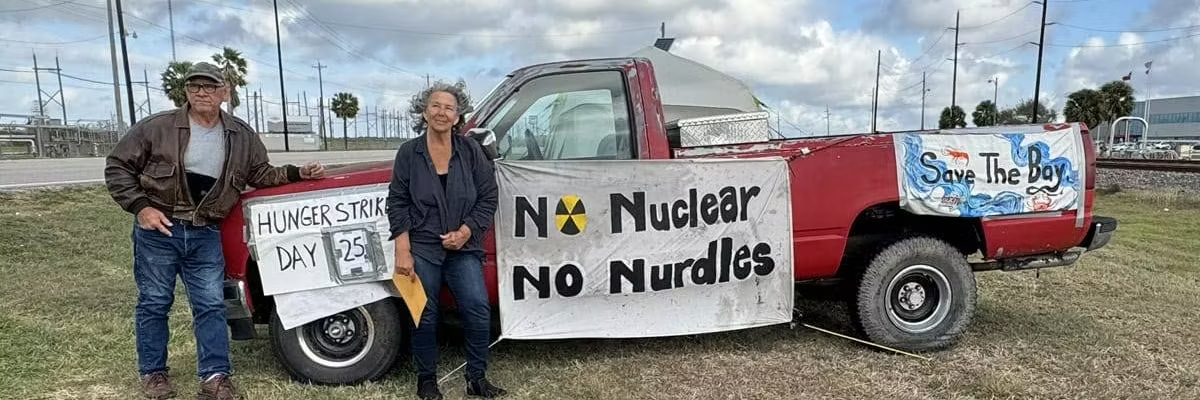
Diane Wilson poses on day 25 of a hunger strike against Dow Chemical.
(Photo via Texas Campaign for the Environment)
Diane Wilson
Apr 19, 2026
Common Dreams
I’m a 77-year-old shrimper from the Texas Gulf Coast, and the AI revolution has reached my town. Early this year, Dow Chemical announced global cuts to 4,500 jobs as it moves toward artificial intelligence. News of the layoffs tore through our rural community of Seadrift–where some of the thousand people work at the local Dow facility–with the devastation of a hurricane. Replacing workers with robots might be Dow’s latest blow, but this toxic industry has wronged my hometown of Seadrift for 70 years.
I recently completed a 30-day hunger strike on the public property (ditch) outside of Dow Chemical, during which time the sheriff actually arrested me while I was attempting to deliver my letter of demands to a company representative here in my hometown.
For decades, Dow has illegally dumped plastic and chemical waste into the local bays and waterways, which have sustained this fishing community for more than 170 years. Now, the company wants government approval for a new permit that would legalize plastic pollution at the Seadrift plant, and allow the construction of experimental nuclear reactors to power it.
As a native Seadrifter, I say: No.
Industry promised us prosperity, but we lost our economy and our heritage.
Dow is planning massive job cuts right now, despite collecting $177 million in bank finance since 2019—which is more funding than any other petrochemical company currently expanding in the US, according to a new report, “Toxic Finance.”
What lasting good have these toxic pollution factories ever done for this community?
My family made a living on the water for four generations, and I’ve been a shrimper all my life. I remember when Union Carbide (now Dow) and Formosa Plastics came to our communities with glossy pamphlets and slick presentations. Our elected officials made a devil’s bargain, and “a little pollution” turned into billions of plastic pellets and tons of chemicals in our water.
When the local bays got sick, the communities started dying with it. First, as in Formosa Plastic’s case, industry bought out the ranchers; then an elementary school; and finally, through a class action suit, bought out citizens and now own their homes. Local businesses have been boarded up throughout the county. As a young woman, I worked at Froggy’s fish house; now, it’s a concrete slab. Four more were bulldozed. A hundred boats used to launch from our docks at the start of shrimp season; today, we’re lucky if we have five. Industry promised us prosperity, but we lost our economy and our heritage. As the old saying goes, our downtown died by a thousand cuts.
I always knew it was a raw deal, but at least some of us got steady jobs… at least for a little while. Now, Dow can’t even deliver on that meager promise. Instead, Dow joins the likes of Amazon, UPS, and dozens of other multinational corporations looking to replace American workers with artificial intelligence.
Nobody from Dow has even responded to me after 30 days of fasting and living in a tent outside of their facility, despite acknowledging receipt of my demand letter to Dow’s CEO. To be clear, I will not rest until this company:Commits to zero discharge of plastic pellets, powder, and flakes from its Seadrift facility and incorporates that commitment into its operating permit; and
Cancels all plans to build nuclear reactors at the site and withdraws its construction permit application from the US Nuclear Regulatory Commission.
On a bright note, the Texas Commission on Environmental Quality (TCEQ) has confirmed that a public meeting about Dow’s proposed changes to the water discharge permit will be held at some unspecified time in the future… and so, the fight continues!
Believe me, dear folks, people still have power. I sued Formosa Plastics and won the largest citizen lawsuit settlement under the Clean Water Act in US history—$50 million plus additional fines because the company can’t stop polluting the bay—all of which has gone into a public trust designed to restore the fishing communities, the bays, and the local environment.
Our trust funded a cooperative of 250 fisherfolk working together to revitalize our seafood industry, which now has its own office, a processing plant, and a 60-acre oyster farm that will grow to become the largest in the Gulf. We are building a new and sustainable economy on our terms.
This is what Dow wants to take away from us. I refuse.
Will you join me in fighting back against corporate greed?
Our work is licensed under Creative Commons (CC BY-NC-ND 3.0). Feel free to republish and share widely.
Diane Wilson
Diane Wilson is a fourth-generation shrimper and environmental activist from Seadrift, Texas. She is the executive director of San Antonio Bay Estuarine Waterkeeper and a proud funder of the Matagorda Bay Fishing Cooperative. She recently concluded her 15th hunger strike to protect the bay upon which her community depends.
Full Bio >
I’m a 77-year-old shrimper from the Texas Gulf Coast, and the AI revolution has reached my town. Early this year, Dow Chemical announced global cuts to 4,500 jobs as it moves toward artificial intelligence. News of the layoffs tore through our rural community of Seadrift–where some of the thousand people work at the local Dow facility–with the devastation of a hurricane. Replacing workers with robots might be Dow’s latest blow, but this toxic industry has wronged my hometown of Seadrift for 70 years.
I recently completed a 30-day hunger strike on the public property (ditch) outside of Dow Chemical, during which time the sheriff actually arrested me while I was attempting to deliver my letter of demands to a company representative here in my hometown.
For decades, Dow has illegally dumped plastic and chemical waste into the local bays and waterways, which have sustained this fishing community for more than 170 years. Now, the company wants government approval for a new permit that would legalize plastic pollution at the Seadrift plant, and allow the construction of experimental nuclear reactors to power it.
As a native Seadrifter, I say: No.
Industry promised us prosperity, but we lost our economy and our heritage.
Dow is planning massive job cuts right now, despite collecting $177 million in bank finance since 2019—which is more funding than any other petrochemical company currently expanding in the US, according to a new report, “Toxic Finance.”
What lasting good have these toxic pollution factories ever done for this community?
My family made a living on the water for four generations, and I’ve been a shrimper all my life. I remember when Union Carbide (now Dow) and Formosa Plastics came to our communities with glossy pamphlets and slick presentations. Our elected officials made a devil’s bargain, and “a little pollution” turned into billions of plastic pellets and tons of chemicals in our water.
When the local bays got sick, the communities started dying with it. First, as in Formosa Plastic’s case, industry bought out the ranchers; then an elementary school; and finally, through a class action suit, bought out citizens and now own their homes. Local businesses have been boarded up throughout the county. As a young woman, I worked at Froggy’s fish house; now, it’s a concrete slab. Four more were bulldozed. A hundred boats used to launch from our docks at the start of shrimp season; today, we’re lucky if we have five. Industry promised us prosperity, but we lost our economy and our heritage. As the old saying goes, our downtown died by a thousand cuts.
I always knew it was a raw deal, but at least some of us got steady jobs… at least for a little while. Now, Dow can’t even deliver on that meager promise. Instead, Dow joins the likes of Amazon, UPS, and dozens of other multinational corporations looking to replace American workers with artificial intelligence.
Nobody from Dow has even responded to me after 30 days of fasting and living in a tent outside of their facility, despite acknowledging receipt of my demand letter to Dow’s CEO. To be clear, I will not rest until this company:Commits to zero discharge of plastic pellets, powder, and flakes from its Seadrift facility and incorporates that commitment into its operating permit; and
Cancels all plans to build nuclear reactors at the site and withdraws its construction permit application from the US Nuclear Regulatory Commission.
On a bright note, the Texas Commission on Environmental Quality (TCEQ) has confirmed that a public meeting about Dow’s proposed changes to the water discharge permit will be held at some unspecified time in the future… and so, the fight continues!
Believe me, dear folks, people still have power. I sued Formosa Plastics and won the largest citizen lawsuit settlement under the Clean Water Act in US history—$50 million plus additional fines because the company can’t stop polluting the bay—all of which has gone into a public trust designed to restore the fishing communities, the bays, and the local environment.
Our trust funded a cooperative of 250 fisherfolk working together to revitalize our seafood industry, which now has its own office, a processing plant, and a 60-acre oyster farm that will grow to become the largest in the Gulf. We are building a new and sustainable economy on our terms.
This is what Dow wants to take away from us. I refuse.
Will you join me in fighting back against corporate greed?
Our work is licensed under Creative Commons (CC BY-NC-ND 3.0). Feel free to republish and share widely.
Diane Wilson
Diane Wilson is a fourth-generation shrimper and environmental activist from Seadrift, Texas. She is the executive director of San Antonio Bay Estuarine Waterkeeper and a proud funder of the Matagorda Bay Fishing Cooperative. She recently concluded her 15th hunger strike to protect the bay upon which her community depends.
Full Bio >

No comments:
Post a Comment