Sunday, February 12, 2023

UN admits aid failure for Syria as quake toll hits 33,000


Sun, 12 February 2023

The United Nations denounced Sunday the failure to deliver desperately needed aid to war-torn regions of Syria, while warning the death toll of more than 33,000 from the earthquake that also struck Turkey is set to rise far higher.

A UN convoy with supplies for northwest Syria arrived via Turkey, but the agency's relief chief Martin Griffiths said much more was needed for millions whose homes were destroyed.

"We have so far failed the people in northwest Syria. They rightly feel abandoned. Looking for international help that hasn't arrived," Griffiths said on Twitter.

Assessing the damage in southern Turkey on Saturday, when the toll stood at 28,000, Griffiths had told Sky News he expected the death toll to "double or more" as chances of finding survivors fade with every passing day.

Supplies have been slow to arrive in Syria, where years of conflict have ravaged the healthcare system, and parts of the country remain under the control of rebels battling the government of President Bashar al-Assad, which is under Western sanctions.

A 10-truck UN convoy crossed into northwest Syria via the Bab al-Hawa border crossing, according to an AFP correspondent, carrying shelter kits including plastic sheeting, ropes and screws and nails, as well as blankets, mattresses and carpets.

Bab al-Hawa is the only point for international aid to reach people in rebel-held areas of Syria after nearly 12 years of civil war, after other crossings were closed under pressure from China and Russia.

The World Health Organization chief met Assad in Damascus on Sunday and said the Syrian leader had voiced readiness for more border crossings to help bring aid into the rebel-held northwest.

"He was open to considering additional cross-border access points for this emergency," WHO chief Tedros Adhanom Ghebreyesus told reporters.


- Set politics aside -

Assad said he looked forward to further "efficient cooperation" with the UN agency to improve the shortage in supplies, equipment and medicines, his presidency said.

UN special envoy to Syria, Geir Pedersen, was also in Damascus on Sunday carrying a message to set aside politics.

"We are mobilising funding and we are trying to tell everyone to put politics aside," he said.

"This is a time to unite behind a common effort to support the Syrian people."

Assad had also thanked the United Arab Emirates for providing "huge relief and humanitarian aid" with pledges of tens of millions of dollars in aid as well.

But security concerns prompted the suspension of some rescue operations, and dozens of people have been arrested for looting or trying to defraud victims in the aftermath of the quake in Turkey, according to state media.

An Israeli emergency relief organisation said Sunday it had suspended its earthquake rescue operation in Turkey and returned home because of a "significant" security threat to its staff.


- Miraculous tles -

Miraculous tales of survival still emerged, though experts caution that hopes for finding people alive in the devastation dim with each passing day.

Almost 160 hours after the quake, several more people were rescued, including an eight-year-old boy in Gaziantep, and a 63-year-old woman in Hatay, state media reported.

The United Nations has warned that at least 870,000 people urgently need hot meals across Turkey and Syria. In Syria alone, up to 5.3 million people may have been made homeless.

Almost 26 million people have been affected by the earthquake, the WHO said as it appealed Saturday for $42.8 million to cope with immediate health needs after dozens of hospitals were damaged.

Turkey's disaster agency said more than 32,000 people from Turkish organisations are working on search-and-rescue efforts, along with 8,294 international rescuers.

But, in many areas, rescue teams said they lacked sensors and other advanced search equipment, leaving them reduced to carefully digging through the rubble with shovels or only their hands.

"If we had this kind of equipment, we would have saved hundreds of lives, if not more," said Alaa Moubarak, head of civil defence in Jableh, northwest Syria.


- Anger grows -

Syria's transport ministry has said 62 aid planes had landed in Syria this week with more on the way in coming days, in particular from Saudi Arabia.

After days of grief and anguish, anger in Turkey has been growing over the poor quality of buildings as well as the government's response to the country's worst disaster in nearly a century.

Officials say 12,141 buildings were either destroyed or seriously damaged in the earthquake.

Three people were put behind bars by Sunday and seven more have been detained -- including two developers who were trying to relocate to the former Soviet republic of Georgia.

Officials and medics said 29,605 people had died in Turkey and 3,581 in Syria from last Monday's 7.8-magnitude quake, bringing the confirmed total to 33,186.


Lebanon's Hezbollah sends aid to Syria's quake-hit Latakia

Issued on: 12/02/2023 - 


Trucks loaded with humanitarian aid provided by Lebanese Shiite group Hezbollah set out for Syria on February 12 in the aftermath of a deadly earthquake 
© ANWAR AMRO / AFP

Beirut (AFP) – Lebanon's powerful Shiite movement Hezbollah sent Sunday a convoy of 23 trucks carrying food and medical aid to Syria's quake-stricken province of Latakia, a stronghold of the group's allies.

"This the moment of support, the moment of assistance," senior Hezbollah official Hashem Safieddine told reporters in Lebanon's capital Beirut.

It comes six days after a devastating earthquake struck Turkey and Syria, killing more than 33,000 people in total, including over 3,500 in Syria.

Latakia, located in Syria's northwestern region, is a stronghold for President Bashar al-Assad.

The Iran-backed Hezbollah is a key ally of Assad's regime and has openly been fighting alongside his forces since April 2013.

Hezbollah's involvement in the Syrian conflict has helped tip the scales in favour of Assad on many fronts.

Adnan Moqadem, general director of civil defence in Hezbollah's health authority, said this first convoy "will be followed by others".

The convoy, carrying "food, health and household supplies", will be delivered to the Red Crescent and Syrian officials, Moqadem said.

The trucks carried banners marked with both the Syrian flag and of Hezbollah.

Lebanon has adopted a policy of dissociation from Syria's years-long war but on Wednesday, it sent its first high-level official delegation and rescue team to Damascus since the start of the conflict.

The delegation met with Assad and expressed readiness to open Lebanon's air and sea ports to help send aid to Syria.

On Saturday, two Italian planes arrived at Beirut airport, carrying medical aid to be sent to Syria.

© 2023 AFP

Hope, resources in short supply as Syria rescue efforts press on

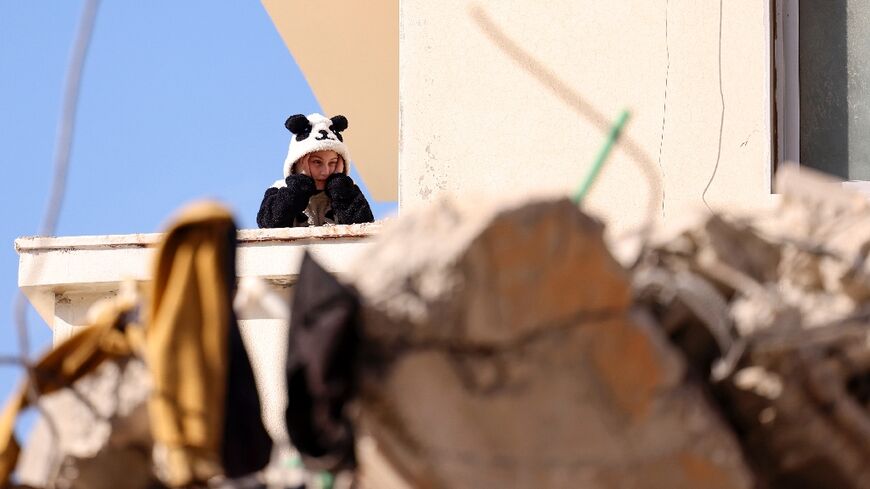
A young resident of a still standing building watches continuing search operations in the Syrian government-controlled town of Jableh - Karim SAHIB

by Hashem Osseiran
February 12, 2023 — Jableh (Syria) (AFP)

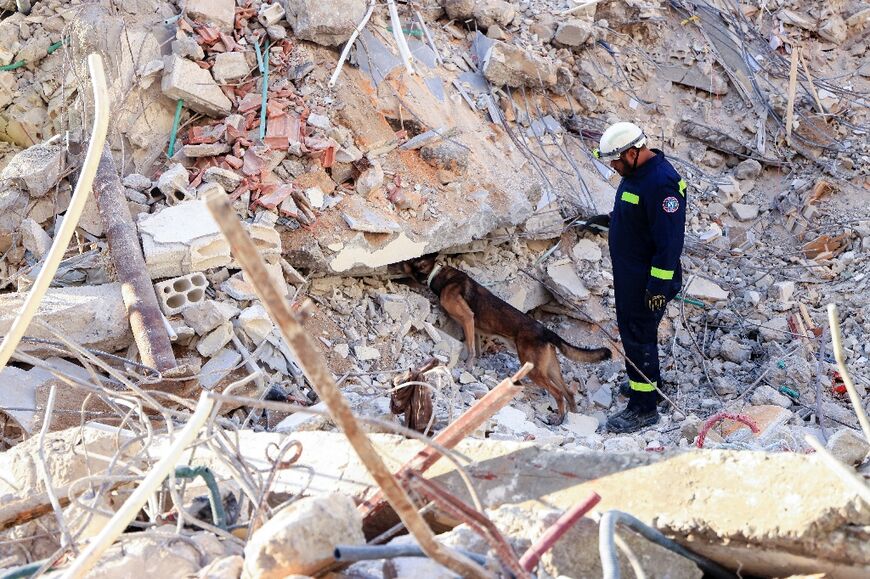
As Syria's earthquake rescue efforts near the one week mark, an unsettling silence blankets the area as a search dog sniffs around a flattened home in the coastal town of Jableh.

It has been hours since the last rescue, when two people were pulled from the rubble by rescuers with only the most basic equipment.

"There is no hope" for survivors, said Alaa Moubarak, the head of Jableh's civil defence.

"Even so, with every step, we stop and scream: is anyone alive?"

The canine trained to detect life circles the area for 30 minutes and trots back without a single bark.

There are no more survivors.

This scene plays out almost daily in Jableh, where the hopes of finding anyone alive under the rubble are quickly vanishing amid a lack of resources.

Of the 52 residents of the five-storey building being searched, only 14 have made it out alive.


They include a woman and her young son who were lifted from beneath the rubble Friday to a jubilant crowd that held out hopes that more could still be alive beneath the building.

The woman died en route to the hospital.

Jableh is located in Latakia, a province largely under government control and one of the worst hit by the earthquake.

Monday's 7.8-magnitude quake that struck near the Turkish city of Gaziantep, about 40 kilometres (25 miles) from the Syrian border, killed more than 28,000 people, including at least 3,574 in Syria.

In Latakia province alone, the quake has killed at least 638 people, according to local authorities.

- 'Manual labour' -


The canine scavenging the rubble on Saturday is only one of a handful available in the region.

It was flown in by a 42-member search and rescue team from the United Arab Emirates, equipped with sensors, search cameras, special drills and fuel containers.

"If we had this kind of equipment, we would have saved hundreds of lives, if not more," said Moubarak.

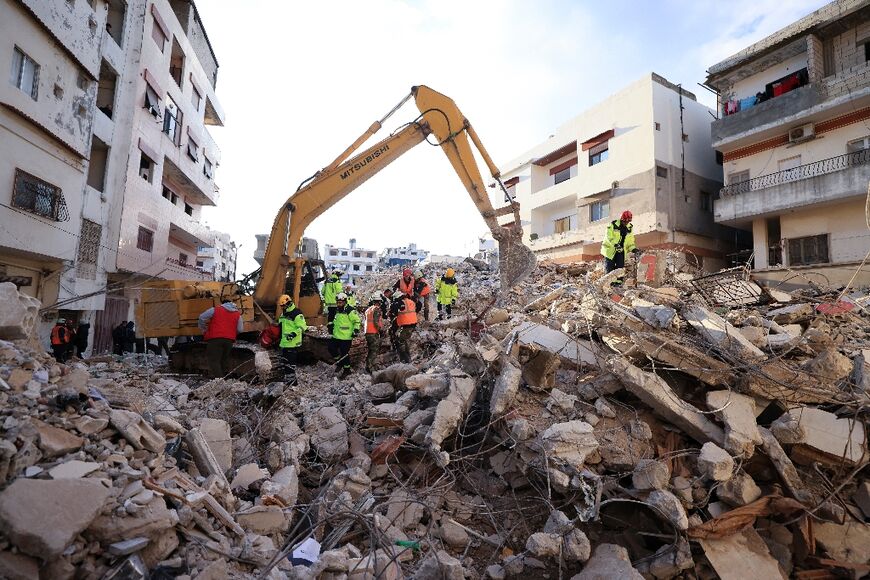
Other teams on the ground lack the means and advanced search equipment, often digging with nothing but their hands or shovels.


"For 12 years we have not received new equipment... 90 percent of our stock is out of service," said Moubarak.

Depleted by war, Syria lacks the most basic resources, let alone search and rescue equipment.

A punishing energy crisis means the country can barely provide electricity and fuel for cars, forcing international rescue teams to source their own stock as part of planning efforts.

At the foot of another flattened building around 500 metres (1,640 feet) away, a construction engineer affiliated with Syria's defence ministry echoed similar concerns.

"We don't have any modern high-tech devices... like those that detect openings, or equipment for rescue and communications," said the man, who asked not be identified because he is not authorised to speak to the media.

"Our work can mainly be described as manual labour."

- 'Still a chance' -

In Jableh's dense neighbourhoods, hundreds of spectators gather at every search site, crowding around rescue teams to provide information on which victims are still unaccounted for.
Some watch from windowsills so close to the destruction that they could reach out and scoop up the debris in their hands.


The rescue dogs often run in their direction, identifying them as the closest living body.

Mohammad al-Hamadi watched from the pavement as the Emirati team dug through what was once his residence, now reduced to shreds of concrete.

The 23-year-old -- who had to be carried into the search and rescue zone because the quake nearly crushed his right leg -- is the sole survivor of his family.

Both his parents and his brother, who was sleeping in bed beside him, all lost their lives in the tragedy.

"The building caved over our heads. I was completely buried," he said, adding that only his finger poked through the concrete chunks.

"They had to lift me by the finger."

Nearby, Colonel Hamad al-Kaabi, the head of the Emirati rescue force, said the chance of finding survivors at this point was so slim that emergency teams were permitted to use excavators and heavy machinery to clear the rubble.

"We are in stage four, which is an advanced stage of rescue operations, with most survivors already pulled out," he said.

"But there is still a chance to find survivors."


https://www.aljazeera.com/news/liveblog/2023/2/12/turkey-syria-earthquake-live-news-death-toll-tops-29000

11 hours ago ... The number of deaths in Turkey rose to 29,605 on Sunday, while more than 4,500 people have died in Syria. Turkish Health Minister Fahrettin Koca ...


Israeli forces kill MURDER Palestinian boy 
in West Bank: ministry

Issued on: 12/02/2023 - 


The mother and relatives of a young Palestinian boy react, after he was reportedly shot dead by Israeli forces during confrontations in the West Bank town of Jenin, on February 12 
© JAAFAR ASHTIYEH / AFP

Jenin (Palestinian Territories) (AFP) – Israeli forces killed a Palestinian teenager Sunday in the occupied West Bank, the Palestinian health ministry said, with the army reporting they came under fire during a raid.

The ministry reported 14-year-old Qusai Radwan Waked died "as a result of being seriously wounded in the abdomen by live fire from the occupation (Israel)" in Jenin, a city in the northern West Bank.

The army said Israeli forces were shot at while they were trying to arrest an alleged Palestinian militant, while "explosive devices and rocks" were also thrown at them.

"We are aware of the reports regarding a number of armed individuals who got injured during the exchange of fire," an army statement said, adding that no troops were hurt.

An AFP photographer saw the teenager's body wrapped in a sheet and being carried on a stretcher.

The latest killing comes as violence flares in the West Bank, which has been occupied by Israel since the 1967 Six-Day War.

This year there have been 46 Palestinian fatalities, including attackers, militants and civilians, according to an AFP tally based on official statements.

Nine Israeli civilians and one Ukrainian have been killed over the same period.

Elsewhere in the northern West Bank on Sunday, Palestinian mourners gathered for the funeral of a 27-year-old man shot dead allegedly by an Israeli settler.

Mithkal Suleiman Rayyan was shot in the head Saturday near the village of Qarawat Bani Hassan, where the army reported "heavy clashes between dozens of Palestinians and Israeli civilians".

Attia Asi, who witnessed the killing, said the shooting happened before soldiers arrived.
Jerusalem and Jenin © / AFP

"In the beginning it was in the air, then it turned towards the (Palestinian) guys, aiming to kill," he told AFP at the funeral.

The latest raid in Jenin by Israeli forces led to the arrest of Jebril Zubeidi, who the military said is accused of "terrorist activity against security forces and planning attacks".

The city's deputy governor, Kamal Abu al-Rub, said Jebril Zubeidi is the brother of jailed Zakaria Zubeidi, who headed the armed wing of the Fatah movement of Palestinian president Mahmud Abbas.

Zakaria Zubeidi was the alleged mastermind of a daring prison break in 2021, in which he and five fellow Palestinians escaped a high-security facility in northern Israel before being recaptured.

Palestinian president urges world puts a 'stop to Israeli aggression’ amid Arab League split

Issued on: 12/02/2023 -

Palestinian president Mahmud Abbas on Sunday accused Israel of having "crossed all red lines" in the occupied West Bank and east Jerusalem, and urged world leaders to put an end to its actions.

The international community must "protect" the Palestinian people and "put a stop to Israeli aggression... (and) unilateral actions", the head of the Palestinian Authority told an Arab League meeting in Cairo.

"Israeli intransigence and practices have crossed all red lines", he said at the gathering attended by Egyptian President Abdel Fattah al-Sisi and Jordan's King Abdullah II.

Last year was the deadliest year in the West Bank since the United Nations started tracking casualties in the territory in 2005.

The Israeli-Palestinian conflict has seen at least 43 Palestinians -- including attackers, militants and civilians -- killed this year, according to AFP figures.

Nine Israeli civilians including three children, and one Ukrainian have been killed over the same period, according to an AFP tally based on official statements.

In a video address, UN Secretary General Antonio Guterres affirmed the international body's "clear position against unilateral actions," citing "illegal settlements in east Jerusalem" in particular.

Sisi -- whose country retains its traditional role as a Middle East mediator - vowed to "continue to work with the two sides of the conflict to revive the political process and restore calm in the West Bank and Gaza".

Abdullah, whose country acts as custodian of Muslim and Christian holy sites in Jerusalem, said Arab leaders "must galvanise efforts to support the resilience of our brothers" in the Palestinian territories.

US President Joe Biden told Abdullah last week that Washington supports a "two-state solution" in the Palestinian-Israeli conflict.

"Mr. Biden tells me he supports a two-state solution, but then does nothing at all," Abbas added.

A two-state solution would mean the dismantling of Israeli settlements in the occupied West Bank, as well as the partition of Jerusalem, which Israel refuses as it considers the city its undivided capital.

The Arab League is itself split on relations with Israel since 2020 when the United Arab Emirates, Bahrain and Morocco normalised ties with the Jewish state under the US-brokered Abraham Accords, years after Egypt and Jordan had forged relations.

(AFP)
Can the ‘Slow Flowers’ Movement Make Valentine’s Day Sustainable?

Advocates shining a light on ecologically responsible bouquets want to do for the floral industry what locavorism did for food.

By: Michaela Haas
February 10, 2023


Debra Prinzing won’t get red roses for Valentine’s Day. She and her husband have been married long enough for him to know that Prinzing doesn’t appreciate long-stem roses in winter. “I don’t want to shame anybody,” she says from her home near Seattle, “but I feel bad for the men who are targeted with TV ads before Valentine’s Day and then think they need to get red roses to somehow show their love.”

What’s wrong with red roses? Quite a lot, as it turns out. “At this time of the year, you can hardly get any US-grown roses,” Prinzing says. “They are flown in from Ecuador, Kenya or the Netherlands, packed in cellophane, which is not recyclable, not to mention the pesticides that have been used to grow them. When they are imported, custom officials are only interested in ensuring they don’t bring in any pests, but nobody controls with which chemicals the flowers have been treated. To ensure that the flowers clear US customs, they definitely have been fumigated.”

Exotic flowers might look appealing, but their ecological footprint is devastating, and Prinzing has set out to raise awareness of the truth behind the pretty blooms. As the founder of the Slow Flowers Movement, Prinzing and her colleagues want the floral industry and its clients to embrace local, seasonal and sustainable flowers, grown without pesticides and under fair conditions for the workers. “We take our name from the slow food movement,” she says. “Everybody knows that this means regionally grown, nutritious and delicious food. But because people don’t eat flowers, they pay less attention to where their flowers come from..
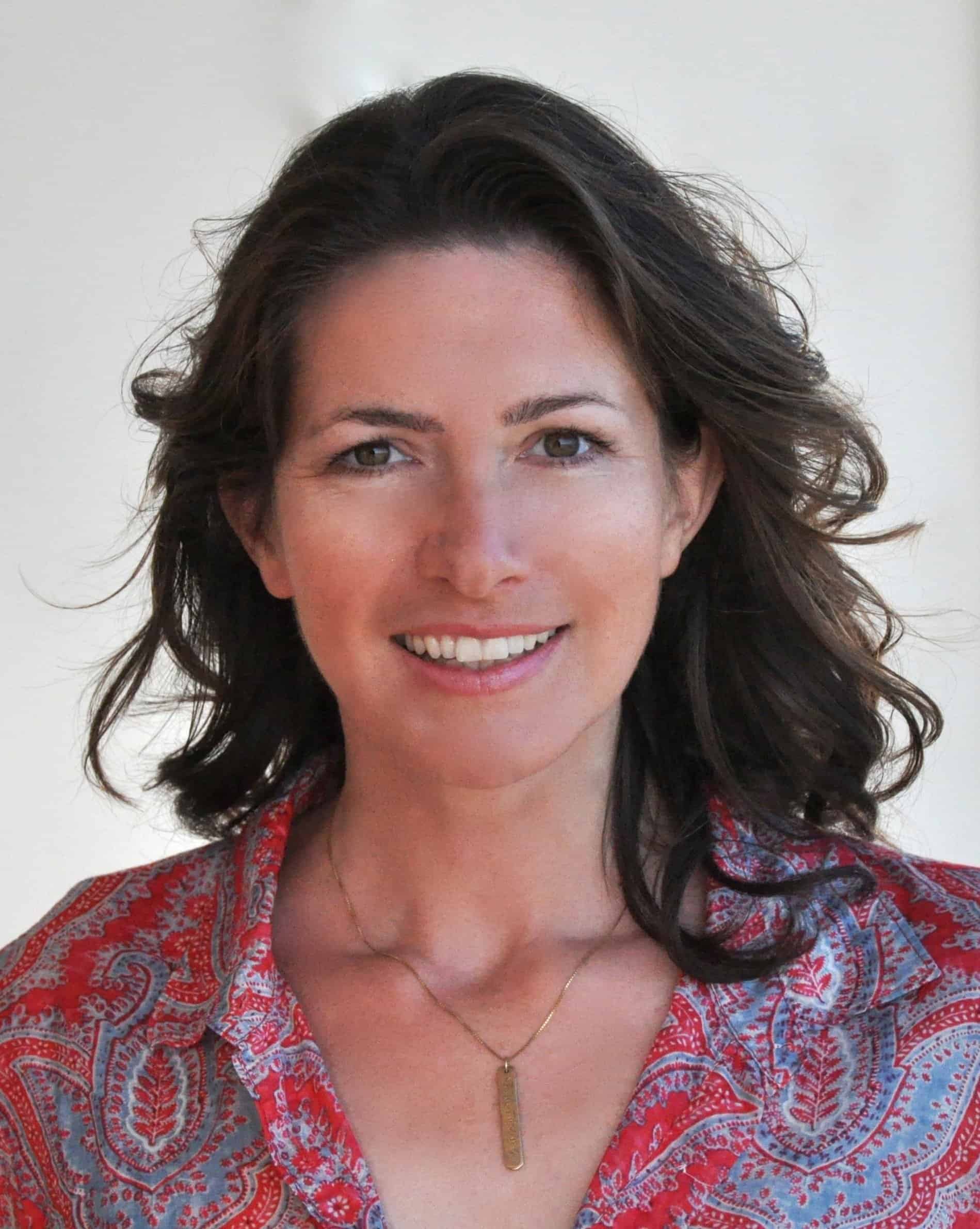
Debra Prinzing is the founder of the Slow Flowers Movement.
 Credit: Debra Prinzing

Buyers who do want to know the source of their bouquets can search the Slow Flowers directory, which lists hundreds of local flower farmers and florists that are part of the “farm to vase” effort. “We’re growing by about 10 percent every year,” Prinzing says of the Slow Flowers Society membership, which is 850 and counting. Or fresh flower fans can take a Slow Flowers workshop and learn to grow their own. This February, Prinzing is tending to hellebores, tulips and daffodils in her yard. “You can make a nice arrangement with some flowering winter ornamental shrubs,” she suggests.
Cutting Out ‘Fast Flowers’

Americans buy about 10 million cut flowers per day, spending between $6 billion and $7 billion every year, with the vast majority imported from monocultures in Africa, South America or Holland. Unlike with food, there are no restrictions on the quantities and toxicity of the pesticides used for the flowers that are often harvested by underpaid workers under inhumane conditions, packed in plastic and then transported over thousands of miles.

Prinzing refers to the imports as “fast flowers.” Similar to fast food, the advertising might look appealing but the products are often full of toxins and won’t contribute to anybody’s health, least of all the planet’s.

Since Amy Stewart published Flower Confidential in 2007, a scrupulously reported behind-the-scenes look into genetic engineering, exploitation of workers and pollution, awareness of the outsize impact of the international flower industry has been growing. Because the use of pesticides and CO2 emissions are not measured in most of the mass-producing countries, the true ecological cost is hard to prove. But on average, the production of 12,000 roses in greenhouses in the Netherlands, with artificial light and heat, produces roughly 35,000 kg CO2, about 10 times as much as a conventionally grown local bouquet. And according to Greenpeace, roses in Colombia are sprayed with 200 kilos of pesticides per hectare, about five times more than is conventionally used in the US.

Slow Flowers member Becky Feasby of Prairie Girl Flowers in Calgary, Alberta, is working on a master’s in sustainability at Harvard University. Her research analyzes the environmental and social impacts of greenhouse rose farming in Canada (BC), the US (California) and South America (Colombia). She points to studies that show how excessive water and pesticide use in floriculture is threatening local water supplies and wildlife in Kenya. And if the slogan “Grown not flown” is taken seriously, every flight not flown from South America to North America corresponds to the reduction of approximately 1,000 kg CO2 emissions.

The movement is self-policing, and of course, there are instances of greenwashing. Slow Flowers have become popular enough that some farmers promote their crops as US grown despite importing them from Mexico. “I tell everybody: Go to your local grower and ask questions. What do you spray against mildew? What do you do with aphids?” Prinzing advises. “Most growers are incredibly proud of their work and will happily show off their flower fields or greenhouses.”
Slow Flowers Society member Hometown Flower Collective is holding a pop-up Valentine’s Day sale at the Empire State Building, with fresh flowers from New York and New Jersey growers. Credit: Empire Trust Realty

In the end, Prinzing is convinced that clients and their wallets will decide the future of the flower market. Locally grown flowers tend to be more expensive than imported ones, so educating people on their value is crucial.

“We can’t compete with the importers,” Prinzing admits. Mass flower production tends to migrate to wherever labor is cheapest and regulations are laxest. Prinzing asks consumers to keep in mind, “The cheaper the import, the more damaging for the planet.” When they buy from local farmers, clients know that the blooms haven’t been flown thousands of miles and will last longer because they didn’t get stuck in transit for days. “There is also less waste because about 20 percent of flowers can get crushed or die in transit,” Prinzing warns.

She has noticed that the pandemic gave the slow flowers ethos a boost, and more local food farmers are offering bouquets from their fields in farmers markets. “More people decided to grow flowers or vegetables themselves or buy locally. Even if people don’t care about the toxins in flowers because they don’t eat them, many care about supporting their local economy, the mom-and-pop shops.”

The growth of the Slower Flowers Movement is in part due to the popularity of social media. Erin Benzakein, owner of Floret Flowers near Seattle, has more than a million followers on social media and her online workshops, which cost $2,000, are sold out as fast as Taylor Swift concerts. Her professionally produced images of dahlias and sunflowers invoke a dreamy wonderland of pink, orange and red shades almost any time of the year.

But Slow Flowers proponents like Prinzing and Benzakein also admit honestly that organic farming without pesticides and artificial fertilizers can be hard work and the flowers don’t always look perfect. “It breaks your heart when a late frost or a summer storm destroys everything,” Prinzing admits. Nevertheless, she says has never ever used a single toxin in 30 years of gardening.

How does she get rid of slugs and aphids?

“I use beer for the slugs and non-toxic soap to wash off aphids,” she shares. Or she might plant a “sacrificial batch of zinnias that attract the aphids, so that the aphids don’t go find something else,” she explains. “Maybe some bugs nibbled a bit at the leaves,” Prinzing says. “You might have to adjust your definition of beauty and accept that not every leaf is perfect every day.”

Just like with true love.


Flower Confidential: The Good, the Bad, and the Beautiful in the Business of Flowers goes behind the scenes in the flower industry.


Michaela Haas Ph.D., is a Contributing Editor at Reasons to be Cheerful. An award-winning author and solutions reporter, her recent books include Bouncing Forward: The Art and Science of Cultivating Resilience (Atria). Visit www.michaelahaas.com
BBC chairman's position is ‘untenable’ after MPs finds he made ‘significant errors of judgment’ on Johnson loan

MATT TRINDER
MORNINGSTAR UK CPGB
SUNDAY, FEBRUARY 12, 2023


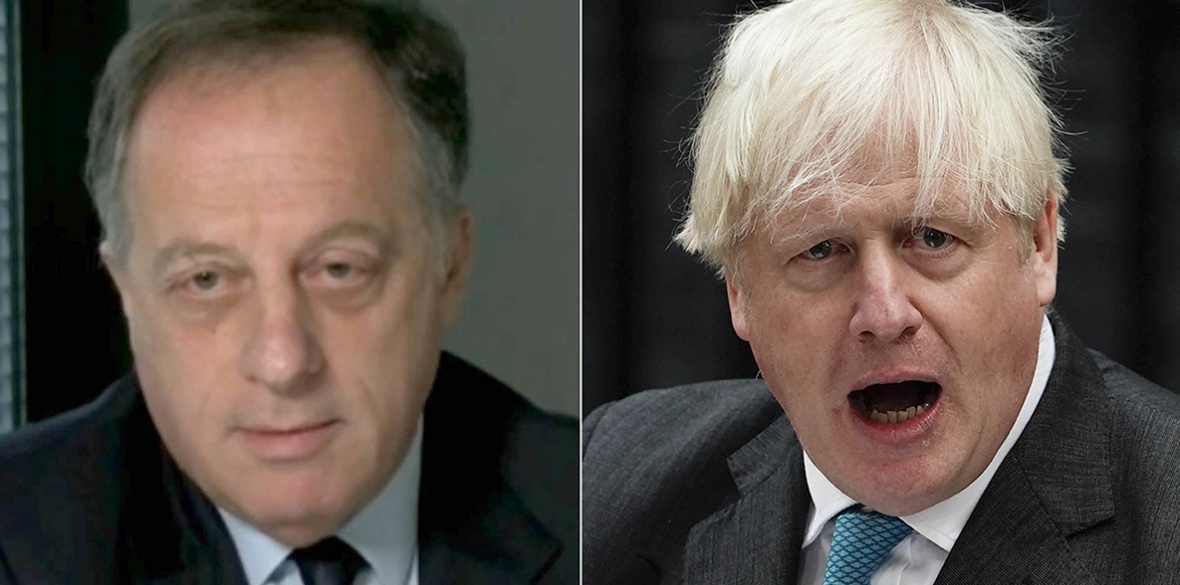
BBC chairman Richard Sharp (left) and Boris Johnson


BBC chairman Richard Sharp’s position is “untenable,” Labour insisted today after MPs found that he had made “significant errors of judgement” when acting as a go-between on a loan for disgraced former prime minister Boris Johnson.

Shadow culture secretary Lucy Powell argued that Mr Sharp’s help, offered when the former Tory donor was applying to the government for the post in early 2021, “throws into serious doubt the impartiality and independence that is so fundamental to trust in the BBC.”

In a highly critical report published today, the digital, culture, media and sport committee, which interviewed Mr Sharp last week, said that he had not supplied the “full facts” when it was considering his suitability for the BBC role.

The former banker’s “failure to disclose his actions constitute a breach of the standards expected of individuals applying for such public appointments,” the cross-party panel of MPs added.

“Mr Sharp should consider the impact his omissions will have on trust in him, the BBC and the public appointments process.”

The fallout follows reports in the Sunday Times last month that businessman Sam Blyth, a distant cousin of Mr Johnson and a friend of Mr Sharp, had reportedly raised the idea of acting as guarantor of an £800,000 loan to the then Tory leader in 2020.

Mr Sharp told MPs last week that he did not help arrange this guarantee or give Mr Johnson financial advice, but he admitted meeting Cabinet Secretary Simon Case in December 2020 to obtain permission to pass on Mr Blyth’s details.

The 67-year-old claimed that, during the discussion held just weeks before he was announced as the government’s preferred candidate to chair the BBC, he told Mr Case that he would have “no further participation” in the loan arrangement after applying for the post at the broadcaster.

The report said that Mr Sharp had recognised the need to be “open and transparent” with the head of the Civil Service, but he had “failed to apply the same standards of openness and candour in his decision not to divulge this information during the BBC interview process.”

Mr Sharp’s spokesperson offered his apologies to the committee, saying: “He believed he had dealt with the issue by proactively briefing the Cabinet Secretary.”

Both the BBC and the watchdog that oversees public appointments are conducting reviews into the process.
INDIA
Kerala transgender couple's 'tears of joy' as baby born early


BBC Published 3 days ago
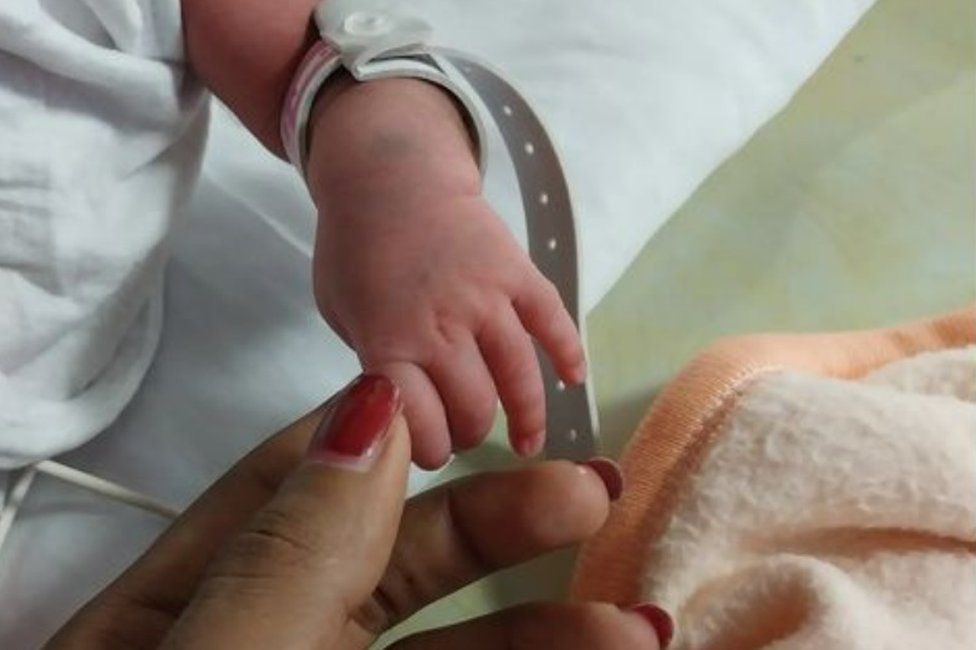
Ziya posted this photo on Instagram after the baby was born on 8 February, almost a month early


A transgender couple from the southern Indian state of Kerala, whose pregnancy photos made global news, have welcomed their baby with "tears of joy".

Ziya Paval said her partner Zahad had given birth to the baby on Wednesday morning.

Ms Paval shared the news on Instagram, posting a photo of the baby who was born nearly a month early.

They told the BBC that both Mr Zahad and the baby, whose name and gender they have not revealed, were fine.

Ms Paval and Mr Zahad, who uses only one name, have said it was their dream to become parents. The couple had paused their hormone therapy during the duration of the pregnancy.

Their pregnancy was considered a rarity in India because "no one else has called themselves a biological parent in the transgender community as far as we know", the couple told the BBC earlier this week.

The two had been at different stages of their respective gender transition processes when they decided to have a baby one-and-a-half years ago.

They had then paused their hormone therapy on doctor's advice.

On Wednesday, as they shared the baby's photo, the couple said they were thankful for the prayers and support of their well-wishers.

Since the announcement of the baby's birth, congratulations have poured in for the couple on their social media pages.

Mr Zahad, an accountant, said he planned to go back to work after two months as Ms Paval took care of the baby.

Kerala: The transgender couple whose pregnancy photos went viral

BBC Published 5 days ago
IMAGE SOURCE,ZIYA PAVAL/INSTAGRAMImage caption,
Ziya Paval (top) and Zahad expect to welcome their baby soon

By Imran Qureshi
BBC Hindi, Bengaluru

A pregnancy photoshoot by an Indian transgender couple - who paused their hormone therapy to have a baby - is being widely shared on social media.

Ziya Paval, 21, and her partner Zahad, 23, who live in the southern state of Kerala, were in the process of gender transition when they decided to have a baby.

Ms Paval, who says she always wanted to be a parent, was recorded male at birth and now identifies as female.

Mr Zahad, who uses only one name, was observed as female at birth and now identifies as male. He is currently pregnant, and the couple expect to welcome their baby soon.

Congratulations have poured in for the couple on their social media pages.


"Trans people deserve family," transgender actress S Negha commented on Ms Paval's Instagram post, where she had shared the photos.


Ms Paval and Mr Zahad say their experience may be rare in India because "no one else has called themselves a biological parent in the transgender community as far as we know".

IMAGE SOURCE,ZIYA PAVAL / INSTAGRAMImage caption,
Congratulations have poured in for the couple on social media

India is estimated to have around two million transgender people, though activists say the number is higher. In 2014, India's Supreme Court ruled that they have the same rights as other people.

However, they still struggle to access education and healthcare, and often face prejudice and stigma.

When Ms Paval and Mr Zahad met three years ago, they were both estranged from their families.

"I am from a conservative Muslim family which never allowed me to learn classical dance," Ms Paval says. "[My parents] were orthodox to the point that they used to cut my hair so that I did not dance."

Ms Paval says she left home to participate in a youth festival and never went back.

She learnt dance at a transgender community centre. She now teaches it to students in Kozhikode district.

Mr Zahad, who is trained as an accountant, is from a Christian family from the fishing community in Thiruvananthapuram city. He currently works at a supermarket.

He had left his family after coming out as transgender to them. But after he became pregnant, his family have accepted the couple and been supportive.

"They are helping Zahad during the pregnancy," Ms Paval says.

It was Mr Zahad's mother who initially asked the couple not to make the pregnancy public. They announced it on their Instagram page last week after she gave permission.

Ms Paval says her family has still not come around.

IMAGE SOURCE,ZIYA PAVAL/INSTAGRAMImage caption,
Mr Zahad is an accountant while Ms Paval is a dance teacher

The couple decided to have a baby one-and-a-half years ago, when they were both at different stages of their gender transition, Ms Paval told the BBC.

Mr Zahad's ovaries and uterus had not been removed yet, so the couple stopped the hormone therapy on their doctors' advice.

The couple's doctors are not authorised to speak to the media.

"Once the pregnancy is over, they can resume the sex hormone therapy," says Dr Mahesh DM, an endocrinologist in Bangalore city who has worked with several transgender people.

After the baby is born, the couple says they'll have to find more work to make ends meet.

"It is very difficult to survive," Ms Paval says, adding that she will have to take on more dance students.

"Zahad will go back to work about two months after the baby is born. Then I will take care of the baby."

The couple says that the transgender community has been "very welcoming" of their pregnancy.

"Of course, there are people both within the transgender community as well as outside who believe in stereotypes. They think a trans man cannot be carrying a baby," Ms Paval says.

"[But] it doesn't matter."

Update: The couple gave birth to a baby on 8th February, almost a month early. They told the BBC that Zahad and the baby were fine but didn't reveal the gender of the baby.


 Members of Myanmar's Tatmadaw military. Photo Credit: Mehr News Agency

After Two Years Of Military Coup Myanmar Heads Nowhere – OpEd

By 

The large section of people in Myanmar (known as Burma and Brahmadesh) observed a silent protest on 1 February marking two years of the military coup and subsequent public resistance movement against the military junta across the south-east Asian nation. The international media (if not the government-controlled newspaper and news channels) reflected the deserted urban and rural areas of Myanmar highlighting the continued opposition to the Min Aung Hlaing military brigade.

“Commemorating the two-year anniversary of the people’s resistance against the illegal failed coup, cities and towns nationwide participated in the silent strike. Many roads and streets were deserted including in Yangon, Mandalay, Monywa, Dawei, and others despite being threatened by the junta. The shops and street vendors in Yangon were ordered by the junta-controlled municipalities to open on 1 February, but they did not obey it even though their licenses may be revoked,” said a civil rights activist.

Speaking to this writer from Yangon (formerly Rangoon), the activist, who wanted anonymity also added that the military rulers have lately extended the state of emergency for another six months (till July 2023). It shows the failure and desperation of Min Aung Hlaing and his armed forces (popularly known as Tatmadaw) while taking full control of the poverty-stricken country of 55 million population. They are facing armed opposition from People’s Defence Forces, Ethnic Revolutionary Organizations and others in various localities, added the activist.

Lately the junta has imposed martial law in townships of Sagaing, Magwe, Tanintharyi along with Yangon and Bago region as well as Karen, Karenni, Mon and Chin States. Most of these localities are still under the control of resistance forces. The imposition of martial law may pave the way for military personnel to continue targeting members of revolutionary forces and also civilians in more brutal ways. Needless to say, the junta has used airstrikes on a number of villages to teach the agitating residents a lesson.

Since 1 February 2021, 2,940 civilians have been killed by the Burmese authorities and 17,572 arrested among whom 13,763 are still behind the bars. Over a hundred media personnel were also detained by the Min Aung Hlaing led military council and more than 25 are still inside various jails of the country of Pagodas. Nobel laureate Aung San Suu Kyi, who leads the National League for Democracy, has been imprisoned for over 30 years by the military controlled courts following motivated allegations raised by the dictators.

While a large section of people in Thailand, Philippines, Korea, Japan, etc organized protest demonstrations on 1 February showing solidarity with the resilient people of Myanmar. Many nations like Australia, Canada, UK, USA, etc imposed heavy sanctions against the junta, but its neighbours namely China, Thailand, Bangladesh and India remain undecisive over it as their respective governments have geopolitical and economic interests in Myanmar. Nonetheless, the junta still can rely on the supply of arms from Russia and China.

Recently the foreign ministers of south-east Asia, while meeting in Jakarta of Indonesia, urged the military rulers of Myanmar to reduce violence and allow unhindered delivery of humanitarian aid to pave the way for a national dialogue aimed at ending the country’s worsening crisis. The meeting under the initiatives of Association of Southeast Asian Nations even avoided inviting the Myanmar foreign minister, even though it’s an ASEAN member, as the military regime failed to fulfill many promises made to the forum.


Nava Thakuria is a Guwahati (Assam, Northeast India) based journalist


Members of Myanmar's Tatmadaw military. Photo Credit: Mehr News Agency

Comparison Of India And Pakistan Defence Budgets – OpEd

Military truck carrying intermediate-range ballistic missile of Pakistani army, November 27, 2008 (Courtesy SyedNaqvi90)

By 

South Asia is a volatile political entity. India and Pakistan share a long and complex history. Both countries have fought multiple wars over the years, resulting in hostile bilateral relations and mutual mistrust and as a result, a significant portion of their budgets has been allocated towards defense and security.

In recent years, India has emerged as one of the largest military spenders in the world. The country’s defense budget for the financial year 2021-2022 is estimated to be around $71.1 billion, which accounts for 2.2% of its Gross Domestic Product (GDP). India’s defense budget has consistently increased over the years, and the government has taken various steps to modernize its military forces, including the acquisition of advanced weaponry, strengthening its cybersecurity infrastructure, and increasing the number of personnel thus creating a destabilizing effect in the region. India has unilaterally started an arms race in South Asia.

Pakistan, on the other hand, has a smaller defense budget compared to India. The country’s defense budget for the financial year 2021-2022 is estimated to be around $11 billion, which accounts for approximately 3.6% of its GDP. The country’s army has been actively involved in the fight against terrorism, and its security forces have focused on eliminating terrorist networks all while being cognizant of nefarious Indian designs.

When it comes to the allocation of funds for the army, both India and Pakistan allocate a substantial portion of their defense budgets towards this sector. In India, the army accounts for a significant portion of the country’s defense budget, and the government has taken various steps to modernize the armed forces. The country has acquired advanced weaponry, such as the BrahMos cruise missile, and has invested in the development of unmanned aerial vehicles (UAVs). 

India and Pakistan allocate a substantial portion of their budgets towards national defense and security. While India has a larger defense budget and has made significant investments in modernizing its military forces primarily focusing on acquiring offensive military capabilities to undermine Pakistan. Indian spending on defense is counterproductive for regional stability and security. 

Indian actions create a ripple effect by increasing hostility. Its decision to engage in arms race only serves to destroy the fickle regional peace and balance of security. It forces Pakistan and other regional states to embark on securitization. The anarchic nature of international politics demands nations to be proactive in responding to perceived threats. The acquisition of offensive power only creates more insecurity. The start of arms race in never ending cycle which only serves to create perpetual hostile regional security apparatus which is conducive for regional growth and development.

Whether Pakistan should be spending more on its army and security forces considering its volatile border situation is a matter of debate and ultimately depends on several factors.

On one hand, the volatile border situation with India, as well as the ongoing threat of terrorism and extremism, highlights the need for a strong and well-equipped military and security force. A strong army and security force can help deter potential threats, respond to crises, and maintain stability in the country. Increasing the budget allocation for these forces could help improve their capabilities and ensure their readiness to deal with any security challenges that may arise.

On the other hand, it’s also important to consider the country’s overall economic situation and its ability to allocate additional funds towards its military and security forces. Pakistan has been facing numerous economic challenges in recent years, including high levels of debt, inflation, and unemployment, which have impacted its ability to allocate more funds towards its military and security forces. In such circumstances, increasing the budget allocation for the army and security forces demand strategic reforms that would allow further spending space without leading to further economic difficulties and potentially harm the country’s overall development prospects.

Ultimately, the decision on whether to increase spending on the army and security forces should be based on a careful analysis of the country’s security needs and its ability to allocate the necessary funds. The government should weigh the benefits and costs of increasing spending on these forces, taking into account the country’s overall security situation and economic prospects. 

Ultimately, the decision on whether to increase spending on the army and security forces should be based on a careful analysis of the country’s security needs and its ability to allocate the necessary funds. The government should weigh the benefits and costs of increasing spending on these forces, taking into account the country’s overall security situation and economic prospects. 

Ultimately, the decision on whether to increase spending on the army and security forces should be based on a careful analysis of the country’s security needs and its ability to allocate the necessary funds. The government should weigh the benefits and costs of increasing spending on these forces, taking into account the country’s overall security situation and economic prospects. 

Talha Imran is a social sciences graduate from Bahria University and works as an independent researcher besides teaching as visiting faculty at National University of Modern Languages (NUML), Islamabad, Pakistan. 


LA REVUE GAUCHE - Left Comment: Search results for PERMANENT ARMS ECONOMY 

He was born without a hand - so his classmates built one for him

Kyle Melnick, Feb 12 2023

KELLY FLOOD
Sergio Peralta, right, received a prosthetic hand by way of a class assignment from high school teacher Jeff Wilkins.

For his entire life, Sergio Peralta dreamed about playing catch.

When he was born, Peralta said, his right hand didn't fully develop. Instead, he grew tiny fingers at the end of his arm. So he learned to do everyday activities – writing, eating, carrying books – with one hand.

Over the years, the 15-year-old American lost hope that would change.

But after Peralta enroled at a new high school in August, engineering students there built him a prosthetic hand – a gesture the sophomore said has changed his life. Now, Peralta can not only toss a ball but also carry water bottles, cups and food with his right hand.

READ MORE:
* Taranaki man uses 3D printers to make face shields for health workers
* Taranaki teen building a prosthetic hand to help his brother ride a bike
* Little girl born without a hand gets Disney Frozen themed prosthetic arm

"I've started to feel more happy, more excited," Peralta told The Washington Post. "I wanted to do a lot of stuff with my right hand. Now I can do more."

After Peralta moved from Madison, Tennessee, US, to nearby Hendersonville last summer, he said he hid his right hand in his sleeve at Hendersonville High. Ever since he was a child, Peralta said classmates have asked about his hand, and some teased him.

A few weeks into the school year, computer science teacher Jeff Wilkins noticed Peralta was the only student who moved his mouse to the left side of his keyboard. He then saw Peralta didn't have a right hand. Peralta said he had never tried prosthetics because he had become comfortable using his left hand for most activities.

Wilkins, 43, had started an engineering programme at Hendersonville in 2018 so students could take on projects to improve their community. He tried to create a wheelchair for a paralysed student in Indiana around 2010, but he said he didn't possess the equipment and skills to complete it. He still regretted that.

After he learned about Peralta's hand, Wilkins remembered a video he'd seen years earlier from Enabling the Future, a volunteer group that makes 3D-printed prosthetic hands.

KELLY FLOOD
Peralta, second from left, with the engineering students who created his prosthetic hand.

When Wilkins approached Peralta and his mother about a prosthetic hand, they expressed interest but knew building one could be challenging for a high school class. In early November, Wilkins secretly assigned three of his students to the project. They bought 3D printing equipment on Amazon and found a model image of a prosthetic hand on some design software.

"I didn't want to get his hopes up," Wilkins said. "I'd rather under-promise and over-deliver than overpromise and under-deliver on something like this."

They used polylactic acid, a common plastic filament material in 3D printing that's also used to make electronic devices, as the hand's main fabric. They applied thermoplastic polyurethanes, an elastic plastic commonly found in phone and laptop cases, so the fingers could flex and squeeze objects. They added fishing line and Velcro so Peralta could easily strap the hand to his forearm.

The group did so while keeping their progress a secret. They measured classmates' hands to gauge Peralta's ideal fit.

After working on the hand for about a week, the students used the school's LulzBot 3D printer to create a prototype. Students said they worried Peralta wouldn't like or use the hand, but as soon as he put on the prototype in mid-November, he could flex his fingers.

Peralta said he was stunned. Then Wilkins tossed him a yellow rubber ball. While Peralta failed to catch the first few throws, students yelled in elation when he finally caught the ball.

"I was just so excited," Peralta said.

KELLY FLOOD
Leslie Jaramillo displays the design software she and her classmates used to create Peralta's prosthetic hand.

Leslie Jaramillo, a senior who helped make the hand, said she didn't expect the class project to change another student's life.

"This just showed me a different way to help the community," said Jaramillo, 17. "Even by using skills that I learn at school."

In the following weeks, Peralta worked with Jaramillo and other student engineers as they upgraded three hand models. In early December, Peralta wore the final device home - and the students aced their assignment.

Peralta said he only removes the prosthetic hand when he sleeps. He uses it to pick up cups and bottles of water, he said, and wants to learn to write with it.

While Peralta and his classmates didn't enter the school year with much engineering experience, they're set on studying the subject in college and hope to work on other influential products.

"It's been cool to see [the hand] being kind of a part of who he is now," Wilkins said of Peralta. "I want to teach them that products don't have to be about making money. They can be about making someone else have a more fruitful life."


GLOBALIZATION
Singapore-registered container vessel collides with Bahamian ship in Vietnam waters

Singapore vessel Wan Hai 288 collided with another vessel while sailing along the Long Tau river in Vietnam. 
PHOTO: SALVAGE_AND_WRECK/INSTAGRAM

Sarah Koh

A Singapore-registered container ship collided with a Bahamian vessel on Saturday morning while sailing along the Long Tau river in Ho Chi Minh City, Vietnam.

The Singaporean vessel, Wan Hai 288, was sailing towards a port in Ho Chi Minh City when it collided with Bahamian vessel Resurgence, which was going in the opposite direction, according to a report by Vietnamese newspaper VnExpress.

A spokesman from the Maritime and Port Authority of Singapore (MPA) confirmed that the incident happened at around 5.40am (Singapore time) on Saturday.

“There were no reports of injury or pollution,” MPA spokesman told The Straits Times. “Both vessels are in stable condition. Wan Hai 288 is currently safely moored at Lan Tau No 6 buoy.”

MPA is in contact with the company and will investigate the incident.

According to vessel tracking website FleetMon, the bow - or the front - of the Resurgence struck Wan Hai 288 in the cargo deck area, which caused the latter to be stuck in a nearby river bank.

The Wan Hai 288 was carrying around 1,400 containers, while the Resurgence was carrying about 600 containers at the time of the incident.

A spokesman from the Ho Chi Minh City’s maritime administration said that the Resurgence vessel was moved to Cat Lai Port in Ho Chi Minh City.

According to ship tracking website MarineTraffic, Wan Hai 288 was built in 2021 and belongs to Taiwanese shipping company Wan Hai Lines, which has several offices worldwide.Additional reporting by Michelle Chin
Bulgaria Abuzz With Online Rumors About 'EU Plot' To Make Everyone Eat Insects

February 12, 2023 
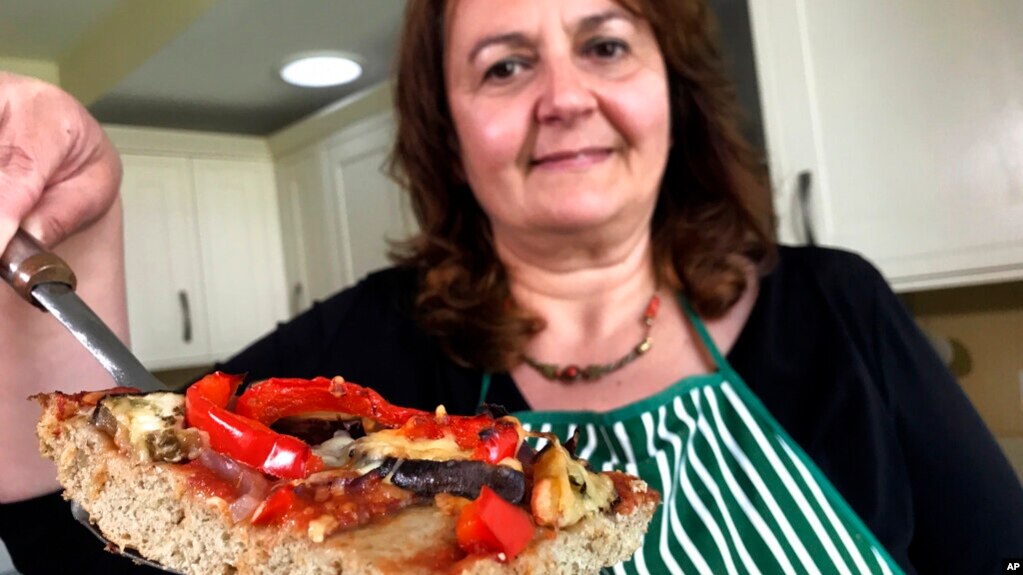
Tiziana di Costanzo, co-founder of Horizon Insects, holds 
up a slice of pizza made with cricket powder, in her London kitchen. (file photo)


SOFIA -- He's a fringe politician and social media influencer in Bulgaria who claims he's on a crusade to save the nation. Georgi Georgiev Gotti recently posted on Facebook that the European Commission wants to "give cancer" to his compatriots.

How?

EU bureaucrats will allow food producers to add powdered insects to a list of foods, the combination of which, according to Gotti, will create carcinogens.

With no science to back his bogus claim, the Facebook post has gone viral, shared more than 1,000 times and generating hundreds of reactions, many of them seething.

As the disinformation spread, the rumor mutated, with some social media posters adding further nefarious EU intentions to force people to consume insects. They claimed powdered insects would be added to many foods, including bread, but it would all be shrouded in secrecy, with no labeling required.

While it is hard to prove the rumors are part of an orchestrated Kremlin campaign, social media posts on the topic spiked after one of Russia's most powerful media figures, Dmitry Kiselyov, mentioned it on his popular show on state TV in late January. Russia regularly spreads disinformation in Europe, with the aim of sowing mistrust and doubt of EU institutions.

Milena Yakimova, a sociology professor at Sofia University who also monitors Russian propaganda efforts in Bulgaria, said this latest disinformation campaign aims, in part, to "show us that Europe is foreign to us."

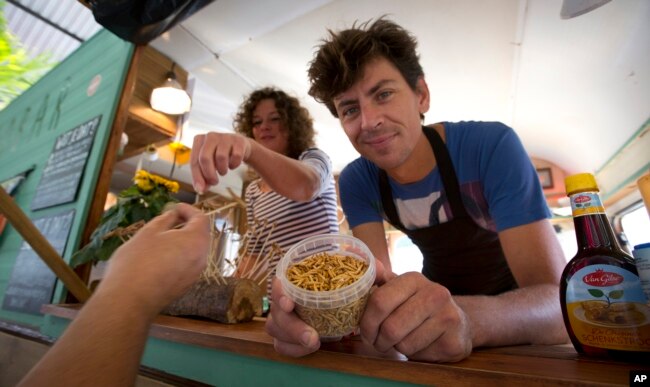
Tiziana di Costanzo holds up a cup of dried crickets to be ground up and added to pizza dough.

The current campaign appears to be largely waged by individuals and organizations who are at least sympathetic to Russia. Bulgaria has witnessed similar campaigns. The Balkan country suffered the EU's highest COVID-19 fatalities, in part due to low vaccinations rates as medical misinformation turned many into skeptics.

Recently, social media was abuzz with false claims about an imminent military mobilization that would end with Bulgarian men being sent to Ukraine to fight against invading Russian troops.

The insect rumors do have a sprinkling of truth. The European Commission -- the EU's top executive body -- has recently approved more insects as so-called novel foods after the EU's food safety regulator, the European Food Safety Authority (EFSA), gave its stamp of approval.

Insects are part of the daily diet for about one-quarter of the globe. It's thought that eating more bugs and less meat and poultry could be good not for only human health but the environment. Research by the UN's Food and Agriculture Organization shows that crickets require six times less feed than cattle to create the same amount of protein.

In October 2014, the EFSA said its research found that houseflies, crickets, and silkworms can be safe, nutritious, and more environmentally friendly alternatives to chicken, beef, or pork. The EFSA analysis said the farming of insects could lead to lower emissions of greenhouse gases and ammonia than cattle or pigs and higher efficiency in converting feed to protein.

In May 2021, the European Commission announced the first insect -- yellow mealworms, the larva form of mealworms -- had been approved as a so-called novel food in the EU. By August 2022, the European Commission said a total of three insects -- yellow mealworms, house crickets, and migratory locusts -- had been authorized as novel foods inside the EU.

A container of yellow mealworms is offered from a food truck at a festival in Antwerp, Belgium. 

In January of this year, the European Commission approved the maggot-like larvae of lesser mealworms -- a type of shiny black beetle -- and house crickets -- this time in powdered form -- as novel food as well.

In both cases, the European Commission approval applies to specific items produced by two companies. It spells out in which types of food products they can be used -- including bread -- and that these items must be labeled.

Following the latest European Commission insect rulings at the start of the year, social media in Bulgaria was abuzz with posts -- including from rabble-rouser Gotti -- mentioning grasshoppers, which are not mentioned in the EU decision. Data from Google in Bulgaria shows searches for grasshoppers and crickets also spiked around the same time, RFE/RL's Bulgarian Service found, peaking on January 30.

Also creeping into other posts were false claims that chitins -- the exoskeletons of crickets and other insects -- would cause cancer in humans.

RFE/RL's Bulgarian Service found that one of the first Facebook posts, from January 26, to spread the poison claims and gain traction came from a Facebook account of an individual identified as Nadia Ivanova.

A check of Ivanova's Facebook page turns up multiple posts praising Russian President Vladimir Putin and several mentioning Nikolai Malinov, a former Bulgarian lawmaker and the head of a pro-Russian lobby group in Bulgaria. In 2019, Malinov traveled to Moscow to personally receive an award from Putin. He is now on trial in Bulgaria on charges of spying for Russia.

Ivanova's January 26 Facebook post was quickly seized on by others on Facebook, including by a person identified as Lisa Miller, who posted it on the page of Varna Without Censorship, a Bulgarian network that accuses mainstream media of an anti-Russian bias, among other things.

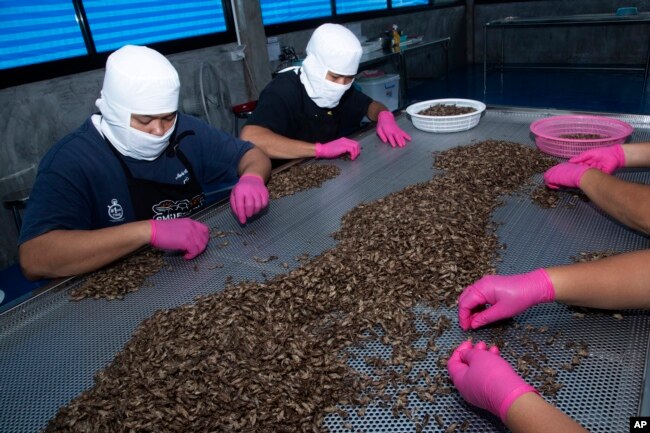
Employees sort crickets for size at the Smile cricket farm at Ratchaburi Province, southwest of Bangkok, Thailand.

Miller's profile appears to be fake, the photos taken from a photo bank, a check by RFE/RL's Bulgarian Service indicated. The account often shares many conspiracy theories and fake news.

The topic gained further traction in Bulgaria and elsewhere, after Kiselyov, a firebrand pro-Putin TV host, offered up his musings on his Russian First Channel program on January 29.

"Cultural transformation in Europe has been going on for a long time and certainly has a domestic dimension," began Kiselyov. He continued with a familiar narrative in Russia that people in Europe are asked to do less laundry, use fewer appliances, limit the temperature in their rooms, before adding: "And now they are also advised to eat insects."

"They are persuading Europeans to bathe less often and eat insects," concludes Kiselyov, who is often described as one of the Kremlin's top propagandists.

Kiselyov was not alone in sinisterly spinning the EU decision. In France, right-wing politician Laurent Duplomb also accused EU bureaucrats of nefarious intentions.


While it is hard to prove the rumors are part of an orchestrated Kremlin campaign, social media posts on the topic spiked after one of Russia's most powerful media figures, Dmitry Kiselyov, mentioned it on his popular show on state TV in late January.

"We cannot let the French eat insects without their knowledge," he wrote on Twitter.

A transcript of Kiselyov's January 29 show quickly spread on social media in Bulgaria, shared by Ivanova, Miller, and Gotti.

Sociology professor Yakimova, who is also a researcher at the Sofia-based Foundation for Humanitarian and Social Research, a project that monitors Russian propaganda in Bulgaria, said the "news" on insects for human consumption has flooded the information space in Bulgaria in recent weeks.

Yakimova says that the disinformation is meant to sow fissures within the EU.

"This is an attack on European solidarity and exploits long-standing fears in the West about insects," she said.

Re-Written by correspondent Tony Wesolowsky based largely on reporting by RFE/RL Bulgarian Service's Georgi Angelov


Georgi A. Angelov has been a journalist for RFE/RL's Bulgarian Service since 2022. He started his career 20 years ago at the Smolyan newspaper Otzvuk. He then worked for a number of national newspapers. He was a reporter at Dnevnik, an editor at OFFNews.bg, and a writer and correspondent at the Bulgarian section of Deutsche Welle.