Sunday, August 06, 2023

The Aftermath of Article 370 in Jammu and Kashmir

#KASHMIR IS #INDIA'S #GAZA

 August 6, 2023
By Nimra Javed
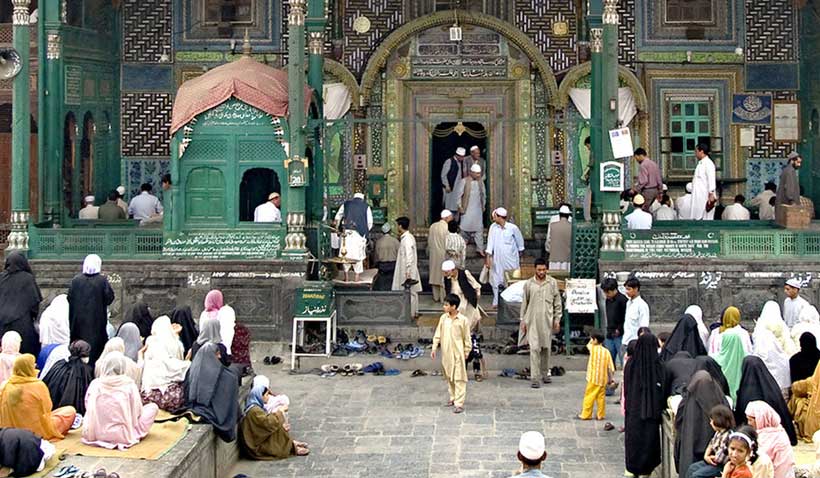
Friday prayers in Srinagar, Jammu and Kashmir. © John Isaac

Article 370 of the Indian Constitution grants Jammu and Kashmir a unique status as the only state that can define its own accession term and receive this treatment. In order to legislate and establish other contacts with the Indian Union, the state assembly and government were granted this unique status under the constitution. Article 370 was included in the Indian constitution following discussions between Kashmiri and Indian government officials. This unique status was, however, eroded over time by a number of Draconian measures. To draft its own constitution and approve applicable sections of the Indian Constitution, the IIOJK Constituent Assembly was founded in 1950. Importantly, Article 35A was included to ensure the continuation of the Maharaja’s state subject rule by giving the state government the authority to establish its own definition of permanent residents and place limits on the ability of non-residents to purchase property in the state.

Despite being subjected to Indian aggression, brutality, and tyranny, the people of Jammu and Kashmir were able to maintain their unique culture and identity because of Article 370. It gave the state legislature the power to make laws for Jammu and Kashmir, with the exclusion of the military, the media, and international relations. Article 370’s third clause stated that the J&K constitutional assembly’s approval was needed to alter or repeal the article. Since the legislature was dissolved on January 26, 1957, however, it is impossible to constitutionally revoke the special status. The BJP government unilaterally repealed this law, turning the state into a de facto prison, despite the fact that it had a permanent status. While New Delhi promised that this change would bring prosperity to the state, the reality shows otherwise. Significant shifts and difficulties have resulted from the repeal. Jammu and Kashmir and Ladakh are now two independent union regions after the removal of Article 370 on August 5, 2019. With this change, the territory was no longer granted any kind of special status and instead fell under the direct control of the Indian federal government.

Concerns were voiced regarding how the elimination of Article 370 would affect the demographic make-up of the area. Mass migration and settlement by a certain group can shift the demographic balance, as was the case with Israel’s occupation of Palestinian territory, which drew criticism from many. The repeal was interpreted as an effort to domesticize the international debate over Kashmir within India. As a result, the unlawful union territory authority in Jammu and Kashmir issued up to 3.5 million bogus residence certificates to foreigners.People who had previously worked for 10 years in various capacities in the territory, such as at colleges, banks, or other jobs, were now able to claim domicile under the new rules for claiming domicile in J&K. Domicile eligibility was extended to include offspring of J&K service personnel and those who had completed high school (grades 11 and 12). Some people aren’t happy with all the domiciles being given out, especially to former soldiers known as Sainiks. This has prompted concerns among locals about a possible effort to manipulate the area’s population composition and threatens their safety.

Some people are worried that the ruling party, the BJP, is trying to control the region’s majority Muslim population by settling extremist Hindus in the valley, which could lead to ethnic cleansing and the emergence of new conflicts. As a precautionary step following the revocation, some Jammu and Kashmir political figures were detained or placed under house arrest. Syed Ali Gillani, Yasin Malik, Omar Abdullah, and Mehbooba Mufti are just some of the prominent regional party leaders that were threatened with detention. The goal of this action was to silence the Kashmiri government. While visiting New York, Indian author Arundhati Roy declared, “The biggest myth of all times is that India is a democracy.” Actually, it’s not the case. Several Indian states are dangerously close to civil conflict. The number of reported rapes has been steadily rising since article 370 was repealed. IIOJK is notorious for its use of torture, sexual assault, kidnapping, nighttime raids, disappearances, and mass graves. Human rights abuses have been systematic and pervasive in J&K for at least 40 years, according to UNHCR findings from 2018 and 2019. Khurram Parvez, three of his accomplices, and Parveena Ahanger were among the prominent human rights activists whose homes and offices were raided by the NIA on various occasions in 2020. Ajay Kumar Mishra, minister of state for the home, said in the Rajya Sabha, “the cost of pursuing journalism in Jammu & Kashmir is huge.”

The executive editor of The Kashmir Times, Anuradha Bhasin, told the wire that they are under constant observation and that government policies have all but muzzled the media. Journalists in Kashmir are often subjected to ‘police verification’ requests, which can take the form of either a verbal’ summons’ and questioning, or a physical raid. She writes about the persecution of Kashmiri journalists in her book, “A Dismantled State” (The Untold Story of Kashmir after Article 379), which was written after Article 370 was revoked. This book details the ‘Orwellian policy’ of punishing, jailing, and otherwise intimidating journalists into silence, and the damage done to the fourth pillar of democracy as a result. It’s now difficult for journalists to operate without interference.There has been a surge in the number of extrajudicial executions committed by armed organizations in the region. The Jammu and Kashmir Coalition of Civil Society (JKCC) has reported that since August 5th of this year, 165 people have been killed in Indian-led search and cordon operations. The economy and job market in the area have also been significantly impacted by the repeal of Article 370. The Centre for Monitoring Indian Economy (CMIE) reports that the jobless rate has risen to 16.2 percent, which is more than twice as high as the 6.7 percent unemployment rate in the Indian Union. The withdrawal of special status has had severe economic ramifications for the people of Jammu & Kashmir, with an estimated 500,000 people losing their jobs. Kashmir’s business community, according to the Kashmir Chamber of Commerce and Industries (KCCI), lost almost 40,000 crore rupees due to the current adverse environment. The Indian government has claimed that Article 370 is to blame for the state’s lack of economic progress, although the truth appears to be more nuanced and complex. Significant difficulties have arisen as a result of the abrogation, which has had an effect on the economy and other facets of regional life.

The Indian government opted to hold online auctions for mineral extraction bids during the communication shutdown in Kashmir. This, however, prevented Kashmiris from applying, therefore almost all of the permits went to Indians rather than Kashmiris. Sand, boulders, gravel, and other riverbed materials were made available for mining in over 200 mineral blocks along the Jhelum River and its tributaries, spread over all 10 districts of the region. In an interview with Anadolu Agency, local contractor Abdul Ahad voiced his concerns, saying, “It is not injustice but murder with us and our families.” Because of this, a record-breaking 70% of all mining contracts went to Native Americans. There are still many unknowns and unanswered questions concerning the future of the region as a result of these shifts. The situation in Kashmir requires our care and attention. Only sincere diplomatic efforts, with human rights and the aspirations of the people as their top priorities, will bring peace and stability to the region. As global citizens, we have a responsibility to keep an eye on the situation in Kashmir and work toward a peaceful resolution that protects the region’s distinct culture and the future of its people. True peace and reconciliation in Kashmir can only be achieved in a world where ideals of justice and fairness reign supreme and no one’s suffering goes ignored or neglected.


Nimra Javed is Researcher at CISS AJK and working on Nuclear Politics & Disarmament, Emerging Technologies and New Trends in Warfare. Writer can be reached at: @NimrahJaved_
Saudi soccer: A game of geopolitics and religion, not just sports

August 6, 2023
By Dr. James M. Dorsey


Saudi Arabia’s soccer player buying spree is about more than sports and the diversification of the kingdom’s economy.

It’s also about geopolitics and religion for Saudi Arabia and, at least, some of the world’s top players moving to the kingdom.

Recent high-profile transfers include Real Madrid’s Karim Benzema, Chelsea’s N’Golo Kante and Kalidou Koulibaly, Lens’ Seko Fofana, Lyon’s Moussa Dembele, and Manchester City’s Riyad Mahrez.

To be sure, mouthwatering transfer fees and salaries are a major driver.

But for Muslims, so is a religious affinity with Saudi Arabia, the custodian of Islam’s two holiest cities, Mecca and Medina.

As are European culture wars that fuel anti-migrant, anti-Muslim, and anti-black sentiment for Muslim and non-Muslim players of colour.

In addition, European clubs have a mixed record of accommodating Muslim players’ religious needs, such as fasting during Ramadan and daily prayer times.

The exodus of pious Muslim and non-Muslim players amounts to a backlash against a Western push for LGBTQ rights, privately rejected by some as contradicting their faith.

Mr. Benzama said he had decided to move to Saudi Arabia’s Al Ittihad “because I am Muslim and it’s a Muslim country. I’ve always wanted to live there… Most importantly, it’s a Muslim country, it’s beloved, and it’s beautiful.”

On the website of Saudi Arabia’s Al Arabiya television network, Bahraini analyst Omar Al-Ubaydli asserted that “any practicing Muslim or non-White person living in Europe will immediately understand that it’s probably not just about money.”

Mr. Al-Ubaydli said: “To be clear, the millions of dollars on offer are certainly a major factor. However, a mixture of arrogance and ignorance is making the secular white Westerners who dominate European football – including its media – underestimate Saudi Arabia’s attractiveness.”

Mr. Al-Ubaydli concedes, “That’s not to say Saudi Arabia is free from racism. However, a quick look at the national team – and a quick stroll through the grand mosque in Mecca – suggests that black people are unlikely to be subjected to the sort of vitriolic hatred that is becoming increasingly frequent in Europe.”

Mr. Al-Ubaydli may have a point despite critics wondering why players did not seek more harmonious, culturally more accommodating pastures earlier, even if employment packages were less attractive in the past.

The answer is likely severalfold.

Saudi Arabia is a different place since Crown Prince Mohammed bin Salman introduced far-reaching social reforms that have significantly enhanced women’s professional and social opportunities, rolled back gender segregation, and introduced a Western-style entertainment industry.

Moreover, Mr. Bin Salman’s sports ambitions, part of the crown prince’s economic diversification plans designed to reduce the kingdom’s dependency on oil exports, make Saudi Arabia an exciting place to play soccer.

If Mr. Bin Salman succeeds in turning the Saudi Professional League into one of the world’s top five leagues, soccer will strengthen the crown prince’s positioning of the kingdom as a major power in a new multipolar world order in which middle powers have greater strategic autonomy.

With big-name Muslim players populating successful Saudi clubs, it would also boost the kingdom’s positioning in a competition for religious soft power in the Muslim world. Moreover, it would strengthen Saudi Arabia’s bid to define what Islam stands for in the 21st century.

Mr. Bin Salman’s sports push suggests that the crown is confident that the dark side of his reforms, brutal repression of human and political rights, ensures that soccer will not emerge as a vehicle for dissent and protest.

Soccer has taken the Middle East and North Africa by storm since Britain and France introduced it in the late 19th and early 20th centuries. The region’s most popular sport has since played a key role in anti-colonial struggles and post-colonial anti-government protests.

Saudi Arabia initially sought to reduce soccer’s profile in response to the 2011 popular Arab revolts. Militant soccer fans played a vital role in the revolts that toppled Tunisia, Egypt, Libya, and Yemen’s leaders.

Spanish consultants, hired before Mr. Bin Salman’s rise to power, were instructed to develop Saudi Arabia’s first-ever national sports strategy, emphasizing individual rather than team sports.

De-emphasising team sports was intended to limit soccer’s potential as a venue for anti-government protests.

A Facebook page entitled Nasrawi Revolution demanded in 2013 the resignation as head of Al Nassr FC of Faisal bin Turki, a burly nephew of the late King Abdullah. A YouTube video captured Mr. Bin Turki running off the soccer pitch after rudely shoving a security official aside.

The campaign against Mr. Bin Turki followed the unprecedented resignation in 2012 of Nawaf bin Feisal, another member of the kingdom’s ruling Al-Saud family, as head of the Saudi Football Federation (SFF), the first royal to be forced by public pressure to step down.

Mr. Bin Feisal’s resignation led to the election of a commoner, storied former player Ahmed Eid Alharbi, in a country that has no elections. Alharbi was widely viewed as a reformer and proponent of women’s soccer.

Mr. Bin Salman’s social reforms, enhanced confidence, and unbridled ambition improved his chances of sports success compared to a 1978 Saudi attempt to buy some of the world’s top players from Brazil.

Roberto Rivelino, like Cristiano Ronaldo, the first soccer superstars to move to Saudi Arabia this year,, was accorded a hero’s welcome when landed in the kingdom on a Concorde to play for Al-Hilal 45 years ago.

Mr. Rivelino was greeted at the airport by thousands of fans waving flags. He was whisked away in a Rolls Royce to one of the most luxurious royal residences and honored with a lavish multi-course banquet attended by Saudi ruling family members.

Saudi Arabia’s rulers, then, like now, hoped soccer would strengthen Saudis’ national identity.

Geopolitical rivalry lurked in the background then too. Even though the Shah still ruled Iran, Saudi rulers could not accept that its rival was the only Middle Eastern state to qualify for the 1978 World Cup.

The Saudis have since come a long way, qualifying for several World Cups, and beating Argentina last December during the Qatar tournament.

Contrary to 1978, Saudi Arabia today is not pursuing soccer ambitions in isolation. Its acquisition spree is part of a broad country overhaul. That enhances the kingdom’s chances of soccer success but makes it dependent on Mr. Bin Salman’s ability to implement his broader economic reforms successfully. The jury is still out on that.


Dr. James M. Dorsey is a senior fellow at the S. Rajaratnam School of International Studies, co-director of the University of Würzburg’s Institute for Fan Culture, and the author of The Turbulent World of Middle East Soccer blog, a book with the same title, Comparative Political Transitions between Southeast Asia and the Middle East and North Africa, co-authored with Dr. Teresita Cruz-Del Rosario and three forthcoming books, Shifting Sands, Essays on Sports and Politics in the Middle East and North Africaas well as Creating Frankenstein: The Saudi Export of Ultra-conservatism and China and the Middle East: Venturing into the Maelstrom.
Hiroshima, ‘Oppenheimer’ and the New Age of Nuclear Terror

North Korea is testing more missiles, Iran is rushing for a bomb, India and Pakistan are renewing the arms race — things are getting as scary as the Cold War.


Falling out.Source: Pictorial Parade/Getty Images

By Max Hastings
August 5, 2023 

Suddenly, on this 78th anniversary of the dropping of “Little Boy” on Hiroshima by Colonel Paul Tibbets’ Enola Gay, we are again being forced to think about The Bomb. Millions of people are flocking to see Christopher Nolan’s new biopic Oppenheimer, which concludes with its protagonist’s gloomy assertion to Albert Einstein that, through the creation of atomic weapons, mankind signed its own death warrant.

Meanwhile, North Korea last month tested a new ballistic missile. Iran seems set on a course that is almost certain to end in its possession of nuclear arms. Russian President Vladimir Putin routinely rattles his nuclear saber, most recently over redeploying some of his nation’s many missiles to neighboring ally Belarus.

Less noticed by the world, in Asia three nuclear powers — China, India and Pakistan — are committing serious resources to strengthening their capabilities. Ashley Tellis’s authoritative 2022 book Striking Asymmetries explains that until recently, the Asian nations were content with a posture of minimal deterrence — holding limited stocks of weapons underground.

These suffice to ensure a devastating second-strike capability against an aggressor, without requiring a huge investment in early-warning systems for rapid response, such as Russia and America possess. The Asian states’ nuclear arsenals have in the past served political purposes more than military ones.

Today, however, that is changing. China is dramatically enlarging its missile and warhead inventory. Pakistan, albeit on a much lesser scale, is doing likewise, chiefly because in a war with the hated Indians its conventional forces could not hope to prevail. India feels unable to remain passive when its two potential adversaries escalate.

Given the unyielding tensions in the region, especially between India and Pakistan, the danger of nuclear conflict is arguably greater in Asia than in the West.

Most of us live out our lives baffled by the enormity of the nuclear menace. We take refuge in not thinking too much about it. We also tell ourselves that no rational national leader would unleash such weapons, at the risk of precipitating mankind’s total destruction.

Robert Oppenheimer thought something of this sort, before Hiroshima. When the brilliant physicist Leo Szilard lobbied him unsuccessfully to oppose the use of his terrible creation and recorded the strange, enigmatic remarks made by the director of the Los Alamos laboratory. “Oppie” told Szilard: “The atomic bomb is shit.”

“What do you mean by that?” questioned Szilard.

Oppenheimer replied: “Well this is a weapon which has no military significance. It will make a big bang — a very big bang — but it is not a weapon which is useful in war.”

When Oppenheimer said that, he was almost certainly mindful of the looming prospect of his terrible progeny being unleashed on Japan, which was incapable of any response. He then assumed, however, that if a future enemy possessed the capability to retaliate in kind, no national leader would seek to use an atomic bomb in pursuit of battlefield advantage.

Oppenheimer wrote in 1948:

[T]he weapons tested in New Mexico and used against Hiroshima and Nagasaki served to demonstrate that with the release of atomic energy quite revolutionary changes had occurred in the techniques of warfare. It was clear that with nations committed to atomic armament, weapons even more terrifying, and perhaps vastly more terrifying, than those already delivered would be developed; and … that nations so committed to atomic armament could accumulate these weapons in truly terrifying numbers … The atomic bomb must show that war itself is obsolete.

In one of his most memorable phrases, the scientist likened the US and Soviet Union to “two scorpions trapped in a bottle”: If they come to blows, both must perish. Today, almost eight decades on, Oppenheimer’s judgement about that looks rational, but oversanguine. Whatever the existential awareness of prudent national leaders, the peril persists that an aberrational figure — an Iranian ayatollah, North Korea’s Kim Jong Un, an impassioned Pakistani, even a Donald Trump — might not accept Oppenheimer’s verdict, reprised by many authoritative voices since, that there can be no possible “winner” from a nuclear exchange.

I am nagged by consciousness that two years ago, I was among many students of strategy and international affairs who never contemplated the prospect of Putin launching a war to conquer Ukraine, because the cost to his own country must be so appalling. Yet he did so. His logic proved to be different from our logic. How much different, and whether also extending to nuclear weapons, remains uncertain.

In Oppenheimer, General Leslie Groves asks the scientist what are the chances that a nuclear explosion will destroy the world. Almost zero, says Oppenheimer, to which the general responds laconically: “I would have preferred zero.” Mankind will never again enjoy the luxury of zero.

Nolan’s movie captures the equivocations, the ambiguities, that overhung Oppenheimer’s career after August 1945, as he wrestled with the stupendous dilemmas and forces unleashed by his achievement at Los Alamos. His McCarthyite accusers at the hearings of 1954, seeing these as evidence of disloyalty to his country, pounced on his prewar political equivocations, notably including support for Spain’s republicans and communists in their 1936-39 civil war.


Yet the American right ignored the fact that most decent people in the democracies deplored the triumph of General Francisco Franco’s fascists — and the fact that American businesses had made millions out of backing them. Before World War II, Oppenheimer was politically no further to the left than were many educated Americans, disgusted by the social failures within their own country and the brutality of 1930s capitalism.

For better or worse, from 1941-45 the Soviet Union had been the foremost ally of the US against Germany. In the eyes of most biographers and historians, Oppenheimer was always an American patriot. He was simply a scientific genius who tried also to think beyond national frontiers.

He opposed the creation of the H-Bomb, because it posed an even more devastating threat to the planet that did the A-Bomb. Yet he became an advocate of developing lower-yield tactical weapons, in hopes — which most strategists have since deemed vain — that it might be possible to limit the scope of a nuclear exchange.

He pursued the dream of international control of atomic arms, writing, again in 1948: “We would desire … a situation in which our pacific intent was recognized and in which the nations of the world would gladly see us the sole possessors of atomic weapons. As a corollary, we are reluctant to see any of the knowledge on which our present mastery of atomic energy rests, revealed to potential enemies … The security of all peoples needs new systems of openness and cooperation.”

Perhaps surprisingly, Henry Stimson, who as secretary of war was among the leading sponsors of the bombing of Hiroshima and Nagasaki, wrote likewise shortly before his death in 1950: “The riven atom, uncontrolled, can be only a growing menace to us all … Lasting peace and freedom cannot be achieved until the world finds a way toward the necessary government of the whole.”

Such words showed that he, like Oppenheimer, had come to believe that only international cooperation on an unprecedented scale could make the planet secure. Yet if Stimson were alive today, he might feel obliged to acknowledge that a world which cannot cooperate effectively to overcome climate change is even less likely to work together to save itself from the nuclear menace.

We may cherish hopes that nuclear arms limitation, as practiced by American and Russian leaders — between Ronald Reagan and Mikhail Gorbachev, between Barack Obama and Putin — may again return to fashion. But no power that considers itself threatened by mortal foes, as are all the current nuclear weapons holders, is ever likely to renounce a second-strike capability, or to agree to place its weapons under the control of any international body.

A significant portion of the British people, myself among them, sometimes toy with the idea of giving up our submarine-based nuclear weapons. These are hugely expensive for a nation much less prosperous than the US. Most strategy gurus have long dismissed them as ridiculous: They depend on American technology, and it is impossible to imagine a British government using them if our country was abandoned by the US.

Yet today, it has become almost unthinkable that in a world in which Putin routinely threatens Europe, Britain will renounce its deterrent. Moreover, the danger appears real that a future US president might reduce, or even withdraw, military support for the continent, including the American nuclear umbrella.

Another issue to which Oppenheimer returned again and again in public debate before his death in 1967 was that of the need for honesty by politicians about nuclear issues. He argued that many Washington warlords hide inconvenient truths behind the fig leaf excuse of national security.

He wrote in 1953:

[T]here are and always will be, as long as we live in danger of war, secrets that it is important to keep secret … some of these, and important ones, are in the field of atomic energy. But knowledge of the characteristics and probable effects of our atomic weapons, of — in rough terms — the numbers available, and of the changes that are likely to occur within the next years, this is not among the things to be kept secret. Nor is our general estimate of where the enemy stands.

If Oppenheimer had lived to hear Reagan announce his Strategic Defense Initiative to the American people in a nationwide broadcast in March 1983, he would have perceived this as a classic example of a leader, apparently deluded about nuclear realities, offering a fantasy that his countrymen yearned to embrace.

The day after the president spoke, I had a chance conversation with Britain’s chief of defense staff, General Sir Edwin Bramall. He said despairingly: “Our scientists say it’s time for the funny farm” — for Reagan, the general meant. Only a small faction of mavericks on either side of the Atlantic believed that it might be feasible to create a national missile-defense system such as Reagan proposed. And had the Americans done so, it would have inflicted a deadly blow on Cold War stability — the balance of terror. As it was, billions of dollars were wasted chasing an illusion.

When I was three days old, in December 1945, my father, a journalist like myself and who had spent the previous six years as a war correspondent, composed a letter about the circumstances of himself and Western society as he then saw it, which he gave me on my 21st birthday. He wrote: “You’ve come into the world at one of the strangest and most dangerous hours in human history. Europe … is back in the Dark Ages. The development of the atom bomb has introduced a new and haunting fear. As I write, nothing is easier than to believe that Russia and America will be at war in the Far East before you read these words.”

Robert Oppenheimer wrote in 1953: “It is possible that in the large light of history, if indeed there is to be history, the atomic bomb will appear not very different than [it did] in the bright light of the first atomic explosion. Partly because of the mood of the time, partly because of a very clear prevision of what the technical developments would be, we had the impression that this might mark, not merely the end of a great and terrible war, but the end of such wars for mankind.”

Oppenheimer was half right: Though there have been many wars in the world since 1953, none of them has been an existential contest between great powers, such as was World War II, and many of us believe this to be, in large measure, a consequence of the balance of nuclear terror. Moreover, contrary to my father’s fears, my own life and that of most of my generation has been amazingly unclouded by the monstrous new reality created by Robert Oppenheimer.

Stanley Kubrick aimed to be ironic when he subtitled his classic nuclear horror story Dr. Strangelove: “How I Learned to Stop Worrying and Love the Bomb.” Few of us have got quite that far. But, on this tragic anniversary of Hiroshima, we should surely seek to offer a message of hope to our children and grandchildren, such as every generation must pass to the next: “Look at us — we made it, against the odds and Oppenheimer’s fears. So can you.”


This column does not necessarily reflect the opinion of the editorial board or Bloomberg LP and its owners.

To contact the author of this story:
Max Hastings at mhastings32@bloomberg.net

To contact the editor responsible for this story:
Tobin Harshaw at tharshaw@bloomberg.net

Max Hastings is a Bloomberg Opinion columnist. A former editor in chief of the Daily Telegraph and the London Evening Standard

'Happy Mothers': S. Korean Couple Beat Same-sex Barriers To Parenthood


When Kim Kyu-jin (R) and her wife Kim Sae-yeon decided they were ready to have a baby, their domestic options were limited

Jung Yeon-je

 With pictures by Jung Yeon-je and video by Yelim Lee

South Korea has spent billions of dollars on policies to boost its birth rate. But when Kim Kyu-jin and her wife wanted to have a baby, they had to fly to Belgium.

Legally, South Korea considers Kim single, despite her 2019 wedding -- ceremony in Seoul, legal registration in New York City -- because the country does not recognise same-sex unions. Seoul city authorities declined to register her marriage.

So when the happy couple decided they were ready to have a baby, their domestic options were limited: single people are typically deemed ineligible to adopt and sperm banks are designed for heterosexual married couples with fertility issues.

But Kim Kyu-jin and her wife Kim Sae-yeon -- they share the same last name by coincidence -- decided to try anyway and, thanks to IVF using donor sperm in Belgium, Kyu-jin is now eight months pregnant.

The couple plan to have the baby in their home country, at the hospital where Sae-yeon is a doctor and have decided to speak publicly to raise awareness of same-sex parenthood in South Korea.

Many Koreans believe they should "end unhappiness in our generation by not having children", Kyu-jin said.

She did not think she would have children herself, especially because growing up gay in socially conservative South Korea "wasn't easy".

But now Kyu-jin and her wife feel they could do a good job as parents, even though in South Korea there is no legal route for them to become mothers together.

"This child will grow up with happy mothers. We believe there is a high probability that the child will be happy as well," Sae-yeon said.

South Korea's birthrate -- 0.78 percent per woman -- is among the lowest in the world. Seoul has poured billions of dollars into encouraging its citizens to have more babies but to no avail.

Policies include subsidised fertility treatments, cash bonuses and free childcare, but the government is only targeting heterosexual, married couples.

The couple decided to speak publicly to raise awareness of same-sex parenthood in South Korea

Jung Yeon-je

That means many would-be parents who are unmarried or in same-sex relationships are ignored.

The official approach reflects deep-seated stigmas against single parenthood, experts say, pointing to the fact that just 2.5 percent of all South Korean babies in 2020 were born out of wedlock.

The OECD average is around 40 percent.

In South Korea, people who try to parent "outside the conventional system" come in for a lot of hurtful criticism, Sae-yeon said.

"People are criticising and saying some people just shouldn't have children," she said.

There are also major practical hurdles.

Sae-yeon will have no legal parental rights to her child, she is ineligible for parental leave and will not be able to serve as the child's legal guardian in cases such as medical emergencies.

The only way to change this would be for her to legally adopt her own child, itself tricky due to official reluctance to allow unmarried people to adopt.

The idea that she could have a baby only struck Kyu-jin after she spent time working in France. Her French boss, on learning she was a lesbian and married, asked if she was planning to start a family.

"I was taken aback since it was such a personal question. And I thought (lesbians having children) must be common here, if people would ask about it when meeting someone for the first time."

A nationwide sperm shortage means long delays for IVF treatments in France, so the couple went to Belgium, where they received an anonymous donation.

The couple have been called "selfish" for having a child who could face discrimination due to their parents' sexuality.

Kyu-jin and Sae-yeon said they might even consider emigrating if it proves too hard to raise their baby in South Korea.

"There are many warm-hearted people who worry about our child, who are concerned how much (emotional) hurt the child will experience," Kyu-jin told AFP.

'This child will grow up with happy mothers,' says Kim Sae-yeon (R)

Jung Yeon-je

"But if these kind-hearted individuals can help make our society a little more inclusive for our child, there will eventually be no need for such concerns."

Even the baby's grandparents may not meet the new arrival at first -- Sae-yeon does not currently have a full relationship with her parents, who did not come to the couple's 2019 wedding.

"We all tried really hard, but (in the end), it just didn't work out," she said.

She hopes they will eventually accept her relationship with Kyu-jin and meet their grandchild.

"I don't know how much time will have passed by then. But I think we'll feel regretful for having missed so many fun and happy moments along the way."

The Barron's news department was not involved in the creation of the content above. This story was produced by AFP. For more information go to AFP.com.
Loch Ness ‘monster hunters’ wanted for biggest search in 50 years

ByJustine McDaniel
August 6, 2023 —

Seeking: monster hunters.

The Loch Ness Centre is calling one and all to join a massive search this month for Nessie, the mythical beast said to inhabit the waters of Scotland’s famed Loch Ness – hoping to make it the largest hunt for the monster in more than 50 years.

Experienced Nessie researchers will use modern technology that has never before scanned the waters, said the centre, which runs an exhibition and tours of the lake. They’re asking volunteers and “budding monster hunters” to join in and watch the surface of the 37-kilometre-long lake.


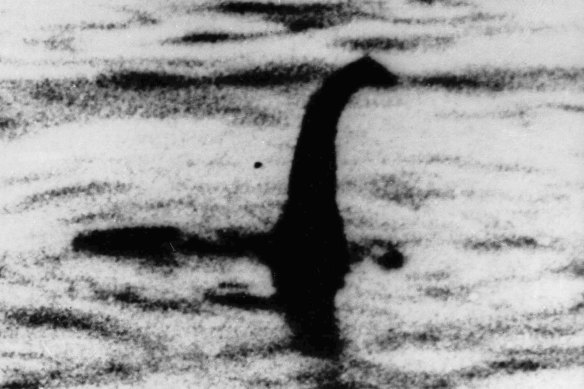
This photo of a shadowy shape that some people say is the Loch Ness monster in Scotland was later debunked as a hoax. CREDIT:AP

The event, scheduled for August 26 and 27, could be the largest surface watch since 1972, said Alan McKenna of Loch Ness Exploration, a volunteer research team that’s working with the Loch Ness Centre. Its organisers hope the “Quest Weekend” will draw searchers to join the centuries-long tradition of looking for the Loch Ness monster.

“It’s our hope to inspire a new generation of Loch Ness enthusiasts,” McKenna told the BBC. “You’ll have a real opportunity to personally contribute towards this fascinating mystery that has captivated so many people from around the world.”

Cradled by green slopes, the vast blue lake sits in the Scottish Highlands, near the city of Inverness and about a 3½-hour drive from Edinburgh. Though Nessie has never been proved to exist, the myth’s attraction – like that of Bigfoot or Sasquatch – has endured over the decades, sparking research, exploration and stories.


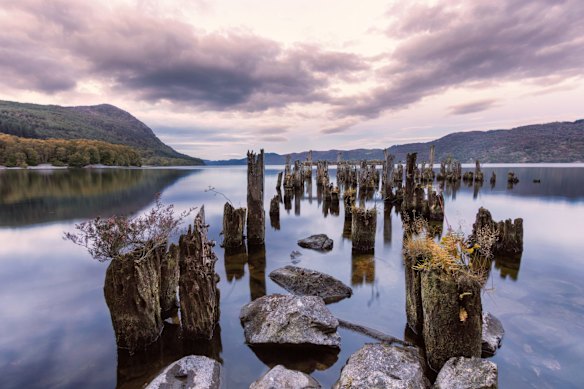
Loch Ness is a large, deep, freshwater loch in the Scottish Highlands.CREDIT:MICHELE RINALDI

McKenna told The Post on Saturday that he’d heard from many reporters and “friends from around the world” since the announcement of the project.

During Quest Weekend, the researchers will use airborne drones that make thermal images of the water with infrared cameras, according to the centre. They’ll also use a hydrophone that picks up acoustic signals – “any Nessie-like calls” – underwater.

Meanwhile, they’ll stage six surface-watch locations, and anyone who signs up to join will indicate what area they plan to observe. (They can also note whether they believe in “Nessie, nonsense, or possibilities”.)

“The weekend gives an opportunity to search the waters in a way that has never been done before, and we can’t wait to see what we find,” Paul Nixon, Loch Ness Centre’s general manager, told the Scottish Daily Express.

The Loch Ness Centre, which recently reopened after a renovation, did not immediately respond to The Washington Post’s request for comment.

Loch Ness is deep and vast, holding the largest volume of freshwater in Britain, according to the Inverness-Loch Ness tourism website. Theories about the monster said to lurk in those depths go back centuries, and they still draw enthusiasts and researchers to the lake today.

Many ideas about what type of creature could be under Loch Ness’ surface have been floated over the years, ranging from an extinct prehistoric reptile called a plesiosaur to swimming circus elephants. In 2019, scientists who analysed DNA in water samples from the lake said they found genetic material from eels but no evidence from sharks, sturgeons or prehistoric reptiles.

The earliest record of a Nessie sighting comes from 565 AD, when an Irish saint was “said to have driven a beast back into the water”, the Inverness website says. Twenty-one more sightings were recorded between the 1500s and 1800s.

Remains of a Plesiosaur, which is believed to have inspired the legend of the Loch Ness Monster, are displayed at Sotheby’s in New York on July 10.CREDIT:REUTERS

The legend took off in the 1900s, when newspapers carried the story of Aldie MacKay at the Drumnadrochit Hotel, who reported seeing a “whale-like fish” or beast in the water in 1933, according to the Loch Ness Centre. The following year, Nessie became “an international sensation” thanks to a photograph – decades later debunked as a hoax – that seemed to show a head and neck coming out of the water, according to Visit Inverness Loch Ness.

In the 1970s, a group called the Loch Ness Phenomena Investigation Bureau set up “camera watches” on the loch, according to the UK National Archives, monitoring the loch for activity. They conducted the last major surface watch, McKenna said on Loch Ness Exploration’s Facebook page. In 1987, another team swept the loch with sonar.

In total, the Official Loch Ness Monster Sightings Register has recorded 1148 sightings. Three have been reported this year and six were reported last year, according to the register. People who snap photos often report a break or wake in the water or a dark-coloured hump or object appearing out of the water.

“As we watched a black lump appeared out of the water and sat for approximately 30 seconds before disappearing once again under the water,” one mother and daughter reported to the register in October 2022.

The late August hunt may offer enthusiasts the hope of making their own report. And even those who can’t travel to Scotland can check out a daily live stream of several spots on the lake, run by Visit Inverness Loch Ness.

Viewers who see something strange can take a screenshot, then report the sighting (the official register asks people to report to the webcam operators). The tourism website’s guide to the live streams notes that things like weather, wildlife and paddleboarders can “make a great Nessie shadow in the right light”.

To be considered as an official sighting, the footage must show “clear facial features of an unknown creature”, the website stipulates.

But, it adds, “We want you to spot the mystical legend that is our beloved Nessie.”

The Washington Post

Loch Ness struggles with Scotland's shifting climate
Agence France-Presse
August 4, 2023

Loch Ness, the second-largest Scottish loch by surface area after Loch Lomond Andy
Buchanan AFP

Around Scotland's Loch Ness, famous for hosting a mythical monster in its murky depths, another prolonged dry spell earlier this year has heightened fears of a different kind.

The drier than usual start to 2023, alongside other gradual climate shifts, is having implications for everything from native wildlife and species -- including Scotland's famous salmon population -- to farming and power production.

"Water is becoming a commodity that's becoming scarce in this part of the world," salmon fisherman Brian Shaw told AFP during a visit early last month, as Scotland reeled from its hottest June on record.

"Everybody's looking to use the water for their own needs."

Figures released in May by the Scottish Environment Protection Agency (Sepa) confirmed what seasoned observers could already see: Loch Ness's fresh waters -- Scotland's largest by volume -- had dropped to their lowest level in decades.

It had not been this shallow -- with a depth of around 109 cms (3.5 ft) at a hydroelectric dam halfway along its eastern shore -- since the early 1990s.

"It's held at this level for several months now," Gordon Mangus, 84, who grew up near the legendary lake and now serves as its harbour master, noted.

"We are used to rain, but we are not used to having quite such dry spells."

The situation is mirrored in other Highlands areas, including Loch Maree to the northeast and Black Isle to the west.

- More dry weather -


"Everybody thinks of Scotland as a wet country, but the droughts are becoming more frequent now, as a result of climate change," explained Nathan Critchlow, the head of water and planning at Sepa.

"We used to see drought very rarely, about once every 18 years. By 2050, we predict you will have very low water levels about every other year.

"So Scotland's climate is changing and we are starting to see the impacts of that change."

On the banks of the River Ness, which flows from the loch into the sea at Inverness, the UK's northernmost city, Shaw pointed to the waterway's visible stone bed as evidence of its diminishing levels.

The director of the Ness District Salmon Fishery Board said the river's depth had been falling steadily for years, but the trend had become more noticeable.

"A dry winter, a really dry spring, a very hot June and the river just got smaller and smaller," he told AFP.

The warmer, drier weather had hit its wild salmon population, Shaw said.

One of the small streams that feeds the river has already dried up, leaving dead fish behind, he added.

"You're starting to see this sort of event happening all the time and I think there's real concern about the future of salmon and a more challenging environment as we go ahead."

While much-needed rain in recent weeks has brought some respite to parts of Scotland, water levels remain depleted to "an alert point" in some areas, according to Sepa.

And Britain's Meteorological Office is forecasting another dry period later in the summer.

- Demand for water -

Demand for water in summer is also intensifying, with more competition for it among farmers, fishermen, domestic users including tourists and hydroelectric firms, according to locals.

SSE Renewables, which runs a hydroelectric scheme at Loch Ness, has faced claims from fishermen and others that it was causing the loch's levels to drop by storing water to generate electricity.

The operator has denied that, saying the months of dry weather had depleted it.

Environmental experts are warning residents and businesses must adapt to the changing weather patterns and to prepare for periods of water scarcity and floods as the average temperature rises.

According to the Climate Change Committee (CCC), an advisory body appointed by the UK Government, Scotland's 10 warmest years on record have all occurred since 1997.

The average temperature between 2010 and 2019 was around 0.7 degrees Celsius warmer than the average between 1961 and 1990.

Wetter weather in some places has arrived in tandem with the temperature rises, mainly in winter, with the annual average rainfall between 2010 and 2019 up nine percent on 1961-1990.

At Loch Ness, before retreating back to his cabin to monitor the boats, Mangus recalled childhood memories, from entering its waters to exploring its shoreline with his father and brother.

Although the octogenarian blames the hydroelectric dam as much as the changing climate for Loch Ness's shifting water levels, he conceded that what is happening there now is "rare".
How room-temperature superconductors would change the world forever
 
From energy production and the fight against climate change to healthcare, aviation and computing, room-temperature superconductors would have a transformative effect

By Dr Mohammad Yazdani-Asrami and Dr Devendra Kumar Namburi
OPINION
THE SCOTSMAN
Published 6th Aug 2023

Researchers from South Korea have published claims of a significant breakthrough: the first evidence of room-temperature superconductivity at ambient pressure in a lead oxide-based material, LK-99. As superconductivity researchers, we’re excited by this news, which could bring transformative benefits across a wide range of fields. However, we should bear in mind that the paper is yet to be peer-reviewed and should be considered at this stage as an informal claim in unpublished scientific material.

The claim and the findings are yet to be tested by reputed international journals. The process of fabricating LK-99, the testing procedure and the design of the team’s experiment methods must be scrutinised by experts within the scientific community. With that said, if their work turns out to be repeatable, reproducible and reliable, then this could be one of the most important findings of the last few decades in modern physics, if not in science in its entirety.

Superconductors, discovered a century ago, are materials with remarkable physical properties, like the ability to transport current with almost no power loss and carry 100 times more current than conventional copper conductors. In order to work as superconductors, these materials need to be cooled-down to below minus 153C. In present-day practical applications of superconductors like MRI scanners, that means they need be paired with bulky, expensive and power-hungry cryocoolers. The stringent cooling requirements often limit how and where superconductors can be used. A superconductor that works at room temperature would be the Holy Grail of commercialising radically new devices and technologies. It’s no exaggeration to say the world would be changed forever.

In the energy sector, lightweight, room-temperature superconducting machines could be developed for offshore wind turbines, capable of capturing tens of megawatts of energy from ocean winds using simpler, more compact structures. Similarly, new superconducting cables could enable energy transfer with absolutely no loss from offshore turbines to electrical grids in industrial centres and our homes. With no need for any cooling stations, the whole power transmission network would be radically changed.


In the very promising field of fusion energy, the superconducting magnets are required to produce zero-carbon power in future fusion reactors. Deployment of room-temperature superconducting wires would ease the cooling system requirements appreciably. Compact fusion plants distributed around the world would enable energy production virtually free of cost, beyond their initial setup and ongoing maintenance.

In transport, trains which float above the tracks using magnetic levitation could be developed cheaply, drastically altering the way we travel and transport goods today. Large-scale superconducting devices could also form the basis of new propulsion systems for electric aircraft, enabling medium and long-range flights by removing the need for heavy cooling systems. That would slash the carbon emissions of the aviation sector, speeding the urgent transition to net zero required to slow down climate change.


In healthcare, new forms of cheaper, ultra-compact, more powerful room-temperature MRIs could provide high-resolution scans of the body, helping to catch early evidence of diseases like cancer. Advanced forms of scanning like these would help to save lives, but also reduce the burdens on the healthcare sector by enabling interventions before diseases can escalate, forcing more expensive and resource-intensive treatments.
Room-temperature superconductors could enable devices like this levitating MagFly skate to become mainstream (Picture: Bertrand Guay/AFP via Getty Images)

In the realm of quantum physics, room-temperature superconductors would help us build faster computing systems, detectors, and communication devices. Advances in these fields would allow us to develop a clearer understanding of different phenomena in applied and space physics. They would also help to develop next-generation quantum computers capable of performance vastly outstripping even the most powerful digital computers of today. Real-time modelling of complicated systems like the world’s weather, for example, would then be a lot easier.

Finally, our understanding of the fundamental fabric of the universe itself could be expanded by building several potential particle accelerators, which smash together atoms and study the resulting showers of particles. Currently, they require vast amounts of cooling to achieve high-energy particle beams – something new superconductors could enable at room temperature. These approaches would aid better understanding of fundamental physics and simultaneously enable accelerated progress in the realm of space applications.

Before we get too carried away, it is important that the scientific community carries out forensic examination of the impressive claims about LK-99. Further focused research needs to be carried out, both to assess the material completely and revalidate the results

We should not forget that this area of superconductivity is tricky. Previous, initially promising claims about room-temperature superconductors have been reported and even published, but later retracted. Other results have been published which no independent researchers could reproduce later.

The modern research publication system sadly has a big problem with reproducibility and repeatability of some work. The outcomes of the research should be peer-reviewed in a highly reputed journal, and the materials and contents should be scrutinised by independent researchers. One good thing about this paper is that the authors supplied fabrication and characterisation details to help readers and researchers to reproduce their work, and it appears that they tried to be fairly transparent. Here at the University of Glasgow’s James Watt School of Engineering, we plan to contact the researchers to offer some measurements on their sample to help test the reproducibility of their work.

Finally, much more research is needed to assess LK-99’s magnetic properties, increase its critical current density, improve mechanical properties, test its performance in vacuum and under pressure, and test the in-field performance of the material before it can be used in any potential real-world applications.

Despite these concerns, we believe this work and media activities around it will make many people familiar with potential uses of superconductors for energy, transport, health, physics, quantum, and communication applications. This work has already lit a glimmer of hope that one day we will see commercially manufactured, room-temperature superconductors for real-world applications. That day might be closer than we thought before!

Dr Mohammad Yazdani-Asrami and Dr Devendra Kumar Namburi are scientists at the James Watt School of Engineering, University of Glasgow
Premier says damage from Slovenia's worst natural disaster to exceed $500 million

4 killed in disaster that affects two-thirds of Slovenia

Burak Bir |06.08.2023 -


The Slovenian premier said Saturday that damaged caused by flash floods is likely to exceed €500 million ($500 million) as the country is facing the worst natural disaster in its history, according to media reports.

Robert Golob said after a National Security Council meeting that road and energy infrastructures has been hit particularly hard alongside hundreds of homes, the Slovenian Press Agency (STA) reported.

It will take major efforts to return to normal, he noted, but said he does not plan to declare an emergency, for now.

"I want this political unity to last as long as possible," said Golob, referring to the meeting where some opposition members attended.

Meanwhile, soldiers joined search and rescues efforts as two-thirds of the country have been affected by floods.

Soldiers took part in efforts in Crna na Koroskem, a small town in northern Slovenia cut off Friday from the country due to floods and landslides.

The government decided to ask the European Commission for aid from the European Solidarity Fund due to the disaster that killed four people, according to STA.

Thousands rally in Angola calling for President Joao Lourenco's removal

Joao Lourenco, Angola's President and presidential candidate of the the Popular Movement for the Liberation of Angola (MPLA) delivers a speech during a campaign rally in Luanda.
Julio Pacheco Ntela, AFP

Thousands of people called for Angola's president Joao Lourenco to step down, during a rally in Luanda on Saturday organised by the country's largest opposition party to commemorate its late leader.

UNITA, a former rebel group turned political movement that lost a disputed election last year, has said it wants to initiate a parliamentary process to remove Lourenco from office, accusing the 69-year-old of being authoritarian.

"Someone is responsible for famine, unemployment and the jailing of demonstrators. Who is he?" UNITA leader Adalberto Costa Junior asked a crowd of supporters waving red and green flags -- the party colours -- in Luanda.

"Joao Lourenco!" came the reply.

The demonstration was organised to celebrate the birthday of former UNITA leader Jonas Savimbi, whose death at the hands of the army in 2002 marked the end of a 27-year civil war between UNITA and Lourenco's ruling Popular Movement for the Liberation of Angola (MPLA).

But it was used to pile pressure on the government amid popular discontent at poverty, corruption and a shaky economy.

"UNITA is trying to capitalise on the widespread social discontent in society," said independent analyst Marisa Lourenco, who is not a relative of the president's.

The oil-rich southern African nation has experienced a wave of protests since the government cut subsidies for petrol in June.

The move was aimed at curbing government spending, as the economy suffers from a slide in oil prices that has weakened the local currency, the kwanza. But it resulted in unpopular sharp fuel price hikes.

"We have a government that does not deserve Angolans," Costa Junior said.

"Down with the robbers, down," chanted the crowd.

Under Angola's constitution, the president can be removed from office if he is considered to have committed acts that threaten democracy.

But UNITA is yet to say when it intends to initiate proceedings and has been scant on details over the specific charges against Lourenco.

The opposition might be hoping to exploit divisions within the ruling party via a secret ballot but observers say the initiative is unlikely to succeed.

Removing the president requires a two-thirds majority vote in parliament and support from the courts. The MPLA, in power since 1975, controls both, said Lourenco, the analyst.

The MPLA has dismissed UNITA's efforts to remove the president as "unserious" and "undemocratic".
France Looks to Block US Purchase of Velan’s Nuclear Business


August 6, 2023
By Newsroom


Velan is due to be bought by Flowserve as part of bigger deal, but French-backed fund is expected to take over Segault SAS soon, Bloomberg reports.

The move comes as President Emmanuel Macron urges Europe to develop more autonomy to make the continent more independent in future crises. France and other European countries are also re-thinking their supply chains to bring production of key equipment and technologies back to the region.

France is looking at ways to prevent Velan SAS, a domestic supplier of parts for nuclear reactors, from falling into US hands as it aims to protect a strategic industry.

The business is a French unit of Quebec-based Velan Inc., which is being taken over by Flowserve Corp. in an all-cash transaction valued at about C$329 million ($247 million). The deal was expected to close by the end of the second quarter and has been delayed.

French nuclear-submarine parts supplier Segault SAS has already been carved out of that deal following government efforts to bring a key technology into domestic ownership, with a fund lined up to buy it in the coming weeks, according to people familiar with the matter.

Paris has now turned its focus to Velan’s business in France and could either block its purchase or set restrictions, said one of the people, who spoke on condition of anonymity about private discussions. A decision is expected soon.

Some French lawmakers have been sounding the alarm about the Flowserve takeover and its possible impact on businesses in France. Velan SAS, formerly part of Alstom SA, supplies parts to state-owned utility Electricity de France SA.

“It’s not just defense industries that are strategic — the nuclear industry is key for France’s economic recovery and its transition,” Marie-Noelle Lienemann, a Socialist senator, told Bloomberg. “If the US gains control over a maker of equipment for EDF, they could be able to prevent the export of French nuclear reactors to China.”

Velan, which reported a loss in the first quarter, generates about 25% of its revenue in France. Its French unit supplies valves and services for nuclear power, cryogenics, liquefied gases, marine, superconductivity and space with more than 300 nuclear power plants equipped worldwide, according to the company.

Segault is a key supplier to French state-owned nuclear-propelled submarine maker Naval Group and provided equipment for the Charles de Gaulle aircraft carrier.