Monday, October 02, 2023

SMALL VICTORIES
US Supreme Court rebuffs dispute over videos targeting abortion providers

Andrew Chung
Mon, October 2, 2023 

 Anti-abortion activist David Daleiden, waits outside Superior Court in San Francisco

By Andrew Chung

WASHINGTON (Reuters) -The U.S. Supreme Court on Monday declined to hear a bid by anti-abortion activists to throw out more than $2 million in damages they were ordered to pay Planned Parenthood after secretly recording video of abortion providers in a scheme to try to show the illicit sale of aborted fetal tissue for profit.

The justices turned away the appeal by David Daleiden and his group, the Center for Medical Progress, of a lower court's decision in 2022 upholding most of the damages in a lawsuit by Planned Parenthood, a women's healthcare and abortion provider, accusing the defendants of conspiracy, eavesdropping and other claims. The lower court rejected the argument made by the defendants that with the secret recording they were exercising their right to free speech under the U.S. Constitution.

The justices announced their action on the first day of their new nine-month term.

Planned Parenthood filed suit in 2016 against Daleiden and his California-based organization in federal court in San Francisco seeking monetary damages, accusing them of violating the Racketeer Influenced and Corrupt Organizations Act (RICO) and engaging in fraud, trespassing, breach of contract and illegal secret recording.

The case before the Supreme Court centered on whether Planned Parenthood, even though it did not sue for defamation, should have to overcome strict limits that the justices through past rulings have placed on damages that public figures may recover for alleged harms related to a publication.

Various activist groups on the left and right conduct undercover operations often involving secret recording. Daleiden and his team portray themselves as investigative journalists and have said that the judgment against them in the suit threatens undercover reporting, a technique that can help expose wrongdoing and corruption.

Planned Parenthood has said the defendants are "ideological activists" - not journalists - whose videos were heavily edited as part of a smear campaign aimed at destroying the organization.

Using a shell company and fake identification, the activists gained access to Planned Parenthood and National Abortion Federation conferences and other locations where they recorded staff using hidden cameras.

The Center for Medical Progress released videos in 2015 purporting to expose Planned Parenthood officials trafficking in aborted fetal parts, sparking controversy, congressional inquiries and investigations in various states.

Planned Parenthood denied profiting from fetal tissue donation for medical research. Lower courts concluded that the videos did not contain evidence of wrongdoing.

A jury sided with Planned Parenthood in the lawsuit, and a judge awarded $2.4 million in damages - including for security costs to prevent future infiltration and targeting of doctors and staff - as well as more than $13 million in attorneys' fees and costs that are the subject of a separate appeal.

The San Francisco-based 9th U.S. Circuit Court of Appeals upheld most of the award last year, concluding that the First Amendment did not protect the defendants.

Noting that damages had been awarded for harms related to the infiltration, not to Planned Parenthood's reputation, the 9th Circuit said, "Invoking journalism and the First Amendment does not shield individuals from liability for violations of laws applicable to all members of society."

Daleiden and another activist also face an upcoming criminal trial in California in connection with the secret recordings.

(Reporting by Andrew Chung; Editing by Will Dunham)

Supreme Court declines to take up appeal from anti-abortion group that secretly recorded clinics

Ariane de Vogue, CNN Supreme Court Reporter
Mon, October 2, 2023 
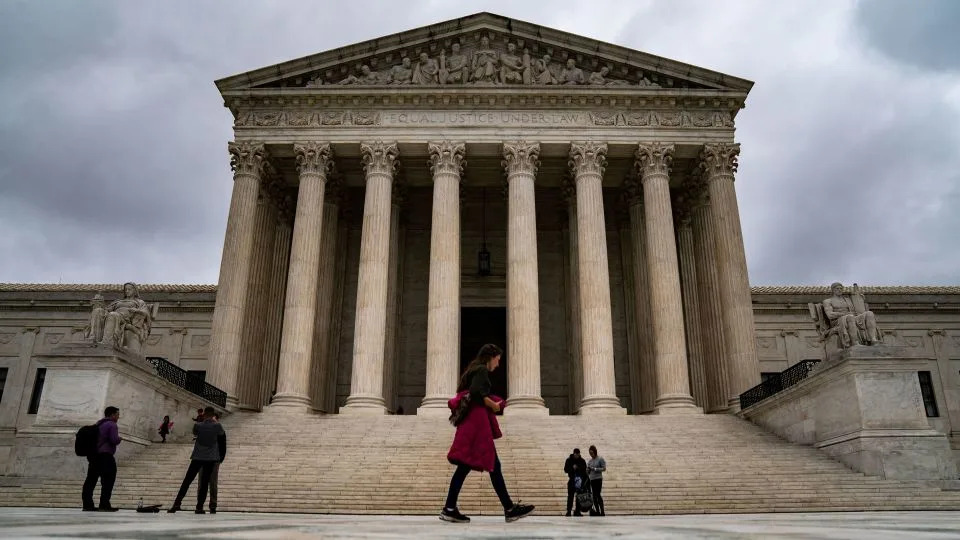

Kent Nishimura/Los Angeles Times/Getty Images

The Supreme Court declined on Monday to take up an appeal from an anti-abortion group known for releasing secretly recorded footage of abortion providers, leaving in place a lower court ruling that went in favor of Planned Parenthood.

The anti-abortion group had argued that its actions were protected by the First Amendment and sought to reverse millions of dollars in damages awarded to the abortion providers.

The case involved David Daleiden, a longtime anti-abortion activist who partnered with other like-minded activists, Troy Newman and Albin Rhomberg, to start a group called the Center for Medical Progress, meant to infiltrate organizations like Planned Parenthood.

According to court papers, they created a tissue procurement company they called BioMax. Such companies obtain human tissue samples, including fetal tissue, and provide them to medical researchers.

Although the company had a website and promotional materials, it was not involved in any business activity. Daleiden, using a false name, posed as the company’s procurement manager and vice president of operations.

According to court papers, employees used fake driver’s licenses and other means to infiltrate conferences that Planned Parenthood hosted or attended, and they arranged and attended lunch meetings and with Planned Parenthood staff, visiting health clinics. During these meetings, they recorded Planned Parenthood staff without their consent over a year and a half and then released on the internet edited videos of the conversations.

Planned Parenthood brought suit in January 2016 asking for monetary damages and other relief.

A district court ruled in favor of Planned Parenthood and awarded the group statutory, compensatory and punitive damages.

A panel of judges on the 9th circuit agreed that the damages were allowed under the First Amendment but rejected the claim under the Federal Wiretap Act.

“The First Amendment right to gather news within legal bounds does not exempt journalists from thaws of general applicability,” the court held.

“The First Amendment is not a license to trespass, to steal or to intrude by electronic means into the precincts of another’s home or office,” the court said in its opinion.

For more CNN news and newsletters create an account at CNN.com
The UAE holds a major oil and gas conference just ahead of hosting UN climate talks in Dubai

JON GAMBRELL
Updated Mon, October 2, 2023 


United Arab Emirates Energy Minister Suhail al-Mazrouei talks during the ADIPEC, Oil and Energy exhibition and conference in Abu Dhabi, United Arab Emirates, Monday Oct. 2, 2023. 
(AP Photo/Kamran Jebreili)

ABU DHABI, United Arab Emirates (AP) — The Emirati president-designate of the upcoming United Nations COP28 climate talks urged oil and gas companies Monday to be “central to the solution” for climate change, a message delivered even as the industry boosts its production to enjoy rising global energy prices.

The appeal by Sultan al-Jaber highlights the gap between climate activists suspicious of his industry ties and his calls to drastically slash the world's emissions by nearly half in seven years to limit global warming to 1.5 degrees Celsius (2.7 degrees Fahrenheit) compared with pre-industrial times.

While addressing a major international concern, his remarks came at a marquee oil industry event highlighting the state oil company he oversees — feeding the concerns of those already critical of his appointment while also drawing applause from the same energy firms he wants to court at the upcoming COP28 talks starting in November.

“That is our North Star. It is, in fact, our only destination,” al-Jaber said. “It is simply acknowledging and respecting the science.”


However, he added: “We must do this while also ensuring human prosperity by meeting the energy needs of the planet’s growing population."

Al-Jaber serves as the CEO of the state-run Abu Dhabi Oil Co., which has the capacity to pump 4 million barrels of crude oil a day and hopes to reach 5 million barrels a day. He also made the call to the annual Abu Dhabi International Petroleum Exhibition and Conference, known by the acronym as ADIPEC, which brings together the largest players in the oil and gas industries.

While this year's conference has been described as focusing on “decarbonizing faster together,” the event is primarily about the drilling, processing and sale of the same carbon-belching fuels driving climate change — which cause more-intense and more-frequent extreme events such as storms, droughts, floods and wildfires. And al-Jaber himself has repeatedly said the world must rely on oil and gas for the near-term to bridge that gap.

“A phase-down of fossil fuels is inevitable. In fact, it's essential,” al-Jaber said. “Yet, this must be part of a comprehensive energy transition plan that is fair, that is fast, just, orderly, equitable and responsible.”

But on the business side, the oil industry is on the rebound. After prices briefly went negative during the lockdowns of the coronavirus pandemic, benchmark Brent crude now trades around $92 a barrel.

Diesel prices also are expected to rise as Russia has stopped its exports of the fuel, which likely will worsen global inflation through boosting transportation prices that will get passed onto consumers.

Gazprom, the state-owned natural gas company that is a pillar of Russia’s economy, had a major stand at the conference despite facing U.S. sanctions over Moscow's war on Ukraine. Russian officials took part in Abu Dhabi's major arms fair earlier this year, showing the UAE's deepening financial ties to Moscow despite its long ties to the American military and hosting thousands of U.S. troops.

The conference highlights the challenge the United Arab Emirates has faced in trying to convince already-critical climate scientists, activists and others that it can host the U.N. Conference of the Parties — where COP gets its name.

Though all smiles at Monday's conference, al-Jaber has acknowledged the withering criticism he's faced. On Saturday, he offered a full-throated defense of his country hosting the talks he's slated to lead, dismissing critics who “just go on the attack without knowing anything, without knowing who we are.”

“For too long, this industry has been viewed as part of the problem, that it’s not doing enough and in some cases even blocking progress,” al-Jaber told the conference. “This is your opportunity to show the world that, in fact, you are central to the solution.”

Following immediately after al-Jaber, OPEC Secretary-General Haitham al-Ghais praised his speech and defended the oil industry.

“We see calls to stop investing in oil. We believe this is counterproductive,” al-Ghais said. “The cornerstone of global economic prosperity today is energy security.”

Al-Jaber said 20 oil and gas companies had pledged to be “net zero” by or before 2050 and eliminate routine gas flaring by 2030. However, the industry would still be producing the oil and gas that release the carbon dioxide that traps heat in the atmosphere.

Al-Jaber, a 50-year-old longtime climate envoy, has been behind tens of billions of dollars spent or pledged toward renewable energy by this federation of seven sheikhdoms on the Arabian Peninsula. Al-Jaber and his supporters — including U.S. climate envoy and former Secretary of State John Kerry, who is on a trip to the UAE this week — say that's a sign he can lead the COP28 talks.

Meanwhile, Turkish Energy Minister Alparslan Bayraktar said at the Abu Dhabi conference that an Iraqi-Turkish oil pipeline that had been halted for months would see its flow restart this week.

“As of today, the pipeline is ready to operate,” he said. “And within this week we will start operating the Iraqi-Turkey pipeline, which after the resuming of oil operations, will be able to supply half a million barrels to the oil market.”

He did not elaborate on what the terms would be for the 970-kilometer (600-mile) pipeline, which is Iraq's largest. In March, Iraqi officials won an international arbitration case to halt oil exports from the semiautonomous Kurdish region to Ceyhan, Turkey, on the Mediterranean Sea.

Iraqi and regional Kurdish government officials did not immediately acknowledge the pipeline reopening, though Iraq's oil minister has said it was anticipated, without elaborating. Gulf Keystone Petroleum Ltd., which operates Shaikan oil field in Kurdish region of Iraq, saw its stock jump up by over 20% in trading Monday on the London Stock Exchange on news of the pipeline restarting.

Bayraktar said the pipeline also sustained damage in the recent earthquake and flooding in Turkey that had been repaired.

___

Follow AP's coverage of the climate and environment: https://apnews.com/climate-and-environment


Oil Latest: Industry Is Part of Energy Change, Executives Say

Anthony Di Paola and Salma El Wardany
Mon, October 2, 2023


(Bloomberg) -- Ministers and oil industry chiefs are gathering for the biggest energy conference in the Middle East as crude heads toward $100 a barrel. Whether prices can hold at these levels and the outlook for OPEC+ supply cuts are among topics that will be discussed from Monday.

But this year, climate is looming large over the forum. Delegates at the annual Adipec summit in Abu Dhabi, which has been dominated by oil in its long-running history, will devote a lot of their time to the energy transition. The meeting comes just two months ahead of the United Arab Emirates also hosting the crucial COP28 conference.

All times UAE

Oil Firms Must Be Heard in COP28, Executives Say (5:04 p.m.)

The oil industry is part of the energy transition and its voice should be heard at COP28, executives including Halliburton Co. CEO Jeff Miller, Liam Mallon of Exxon Mobil and Gordon Birrell of BP, said in a panel discussion.

Companies need to upgrade downstream operations to lower emissions, while a transformation of upstream operations is also required, they said.

Electrification of operations, carbon-capture and emissions detection can support the decarbonization process, they said.

Shell CEO Says Investors Will Decide If Low Carbon Is Viable (2:50 p.m.)

Shareholder needs to make a judgment on whether the low-carbon energy options that Shell Plc is pursing are viable, Chief Executive Officer Wael Sawan said.

“We need to be able to cover our cost of capital and make a return for our shareholders,” he said.

Oil Industry Is Central for Energy Transition: COP28 Chief (4:23 p.m.)

Large swathes of the global oil industry will pledge to eliminate methane emissions and gas flaring by the end of the decade, the president of the COP28 climate summit said.

More than 20 private and state oil and gas producers have made the commitment alongside setting targets to reach net zero by 2050, Sultan Al Jaber said. He did not name the companies.

Adnoc Testing Geothermal Energy for Cooling (3:24 p.m.)

Adnoc, the main oil producer in the United Arab Emirates, is testing using geothermal energy for district cooling in a preliminary program, as the country seeks to diversify energy sources.

The company is also studying capturing carbon in acquifers, said Musabbeh Al Kaabi, executive director of low-carbon solutions and international growth. Adnoc said Sunday it is doubling its carbon-capture target in a push toward net zero emissions.

UAE Warns About Lack of Oil Investment as It Boosts Own Capacity (2:30 p.m.)

The global oil industry has been losing capacity in the last few years due to a lack of investment, said United Arab Emirates Energy Minister Suhail al Mazrouei.

The minister rebuffed concerns about rising oil prices, arguing that crude needs to be high enough to justify making new investments. The UAE will expand its own capacity to 5 million barrels a day by 2027, Mazrouei said. From 2025, OPEC+ output quotas will be based on the latest capacity numbers, not outdated figures, he said.

Non-OPEC+ Oil Supply Is Outstripping Demand Growth: Yergin (2:11 p.m.)

Oil production in countries that are not part of the OPEC+ alliance, such as the US and Canada, is growing faster than demand, Dan Yergin, vice chairman at S&P Global Inc., said in a Bloomberg TV interview. Still, continued supply curbs by Saudi Arabia can be worrying because of concerns over global economic growth.

India Is Telling Oil Producers That Prices are Too High (1:54 p.m.)

India has “a constant dialogue with all producing countries where we keep raising this point” that crude prices are too high, Pankaj Jain, secretary at the Ministry of Petroleum and Natural Gas, said in an interview.

His country isn’t comfortable with current oil prices, which are near $93 a barrel in London, and “we need more production now,” Jain said. While India acknowledges OPEC’s right to decide how much they produce, the group’s cuts have increased prices.

“High prices lead to demand destruction,” Jain said. “Our viewpoint is we are finding these prices difficult to pass, difficult to continue to meet our energy needs.”

BP’s Interim CEO Reiterates No Change in Strategy (1:30 p.m.)

There will be no change in BP Plc’s strategy that was laid out in February, following the abrupt departure of Bernard Looney as head of the company, interim CEO Murray Auchincloss said.

“That’s a strategy that’s endorsed by the management team and endorsed by the board and a person leaving does not change the strategy,” he said. “We remain firmly committed to it.”

Looney resigned last month after admitting he had not fully disclosed relationships with colleagues. BP’s head of US operations, David Lawler, has also quit to pursue other opportunities outside the company.

Also read: BP Ends Its Week of CEO Chaos With Many Unanswered Questions

Iraq Official Says Ceyhan Pipeline Can’t Restart Yet (1:11 p.m.)

An Iraqi official cast doubt on a statement from Turkey that a key pipeline bringing oil from northern Iraq to the Mediterranean coast can resume this week.

Flows can’t restart until commercial and financial issues have been resolved, the official said, speaking on condition of anonymity. Earlier on Monday, Turkish Energy Minister Alparslan Bayraktar said the pipeline will resume operations this week. The oil conduit, which can carry almost half a million barrels of crude a day, has been offline since March amid a payment dispute between Ankara and Baghdad.

OPEC+ Has ‘Right Policy’: UAE Energy Minister (11:22 a.m.)

OPEC+ currently has the “right policy” for the oil market, the UAE’s Mazrouei said in an interview at the Adipec conference in Abu Dhabi.

Prices will increase if there’s no further investment in the industry, he said, adding that OPEC isn’t setting a price target.

Iraq Oil Pipeline Will Resume This Week (11:08 a.m.)

A crude oil pipeline running from Iraq’s Kurdistan region to the Mediterranean coast of Turkey will resume operations this week, Turkish Energy Minister Alparslan Bayraktar said.

The pipeline was shut earlier this year after an arbitration court ordered Ankara to pay about $1.5 billion in damages to Iraq for transporting oil from Kurdistan without Baghdad’s approval.

Citi Says Oil to Collapse to Low $70s in 2024 (9:53 a.m.)

Brent crude will collapse to the low $70s a barrel next year as the global market swings back to a surplus, according to Citigroup Inc. The shift reflects “more oil coming into the market,” analysts including Ed Morse said in a quarterly report.

“Higher prices in the near term could make for more downside for prices next year,” the Citi analysts said.

Oil Markets Will Continue to Tighten, Halliburton Says (9:18 am)

There’s a lot of support for oil prices and the market will continue to tighten, Halliburton Co. Chief Executive Officer Jeff Miller said in a Bloomberg TV interview at the Adipec conference.

The company is returning cash for our shareholders, he said.

Also read: Halliburton Sees US Gas Glut Freeing Up Gear for Oil Explorers

Deeper OPEC+ Production Curbs Unlikely: Eni (9:00 am)

The Organization of Petroleum Exporting Countries and its allies are unlikely to deepen their production cuts, Eni SpA CEO Claudio Descalzi said in a Bloomberg TV interview. Crude prices in London rose almost 10% last month as ongoing supply curbs squeeze the market.

A lack of investments in projects is the main issue for oil, while demand remains strong, Descalzi said.

--With assistance from Nayla Razzouk, Ben Bartenstein, Leen Al-Rashdan, Salma El Wardany and Yousef Gamal El-Din.

Bloomberg Businessweek


3 Oil Companies Leading in Renewable Energy Investment

Nilanjan Banerjee
Mon, October 2, 2023 


Economies across the world are gradually transitioning to cleaner energy sources. There has been a steady increase in pressure on energy companies to act on climate change on multiple fronts. Most analysts believe that although renewable energy will meet future energy needs, oil and natural gas demand will not be completely wiped out.

The U.S. Energy Information Administration, in its Annual Energy Outlook 2023, revealed that through 2050, renewables will increasingly match power demand. Thus, there are abundant opportunities for energy companies with a footprint in oil and gas resources or transporting commodities and the renewable energy space. Three such companies are Shell plc SHEL, Eni SpA E and Enbridge Inc ENB, which are well-poised to gain in the long run.
3 Stocks

Growing renewable business at a rapid pace is among the core strategies of Shell. In the renewable energy front, Shell has roughly 50 gigawatts (GW) of renewable generation capacity, considering projects either in operation, under construction or in the pipeline. Thus, for renewables and energy solutions, SHEL is investing actively in solar energy, wind energy, electric vehicle charging and others.

To implement the production of renewable energy, Plenitude, a benefit company, was established and is being controlled by Eni. To counter the decarbonization challenge, renewable energy generation is among the key strategies of Eni. This is reflected in its ambitious goal for more than 15 GW of installed renewable energy generating capacity by 2030.

Enbridge has been investing in wind farms, solar energy, geothermal projects and power transmission developments, reflecting the company's strong focus on renewables. Considering all the renewable energy projects that are either operational or under construction, Enbridge boasts a net of 2,173 megawatts of zero-emission energy generating capacity.
A fight over precious groundwater in a rural California town is rooted in carrots

AMY TAXIN
Updated Sun, October 1, 2023 


2 / 26

Jeff Huckaby, president and CEO of Grimmway, walks on a carrot field owned by the company, Thursday, Sept. 21, 2023, in New Cuyama, Calif. In the Cuyama Valley northwest of Los Angeles, two of the country's biggest carrot farmers filed a lawsuit in a bid to have their groundwater rights upheld by a judge. The move pushed hundreds of small farmers and cattle ranchers, local residents and even the tiny school district into court, and has prompted community outcry and a call for a carrot boycott. 
(AP Photo/Marcio Jose Sanchez)


NEW CUYAMA, Calif. (AP) — In the hills of a dry, remote patch of California farm country, Lee Harrington carefully monitors the drips moistening his pistachio trees to ensure they’re not wasting any of the groundwater at the heart of a vicious fight.

He is one of scores of farmers, ranchers and others living near the tiny town of New Cuyama who have been hauled into court by a lawsuit filed by two of the nation's biggest carrot growers, Grimmway Farms and Bolthouse Farms, over the right to pump groundwater.

The move has saddled residents in the community 100 miles (160 kilometers) northwest of Los Angeles with mounting legal bills and prompted them to post large signs along the roadway calling on others to boycott carrots and “Stand with Cuyama.”

“It’s just literally mind-boggling where they’re farming,” Harrington said, adding that his legal fees exceed $50,000. “They want our water. They didn’t want the state telling them how much water they can pump.”

The battle playing out in this stretch of rural California represents a new wave of legal challenges over water, long one of the most precious and contested resources in a state that grows much of the country’s produce.

For years, California didn't regulate groundwater, allowing farmers and residents alike to drill wells and take what they needed. That changed in 2014 amid a historic drought, and as ever-deeper wells caused land in some places to sink.

A new state law required communities to form local groundwater sustainability agencies tasked with developing plans, which must be approved by the state, on how to manage their basins into the future. The most critically overdrafted basins, including Cuyama’s, were among the first to do so with a goal of achieving sustainability by 2040. Other high and medium priority basins followed.

But disputes arose in Cuyama and elsewhere, prompting a series of lawsuits that have hauled entire communities into court so property owners can defend their right to the resource beneath their feet. In the Oxnard and Pleasant Valley basins, growers sued due to a lack of consensus over pumping allocations. In San Diego County, a water district filed a lawsuit that settled about a year later.

It’s a preview of what could come as more regions begin setting stricter rules around groundwater.

The lawsuit in Cuyama, which relies on groundwater for water supplies, has touched every part of a community where cellphone service is spotty and people pride themselves on knowing their neighbors.

The school secretary doubles as a bus driver and a vegetable grower also offers horseshoeing services. There is a small market, hardware store, a Western-themed boutique hotel and miles of land sown with olives, pistachios, grapes and carrots.

From the start, Grimmway and Bolthouse participated in the formation of the local groundwater sustainability agency and plan.

Their farms sit on the most overdrafted part of the basin, and both companies said they follow assigned cutbacks. But they think other farmers are getting a pass and want the courts to create a fairer solution to reduce pumping throughout the basin, not just on their lots.

“I don't want the aquifer to get dewatered because then all I have is a piece of gravel, no water, which means it's desert ground, which is of no value to anybody,” said Dan Clifford, vice president and general counsel of Bolthouse Land Co. “What we're trying to get is the basin sustainability, with the understanding that you're going to have a judge calling balls and strikes.”

Grimmway, which has grown carrots in Cuyama for more than three decades, currently farms less than a third of its 20 square miles (52 square kilometers) there and has installed more efficient sprinklers to save water. Seeing groundwater levels decline and pumping costs rise, the company began growing carrots in other states, but doesn't plan to uproot from Cuyama, said Jeff Huckaby, the company's president and chief executive.

“It’s one of the best carrot-growing regions that we’ve come across,” Huckaby said, adding that arid regions are best so carrot roots extend below ground for moisture, growing longer. “The soil up here is ideal, temperatures are ideal, the climate is ideal.”

California has been a “Wild West” for water but that’s changing. The company has cut back its water use in Cuyama and hopes to remain there for decades, he said.

Until the lawsuit, 42-year-old cattle rancher Jake Furstenfeld said he thought the companies were working with people in town, but not anymore.

Furstenfeld, who sits on an advisory committee to the groundwater agency, doesn’t own land and doesn’t have an attorney. But he’s helping organize the boycott and has passed out yard signs.

“It’s been called David versus Goliath,” he said.

Many residents are worried about the water they need to brush their teeth, wash clothes and grow a garden. The water district serving homes in town said rates are rising to cover legal fees. The school district, which is trying to stay afloat so its 185 students can attend school locally, is burdened with unexpected legal bills.

“Without water, we have no school,” said Alfonso Gamino, the superintendent and principal. “If the water basin goes dry, I can kind of see Bolthouse and Grimmway going somewhere else, but what about the rest of us?”

Before the state’s groundwater law, most groundwater lawsuits were filed in Southern California, where development put added pressure on water resources. Legal experts now expect more cases in areas where farmers are being pushed to slash pumping.

“For an average person or a small user it is disruptive because must people haven’t been involved in lawsuits,” said Eric Garner, a water rights attorney who worked on California’s law. “For large pumpers, lawyers are an inexpensive option compared with having to replace their water supply.”

Most of the country's carrots are grown in California, with consumers demanding a year-round supply of popular baby carrots. The state's climate is a prime place for growing and carrots are one of California’s top 10 agricultural commodities, valued at $1.1 billion last year, state statistics show.

Along the highway, Grimmway's fields are doused with sprinklers for eight hours and left to dry for two weeks so carrot roots stretch in search of moisture. Critics question the companies' use of daytime sprinklers, but Huckaby said Grimmway uses far less water than the alfalfa grower who farmed there before.

The suit in Cuyama, filed two years ago, has an initial hearing in January. In a recent twist, Bolthouse Farms has asked to withdraw as a plaintiff, saying the company has no water rights as a tenant grower and plans to slash its water use 65% by 2040. The company that owns the land, Bolthouse Land Co., is still litigating.

Jean Gaillard, another Cuyama advisory committee member, sells produce from his garden to locals. He tries to conserve water by alternating rows of squash between corn stalks and capturing rainwater on the roof of an old barn.

Paying a lawyer to represent him rather than re-investing in his produce business is problematic, he said. Meanwhile, his well water has dropped 30 feet (9 meters) in the past two decades.

“We feel we are being totally overrun by those people,” Gaillard said. “They are taking all the water.”

__

The Associated Press receives support from the Walton Family Foundation for coverage of water and environmental policy. The AP is solely responsible for all content. For all of AP’s environmental coverage, visit https://apnews.com/hub/climate-and-environment.

There's a thriving global market in turtles, and much of that trade is illegal

Jennifer Sevin, Visiting Lecturer in Biology, University of Richmond
Mon, October 2, 2023
THE CONVERSATION

Smuggled rare Mexican box turtles intercepted by U.S. officials at the Port of Memphis. USFWS


Hatchling turtles are cute, small and inexpensive. Handled improperly, they also can make you sick.

Turtles are well-known carriers of salmonella, a common bacterial disease that causes fever, stomach cramps and dehydration and can lead to severe illness, especially in young children and elderly people. In August 2023, the Centers for Disease Control and Prevention released an advisory about an 11-state outbreak of salmonella bacteria linked to pet turtles.

“Don’t kiss or snuggle your turtle, and don’t eat or drink around it. This can spread Salmonella germs to your mouth and make you sick,” the agency warned.

Global trade in turtles is big business, and the U.S. is a leading source, destination and transit country. Some of this commerce is legal, some is not. For example, it has been illegal in the U.S. since 1975 to sell turtles with shells less than 4 inches (10 centimeters) in diameter because young children often contract salmonella from them. But it’s easy to find them for sale nonetheless.

However, humans are a much bigger threat to turtles than vice versa. Over half of the world’s turtle species are classified as threatened or endangered, and overharvesting of wild turtles is a major cause. Turtles also face other threats, including habitat loss, climate change, pollution, diseases, invasive species and death or injury while trying to cross roads.

As a conservation biologist, I work with colleagues from academia, nonprofit organizations and state and federal agencies to protect threatened species and combat wildlife trafficking. I also use the global wildlife trade to teach important ecological concepts and research skills. Here’s what we know about trade in turtles and how it threatens their survival.

Life in the slow lane

It’s hard to harvest turtles sustainably because they are so long-lived. Individual turtles of some species can survive for more than 100 years. Most turtles reach reproductive maturity late in life and have relatively few eggs, not all of which produce successful offspring.

To put this in context, compare a common female snapping turtle from the northern U.S. with a female white-tailed deer. Begin at the start of their lives and fast-forward 17 years. At this point, the snapping turtle will just be ready to reproduce for the first time; the deer will already be dead, but it may have produced over 600 descendants. It can take a female turtle her entire life to generate one or two offspring that in turn reach adulthood and replace her in the population.

Turtles are valuable because they play diverse roles in land, freshwater and ocean ecosystems. For example, tortoise burrows provide refuge for hundreds of other species, including birds, mice, snakes and rabbits. Box turtles – the type you may encounter in your garden – consume practically any kind of plant material and excrete the seeds as they move around, helping plants spread. Some seeds even germinate more readily after passing through a box turtle’s gut.

In lakes and ponds, freshwater turtles serve as both predator and prey, and they help maintain good water quality by consuming decaying organisms. Terrapins reside in brackish water zones, where rivers flow into oceans and bays, and feed heavily on snails. Without terrapins present, the snails would quickly consume all underwater seagrasses, which would harm fish, shellfish, sea urchins and other organisms that rely on seagrasses for their survival.

In global demand

Humans have long been fascinated with turtles. Revered in many cultures, turtles have symbolized strength and longevity for centuries. Today, people use turtles as pets; sources of food, jewelry and other curios; and in traditional medicines and religious and cultural practices.

International trade in turtles takes place on a massive scale. According to the U.S. Fish and Wildlife Service, nearly 127 million turtles were exported just from the U.S. between 2002 and 2012. About one-fifth (24 million) came from the wild.

More recent data indicates that exports declined between 2013 and 2018, but trade in particular species increased. Commercial freshwater turtle farming is still a multimillion-dollar industry in the southeastern U.S.; a small number of native turtle species, largely bred on turtle farms, now make up the bulk of legal U.S. exports, for use as both pets and food.

There’s no good way to quantify how many native turtles are harvested from the wild. But history shows what happens when they are hunted without limits. Historic demand for sea turtles, diamondback terrapins and snapping turtles as food led to such crashes in populations that management agencies had to regulate their harvesting.

Turtles also are gaining popularity as pets, particularly for younger adults. Surveys indicate that more than 2 million Americans own turtles. To curb pressure on wild populations, state agencies are prohibiting or limiting personal collection and possession of native turtles.

Black market turtles

Despite existing regulations, demand for some native North American turtle species is so strong that people collect, smuggle and sell the animals illegally. For example, in 2019 a Pennsylvania man was sentenced to six months in prison and fined $250,000 for trafficking thousands of protected diamondback terrapins.

Rare species such as wood turtles and Blanding’s turtles, as well as uniquely patterned individual turtles, command top value on the black market. Internet commerce, social media apps and online payment mechanisms make it easy for illegal buyers and sellers to connect.

Between 1998 and 2021, U.S. enforcement agencies intercepted at least 24,000 protected freshwater turtles and tortoises from 34 native species that were being illegally traded across the U.S. These animals may be held without food and water and in crowded spaces, sometimes wrapped in tape and stuffed in socks.

A live smuggled Mexican box turtle intercepted by U.S. officials at the Port of Memphis in 2021. USFWS


How to help

To curtail the illegal turtle trade, regulators are working to strengthen regulations and increase enforcement. Private citizens can also help reduce the demand and protect wild turtles. Here are some simple steps:

Before you purchase any live animal or wildlife-related product, review relevant local, state, national and international regulations. Just because something is for sale doesn’t mean it’s legal.

Make an informed decision about owning a turtle. Consider the size it will reach as an adult, its care requirements and its life span. Prioritize adopting one from a reputable rescue organization, and seek out a captive-bred turtle instead of a wild one.

The red-eared slider (Trachemys scripta elegans) is a terrapin that has become highly invasive in the U.S., outcompeting native species. Galano~commonswiki/Wikimedia, CC BY-SAMore

Don’t release an animal that you no longer want or can’t care for into the wild. This is illegal and can have serious ecological impacts. The red-eared slider (Trachemys scripta elegans), a freshwater turtle that’s native to the Mississippi River basin, was sold by the millions in recent decades and released by many pet owners. Now it is considered one of the world’s most invasive species because it outcompetes native turtles for food and space.


If you encounter illegal wildlife collection, smuggling or sales, report them to your state fish and wildlife agency or the U.S. Fish and Wildlife Service for investigation.


Support efforts to conserve and restore turtle habitat and minimize other threats, such as pollution and road traffic.

This article is republished from The Conversation, an independent nonprofit news site dedicated to sharing ideas from academic experts.

It was written by: Jennifer Sevin, University of Richmond.


Read more:

Turtles on the tarmac could delay flights at Western Sydney airport

More people eat frog legs than you might think – and humans are harvesting frogs at unsustainable rates

Jennifer Sevin is a co-founder and serves on the steering committee of the Collaborative to Combat the Illegal Trade in Turtles.

Mote’s Sea Turtle Protection Zone initiative urging boaters to ‘Go Slow for Those Below’

Jim DeLa
Sun, October 1, 2023


Law enforcement agencies aren't the only ones keeping track of boaters' speed on the area's waterways.

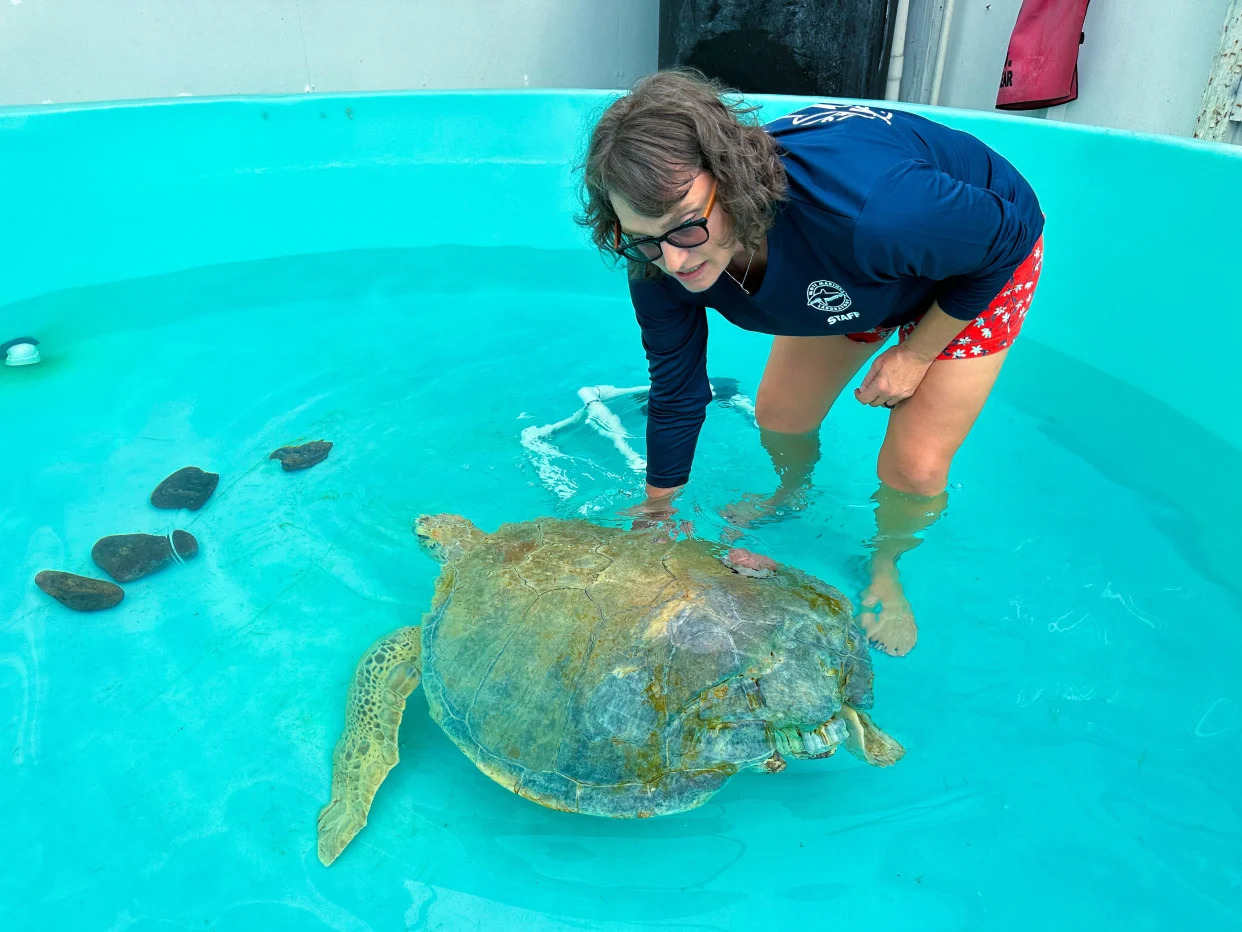
Mote Marine Laboratory is also using laser speed guns to collect data on boaters' habits as part of its two-year-old Sea Turtle Protection Zone initiative.

Sea turtles are found year-round in Southwest Florida waters. During nesting season, the endangered turtles spend more time closer to the surface and close to their nesting beaches. With more turtles near the surface, there’s a greater chance they'll be hit by a boat.

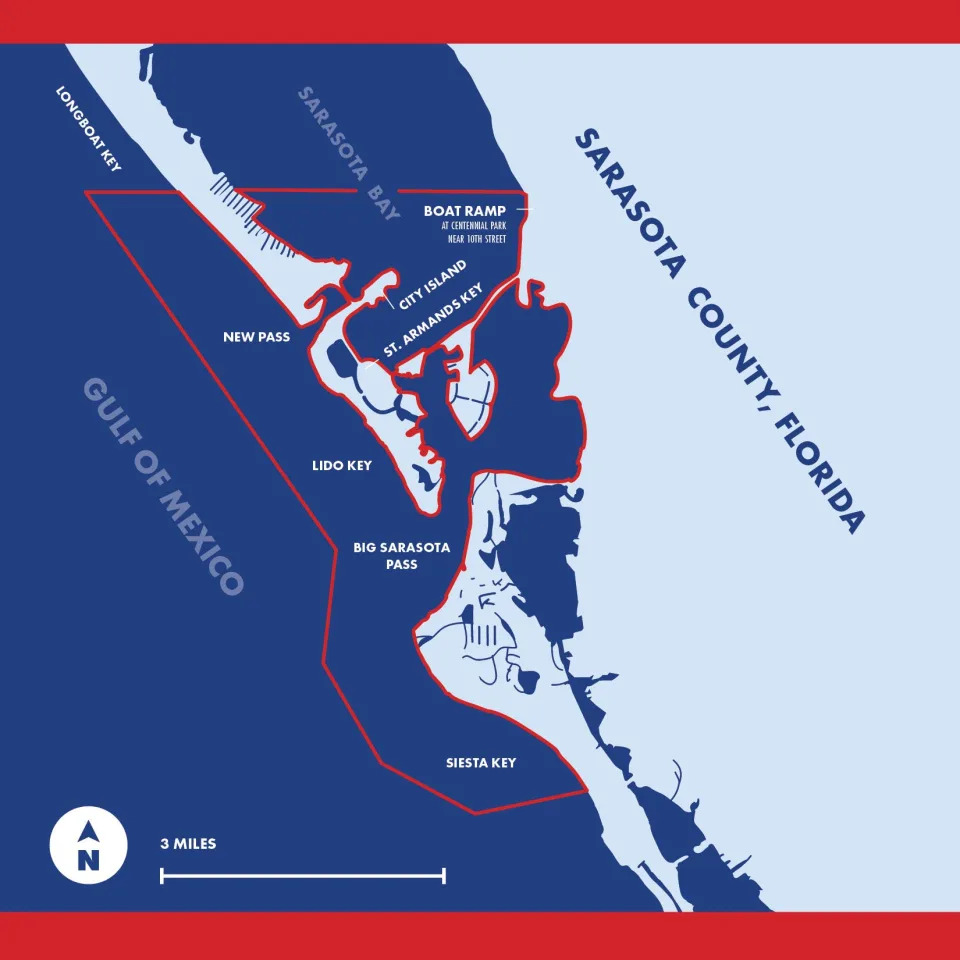
Mote scientists have documented boat-strike hotspots along the Sarasota area coast and created the voluntary Sea Turtle Protection Zone, which stretches from Longboat Key to Siesta Key, including Sarasota Bay.


The zone was created in 2021 through a partnership between the Loggerhead Marinelife Center and the Archie Carr Center for Sea Turtle Research at the University of Florida. The project is also funded by the Disney Conservation Fund and money collected from the sale of the state's sea turtle license plate.

“The area extends pretty much from the 10th Street boat ramp down to the north Siesta Key Bridge," expanding about a mile offshore, said Gretchen Lovewell, stranding investigations program manager at Mote Marine Laboratory.

"It's a voluntary zone where we're asking people to just slow down and be on the lookout for sea turtles."


Mote says since the 1980s, boat collisions with sea turtles have tripled in Florida. Lovewell says this year has been particularly hard on the sea turtle population. "This year, June, July and August, were really high numbers for us. We've already had over 30 turtles this year that we've recovered that have been hit by boats," most of them in the new protection zone.

And 90% of sea turtle strikes are fatal, according to Valerie Nicole Tovar, conservation manager at the Loggerhead Marinelife Center.

“Our goal is to increase boater awareness and enlist boater voluntary compliance to decrease sea turtle injuries and deaths by creating a united front with our local boating communities," Tovar said in a recent news release. A similar zone has also been established in Palm Beach County, she said.

Lovewell says while numbers rise during nesting season, generally from May to October, it is a year-round problem. "They're here year-round because we are recovering them year-round," she said. "Which is part of why we're asking for this voluntary zone to occur year-round."


Lovewell says their data collection is just beginning, with a speed gun that uses a laser to measure a boat's speed. "We try to go out once a week. We have a Lidar (Light detection and ranging) gun just like the police officers have."

She says her team has seen some boaters seemingly unconcerned about what they may hit. "We've recorded some boats going over 60 miles an hour coming through Big Pass."

Lovewell said local law enforcement are on board with the protection zone. "All of our local law enforcement are very much near and dear partners to us," she said.

According to Mote, hot spots for sea turtle strikes include Longboat Pass, New Pass, Big Pass, Siesta Key, Venice Inlet, and offshore 2 miles north of New Pass to two miles south of Big Pass extending out 1½ miles.


Boaters can do their part by following this advice:

• Go slow: Follow Coast Guard-approved safe boating guidelines. Go as slow as safely possible in areas bounded by red lines – the voluntary Sea Turtle Protection Zone – and limit your travel time in these areas. Follow any posted speed-zone signs – it’s required by law.

• Wear polarized sunglasses to see and avoid sea turtles in your path, and ask one of your passengers to be the designated wildlife spotter.

• Report stranded sea turtles (as well as stranded marine mammals) in Sarasota and Manatee counties to Mote at 888-345-2335. Elsewhere in Florida, contact the Florida Fish and Wildlife Conservation Commission: 888-404-3922.

• Stow trash: Be sure to stow trash and line when under way. Marine debris that accidentally blows overboard or out of a vehicle can become ingested by or entangled around marine life.

• Keep the water trash free: Never discard trash in the water.

Jim DeLa is a reporter for the Community News Collaborative. Reach him at jdela@cncfl.org

This article originally appeared on Sarasota Herald-Tribune: Sea turtle initiative urges Sarasota-Manatee boaters to use caution

Hedge funds using computers to sell up to $30 billion of stocks soon - UBS

Nell Mackenzie
Mon, October 2, 2023

FILE PHOTO: A logo of Swiss bank UBS is seen in Zurich


By Nell Mackenzie

LONDON (Reuters) - Hedge funds using computers to trade equities are expecting to start selling to the tune of $20 billion to $30 billion in the next two weeks given retreating stock markets, a UBS note seen by Reuters shows.

Hedge funds using algorithms to follow market trends have turned neutral from bullish on stocks, the UBS note said.

The bank anticipates as much as $30 billion of outflows will soon hit markets, potentially exacerbating the downward move in shares, as these hedge funds start selling stock to follow the recent negative performance.

This will be the first time these hedge funds will be net short equity markets since November 2022, the bank said.

U.S. stocks fell 3.6% in the July-September period, their first quarterly decline of 2023, as investors grappled with the prospects of interest rates remaining higher for longer and rising oil prices added to inflation worries.

CTAs, or commodity trend advisers, are different from stock picking hedge funds in that they follow the movement of an equity, rather than forming an idea as to whether its stock price is too high or low.

This is why their trades often lag market moves, as a downward trend takes time to establish.

The size of the U.S. stock market is estimated to be $46.2 trillion, according to the Securities Industry and Financial Markets Association.

CTAs have been long the dollar and are short long term U.S. Treasuries. These hedge fund have continuously bought the dollar through September, said UBS, estimating the total amount of buying to add up to $60 to $70 billion.

Currency trading hit a record $7.5 trillion-a-day Bank for International Settlements said in September 2022, with 88% of volumes including a pairing with the dollar.

(Reporting by Nell Mackenzie; Editing by Dhara Ranasinghe and Alison Williams)

UBS says reports of DOJ probe into Russia sanctions evasion are wrong

Eva Rothenberg, CNN
Sat, September 30, 2023

Fabrice Coffrini/AFP/Getty Images


Swiss multinational investment bank UBS says it is not aware of a probe by the US Department of Justice into suspected compliance-related missteps by its subsidiary Credit Suisse that reportedly allowed Russian clients to skirt sanctions.

“The recent reporting on an alleged probe by the US Department of Justice into sanctions-related compliance failures at Credit Suisse and UBS is inaccurate. We’re not aware of such a probe,” UBS told CNN in a statement. “UBS and CS have significantly and proactively reduced their Russia-related exposure.”

According to a person familiar with the matter, UBS has been in touch with the DOJ regarding the reported probe.

The bank’s reaction comes on the heels of a Bloomberg report, which cited anonymous people familiar with the matter and asserted the Justice Department had briefed lawyers for UBS (UBS) about Credit Suisse’s alleged involvement in sanctions violations.

CNN reached out to the Justice Department for comment but has not received a response.

The Swiss Bankers Association, a group of the country’s financial institutions, estimated in July more than $200 billion in Russian money has been stashed in Swiss banks. Drew Sullivan, co-founder of the Organized Crime and Corruption Reporting Project, told the Commission on Security and Cooperation in Europe in July he thinks “the often-mentioned figure of $200 billion in Russian money in Swiss banks is a gross underestimation.”

The commission, also known as the US Helsinki Commission, had called the July hearing over questions involving sanctions evasion and money laundering as Russia continues its attack on Ukraine.

“Part of our strategy in winning the war for Ukraine, is to isolate and put sanctions on Russia,” Sen. Ben Cardin, a Democrat from Maryland and co-chair of the commission, said at the hearing. “Those sanctions are only as effective as we are able to make sure that they are enforced. And we have seen the Russian economy surviving better than we thought it would. Part of that has been the laundering of dirty money in Switzerland.”

UBS shares plummeted on the news Wednesday morning. The Swiss Stock Exchange temporarily stopped trading on the stock, which had fallen as much as 8% before it was suspended. Shares of UBS have steadily recovered, but are still down 1.7% since Wednesday’s report.

CNN’s Hanna Ziady contributed to this report.


Credit Suisse, Mozambique secure out-of-court 'tuna bond' settlement

Noele Illien and Kirstin Ridley
Updated Sun, October 1, 2023 

The logo of Credit Suisse is seen outside its office building in Hong Kong


By Noele Illien and Kirstin Ridley

ZURICH (Reuters) -Credit Suisse has reached an 11th-hour out-of-court settlement with Mozambique over the decade-old $1.5 billion-plus "tuna bond" scandal, the Swiss bank's new owner UBS said on Sunday, drawing a line under a damaging dispute it inherited.

"The parties have mutually released each other from any liabilities and claims relating to the transactions," UBS said in a statement. "The parties are pleased to have resolved this long-running dispute," it added without giving further details.

Under the deal, struck one day before a three-month London civil trial was due to start, UBS will forgive part of a loan that Credit Suisse made to Mozambique in 2013, representing less than $100 million, said one source familiar with the situation, who declined to be named because the terms are not public.

In Maputo, the Mozambican Attorney General's Office and Ministry of Economy and Finance said they were calling a joint news conference for Monday morning.

The tuna bond case dates back to deals between state-owned Mozambican companies and shipbuilder Privinvest - funded in part by loans and bonds from Credit Suisse and backed by undisclosed Mozambican government guarantees in 2013 and 2014 - ostensibly to develop the fishing industry and for maritime security.

But hundreds of millions of dollars went missing and, when the government debt came to light in 2016, donors such as the International Monetary Fund temporarily halted support, triggering a currency collapse, defaults and financial turmoil.

The settlement included most of the creditors involved in funding a 2013 loan to ProIndicus, a state-owned Mozambican company, UBS said.

DRAWING A LINE

UBS, which took over scandal-scarred Credit Suisse amid turmoil in the global banking sector earlier this year, has pledged to resolve Credit Suisse's legacy legal disputes.

Since completing the mega merger on June 12, it has paid $388 million to U.S. and British regulators over dealings with collapsed private investment firm Archegos Capital Management and settled a dispute with a finance blog.

The latest settlement leaves French shipping mogul Iskandar Safa and his Privinvest group among key remaining defendants in a High Court battle over the funding and maritime deals that have already triggered U.S. and Mozambican criminal proceedings.

Mozambique has alleged it was the victim of a conspiracy and that Privinvest paid bribes to corrupt Mozambican officials and Credit Suisse bankers, exposing the country to a potential liability of at least $2 billion.

Privinvest has alleged it delivered on all of its obligations under the contracts and that any payments it made were either investments, consultancy payments, legitimate remuneration or legitimate political campaign contributions.

The company did not immediately respond to a request for comment.

NYUSI IMMUNITY

In another twist to the complex case, Privinvest on Friday secured permission to appeal against a London High Court decision to grant Mozambican President Filipe Nyusi immunity from the proceedings. Privinvest has argued that if it is found liable, Nyusi should contribute to any damages.

Officials in the Maputo government did not immediately respond to a request for comment.

Court of Appeal Judge Elizabeth Laing said it was now up to the trial judge to grant any applications for adjournment, a decision seen by Reuters over the weekend showed.

In 2021, Credit Suisse agreed to pay about $475 million to British and U.S. authorities to resolve bribery and fraud charges and has pledged to forgive $200 million of debt owed by Mozambique.

It has alleged three former bankers, who arranged the bonds and have pleaded guilty in the United States to handling kickbacks, hid their misconduct from the bank.

(Writing by Kirstin Ridley, Additional reporting by Oliver Hirt in Zurich, Manuel Mucari in Maputo and Nqobile Dludla in Johannesburg; Editing by Kirsten Donovan and Emelia Sithole-Matarise)
How do astronomers know the age of the planets and stars?

Adam Burgasser, Professor of Astronomy & Astrophysics, University of California, San Diego
Mon, October 2, 2023 
THE CONVERSATION

Astronomers can estimate ages for stars outside the Solar System, but not planets. Corbis Historical via Getty ImagesMore

Curious Kids is a series for children of all ages. If you have a question you’d like an expert to answer, send it to curiouskidsus@theconversation.com.

How do we know the age of the planets and stars? – Swara D., age 13, Thane, India

Measuring the ages of planets and stars helps scientists understand when they formed and how they change – and, in the case of planets, if life has had time to have evolved on them.

Unfortunately, age is hard to measure for objects in space.

Stars like the Sun maintain the same brightness, temperature and size for billions of years. Planet properties like temperature are often set by the star they orbit rather than their own age and evolution.

Determining the age of a star or planet can be as hard as guessing the age of a person who looks exactly the same from childhood to retirement.
Sussing out a star’s age

Fortunately, stars change subtly in brightness and color over time. With very accurate measurements, astronomers can compare these measurements of a star to mathematical models that predict what happens to stars as they get older and estimate an age from there.

Stars don’t just glow, they also spin. Over time, their spinning slows down, similar to how a spinning wheel slows down when it encounters friction. By comparing the spin speeds of stars of different ages, astronomers have been able to create mathematical relationships for the ages of stars, a method known as gyrochronology.

Researchers estimate the Sun is 4.58 billion years old. NASA via GettyImages

A star’s spin also generates a strong magnetic field and produces magnetic activity, such as stellar flares – powerful bursts of energy and light that occur on stars’ surfaces. A steady decline in magnetic activity from a star can also help estimate its age.

A more advanced method for determining the ages of stars is called asteroseismology, or star shaking. Astronomers study vibrations on the surfaces of stars caused by waves that travel through their interiors. Young stars have different vibrational patterns than old stars. By using this method, astronomers have estimated the Sun to be 4.58 billion years old.

Piecing together a planet’s age

In the solar system, radionuclides are the key to dating planets. These are special atoms that slowly release energy over a long period of time. As natural clocks, radionuclides help scientists determine the ages of all kinds of things, from rocks to bones and pottery.

Using this method, scientists have determined that the oldest known meteorite is 4.57 billion years old, almost identical to the Sun’s asteroseismology measurement of 4.58 billion years. The oldest known rocks on Earth have slightly younger ages of 4.40 billion years. Similarly, soil brought back from the Moon during the Apollo missions had radionuclide ages of up to 4.6 billion years.


Craters on the moon’s surface. Tomekbudujedomek/Moment via Getty Images

Although studying radionuclides is a powerful method for measuring the ages of planets, it usually requires having a rock in hand. Typically, astronomers only have a picture of a planet to go by. Astronomers often determine the ages of rocky space objects like Mars or the Moon by counting their craters. Older surfaces have more craters than younger surfaces. However, erosion from water, wind, cosmic rays and lava flow from volcanoes can wipe away evidence of earlier impacts.

Aging techniques don’t work for giant planets like Jupiter that have deeply buried surfaces. However, astronomers can estimate their ages by counting craters on their moons or studying the distribution of certain classes of meteorites scattered by them, which are consistent with radionuclide and cratering methods for rocky planets.

We cannot yet directly measure the ages of planets outside our solar system with current technology.

How accurate are these estimates?

Our own solar system provides the best check for accuracy, since astronomers can compare the radionuclide ages of rocks on the Earth, Moon, or asteroids to the asteroseismology age of the Sun, and these match very well.

Stars in clusters like the Pleiades or Omega Centauri are believed to have all formed at roughly the same time, so age estimates for individual stars in these clusters should be the same. In some stars, astronomers can detect radionuclides like uranium – a heavy metal found in rocks and soil – in their atmospheres, which have been used to check the ages from other methods.

Astronomers believe planets are roughly the same age as their host stars, so improving methods to determine a star’s age helps determine a planet’s age as well. By studying subtle clues, it’s possible to make an educated guess of the age of an otherwise steadfast star.

Hello, curious kids! Do you have a question you’d like an expert to answer? Ask an adult to send your question to CuriousKidsUS@theconversation.com. Please tell us your name, age and the city where you live.

And since curiosity has no age limit – adults, let us know what you’re wondering, too. We won’t be able to answer every question, but we will do our best.

This article is republished from The Conversation, an independent nonprofit news site dedicated to sharing ideas from academic experts. The Conversation has a variety of fascinating free newsletters.

It was written by: Adam Burgasser, University of California, San Diego.


Read more:

Why does the Earth spin?

Does outer space end – or go on forever?

Adam Burgasser receives funding from NASA and the National Science Foundation.

Arizona's biggest city has driest monsoon season since weather service began record-keeping in 1895


Associated Press
Updated Sun, October 1, 2023 

 A sign displays an unofficial temperature as jets taxi at Sky Harbor International Airport at dusk, July 12, 2023, in Phoenix. Phoenix, Arizona’s most populous city, is in the record books again for notching a record for dry heat. The National Weather Service said Sunday, Oct 1, that the monsoon season this year in the arid Southwest dropped only 0.15 inches (.38 centimeters) of rainfall from June 15 to Sept. 30. That’s the driest since the agency began keeping records in 1895.
 (AP Photo/Matt York, File) 

PHOENIX (AP) — After a summer of extreme heat, Arizona’s most populous city is in the record books again. This time Phoenix is notching a record for dry heat.

The National Weather Service said Sunday that the monsoon season this year in the arid Southwest dropped only 0.15 inches (.38 centimeters) of rainfall from June 15 to September 30. That’s the driest since the agency began keeping records in 1895. The previous mark was 0.35 inches in 1924.

The monsoon season normally runs for about three months each year starting in June, when rising temperatures heat the land and shifting winds carry moisture from the eastern Pacific and Gulf of California to the Southwest via summer thunderstorms.

Phoenix’s average rainfall during a monsoon season is 2.43 inches (6.1 centimeters). Arizona gets less than 13 inches (33 centimeters) of average annual rainfall as America’s second driest state behind Nevada, which meteorologist say averages less than 10 inches (25.4 centimeters) of rain per year compared to the national average of about 30 inches (76 centimeters).

Nevada has struggled with drought conditions since 2020. New Mexico, the fourth driest state in the U.S. with an average annual rainfall of about 14 inches (35.5 centimeters) per year, also has been affected by the drought in recent years.

Phoenix this summer experienced the hottest July and the second-hottest August. The daily average temperature of 97 F (36.1 C) in June, July and August passed the previous record of 96.7 F (35.9 C) set three years ago.

In July, Phoenix also set a record with a 31-day streak of highs at or above 110 F (43.3 C), creating a health hazard for people whose bodies were unable to cool off sufficiently amid the persistent, relenting heat.

Confirmed heat-associated deaths in Arizona’s most populous county continue to rise in the aftermath of the record summer heat.

Maricopa County public health data shows that as of Sept. 23, there were 295 heat-associated deaths confirmed with a similar number — 298 — still under investigation for causes associated with the heat.

The rising numbers are keeping Maricopa on track to set an annual record for heat-associated deaths after a blistering summer, particularly in Phoenix. No other major metropolitan area in the United States has reported such high heat death figures or spends so much time tracking and studying them.

Scientists predict the numbers will only continue to climb as climate change makes heat waves more frequent, intense and enduring.