It’s possible that I shall make an ass of myself. But in that case one can always get out of it with a little dialectic. I have, of course, so worded my proposition as to be right either way (K.Marx, Letter to F.Engels on the Indian Mutiny)
Saturday, October 14, 2023
Israel-Palestine war: The world cannot stand by and watch this slaughter
Two million helpless people in Gaza have nowhere to run, nowhere to hide and no way to save their children A Palestinian child receives medical care after being hit by an Israeli air strike in Deir Al Balah, Gaza, on 14 October 2023 (Reuters)
As these lines are being written, Israel has informed the UN that more than one million people in the northern Gaza Strip, including residents of Gaza City, must evacuate their homes. There is nowhere to go in Gaza - not for 10,000 people, not for 100,000 and certainly not for a million.
To evacuate one million human beings within 24 hours is impossible, illegal, inhuman and impractical.
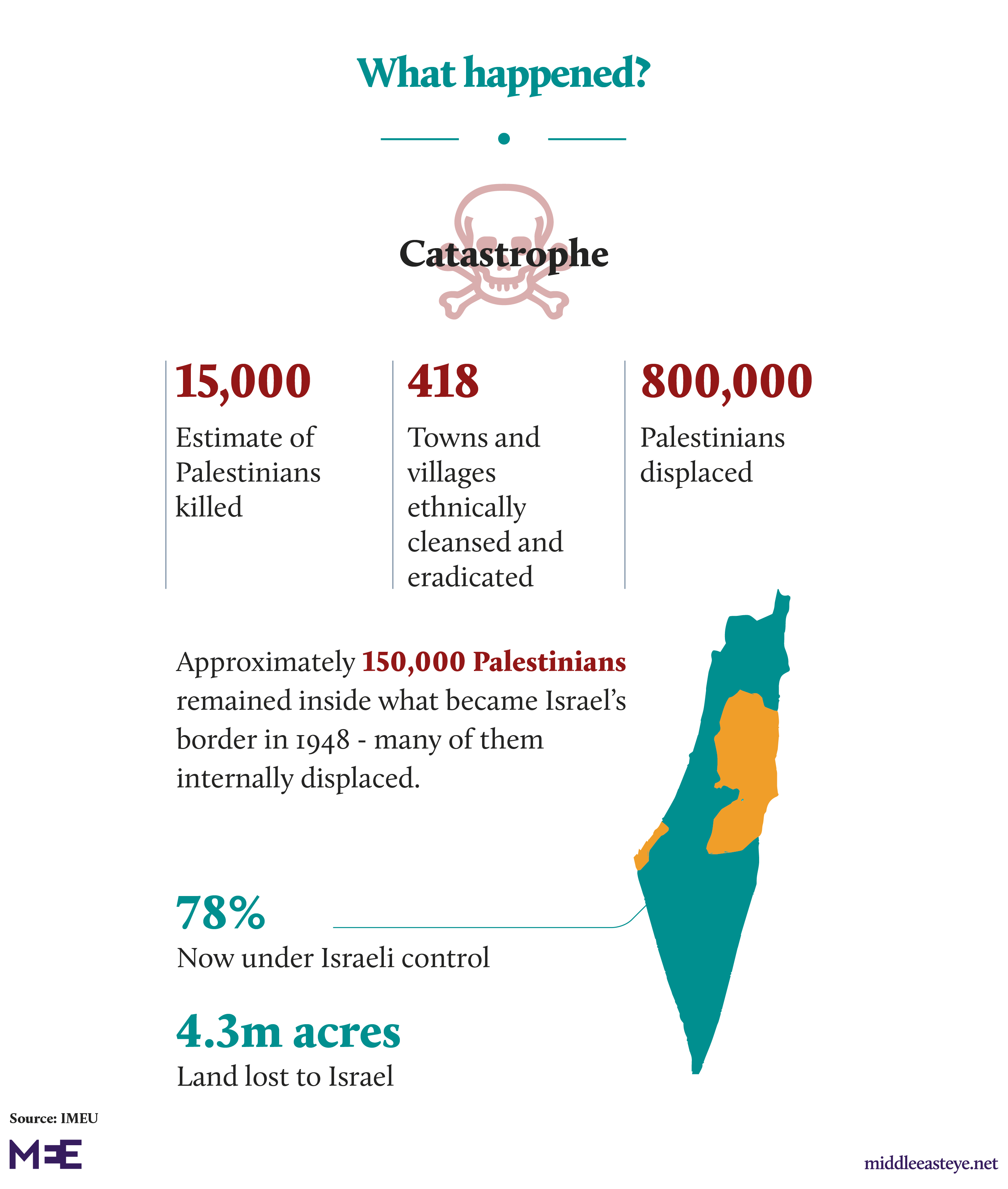
In other words, Israel is threatening to commit a war crime the likes of which we have not seen since the Nakba of 1948.
Very possibly, this is all talk and threats; Israel may not ultimately invade Gaza, and a million people may not be evicted. In any case, nearly half-a-million are newly homeless following unprecedented bombings of Gaza neighbourhoods by the Israeli Air Force.
These are dark days. Dark days for Israelis, who woke up last Saturday to a reality that turned upside-down their conception of their world that they had embraced for years.
Stay informed with MEE's newsletters Sign up to get the latest alerts, insights and analysis, starting with Turkey Unpacked
Israelis believed that their army was omnipotent, the strongest in the world; that sinking 3.5 billion shekels ($1bn) into the barrier around Gaza would be sufficient to ensure the security of the residents of southern Israel.
They believed that they had the most sophisticated intelligence system in the world - one that knows, hears and sees everything. Israel is equipped with miraculous technology that it sells to half the world, and boasts elite human resources, such as the army's celebrated Unit 8200, born geniuses who clearly could not be surprised by anyone. Different reality
Then, the fence around Gaza was breached by an obsolete tractor, and the entire concept collapsed. It turns out, Israeli intelligence knew nothing about a huge operation that had been planned for more than a year; the army showed up very late to the sites of the Hamas incursions.
Israel is not so powerful or omnipotent after all. Its military strength is not enough to guarantee the security of its residents. What remains highly doubtful is whether Israel will learn the most essential lesson from this: that the country cannot continue forever to live only by the sword, relying solely on its military power.
Half of the Israeli army is currently guarding settlers in the occupied West Bank and all their capricious carryings-on. For the Sukkot holiday, several battalions were moved from the Gaza border to Huwwara, near Nablus, to protect a festival of revenge initiated by an extremist member of Israel's parliament.
All residents of Gaza have become potential victims of a violence that even they, however much they already know of horror and suffering, have not previously known
Media images of Jewish worshippers sitting on a road in the middle of a Palestinian town, swaying from side to side like so many ritual palm fronds, were among the most grotesque of recent times. The grotesquery soon made way for catastrophe: because of this defiantly criminal provocation by the settlers, the residents of southern Israel had no one to protect them when Hamas forces invaded.
Last Saturday, Israel woke up to a different reality - one that should finally extinguish the country's arrogance and complacency. This ought to demonstrate, once and for all, the impossibility of evading any consequences for continuing to indefinitely imprison more than two million people in a giant cage, with another three million people living indefinitely under military tyranny.
There was a price to be paid, after all. Last Saturday, Israel woke up to horror upon horror.
Israel was shocked and sought revenge. That wish is now fulfilled. As I write this, all residents of Gaza have become potential victims of a violence that even they, however much they already know of horror and suffering, have not previously known. Trauma of the Nakba
Thousands and perhaps tens of thousands of Palestinians in Gaza will not live for many more days. Their homes, their lives and their world will be completely destroyed.
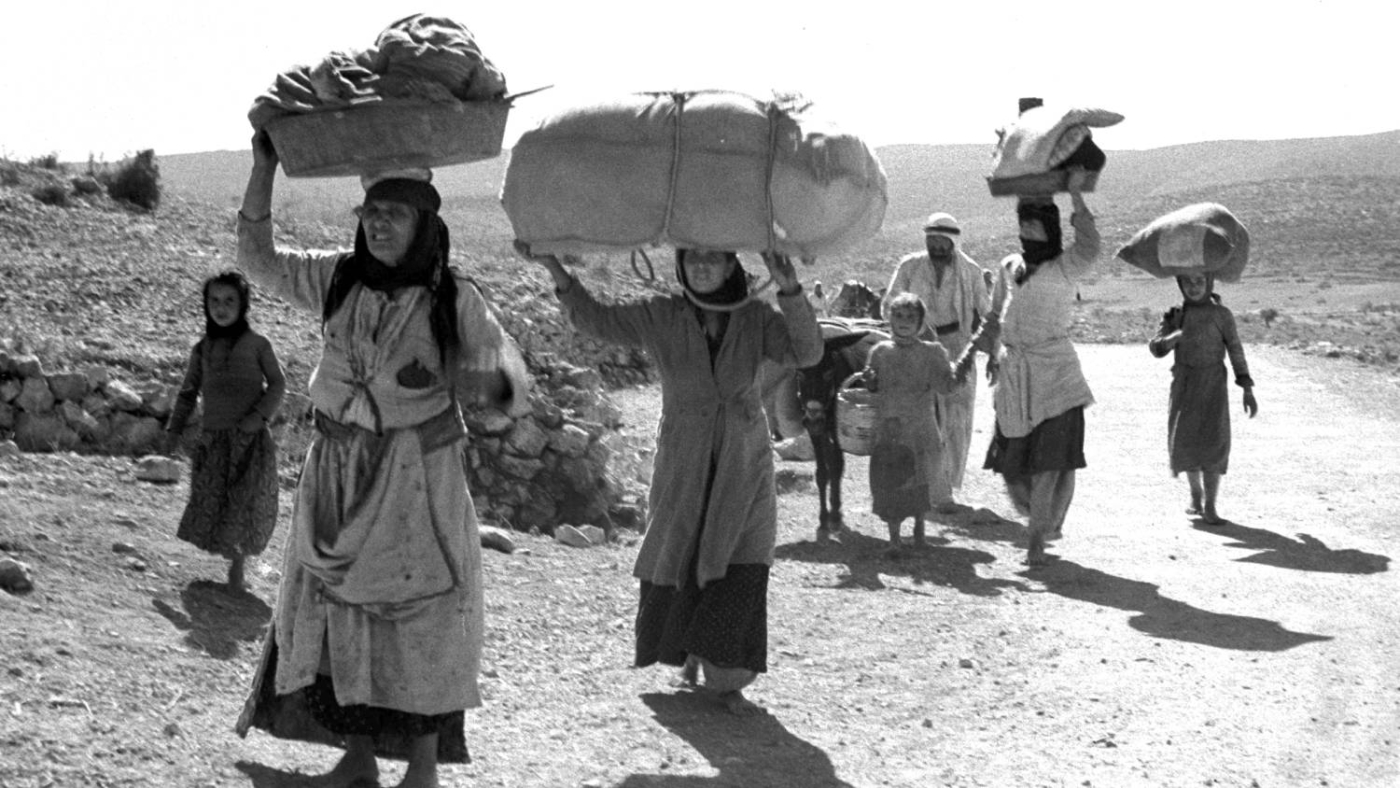
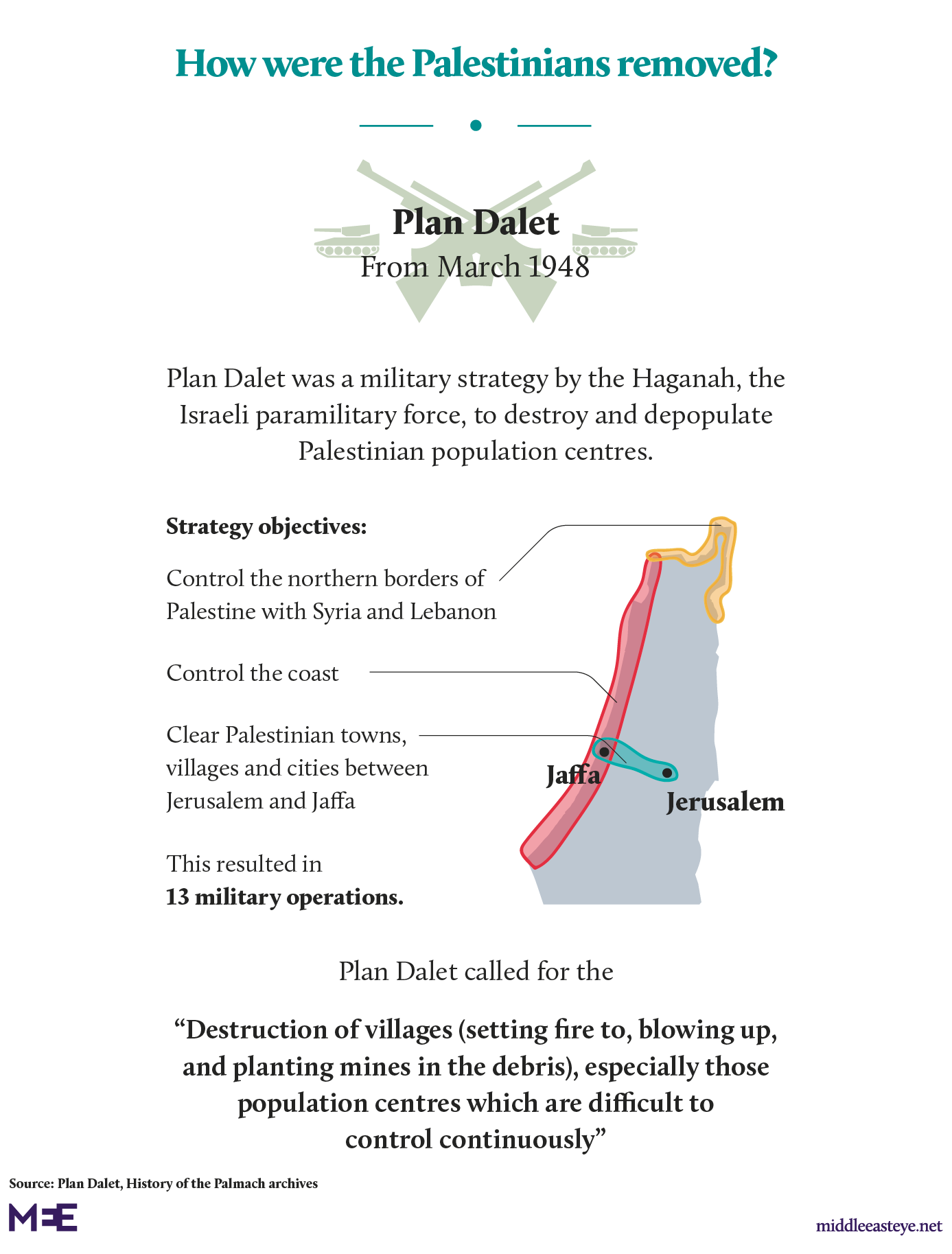
Those who are forced to evacuate will certainly remember how their parents and grandparents were forced to evacuate hundreds of villages in their homeland in 1948, unable ever to return. The trauma of the Nakba will reawaken now in all its intensity, in Gaza. The Nakba that Israel has started will backfireRead More »
Israel must not misinterpret the sympathy and solidarity that much of the outside world is currently showing it.
The international community will not let Israel run amok in Gaza at the expense of two million helpless people who have nowhere to run, nowhere to hide, and no way to save their children.
They have no hospitals to tend to their sick; nowhere to tend to their shattered souls. The fact that Hamas did not attend to all of that does not absolve Israel of its responsibility.
Much of the responsibility now rests with the international community. Visits by top American and European officials, and the resoundingly sympathetic speech by US President Joe Biden, should not mislead us.
It must be clear that, notwithstanding the understandable, friendly human sympathy that has been expressed, Israel's response cannot be unrestrained.
As I was writing these lines, a resident of Rafah in the southern Gaza Strip called me, asking to send an article to Haaretz, the newspaper for which I write. "I don't know if I'll still be alive in a few hours," he said. "Right now, no one in Gaza knows if they will be alive in another hour - but please publish the article even if I am killed."
At some stage, these atrocities will have to be stopped - and that stage is very close. The views expressed in this article belong to the author and do not necessarily reflect the editorial policy of Middle East Eye.
Gideon Levy is a Haaretz columnist and a member of the newspaper's editorial board. Levy joined Haaretz in 1982, and spent four years as the newspaper's deputy editor. He was the recipient of the Euro-Med Journalist Prize for 2008; the Leipzig Freedom Prize in 2001; the Israeli Journalists’ Union Prize in 1997; and The Association of Human Rights in Israel Award for 1996. His new book, The Punishment of Gaza, has just been published by Verso.
What is the Nakba?+ Show
Israel-Palestine war: Legal centre seeks to prosecute UK for Israeli 'war crimes' complicity
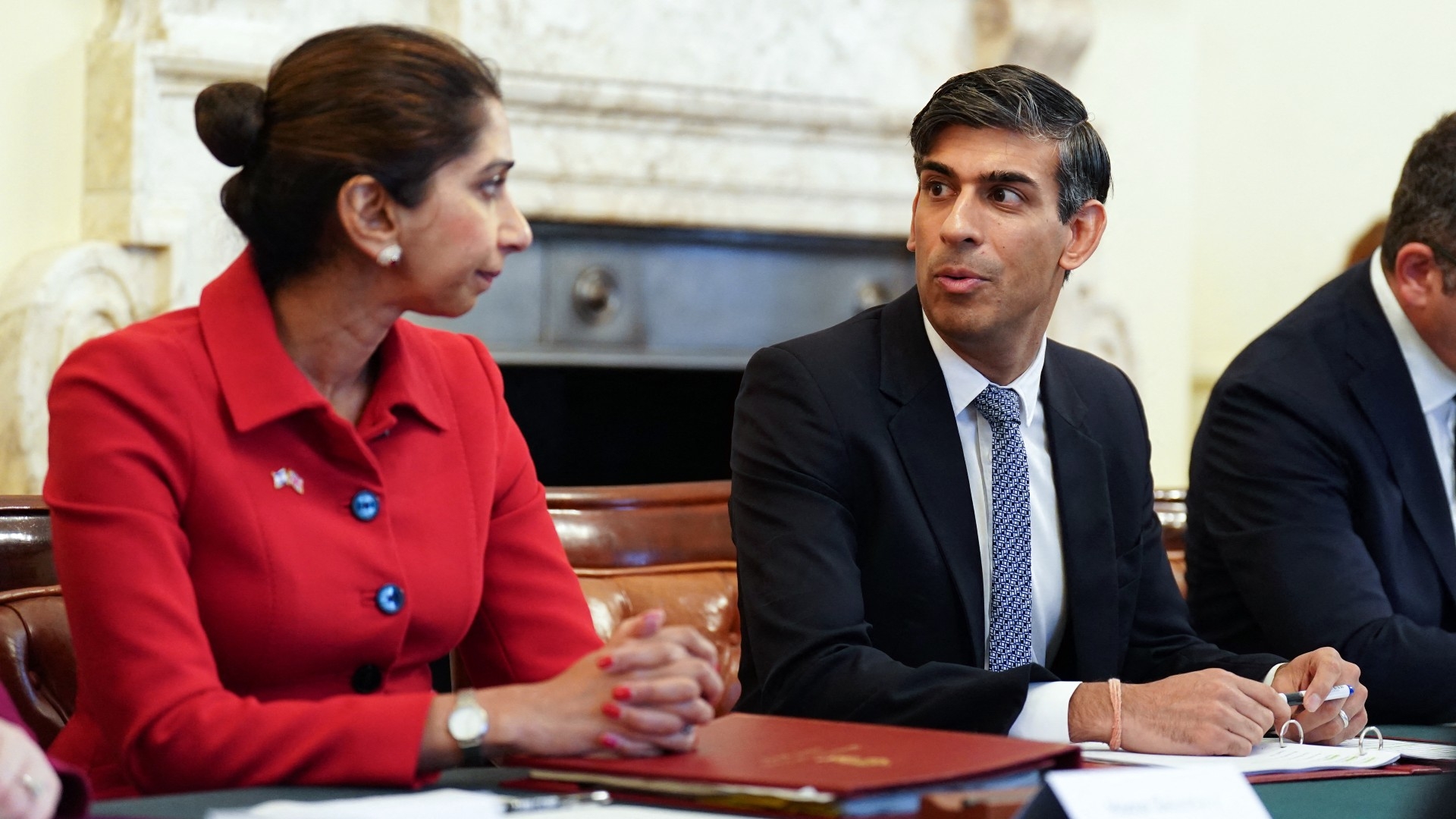
International Centre of Justice for Palestinians, co-chaired by Conservative MP, says Britain aiding path to war crimes in Gaza Britain's Prime Minister Rishi Sunak (R) and Home Secretary Suella Braverman at 10 Downing Street in London on 12 October 2023 (AFP)
A UK-based legal centre has announced its intention to seek to prosecute British government officials over alleged complicity in Israeli war crimes in Gaza.
The International Centre of Justice for Palestinians (ICJP) issued a notice to Prime Minister Rishi Sunak over the UK providing "military, economic and political support to Israel, which has aided Israel's perpetration of war crimes".
It said that Israel's efforts at a forcible transfer of more than one million people in north Gaza to southern parts of the enclave in less than 24 hours may amount to both "a war crime and a crime against humanity".
Stay informed with MEE's newsletters Sign up to get the latest alerts, insights and analysis, starting with Turkey Unpacked
"The siege of Gaza, restricting electricity, food, water and other basic necessities, constitutes collective punishment, which is also a war crime under the Geneva Convention," it added.
"Now that war crimes have been carried out, continuation of such support and assistance would mean that UK government officials would be complicit in the commission of war crimes and potentially crimes against humanity."
The notice by ICJP has been sent to Scotland Yard's War Crimes Unit, which has asked for evidence of war crimes in the region.
Israel has killed at least 2,215 people during its bombing campaign in Gaza over the past week, according to the Palestinian health ministry. Of those killed, 724 are children and 458 are women.
Over the same period, Israeli troops have killed 54 people in the occupied West Bank.
The war erupted on 7 October after Hamas launched a surprise multi-front assault on Israel, firing thousands of rockets and sending fighters into Israeli territory across land, air, and sea. More than 1,300 Israelis have been killed, and scores of soldiers and civilians taken captive back to Gaza. 'Complicity'
The UK government has said that it supported Israel's "right to defend itself and to take action against terrorism".
"Unlike Hamas, Israeli President Herzog has said their armed forces will operate in accordance with international law," a Foreign Office spokesperson said on Saturday.
"Given that Hamas has embedded itself in the civilian population in Gaza, it is important that Israel takes all possible measures to protect ordinary Palestinians and to facilitate humanitarian aid," it added.
During those comments where President Herzog claimed Israel operated within international law, the president apportioned blame on all residents of Gaza.
"It is an entire nation out there that is responsible. It's not true this rhetoric about civilians not [being] aware, not involved. It's absolutely not true," he said on Friday.
"They could have risen up, they could have fought against that evil regime which took over Gaza in a coup d'etat."
ICJP is co-chaired by Crispin Blunt, an MP belonging to Sunak's Conservative party and a former chair of parliament's foreign affairs committee.
He told Sky News on Saturday that the forcible transfer of people in Gaza breached international law, and that parties with knowledge of such breaches made themselves "complicit".
"And as international law has developed in this area, the fact of being complicit makes you equally guilty to the party carrying out the crime."
Keir Starmer, leader of the UK opposition, also come under criticism this week after stating that Israel had the "right" to totally cut power and water supplies to Palestinians in Gaza.
Asked about Israel's complete seige on Gaza and the cutting of water and electricity, Starmer told broadcaster LBC: "I think that Israel does have that right, it is an ongoing situation. Obviously everything should be done within international law, but I don't want to step away from the core principles that Israel has the right to defend herself."
Lebanon to file UN complaint over killing of Reuters journalist by Israel
A Reuters witness at the scene said journalist, Issam Abdallah, was struck by missiles fired from the direction of Israel that also wounded six others.
REUTERS
Colleagues and friends of Issam Abdallah, a Lebanese national and Reuters videojournalist who was killed in southern Lebanon by shelling from the direction of Israel, mourn over his body during his funeral in his home town of Al Khiyam, Lebanon. / Photo: Reuters
Lebanon has said that it will file a complaint with the UN Security Council over “deliberate killing” by Israel of a Reuters journalist, a Lebanese national.
According to Lebanon’s National News Agency, the Foreign Ministry instructed Lebanon’s permanent mission to the UN to submit a complaint for “deliberate killing” of video journalist Issam Abdullah, who worked for Reuters, and wounding two other journalists working for AFP and Al Jazeera.
These acts “constitutes a blatant attack and a crime against freedom of opinion and the press, human rights, and international humanitarian law, by easily killing unarmed journalists who are victims of their desire to convey the truth, defend it with the lenses of their cameras and pens, and transfer them to the tape of the repeated Israeli attacks in southern Lebanon,” the agency quoted the ministry as saying on Saturday.
The Israeli army said on Saturday it was investigating an incident in southern Lebanon in which a Reuters journalist was killed.
A Reuters witness at the scene has said he was struck by missiles fired from the direction of Israel.
"We are aware of the incident with the Reuters journalist," army spokesman Lt Col Richard Hecht told a regular briefing. "We are looking into it. We already have visuals. We're doing cross examination. It's a tragic thing," he said.
Lebanese army says rocket launched from Israel
The Lebanese army said that according to a preliminary investigation, the rocket launched by the Israeli army towards the Alma Shaab region in southern Lebanon hit a vehicle carrying journalists.
"The Israeli enemy launched a missile which hit a civilian car belonging to a media group which led to the martyrdom of the videographer Issam Abdallah," the army high command said in a statement posted on its website.
One journalist was killed and five journalists were injured in the attack, said the statement.
It also said that Israel fired rockets loaded with phosphorus and heavy artillery towards several towns including, Kefr Shuba, Ayta Shaab, and Adaysa on Friday.
SOURCE: TRTWORLD AND AGENCIES
Israel will use claim of 'baby beheadings' to legitimise war crimes: Israeli journalist
Israeli army spokesperson tells Anadolu that they have no information confirming allegations that Palestinian groups 'beheaded babies'.
Israel and Gaza at war after Hamas launches surprise attack [Photo: AFP]
Israeli journalist Oren Ziv has said that false claims of Hamas group "beheading babies" will be used by the Israeli military to "legitimise" war crimes committed in Gaza.
Last Saturday, the Israeli army organized a press tour to southern Israeli kibbutz, Kfar Aza, one of the locations where Palestinian groups had attacked. During the tour, one of the journalists spoke with some Israeli soldiers, citing them as sources, and reported that the soldiers said, "Hamas beheaded babies here".
However, officials from the Israeli army, reached by an Anadolu correspondent, said that they had no information to confirm such an allegation.
After the denial, some journalists who had shared the claim found themselves in a position where they had to apologize.
Ziv, who participated in the press tour in Kfar Aza, said that many people had contacted him with questions about the allegations.
In a statement on his social media account, Ziv said: "During the press tour, we saw no evidence of baby beheadings, and the Israeli army spokesperson or commanders did not mention such a thing to us".
However, Ziv also mentioned that this false allegation would be used by Israel, stating: "It is unfortunate that Israel will now use these false claims to escalate attacks (on Gaza) and legitimize the war crimes it will commit there".
The Israeli journalist described the scene they witnessed during the press tour as "horrific," saying that they saw the bodies of dozens of Israelis.
In a dramatic escalation of Middle East tensions, Israeli forces launched a sustained and forceful military assault against Gaza, following a military offensive by the Palestinian armed group Hamas in Israeli territories.
The conflict began last Saturday when Hamas initiated Operation Al Aqsa Flood against Israel, a multi-pronged surprise attack including a barrage of rocket launches and infiltrations into Israel via land, sea and air.
Hamas said the operation was in retaliation for the storming of the Al Aqsa Mosque in occupied East Jerusalem and Israeli settlers' growing violence against Palestinians.
The Israeli military then launched Operation Swords of Iron against Hamas targets within Gaza.
Israel's response has extended into cutting water and electricity supplies to Gaza, further worsening the living conditions in an area that has reeled under a crippling blockade since 2007.
SOURCE: AA
UK media: When anti-Muslim hatred fuels hostility to Palestinians
From reporting unverified claims about Hamas, to foregrounding Islamophobic tropes, many mainstream news outlets are abjectly failing their audiences
Front-page headlines in major British newspapers on 11 October 2023 told an unsubstantiated story of 40 babies allegedly killed by Hamas fighters
(Screenshot from social media)
“The idea of that is so far away from the western idea of nurturing your children and keeping them safe,” said the “first lady of Fleet Street”, Eve Pollard, commenting on a story about a female Islamic State (IS) terrorist blowing herself up.
BBC presenter Vicki Young responded: “Muslims would say that family and peace is part of their religion, it is not just a western thing.”
This was in 2019, weeks after a white supremacist in New Zealand massacred 51 Muslims, including a three-year-old boy, at two local mosques.
The fact that a prominent British journalist like Pollard espoused such views, which give the impression that westerners are uniquely good, is disturbing, given that these are the people deciding what sort of news reaches the masses.
That’s perhaps one reason why an unsubstantiated story alleging that 40 babies were beheaded by Hamas militants at the Kafr Aza kibbutz on Saturday made the front pages of half a dozen major British newspapers on Wednesday.
Stay informed with MEE's newsletters Sign up to get the latest alerts, insights and analysis, starting with Turkey Unpacked
According to the investigative outfit Grayzone, a key source for this claim was a deputy commander of the Israeli army “who also happens to be an extremist settler leader who incited violent riots against Palestinians in the occupied West Bank earlier this year”.
The journalist who first amplified the claims works for the state-sponsored Israeli broadcaster i24. Meanwhile, senior journalists from some of Britain’s best-known news outlets, including Sky News and the Guardian, lambasted the irresponsible media coverage of something that has not been verified independently.
Some have compared the situation to war propaganda of the recent past, including the debunked claims about weapons of mass destruction in Iraq in 2003, and false reports that Kuwaiti babies were tipped out of incubators by Iraqi soldiers during the 1990-91 Gulf War.
'Racist stereotyping'
But there is another context in which these horrific headlines were published. As the Guardian’s Jerusalem correspondent, Bethan McKernan, noted in a social media post: “It’s about the racist stereotyping of Arabs and conflating all conflicts in the Middle East as the same thing.” Anti-Muslim hatred fuels anti-Palestinian sentiment.
This has been seen in the coverage following the Hamas breakout from Gaza, with high-profile British journalists responding furiously to the murder of Israeli civilians by accusing Muslims of being in the “grip of a death cult that sacralises bloodshed”, and describing the attacks as “Islamic bloodlust” - something veteran journalist Peter Oborne has said is arguably a form of “blood libel”
The outrageous statements, which many would see as unadulterated Islamophobia - things one wouldn’t dare utter about another religion or people - have proved rather uncontroversial among the mainstream media classes. One of the editors who made such comments was swiftly invited onto BBC Question Time, once again showing that beyond having no consequences in the British media, Islamophobia offers opportunities.
These are a few of the most transparent examples, but anybody watching or reading the wider range of “news” on UK media platforms can find a daily staple of broadsides.
This murder of innocents was given the shortest of shrifts before the presenter asked whether Zomlot condoned the Hamas attacks
One of the latest salvos on GB News came from former Labour MP Simon Danczuk, who used the current conflict to decry the failure of multiculturalism - and he did so by placing blame specifically on Muslim communities.
“Terror on the streets of London”, screamed another headline atop a photo of a pro-Palestinian protester with his index finger raised. GB News equated this to an IS gesture, despite the fact that the raising of the index finger, focused on the oneness of God, is used by Muslims around the globe on a daily basis in actions such as prayer. Portraying this as a symbol of terrorism shows the willingness of some media outlets to smear Muslim beliefs and practices.
Many who feel helpless at the onslaught of biased and offensive media coverage are now being gaslit with suggestions such as those found in a recent Daily Telegraph editorial, which demanded that the BBC use the word “terrorism” in covering the Hamas attacks because “anti-Semitism cannot be ignored for fear it may upset some British Muslims” - as if media outlets or politicians have ever cared about upsetting British Muslims. Shutting down debate
But we have been here before. The “war on terror” that followed the 9/11 attacks in New York was not just an invasion of several Muslim countries and the mass murder of mainly Muslim civilians. Also complicit in the war were the newspapers and television channels that permitted Muslim and anti-imperial voices to speak, on condition that they first condemn.
Israel-Palestine war: Britain's epidemic of unchallenged anti-Palestinian racism
This is similar to the recent questioning of the UK’s Palestinian ambassador, Husam Zomlot, who spoke on BBC television about six of his relatives being killed in Gaza just hours before his interview. This murder of innocents was given the shortest of shrifts before the presenter asked whether Zomlot condoned the Hamas attacks.
Others have suggested that the road to peace is through a just settlement for both sides, and that the people of Gaza shouldn’t suffer for the actions of Hamas. But even this is no longer good enough, as Guardian columnist Owen Jones discovered when he tried to mention the massacres and war crimes being committed against Palestinians in Gaza during a Sky News segment.
Jones started his argument by condemning in no uncertain terms the atrocities committed by Hamas against Israeli civilians. But he was still asked repeatedly to condemn - and his real crime, according to MP Margaret Hodge, was that he had an “obsession” with Palestine.
Some of the arguments being made by Palestinian advocates are no different than those being made by former Israeli military members. Shlomo Brom, the former head of strategic planning for the Israeli army, wrote in the Economist this week that “Israel was led to this grim situation by the failure of its policies towards the Palestinians”.
Brom’s good fortune is that in making such an argument, he doesn’t get labelled a terrorist sympathiser. The long “war on terror”, which seeks to shut down any such talk, means that Muslims and advocates for Palestine are almost always hit with that label. The views expressed in this article belong to the author and do not necessarily reflect the editorial policy of Middle East Eye. Faisal Hanif is a media analyst at the Centre for Media Monitoring and has previously worked as a news reporter and researcher at the Times and the BBC. His latest report looks at how the British media reports terrorism.
World in Disorder: Can theory still provide orientation?
FRANKFURT. Frankfurt meets Ljubljana: During the annual Frankfurt Book Fair and set against the backdrop of a world in disarray, philosophers from both places (of thought) will jointly discuss the potentials of ideology critique in Goethe University Frankfurt’s old Adorno Lecture Hall VI. The panel discussion "Ideologiekritik. Today!" [Ideology Criticism. Today!] is a main event in the program put together by guest of honor Slovenia at the 2023 Frankfurt Book Fair, and is jointly organized by the Slovenian Book Agency JAK, the Ministry of Culture of Slovenia, and Goethe University Frankfurt.
Panel discussion: Ideologiekritik. Today!
with Mladen Dolar, Rainer Forst, Regina Kreide, Martin Saar,
Slavoj Žižek and Alenka Zupančič,
moderated by Frank Ruda.
Friday, October 20, at 7:00 P.M., Adorno Lecture Hall VI,
Bockenheim Campus, Goethe University Frankfurt.
The event will be held in English.
Background: The contemporary world is in a state of disarray: An imminent (or rather, ongoing) ecological crisis of unprecedented magnitude exists alongside extreme forms of socioeconomic and political inequality; new forms of technological domination and control coincide with a resurgence of populisms and authoritarianisms; and signifiers once associated with emancipatory social movements and theories (e.g. Freedom! or Self-Determination!) today are often used in a reactionary manner. What actions are available in the current situation? Can "theory" provide guidance? And if so, how?
The panel "Ideology Critique. Today!" will bring together important theorists from the Frankfurt School of Critical Theory and the Ljubljana School of Psychoanalysis, each of whom will present and speak on their own behalf – not as representatives of a school. Together, they will critically discuss and review the possibilities, limits and insights of the different contemporary approaches to ideology critique in the face of a world in disarray. "Critical theory of the Frankfurt School has always pursued the approach of a rational analysis and critique of social unreason. To this end, various combinations of emancipatory theories based on German idealism have been elaborated, from Marx to Freudian psychoanalysis and a discourse theory of democracy or recognition. In scrutinizing the power-theoretical dynamics of contemporary societies, the approaches of the Ljubljana School, on the other hand, interpret German idealism and Marx in the light of Lacan and structuralism. High time for a joint conversation on ideology critique today," explains Rainer Forst, Professor of Political Theory and Philosophy at Goethe University Frankfurt.
After a series of opening statements, the panel will address the current crisis and contemporary paradoxes of authority and sovereignty. It will discuss contemporary forms and ideologies of freedom as well as the social disorientations and perversions they can generate and reproduce. Finally, the panel will seek to analyze the contemporary form(s) of capitalism in which and through which we live.
A Leeds researcher has teamed up with the BBC, Channel 4 and Candour Productions to analyse the role of social class, on screen and behind the scenes of TV production.
Funded by the Arts and Humanities Research Council (AHRC), the BBC and Channel 4 will work with the research team to support access to two drama productions, where the academics will analyse the series from production to reception.
Led by Beth Johnson, Professor of Television and Media Studies at the University of Leeds’ School of Media and Communication, the research will consider the backgrounds of people who produce TV, how social class is represented in each TV show, and how each series is understood by the public.
The researchers will also collaborate with Candour Productions, a Leeds-based, BAFTA-winning production company, to create a film based on the findings.
Professor Johnson said: “From policy concerns about working class access to the sector, through to class as a prominent point of discussion in BAFTA award winners' speeches, class is important to national conversations about TV.
“Research shows that class is crucial in shaping what gets commissioned for television, who gets roles on and off screen, and the sorts of representations of social class that are broadcast and made available to download or stream. Despite efforts to level the playing field, the TV workforce remains dominated by those from professional and managerial backgrounds; labour market structures and pay rates advantage those with economic and social resources; and experiences of working class individuals are misunderstood and misrepresented.”
Channel 4 Creative Diversity Lead, Neila Butt said: “We are really pleased to be taking part in this project as it lies at the heart of the work of the creative diversity team. This gives us an opportunity to explore and help in the research of the socio-economic backgrounds of on and off-screen representation within our programmes and the wider industry. It helps focus on an area in the evolving landscape of diversity, equity and inclusion.”
BBC Head of Creative Diversity, Jessica Schibli said: “As a public service broadcaster, we’re committed to providing value for all audiences, so we’re pleased to be supporting this project. It will provide a comprehensive understanding of how social class helps shape the television industry from commissioning to production, especially in the genre of television drama. The research will also provide insights on how audiences respond to socio-economic diversity on screen.”
The ambitious new project, titled ‘What’s on? Rethinking class in television’, is the first of its kind to consider how inequalities such as race, gender and sexuality intersect with social class.
Professor Johnson and her team, which includes Professor Dave O’Brien (University of Manchester), Dr Laura Minor (University of Salford), and a two-year post-doctoral researcher, will conduct interviews with commissioners, producers, on-screen talent and crew members while the programmes are made.
As they are broadcast and made available on streaming services, the researchers will closely analyse how each show represents social class.
After the dramas have been aired, focus groups with audience members and viewership data from the project partners will be used to understand how viewers respond to the representations of class.
The results will be used to find ways of addressing and reducing intersectional class inequalities in the television industry, aiming to change policy, practice and discourse.
Anna Hall, Creative Director at Candour Productions, said: “Candour are delighted to be involved in this piece of crucial research. We surveyed all our team recently and found that 67% of our staff came from a lower socio-economic background. This is virtually unheard of in TV and we are so proud that we can continue to champion film-makers and TV professionals from a range of diverse backgrounds to work with us. But more still needs to be done and this research will play a huge role in understanding why there continue to be so many barriers.”
The Urban Future Prize Competition awards 2 prizes to Cadence OneFive and Carbon Collective to accelerate market ready climate tech solutions
Sponsored by NYU Tandon School of Engineering, The New York Community Trust, MUFG Bank, and Keyframe Capital, the Urban Future Lab’s annual Summit and Competition featured pitches from the finalists for the Climate Finance and Future Vision Prizes
URBAN FUTURE PRIZE COMPETITION 2023 WINNERS: BOMEE JUNG, CO-FOUNDER AND CEO OF CADENCE ONEFIVE AND ZACH STEIN, CO-FOUNDER OF CARBON COLLECTIVE | PHOTO BY RYAN ROSE EVANOUSKY
The winner of the 2023 Climate Finance Prize is Carbon Collective. Carbon Collective puts 401k's to work to solve climate change by divesting from CO2 producing companies, investing in environmentally clean companies and voting proxies to encourage even better corporate behavior.
The winner of the 2023 Future Vision Prize is Cadence OneFive. Cadence OneFive is a climate justice-motivated public benefit corporation creating a market-transforming solution to accelerate building decarbonization and climate adaptation. Their software embodies half a century of building science expertise and construction management best practices.
This year, UFL received 224 applications from market-ready startups innovating across climate finance, buildings, circular economy, transportation, electricity, and manufacturing and narrowed this competitive application pool down to 8 incredible finalists. "Every year, we spend at least 5 months scouting for the brightest startups with the most promising solutions to climate change," said Austin Evarts, Director of the ACRE Incubator at Urban Future Lab. "Our evaluation process is incredibly rigorous. We are thrilled to work with Cadence OneFive and Carbon Collective, and all of the finalists should be proud of themselves. They will continue to do great things.”
"While it is exciting to welcome 2 new companies to ACRE through this competition, it is even more thrilling to know that there are so many extremely qualified participants from which we choose the winners," said Pat Sapinsley, Managing Director of Cleantech Initiatives at the Urban Future Lab at NYU Tandon. "By adding the Climate Finance track we are expanding the pool of climate change companies and moving the needle on the deployment of climate solutions."
“We need big ideas and bold solutions to address the intensifying climate chaos we are facing,” said Arturo Garcia-Costas, Senior Program Officer for the Local, National and International Environment. “For the past 7 years, the Urban Future Prize Competition has given visionary entrepreneurs an outstanding platform to advance new technologies and approaches that can help cities become more sustainable.”
As a primary focus in this year’s summit, UFL brought together a panel of experts to discuss the challenges of funding first-of-a-kind (FOAK) projects and Climate Finance. FOAK projects are a critical roadblock to scaling climate solutions and difficulties in funding are due to large capital requirements, low returns for traditional venture capitalists, and high risk for project finance investors.
“We were thrilled to see Climate Finance get a dedicated track for this competition. As we said in the pitch, the precursor to emissions reduced is dollars invested. We’re honored to have won and look forward to working with UFL to accelerate our mission.”, said Zach Stein, Co-Founder of Carbon Collective
“Urban Future Lab, in our view, is a cornerstone of climate innovation in New York City and beyond. One of the greatest challenges we anticipate facing in the coming decade will be how to finance the scale up of new technologies in the energy economy. We’re excited to partner with UFL in furthering that conversation.”, said John Rapaport, Chief Investment Officer at Keyframe Capital.
“Now is the time to focus on implementation of climate solutions and Urban Future Lab has an incredible track record in supporting the do-ers at the leading edge. We’re honored to join UFL’s portcos and excited to fast-forward our part in creating a just transition.”, said Bomee Jung, Co-Founder and CEO of Cadence OneFive.
Beth Gilroy, Director of Environmental & Sustainability Management at MUFG Global Corporate & Investment Bank highlighted that, “MUFG Bank is pleased to support the Urban Future Lab Climate Finance Prize as part of our global commitment to support the transition to a low carbon economy. As a leading global financial institution based in Japan and backed by locations in more than 50 countries and regions, we are working hand in hand with our clients and financing innovative companies from pre-IPO up to large corporates and projects that are bringing to market new sustainable technologies addressing critical challenges in sectors across the global economy. Congratulations to the winners."
The Urban Future Lab
The Urban Future Lab at the NYU Tandon School of Engineering is a non-profit innovation hub for best-in-class climatetech startups with a focus on clean energy and sustainable urban infrastructure solutions. It is home to ACRE, New York's longest-running climatetech incubator, and tech-focused accelerators such as Carbon to Value Initiative, Offshorewind Innovation Hub, Innovate UK Global Incubator Programme, the Low-Carbon Hydrogen Accelerator and the Clean Start program.
Through their 6 programs, we support innovators on their journey to scaling up and commercializing climate solutions. Since 2009, we’ve supported 170+ startups with an industry-leading 88% company survival rate and several impressive exits (Smarter Grid Solutions, Artemis, Go Electric, Keen Home, Honest Buildings). They have raised $2.3B in venture capital, project finance, and grants, created 4,000+ jobs, and facilitated 100+ events with 2,000+ attendees per year. We are proud to champion the brightest minds in climatetech innovation, providing them with the necessary support and resources to scale up their transformative solutions while leveraging New York’s built environment and access to climate finance.
As an integral part of NYU Tandon’s Sustainable Engineering Initiative, they are home to programs focused on market solutions and education for the green economy. It is a multi-faceted approach to tackling climate change & environmental contamination and we aim to develop engineering solutions to avoid, mitigate, and remediate emissions responsible for climate change and environmental contamination, as well as engineering strategies to evaluate the impact of and adapt to these environmental challenges.
Press Contact for additional information and photos:
Christelle Torres
Head of Brand Strategy, Urban Future Lab
christelle.torres@nyu.ed
University of Houston secures $1.6 million grant to advance STEM education for underserved high school students
FRONT ROW (LEFT TO RIGHT): DR. JERROD HENDERSON, ASSISTANT PROFESSOR, COLLEGE OF ENGINEERING; DR. MARIAM MANUEL, CLINICAL ASSISTANT PROFESSOR, COLLEGE OF NATURAL SCIENCE & MATHEMATICS; DR. DONNA STOKES, ASSOCIATE DEAN FOR UNDERGRADUATE AFFAIRS AND STUDENT SUCCESS, PROFESSOR, COLLEGE OF NATURAL SCIENCE & MATHEMATICS
BACK ROW (LEFT TO RIGHT): DR. APRIL PETERS HAWKINS, PROFESSOR, COLLEGE OF EDUCATION; DR. JACQUELINE EKEOBA, CLINICAL ASSISTANT PROFESSOR, COLLEGE OF NATURAL SCIENCE & MATHEMATICS; MARVIN PIERRE, EXECUTIVE DIRECTOR, 8 MILLION STORIES
Researchers at the University of Houston received a $1.6 million grant from the National Science Foundation (NSF) for a community partnership to provide a culturally responsive STEM experience to underserved high school students enrolled in alternative schooling systems in the city of Houston.
The recently funded Racial Equity through Student Engagement and Teaching in STEM (RESET in STEM) program, an idea borne from UH’s successful STEM RISE program, aims to address the systemic barriers that hinder economically and socially disadvantaged students’ access to STEM education and create a more inclusive and equitable educational environment.
“These students aren’t just underserved, they’re underestimated,” said Mariam Manuel, clinical assistant professor in teachHOUSTON, a UH program dedicated to producing secondary STEM teachers. “Our goal is to empower minoritized students from historically marginalized backgrounds to thrive in STEM fields.”
According to Manuel, from 2017 to 2019, Black professionals made up just 9% of STEM workers in the U.S., lower than their 11% share of the overall U.S. workforce. The gap was even larger for Hispanic professionals, who made up only 8% of people working in STEM while they were 17% of the total workforce.
“This program is about instilling confidence, resilience and a sense of belonging in students,” Manuel said. “By giving them opportunities through mentorship and research lab experiences, we are paving the way for a more diverse and inclusive STEM workforce which will benefit society as a whole.”
RESET in STEM is a collaboration between the College of Natural Sciences and Mathematics, College of Education and Cullen College of Engineering as well as Eight Million Stories, Inc., a community-based non-profit that works with local school districts and community organizations and supports at-promise students in education completion, industry-based certifications and wraparound services.
“As an organization that prides itself on supporting and advancing Houston’s most marginalized student population, we are constantly looking for a stronger connection to college and career readiness,” said Marvin Pierre, executive director of Eight Million Stories. “This program will provide our students with a bridge to support through tutoring, research experiences and other key components that students need to unlock their potential.”
The program includes funds to provide scholarships to 40 undergraduate STEM majors and 40 high school students over the course of four years. Students from Houston area high schools including Jack Yates, Wheatley, Madison and Worthing high schools will participate in an on-campus, six-week summer program to engage in a STEM research lab experience. And during the school year, the students will attend workshops focused on college and career readiness.
“We will use a layered mentoring concept that goes beyond the summer STEM labs,” Manuel said. “They’ll get to meet regularly with UH undergraduate STEM student mentors who will help them prepare college essays and applications, meet with university counselors and get tutoring to help prepare them for core math and science content.”
UH undergraduate STEM majors completing the teachHOUSTON program will take the Research Methods in STEM course, which will be offered in conjunction with the immersive laboratory experience and a focus on anti-discriminating practices in informal STEM spaces.
“The undergraduate mentors will gain insight into doing contextualized science and math from a research perspective as well how to teach their future students to engage in the research process,” said Jacqueline Ekeoba, clinical assistant professor for teachHOUSTON. “It is imperative that our preservice teachers are confident in their STEM identities when facilitating opportunities that will encourage a sense of belonging within their own students.”
The grant will also fund student stipends, allowing them to participate in the program without interrupting their afterschool or summer jobs. It will also help cover transportation to and from campus.
“It’s a big commitment for the students and we want to make sure we’re giving them financial support as many of them would otherwise need to work over the summer,” Manuel said. “We are working to help dimmish the opportunity gap and dismantle barriers that keep students from being able to participate in STEM activities.”
DR. MATTHEW SCOTT, ASSISTANT PROFESSOR OF MICROBIAL ECOLOGY AND INFECTIOUS DISEASE AT THE VETERINARY EDUCATION, RESEARCH, & OUTREACH PROGRAM AT THE TEXAS A&M SCHOOL OF VETERINARY MEDICINE & BIOMEDICAL SCIENCES.
Researchers from the Veterinary Education, Research, & Outreach (VERO) program at the Texas A&M School of Veterinary Medicine & Biomedical Sciences (VMBS) have received $300,000 from the United States Department of Agriculture’s National Institute of Food and Agriculture to study the costliest disease in the cattle industry, bovine respiratory disease (BRD).
The grant will fund a highly collaborative project involving Mississippi State University, West Texas A&M University and Texas A&M AgriLife that looks at the effects of vaccination and management strategies on the cattle immune system and microflora, specifically as it relates to BRD.
BRD costs the cattle industry around $1 billion each year in prevention, management and treatment fees, as well as in herd losses. Though scientists have studied BRD for decades, the ability to accurately predict which individual animals will contract BRD remains elusive, making management strategies less effective.
Old Problems
For the last 50 to 60 years, BRD has been the No. 1 cause of disease and death in cattle feedlots of North America. It has a high morbidity rate, accounting for 35 to 50% of all diagnosed disease, which means that infected herds often experience significant losses.
Despite having been the focus of research for decades, BRD is difficult to prevent because there are many factors that can affect whether an individual animal contracts BRD.
“Age, proximity to other cattle with BRD, vaccination status and individual immune response are just some of the contributing factors,” said Dr. Matthew Scott, an assistant professor of microbial ecology and infectious disease at VERO.
The variety of factors can make it hard to predict exactly which animals will get sick and which ones will resist infection.
“Sometimes low-risk cattle still get sick,” Scott said. “Sometimes really high-risk cattle — the ones coming from multiple sources with no management or vaccines at all — don’t get sick. So, there’s a lot of incongruences at the individual level and we don’t really know why.”
Vaccines and management strategies, such as physically separating cattle that are vulnerable to BRD, are typically the most reliable way to keep cattle healthy.
“Those are the two main tactics we have in preventing BRD,” Scott said. “We can use these tactics to predict whether a herd is at high or low risk for BRD infection, which is information crucial to producers who may be buying or selling those animals.”
Separating out animals that have been deemed vulnerable to BRD can mean keeping them away from commercial sale barns, where hundreds or thousands of animals may be brought together, putting their immune systems in jeopardy and making it easier for BRD to spread.
“It’s the equivalent of having your kid start kindergarten,” Scott said. “All these kids go to school for the first time, and after the first week everyone has a runny nose. Cattle can be no different in that regard.”
Unfortunately, risk assessment only helps scientists predict general patterns of BRD transmission; it hasn’t been successful in predicting which individual cows will get sick.
New Strategies
The goal of the new NIFA-funded project is to try to understand what makes some cattle more susceptible to BRD than others. Scott and his team expect the project to take about two years.
“We have two main objectives,” Scott said. “First, we’re going to take samples from a variety of cattle and keep track of them throughout their entire life cycle. This way, we can know which cows eventually get sick and which ones don’t. Then, we can look at their gene expression and see what may be affecting their immune systems on the molecular level.
“Secondly, we’re going to look at samples taken from the upper respiratory tracts of these animals to analyze the microbial community — things like bacteria, viruses and fungi that may be present — so we can understand how they may be affecting the cattle’s internal ecosystem,” he said.
This stage of the project will also include examining what is called the host transcriptome, which is the measurement of all the messenger RNA in an animal at a given time. Having all that information allows researchers to see the expression and function of approximately 20,000 genes at one time.
Comparing the microbial community with the host transcriptome will give researchers an incredibly detailed picture of what’s going on inside cattle respiratory systems at the cellular and molecular level. Together with the life cycle data, Scott and his team will be able to see what factors impact susceptibility at both the macro and micro levels to an unprecedented degree.
To get the necessary data, Scott’s team will collaborate with several cattle facilities, including the AgriLife Beef Management Station in Bushland and Prairie Livestock in Mississippi, which is affiliated with Mississippi State University.
Scott’s team will also partner with West Texas A&M University for sample collection and data analysis.
Ongoing And Future Directions
Conveniently, the new project shares quite a bit of overlap with an ongoing VERO-led research project that is now in its third year, in collaboration with AgriLife, Mississippi State University, Kansas State University and West Texas A&M University. In fact, the new project will collect samples from the same groups of cattle as the ongoing one, which saves time for the researchers.
“The ongoing project takes a more traditional epidemiological approach,” Scott said. “We’re looking at how different management strategies and the use of vaccination influence rates of BRD in cattle using health markers in the blood. For example, how much does choosing not to move calves through a sale barn keep them safe from infection?”
The information from the combined projects goes toward assisting researchers in developing new and more effective strategies, including vaccines, for helping prevent, detect and treat BRD.
“Given how much the industry loses to BRD, the economic benefits of the research can’t be overstated,” Scott said.
On top again: UTA wins national award for noise control engineering
UTA students have won noise control engineering award four out of last five years
For the fourth time in five years, students at The University of Texas at Arlington have won a prestigious national award for noise control engineering.
Ross Everett and Bret Johnson, mechanical engineering students who graduated in May 2023, earned the Leo Beranek Student Medal for Excellence in the Study of Noise Control from the Institute of Noise Control Engineering of the USA for their work to decrease cabin noise in the autonomous rideshare cars owned by May Mobility that operate around UTA’s campus. The institute awards the medal annually to outstanding undergraduate and graduate students at North American colleges and universities that have courses for noise control engineering.
“We’re proud and happy to earn this award and to have been part of a team of people who made it possible,” Johnson said. “It really makes the hours feel worth it, and there’s a sense of accomplishment that comes from being recognized not just by our peers and the University, but also by people with no connection to us or our project.”
The duo and their senior design team—Nicholas McDonald, Amir Yonan, Fernando Alejandre and Grant Roney—worked with May Mobility to reduce loud noise from a computer fan mounted in the front passenger seat area of May Mobility’s vehicles, which created an unpleasant environment for riders. The team also published a paper, “Soundproofing Autonomous Vehicle Computers for Passenger Comfort,” in the Proceedings of the National Conference on Noise Control Engineering.
“We primarily focused on where the noise was coming from and applied soundproofing foams to surround the computer as necessary so that it wouldn’t overheat and the foam wasn’t visible,” Everett said. “We were very proud of our work, and seeing it come full circle was a really big honor.”
“I am glad to see the students were able to apply their knowledge and testing skills to solve a real-world problem and have a direct impact on the local community,” said Yawen Wang, an assistant professor of research and director of the Vibro-Acoustics and Sound Quality Research Laboratory at UTA. “Their work is important to the improvement of the autonomous driving experience and the further advancement of urban mobility. The award is a testament to their hard work and excellence in the study of noise control engineering.”
The Vibro-Acoustics and Sound Quality Research Laboratory develops integrated computational, experimental and analytical approaches to powertrain/structure dynamics, vibro-acoustics, active noise and vibration control, and data-driven techniques for condition monitoring and prognostics. Wang and his team work with companies such as Caterpillar, Daimler, Dana, Ford, General Motors, John Deere, Toyota, Oracle and many others.
Two of the previous three winners of the Leo Beranek Medal were graduate students. Ashish Dev Kotian, a master’s graduate in mechanical engineering, was honored in 2019 for his work designing, fabricating and testing a muffler for the University’s Formula SAE team, and Chia-Ching Lin, a doctoral student in aerospace engineering, was honored in 2020 for his research in hypoid gear noise and vibration control in automotive rear axle systems. Manya Singh, a senior undergraduate student in mechanical engineering, was honored in 2022 for her approach to decreasing cabin noise in the May Mobility cars.