Friday, January 24, 2025

New twist in mystery of dinosaurs' origin


University College London

An artist’s illustration of Nyasasaurus 

image: 

Nyasasaurus could be the earliest known dinosaur, or else a close relative of early dinosaurs.

view more 

Credit: Mark Witton/The Trustees of the Natural History Museum, London


The remains of the earliest dinosaurs may lie undiscovered in the Amazon and other equatorial regions of South America and Africa, suggests a new study led by UCL (University College London) researchers.

Currently, the oldest known dinosaur fossils date back about 230 million years and were unearthed further south in places including Brazil, Argentina and Zimbabwe. But the differences between these fossils suggest dinosaurs had already been evolving for some time, pointing to an origin millions of years earlier.

The new study, published in the journal Current Biology, accounted for gaps in the fossil record and concluded that the earliest dinosaurs likely emerged in a hot equatorial region in what was then the supercontinent Gondwana – an area of land that encompasses the Amazon, Congo basin, and Sahara Desert today.

Lead author and PhD student Joel Heath (UCL Earth Sciences and the Natural History Museum, London) said: “Dinosaurs are well studied but we still don’t really know where they came from. The fossil record has such large gaps that it can’t be taken at face value.

“Our modelling suggests that the earliest dinosaurs might have originated in western, low-latitude Gondwana. This is a hotter and drier environment than previously thought, made up of desert- and savannah-like areas.

“So far, no dinosaur fossils have been found in the regions of Africa and South America that once formed this part of Gondwana. However, this might be because researchers haven’t stumbled across the right rocks yet, due to a mix of inaccessibility and a relative lack of research efforts in these areas.”

The modelling study drew on fossils and evolutionary trees of dinosaurs and their close reptile relatives, as well as the geography of the period. It accounted for gaps in the fossil record by treating areas of the globe where no fossils had been found as missing information rather than areas where no fossils exist.

Initially, early dinosaurs were vastly outnumbered by their reptile cousins.

These included the ancestors of crocodiles, the pseudosuchians (an abundant group including enormous species up to 10 metres long), and pterosaurs, the first animals to evolve powered flight (flying by flapping wings rather than gliding), who grew as big as fighter jets.

By contrast, the earliest dinosaurs were much smaller than their descendants – more the size of a chicken or dog than a Diplodocus. They walked on two legs (were bipedal) and most are thought to have been omnivores.

Dinosaurs became dominant after volcanic eruptions wiped out many of their reptile relatives 201 million years ago.

The new modelling results suggested that dinosaurs as well as other reptiles may have originated in low-latitude Gondwana, before radiating outwards, spreading to southern Gondwana and to Laurasia, the adjacent northern supercontinent that later split into Europe, Asia and North America.

Support for this origin comes from the fact it is a midpoint between where the earliest dinosaurs have been found in southern Gondwana and where the fossils of many of their close relatives have been discovered to the north in Laurasia.

As there is uncertainty about how the most ancient dinosaurs were related to one another and to their close relatives, the researchers ran their model on three proposed evolutionary trees.

They found strongest support for a low-latitude Gondwanan origin of the dinosaurs in the model that counted silesaurids, traditionally regarded as cousins of dinosaurs but not dinosaurs themselves, as ancestors of ornithischian dinosaurs.  

Ornithischians, one of the three main dinosaur groups that later included plant eaters Stegosaurus and Triceratops, are mysteriously absent from the fossil record of these early years of the dinosaur era. If silesaurids are the ancestors of ornithischians, this helps to fill in this gap in the evolutionary tree.

Senior author Professor Philip Mannion (UCL Earth Sciences) said: “Our results suggest early dinosaurs may have been well adapted to hot and arid environments. Out of the three main dinosaur groups, one group, sauropods, which includes the Brontosaurus and the Diplodocus, seemed to retain their preference for a warm climate, keeping to Earth’s lower latitudes.

“Evidence suggests the other two groups, theropods and ornithischians, may have developed the ability to generate their own body heat some millions of years later in the Jurassic period, allowing them to thrive in colder regions, including the poles.”

The earliest known dinosaurs include EoraptorHerrerasaurusCoelophysis, and Eodromaeus.


Researchers enhance flood season rainfall predictions by combining machine learning and climate system model


Institute of Atmospheric Physics, Chinese Academy of Sciences


As climate change leads to more frequent and intense extreme precipitation events, accurately predicting rainfall during the flood season has become increasingly critical.

A recent study has employed machine learning (ML) algorithms to address the nonlinear challenges faced by traditional models in predicting flood season rainfall, resulting in significant improvements in accuracy. The findings were published in Advances in Atmospheric Sciences.

Current predictions for flood season rainfall rely largely on outputs from climate system numerical models, which often contain systematic biases. To correct these outputs and reduce errors, researchers traditionally combine historical observational data with statistical methods.

This approach, known as the dynamical-statistical method, has its limitations. Prediction errors from numerical models tend to grow nonlinearly over time, and traditional correction methods, which primarily rely on linear approaches, struggle to effectively address these errors.

Recognizing ML’s strength in managing nonlinear relationships, the study applied the LightGBM algorithm to enhance the dynamical-statistical correction method. In trials conducted from 2019 to 2022, the predictions improved significantly, with the prediction score (PS) increasing from 68.6 to 74—an improvement of 7.87%. This represents a 6.63% enhancement over traditional dynamical-statistical methods, substantially boosting the accuracy of flood season rainfall predictions.

Many data-driven ML methods used for climate prediction often lack sufficient physical interpretability. To address this issue, the researchers carefully selected meteorological factors with clear physical connections to rainfall and integrated them into the climate system model. The team also quantified the contribution of each forecasting factor, offering a clearer understanding of the physical significance of the predictors used.

The study emphasizes a key point: relying solely on either physical models or ML models to improve predictions of flood season rainfall has inherent limitations. This study explores a climate prediction method that effectively integrates ML with physical models.

The rapidly evolving fields of artificial intelligence and big data offer new opportunities to optimize and refine model outputs, addressing nonlinear and complex challenges that traditional dynamic-statistical methods cannot resolve.

This study proposed a feasible approach to developing the traditional dynamic-statistical method into a dynamic-ML method.

Despite the progress, challenges remain.

“Our next steps will focus on extracting pre-existing and real-time signals from research on flood season precipitation formation mechanisms to develop dynamic-ML method with stronger physical interpretability,” said Dr. YU Haipeng, the corresponding author from Northwest Institute of Eco-Environment and Resources of the Chinese Academy of Sciences.

This research marks a significant step forward in precipitation prediction and offers valuable insights for developing future meteorological methods that integrate artificial intelligence and big data.

“Our ultimate goal is to create an efficient, stable, and interpretable system combining climate system models and ML techniques for predicting flood season rainfall, helping to mitigate the impacts of extreme precipitation and related disasters,” said Dr. YU.

As technology continues to advance, integrating physical mechanisms with ML-based prediction methods holds great potential for addressing the challenges posed by climate change.

Battery-powered electric vehicles now match petrol and diesel counterparts for longevity


University of Birmingham


Battery-powered electric vehicles are now more reliable and can match the lifespans of traditional cars and vans with petrol and diesel engines - marking a pivotal moment in the drive towards sustainable transportation, a new study reveals. 

Researchers used nearly 300 million UK Ministry of Transport (MOT) test records charting the ‘health’ of every vehicle on the United Kingdom’s roads between 2005 and 2022 to estimate vehicle longevity and provide a comprehensive analysis of survival rates for different powertrains. 

The international research team found that, although early Battery Electric Vehicles (BEVs) were less reliable than internal combustion engine vehicles (ICEVs), rapid advances in technology have enabled newer BEVs to achieve comparable lifespans, even under more intensive use.  

Researchers found that BEVs demonstrated the most rapid improvement in reliability, with a 12% lower likelihood of failure (hazard rate) for each successive year of production, compared to 6.7% for petrol and 1.9% for diesel vehicles. 

Publishing their findings today (24 Jan) in Nature Energy, researchers from the University of Birmingham, London School of Economics and Political Science (LSE), University of California San Diego, and University of Bern, Switzerland, reveal that, on average, BEVs now have a lifespan of 18.4 years and can travel up to 124,000 miles, surpassing traditional petrol cars in mileage. 

They also identify top-performing brands in terms of vehicle longevity. Tesla leads among BEVs. For petrol and diesel vehicles, Audi and Skoda are the best performers, respectively. 

Co-author Dr Viet Nguyen-Tien, from the LSE, commented: “Our findings provide critical insights into the lifespan and environmental impact of electric vehicles. No longer just a niche option, BEVs are a viable and sustainable alternative to traditional vehicles - a significant step towards achieving a net-zero carbon future.” 

Co-author Robert Elliott, Professor of Economics at the University of Birmingham, commented: "BEVs offer significant environmental benefits, especially as Europe switches to a more renewable energy mix. Despite higher initial emissions from production, a long-lasting electric vehicle can quickly offset its carbon footprint, contributing to the fight against climate change - making them a more sustainable long-term option. 

"Our findings offer consumers reliable data to make informed decisions about their vehicle purchases, whilst policymakers can use our insights to shape regulations and incentives that promote the adoption of durable and environmentally friendly vehicles and plan ahead their end-of-life treatment." 

The study highlights the importance of advances in technology in promoting the adoption of BEVs. It also provides valuable insights for fleet replacement strategies and planning how to effectively recycle electric vehicles at the end of their working life.  

ENDS 

For more information, interviews or an embargoed copy of the research paper, please contact Tony Moran, International Communications Manager, University of Birmingham, tel: +44 (0)7827 832312: email: t.moran@bham.ac.uk  

Notes to editor: 

  • The University of Birmingham is ranked amongst the world’s top 100 institutions. Its work brings people from across the world to Birmingham, including researchers, teachers and more than 8,000 international students from over 150 countries. 

  • ‘The Closing Longevity Gap between Battery Electric Vehicles and Internal Combustion Vehicles in Great Britain’ - Viet Nguyen-Tien, Chengyu Zhang, Eric Strobl, and Robert J R Elliott is published by Nature Energy. 


Seagrass meadows as natural climate protectors


New major project investigates potential of seagrass meadows as carbon sinks


Helmholtz Centre for Ocean Research Kiel (GEOMAR)


Seagrass meadows promote biodiversity, contribute to coastal protection by attenuating waves and improve water quality. They are also highly effective at storing carbon dioxide (CO₂), as the underwater plants sequester carbon in their leaves and roots as well as in the surrounding sediments.

The GEOMAR Helmholtz Centre for Ocean Research Kiel, in cooperation with the Kiel University (CAU) and the State Office for the Environment of Schleswig-Holstein (Landesamt für Umwelt, LfU), has launched a new project to study the role of seagrass meadows as natural carbon sinks and to develop strategies for their conservation and restoration.

The name of the project, ZOBLUC, stands for “Zostera marina as a Blue Carbon Sink in the Baltic Sea” – Zostera marina being the scientific name for seagrass. The project is funded by the German Federal Environment Ministry's Nature-based Climate Action Programme (ANK) and state funds, with a total budget of around €6 million.

Three Focus Areas for Seagrass Conservation

“Seagrass meadows are like underwater peatlands,” explains the scientific project leader, Dr Thorsten Reusch, Professor of Marine Ecology at GEOMAR. “They store carbon, which is preserved in oxygen-poor sediments for centuries.” The project will examine under which conditions seagrass meadows store the most CO₂ to find blue carbon hot spots, which in turn would be prime areas for protection. Reusch: “For example, areas with strong wave-driven erosion store less carbon than calm bays with faster sedimentation.” The research will not only quantify the carbon storage capacity of seagrass meadows but also model how it might change under different environmental conditions.

Another focus of GEOMAR is the restoration of seagrass meadows. It is crucial to ensure that restored meadows are resilient and sustainable. “There’s little point in replanting seagrass that won’t survive rising water temperatures in a few years’ time”, says Reusch. Experimental studies will expose seagrass to various stressors in order to cultivate robust, climate-resilient populations and practice ‘assisted evolution’.

Community Involvement in Underwater Gardening

The third focus is on involving local people in the restoration process. After developing training programmes and testing small-scale seagrass restoration in previous years, GEOMAR now plans to significantly expand its efforts with the help of volunteers. Reusch: “The pilot phase has been successfully completed; now we’re scaling up.”

This support is urgently needed, as the most reliable way to restore lost seagrass meadows is still to plant individual shoots manually by diving. Reusch says: “It’s important to complete the training course and only use areas that we have checked for suitability for restoration.”

Diving clubs and NGOs will use volunteer divers to plant seagrass in scientifically selected restoration sites. Observational data collected during these efforts will be analysed at GEOMAR to refine future restoration practices.

The development of other planting techniques, such as seeding, is the focus of the parallel project SeaStore II, which started last September.

Mapping with Multibeam Sonar and Drones

The first step, however, is a comprehensive mapping of the existing seagrass meadows in the Baltic Sea. Professor Natascha Oppelt and Dr Jens Schneider von Deimling from CAU and their teams, will use remote sensing methods that combine advanced optical and acoustic surveying technologies. CAU will also be responsible for monitoring the newly planted areas using drones.

Results from ZOBLUC will be shared through workshops and policy recommendations to advance the protection and restoration of seagrass meadows in the Baltic Sea.


Background: Blue Carbon

Blue Carbon is the carbon dioxide stored by marine and coastal ecosystems such as mangroves, salt marshes, and seagrass meadows. Seagrass meadows sequester carbon in the form of dead biomass and organic sediment particles that remain in the oxygen-poor seabed for centuries – much like peatlands on land.

Background: Assisted Evolution

Assisted Evolution is a technique that aims to accelerate the evolutionary adaptation of organisms to make them more resilient to environmental change. In this project, seagrass plants are exposed to experimental heat waves in GEOMAR’s climate chambers. This approach identifies potentially heat-tolerant local populations and uses advanced methods – from cellular physiological reactions (metabolomics) to genetic analysis (gene expression studies) and microbiome research – to understand the mechanisms behind plant resilience.


Microbial solutions for boosting seaweed farming and carbon capture


KeAi Communications Co., Ltd.
Illustration showing the overview of seaweed-associated microbes,  their beneficial functions functions that shape seaweed health and resilience against pathogens and environmental change. 

image: 

Illustration showing the overview of seaweed-associated microbes,  their beneficial functions functions that shape seaweed health and resilience against pathogens and environmental change. The right side of the seaweed shows the current challenges in seaweed microbiome manipulation.

view more 

Credit: Shailesh Nair


Seaweed farming has captured global attention as a potential solution to remove atmospheric carbon dioxide and offer eco-friendly alternatives to carbon-intensive food and industrial products. However, the successful expansion of seaweed farming from a regional industry into a global solution faces major hurdles due to changing oceanic conditions, increasing pathogenic diseases and nutrient limitations.

In a study published in the KeAi journal Green Carbon, researchers from the Qingdao Institute of Bioenergy and Bioprocess Technology (QIBEBT), Chinese Academy of Sciences (CAS), revealed how manipulating the microscopic life living on seaweed can contribute to developing  industrial-scale seaweed farming and boost its potential for fighting climate change.

 “A diverse community of microbes live on seaweed, much like probiotics for seaweed – specific microbes can protect seaweed from diseases, provide essential nutrients, and help them thrive in challenging conditions,” explains corresponding author Yongyu Zhang. "This is particularly important as our previous study has shown that rising ocean temperatures and acidification will likely increase seaweed pathogenic diseases.”

The research highlights the areas that need to be focused on to overcome current limitations in seaweed microbiome manipulation, such as complete knowledge regarding the total microbiome composition and timing of inoculation.

“Early life stages of seaweeds, being more susceptible to microbial colonization, present a critical window for establishing beneficial microbes that might persist throughout the seaweed's life cycle,” says first author Shailesh Nair., “Some seaweeds can even pass these beneficial microbes to their offspring, suggesting potential long-term benefits across generations.”

The researchers propose a framework for future seaweed microbiome manipulation, emphasizing the need for integration of advanced technologies like multi-omics, high-throughput isolation techniques, artificial intelligence-based tools and robust validation.

"Microbial solutions must be deployed for sustainable macroalgae farming,” adds Zhang. “By harnessing the power of beneficial microbes, farmers could potentially create more stable and productive seaweed farms, making large-scale ocean farming more feasible than ever before.”


Death is a genius—

https://www.zocalopublicsquare.org

Courtesy of Gautam Arora/Unsplash.


still a child and already so sharp, her tongue a glass knife that could cut bone. She fits right in with
our gifted program. Unlike the other precocious children in her class, however, we’ve noticed Death
doesn’t seem interested in playing the games we set out for indoor recess. Last week the teachers
encouraged her to join some of the others playing Connect 4. She swallowed the pieces whole. Then
the board. We had to send her to the nurse’s office. Not for her sake— she was entirely fine—, but
because the incident, well, it rather freaked out the other students. Death is a unique child, who
comes with unique challenges, and I want you as her mother to rest assured that we’re committed to
meeting those challenges. It’s actually your other child I’m worried about. Candidly, Beauty is a
terror. Yesterday she grabbed Death’s tongue out of her mouth, squeezed it viciously. It seemed to
be some kind of power display. Beauty’s blood all over the classroom, Death’s tongue in Beauty’s
mangled hands. We sent them both to the nurse’s office. Death herself was fine, but Beauty needed
her help walking downstairs without traipsing all that blood behind her. I’m not sure, frankly, that
there’s a place for Beauty at this school.


Sophia Bannister’s poems have most recently been published in Hole in the Head Review. She teaches and lives in New York.


This poem was selected by January poetry curator Alan Shapiro. He writes: “One of the responsibilities of poetry is to make room for what remains stubbornly unpoetic. The speaker of this weird and wonderful poem is a guidance counselor or school principal or director of a program for gifted children. The traditional use of personification, even allegory, is doubly transformed by the pitch perfect idiom of a professionally earnest bureaucrat.”

Russian Coal Miners Face Bankruptcy

Published Jan 24, 2025
Senior News Reporter
NEWSWEEK

Russia's coal industry is in crisis as mines face bankruptcy against the backdrop of low world prices, it has been reported.

Business newspaper Kommersant said the Russian government is trying to tackle the industry's plummeting exports and revenues and that state development corporation VEB.RF is poised to take control of failing assets.

Isaac Levi, from the Centre of Research on Energy and Clean Air (CREA), told Newsweek that sanctions on Russia for its invasion of Ukraine as well as dwindling sales to China have hit the country's industry hard.

Newsweek has contacted VEB.RF by email for comment.

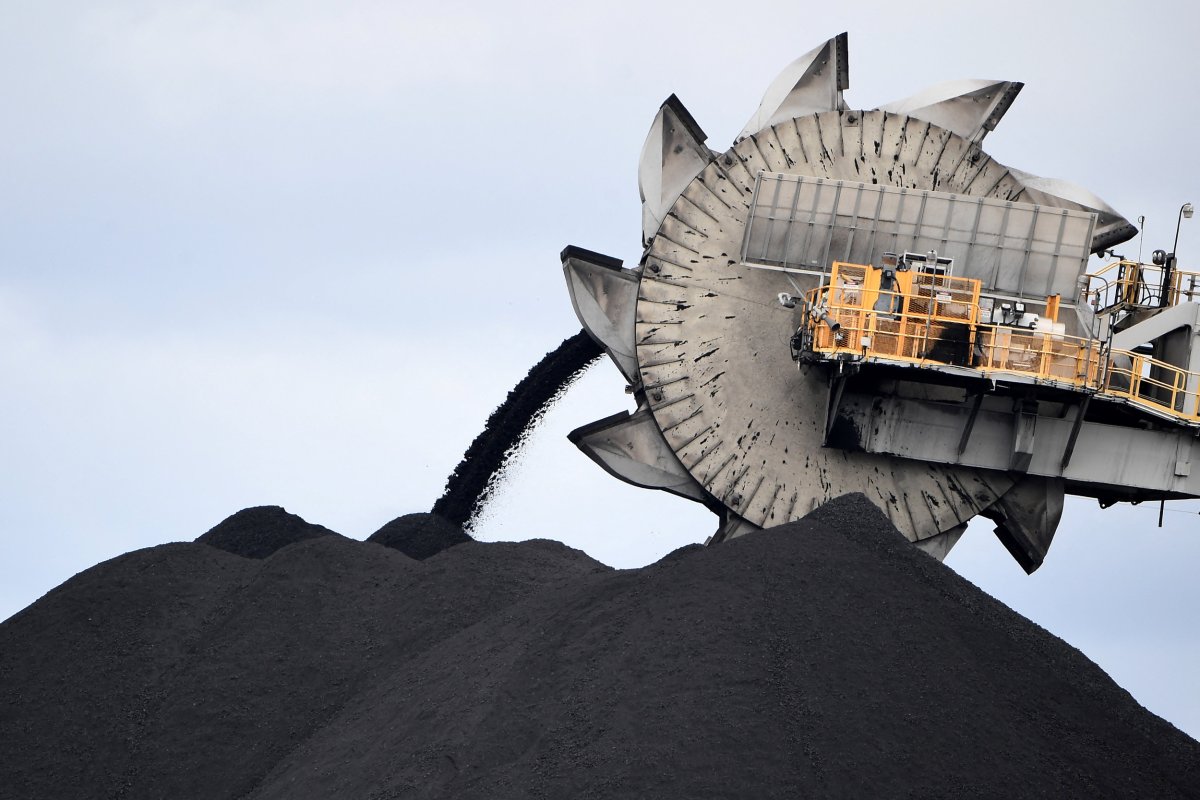
An illustrative image from November 5, 2021, showing coal mining in Newcastle, Australia. Getty Images
Why It Matters

Russia is the world's sixth biggest coal producer and the industry is critical for dozens of single industry towns that depend on the sector. While a smaller contributor to Russia's GDP than its more lucrative energy exports of oil and gas, a slump in coal exports is the latest symptom of the sanctions-hit economy.
What To Know

After Russia's invasion of Ukraine, Europe announced sanctions in April 2022 that included a ban on coal imports from Russia, dealing a severe blow to the industry.

In turn, Russia looked to other markets in China and India but both countries reduced their imports due to sanctions and a wish to diversify suppliers.

Last year, Russia's seaborne coal export revenues fell 22 percent to $24.9 billion compared with 2023's $32.2 billion. Meanwhile, export volumes dropped 15 percent in the same timeframe, according to figures from the CREA.

It also said that export volumes to China have slumped by a "drastic" one fifth (20 percent) to 16 million tonnes and fell by over a third (35 percent) to South Korea, by magnitude of 8.4 million tonnes.

Citing a coal industry source, Kommersant reported that in 2024 all companies in Russia's coal industry had reported losses and that this year, assets that are not part of the largest holdings will not be able to cope with the debt burden.

All grades of thermal coal—used to fuel turbines and electricity—have fetched below $35 per ton for a year, which is only the cost of production.

It means that only producers of more expensive metallurgical coal—used in iron and steelmaking—as well as firms closer to ports and large exporters that have their own logistics can survive, the publication said.

Revenues To China Plunge

Russia's coal industry recorded a cumulative loss of 91 billion rubles ($1 billion) from January to September 2024. Nearly half its coal enterprises are unprofitable, prompting President Vladimir Putin to order emergency support measures in December, Interfax reported.

Levi, CREA's Europe-Russia policy and energy analysis team lead, said Russia's current infrastructure is struggling to cope with current volumes of the country's coal exports. Given that all companies in the industry reported losses last year, it is no surprise there is a lack of interest in bringing new assets to the market.

With producers facing small profit margins due to a number of challenges, "As a result, Russian exporters have been compelled to scale back shipments across all routes," Levi told Newsweek.

Earlier this month it was reported that bankruptcy proceedings are underway at the Inskaya mine in the Kemerovo region at the request of the Federal Tax Service due to a debt of 230 million rubles ($2.3 million).

The government is examining bankruptcy proceedings across the sector and an assessment of the state of the industry will be presented to Deputy Prime Minister Alexander Novak, Kommersant said.

Sergey Uchitel, a partner at the Pen & Paper law firm, told Kommersant that most bankruptcy procedures in the coal industry involve liquidation rather than rehabilitation as few firms restore solvency and assets can be redistributed through a sale.
What Are People Saying

Kommersant: "(Government) ministries are working on measures to support the coal industry, which is in crisis against the backdrop of low world prices."

Levi told Newsweek: "The decline in Russian coal export volumes is attributed to significant logistical challenges, international sanctions, low global prices and high production costs, leaving many producers exporting coal with minimal or negative profit margins."

What Happens Next

Russia is losing out because its coal is too expensive and new sanctions could make exports even less attractive to China this year, which is likely to put further pressure on the industry in 2025, industry outlet mining.com reported.


Kremlin says Ukraine conflict is about national security, not oil


A view shows buildings damaged during a Russian missile attack, amid Russia's attack on Ukraine, in Zaporizhzhia, Ukraine January 23, 2025. REUTERS/Stringer/File Photo

UPDATED Jan 24, 2025, 

MOSCOW - The Ukraine war is about Russia's national security and not about oil prices, the Kremlin said on Friday after U.S. Donald Trump called for a cut in the price of oil.

Trump on Thursday said he will demand Saudi Arabia and OPEC bring down the cost of oil.

Kremlin spokesman Dmitry Peskov, responding to a question about those comments, said the issues for Russia in Ukraine were about national security, threats to Russians living there, and the refusal of the United States and Europe to listen to Russia's concerns.

Ukraine and its Western supporters reject those arguments, saying Russia launched the war as an imperial-style land grab. 

REUTERS

Amnesty International


Afghanistan: ICC Prosecutor’s application for arrest warrants against Taliban leaders is an important step towards justice for Afghan women, girls and LGBTQI persons

Responding to the application filed yesterday by the Office of the Prosecutor of the International Criminal Court (ICC) for arrest warrants against the Taliban Supreme Leader, Haibatullah Akhundzada, and the Taliban Chief Justice, Abdul Hakim Haqqani, for their suspected responsibility for the crime against humanity of gender persecution in Afghanistan, Agnès Callamard, Secretary General at Amnesty International, said:

“The announcement by the ICC Prosecutor is an important development that gives hope, inside and outside the country to Afghan women, girls, as well as those persecuted on the basis of gender identity or expression, such as members of the LGBTQI community. This is a crucial step to hold accountable all those allegedly responsible for the gender-based deprivation of fundamental rights to education, to free movement and free expression, to private and family life, to free assembly, and to physical integrity and autonomy. Amnesty International also calls on the international community to recognize gender apartheid as a crime under international law in order to strengthen efforts to combat institutionalized regimes of systematic oppression and domination imposed on the grounds of gender.

The announcement by the ICC Prosecutor is an important development that gives hope, inside and outside the country to Afghan women, girls, as well as those persecuted on the basis of gender identity or expression, such as members of the LGBTQI community.

Agnès Callamard, Secretary General at Amnesty International

“The Prosecutor has acknowledged that the charges represent only a fraction of the victimization that has occurred all over Afghanistan for more than two years and affected much of the population. It is incumbent on the ICC and the whole international community to urgently and significantly scale-up efforts to address gender persecution and other crimes under international law committed in Afghanistan as access to justice in the country remains significantly overdue.

“We strongly urge the ICC Prosecutor to also expand his investigations in Afghanistan to include all serious violations from May 2003 onwards that amount to crimes under international law, including extrajudicial killings, torture and other ill-treatment, arbitrary arrest and detention, enforced disappearance, the massacre of civilians, and the ongoing systematic and widespread attacks against the Hazara ethnic group and religious minorities by the Islamic State of Khorasan Province.

“Amnesty International also calls on the ICC Prosecutor to reconsider his 2021 decision to deprioritize investigations into war crimes allegedly committed by the US military, CIA personnel, and other international forces who had a presence in the country, and the former government security apparatus. This decision risks contributing to perceptions of a selective approach to international justice which prioritizes the interests of powerful states and their allies over the right to justice of victims of crimes under international law.

Background  

On 23 January, the Office of the Prosecutor of the ICC issued a statement announcing the applications for arrest warrants in the situation in Afghanistan. The Prosecutor’s applications for arrest warrants will be considered by ICC Pre-Trial Chamber judges, to determine whether they establish reasonable grounds to believe that the named individuals committed the alleged crimes. The Office of the Prosecutor also stated that investigations are ongoing. This means that further applications, both for other persons and alleged crimes, could still follow.

In 2023, Amnesty International published its report, The Taliban’s war on women, on the crime against humanity of gender persecution against women and girls in Afghanistan. The 2022 report, Death in Slow Motion: Women and Girls Under Taliban Rule,alsodocumented the Taliban’s widespread, systematic, and intentional attacks on the rights of women, together with the use of torture and other ill-treatment and enforced disappearance. The discriminatory restrictions on the rights of women and girls affect all spheres of their lives, and they are institutionalized through the Taliban’s policies, decisions, and laws.

Afghanistan had been under preliminary examination by the ICC Prosecutor from 2007 to 2017. In 2022, the Prosecutor resumed its investigation into the situation of Afghanistan after the Court concluded that there was no genuine investigation at the domestic level. In fact, since the Taliban returned to power, they have destroyed avenues for access to fair trial and abolished the constitution and laws that were in force prior to their return.