Saturday, February 01, 2025


How to Get Ready for the U.S. Coast Guard's Cybersecurity Rule

iStock photo of digits
iStock / JuSun

Published Jan 30, 2025 7:31 PM by Andrew R. Lee, Richard D. Bertram, James A. Kearns and Ilsa Luther


On January 17, the US Coast Guard released its much-anticipated final rule on cybersecurity in the US Marine Transportation System, which establishes mandatory minimum cybersecurity requirements for the maritime sector. The new regulations are effective July 16, 2025 and represent the most significant maritime cybersecurity regulations to date. Affected entities should review their existing policies, identify any gaps or deficiencies, and implement compliance procedures.

I. Scope and Applicability

The primary goal of the final rule is to enhance the cybersecurity of the US Marine Transportation System. The new regulations establish minimum mandatory requirements for US flag vessels, Outer Continental Shelf (OCS) facilities, and facilities subject to the Maritime Transportation Security Act of 2002. The rule aims to address the increasing risks posed by cyber threats due to the growing reliance on interconnected digital systems within the maritime industry. It emphasizes both preventing cyber incidents and preparing to respond to them effectively.

The rule applies to:

a. US flag vessels subject to 33 CFR part 104:

  • Cargo vessels greater than 100 gross tons
  • Commercial passenger vessels certified to carry more than 150 passengers
  • Offshore Supply Vessels (OSVs)
  • Mobile Offshore Drilling Units (MODUs)
  • Towing vessels more than 26 feet long engaged in towing certain dangerous cargo barges
  • Cruise ships and passenger vessels carrying more than 12 passengers on international voyages

b. Facilities subject to 33 CFR part 105:

  • Container terminals
  • Chemical facilities with waterfront access
  • Petroleum terminals
  • Cruise ship terminals
  • Bulk liquid transfer facilities
  • LNG/LPG terminals
  • Barge fleeting facilities handling dangerous cargo
  • Facilities that receive vessels carrying more than 150 passengers
  • Marine cargo terminals otherwise subject to the Maritime Transportation Security of 2002

c. OCS facilities subject to 33 CFR part 106:

  • Offshore oil and gas production platforms
  • Offshore drilling rigs
  • Floating production storage and offloading units (FPSOs)
  • Deepwater ports
  • Offshore wind energy facilities
  • Offshore loading/unloading terminals

II. Core Requirements

The cybersecurity plan must include measures for account security (e.g., automatic account lockout, strong passwords, multifactor authentication), device security (e.g., approved hardware/software lists, disabling executable code), and data security (e.g., secured logging, data encryption). Entities must also create or implement the following:

a. Cybersecurity Officer 

Each covered entity must designate a Cybersecurity Officer (CySO) responsible for implementing and maintaining cybersecurity requirements. The rule allows for designation of alternate CySOs and permits one individual to serve multiple vessels or facilities, providing welcome flexibility for operators.

b. Cybersecurity Plans and Assessments — Organizations must develop and maintain the following:

  • A comprehensive Cybersecurity Plan
  • A separate Cyber Incident Response Plan
  • Regular cybersecurity assessments
  • Plans must be submitted to the Coast Guard for review within 24 months of the rule’s effective date.

c. Training and Exercises — The rule mandates the following:

  • Cybersecurity training for all personnel using IT/OT systems beginning July 17, 2025
  • Two cybersecurity drills annually
  • Regular penetration testing aligned with plan renewal cycles

d. Technical Controls — Required security measures include the following:

  • Account security controls including multifactor authentication
  • Device security measures and approved hardware/software lists
  • Data encryption and secure log management
  • Network segmentation and monitoring
  • Supply chain security requirements

III. Implementation Timeline

Key phase-in compliance dates include:

  • Rule effective date: July 16, 2025
  • Training requirements begin: July 17, 2025
  • Initial cybersecurity assessment: Due by July 16, 2027
  • Cybersecurity Plan submission: Due by July 16, 2027

The Coast Guard is seeking comments on extending implementation periods for the new requirements by two to five years for US flag vessels. Comments are due no later than March 18, 2025. After review of these comments, the Coast Guard may issue a future rule to allow additional time for US flag vessels to implement the new regulations.

IV. Harmonization with Other Requirements

The Coast Guard has worked to align these requirements with other cybersecurity regulations, including the Cybersecurity and Infrastructure Security Agency’s (CISA) Cyber Incident Reporting for Critical Infrastructure Act of 2022 reporting requirements. The rule establishes the National Response Center (NRC) as the primary reporting channel for maritime cyber incidents, simplifying compliance for regulated entities.

V. Basic Questions and Answers

What are the mandatory cybersecurity measures outlined in the rule? 

Owners and operators must implement a range of cybersecurity measures that are based on “cybersecurity performance goals” developed by CISA. This includes vulnerability identification of critical IT and OT systems, addressing known exploited vulnerabilities in those critical systems, and conducting penetration testing in conjunction with renewing the Cybersecurity Plan.

What constitutes a reportable cyber incident, and to whom do I report it? 

A reportable cyber incident is defined as any incident leading to substantial loss of confidentiality, integrity, or availability of a covered system; to disruption to business operations; to unauthorized access to nonpublic personal information of a large number of individuals; or to operational disruption of critical infrastructure. Such an incident also includes any event that may lead to a “transportation security incident.” Such incidents must be reported to the NRC.

What is the Coast Guard’s approach to compliance and enforcement of this new rule? 

The rule takes a performance-based approach, meaning that it focuses on outcomes rather than prescribing specific technical solutions, thus providing some flexibility to the entities in meeting the requirements. However, the rule does not specify the methods of enforcement, and the Coast Guard is currently working with policymakers to define the compliance criteria. The Coast Guard will address those questions at upcoming symposiums. Noncompliance with the rule could lead to penalties, legal action, and financial losses.

Is there any flexibility or possibility of waivers in complying with this rule? 

Yes. After completing a cybersecurity assessment, owners and operators can seek a waiver or an equivalence determination for the requirements, based on the waiver and equivalency provisions of 33 CFR parts 104, 105, and 106. Owners and operators must also notify the Coast Guard of temporary deviations from the requirements.

VI. Key Takeaways

  • Begin preparation now — the 24-month implementation period will pass quickly given the scope of required changes.
  • Evaluate current cybersecurity staffing and capabilities against new CySO requirements.
  • Review existing security measures against the detailed technical requirements.
  • Plan for increased training and exercise obligations.
  • Consider whether to comment on the proposed implementation extension for vessels.

Andrew R. Lee, CIPP/US, is a partner in Jones Walker’s Litigation Practice Group and co-leader of the privacy, data security, and artificial intelligence team. 

Richard D. Bertram is a partner in Jones Walker’s Maritime Practice Group and leader of the maritime regulatory team. H

James A. Kearns is special counsel in Jones Walker's Maritime Practice Group. 

Ilsa Luther is an associate in Jones Walker’s Maritime Practice Group. 

The opinions expressed herein are the author's and not necessarily those of The Maritime Executive.


WWIII


Marcos: Manila Will Give Up Missiles if China Stops Maritime Aggression

U.S. Army Midrange Capability (Typhon) launcher arrives at an airfield in Luzon (U.S. Army file image)
U.S. Army Typhon launcher system arrives at an airfield in Luzon (U.S. Army file image)

Published Jan 30, 2025 10:47 PM by The Maritime Executive


The Chinese government has repeatedly criticized the Philippines for hosting the U.S.-built Typhon missile system, a mobile launcher that can be used against land, air and naval targets. On Thursday, Philippine President Ferdinand Marcos Jr. issued an offer: stop aggression in Philippine waters, and Manila will send back the missile system. 

"Let's make a deal with China: stop claiming our territory, stop harassing our fishermen and let them have a living, stop ramming our boats, stop water cannoning our people, stop firing lasers at us and stop your aggressive and coercive behavior and I'll return the Typhon missiles," he told reporters. "I don't understand the comments on the Typhon missile system. We don't make any comments on their missile systems and their missile systems are a thousand times more powerful than what we have." 

China claims almost all of the South China Sea as its own, including a large swath of the Philippines' western exclusive economic zone (EEZ). The China Coast Guard has often used physical tactics to block Philippine vessels' movements, including shouldering, water-cannoning, aggressive maneuvering and at least one opposed boarding. So far, Manila has refrained from responding with force.  

The Typhon is a mobile launcher for SM-6 and Tomahawk missiles. With modern variants of the Tomahawk, it can strike naval and land-based targets at very long range, up to about 1,000 miles. This is enough to reach mainland China from northern Luzon.  

Typhon may have some deterrent effect in the South China Sea, but China has a steep advantage with a vast ballistic missile force, a network of strategic airbases and the world's largest navy. It also has the world's largest coast guard, which has steadily ratcheted up pressure on Philippine forces, including a new presence operation in Philippine waters (below).


Rescue Plan Emerges for Germany’s FSG and Nobiskrug Shipyards

German shipbuilder
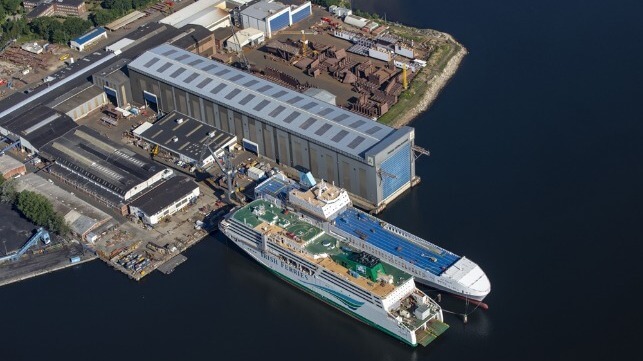
Rescue plan was agreed to save the operations of Germany's FSG shipbuilder (FSG file photo)

Published Jan 31, 2025 2:44 PM by The Maritime Executive


At a press conference on Friday, January 31, at the now closed FSG Shipyard (Flensburger Schiffbau-Gesellschaft) the provisional insolvency administrators announced their rescue plan for the group’s two shipyard groups. They have reached terms for the two divisions to be sold independently of each other but also reported that investor Lars Windhorst continues to oppose the bankruptcy of the shipyard group.

“We have managed to find two renowned strategic investors for FSG and Nobiskrug within the extremely tight time frame of just seven weeks,” said lawyer Christoph Morgen who is the provisional insolvency administrator for FSG. He also oversaw the previous insolvency of the company and the sale of the former MW Werften. According to Morgen, the best outcome has been reached for FSG ensuring the yard will resume work.

The group was forced into bankruptcy in December 2024 by insurance administrators with reports employees had not been paid for weeks. There are also reports of a long list of creditors for the shipyards with many suppliers not having been paid in months. Windhorst had controlled the yards since 2000.

Under the terms of the provisional agreement, the Heinrich R?nner Group from Bremerhaven will acquire the FSG shipyard. The yard has been building Ro/Ro ferries and currently has an incomplete ferry in the yard for Australia’s Searoad. The Australian company is reported to support the deal and has already entered into a contract with R?nner for the completion of the ferry.

R?nner is active in shipbuilding as well as steel construction. The company acquired the Lloyd Werft shipyard in Bremerhaven in 2022 during the insolvency proceedings for Genting Hong Kong and MV Werften.

The fate of the Nobiskrug operation is less clear. Lawyer Hendrick Gittermann is the provision insolvency administrator for the yards which specialize in luxury yacht construction. He reported that a notarized offer had been received from the Lürssen group, another of Germany’s large yacht shipbuilding groups. He reported that under the terms of the agreement, Lürssen would acquire Nobiskrug. Initially, it appears work and employees will be transferred to the neighboring Lürssen-Kr?ger shipyard.

During the press conference, it was highlighted that neither of the shipyards can immediately resume work due to permitting and other considerations. Morgen said the deal would signal the start of investments by the acquirers to restore the operations. 

Employees of the bankrupt companies have agreed to the formation of a transfer company. It is a German system that provides for 80 percent of their historic wages along with retraining. The transfer company will run for four months with 310 employees from FSG and 140 from Nobiskrug. The intent is for them to transfer back to the shipyards.

Morgen reported however that late last night he and the judge overseeing the insolvency received a communication from Lars Windhorst. He reportedly offered to make available €50 million ($52 million) in a trust and would resume his role as managing director of FSG Group and the two shipyard groups.

The administrators said they viewed this as a delaying tactic noting that the insolvency had progressed and could not be stopped. They plan to present the plan to the court on February 1 and begin the insolvency process. Once the court rules, Morgen and Gittermann will have sole authority over the shipyards. They said as early as next week they plan to accept the offers from R?nner and Lürssen.

Government officials hailed the agreements as a good outcome that would preserve jobs and the shipbuilding industry. Prime Minister Daniel Günther of the Schleswig-Holstein state and representatives of the union IG Metall joined in the press conference expressing their support for the deal.

FSG however continues to face a lack of orders to ensure its long-term future. R?nner reported it is already in discussions with Searoad for a second ferry. They said the future emphasis would be on new ship construction contracts but they could also look to diversify such as with the construction of components for offshore wind power.

The two shipyard groups are among the oldest operating in Germany. Flensburger Schiffbau Gesellschaft traces its roots to 1872 while Norbiskrug traces its origins to 1895 and was officially incorporated in 1905. It built commercial ships before taking its first yacht contract in 2000. Today it is recognized as one of the leading builders of luxury yachts.


Historic Washington State Ferry Cheats Scrappers to Become Floating Office

Washington State Ferry
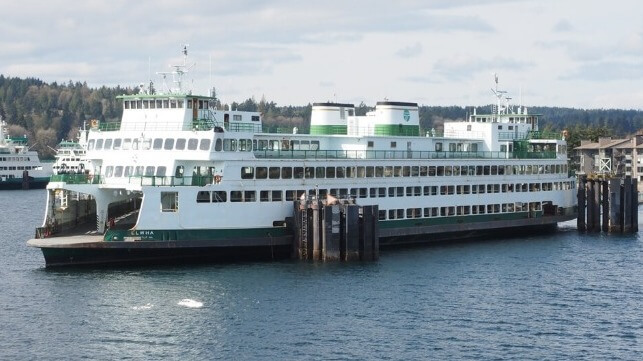
After a close call with scrappers, Elwha which was retired in 2020 will now be repurposed as a floating office and warehouse (Takeshita Kenji - CC BY-SA 3.0)

Published Jan 31, 2025 4:27 PM by The Maritime Executive


One of the storied ferries familiar to residents of Washington State for its more than 50 years of service is cheating the scrappers and by a quirk of fate will be saved through creative reuse.  Everett Ship Repair and Washington State Ferries have reached terms to see the Elwha, which was built in 1967, repurposed at the shipyard.

Last fall, Elwha, which had been retired in 2020, was due to slip away on a towline bound for dismantling in Ecuador. She had been sold for $100,000 and a tug arrived to start her final voyage along with another WSF ferry. They got the boats away from the maintenance dock in Bainbridge, Washington, but that’s when things started to go wrong.

According to reports the hookup failed. Then there were reports of problems with the 60-year-old tug that was hired for the 34-day trip. The ferries were brought back to the maintenance dock while rumors swirled in the media that the operator had abandoned the crew which was made up of people from Peru, Colombia, and Panama. U.S. Customs and Border Protection stepped in detaining the four crewmembers and ordering them deported.

Embarrassed by the ordeal, Washington State Ferries reported the deal was canceled. The ferry operator however wanted to sell the decommissioned vessels to free more dock space at its Eagle Harbor Maintenance Facility for planned and unplanned maintenance on its current fleet. They reported the two ferries were back up for sale.

Everett Ship Repair closed the deal this week to buy the Elwha for $100,000. According to the reports, the repair yard plans to modify and convert the ferry to a floating office and warehouse space. A tug was due to arrive on Thursday, January 30, to begin preparation to move the ferry to the shipyard.

“The Elwha has been part of Washington State Ferry history since 1968, and we're excited to see one of our ferries with so much history and memories for millions of passengers is being repurposed locally. It won't be the Elwha we've all come to know and appreciate, but I'm confident it's in good hands with a local shipyard,” said WSF Assistant Secretary Steve Nevey.

She was one of four 144-car Super-class ferries. It measures 382 feet and is 2,800 gross tons and when she was introduced, Elwha was considered to be one of the most modern ferries in service. She started service from Seattle to Bainbridge but was replaced by a larger ferry in 1972. Next, she was used to fill in on various routes for other ships that were undergoing maintenance and finally in the 1980s took up her permanent assignment sailing to British Columbia. She became a fixture of the route before her retirement. Two other ships of the class, Kaleetan and Yakima, are still in service.

After sitting at the repair facility, WSF was anxious to make space. They sold Elwha and a smaller ferry last year and reported that another retired ferry was also slated to be sold. The near-miss with the scrappers was not the only close call for Elwha during her long career. She went aground in 1983, with reports her captain steered off course to give a visitor a better view of her waterfront home reports the outlet MyNorthwest. In 1990, the ferry broke away from her dock in a storm and was damaged as she slammed into a concrete pier. There were also reports of several docking failures and problems during its career.

Washington State Ferries reports it plans to offer two other retired ferries, Klahowya and Hyak, for sale to clear more space at its repair yard. Klahowya was built in 1958 and is an 87-car Evergreen State-class ferry that was decommissioned on July 1, 2017. Hyak is a sister to Elwha that was decommissioned on June 30, 2019.

Top photo: Takeshita Kenji - CC BY-SA 3.0


Royal Caribbean’s Second-Generation Innovator Departs for Scrap

Song of America cruise ship
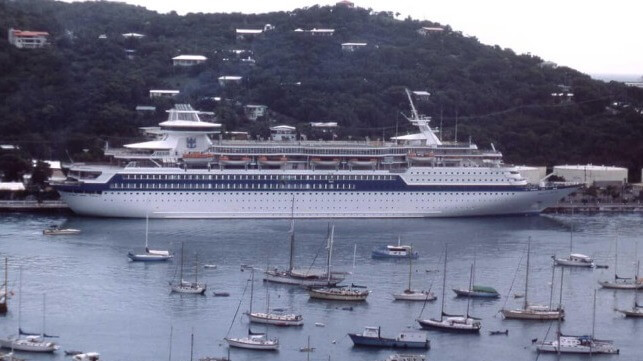
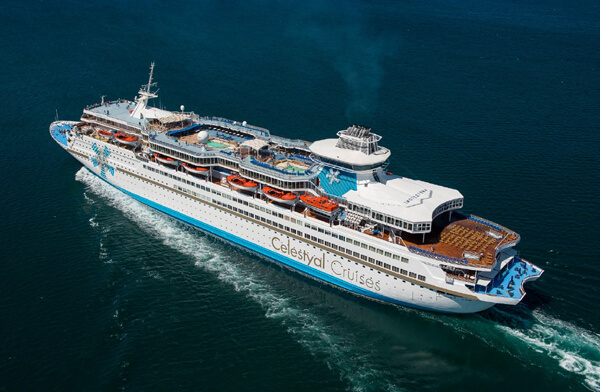
Song of America introduced in 1982 was one of the largest cruise ships in the industry (Allan Jordan)

Published Jan 31, 2025 11:33 AM by The Maritime Executive


Another of the last survivors from the second generation of the modern cruise ship era and a pioneer for Royal Caribbean Cruise Line has quietly slipped away on her final voyage. Introduced in 1982 as the Song of America (37,500 gross tons), she was one of the largest cruise ships in the world and an innovator that would see 40 years of service first in the American market, later in Europe, and finally in the Greek Islands.

She had been retired in 2023 by her last owner, Greece’s Celesytal Cruises which had operated her for 11 years with her final name of Celestyal Olympia. She was sold in early 2024 to a flag of convivence company which renamed her Bella Fortuna and shortly after she departed for an anchorage off the UAE flying the flag of Liberia. It is often a way stop on a one-way trip to be recycled while getting the ships outside the European Union and the restrictions on licensed scrappers.

As of the first of the year, the cruise ship’s name was shortened to Fortu and her flag moved to Comoros. She departed the UAE on January 22 with her status listed in the databases as “to be broken up.” She is bound it appears to beaches of India’s infamous Alang.

When she was introduced in 1982, Royal Caribbean boasted that she was state-of-the-art. In the first preview brochure for consumers released in 1981, they wrote, “Every innovative maritime feature, every one of ‘tomorrow’s’ cruise concepts, will be part of Song of America today.” The company had gone into business a decade earlier the brainchild of an American entrepreneur Edwin Stephan with investments from Norway’s Wilhelmsen and I. M. Skaugen, and later Gotaas-Larsen. The first ships were 18,500 gross tons and embodied Stephan’s vision of “propelled hotels.”


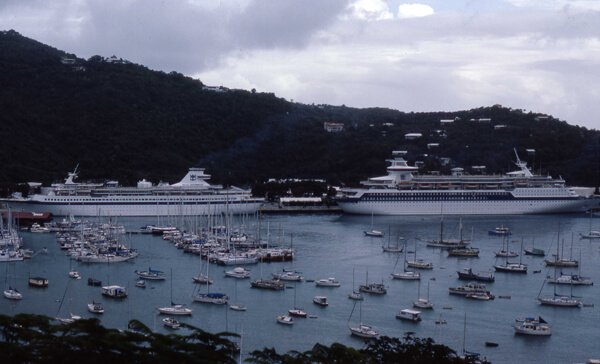
Royal Caribbean first two generations: Nordic Prince (left) after the 1980 stretch and Song of America (right) (Allan Jordan photo)


Royal Caribbean was growing rapidly like all the cruise lines in the 1970s but had fallen behind Carnival Cruise Lines which converted a liner into the 38,000 gross ton Festivale and Norwegian Caribbean Lines which converted the superliner France, the longest passenger ship in the world, into the 70,000 gross ton ss Norway. First to increase capacity, Royal Caribbean stretched two of its ships but instead of rebuilding its third smaller ship, turned to the famed Wartsila shipyard in Finland to build what became Song of America.

The new ship was 705 feet in length with accommodations for 1,400 passengers and 500 crew. Externally she was sleek and advanced designs including taking the cantilevered lounge on the ship’s funnel by making it larger, with an interior entrance and elevator, and wrapped fully around the funnel. She used the design concept of “vertical separation” that places the public spaces and lounges aft and cabins mostly forward. She also innovated with a half (tween) deck of cabins in front of the extra-height main lounges. Passenger cabins however were still the small, standardized box Stephan had envisioned to encourage passengers to spend their time on deck or in the bars and lounges. (There was no casino in 1982, only a handful of slot machines placed in a discreet hallway.)

Keeping with a Royal Caribbean style her public spaces were all named from Broadway shows. The lounges were Can Can, Oklahoma, and Guys and Dolls, while the dining room was Madame Butterfly. She took over the “milk run” as the weekly cruises from Miami to Nassau, San Juan, and St. Thomas were known and was an instant success due to her comforts. 
 
Song of America was part of the second generation of modern cruise ships all of which were around 40,000 gross tons and had accommodations for 1,000 or more passengers. They were larger than the first generation introduced in the late 1960s and provided a stepping stone to larger and finally the mega cruise ships of today.

The ship was christened by renowned American opera singer Beverly Sills, and on her maiden voyage the passenger list included former U.S. President Jimmy Carter and his wife Rosalyn. Just six years later, Song of America would be eclipsed by Royal Caribbean’s new 70,000 gross ton Sovereign of the Seas, but she remained a workhorse for the company. She was also among the company’s first ships to homeport beyond Miami.


Remarkably unchanged she spent her last decade in the Greek islands as Celestyal Olympia (Celestyal Cruises)


Song of America left Royal Caribbean after just 17 years. She went to a UK operator and was renamed Sun Bird. She helped to build the UK market before being sold to the Cypriot firm Louis Cruises. Instead, she would sail on charter to another British firm Thomson Holidays as the Thomson Destiny. As part of the TUI family, Thomson evolved into Marella Cruises but before the transition seeking to modernize the fleet the now 30-year-old cruise ship was returned to her owners. She became the Louis Olympia and later Celestyal Olympia when the company was rebranded. She cruised the Greek Islands in the summer and spent winters in layup.  

Remarkably unchanged since her introduction in 1982, she was finally retired late in 2023. She had outlived most of the second and even the third generation of modern purpose-built cruise ships. With her goes the link to the heady days of growth, but before cruise ships had water slides and water parks or any of the modern amusements. Passengers lounged in the sun by day, saw a floor show or a movie in the evening, and enjoyed their time at sea. She was a pioneer and then a throwback to the simpler, earlier days of cruising.


 ECOCIDE

Two Sunken Tankers at Kerch Strait Were Refueling Russia's Dark Fleet

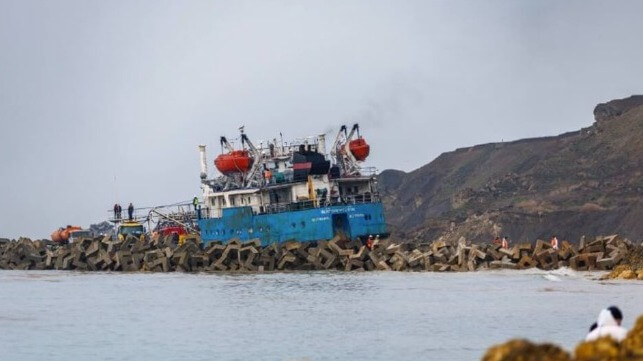
The stern section of Volgoneft-239 aground in the Kerch Strait (Morspas)
The broken-off stern section of Volgoneft-239, aground in the Kerch Strait (Morspas)

Published Jan 30, 2025 8:36 PM by The Maritime Executive


The two river-sea tankers that broke up near the Kerch Strait last month were part of a flotilla that bunkers Russia's "dark fleet," including at least three U.S.-sanctioned deep sea tankers, according to Russian investigative news outlet IStories. Many of their sister ships continue in the same trade today, and many are operating beyond the limits outlined in their registration papers, documents obtained by the outlet suggest

Volgoneft-212 and -239 were built between 1969 and 1973, produced under a major Soviet construction program that delivered hundreds of ships for the Black Sea-Volga "river-sea" tanker and freighter fleet. Both broke up in a storm on December 15, spilling an estimated 2,000-3,000 tonnes of bunker fuel into the Black Sea. Cleanup efforts are still under way. 

"The problem with the Volgoneft type vessels has been known for a long time. These vessels are declared as 'river-sea' class, but in fact in Soviet times they were used for river shipping, at most with an exit to the bay at the river mouth. They were not intended for full-fledged sea shipping," said Yuri Kurnakov, chairman of Russia's Marine Trade Union, in an interview in December. 

In 2013, Russian Marine Engineering Bureau director Gennady Egorov published a technical review of the class' design and its maintenance challenges. The Soviet naval architects who designed the Volgoneft tanker fleet relied on a mix of standard plate and thinner, higher-strength steel to reduce weight for the shallow-draft riverine vessels, increasing their cargo capacity but creating areas that were prone to serious cracking. All of these ships have spent 50 years or more transiting through a series of locks on the Volga, and after decades of contact with fendering, their hull plating is deeply indented between the scantlings. In a refit program in the 2010s, a few of these tankers had the entire cargo section cropped out and replaced due to corrosion and cracking - everything between the pump room and the forepeak bulkhead.

"In the long term, ensuring sustainable safe transportation of oil and oil products on tankers of mixed river-sea navigation is possible only through new shipbuilding," concluded Egorov, writing 12 years ago. 

According to IStories, these aging riverine tankers are now employed to transport thousands of tonnes of bunker fuel from Russian refineries to a transshipment zone off Kavkaz, at the southern entrance to the Kerch Strait. There, they rendezvous with dark fleet tankers or - more often - with a designated storage and offloading tanker, identified as the Firn (ex name SCF Caucasus). The fuel carried by the Volgoneft fleet helps Russia's sanctions-busting oil export tankers to keep moving, according to IStories, including the dark fleet vessels Triumph, NS Spirit, Utaki, Beks Iron and Sezar. In all, an estimated 660,000 tonnes of bunker fuel moved from refineries to "shadow fleet" vessels aboard the Volgoneft fleet over the last year, the outlet concluded. 

Triumph and NS Silver are both under U.S. sanctions. In addition, Firn has transloaded bunker fuel from the Volgoneft fleet onto at least one other sanctioned tanker, the Mum.  


Ørsted Ousts CEO as Pressure Continues in Offshore Wind Sector

Orsted
Orsted continues to face challenges in its offshore wind portfolio and other renewable projects

 (Orsted)

Published Jan 31, 2025 6:16 PM by The Maritime Executive


Danish renewable energy giant Ørsted reported today, January 31, a change in CEOs as the company continues to struggle with pressures in the offshore wind sector. The news of the change in leadership came just days after Ørsted reported it would be taking a further $1.7 billion in impairment charges related to its U.S. offshore wind projects following a massive $5.6 billion write-down in November 2023.

The board of directors announced that the company was replacing Mads Nipper who had led the company as Group President and CEO since January 2021. They reported he is stepping down effective tomorrow, February 1, but acknowledged during his four-year tenure Ørsted’s installed renewable capacity grew from 11.3 GW to the current 18.2 GW in 2025.

“The renewable energy market has fundamentally changed since January 2021. The impacts on our business of the increasingly challenging situation in the offshore wind industry, ranging from supply chain bottlenecks, interest rate increases, to a changing regulatory landscape, mean that our focus has shifted. Therefore, the board has today agreed with Mads Nipper that it’s the right time for him to step down, and the board has appointed Rasmus Errboe to take over as CEO,” announced Lene Skole, Chair of Ørsted’s Board of Directors.  

Analysts highlighted that Ørsted has lost more than 80 percent of its market value from its peak. In 2021, the stock was trading at nearly $75 a share making the company worth nearly $100 billion while today the shares closed at $12.82 giving the company a market value of just $15 billion.

Despite the significant write-down charges due to the impairment of assets, Ørsted issued preliminary 2024 results reporting an operating profit (EBITDA) for 2024 of $3.5 billion. However, it said that would be after a $1.7 billion charge due to long-dated U.S. interest rates, reduced value of its subsea leases located off the coasts of New Jersey, Maryland, and Delaware, and mounting construction costs and delays for Sunrise Wind, located in the New York Bight, which is following Revolution Wind, located off Connecticut and Rhode Island, into construction.

Nipper called the challenges “very disappointing” while saying the company remained committed to the U.S. market. The 2023 charges were due to the decision to pull out of two late-stage planned large wind farm projects off the coast of New Jersey. The 2023 charges led to the ouster of the group’s Chief Financial Officer Daniel Lerup and its Chief Operations Officer Richard Hunter.

The company has continued to realign its global portfolio but just this week announced it was proceeding with the construction of the largest wind farm in the Baltic. Other disappointments included the shelving in August 2024 of an ambitious methanol production plant which would have been a supplier to the shipping industry,

The new CEO, Rasmus Errboe, joined the company in 2012 and became Deputy CEO and Chief Commercial Officer after the reorganization in 2023. 

Speaking about Errboe, board chair Skole said, “As our Deputy CEO and CCO, and former Regional Head of our European market and former CFO for the global offshore business, he has a deep understanding of our business and an extensive knowledge of the energy industry. I’m therefore convinced that Rasmus is the right person to lead the company through the challenges facing the industry and Ørsted.”

Before being appointed Deputy CEO and Chief Commercial Officer, Rasmus Errboe held the positions of Interim Group CFO, Regional Head of Europe, Regional Head of Continental Europe, CFO for the Offshore business unit globally, and Head of Ørsted’s Group M&A department, and he was overall responsible for the IPO of Ørsted in 2016 and the divestment and carve-out of Ørsted’s Oil & Gas business in 2017.

Ørsted emerged as the successor to the former Danish Oil and Natural Gas as the focus shifted from fossil fuels to renewables. The company is majority-owned by the Danish government. In late December 2024, it was announced that Equinor, the Norwegian state energy company, had increased its ownership stake to 10 percent of Ørsted.

The company is scheduled to publish its annual report for 2024 on Thursday, February 6. It will be hosting a presentation to analysts and investors.


Norway Releases Reefer Cargo Ship After Investigation into Cable Damage

Norwegian reefer cargo ship
Norwegian-owned reefer cargo ship was brought to port as part of the investigation into cable damage (Fjord Shipping Management)

Published Jan 31, 2025 10:52 AM by The Maritime Executive


Norwegian authorities late on Friday, January 31, reported they have released a Norwegian-owned reefer cargo ship used in the fish trade after a day-long investigation. It was the latest vessel to be detained in the growing investigations into damaged cables in the Baltic. Norwegian police confirmed in a briefing this morning that they had directed the vessel, the Silver Dania, into the port of Tromsø and were aboard searching the vessel and interviewing the Russian crew.

The police reported that they were acting on a court request from Latvian authorities which made the application to Norway to stop the vessel and launch the investigation. Speaking at a press briefing on Friday, January 31, the Troms Police District said it had responded to the court order while noting the vessel is one of several currently being investigated.

Latvia suspected the Norwegian ship may have had a role in the damage discovered on Sunday, January 26, to a fiber optic cable owned by Latvia’s state radio and TV company. The cable runs between Ventspils, Latvia and the Swedish Gotland island. Sweden earlier in the week also detained a Bulgarian-owned bulker Vezhen accusing the vessel of dragging its anchor and damaging the cable.

"Troms police district has now conducted a number of investigative steps and secured what we see as necessary considering the request from Latvia. The investigation will continue, but we see no reason for the ship to remain in Tromsø any longer. No findings have been made linking the ship to the act," said police attorney Ronny Jørgensen in Troms police district.

The Silver Dania is a 5,300 dwt reefer cargo ship built in 1989 and operating at least since 2019 for the Norwegian company Silver Sea. The vessel is registered in Norway and is operated by a crew of 11 Russian nationals. Silver Sea started in 2000 and operates a fleet of 11 reefer vessels as well as support ships and two Arctic containerships.

The Norwegian police reported that a Norwegian Coast Guard vessel intercepted the cargo ship Thursday night while it was sailing along the northern Norwegian coast. They said it was on a trip from St. Petersburg to Murmansk. Friday morning, the Norwegian Coast Guard vessel KV Bison escorted the Silver Dania to a dock in Tromsø.

The owner of Silver Sea Tormod Fossmark was quick to make a statement denying any involvement in the cable incident. He asserted the vessel was sailing at a constant speed of 13 knots near Gotland and did not drop its anchor. He said the crew was well-known to the company and had been working for it for years.

Fossmark told the Norwegian media, “We did nothing wrong. The Norwegian authorities have brought us into port to clear up any involvement.”

The police commander during a briefing confirmed that the vessel and crew were cooperating and had come into port voluntarily. He said the police were aboard to search the ship, conduct interviews, and secure any clues to the activity.

The Baltic countries remain on heightened alert and with the support of NATO increased their patrols to guard vital undersea infrastructure. This is at least the fourth recent incident involving damage to undersea cables.